To The Point


That would be Gantheaume Point which is 6Km from Broome’s town centre. To get the most out of a visit you need a sunny day and a very low tide. The sunny day means that the incredible red rocks are sharply contrasted with the blue sky and aquamarine sea. It is quite stunning. The very low tide means that dinosaur footprints from the Early Cretaceous can be seen. When we visited we had the sunny day, but, the tide was well and truly in.


Danger! by Paul Amyes on 500px.com
Danger! Killer Rubber Ducks.


As I said previously we were visiting at the tail end of the wet season – think tropical storms that dump an incredible amount of water. So as we drove the final leg down to the car park along a dirt road we encountered some huge puddles. Like really big – so big that one of them had waves created by the off shore wind. At the car park we were met by a sign warning us of the dangers that were present. I could understand the one about unstable cliffs that could collapse, the one about deep holes that the unwary could fall into, but the one warning about the giant rubber ducks that pushed people off the cliffs was a bit of a mystery. Thankfully while we were there we did not see the rubber ducks and so felt quite safe.


Lighthouse by Paul Amyes on 500px.com
The lighthouse at Gantheaume Point, Broome Western Australia.


Eastern Osprey Nest by Paul Amyes on 500px.com
Halfway up the lighthouse was an Eastern Osprey nest.


Eastern Osprey by Paul Amyes on 500px.com
Just below the nest was an Eastern Osprey, Pandion cristatus subs leucocephalus) eating a fresh fish. Gantheaume Point, Broome Western Australia.


Eastern Osprey by Paul Amyes on 500px.com
Eastern Osprey, Pandion cristatus subs leucocephalus) eating a fresh fish whilst perched on the Gantheaume Point lighthouse.


Walking from the car park you see the old lighthouse keeper’s house and the lighthouse itself. About halfway up the lighthouse we could see the massive pile of sticks that is an Eastern Osprey’s nest and below that was an Osprey chowing down on a big fish. Now the Eastern Osprey is quite a big bird of prey, but every couple of minutes it paused eating to scan the environment for threats. Birds such as Australian Ravens and Masked Lapwings will attack them and drive them off, but it was also probably keeping an eye open for other birds of prey that would try and steal the fish.


Wandering Glider by Paul Amyes on 500px.com
Everywhere we went there were thousands of dragonflies. Wandering Glider Dragonfly (Pantala flavescens). Broome South Wastewater Treatment Plant, Broome, Western Australia.


According to the Indigenous Yawuru people the wet season, Man-gala, draws to a close and the next season, Marrul, starts and one of the markers for that change are the appearance of dragonflies. Thousands upon thousands of them. They were everywhere we went. I’ve never seen so many it was absolutely incredible. Gantheaume Point was no exception, heaps of them everywhere. A lot of smaller birds of prey feed on the large insects and there were a couple of Australian Hobby, which are a variety of small falcon, doing precisely that. They put on an incredibly acrobatic display darting in and out of the rocks chasing down their prey. They didn’t even bother to land when they caught one preferring to eat it in flight. It was simply sublime watching them.


Australian Hobby by Paul Amyes on 500px.com
Australian Hobby, Falco longipennis, feeding on a dragonfly. Gantheaume Point, Broome Western Australia.


By now we were absolutely drenched in sweat. The temperature and the humidity had taken its toll so we headed back to the car looking forward to the relief provided by air conditioning.

 

Exploring by Paul Amyes on 500px.com
The scenery was pretty impressive too. Helen exploring the rocks at Gantheaume Point, Broome Western Australia.


It’s Going To Be Hot And Wet!


Ahhh! Broome in the wet season. Hot and wet it is. According to white Australians there are only two seasons in Broome – the “dry” from April to November and the “wet” from December to March. In the wet the temperature hovers around 35ºC with high humidity and sporadic rain. Considering that 75% of Broome’s 6m of rainfall occurs during the wet you can see that when it rains it certainly rains. Throw in the occasional tropical cyclone and the weather can get pretty extreme. So why on earth did we choose to visit Broome in the “wet”? One answer really. Birds. Thousands of birds fly down from northern Asia to Roebuck Bay to avoid the cold winters and we went to Broome to see them.


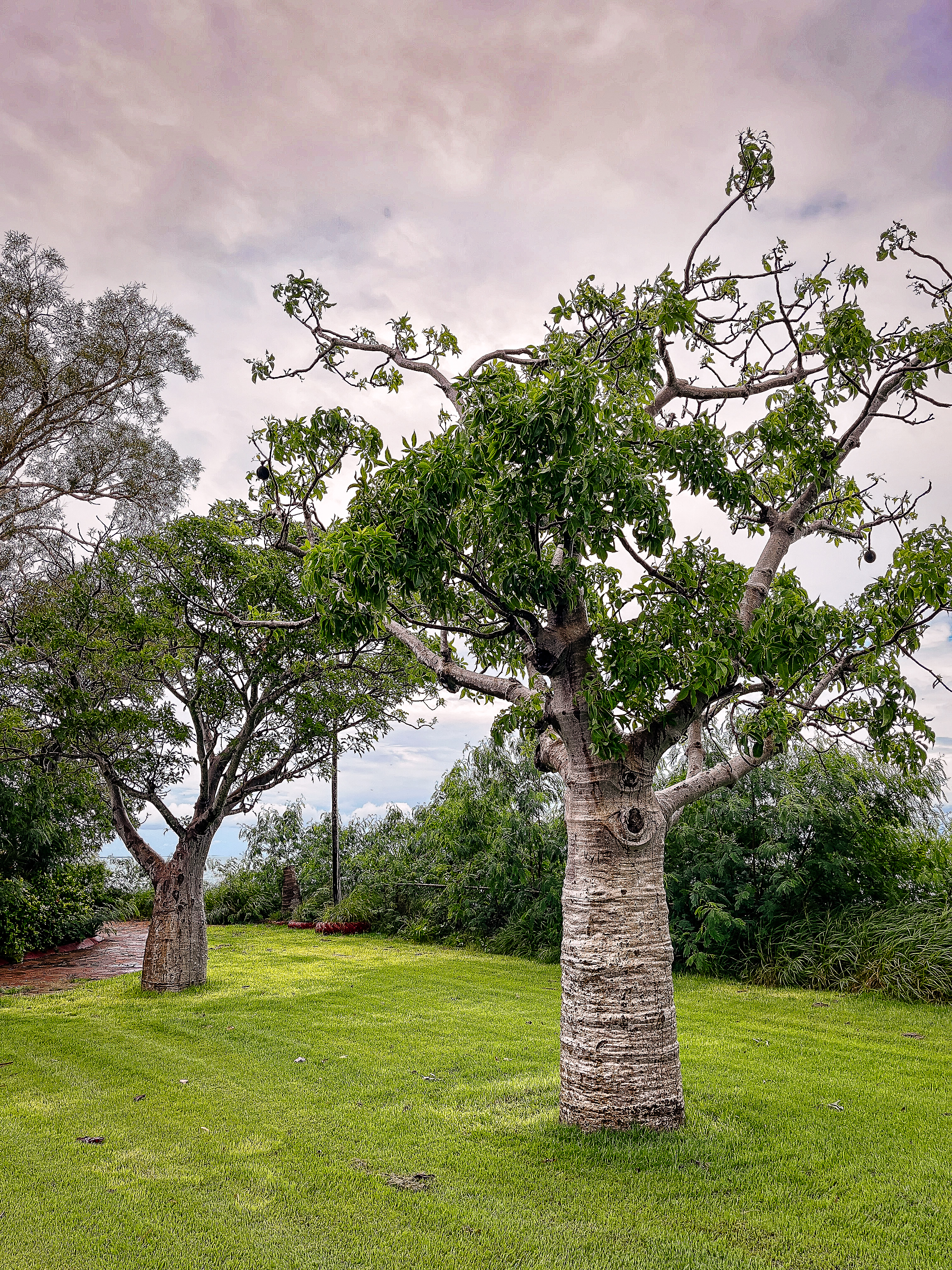
Boab trees at Discovery Parks – Broome,


Broome, for my non Aussie readers, is located in the Kimberley a vast area roughly three times the size of England yet it has a population of less than 40,000. The town is 2,046 km north of Perth, and when we said we were going all our Australian friends thought we would drive up. Yup 2000 Km is seen as just up the road. Like driving from London to Bognor Regis. We took the sensible option and flew. When we arrived in Broome we disembarked the aircraft and found that the “international” airport was a strip of tarmac and a glorified tin shed in a paddock. As we climbed down the steps onto the tarmac it was like walking into a sauna. By the time we’d walked the 30m to the building we were wringing wet with sweat. My dear old Mum used to say “Horses sweat, men perspire, and ladies glow”. Well in Broome everybody just sweats – buckets and buckets.


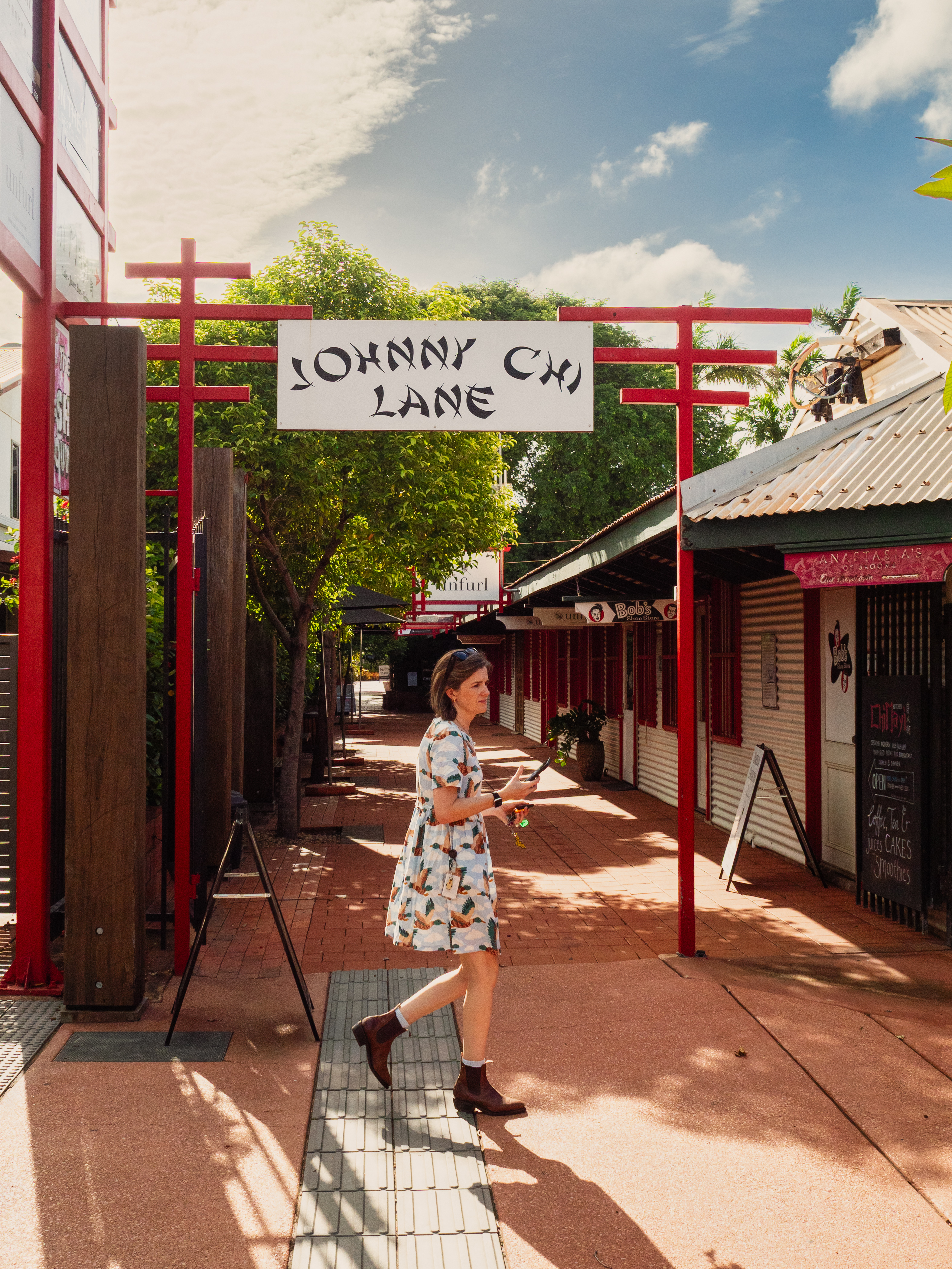
Originally Johnny Chi’s long soup kitchen back in Broome’s pearling days now it is a shopping arcade in Broome’s historic Chinatown.


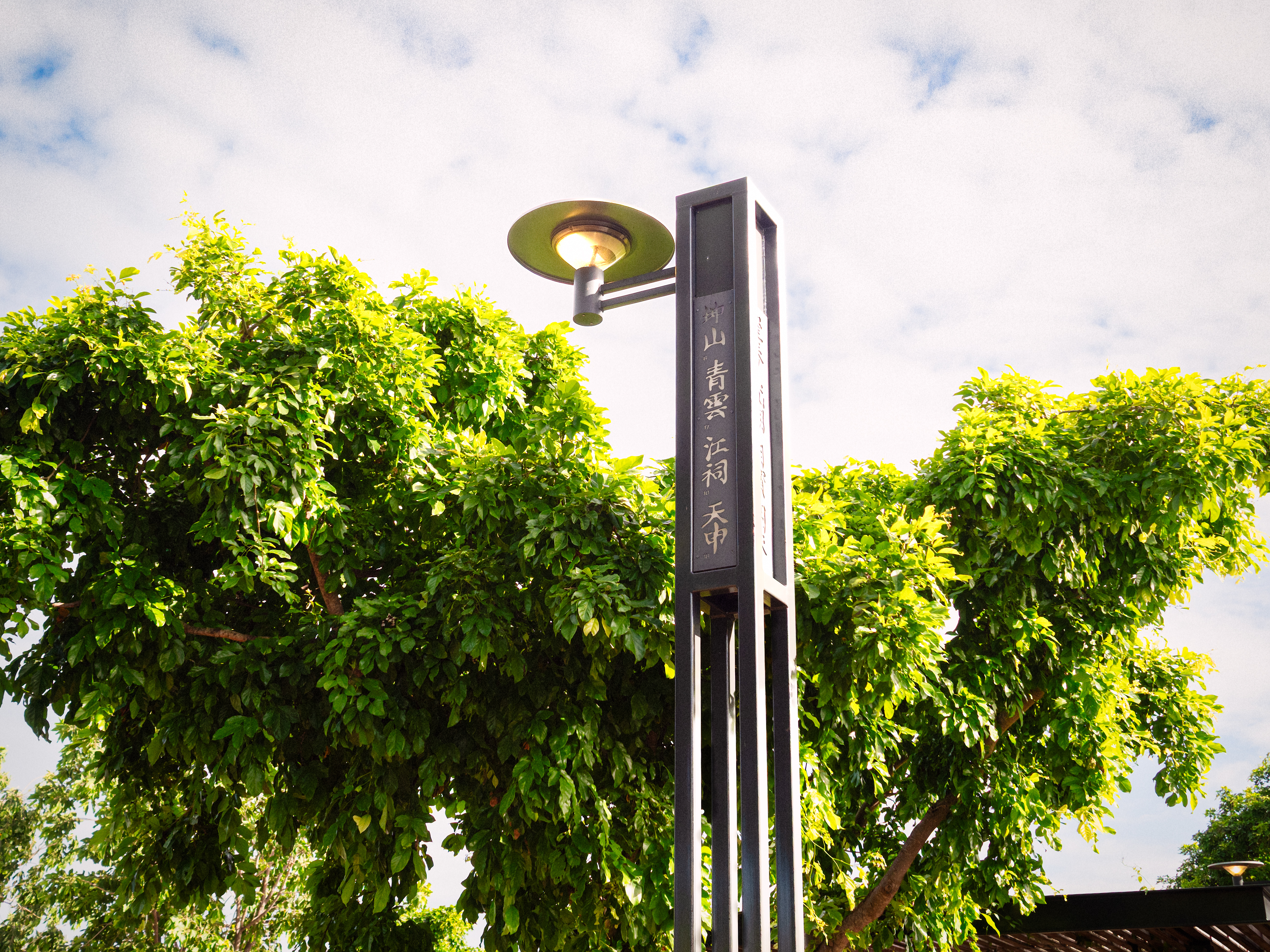
A street light in Broome’s Chinatown. Broome, Western Australia.


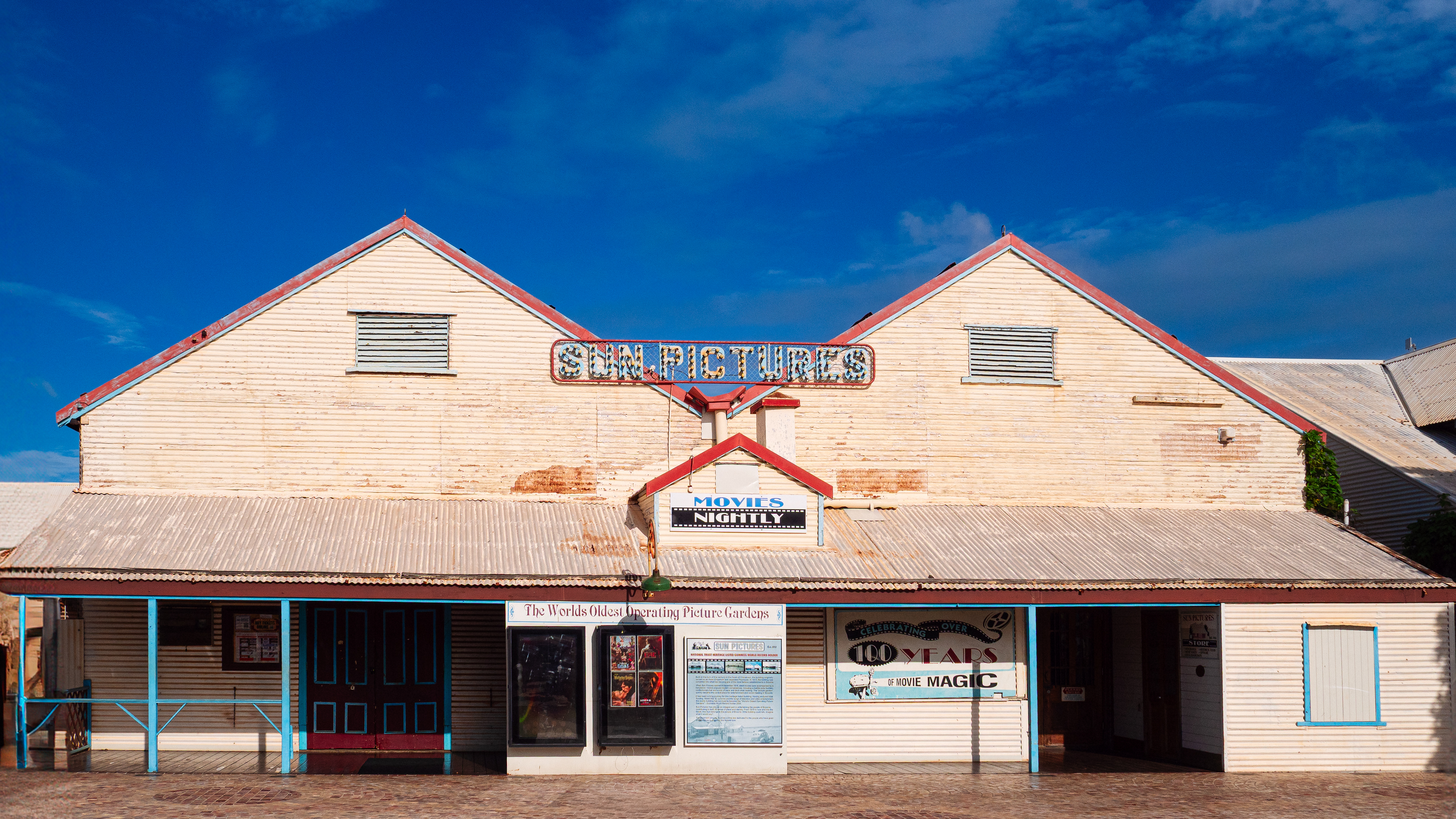
Sun Pictures located in Broome’s historic Chinatown is the world’s oldest picture garden still in operation.

Broome has an interesting history which has led to it being the multicultural place it is today. The pearling industry put it on the map and at one time there were over 300 luggers which harvested enough oysters to supply 80% of the world’s demand for mother of pearl buttons. The industry relied initially on enslaved Aboriginal people, but a change in the law prohibiting this and the fact that the oysters were less common in shallow waters meant that indentured labourers from Japan, China, Malaysia, Indonesia, and the Philippines were brought in. They did the high risk job of diving because it was felt they were more suitable to it than white people. The reality was that whites wouldn’t work for such low wages and coloureds were considered more expendable. So at this stage Broome was very much a segregated town and this continued like this well into the 1970s. It was Alistair McAlpine who transformed Broome into the tourist destination it is now in the 1980’s with the establishment and international promotion of the Cable Beach Resort Club and the Pearl Coast Zoological Gardens among others. As more and more visitors flooded into the town attitudes began to change and tourist industries were established trading on the town’s multicultural heritage.


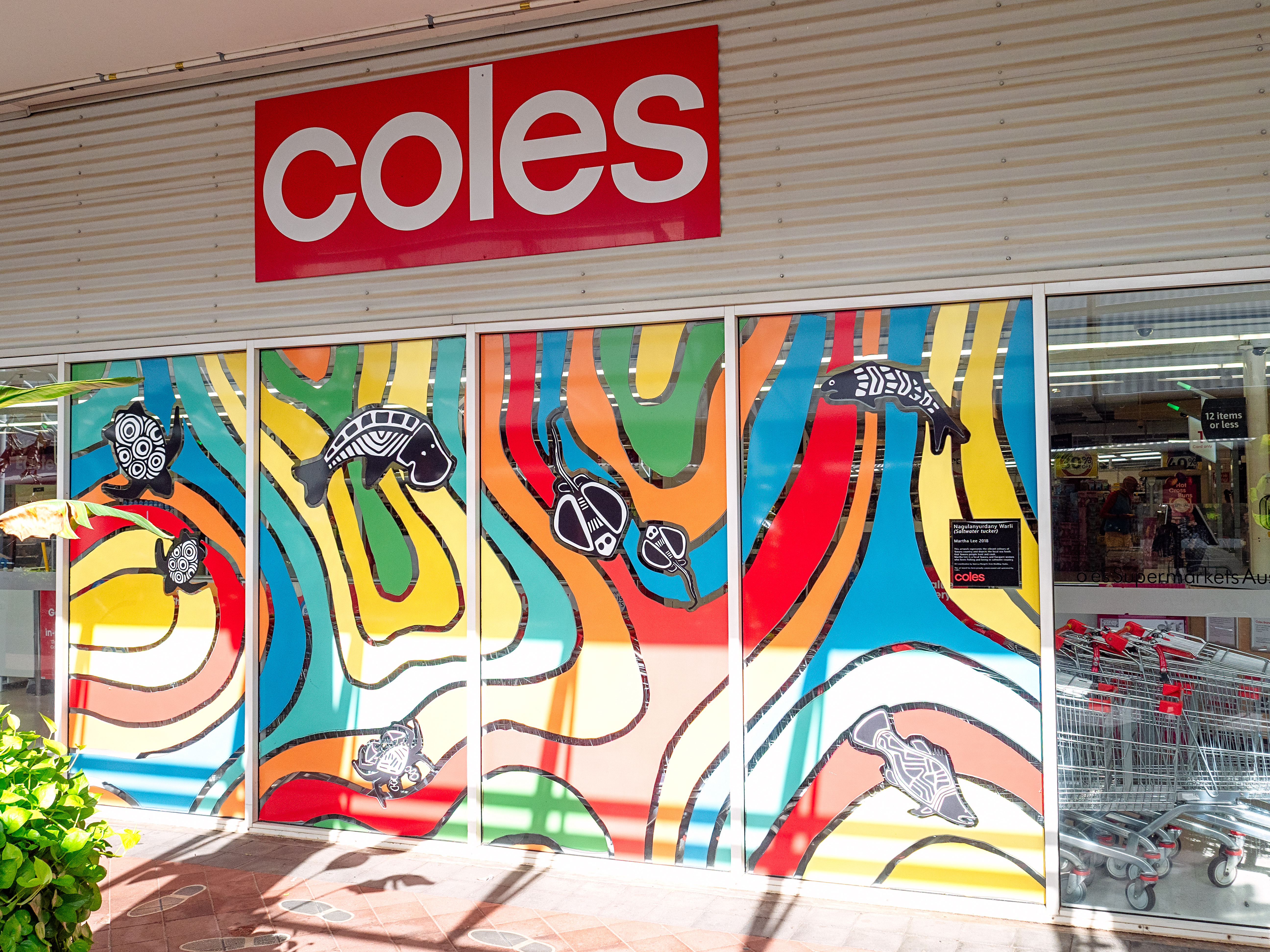
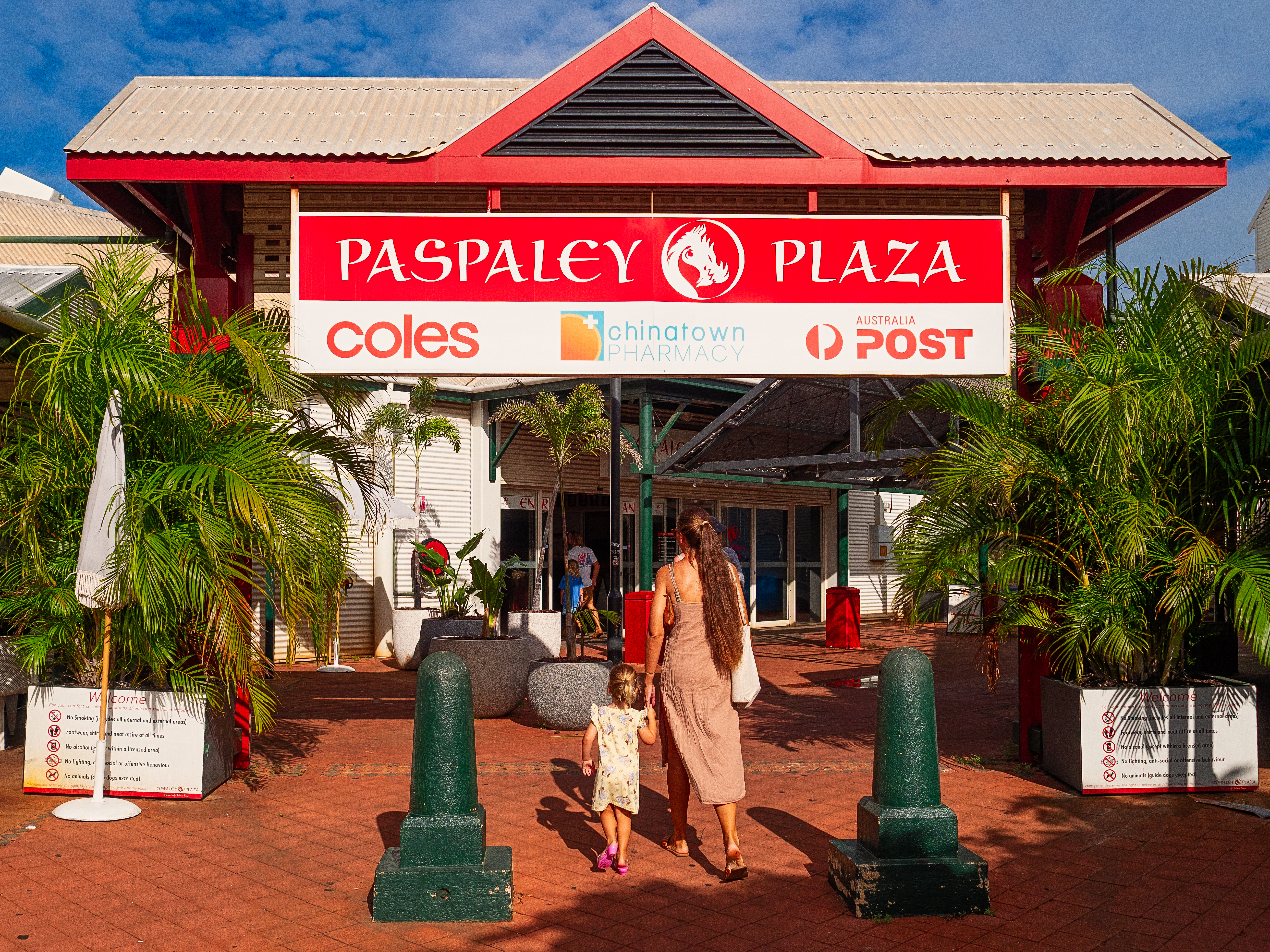
Coles store front in Broome is colourfully aboriginal. Broome Western Australia.


Paspaley Plaza is a shopping mall on the edge of Broome’s Chinatown.


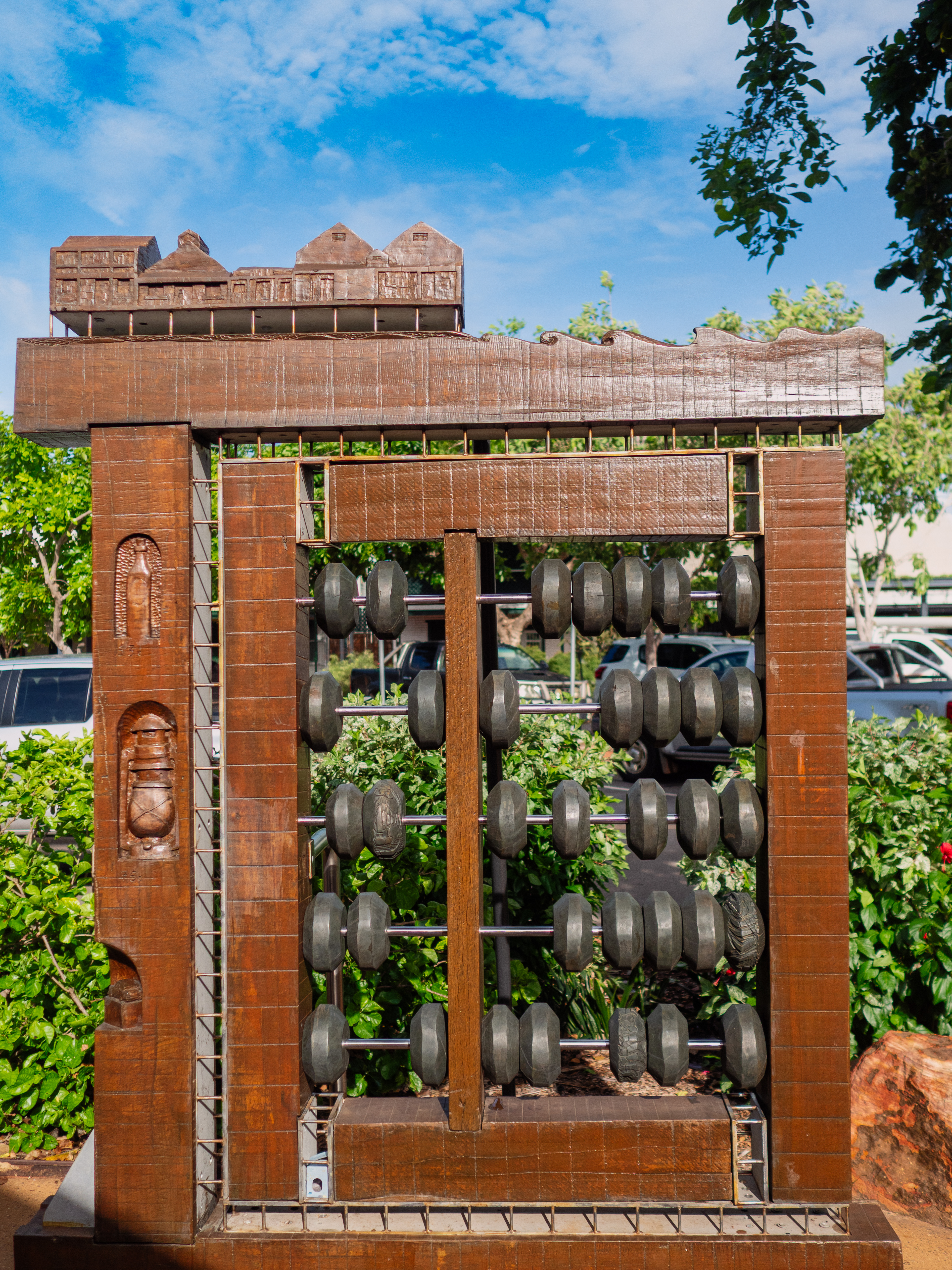
A sculpture of a traditional Chinese Suanpan or abacus in Broome’s Chinatown.


Our early flight from Perth meant that we had quite a bit of time to look around and so we visited Chinatown which was where the Asian crews of the pearl luggers lived and took their leisure – billiard saloons, opium dens and brothels. It definitely was Australia’s own wild west. It was interesting to see street signs still written using Hanzi. Even shops like Coles had entered into the multicultural vibe by using Aboriginal motifs on the windows and the staff uniform. We had a picnic lunch at Town Beach and then checked into our accommodation. An hour before sunset I walked around where we were staying and saw loads of different birds. Back at our accommodation and looking out over Roebuck Bay there was a magnificent setting sun and it was a fitting end to what had been a long day.


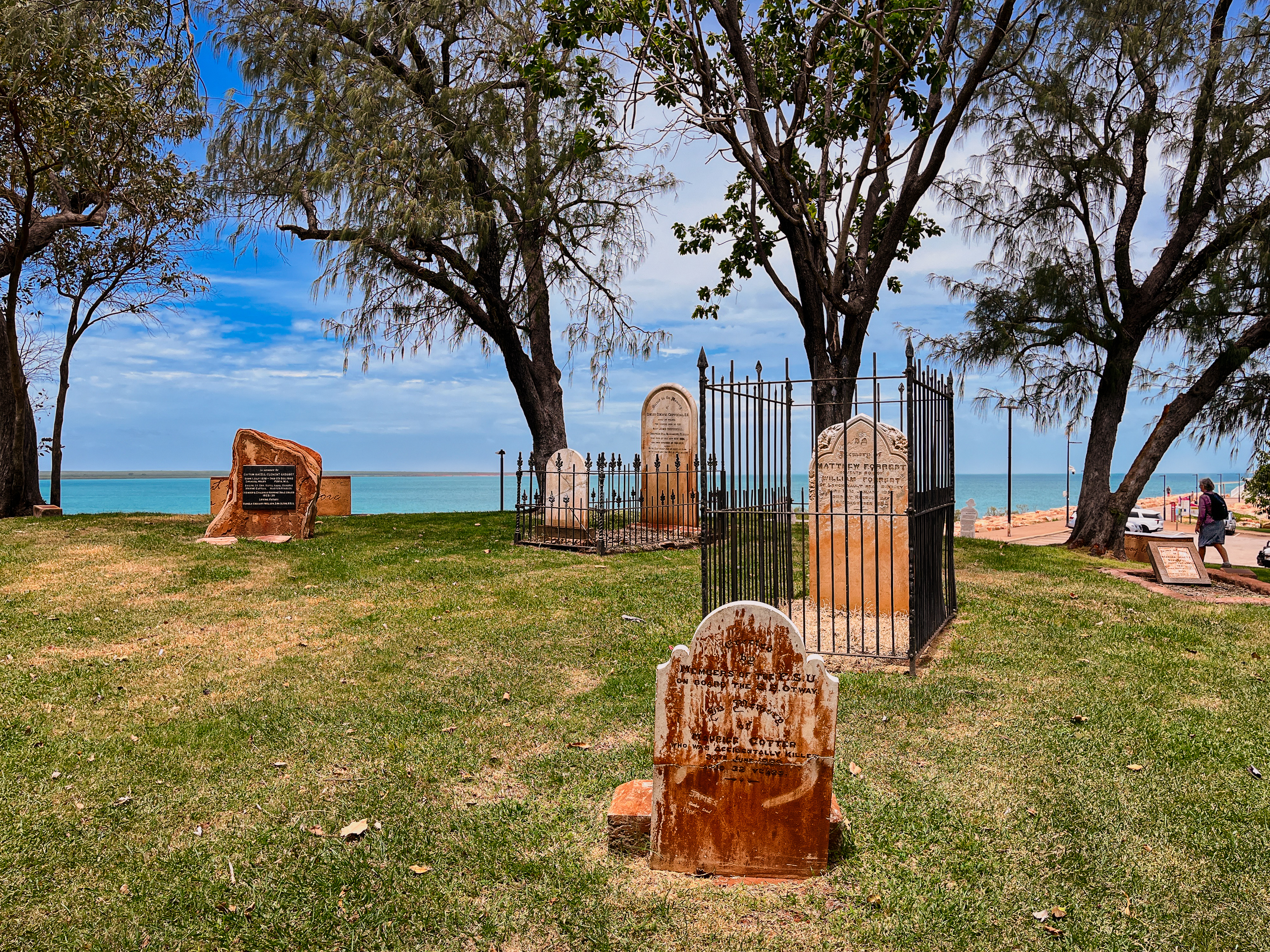
Broome Pioneer Cemetery at Town Beach overlooks Roebuck Bay.


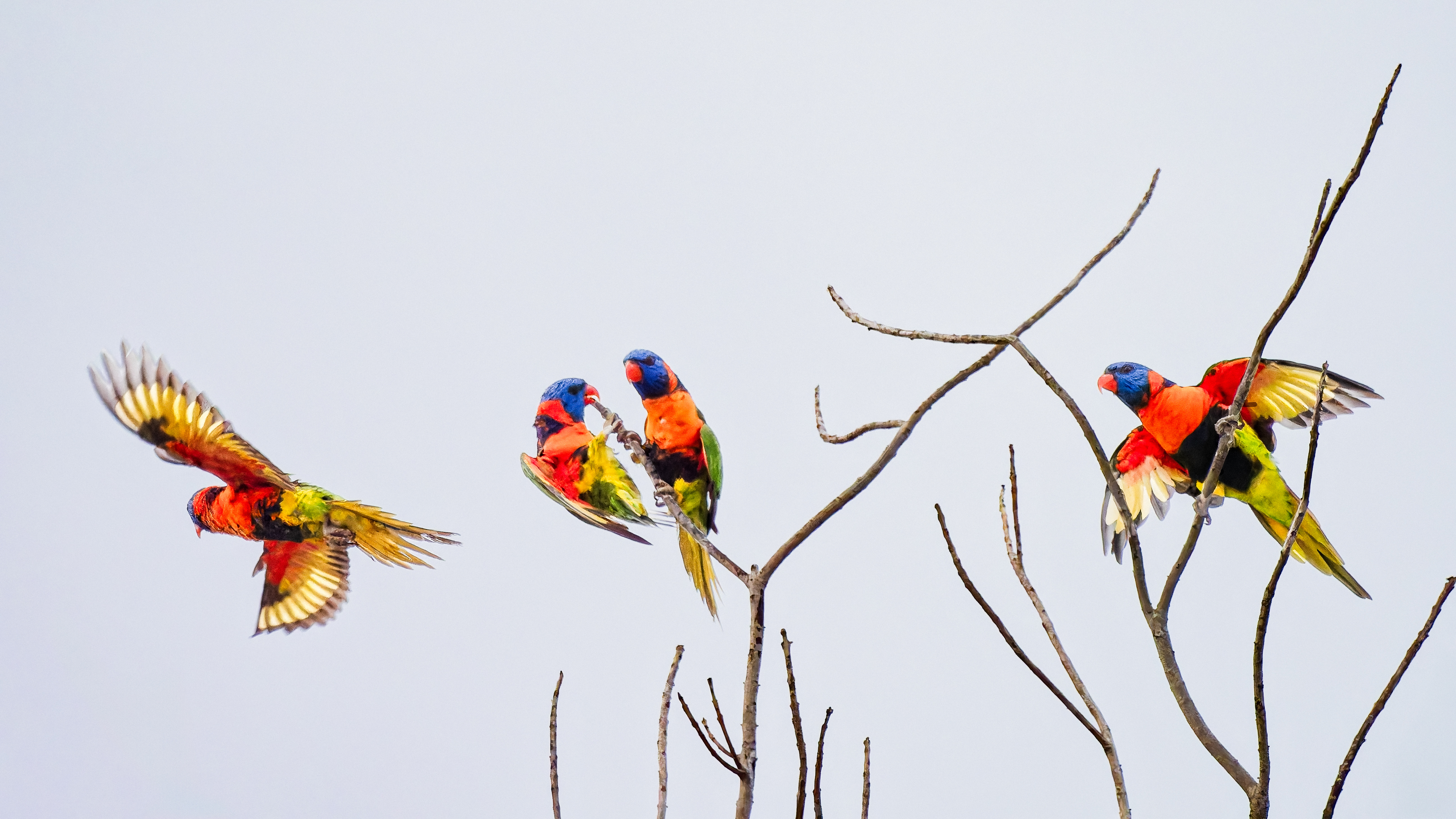
Red-collared Lorikeet, Trichoglossus rubritorquis. Discovery Parks – Broome, Western Australia.


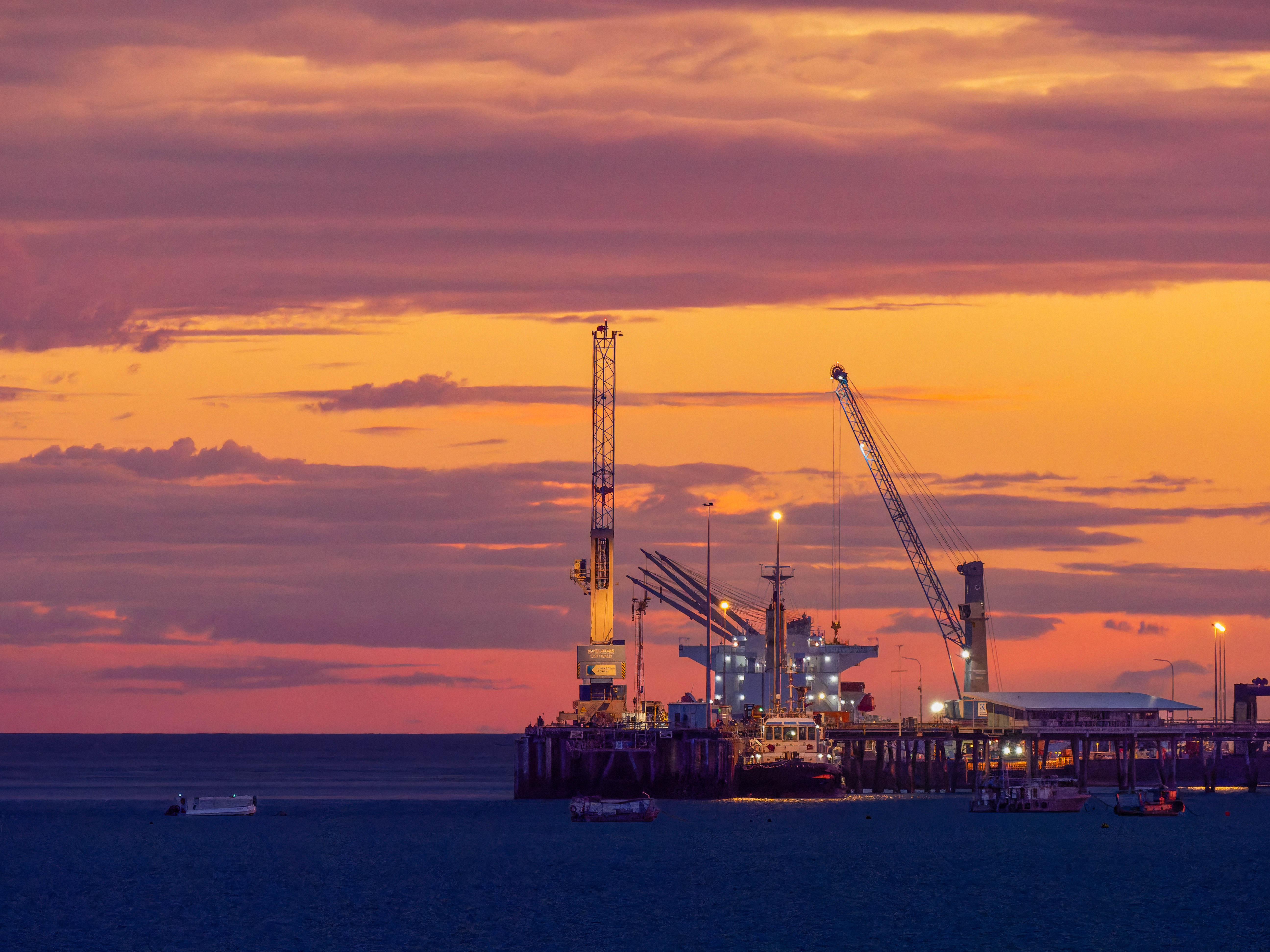
Looking out over Roebuck Bay to the Broome’s Port at sunset from Discovery Park- Broome Broome, Western Australia.


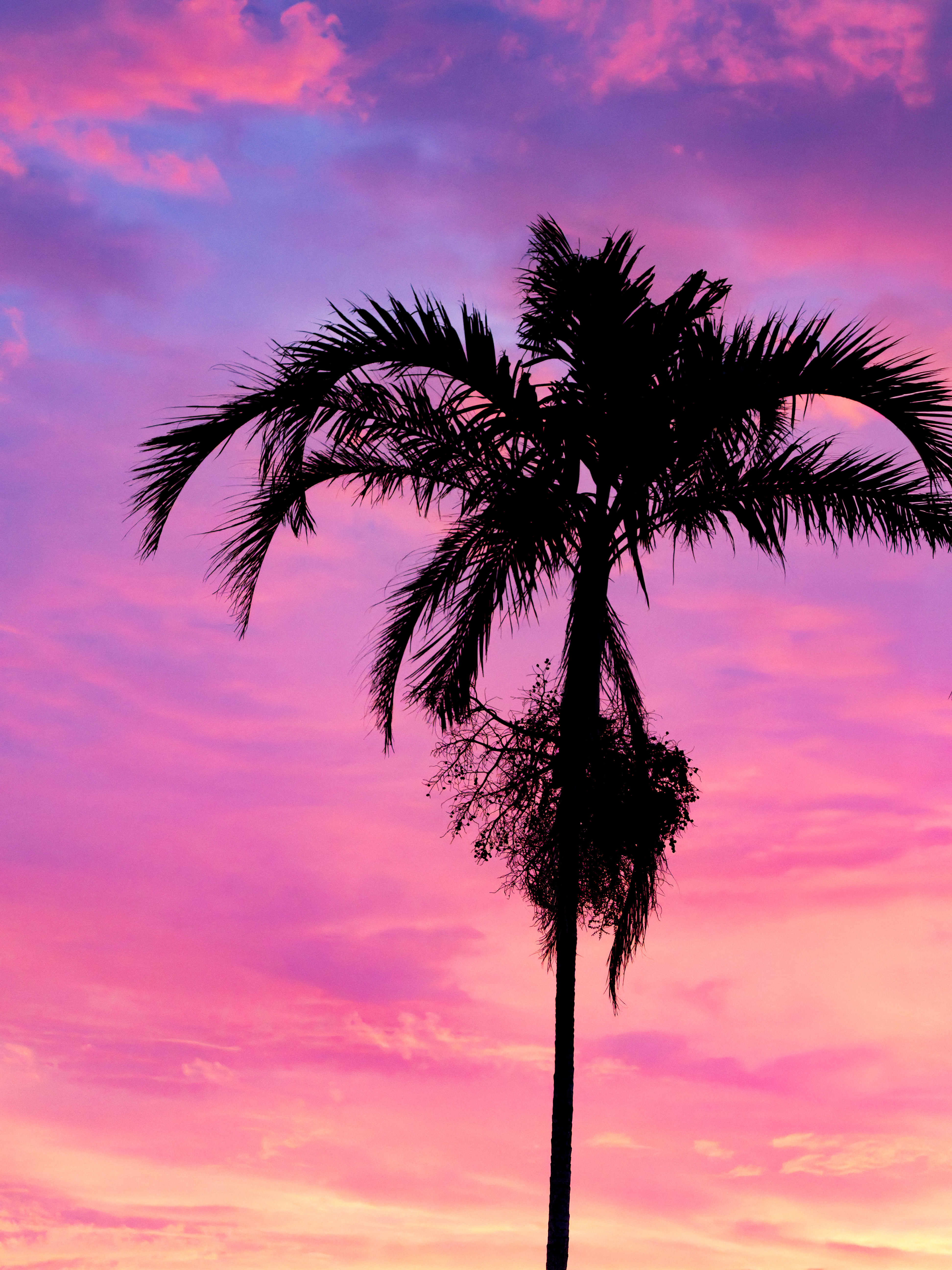
Sunset over Roebuck Bay viewed from Discovery Park- Broome. Broome Western Australia.


The title for this week’s post is a quote from Robin Williams’ Good Morning Vietnam.


“Weaving spiders, come not here…

…Hence, you long legged spinners, hence!”

Willian Shakespeare. A Midsummer Night’s Dream (Act 2, Scene 2)


“Run Harry! Run!”


I must say at the outset that I don’t like spiders very much. The bloody great hairy jobs in the Hobbit, Lord of The Rings and Harry Potter movies didn’t help much either. Coming to Australia has meant that the chances of coming into contact with some horrible large spider with a venomous bite have increased. However, of late that maybe changing. That could be because I’ve seen some rather cute jumping spiders and the rather spectacular looking Jewel Spiders. It maybe that I’ve just become desensitised by seeing so many, referred to as “flooding” in psychotherapy. Nah! Got to be honest the large hairy ones still give me the heebie-jeebies.


Shaggy Red-headed House Hopper (Hypoblemum villosum) sitting on the flex of our iron in the laundry. They grow between 4-8mm long.


A different view of the Shaggy Red-headed House Hopper (Hypoblemum villosum). They grow between 4-8mm long.


A male jumping spider (Sandalodes superbus), another species of Jumping Spider, found in the garden. I like the way they look up at you.


I think it was the jumping spiders that made me more comfortable about spiders as they are sort of cute with that turret head and the way that they look at you. I was particularly enamoured with the Shaggy Red-headed House Hopper (Hypoblemum villosum) I found in the laundry. He was tiny, no bigger than 5mm. Since then I’ve seen other varieties around the garden – they’re a bit bigger but I can tolerate them.


Jewel spiders (Austracantha minax) are often called Christmas spiders as they are commonly found during December and January. Oyster Bay, Western Australia.


Christmas spiders or jewel spiders (Austracantha minax) can be readily found in the usndergrowth surrounding Thomsons lake in Western Australia.


The Christmas Spider or jewel spider (Austracantha minax) is associated with the comming of Christmas in Western Australia.


The jewel spiders are also quite attractive to look at. They come out around Christmas time, hence their more common name of Christmas Spider. What they and the jumping spider have in common is that they are not large nor are they poisonous.


The Golden orb weaving spider, Nephila edulis., is so called because of its web that takes on a golden sheen. York Western Australia.


A female Golden Orb-weaving Spider (Nephila edulis) in our front garden. That messy tangled bit hanging down is the larder.


Male Nephila edulis or Golden Orb Web Spider. He’s only 6mm in length while his mate can be up to 4cm. Let’s hope he doesn’t end up in the larder after the deed is done.  Oswaild Sargent Reserve, York, Western Australia.


The next spider I’ve become reasonably  tolerant to is the Golden Orb Weaver (Nephila edulis). Now these are big – well the females are at 4cm in body length, the males don’t get much bigger than 6mm. Thankfully they are very reluctant to bite and when they do according to the Australian Museum “Symptoms are usually negligible or mild local pain, numbness and swelling. Occasionally nausea and dizziness can occur after a bite. Seek medical attention if symptoms persist.”. Re-reading that I now don’t  feel reassured. The webs are what attracts me to them. They are magnificent creations at over 1 metre in diameter and the golden silk that they are made from shimmers spectacularly in the early morning light.  I can’t walk past one without stopping to take a photo. So it’s very convenient that I’ve got one just outside the front door.


The huntsman spider (Delena cancerides) can grow to the size of the palm of your hand and is often found in peoples homes. You don’t need a macro lens to photograph these. As far as I’m concerned a long telephoto helps keep the distance between me and it.


So far it sounds like I’m fairly tolerant to spiders. Well let me tell you there is one species that can induce a full on panic reaction  that is the Huntsman Spider. It’s not that they are big – they are flippin’ big and have a leg span of 15cm and a large hairy body to boot. It’s the way they move and the speed of them as they run across the walls and disappear behind the sofa.  They are the stuff of scary movies. If you should try and swat one with a rolled up newspaper or magazine they’re just as likely to snatch it off you and give you a good walloping. I don’t care how beneficial they are to have in the garden or that they are relatively harmless. “Relatively harmless” – who decides these things? That’s like saying Donald Trump is relatively harmless unless you live in the Middle East. Sorry I’ve gone off piste.  Huntsman Spiders – well I don’t like having them in the house. They make me do the spider dance – it’s where you manically hop from leg to leg while swating the imaginary spiders on your body and screaming like an adolescent girl in a slasher B movie. Thankfully we have our resident house geckos and spider wasps to keep them away.


My saviour! Bibdjool or Marbled Gecko, aka house gecko (Christinus marmoratus) on our back window at a previous house. York, Western Australia.

A Raucous Dawn Chorus

As summer draws to a close dawn comes round a little later meaning that I don’t need to get up early. It gives an opportunity to enjoy a leisurely cup of that all important morning coffee and head out.


A New Morning by Paul Amyes on 500px.com
Wayan or White-faced Heron (Egretta novaehollandiae) greets the new morning. York, Western Australia.


Once down at the river I’m met with sight of the sun just peaking through the clouds and it was a joy to behold. Then the moment is shattered as several hundred Little Corellas take to the air in a whirling squawking mass. Successive waves of birds fly over me each one noisier than the one that preceded it. It was an incredibly intense experience. Eventually the birds all decided to settle in the gum trees along this section of the river bank. Physically they may have settled but their incessant squawking didn’t stop. I was transfixed. I didn’t bother continuing along the river bank I just stayed and watched and photographed. 


Playing Around by Paul Amyes on 500px.com
As the sunrises the Manatj or Little Corellas (Cacatua sanguinea) start to become active.


Manatj by Paul Amyes on 500px.com
Then as the sun rises over the horizon the Little Corellas take to the air en masse.


Manatj by Paul Amyes on 500px.com
Eventually they begin to settle in the trees.


Manatj by Paul Amyes on 500px.com
Some continue to cry out.


I
While others are content to perch quietly.


Patience Is A Virtue…

Virtue is a grace.

Grace is a little girl

who would not wash her face..

From “Lady Daisy” by Dick King-Smith

When you start wildlife photography it is very easy to get disappointed. You see all these marvellous photos other people put up on social media and you are left wondering why your photos are not as good. Usually people put it down to not having the best gear – if only I had that 800mm F5.6 lens – maybe if they had better photographic technique or access to exotic animals in exotic locations the photos would be better. Photographic technique is easily learnt, you don’t need expensive equipment and nor do you need to travel to exotic locations. I think patience is very important and that is something we can all develop.


Koordji-koordji by Paul Amyes on 500px.com
Koordji-koordji or Australian Reed Warbler (Acrocephalus australis subspecies gouldi). Lake Leschenaultia, Chidlow, Western Australia.


Koordji-koordji by Paul Amyes on 500px.com
Breakfast.


The other morning I was at Lake Leschenaultia. The previous day there had been the tail end of cyclone coming down the coast which brought rain and strong winds. The rain had passed, but, there was still quite a bit of wind about. As I got down to the lake I could see it was choppy and there were no waterfowl about and there was nothing much happening in the trees. I could have given up and gone home, but I know from experience that there are a few sheltered spots to be found as you walk round the lake so I set off for them. The first couple yielded nothing, the third was alive with the sound of Australian Reed Warblers, Splendid Fairy Wrens, Silvereyes and Inland Thornbills. They were feeding on the insects found amongst the reeds. There was no way I could quietly approach – the forest floor down to the lake was covered in dry leaves and bark. It is like walking over corn flakes – very crunchy and noisy. Even if I could get down there quietly suddenly appearing out of the tree cover would put everything to flight. Nevertheless I made my way into the dry portion of the reed bed and as expected everything cleared off. Now this is the point where it was tempting to think that’s it and move on. However, I knew that the food source won’t have moved and the birds were hungry. I also know that these particular birds are quite tolerant to people if you are quiet and don’t move around much so all I had to do was wait. I’ll admit it was hard – the mosquitoes were ferocious – but after 20 minutes or so the birds came back. In that time I positioned myself to ensure I had a good background and if the birds wanted to take off they would have to fly towards me. All these birds are incredibly quick, but the knack is observing how they move through the reeds and where they like to perch when having a breather. Pre-focus on one of those spots as it will give your cameras AF system a good chance of locking on to the bird. Then it was a case of being patient and waiting until they came close to me and taking the photo. Forty minutes later and it was all over. The birds had moved onto another spot which was too inaccessible for me to follow.


Doolor by Paul Amyes on 500px.com
Doolor or Silvereye (Zosterops lateralis). Lake Leschenaultia, Chidlow, Western Australia.


Doolor by Paul Amyes on 500px.com
Having a closer look at me.

A Over T

If you are a regular reader you may recall that I recently wrote about having one of those magical days where everything goes right. Well yesterday was the anthesis of that.


Noolarko by Paul Amyes on 500px.com
Noolarko or Black-faced Cuckoo Shrike (Coracina novaehollandiae) waiting for the clouds to break and the first rays of the sun to light up the day.


We had decided to get up early and walk along the River Avon here in York, so come 5am I bounced out of bed (Haha! As if!) and quickly got dressed. As I quickly had a coffee and piece of toast the rain began to fall. It was one of those summer downpours with big fat lazy raindrops that hit the parched dirt and release that wonderful petrichor. These downpours don’t generally last long and this one was no different so we headed out. On arriving at the river it was quiet, very quiet. In fact unnervingly quite. A complete absence of bird sound apart from a rooster making it’s presence known, but, that doesn’t count. It’s very unusual to be out at dawn and not hear birds singing. I thought normal activity would be resumed when the sun broke through the clouds so we carried on walking. A pair of Black-faced Cuckoo Shrikes perched high up in a dead tree gave me something to point my camera at. Not thrilling photos but a start nonetheless. A bit further on and the clouds had now cleared and we were greeted by a brilliant cobalt blue sky and a steady procession of Galahs flying in formation. I managed to get some photos of them. I’d wanted for ages to get a shot of Galahs flying against a back drop of a brilliant blue sky – the contrast of their pink feathers and the blue. Doing something I never normally do I looked at the rear of the camera and when I saw the sequence of photos  I could see that I had achieved that goal. I was at this point feeling rather pleased with myself. The Bible warns us that “Pride comes before a fall” (Proverbs 16:18) and little did I realise that I was about to become literally acquainted with it.


Djakal-ngakal by Paul Amyes on 500px.com
Djakal-ngakal or Galah (Cacatua roseicapilla) fly past.


Turning round we walked back the way we had come and then onto a spot where we could access the river bed. As we broke cover from the bushes we set what seemed like every duck in York flying. Whoops! Then I had this urge to see what if anything was around the corner. When suddenly it happened. You know how people often say that when something catastrophic happens time slows down and everything happens in slow motion? Well that didn’t happen. One minute I’m vertical the next bang and I’m prostrate in the mud with incredible pain shooting up my arm and from my hip. Necessity meant that I just lay still for a bit to see if the pain subsided. I quickly realised at this point that I wasn’t seriously hurt because I was more concerned that my camera had survived the cataclysm than about any injuries I’d sustained. I also became aware of the beloved significant other calling out. She had tried to get over to me but hadn’t got very far as she didn’t want to befall the same fate. Gingerly I got onto all fours and crawled to a firmer spot and got up. I was covered from head to toe in evil smelling river mud – my camera wasn’t much better.


After a dramatic fall while out birding this morning the Olympus EM1x and OM System 100-400mm look a little worse for wear.


Sitting here writing this my camera and I have scrubbed up well. It works perfectly – a testament to ruggedness of Olympus cameras. Me – I’m a bit sore, but there is no major damage.

Note to self: don’t go walking along the river bed just after it has rained – it is very slippy.

OM System 100-400mm f5-6.3 II IS lens Redux

Untitled-1

Back in November 2025 I wrote about my experiences with the OM System 100-400 mk ii, and it is fair to say that they weren’t very positive. Since then a lot has happened and I’ve had a couple of requests for an update so here we go.

First of all I’d like to take the time to thank Aaron Harivel Product and Sales Specialist at OM Digital Solutions Australia for his help and patience in bringing this matter to a resolution. On 21st January 2026 I picked up a new copy of the lens.

My main problems with the original copy were that the autofocus was very bad – it just wouldn’t find focus or when it did it would not hold it. It was a very frustrating experience. My other cause for concern was that the lens was soft wide open and didn’t improve until I stopped down to f11. So I was interested to see whether the new copy was any better.


Optical Performance

I didn’t bother testing the lens at all focal lengths I just concentrated on the 400mm end. So pointing the lens at a test chart with the camera mounted on a tripod and using the self timer to trigger the electronic first curtain shutter I found that the new version wide open at f6.3 was softer than the first copy – only by a gnat’s whisker, but none the less it resolved less fine detail. But, more importantly the performance at f8 was way superior to that of the first lens even when that was stopped down to its best aperture of f11. Not ideal, but I can work with it if I can get the lens to focus accurately and consistently.

wide_open_centre


wide_open_corner


f8_centre


f8_corner


Autofocus


Laughing Dove


The day after I collected the lens I took it out and gave it a simple test – taking a sharp photo of a Laughing Dove sitting on a railing from a distance of about 10m. I fired a burst of shots using single point continuous auto focus and held my breath waiting for the buffer to clear before looking on the back screen of the camera. When I looked I saw to great relief that every shot was perfectly in focus – something the first copy could not achieve. I carried on walking along the riverbank taking photos of a variety of different birds in as many different lighting scenarios as I could find using either single point CAF or subject tracking and the lens performed flawlessly. The video I shot was also in focus. I’ve even tried it in combination with the 1.4x teleconverter and it works well in brighter light, but struggles a little bit when the light levels are low and lack contrast. It was better than I expected.


I’ve taken it out of subsequent occasions with the same results.


Kanyinak
Kanyinak or Sacred Kingfisher (Todirmphus sanctus). Northam, Western Australia.


Djakal-ngakal
Djakal-ngakal or Galah (Cacatua roseicapilla) fly past. York, Western Australia.


Djoowi
Djoowi or Tawny Frogmouth (Podargus strigoides). Lake Leschenaultia, Chidlow, Western Australia.


Doolor
Doolor or Silvereye (Zosterops lateralis). Lake Leschenaultia, Chidlow, Western Australia.


Koordji-koordji
Koordji-koordji or Australian Reed Warbler (Acrocephalus australis subspecies gouldi). Lake Leschenaultia, Chidlow, Western Australia.


In Summary

Well when I posted the original post about the first version and the accompanying YouTube video I was amazed at the supportive comments. Most people it seemed were happy with copy of the lens, but there quite a few who definitely had problems with theirs and were unhappy. In my first write up I recommended the Panasonic Leica 100-400mm over the OM version. I had a few comments from people who had the opposite experience to mine and felt that they could not share my recommendation. It would seem that there is quite a lot of sample variation with camera lenses, although this is my first problem in this regard in 40 years of photography.

All I can suggest is that you be persistent with your dealer or local distributor if your lens doesn’t function like it should and work to a satisfactory resolution.

As to how I feel about the lens now I have a satisfactory copy. Well I’ve got some exciting trips lined up this year and the lens will be coming with me.

Chance…

… favours the prepared mind.”  Louis Pasteur, December 7, 1854, and in 161BC the Roman playwright Terrance said that “fortune favours the brave” in his play Phormio.


All of which basically means that if you have the necessary mind set be bold enough to seize the opportunities that present themselves. That is what happened the other evening. We had found a new possible nesting site for Rainbow Bee-eaters here in York and the beloved significant other suggested we go and have a closer look the other evening. So I picked up my Sony A7r2 with Sigma 150-600mm lens and we drove down to the location. On getting there there was not a Rainbow Bee-eater to be seen. In fact there weren’t many birds about at all. Scanning the tree tops we soon found out why. In the top of a dead tree were a pair of Australian Hobbys. These beautiful birds of prey will take small flying birds so everything had taken cover. The Hobbys looked magnificent against the bright blue sky. I only managed a short burst before they resumed flying up and down the river bank looking for something to eat.


Wowoo by Paul Amyes on 500px.com
Wowoo or Australian Hobby (Falco longipennis) are often seen in pairs whilst out hunting.


The adapted Sigma 150-600mm doesn’t focus very fast on the Sony A7r2 and the 5 frames per second burst rate isn’t exactly the best, but, it was all good enough for the task in hand.

One Of Those Days

The other day was was one of those days. Not the sort where everything goes mammaries up and you wish you hadn’t got out of bed. No it was one of those days when everything goes stupendously well – like unbelievably well. The other day was just one of those.


Bulland by Paul Amyes on 500px.com
Bulland or Little Egret (Egretta garzetta subsp. nigripes)


Bulland by Paul Amyes on 500px.com
Bulland or Little Egret (Egretta garzetta subsp. nigripes) are quite rare up in the Avon Valley although they are common elsewhere.


I was walking along the River Avon in Northam and it was proving to be a fruitful morning. Black-fronted Dotterels, Black-winged Stilts, Dusky Moorhens, and even a rare (well rare in these parts) Little Egret. After a couple of hours of sheer bliss I decided to call it a day and walk back to the car. As I was walking I thought to myself “You know what would cap off a perfect day? A Sacred Kingfisher.” And lo and behold within seconds of thinking that thought one appeared on a branch right in front of me. The best part was it could clearly see me and didn’t give a stuff. I was in raptures! It was hunting for large insects in the grass and every few minutes it would swoop down catch one and return to the branch and eat it. This kept going on for twenty minutes or so. In the end I called it quits after taking hundreds of photos and it stayed there. A brilliant finale to a brilliant day.


Nidoolyorong by Paul Amyes on 500px.com
A gratuitous shot of a Nidoolyorong or Black-fronted Dotterel (Elseyornis melanops).


Djandjarak by Paul Amyes on 500px.com
This Djandjarak or Black-winged Stilt (Himantopus himantopus) was too busy looking for food to bother about me.


Kanyinak by Paul Amyes on 500px.com
The icing on the proverbial cake. Kanyinak or Sacred Kingfisher (Todiramphus sanctus). Isn’t he magnificent?


Kanyinak by Paul Amyes on 500px.com
Having a bug for breakfast.


Kanyinak by Paul Amyes on 500px.com
Having a laugh.

The last few of weeks I’ve been observing some very interesting bird behaviour (well interesting to me) and I’ve found trying to record it just using photographs wasn’t capturing what was happening. So I’ve decided to shoot more video footage. Up until now I’ve found doing both photography and video very difficult. That’s because I was taught in order to shoot video well you had to have your camera on a tripod, limit your shutter speed to twice that of the frames per second which means faffing around with neutral density filters, use manual focus, take an accurate colour temperature reading and set the camera accordingly, and record good sound. All that takes the spontaneity out of it. If an animal pops up suddenly I like to be able to react in an instant and with stills photography you do that. Video requires (or so I thought) so much preparation that the animal has been and gone. So I came to the conclusion that I only do this for my entertainment so it doesn’t matter if I break “the rules”. So I set my camera up to shoot in programme mode, set auto white balance, auto ISO, I use the camera’s built in microphone for sound, and auto focus. I’m not carrying a tripod so I’m shooting handheld. If I see something interesting I snap off a few photos and then press the video record button. This approach has added a new dimension to my photography and I’ve been very happy with the results so far. Below are a few clips from my brilliant day in Northam. 


Has anyone else added video to their photography?