Spring is now almost over and most of the wildlife has now settled down to domestic duties – having and raising young.
A recent visit to Bernard Park in the Wheatbelt metropolis of Northam showed this to be true. The Australian Reed Warblers were still building nests and it won’t be long before the serious business of egg laying starts.
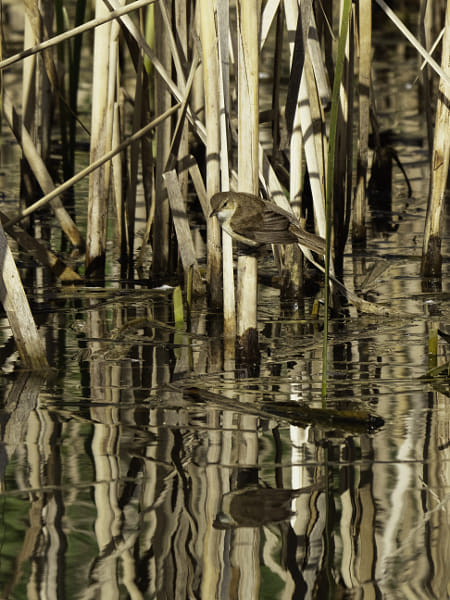
Koordji-koordji or Australian Reed Warbler (Acrocephalus australis subspecies gouldi) gathering nesting material. Northam, Western Australia.
The Welcome Swallows were mostly content to hang out together between hunting forays, but we did see a couple which did seem to be in the middle of a domestic alternately screeching at each other. Do birds separate and divorce? No idea. Perhaps I anthropomorphising them too much, but it is hard not to project human feelings into animal interactions.
A contented pair of Kanamit or Welcome Swallows (Hirundo neoxxena) taking a breather under the Peel Terrace Bridge. Northam, Western Australia
These two seemed to be in some sort of domestic dispute.
It wasn’t one sided either. Both were carrying on like pork chops in a frying pan. Perhaps a referral to Relationships Australia is in order?
The other morning as I was walking around Lake Leschenaultia I spotted a couple of male Australian Reed Warblers marking out their territories while trying to attract a mate. When both of them were singing the sound was so loud that it almost made my ears hurt. It’s amazing that something so small can produce such a volume of sound. Normally you tend to hear them rather than see them, but this morning the two of them were perched on the very tips of the reeds. It was quite an amazing experience.
Koordji-koordji or Australian Reed Warbler (Acrocephalus australis subspecies gouldi). Lake Leschenaultia, Western Australia.
Koordji-koordji or Australian Reed Warbler (Acrocephalus australis subspecies gouldi). Lake Leschenaultia, Western Australia.
Beating the heat is the name of the game here and so getting up early and heading out is the answer. Lake Leschenaultia in summer just as the sun comes up is blissful. The breeze coming off the water is deliciously cooling and walking under the shade is a pure delight. To cap it all off the wildlife is truly wonderful. To make the most of it I travel light – one camera (Olympus EM1x), one lens (Panasonic 100-400mm f4-6.3) some spare batteries and a water bottle.
Koordji-koordji or Australian Reed Warbler.
Djer-djer or Splendid Fairy-wren (Malarus splendens subs splendens). Lake Leschenaultia, Western Australia
When we first arrived I had a look for the Spotless Crake in the reed beds. I know it’s there – I’ve seen it and its footprints in the mud, and heard it – but taking a good photo is proving very difficult as it is extremely skittish and elusive. While stood there we could see the reeds twitching away and there was some strange staccato chucks, when suddenly a couple of birds break cover and sit on the tips of the reeds. I didn’t honestly know what they were – and assumed they were a new to me species. It was all quite exciting. Walking round the lake we were serenaded by the magpies. As the understory got denser we could hear Splendid Fairy Wrens chattering away in the undergrowth. When they broke cover we saw that they were very young – probably this summers fledglings. It was enchanting watching their antics as they chased one another around. As we headed back to where we started we passed another reed bed with some more of those unidentified birds in and they were very obliging and hung around in plain sight allowing me to get more photos. It was a great morning, worth getting up for.
What a poser! Koordji-koordji or Australian Reed Warbler (Acrocephalus australis subspecies gouldi).
On getting home and processing the images I found out that the birds were Australian Reed Warblers, a species that I’ve photographed before. What threw me was the sound – I’ve only ever heard them warble before. So it was a little disappointing that it wasn’t a new species, a bit embarrassing that I didn’t recognise them, but extremely satisfying as they are my best photos of Australian Reed Warblers.
* Early One Morning is a song by the great Elmore James.
Nearly every week my partner and I go to the vast teeming Wheatbelt Metropolis of Northam to do our weekly shop. We often take Frida, our English Bull Terrier and take her for a walk in Bernard Park which is by the Avon River. At the far eastern end of the park is an enclosure for the white swans that were introduced here and now breed along the river. As you walk round the enclosure there is a walkway that takes you through some reed beds and we often stop here to hear the Australian Reed Warblers sing. They are quite rare in the Wheatbelt preferring the coastal wetlands. Last week we noticed that they were becoming very active as it was the start of the breeding season so we decided to go on a dedicated trip early one morning to see and photograph them.
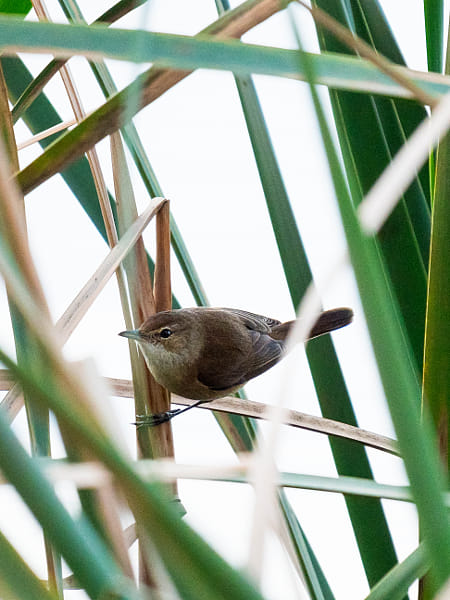
Koordjikotji or Australian Reed Warbler (Acrocephalus australis subspecies gouldi). Herdsman Lake, Western Australia.
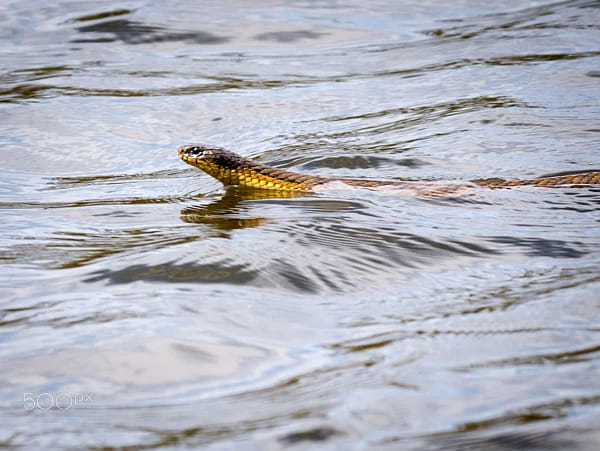
Tiger snake, Notechis scutatus, are often found around the edge of waterways. They are an occupational hazard for water bird photographers. Herdsman Lake Regional Park, Western Australia.
Now I’ve been trying to photograph the Australian Reed Warbler for some time. They are very small and as the name suggests live in dense reed beds which makes them incredibly difficult to photograph. They are also always on the move and don’t settle in one spot for very long which doesn’t help matters. My best previous attempt at photographing them was four years ago at Herdsman Lake where if the birds were on the waters side of the reeds you could not see them at all and you had to be aware of Tiger Snakes which can often be found around the waters edge or actually swimming in the water. A bite from one of those can seriously ruin your day. The situation at Bernard Park’s swan enclosure is very different as there are two viewing platforms either side of the pond and there is the walkway at the eastern end and these give good views of the reeds. So it was a case of getting there, listening to determine which clump of reeds had the most singing and then position myself accordingly. Then it was a question of waiting for the birds to break cover. I observed that they’d sing while deep in cover for about 10-15 minutes then fly out to another reed bed and then almost straight away up into one of two trees and then head back to where they started. So it was a case of staking out the spots and waiting for them to do their circuit. They are very quick – blink and you’ve missed it.
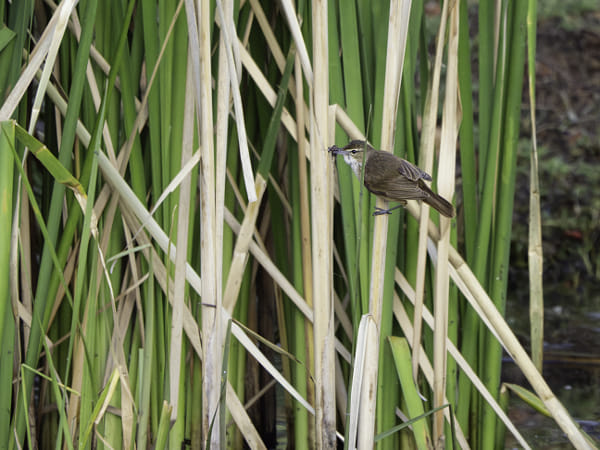
First shot at Northam. This reed warbler is grabbing a bite to eat.
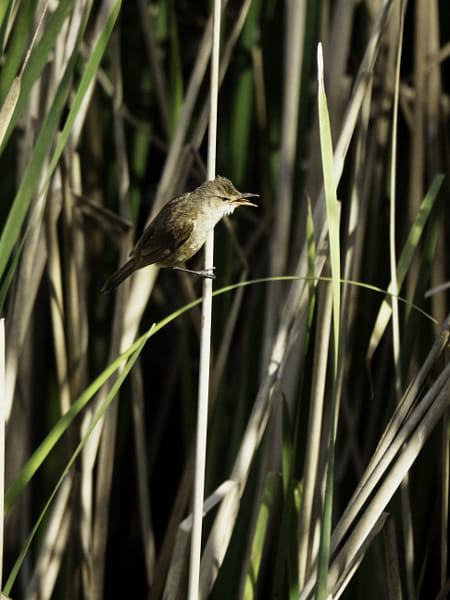
Having a quick sing.
In a reflective mood.
It was a nice morning. I got a few shots that were OKish that’s all, but more importantly I learnt a bit more about their behaviour through observing it and that means next time I stand a bit more a chance of getting a good photo. Again like the situation in Darwin I was left feeling I wanted more focal length. This could get expensive!



You must be logged in to post a comment.