Less Is More

I’m feeling really deficient in the focal length department. After my trip to the Baigup Wetlands I’ve realised that if I want a picture of a Crake I’m going to need a longer lens. At the moment I’m capped at 600mm on full frame, 800mm full frame equivalent on Micro Four Thirds, and 960mm full frame equivalent on APSC sized sensors. Unfortunately I’m handicapped by the fact that I don’t have a spare $35,000 AUD lying around or camera to put the lens on or I’d get the Canon RF 1200mm f/8L IS USM. More affordable at $4000 is the OM System M.Zuiko Digital ED 150-600mm f5.0-6.3, but even that is currently beyond my budget. 


Sigma 150-600mm f5-6.3 DG OS HSM lens Contemporary
The mighty Sigma 150-600mm Contemporary lens.


Teleconverter Test
The Canon Extender EF 2x ii is a matched teleconverter and is designed to only fit certain Canon L lenses. Note how the lens elements stand proud of the lens mount.


So my solution was to use my Sigma 150-600mm lens with a Canon x2 teleconverter on my Canon 80d which would give me the full frame equivalent of 1920mm. That is serious reach in anybodies book, but will it work? The first thing to consider is whether the Canon teleconverter will actually fit on the Sigma lens. If you look at the photo you can see that the lenses of the teleconverter protrude beyond the lens mount and into the lens. Would there be enough room in the Sigma 150-600 to accommodate this. The answer was a resounding “YES!”. The next question was would it autofocus. The problem is that on DSLRs the autofocus mechanism  uses a sensor in the bottom of the mirror box that requires a sub mirror behind the main mirror to reflect some light onto it.  If light levels are too low then the system just doesn’t work and the camera can’t autofocus. So that means a lens with a minimum aperture of f8 won’t autofocus. Having said that if we use ‘live view’ the mirror is moved out of the way and on Canon cameras Canon uses ‘dual pixel autofocus’ where every pixel on the sensor can function as an AF point. So in theory it should autofocus. That is good because the minimum aperture of the Sigma 150-600mm at 600mm is f6.3, slap a 2x teleconverter on and that becomes f12.6. So I set up a target in the back garden to try it out. Lo and behold the camera failed to autofocus when using the viewfinder, so OK I knew that was going to happen, but using live view it did. 

The next thing to consider was image quality. When using a teleconverter image, and especially 2x teleconverters, image quality takes a serious hit – the image becomes notably softer. The answer to this is to stop down. After a bit of experimentation stopping down to f16 improved sharpness slightly, but it means using incredibly high ISOs which has impact upon the image quality. I figured that I’d run the images through Topaz DeNoise AI and hope that I’d get something decent.


20250405-Sigma150_600-0239
A suitable test target. After experimentation an aperture of f16 was found to produce the best results.


Now I just needed to test this out on a live subject. Luckily our back garden is frequented by lots of birds, so I set the camera on a sturdy tripod and just waited. The results were that using live view and dual pixel autofocus the camera would definitely focus, it’s just it does it very, VERY slowly. I managed to get some photos, but the bird had to sit in one place for quite a while and this was with good light levels in the middle of the day. It wouldn’t be practical for a subject in the shade at dawn. I tried to manually focus but I couldn’t move the focus ring in small enough increments to achieve fine focus. The best results were achieved with birds that were about 5m away. I tried on Ring-necked Parrots that were further away and there was huge hit to image quality, the picture were just not critically sharp.


20250404-York-0226-Edit
This Willy Wagtail was obliging enough to sit around for a few seconds. It is mandatory that every Australian garden should have at least one Willy Wagtail.


20250404-York-0230-Edit
A leucistic zebra finch happily riding the rotary washing line.


20250404-York-0252-Edit
This distant shot of Ring-necked Parrots shows a pronounced hit on image quality. Viewing the image at 100% shows the feather detail has gone to mush.


Ahh well back to the drawing board.
Reciprocity

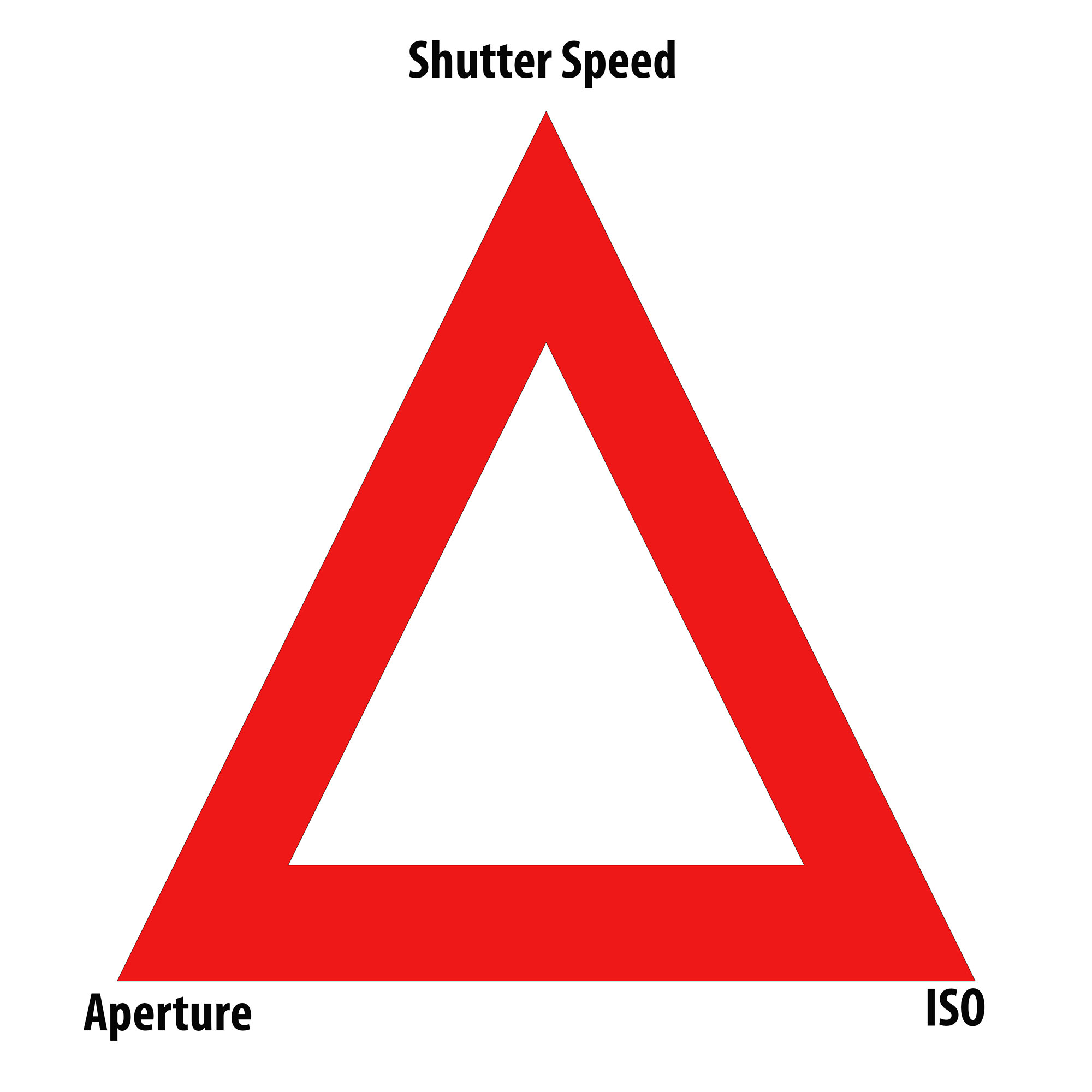
The Exposure Triange. All values have a reciprocal relationship.


Reciprocity in photography is where if you make one change to the exposure triangle – shutter speed, ISO, aperture – then you have to change one of the others by a corresponding amount to compensate for it. So if I have an exposure value of 1/125 sec, f4, ISO 400 and I want a shutter speed of 1/1000 then I’d either have to open the aperture to f1 or increase the ISO to 6400 or a combination of the two. The problem with wildlife photography is that it is often done in low light and has a need to use fast shutter speeds as the critters won’t sit still for very long. It is surprising to see how much a bird moves while sitting on a stick. This was my problem the other day when I returned to Northam to have another go at getting a photos of an Australian Spotted Crake (Porzana fluminea) . 


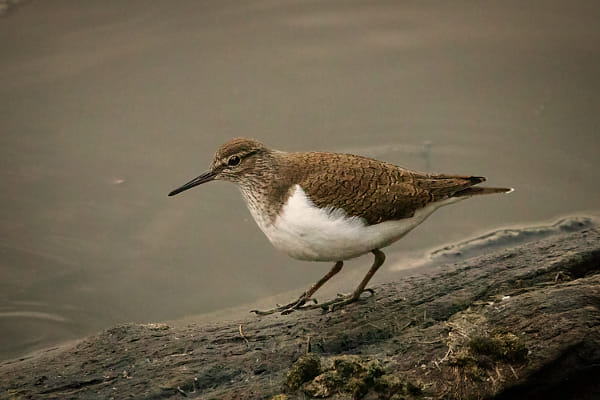
Common Sandpiper by Paul Amyes on 500px.com
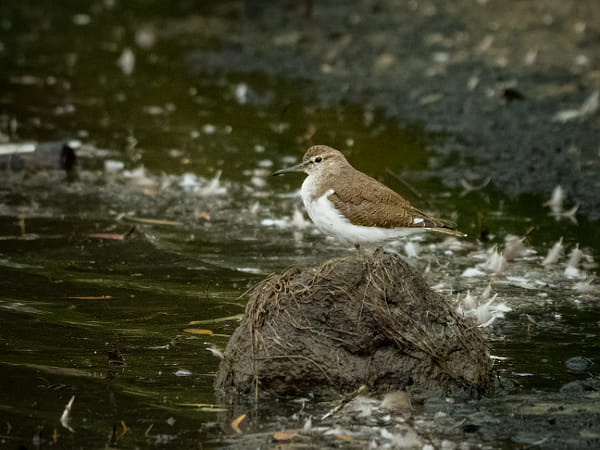
Common Sandpiper, Actitis hypoleucos. Northam, Western Australia. Exposure: 1/200 sec, f6.3 ISO 10000. Topaz DeNoise AI saved the day!


As regular readers may remember in a previous post I said that I didn’t have a long enough lens for my usual Micro Four Thirds camera – the Olympus EM1x. My lens is a 100-400mm which gives me a reach of 800mm in 35mmm full frame terms. The lens won’t take a teleconverter and even if it did that would entail a further loss of light and image quality. So after some thought I decided to use my Canon 80d and Sigma 150-600mm lens which would give a reach equivalent to 960mm. Not a lot more but sometimes you’ve got to take all you can get. So with that we headed off to Northam and I sat on the river bank waiting for that elusive little spotty bird to make an appearance. My big problem was light – well to be more precise the lack of it. I warmed up with shots of a Common Sandpiper with an exposure value of 1/200, f6.3, ISO 10,000. I was lucky as the Sandpiper was content to sit still. When I did finally get a glimpse of the Australian Spotted Crake it was in deep shade so I had to drop the shutter speed to 1/60. I couldn’t open the lens up any more as I was wide open and I couldn’t use a higher ISO as I’d reached the limit. I shot several bursts in the hope I’d get at least one sharp image. A quick look at the rear LCD panel gave me a bit of hope for a result. By now the bird had taken itself back into the undergrowth not to emerge again. After waiting for a while we continued walking down the river to see if anything else was about.


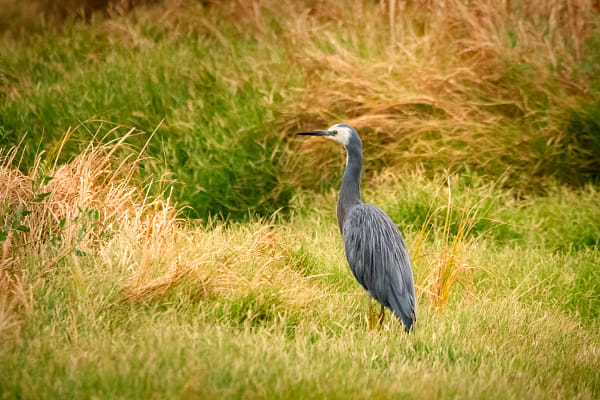
Wayan by Paul Amyes on 500px.com
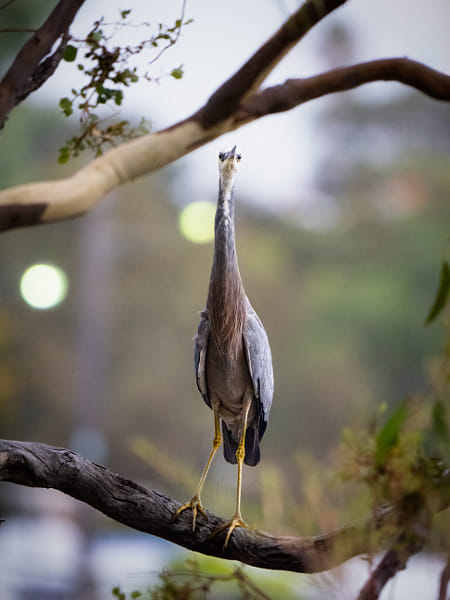
Wayan or White-faced Heron (Ardea novaehollandiae). Northam, Western Australia. Even in the open 1/250 sec, f6.3, ISO 5000.


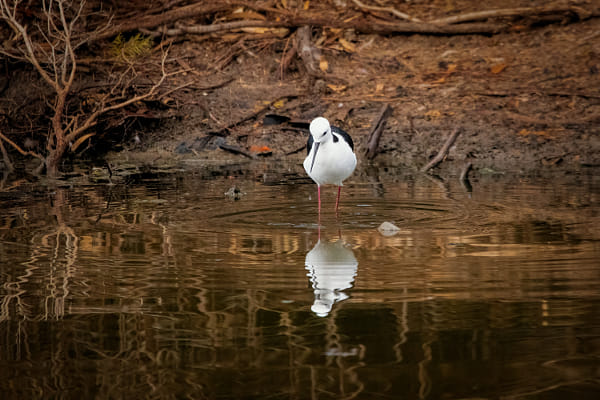
Djandjarak by Paul Amyes on 500px.com
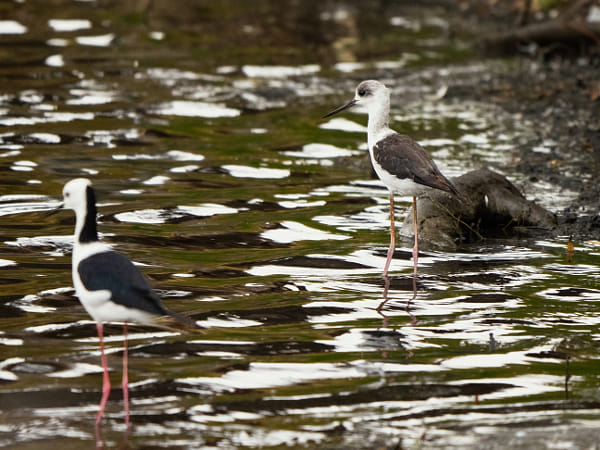
Djandjarak or Black-winged Stilt (Himantopus himantopus). Northam, Western Australia. Exposure: 1/160 sec, f6.3, ISO 3200.


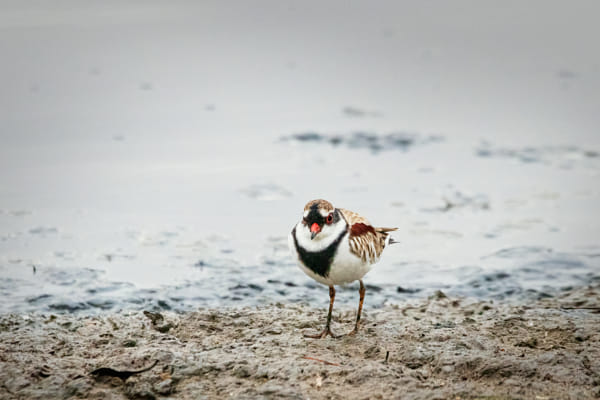
Nidoolyorong by Paul Amyes on 500px.com
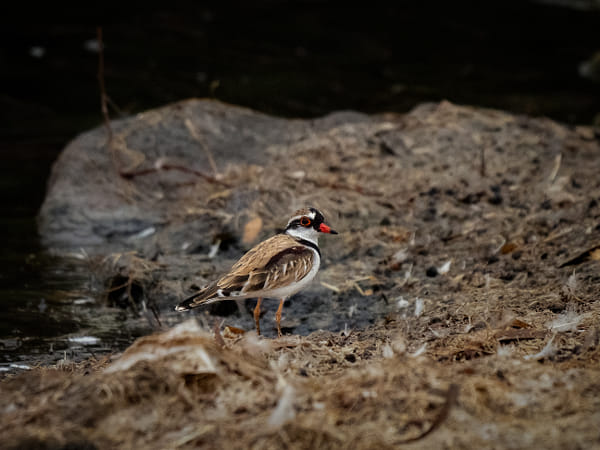
Nidoolyorong or Black-fronted Dotterel (Elseyornis melanops). Northam, Western Australia. Now we’re talking, light levels are starting to improve. Exposure: 1/500 sec, f7.1, ISO 2000.


Bambon by Paul Amyes on 500px.com
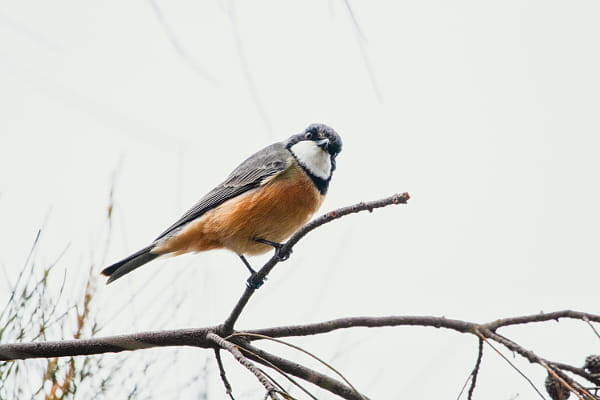
Bambon or Rufous Whistler (Pachycephala rufiventris). Northam, Western Australia. Exposure: 1/500 sec, f6.3, ISO 200.


Ngalkaning by Paul Amyes on 500px.com
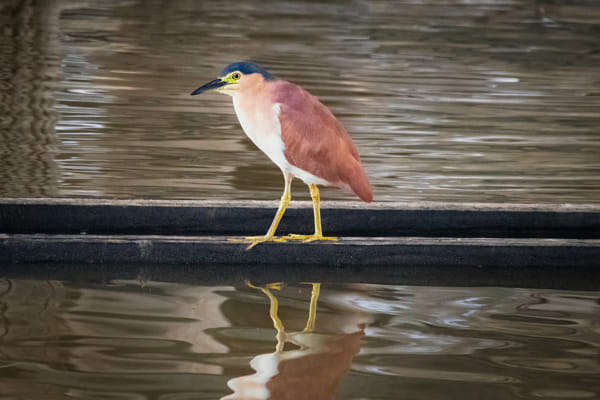
Ngalkaning or Nankeen Night Heron AKA Rufous Night Heron (Nycticorax caledonicus subsp mannillenis). Northam, Western Australia. A bit on the dark side under the bridge so 1/250, f6.3, ISO 8000.


Getting home and looking at the photos none of the images of the Spotted Crake were sharp, there was motion blur and grain the size of golfballs. I tried every trick I know to try and rescue the images. But, as my dad used to say “No matter how hard you polish a turd it will always be a turd”. That flipping bird has become my nemesis. On the positive side I did get the nicest images of a Sacred Kingfisher that I’ve ever taken.


 Kanyinak by Paul Amyes on 500px.com
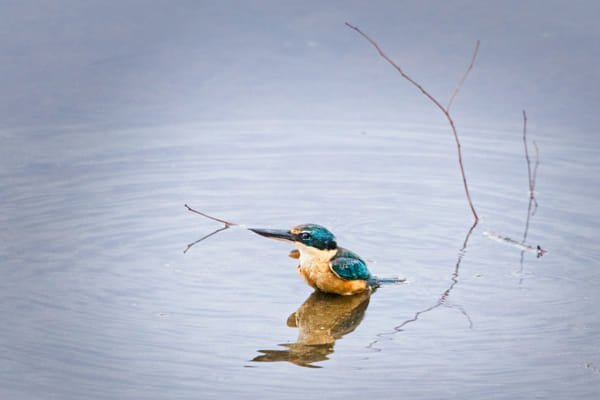
Kanyinak or Sacred Kingfisher (Todiramphus sanctus). Northam, Western Australia. Exposure: 1/1000 sec, f6.3, ISO 1250.


 Kanyinak by Paul Amyes on 500px.com
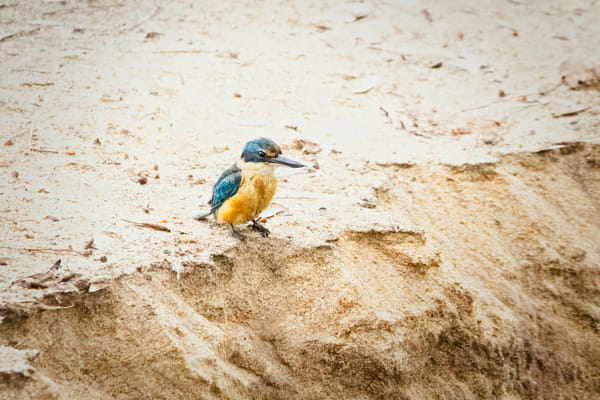
Exposure: 1/1000 sec, f6.3, ISO 3200.


Just When You Thought You’d Seen Everything

Wayan by Paul Amyes on 500px.com
Wayan or White-faced Heron (Egretta novaehollandiae). Northam, Western Australia.


 Kaaka-baaka by Paul Amyes on 500px.com
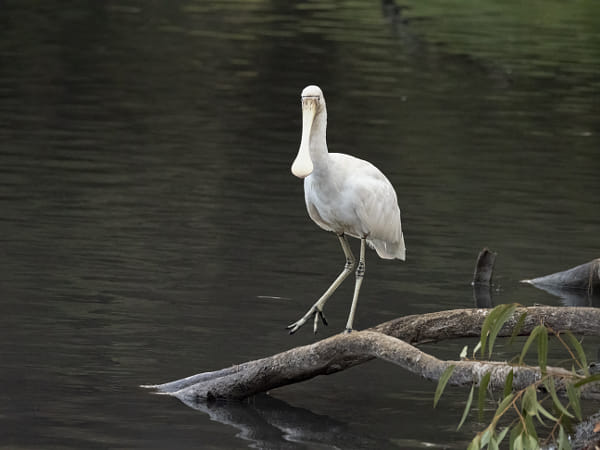
Kaaka-baaka or Yellow-billed Spoonbill (Platalea flavipes). Northam, Western Australia.


I’ve been writing about visiting the great Wheatbelt Metropolis of Northam for birding several times this year and I thought I’d got a good handle on what there was to be found along the Avon River there. But this last visit I was genuinely surprised. We’d parked the car at Enright Park with the intention of walking along one bank towards the weir and the Peel Terrace traffic bridge, cross the river and walk back on the other side. The light wasn’t particularly nice – in fact it was quite overcast and dark. There wasn’t much to see – a couple of White-faced Herons (Egretta novaehollandiae), Yellow-billed Spoonbills (Platalea flavipes) and a few Silver Gulls (Larus pacificus).  At that point I was a bit bored and my mind was drifting off with thoughts of coffee and cake at the bakery. Then as we crossed the traffic bridge I noticed a tiny little blob bouncing around on the island in the middle of the river. As I walked to get a better look I saw that it was an Australian Spotted Crake. Well that was a first. I was, I have to admit pretty excited after that. As we crossed the weir I saw Common Sandpipers (Actitis hypoleucos), Black-winged Stilts (Himantopus himantopus) and Black-fronted Dotterels. By then I was fully engaged and all thoughts of leaving had evaporated. Northam – you never know what you may find.
 

Australian Spotted Crake by Paul Amyes on 500px.com

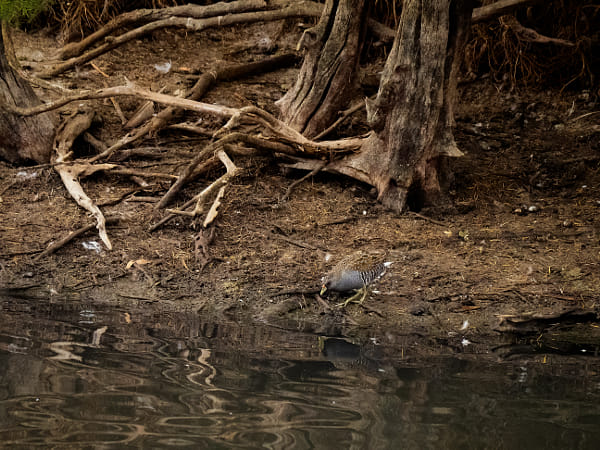
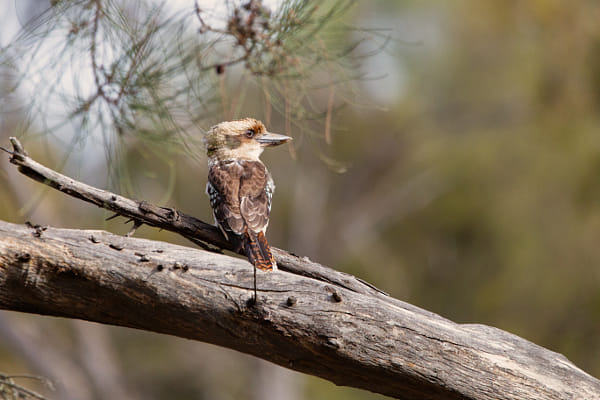
Australian Spotted Crake (Porzana fluminea). Northam, Western Australia.


Djandjarak by Paul Amyes on 500px.com
Djandjarak or Black-winged Stilt (Himantopus himantopus). Northam, Western Australia.


Common Sandpiper by Paul Amyes on 500px.com
Common Sandpiper (Actitis hypoleucos). Northam, Western Australia.


Nidoolyorong and Common Sandpiper by Paul Amyes on 500px.com
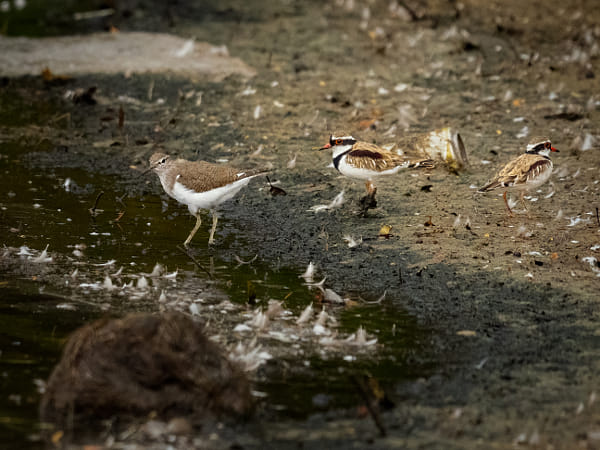
Common Sandpiper (Actitis hypoleucos) and Nidoolyorong or Black-fronted Dotterel (Elseyornis melanops). Northam, Western Australia.


Nidoolyorong by Paul Amyes on 500px.com
Nidoolyorong or Black-fronted Dotterel (Elseyornis melanops). Northam, Western Australia.


Karrak – the Red-Tailed Cockatoo

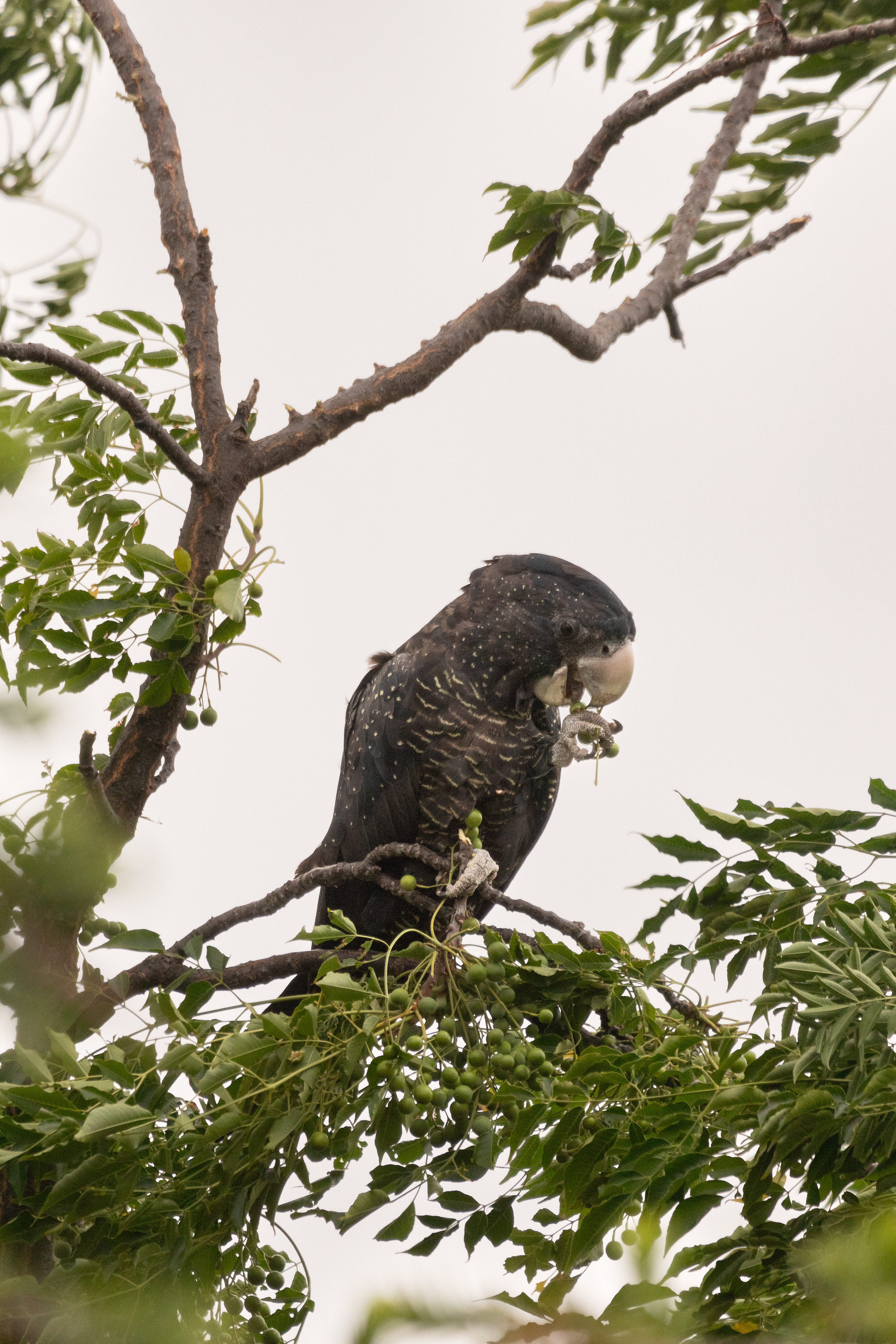
Karak or Red-tailed Black Cockatoo (Calyptorhynchus banksii subs samueli) feeding on Cape Lilac AKA WhiteCedar (Melia azedarch). York, Western Australia.


The last couple of weeks I’ve been thrilled to see Red-Tailed Cockatoos (Calyptorhynchus banksii), called Karrak by the Nyoongar, feeding in the Cape Lilac trees of our neighbours. 


Karak or Red-tailed Black Cockatoo (Calyptorhynchus banksii subs samueli) feeding on Cape Lilac AKA WhiteCedar (Melia azedarch). York, Western Australia.


There are four subspecies found in Western Australia – Cb. Naso (referred to as the Forest Red-tailed Black Cockatoo), Cb. Samueli (the Inland Red-tailed Black Cockatoo), Cb. macrorhynchus (sometimes referred to as the Great-billed Cockatoo, Banksian Black-Cockatoo, or Banks’ Black-Cockatoo), and the recently discovered Cb. Escondidusa. Now which species the ones in our neighbourhood are I couldn’t tell you – probably Inland or Forest Red-Tailed Black Cockatoos. All I know that is according to the experts we shouldn’t have any, but here they are.

The Nyoongar creation story for the Red-Tailed Black Cockatoo.


Ngoolyak or Carnaby’s Black-cockatoo (Calyptorhynchus latirostris). Yanchep National Park, Western Australia.


Dwert the Dingo


Djidi-djidi or Willie Wagtail (Rhipidura leucophrys). Avon Walk Trail, York, Western Australia.


Kwilom or purple swamp hen (Porphyrio porphyrio subsp bellus) picking over vegetation on shore of the lake. Lake Leschenaultia, Western Australia.


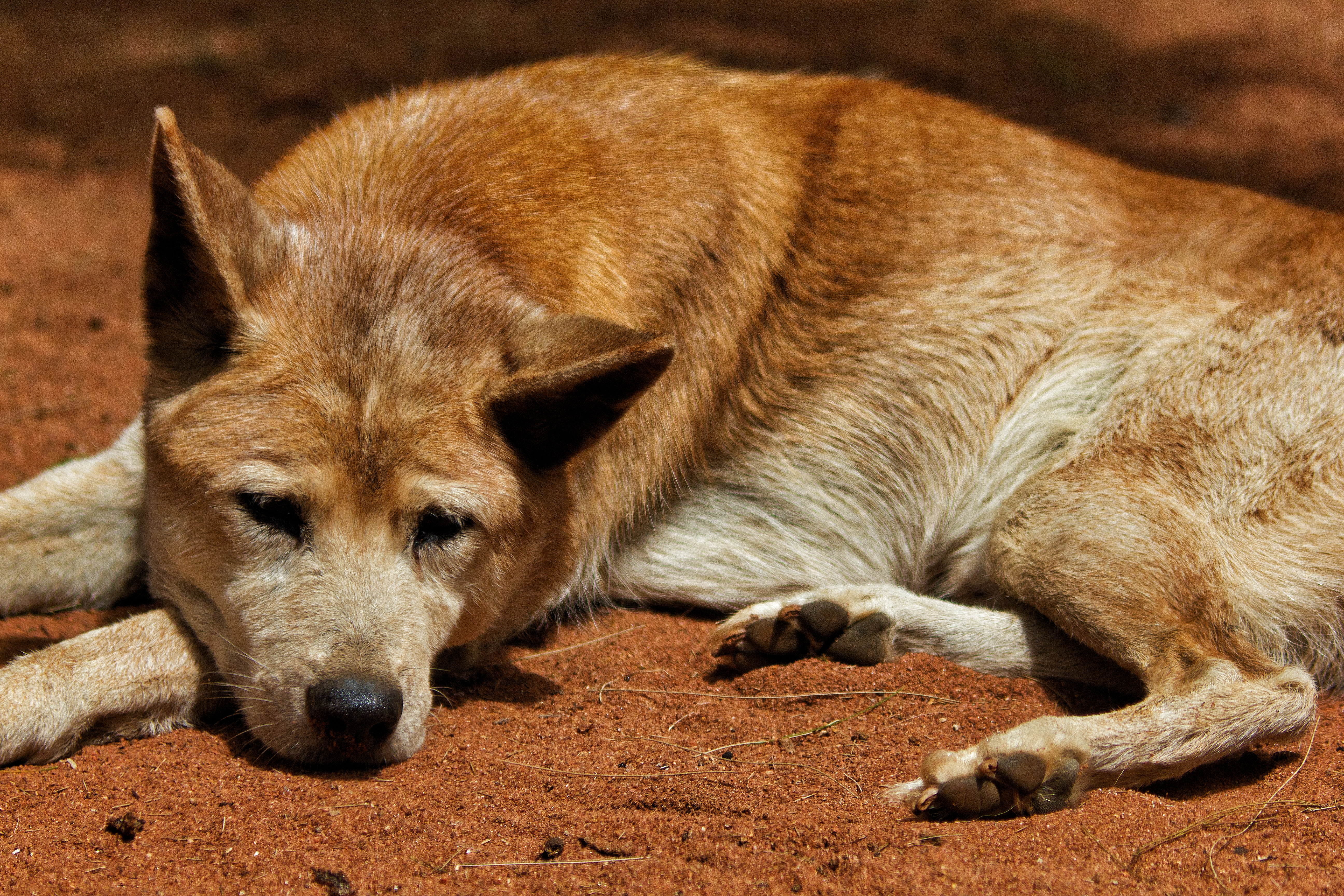
One day Ngoolyak the white-tailed black cockatoo saw a fight between Dwert the Dingo and Djidi-djidi the Willie Wagtail. Ngoolyak sided with Dwert and joined the fight. Kwilom the Purple Swamp Hen saw the commotion and tried to break them up. He picked some sedge and started beating Ngoolyak across his back to get him to back off. Ngoolyak started screaming and tried to fend off the blows by raising his tail. The sedge oozes red sap when it is cut and it left great red marks where it struck. As he screamed Ngoolyak’s voice became hoarse and he could no longer make his normal call of “wola” and the screeching sounded more like “Karrak!” instead, and that is how Ngoolyak the White-tailed Cockatoo became Karrak the Red-tailed Cockatoo.


Karak or Red-tailed Black Cockatoo (Calyptorhynchus banksii subs samueli) feeding on Cape Lilac AKA WhiteCedar (Melia azedarch). York, Western Australia.


Karak or Red-tailed Black Cockatoo (Calyptorhynchus banksii subs samueli) feeding on Cape Lilac AKA WhiteCedar (Melia azedarch). York, Western Australia.


Burlong Pool

Burlong Pool is about 4.5 Km south west of the Wheatbelt Metropolis of Northam and is one of the termini of the Dorntj Koorliny or Walking Together Track. The Ballardong Nyoongar  believe that it is a significant place for the Dreamtime Wagyl or Rainbow Serpent. The Wagyl created the landscape of the South West of Western Australia, looks after the fresh water and also helps bring the rains. Burlong pool was/is the Wagyl’s summer resting place and is regarded as a sacred site.

We’ve been visiting the site for years as we often take the dog with us to Northam when we go shopping (not in summer) and we use it as a walk place for her and to stretch our legs. Every time we went we’d see a lot of wildlife and I always came away thinking I must go and take some photos. Well that time came and we headed out early one morning. On getting there we were met with raucous calling from an enormous flock of corellas. We stayed for a bit watching them and the other birds and then we started walking the Dorntj Koorliny Track towards Northam. Even though the weather was very warm it was an enjoyable walk and we saw heaps.


Kadjinak by Paul Amyes on 500px.com
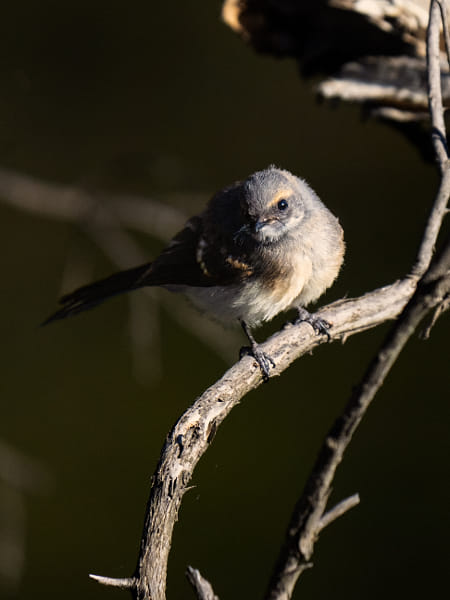
Kadjinak or Grey Fantail (Rhipidura albiscapa). Dorntj Koorliny, Burlong Park, Northam, Western Australia.


Grass Seeds by Paul Amyes on 500px.com
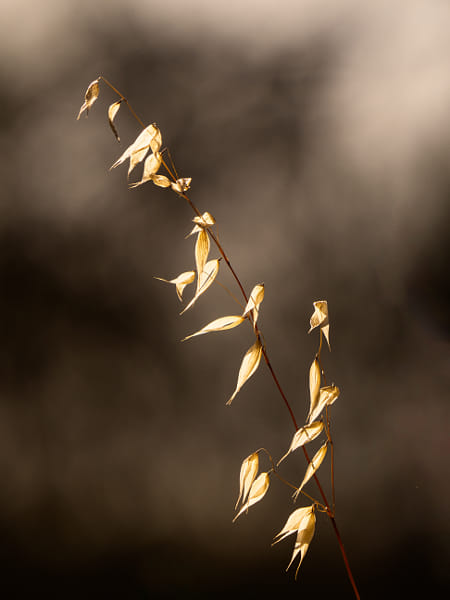
Dorntj Koorliny, Burlong Park, Northam, Western Australia.


Nidoolyorong by Paul Amyes on 500px.com
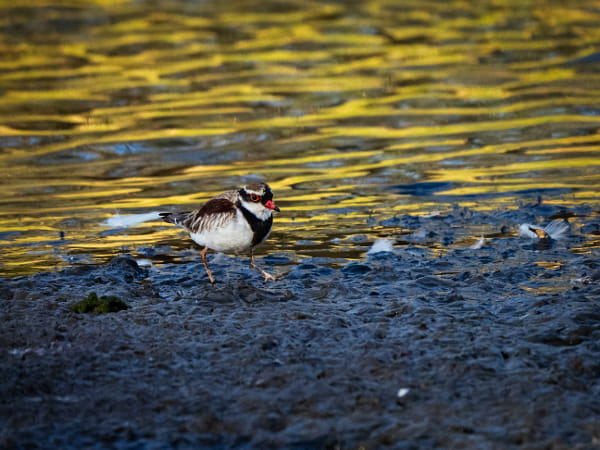
Nidoolyorong or Black-fronted Dotterel (Elseyornis melanops). Dorntj Koorliny, Burlong Park, Northam, Western Australia.


Djindjokoor by Paul Amyes on 500px.com
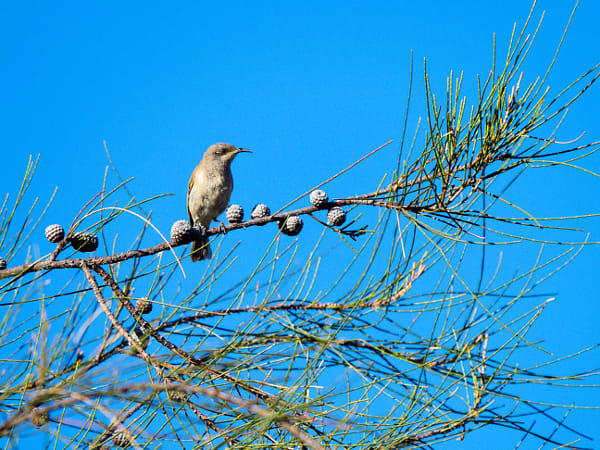
Djindjokoor or Brown Honeyeater (Lichmera indistincta). Dorntj Koorliny, Burlong Park, Northam, Western Australia.


Kakak by Paul Amyes on 500px.com
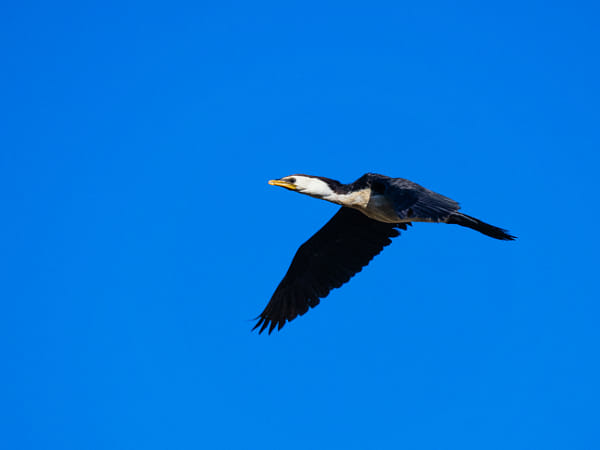
Kakak or Little Pied Cormorant (Phalacrocorax melanoleucos). Dorntj Koorliny, Burlong Park, Northam, Western Australia.


Koordjokit by Paul Amyes on 500px.com
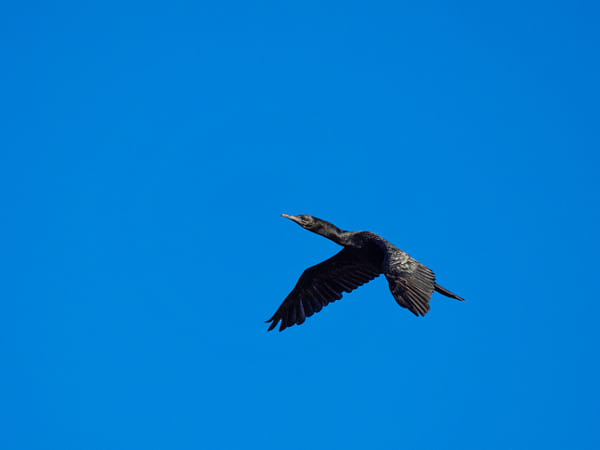
Koordjokit or Little Black Cormorant (Phalacrocorax sulcirostris). Dorntj Koorliny, Burlong Park, Northam, Western Australia.


Bilya (Noongar – River) Walk Track

The Bilya (Noongar – River) Walk Track was created by the Toodyay Friends of the River and follows the Avon River for 6.5Km on its western bank. For me one of the highlights of the walk is walk from from Millard’s Pool (which is the largest pool on the river and was the site of Toodyay’s first swimming pool) to John Masters Bird Hide by Red Banks Pool a Nyoongar heritage site. If the wildlife and the wonderful walk aren’t enough of a draw card then know this – no visit to Toodyay is complete without a stop off at the amazing Toodyay Bakery. 


Kakara by Paul Amyes on 500px.com

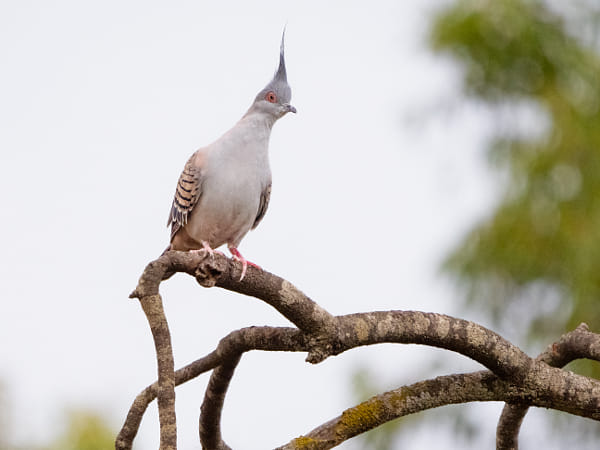
Kakara or Crested Pigeon (Ocyphaps lophotes). Bilya Walk Track, Toodyay, Western Australia.


Wayooda by Paul Amyes on 500px.com
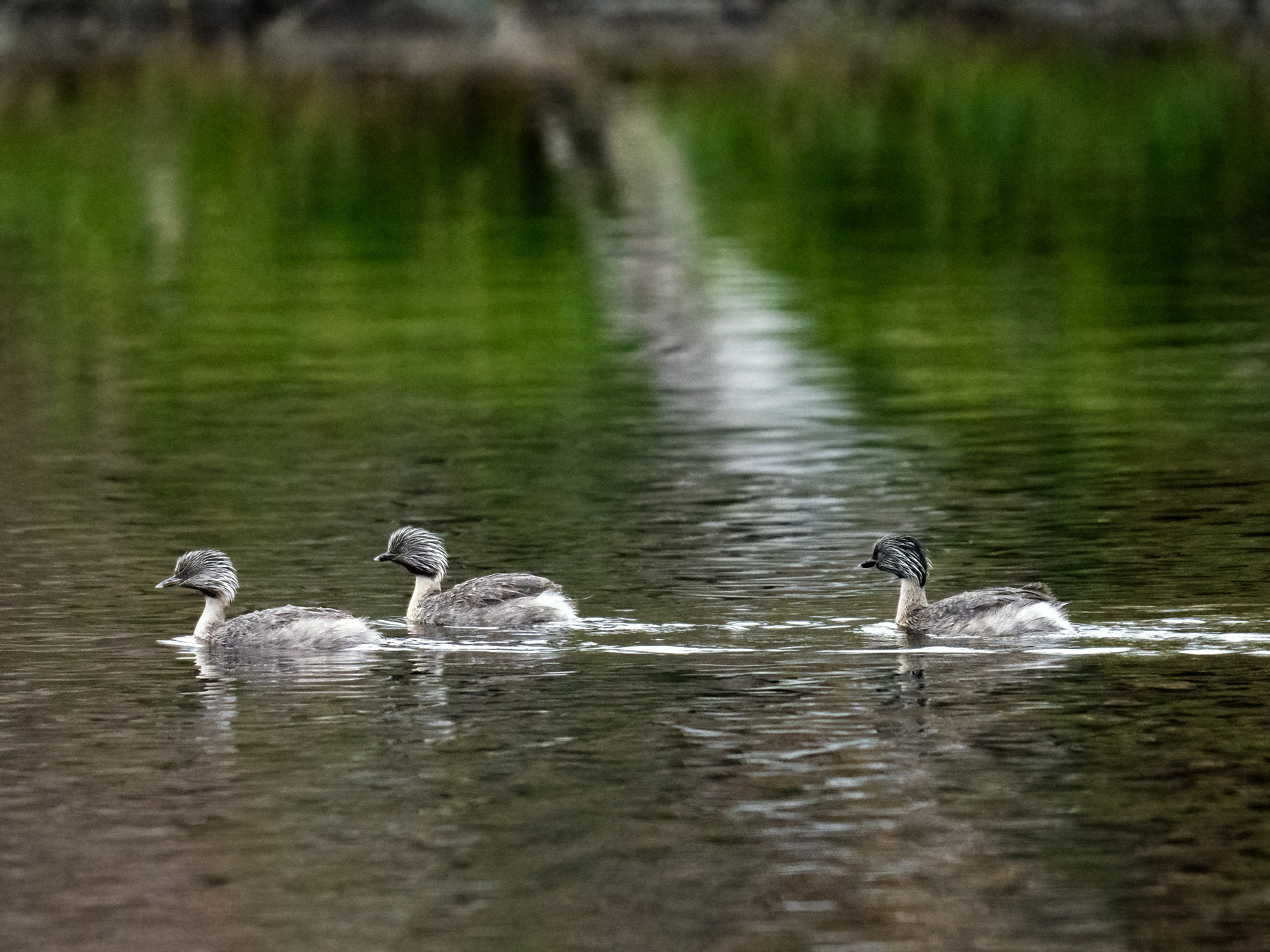
Wayooda or Hoary-headed Grebe (Podiceps poliacephalus). Bilya Walk Track, Toodyay, Western Australia.


Kakak and Ngalkaning by Paul Amyes on 500px.com
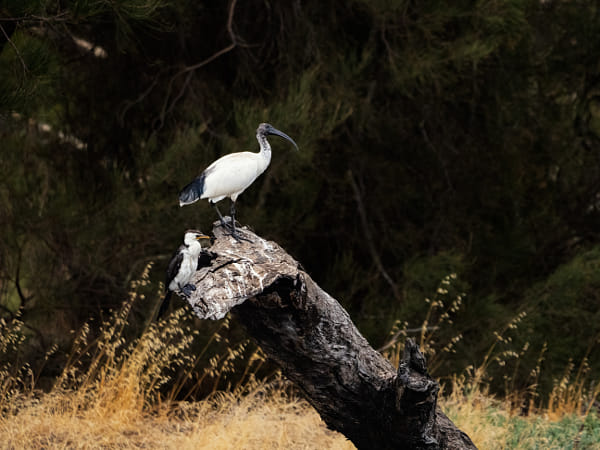
Kakak or Little Pied Cormorant (Phalacrocorax melanoleucos) and Ngalkaning or Australian White Ibis (Threskioris molucca) Bilya Walk Track, Toodyay, Western Australia.


Boodalang by Paul Amyes on 500px.com
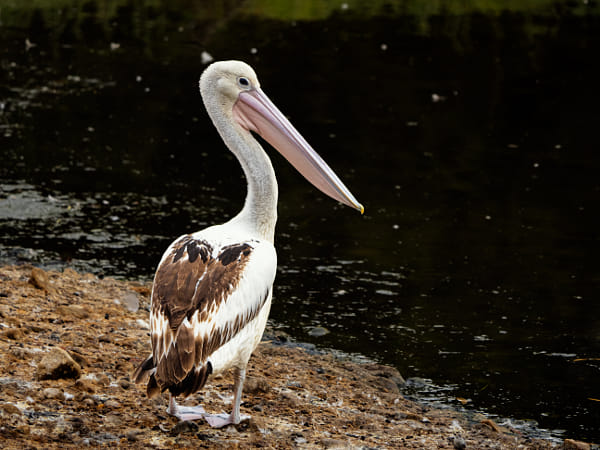
Boodalang or Australian Pelican (Pelecanus conspicillatus). Bilya Walk Track, Toodyay, Western Australia.


Hotter Than…

… than a Vindaloo Curry with extra chilli and a side serving of chilli. Man has it been hot. I mean it’s been so hot that your eye balls sweat. Try and take a cold shower to cool down and the water coming out of the cold tap is hot. The dog refuses to go for a walk because the pavement is blisteringly hot. We did get a little respite for a day, the temperature dropped by 10º to 34ºC and everyone said it was chilly enough to look for a sweater. The third round of the seventh circle of Dante’s Inferno is a great Plain of Burning Sand scorched by great flakes of flame falling slowly down from the sky and it is an apt description of this summer here in the Wheatbelt of Western Australia. Cyclone Sean has a lot to answer for.

Kaa-kaa or Laughing Kookaburra by Paul Amyes on 500px.com
A very happy looking Kaa-kaa or Laughing Kookaburra (Dacelo novaeguineae).Avon Trail, York, Western Australia.


Yet I’m amazed how the natural world carries on. The Rainbow Bee-Eaters chicks have successfully fledged and are busy building themselves up for the long flight north at the end of March. Splendid Fairy Wrens, Thornbills and Silvereyes still look for insects in the undergrowth. Kookaburras, crows and magpies can be seen looking for the unwary to feed upon. The farmers paddocks are now just bleached stubble. The mice and other small animals that live in them have nowhere to hide and are easy pickings for the Black Shouldered Kites and Nankeen Kestrels.


Djer-djer by Paul Amyes on 500px.com
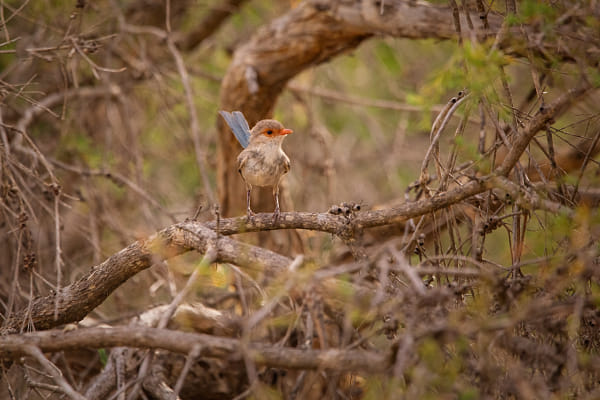
Female Djer-djer or Splendid Fairy-wren (Malarus splendens subs splendens). Avon Trail, York, Western Australia.


Birin-birin by Paul Amyes on 500px.com
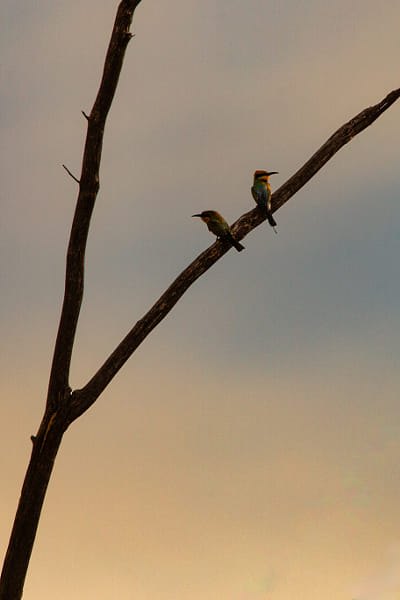
Birin-birin or Rainbow Bee-eaters (Merops ornatus) in the last light of the day. Avon Trail, York, Western Australia.


Walking along the river in the early morning or late evening it’s possible to see the birds, but they quickly retreat to places of deep shade as the temperatures rise. Come about 10 o’clock in the morning until about five in the afternoon they are almost totally silent. Despite the heat there is still quite a volume of water in the river. It is the water that enables the wildlife to survive.


Kaa-kaa or Laughing Kookaburra by Paul Amyes on 500px.com

Kaa-kaa or Laughing Kookaburra (Dacelo novaeguineae).Avon Trail, York, Western Australia.

Dawn Breaks

Sitting on the banks of the River Avon in Northam waiting for the first light of the sun to seep into the shadows and herald the start of a new day. The birds on the sandbanks and in the trees are just beginning to stir. I was there to photograph Black-fronted Dotterels.


Kaaka-baaka by Paul Amyes on 500px.com
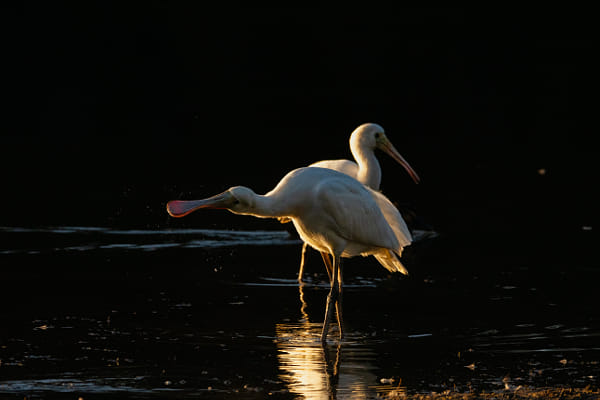
Kaaka-baaka or Yellow-billed Spoonbill (Platalea flavipes). Northam, Western Australia.


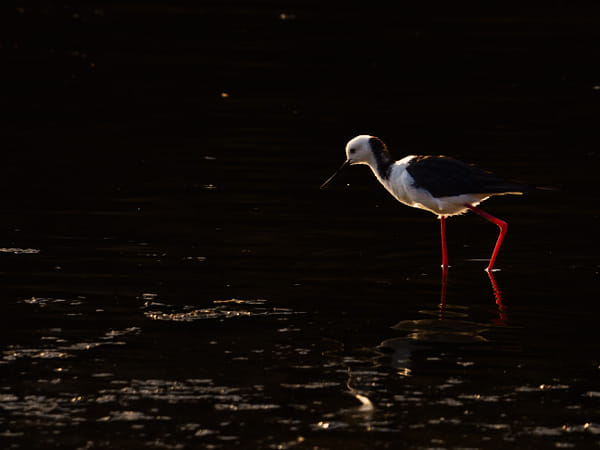
As the sun’s light filtered through the trees it created a beautiful chiaroscuro that Renaissance artists could only dream about. The Black-winged Stilts and the Yellow-billed Spoonbills were literally glowing against the dark background. Light like this is magical and you can see why it was used in so many religious paintings. The oft given advice about photographing birds and other animals is to always have the sun at your back. If you do this then you miss the opportunity to create something dramatic. You have to act fast as the light doesn’t hang around and no sooner than you are aware of it it is gone. That’s what happened on this morning. From just a faint hint  and then it floods in and the shadows disappear.


Djandjarak by Paul Amyes on 500px.com
Djandjarak or Black-winged Stilt (Himantopus himantopus subsp. leucocephalus). Northam, Western Australia.


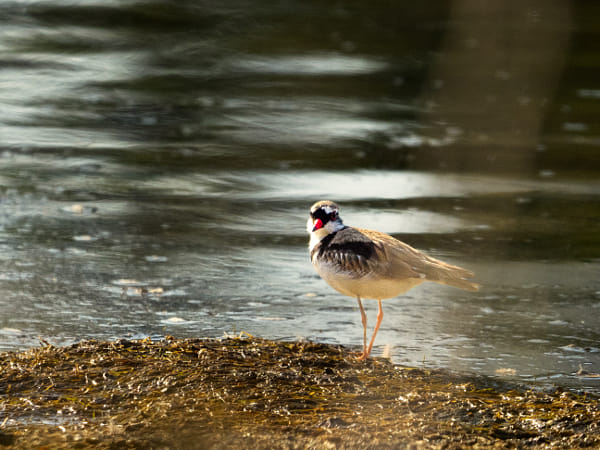
The Black-fronted Dotterels didn’t put in an appearance until I started walking back to the car. They obviously like a lie in. Although the light was past its best I still photographed them picking insects and small crustaceans from the mud and sand. It was after all what I gone to Northam for. 


Nidoolyorong by Paul Amyes on 500px.com

Nidoolyorong or Black-fronted Dotterel (Elseyornis melanops). Northam, Western Australia.

Guess Who’s Coming To Dinner?

Well it wasn’t Sidney Poitier that’s for sure.

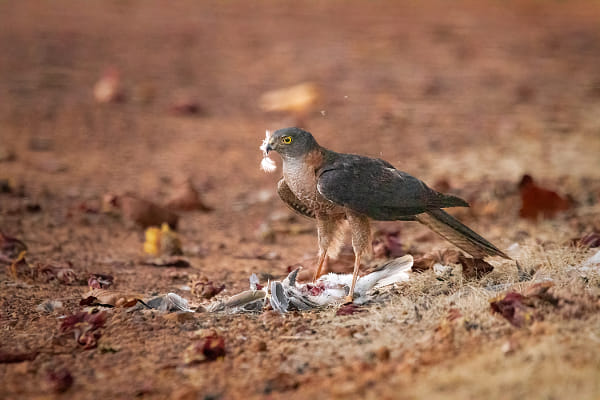
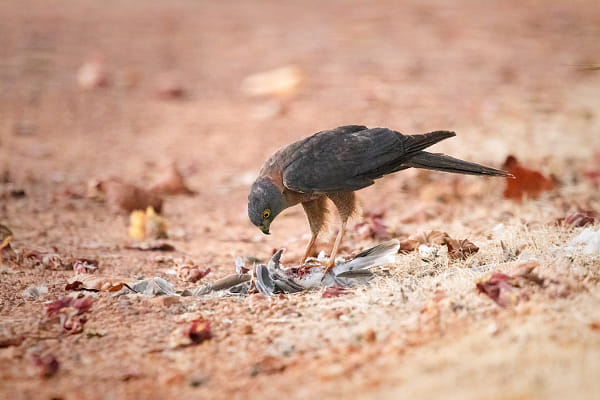
Things were just winding down for the evening when the Beloved Significant Other announced that there was a raptor eating a bird in our drive. I ran and grabbed the the first camera to hand with a long lens attached – my Canon 80d with Sigma 150-600mm lens. Using the dustbins as cover I managed to get quite close. I wasn’t sure what I was looking at in terms of species – at first I thought it was a Peregrine Falcon (Falco peregrinus) but I wasn’t entirely convinced. I did know what it was eating – a Laughing Dove (Streptopelia senegalensis) as there are plenty of them in the neighbourhood. It was quite a nervous bird constantly scanning the environment between mouthfuls. Like most raptors it had merely stunned its prey and it was a bit hard to watch as the dove squirmed about while being eaten. It died when the contents of the chest cavity were removed. But that’s nature for you – incredibly beautiful but undoubtedly cruel.


Djili-djili by Paul Amyes on 500px.com
Djili-djili or Collared Sparrowhawk (Accipiter cirrhocehalus) eating a laughing dove (Streptopelia senegalensis) in our driveway.


Djili-djili by Paul Amyes on 500px.com
All the best bits have been eaten.


I didn’t look at the photos until the morning. First off I marvelled at how well the 80d coped. It was the last stages of dusk and quite dark which meant using ISO 12800. The files were incredibly noisy but they cleaned up very well in Topaz DeNoise AI. The autofocus system on the 80d is very primitive compared to modern mirrorless cameras that now have bird detect autofocus, but it did a great job with only a couple of frames out of the 200 I shot being out of focus.


Canon EOS 80d
The Canon 80d – it maybe getting on a bit, but it is a very capable camera.


Sigma 150-600mm f5-6.3 DG
The Sigma 150-600mm f5-6.3 DG Contemporary lens. It offers a real bang for the buck.


What was the bird? Well it wasn’t a Peregrine Falcon, but a  Collared Sparrowhawk (Accipiter cirrhocephalus).