Garden For Wildlife

Where To Find Wildlife – part 1
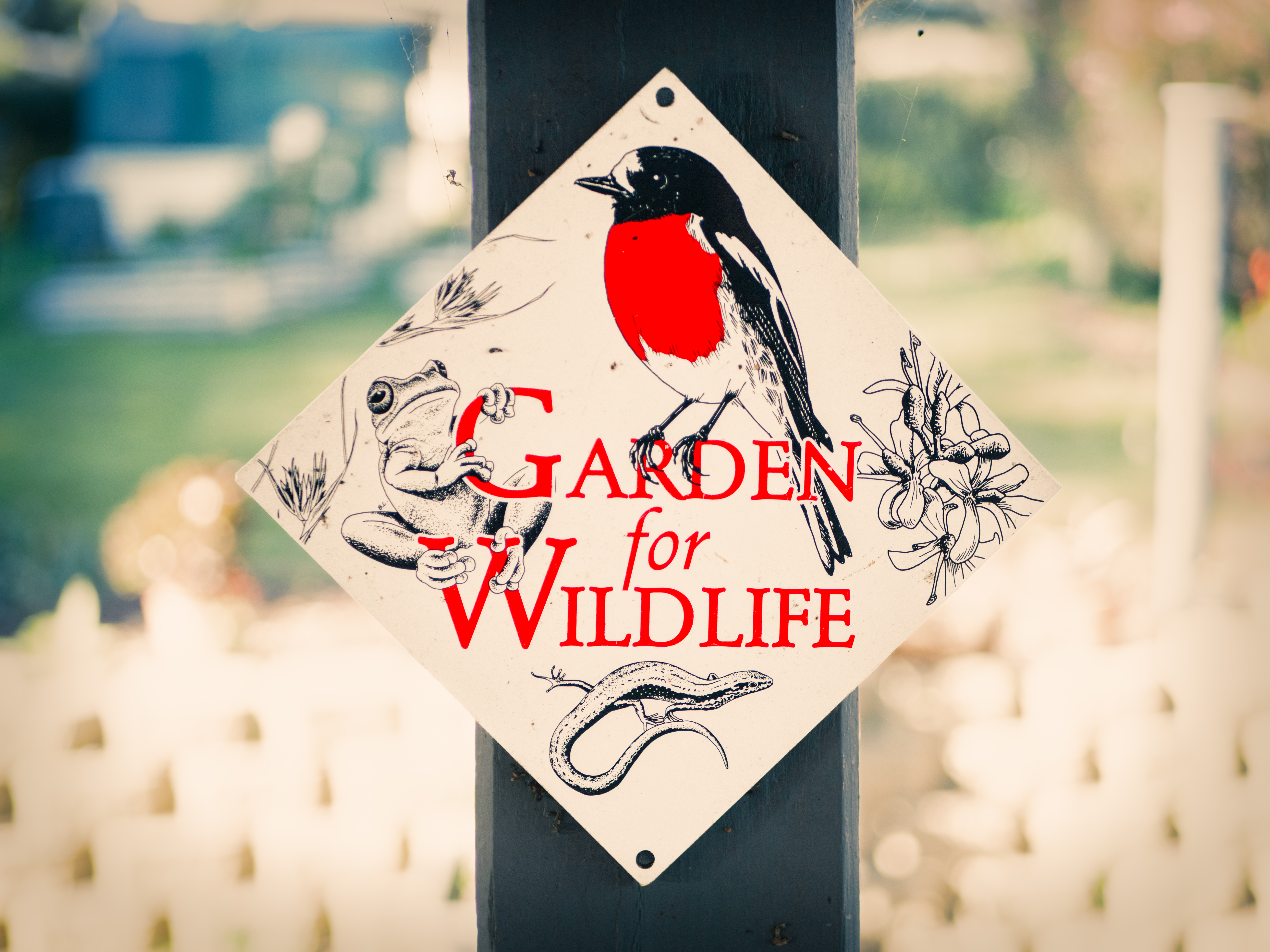


One of the most common statements made on social media is “I’d like to photograph wildlife, but, there is none where I live”. In the next couple of posts I’d like to unpack this and suggest ways of finding wildlife in your location.


While Bertie can be pretty wild at times he is not wildlife.


Australia’s iconic Koala is an example of charismatic wildlife.


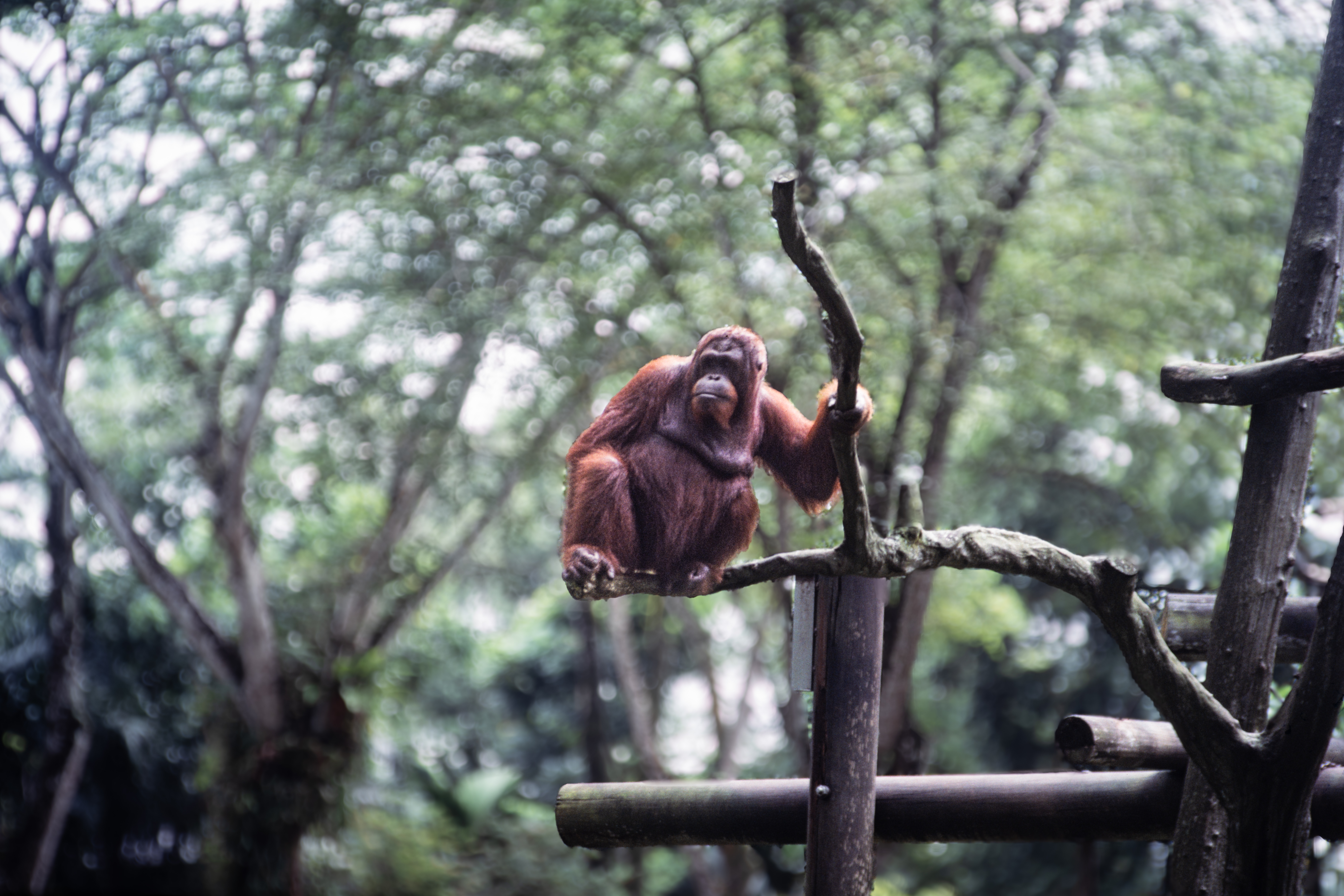
Orang-utans are another example.

Firstly we have to look at what people mean when they talk about wildlife. Wildlife is defined as undomesticated animals which can exist in their natural habitat, but has come to include all animals that live wild in an area without being introduced by humans. So that is a pretty broad definition and gives lots of scope. Having said that when most people talk of wildlife they tend to think only of certain charismatic species. Charismatic species are those animals which are visually appealing and generate public empathy to the extent that conservation groups and the media leverage those animals to the detriment of other species. The common features are that they are easily anthropomorphised, look cute, are large with big eyes, and they evoke strong positive emotions, making people want to protect them. Examples are giant pandas, gorillas, orang-utan, and koalas. The terms wildlife or wild animals cover a much broader range and includes animals rarely thought about.


Highly unlikely I’ll ever encounter a Polar Bear in the Wandoo National Park. Funnily enough I did photograph this one in Singapore which still seems highly unlikely.


We also have to take into account your location. In my case walking around my local national park expecting to photograph polar bears is delusional. To start any photographic project or endeavour you will have more success if you have accessibility, time, and certain equipment. The equipment side is the easy part of the equation and you don’t need vast sums of money and I’ve written about how to go about wildlife photography on a budget previously.
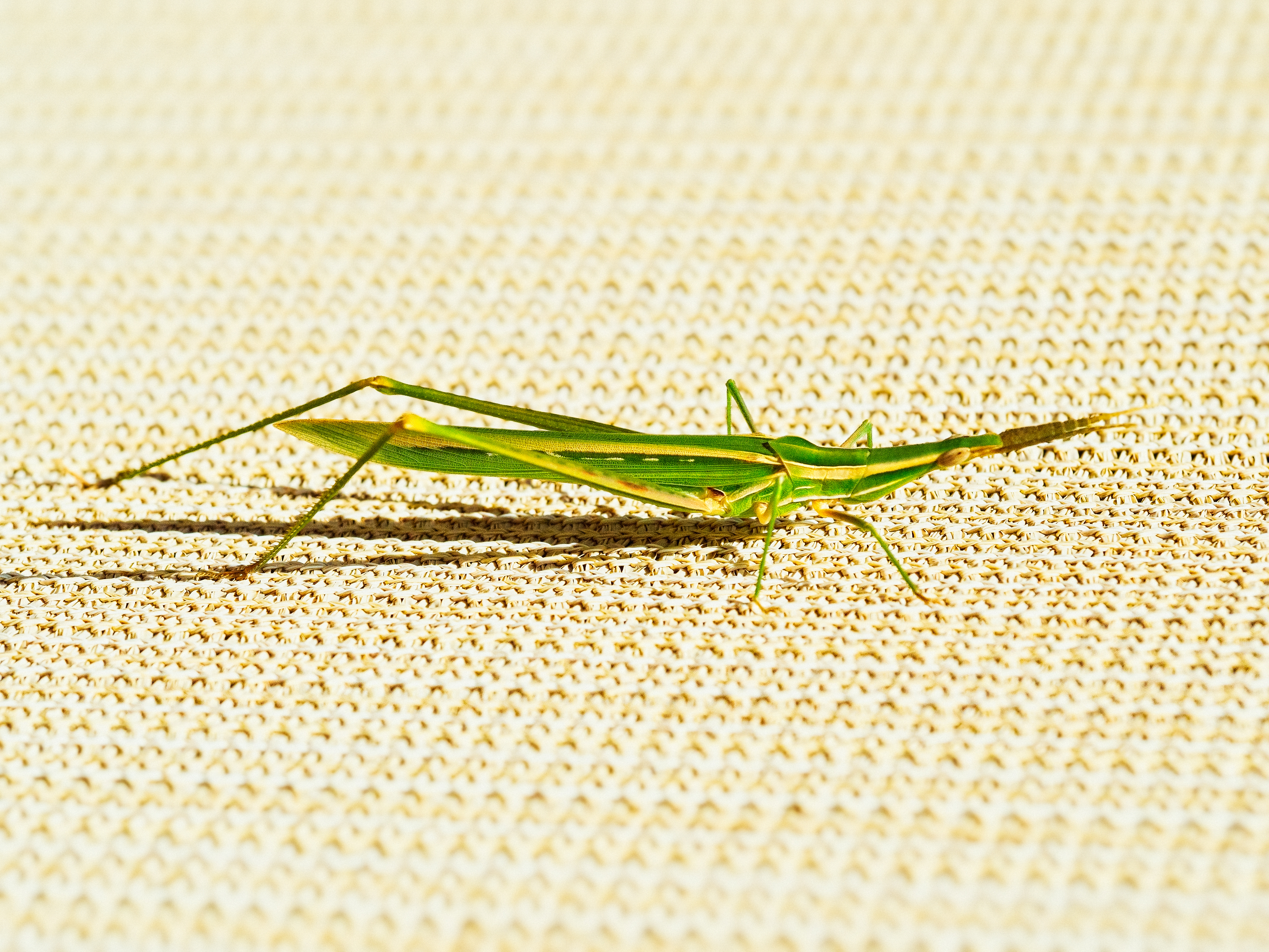
 

This Giant Green Slantface Grasshopper (Acrida conica) is not what comes to most people’s minds when thinking about wildlife.


The same could be said of this Blackbarred Mantis (Mantis octospilota).


At this stage it is time to think about what you want to photograph. Most people decide to photograph birds as that is what most comes to mind when talking about garden wildlife. I’ve known a couple of people who have decided to photograph in invertebrates they find in their garden. I’ve seen YouTube videos where people have hedgehogs or foxes come to their garden and they’ve gone out to take pictures of them as their main subject. We have resident frogs and bob tailed lizards in the garden and have had goannas and gwardars come visit. I think the neighbours chickens attract them.
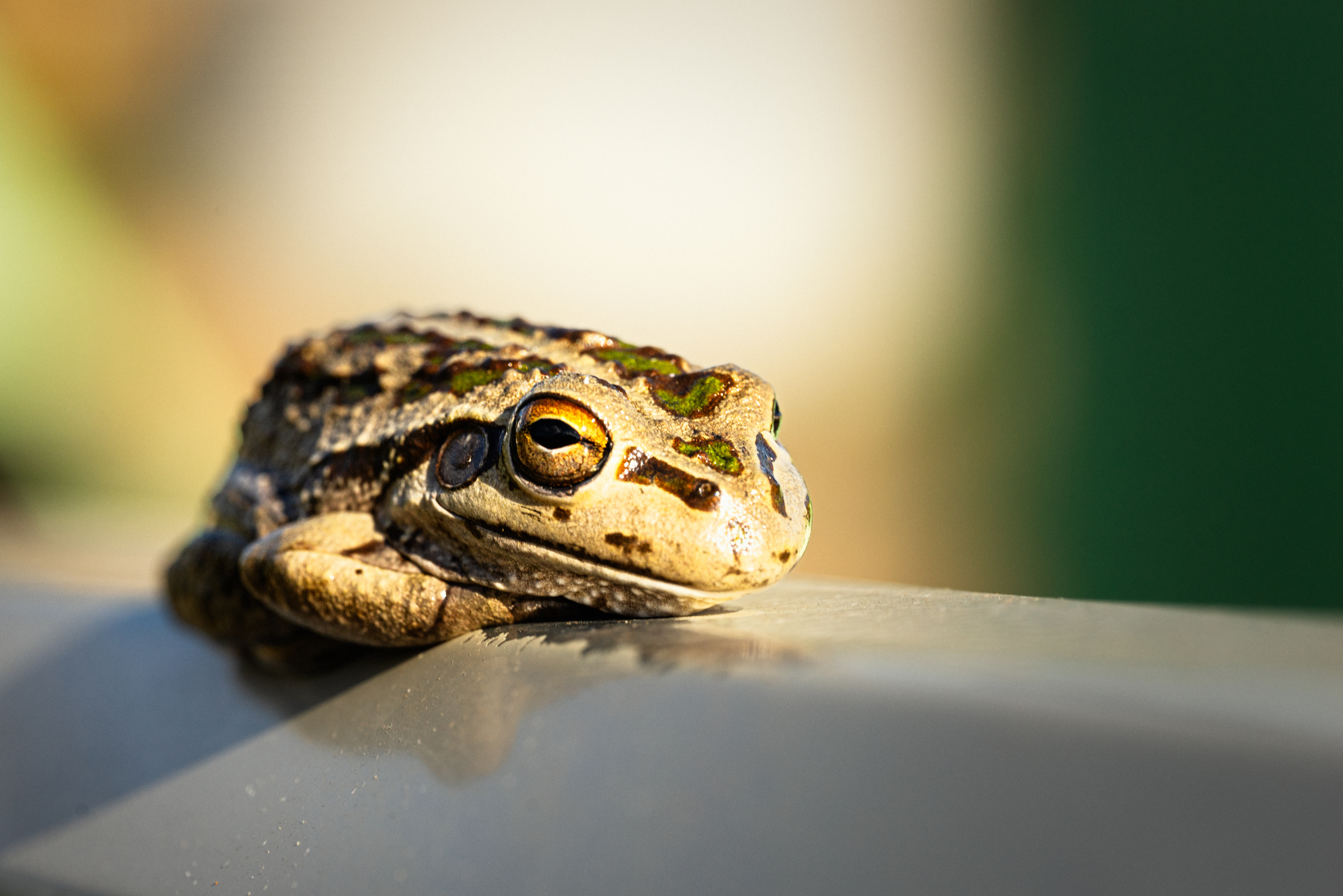
 

Motor Bike Frog [Litoria moorei (Copland 1957)]. Usually heard rather than seen.


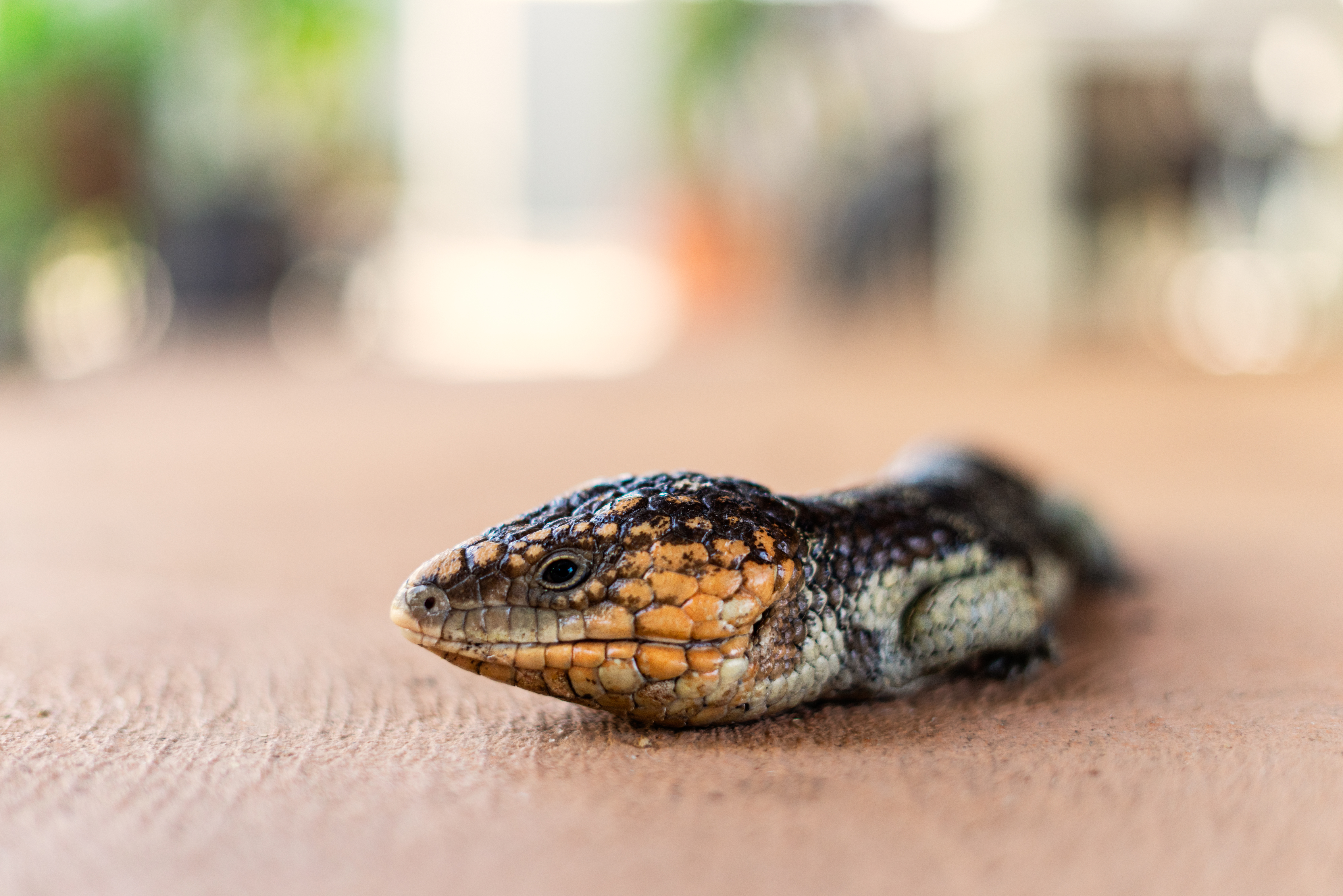
Big Bob the Bob Tailed Lizard (Tiliqua rugosa) on the prowl on the back patio.


My first forays into wildlife photography were in the garden and I think this is one of the best places to start because you have access and can observe what is happening through out the day and all through the seasons. Also if it is your garden to can modify or make alterations to attract more animals. I realise that not everyone has this luxury, but I do believe that with a bit of planning and a small amount of expenditure you can bring in animals. For those who don’t have the privilege then perhaps you have some access to some communal areas or have a friend or relative that would let you use theirs. So what do you need to do do? Well I can’t be very specific as my experience is in the Wheatbelt of Western Australia which is probably very different to where you live. But the basic principal is that all animals need three things. Food, water and shelter. So if can provide those you’ll get wildlife. For more detailed information the following links will help you:-

Inevitably the question of feeding wild birds comes up. Here in Western Australia it is illegal to feed native wildlife, including all native birds, without a license or lawful authority. Having said that around 30-50% of households do. The silly thing is you can walk into just about any supermarket and buy products for that explicit purpose. I suppose if you are going to do this do it so it benefits the animals in the long term. Give appropriate healthy food in small quantities so that they don’t become dependent on human handouts. In Western Australia with our long hot summers the best thing you can provide is water and plant native species that can provide food and shelter. Along with water we just put out seed which attracts Ring Necked Parrots, Galahs, Zebra Finches and laughing doves.
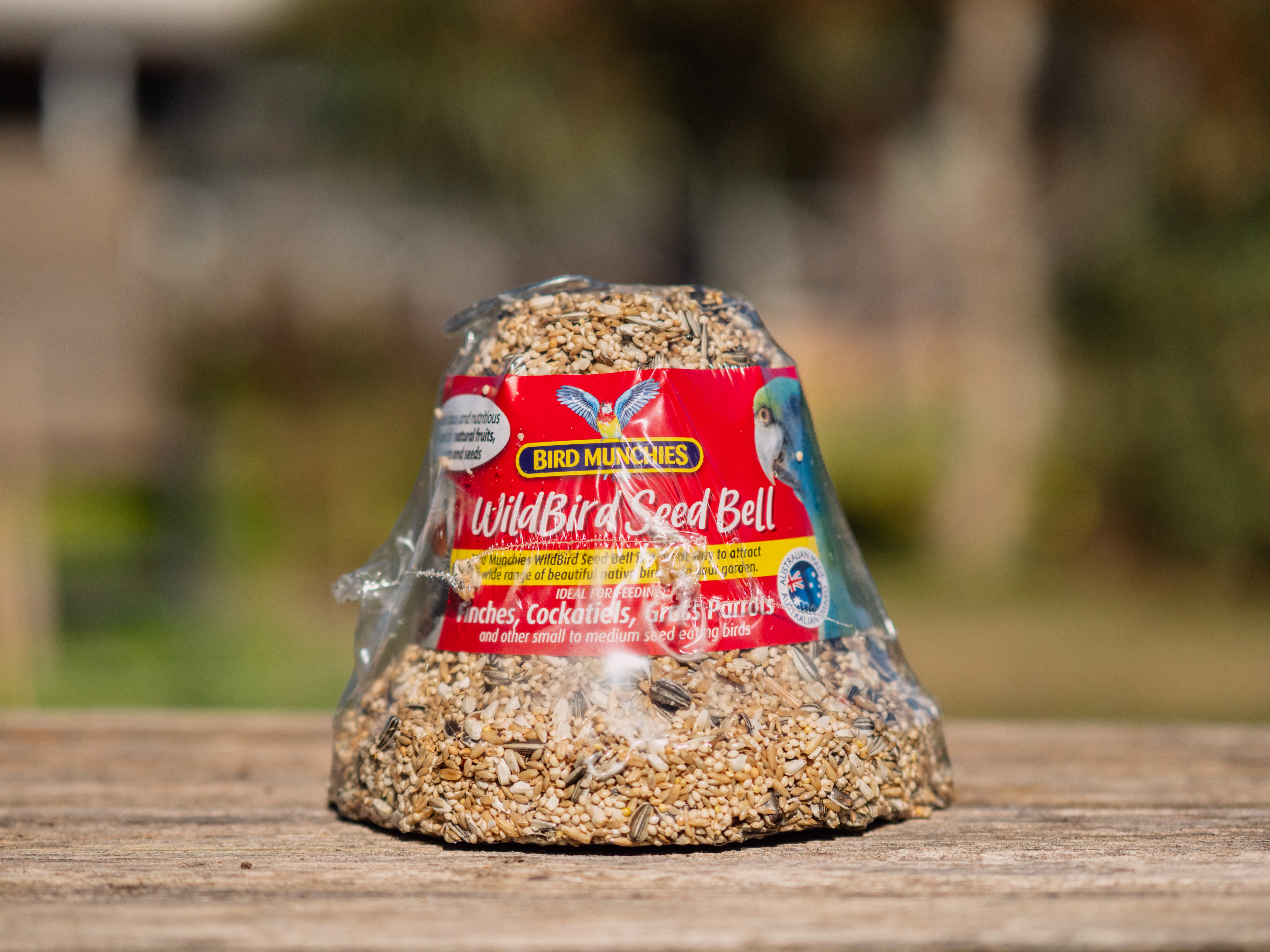
 

Although it is illegal to feed wildlife in Western Australia our local supermarket does a roaring trade in these seed bells.


Australian Ringneck or Ring-necked Parrot (Barnardius zonarius subspecies semitorquatus) making free use of the seed bell.


Don’t expect instant results. It can take a little time before the local wildlife population realises that you’ve put out food and water. Put the food and water out where there is cover not in the middle of a wide open space. Also think about what you’re trying to attract – it maybe necessary to provide sources at ground level if you want to see things like frogs and lizards.
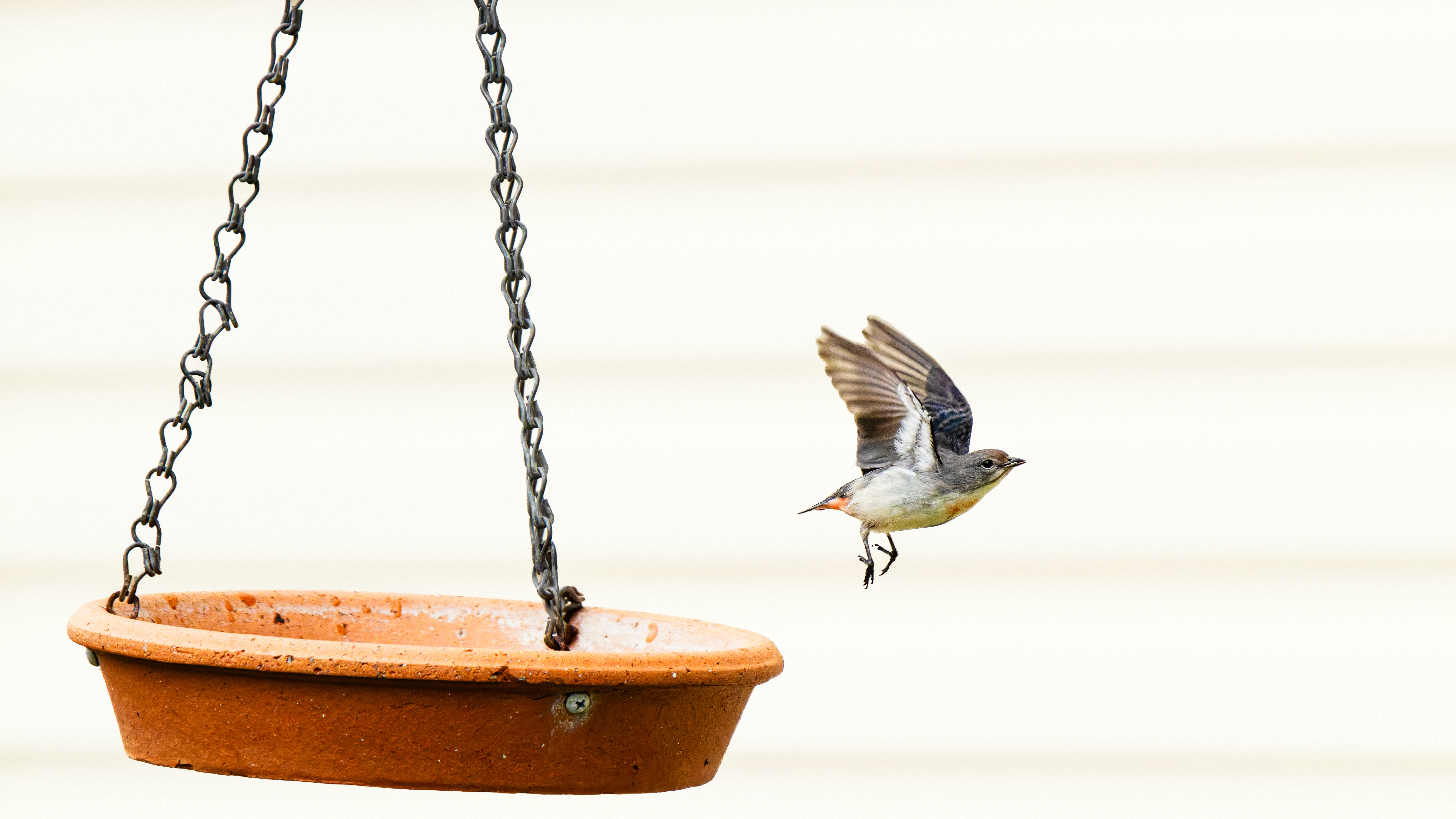


This photo of a Mistletoebird (Dicaeum hirundinaceum) leaving a bird bath was taken using a remote controlled camera.


Now that you’ve managed to attract animals to the garden how do you go about photographing them? Some people build a dedicated hide, other repurpose a shed or use a room in their house that faces onto the garden. Some use trail cameras. I don’t do any of those. I just wait quietly in the garden and photograph what turns up. A lot of the time I notice something interesting while doing something else and will just quietly slip into the house to retrieve my camera which is left permanently set up for birds. Lately I have been using my camera to photograph birds at the bird table and baths. I pre-set the focus and use a small aperture and trigger the camera via remote while I watch from a distance. All this is trial and error. You get a lot of duff photos, but occasionally you strike gold. As you find out what works and doesn’t you experiment with changing position and see how that effects things like the background. 
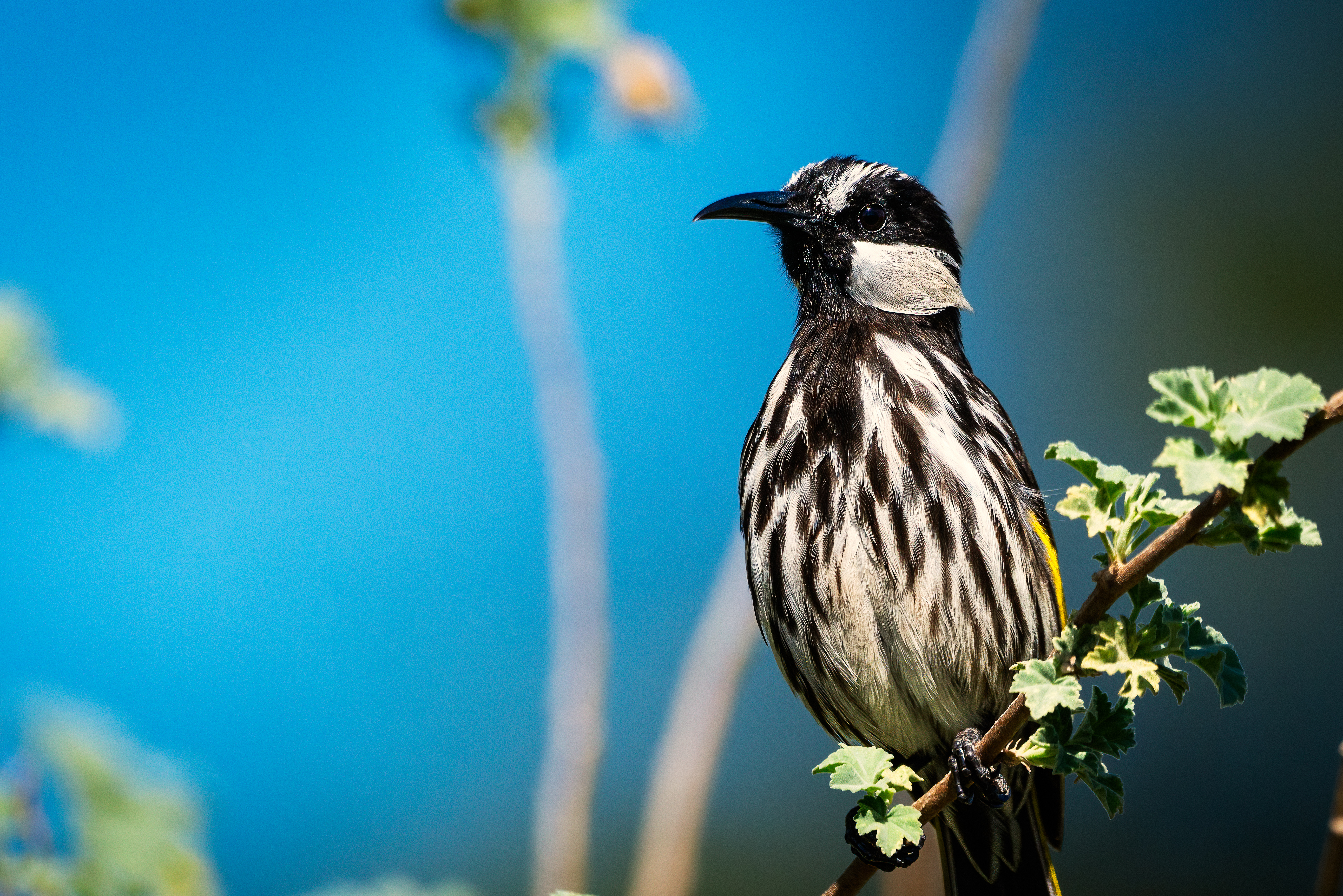
 

I saw this White-cheeked Honeyeater (Phylidonyris niger) while I was hanging out the washing. Luckily he obligingly stayed put while I got my camera.


I saw this Spiny-cheeked Honeyeater, Acanthagenys rufogularis while I was having a sundowner on the front veranda.


So why do I think the garden is a good place to start wildlife photography? Well it provides a readily available location where you can start to learn about animal behaviour. For example birds like to take off into the wind and many will defecate just before take off so if you see this happen you can time your shots to catch that moment.


If you know enough about bird behaviour photos such as this of a Zebra Finch (Taeniopygia guttata) become easier.


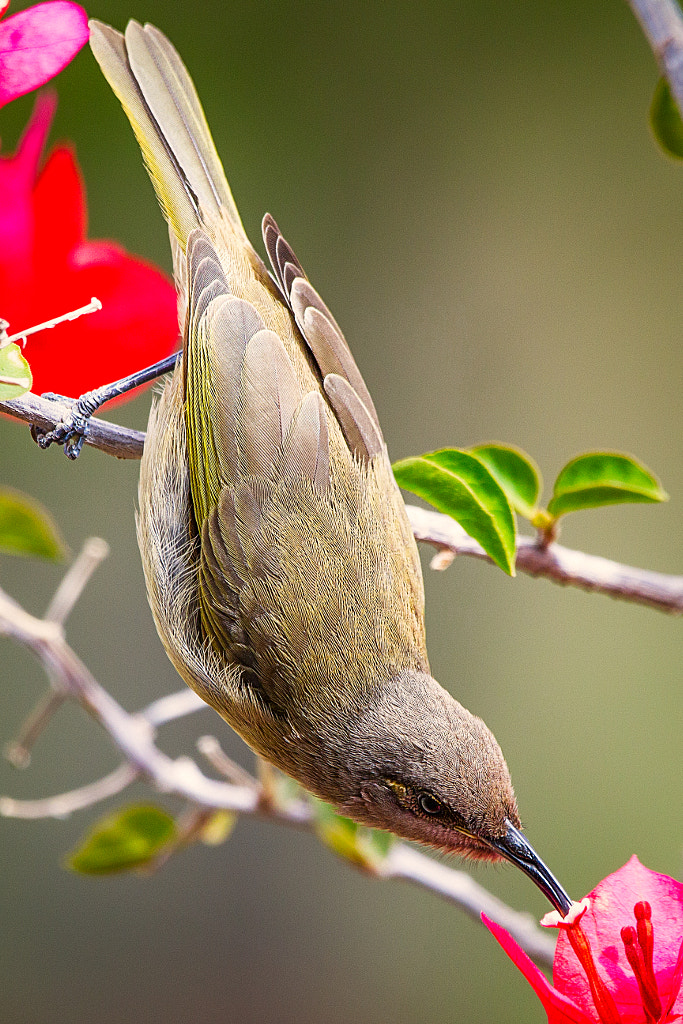
Djindjokoor or Brown Honeyeater (Lichmera indistincta) amongst grey saltbush.


It also gives you opportunity to fine hone your photographic skills. Learn how depth of field works with long and macro lenses. What shutter speeds you need to stop movement. How your cameras AF system works in different lighting conditions. At what level does the ISO have to get too before an image is unusable. This is important because it means that when you do go to a more “exotic” location you’ll have the skills to make the most of it. 
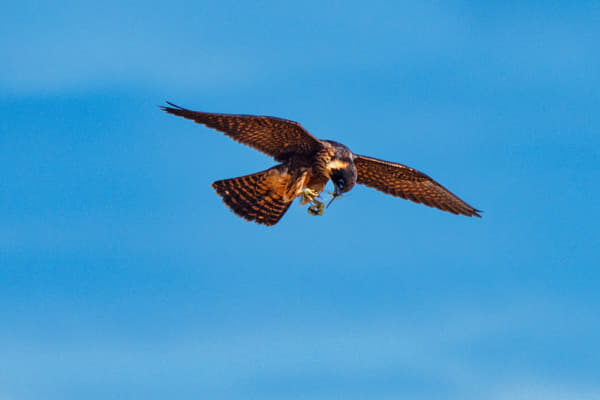
 

Australian Hobby by Paul Amyes on 500px.com
The skills honed in my back garden allowed me to capture this photo of an Australian Hobby, Falco longipennis, feeding on a dragonfly at Gantheaume Point in Broome, Western Australia.


Another benefit is that when you need to be on location at dawn you can just fall out of bed and grab a coffee at just the right time rather than get up up a couple of hours before dawn and drive for ages while you’re still half asleep. Or you might be able to grab an hour or so after work.

I hope this helps to give you ideas and inspire you.
Spring! Where did you Eric from?*

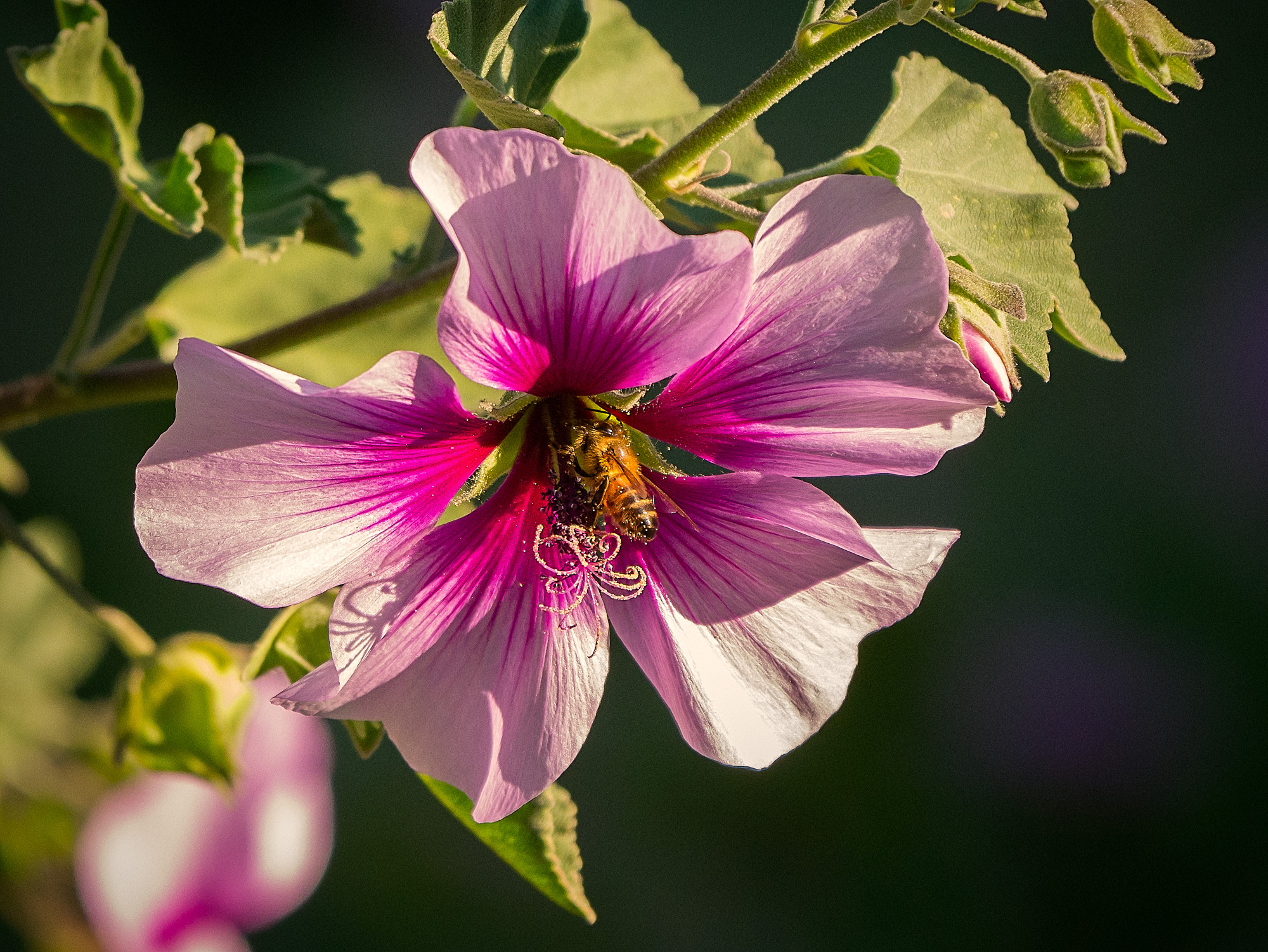
Bees feeding off a native hibiscus.


Well the garden has sprung into action like a very springy thing. The bees are busy with all the flowers, butterflies are flitting from bloom to bloom. The birds are getting really active. The usual inhabitants, the White Browed Babblers and the New Holland Honeyeaters are in a frenzy of nest building/repairs and generally chasing each other round the garden. We’ve got a new family moved in. A pair of Rufous Whistlers have built a nest in our peppercorn tree and can be regularly seen foraging for insects in the garden beds. The other day there was a commotion – all the small birds were squawking loudly. At first I thought it was the neighbours cat, but when I went outside to have a look I saw this blur descend out of the skies, level off just before hitting the ground and dash back up onto the TV aerial. It was a Nankeen Kestrel feeding off of small skinks and geckos that were foolish enough to sun themselves. The kestrel spent about 30 minutes repeating the behaviour until it flew off. Who needs to go on a wildlife safari with all this happening.


Although considered a pest the cabbage white butterfly (Pieris rapae) is the most conspicuous butterfly in Western Australia and is a sure sign that spring has arrived.


The eponymous New Holland Honeyeaters can be seen feeding off the Geraldton Wax and grevilleas. They are quite territorial and aggressive and they chase each other around incessantly.


One of ever increasing number of White Browed Babblers eating grubs.


The rufous whistlers have made a nest in our peppercorn tree and can be regularly seen foraging in the garden for insects.


A Nankeen Kestrel (Falco cenchroides cenchroides) perching on our TV aerial watching for prey. York, Western Australia.


A Buchanan’s Snake-eyed Skink (Cryptoblepharus buchananii) sunning itself on the trellis of our patio.


* today’s blog title is a quote from the 1975 film Royal Flash which I went and saw on release at the Chichester fleapit I mean Granada Cinema. It was a spectacularly bad film and its only redeeming feature was that it gave work to some actors who would have otherwise been unemployed. The Observer’s review of it said “leaves one breathless not so much with enchantment as with boredom”. It shows how bad it is in that it has never been resurrected as a cult classic that only connoisseurs could enjoy. That I can quote lines from the film is testimony to the fact that I grew up in a town where there was very little in the way of entertainment for young people.

Backyard Birds

Well it seems that the COVID-19 restrictions have been in place for an age. Here in Western Australia the social distancing requirements aren’t as strict as some places, but we still aren’t able to go where we want and do what we want. It makes me more appreciative of what my parents went through growing up in the Great Depression and then after that the Second World War. But anyway to keep myself from going totally mad I’ve been working on a few projects. This one is to document all the birds that come into our backyard. I’ve not got them all by any means. Some are very elusive and just don’t want their photos taken for some reason. Can’t imagine why. Here is a selection form the last couple of weeks.


Backyard Birds by Paul Amyes on 500px.com
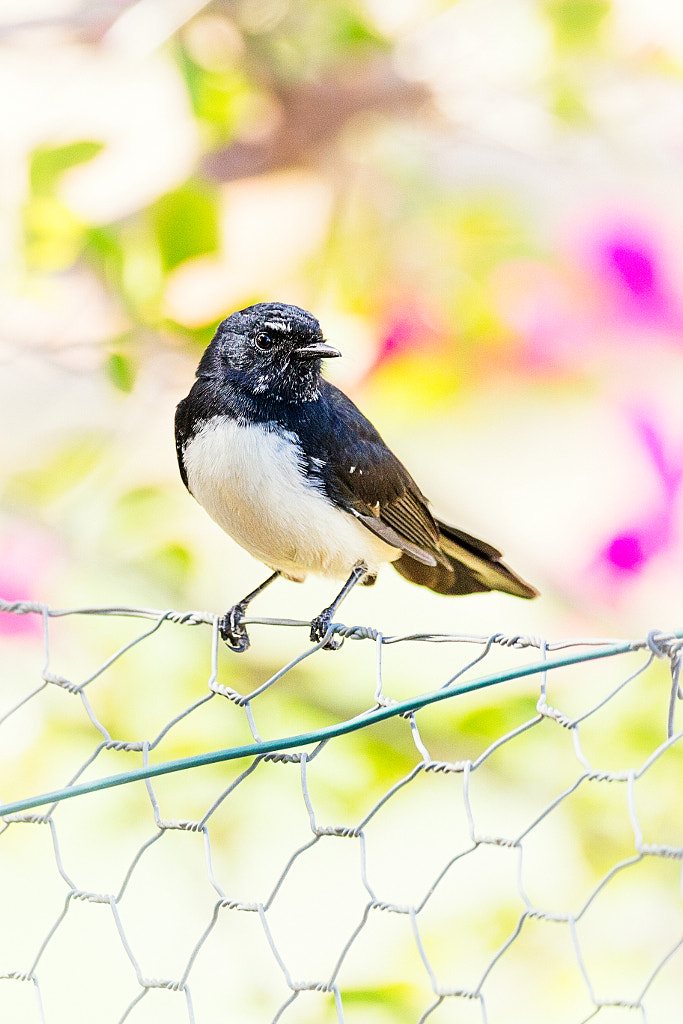
Willie Wagtail on the back fence. York, Western Australia. Canon EOS 6d with Sigma 150-600mm f5-6.3 Contemporary lens. Exposure: 1/500 sec, f7.1 at ISO 1600.


Backyard Birds by Paul Amyes on 500px.com
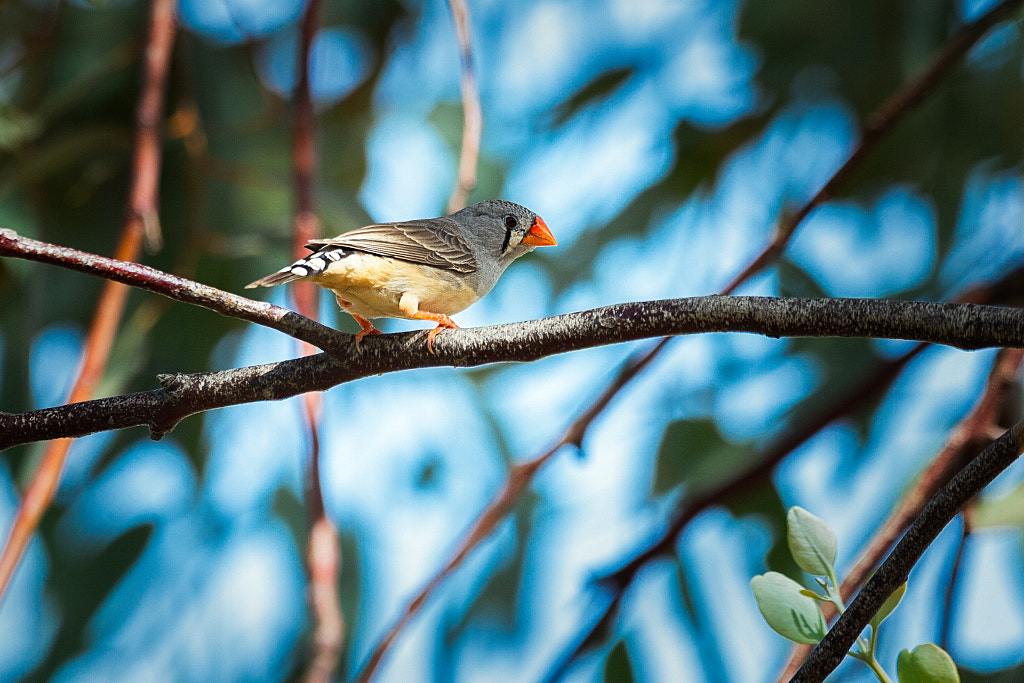
Zebra finch, Taeniopygia guttata. York, Western Australia. Canon EOS 6d with Sigma 150-600mm f5-6.3 Contemporary lens. Exposure: 1/500 sec, f6.3 at ISO 400.


White-cheeked Honeyeater by Paul Amyes on 500px.com
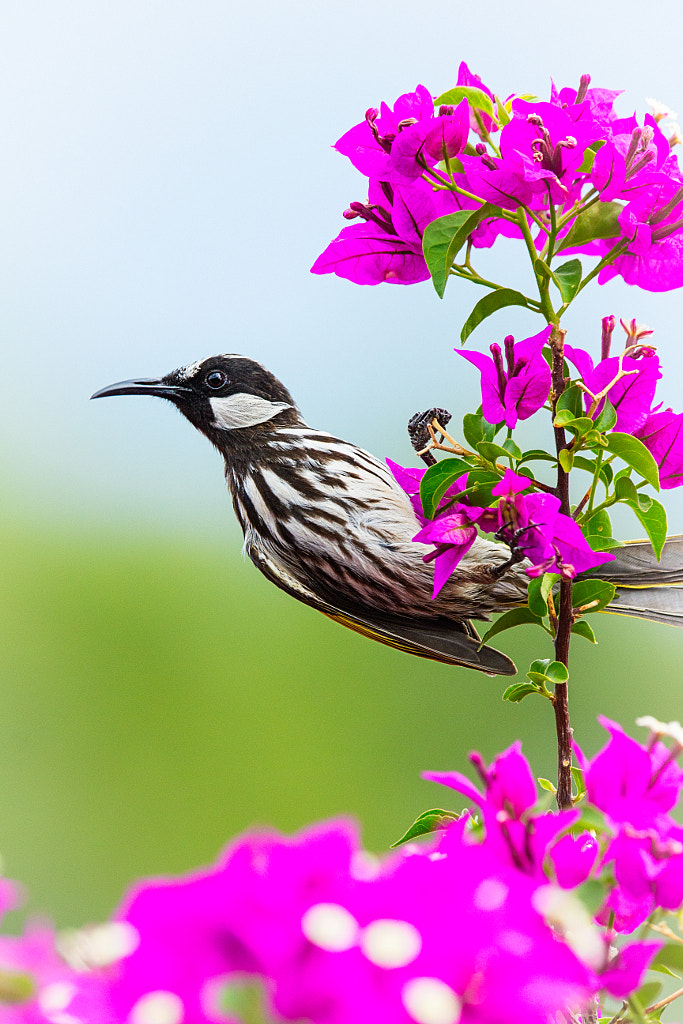
White-cheeked Honeyeater, W, in my back garden. York, Western Australia. Canon EOS550d with Sigma 150-600mm f/5-6.3 DG OS HSM Contemporary lens. Exposure: 1/500 sec, f7.1 at ISO 500.


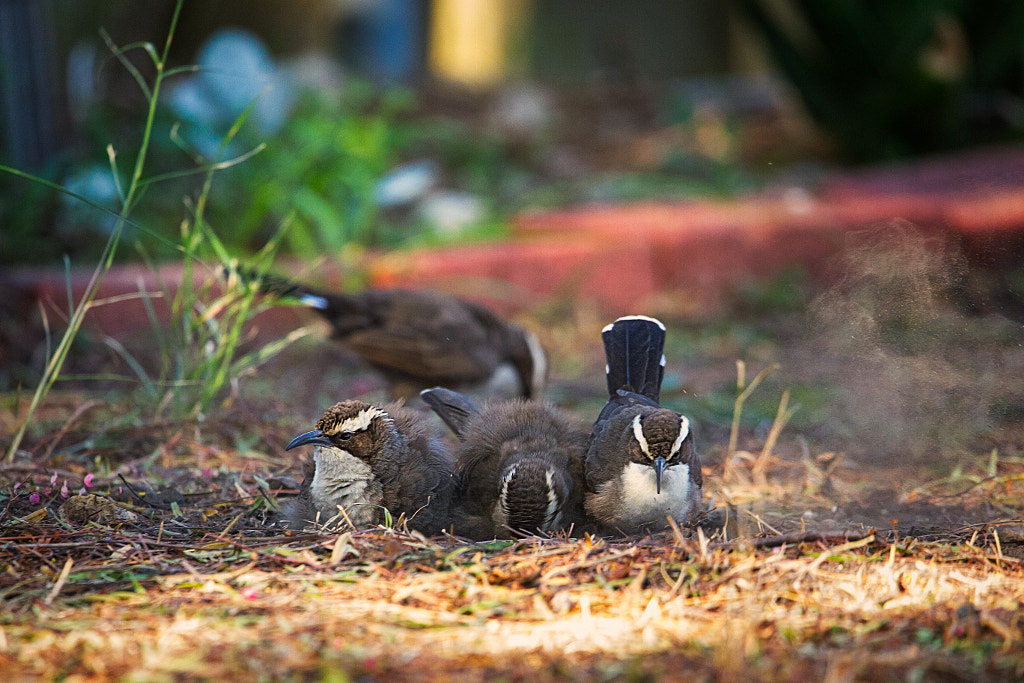
Backyard Birds by Paul Amyes on 500px.com
White browed babblers (White) breaking the social distancing rules by communal dust bathing. York, Western Australia. Canon EOS 6d with Sigma 150-600mm f5-6.3 lens. Exposure: 1/500 sec, f6.3 at ISO 5000.


Brown Honeyeater by Paul Amyes on 500px.com
Brown Honeyeater, Brown, in my back garden. York, Western Australia. Canon EOS 550d with Sigma 150-600mm f5-6.3 lens. Exposure: 1/500 sec, f6.3 at ISO 320.


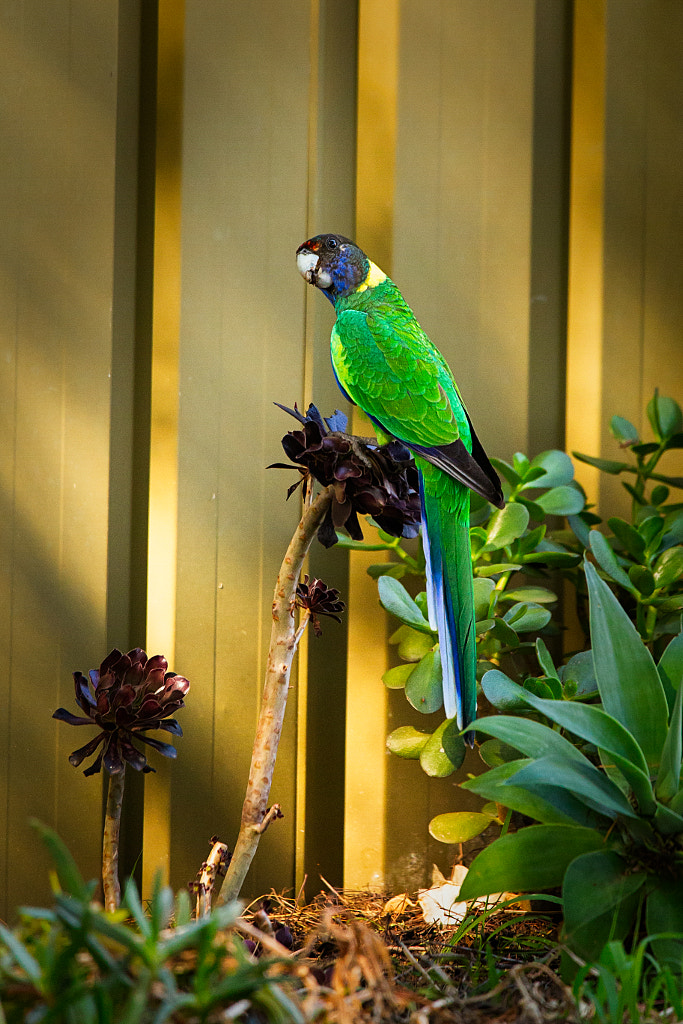
Backyard Birds by Paul Amyes on 500px.com
Australian Ringneck aka twenty-eight parrot,Aus. York, Western Australia. Canon EOS 6d with Sigma 150-600mm lens. Exposure: 1/500 sec, f6.3, at ISO 6400.

Well that’s it for this week. Stay safe, keep positive and try and keep busy.

Garden Update

Australian Painted Lady
Australian painted lady butterfly (Vanessa kershawi). Olympus Pen EP-5 with Olympus 60mm f2.8 macro lens and Olympus FL600-R speed light.

I’m always amazed at what I can find in my back garden. This is just an ordinary suburban backyard and yet I seem to find something new to photograph on a weekly basis. If you pine for an African Wildlife safari but never have the coin I’d try getting out in the garden and seeing what you can find.

Garden Katydid
A garden katydid (Caedicia simplex) found strangely enough in my garden. Olympus Pen EP-5 with Olympus 60mm f2.8 macro lens.
Cabbage White Butterfly
A cabbage white butterfly (Pieris rapae) on a lavender flower. Olympus Pen EP-5 with Olympus 60mm f2.8 macro lens and Olympus FL600-R speed light.
Eastern Common Froglet
Found in one of our raised veggie beds. The Eastern Common Frog (Crinia signifera) is a small ground dwelling frog and is one of Eastern Australia’s most common and widespread species. Olympus OMD EM-10 with Olympus 60mm f2.8 macro lens.

As always clicking on the image will take you to my online gallery.