Sometimes you come across a place so stunningly beautiful words cannot describe it adequately. Two Peoples Bay is one of those places. I’m not going to write anymore.
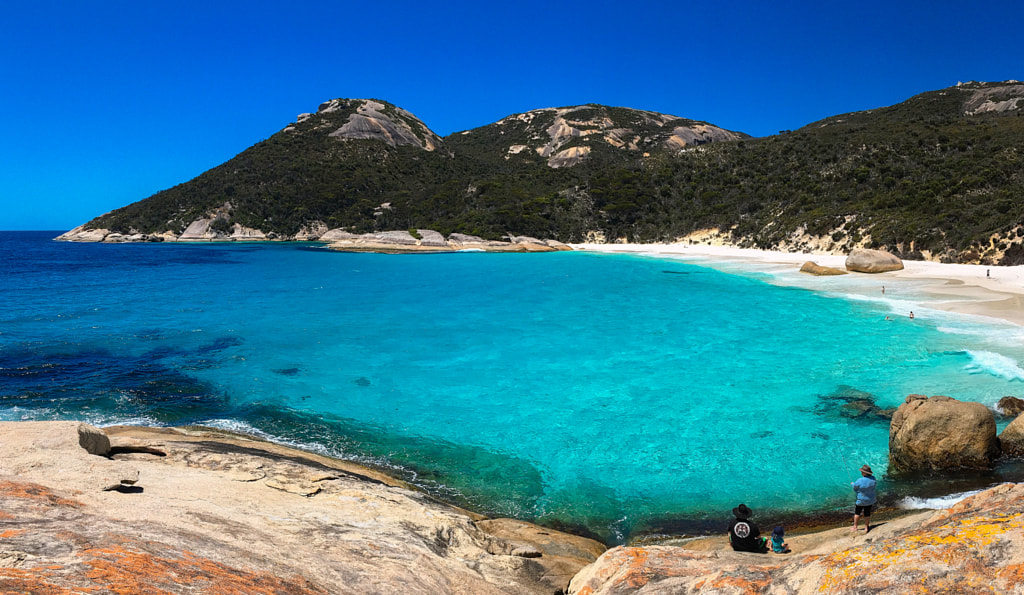
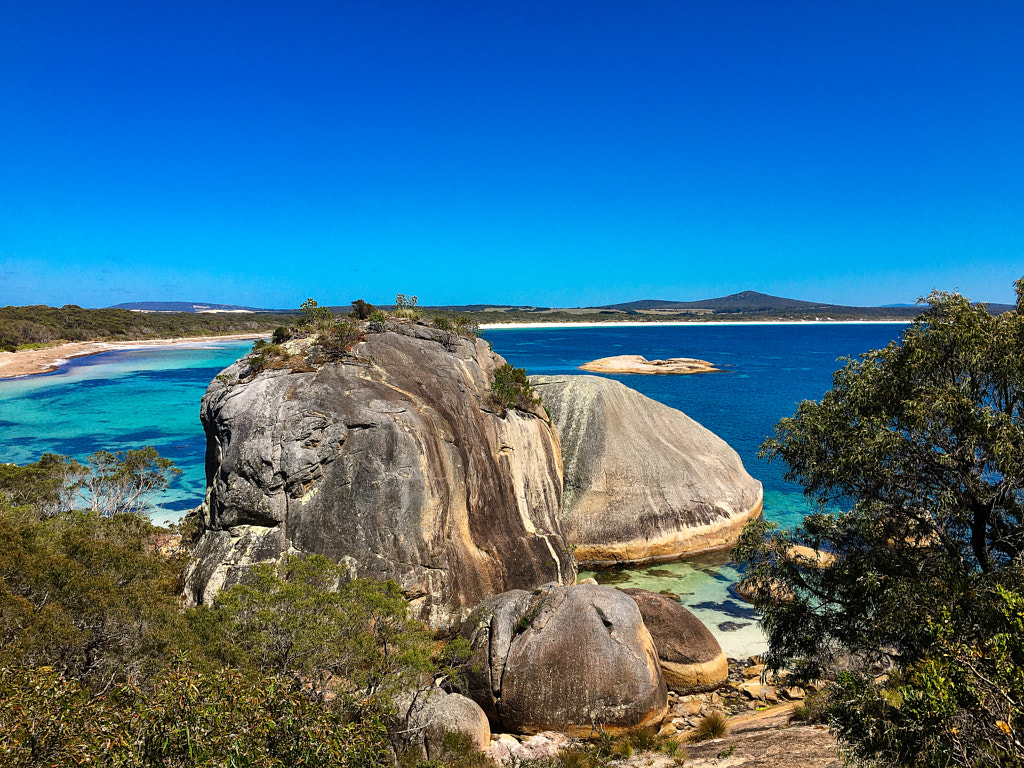
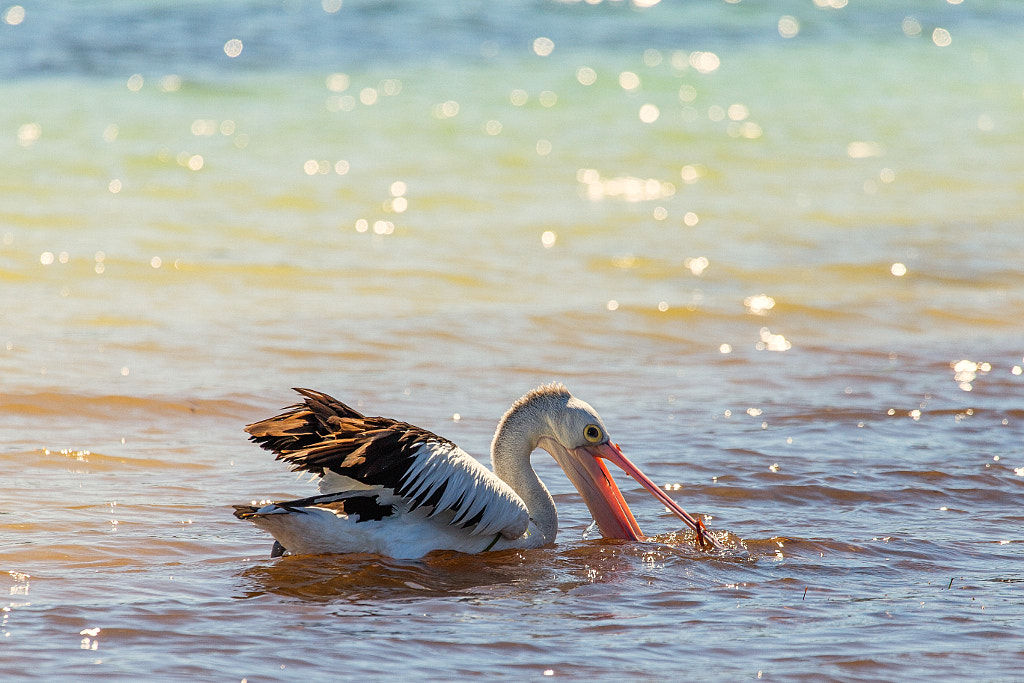
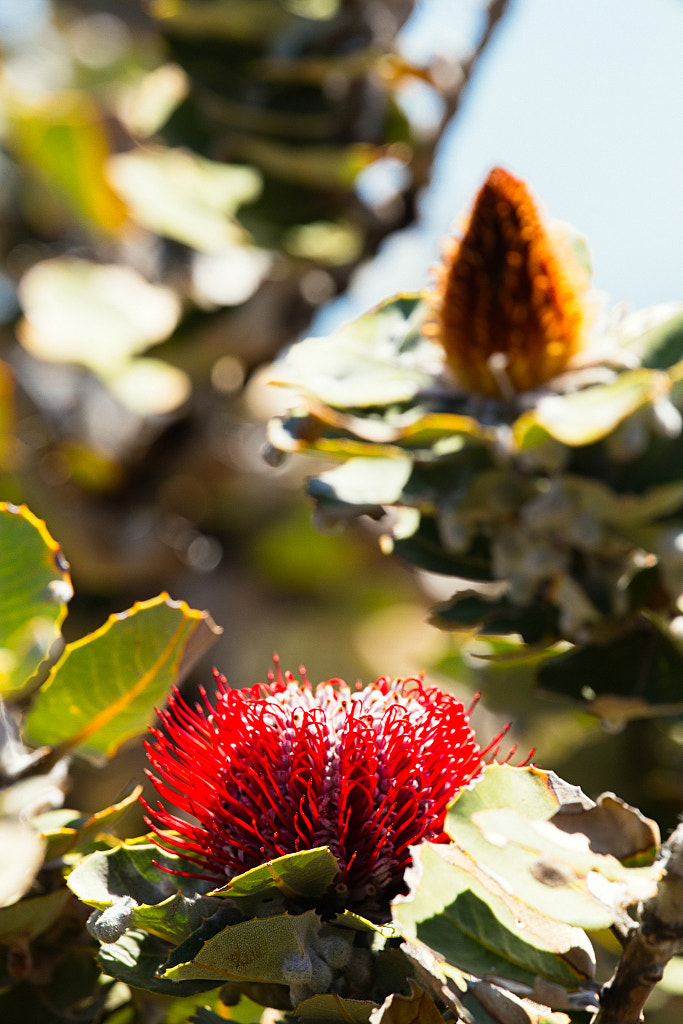
Scarlet Banksia, Banksia coccinea. Two Peoples Bay, Western Australia.

Sometimes you come across a place so stunningly beautiful words cannot describe it adequately. Two Peoples Bay is one of those places. I’m not going to write anymore.
I had a load of bits and pieces from various experiments shooting at Park Beach scattered over my hard drive so I put them together in a short video.

On Thursday we drove down to the South Arm Peninsular and visited Opossum Bay. It is a beautiful bay with great views across the water to Mount Wellington. Like many such places in Tasmania it has become a popular spot for beachside holidays and retirement. Unlike many Australian beachside settlements the housing is not flat but tiered up the dunes, the resulting vernacular architecture is like a cross between Australian beach culture and Greek Island chic.


As I was walking up and down the beach admiring the view and looking at the houses I noticed something. A lot of the gardens had a row-boat or a tiny in the garden. In many cases the boat was almost new and in good condition. The boat represents a dream to spend time in this beautiful spot and go out on the water fishing – an antidote to the stress and bustle of the world many of us live in.

After a while the boat doesn’t get used that much, time commitments probably prevent the owners getting out to the beach house as often as they like. Slowly the garden plants start to encroach upon the boat.

Eventually the holiday or retirement dream of spending time at the beach house fishing in the bay becomes a long forgotten idea and nature reclaims the boat and it becomes as though it had never existed as either an idea or a physical reality.


For the majority of tourists coming to the Tasman Peninsula the only reason visit is the Port Arthur Historic Site with its colonial convict history. Some will venture to Taranna for the Tasmanian Devil Conservation Park, and a few others will head out to bush walk in the national park. Very few tourists head out past Salt River to the Coal Mines Historic Site on the North West of the Peninsula on Norfolk Bay.
Driving out through the little hamlet of Salt River I was struck by the beauty and serenity of the place. Even now in the Twenty First Century this is an isolated spot, it seems light years away from Hobart. How it must have appeared to the first settlers and convicts in early Nineteenth Century one can only surmise that it must have seemed like the very ends of the world and that home and family in England were something they would never see again. As I walked down the path into the site one could be lulled into thinking it was some kind of Antipodean Garden of Eden. There were Bennett’s wallabies grazing on the grass, small birds flew amongst the low-lying bushes, and a possum wandered lazily up to within a meter of me to check me out before shambling off to a nearby tree seemingly without a care in the world. This quickly evaporated as I started exploring the ruins.

The whole reason why convicts were brought here was to punish them. It wasn’t enough that they’d been sent to the Hell hole of Port Arthur and put to spirit crushing hard labour in horrendous conditions. No a new more terrible fate had to be used for those prisoners who bucked the regime. Coal was found here, if you walk along the beach you can see it just lying on the surface, smooth, black and shiny among the other pebbles lying in the sand. That meant that the seams would have been just below the surface which meant that you didn’t need complicated pit heads with lifts and pumping stations. All you needed were men with picks and shovels and a few people to supervise them. It must have seemed the perfect plan – put your trouble makers out to an even more remote spot, make them labour in incredibly harsh conditions with a horrific punishment system for those who wouldn’t toe the line, and then have them mine something that was needed badly in colony so that the scheme would pay for itself. Very ingenious. So in 1833 the coal mines were opened up. The interpretive panels tell of some of the heart wending stories of those who were sent there and the deprivations that they suffered. as I read more and more about the site the beauty of the location receded into the background and was replaced by story of man’s incredible cruelty to his fellow-man. Even in colonial times government was not capable of running an economic enterprise and making money, so in 1848 the mine was privatized, but the logistics of running such a business in such a remote location were so difficult that it was never economically viable and in just another ten years, 1858, the mine working were shut down. Some of the infrastructure was dismantled the rest was left to decay in the harsh conditions with the wooden buildings and fittings being destroyed by bush fires. The building which were constructed from stone fared better than those that were made from convict brick, which because it was not fired at high enough temperatures was soft and crumbly.


Port Arthur, just down the road receives most of the tourist attention – and in many cases quite rightly so as the scale of the place, it’s location, and many of the buildings are still intact making it a tourist experience par excellence. But for me it is the Coal Mines Site that typifies the brutality of the convict era. It’s sole purpose was to strike fear into an existing convict population and to punish and brutalize them even more. Most of the colonial penal systems victims were people whose only crime was to try to alleviate the crushing poverty they were born into with criminal acts that were incredibly petty by nature – stealing food, stealing small items to exchange for food, vagrancy, non-payment of debt etc. Now nearly two hundred years later their history, their lives, their suffering has been made into a tourist industry to entertain people. What is even more puzzling is that in today’s Australia it is now considered very desirable to be able to show that you are descended from convict stock. Perhaps this should be something to ponder as we visit Tasmania’s convict heritage sites.

Visitors to the site should take care to stay on the paths as some old shafts are still open and others have caved in leaving sink holes that unwary could fall into.
You must be logged in to post a comment.