The Decisive Moment

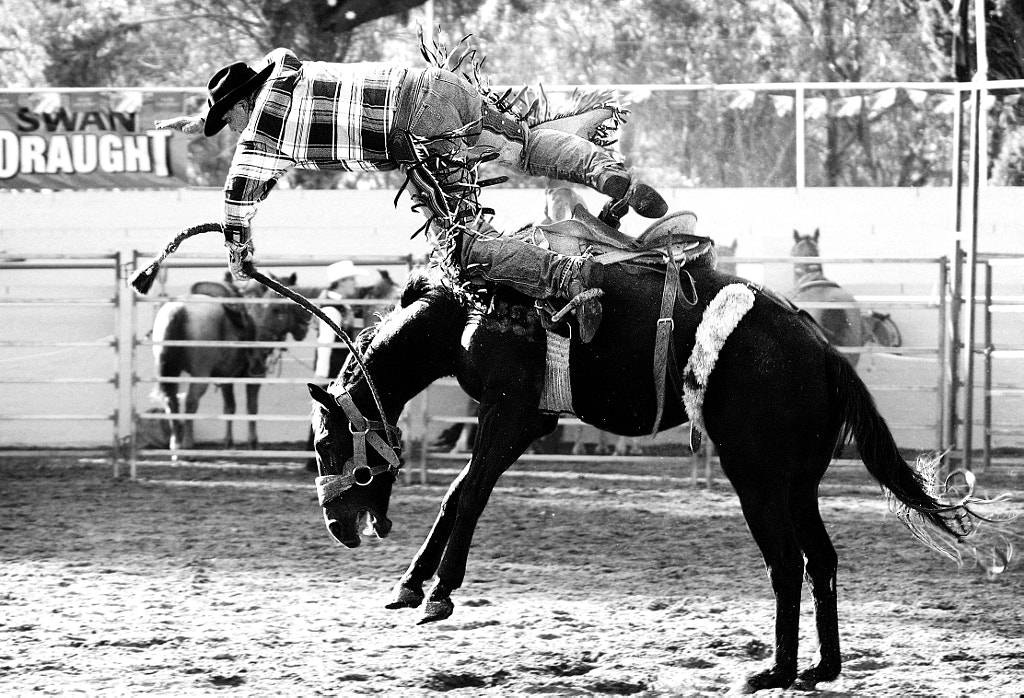
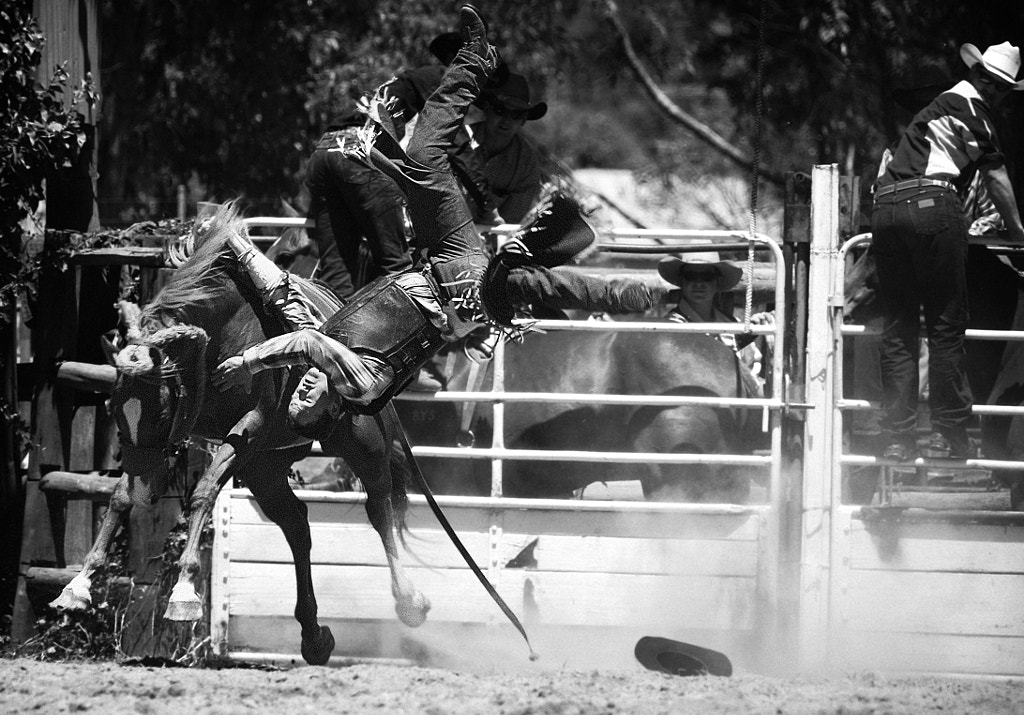
8 Seconds Is A Long Time by Paul Amyes on 500px.com
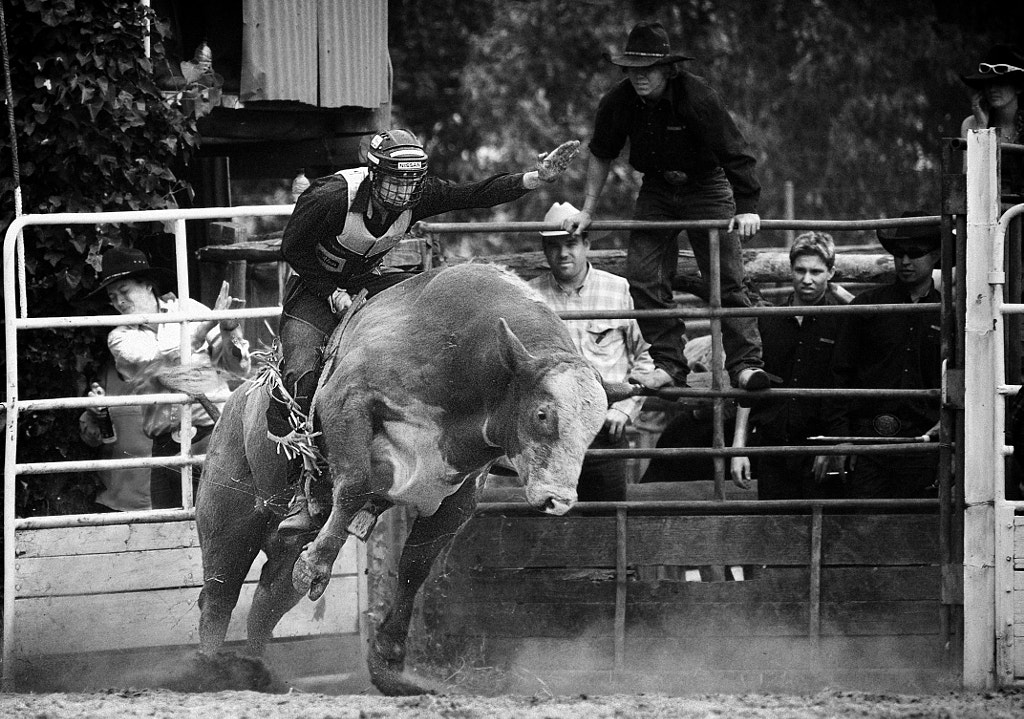
They say that Bronco riding is like holding on to the exterior door handle of a car doing 50 Km per hr. No wonder that 8 seconds seems such a long time.


Recently I put the above image up on my Instagram feed from a project I did back in 2004-8 called Broncos and Bulls. It elicited the following response:


“the rodeo is ALWAYS going to give you the opportunity of dramatic photos. …”


Initially I was going to put a short witty reply up, but then I started to think about it. “Will the rodeo always give the opportunity of dramatic photos?”.

In 1952 a French photographer by the name of Henri Cartier-Bresson is credited with coming up with the notion of the decisive moment. In fact it was the English title of his book of photographs. The original French title was “Images à la Sauvette” which is quite an awkward phrase to translate into English. It has been variously translated as “images on the run”, “stolen images” and “images on the fly”. In the end it was Bresson’s American publisher who settled on the phrase the “decisive moment“. The book is hugely influential and Bresson has become one of the Titans of Twentieth Century photography and the phrase has come to define a whole genre of photography. Unfortunately it is misunderstood because it doesn’t just mean capturing the apex of action but rather it is “the instant when a prescient photographer anticipates a significant moment in the continuous flux of life and captures it in a fraction of a second”. (p 104 Badger, G. 2007 “The Genius of Photography – how photography has changed our lives” Quadrille Publishing Ltd, London). Or to put it another way when all the individual elements of a photograph come together to create meaning. Reams and reams of literature have been published by far cleverer people than I debating the whole notion and Bresson himself was only too aware that the whole concept could be corrupted.

Behind the Gare Saint-Lazare by Henri Cartier-Bresson. Considered by many to be one of the most influential photos of the Twentieth Century because it became the epitome of Cartier-Bresson’s “Decisive Moment”.

Jean Clair (Director of the Musée Picasso in Paris) in his essay that is included in the major retrospective book about Bresson ( pp47-55 Galassi, P; Delpire, R. et al, 2003, ‘Henri Cartier-Bresson – the man, the image, and the world’ Thames Hudson, London) likened the decisive moment to the ancient Greek word kairos  which was used to describe how an archer using intuition would let an arrow fly to hit the right spot.  This I feel is a flawed analogy because it reinforces the notion of the photographer as hunter stalking his prey with the one singular intention, but photography is not that simple. The American photographer Sam Abel in his 2008 book ‘The Life of a Photograph’ (National Geographic Society, Washington) states that are a whole series of acts which culminate in a photograph.  Firstly the photographer has to pre-visualise the photo, then they have to seek out the opportunity and put themselves into the position when all the elements of lighting and composition come together, and then after the picture has been taken select the picture that most captures the intention. So rather than a singular point of time the photographer is looking at a series of decisive moments which have to evolve. After the photograph has been taken and published/viewed then the photograph takes on a whole new life and is imbued with new meaning by its viewers. 
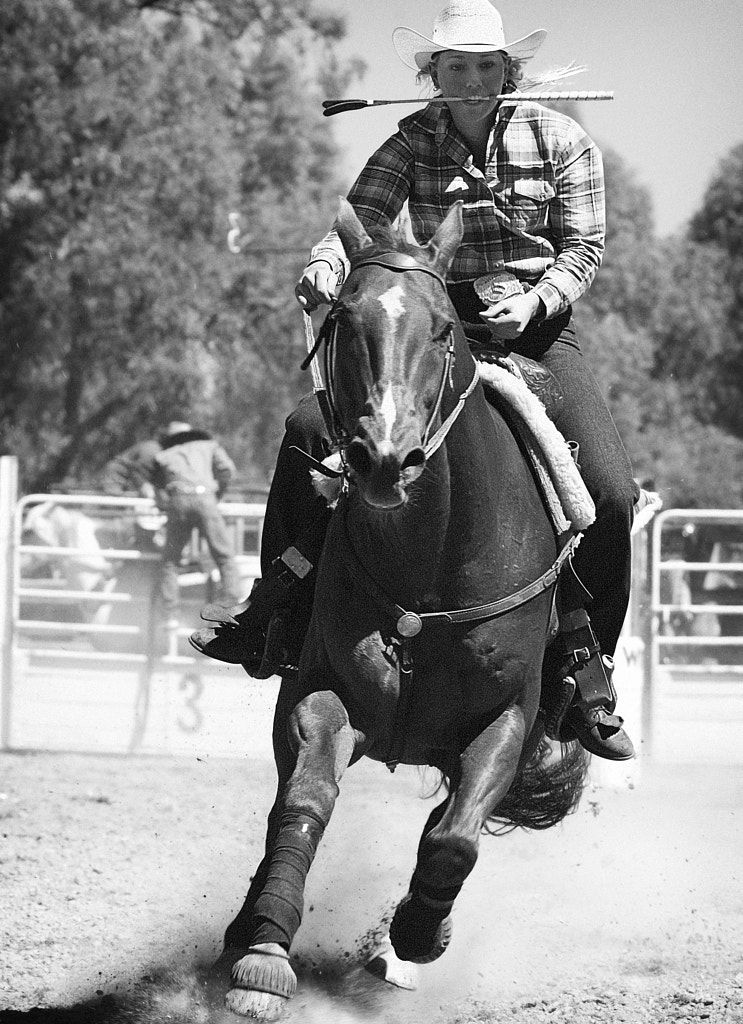


Ride Hard by Paul Amyes on 500px.com
Barrel racing at Boddington Rodeo.

So getting back to the original statement “the rodeo is ALWAYS going to give you the opportunity of dramatic photos. …” the answer is yes and no. The event gives an opportunity it is up to the photographer to seize that opportunity through preparation, creative vision, and technical capability. Just turning up at a rodeo with a camera doesn’t mean that you’ll come away with a good photo. Just like going to MacDonalds won’t make you a hamburger.
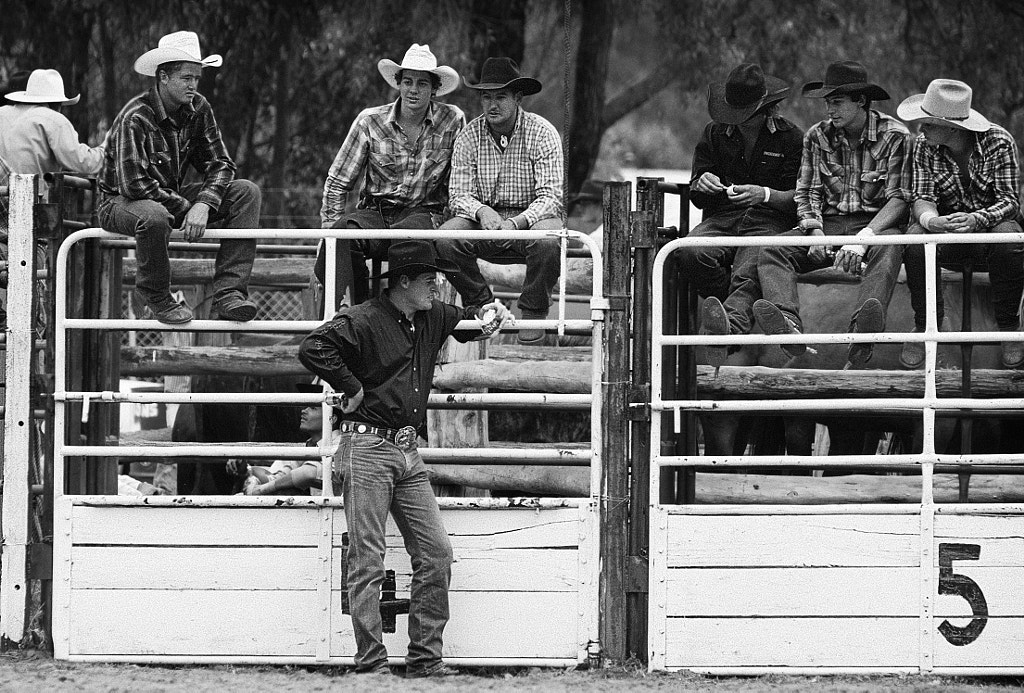
 by Paul Amyes on 500px.com
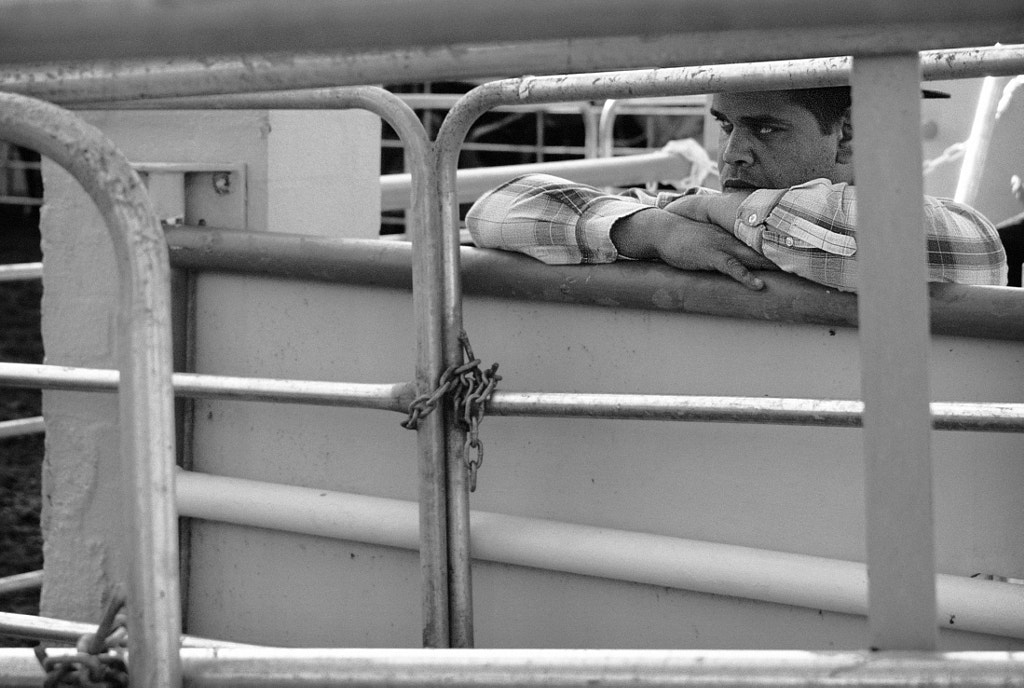
Waiting for the start.

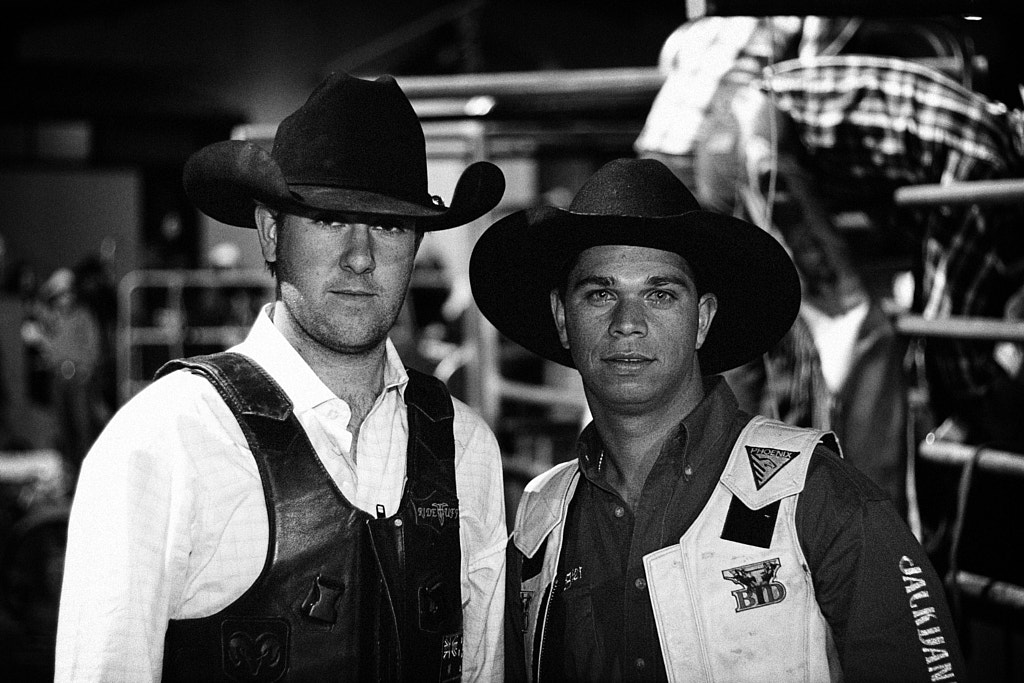
I’ve included the rest of the photos from the project Broncos and Bulls because the whole series was shot using the principle of the decisive moment to form a visual story. As I said previously this was done in 2004-8 and since then I have moved away from the subject and the style, but my current photographic interests are still based upon Bresson’s ideas.
 

The Next Generation by Paul Amyes on 500px.com
The Next Generation. Rodeos are are big event in Western Australian country towns and attract an audience of all ages.


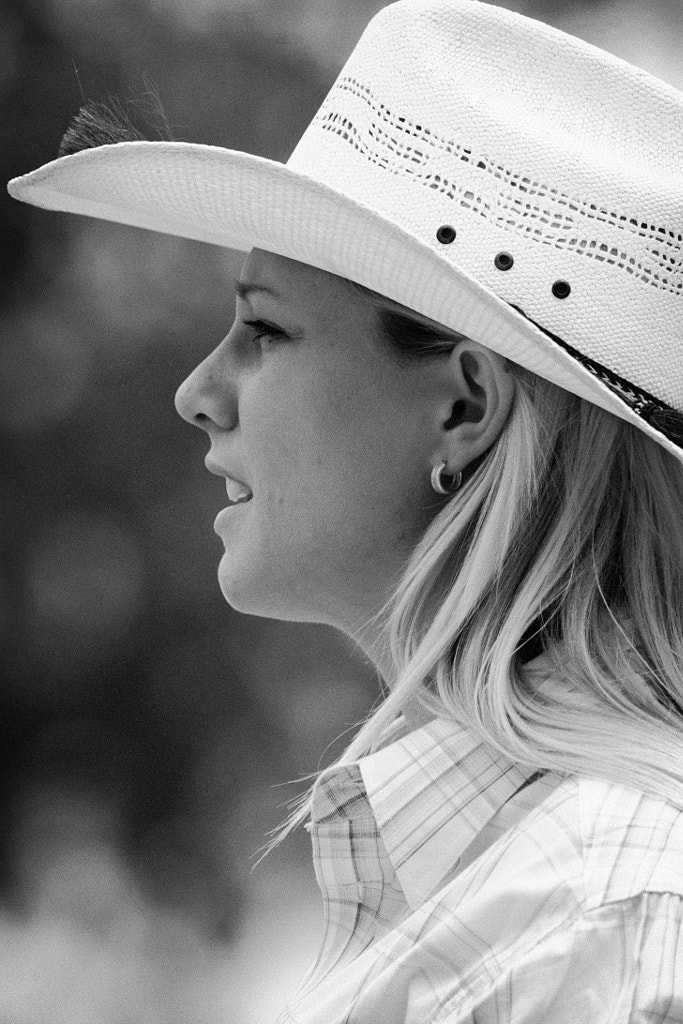
Nice Hat by Paul Amyes on 500px.com
Nice Hat! Spectators dress for the occaision at the Boddington Rodeo.


Matt's Free Fall by Paul Amyes on 500px.com
Matt’s Free Fall. Matt, El Caballo’s Extreme Rodeo compere tries his hand at bronco riding with catastrophic results.


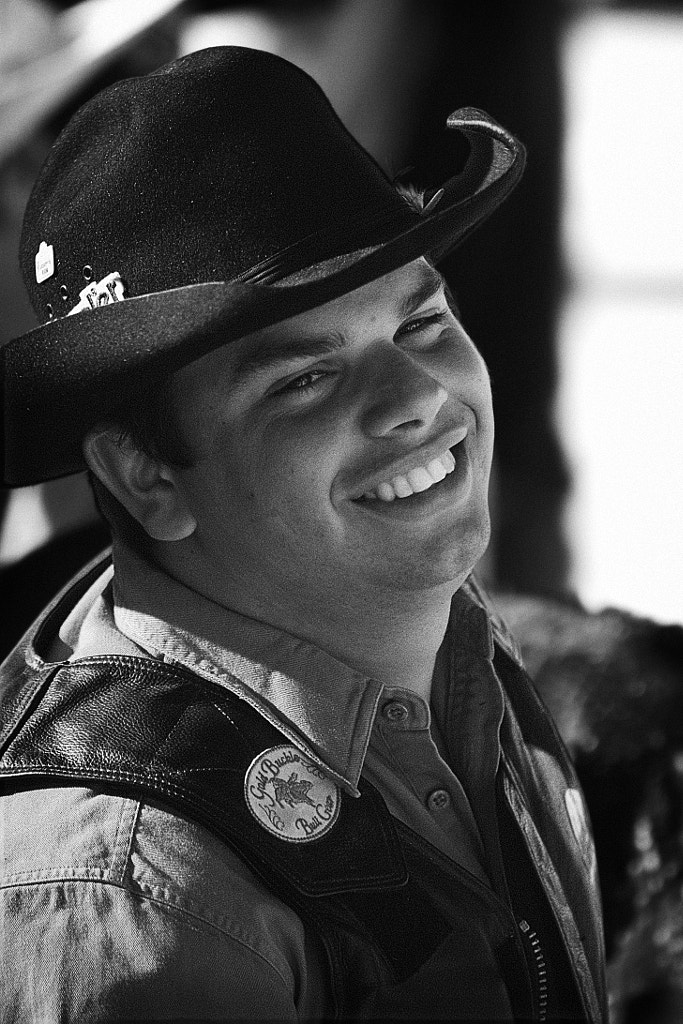
Chilled Out by Paul Amyes on 500px.com
Damon Metcalf relaxes behind the chutes before the pro bull riding event.


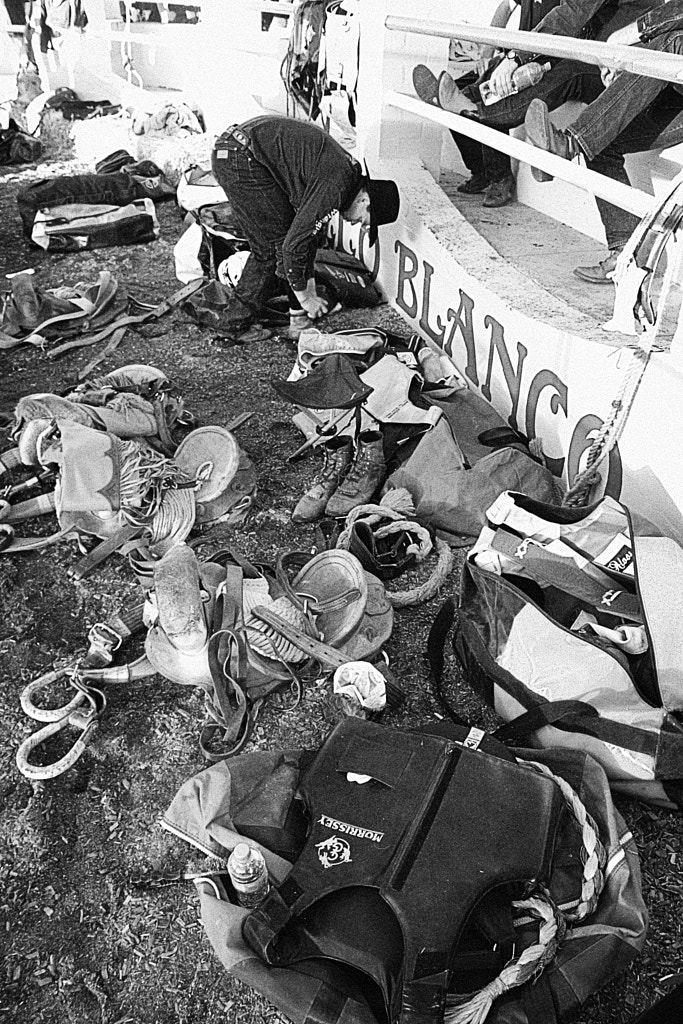
Sorting The Kit Out by Paul Amyes on 500px.com
Preparation is the name of the game and the competitors at El Caballo Rodeo meticulously sort through their kit before competing.


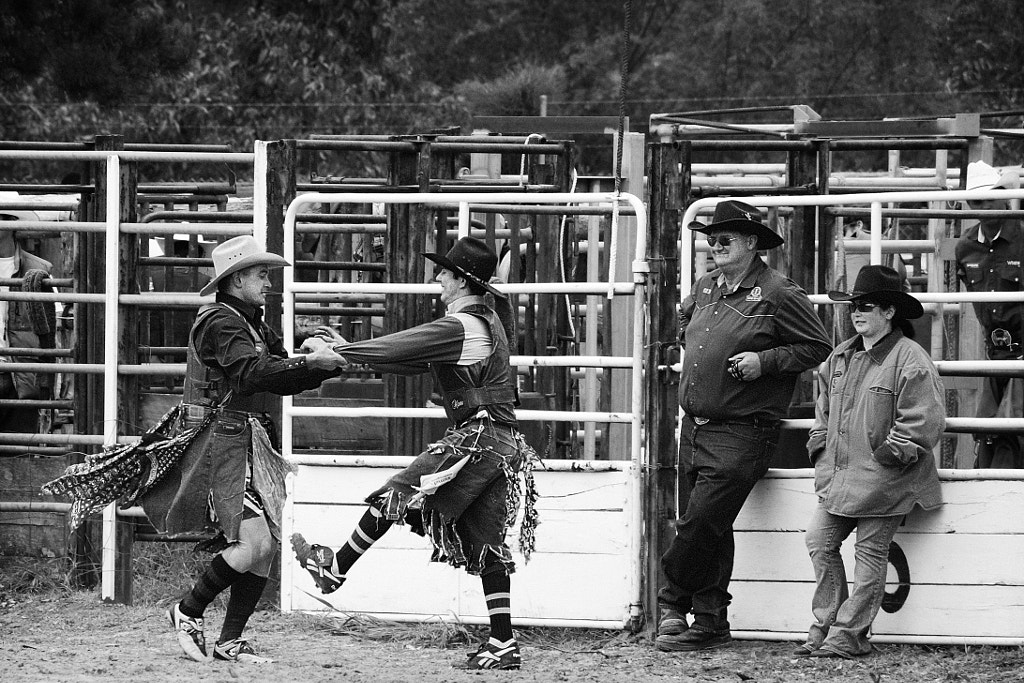
Rodeo Clowns Clowning by Paul Amyes on 500px.com
The rodeo clowns had a ball.


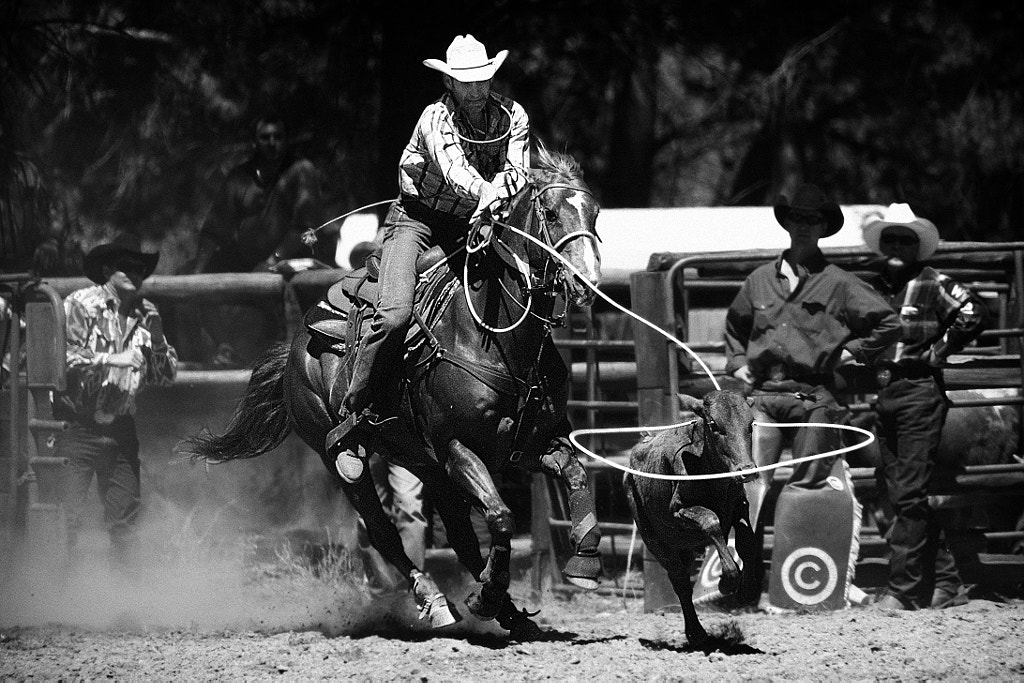
Gotcha!!! by Paul Amyes on 500px.com
Gotcha!!! Steer roping competition. Boddington Rodeo, Western Australia.


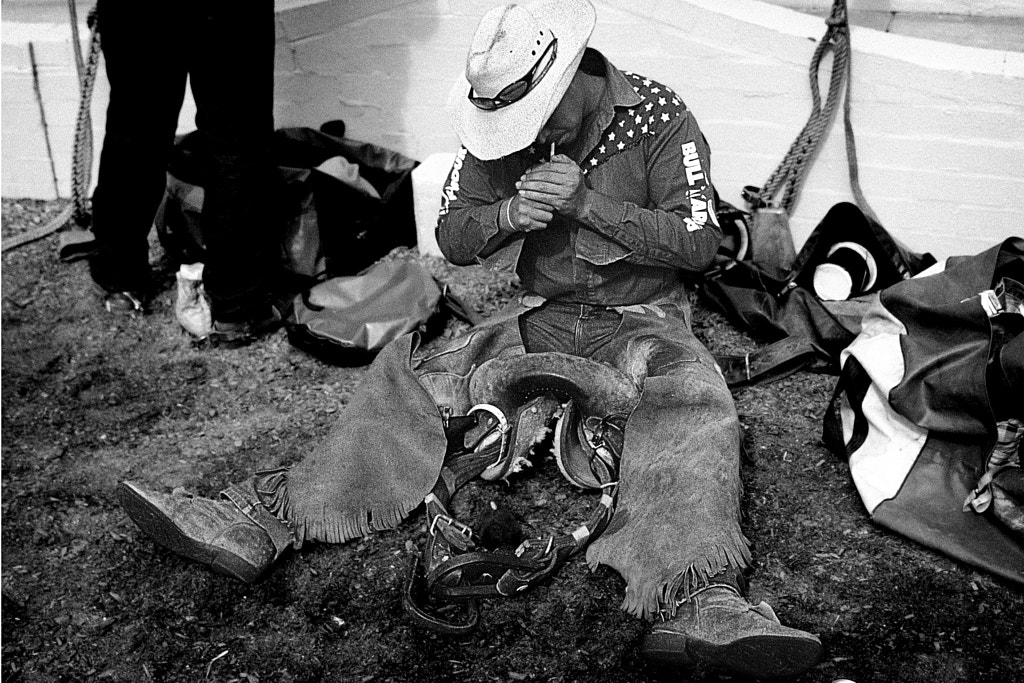
Smoko by Paul Amyes on 500px.com
Having a quick smoko while getting ready. El Caballo.


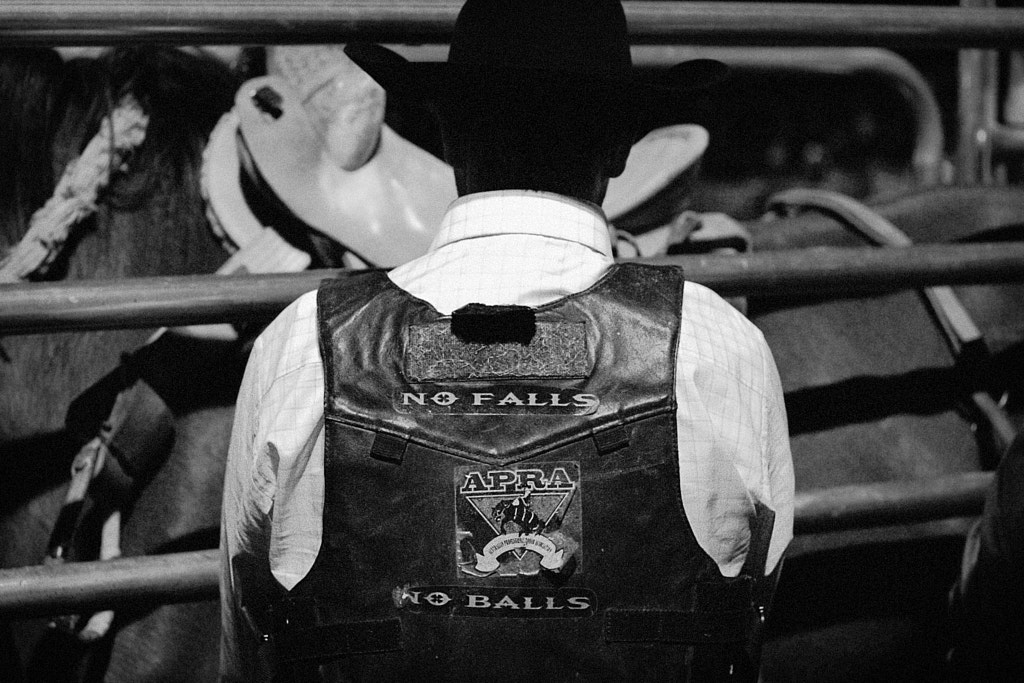
No Falls No Balls. by Paul Amyes on 500px.com
No Falls No Balls. Attitude is everything at the rodeo. El Caballo, Western Australia.


The Liquorice Allsorts by Paul Amyes on 500px.com
These two called themselves liquorice all sorts. El Caballo, Western Australia.


Apprehensive by Paul Amyes on 500px.com
Waiting in the chutes. El Caballo, Western Australia, 2007


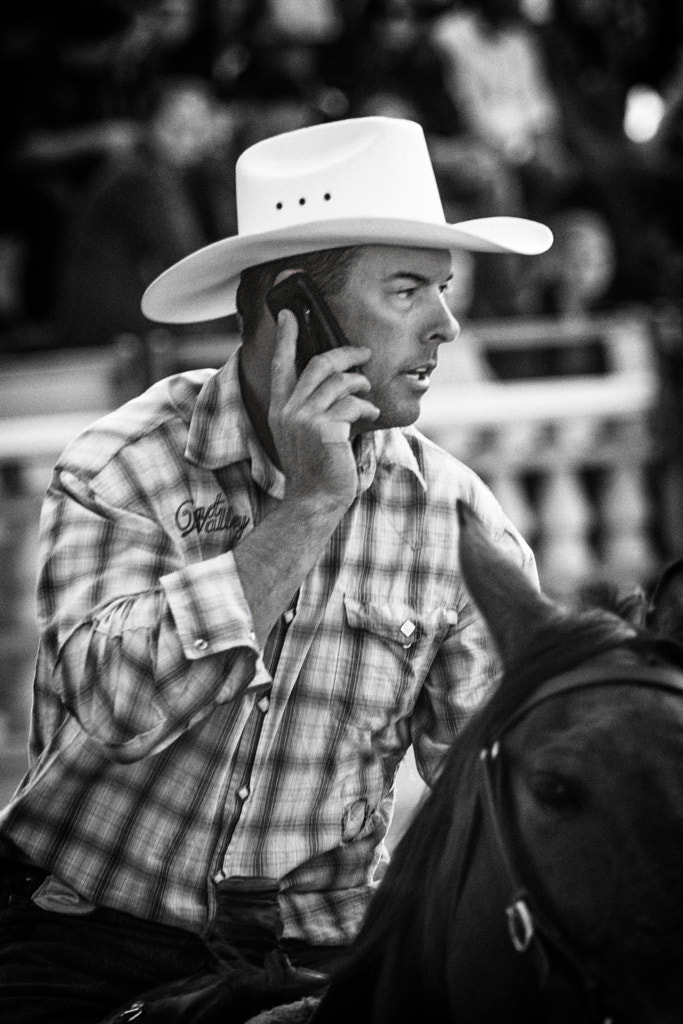
No Hands Free On A Horse by Paul Amyes on 500px.com

No Hands Free On A Horse. “Can you call back later – I’m kinda busy.”
Lens Sharpness

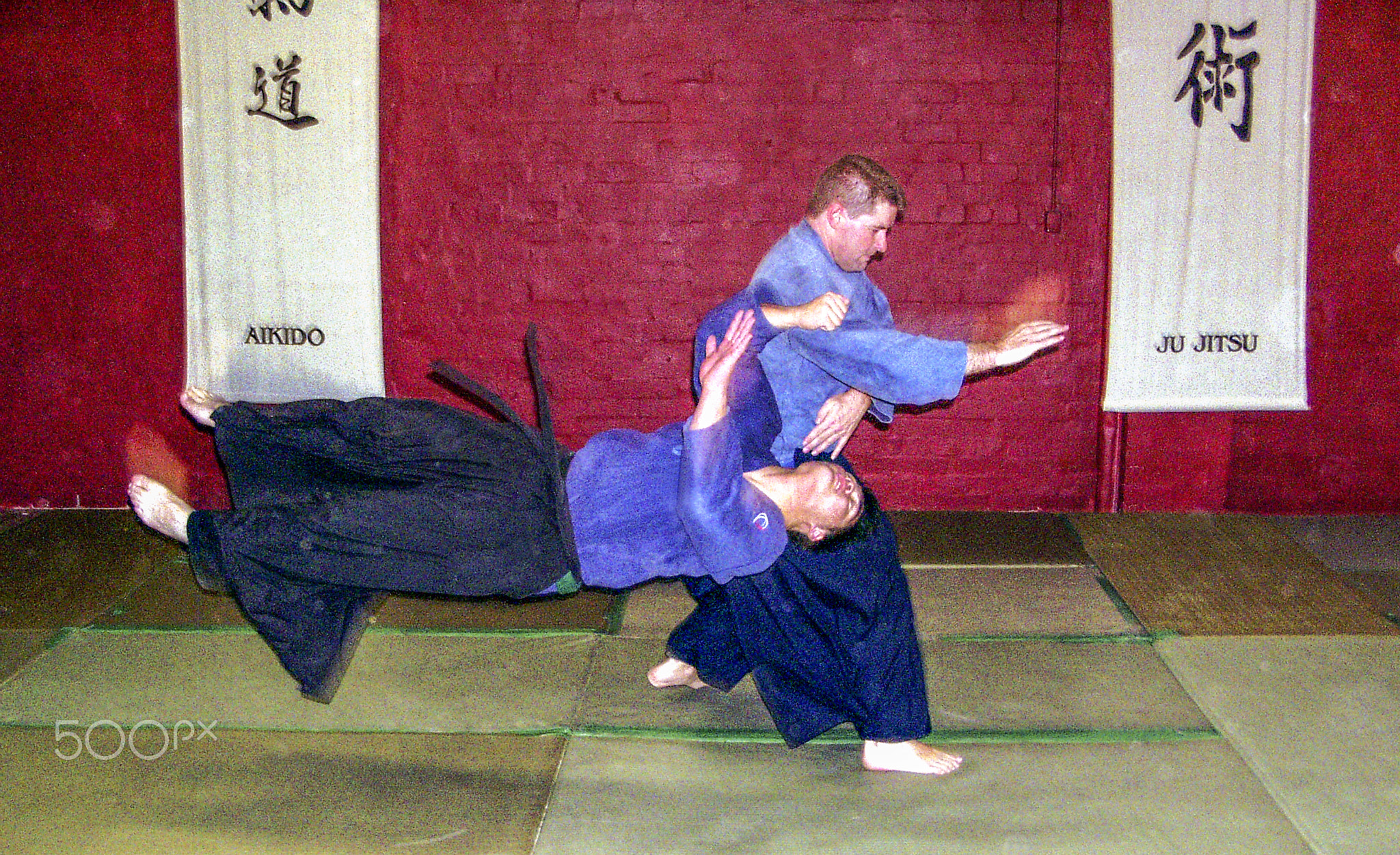
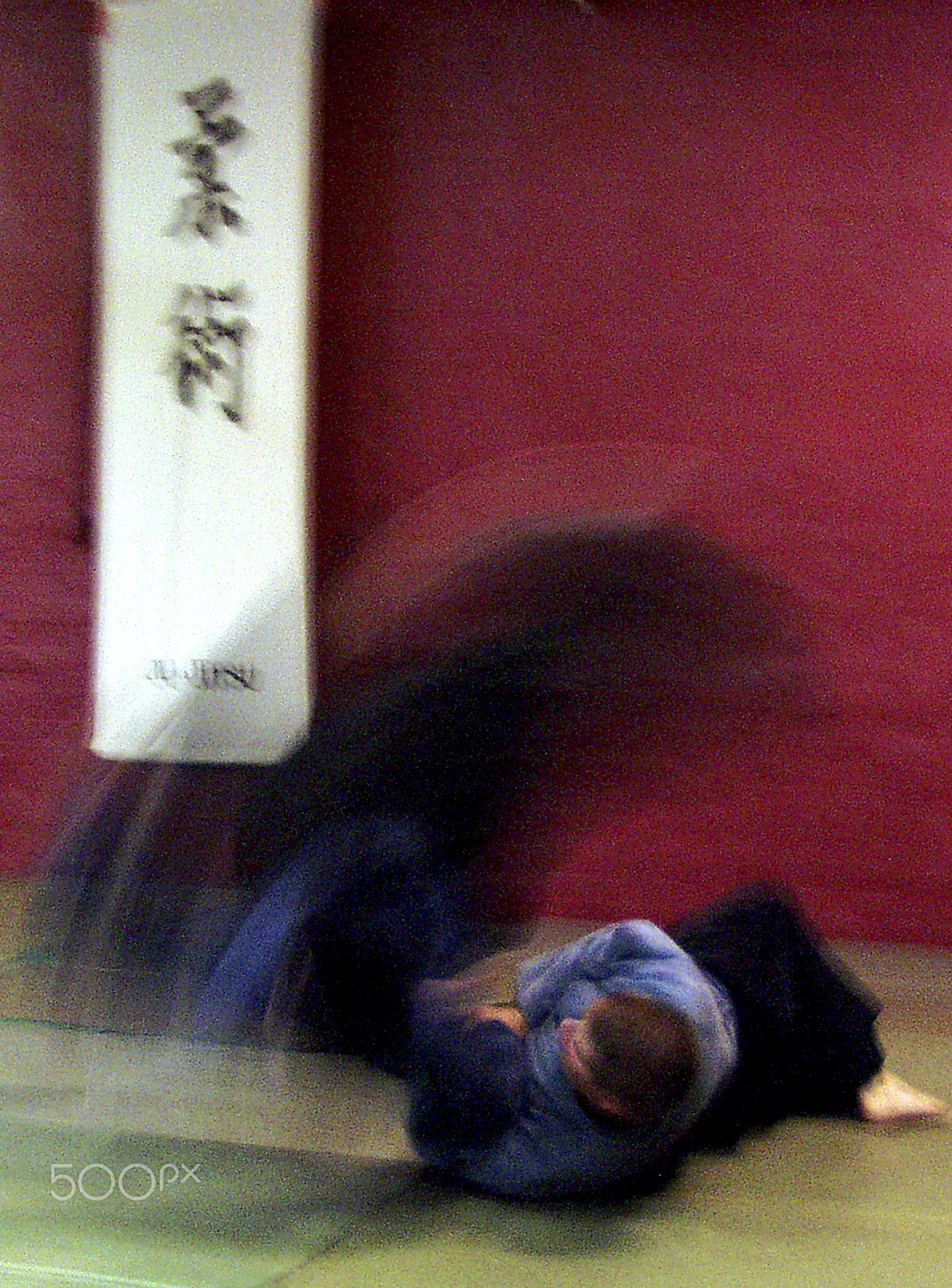
sutemi waza by Paul Amyes on 500px.com
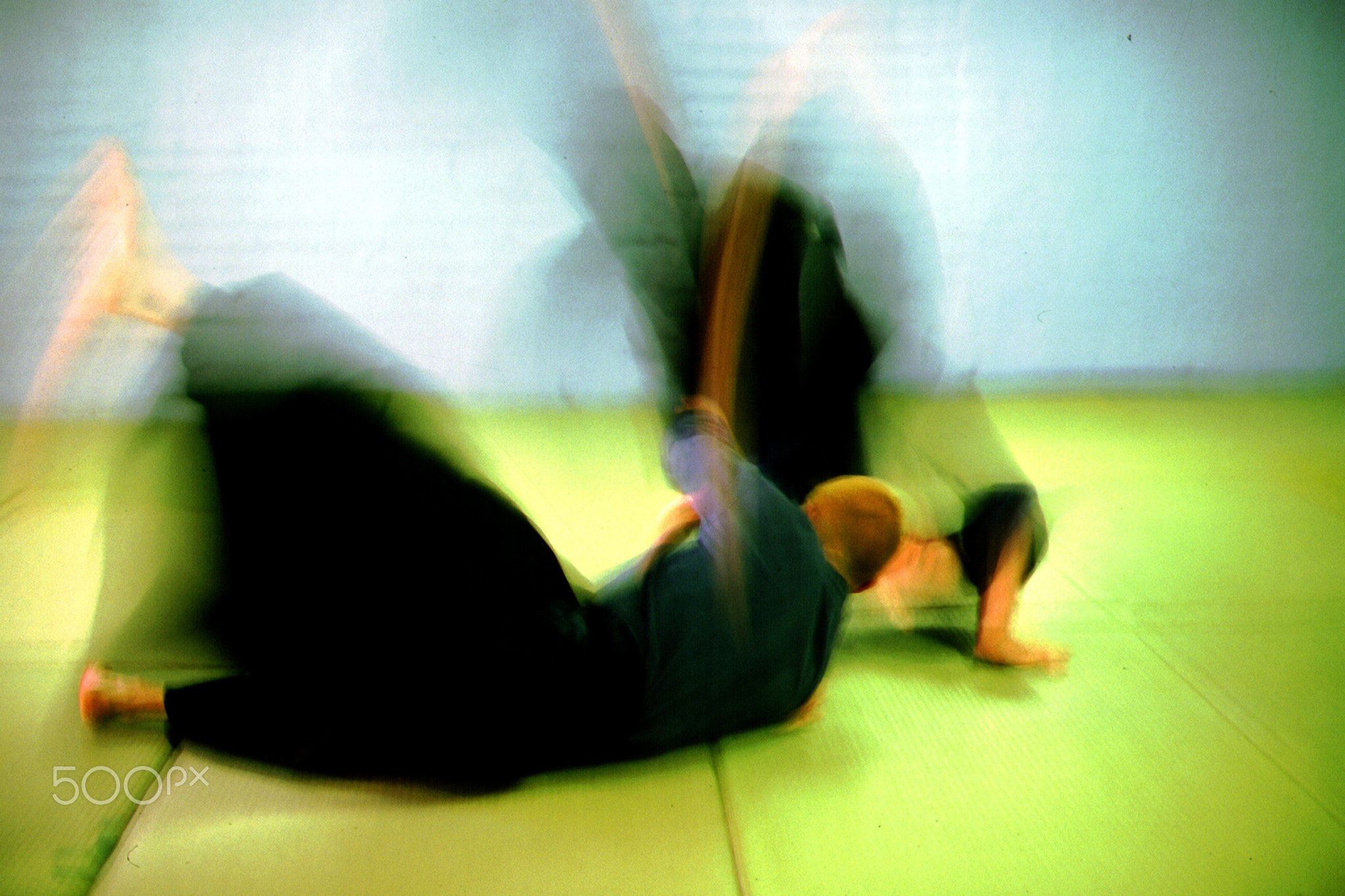
Sutemi waza from Yōseikan Aikido. Taken on Olympus C-720 Ultra Zoom with slow sync flash edited using Photoshop Elements 2 and Genuine Fractuals


Currently in photography there are several sacred cows and you’d think that from the amount of chatter these subjects generated that they were the be all and end all of photography. Thankfully for the actual art form of photography they are mostly irrelevant. These sacred cows are:

  • megapixels
  • dynamic range
  • sensor size
  • lens sharpness

My feeling is that these topics are so hotly debated is because now in this digital age it is easy to quantify these values numerically and the bigger the number the better. There is no doubt about it a great big  spreadsheet of impressive looking numbers must be right after all. This is why the website http://www.dxomark.com has become a sacred text among the denizens of the internet fora and its proclamations and pronouncements can lift a camera or lens to photographic nirvana or condemn it to the lowest reaches of hell. Well having ruffled a few feathers with the piece on sensor size and depth of field this weeks entry is going to cause the DXO fundamentalists to really froth at the mouth in holy indignation.


ura tai otoshi by Paul Amyes on 500px.com
Ura Tai Otoshi from Yoseikan Aikido as taught by Shihan Jan de Jong. Shot using an Olympus C-720 Ultra using slow sync flash. Edited using Photoshop Elements 2 and Genuine Fractuals


Lens sharpness  is something to be coveted. After all Leica, Zeiss, Schneider, Rodenstock, Canon and Nikon have made an art form of it. Those who worship at the high altar of lens sharpness are prepared to spend the equivalent of the GDP of a small African nation on the lenses that have the highest DXO score. The Carl Zeiss Distagon T* Otus 1.4/55 ZF.2 Nikon has a DXO score of 45 while the lowly Canon EF 50mm f/1.8 II only has a rating of 25.  So the Otus is nearly twice as good as the plastic fantastic Canon. Phwoaaaaarrrrr forum domination and photographic greatness here I come,  I’ll go out and buy one straight away. The Australian list price for the Zeiss is $4474 while the Canon is $135, so the Zeiss must be 33 times better. Er no. To quote DXO “The DxOMark Score shows the performance of a lens, mounted on a given camera body, for its optimal focal length/aperture combination and for defined exposure conditions.” So the lens has been mounted to a camera on an optical bench shooting a 2D lens chart at an aperture that is guaranteed to give the best results in carefully controlled lighting. So in other words it does not reflect real world usage unless your photographic interests lie in shooting charts or brick walls with a camera on a heavy tripod so you can orgasm over how sharp the image is at the edges. Shoot a complex 3D object in rapidly changing light conditions at sub optimal aperture settings and these ratings really don’t mean anything.

sutemi waza 2 by Paul Amyes on 500px.com
A sacrice throw from Yoseikan Aikido. Taken using an Olympus OM 4 with a Zuiko 35-105 lens on Fujichrome 400 pushed to 800 ISO. Scanned using an Olypus ES-10 scanner and edited using Adobe Photoshop Elements 2 and Genuine Fractuals.


There is no doubt that lenses have become a lot sharper over recent years, but I find it amusing to see that they have become so sharp that they are now unflattering for portraiture as they show every blemish and pore. So much so that photographers are now spending time and money on lessening the sharpness (blurring if you will) on portraits. Don’t you think that is ironic? I’ll spend a fortune on a very sharp lens that is so clinically sharp that no-one likes the results so I’ll spend some more money on a Photoshop plugin to blur it.

 “Sharpness is a bourgeois concept.” – Henri Cartier-Bresson

A famous quote and often mis-quoted as nobody can really tell you the context in which Cartier-Bresson said it.  If we forget the Marxist definition of bourgeois and just concentrate on the dictionary definition we get:

 “belonging to or characteristic of the middle class, typically with reference to its perceived materialistic values or conventional attitudes: a rich, bored, bourgeois family | these views will shock the bourgeois critics.”

I would hazard a guess that dear old Henri was stirring a bit when he said it and meant something along the lines that sharpness in a photograph is a very conventional and staid way of judging it and doesn’t look at its other qualities. How can I be sure, well I can’t but he also said:

 “It is an illusion that photos are made with the camera, they are made with the eye, heart & head.” – Henri Cartier-Bresson

 So I think it is more than likely to assume that Cartier-Bresson felt that there is a lot more to photography than technical perfection.

Iaido by Paul Amyes on 500px.com
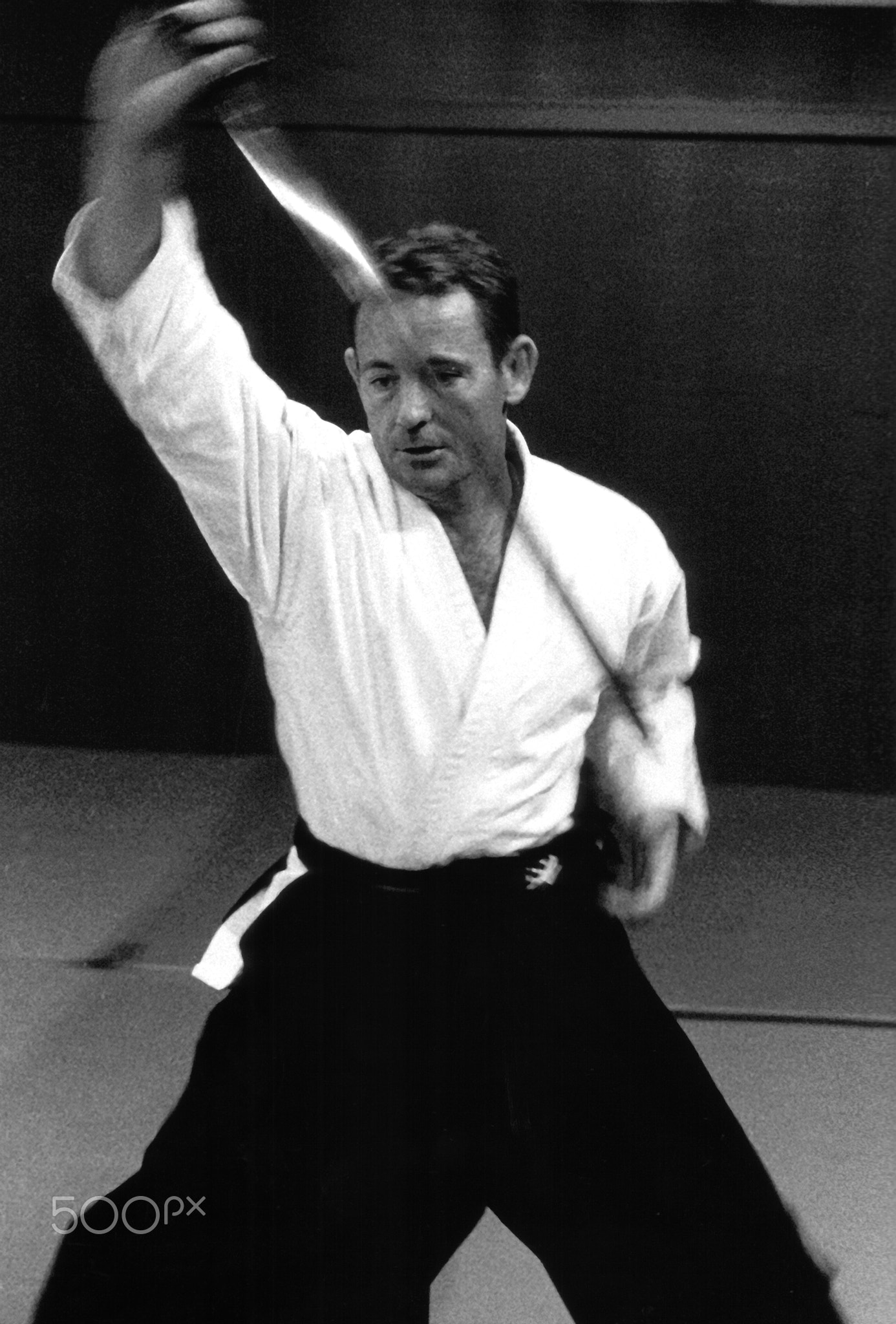
The Japanese art of sword drawing. Taken with an Olympus OM 4 with a Tamron 28 mm lens, using Ifford Delta 3200. Scanned using an Olypus ES-10 scanner and edited using Adobe Photoshop Elements 2 and Genuine Fractuals.


So by now you’ll have read this and seen some photos I made years ago of some people practicing Aikido and Iado, both Japanese martial arts. You’ll also have noticed that there is a lot of blurred movement and very little sharpness. The reason why is that I wanted to capture the beauty of the flowing energy that is involved in them and I felt that while static shots might capture the technical aspects of the techniques being demonstrated they don’t capture the nature of the philosophy behind them nor the dynamism. I like to feel that these are photos “made with the eye, heart & head” rather than the clinical gaze of the optically perfect lens. This is for me where the beauty of any art lies, not in technique but in the expression of ideas and emotions. None of the equipment used in the making of those photographs warrants a mention on DXOMark so I guess that gives them a score of zero. The equipment HCB used also isn’t on the DXO charts, and guess what quite a few of his pictures are blurred because he often relied on zone focusing and didn’t get it right, but I’d sooner have one of his pictures on my wall than a lens test chart any day.

Behind the Gare St. Lazare. By Henri Cartier-Bresson, Paris 1932. © 2014 Henri Cartier-Bresson/Magnum Photos, courtesy Fondation Henri Cartier-Bresson, Paris


If you are not familiar with work of Cartier-Bresson try this:

If those video clips have whetted your appetite then might I recommend Henri Cartier-Bresson  – the man, the image & the world. A retrospective. Published by Thames & Hudson.