Evolution Of Technique And Style

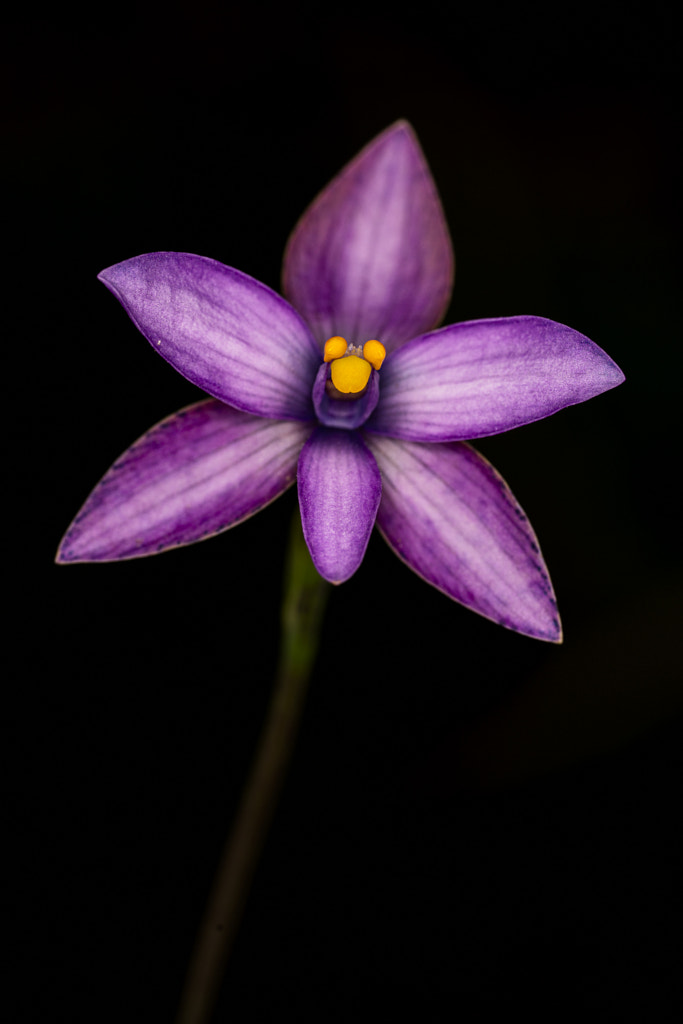
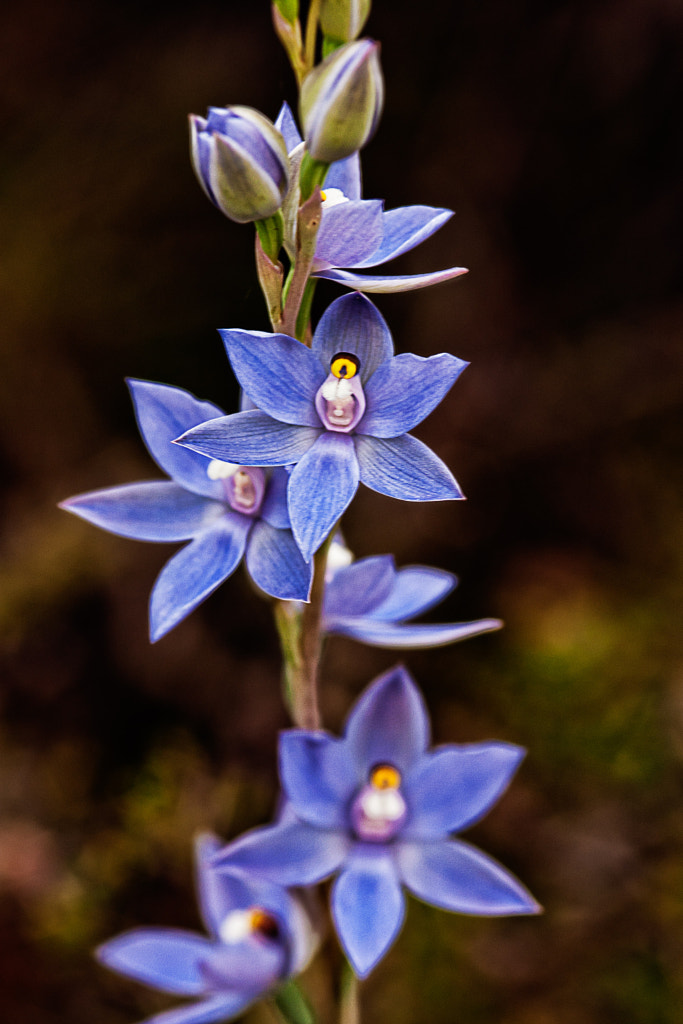
Scented Sun Orchid by Paul Amyes on 500px.com
This shot of a Scented Sun Orchid was what I considered my first successful photo of an orchid. The subject is separated from the background making easy to see.


I took what I call my first proper shot of an orchid back in 2008. Back then my technique was very simple – handheld with a macro lens. The problem was that it was often very difficult to isolate the flower from the background while having sufficient depth of field and a low ISO. For every successful photo there were hundreds of duds.
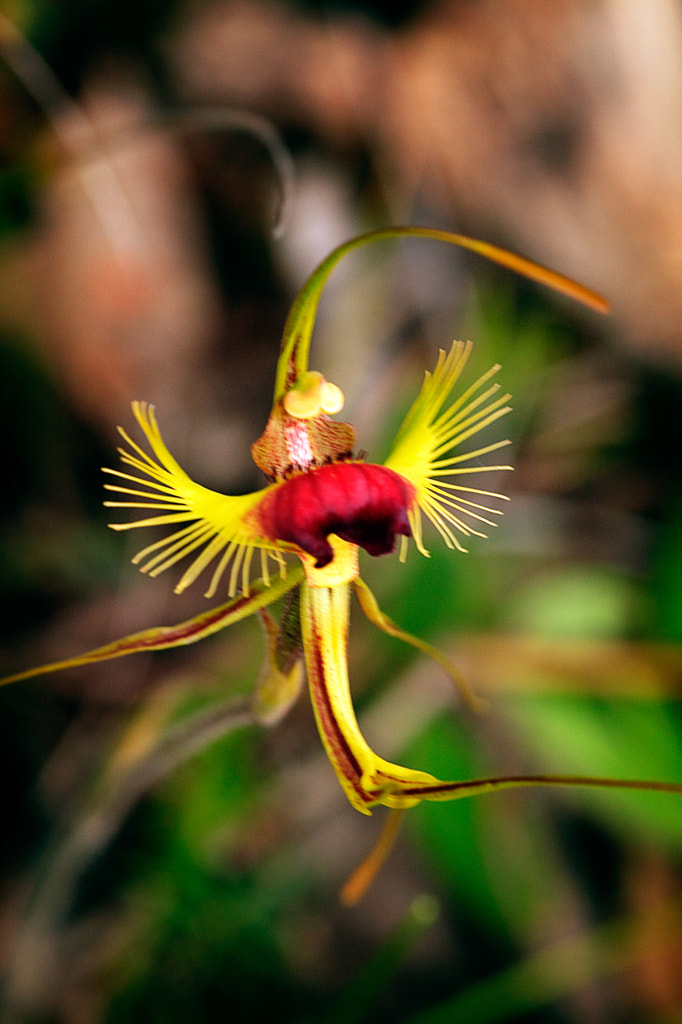
 

Butterfly Orchid by Paul Amyes on 500px.com
This shot of a Butterfly Orchid is one of the hundreds of duds. The messy background threatens to overwhelm the subject.


After about a year of trial and error (mostly error) I decided to photograph the orchids in the same way I would take a portrait of a person. Get down at “eye” level, use an off axis flash to provide the key light and have the natural light as my fill light at -1 to -2 stops. This was a huge improvement, but I still wasn’t getting the clarity and sharpness in the images I desired.


Photographing Orchids
My first flash rig for photographing orchids. Using a flash brake allowed me to get the flash off of the lens axis and get a more pleasing lighting effect.


120907-York-1324
The next attempt at better lighting was a heavy tripod and light stand. My back hurts just looking at this photo.


The next evolution was to mount the camera on a tripod and then mount the flash to one of the tripod legs via a “magic arm”. This allowed greater choice in the positioning of the flash and allowed me to use different flash modifiers such as soft boxes, grids and snoots. The arrival of affordable and reliable wireless flash triggers  meant I could use multiple speedlights for more sophisticated lighting. This came a tremendous cost. I have a chronically bad back and all that kit was heavy, the tripod and “magic arm weighed just under 6Kg. Then there was the futzing about setting everything up, taking the shot, breaking it all down, walking to the next subject and then repeating it all again. Suddenly it wasn’t fun anymore. Something had to give and it was my back.


Olympus Pen EP-2
The diminutive Olympus EP-2. Just what the orthopaedic surgeon ordered.


Three Way Comparison
A size comparison of my DSLRs (Canon 5d and 550d) and the Olympus EP-2 which replaced them.


In 2013 I bought an Olympus EP-2 mainly for travel and street photography. It was a revelation – small size, In Body Image Stabilisation (IBIS), and excellent flash implementation. It quickly became my orchid camera of choice. I could chuck out the tripod and become more mobile. It wasn’t all beer and skittles though. The 12Mp sensor wasn’t the best in terms of high ISO performance and dynamic range, the lack of a viewfinder made usage in bright sunlight problematic (solved with the addition of the optional EVF) and the contrast based autofocus system was a bit on the temperamental side. But the positives were enough to keep me using it and when the EM10 came out with a built in EVF, a better IBIS system and an improved sensor then I knew that the system would be just about perfect for what I did. I could walk around in the bush for hours at a time without back pain which meant I could explore further afield. This freedom allowed me to experiment a lot more.


Sigma’s 105mm f2.8 DG DN macro lens attached a Sony A7Rii.


The Tamron 35mm f2.8 lens has excellent macro capabilities.


Curly Locks by Paul Amyes on 500px.com
Curly Locks, Thelymitra spiralis. Wandoo National Park, Western Australia. Sony A7r2 with Sigma 105mm f2.8 DG DN macro lens.


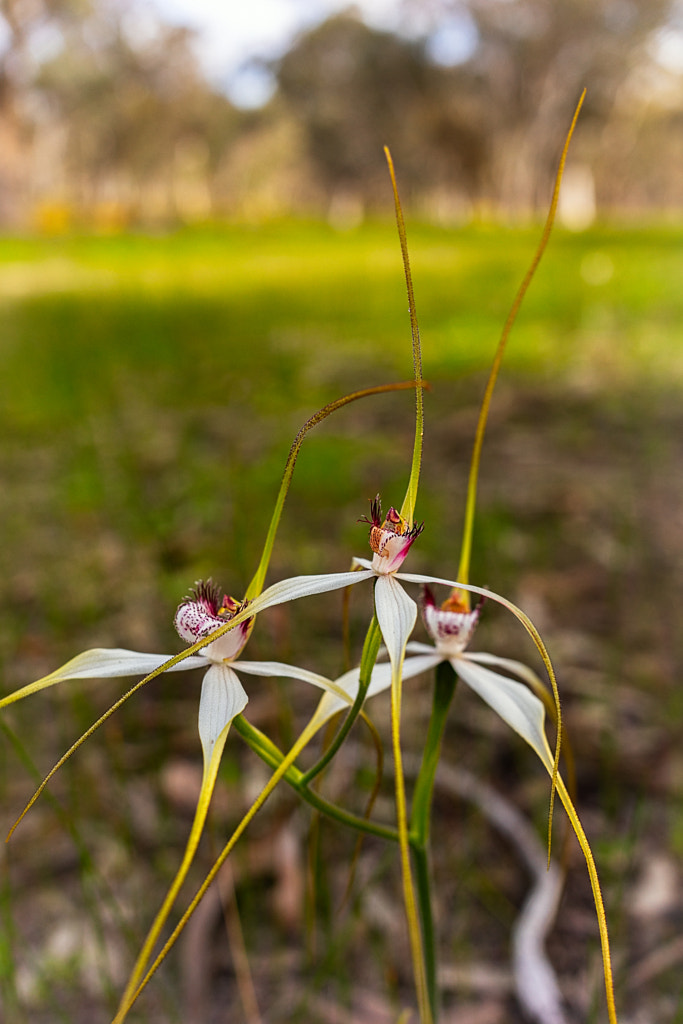
White Spider Orchid by Paul Amyes on 500px.com
White Spider Orchid, Caladenia longicauda subsp longicauda. Wambyn, Western Australia. Sony A7r with Tamron 35mm f2.8 lens.


In 2021 I felt that I wanted more resolution than the 20Mp EM1 mk ii was giving me. So I tentatively dipped my toe into the world of full frame mirrorless and I went with a second hand Sony A7r2. The image files produced by the camera were absolutely gorgeous. Alongside my usual working method of using flash with macro lens I decided to experiment with environmental portraiture of orchids. For this I used a 35mm lens with a half size macro capability and the results were pleasing. The downsides were as follows. The rear LCD is hopeless in bright light and it has no touch control facility. The IBIS wasn’t as effective as that on my Olympus cameras and the sensor resolution emphasised very tiny camera shake. A tripod was the solution. The sensor is a dust magnet which means that changing lenses enables dust bunnies to proliferate. The answer was to have one camera with the 105mm macro and one camera with the 35mm. Arrrrrgh! I was back carrying a load of heavy equipment. So it was back to the Olympus kit.
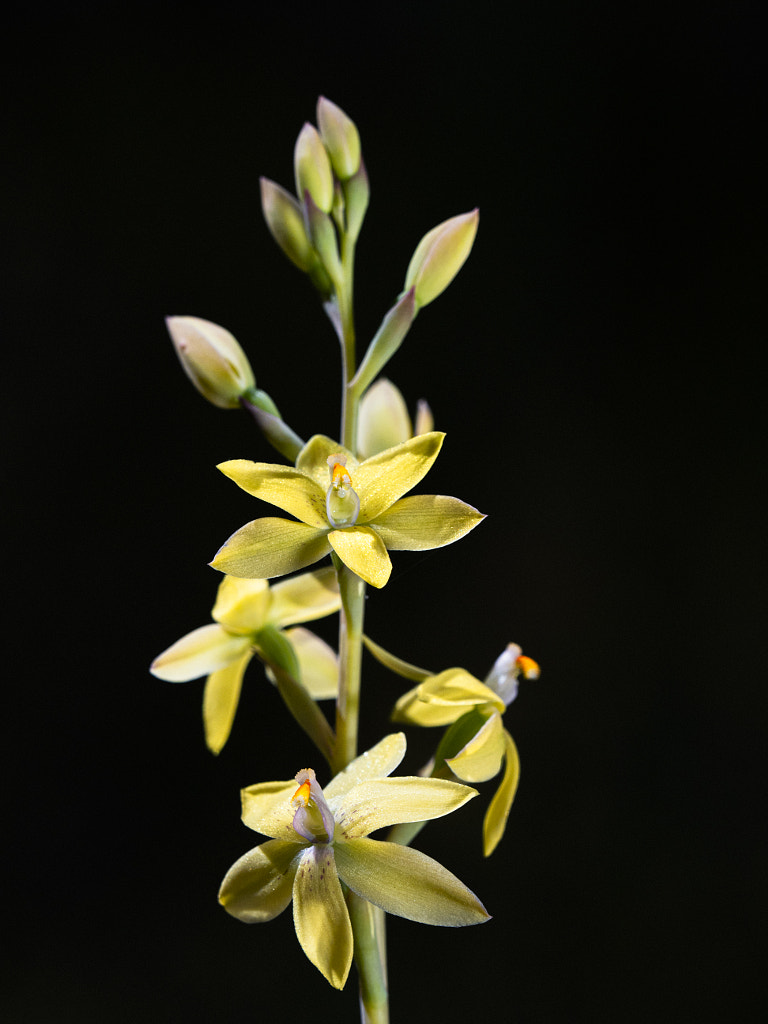
 

Lemon Scented Sun Orchid by Paul Amyes on 500px.com
This shot of a Lemon Scented Sun Orchid was made with the Olympus Em1 mk ii, Olympus 40-150mm f2.8 lens with 1.4 x teleconverter and the Olympus FL600R flash using the focus stacking function.


I’m still trying to evolve a style which produces a nice clean portrait of an orchid. One of the great benefits of Olympus’s cameras and lenses is that it allows very long telephoto lenses to have an almost macro capability. The use of such long lenses allows you to throw backgrounds well out of focus by dint of their increased magnification which reduces depth of field. The problem is that that decreased DOF means that it is hard to get your subject rendered sharp whilst retaining all that loverly bokeh. The counter to this is focus stacking which involves taking a series of pictures of the subject while moving the focus point and then blending the images in post. Olympus has a very neat feature that allows you to do this automatically in camera which is fantastic. Unfortunately the function limits your flash usage by restricting your maximum flash sync speed to 1/50th second and you have to manually set the flash exposure. I tried doing this for a while and it was a right royal pain. So now I don’t use the flash and just make the exposure using ambient light. The lens I’m using is the Olympus 40-150mm f2.8 with the the mc-14 1.4 x teleconverter. This gives me a 210mm f4 lens (420mm in full frame terms). Despite shooting wide open this invariably means shooting at a low shutter speed. So while the IBIS is fantastic on my EM1 mk ii using it with a long lens while focus bracketing wasn’t the best way to proceed. So it was back to a tripod. My aluminium Manfrotto 055 tripod is a good tripod but it is that heavy you could use it as a boat anchor. It was time to get a bit of fibre in my life – carbon fibre. So I bought a nice Sirui  AM-254 carbon fibre tripod which weighs just a smidge over 1Kg. It doesn’t have a centre column and so a minimum working height of 7.8cm which means you can get down and close to the subject. The results have been excellent and now I feel that using both my normal macro lens and the telephoto zoom with converter I’m getting closer to what I have envisioned.


20200818-Beverley-0002-Edit
The Sirui AM 254 tripod in action.


So this has been my journey of finding what works for me. I’ve discovered that learning how your equipment works is just as an important step in developing vision and style as is technique. Continual learning and experimentation will help you develop as an artist and we shouldn’t be afraid to do so. A few times I’ve felt that I was going backwards, but it was worth persevering. I’ve still got a couple of things to sort out, but I feel now I’m on the right track.

The following shots were made this last week.
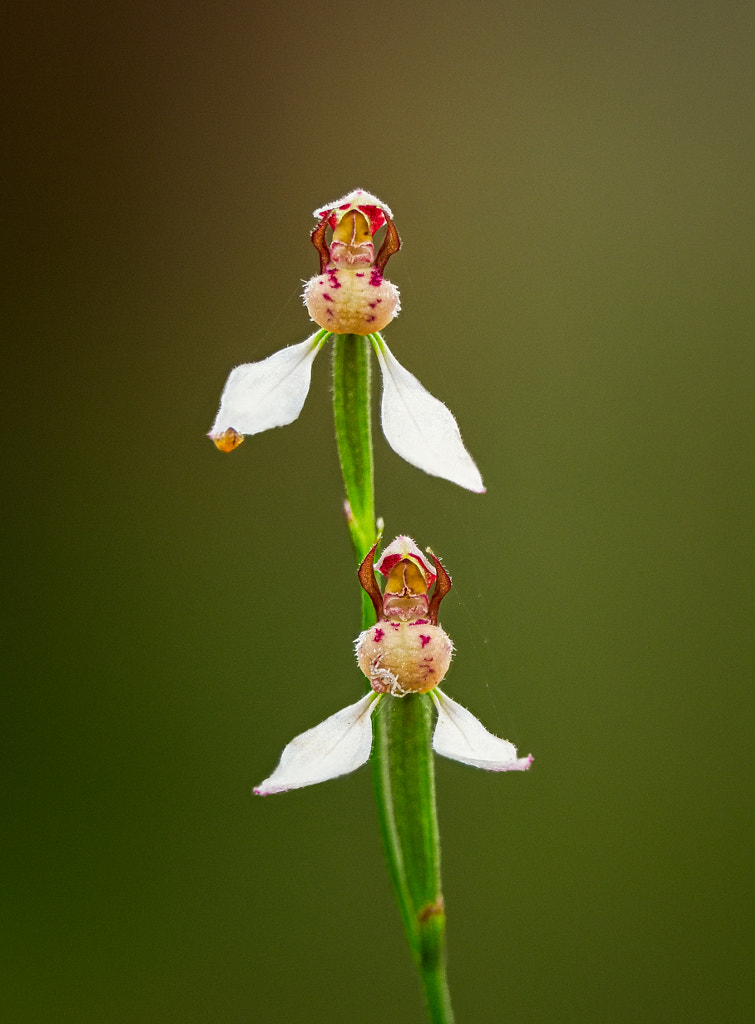
 

Common Bunny Orchid by Paul Amyes on 500px.com

Common Bunny Orchid, Eriochilus dilatatus subsp. multifloris. Oswald Sargent Reserve, Western Australia.A focus stack using the Olympus EM1 mk ii with the Olympus 40-150mm f2.8 lens and 1.4 x teleconverter.
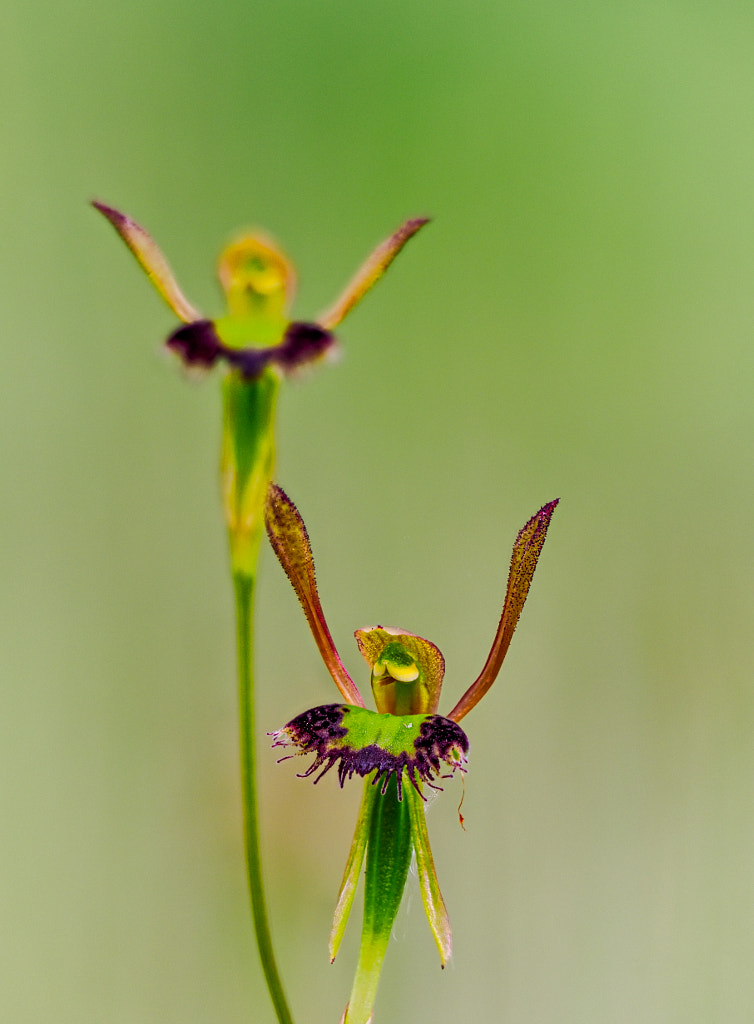
 

Hare Orchid by Paul Amyes on 500px.com
Hare Orchid or Fringed Hare Orchid (Leporella fimbriata). Oswald Sargent Reserve, Western Australia.


It’s Not All Bluff


The Stirling Ranges by Paul Amyes on 500px.com
Low level cloud brings white out conditions to Bluff Knoll. Even in late spring the weather can be incredibly unpredictable. The Stirling Range is one of only a few places in Western Australia where snow falls.


Stirling Range National Park lies approximately one hours drive north of Albany in Western Australia’s Great Southern region. The reason most people visit the park is to climb Bluff Knoll which they believe to be the highest peak in Western Australia. Bluff Knoll is an imposing structure – it rises dramatically above the pan flat agricultural land surrounding the park – but the highest point in Western Australia it is not. That honour goes to Mount Meharry in Karijini National Park which is 1245m compared to Bluff Knoll’s 1093m. The other reason people visit Bluff Knoll is that it is the most easily accessible walk in the park being serviced by a road, having parking and a cafe. The trail is well signposted and is comparatively well surfaced and above all despite being steep in places anyone of reasonable fitness can do it. That cannot be said of some of the other walking routes within the park. There is good reason why Australia’s Special Air Service Regiment (SASR) train there.


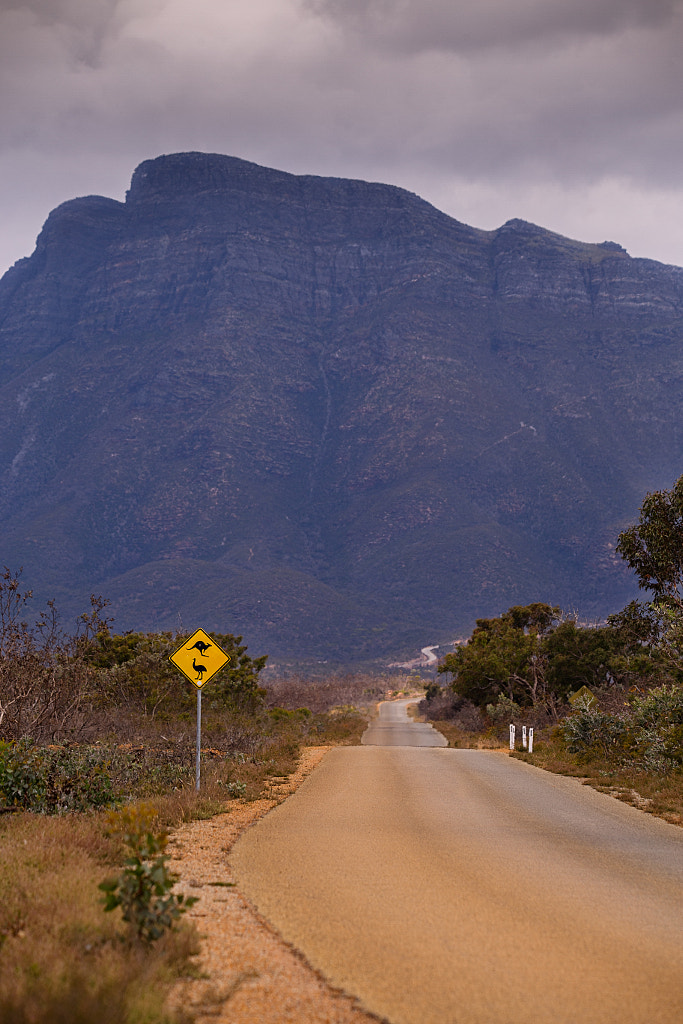
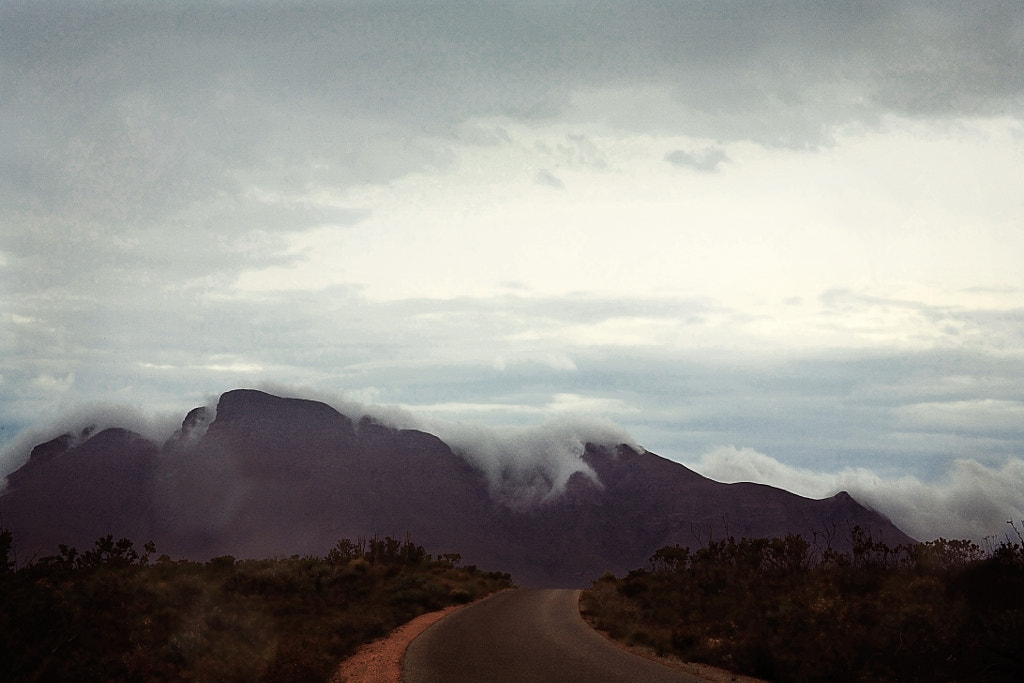
Bluff Knoll by Paul Amyes on 500px.com
The road to Bluff Knoll in the Stirling Range National Park. At 1099m it is the highest peak in the Stirling Range. It is often surrounded by mist and low lying cloud.


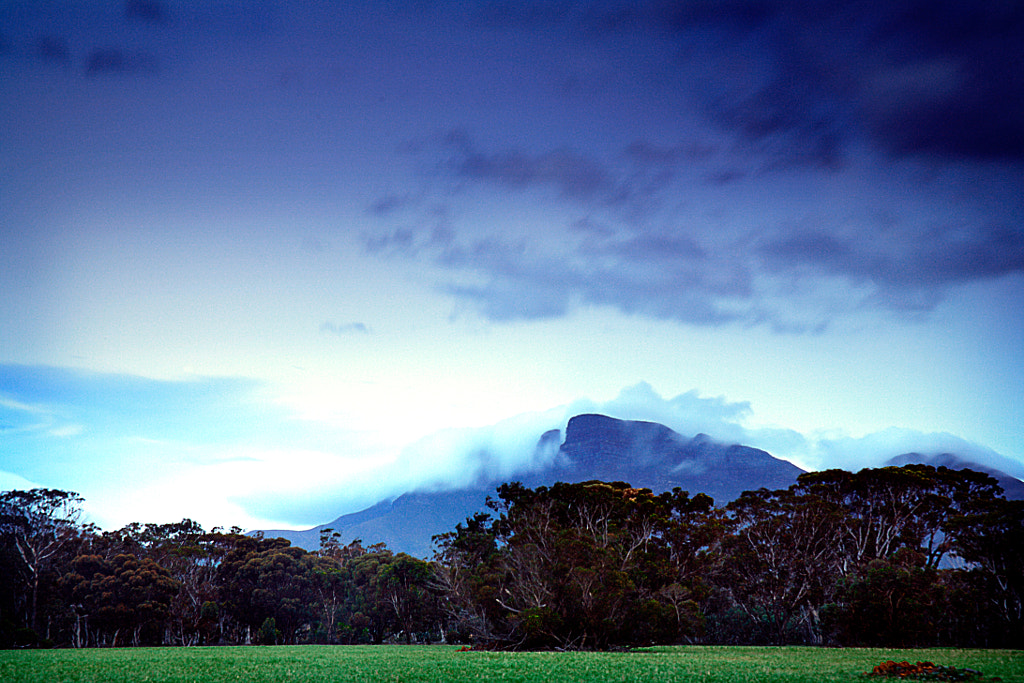
The Stirling Ranges by Paul Amyes on 500px.com
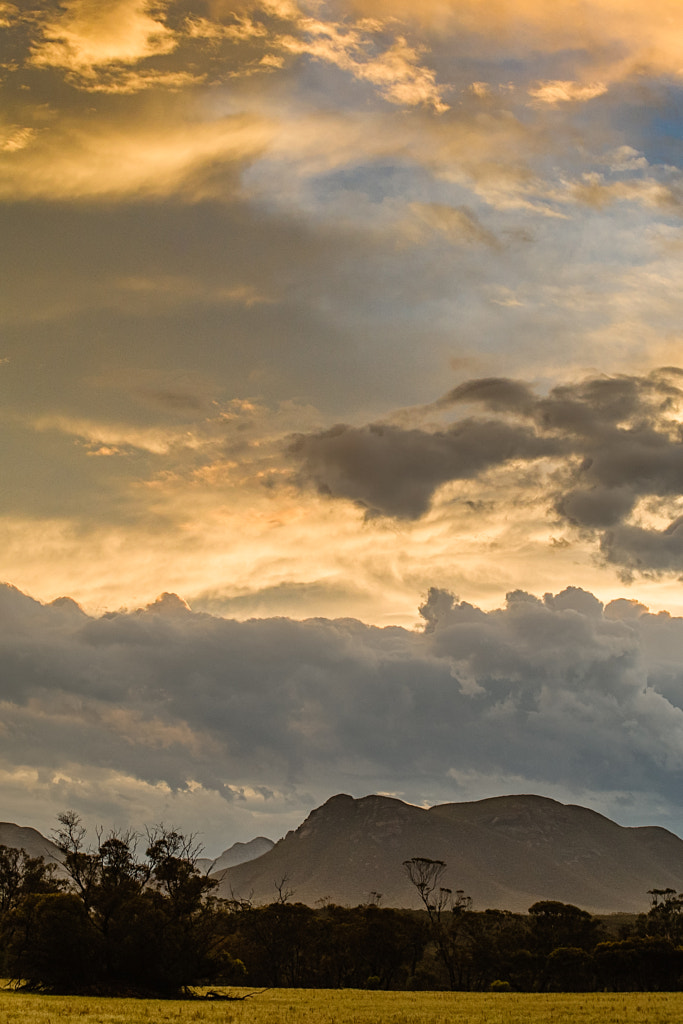
Twilight in the Stirling Range and the peak of Bluff Knoll is being buffetted by a storm.


Highland areas such as the Stirling Range always have very variable weather and often in the extremes. The Qaaniyan and Koreng groups of the Nyoongar called Stirling Range Koikyennuruff or place of the swirling mist. Low lying cloud and mist often shroud the peaks even on bright sunny days. The Nyoongar believe Noatch, the spirit of the dead, lived in the mist and that evil witches lived on the high ridges and so tended to avoid going up onto the peaks. All I know is that it can be shorts and tee shirt weather at the base of Bluff Knoll but when you get to the top it can be very cold and wet. The fact that it is the only place where it snows with any regularity in Western Australia (any time between April and November) shows how difficult the weather can be. The weather is one of the main reasons why people get into strife when climbing Bluff Knoll, most are simply under equipped and under prepared. A Swedish acquaintance once told me there was no such thing as bad weather just poor choices of clothing and that is certainly borne out here. Things aren’t much better in summer as the park is very prone to bush fires so if you wish to visit make sure you are aware of what is happening in the park and whether the trails are open by checking with the Department of Biodiversity, Conservation and Attractions Parks Alerts System and then plan accordingly. The other reason why people get into trouble is that they leave the trail looking to find a short cut and then get disorientated and lost in the scrub.


The Stirling Ranges by Paul Amyes on 500px.com
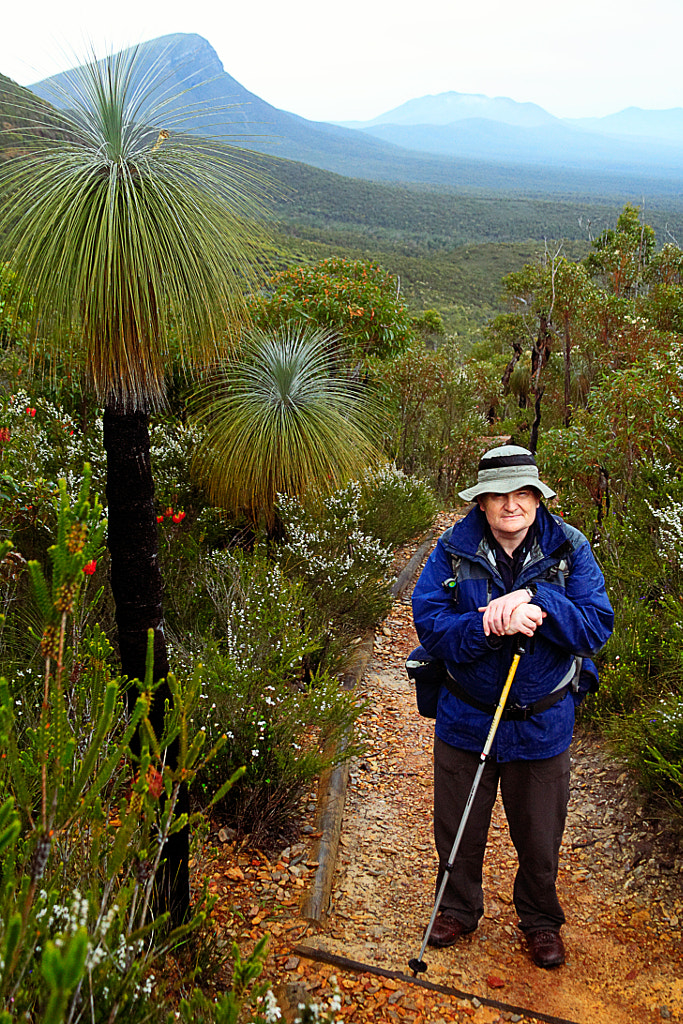
Pausing for a quick breather by a grass tree (xanthorrhoeaceae drumondii) while trudging up Bluff Knoll on a rainy morning.

I first intended to climb Bluff Knoll with my partner back in September of 2000 to celebrate her fortieth birthday but we never did it as I was run over by car. It wasn’t until October 2008 that we finally got round to doing it. Better late than never I suppose. It was a bit of a slog in cold wet weather but it was well worth the effort. We were staying at the Stirling Range Retreat which was then run by Ayleen Sands and her husband Tony. Ayleen ran orchid spotting trips and we did one and that opened my eyes to the biodiversity of the region and more specifically the amazing orchids that are found in Western Australia and I’ve been photographing orchids ever since. It was from Ayleen that we learnt that Stirling Range is an incredible biodiversity hotspot. In spring and early summer the 1500+ species of plants that can be found within the Park’s boundaries come into bloom. To put that into perspective the 1,159 km2 of the Stirling Range National Park contains more species of wildflowers that the 315,159 km2 of the British Isles.  Some of these plants, such as the mountain bell (Darwinia leiostyla), are found no where else in the world. A staggering 123 species of orchid have been found in the Stirling Range National Park which works out to be about one third of the total number of orchid species that can be found in  Western Australia. There are more than 140 bird species, approximately 20 species of native animal – the most likely to be seen are western grey kangaroos. Rottnest Island isn’t the only place with quokkas they have been seen on the slopes of Bluff Knoll. The are more than 30 species of reptile and of course it would not be Australia without poisonous snakes. I initially went to climb Bluff Knoll but found so much more and have been back since and intend to go back again and again.


The Stirling Ranges by Paul Amyes on 500px.com
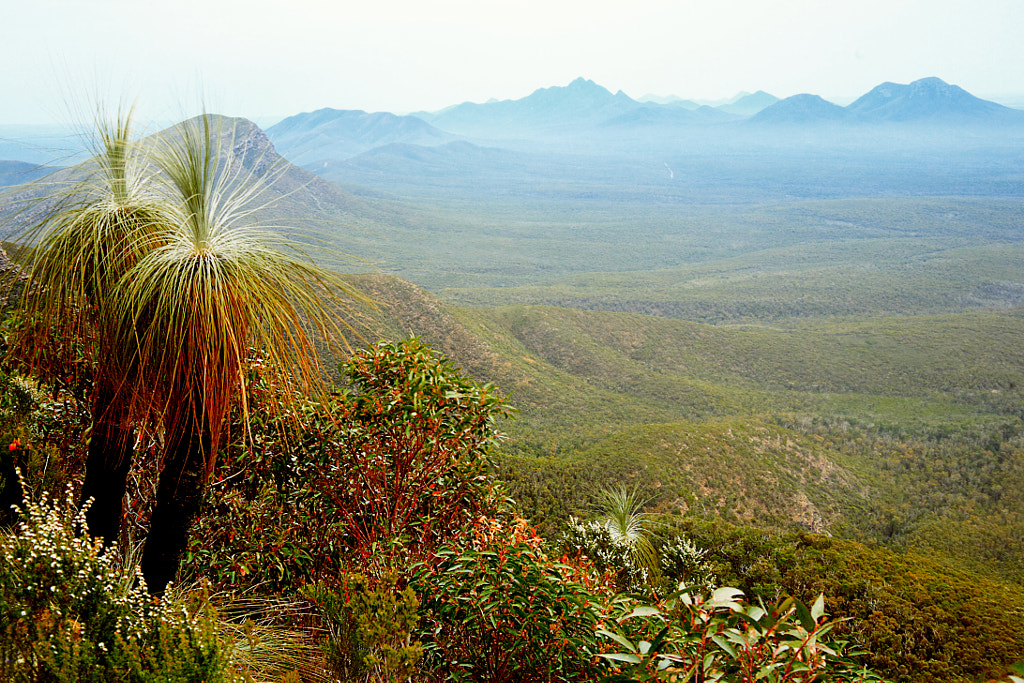
Looking west towards Yungermere Peak, Mount Success, and Coyanarup Peak while walking the traverse of Bluff Knoll. In the distance some of the early morning low lying cloud can still be seen fringing the mountain tops.


The Common Mountain Bell (Darwinia leiostyla) grows in the eastern and central Stirling Range, and can be readily seen on Bluff Knoll and Mount Trio.


Bamborn by Paul Amyes on 500px.com
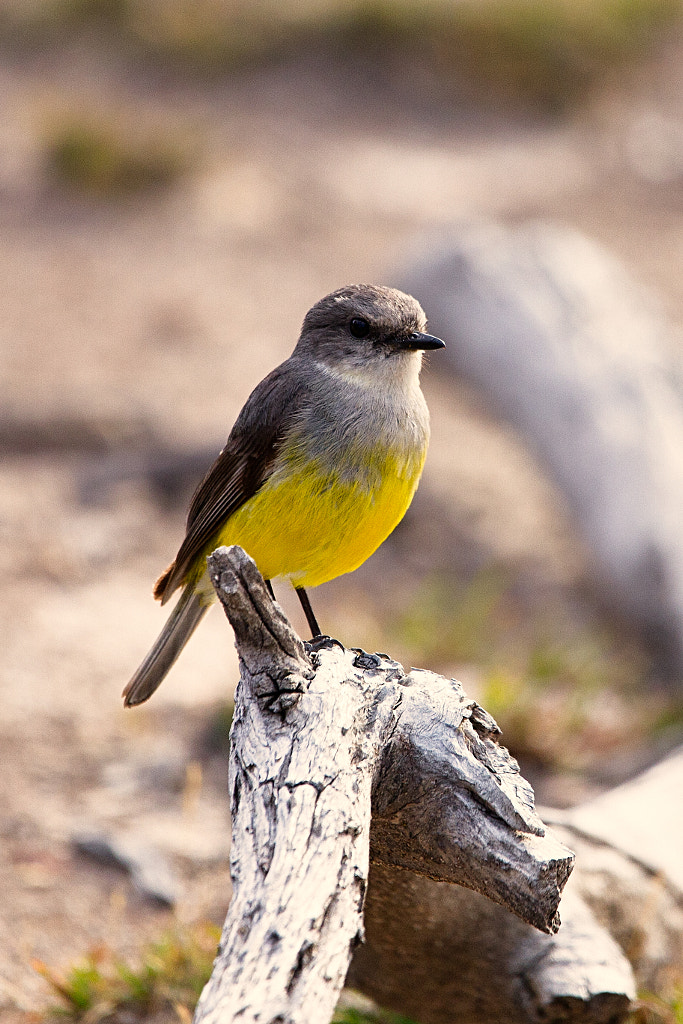
Western Yellow Robin, Eopsaltria griseogularis. Stirling Range National Park, Western Australia.


Djilok by Paul Amyes on 500px.com
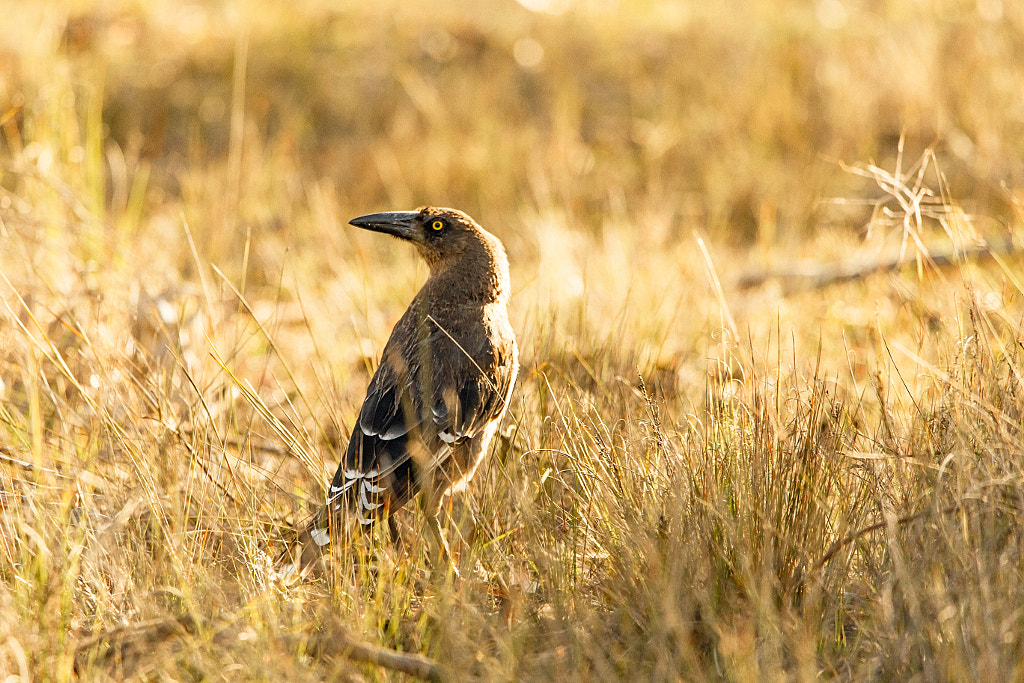
Grey Currawong, Strepera versicolor. Stirling Range National Park, Western Australia.


Koolyederong by Paul Amyes on 500px.com
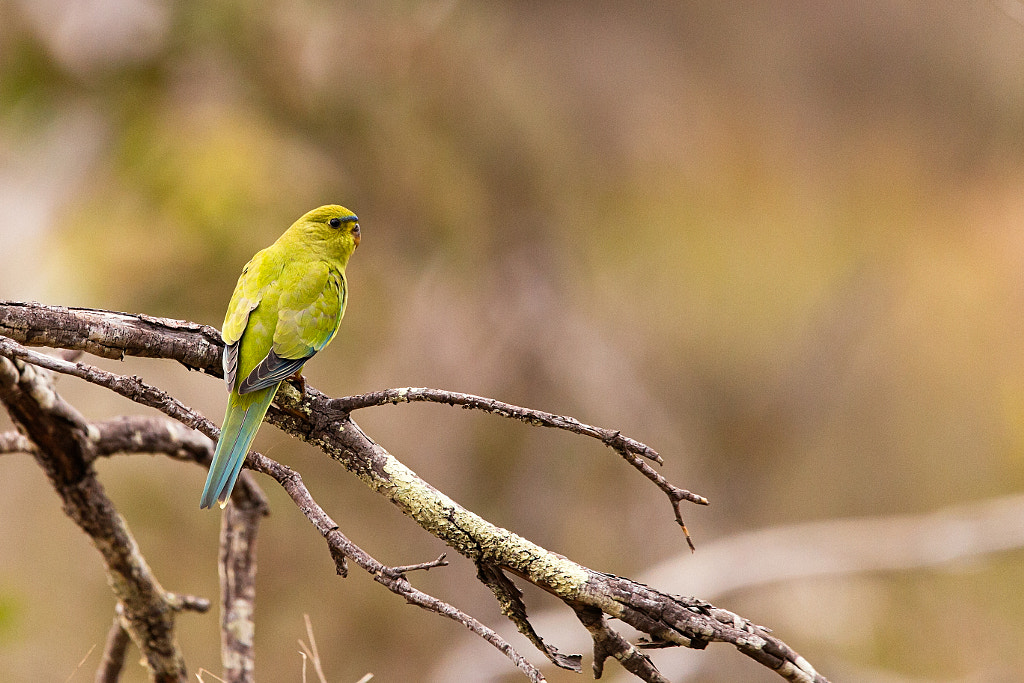
Elegant parrot, Neophema elegans subsp. carteri. Stirling Range National Park, Western Australia.


Butterfly Orchid by Paul Amyes on 500px.com
The Butterfly Orchid ((calendenia lobata)) is uncommon and rarely seen, it was first observed on Mt Toolbrunup in the Stirling Range National Park in 1991.


Mount Trio by Paul Amyes on 500px.com

The sun sets behind Mount Trio in the Stirling Ranges of Western Australia. The everchanging weather in the Stirling Ranges can produce some dramatic skyscapes at sunset with spectacular cloud formations over the mountains.