Bread And Butter Lens

20260417-Canon35mm-0224-Edit
The Canon EOS 30 film SLR with a Canon EF 35mm f2 lens mounted.


Regular readers may recall that I have been shooting film again and it has been great fun going out with a single camera and a single lens. My camera of choice is my Olympus OM4 with the Olympus OM Zuiko 35mm f2 lens. That combination is over forty years old and I’m a bit worried that it may give up the ghost because there will be no chance of repairing it. I had thought of getting another OM4 body or even the later OM4 Ti, but they are all getting on a bit. I do have another film camera body that I can use and that is the Canon EOS 30, also known as the Elan 7E in North America and EOS 7 in Japan. I’ve been using it with either my Canon EF 24-70mm f4 or my Canon EF 50mm f1.8. The zoom lens and camera combination is a bit on the heavy side heavy for an every day carry and while the 50mm was suitably lighter it’s not a focal length I particularly like. So I had the bright idea of buying a Canon EF 35mm f2 lens. They have the benefit of being small and light while being cheap second hand. So I scoured EBay and found that Map Cameras had a suitable copy rated as “B – Has been used preciously. Showing a few marks, scratches of cosmetic surface. Functions perfect.”. When it arrived it looked like it was new, there were no marks on the lens barrel, front and rear lens elements, and the mount looked pristine.


Canon EF 35mm f2 lens
The Canon EF 35mm f2 was part of Canon’s consumer range of lenses. Here it is shown with the 24mm f2.8 and 50mm f1.8 mk ii.


Canon introduced their autofocus EF lens mount in 1987 and it took them until October 1990 to introduce a basic 35mm lens – the EF 35mm f2 a no frills prosumer grade lens. It’s got a plastic body with a metal lens mount. There’s a focusing ring and a switch to put it into manual focus. The lens extends as you focus in and out, but, the front element doesn’t rotate which is a boon if you like to use polarising filters. It feels quite dense in the hand, but it doesn’t exude quality.


Canon EF 35mm f2 lens
It is a very no frills construction with a plastic body, manual focus switch and a rudimentary ribbed manual focus ring. You do get a focus scale for zone focusing and an infrared focus point. Which is all very welcome on a budget lens.

;


Canon EF 35mm f2 lens
It does have a metal lens mount which is always nice to see as many budget lenses have plastic mounts.


Specifications 

Focal Length 35mm
Maximum Aperture F/2
Angle of View (diagonal) 63° 26′ (for full-frame format)
Optical Construction 7 elements in 5 groups
Minimum Object Distance 0.25m
Maximum Magnification Ratio 0.23
Filter Size Φ52mm
Maximum Diameter Φ67.4mm
Length 42.5mm 
Weight 210g
Diaphragm Blade Number 5 straight blades
Minimum Aperture F/22
Standard Accessories Lens caps
Compatible Mounts Canon EF


EF35mm f2 - Canon Camera Museum 2025-07-28 16-18-22-Edit
The optical construction is very simple with 7 elements in 5 groups and no fancy glass elements.


Performance

Sharpness


20260501-Canon35mm-0001


20260501-Canon35mm-0004


20260501-Canon35mm-0002


20260501-Canon35mm-0003


Wide open the centre of the image is soft, but has reasonable contrast. The corners were far worse – low contrast mush. At first I thought I had a lens that was  decentered, but, when I checked all four corners they were equally bad so it was field curvature . This is, apart from a lens by Holga, the worst lens I’ve ever tested. Two stops down from wide open is where a lens traditionally hits optimum performance, well someone forgot to tell the Canon optical design team that as although there had been a slight improvement in the centre the corners were still very mushy. At f5.6 the centre of the frame is as good as it gets, but the corners still aren’t sharp and lack contrast. The best performing aperture is f8 in terms of the full field of view. By f16 diffraction starts to kick in degrading the image and that just gets worse at f22.

Now this is a 36 year old design for a consumer grade lens so is this performance to be expected. Well the Olympus OM Zuiko 35mm f2 was designed was introduced in 1972 a full 18 years before the Canon EF 35mm f2 and it has a better optical performance and better bokeh – more about that later. The only advantage the Canon has over the Olympus is that the Canon manages flare a lot better. We’re also told that primes are better than zooms so I compared the Canon EF 35mm f2 to my Canon EF 24-70mm f4 IS L at 35mm, and the zoom is better. Not surprising really. An old consumer grade design compare to a more modern professional grade. So I wouldn’t look to replace a good zoom lens with the Canon EF 35mm f2 unless you were considering some other metric of comparison such as size and weight.

Bokeh


20250918-Canon35mmf2-0225
Wide open the bokeh balls are bad. The transitions to out of focus areas are quite pleasant.


Wide open the Canon produces nice large round bokeh balls that have no onion rings – the lens has after all no aspheric elements. At the edges the balls take on a more elliptical shape caused by mechanical vignetting. As you stop the lens down to f2.8 the balls cease to be balls and become pentagonal thanks to the five straight aperture blades. They become defined the further you stop down.


20250918-Canon35mmf2-0226
Stopping down to f2.8 and the bokeh balls cease to be balls and take on a pentagonal shape thanks to the 5 straight blades of the aperture diaphragm.


Flare Resistance 


20250815-Canon35mmf2-0236-Edit


A specular light source within the frame will produce quite pronounced veiling and reflective flare. The effect becomes more pronounced as you stop down. It is a good argument for a lens hood, but Canon never supplied their non ‘L’ lenses with one, you had to buy it separately. It would be worth looking for a second lens that came with one. The diffraction spikes or sunstars are ugly with little definition. 

Chromatic aberration


Canon EF 35mm f2
Wide open there is axial chromatic aberration. Stopping down will fix the problem.


Axial chromatic aberration, also known as longitudinal chromatic aberration is present wide open with magenta and green fringing. This is difficult to remove in post, the best way to deal with it is to stop down.

Transverse or lateral chromatic aberration is present and considering the age of the design and the fact there are no fancy glass elements it does remarkably well. If using the lens on a digital camera this is easily dealt in post.

Distortion


Canon EF 35mm f2
Barrel distortion is present, it’s not too extreme – I’ve seen much worse. It is easily corrected if you shoot digital. You can also see the vignetting. This diminishes as you stop down and can also be fixed in post if working digitally. Personally I quite like a bit of vignetting and will often add it in post or in the darkroom.


As with most wide angle lenses there is barrel distortion, but it is very mild. Again shooting on digital this can be fixed by applying the profile for this lens.

Vignetting

There is some vignetting when shooting wide open and this clears up pretty quickly as you stop down. The Canon EF 35mm f2 lens profile in Lightroom also removes it.

Autofocus

When this lens was designed autofocus systems were a lot more primitive than they are now. Firstly these first generation auto focus lenses have according to Canon “an arc form drive for focusing. This is a conventional small motor unit, shaped to fit inside the curved barrel of a lens.”. Consequently they are slow and noisy. When I say say noisy I mean it. Racking the lens back and forth produces a sound that is akin to angry wasp trapped inside a bottle. It is very noticeable. There is no full-time manual focus, as found on later lenses that used USM and STM motors, you have to switch to manual focus using the switch on the lens barrel. Talking about manual focus there is a narrow ribbed focus ring and a focusing scale. While the lens is in AF mode the ring spins freely and does nothing. Throw the switch and the focus ring drives the lens elements back and forth. There are hard stops at either end so repeatable focus moves are possible. While not the most pleasant focusing ring to use it’s not unpleasant either. It gets the job done.

For stills this lens was made when a camera with seven AF points clustered in the centre of the frame was considered sophisticated. Single point AF was usually a matter of keeping the subject in the centre of the frame or focusing and recomposing. The AF on the lens is adequate, mostly it is accurate, but it can be a little slow and hunt in low light or with low contrast subjects. Continuous AF is much the same story.

This lens was not designed with video in mind, but I gave it a go.  I tried it on an 80d the Dual Pixel CMOS AF but it wasn’t the best performance. Finally I bunged the lens on my Sony A7r2 via a Metabones adapter and to some extent the AF was a little better but the lens really struggled and made some awful noises as it focused.


In Use


20250815-Canon35mmf2-0225-Edit


Moylan Silos


20260124-York-0244-Edit


Bing's Visit


From the above you’d think that this lens isn’t much chop. In photography there is a tendency to obsess about specifications and lens resolution charts, but they don’t tell the whole story. Wide angle retrofocus lens for SLRs don’t really perform well at close distances unless they have a floating rear element which the Canon EF 35mm f2 does not. That may explain some of the results. Also answer these two questions. How many times do you compose a photo with the main subject in the extreme corners? Short of very precise copy work how many images do you take that require corner to corner sharpness? I know I don’t do any of those two things. The attributes this lens brings to the table are that it is small and light and is sharp enough where it counts. It is ideal on a compact SLR as an everyday carry.  Although I primarily bought it to use on my film EOS 30 to date I’ve not done so preferring to use it on either my Canon 5d or 6d. It’s been a very pleasant experience and I’ve enjoyed using for landscape, urban landscape and street photography.


Smile


20251229-Perth-0224-Edit


20251229-Fremantle-0226-Edit


Conclusion


Canon EF 35mm f2 lens


If like me you want a small compact lens to walk around with on a film or digital Canon SLR and you aren’t bothered by not having a red ring, the best specs and best optical performance then this lens is perfect. There are loads of them out there which makes it easy to pick up a reasonably priced second hand example. If you want something to shoot video I’d look for the Canon 35mm f2 IS, the Canon 35mm f1.4 L, or a Sigma 35mm f1.4 Art. They will all have more modern motors which will make the autofocus experience more pleasurable. If you want to adapt the lens to shoot on a modern mirrorless again look for something more modern.


Canon EF 35mm f2 lens


Skateaway*

Santa’s reindeer channelling a distinct 1980’s vibe with their Walkmen and roller skates.


This year the Christmas decorations have taken on a definite 1980’s vibe.  Look at Santa’s Reindeer in the above shot. Walkman. Check. Roller-skates. Check. Leg warmers. Check. If reindeer could have big hair and shoulder pads then it would be complete.


*Of course with a title like Skateaway we are referencing Dire Straits song of the same name from their huge selling Making Movies albums from 1980. The video clip starred Jayzik (Jay) Azikiwe as the skater girl. She was a performance poet, singer, actress and daughter of a former Nigerian president who sadly passed away in January 2008.


Olympus Has Fallen

Not the dreadful film, but the camera company. On the 24th June 2020 Olympus announced that they were in talks with Japan Industrial Partners to divest themselves of their camera business after three continuous years of losses despite numerous restructuring attempts. I’ve got no idea what all this means from a practical point of view, but from an emotional point of view it is quite a sad day. I’ve always considered myself to brand agnostic and have used over the years Praktika, Pentax, Minolta, Canon, Leica, Voigtländer, Sony, Panasonic and of course Olympus. But I’ve got to say that over the last 38 years I’ve always had at least one Olympus camera. More than just a few key moments in my life have been documented by an Olympus camera.


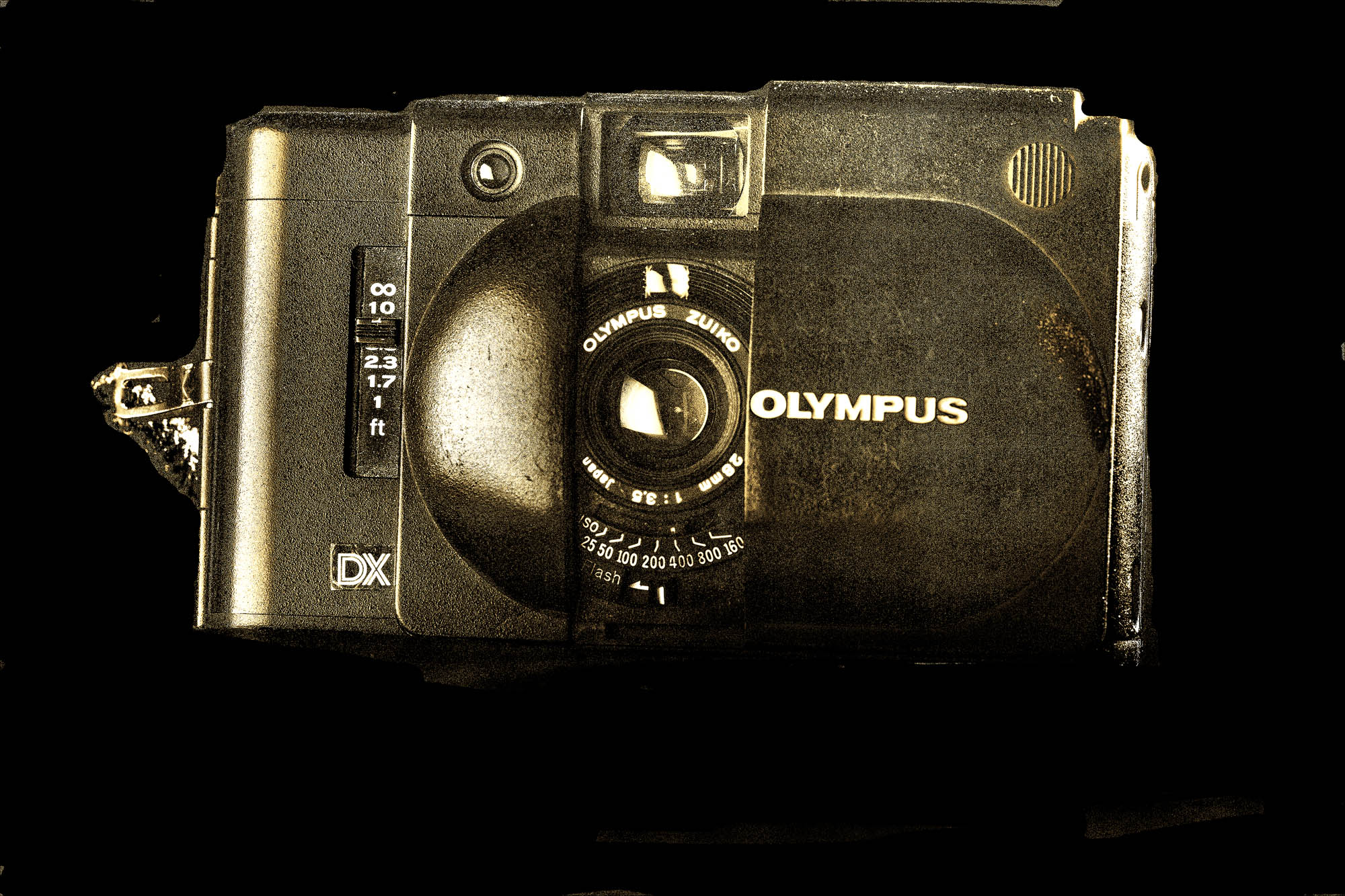
My first Olympus camera was an XA2. This is the XA4 I bought later to replace it, they look very similar, the major difference being that XA2 had a 35mm lens while the XA4 had a 28mm macro lens.


Portrait of me in Majorca taken in March 1986 by my father in law, Brooke Spencer. Probably taken with a Leica R4 with a Leica 135/2.8 Elmarit-R on Kodak colour negative film. I’m holding my OM1n with 35-105 lens.


I bought my first Olympus camera in 1982 after returning back home from an extended stay in Israel where I got into taking photos. Previously I had a Kodak 110 cartridge camera and when I got the films back from the processors I was dismayed with how crap they looked. I was determined that on the next trip I would take a much better camera. So after a trip to the newly opened Whibys camera shopping Chichester and a long and informative chat with the owner Derek Whitby I left with an Olympus XA2 – a unique 35mm clam shell compact camera. I kept going to Whitby’s until 1988 which was when I migrated to Australia. In that time Derek went on to sell me an OM20, OM1n, OM2n, OM4 and my partner an OM40. Along with those cameras was wheelbarrow load of lenses, some very specie flashguns for the time and a shed load of film. I’m glad their business is still going although Derek and his wife Jacqui no longer run it. The cameras kept marching on and were perfect for my travels being small, durable and highly featured for their time. The lenses were also compact and gave great image quality. I’ve still got most of the lenses and still use them, and I’ve written about them on this blog ( 21mm f3.5, 24mm f2.8, 35mm f2, 50mm f1.4,135mm f2.8, and 35-105mm f3.5-4.5).


Believe it or not that’s me in Red Square, Moscow in January 1987. The temperatures were -40ºC. You can just about see my camera bag slung over my shoulder. In it is an OM1n, an OM2n, a 35-105mm, a 50mm f1.4, a 200mm f4 lens a T32 flash and a T20 flash. We went to document the plight of Russians in Moscow and Leningrad (now St Petersberg for a human rights campaign that was to be launched later that year at the House of Commons in London). The cameras worked flawlessly in the cold. The photo was taken by my wife on an Olympus AF1.


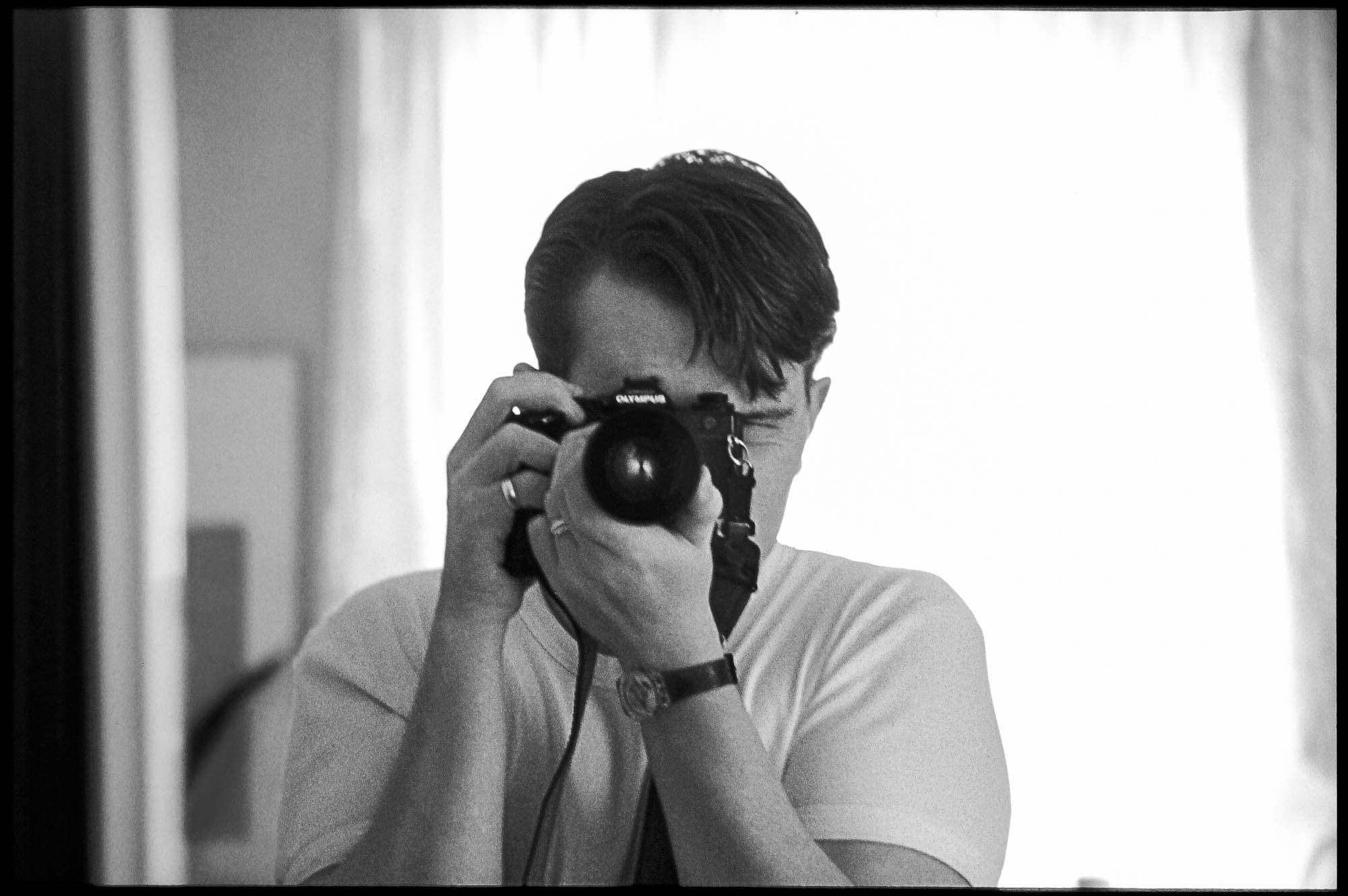
My earliest selfie – taken in September 1987 while I was staying with my in-laws just prior to departing for India and Nepal. The camera is an Olympus OM4 with an Olympus OM Zuiko 35-105mm lens. Originally shot on Ektachrome 200 but converted to black and white because of fading.


Yours truly on a house boat on Lake Dal in Srinagar, Kashmir, India. I’m wearing a Camera Care Systems pouch with my Olympus OM4 in it. Taken by my partner with her OM40 and 35-105 lens.


In 2003 I shot a couple of weddings and my OM4s developed problems, one the shutter failed and the other the film advance jammed. I took them to the local camera whisperer but he broke the bad news to me – there were no new spare parts. He said I could by up some old models and use them as donor cameras but there was no guarantee as to the condition of the parts and how long they would last. To say I was gutted would be an understatement. This came a a particularly bad time for me, I was recovering after a bad accident and was pretty broke. I had enrolled at college to study photography as a form of therapy and now I was pretty well camera less. My late father-in-law (Brooke Spencer) in an act of supreme kindness stepped into the breach. He had just bought a Canon EOS D60 digital SLR and he sent me his old EOS3 film SLR and a couple of lenses. I now had a camera to complete college with and had inadvertently changed system. I went digital with Canon but I wasn’t really happy with it. I found the Canon EOS system to be large, heavy and cumbersome. About this time I fell into writing about and photographing outdoor activities and then was commissioned to write a walking guide. Well after a year lugging a Canon 5d and three lenses on over 1000Km of walks I knew I needed something lighter.

The Canon EOS system full monty. Three bodies, seven lenses, two flashes, flash meter, filters, cables, flash triggers, and reflectors. It is a hernia inducing load.


This is the camera kit I used on my first walking guide book. Less hernia inducing than the Full Monty, but still coming in at 7Kg including filters and batteries.


When I saw the Olympus Pen EP1 in 2009 I was smitten, but it didn’t have a viewfinder so I held off buying one. Less than a year later Olympus introduced the EP2 and I got one. The next guide book was done with an outfit based around that camera and a a few lenses and I was much happier.


Coming in at under 2Kg complete with batteries, filters, microphone and assorted cables for video. This kit still gives me coverage from 24emm to 300emm with 1:1 macro and a smallish prime. All that’s missing is flash.


Here I am pausing to take a photo with EP2 while walking up Frenchman Peak in Cape Le Grand National Park, Western Australia.


Over the last ten years I’ve heard a lot reasons from keyboard warriors on various photographic forums why the micro four thirds format that Olympus and Panasonic used was inferior to full frame sensors and that you couldn’t get work published if you used it. Well after three books, two exhibitions and loads of print sales no one has ever said the image quality was not up to snuff. Unfortunately photography is an activity dominated by very conservative men who see a small camera, no matter how capable, as being an affront to their masculinity. So Olympus was sandwiched by the small minded conservatives that wanted big cameras and at the other end the onslaught of the do anything mobile phones which now have very good photo and video capabilities.


The Canon EOS6d with Sigma 150-600mm lens compared to the Panasonic G85, which uses the same sensor format and lens mount as Olympus, with the Panasonic Leica 100-400mm lens. The Panasonic has great reach, better video, the same number of megapixels, weighs less and costs less.


The Canon EOS 6d camera with 100mm f2.8 macro lens that I used to use for photographing orchids alongside the Olympus EM 1 mk ii with 60mm f2.8 macro lens that I use now. Both produce amazing images, but the Olympus is a lot nicer to carry through the bush all day.


As I said at the beginning of this piece I have no way of knowing what will happen. Maybe JIP will turn the company around and make it it profitable and innovative. Maybe they’ll just asset strip and close it down. The company does both. I hope it is the former, but if it is the later I guess that this a eulogy for Olympus. But whatever may happen my current Olympus cameras have plenty of mileage left in them and if I can get another 10 years out of them, and at this stage I don’t see why not, then I’ll be very happy.


Curry Night

Been left on my own for the weekend means it’s time for a curry extravaganza. Here we have Murgh musallam (baked chicken), Saag aloo (spinach with potatoes), Khili hui khichri (rice with yellow split peas) , popadoms and some ginger and mango chutney on the side. All this washed down by Ashai Dry.


Beloved Significant Other (BSO) has taken her sainted self off for the weekend to play croquet leaving yours truly and the dog at home. This can only mean one thing …CURRY NIGHT!!!!! And what’s more it’s not your usual blokey vindaloo. No here we have the height of Moghul culinary sophistication. There was Murgh musallam, Saag aloo, Khili hui khichri, accompanied by papadums, and ginger and mango chutney. It is next to impossible to get Kingfisher beer here so it was washed down with Asahai Dry. Three plus hours of cooking for a meal to be had on my own might seem a tad extravagant but I really enjoy cooking and I like to crank up the sound system and get stuck in. The recipes are not my own but were from Madhur Jaffrey’s eponymous book “Madhur Jaffrey’s Indian Cookery”. She is my cooking guru.

The photography was old school. I dug out the Canon EOS 5d – the original version – and the Canon EF 50mm f1.8 mike aka the nifty fifty and the plastic fantastic. Sure there is better on the market now but the Canon 5d was very special and had great colour science and beautiful tonality.


Totally Confused

Birds were so much easier back in England. I wrote earlier about how Australian Robins come in an assortment of colours and not just the red breasted ones I grew up with. Well walking down the river bed the other day I see this.

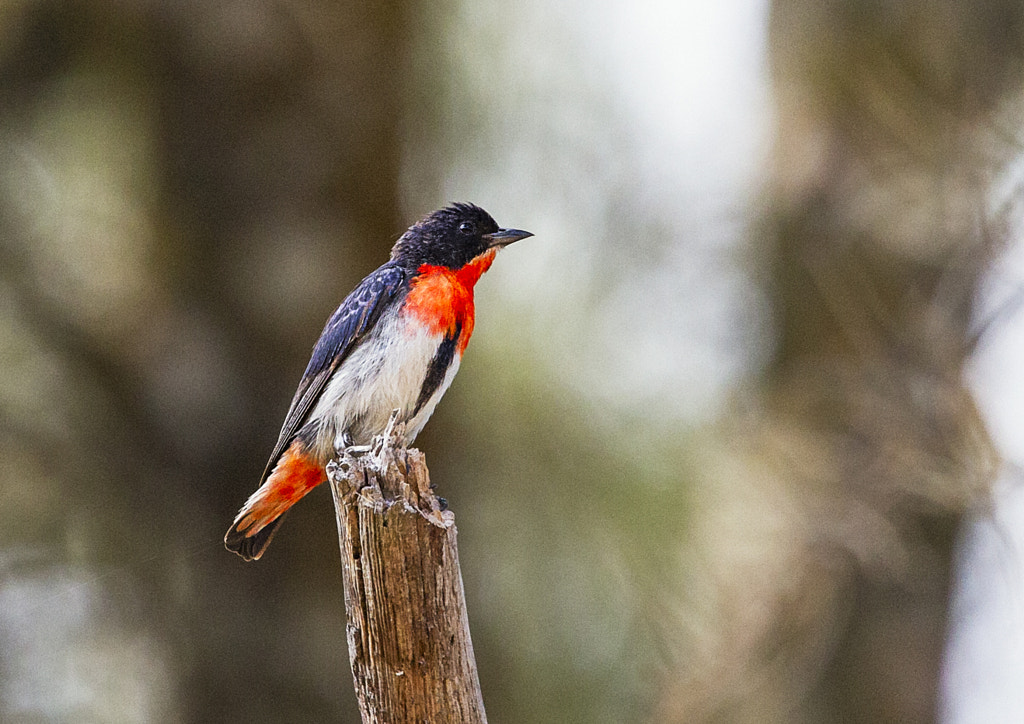
Mistletoebird, by Paul Amyes on 500px.com
Mistletoebird, Dicaeum hirundinaceum. The Nyoongar name is Minnijit. York, Western Australia. Canon EOS 6d with Sigma 150-600mm f/5-6.3 DG OS HSM Contemporary lens. Exposure: 1/1000 sec, f8 at ISO 1600.


It’s obviously some sort of robin thinks I as I walk along pondering this new bird. WRONG!!!! It’s a mistletoe bird. First robins come in multiple colours and now birds with red breasts aren’t robins. I think I’m going to stick with penguins – they’re black and white and easy to identify.


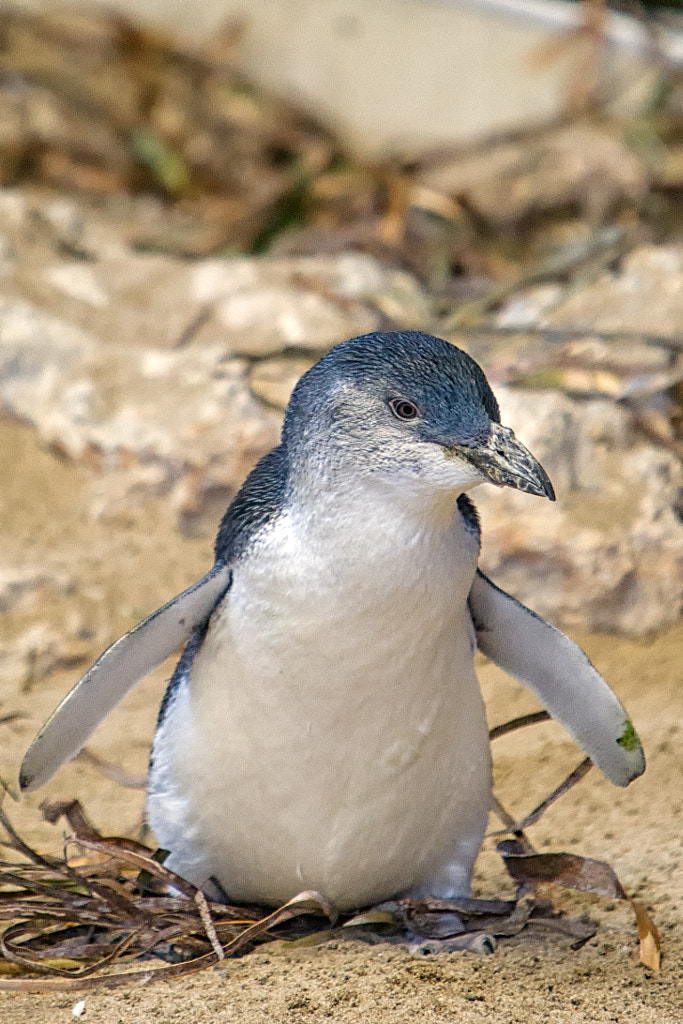
Penguin Island by Paul Amyes on 500px.com
Little penguin or fairy penguin (Eudyptula minor). Penguin Island, Western Australia. Canon EOS 5d with a Canon EF 70-200mm f/2.8L IS USM lens and Canon x2 extender. Exposure: 1/250, f5.6 ISO 1600.


No Hands Free On A Horse

No Hands Free On A Horse by Paul Amyes on 500px.com
“Can you call back later – I’m kinda busy.” Canon EOS 5d with Canon EF 70-200mm f/2.8L IS USM and x2 converter. Exposure: 1/320, f6.3 at ISO 1250.


Bleedin’ Taters*

The secret to time lapsing is having a comfortable chair to sit in while you wait for the shoot to finish.

Got up at “stupid o’clock” the other morning to try out a new bit of time lapsing equipment. Streuth it was cold, and as I drove down to Monger’s Crossing I mused that the brass monkey would be tucked up at home in bed if he was sensible. A Swedish friend of mine once told me that there’s no such thing as cold weather just poor clothing choices. Well I took Matts’ advice to heart and I had more layers  than an onion.  On reaching the river it was dark and foggy, not the most photogenic conditions, but I thought for the purpose of this test it would be OK.  So I set  up the camera and sat down to wait for it to shoot one frame every twenty seconds for one hour.

The Canon EOS 550d and Sigma 17-50mm f2.8 OS on the Syrp Genie Mini pan and tilt kit.The observant will have noticed that the camera is held together with gaffer tape.

I tried watching a video on my iPod but it was so cold that the battery ran flat real quick so I thought I’d take a few pictures of my companions on the river bank.


A yellow billed spoon bill searching for food on a cold and misty morning on the banks of the River Avon. York, Western Australia.


A white-faced heron wading on the banks of the River Avon on a misty winter’s morning. York, Western Australia.

As to the time-lapse, well bearing in mind it was just a test to see how it worked, well it was a reasonable first attempt. The only downside was that the camera sensor was filthy and that meant a lot of cloning in Photoshop.


* English is pretty confusing at the best of times for non native speakers. “Taters in mould” is Cockney rhyming slang for cold.

2016 In Review

Faversham
The Faversham vintage van in Avon Terrace, York, Western Australia. Olympus OMD EM-1 with Olympus OM Zuiko 35-105mm f3.5-4.5 lens. Exposure: 1/200 sec, f5.6 ISO 400.


If you have slightly geeky bent, and to be honest if you are reading a photography blog it’s pretty much a given that you have, then Adobe’s Lightroom has several useful tools. One of the ones I’ve been looking at is the ability to look at your photographic work for a specific time frame, and in this case it’s for the year 2016. You can also look at the cameras and lenses you used for that period which enables you to see what patterns of equipment usage emerge. It might ultimately save you money i.e. if you have a hankering for an expensive lens you can look back on your past year to see if that focal length/s you used and whether the objective lens of your desires is one you’d actually use or not. This has actually happened to me – a while back I was working on my project Broncos and Bulls and I felt that the Canon EF 75-300 f4-5.6 IS was costing me shots as it wasn’t the fastest lens to focus and the images at the long end were pretty soft. I wanted a Canon 100-400 L IS but my then preferred local dealer didn’t have one in stock and after waiting nearly 3 months they informed they couldn’t get one. I allowed them to talk me into buying the Canon 70-200 f2.8 L IS with the Canon x2 converter which they had in stock. Their logic was that I’d end up using the 70-200 much more and would hardly use it combined with the teleconverter. Now looking back through my Lightroom library I can see that I’ve hardly used the 70-200 at all on its own and virtually all the times I have used it was in conjunction with the teleconverter. I should have stuck to my guns and gone to another dealer and that way I’d have a lens that met my needs gave and gave good image quality rather than put up with a convenient compromise.


Gotcha!!! by Paul Amyes on 500px.com
Gotcha. Steer roping, Boddington Rodeo Western Australia. Canon EOS 5D with Canon 70-200 f2.8 IS L and x2 converter. Exposure: 1/800 s at f/5.6 ISO 200
 So what have I deduced about my photography for 2016? Well I’ll start with commenting on 2015 – for that year over half my photographic output was shot with a DSLR (50:50 split between full frame and APS-C). In 2016 that dropped to 10% the other 90% was shot on mirrorless. The DSLR was only used for some macro work (radio controlled TTL flash), some architecture (a specialised lens) and one event where I had a crisis of confidence and didn’t think the mirrorless cameras would cope with high ISOs and low light focussing. When I look at lens usage it comes as a big surprise that one-quarter of the images were taken using adapted lenses and these with a focal range of between 15-135mm in full frame terms. Hmmm well I knew I preferred shorter lenses than


Quairading Railway Station by Paul Amyes on 500px.com
Aboriginal art at Quairading Railway Station, Western Australia. Sony A7r with Olympus OM Zuiko 24mm f2.8 lens. Exposure: 1/4000, f8 at ISO 400.

longer already, the main thing is that I enjoyed using legacy lenses and was more than happy with them in terms of image quality. I don’t have to use legacy lenses at all as I have 20 to 600mm covered by modern dedicated AF lenses. For work where it is appropriate I will use the legacy lenses because they give a certain aesthetic that I like which is a less digital and clinical look.


York Mill by Paul Amyes on 500px.com
As you drive into York on the Great Southern Highway standing tall on your left is the historic York Flour Mill built in 1892, home to The York Mill. Sony A7r with Voigtlander 15mm f4.5 Super Wide – Heliar lens. Exposure: 1/25 sec, f16 at ISO 100.

Well what will 2017 bring. Well for 2016 I experimented with finding a certain look. For 2017 will be more project driven as I have found the style I wanted and now want to put it to practice. There will be at least one new book (work on that has already started) and there will be some multi media projects. So exciting times indeed.


Hillside Farmhouse by Paul Amyes on 500px.com
Hillside Farmhouse was designed by Sir Talbot Hobbs, a leading architect and built in 1911 for Morris Edwards in the historic Wheatbelt town of York in Western Australia. Sony A7r with Olympus OM Zuiko 35-105mm f3.5-4.5 lens mounted via a Fotodiox adapter, Cokin circular polarizing filter and +3 stop graduated neutral density filter. Exposure 4 seconds, f16, ISO 50.


I hope for my readers that 2017 will be all that you hope and that you’ll be healthy and happy.


Everlastings by Paul Amyes on 500px.com
Everlastings on Mount Brown in York, WA. Sony A7r with Olympus OM Zuiko 135mm f2.8 lens. Exposure: aperture priority with +1 stop exposure compensation, 1/1000th sec, f2.8 at ISO 100.


Action

Wagin Woolarama 2016 by Paul Amyes on 500px.com
Women’s barrel racing at the Wagin Woolarama Rodeo. Olympus E-M1 with OLYMPUS M.40-150mm F2.8, exposure: /1/2000s, ƒ/4.0 at ISO 200.

If you believe the online forums you can only shoot action or sport with a Canon EOS 1d X or a Nikon 4D with very expensive f2.8 lenses. At the very least you should be using a Nikon 500d or Canon EOS 7d Mkii because it is impossible to use anything else. I have to say this is like most things written by the denizens of photography forums complete and utter rubbish.


boddington rodeo by Paul Amyes on 500px.com
Boddington Rodeo 2005. Canon EOS 300d with Canon EF 75-300mm f3.5-5.6 IS lens.

I started photographing rodeo with a Canon EOS 300d and an EF 75-300mm f3.5-5.6 IS lens. Hardly state of the art sports equipment back in 2005. The buffer for RAW was 6 frames and it did a massive 3fps and there was no continuous auto focus when shooting RAW – you could only get that in the sports picture mode which then limited you to shooting jpg.

Matt
Matt, El Caballo’s Extreme Rodeo compere tries his hand at bronco riding with catastrophic results. Canon EOS 5D with Canon EF 70-200 f2.8 IS. Exposure: 1/1/500s, ƒ/7 at ISO 800.

The next big jump up was the Canon EOS 5d. Again no sports shooting, terrible buffer, slow frame rate and apparently the AF couldn’t cope with anything but a slow walking bride on a bright day.

Wagin Woolarama 2016 by Paul Amyes on 500px.com
Women’s barrel racing at the Wagin Woolarama Rodeo. E-M1 with OLYMPUS M.40-150mm F2.8 lens. Exposure: 1/1250s, ƒ/4.0 at ISO 200.

Today we have the advent of mirrorless cameras. The cognoscenti say that only a DSLR with an optical viewfinder can capture action, mirrorless cameras cannot and will not do it. Well as I said at the beginning there is a lot of rubbish spouted on photography forums. I follow Nike’s advice – “Just Do It!”