Bread And Butter Lens

20260417-Canon35mm-0224-Edit
The Canon EOS 30 film SLR with a Canon EF 35mm f2 lens mounted.


Regular readers may recall that I have been shooting film again and it has been great fun going out with a single camera and a single lens. My camera of choice is my Olympus OM4 with the Olympus OM Zuiko 35mm f2 lens. That combination is over forty years old and I’m a bit worried that it may give up the ghost because there will be no chance of repairing it. I had thought of getting another OM4 body or even the later OM4 Ti, but they are all getting on a bit. I do have another film camera body that I can use and that is the Canon EOS 30, also known as the Elan 7E in North America and EOS 7 in Japan. I’ve been using it with either my Canon EF 24-70mm f4 or my Canon EF 50mm f1.8. The zoom lens and camera combination is a bit on the heavy side heavy for an every day carry and while the 50mm was suitably lighter it’s not a focal length I particularly like. So I had the bright idea of buying a Canon EF 35mm f2 lens. They have the benefit of being small and light while being cheap second hand. So I scoured EBay and found that Map Cameras had a suitable copy rated as “B – Has been used preciously. Showing a few marks, scratches of cosmetic surface. Functions perfect.”. When it arrived it looked like it was new, there were no marks on the lens barrel, front and rear lens elements, and the mount looked pristine.


Canon EF 35mm f2 lens
The Canon EF 35mm f2 was part of Canon’s consumer range of lenses. Here it is shown with the 24mm f2.8 and 50mm f1.8 mk ii.


Canon introduced their autofocus EF lens mount in 1987 and it took them until October 1990 to introduce a basic 35mm lens – the EF 35mm f2 a no frills prosumer grade lens. It’s got a plastic body with a metal lens mount. There’s a focusing ring and a switch to put it into manual focus. The lens extends as you focus in and out, but, the front element doesn’t rotate which is a boon if you like to use polarising filters. It feels quite dense in the hand, but it doesn’t exude quality.


Canon EF 35mm f2 lens
It is a very no frills construction with a plastic body, manual focus switch and a rudimentary ribbed manual focus ring. You do get a focus scale for zone focusing and an infrared focus point. Which is all very welcome on a budget lens.

;


Canon EF 35mm f2 lens
It does have a metal lens mount which is always nice to see as many budget lenses have plastic mounts.


Specifications 

Focal Length 35mm
Maximum Aperture F/2
Angle of View (diagonal) 63° 26′ (for full-frame format)
Optical Construction 7 elements in 5 groups
Minimum Object Distance 0.25m
Maximum Magnification Ratio 0.23
Filter Size Φ52mm
Maximum Diameter Φ67.4mm
Length 42.5mm 
Weight 210g
Diaphragm Blade Number 5 straight blades
Minimum Aperture F/22
Standard Accessories Lens caps
Compatible Mounts Canon EF


EF35mm f2 - Canon Camera Museum 2025-07-28 16-18-22-Edit
The optical construction is very simple with 7 elements in 5 groups and no fancy glass elements.


Performance

Sharpness


20260501-Canon35mm-0001


20260501-Canon35mm-0004


20260501-Canon35mm-0002


20260501-Canon35mm-0003


Wide open the centre of the image is soft, but has reasonable contrast. The corners were far worse – low contrast mush. At first I thought I had a lens that was  decentered, but, when I checked all four corners they were equally bad so it was field curvature . This is, apart from a lens by Holga, the worst lens I’ve ever tested. Two stops down from wide open is where a lens traditionally hits optimum performance, well someone forgot to tell the Canon optical design team that as although there had been a slight improvement in the centre the corners were still very mushy. At f5.6 the centre of the frame is as good as it gets, but the corners still aren’t sharp and lack contrast. The best performing aperture is f8 in terms of the full field of view. By f16 diffraction starts to kick in degrading the image and that just gets worse at f22.

Now this is a 36 year old design for a consumer grade lens so is this performance to be expected. Well the Olympus OM Zuiko 35mm f2 was designed was introduced in 1972 a full 18 years before the Canon EF 35mm f2 and it has a better optical performance and better bokeh – more about that later. The only advantage the Canon has over the Olympus is that the Canon manages flare a lot better. We’re also told that primes are better than zooms so I compared the Canon EF 35mm f2 to my Canon EF 24-70mm f4 IS L at 35mm, and the zoom is better. Not surprising really. An old consumer grade design compare to a more modern professional grade. So I wouldn’t look to replace a good zoom lens with the Canon EF 35mm f2 unless you were considering some other metric of comparison such as size and weight.

Bokeh


20250918-Canon35mmf2-0225
Wide open the bokeh balls are bad. The transitions to out of focus areas are quite pleasant.


Wide open the Canon produces nice large round bokeh balls that have no onion rings – the lens has after all no aspheric elements. At the edges the balls take on a more elliptical shape caused by mechanical vignetting. As you stop the lens down to f2.8 the balls cease to be balls and become pentagonal thanks to the five straight aperture blades. They become defined the further you stop down.


20250918-Canon35mmf2-0226
Stopping down to f2.8 and the bokeh balls cease to be balls and take on a pentagonal shape thanks to the 5 straight blades of the aperture diaphragm.


Flare Resistance 


20250815-Canon35mmf2-0236-Edit


A specular light source within the frame will produce quite pronounced veiling and reflective flare. The effect becomes more pronounced as you stop down. It is a good argument for a lens hood, but Canon never supplied their non ‘L’ lenses with one, you had to buy it separately. It would be worth looking for a second lens that came with one. The diffraction spikes or sunstars are ugly with little definition. 

Chromatic aberration


Canon EF 35mm f2
Wide open there is axial chromatic aberration. Stopping down will fix the problem.


Axial chromatic aberration, also known as longitudinal chromatic aberration is present wide open with magenta and green fringing. This is difficult to remove in post, the best way to deal with it is to stop down.

Transverse or lateral chromatic aberration is present and considering the age of the design and the fact there are no fancy glass elements it does remarkably well. If using the lens on a digital camera this is easily dealt in post.

Distortion


Canon EF 35mm f2
Barrel distortion is present, it’s not too extreme – I’ve seen much worse. It is easily corrected if you shoot digital. You can also see the vignetting. This diminishes as you stop down and can also be fixed in post if working digitally. Personally I quite like a bit of vignetting and will often add it in post or in the darkroom.


As with most wide angle lenses there is barrel distortion, but it is very mild. Again shooting on digital this can be fixed by applying the profile for this lens.

Vignetting

There is some vignetting when shooting wide open and this clears up pretty quickly as you stop down. The Canon EF 35mm f2 lens profile in Lightroom also removes it.

Autofocus

When this lens was designed autofocus systems were a lot more primitive than they are now. Firstly these first generation auto focus lenses have according to Canon “an arc form drive for focusing. This is a conventional small motor unit, shaped to fit inside the curved barrel of a lens.”. Consequently they are slow and noisy. When I say say noisy I mean it. Racking the lens back and forth produces a sound that is akin to angry wasp trapped inside a bottle. It is very noticeable. There is no full-time manual focus, as found on later lenses that used USM and STM motors, you have to switch to manual focus using the switch on the lens barrel. Talking about manual focus there is a narrow ribbed focus ring and a focusing scale. While the lens is in AF mode the ring spins freely and does nothing. Throw the switch and the focus ring drives the lens elements back and forth. There are hard stops at either end so repeatable focus moves are possible. While not the most pleasant focusing ring to use it’s not unpleasant either. It gets the job done.

For stills this lens was made when a camera with seven AF points clustered in the centre of the frame was considered sophisticated. Single point AF was usually a matter of keeping the subject in the centre of the frame or focusing and recomposing. The AF on the lens is adequate, mostly it is accurate, but it can be a little slow and hunt in low light or with low contrast subjects. Continuous AF is much the same story.

This lens was not designed with video in mind, but I gave it a go.  I tried it on an 80d the Dual Pixel CMOS AF but it wasn’t the best performance. Finally I bunged the lens on my Sony A7r2 via a Metabones adapter and to some extent the AF was a little better but the lens really struggled and made some awful noises as it focused.


In Use


20250815-Canon35mmf2-0225-Edit


Moylan Silos


20260124-York-0244-Edit


Bing's Visit


From the above you’d think that this lens isn’t much chop. In photography there is a tendency to obsess about specifications and lens resolution charts, but they don’t tell the whole story. Wide angle retrofocus lens for SLRs don’t really perform well at close distances unless they have a floating rear element which the Canon EF 35mm f2 does not. That may explain some of the results. Also answer these two questions. How many times do you compose a photo with the main subject in the extreme corners? Short of very precise copy work how many images do you take that require corner to corner sharpness? I know I don’t do any of those two things. The attributes this lens brings to the table are that it is small and light and is sharp enough where it counts. It is ideal on a compact SLR as an everyday carry.  Although I primarily bought it to use on my film EOS 30 to date I’ve not done so preferring to use it on either my Canon 5d or 6d. It’s been a very pleasant experience and I’ve enjoyed using for landscape, urban landscape and street photography.


Smile


20251229-Perth-0224-Edit


20251229-Fremantle-0226-Edit


Conclusion


Canon EF 35mm f2 lens


If like me you want a small compact lens to walk around with on a film or digital Canon SLR and you aren’t bothered by not having a red ring, the best specs and best optical performance then this lens is perfect. There are loads of them out there which makes it easy to pick up a reasonably priced second hand example. If you want something to shoot video I’d look for the Canon 35mm f2 IS, the Canon 35mm f1.4 L, or a Sigma 35mm f1.4 Art. They will all have more modern motors which will make the autofocus experience more pleasurable. If you want to adapt the lens to shoot on a modern mirrorless again look for something more modern.


 

Canon EF 35mm f2 lens


Spring Is Springing

Red Capped Robin by Paul Amyes on 500px.com
Red Capped Robin, Petroica goodenovi, Avon Walk Trail, York, Western Australia. Panasonic G85 with Panasonic Leica 100-400mm f4-6.3 lens. Exposure: 1/500 sec, f6.3 at ISO 1000 with -2/3 stop exposure compensation.


Tomorrow here in Western Australia is the first day of spring. I don’t think Mother Nature got the memo as the bush around York sprung into life a couple of weeks ago. Flowers are bursting into bloom and the birds are in a frenzy of nest building and dancing around trying to attract mates. This means that I have also sprung into action trying to document as much of thais activity as possible. The cameras are working over time.


Common Donkey Orchid by Paul Amyes on 500px.com
The unusual lutea or “yellow” form of the common donkey orchid (Diuris corymbosa). Talbot Hall, Western Australia. Canon EOS 6d with Canon EF 100mm f2.8 IS L macro lens. Exposure: 1/800 sec, f8 at ISO 400.


Green Spider Orchid by Paul Amyes on 500px.com
Green Spider Orchid, also known as the Fringed Mantis Orchid (Caladenia falcata). Talbot Hall, Western Australia. Canon EOS 6d with Canon EF100mm f/2.8L Macro IS USM lens. Exposure: 1/160 sec, f5.6 at ISO 400.


White Spider Orchids by Paul Amyes on 500px.com
White Spider Orchids, Caladenia longicauda, Wambyn Reserve, Western Australia. Canon EOS 6D with Canon EF100mm f/2.8L Macro IS USM lens. Exposure: aperture priority with off camera flash 1/50 sec, f11 at ISO 100 with -1 stop exposure compensation.


Winter Donkey Orchid by Paul Amyes on 500px.com
Winter Donkey Orchid, Diuris brumalis, Wambyn Reserve, Western Australia. Canon EOS 6d with Canon EF100mm f/2.8L Macro IS USM lens. Exposure: 1/25 sec, f8 at ISO 100.


Brown Honeyeater by Paul Amyes on 500px.com
Brown Honeyeater, Lichmera indistincta, Avon Walk Trail, York, Western Australia. Panasonic G85 with Panasonic LEICA DG 100-400/F4.0-6.3 lens. Exposure: 1/500 sec, f13 at ISO 200 with -2/3 stop exposure compensation.


Western Whistler by Paul Amyes on 500px.com
Female Western Whistler, Pachycephala occidentalis,, Avon Walk Trail, York, Western Australia. Panasonic G85 with Panasonic LEICA DG 100-400/F4.0-6.3 lens. Exposure: 1/500 sec, f11 at ISO 200.


Lens Sharpness

sutemi waza by Paul Amyes on 500px.com
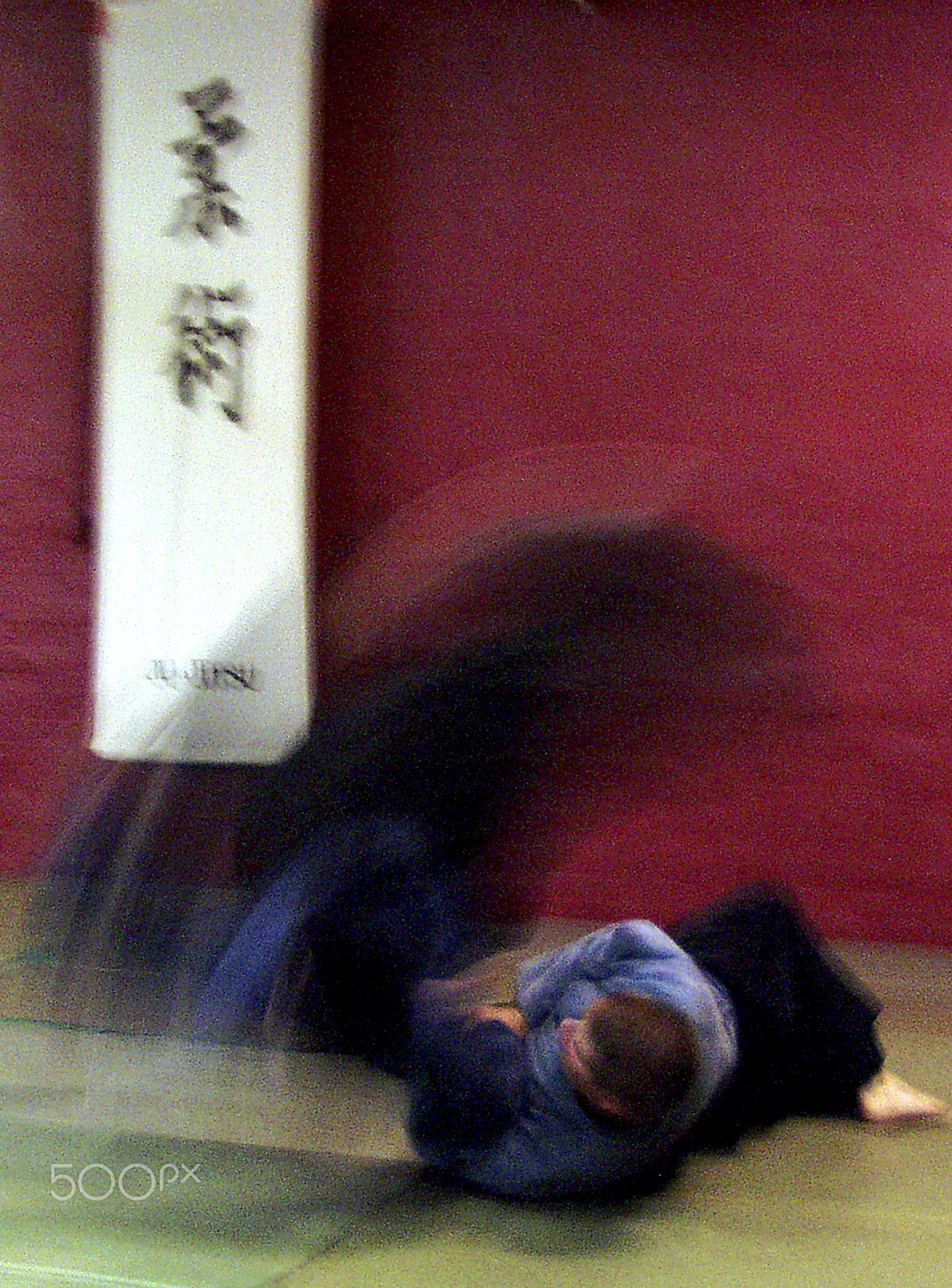
Sutemi waza from Yōseikan Aikido. Taken on Olympus C-720 Ultra Zoom with slow sync flash edited using Photoshop Elements 2 and Genuine Fractuals


Currently in photography there are several sacred cows and you’d think that from the amount of chatter these subjects generated that they were the be all and end all of photography. Thankfully for the actual art form of photography they are mostly irrelevant. These sacred cows are:

  • megapixels
  • dynamic range
  • sensor size
  • lens sharpness

My feeling is that these topics are so hotly debated is because now in this digital age it is easy to quantify these values numerically and the bigger the number the better. There is no doubt about it a great big  spreadsheet of impressive looking numbers must be right after all. This is why the website http://www.dxomark.com has become a sacred text among the denizens of the internet fora and its proclamations and pronouncements can lift a camera or lens to photographic nirvana or condemn it to the lowest reaches of hell. Well having ruffled a few feathers with the piece on sensor size and depth of field this weeks entry is going to cause the DXO fundamentalists to really froth at the mouth in holy indignation.


ura tai otoshi by Paul Amyes on 500px.com
Ura Tai Otoshi from Yoseikan Aikido as taught by Shihan Jan de Jong. Shot using an Olympus C-720 Ultra using slow sync flash. Edited using Photoshop Elements 2 and Genuine Fractuals


Lens sharpness  is something to be coveted. After all Leica, Zeiss, Schneider, Rodenstock, Canon and Nikon have made an art form of it. Those who worship at the high altar of lens sharpness are prepared to spend the equivalent of the GDP of a small African nation on the lenses that have the highest DXO score. The Carl Zeiss Distagon T* Otus 1.4/55 ZF.2 Nikon has a DXO score of 45 while the lowly Canon EF 50mm f/1.8 II only has a rating of 25.  So the Otus is nearly twice as good as the plastic fantastic Canon. Phwoaaaaarrrrr forum domination and photographic greatness here I come,  I’ll go out and buy one straight away. The Australian list price for the Zeiss is $4474 while the Canon is $135, so the Zeiss must be 33 times better. Er no. To quote DXO “The DxOMark Score shows the performance of a lens, mounted on a given camera body, for its optimal focal length/aperture combination and for defined exposure conditions.” So the lens has been mounted to a camera on an optical bench shooting a 2D lens chart at an aperture that is guaranteed to give the best results in carefully controlled lighting. So in other words it does not reflect real world usage unless your photographic interests lie in shooting charts or brick walls with a camera on a heavy tripod so you can orgasm over how sharp the image is at the edges. Shoot a complex 3D object in rapidly changing light conditions at sub optimal aperture settings and these ratings really don’t mean anything.

sutemi waza 2 by Paul Amyes on 500px.com
A sacrice throw from Yoseikan Aikido. Taken using an Olympus OM 4 with a Zuiko 35-105 lens on Fujichrome 400 pushed to 800 ISO. Scanned using an Olypus ES-10 scanner and edited using Adobe Photoshop Elements 2 and Genuine Fractuals.


There is no doubt that lenses have become a lot sharper over recent years, but I find it amusing to see that they have become so sharp that they are now unflattering for portraiture as they show every blemish and pore. So much so that photographers are now spending time and money on lessening the sharpness (blurring if you will) on portraits. Don’t you think that is ironic? I’ll spend a fortune on a very sharp lens that is so clinically sharp that no-one likes the results so I’ll spend some more money on a Photoshop plugin to blur it.

 “Sharpness is a bourgeois concept.” – Henri Cartier-Bresson

A famous quote and often mis-quoted as nobody can really tell you the context in which Cartier-Bresson said it.  If we forget the Marxist definition of bourgeois and just concentrate on the dictionary definition we get:

 “belonging to or characteristic of the middle class, typically with reference to its perceived materialistic values or conventional attitudes: a rich, bored, bourgeois family | these views will shock the bourgeois critics.”

I would hazard a guess that dear old Henri was stirring a bit when he said it and meant something along the lines that sharpness in a photograph is a very conventional and staid way of judging it and doesn’t look at its other qualities. How can I be sure, well I can’t but he also said:

 “It is an illusion that photos are made with the camera, they are made with the eye, heart & head.” – Henri Cartier-Bresson

 So I think it is more than likely to assume that Cartier-Bresson felt that there is a lot more to photography than technical perfection.

Iaido by Paul Amyes on 500px.com
The Japanese art of sword drawing. Taken with an Olympus OM 4 with a Tamron 28 mm lens, using Ifford Delta 3200. Scanned using an Olypus ES-10 scanner and edited using Adobe Photoshop Elements 2 and Genuine Fractuals.


So by now you’ll have read this and seen some photos I made years ago of some people practicing Aikido and Iado, both Japanese martial arts. You’ll also have noticed that there is a lot of blurred movement and very little sharpness. The reason why is that I wanted to capture the beauty of the flowing energy that is involved in them and I felt that while static shots might capture the technical aspects of the techniques being demonstrated they don’t capture the nature of the philosophy behind them nor the dynamism. I like to feel that these are photos “made with the eye, heart & head” rather than the clinical gaze of the optically perfect lens. This is for me where the beauty of any art lies, not in technique but in the expression of ideas and emotions. None of the equipment used in the making of those photographs warrants a mention on DXOMark so I guess that gives them a score of zero. The equipment HCB used also isn’t on the DXO charts, and guess what quite a few of his pictures are blurred because he often relied on zone focusing and didn’t get it right, but I’d sooner have one of his pictures on my wall than a lens test chart any day.

Behind the Gare St. Lazare. By Henri Cartier-Bresson, Paris 1932. © 2014 Henri Cartier-Bresson/Magnum Photos, courtesy Fondation Henri Cartier-Bresson, Paris


If you are not familiar with work of Cartier-Bresson try this:

If those video clips have whetted your appetite then might I recommend Henri Cartier-Bresson  – the man, the image & the world. A retrospective. Published by Thames & Hudson.

Time For A Change

Head of Janus, Vatican museum, Rome by Loudon Dodd


I am holed up in the command centre of the vast global entity that is Paul Amyes Photography taking shelter from the heat of the Aussie sun and pondering what 2014 will bring while my minions work hard to bring about my plans for global domination.  Actually the end of the year and the beginning of the next are very good for such musings, so good that the Romans actually had a god of transitions, beginnings and endings, he was called Janus and January was named after him. He is depicted as having two faces, one looking to the past and the other looking to the future. This has led to the whole idea of making New Year’s resolutions whereby a person makes a promise to make an act of self-improvement commencing on the start of the New Year.

 “Now is the accepted time to make your regular annual good resolutions. Next week you can begin paving hell with them as usual.”

Mark Twain


Photography is a very broad church and people do it for all sorts of reasons and one of the attractions is that equipment has a fetishistic appeal. There is something about cameras and lenses that makes us lust after them, day-dream incessantly, continuously peruse websites looking to put together the ultimate camera system. The term fetish means “an inanimate object worshipped for its supposed magical powers or because it is considered to be inhabited by a spirit” and camera equipment is certainly worshipped, which implies a religion, which explains the virulent brand wars that flare up on online forums such as dpreview.com. It is probably just as well that this is online for if the protagonists were ever to meet in actual life ethnic cleansing based upon camera brand would surely be the result. Then look at the magical powers that are imbued by certain lenses. Oh if only you had a Leica 50mm Noctilux f/0.95, a Canon 85mm f1.2 L or a Nikkor 400mm f/2.8G IF ED VR then you could truly ascend to the astounding heights of photographic greatness as you’d never ever take a bad picture again.*

 “Good resolutions are simply checks that men draw on a bank where they have no account.”

Oscar Wilde


Three bodies, seven lenses, two flashes, flash meter, filters, cables, flash triggers, and reflectors. It is a hernia inducing load.

From reading the forums it seems that a lot of people spend the equivalent of a small third world nations GDP in trying to get the ultimate image quality only never to see those images ever displayed larger than a low res web image or to never to take the equipment out because it is too heavy and cumbersome. I often wonder at how many millions of dollars worth of photographic equipment lies in the back of cupboards unused.** Before the mob assembles and proclaims me a sanctimonious, holier-than-thou, self-satisfied, smug, pietistic, moralizing, unctuous, mealy-mouthed, hypocritical prig and lynches me I would like to say that I am guilty of all the above (except for the bit of fantasying about a Nikkor – ugh!). Now at the grand old age of 50 and after nearly 30 of them practicing photography in one form or other I now realise that no one piece of equipment that I’ve bought has made me a better photographer.***


“The old year has gone. Let the dead past bury its own dead. The New Year has taken possession of the clock of time. All hail the duties and possibilities of the coming twelve months!”

E. P. Powell

 Getting back to our two faced friend Janus and looking back over 2013 I can see that going out and taking photos, working on projects and showing them has made me feel photographically satisfied. So if like me you’re sitting at home wondering what 2014 will bring might I suggest a modest proposal? Instead of buying gear and hanging out on gear forums use your photography budget to travel somewhere photographically interesting, or hire some models, or devise a project and do an exhibition or publish a book. Set goals that are realistic, I’ve been wishing National Geographic and Magnum will come knocking for years now to no avail, and write them down. Then break down those those goals into their key components and then work out a time frame in which you can complete them. Looking forward to 2014 I have an idea of where I want to go and a rough idea of how to get there. It gives me something to look forward to, something to work towards and will give me a sense of accomplishment when I achieve it.


“Where there is no vision, the people perish…”

Proverbs 29:18

Yours truly working happily on Frenchman Peak.


* I bought a Canon 70-200mm f2.8 L several years ago and I’m still taking rubbish. Can I get my money back?

** There’s no way I’m admitting to what lies in the darkest recesses of my cupboards, nor its financial cost. My wife sometimes reads this blog and there’s no way I will incriminate myself.

*** Actually one item did make me a better photographer, it was a tripod.