We had some very co-operative visitors this week in the form of 6 Carnaby’s Cockatoos. They arrived in the garden while I was out with young Bertie our puppy. Normally when I dash back to the house and get a camera the birds disappear before I get back. This little group were very relaxed and hung around for ages letting me get quite close to take their picture. When I went to process the photos I thought the black and white birds would benefit from a monochrome treatment.
Carnaby’s Black-cockatoo, (Zanda latirostris). York, Western Australia.
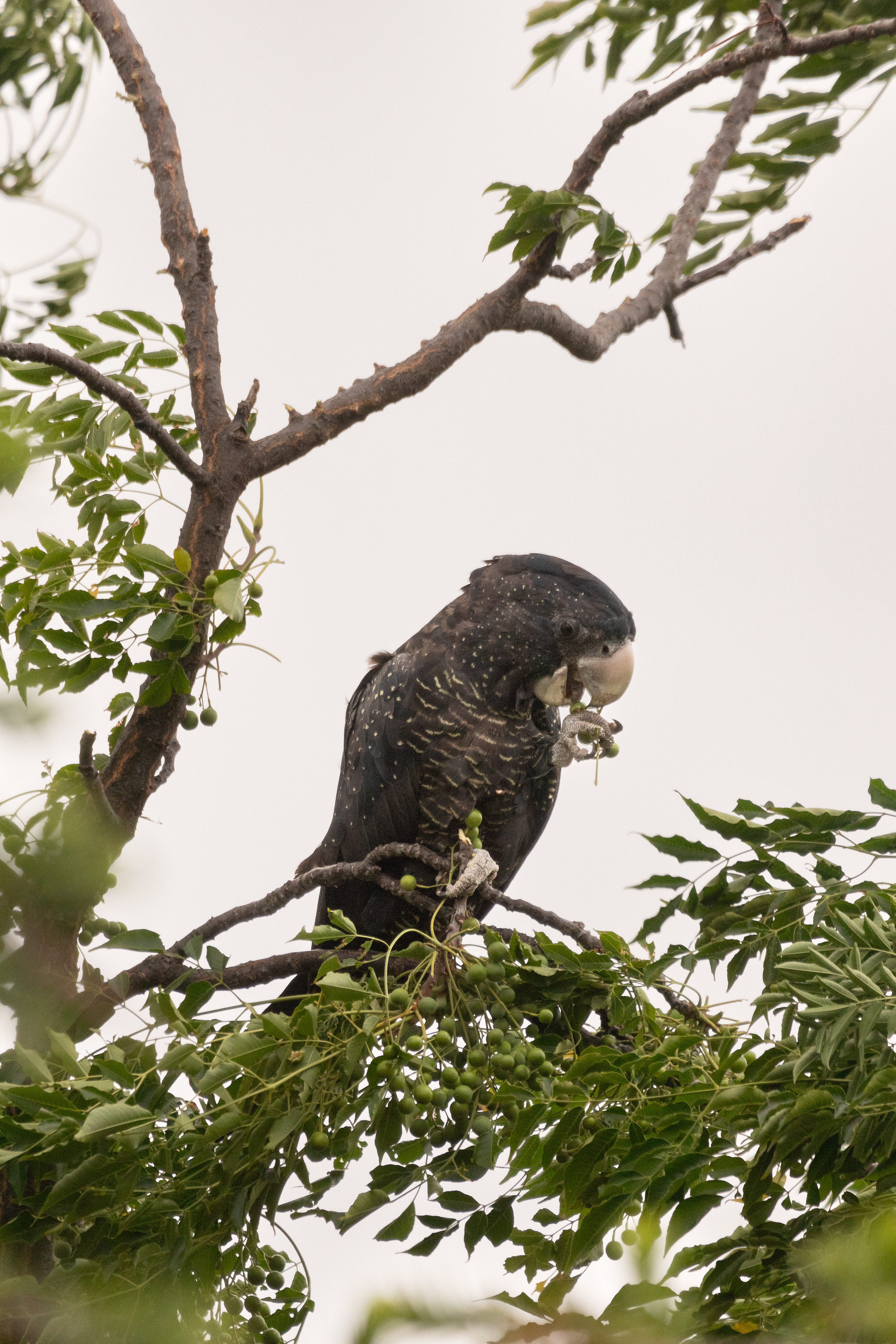
Karak or Red-tailed Black Cockatoo (Calyptorhynchus banksii subs samueli) feeding on Cape Lilac AKA WhiteCedar (Melia azedarch). York, Western Australia.
The last couple of weeks I’ve been thrilled to see Red-Tailed Cockatoos (Calyptorhynchus banksii), called Karrak by the Nyoongar, feeding in the Cape Lilac trees of our neighbours.
Karak or Red-tailed Black Cockatoo (Calyptorhynchus banksii subs samueli) feeding on Cape Lilac AKA WhiteCedar (Melia azedarch). York, Western Australia.
There are four subspecies found in Western Australia – Cb. Naso (referred to as the Forest Red-tailed Black Cockatoo), Cb. Samueli (the Inland Red-tailed Black Cockatoo), Cb. macrorhynchus (sometimes referred to as the Great-billed Cockatoo, Banksian Black-Cockatoo, or Banks’ Black-Cockatoo), and the recently discovered Cb. Escondidusa. Now which species the ones in our neighbourhood are I couldn’t tell you – probably Inland or Forest Red-Tailed Black Cockatoos. All I know that is according to the experts we shouldn’t have any, but here they are.
The Nyoongar creation story for the Red-Tailed Black Cockatoo.
Ngoolyak or Carnaby’s Black-cockatoo (Calyptorhynchus latirostris). Yanchep National Park, Western Australia.
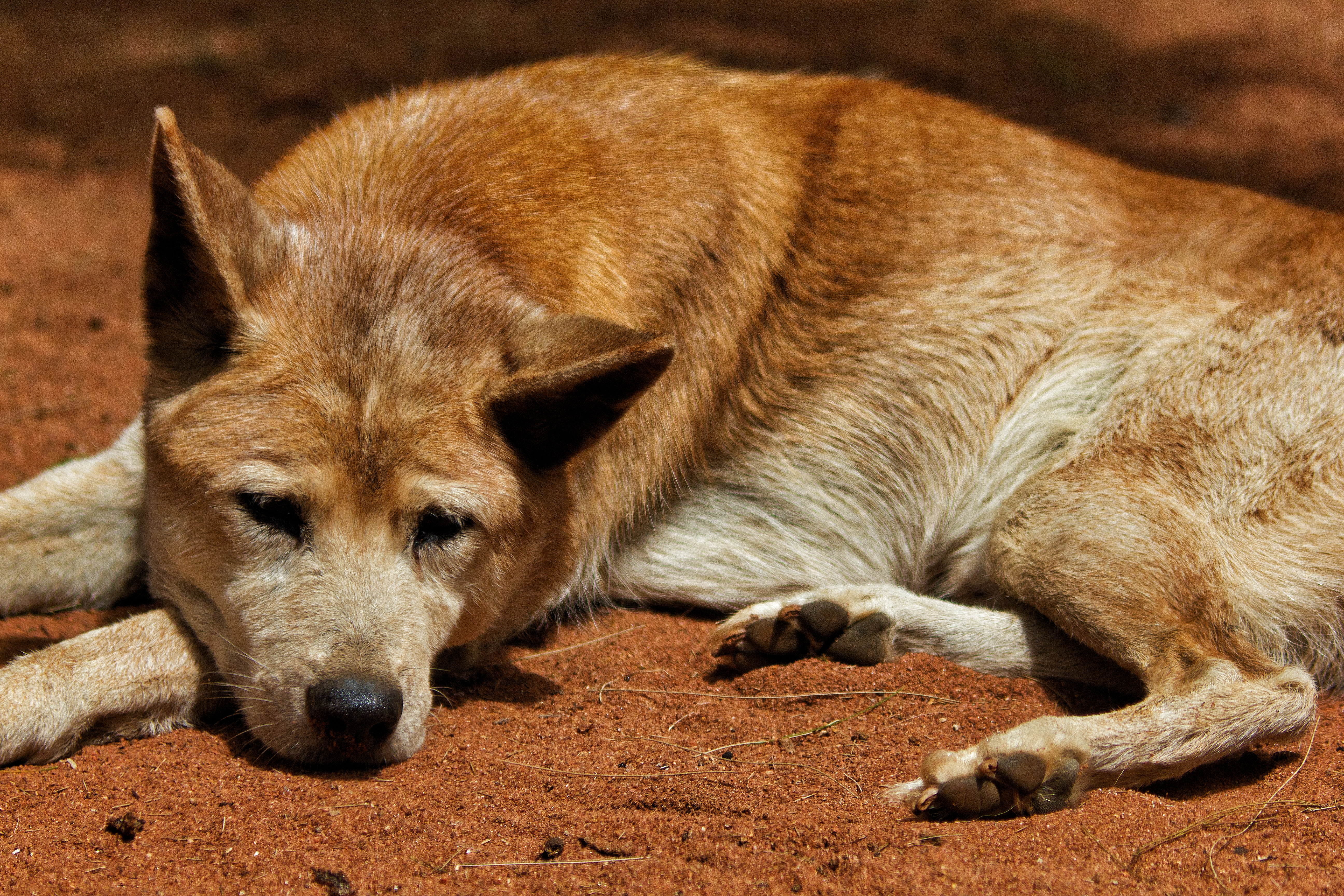
Dwert the Dingo
Djidi-djidi or Willie Wagtail (Rhipidura leucophrys). Avon Walk Trail, York, Western Australia.
Kwilom or purple swamp hen (Porphyrio porphyrio subsp bellus) picking over vegetation on shore of the lake. Lake Leschenaultia, Western Australia.
One day Ngoolyak the white-tailed black cockatoo saw a fight between Dwert the Dingo and Djidi-djidi the Willie Wagtail. Ngoolyak sided with Dwert and joined the fight. Kwilom the Purple Swamp Hen saw the commotion and tried to break them up. He picked some sedge and started beating Ngoolyak across his back to get him to back off. Ngoolyak started screaming and tried to fend off the blows by raising his tail. The sedge oozes red sap when it is cut and it left great red marks where it struck. As he screamed Ngoolyak’s voice became hoarse and he could no longer make his normal call of “wola” and the screeching sounded more like “Karrak!” instead, and that is how Ngoolyak the White-tailed Cockatoo became Karrak the Red-tailed Cockatoo.
Karak or Red-tailed Black Cockatoo (Calyptorhynchus banksii subs samueli) feeding on Cape Lilac AKA WhiteCedar (Melia azedarch). York, Western Australia.
Karak or Red-tailed Black Cockatoo (Calyptorhynchus banksii subs samueli) feeding on Cape Lilac AKA WhiteCedar (Melia azedarch). York, Western Australia.
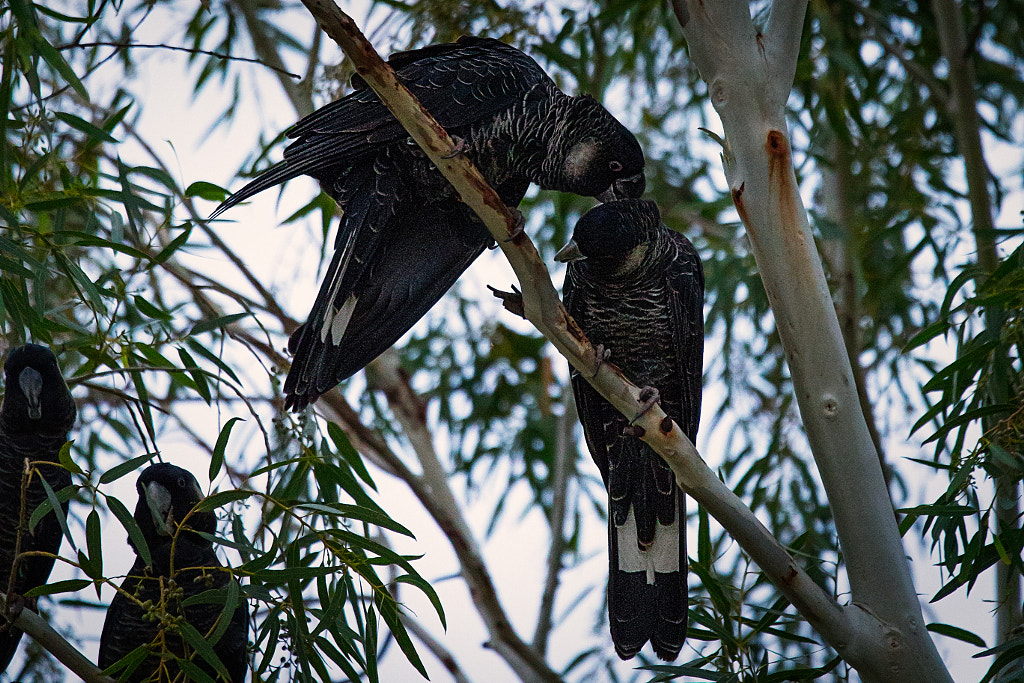
Carnaby’s black-cockatoos, Zanda (Calyptorhynchus) latirostris, preening prior to roosting. York, Western Australia. Canon EOS 6d with Sigma Contemporary 150-600mm f5-6.3 lens. Exposure: 1/250 sec, f6.3 at ISO 6400.
Ok Ok if the last backyard birds was a little stretch over what is my backyard this one is a huge leap – across the road. From my neighbour across the road’s front garden came this delightful occurrence – Carnaby’s Black-cockatoos roosting. These large cockatoos are now endangered thanks to widespread land clearing so it was fantastic to have them visit the neighbourhood.





You must be logged in to post a comment.