It has been a difficult week. I walked along the local river bed looking for wildlife and struck very lucky with what I saw. My problems came when it came to identifying the species of damselfly I had photographed. Now in this part of Western Australia there are only ten species so you’d think it should be relatively straight forward. But, no it is not. For quite a few of the species counting the number of abdominal segments is a key feature. Now that’s not a huge problem because I can do that at home when looking at the photo. The problem I had was when you have to look at the “anal appendages” according to The Complete Field Guide to Dragonflies of Australia (Theischinger, Hawking and Orr). Now it’s hard enough to get a damselfly to sit still long enough for a photo, but getting one to remain still for a proctological examination – well good luck with that! I wonder if David Attenborough has a whole team of assistants who do this for him?
No problems identifying this wee beastie. Inland Ringtail, Austrolestes aridus. Avon Walk Trail, York, Western Australia.
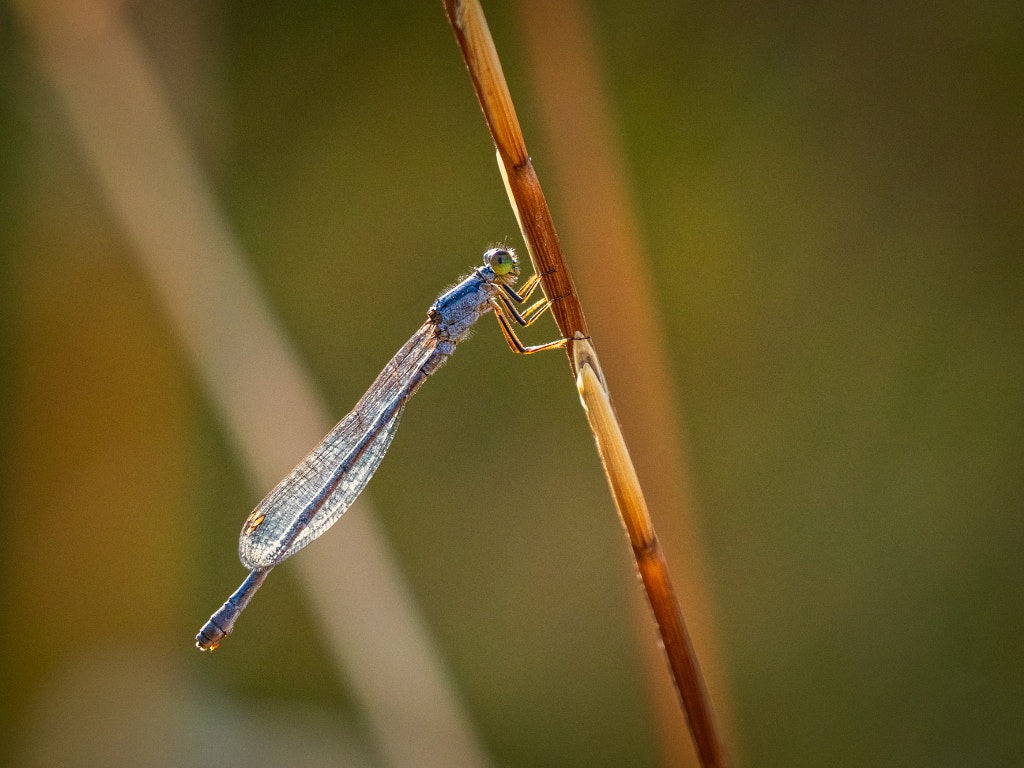
Now this little chap presented nicely on this dried grass but he wouldn’t consent to having a rectal examination. Avon Walk Trail, York, Western Australia.
99% of nature photography is performing the process persistently and repetitively – almost an obsessive compulsive behaviour if you will. After last weeks lack of success in photographing dragonflies in flight I was determined to have another crack at it. After a bit of reading I’d found out that dragonflies and damselflies are ectothermic – which means that they are not able to regulate their internal body temperature and are to a certain extent dependent on sunlight and ambient air temperature. They don’t actually sleep as we understand it, but, rather go into a torpor and they roost in the undergrowth overnight and wait for the warmth of the next day. Which means at sunrise they don’t move around so quickly. This time I went down to some of larger pools of water in what remains of the Avon River at first light.
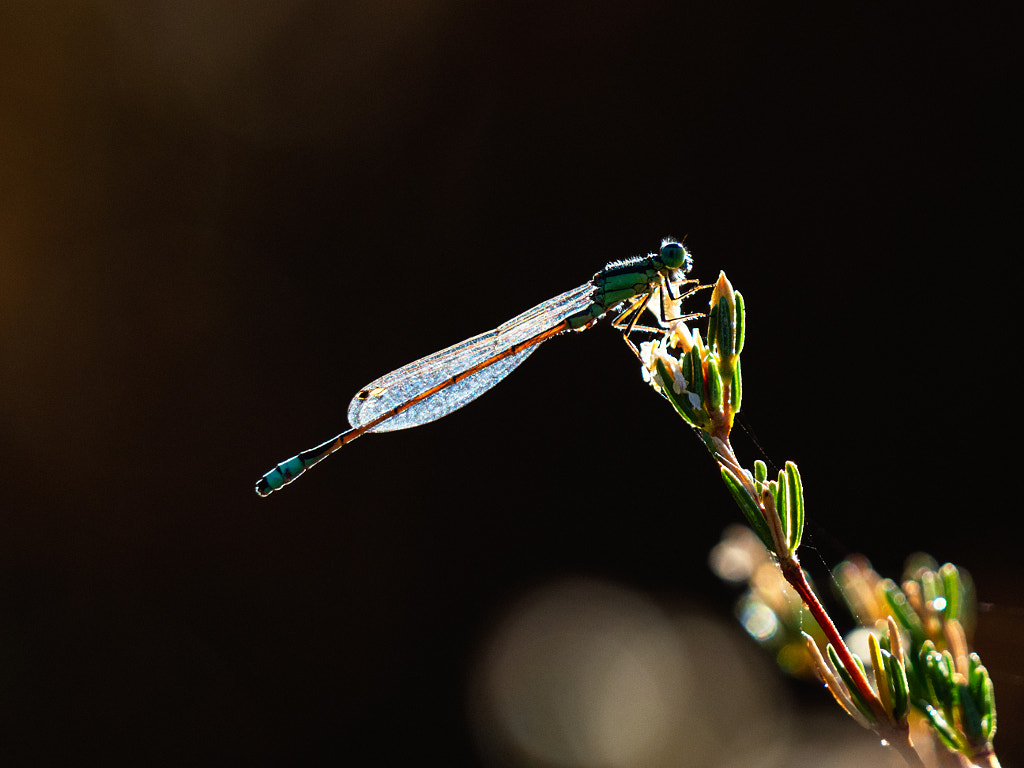
Waiting for the daylight to revive it after the nocturnal torpor. Aurora Bluetail, Ischnura aurora. York, Western Australia.
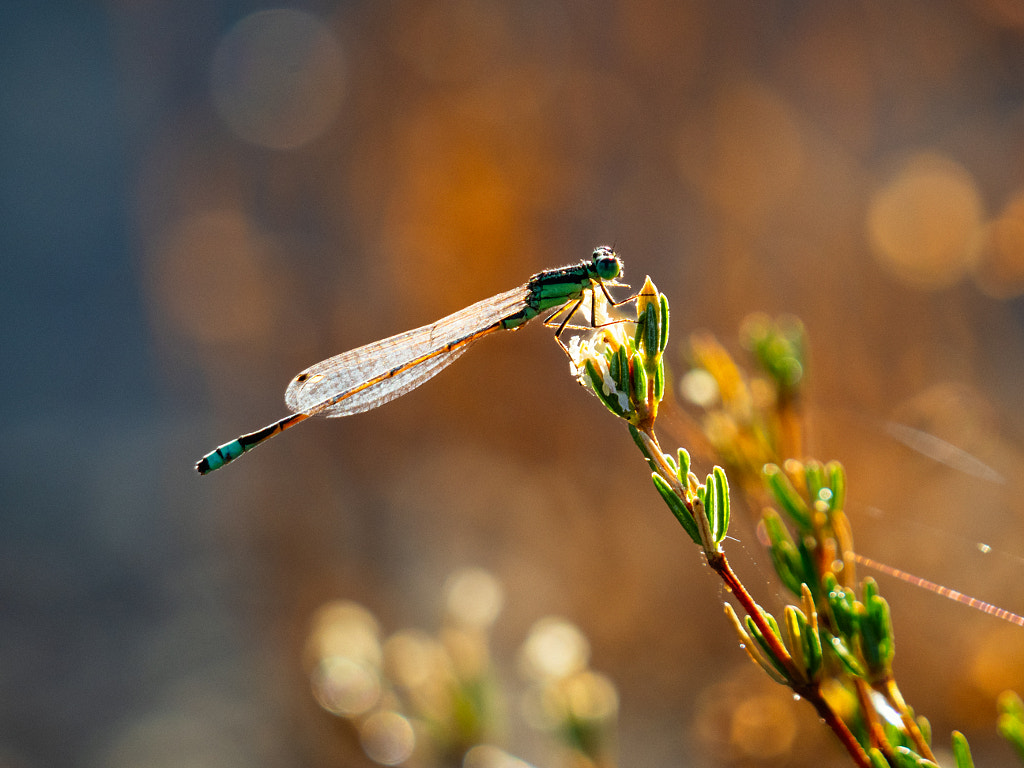
The warmth of the rising sun finally reaches this Aurora Bluetail (Ischnura aurora) and it wasn’t long after this that it flew off.
As I walked along the dried out river bed I spotted some damselflies waiting for the sun to come properly. Much easier to photograph as they were staying still! After a brief interlude I carried on up the river. In quite a few places there were large holes where the water had evaporated leaving a thick salt crust. In other places the river bed was quite rutted and potholed which meant the unwary could easily turn an ankle or worse.
Salt on the dried out River Avon.
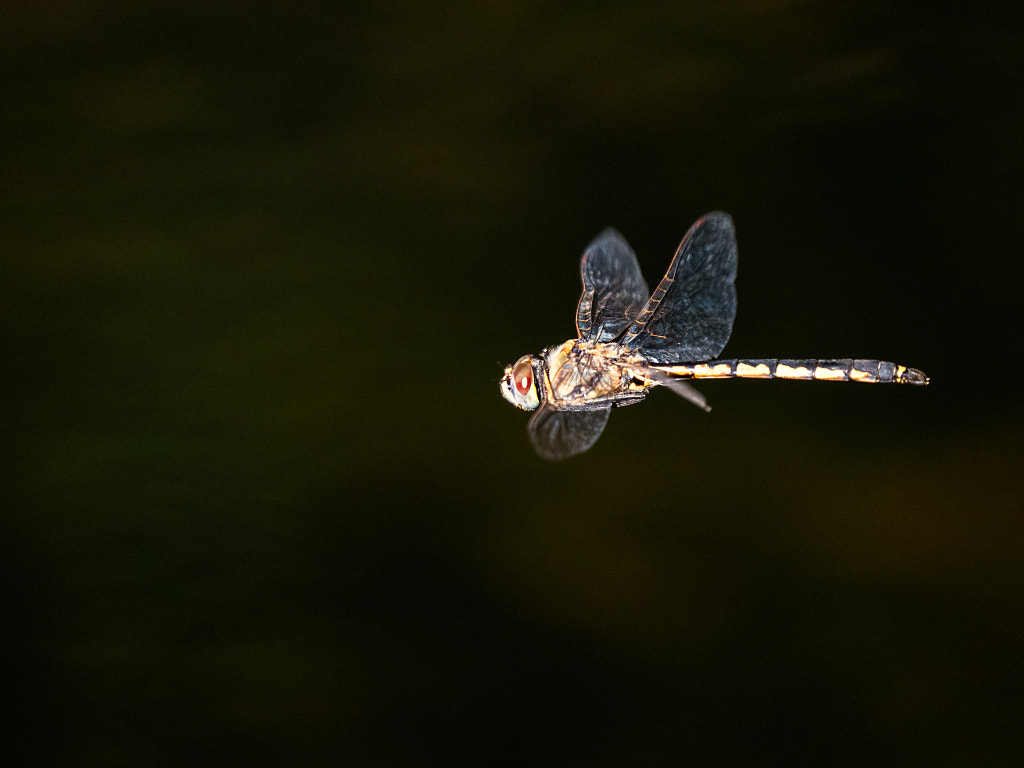
Eventually I made my way to Mile Pool which is a large permanent pool fed by an underground spring. This means that a lot of wildlife can be found there. At the near end the pool is quite narrow, about 1m and shallow with over hanging tree branches and tree roots which would provide lots of perching spots. In my reading I’d also discovered that male dragonflies are quite territorial and will fly a set pattern around a territory often stopping at the same few perches while looking for females to mate with and chasing off other males who’ve dared to trespass. Sitting down on the ground I’d found my subject – a large Tau Emerald dragonfly. He had a regular flight pattern and every time he went round he’d pause and hover for a second or two. I realised that this would provide me my best opportunity to get a photo of it in flight. Sounds simple doesn’t it? The reality was that it took an hour with repeated tries. Eventually I got a sequence of ten photos and the best one is below.
Tau emerald, Hemicordulia tau. York, Western Australia.
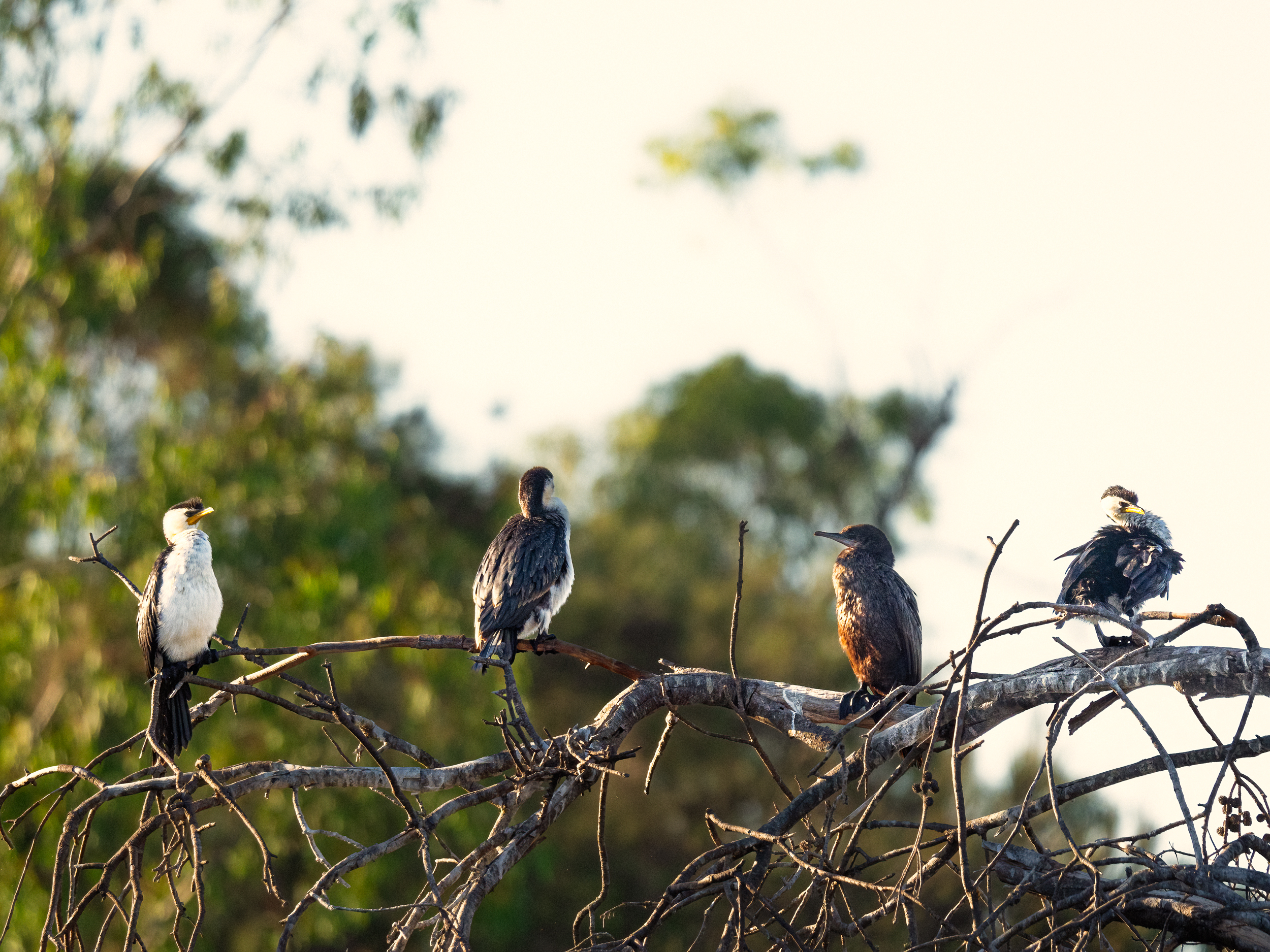
As I got up and stowed my kit I noticed I’d had an audience and they didn’t look that impressed that I was intruding on their secluded pool. I grabbed a quick photo and head off home happy that I’d succeeded in getting my DIF photo. DIF is the abbreviation of Dragonfly In Flight. I’m determined to get better shots than this, but it is a good start.
The audience. Three little pied cormorants and one little black cormorant.



You must be logged in to post a comment.