
As I said in my last entry we went to Darwin at the end of the “dry” period, but the build up to the “wet”, the so called “suicide season” (high temperatures and humidity without any rainfall) hadn’t started. It hadn’t rained for many months and had been particularly hot this year. The daily temperature hovered around 35-36ºC (95-96.8ºF) with the night time temperature not dropping below 24ºC (75.2ºF). So it happened that our last day coincided with Darwin’s first real rain since April. People were really happy to see it. When it rains in the tropics it really rains kind of like having a shower with your clothes on, but with the temperatures being in the mid thirties it didn’t matter if you got wet as you didn’t get cold. So that’s how we found ourselves at Buffalo Creek in the Casuarina Coastal Reserve walking in the rain.

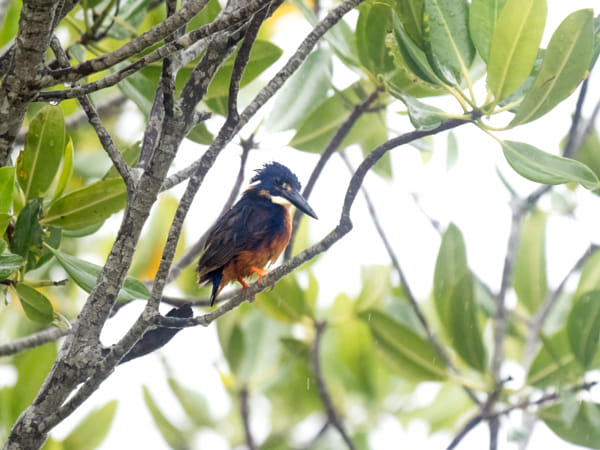
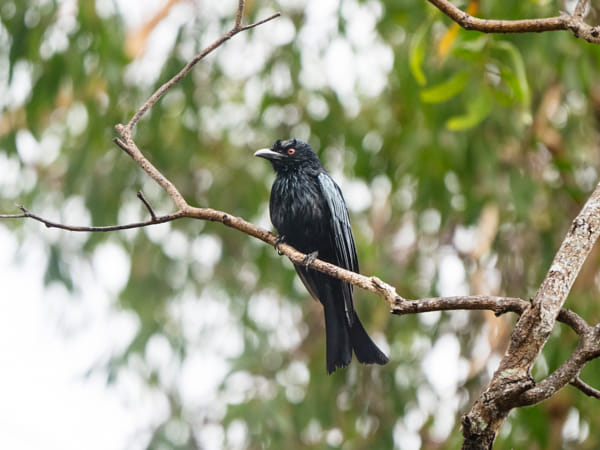
We’d gone to expressly find the Chestnut Rail which is very elusive and guess what? We didn’t see one. What we did see as we left the car was a very bedraggled Azure Kingfisher who was unusually very chilled about our proximity and hung around for quite a long time. I’d made the rookie mistake of taking my camera out of the air-conditioned car into the hot steamy monsoon vine forest and mangroves. Result condensation that took an age to clear so all my first photos have dreamy misty quality. Thank goodness both the camera and the lens have excellent weather sealing. As we walked towards Lee Point we didn’t see many birds, the weather was partly to blame, the other reason was the nature of the forest we were walking through. The vegetation was just so thick. We could hear all manner of bird song, but, just couldn’t’t see who was making it. When we ventured off the path and through the trees onto the foreshore we could see birds there. The exposed mudflats are internationally recognised as an important site for migratory and resident shorebirds and they also provide a nesting area for several marine turtle species. The poor weather and a very low tide meant that conditions weren’t conducive to getting close to where the birds were and there were the ever present warnings about being “crocodile smart”. As we walked along the broad walk through the mangroves we aware of all manner of little animals scuttling about on the mud beneath us. All in all it was a great morning as it was a very different experience.
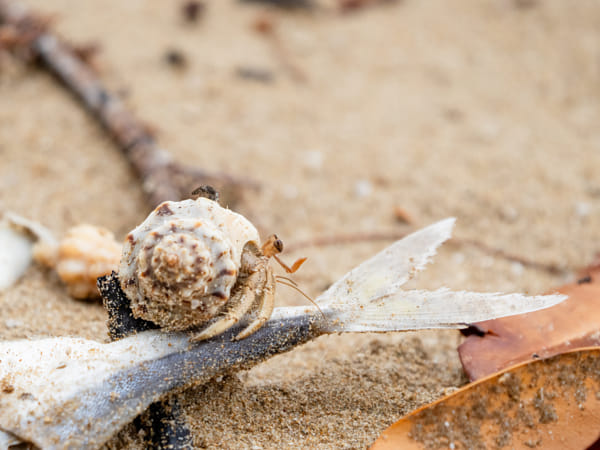
Australian Terrestrial Hermit Crab, Coenobita variabilis.
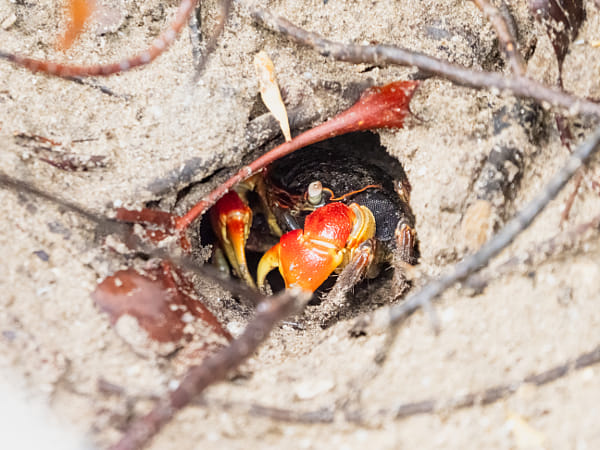
Red mangrove crab, Neosarmatium meinerti
 paulamyes
You must be logged in to post a comment.