
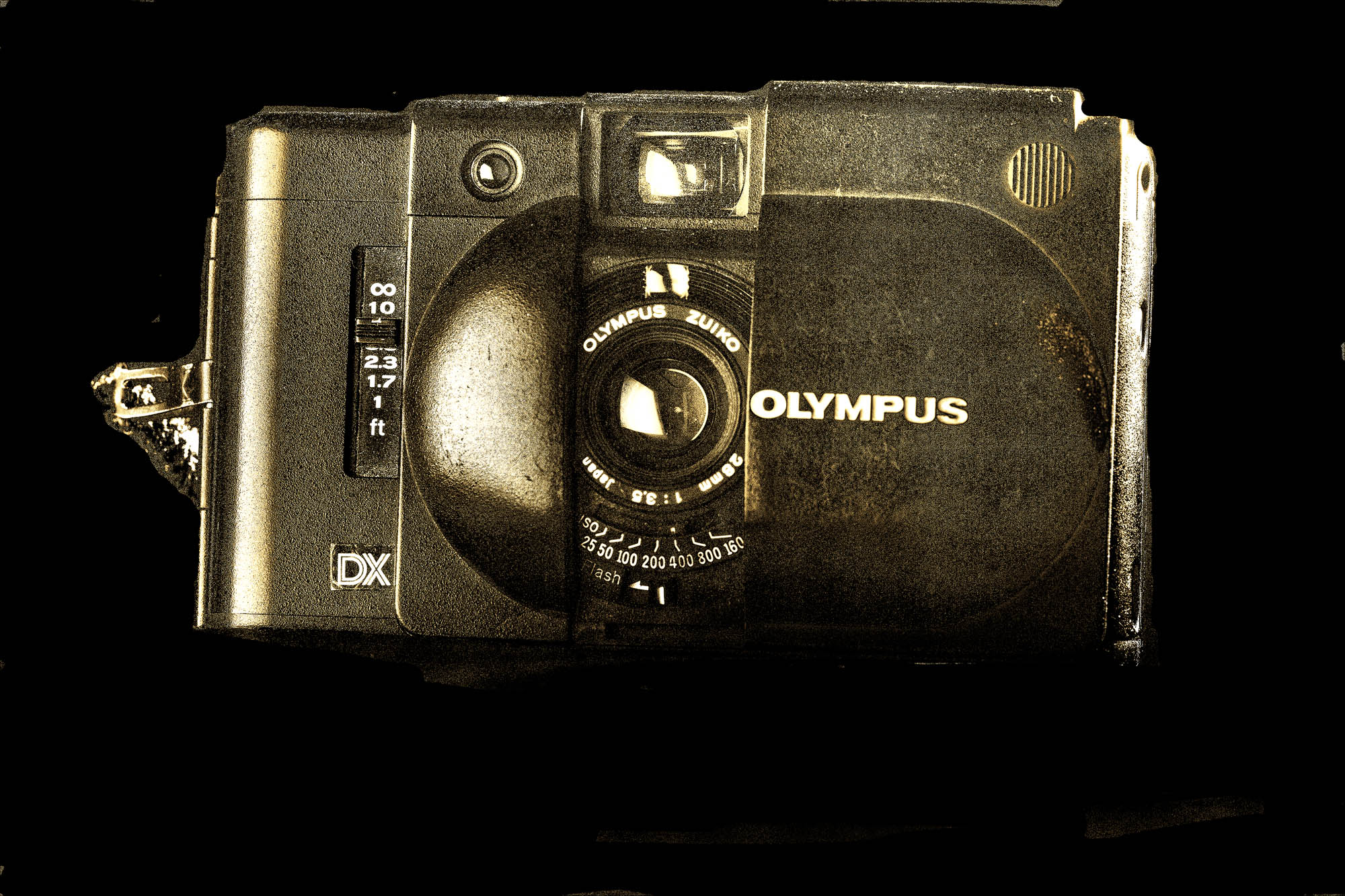
If you were to take a browse through photography social media sites you will see the proliferation of the acronym “EDC” which apparently stands for “Every Day Carry”. I particularly dislike the phrase – its origins lie in American military and survivalist culture where it meant a concealed weapon such as a gun or a knife. I particularly dislike how American culture has become part of photographic culture. We hear terms like “shooting”, “pull the pin”, or “pull the trigger”. But, having said that if we change the acronym EDC to mean Every Day Camera then I think it has a lot of merit.

Our recent trip to Cairns made me appreciate a small fully featured camera with a large sensor that could be carried around everywhere unobtrusively. For that trip I took my Leica D-Lux Type 109 and it did a fantastic job. But, it is getting long in the tooth and it has started to develop a few annoying little faults. Initially I just thought about getting it repaired, but when I found out that it would have to be shipped back to Leica’s factory in Germany at considerable cost even though it is a Panasonic Lumix from Japan in Leica fancy dress I decided to look for a replacement.

At one point every camera manufacturer made such a camera, but then with the ubiquity of mobile phones with “reasonably” good cameras (but with lousy ergonomics and controls) they went out of fashion and if you wanted to buy one they were like hens teeth. Oh sure a few manufacturers continued to make them – Ricoh’s GR IV, Fuji’s X100vi, Sony’s RX1R Mark III , Panasonic’s L10, Leica’s Q3 and D-Lux 8 – but have you seen the price? Well in the consumer paradise that is Australia the price range is roughly $2000 – $12600. Definitely not for the financially embarrassed. On looking at the secondhand market I discovered a curious paradox. For cameras that nobody wanted just a few years ago they are now selling for a lot of money. For example a 12 year Leica D-Lux Type 109 camera is going for north of $2000. A lot of money to pay for an older second hand camera which will just as likely develop the same faults as mine just has. Another strategy is clearly needed.
Perhaps I didn’t need a built in zoom lens. Perhaps I could use a small camera body with a small interchangeable prime lens. Ideally I want a flat topped rangefinder styled camera with a viewfinder. If so I have a couple of likely candidates in the camera cupboard. So the other day when I had to go into Perth for the day I took three (yes three!) Small cameras fitted with a 35mm equivalent prime lens. It’s not important at this stage to say what I took, but it was quite interesting to see how much time I spent with each camera and lens combination and how much I enjoyed using them. What I discovered was that the specs aren’t that important. For this type of photography a central single AF point is perfectly adequate. In terms of the sensor, well anything more than 12Mp is overkill for my uses. The pictures either get shared with friends and family or put on social media. If I do want to print well 12Mp is good for a nice A3 print. Burst speed doesn’t have to be great – 4 fps is perfectly adequate if I need continuous shooting. Start up time is fairly important, but usually I wander around with the camera always on and have a spare battery in my pocket.


Everyday Cameras are also great for recording those special spontaneous moments that happen so the user interface needs to be intuitive to allow quick use such as when your new puppy does something really cute. They should also be able to be used single handed. I’m not a great advocate of doing that, but, sometimes situations present and you’ve only got one hand free.


I’ve yet to make a decision on which one I shall use as the EDC – or I may just keep using all three on a rotation basis and possibly add other combinations to the mix.


You must be logged in to post a comment.