“the big wheel…

…keep on turning neon burning up above
And I’m just high on the world
Come on and take a low ride with me girl
On the tunnel of love”

Canning Fair
The Big Wheel

More old school photography. Pentax 645IIn with Pentax 45-85mm f4 lens and Fujicolor 160s colour negative film.

The title of the post is part of the lyrics to the Dire Straits hit song “Tunnel of Love” released in 1980 on the Making Movies album which was a particular favourite of mine back then and still gets played now.

Simply Santorini

Santorini Caldera
The island of Santorini is literally the remains of a volcano that blew up. Much of the settlement lies on the edge of the caldera looking into what would have been the heart of the volcano.

We went to the Greek Island of Santorini in 1987. It was one of the most beautiful places I’ve ever visited with the white buildings contrasting with the incredibly blue sea and sky.

Thira
Church Bell Tower, Thira, Santorini.

Going before the start of the tourist season also helped – it meant that most of the island was deserted. Many of the locals would not winter on the island preferring to move to the mainland.

Paradise Video-Music Pub
Paradise Video-Music Pub, Thira, Santorini.

It was as though we almost had the island to ourselves and we walked around taking in the scenery and photographing with gay abandon. By the standards of the digital age we didn’t shoot very much, but then shooting twenty rolls of film while on a weeks holiday was a big deal.

Thira
Island of Churches

My entry for the Nepal Earthquake made me look closely at my slide and negative archive, and what I found was not pretty. Most of the images from the 1980’s are in pretty bad shape. I’ve been meticulous about storing my images but the dyes used in the E6 and C41 films were not stable and they have faded. The Kodachrome images have fared significantly better. So I’ve embarked on a scanning frenzy. I’m using an old Canon flatbed scanner which allows me to batch scan and gives sufficient quality to make an A3 print. At present I’m only restoring a few of the pictures, the important thing at the moment is to digitize them, and get them into Lightroom with captions and key words. These pictures went through Lightroom and Photoshop, but I still wasn’t able to completely restore them so I thought I’d embrace the “distressed” look so I ran them through the desktop version of Snapseed.

Absence Makes The Heart Grow Fonder

God Loves Everyone – Even Christians. South Beach, Fremantle, Western Australia. Voigtlander Bessa R2 & Voigtlander 35mm f2.5 Colour Skopar . Ilford Delta 400 developed in D76.


Now it has been nearly 4 weeks since my last post, but far from sitting around and just doing nothing myself and the myriad of staff here at the head quarters of the global juggernaut that is Paul Amyes Photography have been remodelling the commodious facility. Endeavouring to maintain our cutting edge style we undertook the massive task. At times I must confess that it seemed like a Sisyphean task, but now basking in freshly designed and decorated centre of operations , I can say that it was all worth it.

Sisyphys (1548–49) by Titian, Prado Museum, Madrid, Spain


Having just posted after a long absence I must confess that the blog will be taking another break of 3 weeks while  I go and intrepidly explore the Tasmanian wilderness. Now observant regular readers will note that it was not even 12 months ago that we visited that far off land. Well the pull of the wonderful scenery, excellent food and the outstanding beverages is too great to resist. The trip will not be all beer and skittles though, no my shutter finger will be getting a very strenuous workout as I endeavour to capture the beauty that is ubiquitous in Tassie.

So see you in three weeks.

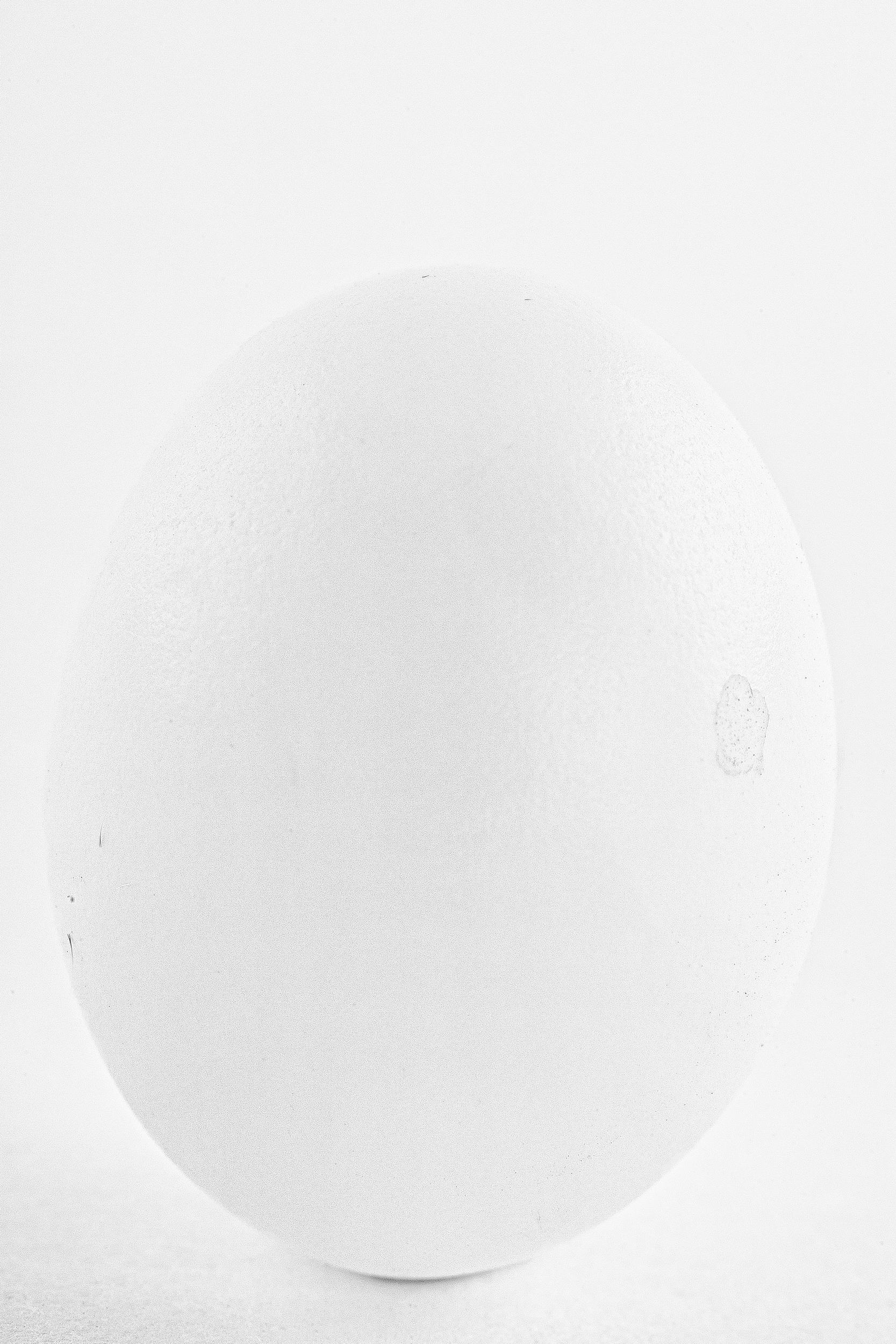
Eggsactly ……

Back in the long distant past if you wanted to demonstrate your photo skills the photographing a white egg on a white background using flash and transparency film preferably on a large format 4×5 camerawas the way to do it. Totally manual exposure taking into account the mag factor. Understanding that a sheet of Fuji Provia 100 only had 6 stops of dynamic range. Now it is depressingly easy to shoot in these digital times with E-TTL flash metering and LCD displays with histograms. But then all this techno goodness should free us to make wonderful art.

Canon EOS5d, Sigma 105 f2.8 macro, Canon 550EX & 430 EX Speedlites fired wirelessly by a Canon ST-E2.

I’ve Become A Retrogrouch

Retrogrouch is usually a term that is associated with one of my other passions – cycling. According to the Urban Dictionary a retrogrouch is:

1. One who is skeptical of technological developments until their usefulness and reliability have been proven. 
2. One who insists on minimalist equipment that may be user-serviced. 
3. Sagacious but irritable expert. 
4. A person who prefers natural and/or organic materials over metals and synthetics.
5. One who is too stubborn to learn new technology.
Examples of its usage would be:
1. He’s such a retrogrouch; he’s still riding a bike with a Brooks leather saddle and friction gear shifters. 
2. That retrogrouch is still using a film camera. 

As far as cycling goes I’m definitely NOT a retrogrouch. I use gel saddles, Shimano STI, clinchers and aluminium frames. With photography well lets just say I’m going through a phase. Although I have whole heartedly embraced the digital revolution deep down I have a dissatisfaction about it. I’ve come to the conclusion that with digital photography we are now serving it rather than being the master. I seem to spend inordinate hours in front of a computer massaging pixels to within an inch of their lives, correcting white balance and battling noise. I’ve become suckered into an endless upgrade cycle of computers, cameras and software packages. I worry incessantly about not if my hard drive will crash, but rather when it will crash and what will be the consequences. I have to think about bit depth, colour space and compression artefacts. In all I think I’ve stopped being a photographic artist and have become a technician that uses a computer with a lens glued onto the front. It’s all really rather unsettling, even dissatisfying.

Since FotoFreo I’ve been having a spot of quiet contemplation about life, the universe and photography. I’ve got no pressing projects on and so my mind is free to wander and play with ideas and concepts. I was having a sort out in my office and I came upon the box where the obsolete and unloved equipment is stored. Much of it is truly worthless like the old Toshiba laptop that has a 144 Hz processor,  48 Mb of RAM, a 1.5Gb hard drive and runs Windows 95. Along with it was an Olympus ES10 film scanner. I fired them up and did a scan. Amazingly it all worked, but it took the best part of an hour to produce a 24 Mb TIFF of a 35mm slide. Hmm I’ll give up on that idea then. In the deeper recesses of the box were 3 35mm cameras, 2 SLRs and a rangefinder, and an assortment of lenses. The rangefinder was truly dead and gone as it had suffered a terminal fall and the film back was badly cracked. The two SLRs worked. So just for old times sake I put a roll of black and white film through one of them. I found a large Tupperware container of the stuff in the back of the freezer. Well it was really fun to use the Olympus OM40 again, especially with the gorgeous Zuiko 50mm f1.4 lens. I had to use all those long forgotten bits of information about exposure, filters etc. There was no incessant chimping to see if the picture turned out. It was all pre-visualisation and a step of faith. When finished I dropped the film into a local chemist who still runs a mini-lab and an hour later I had my negatives back. On getting home I got my loupe out and looked at the negs and had that familiar feeling of excitement and surprise. Wow! This is what photography is all about. Part art, part craft, part science, and totally a pleasure. Not having access to a darkroom (more’s the pity) I scanned the negs and processed them in Lightroom.

The processing was done as I would have in the darkroom. I had exposed for the shadows so it was a case of processing for the highlights and letting the shadows take care of themselves. I then split toned them. They’re not art, they’re just snap shots done as an experiment, but I enjoyed the whole process and I think I will continue with it. In fact I might dig out the medium format kit that’s been lying around unused and unappreciated. Will film replace digital for work? Well that will depend upon the job, the deadline and the budget. I can certainly see a place for it though with clients who want a something a bit different. Mostly though I’ll use film because I enjoy it.

The road to convergence is long and hard

Phillip Bloom at the Film and Television Institute in Fremantle, Western Australia.

Phillip Bloom showing us his new Canon C300 and giving the audience a major case of camera envy. A seminar hosted by the Film and Television Institute in Fremantle and run in conjunction with Røde Microphones. Olympus Pen EP-2 with 14-42 mm lens. 1/30 sec. at  f5.6, ISO 6400.

Well yesterday was a bit of a monster. To start with the temperatures hit 40˚C, or 104 ˚F for the non metric readers. The second reason was that I attended a seminar by video guru, superstar and all round nice guy Phillip Bloom. The day was pretty full on as the air conditioning was non-existent and the venue was packed full, and the depth and range of the topics covered was considerable. I think that not coming from the film industry and not knowing my codecs from elbow it meant I was going to struggle at the best of times. Combine this with the torpidity inducing climatic conditions and I was in real danger of not comprehending a single word. Thankfully Phillip is a born entertainer, open, friendly and willing to share his expertise so he carried us all with his relentless enthusiasm.

Now a day later sitting in the air-conditioned comfort of my office I’m trying to see where all this fits in with my work. There is no doubt that to do video well not only are you going to have to be prepared to drop shed loads of cash, but that it is probably beyond the scope of a single person. Really there needs to be two people working together on a project at the very least as there is just so much keep on top of. Editing and post production should really be handed over to an experienced editor. For short web-based projects it may be possible work as a single operator, but I think that to do a good job and if the clients budget could stretch to it I’d want to bring in someone else to ensure that everything runs to plan.