Australian Gothic

Or perhaps not.


Waardong
Australian Raven or Waardong (Corvus coronoides).


The other day the Beloved Significant Other (BSO) came home from the local cemetery saying she’d seen lots of crows there with some even sitting on the grave stones. She suggested we go the next morning and try and get some suitably gothic photos.

Australian crows (Corvus coronoides) are not in fact crows, but are in fact ravens. They are highly intelligent birds using tools to help feed themselves, they’ve also been observed softening dried out hard food in water to make it soft enough to eat. As I said, very clever. For the local Nyoongar people the raven is called Waardong – the watcher – and is seen as crafty, cunning and very unpredictable. That is where our plan failed. There was no way we going to get close enough to get a photo. I approached using cover and while just trying to peek around the corner of a wall they’d immediately  see me and  all take off. I didn’t manage to get one single photo of a raven.


Wardawort
Try as I might this Wardawort or Grey Butcherbird (Cracticus torquatus) just didn’t look gothic enough. York Cemetrey, Western Australia.


There were other birds at the cemetery and I thought that one of them – Wardawort or the Grey Butcherbird (Cracticus torquatus) – would make a suitable replacement for a raven. The Grey butcherbirds were far more approachable than the ravens and it was possible to get quite close which was great for taking photos. The problem was that they didn’t want to sit on top of the grave stones but rather they perched on the wrought iron work that surrounded some of the graves. I still took some pictures but they didn’t match what I’d envisioned – reality seldom does. Getting home I tried processing the the photos as black and white trying to give a suitably dark menacing tone. It just didn’t work. The Grey Butcherbirds didn’t have that spooky/menacing appearance that the ravens have. I also thought that the colour photos looked better, but they did not convey that gothic vibe I was trying to create.


Wardawort
The colour versions just looked better albeit just not spooky enough.


It was a fun exercise. We did talk about how we might get the ravens to hang around. The most logical way would be to put down food for them on a regular basis and so change their behaviour. The ethics of that are a bit suss – get animals habituated to humans and dependent on hand outs just for a photo. Bit dodgy that one. We feed and water birds in our garden, but this is different. It is not our garden and the ravens are naturally wary of people. The birds in our garden are already habituated to us. We didn’t have to put out any food to encourage that. The only other way is to just keep going back over and over again. Who knows we may chance upon a raven that isn’t too fussed about people who is sitting on top of a grave stone and using it as an anvil so they open up snail shells. Preferably on a misty morning. I rather think that pigs might fly first.

Frolicking In The Woods

The last few weeks I’ve been concentrating on the Avon River and I wanted a change. So early one morning I got up so I could be in the wandoo woodland of Mount Ronan’s Nature Reserve as the sun comes up. There is nothing like the first rays of the sun hitting the trunks of the wandoo trees. The golden rays illuminate their pale bark and they all but glow in the warm light.


Wardawort by Paul Amyes on 500px.com
Wardawort or Grey Butcherbird (Cracticus torquatus). Mount Ronan Nature Reserve, Western Australia.


I got off to a promising start – as I pulled up I was greeted by a mob of kangaroos. They weren’t so keen to see me however and took off into the bush. There was an incredibly loud melodious piping and warbling coming from the tops of the trees. At first I thought it was magpies singing a bit strangely, but after closer inspection I found it was about a dozen grey butcher birds  calling out to each other. What was amazing about it was they were all singing the same phrases taking turns with no gaps. You would be forgiven for thinking it was one bird as the performance was so seamless. It was like a choir recital.


Djini by Paul Amyes on 500px.com
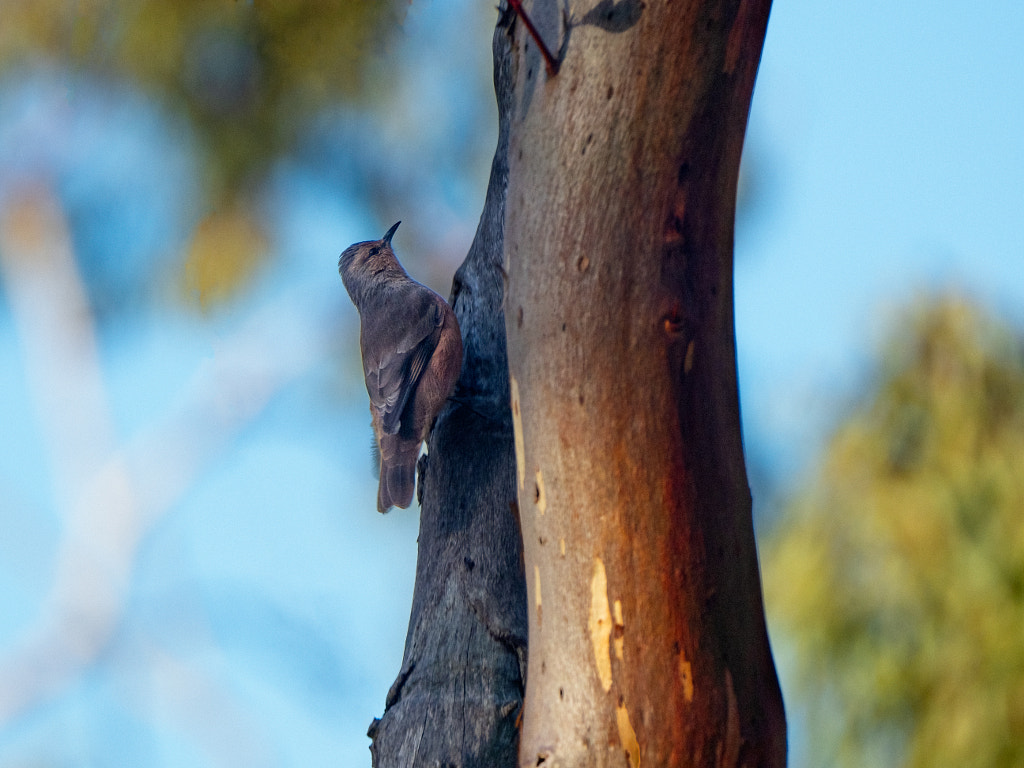
Djini or Rufous Treecreeper (Climacteris rufa) climbing up the trunk of a tree. Mount Ronan Nature Reserve, Western Australia.


Djini by Paul Amyes on 500px.com
Djini or Rufous Treecreeper (Climacteris rufa) taking some time out in the sun. Mount Ronan Nature Reserve, Western Australia.


Stalking animals in the wandoo forests is hard as the trees shed bark, twigs, branches and leaves in great quantities which means that the ground is covered in a thick crunchy mulch and no matter how hard you try to move quietly you always end up making a racket. The end result is that it is hard to get close enough to take photos. The ideal approach is to sit down and wait for the birds to come to you. After about half an hour I could hear the sound of small birds chasing insects and was rewarded with several rufous tree creepers. A few minutes later and I could see one climbing up the trunks of a tree to foraging for insects and grubs – I’ve never seen one going down they always seem to climb, and when they get as far up as they want the glide down to the ground or the next tree.


Djida by Paul Amyes on 500px.com
Djida or Yellow-rumped Thornbill (Acanthiza chrysorrhoa). Mount Ronan Nature Reserve, Western Australia.


As I continued to walk around the forest I must confess that I lost focus as I spotted a couple of orchids. It was annoying that I only had my bird photography rig with me and nothing really suited to photographing very small flowers. From that point on I was trying to watch for birds while looking on the ground for orchids. It is an impossible task. 


Fringed Hare Orchid by Paul Amyes on 500px.com
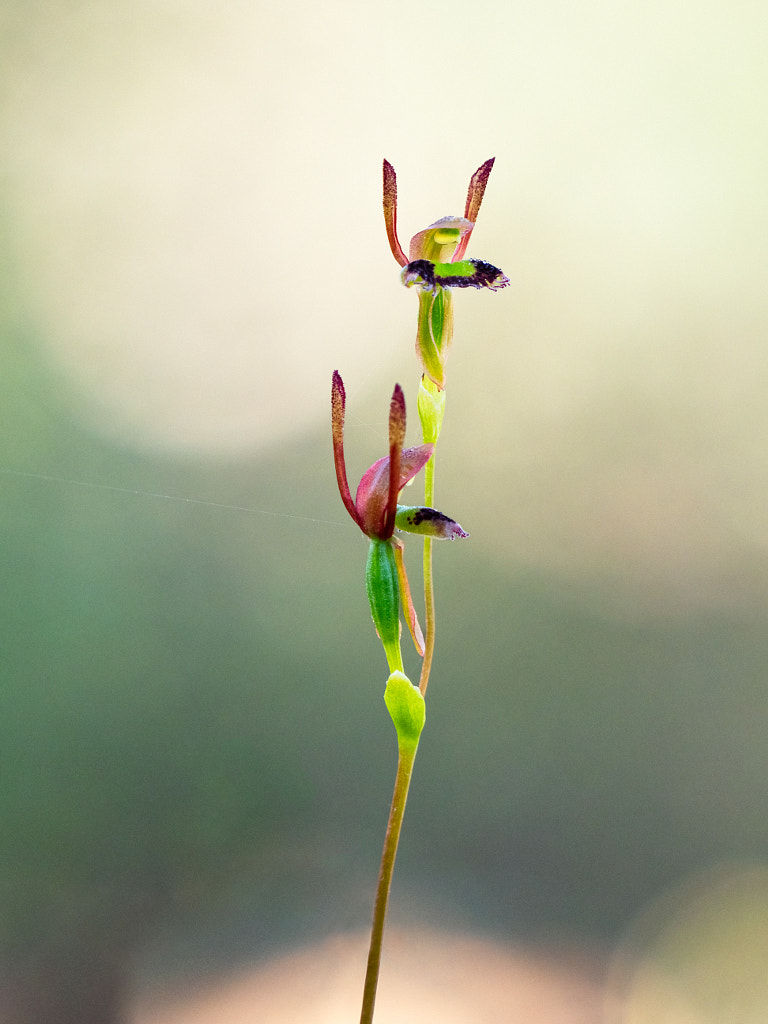
Hare Orchid or Fringed Hare Orchid (Leporella fimbriata). Mount Ronan Nature Reserve, Western Australia.


Common Bunny Orchid by Paul Amyes on 500px.com
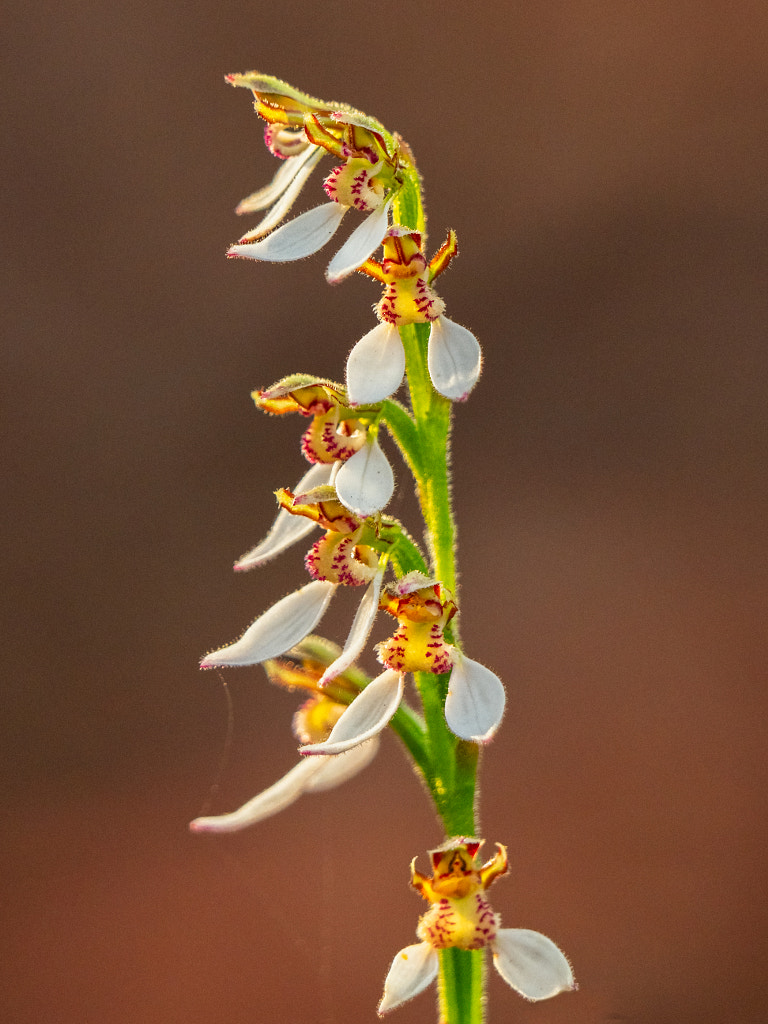
Common Bunny Orchid, Eriochilus dilatatus subsp. multifloris. Mount Ronan Nature Reserve, Western Australia.


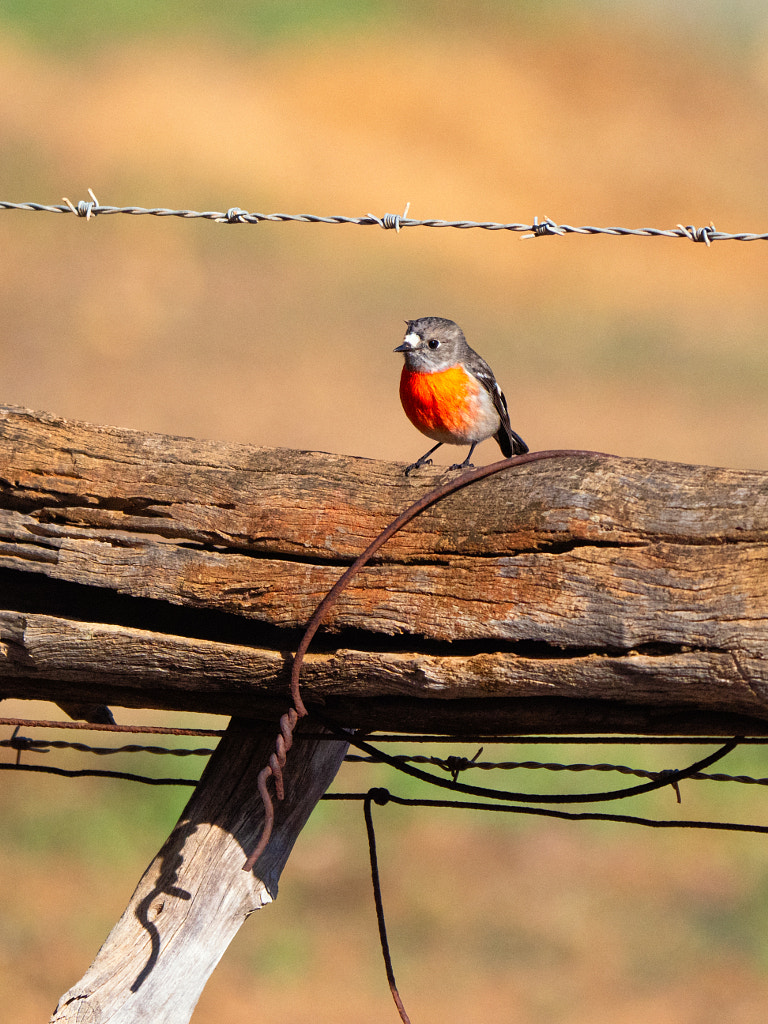
By 9:30 the best light had gone so I decided to call it a day and walk back to the car. Waiting for me was a female red-capped robin sitting on the fence. She was quite obliging and sat for a while allowing me to take her photo.


Dermokalitj by Paul Amyes on 500px.com
Female Dermokalitj or Scarlet Robin (Petroica boodang aka Petroica multicolour subsp campbelli). Mount Ronan Nature Reserve, Western Australia.


Moonset by Paul Amyes on 500px.com
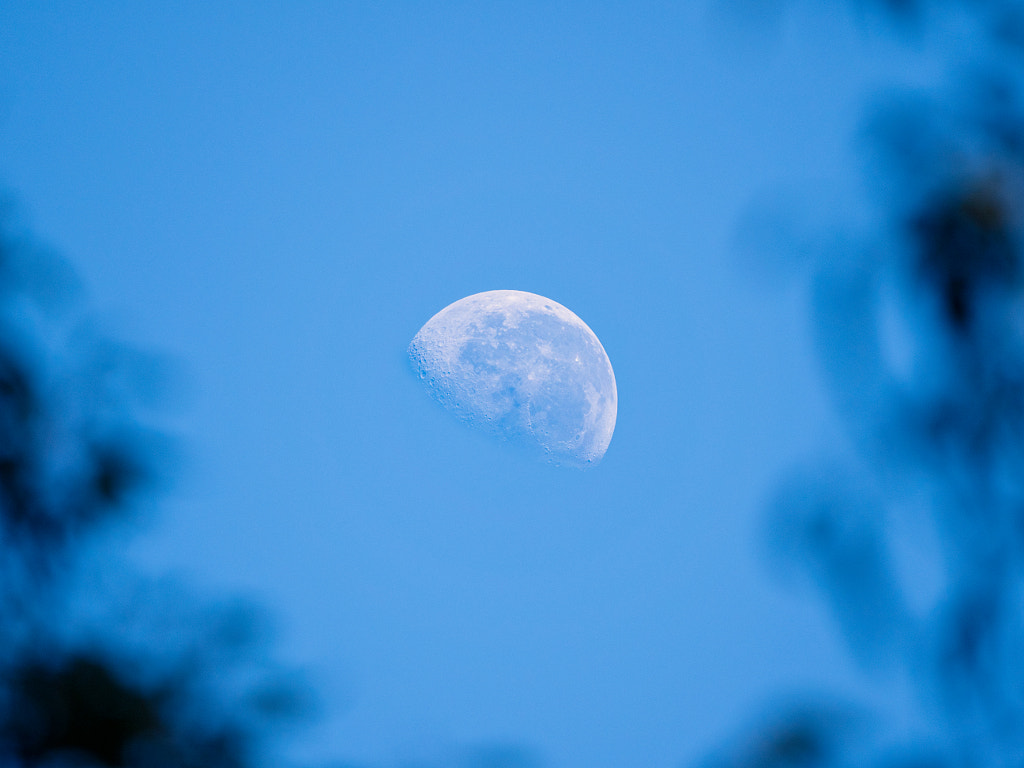
Moonset over Mount Ronan Nature Reserve, Western Australia.