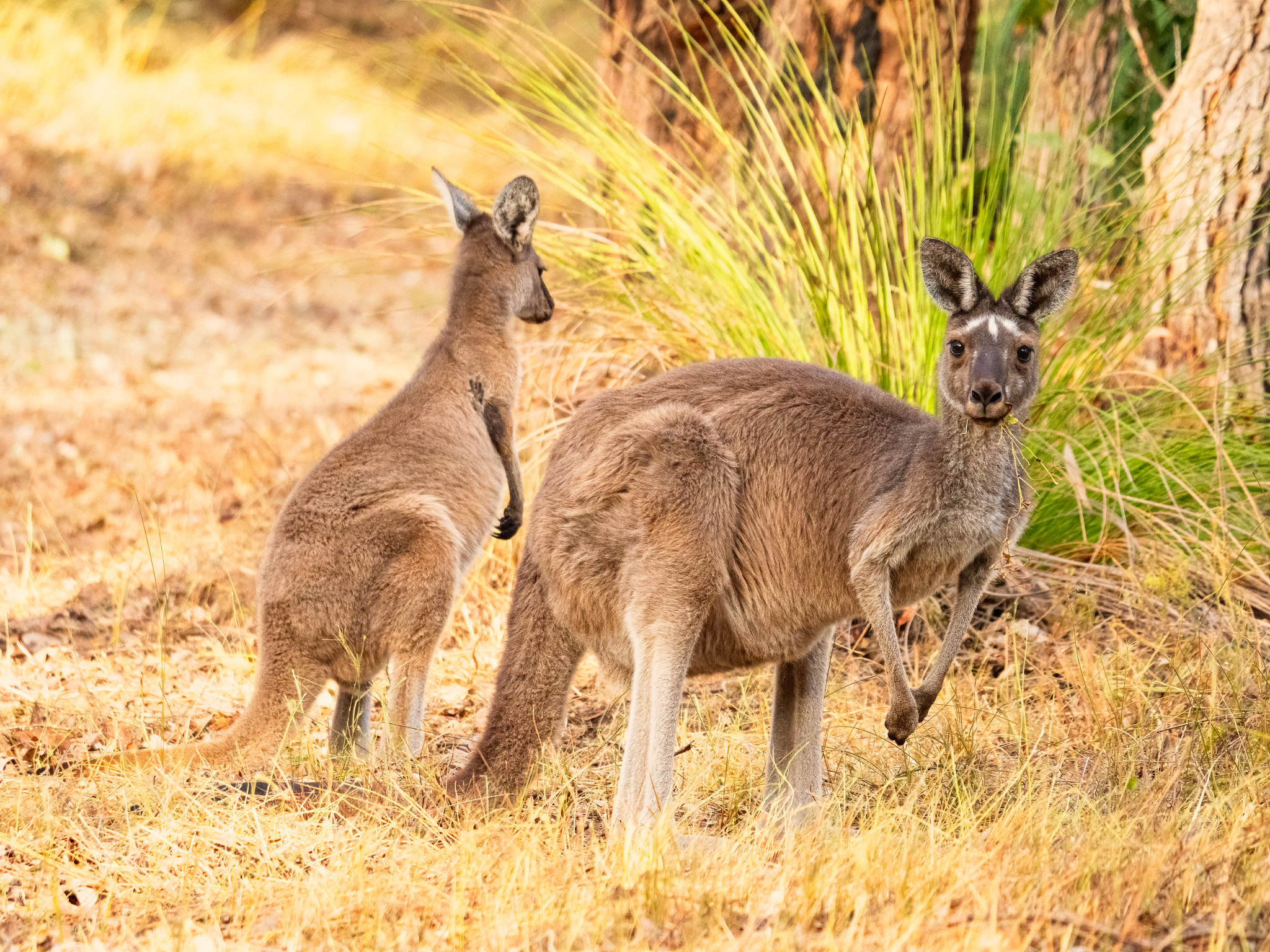
The girls stop grazing to welcome me. Yongka or Western Grey Kangaroos (Macropus fuliginosus) at Lake Leschenaultia, Western Australia.
Not having had kids I loose track of things like school holidays so when I arrived at Lake Leschenaultia at 6:30 am the other day I was surprised with how many kids were playing on the foreshore at the top end of the lake. It was only as I passed the packed camping area I realised we must still be in the Easter holidays. The other thing that caught me off guard was the water level. I’ve never seen it so low – you could walk out in the reed beds. The water birds were staying in what was left of the water out in the middle and any attempt to approach them meant that you were quickly up to your knees in black sticky smelly mud.Not what I had gone for and I was torn between heading back home or heading down to the forested area at the far end of the lake in the hope that it would be quite and I’d have a chance of seeing some wildlife. I decided to stay and try and make the most of being there – it was after all a beautiful morning. The sun waspeaking over the tree tops and gave the forest a nice warm glow and it was the perfect temperature for a walk around the lake. As I walked down the path along the lakeside I met a couple Kangaroos who looked equally nonplussedat the hoard of screaming children. We looked at each other for a few minutes and they got back to the serious business of grazing.
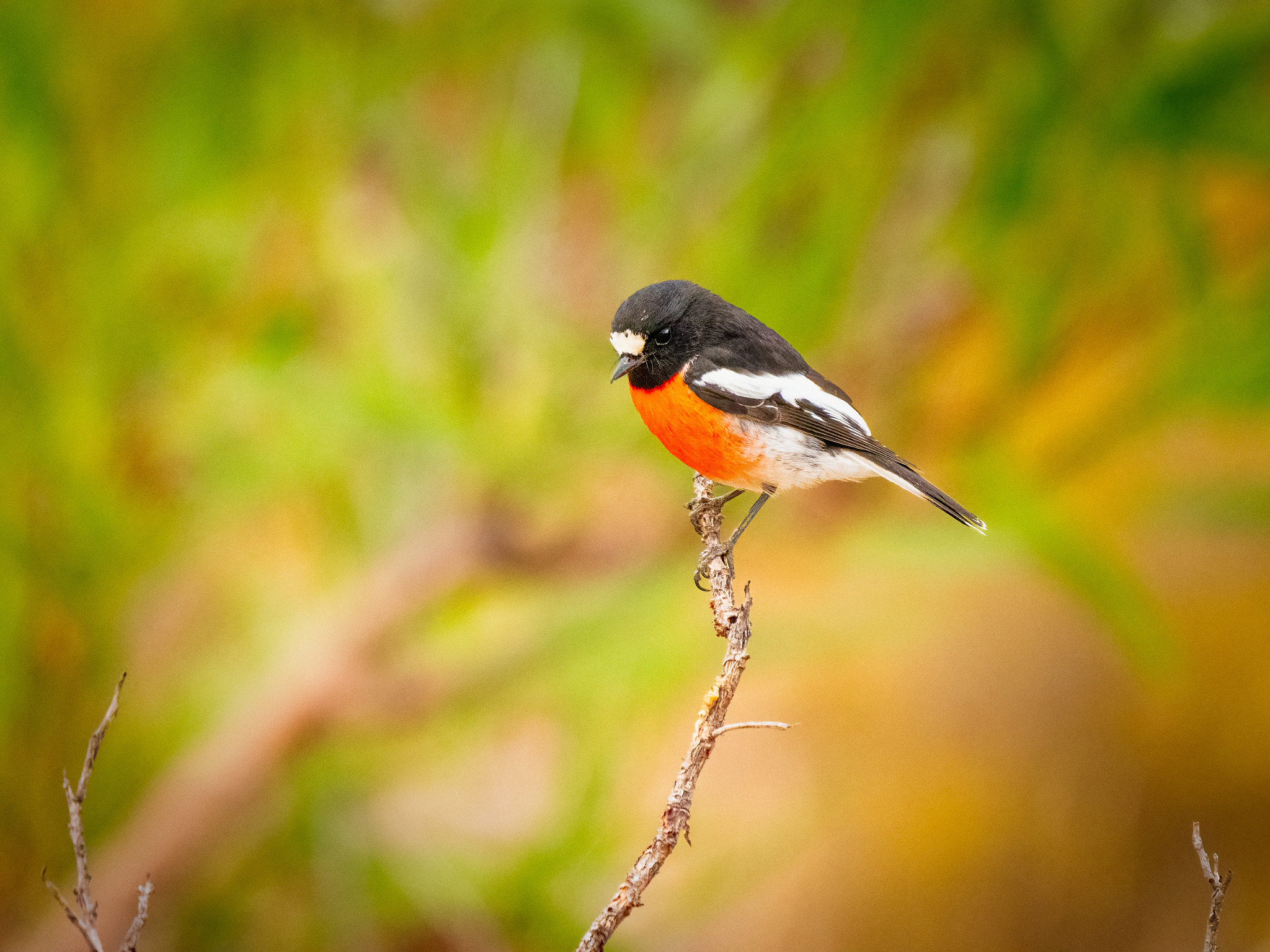
Dermokalitj or Scarlet Robin (Petroica boodang). Lake Leschenaultia, Western Australia.
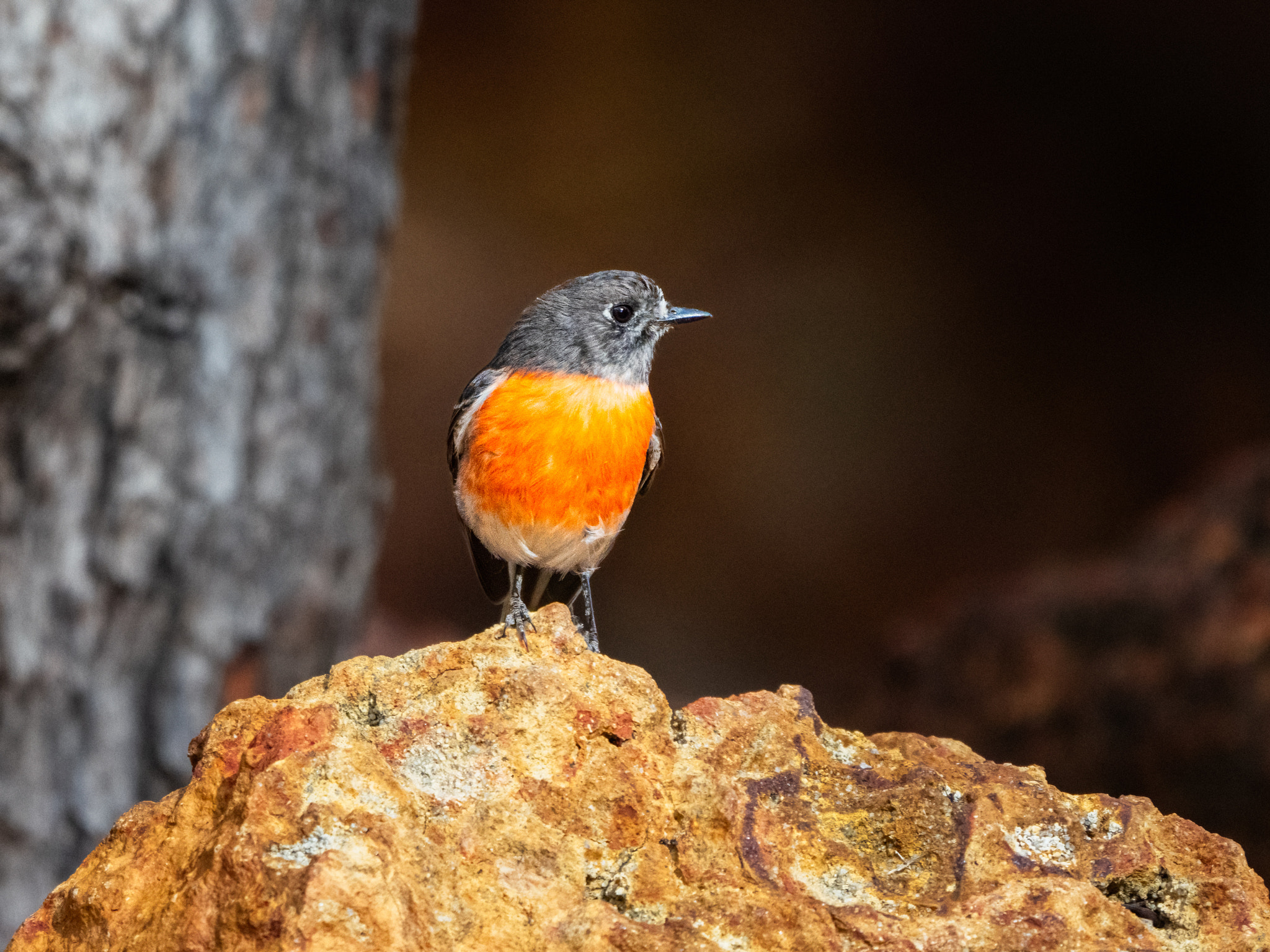
Dermokalitj or Scarlet Robin (Petroica boodang). Lake Leschenaultia, Western Australia.
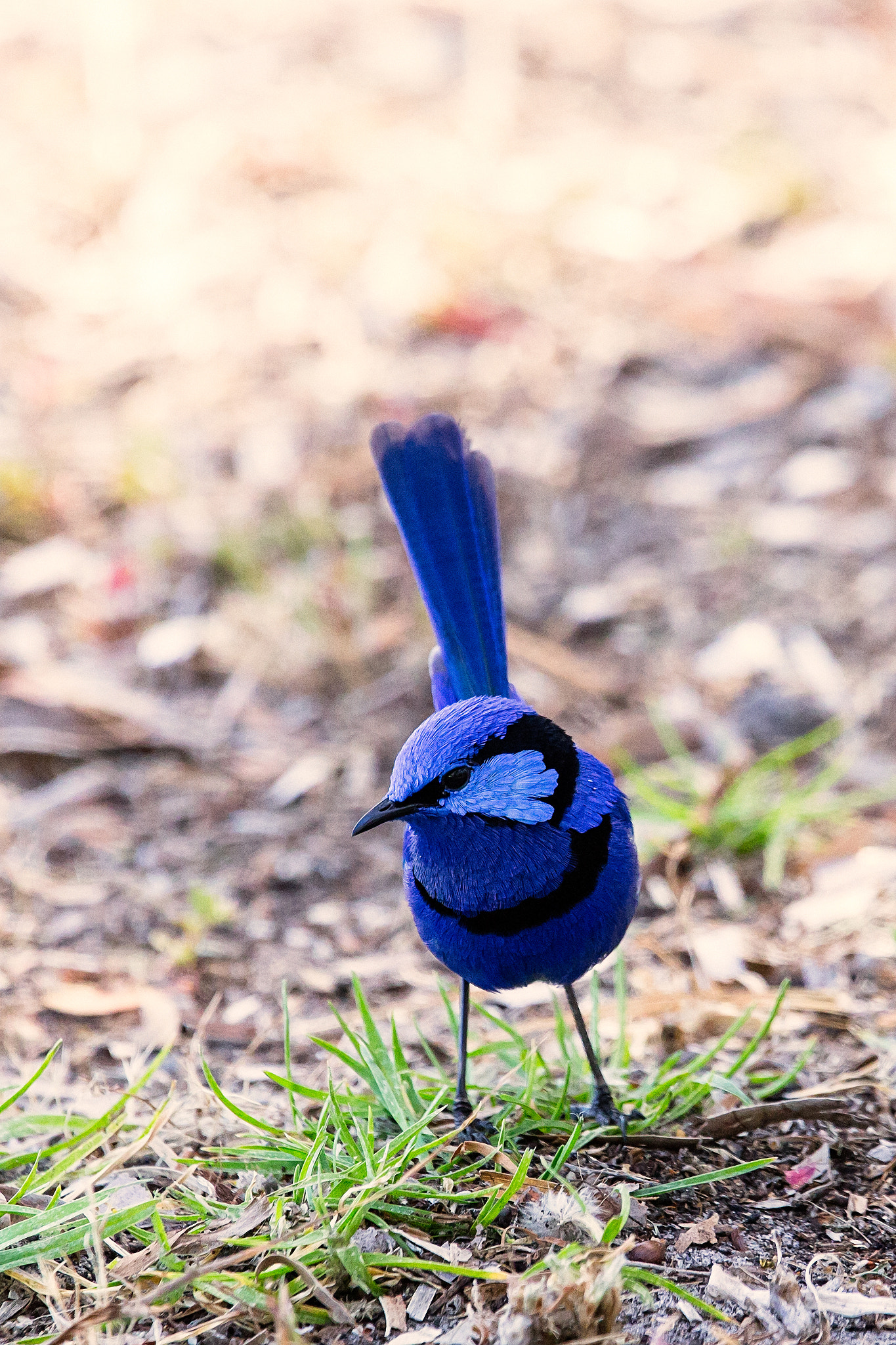
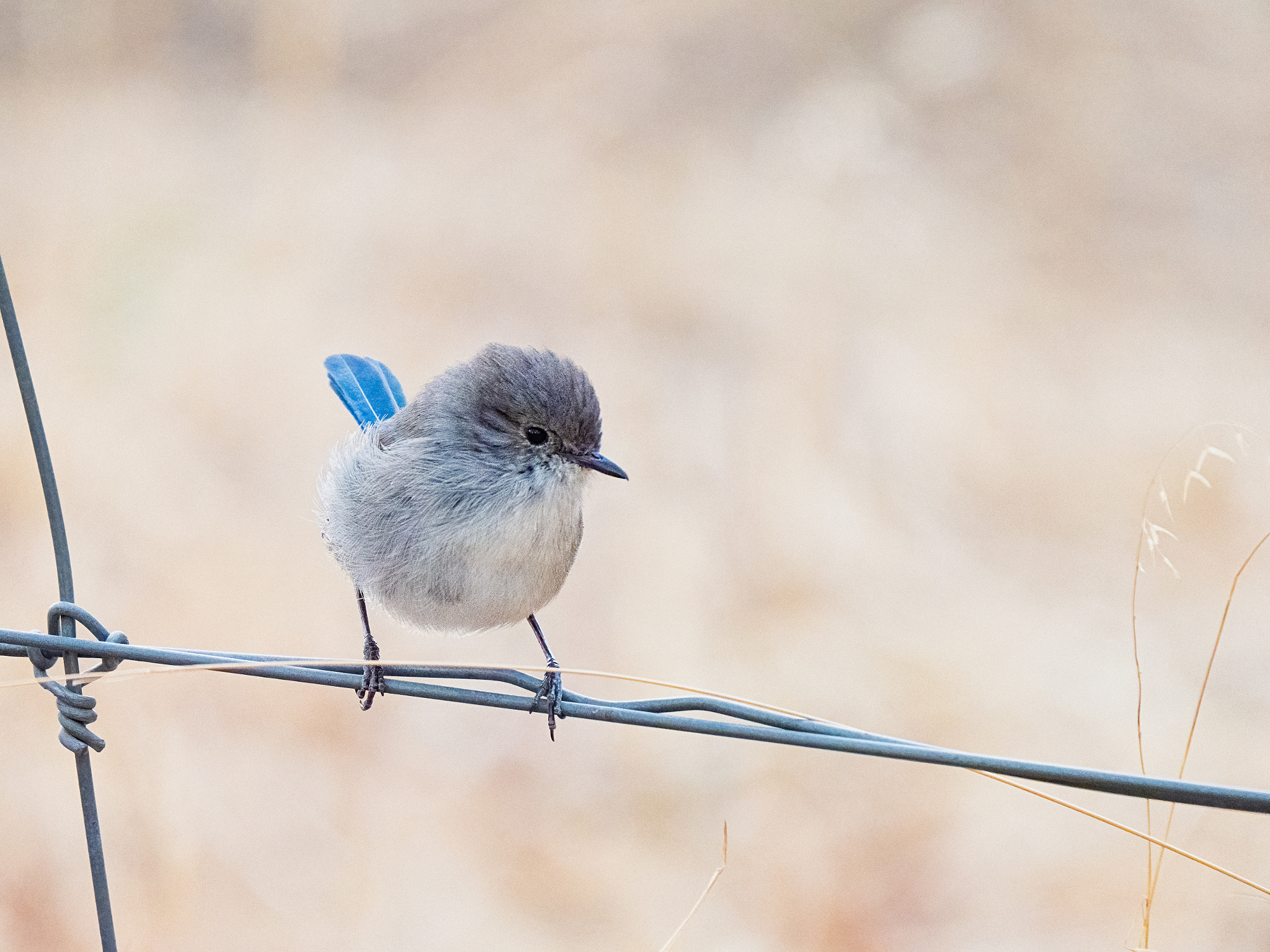
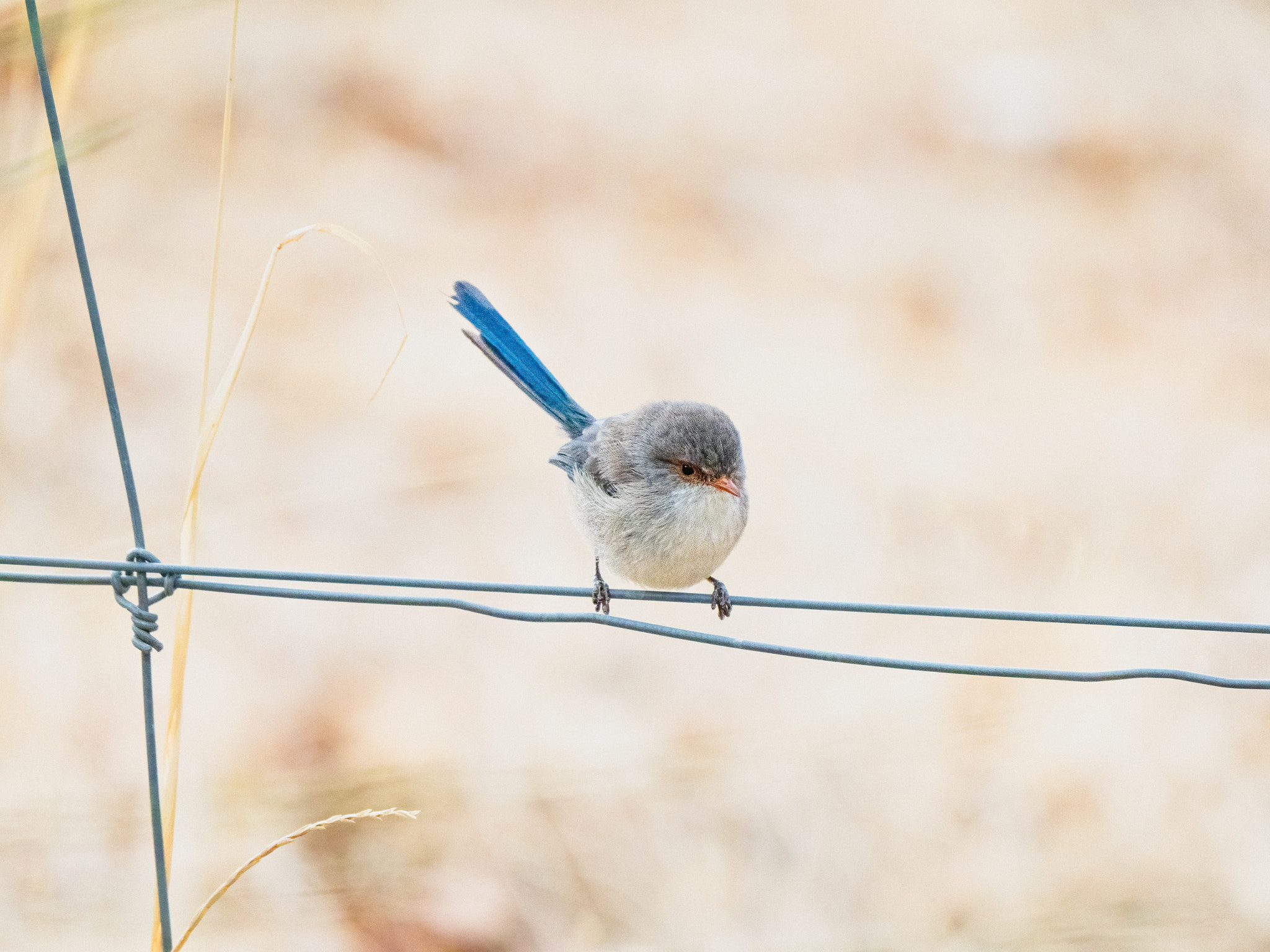
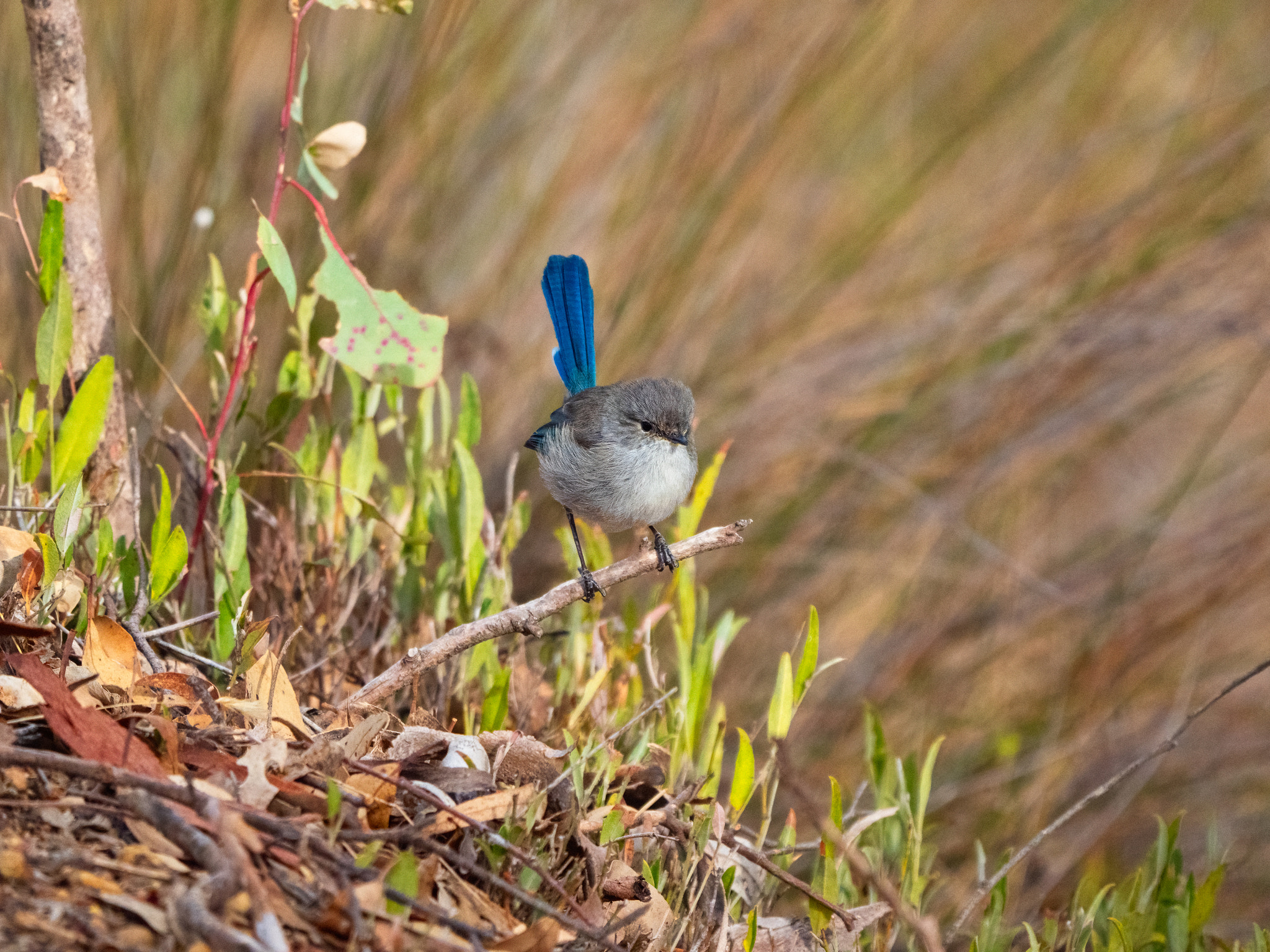
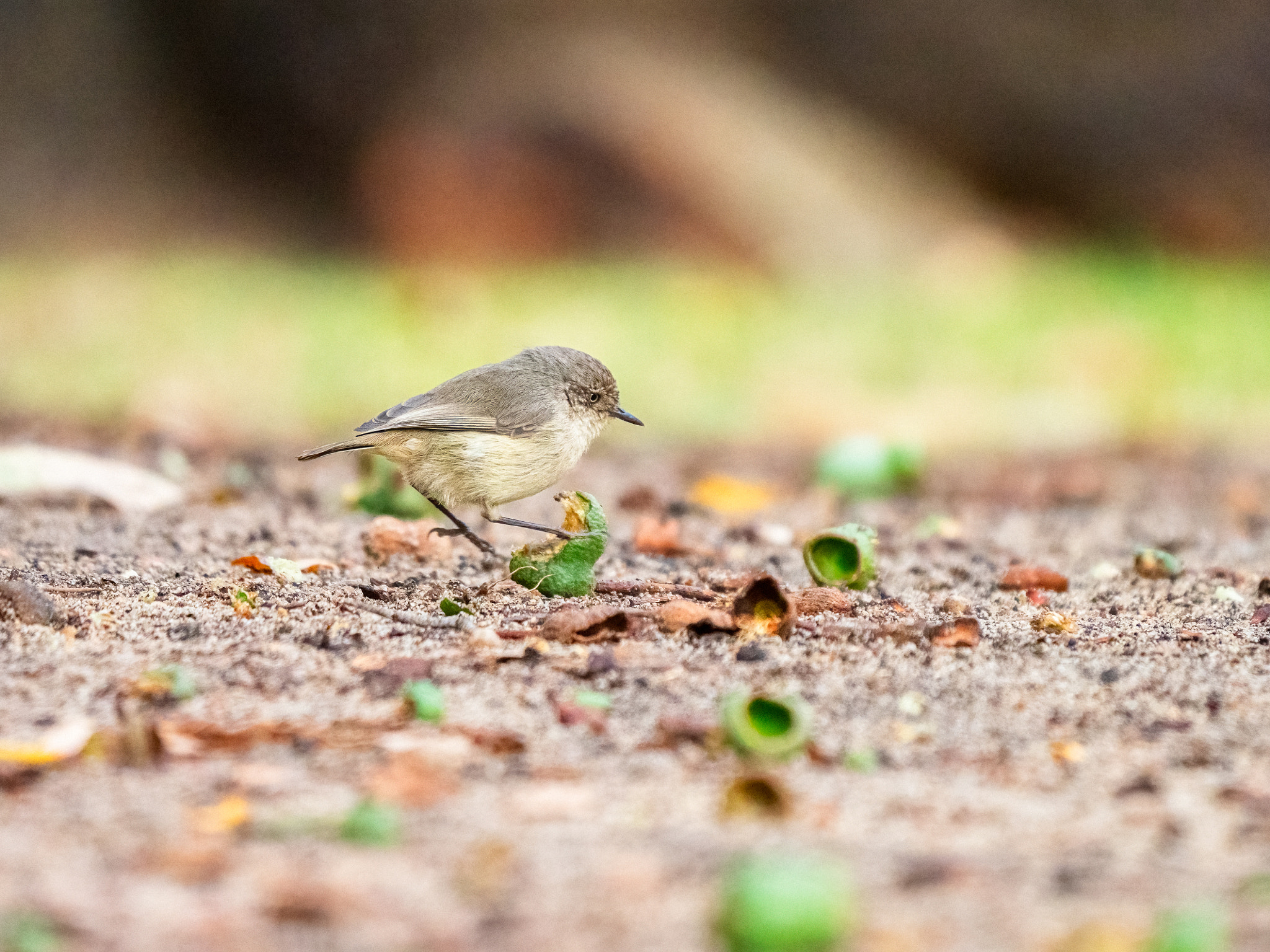
Strolling down to the boundary fence I was happy to note that the air was still and there were loads of midges and mosquitoes flying around. Passerine birds follow the clouds of insects through the forest and feed on them so this meant I had a good chance of photographing robins, wrens, tree creepers, pardalotes and thornbills. I wasn’t disappointed a couple of male Scarlet Robins (Petroica boodang) stopped what they were doing to have a good look at me. The females stayed in the thicker bush eating. There were heaps of Splendid Fairy-wrens (Malarus splendens) dancing about in the understory and on the forest floor. They look like mechanical toys the way they move about with sudden jerky movements. That makes following them through the viewfinder of a camera with a long lens very tricky, but, if you’re quiet and still they will come quite close to you – which makes photographing them a bit easier. The males had shed their brilliant blue plumage that is characteristic of the mating season and were in their drab grey colouring with bright blue tails. Like this they are virtually indistinguishable from the females with the only difference being that they have a dark grey beak while the females have an orange one. If wrens are tricky to photograph then Western Thornbills (Acanthiza inornata) can make you weep with frustration. No bigger than 10cm they bounce erratically around on the forest floor and in the undergrowth with considerable speed rarely pausing. They don’t have the tolerance to be near people which often means when you do get one to sit still long enough to be photographed they are a tiny spec in the frame. Walking back to the dam wall there is a terraced picnic area that enabled me to get at their eye level and conceal me at the same time. I managed to get off a few frames as the birds worked their way quickly through the grass.
A male splendid fairy-wren (Malurus splendens) in full breeding season plumage. Cheyne’s Beach, Western Australia.
Male Djer-djer or Splendid Fairy-wren (Malarus splendens subsp splendens) outside the breeding season. Lake Leschenaultia, Western Australia.
Female Djer-djer or Splendid Fairy-wren (Malarus splendens subsp splendens). Lake Leschenaultia, Western Australia.
Male Djer-djer or Splendid Fairy-wren (Malarus splendens subsp splendens) in a more picturesque setting.
The tiny hyper-kinetic Djobool-djobool or Western Thornbill (Acanthiza inoranta) at Lake Leschenaultia, Western Australia.
I was glad I stayed and persevered. Yes the conditions weren’t conducive to photographing the species I wanted, but being flexible and altering the plan made for a very enjoyable morning out.
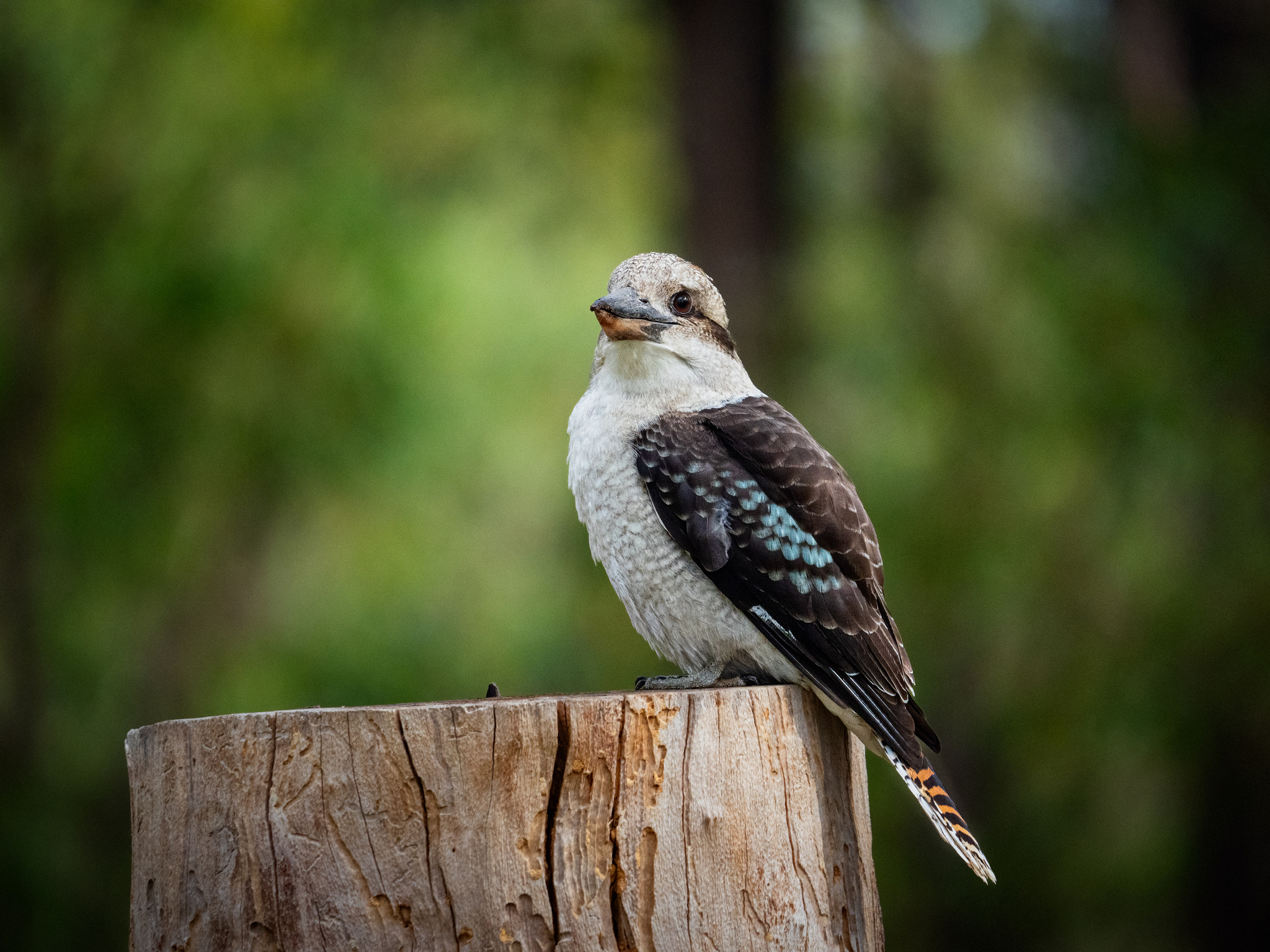
This Kaa-kaa or Laughing Kookaburra (Dacelo novaeguineae) saw me off as I left Lake Leschenaultia.
In my last entry I mentioned that I would be going to Esperance, on the the south coast of Western Australia (next stop Antarctica!) and I’ve now returned home and have chance to process the pictures and reflect on the experience.
Twilight Beach, Esperance, Western Australia. Olympus EP2 and OLYMPUS M.12-50mm F3.5-6.3 lens.
Firstly I would like to say that this was not a photographic expedition, it was a holiday with a major focus on bush walking. Walking has been a big part of my life since my mid teens and I feel it is an excellent way to explore, to reconnect with myself and nature, and see things I might otherwise not see. Generally my long suffering partner is encouraging in my photographic endeavours but the one area which is an exception is when bushwalking as she hates hanging around while I fiddle around taking pictures. Fair enough. In 1986 we went to the Greek Island of Thira, more popularly known as Santorini. I took two SLRs, flash, filter system and a swag of lenses and fifty rolls of film in a shoulder bag. We decided to walk round the island, it is only small, but very quickly I wished that I had not got that stupid bag with me. It was a salutary lesson and ever since I’ve explored light weight alternatives and different ways of carrying. So my camera of choice was my Olympus EP-2. The EP-2 packs into a small bag (20cm x 18cm x 10 cm) and in that I can fit the camera, six batteries, 72GB of SD cards, two polarising filters, two variable neutral density filters, a SEMA-1 microphone and two zoom lenses that gives me the full frame equivalent of 24 – 300 mm coverage. I’ve found that I can shoot multiple exposure panoramics handheld and get reasonable results. The big let down for this trip was that I took no camera support so the handheld video footage I shot has been filed in the bin.
Lake Warden Wetlands Reserve, Esperance, Western Australia. Olympus EP-2 with OLYMPUS M.12-50mm F3.5-6.3 lens. Image created in Lightroom 3 with Niksoft HDR Efx Pro 2 and Silver Efx Pro 2.
Who, What, Where, When and Why
Esperance is a medium sized Aussie country town and is blessed with 16 beaches that are picture perfect and excellent for all manner of beach pursuits and are widely reputed to be the best in Australia. All but one of them are dog friendly. It is quite an isolated place and it is therefore very likely that you’ll able to get a beach to yourself. We didn’t go for the beaches but for Cape Le Grand National Park.
A bit of history about the area. Twenty thousand years ago the indigenous people of the south west of what is now Western Australia, the Wudjari group of the Nyoongar, inhabited the land they called “Kepakurl” or the place where the sea lies like a boomerang. It was a region blessed with a good climate, plenty of water and an abundance of wildlife and consequently they did not feel the need to roam very far. In 1627 a Dutch ship, the Gulden Zeepaerdt, captained by François Thijssen, sailed through the islands off the coast and so began the colonial era. In 1792 the next European visitors were two French ships, the Recherche and l’Esperance, under the command of Admiral Antoine Bruni d’Entrecasteaux, took shelter from a storm which nearly wrecked both ships. One of the crew, an officer by the name of Le Grand had spotted the anchorage and so it was named after him. In 1802 Matthew Flinders on HMS Investigator was charting the southern coastline of Australia and sailed through the Bay of Isles claiming it for King and country before those “Johnny foreigner” types could claim it for themselves. While sheltering from a storm he and his crew explored the area and named Lucky Bay, because they found safe anchorage there, and Thistle Cove after a Mr Thistle who was one of the crew. In the 1870’s the townsite of Esperance was established and the rest as they say is history.
Thistle Cove, Cape Le Grand National Park, Western Australia. Olympus EP-2 with OLYMPUS M.12-50mm F3.5-6.3 lens. HDR panorama of 12 shots blended using a combination of Photoshop CS5 and Niksoft HDR Efex Pro 2.
Cape Le Grand National Park is 631 km (392 miles) south-east of Perth and 56 km (35 miles) east of Esperance. Established in 1966 the park covers an area of 31,801 hectares (78,600 acres) and is made up of coastal heathland made up of dense thickets of showy banksia (Banksia speciosa) on the sand flats and scrub banksia (Banksia pulchella) on the gravel outcrops. This is punctuated by granite and gneiss peaks. There are beautiful bays with the most amazing white beaches where the sand squeaks underfoot, and the sea is the most breathtaking turquoise blue in colour. The most spectacular scenery is found in the south eastern corner of the park where is a chain of peaks that includes Mount Le Grand, Frenchman Peak and Mississippi Hill.
A mother and Joey from the famous mob of kangaroos that frequent the beach at Lucky Bay in Cape Le Grand National Park. Olympus EP-2 with OLYMPUS M.40-150mm F4.0-5.6 R lens. Exposure 1/4000 s at f/5.6 ISO 200.
All up the park is home to 1169 different species of animal and plant. The native mammals include western pygmy-possum, quenda, black flanked wallaby, bush rats, and honey possums. The park is a bit of a twitcher’s paradise with 110 species of birds and while there we saw a white-bellied sea-eagle, numerous types of wattlebirds, a wedged tailed eagle, emu, cuckoo shrikes, crested pigeon, and bronze wings.
Lucky Bay, Cape Le Grand National Park, Western Australia. Olympus E-P2, OLYMPUS M.12-50mm F3.5-6.3 lens, and circular polarising filter. Exposure 1/200 s at f/8.0 ISO 100.
There are a number of walks to do. The Coastal Trail is a 15Km (9.3 miles) one way trail that takes about 8 hours to complete. It has also been divided up into four sections. We chose to walk from Lucky Bay to Thistle Cove. Lucky Bay is famed as having the most beautiful beaches in Australia and somewhat incongruously you can as we did see kangaroos on the sandy beach. There is a campsite there with gas barbecues, toilets, picnic areas, water, and shade shelters. We chose to stay in Esperance rather than camp this time. The walk trail is clearly marked out and takes you round the headland giving views over the bays and inlets. I saw a pod of six dolphins playing in on of the inlets and I stayed and watched them until they decided to swim back out to sea. As you get to Thistle Cove there is a picnic table in the lee of a large rock that looks like an enormous mitten standing on end which provides a bit of necessary shade while you sit and take in your surroundings. Matthew Flinders thought that Thistle Cove was even better than Lucky Bay, I’m not sure I would agree but it is a very beautiful spot.
Frenchman Peak is a 262 metre granite outcrop that is part of a chain in the south-west of Cape Le Grand National Park. Olympus EP-2 with OLYMPUS M.12-50mm F3.5-6.3 lens. 15 exposure HDR panoramic created with a combination of Photoshop CS5 and Niksoft HDR Efx Pro2.
As mentioned earlier there are several peaks to bag; Mount Le Grand at 345 metres (1132 feet), Mississippi Hill 180 metres (590 feet), and Frenchman Peak at 262 metres(860 feet). Frenchman Peak was our choice as it has a clearly marked track to the top which is 3km or 1.8 miles return which is graded as hard and not recommended on wet and/or windy day. The peak did not get its name from the early French explorers but rather from explorer and prominent colonist John Forrest who passed through the area in 1870, in search of good country for pasture. The peak got its name because his brother, surveyor Alexander Forrest, thought its profile resembled a man wearing a Frenchman’s cap. The Aboriginal name for the peak was Mandooboornup and was a significant site for them. The Department of Parks and Wildlife who administer the park describe the route as being up the easy angled east slope. A better description to my mind would be up the not as hard east slope. At times the pitch of the slope is very steep, but thankfully the rock surface is very grippy in the dry and given a good pair of shoes and plenty of time it is very doable. The result is worth it as you’ll be rewarded with be rewarded with magnificent panoramic views of the park and islands in the Recherche Archipelago. The top of the peak has been eroded to form deep arch or cave which is not immediately obvious from looking up from the base and swallows make their nests in its walls and can be seen chasing insects as you climb up. The cave was formed 40 million years ago in the Eocene when sea levels were 300 metres (984 feet) higher than they are now and the top of the peak was under water. I don’t know about you but the geologic timescale just boggles my mind.
The walktrail up Frenchman Peak is a hard steep 3Km return walk. Cape Le Grand National Park.Views of the park and islands in the Recherche Archipelago from the top of Frenchman Peak. Cape Le Grand National Park, Western Australia. Olympus EP-2 with OLYMPUS M.12-50mm F3.5-6.3 lens.The cave on top of Frenchman Peak, Cape Le Grand National Park.
Did we enjoy our visits? Are the Kennedy’s gun shy? We will certainly visit again and aim to spend more time in the park, but we will go earlier in the spring so we can see more of the wildflowers and maybe even see some whales.
One of the famous kangaroos that frequent the beach at Lucky Bay in Cape Le Grand National Park. Olympus EP-2 with OLYMPUS M.40-150mm F4.0-5.6 R lens. Exposure: 1/2500 s at f/5.6 at ISO 200.
As always clicking on an image will take you through to my gallery for print purchases.



You must be logged in to post a comment.