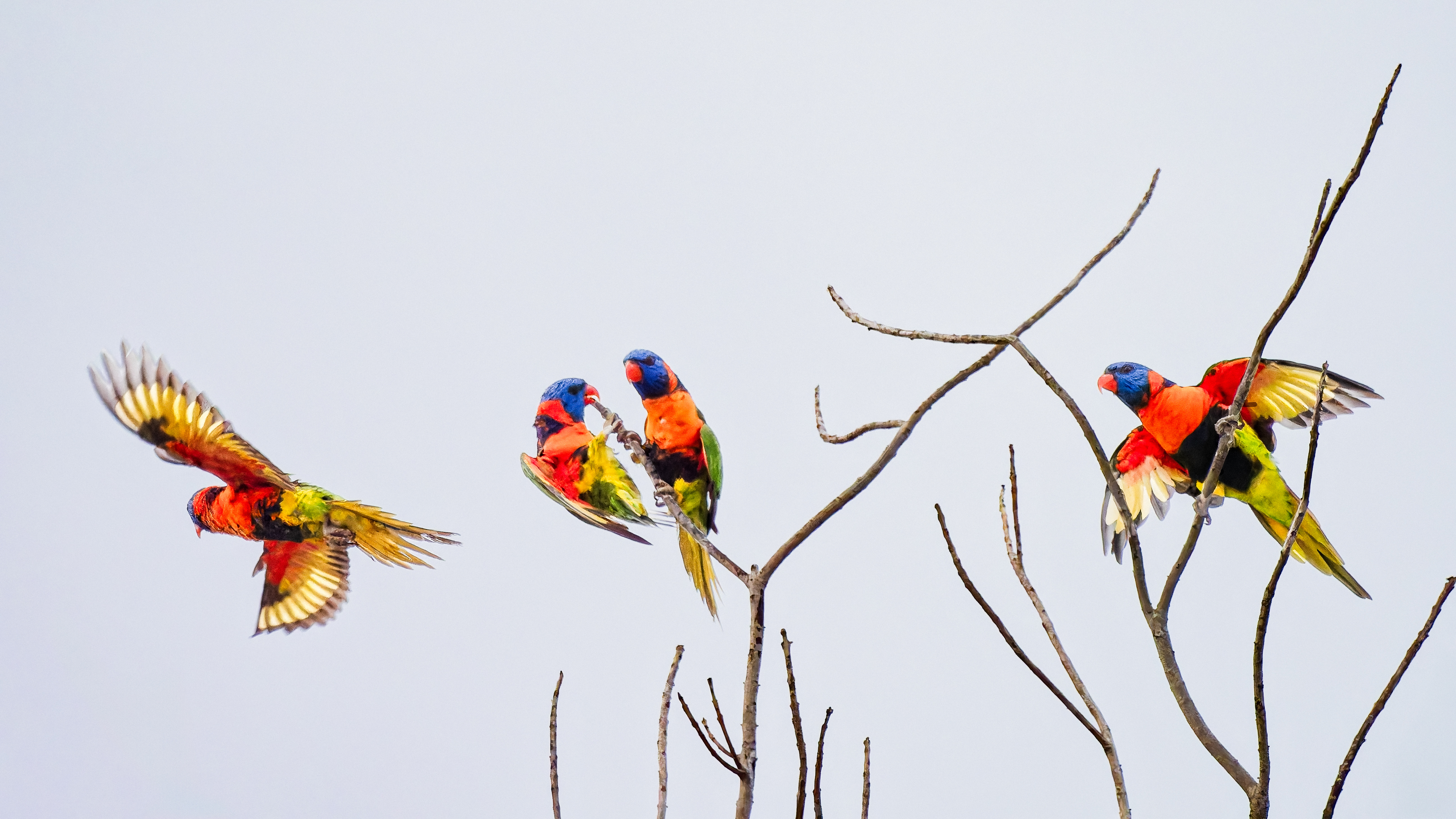
Red-collared Lorikeet, Trichoglossus rubritorquis. Discovery Parks – Broome, Western Australia.
I enjoyed our trip to Broome immensely, it was great to see a region we’d never seen before at a time of year most people avoid. From a bird photography point of view things didn’t turn out how I’d expected them to. I must say that this is probably my fault as I’d been wanting to go for a while and as a result of reading numerous articles and watching countless videos on birding in Broome my expectations were probably too high.
Crested Pigeon, Ocyphaps lophotes. Broome Golf Course, Western Australia.
Little Friarbird, Philemon citreogularis. Broome, Western Australia.
We saw plenty of birds including eight new to me species. Photographing them was another thing all together. The first thing that made this difficulty was the heat and the humidity – lenses would fog up and take ages to clear. There was a lot of heat haze which combined with long focal lengths meant quite a lot of photos were unsharp. We didn’t experience these problems in Darwin, but then again we visited there at the end of the dry season. One of the ways to overcome this was by getting close to the subject and don’t shoot them at ground level. This worked very well with small bush birds and I got some nice photos with plenty of detail. The real problems set in when shooting the shorebirds. Firstly the tidal range in the Kimberley is huge – Town Beach has 10m+ tides and it can be 1 Km or more between the high tide mark and the water. You can of course walk out on the mud, but eventually it gets too soft and you sink into it – I speak from personal experience here. So a lot of the time the birds were a speck on the horizon and the OM System 100-400mm mk ii wasn’t long enough. I did try slapping on the 1.4 x teleconverter, but that magnified the heat haze problem and detail disappeared.
Brown Honeyeater, Lichmera indistincta. Minyirr Park, Broome, Western Australia.
Brown Honeyeater, Lichmera indistincta. Minyirr Park, Broome, Western Australia.
Rainbow Bee-eater, Merops ornatus. Minyirr Park, Broome, Western Australia.
The best locations we visited were Kabbarli Lookout (Entrance Point and Port [Broome]), Minyirr Park and Town Beach. We didn’t go to the Broome Bird Observatory as the dirt road becomes almost impassable during the wet and the hire car companies don’t like you going down it. We’ll leave that one for a dry season visit. So yes I would love to go again.
Black Kite, Milvus migrans. Minyirr Park, Broome, Western Australia.
Common Sandpiper, Actitis hypoleucos. Kabbarli Lookout, Broome, Western Australia.
That would be Gantheaume Point which is 6Km from Broome’s town centre. To get the most out of a visit you need a sunny day and a very low tide. The sunny day means that the incredible red rocks are sharply contrasted with the blue sky and aquamarine sea. It is quite stunning. The very low tide means that dinosaur footprints from the Early Cretaceous can be seen. When we visited we had the sunny day, but, the tide was well and truly in.
Danger! Killer Rubber Ducks.
As I said previously we were visiting at the tail end of the wet season – think tropical storms that dump an incredible amount of water. So as we drove the final leg down to the car park along a dirt road we encountered some huge puddles. Like really big – so big that one of them had waves created by the off shore wind. At the car park we were met by a sign warning us of the dangers that were present. I could understand the one about unstable cliffs that could collapse, the one about deep holes that the unwary could fall into, but the one warning about the giant rubber ducks that pushed people off the cliffs was a bit of a mystery. Thankfully while we were there we did not see the rubber ducks and so felt quite safe.
The lighthouse at Gantheaume Point, Broome Western Australia.
Halfway up the lighthouse was an Eastern Osprey nest.
Just below the nest was an Eastern Osprey, Pandion cristatus subs leucocephalus) eating a fresh fish. Gantheaume Point, Broome Western Australia.
Eastern Osprey, Pandion cristatus subs leucocephalus) eating a fresh fish whilst perched on the Gantheaume Point lighthouse.
Walking from the car park you see the old lighthouse keeper’s house and the lighthouse itself. About halfway up the lighthouse we could see the massive pile of sticks that is an Eastern Osprey’s nest and below that was an Osprey chowing down on a big fish. Now the Eastern Osprey is quite a big bird of prey, but every couple of minutes it paused eating to scan the environment for threats. Birds such as Australian Ravens and Masked Lapwings will attack them and drive them off, but it was also probably keeping an eye open for other birds of prey that would try and steal the fish.
Everywhere we went there were thousands of dragonflies. Wandering Glider Dragonfly (Pantala flavescens). Broome South Wastewater Treatment Plant, Broome, Western Australia.
According to the Indigenous Yawuru people the wet season, Man-gala, draws to a close and the next season, Marrul, starts and one of the markers for that change are the appearance of dragonflies. Thousands upon thousands of them. They were everywhere we went. I’ve never seen so many it was absolutely incredible. Gantheaume Point was no exception, heaps of them everywhere. A lot of smaller birds of prey feed on the large insects and there were a couple of Australian Hobby, which are a variety of small falcon, doing precisely that. They put on an incredibly acrobatic display darting in and out of the rocks chasing down their prey. They didn’t even bother to land when they caught one preferring to eat it in flight. It was simply sublime watching them.
Australian Hobby, Falco longipennis, feeding on a dragonfly. Gantheaume Point, Broome Western Australia.
By now we were absolutely drenched in sweat. The temperature and the humidity had taken its toll so we headed back to the car looking forward to the relief provided by air conditioning.
The scenery was pretty impressive too. Helen exploring the rocks at Gantheaume Point, Broome Western Australia.
Ahhh! Broome in the wet season. Hot and wet it is. According to white Australians there are only two seasons in Broome – the “dry” from April to November and the “wet” from December to March. In the wet the temperature hovers around 35ºC with high humidity and sporadic rain. Considering that 75% of Broome’s 6m of rainfall occurs during the wet you can see that when it rains it certainly rains. Throw in the occasional tropical cyclone and the weather can get pretty extreme. So why on earth did we choose to visit Broome in the “wet”? One answer really. Birds. Thousands of birds fly down from northern Asia to Roebuck Bay to avoid the cold winters and we went to Broome to see them.
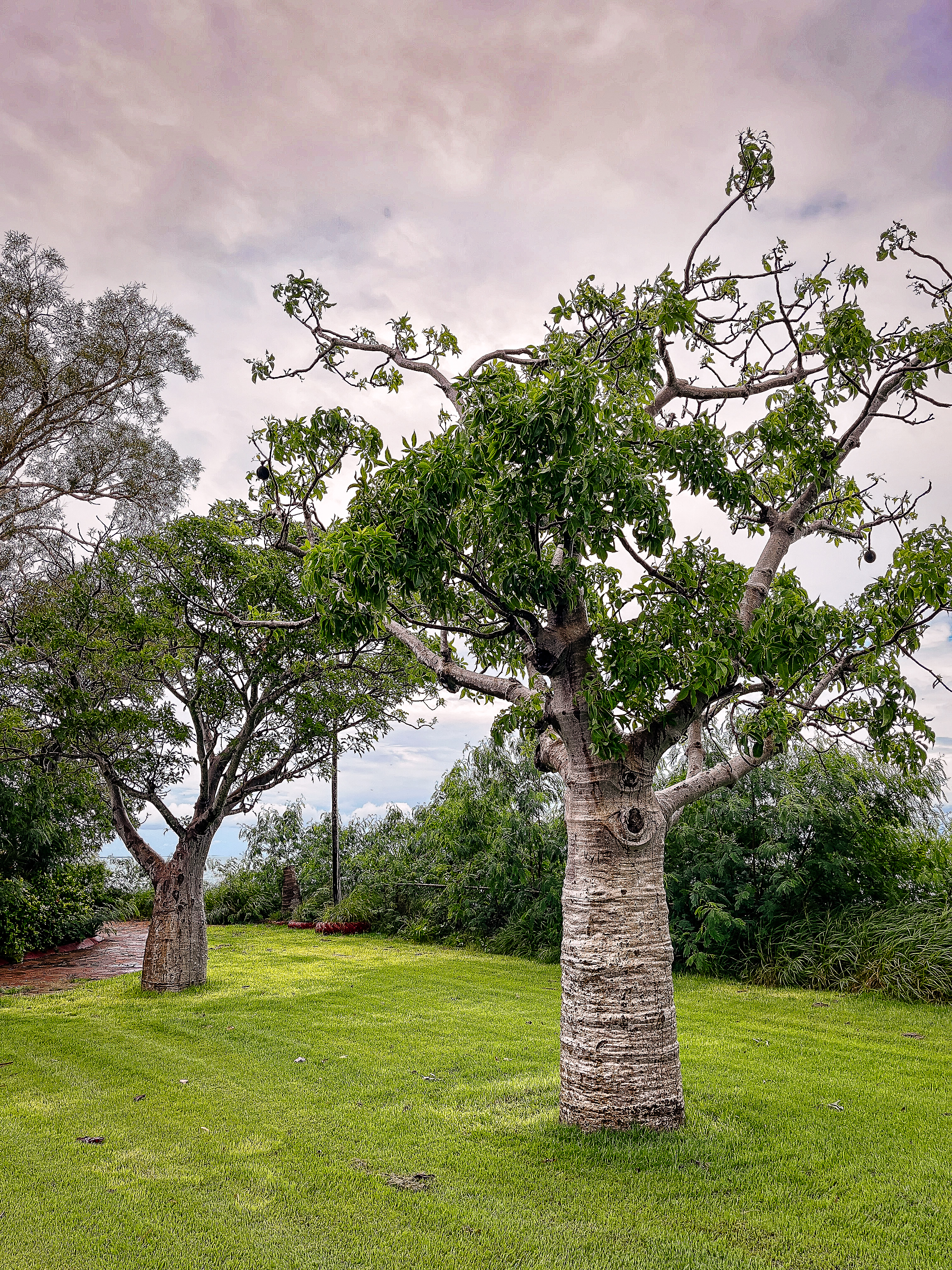
Boab trees at Discovery Parks – Broome,
Broome, for my non Aussie readers, is located in the Kimberley a vast area roughly three times the size of England yet it has a population of less than 40,000. The town is 2,046 km north of Perth, and when we said we were going all our Australian friends thought we would drive up. Yup 2000 Km is seen as just up the road. Like driving from London to Bognor Regis. We took the sensible option and flew. When we arrived in Broome we disembarked the aircraft and found that the “international” airport was a strip of tarmac and a glorified tin shed in a paddock. As we climbed down the steps onto the tarmac it was like walking into a sauna. By the time we’d walked the 30m to the building we were wringing wet with sweat. My dear old Mum used to say “Horses sweat, men perspire, and ladies glow”. Well in Broome everybody just sweats – buckets and buckets.
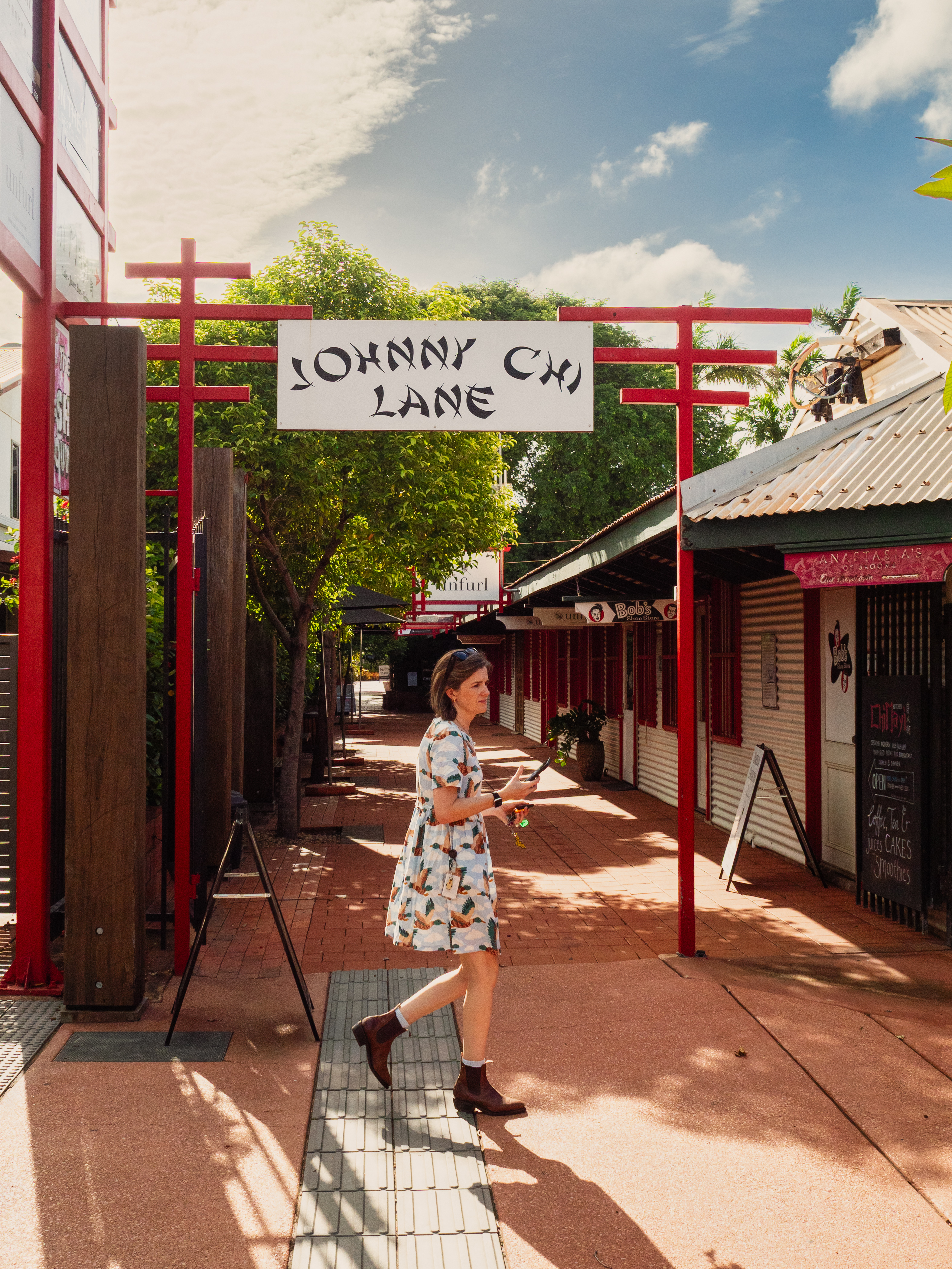
Originally Johnny Chi’s long soup kitchen back in Broome’s pearling days now it is a shopping arcade in Broome’s historic Chinatown.
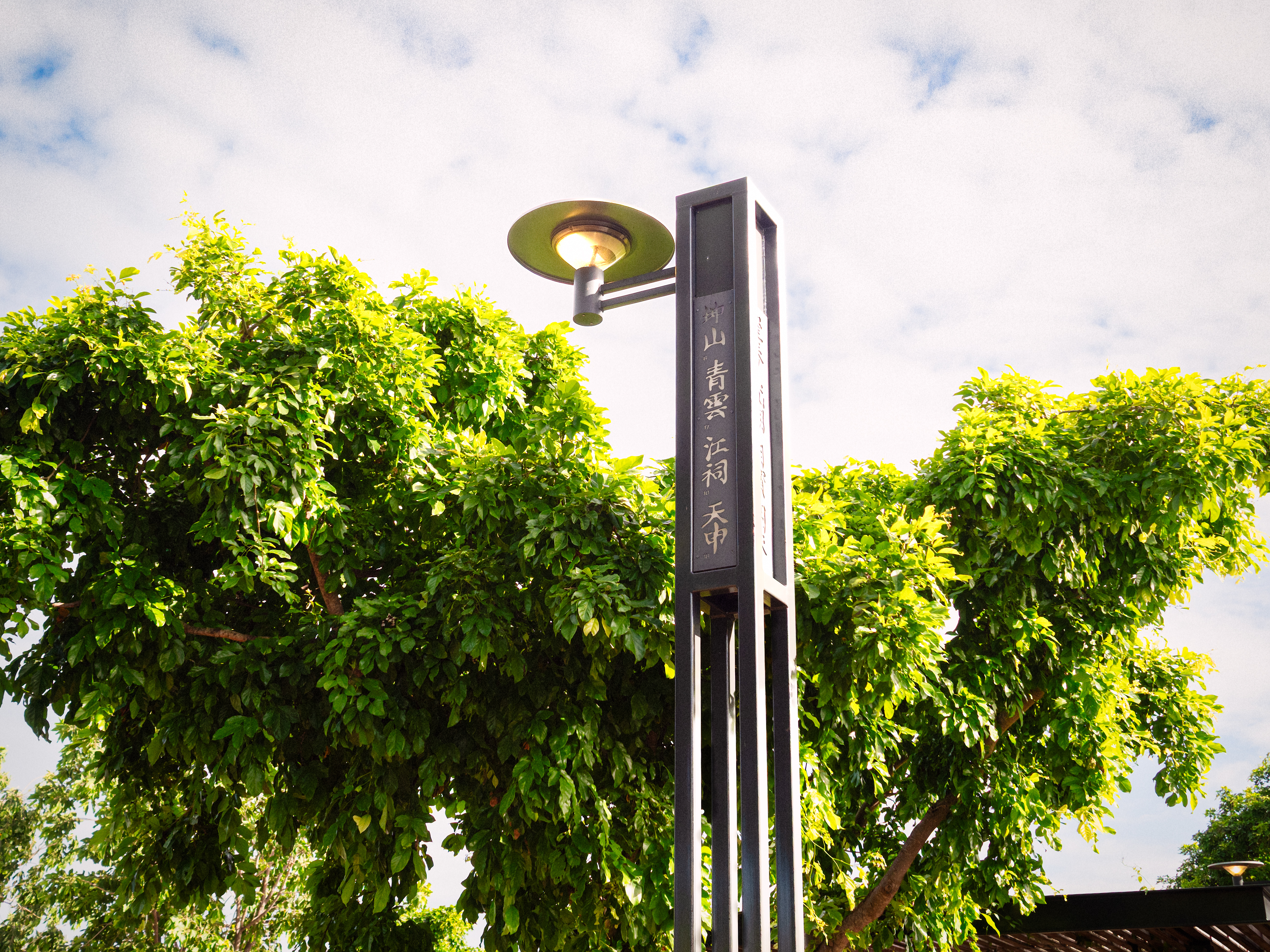
A street light in Broome’s Chinatown. Broome, Western Australia.
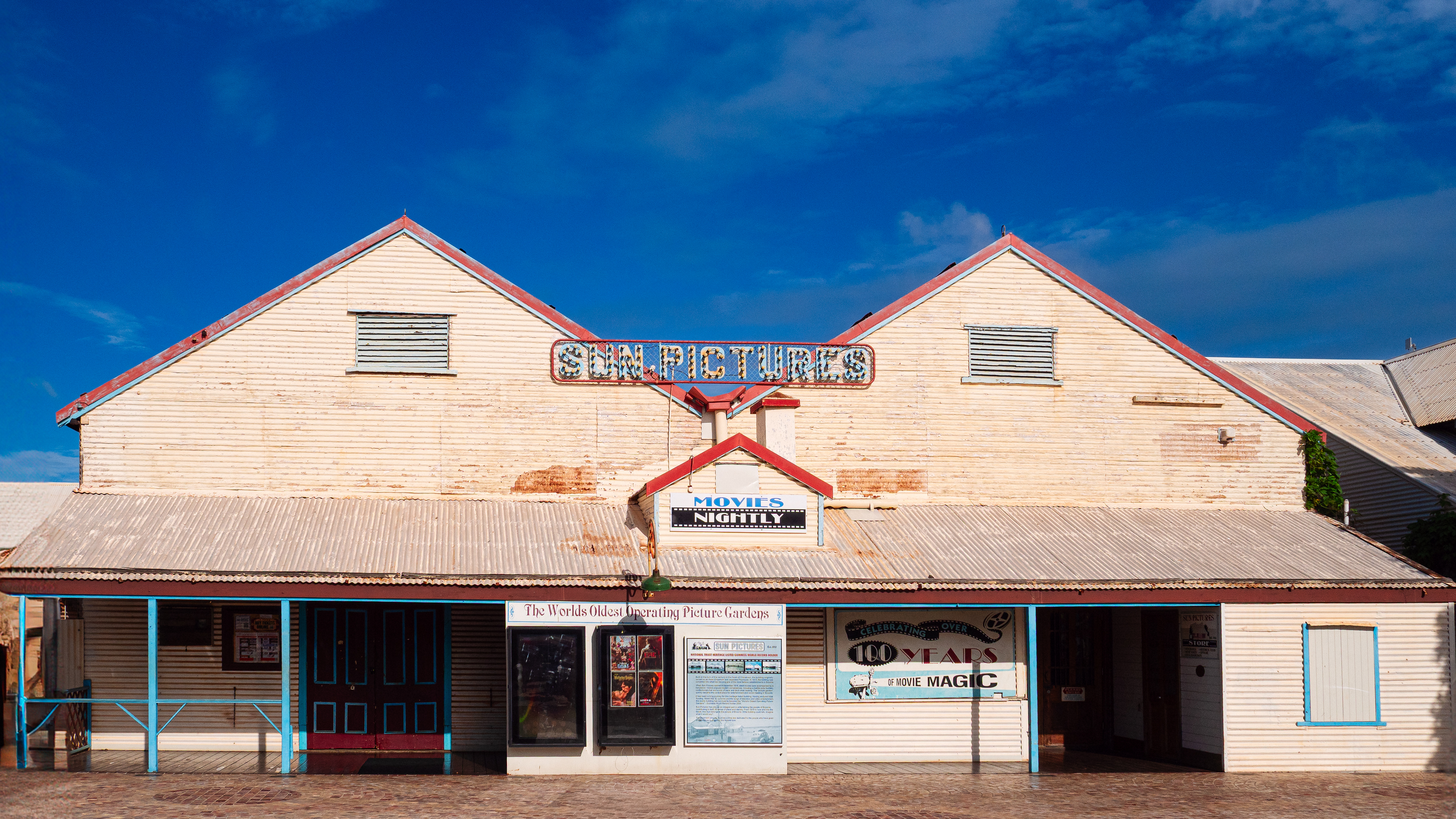
Sun Pictures located in Broome’s historic Chinatown is the world’s oldest picture garden still in operation.
Broome has an interesting history which has led to it being the multicultural place it is today. The pearling industry put it on the map and at one time there were over 300 luggers which harvested enough oysters to supply 80% of the world’s demand for mother of pearl buttons. The industry relied initially on enslaved Aboriginal people, but a change in the law prohibiting this and the fact that the oysters were less common in shallow waters meant that indentured labourers from Japan, China, Malaysia, Indonesia, and the Philippines were brought in. They did the high risk job of diving because it was felt they were more suitable to it than white people. The reality was that whites wouldn’t work for such low wages and coloureds were considered more expendable. So at this stage Broome was very much a segregated town and this continued like this well into the 1970s. It was Alistair McAlpine who transformed Broome into the tourist destination it is now in the 1980’s with the establishment and international promotion of the Cable Beach Resort Club and the Pearl Coast Zoological Gardens among others. As more and more visitors flooded into the town attitudes began to change and tourist industries were established trading on the town’s multicultural heritage.
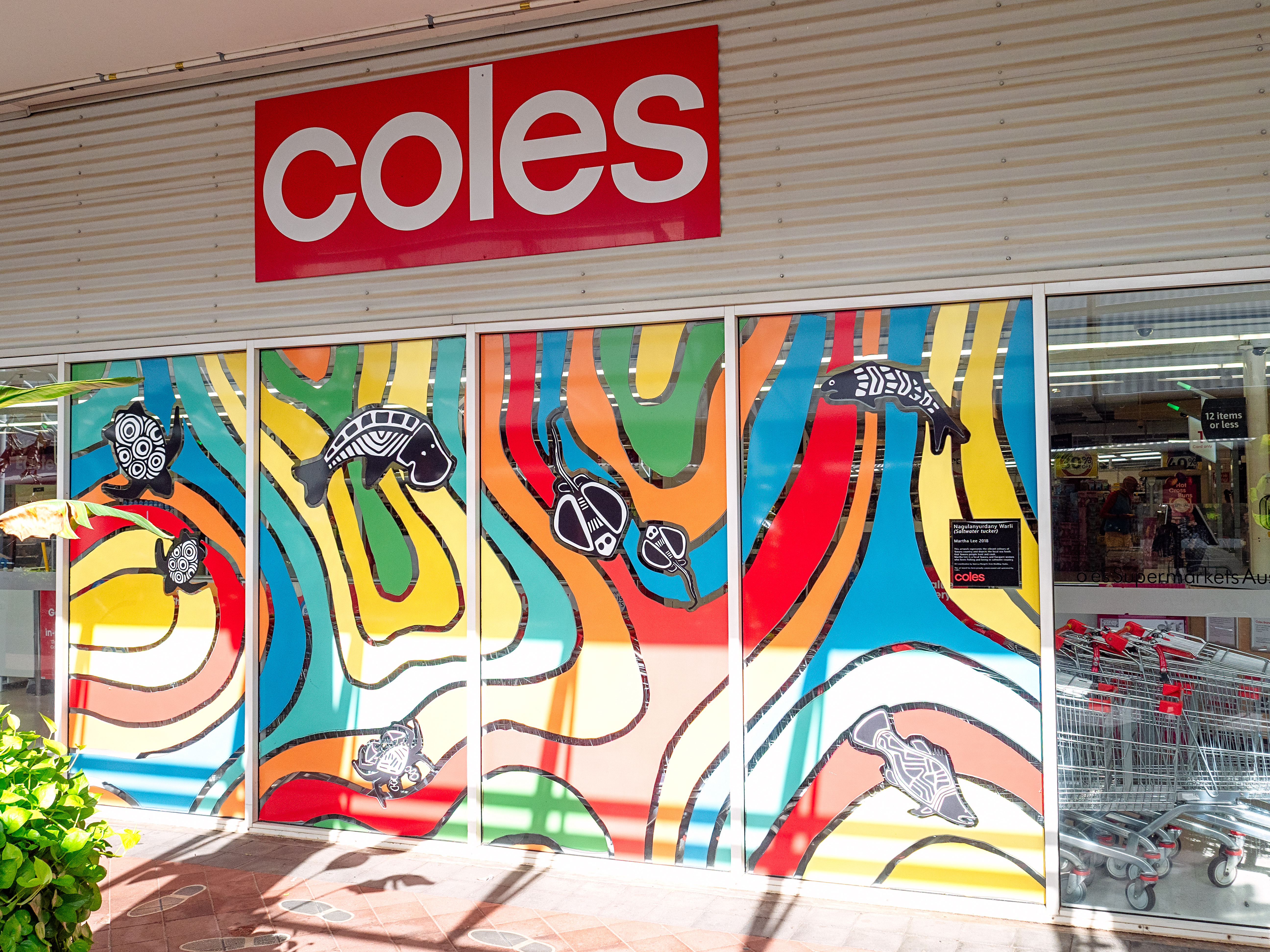
Coles store front in Broome is colourfully aboriginal. Broome Western Australia.
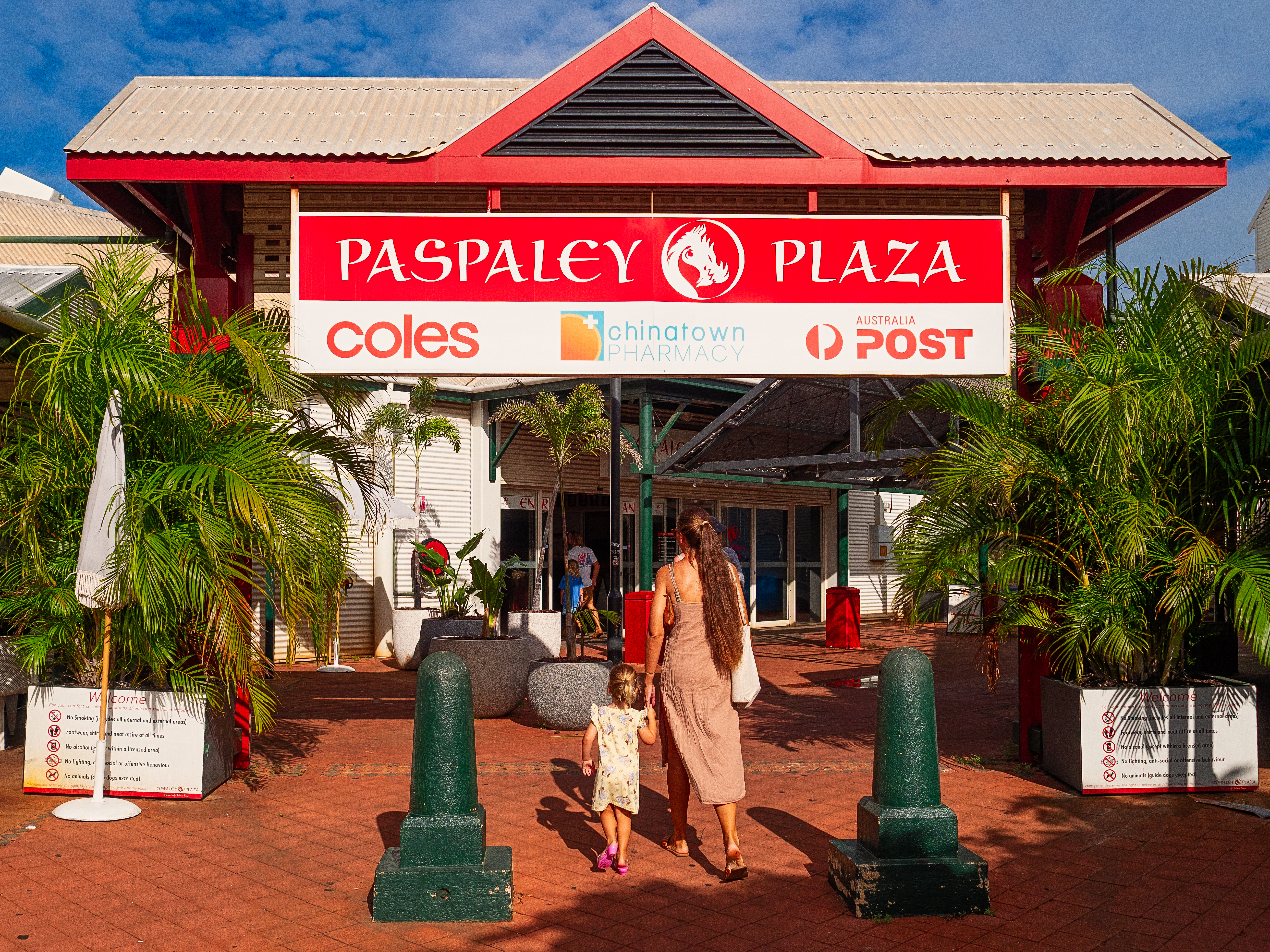
Paspaley Plaza is a shopping mall on the edge of Broome’s Chinatown.
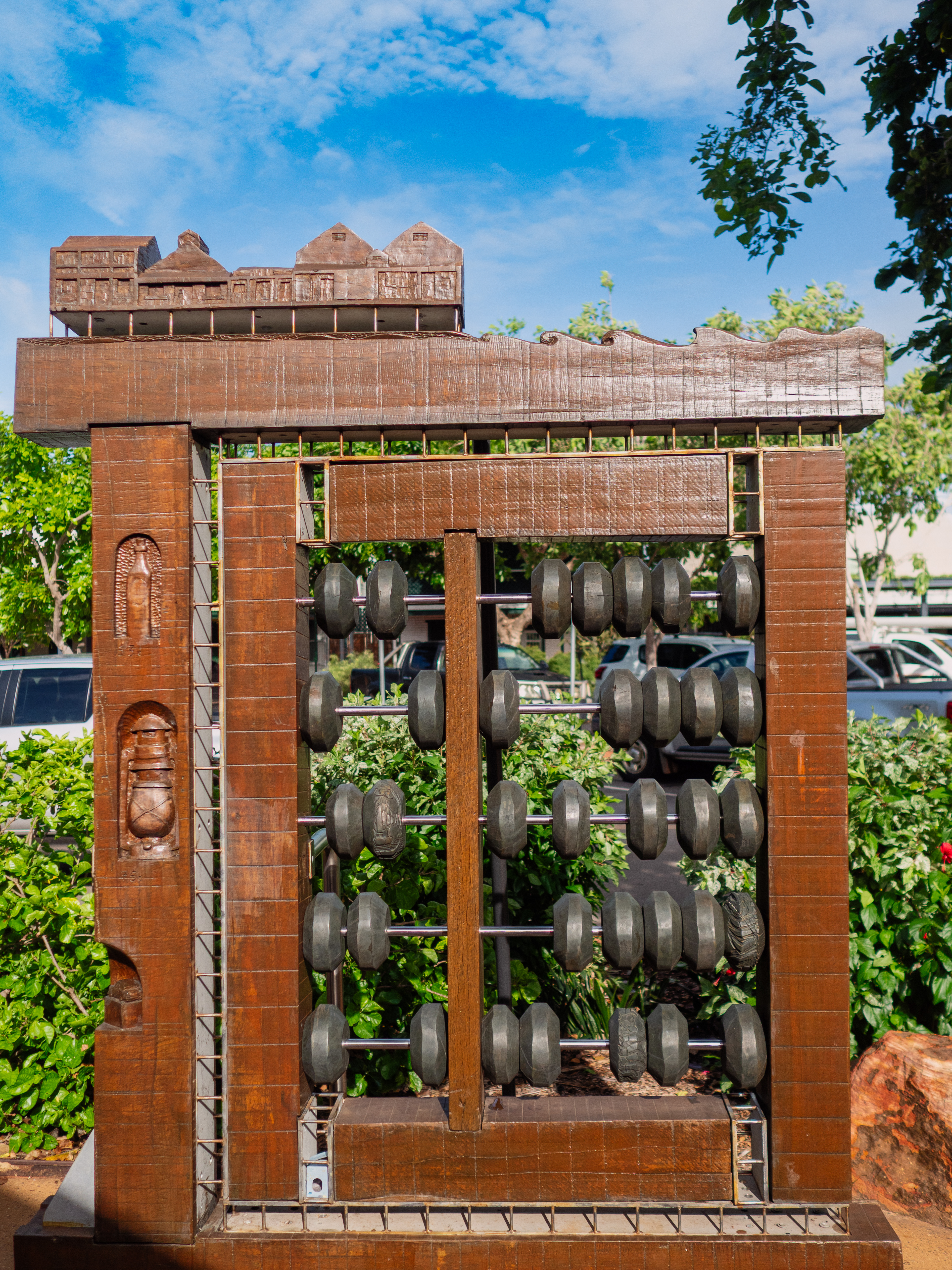
A sculpture of a traditional Chinese Suanpan or abacus in Broome’s Chinatown.
Our early flight from Perth meant that we had quite a bit of time to look around and so we visited Chinatown which was where the Asian crews of the pearl luggers lived and took their leisure – billiard saloons, opium dens and brothels. It definitely was Australia’s own wild west. It was interesting to see street signs still written using Hanzi. Even shops like Coles had entered into the multicultural vibe by using Aboriginal motifs on the windows and the staff uniform. We had a picnic lunch at Town Beach and then checked into our accommodation. An hour before sunset I walked around where we were staying and saw loads of different birds. Back at our accommodation and looking out over Roebuck Bay there was a magnificent setting sun and it was a fitting end to what had been a long day.
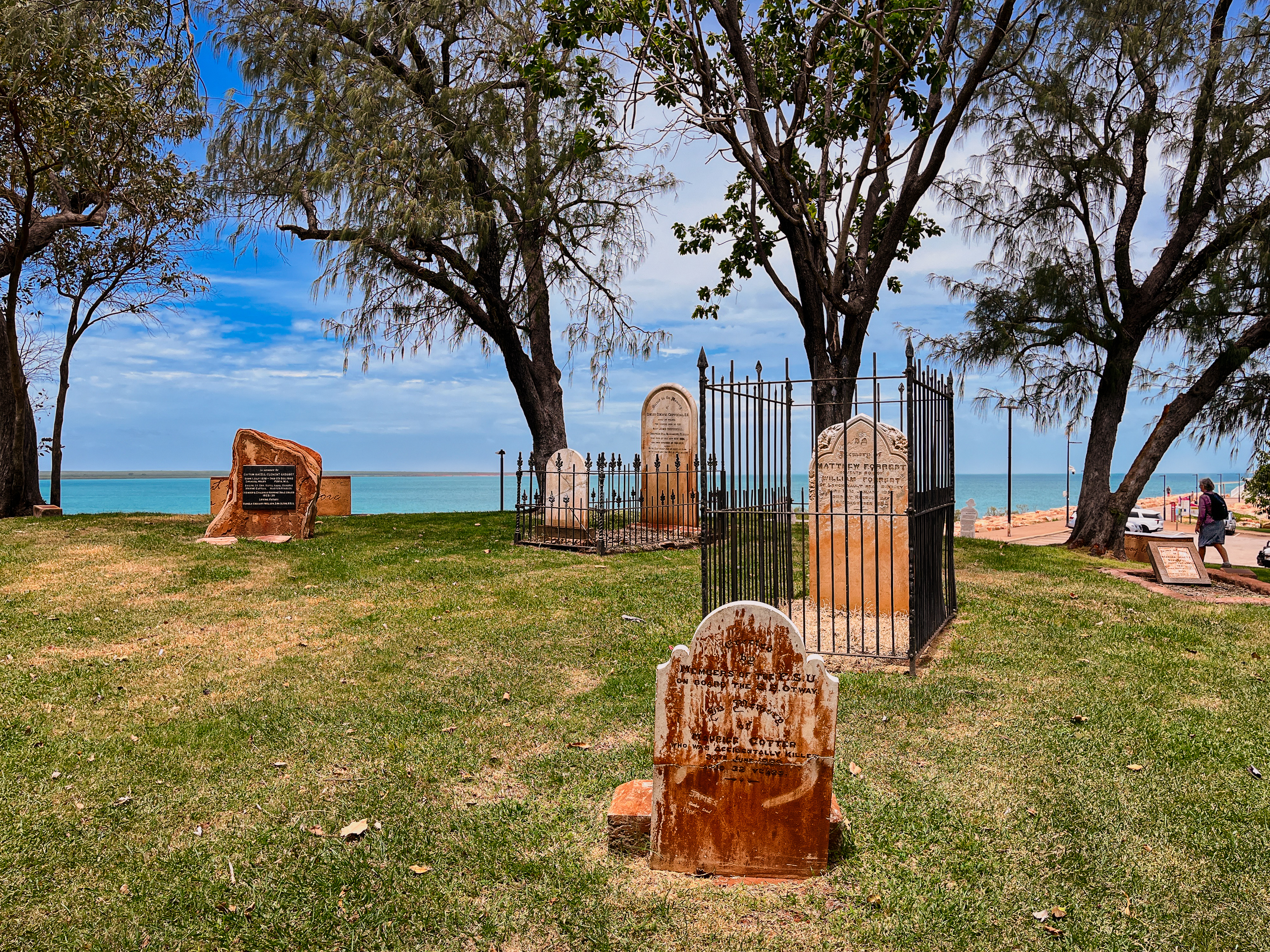
Broome Pioneer Cemetery at Town Beach overlooks Roebuck Bay.
Red-collared Lorikeet, Trichoglossus rubritorquis. Discovery Parks – Broome, Western Australia.
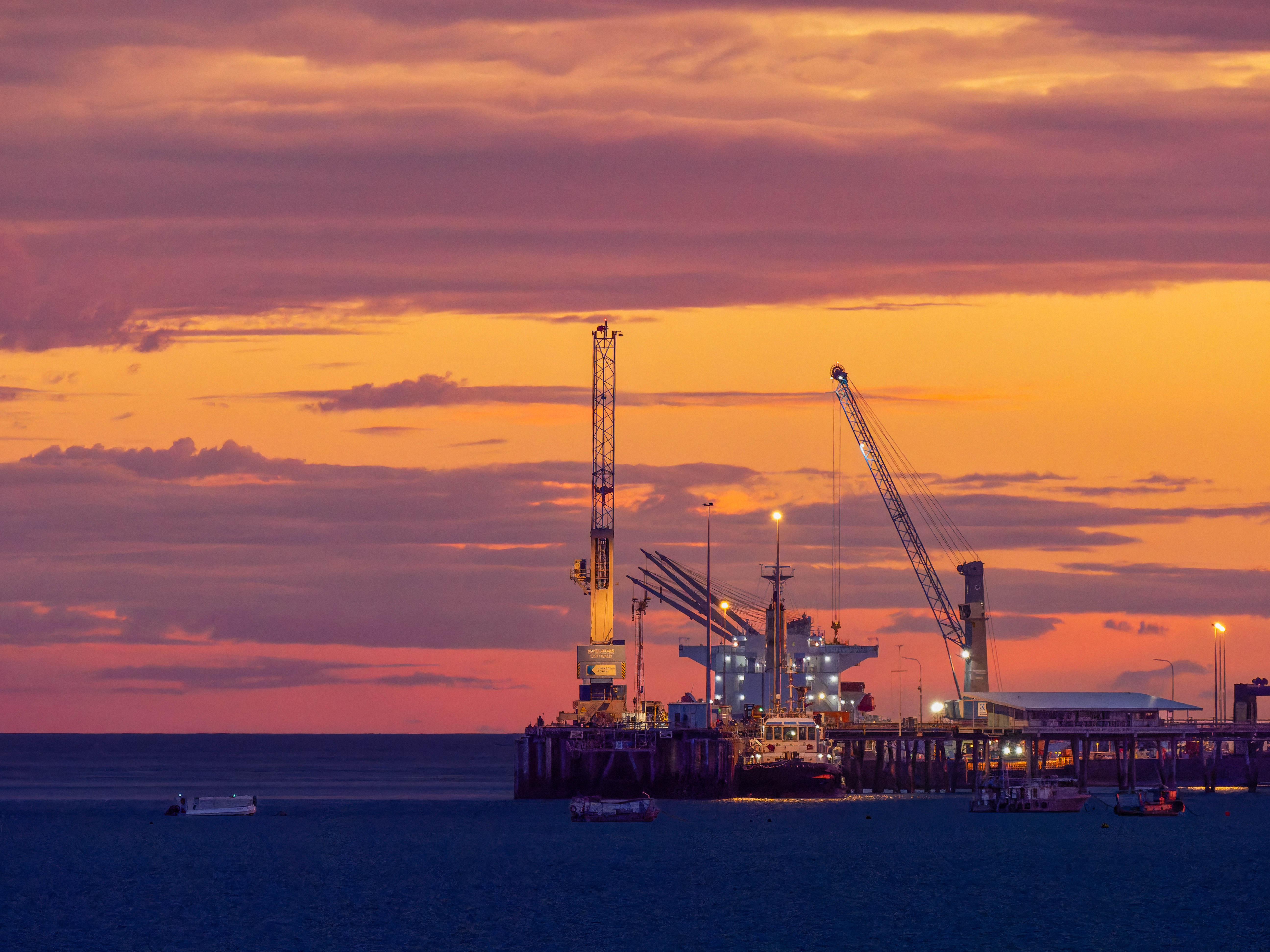
Looking out over Roebuck Bay to the Broome’s Port at sunset from Discovery Park- Broome Broome, Western Australia.
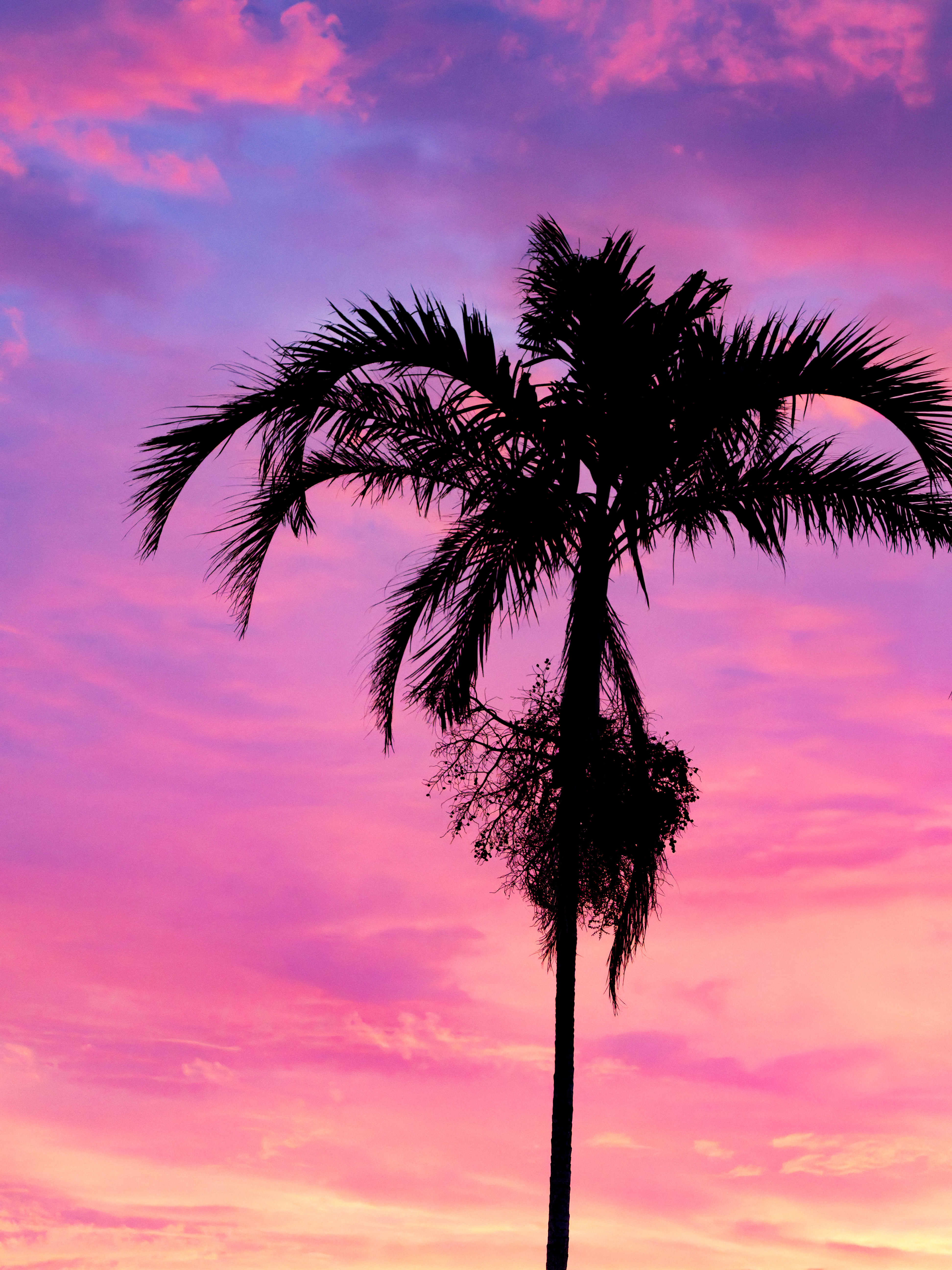
Sunset over Roebuck Bay viewed from Discovery Park- Broome. Broome Western Australia.
The title for this week’s post is a quote from Robin Williams’ Good Morning Vietnam.



You must be logged in to post a comment.