Based on the evidence of what I post on this blog I go out to take nature and wildlife photos, but actually I go to be out in nature. The photos below are what I love being out in.
The warm light of sunset reflected by the trees in the Oswald Sargent Reserve.
Driving back home from the Oswald Regent Reserve at sunset.
The Autumn burn off in the fields of the Western Australian Wheatbelt has left its distinctive stripes on the landscape.
Thought I’d put up a couple more pictures of the stripes fields we’ve got round our way. They won’t be around for much longer as we have had the first real rains and there will soon be a green flush that will change the colour of the landscape.
I must say it’s been quite nice to do some landscape photography again. I decided to go all retro and pull out the Cokin filters and a couple of older cameras. The top photo was taken with a Canon 6d and the Canon EF 70-200mm f2.8 IS L Mk I which completed the old school experience. The photo below was shot on the Olympus EM1 Mk i. They may not be the latest and greatest cameras and lenses but they still deliver
I like the changes in the seasons and particularly look forward to the arrival of autumn. In fact spring and autumn are what living here are all about – fantastic weather with near perfect temperatures.
The Autumn burn off in the fields of the Western Australian Wheatbelt has left its distinctive stripes on the landscape.
The farmers have launched into a frenzy of activity – the fields are being burnt in preparation for the next crop. They are hoping that the war in the Ukraine and the sanctions against Russia will bring about record wheat prices. That optimism is being tempered by rising costs of fuel, fertiliser and pesticides. As usual for this time of year the valley fills with palls of smoke leading to some spectacular sunsets.
In the garden the bob tailed lizards are nowhere to be seen. While they don’t exactly hibernate they go into torpid state where they hide up and live off the fat reserves in their tails. The white browed babblers have upped sticks and moved to another garden and the only real activity is coming from the white-cheeked honeyeaters. They had a bit of a population explosion over summer so there are lots of adolescents chasing one another around the garden. This has led to some spectacular demonstrations of flying with some very close calls with windows and near misses while dodging around the rear veranda. Just as dawn breaks lots of them sit on the fence outside my bedroom window and make a tuneless racket. What they lack in musical ability they make up for with enthusiasm.
White-cheeked Honeyeater (Phylidonyris niger).
Yes I like autumn it marks the start of more activity out in nature.
Some places get all the attention and others are seldom mentioned. In the Sterling Range National Park everyone concentrates on climbing Bluff Knoll, but there is as I’ve said on previous occasions a lot more than Bluff Knoll. Believe it or not Bluff Knoll is one of the easier climbs in the park. Another one is Mount Trio. Climbing up Bluff Knoll is not a wilderness experience as there are far too many people. With Mount Trio if you see more than two other people its a very busy day.
The sun sets behind Mount Trio in the Stirling Ranges of Western Australia.
Helen at the start of the Mount Trio walking trail in Sterling Range National Park.
Mt Trio comprises three peaks and was once known by its Aboriginal name Warrungup, meaning “three become”. It is 3.7Km to the top and back with an ascent of 418m. The first third of the walk is very steep with irregularly spaced steps. Wildflowers, including the endemic mountain bells (Darwinia leiostyla), are a feature of this walk. Montane thicket on the upper levels of the peaks puts on a colourful display of wildflowers in spring and early summer although we didn’t see this as the area was still recovering from a devastating bushfire and was like walking through a landscape of charcoal sticks.
The first third of the walk trail is up a steep section with irregularly spaced steps which makes the going quite hard.
The Common Mountain Bell (Darwinia lejostyla) grows in the eastern and central Stirling Range, and can be readily seen on Bluff Knoll and Mount Trio.
Silky Blue Orchid, Cyanicula sericea. Mount Trio, Western Australia.
The going gets easier once you hit the saddle between the east peak and the north peak. The saddle between the cols is covered in Drumsticks (Kingia australis). These grass trees were often called Black Gin trees, a derogatory racist term now not used. The Nyoongar name for them is Pulonok. The track then follows a more gentle slope to the highest (northern) point at 856 metres. At the summit there is a small cairn of stones which people add to on getting there. From the summit on a clear day you get views of Mt Toolbrunup the second highest peak in the range at 1052m. Then all it is a matter of retracing your footsteps back to the start.
The saddle between the cols is covered in Drumsticks (Kingia australis). The Nyoongar name is Pulonok.
A closer look at some Drumsticks (Kingia australis).
Helen placing another stone on the cairn at the summit of Mount Trio.
Looking out at Mt Toolbrunup from the summit of Mount Trio.
Climbing up was pretty taxing on the legs muscles – all those steps were like a sadistic form of step aerobics. Those steps were even more murderous on the way down. It was the muscles that were complaining this time it was my knee joints. At about 500m from the end my knees announced that they were going to divorce me on the basis of cruelty. Thankfully from this point we could clearly see the car in the car park below us and it spurred us on to one last final effort.
Christmas Rock Walk Trail that is. Christmas Rock is in Wongan Hills and I’ve written about going there before. This time I’m writing about the Christmas Rock walk trail which is located in a 2000 hectare reserve. It is an easy 2.7Km walk along relatively flat well marked paths not far from the centre of the town site. Along the trail are interpretive panels which give insights into the reserve. What makes it worthwhile is that at wildflower time the walk passes through country that is a riot of colourful flowers. It is a gobsmackingly beautiful sight this year as the weather conditions have been ideal. The bird life in the reserve is also pretty impressive and their song provides a fitting score for a very pleasant walk.
Cristmas Rock Walk trail is an enjoyable easy 2.7Km walk trail in the Wheatbelt Town of Wongan Hills. Sony A7r with Tamron 35mm f2.8 lens. Exposure: 1/160 sec, f8 at ISO 100.
Yellow everlastings at Christmas Rock, Wongan Hills. Sony A7r with Tamron 35mm f2.8 lens. Exposure: 1/125 sec, f8 at ISO 100.
Pink Everlastings, Christmas Rock, Western Australia. Sony A7r with a Tamron 20mm f2.8 lens. Exposure: 1/160 sec, f8 at ISO 100.
The rock gets its name from the Western Australian Christmas Trees (Nuytsia floribunda) which used to be found there and flowered at Christmas time. On the top of the rock is an elaborate series of channels that were designed to harvest rain water run off for the “Railway Water Supply” which was built in 1916. But the rock is also home to a wide variety of plants such as lichens and mosses. On a warm sunny day if you’re quick enough you might see the lizards who live in the various cracks and crevices.
The walk takes you up on the top of the rock which was part of the “Railway Water Supply” built in 1916. Rainwater runoff was harvested through a series of channels and creeks. Sony A7r with Tamron 20mm f2.8 lens. Exposure: 1/800 sec, f8 at ISO 100.
A suprising number of plants grow on Christmas Rock. Sony A7r with Tamron 20mm f2.8 lens. Exposure: 1/320 sec, f8 at ISO 100.
Rainwater captured on Christmas Rock in natural forming crack, depressions and gullies. Sony A7r with Tamron 20mm f2.8 lens. Exposure: 1/400 sec, f8 at ISO 100.
But for me it is the display of orchids which brings me to Wongan Hills. There are so many different types in large quantities. It made me feel like a kid on Christmas Day. The funny thing is that it could have been very, very different. Prospectors actually dug pits looking for asbestos. Luckily they didn’t find it in large enough quantities to make it a viable commercial operation and went looking elsewhere. So in September give Wongan Hills a visit. This isn’t the only walk as there’s Mount O’Brien Lookout, Gathecole Nature Reserve, and the Mt Matilda walk trail. Then there are the lakes which host lots of water birds. So instead of a day trip why not make a long weekend of it.
Pendant Spider Orchid (Caladenia pendens, subsp pendens). Christmas Rock, Western Australia. Sony A7r2 with a Canon EF 100mm f2.8 IS L macro lens. Exposure: 1/40 sec, f5.6 at ISO 125.
Lemon Scented Sun Orchid aka the vanilla orchid (Thelymitra antennifera). Christmas Rock, Western Australia. Sony A7r2 with a Canon EF 100mm f2.8 IS L macro lens. Exposure: 1/200 sec, f5.6 at ISO 125.
Lemon Scented Sun Orchid aka the vanilla orchid (Thelymitra antennifera). Christmas Rock, Western Australia. Sony A7r with Tamron 20mm f2.8 lens. Exposure: 1/250 sec, f8 at ISO 100.
A White Spider Orchid (Caladenia longicauda subsp longicauda) among the everlastings on Christmas Rock in Western Australia. Sony A7r2 with a Canon EF 100mm f2.8 IS L macro lens. Exposure: 1/125 sec, f5.6 at ISO 125.
Chameleon Spider Orchid (Caladenia dimidia). Christmas Rock, Western Australia. Sony A7r2 with a Canon EF 100mm f2.8 IS L macro lens. Exposure: 1/800 sec, f5.6 at ISO 200.
Sugar Candy Orchid, Caladenia hirta subsp. hirta. Christmas Rock, Western Australia. Sony A7r2 with a Canon EF 100mm f2.8 IS L macro lens. Exposure: 1/250 sec, f5.6 at ISO 125.
Pink Candy Orchid, Caladenia hirta subsp. rosea. Christmas Rock, Western Australia. Sony A7r2 with a Canon 100mm f2.8 IS L macro lens. Exposure: 1/80 sec, f5.6 at ISO 125.
Cowslip Orchid, Caladenia flava subs. flava. Christmas Rock, Western Australia. Sony A7r with a Tamron 20mm f2.8 lens. Exposure: 1/160 sec, f8 at ISO 100.
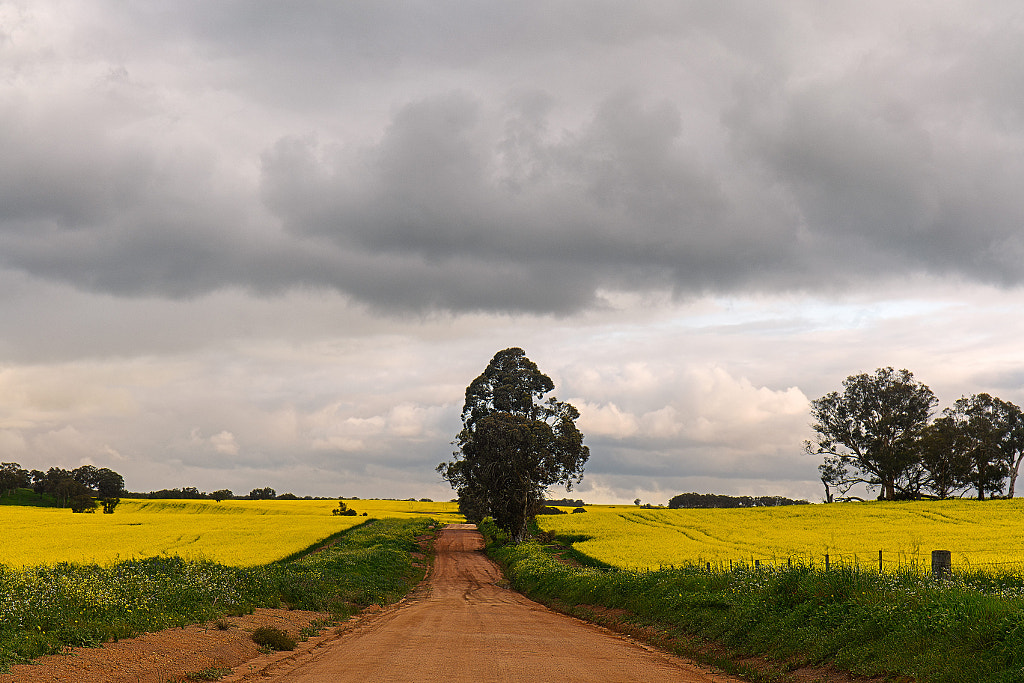
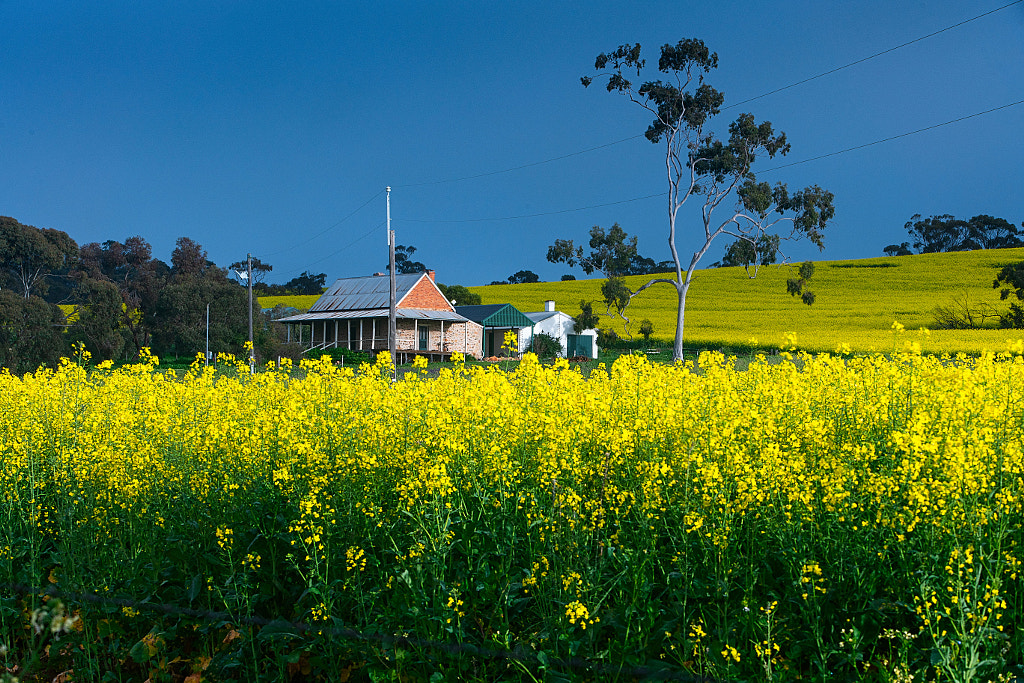
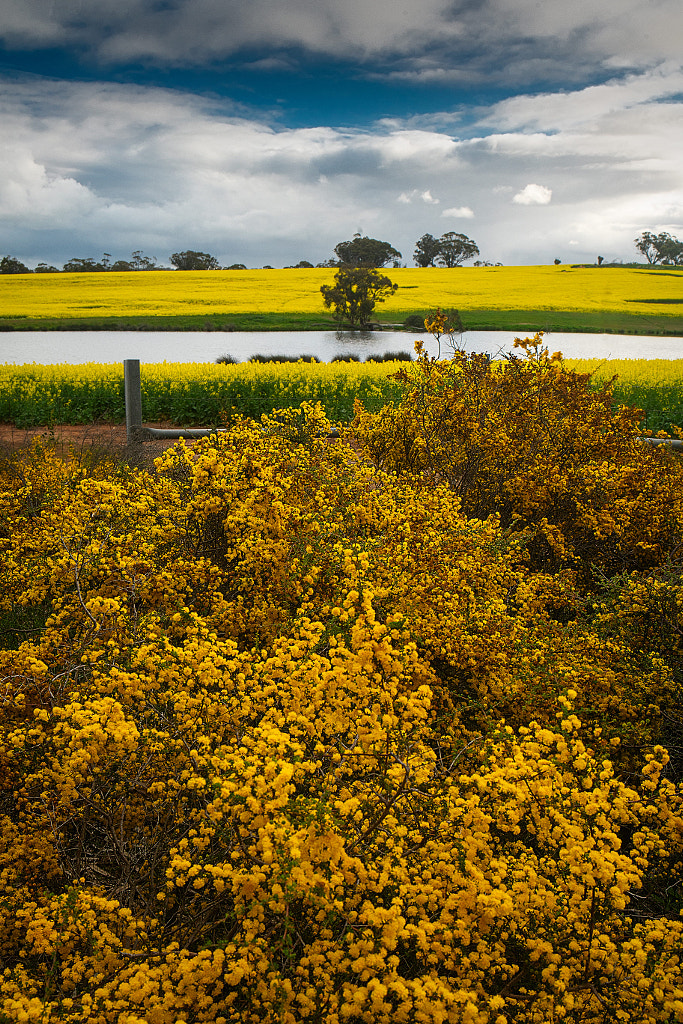
No this isn’t a new trilogy of mummy porn it’s because everything round here has turned a shade of yellow. Mostly that acid yellow that is canola, but the wattles give a nice counter point.
Canola fields flanking Helena Road. York, Western Australia. Sony A7 r ii, Metaboned V smart adapter, Canon EF 24-70mm f4 L lens. Exposure: 1/20 sec, f11, at ISO 100.
A farmhouse surrounded by canola in York, Western Australia. Sony A7 r ii, Metabones V Smart Adapter, Canon EF 70-200mm f2.8 IS L lens. Exposure: 1/60 sec, f16 at ISO 320.
Yellow wattle and yellow canola fields. York, Western Australia. Sony A7 r ii, Metabones V Smart Adapter, Canon EF 24-70mm f4 IS L lens. Exposure: 1/30 sec, f16, ISO 500
The Nancy Peak Circuit takes you through dense Karri forest and up on to the granite dome of the Porongurups.
Last week I wrote about walking uptown Castle Rock and the Granite Skywalk in Porongurup National Park, this post is about the Nancy Peak Circuit also in the Porongurups.
The Porongurup National Park is 359km (or 4 hours) south of Perth near Mt Barker. This 5.5 Km walk starts at the Tree-in-the-Rock car parking area which can be accessed via Bolganup Road which is a turn off from the main Porongurup Road. Until the opening of the Granite Skywalk this used to be the main entrance to the park and where the visitors came. When we went the other week the car park was deserted and we only saw one other walker on the trail. At the information area take the path for the Nancy Peak Circuit and walk on past the Tree In The Rock through the Karri Forest.
The walk takes you past the Tree in The Rock. Impressive that a tree so big could grow out of a crack in the rock.
Karri trees can easily grow up to 60m in height, some have been known to reach 90m.
Some of the Karri trees along the trail have been damaged by bush fires. This one has had its trunk hollowed out and yet amazingly it continues to grow.
The forest was almost like a temperate rainforest – moist with a thick understory that supports mosses ferns and a huge number of fungi. It is not something you typically associate with Western Australia. In fact it felt more like Tasmania once it started raining! After about an hour you emerge from the forest onto granite ridge which connects to Nancy Peak and Morgans Peak.Once you climb up to the peaks they afford fantastic views to the Stirling Ranges in the north and Southern Ocean to the south. Of course this depends upon the weather, and as luck would have when we came out of the forest we were greeted by white out conditions caused by low lying cloud and could only see about 5m in front of us. As we slowly made our way up to Nancy Peak the clouds did part and grant us glimpses of the views.
Russula persanguinea in Porongurup National Park, Western Australia.
Pausing for a breather in whiteout conditions on the way up to Nancy Peak.
Looking back from Nancy Peak towards Castle Rock in the distance during a rare break in the cloud.
Carrying along the ridge from Nancy Peak across the granite outcrops, then descend into a steep valley between Nancy Peak and Devils Slide. Eventually you’ll hit a fire road that takes you back through the karri forest and on to the car park. This will take about 4 hours depending on the weather. It rained pretty hard on and off when we did the walk and this made sections of the granite incredibly slippery – it was like walking on ice – and this slowed us down a lot. The highlight of the walk was watching two wedge tailed eagles ride the thermals below us as we stood on the summit.
Granite boulders on top of Nancy’s Peak.
Helen enjoying the view from Nancy Peak back in 2004.
Sometimes you come across a place so stunningly beautiful words cannot describe it adequately. Two Peoples Bay is one of those places. I’m not going to write anymore.
Little Beach at Two Peples Bay in Western Australia.
Two Peoples Bay in Western Australia
Australian Pelican, Pelecanus conspicillatus.
Scarlet Banksia, Banksia coccinea. Two Peoples Bay, Western Australia.
York and its surroundings have have taken on a definite yellow tinge of late. This is mainly due to the canola crops in the fields but soursob and yellow daisies are also to blame. It’s not a warm and inviting yellow but rather a green tinged acidic looking yellow. Nevertheless it sends the tourists wild and as you drive round you can see countless people standing in canola fields having their picture taken or taking a selfie even though many of the fields have signs up asking people not to. I don’t know when this became a trend – I can’t remember people doing this when I grew up in Kent and Sussex. Mind you back then it wasn’t canola it was oil seed rape. I think it’s probably got something to do with mobile phones and Instagram, but as somebody who has only just started an Instagram account I can’t be too certain of that so don’t quote me.
Oh did I mention I’ve now joined the 21st Century and got an Instagram account? I’m not really au fait with it yet. That’s probably because I don’t really like messing about with images on my phone – I’d rather do it my computer but Instagram won’t let you upload from a computer. If anyone knows of a way to load photos to instagram from a desktop please let me know.





You must be logged in to post a comment.