F256 And Be There

“F8 and be there” is the old maxim of press photographers. It means basically turn up and get a picture. An aperture of f8 would be in the sweet spot of the lenses performance and would guarantee a sharp contrasty image if you found the focus. I’ve been thinking quite a bit about focusing and optimum sharpness of late.


A portrait of my BSO (Beloved Significant Other) not taken on the Sony A7 iv.


What is acceptable sharpness? What is an acceptable in focus hit rate with an autofocus camera? Why do some manufacturers have a reputation for excellent AF performance (Canon’s dual pixel technology) and some seem to be the bench mark for woeful autofocus (Panasonic’s DFD contrast based system)? I grew up with manual focus cameras and with them any failings were down to the operator. I remember getting my first AF camera – a Pentax SFX. The AF was slow really slow, glaciers move faster, and the noise of the motor made people stop and stare. I got rid of it quick smart and went back to using my manual focus Olympus SLRs up until 2004. It was the development of autofocus cameras in the 1980’s that saw photography as a hobby become more mainstream as out of focus photos were one of the things that put people off. 

This thinking about autofocus came about because  I’ve been reading and watching reviews about the Sony A7 iv *. There seems to be a vocal few criticising its auto focus performance in a very specific usage scenario. The users are using eye detect auto focus on a moving person with fast lenses such as the Sony 135mm f1.8 wide open at a distance of 2m or more. The complaint being that the camera only hits focus on the iris around 70% of the time and the rest of the time front focuses on the eye lashes. Let’s unpack this. The camera is ONLY  achieving a 70% hit rate. Hells bells and buckets of blood! My Canon 5d and 6d couldn’t do that. When I use manual focus I couldn’t do that. I had enough trouble accurately focusing quickly with my Olympus OM Zuiko 135mm f2.8 wide open. Mind you those old 135mm f2.8 lenses were often a bit soft wide open. It is staggering to me that firstly you’ve got a 135mm f1.8 lens that is tack sharp wide open and then you can combine it with a camera that is able to focus on the iris of a moving person at 2m with a 70 % success rate. Let’s look at this problem from another direction. Now according to the DOF calculator on Cambridge in Colour the DOF with that combination is 2cm. That means 1cm in front of the eye and 1 cm behind. That would mean that the eye would be in focus but the nose and ears would be blurred. Even if you used an aperture of f4 which 2 1/3 stops more DOF you still only have 5cm DOF. An aperture of f8 would give a DOF of 11cm which is sufficient to render a human head acceptably sharp. Why would you want to take a portrait where only the iris is in focus? The craze for taking photos with razor this depth of field has been with up for about 20 years now and the only reason I can why it endures is that it signifies status – the photographer has the ability to own very fast and expensive lenses.


Wolf Lane in Perth, Western Australia.


Two of the Twentieth Century’s photographic titans had some things to say about sharpness. In 1998 at age 90 Henri Cartier-Bresson said to Helmut Newton: “sharpness is a bourgeois concept.”** For Bresson content and concept were everything and if you look at his images you can see some of them are a little soft. On the other side of the Atlantic in the United States Ansel Adams famously said “There is nothing worse than a sharp image of a fuzzy concept”. So for Adams who sought technical perfection on every level in his photographs saw that intention and content were more important. So focus and sharpness like many other facets of photography are secondary – they play a supportive role but are not the primary consideration.

The photos accompanying this piece were taken with a camera that does not have a lens. It is a 4×5 pinhole camera with a focal length of 150mm and an aperture of f256 which when using Ilford FP4 developed in Ilfosol 3 gives an amazing amount of detail and clarity considering that no lenses are involved. I like to think that it is my anti technology camera. No lens, no focusing, no shutter mechanism, no film advance, no metering, no viewfinder. A successful picture required a great deal of serendipity and that is part of its charm.


My 4×5 pinhole camera with a focal length of 150mm and an aperture of f256. I like to think that it is my anti technology camera.

* Not getting one and the reason has nothing to do with the autofocus issue and everything to do with the weight of bag with camera, 28-70mm f2.8, 105mm f2.8 macro, 35mm f2.8, 20mm f2.8, 150-600mm f5-6.3 and ring flash.

** I had a student who said that Bresson himself was a bourgeois concept.

What A Whopper!

The Sigma 150-600mm f5-6.3 DG OS Contemporary lens is part of Sigma’s Global Vision line of lenses. It offers an inexpensive way of getting into wildlife photography.


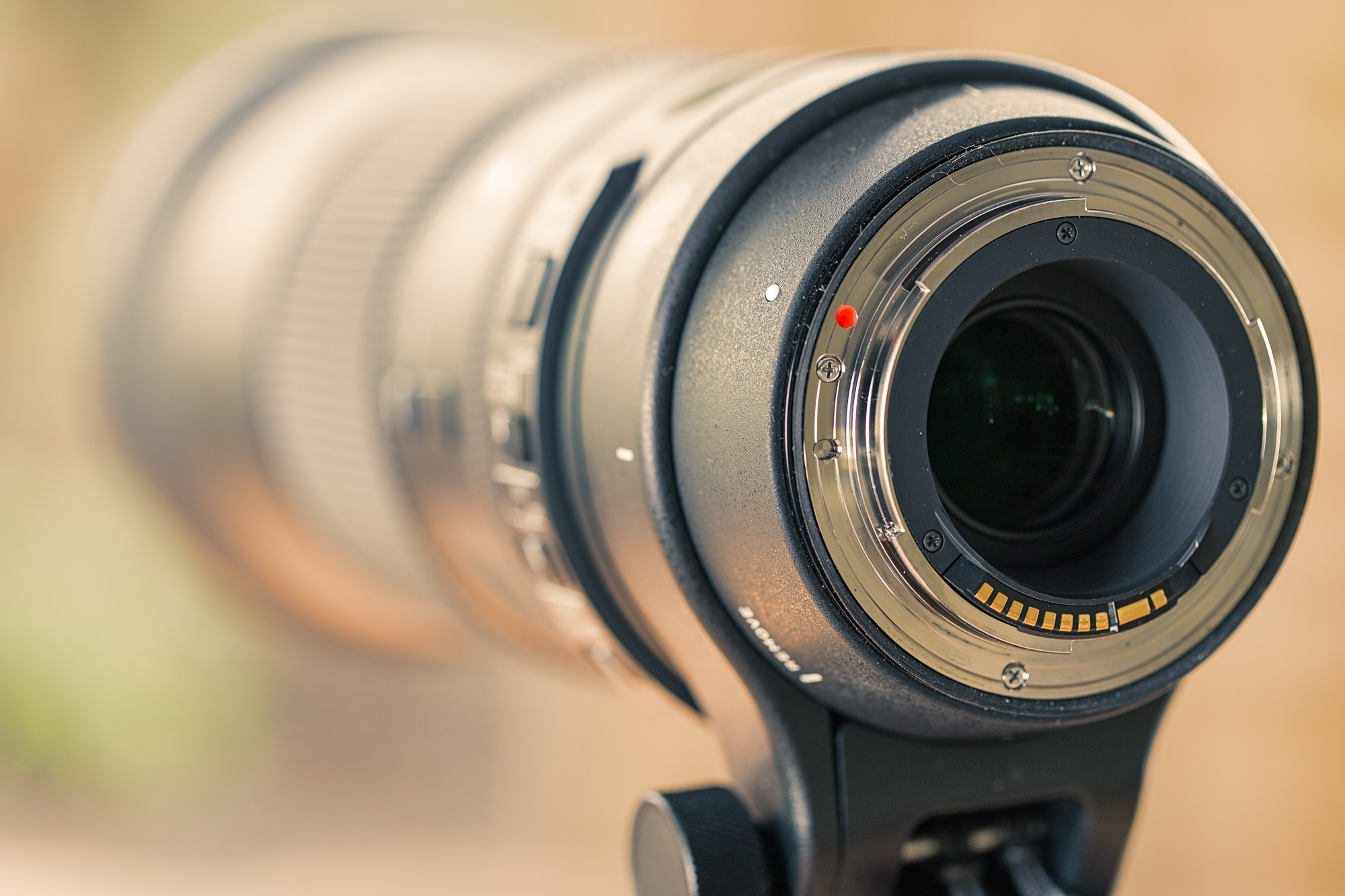
Not so long ago I looked at the the Panasonic Leica DG Vario-Elmar 100-400 f4-6.3 ASPH Power OIS lens for micro four thirds, well today I’m looking at an alternative lens for APS and full frame cameras – the Sigma 150-600mm f5-6.3 DG OS Contemporary lens. Now confusingly Sigma make two versions of the 150-600 and they are labelled the Sport and Contemporary. The-Digital-Picture.com has put up a good article explaining the difference between the two. The main ones are price and weight with the Contemporary being a 1Kg lighter and $1200 AUD cheaper. This is quite a significant difference and I for one prefer a lighter lens and a heavier wallet. The Contemporary is part of Sigma’s Global Vision line of lenses and is thus compatible with the Sigma TC-1401 1.4x Teleconverter which allows auto focus to work to a maximum of f8 while wide open if your camera supports this feature. This is an interesting option as it allows a reach of 860mm on full frame and a humongous 1376mm on an APSC sensor which is impressive reach for a lens and converter costing less than $2000 AUD. I didn’t happen to look at this option because none of my Canon DSLRs allow f8 auto focusing. shuttermuse.com has an article on f8 focusing with extenders or teleconverters and a list of compatible Canon DSLRs. This does not apply to the mirrorless R and RP which have f11 auto focusing.


Lens mounts available Canon EF

Nikon F

Sigma SA

Focal length 150-600mm
Angle of view 4.1° – 16.4°
Aperture range f5/6.3 to f22/27
Filter size 95mm
Minimum focusing distance 2.8 metres
Maximum magnification 1:4.9
Focusing Silent HSM with internal focusing and manual override
Aperture blades 9
Lens construction 20 elements in 14 groups with 1 FLD and 3 SLD elements
Image stabilisation Yes – 3 stops equivalent
Length 26cm
Diameter 10.5cm
Weight 1.93Kg without lens hood and tripod collar.


Fully extended to the 600mm focal length the lens is a beast. There is no sign of any wobble in the zoom extension.

Physically this is a large lens, it stands head and shoulders above my Canon 70-200mm f2.8 IS L lens which in itself quite a large lens. The 150-600 is also 500g heavier. At 2.1 Kg with lens hood and tripod collar attached it definitely has heft to it. Interestingly Sigma refer to it as a lightweight lens, I suppose it’s all a matter of perspective as the Panasonic Leica 100-400 is 0.985 Kg so the Sigma feels gargantuan compared to it while the Canon EF 600 mm f4L IS is over 3Kg so the Sigma then seems svelte and compact. The lens body is made out of what Sigma calls a Thermally Stable Composite (TSC) which is substantially stronger than conventional polycarbonates while having similar thermal expansion properties to aluminium. The lens mount is made of chromium plated brass which should ensure a long life. All in all it feels a well made and rugged lens, it may feel like plastic but the TSC body feels substantial and gives the impression of being very durable with no creaking or flexing. The Sigma 150-600 is advertised as being dust and splash proof but on closer reading of Sigma’s spec sheet there is only one seal and that is at the lens mount. If you want better then you’ll have to spring for the Sports version.


The Canon EF lens mount is made of chromium plated brass.

When looking at the lens from the front there is a large ribbed rubber zoom ring that has a long throw of about 160º. The action is smooth and feels not too tight nor too loose. As you rotate the zoom ring the lens barrel extends by 8cm. The extension feels secure with no slop or wobble. Just behind the zoom ring on the lefthand side is a zoom lock switch which can lock the zoom ring at the 150mm focal length to prevent zoom creep while carrying the lens. The focusing ring is narrow ribbed rubber and allows you to manually adjust focus while the lens is in the autofocus mode. There are no hard stops which might concern you if you were to use the lens for video. Behind the focusing ring is a panel of four switches and they are:

  • An AF switch allowing to choose between AF, MF and MO (Manual Override)
  • A focus limiter switch allowing a choice of full range, 10m to ∞, and 2.8 to 10m.
  • An optical stabilisation switch that gives a choice of off, on and a panning mode.
  • A custom switch that allows you to select two custom modes that can be programmed using the Sigma FD-11 USB Dock


There are three switches on the lens barrel. One fotr focus modes, the second a focus limiter and the third is for the optical stabilisation.


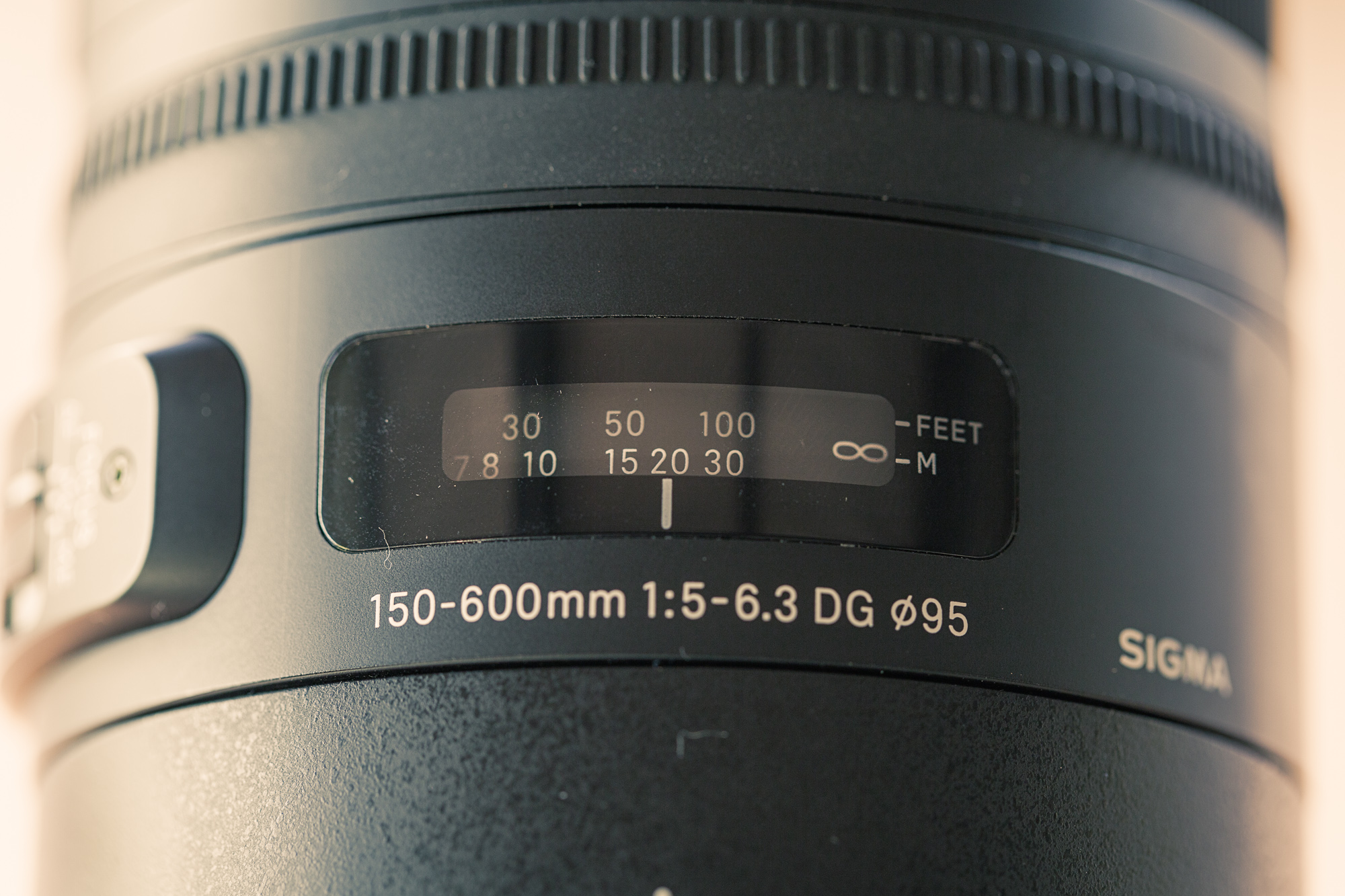
The focus distance scale is behind a window just below the the focus ring.

Above the switches is a window showing the focusing scale and then behind that is the lens collar. The lens collar allows you to turn the camera from horizontal to vertical while mounted on a tripod, but, unfortunately there are no detents to allow you to do this while looking through the viewfinder of the camera, you have to align the marks on the collar with those on the lens body. The tripod collar can be detached and thoughtfully Sigma provide a cosmetic rubber ring to slide over the lugs that hold the collar in place. The lens comes with a large plastic lens hood the size of a flower pot, it seems sturdy enough and bayonets into place and a nice touch  is that is ribbed internally to prevent reflections. The 150-600 has a 95mm filter thread which means filters will be expensive and potentially hard to get. In terms of accessories Sigma provide a nice well padded lens case, a shoulder strap for it and a Sigma branded camera strap. Like all Sigma lenses you get a lot for the money you spend. Nice one Sigma!

The 150-600 has a 95mm filter thread which means filters will be the size of dinner plates, be expensive and potentially hard to get.

I tested the lens on a Canon EOS 6d and an EOS 550d to see how it would perform on both crop and full frame cameras. In terms of AF performance as neither of those cameras have what can be considered state of the art AF systems, in fact it is over twelve years old, the lens did very well. The single point AF using the centre point was fast and precise and well capable of fixing on small birds amongst foliage. In terms of continuous AF on the EOS 550d the camera was the limitation being only able to shoot 6 frame bursts in RAW, but out of my six shots when tracking my dog trotting five of the six would be in focus. The 6d is able to shoot 4.5 frames per second for 15 frames and on the trotting bull terrier test it managed 12 frames in focus.


This slideshow requires JavaScript.

When it came to BIF (birds in flight not fisticuffs) the AF was more than capable of focusing on and tracking medium to large birds. It really struggled with small birds especially swallows. Put it on a better camera and I’m sure you’d get better results.


Australian White Ibis, by Paul Amyes on 500px.com
Australian white ibis, Threskiornis molucca, Herdsman Lake, Western Australia.


My primary use for a lens like this is handheld bird photography, and as such I didn’t really give the image stabilisation a workout as I seldom use a shutter speed below 1/500 sec. But messing around at home in the house and garden I figured it was good for three stops. Mind you I do have steady hands so your experience may differ from mine.


The optical construction of the lens is twenty elements in fourteen groups with 1 FLD and 3 SLD elements. The FLD (“F” Low Dispersion) glass element, which offers performance equivalent to fluorite.  Canon and other manufacturers have used synthetically grown crystals of calcium fluoride components in lenses to aid apochromatic design, and to reduce light dispersion so lenses made from it exhibit less chromatic aberration. What Sigma has done is use newer glasses and computer-aided design to render the use of fluorite crystals unnecessary. Sigma claim that the FLD element is “highly transparent, its refractive index and dispersion are extremely low as compared to conventional types of glass. It offers characteristics very similar to those of fluorite, which is valued for its anomalous dispersion. These characteristics minimize residual chromatic aberration (secondary spectrum), which cannot be corrected by ordinary optical glass, while helping to produce sharp, high-contrast images.” (https://sigmaphoto.com.au). The three SLD (Special Low Dispersion) glass elements also help to minimize chromatic aberration. To help achieve attractive out of focus transitions there are nine rounded aperture blades which should help achieve nice round bokeh balls when shooting specular highlights.


In terms of optical performance well I’ll deal with full frame and crop separately. First up using the lens on the crop framed 550d. At 150mm the centre of the lens wide open was sharp and contrasty and stayed A as such until f22 when it softened due to the effects of diffraction. At the edges the peak performance was attained at f11 and remained until f22 when it softened again. At 600mm the centre wide open was a little soft and lacking in contrast. This improved by f8 and then deteriorated at f22. The edges weren’t so good – wide open they were soft and lacking contrast and remained so until f22 when they got worse. As for vignetting well at the short end wide open it was apparent, about 1/2 to 1 stop and this disappeared by f8. It was the same story at the long end. Throughout the focal range there is slight pin cushion distortion and some chromatic aberration can also be seen. Open the files up in Lightroom and apply the lens profile and things improve nicely. On the full frame 6d the story is the same except for the vignetting which is naturally worse at around 1-1 1/2 stops which is totally understandable as you are using the whole frame rather than just the central part of the lens coverage.


100 % crop from the centre of a New Holland Honeyeater to show how detail is rendered by the Sigma 150-600mm f5-6.3 Contemporary lens.


What’s all this mean in real life. Well if we look at the image for the New Holland Honeyeater which I took at a distance of around 3.5 to 4 metres and then enlarge the section around the head you can see that there is nice feather detail and that the eye is sharper than a very sharp thing. To get much better you’d have to spend an awful lot of money and if we look at the Canon 600mm f4 lens I mentioned earlier that has an eye watering price of $18,500 AUD which is over 11 times the cost of the Sigma. Personally I know that if I plonked $18 K down on a lens I’d be heading for the divorce court which would make the Canon a doubly expensive lens. So for what it costs the Sigma is amazing value.

Below are some examples of bird photography shot with the lens on both a Canon EOS 6d and 550d.


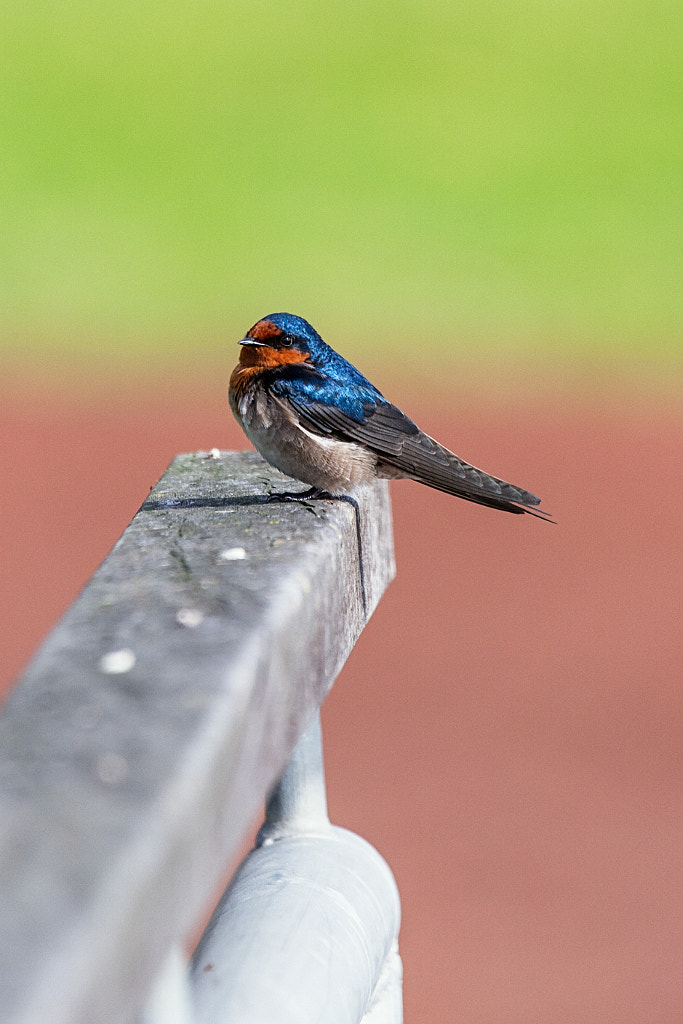
Welcome Swallow by Paul Amyes on 500px.com
Welcome Swallow, Hirundo neoxxena, Herdsman Lake, Western Australia. Canon 6d with Sigma 150-600mm Contemporary. Exposure: 1/500 sec, f7.1 at ISO 250.


Red Capped Robin, by Paul Amyes on 500px.com
Red capped robin, Petroica goodenovi, Avon Walk Trail, York, Western Australia. Canon 550d with Sigma 150-600mm Contemporary lens. Exposure: 1/500, f6.3 at ISO 160.


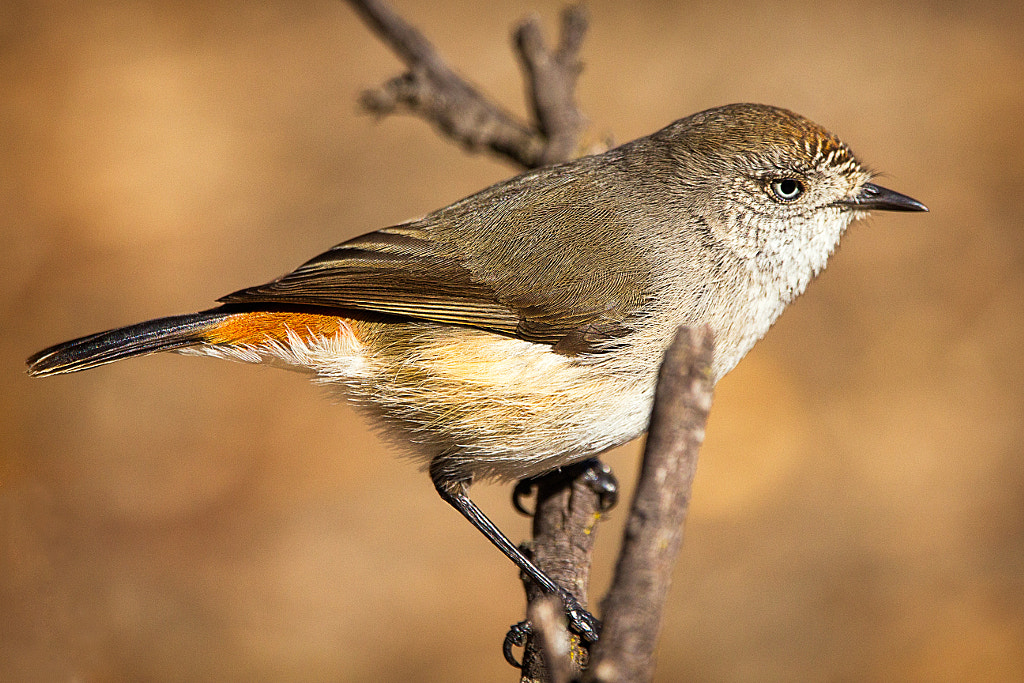
Chestnut-rumped Thornbill by Paul Amyes on 500px.com
Chestnut-rumped Thornbill (Acanthiza uropygialis), York, Western Australia. canon 550d with Sigma 150-600mm Contemporary lens. Exposure: 1/1000 sec, f6.3 at ISO 320.


Mistletoebird, by Paul Amyes on 500px.com
Mistletoebird, Dicaeum hirundinaceum. The Nyoongar name is Minnijit. York, Western Australia. Canon 6d with Sigma 150-600mm Contemporary lens. Exposure: 1/1000 sec, f8 at ISO 1600.

So would I recommend the lens? Yes without hesitation. It performs very well and is sold at a very good price and you can’t argue with that.

Lens Sharpness

sutemi waza by Paul Amyes on 500px.com
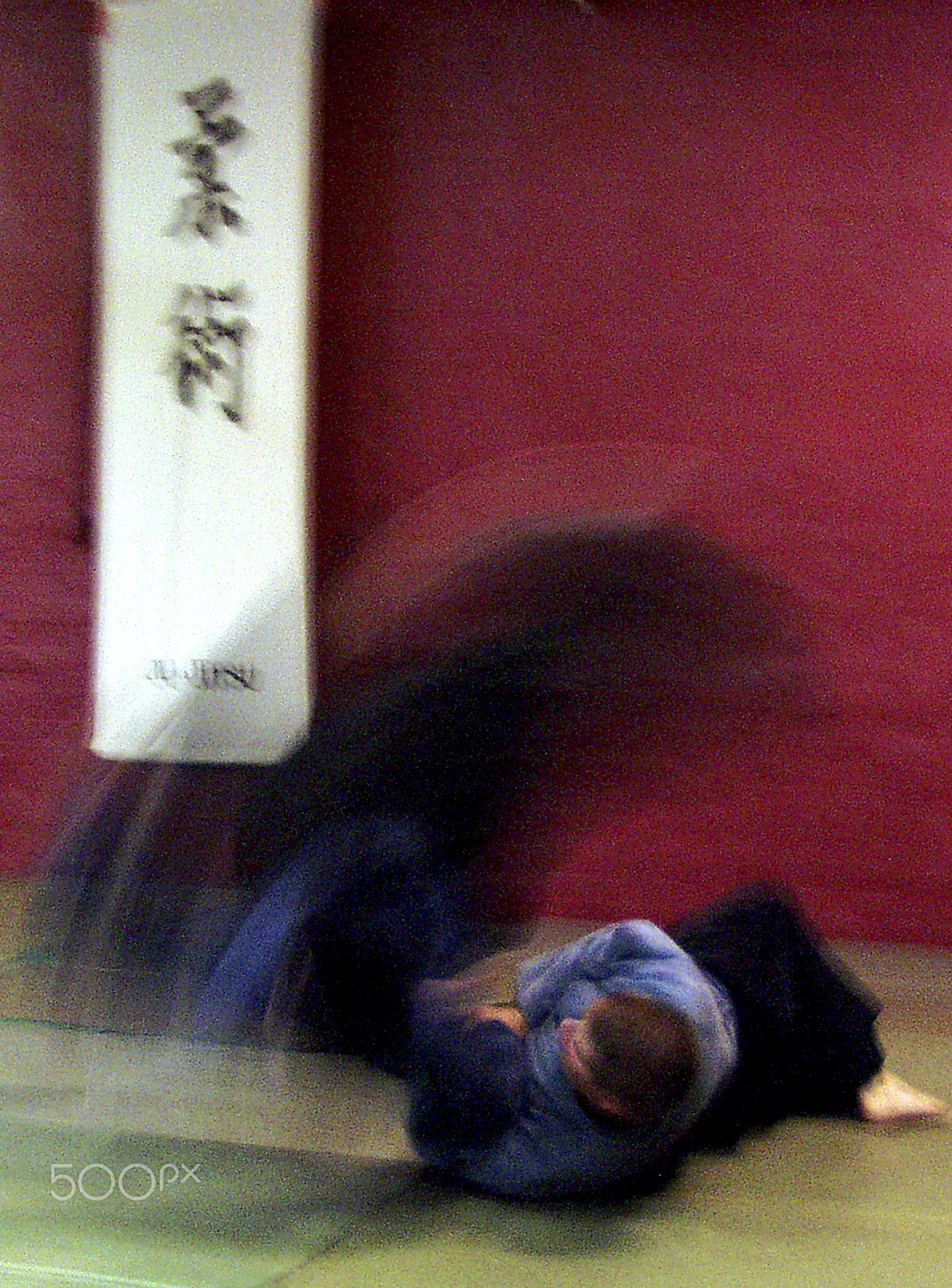
Sutemi waza from Yōseikan Aikido. Taken on Olympus C-720 Ultra Zoom with slow sync flash edited using Photoshop Elements 2 and Genuine Fractuals


Currently in photography there are several sacred cows and you’d think that from the amount of chatter these subjects generated that they were the be all and end all of photography. Thankfully for the actual art form of photography they are mostly irrelevant. These sacred cows are:

  • megapixels
  • dynamic range
  • sensor size
  • lens sharpness

My feeling is that these topics are so hotly debated is because now in this digital age it is easy to quantify these values numerically and the bigger the number the better. There is no doubt about it a great big  spreadsheet of impressive looking numbers must be right after all. This is why the website http://www.dxomark.com has become a sacred text among the denizens of the internet fora and its proclamations and pronouncements can lift a camera or lens to photographic nirvana or condemn it to the lowest reaches of hell. Well having ruffled a few feathers with the piece on sensor size and depth of field this weeks entry is going to cause the DXO fundamentalists to really froth at the mouth in holy indignation.


ura tai otoshi by Paul Amyes on 500px.com
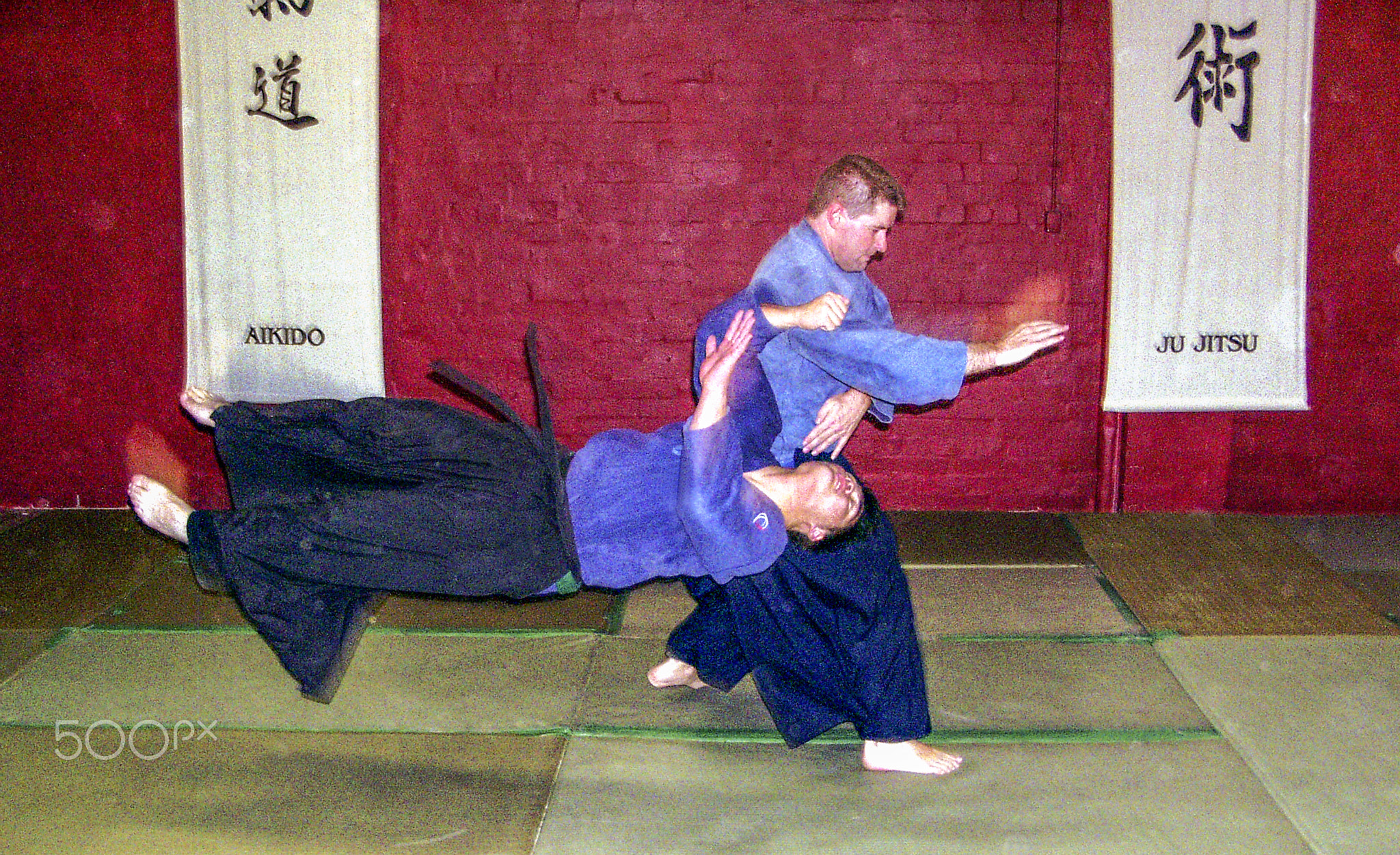
Ura Tai Otoshi from Yoseikan Aikido as taught by Shihan Jan de Jong. Shot using an Olympus C-720 Ultra using slow sync flash. Edited using Photoshop Elements 2 and Genuine Fractuals


Lens sharpness  is something to be coveted. After all Leica, Zeiss, Schneider, Rodenstock, Canon and Nikon have made an art form of it. Those who worship at the high altar of lens sharpness are prepared to spend the equivalent of the GDP of a small African nation on the lenses that have the highest DXO score. The Carl Zeiss Distagon T* Otus 1.4/55 ZF.2 Nikon has a DXO score of 45 while the lowly Canon EF 50mm f/1.8 II only has a rating of 25.  So the Otus is nearly twice as good as the plastic fantastic Canon. Phwoaaaaarrrrr forum domination and photographic greatness here I come,  I’ll go out and buy one straight away. The Australian list price for the Zeiss is $4474 while the Canon is $135, so the Zeiss must be 33 times better. Er no. To quote DXO “The DxOMark Score shows the performance of a lens, mounted on a given camera body, for its optimal focal length/aperture combination and for defined exposure conditions.” So the lens has been mounted to a camera on an optical bench shooting a 2D lens chart at an aperture that is guaranteed to give the best results in carefully controlled lighting. So in other words it does not reflect real world usage unless your photographic interests lie in shooting charts or brick walls with a camera on a heavy tripod so you can orgasm over how sharp the image is at the edges. Shoot a complex 3D object in rapidly changing light conditions at sub optimal aperture settings and these ratings really don’t mean anything.

sutemi waza 2 by Paul Amyes on 500px.com
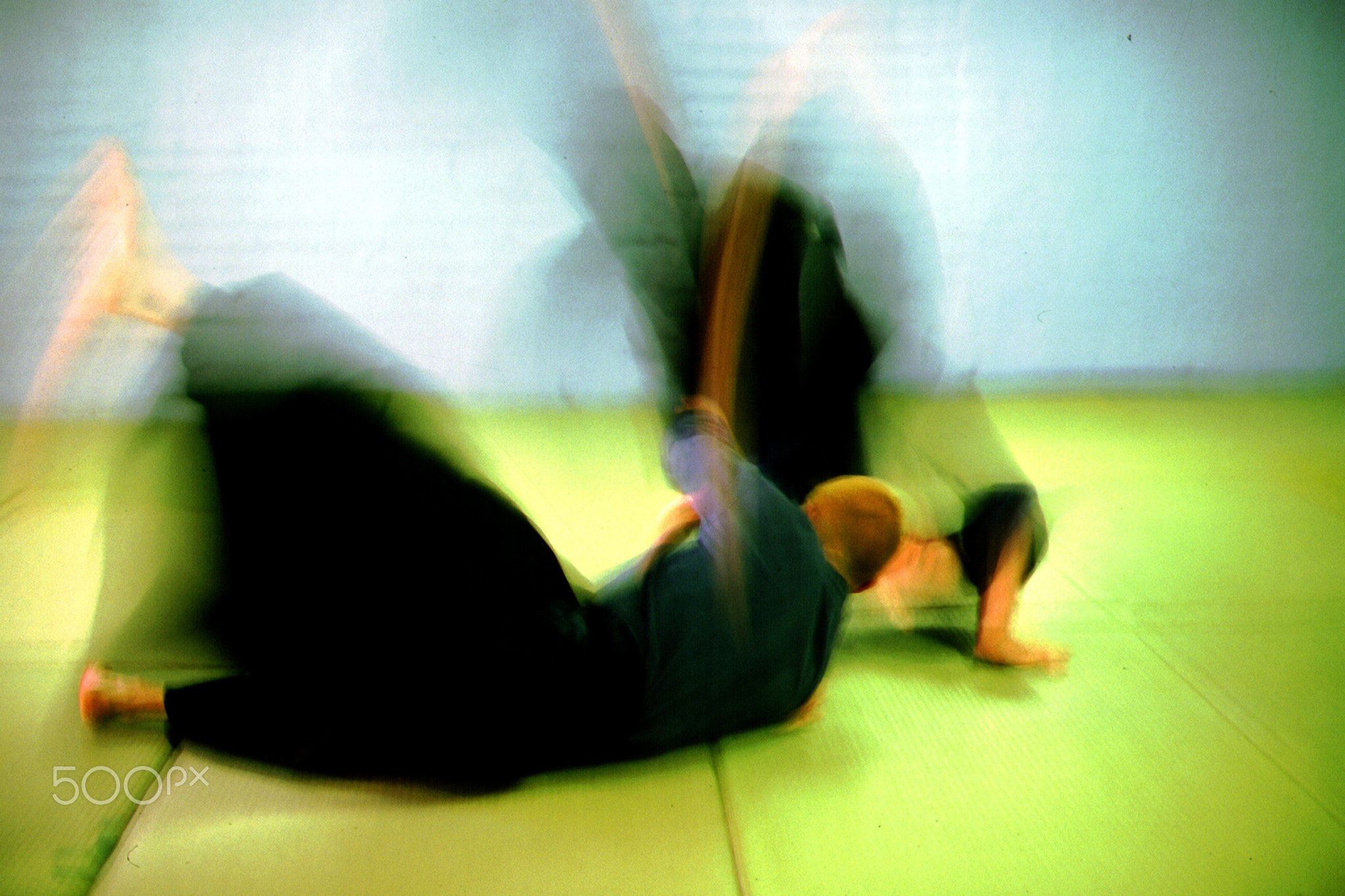
A sacrice throw from Yoseikan Aikido. Taken using an Olympus OM 4 with a Zuiko 35-105 lens on Fujichrome 400 pushed to 800 ISO. Scanned using an Olypus ES-10 scanner and edited using Adobe Photoshop Elements 2 and Genuine Fractuals.


There is no doubt that lenses have become a lot sharper over recent years, but I find it amusing to see that they have become so sharp that they are now unflattering for portraiture as they show every blemish and pore. So much so that photographers are now spending time and money on lessening the sharpness (blurring if you will) on portraits. Don’t you think that is ironic? I’ll spend a fortune on a very sharp lens that is so clinically sharp that no-one likes the results so I’ll spend some more money on a Photoshop plugin to blur it.

 “Sharpness is a bourgeois concept.” – Henri Cartier-Bresson

A famous quote and often mis-quoted as nobody can really tell you the context in which Cartier-Bresson said it.  If we forget the Marxist definition of bourgeois and just concentrate on the dictionary definition we get:

 “belonging to or characteristic of the middle class, typically with reference to its perceived materialistic values or conventional attitudes: a rich, bored, bourgeois family | these views will shock the bourgeois critics.”

I would hazard a guess that dear old Henri was stirring a bit when he said it and meant something along the lines that sharpness in a photograph is a very conventional and staid way of judging it and doesn’t look at its other qualities. How can I be sure, well I can’t but he also said:

 “It is an illusion that photos are made with the camera, they are made with the eye, heart & head.” – Henri Cartier-Bresson

 So I think it is more than likely to assume that Cartier-Bresson felt that there is a lot more to photography than technical perfection.

Iaido by Paul Amyes on 500px.com
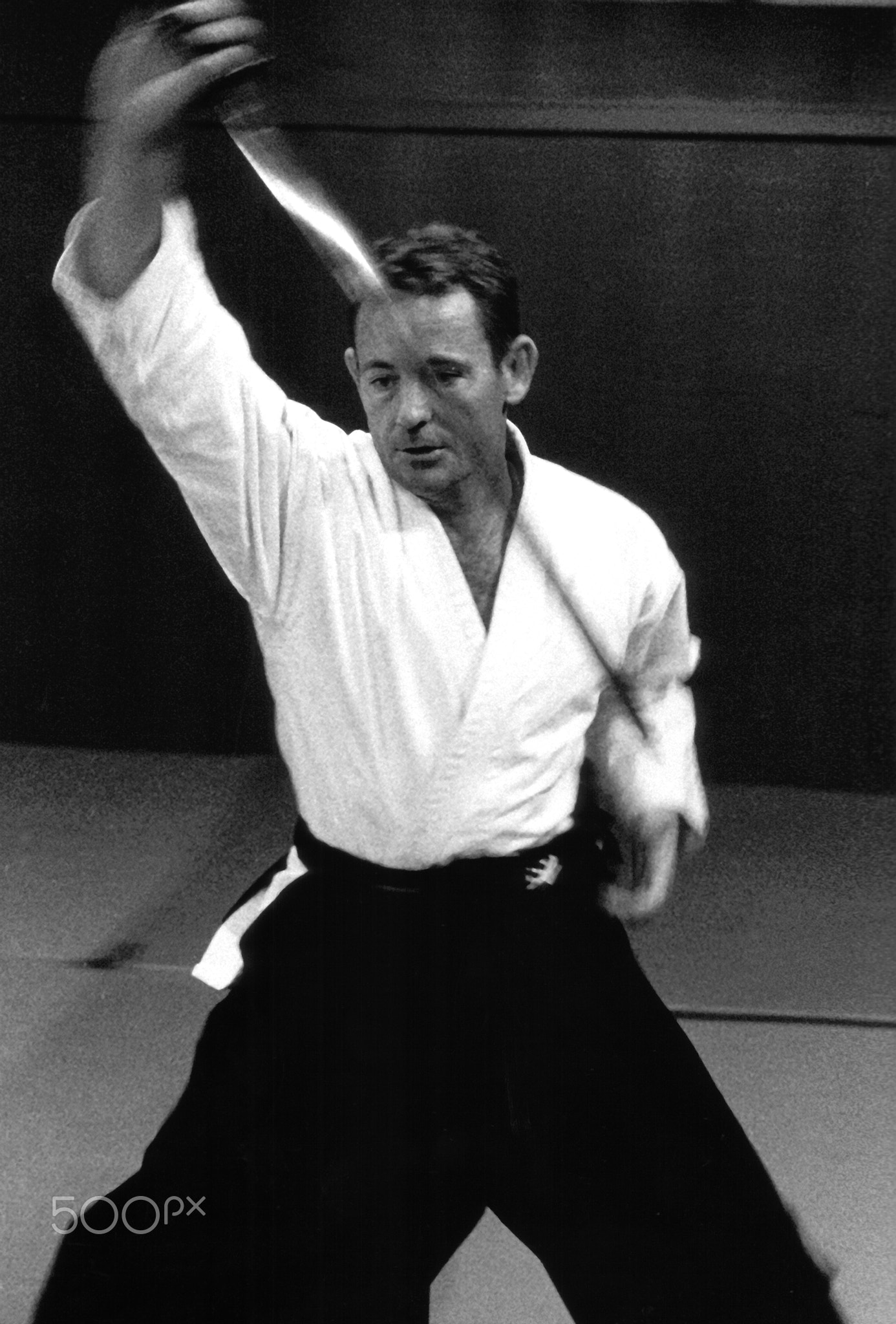
The Japanese art of sword drawing. Taken with an Olympus OM 4 with a Tamron 28 mm lens, using Ifford Delta 3200. Scanned using an Olypus ES-10 scanner and edited using Adobe Photoshop Elements 2 and Genuine Fractuals.


So by now you’ll have read this and seen some photos I made years ago of some people practicing Aikido and Iado, both Japanese martial arts. You’ll also have noticed that there is a lot of blurred movement and very little sharpness. The reason why is that I wanted to capture the beauty of the flowing energy that is involved in them and I felt that while static shots might capture the technical aspects of the techniques being demonstrated they don’t capture the nature of the philosophy behind them nor the dynamism. I like to feel that these are photos “made with the eye, heart & head” rather than the clinical gaze of the optically perfect lens. This is for me where the beauty of any art lies, not in technique but in the expression of ideas and emotions. None of the equipment used in the making of those photographs warrants a mention on DXOMark so I guess that gives them a score of zero. The equipment HCB used also isn’t on the DXO charts, and guess what quite a few of his pictures are blurred because he often relied on zone focusing and didn’t get it right, but I’d sooner have one of his pictures on my wall than a lens test chart any day.

Behind the Gare St. Lazare. By Henri Cartier-Bresson, Paris 1932. © 2014 Henri Cartier-Bresson/Magnum Photos, courtesy Fondation Henri Cartier-Bresson, Paris


If you are not familiar with work of Cartier-Bresson try this:

If those video clips have whetted your appetite then might I recommend Henri Cartier-Bresson  – the man, the image & the world. A retrospective. Published by Thames & Hudson.