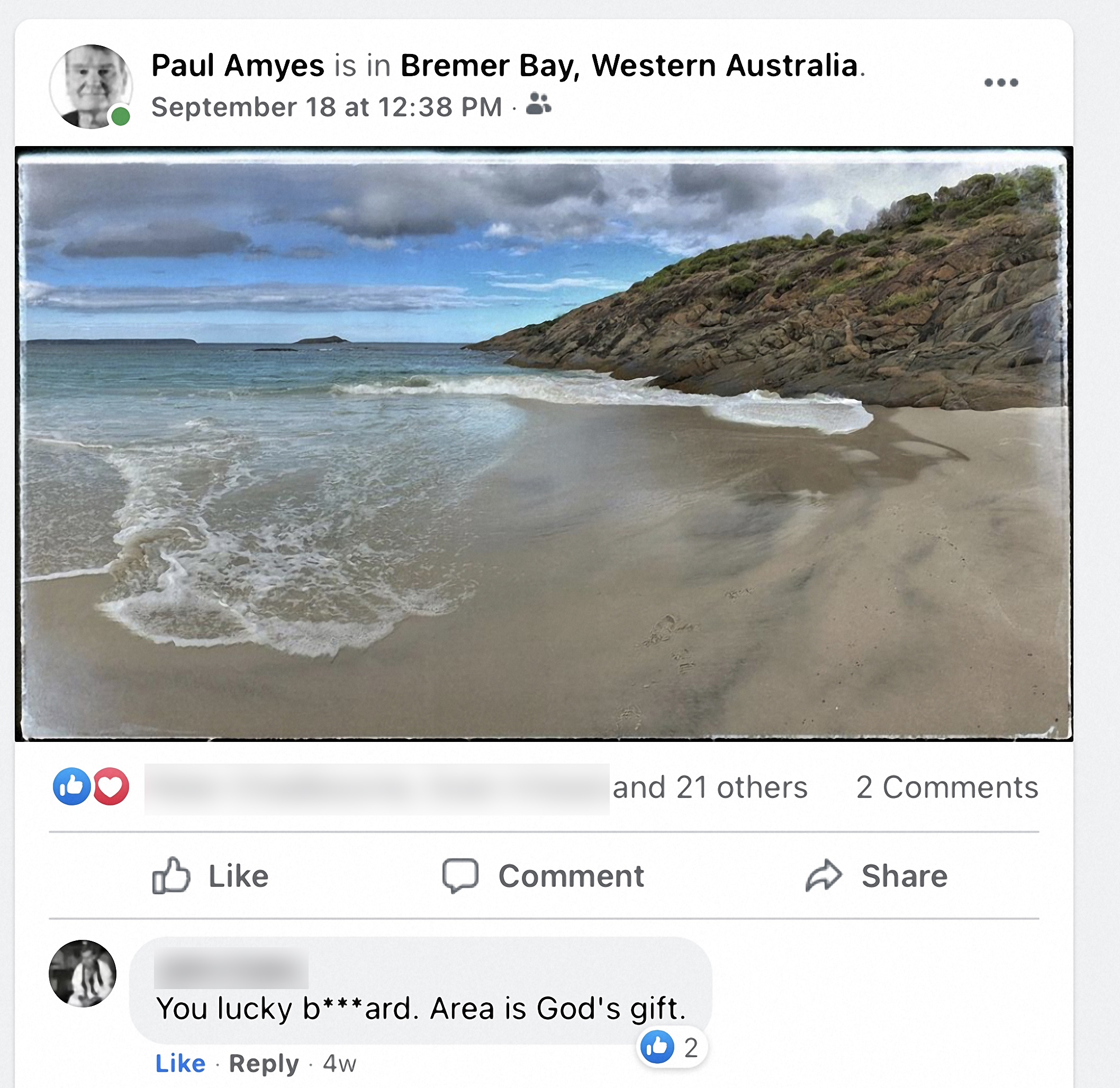
When I put up on Facebook that I was in Bremer Bay this was the reaction I got.
Bremer Bay is down south of Perth. Way down south to the tune of around 6 hours drive. We had been wanting to go for a long time and so we decided to tack on a visit when we last went down to Stirling Range National Park. The aim was to use it as a jumping off point to explore the Fitzgerald River National Park, but with the huge rainfall Western Australia had had this winter when we asked at the local tourist office what the 4WD access roads were like we were told they were impassable. So we made do with exploring around the town and driving out to some of the beaches. The weather, however, was not conducive to going to the beach so we did what generations of English people on holiday have done which drive there and lookout of the windscreen. A thermos flask of Tetley tea and some egg and cress sandwiches and our life would have been complete.
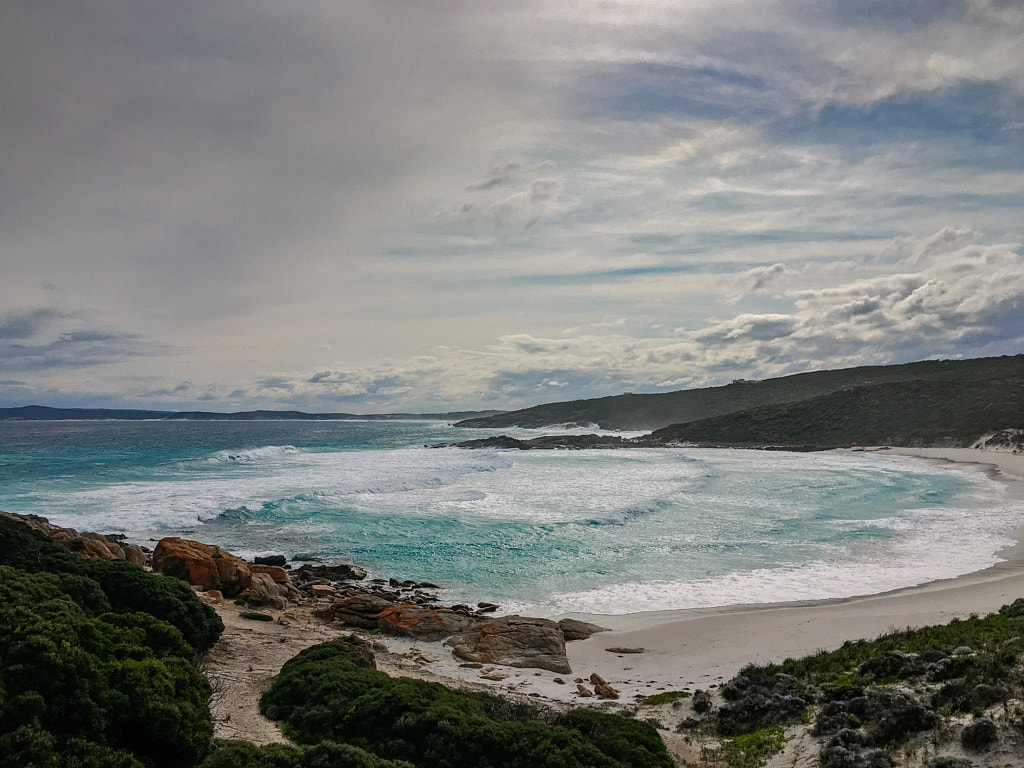
Native Dog Beach, Bremer Bay, iPhone 6s back camera 4.15mm f/2.2. Exposure: 1/7000 sec, f2.2 ISO 25.
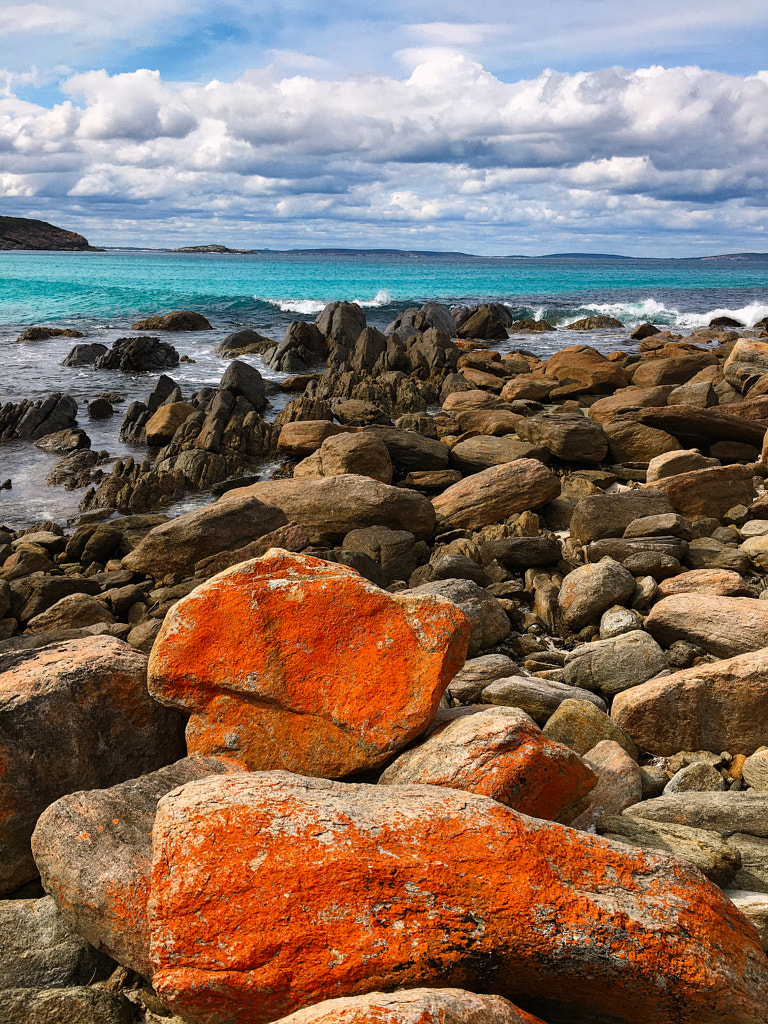
Short Beach, Bremer Bay. iPhone 6s. Exposure: 1/2201 sec, f2.2 at ISO 25.
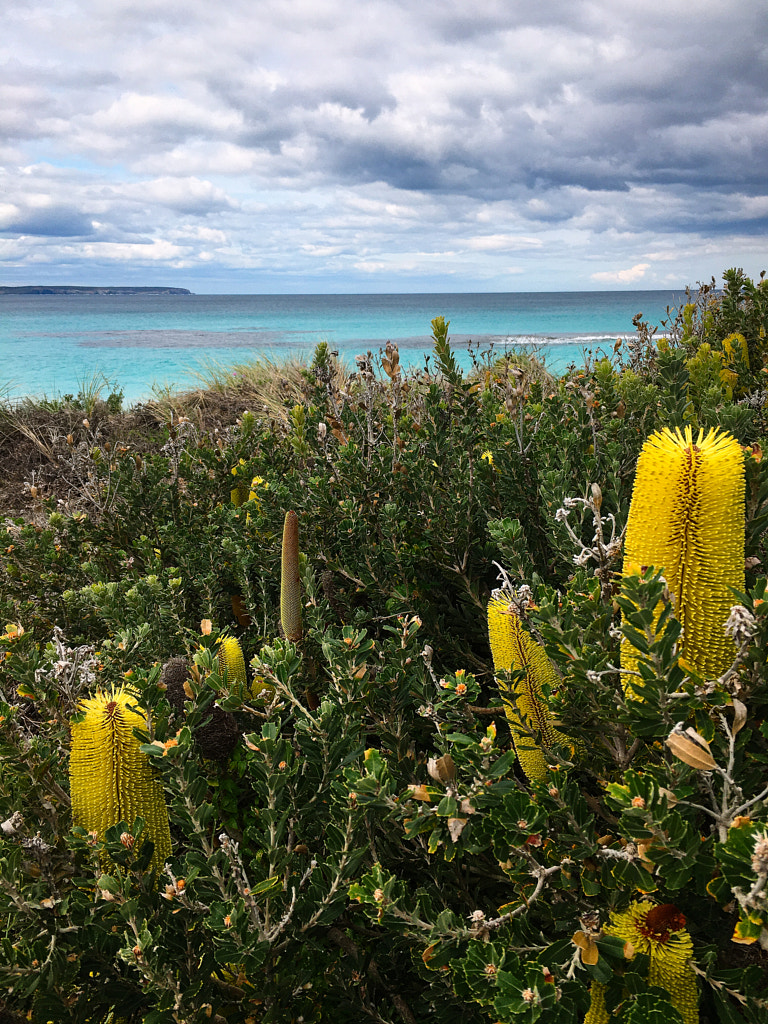
Candle Stick Banksia at Short Beach, Bremer Bay. iPhone 6s. Exposure: 1/1501s, f2.2 at ISO 25.
I did manage to get some orchid photography and manage a few snaps of some species that I’d not seen before.
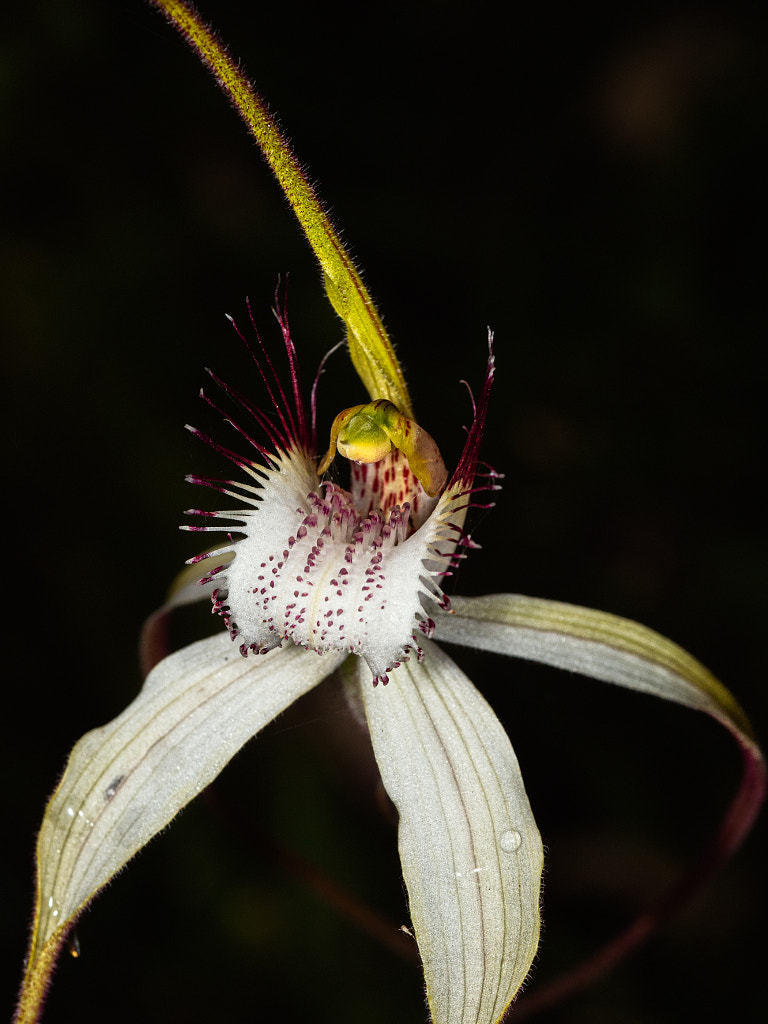
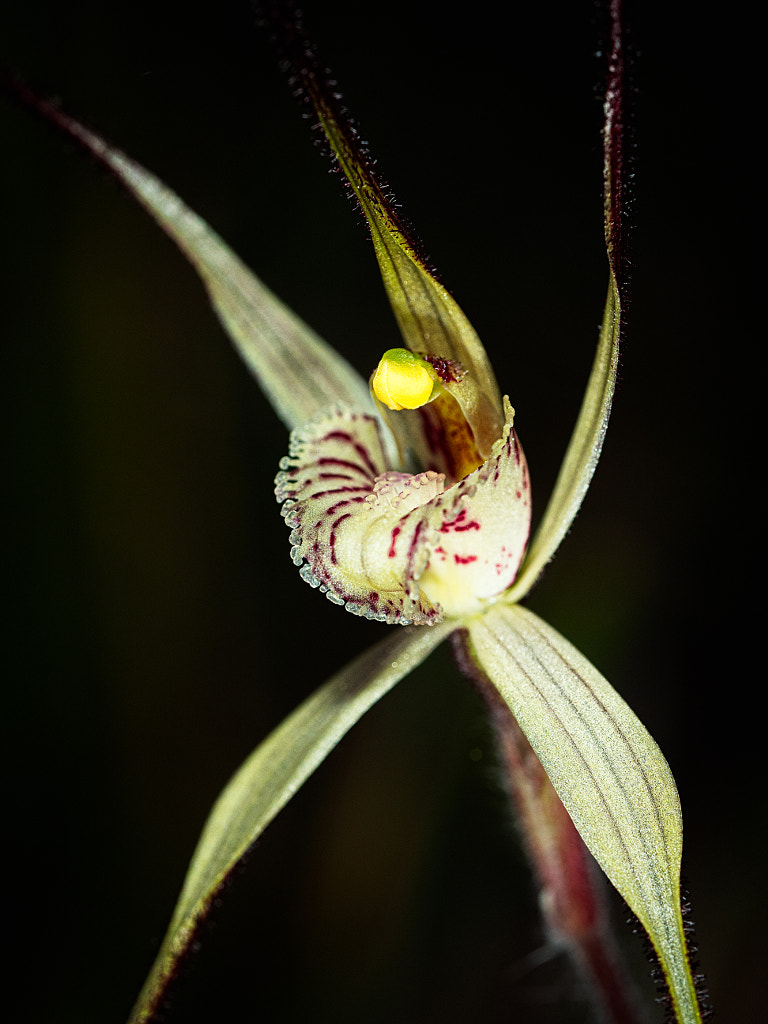
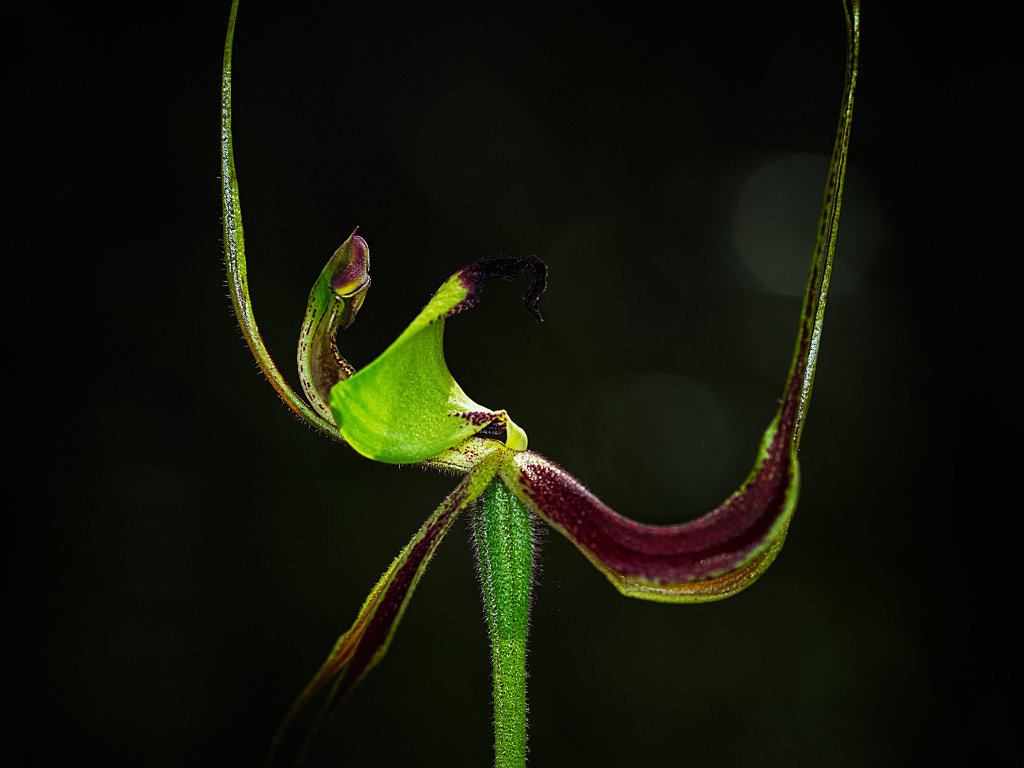
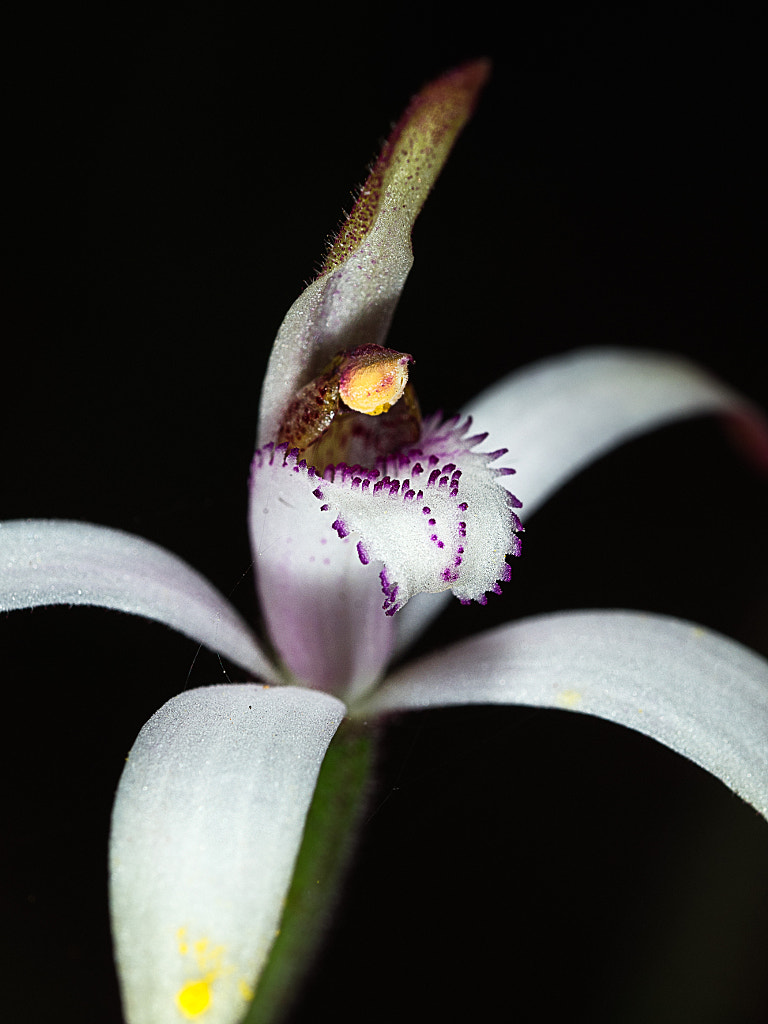
Esperance White Spider Orchid, Caladenia longicauda subsp crasa. Bremer Bay. Olympus OMD EM 1 mk ii with Olympus 60mm f2.8 macro lens. Exposure: 1/250 sec, f8 at ISO 200.
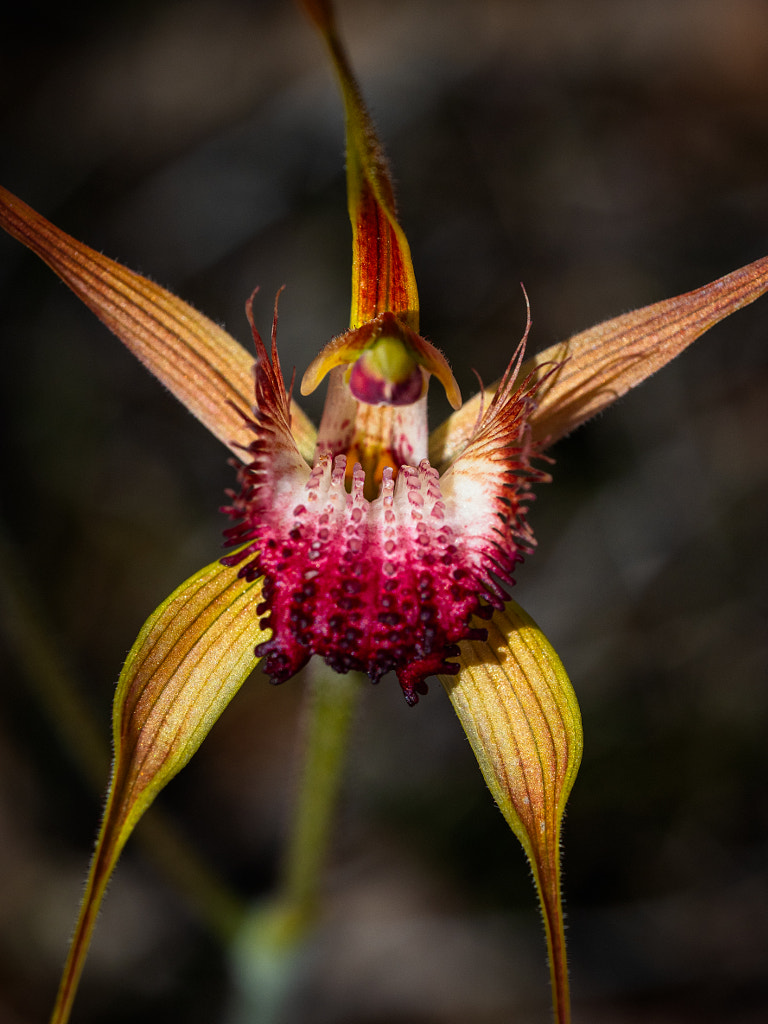
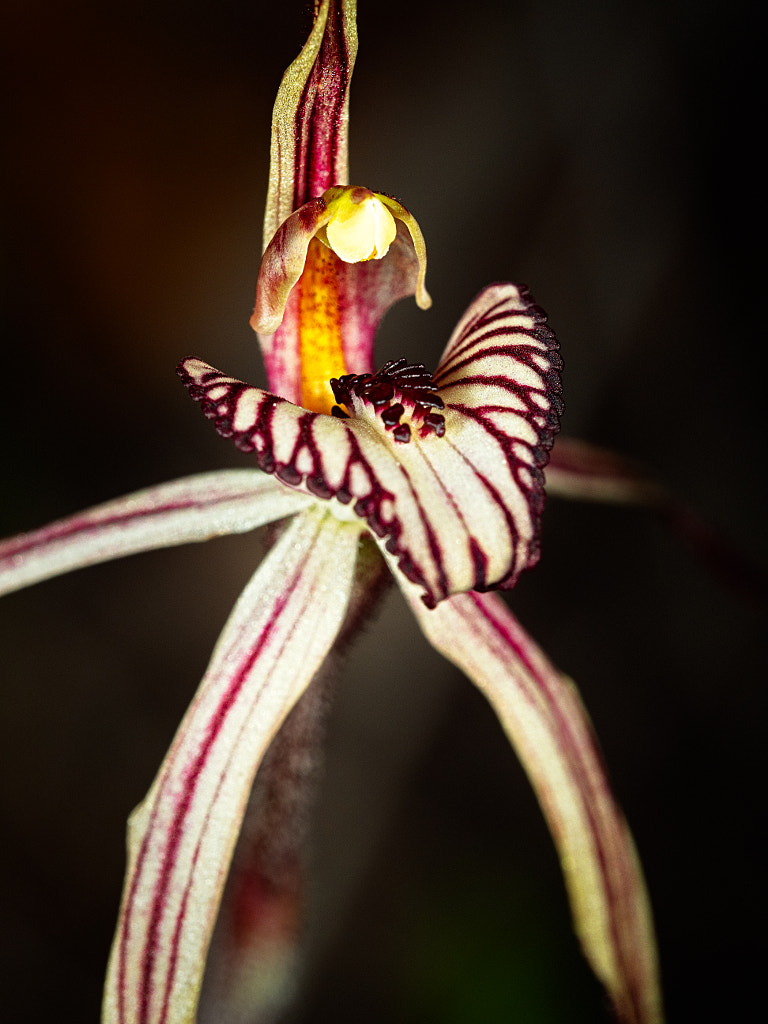
King Spider Orchid, Caladenia pectinata, Bremer Bay. Olympus OMD EM 1 mk ii with an Olympus 60mm f2.8 macro lens. Exposure: 1/640 sec, f5.6 at ISO 200.
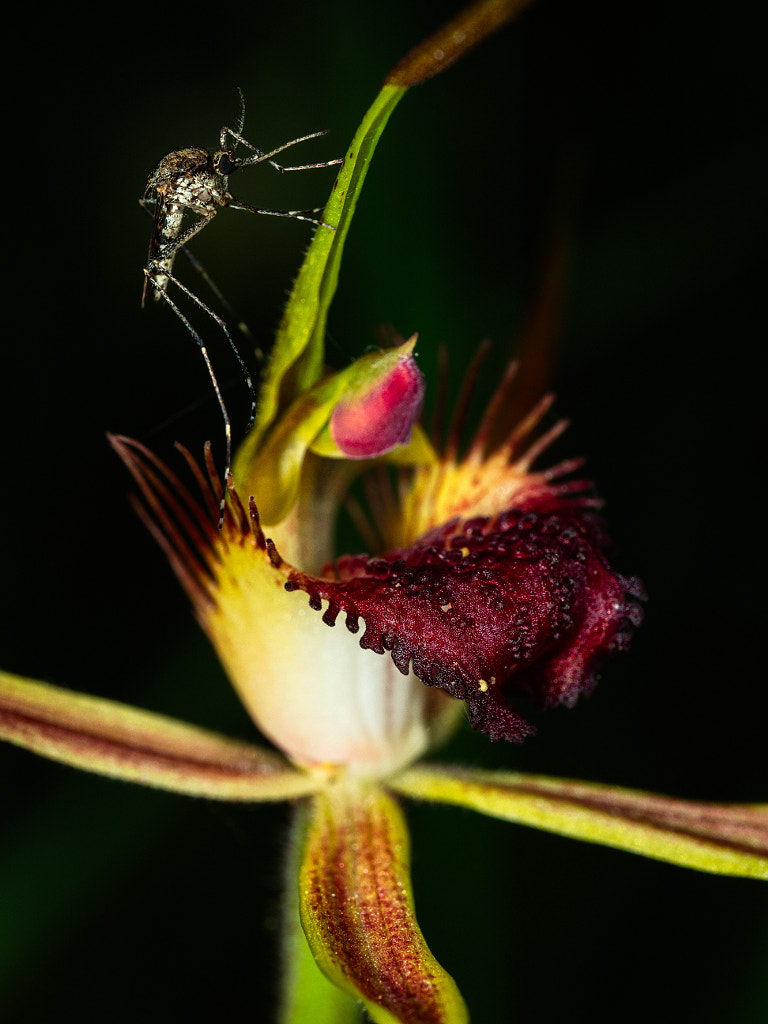
Esperance King Spider Orchid, Caladenia decora, with visitor. Bremer Bay. Olympus OMD EM1 mk ii with Olympus 60mm f2.8 macro lens. Exposure: 1/250 sec, f8 at ISO 200.
The wildflowers in their beauty, the mountain ranges tall, the billabongs and rivers, and friendly birds that call…
by
Brian Black
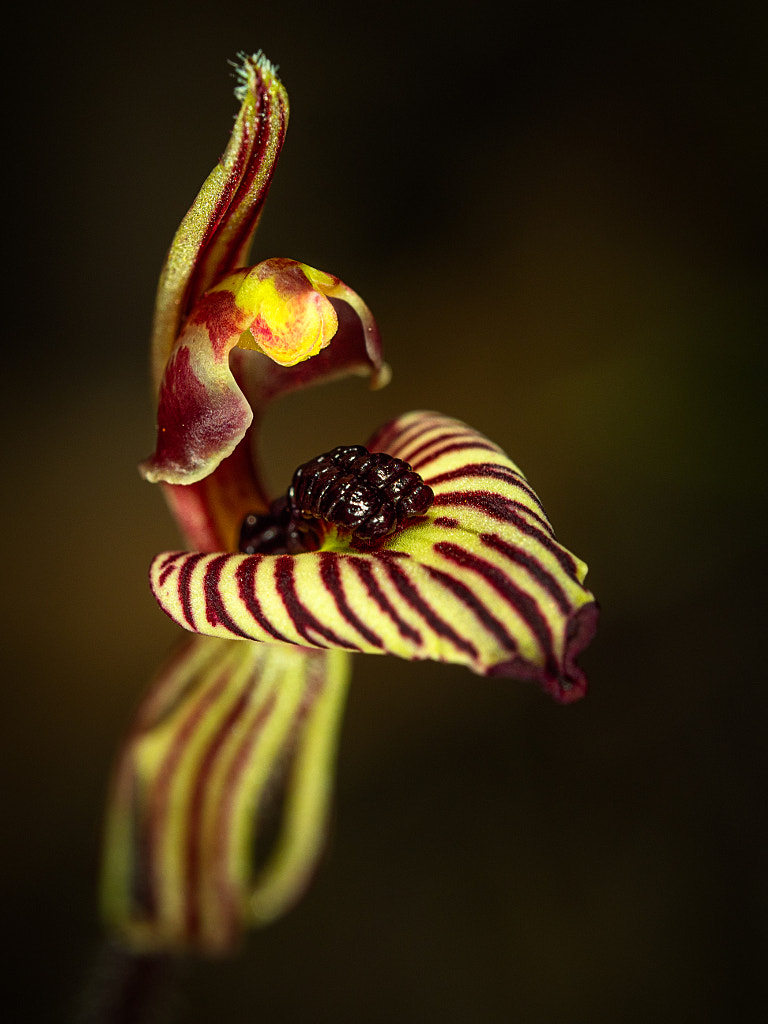
Zebra Orchid, Caladenia cairnsiana. Stirling Range National Park, Western Australia. Olympus OMD EM1 mk ii with Olympus 60mm f2.8 macro lens. Exposure: 1/250 sec, f8 at ISO 200.
Prisoner Orchid – a hybrid between Josephs Spider Orchid (Caladenia polychroma )and the Zebra Orchid (Caladenia carnsiana). Hybridisation occurs due to cross pollination of parent plants by a feral pollinator the European honeybee (Apis mellifera).Olympus OMD EM 1 mk ii with Olympus 60mm f2.8 macro lens. Exposure: 1/250 sec, f8 at ISO 200.
Joseph’s Spider Orchid, Caladenia polychroma. Stirling Range National Park, Western Australia. Olympus OMD EM1 mk ii with Olympus 60mm f2.8 macro lens. Exposure: 1/250 sec, f5.6 at ISO 200.
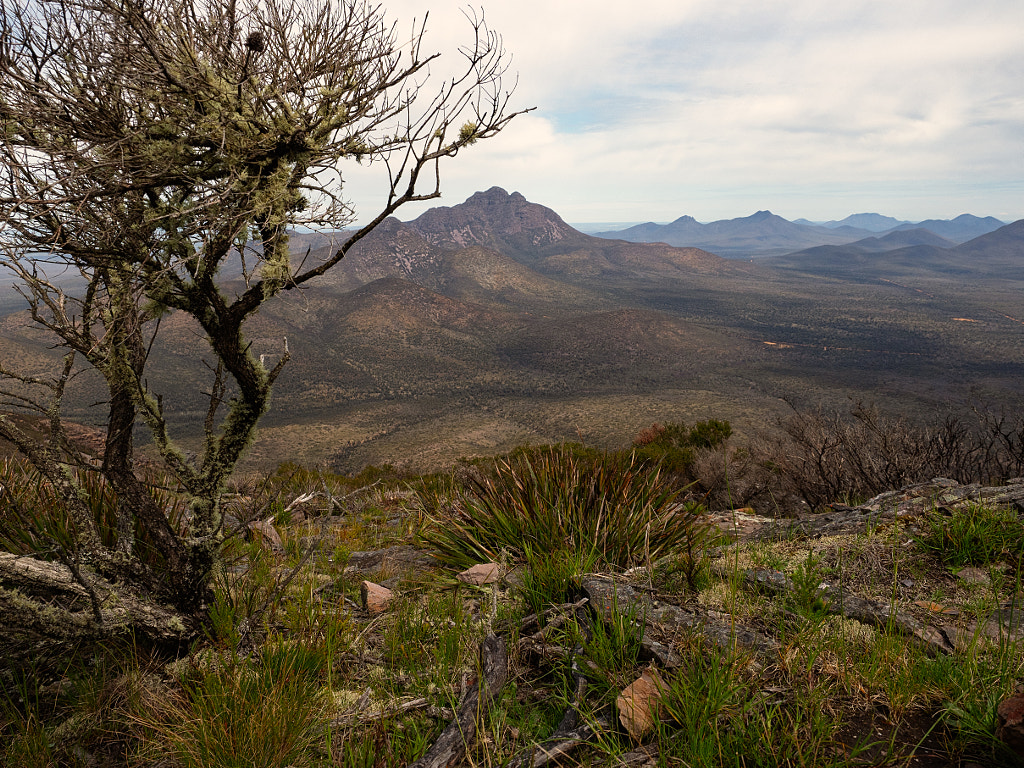
Looking out at Mt Toolbrunup from the summit of Mount Trio. Olympus OMD EM 1 mk ii with Olympus 12-40mm f2.8 lens. Exposure: 1/400 sec, f8 at ISO 200.
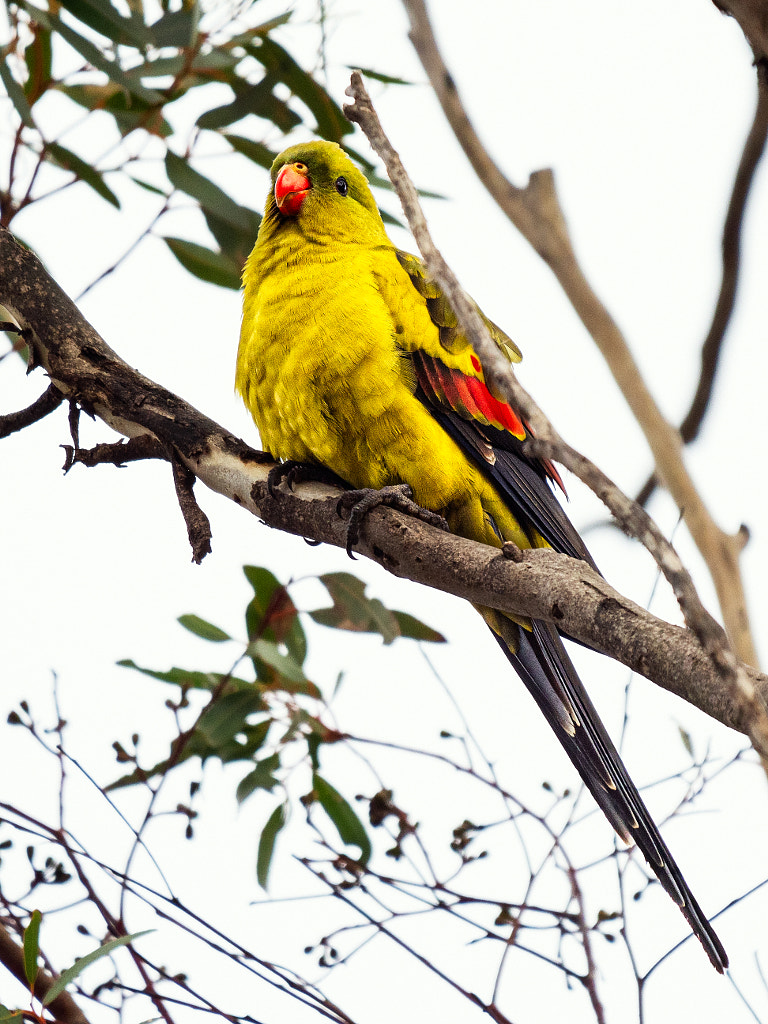
Wookonga or Regent Parrot (Polytelis anthopeplus). Stirling Range Retreat, Western Australia. OlympusOMD EM1 mk ii with Panasonic Leica 100-400mm f4-6.3 lens. Exposure: 1/500 sec, f6.3 at ISO 250.
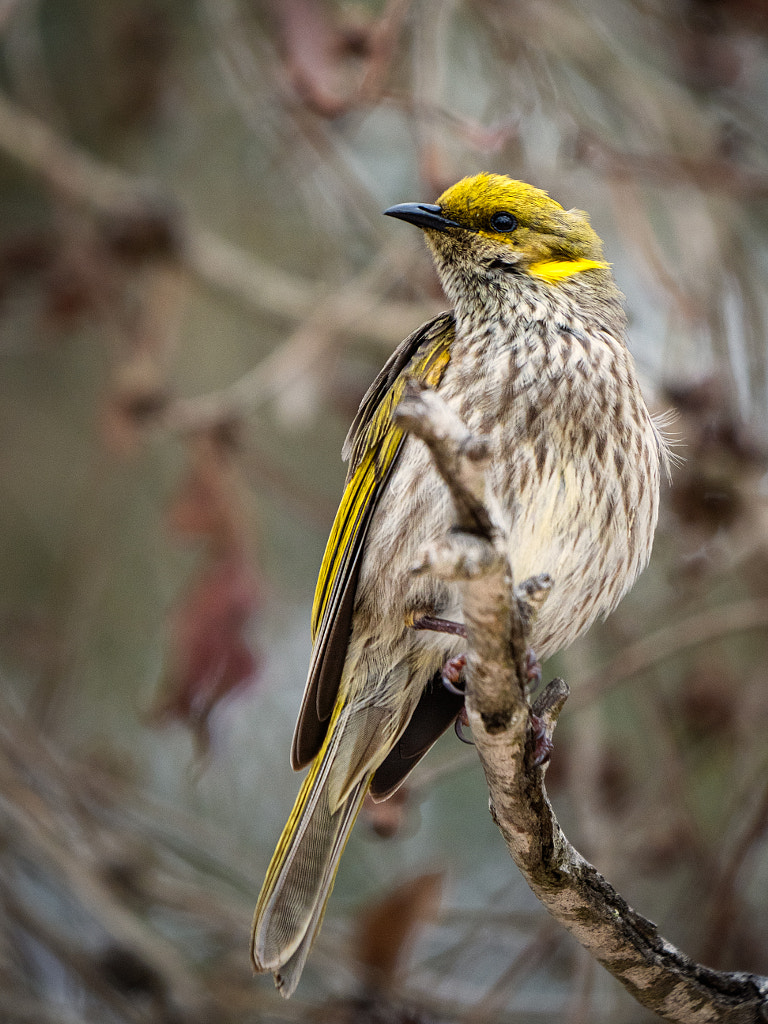
Yellow-plumed Honeyeater (Lichenostomus ornatus) called Miamit by the Nyoongar of Southwest Western Australia. Stirling Range Retreat, Western Australia. Olympus OMD EM 1 mk ii with Panasonic Leica 100-400 f4-6.3 lens. Exposure: 1/500 sec, f6.3 at ISO 800.
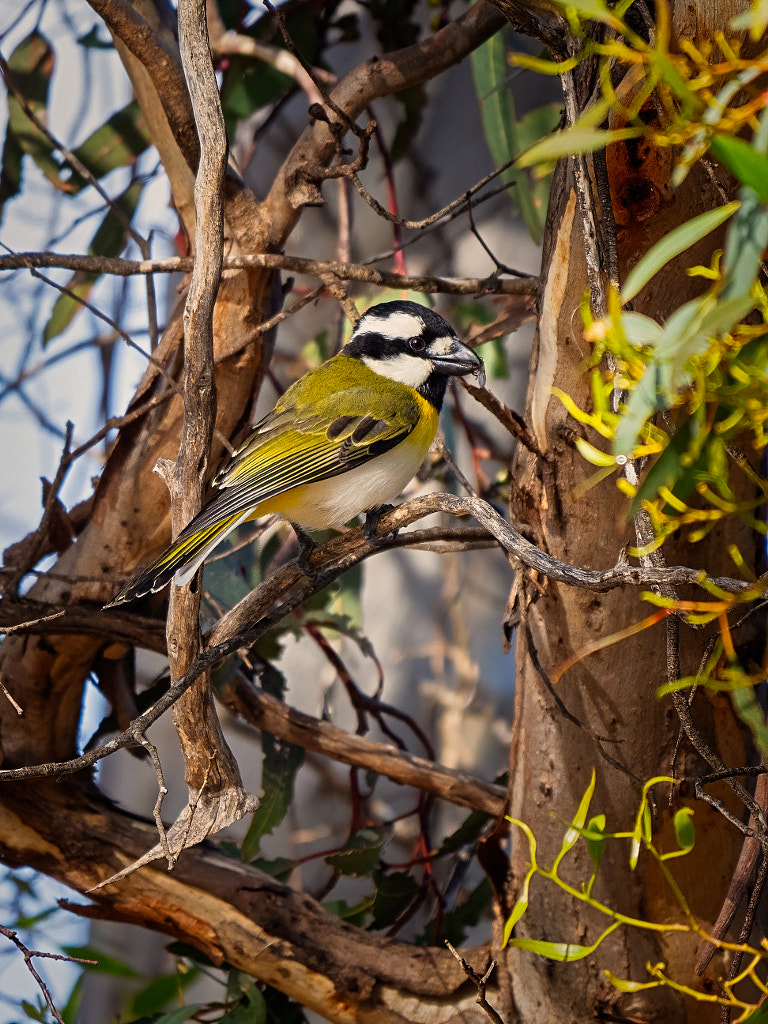
Djoondalkoron or Crested Shrike-tit (Falcunculus frontatus). Stirling Range Retreat, Western Australia. Olympus OMD EM 1 mk ii with Panasonic Leica 100-400mm f4-6.3 lens. Exposure: 1/500 sec, f6.3 at ISO 800.
The past week has been very difficult in terms of feeling motivated and optimistic. The news about COVID 19 in the Eastern Staes of Australia is not good. While we are nowhere near having the deaths that other places have had the walls of fortress Australia have been well and truly breached and the virus has established a beachhead in New South Wales and is fanning out to Victoria and Queensland.
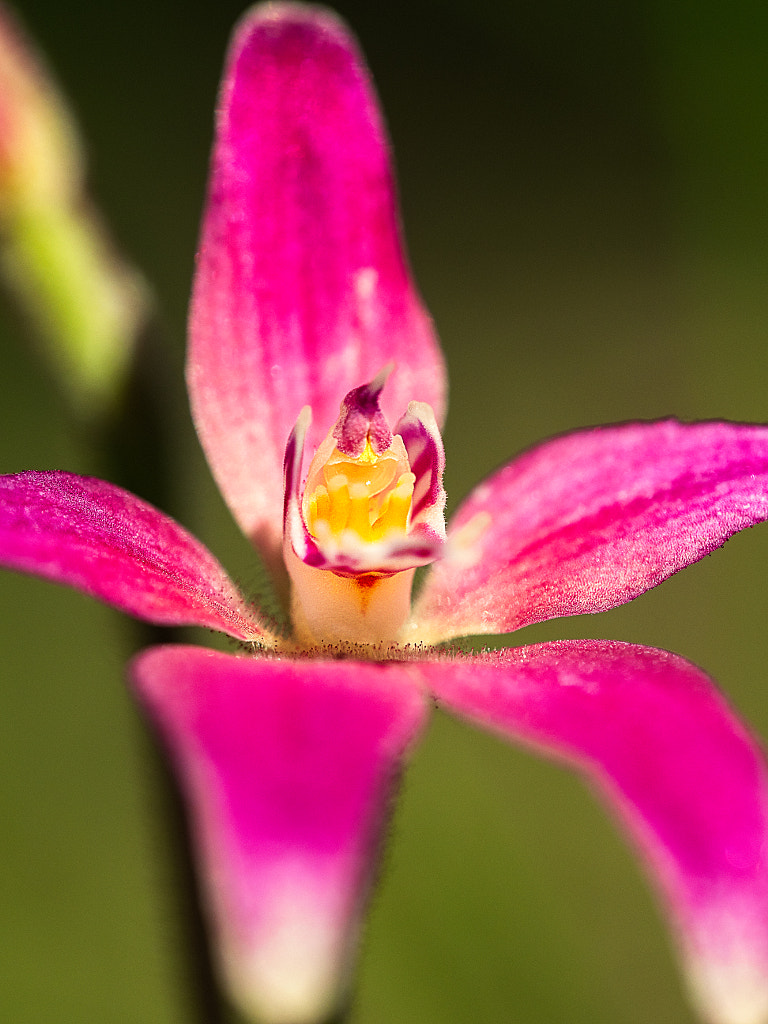
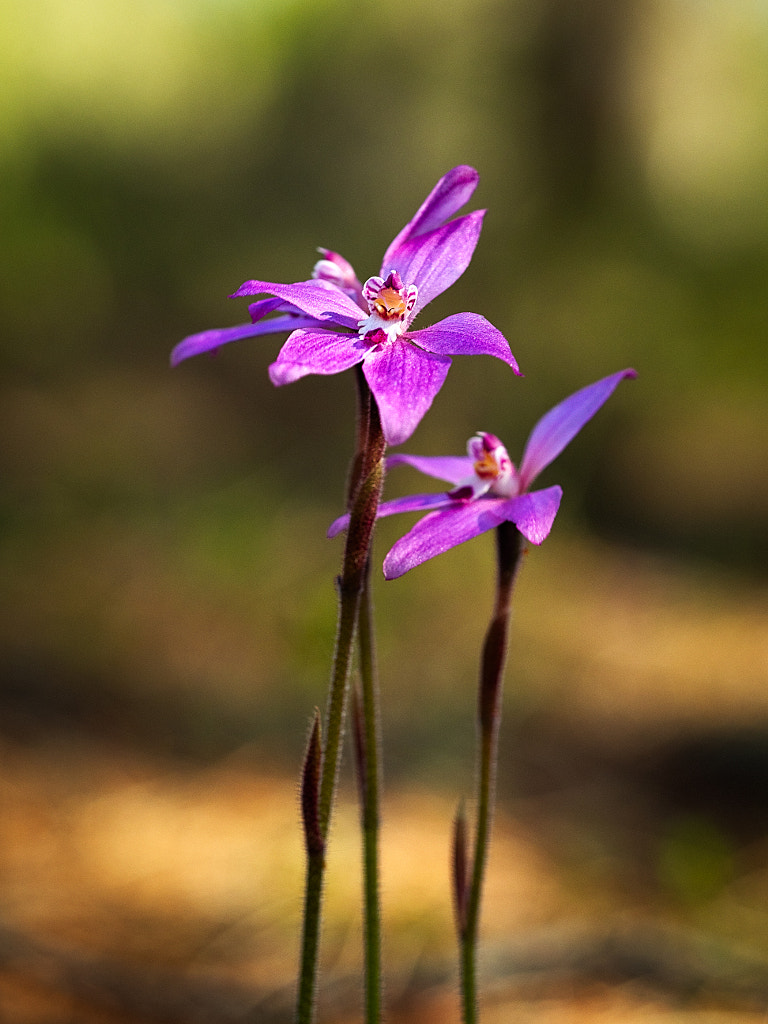
Standing Out From The Crowd. Little Pink Fairy Orchid aka the dwarf pink fairy orchid, Caladenia reptans subspecies reptans.
To make matters even worse The United Nations’ Intergovernmental Panel on Climate Change (IPCC) has released a report warning that the Earth’s temperature will have risen since industrialisation 1.5ºC within the next decade and that it was a “code red for humanity”. If that wasn’t bad enough the Australian government responded in itspredictable manner. Firstly some elements of the government dismissed the report as “fear porn”. Then our erstwhile prime minister Scott Morrison announced announced that Australia won’t be setting any goals to reduce greenhouse emissions but would rather rely on technology to solve the problem. Except that they won’t because this week it was also announced that those who have adopted solar panels to generate electricity will now be slugged with a “sun tax”. Australia “has the highest uptake of solar globally” with around 29% of homes with rooftop solar PV providing 28% of Australia’s electricity. This has placed the electricity utilities under considerable strain as the coal powered electricity stations have become unprofitable and the networks will need to be upgraded to cope with any further expansion of alternative energy generation. The choice was upgrade and reduce profitability or place a charge on solar panel owners to offset the costs. So now we have a situation where the government is impeding the uptake of technology that can reduce CO2 emissions. This isn’t the only area where our government has stepped in to make new technologies unappealing. Australia has one of the lowest uptakes of electric vehicles in the world yet according to an article on the ABC “since 2018, the proportion of Australians who would consider buying an electric vehicle as their next car has stayed at about 50 per cent” yet our government refuses to provide incentives for the purchase. This takes the form of the government refusing to adopt carbon targets for the reduction of greenhouse emissions and increase fuel efficiency standards. Morrison also ran an anti electric car campaign at the last election. The current managing director of Nissan Australia Stephen Lester has said “Clear and consistent direction from governments is a critical signal to car makers to prioritise the importation of the latest low and zero-emissions vehicles for Australian consumers.”. Volkswagen the world’s largest EV maker will not export any to Australia, their Australian general manager Michael Bartsch has said “Australia has some of the most lax environmental standards in the world …We are a Third World dumping ground in terms of automotive technology.”. So when Scott Morrison says we will do our bit globally by adopting the latest technology he is patently lying. Current government policy is just to keep the mining industry profitable so our political classes can retire onto the boards of the mining companies.
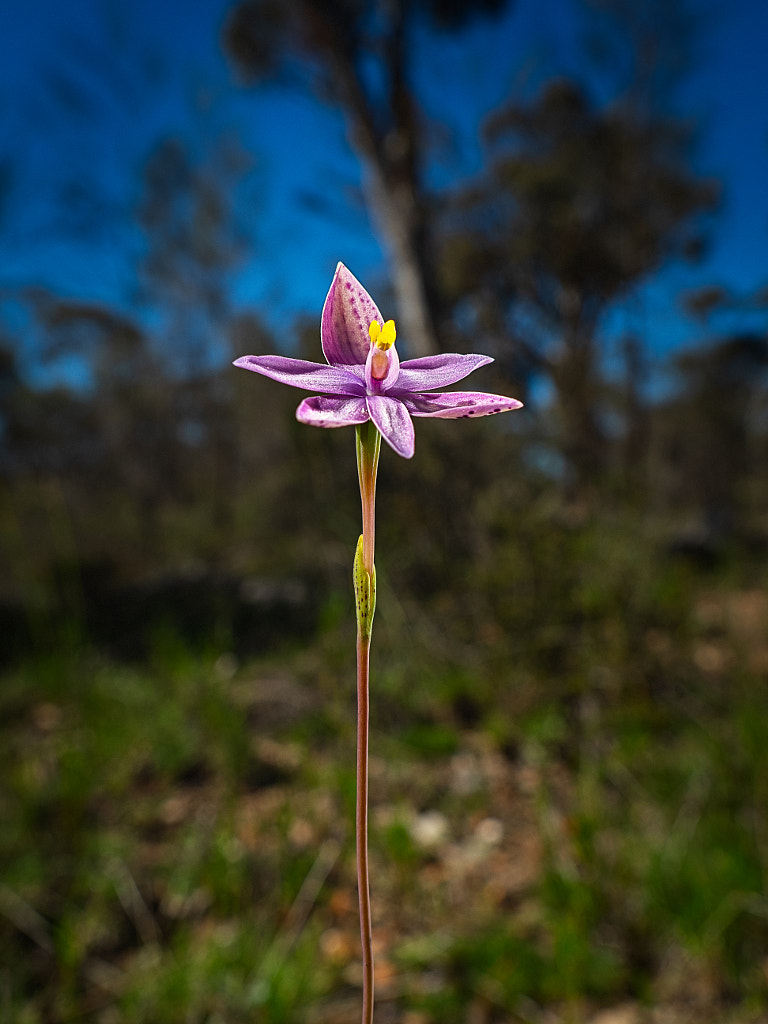
Eastern Curly-locks, Thelymitra maculata.
So after all this I wasn’t in the best frame of mind and I decided to out go to a local reserve and look for some orchids and just generally hang out in nature and recharge. Unfortunately when I got there the ground had been all churned up by 4WDs and the signs and fence posts had been used for a bonfire. At this point despair well and truly took over and I felt there was little point to anything because it seemed that if COVID didn’t get you then climate change certainly would and the behaviour of people would only accelerate this. I have been environmentally aware and trying my best to reduce my carbon foot print since the early 1980’s but it now seemed all in vain and that we’re going backwards. I walked around the Wandoo woodland for a couple of hours just thinking everything is futile.
After 14 years of looking I found it! Eastern Curly-locks, Thelymitra maculata.
Come Friday I went out to another reserve, one that is harder to access. It was just marvellous. Within minutes of getting out of the car I found a hard to find orchid that I’d been looking for over the past 14 years. That certainly improved my mood. I followed a Kangaroo trail for a couple of hundred metres and found an incredible display of little pink fairy and cowslip orchids. A close encounter with a bob tailed lizard sunning itself and then an echidna only further enhanced my mood. Since then I realised that the natural world is spectacular and being out in it can restore the psyche. The environment is not yet dead as I had just experienced. Give it a chance and it will continue to support and amaze us. We, that is everyone, just have to give it a helping hand.
A hybrid of Cowslip Orchid (Caladenia flava subs. flava) and the little pink fairy orchid (Caladenia reptans subspecies reptans).
Apparently according to the Australia Talks National Survey 72% of Australians say climate change is a big concern but this doesn’t change the way we vote. It seems that we’d all much rather vote for a tax break rather a better environmental policy. If we think about the Earth as our home it seems that we would rather vote for someone who promised an extra $5 a week but would bulldoze our house rather than vote for someone who’d protect our home but make us pay and extra $5 a week in tax. At this stage you probably think I’m just anti the current Liberal Nationals Coalition Government, but the truth is Labour are no better. Both parties fudge the issue of climate change and don’t offer any practical solutions. So if elections aren’t the answer what is?
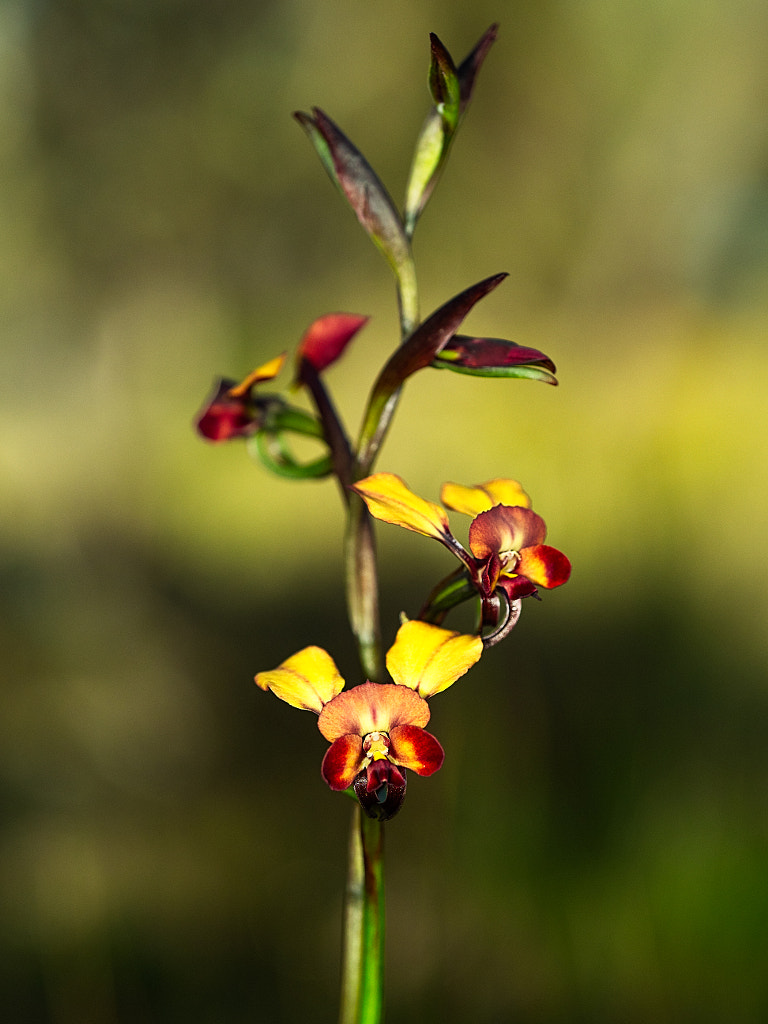
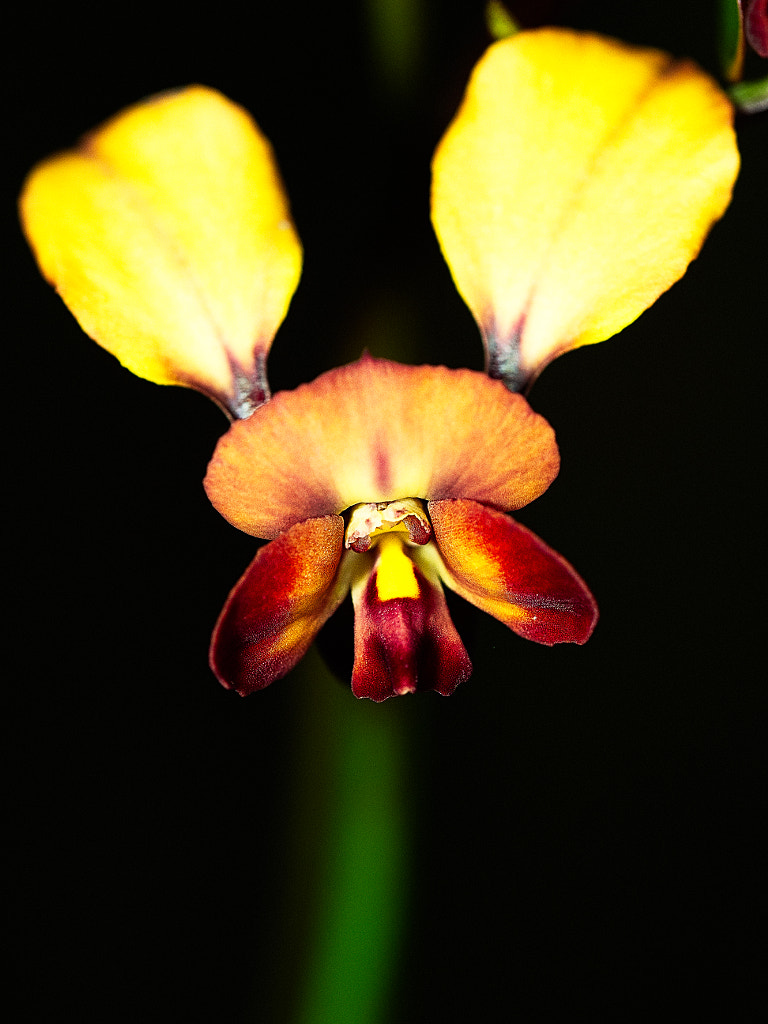
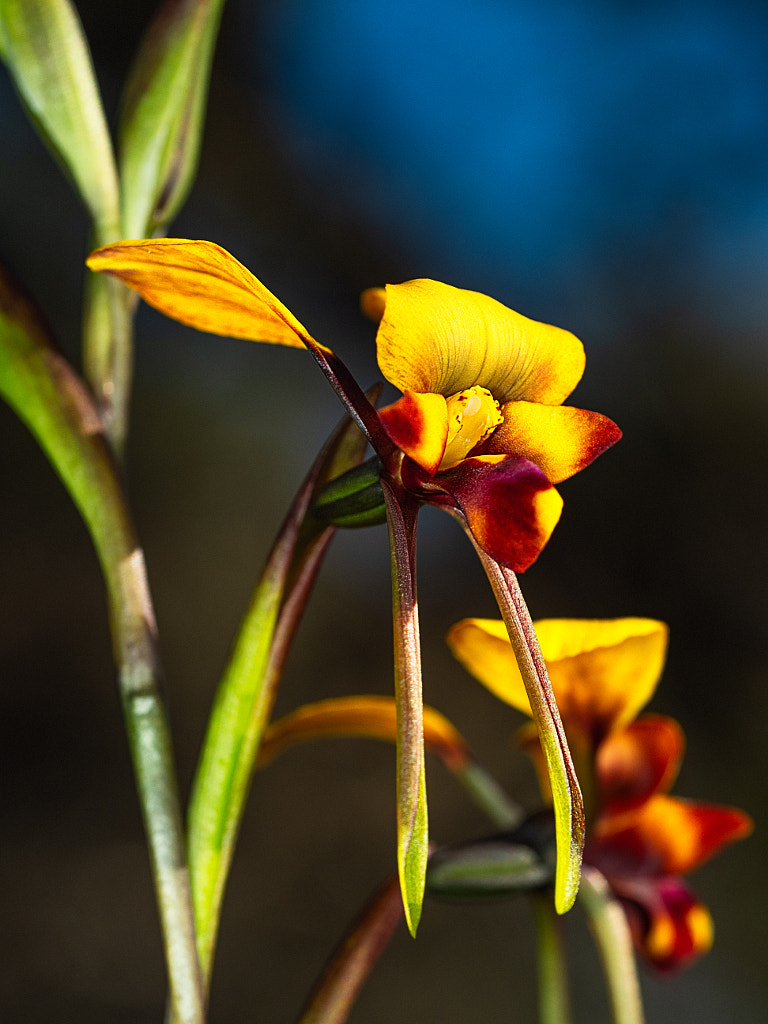
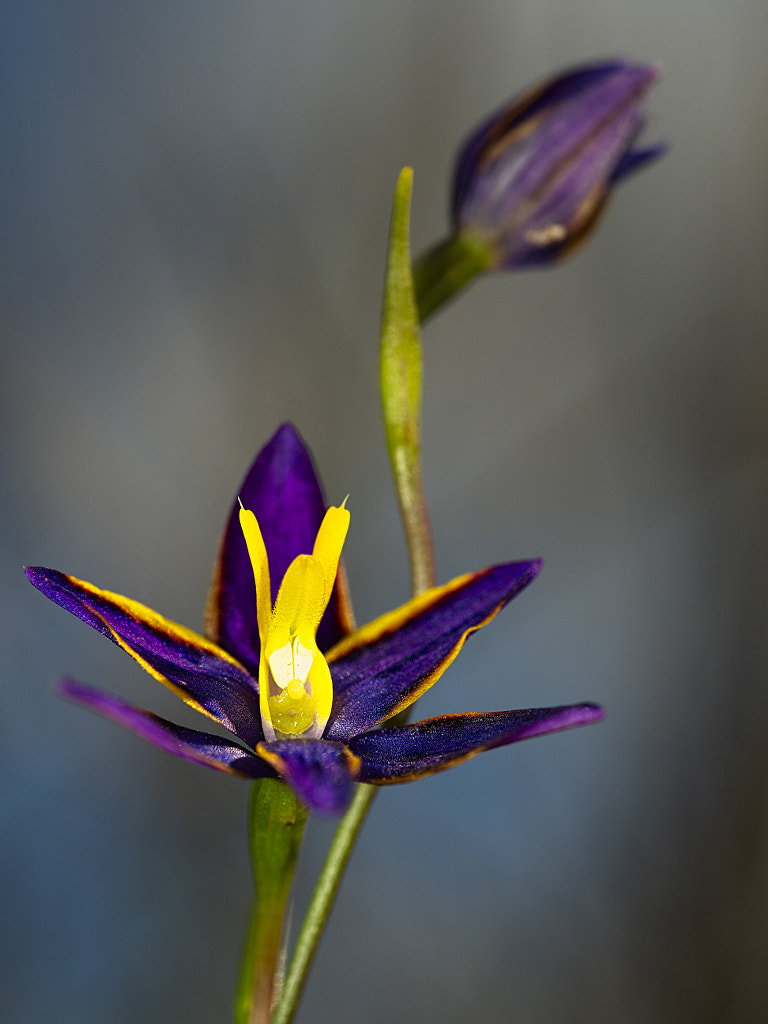
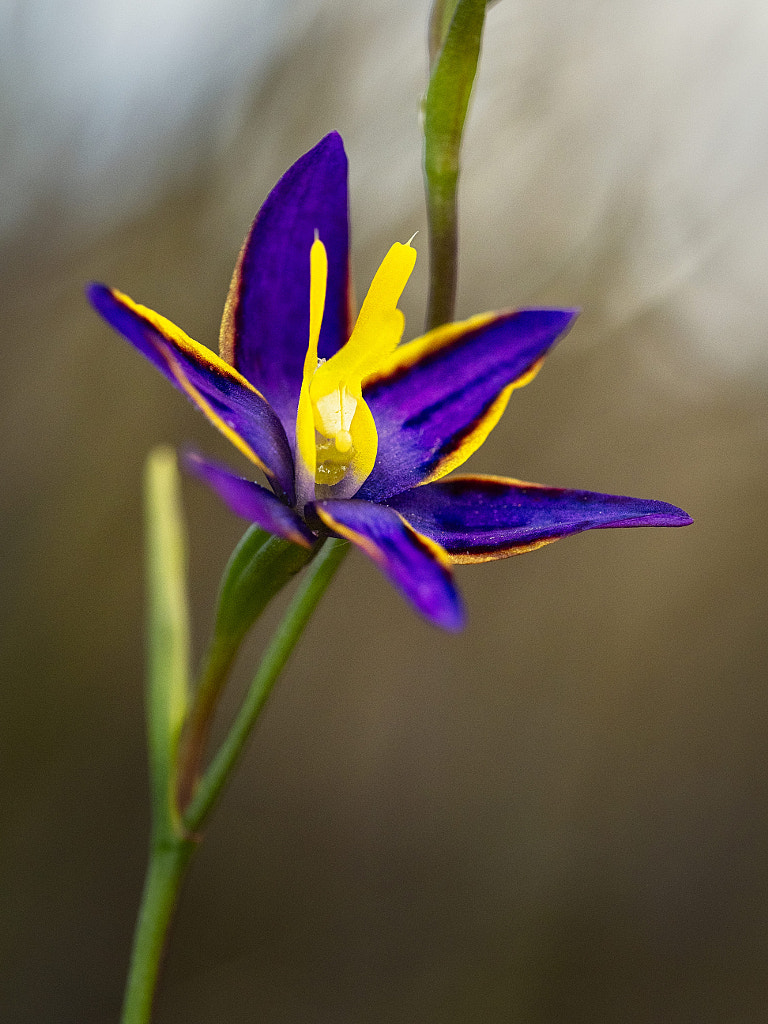
Winter Donkey Orchid, Diuris brumalis.
Mahatma Gandhi famously said “Be the change that you wish to see in the world.” So the change stars with us. Our actions no matter how small and insignificant they may appear magnify exponentially when we all do them. If you want some help on things to do to make the world a better place then I suggest the The Lazy Person’s Guide to Saving the World from the United Nations Sustainable Development Goals. Another good place to start is the #youneedtoknow 170 actions to transform our world. You don’t have to do them all just pick a couple of suggestions at first and see how you go. As you do this make sure you spend some time in the natural environment. Firstly because it will make you feel better, calmer and more relaxed. Secondly to experience and see what you’re hoping to save.
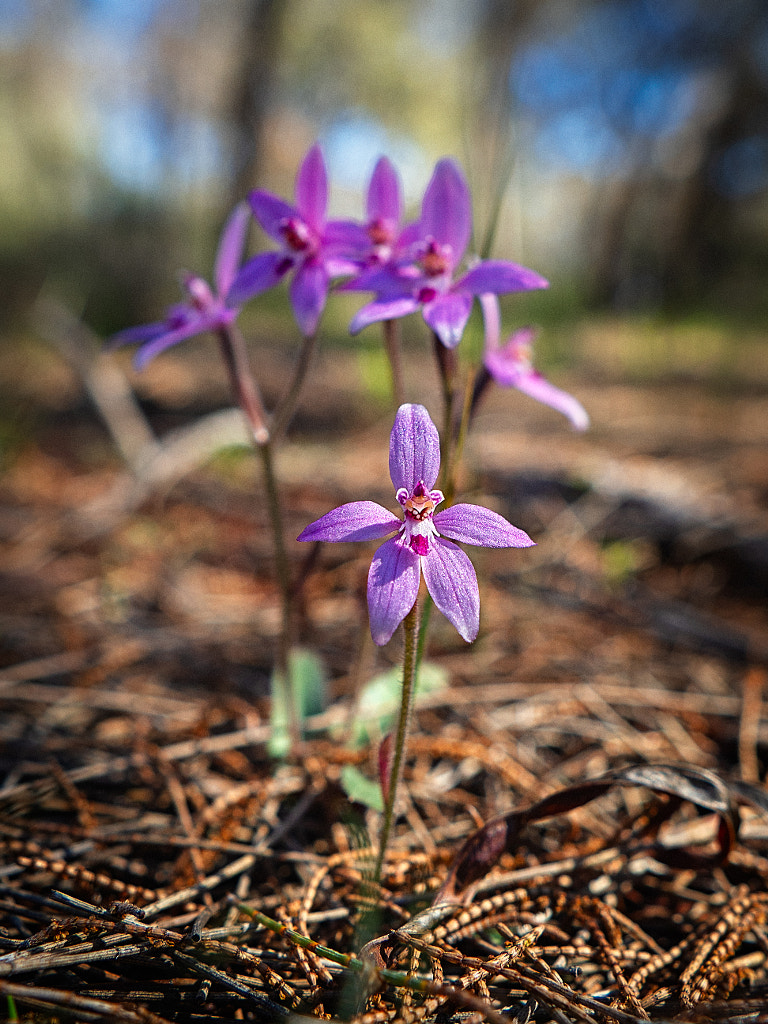
Little Pink Fairy Orchid aka the dwarf pink fairy orchid, Caladenia reptans subspecies reptans.
the quality or state of being ridiculous or wildly unreasonable: Duncan laughed at the absurdity of the situation | [count noun] : the absurdities of haute cuisine.
The above is the dictionary definition. My definition is driving nearly 400Km to stand on a mountain in the middle of a lashing hail storm with winds that make it almost impossible to stand while looking for a particular flower and not finding it. The strange thing is that I was was happy to do this and while I was disappointed not to find the Queen of Sheba I did find some other orchids that I’ve never seen before.
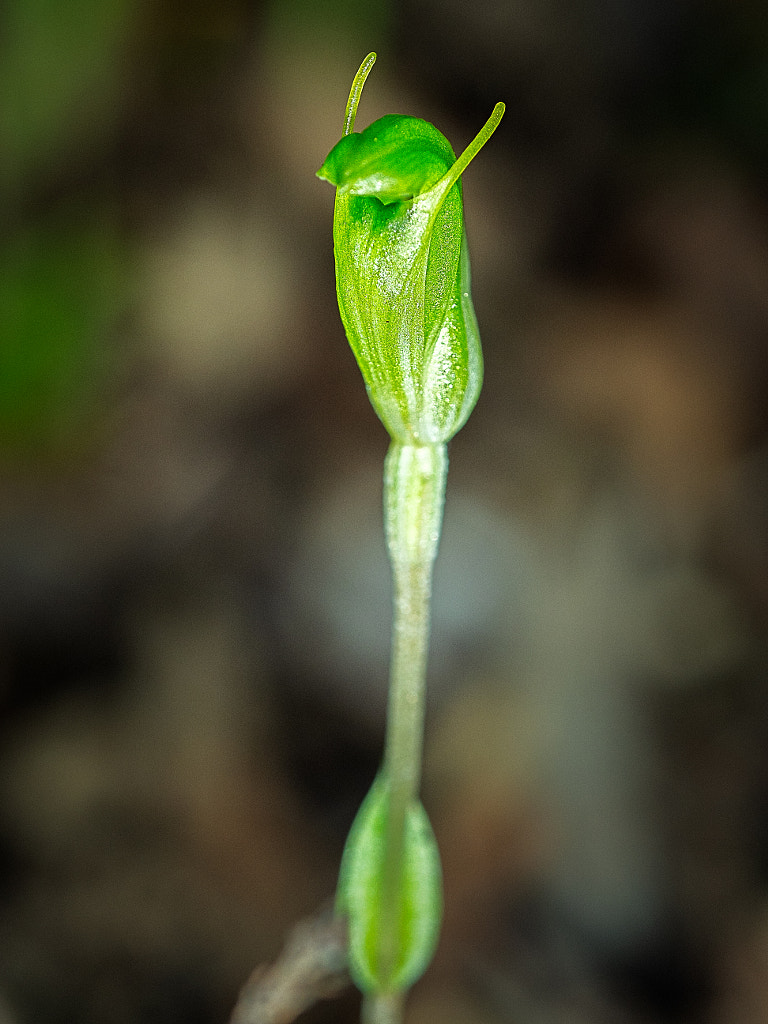
Short-eared Snail Orchid, Pterostylis sp ‘short sepals’. Gull Rock National Park, Western Australia. Olympus OMD EM 1 mk ii with Olympus 60mm f2.8 macro lens. Exposure: 1/250 sec, f4, ISO 200.
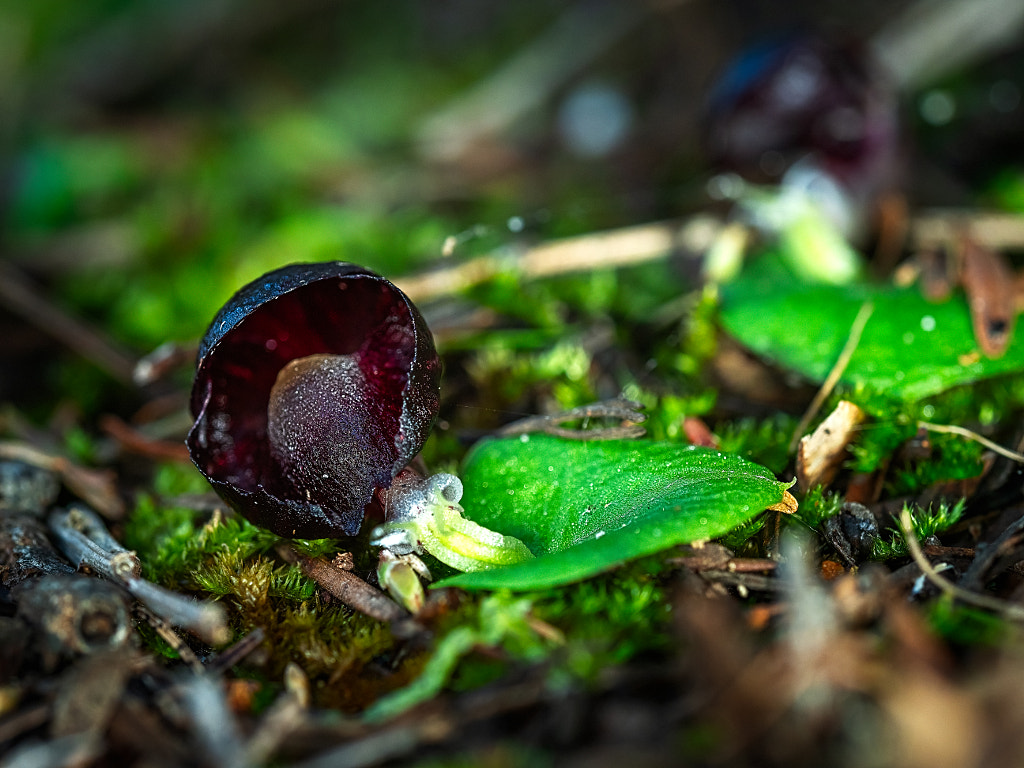
Helmet Orchid, Corybas recurvus. Gull Rock National Park, Western Australia. Olympus OMD EM1 mk ii with Olympus 60mm f2.8 macro lens. Exposure: 1/200 sec, f4 at ISO 800.
All this and the the ongoing COVID problem have made me thinking about the importance of hobbies.
hobby | ˈhɒbi |
noun (plural hobbies)
an activity done regularly in one’s leisure time for pleasure: her hobbies are reading and gardening.
Back in the Seventeenth Century a hobby was thought be be a childish pastime – indeed the word originally was used to describe a small horse, but then was used for a toy horse on which children mimicked riding a real horse. It was the advent of industrialisation that gave respectability as the new industrial age gave people more structured working practices that gave time off. The work was often incredibly tedious and people wanted activities that brought them satisfaction and fulfilment. Come the Great Depression (1929-39) and participation in hobbies exploded because the unemployed needed something to occupy their time and minds. In the later part of the Twentieth Century psychologists began to realise that play was an important part of a child’s development it did not cease when entering adulthood and that play in the form of adult hobbies provided the means to healthy ageing especially when we retire. Hobbies are very much a paradox as they take a leisure activity and turn it into a form of work which is just done for the satisfaction.
Dad with his trophies for his rabbits circa 1946.
My father wasn’t one for doling out advice, in fact I can only remember him doing it a couple of times, and one of those was about having a hobby. Being a dour Lancashire man he maintained that work wasn’t enjoyable and how you consoled yourself was by having a hobby that was totally engrossing. He practiced what he preached throughout his life – stamp collecting (he called it “postal histories”), model railways, slot car racing (Scalextric and we children were not allowed near it!), keeping tropical fish, and breeding rabbits. To be honest I think the rabbits were a bit of a business as he started doing this at end of World War Two when there was still rationing because while he showed his best ones a lot were reared for their meat and sold to friends and neighbours. The stamps were his life long passion and when he got into the postal history of the Austro-Hungarian Empire in his early 70’s he taught himself German and started visiting some of the places. By the time he reached his 80’s he was wheeling and dealing stamps on internet auction sites right up to when he died.
As kids we were encouraged to have hobbies. I’ve tried loads over the years and some have stuck and some have died a death. The ones that have stuck like photography and bushwalking have over time developed and changed reflecting my interests and the amount of time I have. Over the years they’ve helped me manage stress, get through difficult times and given me a sense of purpose and validation. At times I’ve managed to make money out of them but now I do it for the love. Interestingly the word amateur comes from the Latin word “amator” or lover. This is what found me up a mountain looking for flowers in a hail storm.
Cataby 170Km north of Perth in Western Australia could hardly be called the epicentre of the universe. There’s a titanium mine to the north and a mineral sands operation just south. There is the Cataby Important Bird Area just 2Km outside the settlement. None of these were the reason for my visit. I was there to explore the scrubland that runs along side the Brand Highway looking for orchids, in particular the Arrowsmith Pansy – insert politically incorrect joke here. I must say that when I first pulled up I didn’t expect to find much. The low lying scrub was difficult to walk in and it was very difficult to see the smaller plants. Here’s what I found.
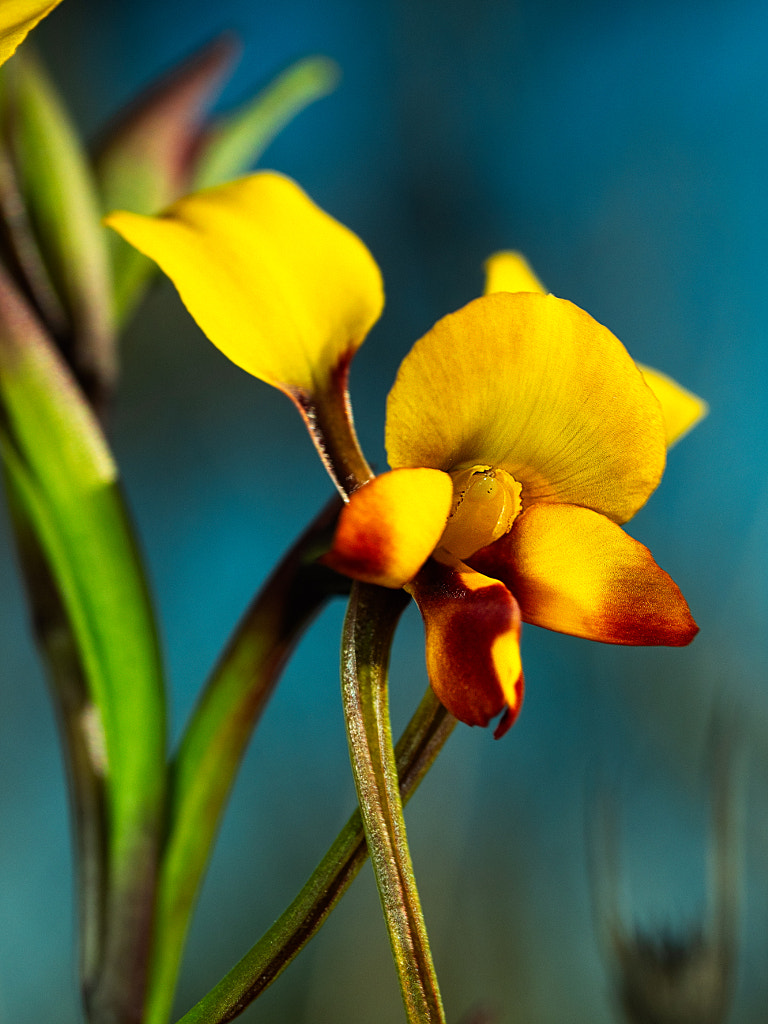
Arrowsmith Pansy Orchid, Diuris sp ‘Arrowsmith’. Cataby, Western Australia.
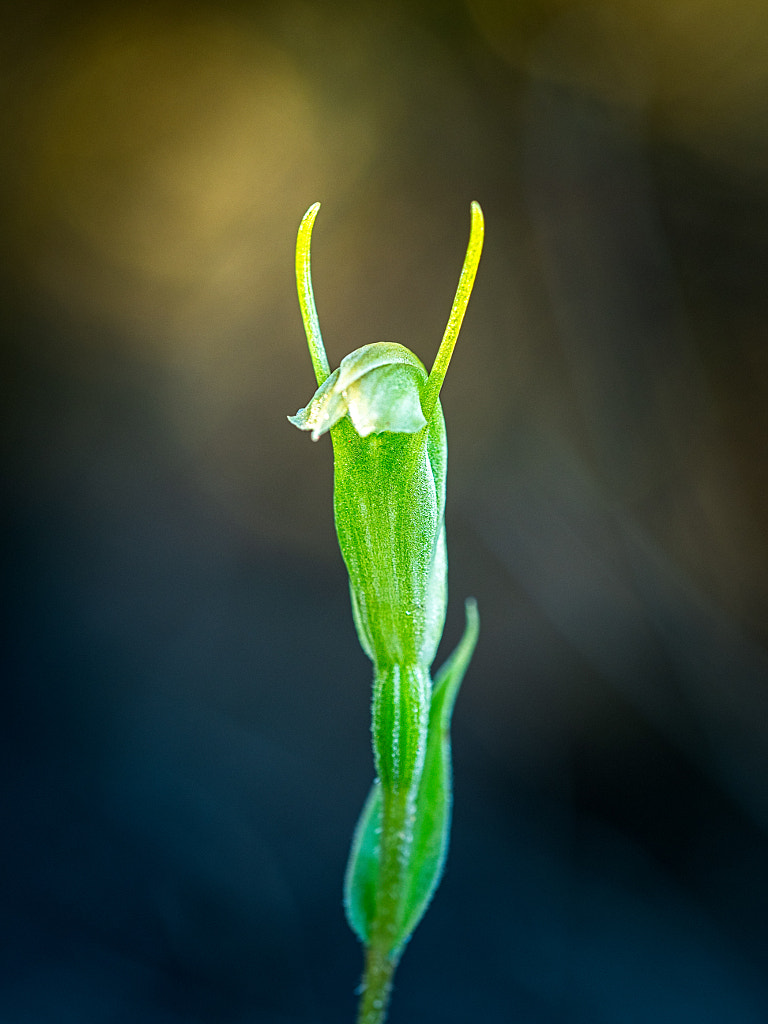
Autumn Leek Orchid, Prasophyllum parvifolium. Cataby, Western Australia.
Winter Donkey Orchid, Diuris brumalis. Cataby, Western Australia.
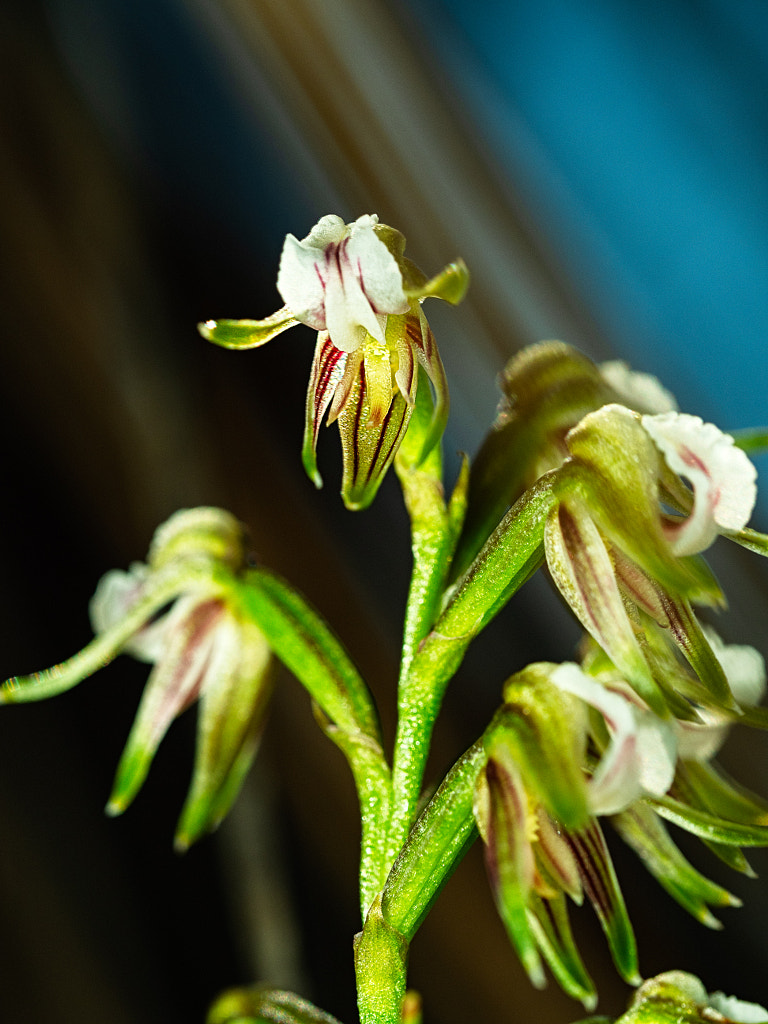
Hairy stemmed snail orchid,Pterostylis sp. ‘hairy’. Cataby, Western Australia.
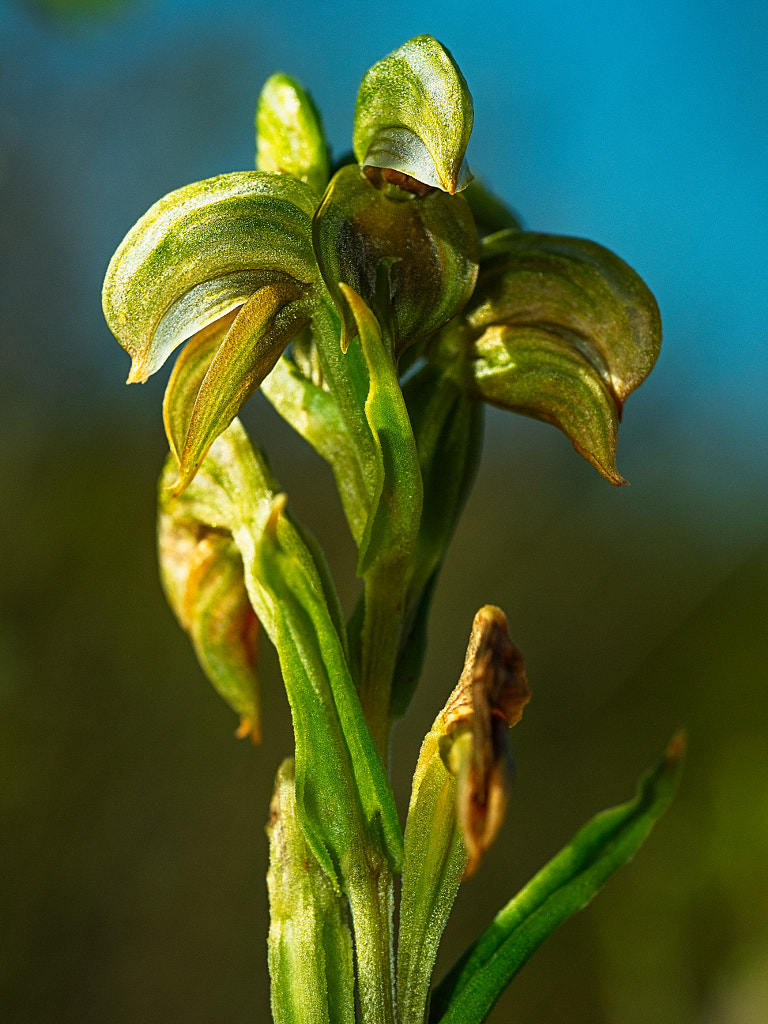
Northern Banded Greenhood, Pterostylis sp ‘Dongara’. Cataby, Western Australia.
Cleopatra’s Needles, Thelymitra apiculata. Western Australia.
I’ve been looking for the Cleopatra’s Needles orchid (Thelymitra apiculata) for at least five years and I’ve written about that search previously. It is only found in a small area and it is not very common. Its location is about a couple of hours drive from where I live so it’s not something you can do on an off chance – it is a dedicated expedition. Well yesterday I went out and after a pretty dispiriting hour I found plenty of orchids but not the one I was looking for. As I was walking back to the car I noticed a couple further up the hill who were paying close attention to an area around a small bush. I hoped they had found it and so I made a mental note of where they were and aimed to make my way up there slowly. You may ask why I didn’t just walk up and have a look. Well in Western Australia the orchid hunting community is quite secretive and often bordering on the paranoid. Sites are not shared and it is considered very bad form to crash somebody’s find. As I slowly sauntered through the scrub they called out to me asking if I’d found anything when I said no the young woman invited me over saying that they had not only found one plant, but three others. Orchid El Dorado!!!
I spent over an hour photographing the plants. I t was quite a challenge as the conditions were quite changeable, sunny one minute and overcast the next because Cleopatra’s Needles are in the “sun orchid” family and if the sun isn’t out then the flower can close up. It was also very sociable. The young couple were from Germany and had only got the orchid bug last year and she in particular was pretty elated to find Cleopatra’s Needles especially when she found out that I had been looking for so long. As I packed up and thanked them profusely for letting me in on their find and went home feeling very happy.
Caladenia roei goes by a number of common names which are Clown Orchid, Ant Orchid, Man Orchid, and Jack-in-the-box Orchid. Narrogin, Western Australia.
If you just look at the media you’d think that there’s not a lot of hope for the world. We’re in the middle of a global pandemic, there are bushfires raging on the west coast of America, eastern Australia was ravaged by bushfires earlier in the year, there’s a global recession – the list goes on and on. There seems very little hope left in the world. If you want to find some hope then you’re going to have to go looking for it.
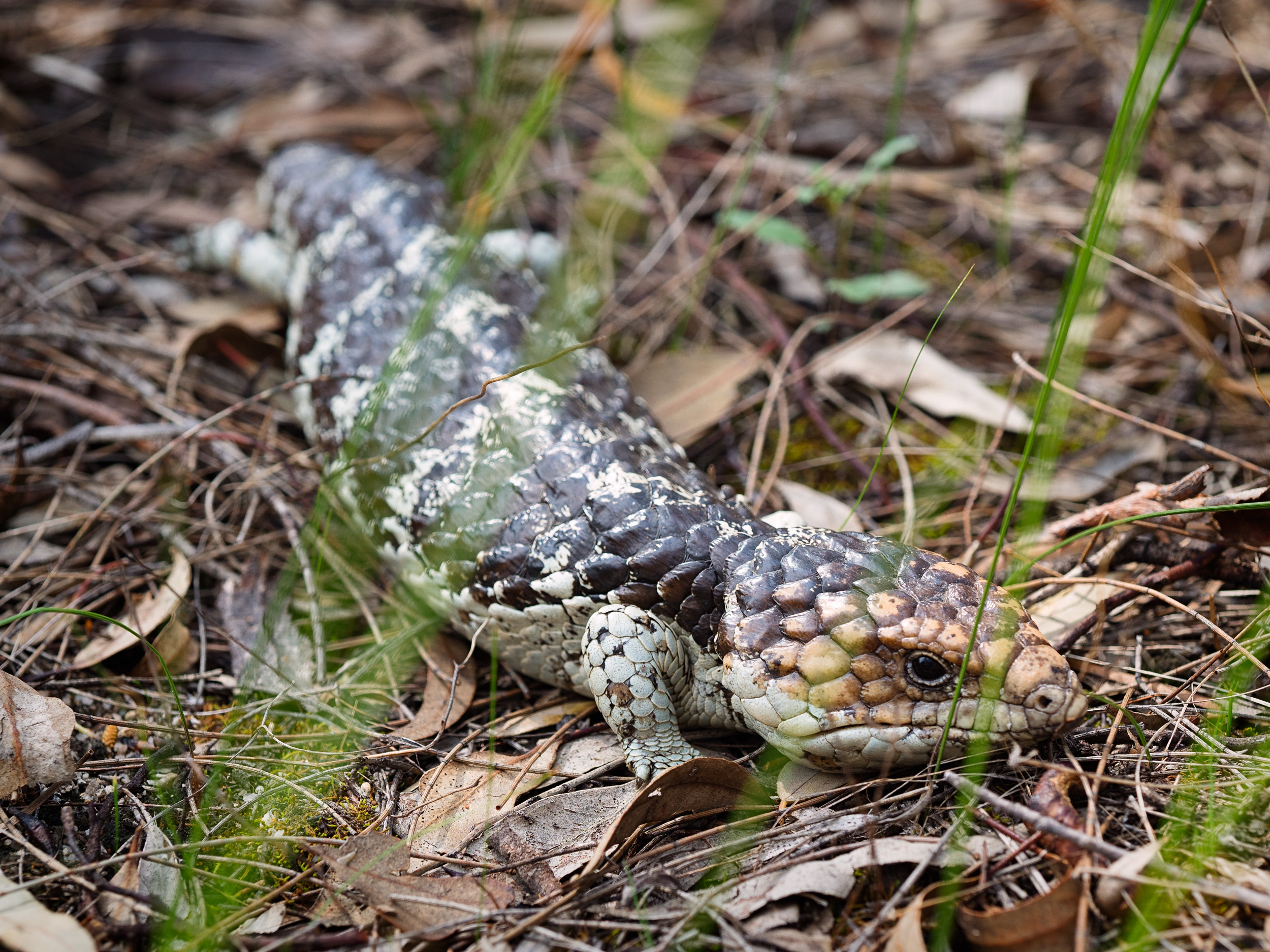
Yoorn is the Nyoongar name for the bob tailed lizard (Tiliqua rugosa). Narrogin, Western Australia.
Every now and again I come across a place that gives me hope for the present and the future. They always take the form of a scrap of land that somebody has decided to regenerate. I’ve written about a couple of these places before – Lake Seppings and Lake Claremont.Both of these are examples of urban regeneration based around a lake. This month I’ve been out in the Wheatbelt exploring a reserve east of Narrogin. It’s a bush block in the middle of farm land that is being allowed to regenerate. To say it’s off the beaten track is an understatement. When you get there there is no access to it, no paths, no signs other than one telling you that it is a regeneration project. As you you make your way through the scrub you begin to notice something quite remarkable – there’s no evidence of any human visitation. No litter, no vehicle tracks, no foot prints. Nature is being left to itself and it is a wonderful sight. It’s not in anyway shape or form picturesque – just dense scrub fringing a granite outcrop.It’s hard country to move in as the scrub and the rocky uneven terrain make the going quite difficult in places, and then when you hit the rock it is quite steep and exposed.
The overly friendly echidna (tachyglossus aculeatus). Narrogin, Western Australia.. Narrogin, Western Australia.
Straight off the the things that were most noticeable were in the larger gaps between the trees where the sun hit the ground were amazing profusions of wildflowers – everlastings, orchids, all sorts. Then I started to stay still and just tune into the environment. The bird song was really loud and was made up the calls from lots of different species. Moving slowly I saw lots of different insects – spiders webs, butterflies, different types of beetles that I’d never seen before. There was a lot of evidence of digging on the ground. The small holes the size of a saucer and a couple of centimetres deep were signs that kangaroos were looking for moist roots and tubers. The larger holes had me puzzled until I found the culprit- these were made by echidnas looking for ants and termites. At one point I stopped to photograph some flowers and I was lying in the leaf litter to do so when I felt something touch my foot. Ever mindful of snakes I looked and found not a snake but an echidna. I was having a close encounter of the spiny kind. As I came to the rock the trees thinned out and there were bob tailed lizards basking in the sun. On the rock itself there were crested dragons (Ctenophorus cristatus), they are virtually impossible to photograph as they are so quick in dashing to the protection of an overhanging rock or crevice.
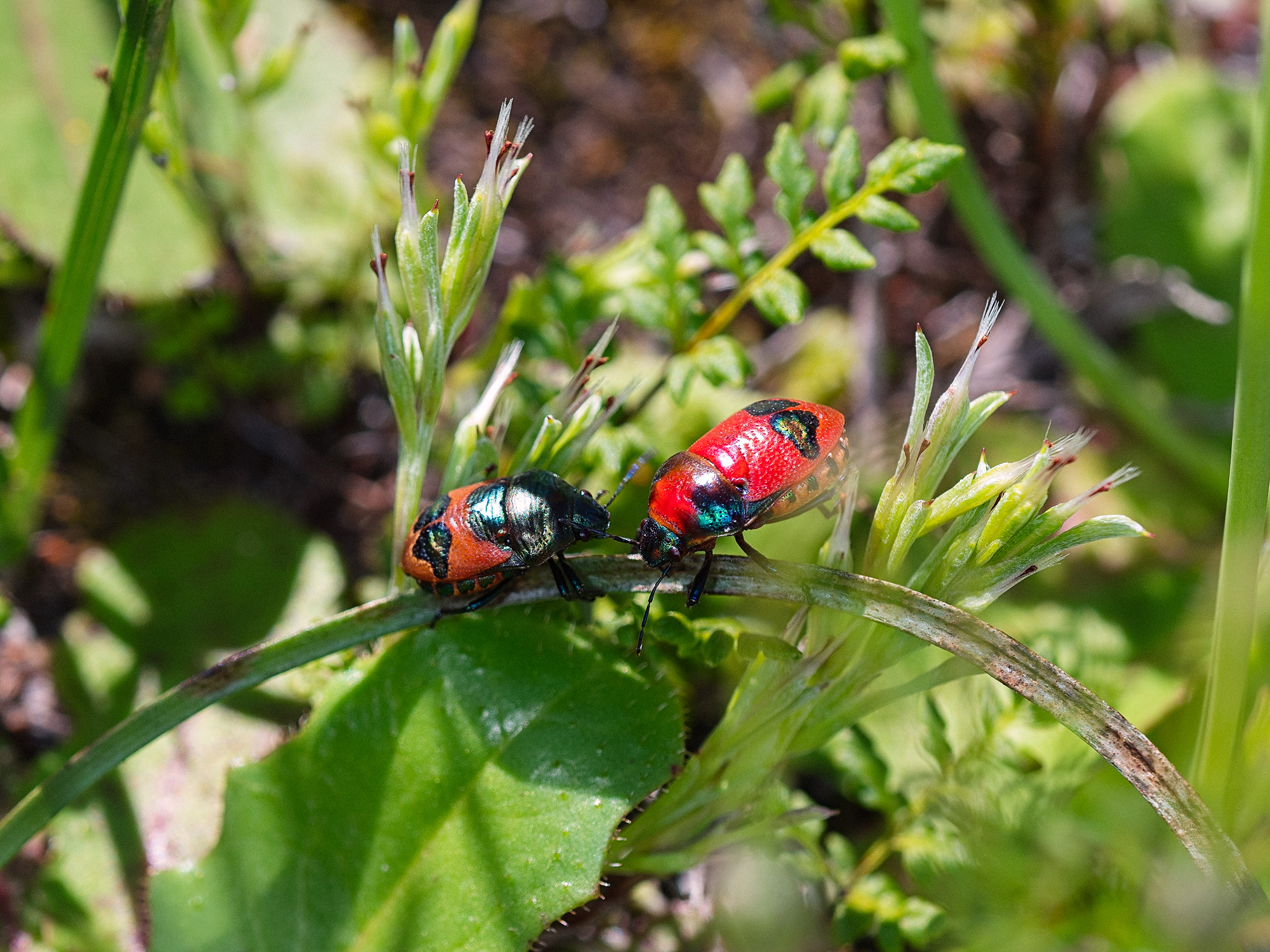
A pair of Australian Ground Shield Bugs meeting on a plant stem. Narrogin, Western Australia.
It would be tempting to over romanticise the place saying it was a return to the Garden of Eden or Paradise Regained. Looking at with a more down to each perspective it just illustrates how nature can recover if it is allowed to. There are no groups of volunteers here replanting and doing pest eradication as there was at Lakes Seppings and Claremont. It is just nature being allowed to do its thing and that is what gives me hope. So if you are feeling overwhelmed and hopeless with the current situation I can thoroughly recommend going to a nearby nature spot, or even your own garden, and thoroughly immersing yourself in it. Look up, look down, listen, even sniff. Just soak it all up and let it feed your soul.
Candy Orchid, Caladenia hirta subsp. hirta. Narrogin, Western Australia.
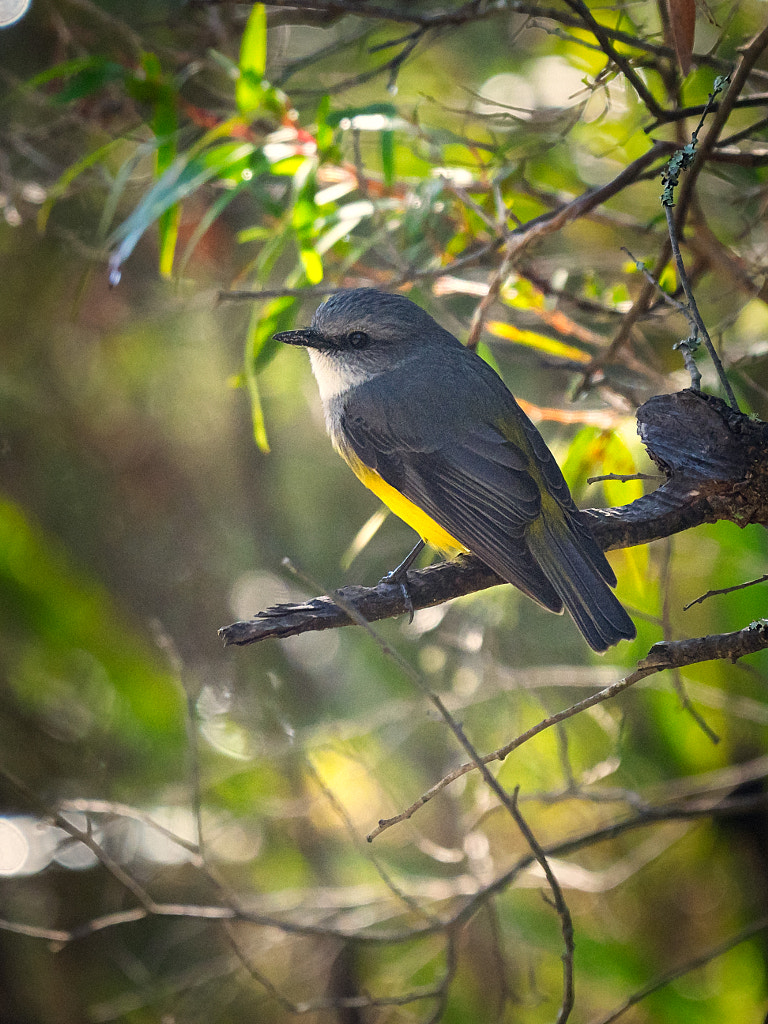
I’d gone to Locke Nature Reserve near Busselton looking for common helmet and midge orchids, but they weren’t flowering. This Western Yellow Robin (Eopsaltria griseogularis) and its mate kept darting in and out of the bush as I walked along the track so I photographed them instead.
This nature photography lark is a lot harder than it looks. I follow a couple of YouTube channels from the UK that weekly show the host going out to some location to photograph and /or film a particular animal or plant. They always find it and always get good images. My experience is a bit different to that. I find that you can go out with all the best intentions in the world, but if nature isn’t playing ball then you don’t get anything. I’ve lost count of the number of times that I’ve set out to look for the Cleopatra’s Needles Orchid (Thelymitra apiculata) driving 100’s of kilometres to find absolutely nothing. Take last weekend. We were down in the South West of Western Australia as my partner was again playing in a croquet tournament. So I’d researched what was about in terms of birds and orchids and set out to several locations with a specific list of what I wanted to photograph. The first stop was Malbup Creek Bird Hide where I wanted to see tawny frogmouths and white-bellied sea-eagles. Well I spent a nice morning at the hide without seeing them. I did get a nice shot of a shelduck and the local kangaroos were hamming it up for a photo.
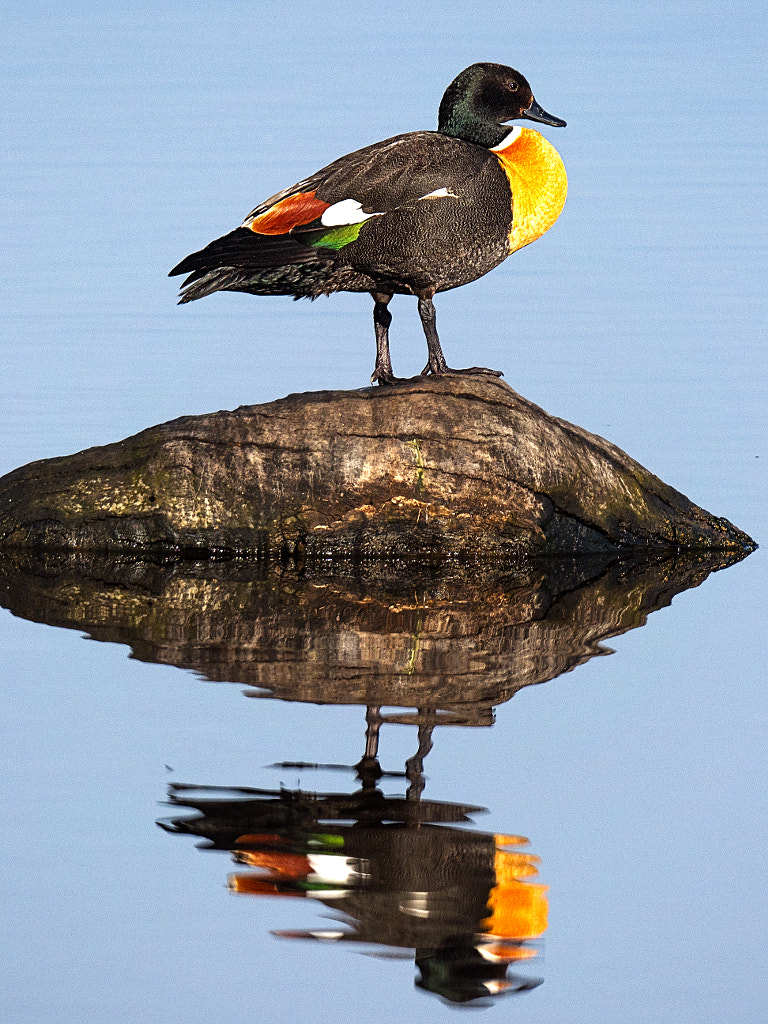
Not the white-bellied sea-eagle I was looking for. Still he’s a very handsome Australian Shelduck.
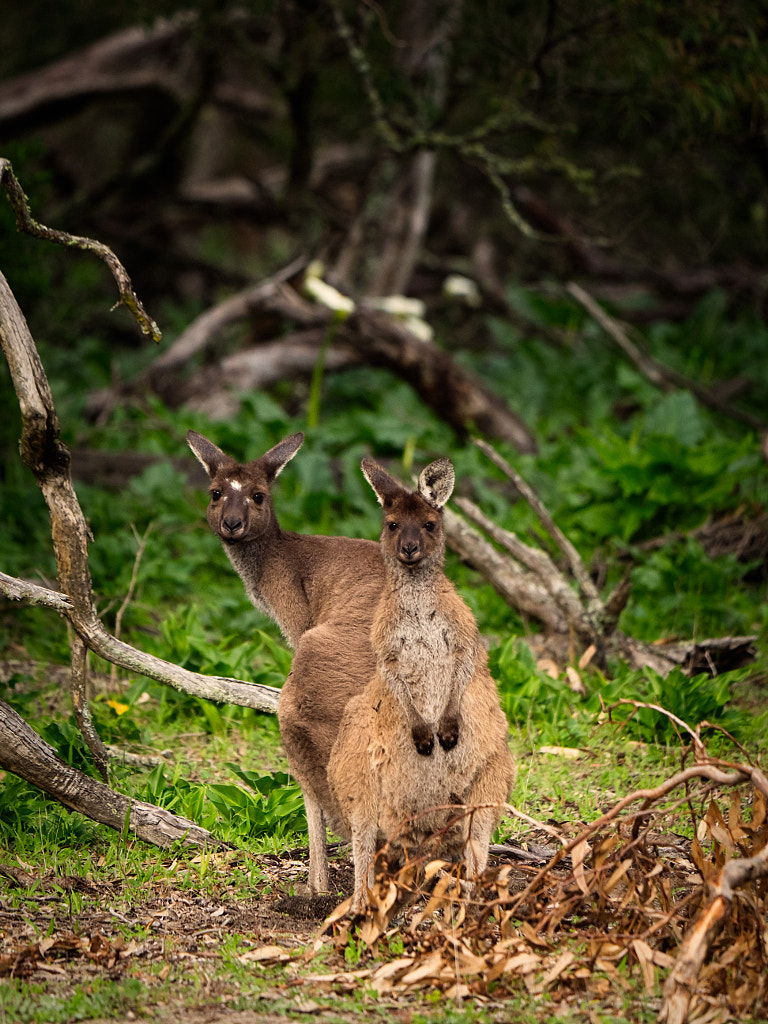
No tawny frogmouths to be seen let alone be photographed. The Western Grey Kangaroos were keen to oblige.
The next stop was Locke Nature Reserve looking for common helmet and midge orchids. Well after a couple of hours of scrabbling around in the undergrowth fighting off the unwanted attentions of the local mosquitoes I’d found lots of them, but none in flower. There were some Splendid Fairywrens in the nearby bushes but they really didn’t want their picture taken and kept dancing out of the way every time I got close. On the walk back to the car a couple of Western Yellow Robins flew slightly ahead of me. They would stop and perch periodically and I was lucky enough to grab a few frames.
My last spot was Westbay in Augusta looking for scented autumn leek orchids. Now I’d seen them before at this location and knew where to go. They weren’t there. Not a one was to be seen. But I did find some autumn leek orchids – close enough so I photographed them. Funnily enough the autumn leek orchid has a much more pleasant scent than the scented variety which has decidedly unpleasant pong.
Autumn Leek Orchid, Prasophyllum parvifolium. Westbay, Augusta, Western Australia
So there you have it another rewarding trip. I may not have found what I was looking for but I found other things and really enjoyed my time in the bush and that is what it is all about.
* This weeks musical reference is of course U2’s song I Still Haven’t Found. My favourite version is the one on 1988’s Rattle and Hum album.
OK that maybe a little bit melodramatic, but there was no doubt that getting out and about after a few weeks of lockdown was a bit of a rush! So where did I go? What did I do with this new found liberty? Well I went to Wongamine Reserve near Toodyay to look for two types of orchid and do the walk trail. Pretty sad eh?
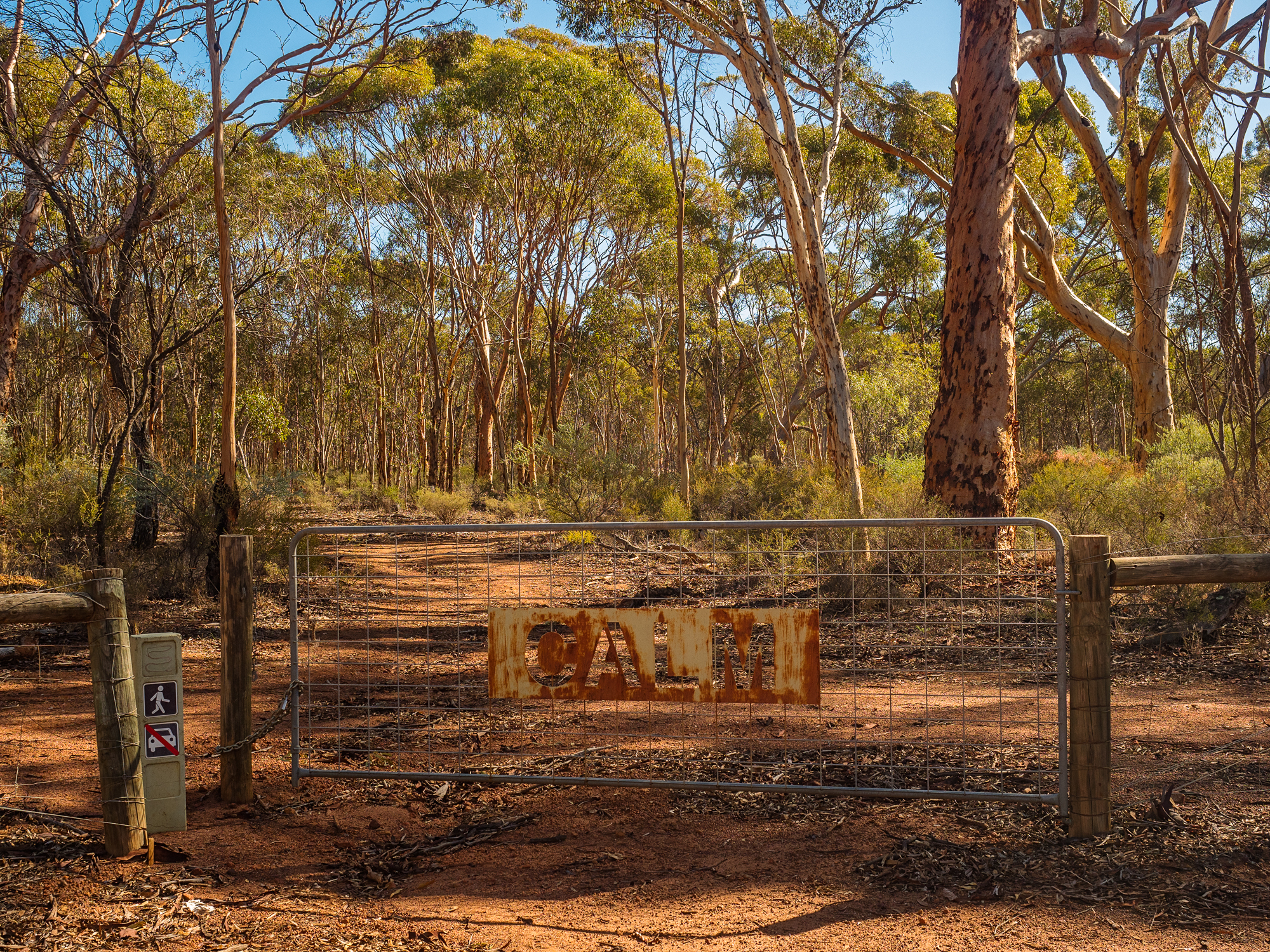
The main entrance to Wongamine Nature Reserve, Toodyay, Western Australia.
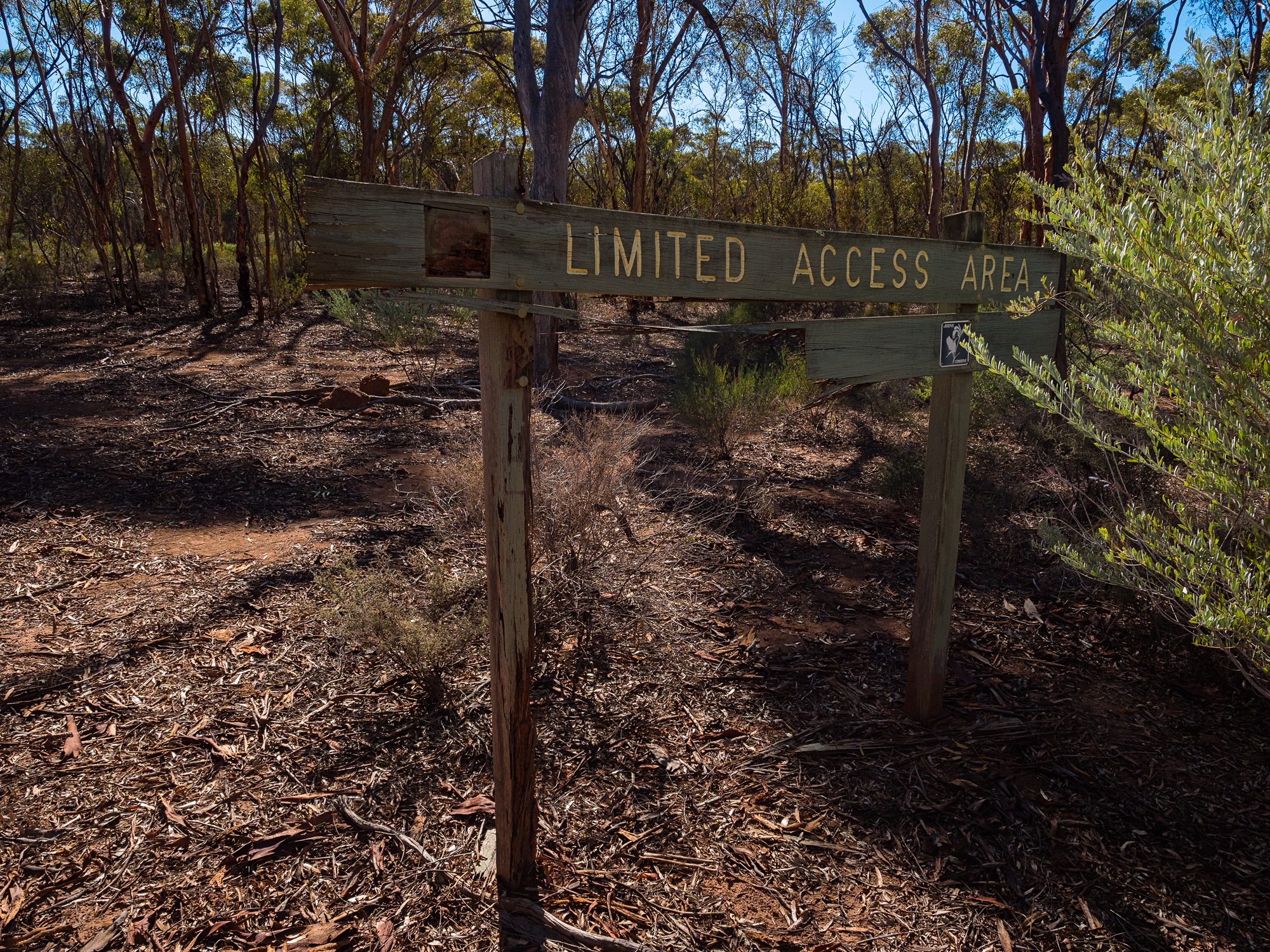
The reserve isn’t really visited any more the gates are locked and many of the signs broken or over grown. In fact speaking of overgrown the walk trail is so overgrown in places that I suggest that if you do want to visit and walk there that you take a GPS and download the walk track from Trails WA and follow that.
The reserve was closed a while ago and many of the trails and signs have fallen into a state of disrepair. Wongamine Nature Reserve, Toodyay, Western Australia.
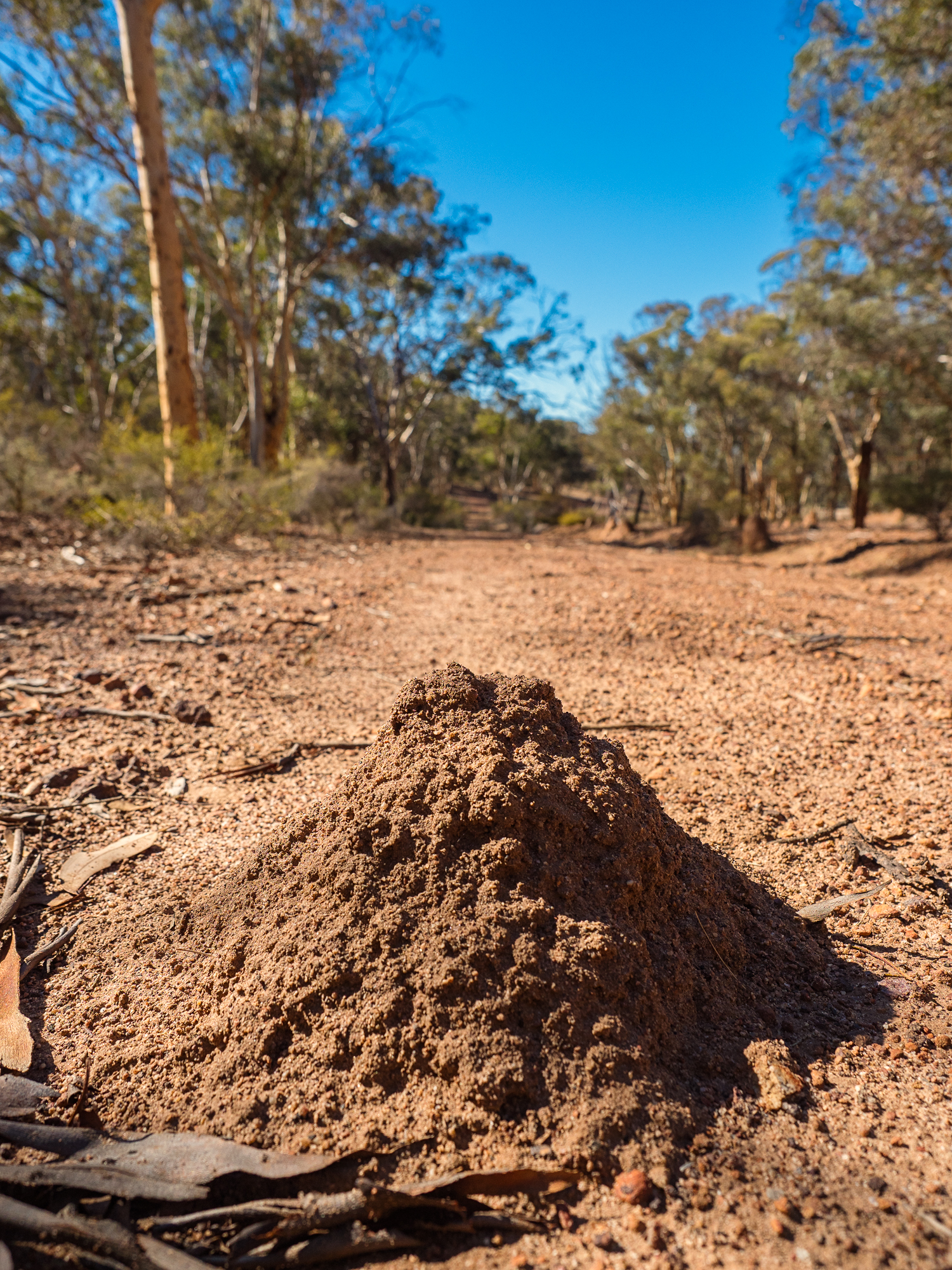
Some of the vehicle tracks have not been used for a long time allowing termites to build mounds on them. Wongamine Nature Reserve, Toodyay, Western Australia.
This was one of only two trail markesr on the walk trail. Wongamine Nature Reserve, Toodyay, Western Australia.
Was there anything positive about the visit? Well yes there was actually. The woodland is home to quite a variety of bird life – I didn’t photograph any as I was not carrying a suitable lens as I had gone to photograph orchids. I would expect from walking through the bush that would be quite a display of wildflowers in spring which would make the journey well worth while. There were quite a few species of dragonflies as well which at the time surprised me for some reason.
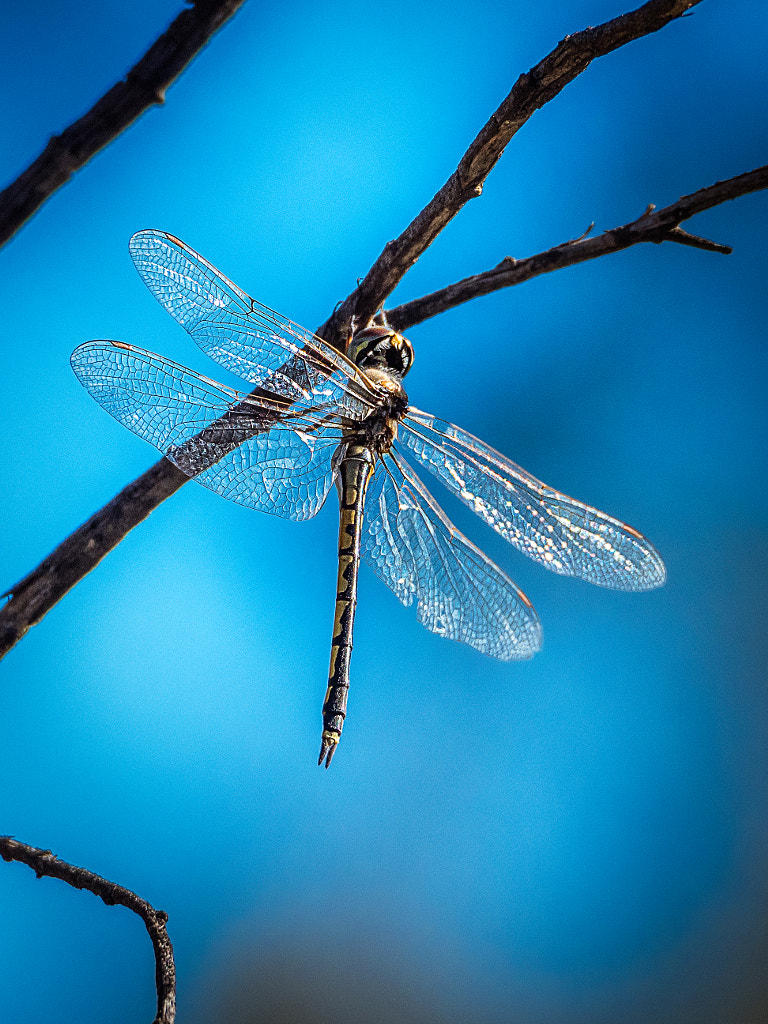
Australian Emperor Dragonfly (Anax papuensis) Wongamine Nature Reserve, Toodyay, Western Australia.
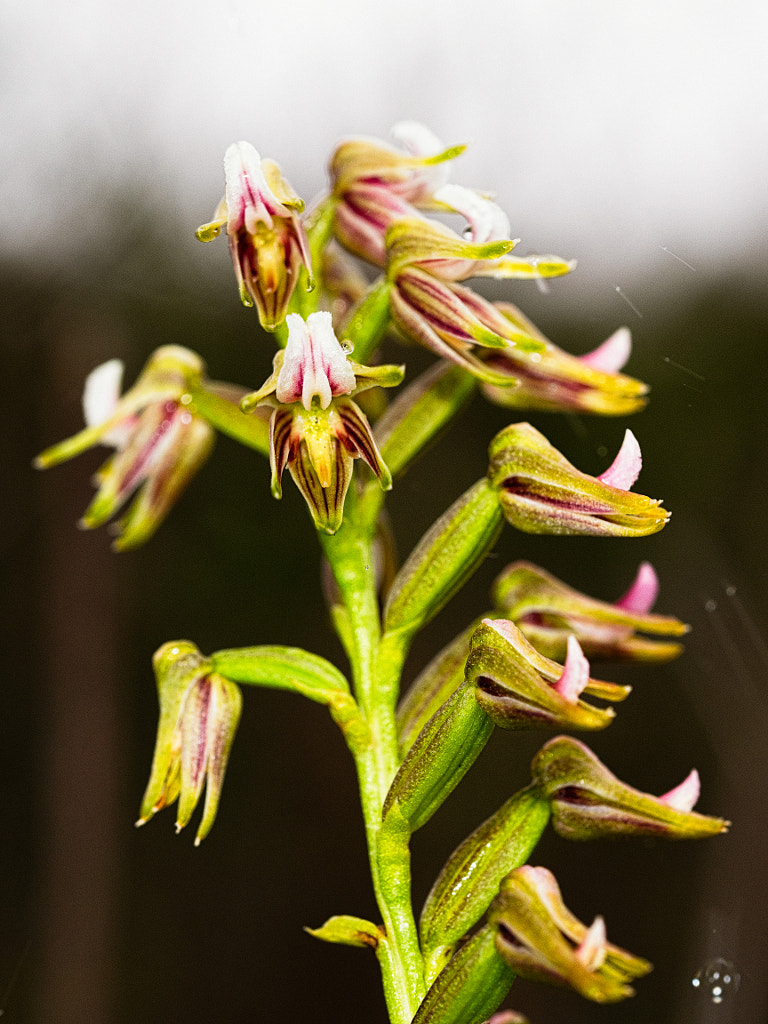
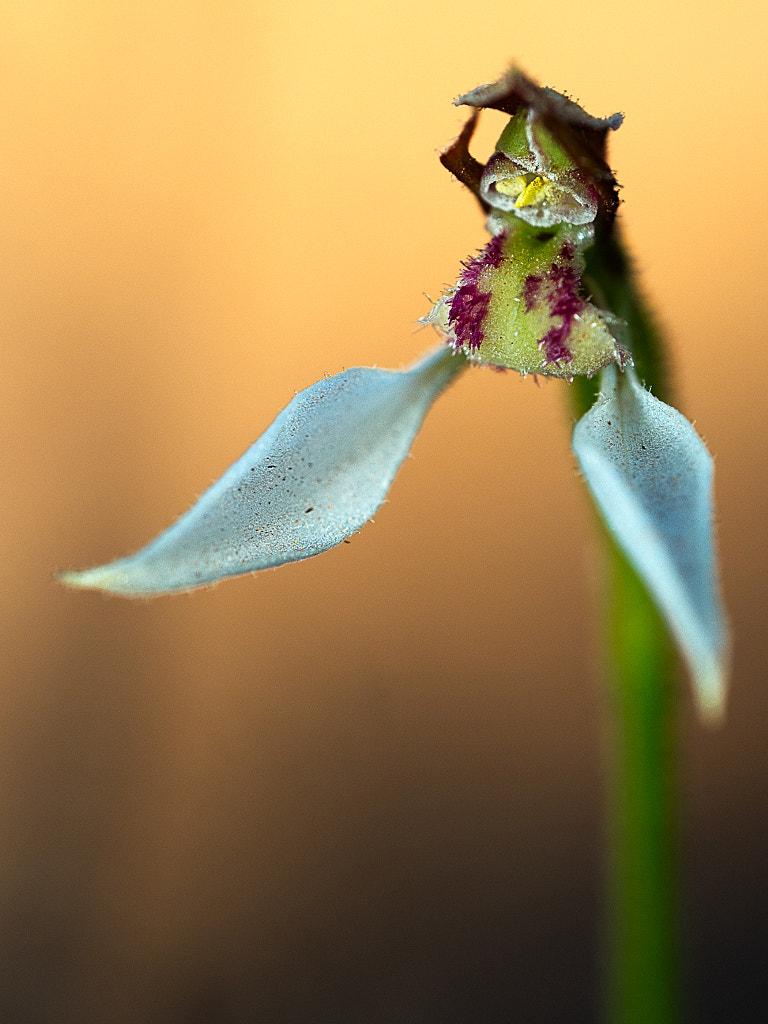
Did I find the orchids? Well the Winter Spider Orchid is only 6cm tall with a 2cm flower and the Crinkle-leafed Bunny Orchid is 10cm tall with a 9mm flower and considering that the reserve is 330 ha of bushland I think I did well to find anything at all. I didn’t find any Winter Spider Orchids, I have photographed them before at Babakin, but I found lots of the Bunny Orchids. In fact I never seen so many Crinkle-leafed Bunny Orchids before. So all in all it was a great day out.




You must be logged in to post a comment.