“Few things are as exciting as the idea of travelling somewhere else. But the reality of travel seldom matches our daydreams.”
Alain de Botton
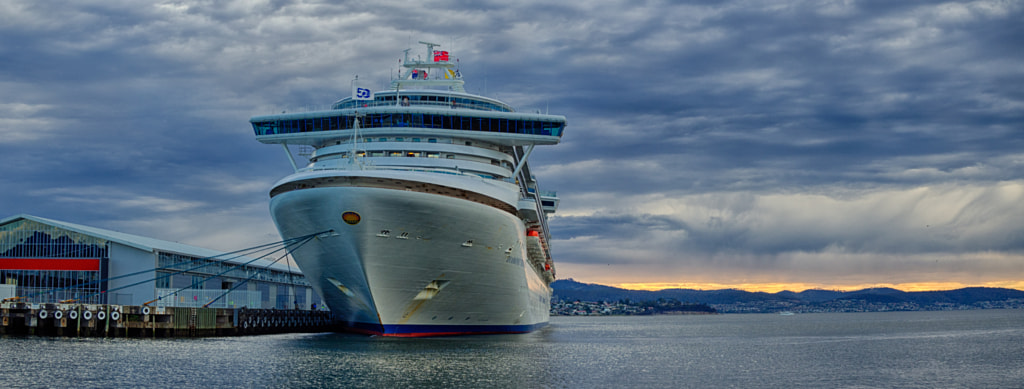
I’ve never been a fan of mass tourism, but over the last few weeks I’ve been reading a lot about the negative aspects of it and in particular with what is happening to Venice. Apparently as many as 44,000 cruise ship passengers pour into Venice a day during the high season. That’s roughly 5 cruise liners worth. When we lived in Tasmania we’d get the boats pull into Hobart Harbour, thankfully just one at a time, and the passengers would be like a tsunami as they headed for Salamanca. I hate to think what 5 times that number would be like. Along with the negative impact that has on the local population and the environment there is also the fact would you really want to visit somewhere with another 44,000 people? It’s hardly getting away from it all is it? Then there is the whole thing of “Right you’ve got six hours in port and then we’re off to the next location”. Six hours following several other thousand people all traipsing round the same location, looking at the same few things only to herded up at the end of the day and taken somewhere else to do exactly the same thing the next day. It’s a gross version of the 1969 film “If It’s Tuesday, This Must Be Belgium”. It’s worthy of Dante’s vision of hell. So why do people do it and pay a fortune for the privilege? Essentially people do it because they are bored with the ordinariness of their life and want something out of the ordinary with a touch of luxury.
When I lectured in photography one of the most common complaints from students was that there was nothing to photograph in Perth or Western Australia. They wanted something new, something exciting something that they’d never seen before. The problem was photography’s history encourages that kind of thinking – we only have to look at the photographic tradition of the road trip established by the likes of Robert Frank and his eponymous book The Americans with its hip introduction by Jack Kerouac. Stephen Shore and Alec Soth amongst others have popularised it to the extent that it has almost become a photographic rite of passage. Indeed at a portfolio review at FotoFreo my reviewer actually said I should go on a road trip as a means of finding myself. But the thing is booking a package holiday to Bali or Vietnam is not going to work as all you will see are the usual tourist attractions and maybe you’ll take some photos of poor third world people. Invariably you return home and the photos get ignored and languish in a dark recess on your computer hard drive as they look the same as everyone else’s. They are not out of the ordinary. The British philosopher and writer Alain de Botton in his book The Art of Travel said “Then I realised that the problem with going away is that you take yourself with you.”
I would suggest that if you want to produce interesting work look to the ordinary and easily accessible. Many photographers have taken this path. Robert Adams documents the changing American landscape and in particular the spread of suburbia. Chris Killip,Sally Mann, and Larry Towell are all photographers who have done projects about ordinary things on their door steps and have produced extraordinary images. The American photographer Minor White once said “…all photographs are self-portraits.” so thereis no need to travel to find your self just keep exploring with your camera. The frequent retort from my students was that everything around them had been photographed before well White also had an answer for that “Everything has been photographed. Accept this. Photograph things better.”.
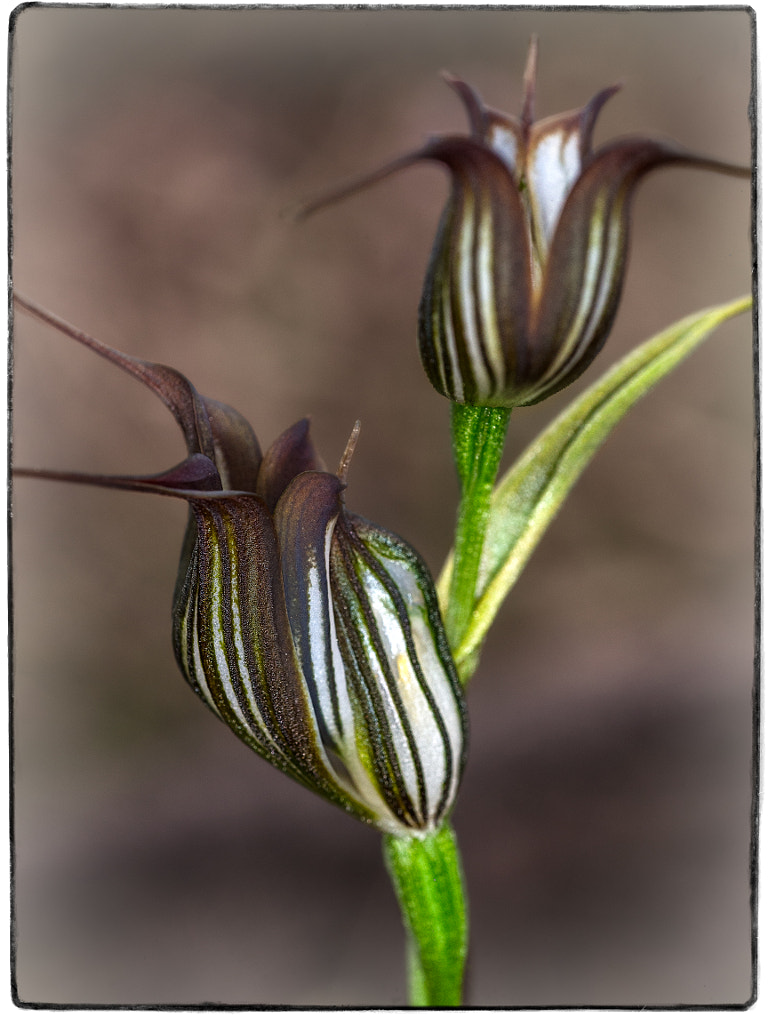
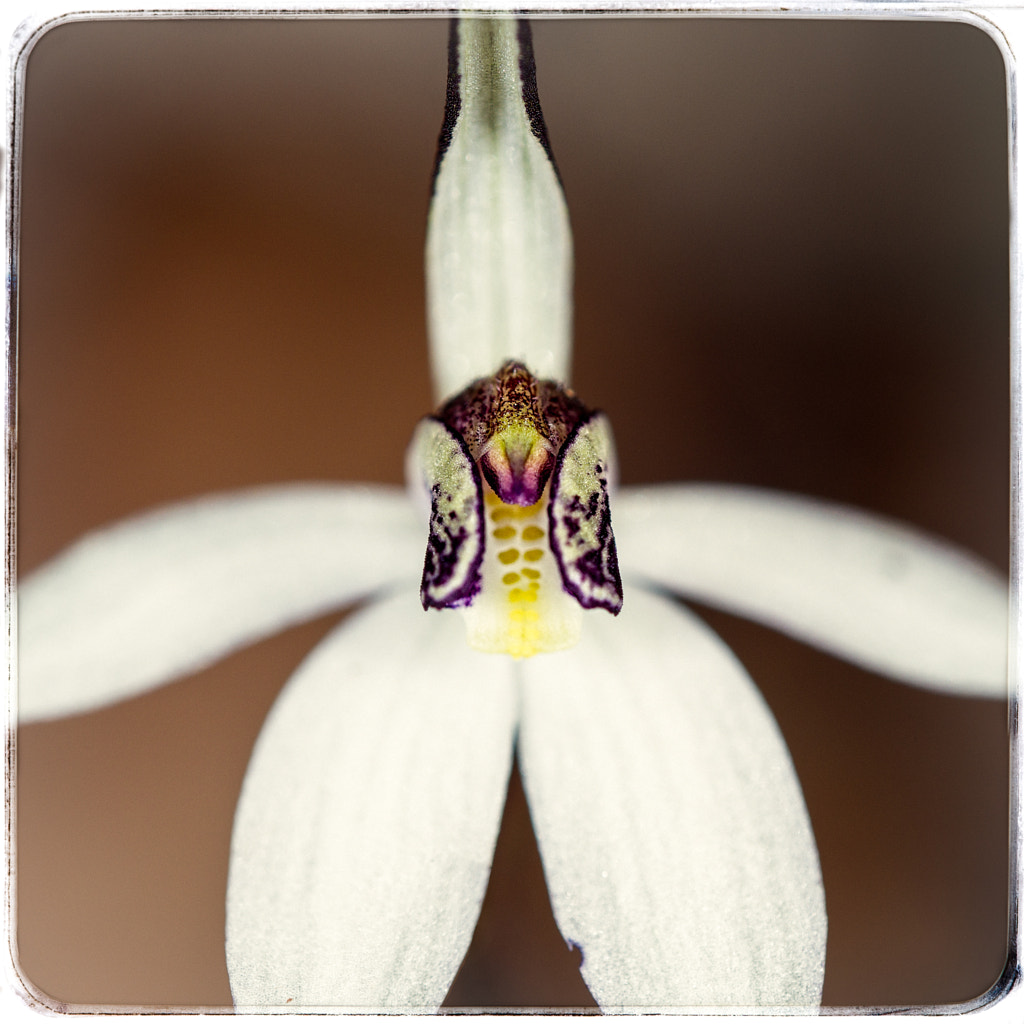
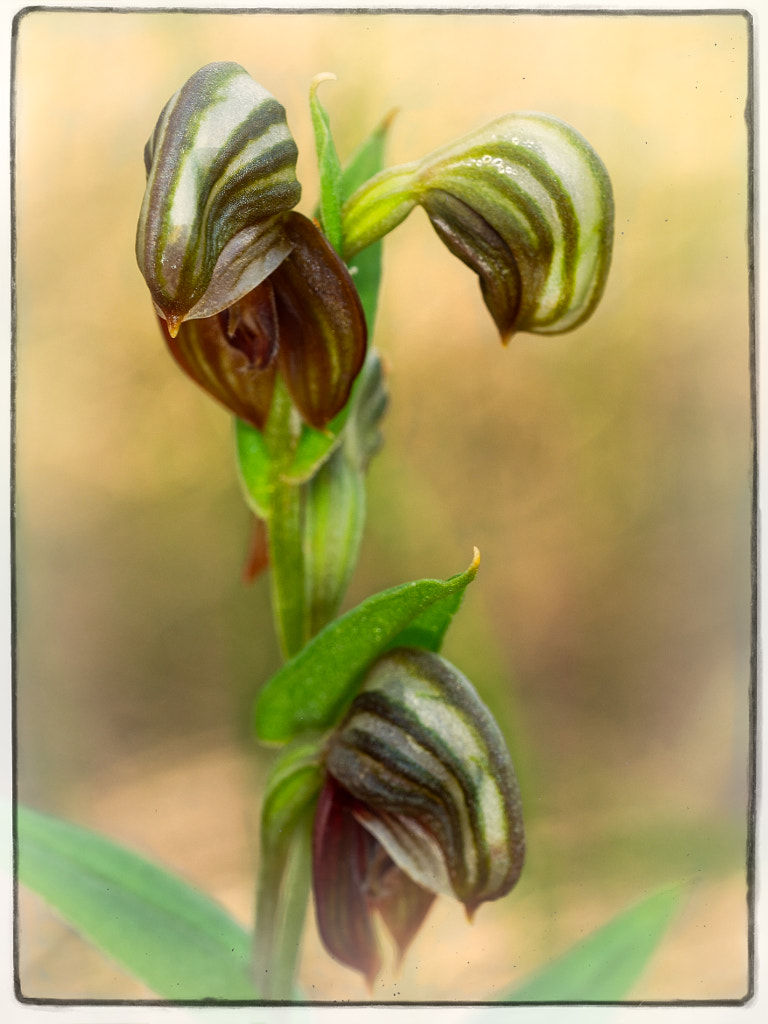
So what have I been doing photographically for the last week? Well I’ve been out to some local nature reserves, I’ve visited them many times over the last 14 years and it never ceases to amaze me that I always find something new. So I was delighted to find these two flowers.
Jug orchid aka recurved shell orchid (Pterostylis recurva). Olympus OMD EM10 with Olympus m.Zuiko 60mm f2.8 macro lens and Metz ring flash. Exposure: 1/160th sec, f5.6, ISO 200 aperture priority with -1.3 stops exposure compensation.
Sugar orchid (Ericksonella saccharata). Olympus OMD EM10 with Olympus m.Zuiko 60mm f2.8 macro lens and Metz ring flash. Exposure: aperture priority 1/125th sec, f4, ISO 100 with -1 stop exposure compensation.
Hell or high water is the new motto for the Avon Descent and was adopted because recent years have seen decreasing amounts of rainfall falling and competitors have had to carry their craft where there was insufficient water. This year, 2017 and the 45th occasion of the race, the water levels were high which meant potentially new records could be set. The Avon Descent was first held in 1973, and there were only forty-nine competitors. This year there were 370 competitors with many coming from interstate and overseas. In more ways than one it deserves the title the “world’s greatest white water event”. The 124 km or 77 mile two day event starts at Northam and finishes at the Riverside Garden in Bayswater with an over night stop at the Boral Campsite just outside Toodyay. For the majority of entrants the aim is just to complete the course, but for the elite athletes it is a chance of competing in a unique endurance race.
The beauty of this race is that you can pick out a few vantage points from a list put out by the race organisers on their website and follow the whole event documenting the whole story rather than just getting an isolated snap shot. In previous years I’d covered the race for magazines shooting stills and then writing the story. This year I had intended to cover the entire event from start to finish and it was to be first time I’d covered it shooting video. Having planned my weekend around the race it was time to check the maps and the approximate timings for each stage. For instance there was no point heading to the first stage after the start as I would not have had time to get there by car, park, and then walk along the river to find a good location to set up. Also I had to think about the weather conditions, because at some of the viewing points you are bussed in and that would mean I’d have to carry everything with me. As the forecast for the weekend was a cold start it was thermals, and fleece. he key was light layers that could be added or taken off as conditions permitted. Camera and lens choice was hard, and I found it difficult to make a decision. For the Friday shots I could work from the back of the car and it was all to be people shots around Northam and for the sake of mobility using either a monopod or a gimbal. In the end I decided to use the Sony A7r and with Olympus OM Zuiko lenses – the 20mm, 50mm and 135mm. This and the gimbal went in a belt pack. Saturday involved shooting at three sites and I wanted to shoot some time-lapse as well as video footage. So I chose the Olympus OMD EM 1 with 40-150mm f2.8 lens for the video work and the EM10 with 12-40mm f2.8 for the time-lapse. I couldn’t set up a tripod at the start as I was going to shoot on the swing bridge so I used a monopod for the video and for the time-lapse I clamped the Syrp Genie Mini to the bridge safety barrier with a Manfrotto super clamp. All this went into my photo back pack. Sunday was the biggest problem with no car access to Bells Rapids everything had to be carried. So I took the Canon EOS6d with 24-70mm, 70-200 and a x2 converter. I’d also need plenty of batteries and memory cards as there would be no nipping back to the car. I decided to carry all this in pouches on a belt as I needed to be able to scramble up some rocks to get a good vantage point. At Bells I mounted the camera on a tripod but at the finish line I shot just using a monopod.
The race happens on the first weekend of August every year. It kicked off on the Friday with the competitor registration at the Northam Swimming Pool and then their craft were taken down to the race marshalling area on the banks of the river. Late in afternoon and into the evening was the Avon River Festival with a huge fireworks display on the Avon River, stage shows featuring a variety of local talent, a family fun zone, rides for all the family, sideshow alley and roving entertainment, a community street parade, markets for avid shoppers, and food. On Saturday morning the event kicked off proper. As I arrived I could see hot air balloons drifting lazily above the river. The power craft were away quickly and smoothly and then it was the turn of the paddle craft. I was surprised to see that someone was competing for the first time on a Stand Up Paddleboard (SUP). Barely had half the paddle craft left than the news came through that the first power craft had reached Toodyay. It was going to be a very fast race with little hope of getting shots of the power craft. I spent a total of an hour and half standing on the swing bridge -it is a wire suspension bridge that bounces a lot, the police constable standing next to me complained of feeling seasick from the constant motion. It didn’t effect me but it really made me glad that I had the in body stabilisation activated on the cameras. After the start I went to Williamson Weir stayed there for an hour and a half. The Weir is man-made and its concrete lip and rock wall are hazardous to boat and paddler alike so around half the competitors choose to portage around it. Thankfully the other half run it and you get the thrills and spills with plenty of encouragement from the watching crowd. Finishing up in Toodyay for the day is great. There is always a great vibe with a tremendous crowd and a party like atmosphere. When I got there the town was packed and in full on carnival mode. It took an age to find some parking and get down to the river. Here there was a team change over area, and along the riverside were lots of anxious looking paddlers all staring up river for any sign of their team mates. As the first canoes started to come round the corner and pass under the timing gate they got their first sight of their team mates and their faces would burst into a huge grin of relief. The spectators would burst into rapturous cheers as the fresh team-mate paddled away heading for the Boral Campsite that marked the halfway point and the end of day one.
I couldn’t face getting up at 4;30am in the dark and freezing cold to get to the start at Boral Camp for day two so I just headed out a bit later and went straight to Bells Rapids in Walyunga National Park. You have to leave the car at the nearby state equestrian centre and then you taken in by bus. From there it was a quick walk to what I call the media rock. It’s a nice big rock that juts out into the river which gives a good view of the competitors coming under the bridge and through the rapids. I got there just as the TV crews were claiming their spots and setting up. I squeezed onto the end closest to the bank and put my tripod up to mark my territory. When the press photographers arrived they gave us a filthy look, but as they were shooting hand-held they didn’t need as much space. A little while later a hopeful photo enthusiast asked if could join us on the rock, one of the guys I know from the papers said it was OK if he didn’t talk about equipment – his or ours – and if he did he’d get thrown in the river. He decided that he couldn’t not talk about kit and took himself off somewhere else. After a couple of hours I knew that I’d have to get my skates on if I was to get to the finish line.
The finish line is in Bayswater a suburb of Perth. A huge screen had been put up and there was a live commentary being given. I positioned myself by the finish line as I find that the images taken as the paddlers beach their boats and walk ashore tells a very powerful story. It does not seem to matter whether they are newbie’s in their first race or veterans each face has a similar look etched upon it. It is a mixture of pain from the sheer physical effort, relief from finishing, and disbelief that it is all over. Some will swear that they will never do it again, but most know that even as they hit the finish line that they will be back next year.
So now a week later, I’ve edited the 50Gb of footage and made a 7 minute clip. As I write this I’m thinking about how things went and what I would change if I were to do it again. Well to start with I wouldn’t bother with the Sony. It produces very nice images, but the screen is terrible. It is winter here and the days aren’t as bright as they can be, but the Sony’s rear LCD panel is virtually unusable. The other thing that puts me off is that the user interface isn’t very intuitive and so adjusting some settings in a hurry is a pain in the nethers. The OMD EM1 mk i is constantly a surprise when shooting video. The touch screen is a pleasure to use and the phase detect auto focus does very well. It is tempting to run off and get a mk ii for the 4K and the improved focusing. The Canon EOS 6d was the surprise, the autofocus is crap, but Technicolor’s CineStyle Profile and Canon’s superb lenses produce gorgeous images. All it needs is a flippy flappy touch screen and dual pixel auto focus and it would be perfect. “The 6d mk ii has that!” I hear you say, but (and there is always a but) the mk ii’s video compression is worse than the mk i. What Canon give they take away! There is always the EOS 80d. I might try to hire one for the next project I shoot. I wish I’d used the gimbal more instead of the monopod, accepting the fact that I couldn’t use it for the long lens shots. Sound could be a lot better – it is the aspect of video I always struggle with. I’m also beginning to think that I’ve out grown iMovie – a better editor would give me some more options. I’ve downloaded DaVinci Resolve to give that a whirl on my next project. In many ways I’m no different to the competitors in the race – I’m already starting to plan for next year!
Dark Banded Greenhood Orchid. York Golf Course.Western Australia. Olympus OMD EM10, Olympus m.Zuiko 60mm f2.8 macro lens, Metz 15 MS-1 ring flash. Exposure: 1/13th sec, f8, ISO 200.
“A good walk spoiled.”
Mark Twain
I’ve been hanging around the York Golf Course. Not to play golf you understand – I’ve never understood the compulsion to dress up in silly sweaters and shoes and drag a bunch of sticks in a cart around a large field while trying intermittently to knock a ball into a hole. No the reason why I’ve taken to loitering at the York Golf Course is that is home to a significant number and variety of wildflowers. Not on the fairways off course – they are barren bits of grass with the occasional large hole filled with sand. No the interesting stuff lies in the rough between the fairways. It’s not without its hazards mind you. Those people in their funny clothes reckon they can hit a ball straight down the fairway to the flag in the hole – well most of ’em can’t, they slice the shot and the balls land like a barrage of misplaced shells in an American artillery strike. The ground is littered with balls in among the bushes. I thought the rules state that you have to play the ball from where it landed, well the number of “lost” balls in the rough at York plainly shows that this is not happening. It’s so bad that next time I visit I’m seriously contemplating wearing a helmet. You can never be too careful.
The colours of sunset reflected by the sun bleached grass on the Dyott Range. York, Western Australia. Olympus OMD E-M10 with an OLYMPUS M.75-300mm F4.8-6.7 II lens. Exposure: ƒ/8.0/1/1000s/ISO 1600
Back in August I posted a blog called Mellow Yellow showing the yellow canola on the hills opposite our house. Well Summer is well and truly here and the crop has been harvested just leaving the sun bleached stubble. When the sun sets the colours are reflected on those hills with quite impressive results.
“And we’re off to the races, places
Ready, set, the gate is down and now we’re goin’ in”
by Lana Del Rey and Tim Larcombe
York Cup Horse Races. In a small country town any event is an excuse to be seen and hang out. Olympus OMD EM-10 with OLYMPUS M.12-40mm F2.8 lens. Exposure: AE priority 1/2500th sec, f5.6 at ISO 200.
Place your bets at the TAB. Olympus OMD EM-10 with OLYMPUS M.12-40mm F2.8 lens. Exposure: AE priority 1/500th sec, f5.6 at ISO 200.
Getting ready for the race. Olympus OMD EM-1 with OLYMPUS M.40-150mm F2.8 lens. Exposure: AE priority 1/320th sec, f4.5 ISO 200.
Walking the horses so the punters can study the horses. Olympus OMD EM-1 with OLYMPUS M.40-150mm F2.8 lens. Exposure: AE priority 1/1000th sec, f4.5 at ISO 200.
Studying the form before the race. Olympus OMD EM-10 with OLYMPUS M.12-40mm F2.8 lens. Exposure: AE priority 1/1250th sec, f8 at ISO 200.
Warming up the horses before the start. Olympus OMD EM-1 with OLYMPUS M.40-150mm F2.8 lens. Exposure: 1/3200, f4 at ISO 200.
The horses come into the finishing straight for a last dash for the finish line. Olympus OMD EM-1 with OLYMPUS M.40-150mm F2.8 lens. Exposure: 1/4000th sec, f4 at ISO 200.
And they’re neck and neck. Olympus OMD EM-1 with OLYMPUS M.40-150mm F2.8 lens. Exposure: 1/2000th sec, f4 at ISO 200.
And the tic tac man holds onto the money. Olympus OMD EM-10 with OLYMPUS M.12-40mm F2.8 lens. Exposure: AE priority 1/60th sec, f4 at ISO 200.
According to those that know it has been an amazing spring here in the Avon Valley. We’ve had rainfall that hasn’t been seen for decades and we’ve had a flush of wildflowers that hasn’t been equalled for fifty years. It has been frustrating as I’ve only managed to get out and photograph the orchids three times, but when I did get out it was beyond superlatives. Here are the highlights.
Pterostylis sanguinea, or , , Mount Observation, Western Australia. Canon EOS 6d, Sigma 105mm f2.8 macro lens and Canon 430 EX Speedlite. Exposure: AE priority 1/50th sec, f16, ISO 3200 with -1 stop exposure compensation.
The Hairy-stemmed Snail Orchid (Pterostylis nana) most common and widespread of the Pterostylis species in Western Australia. Mt. Observation, Western Australia. Canon EOS 6d with Sigma 105mm f2.8 macro lens and Canon 430EX Speedlite. Exposure: Aperture priority with -1 stop exposure compensation 1/100th sec, f8 at ISO 400.
The wallflower orchid, aka the common donkey orchid (diuris corymbosa) lives up to it’s name and is commonly found in the south-west of Western Australia. Mount Observation, Western Australia. Canon EOS 6d with Sigma 105mm f2.8 macro lens and Canon 430 EX Speedlite. Exposure: aperture priority mode with -5 stops exposure compensation, high-speed flash sync 1/2000, f11 at ISO 200.
White Spider Orchid (Caladenia longicaudia). Mokine, Western Australia. Olympus OMD EM-10 with Olympus m.Zuiko 60mm f2.8 macro and Metz ring flash. Exposure: ƒ/16.0 , 1/80s, at ISO 800, manual mode with -2 stops exposure.
Easily recognisable the Purple Enamel Orchid has glossy purple flowers which fade and become pink with age. Mokine, Western Australia. Olympus OMD EM-10 with Olympus m.Zuiko 60mm f2.8 macro lens and Metz ring flash.
The dancing spider orchid (Caladenia discoidea) is also known as the antelope orchid and the bee orchid. Mokine, Western Australia. Olympus OMD EM10 with Olympus m.Zuiko 60mm f2.8 macro lens, & Metz ring flash. Exposure:
The lemon scented sun orchid, also known as the vanilla orchid,(Thelymitra antennifera) is named after its strong lemon scent. Mokine, Western Australia. Olympus OMD EM-10 with Olympus m.Zuiko 60mm f2.8 macro and Metz ring flash. Exposure: 1/160th sec, f8 ISO 200.
Recognised by its intense blue colour, the Blue China Orchid is like the Thelymitra species in that it is heat sensitive and the flowers close at night on overcast days. Mokine, Western Australia. Olympus OMD EM-10 with Olympus M.Zuiko 60mm F2.8 Macro lens and Metz mecablitz 15 MS-1 ring flash. Exposure: manual mode, 1/100th sec, f8 at ISO 200.
The Fringed Mantis Orchid (Caladenia falcata) is also known as the green spider orchid. Mokine, Western Australia. Olympus OMD EM-10 with Olympus m.Zuiko 60mm f2.8 macro lens and Metz ring flash.
Custard orchid (Thelymitra villas), York, Western Australia. Olympus OMD EM-10 with Olympus M.Zuiko 60mm F2.8 Macro lens. Exposure: AE priority 1/320th sec, f8 at ISO 200.
Clicking on an image will take you through to my online gallery.
Last weekend you could be forgiven in thinking that the War of The Roses had broken out afresh in the Western Australian town of York. There were lots of grim looking men glad in chain mail and armour brandishing an assortment of fearsome looking weapons while women wafted around wearing hose, kirtles, gowns, surcoats, girdles, and bonnets while listening to bards strum away on lutes.
A grim looking man in chain mail with a fearsome looking axe.
The images were shot with an Olympus OMD EM-1, an OMD EM-10 with Olympus m.Zuiko 12-40mm f2.8 and 40-150mm f2.8 lenses. The files were processed in Adobe Lightroom and Alienskin Exposure X.
The new mug shot of yours truly. Olympus EM-10 with Olympus m.Zuiko 45mm f1.8 lens. Exposure 1/200 sec, f3.2 at ISO 200.
The “Strobist” phenomena burst onto the photographic scene some ten years ago and thanks to the efforts of David Hobby and the timely release of reliable affordable radio controlled flash triggers a whole movement was born. What was exciting was that Hobby advocated a lean and mean approach to lighting using affordable and portable speedlites. In an era of auto everything Hobby also broke the mould by showing people how easy it was to use manual flash. Joe McNally shooting Nikon and Syl Arena using Canon quickly jumped on the band waggon extolling the virtues of off camera flash using the TTL systems of Canikon.
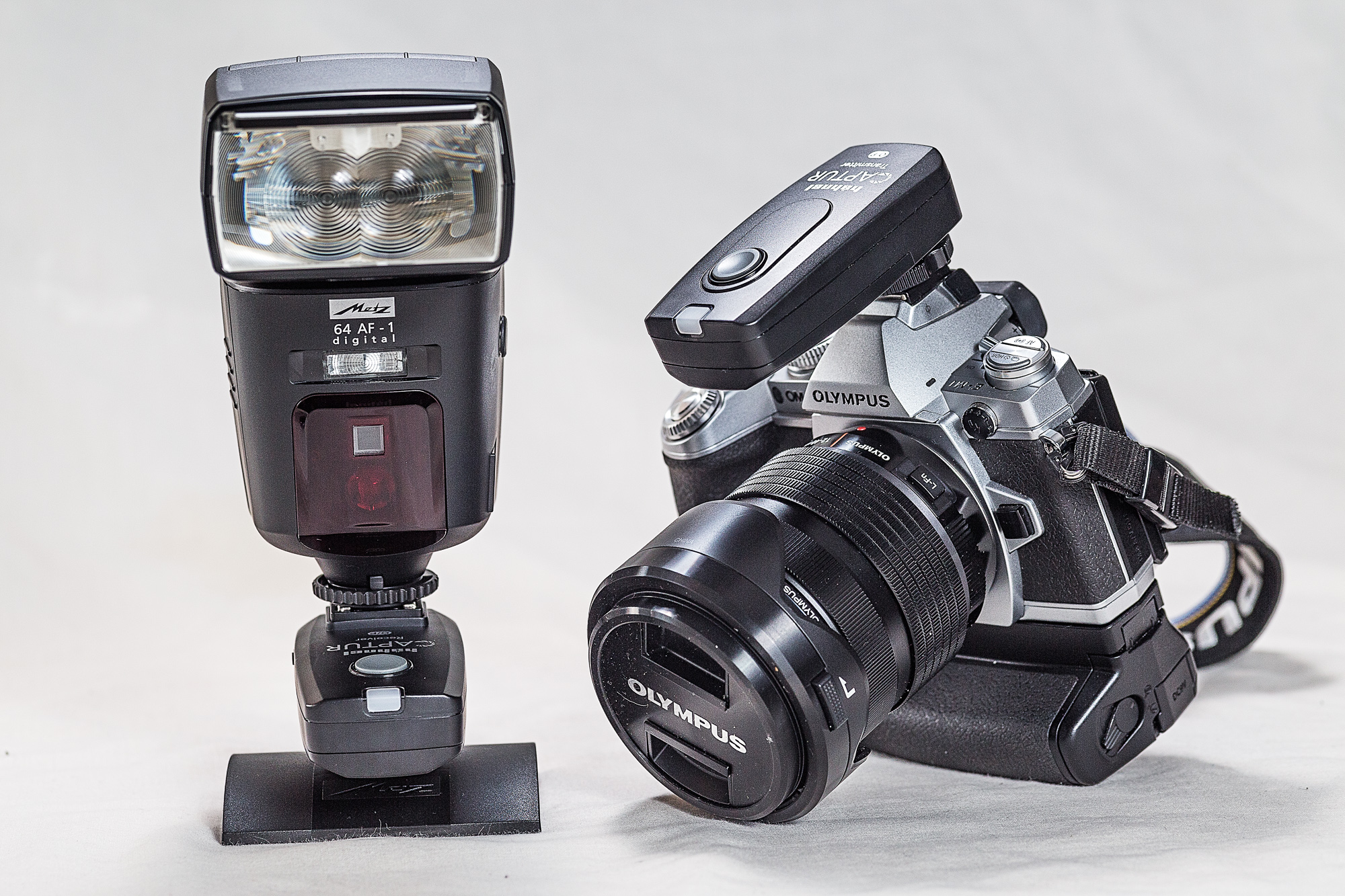
The other day I had the sudden realisation that I would need a new photo for the promotion of current exhibition as the one I had been using was out of date – I have considerably more hair on my head and less hair on my chin now. My preferred photographer is Liv Stockley but she is currently somewhere in Africa and unavailable for the job. So I would have to shoot this myself aided by my partner Helen. Using the Olympus OMD EM10 with the fantastic Olympus m.Zuiko 45mm f1.8 was a no brainer – bags of resolution, fantastic image quality and it allowed Helen to take the shot by controlling the camera via wi-fi using an iPad. Lighting was the conundrum. It would have to be flash, but how to control it? I wanted the key light in a big brolly box, but this would mean I would lose the TTL flash capability as Olympus use a line of sight light transmission system for their wireless flash. Once the slave flash is enveloped by a large light modifier it can’t pick up the signal from the master, so I would have to use a radio trigger. There are no reliable easily available radio controlled TTL triggers for the m4/3 system so it would have to be manual all the way and the excellent Hahnel Captur fit the bill perfectly. They are available from good camera stores, I got mine from Digital Camera Warehouse, and they have a good warranty. Why take a punt with cheap no name “poverty wizards” from dodgy Chinese Ebay sellers when you can get an excellent product locally? So that’s the triggering taken care of. To work out the exposure I used my trusty Minolta Auto Meter Ⅴ F. Sadly no longer made by Minolta as Sony took them over and canned the flash meter product line, but it is now made by Kenko. Yes it is old school and some may argue that in the digital era not needed, but I like working this way. In this scenario there is no need for TTL flash as the lighting and subject to camera distance remain constant.
An Olympus OMD EM1 with the Hahnel Captur flash trigger in the hotshoe, and a Metz 64 AF-1 with the Hahnel Captur receiver. Canon EOS6d with Sigma 105mm f2.8 EX macro, Canon 430 and 550 EX Speedlites. Exposure: 1/180 sec, f8 at ISO 400.
Equipment sorted the styling of the photo was the next consideration. The portrait would be a classic head and shoulders, but I wanted something clean and contemporary. Initially I thought about using the classic Rembrandt lighting style. It’s the studio portraitist’s bread and butter lighting, but it is a little bit staid. So I decided to go with broad lighting. One Metz Mecablitz 64AF-1 Flash in a brolly box was the key and a large reflector provided the fill. To provide a bit of separation from the background a Metz 44 AF-1 (now superseded by the 44 AF-2) fitted with a Hohnl Speed Grid. Simple and effective.
Basic lighting diagram for broad lighting using one key light, a reflector as fill and a gridded background light.
So while the “Strobist” phenomena has largely gone out of fashion, the principles and skills are very useful and every photographer should have some grasp of the basics.




You must be logged in to post a comment.