I’ve written before on the contentious issue of corellas in York and Western Australia as a whole. Most people here regard them as vermin that should be eradicated and that means killing as many as possible with all guns blazing. Well on the morning of February 29th while walking along the River Avon with my dog I counted over twenty dead corellas floating in the river and found one badly injured bird – it had one of its wings blasted off – in considerable distress in the bushes along the river bank which I subsequently put out of its misery. There were shotgun casings and wads scattered along the footpath and in bushes.On checking with the Shire of York offices I was informed that they had used contractors to perform a cull of the birds on the weekend of he 24-25 February 2024. The area in which it was done is a recreational park with public foot paths running through it that abuts to residential properties.
On searching online I found that the manner in which the operation was carried ignored guidelines as laid out by the RSPCA, Pest Smart, and the Centre for Invasive Species Solutions. Unfortunately these are only guidelines and not enforceable, but some of the practices are to do with public safety, environmental concerns and animal welfare and there is legislation for the breach of those.
Pest Smart state “Firearms are potentially hazardous. All people should stand well behind the shooter when an animal is being shot. The line of fire must be chosen to prevent accidents or injury from stray bullets or ricochets.” A considerable amount of the shooting had occurred on blind corners on the footpath where the shooter would have had no way of telling whether it was safe to shoot or not. Birdshot from a 12 bore shotgun as used here has a range of up to 50m making the its usage in public areas and at the rear of people’s properties quite a hazardous undertaking – checking with friends whose properties back on to the areas I found that none of them had been warned that the cull was taking place or to use their back gardens.
The discarded cartridges and wads shows a disregard for littering what is a public recreation space. Also was lead or steel birdshot used? The use of lead shot has considerable environmental impact. In fact 29 countries have banned the use of lead shot for hunting birds because of its environmental impact. The plastic cartridge cases and wads don’t breakdown. The Virginia Institute of Marine Science have stated that shooters “using shotguns, plastic wads that contain the shot are discharged from the shell into the adjoining water. A wad is abandoned with every shot fired, and there is no practical way to recover spent wads which typically travel 30-50 yards. Non-degradable plastic shotgun wads can present safety, nuisance, and environmental impacts in freshwater and estuarine waters.” The answer is to use casings and wading made out of vegetable biopolymers as detailed in this article in Guardian newspaper.
Plastic wads from the shotguns used in the corella cull.
Pest Smart also advise that “Wounded birds must be located and killed as quickly and humanely as possible with either a second shot preferably directed to the head or in restrained or immobile birds, a blow to the rear of the skull to destroy the brain If left, wounded birds can suffer from the disabling effects of the injury, from sickness due to infection of the wound, from pain created by the wound or from thirst or starvation if unable to drink or eat. Wing fractures, which increase the likelihood of being taken by a predator, are common in wounded birds.” Finding wounded birds is inexcusable and members of the public should not have to euthanise birds when the pest controller has botched his job. As to the dead birds “Killed birds must be collected and disposed of in an appropriate manner in accordance with acceptable practices as required by local councils and applicable state or federal regulations”. The contractors clearly did not do this as evidenced by the trail of dead corellas floating in the river. The not picking up the carcases and allowing them to rot in the river is a health hazard and demonstrates a blatant disregard for the residents and who live next to the river and the visitors who walk the banks. Very soon they are going to smell very badly and attract vermin. It is pollution.
There are/were a pair of black shouldered kites that are nesting a raising young in that area. From a distance in poor light they resemble corellas. Pest Smart say “Shooters should have sufficient knowledge and skill to identify the bird species causing the damage. If the identification of the bird is in doubt it must not be shot.” They also say “Shooting in poor light conditions makes it difficult to correctly identify birds and to search for wounded birds. Also, accurate marksmanship may be compromised.” The weekend on which the cull was carried was overcast and it was continuously raining reducing visibility. Since weekend neither bird has been sighted nor heard. These are a protected species and the council would be responsible if they or their agents has destroyed them.
Unfortunately this is not the first time that shire employees and/or their contractors have embarked upon behaviour that places the fauna and flora of the River Avon at risk. In the last 6 years shire employees and/or their contractors have destroyed animal habitat. Turtle nesting areas have been bulldozed and rainbow bee eater nesting sites have been destroyed. The shire has an appalling disregard for the environment and the fauna and flora that lives within it.
Having taken the issue up with shire in person I was told to contact them by email and to date they have not commented on any of the issues raised. This is very concerning considering that another cull is planed for March using untrained members of the public. The prospect of a bunch of gun totingmyopic rednecks rampaging up and down the river shooting anything that moves has made me reconsider using the area totally. I suppose it won’t be long before a tourist gets asked to “squeal like a corella”.
* apologies to William Shakespeare the proper quote is “Murder most foul” from Hamlet, Act 1, Scene 5.
This is the second part of an ongoing series called “Birds On A Budget”. It really should be “Can You Do Wildlife Photography On A Limited Budget?”, but that’s not as catchy or succinct.
TLDR
When looking for secondhand cheaper alternatives for wildlife photography it is all too easy to get preoccupied with specifications sheets without looking at the whole picture. It can mean that just because Camera X does have a specific feature that Camera Y has then it must be inferior. Well let’s look at an example.
The cameras I’ve chosen to look at are the Canon EOS 80d and the Sony A6500. Both were introduced in 2016, both have 24Mp sensors, and both can be found second hand for about the same price. The 80d is a DSLR and is probably considered retro-tech now and the A6500 being mirrorless is seen as the more up to date technology. Let’s see how the specs compare.
Sony A6500
Canon EOS 80d
Introduced
December 2016
February 2016
Resolution
24 Megapixels
24 Megapixels
Camera type
Mirrorless interchangeable lens camera
DSLR
Sensor size
APSC (23.5 x 15.6mm)
APSC (22.5 x 15mm)
In Body Image Stabilisation
Yes
No
ISO range
100-256,000 which can be extended to 512,000
100-16,000 which can be extended to 25,600
Dynamic Range
13.67 EV
13.17 EV
Autofocus
425 AF points covering the whole sensor.
On sensor phase detect AF supplemented with contrast detect AF.
Multi area, centre zone and single point modes.
Tracking
Single AF
Continuous AF
Face detection
Live view
45 AF points clumped in the centre of the frame when using the optical viewfinder
Phase detect AF
Multi area, centre zone and single point modes
Tracking
Single AF
Continuous AF
Face detect in live view only
Live view AF with ‘Dual Pixel CMOS AF’ which means every pixel can be used for phase detect auto focus
Rear LCD panel
Tilting 3 inch touch screen with 921,600 dots
Fully articulating 3 inch touch screen with 1,040,000 dots
Viewfinder
Electronic viewfinder with 100% coverage with 1.07 magnification (0.71 x 35mm) and 2,359,296 dots.
Optical viewfinder with 100% coverage at 0.95 magnification.
Shutter speed range
30 sec – 1/4000 sec
30 sec – 1/8000 sec plus ‘B’
Built in flash
Yes
Yes
Flash synchronisation speed
1/160 sec
1/250 sec
Frames per second
11 frames per second in both mechanical and electronic shutter modes with no live view and 8 fps with live view.
7 frames per second using the optical viewfinder and 2.4 fps when using live view.
Buffer
100 frames in RAW or RAW + jpg
300 frames in jpg only
When using the optical viewfinder:
Unlimited frames at 7fps in jpg
24 frames in RAW
20 framesin RAW and jpg
When using live view:
Unlimited in jpg
Unlimited in RAW
36 images in RAW + jpg
Metering modes
Multi-zone
Centre weighted
Spot
Highlight weighted
Multi-zone
Centre weighted
Spot
Video
Available codecs AVCHD, XAVCS, H264, MP4
4K (3840 x 2160) 30p, 25p, 24p
HD (1920 x 1080) 120p, 100p, 60p, 50p, 30p, 25p, 24p
Available codecs MPEG-4, H264 with a choice of all I or IPB
HD (1920 x 1080) 60p, 50p, 30p, 25p, 24p
Storage
SD card (UHS-1)
SD card (UHS-1)
Connectivity
USB 2.0 (480 Mbit/sec)
3.5mm microphone port
Micro HDMI
WiFi – 802.11b/g/n + NFC
Remote control via a smartphone
Tethered shooting to a computer
USB 2.0 (480 Mbit/sec)
3.5mm microphone port
3.5mm headphone port
802.11/b/g/n with NFC
Wired remote control
Remote control via a smart phone
Tethered shooting to a computer
Battery
NP-FW50 battery with CIPA rating of 350
LP-E6N battery with a CIPA rating of 960
Weather sealing
Yes
Yes
Construction
Magnesium alloy
Composite construction with an alloy chassis with plastic shell
Weight
453g
730g
Dimensions
120 x 67 x 53mm
139 x 105 x 79mm
Other functions
Inbuilt Timelapse function
On the whole the Sony seems the better camera as it has an electronic viewfinder that provides realtime exposure feedback, better video capabilities, better ISO range, better dynamic range and In Body Image Stabilisation (IBIS) all in a smaller and lighter package.
Sony A6500 real world usage
The A6500 body is not overly small, but the button and dial placements leave a little to be desired. There are twin control dials but they are both on the rear of the camera meaning your thumb has to do double duty. To me the lack of a front dial around or near to the shutter button is a big handicap. Now when it comes to using Sony cameras this is not my first rodeo. I have an A7r and A7r ii so I am quite familiar with the idiosyncrasies of the menu system. But, having said that I still find them labyrinthine and illogically laid out and the paucity of physical buttons and dials means that menu diving on the A6500 is quite frequent.
There is only one SD slot on the A6500 and although I prefer 2 slots it is not a big consideration. The SD card slot is located in the battery compartment and this is major pain. Even when shooting handheld it is fiddly to change cards and shooting on a tripod makes it downright frustrating. Often I find myself having to take the battery out to access the SD card. Speaking of the the battery compartment the battery in itself is hopeless. If I go out for the day shooting photos then I have to take 2 spares and if I intend to shoot any video I take at least 4. Luckily they are readily available and reasonably priced.
The LCD EVF on the left side of the body is good – for its time it is nice and detailed while being responsive. The rear LCD is of the flip up variety. I prefer the fully articulated type but it’s no big deal and I can work with both. The quality of the screen is abysmal – it is very hard to see in bright sunshine and it becomes very dim when shooting 4K video making it all but useless. Sony claims it is a touch screen but it is very limited in function. It can only be used for selecting AF points and nothing else and the implementation of that is pretty poor as it is laggy when working well and down right unresponsive when it isn’t. I’ve been in situationswhere I’m repeatedly touching the screen and the focus point is not moving meaning I’ve lost the shot.
Speaking of autofocus it works very well. Having AF points spread over the whole sensor is great which means you can really concentrate on composition. The AF is very quick and locks on moving subjects. Another nice feature is that you can link spot metering to the active AF point. The electronic shutter is another feature that I really like and although the rolling shutter is quite pronounced when shooting moving subjects I like to use it with shy wildlife as it means I won’t disturb it. In Body Image Stabilisation (IBIS) is fantastic. While not as good as that on other cameras I’ve used (Olympus and Panasonic) it works well and is very welcome when shooting handheld video.
Image quality is impressive. Shooting RAW the files are very malleable in processing as long as you get your exposure right. The high ISO performance is quite impressive and the dynamic range is such that I don’t feel the need to blend exposures to get details in the shadows and highlights when shooting scenes with a high subject brightness range. When shooting video the story is a little complicated. The 4K is nice and detailed and looks very good, but it is only 8-bit and so can’t be pushed too much in post. The provision of flat profilesSLOG 2 and 3 is good to have when shooting contrasty scenes outside. Shooting HD the footage is softer and doesn’t look so good. It’s OK but I prefer to shoot 4k and downsize to HD on export. Focus peaking, zebras, and a live histogram are features that make shooting video easier and it is good to see them on the A6500.
All these points are well documented so why did I get the A6500? Well I’d switched from Canon full frame cameras to a Sony A7r ii a couple of years ago and I’ve really enjoyed the whole experience. Initially I was using adapted lenses but gradually I switched over to native Sony EF mount lenses with the exception of my 150-600mm. Just for giggles I started doing some bird photography with the A7r ii and I found myself using the crop mode a lot which gave me a 15 Mp image. After 18 months of doing this I thought well why not get a second hand A6500 and have a quicker camera that has electronic shutter and more importantly has 24 Mp. I was also toying with the idea of shooting more wildlife video and the A6500 fit the bill for that as well. Overall I persevere with the A6500 because I like the final image, but it is a real effort as I just find the camera so awkward to use.
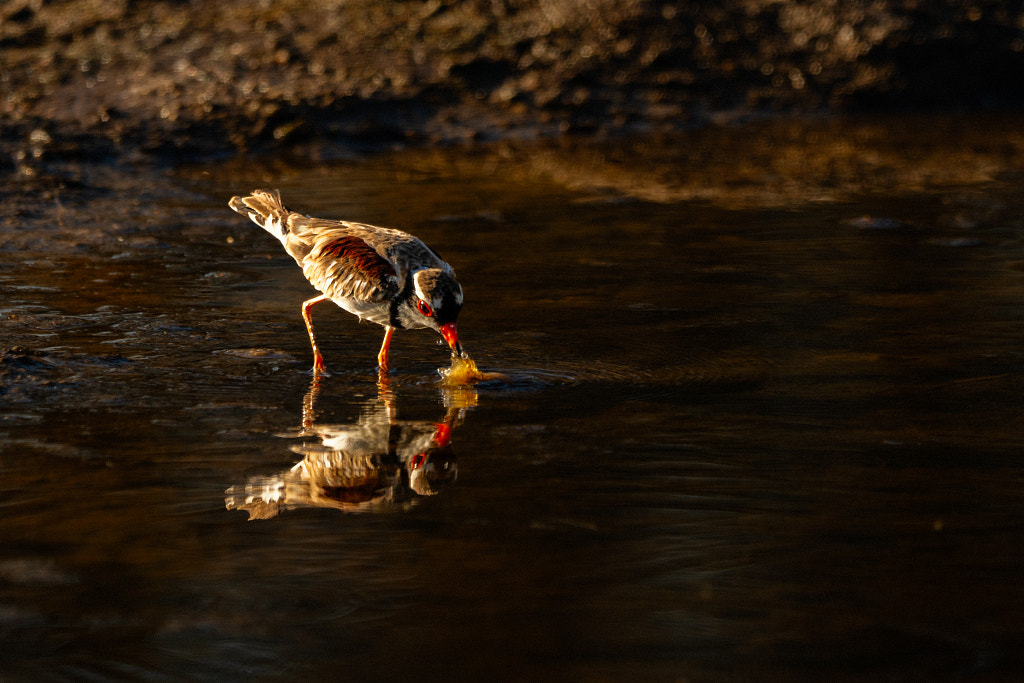
Nidoolyorong or Black-fronted Dotterel (Elseyornis melanops). Monger’s Crossing, York, Western Australia. Sony A6500 with Sigma MC-11 and Sigma 150-600mm f5-6.3 OS lens.
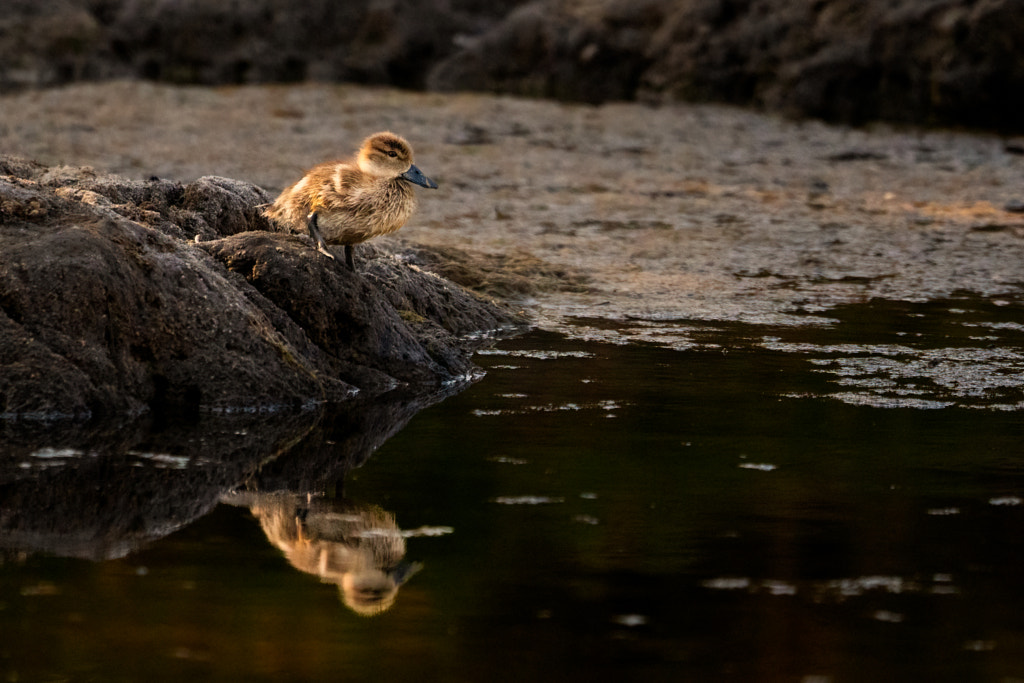
Pacific Black Duck (Anas superciliosa) duckling. Avon River, York, Western Australia. Sony Alpha a6500, Sigma MC-11, Sigma 150-600mm f/5-6.3 DG OS HSM Contemporary.
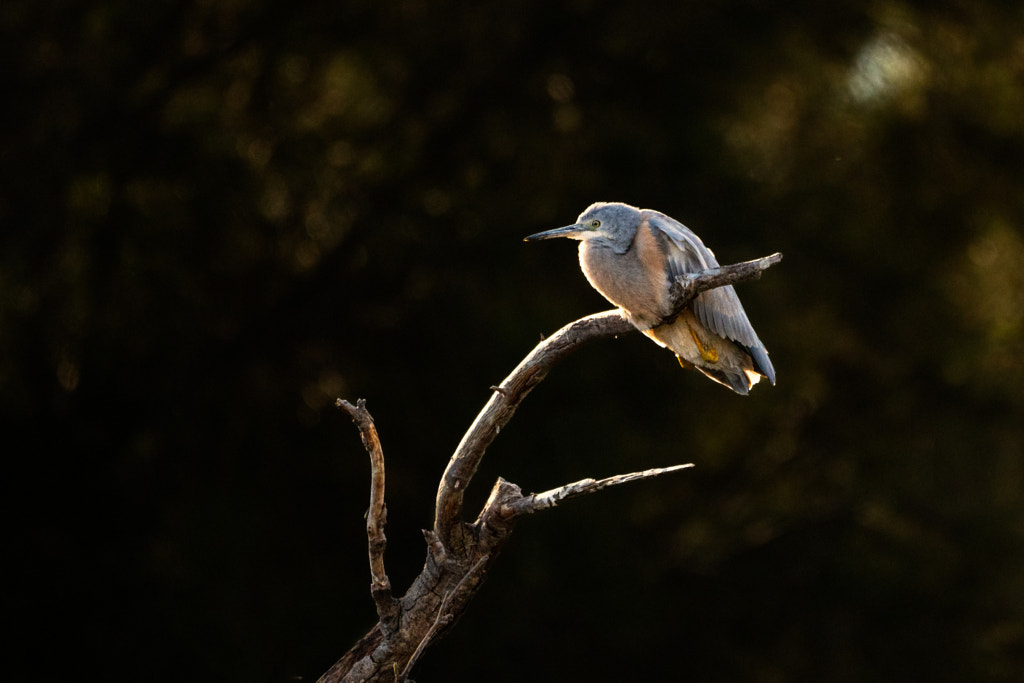
A juvenille White-faced Heron (Ardea novaehollandiae) roosting in a dead sheaoak tree. Monger’s Crossing, York, Western Australia. Sony A6500, Sigma MC-11 and Sigma 150-600mm f5-6.3 OS lens.
Canon EOS 80d real world use
During the later part of the Film Age (1822 to 2000) I used Olympus OM4s, but by 2003 I could no longer get them repaired and my father-in-law generously gave me a Canon EOS3 SLR. Whenever I pick up any Canon camera from the EOS 650 introduced in 1987 to the Canon EOS 5d iv introduced in 2016 I feel immediately familiar with the control layout, the handling and the operation of the camera. Canon, for all their faults, of which there are many, has always produced well sorted nice handling cameras. The 80d is no different. The camera fits perfectly in the hand, the buttons and dials are well laid out and intuitive to use. This attention to the user experience extends to the camera menus which are simply and logically laid out.
Like the Sony A6500 there is only one card slot, but it is positioned on the side of the handgrip behind its own door. It is easy to access under all scenarios. The battery is the venerable Canon LP-E6 and it lasts forever. Sure this is partly down to the fact that SLRs draw less power than mirrorless cameras, however, it is also gutsier at 7.2V, 1800mAh and 13Wh compared to 7.4V, 1080mAh and 7.3Wh of the Sony NP-FW50 which is in the A6500. The upside of this is that I’ve rarely used more than one battery for a full day of shooting.
The optical viewfinder is nice and large and clear. Although I now prefer EVFs because of the realtime exposure feedback the 80ds viewfinder is very pleasant to use. The rear LCD screen is of the fully articulated flippy flappy type which I really like not just for shooting video but also for shooting landscapes and macro in the vertical orientation.The screen has a teensy-weeny bit more resolution than the A6500s, but more importantly it is bright and clear when using in bright sunlight. It is also a touchscreen– you can control the camera, go through the menus and review images with it. While there is no joystick to select autofocus points you can use the screen to do this and it is responsive. While we’re talking about autofocus it helps to view it as two cameras in one body. Using it as a SLR with the optical viewfinder the 45 AF points are all centrally grouped. If when composing an image your subject is outside of that area then you have to focus and recompose. The autofocus is quick and with a well calibrated lens very accurate. When using the rear LCD screen in “Live View” the performance is like a mirrorless camera with every pixel on the sensor doing double duty as an AF point. The 80d has face detection that works well. Although how responsive this is will depend on the lens – those with STM motors work the best. I did consider just using the camera in the live view mode but there is a significant performance hit with the maximum frames per second of 7 reduces to 2.4. I also find it hard to track birds using the rear screen and a super telephoto lens. Another much missed feature is In Body Image Stabilisation so you have to depend upon the IS in the lens if it has it.
The image quality is good – a real leap up from the 18Mp sensor that Canon seemingly used forever. But with that said it is not as good as that in the A6500. The dynamic range of the Canon 80d is 13.17EV as opposed to the 13.67EVof the Sony as measured by DXO. The amount is paltry and in real life terms negligible. If we look at ISO performance and particularly noise then both cameras are fairly equal up to ISO 800. At 1600 the A6500 is about a stop better and at 3200 is 1 1/2 stops better. The highest maximum native ISO on the 80d is 16,000 and this can be extended to 25,600. The A6500 tops out natively at 256,000 which can be extended by a stop to 512,000. In reality the highest ISOs on both cameras aren’t much chop, on the 80d the furthest I’d go is 6400 and the A6500 can be used up to 12800. But having said this I am using Topaz DeNoise AI to clean the images up. Your tolerances to noise maybe a lot lower than mine. If you shoot RAW colour output is pretty much the same, you should be able to get the results you want in post. Shooting jpgs well if you like punchy reds and warmer looking images then you’ll prefer the Canon. For video the lack of 4k can be seen as a major drawback. I shoot 4k and then in post will often crop in because I’ll output the final file as HD. The HD video on the 80d is an improvement on the previous 18 and 20Mp sensors that Canon used. It is also better than the HD from the Sony. There is no flat profile on the camera, but I solved that by installing the Cinestyle Profile from Technicolor and I am getting great results. The video output is again 8-bit so can’t be pushed around too much in post.
When shooting video the lack of an EVF is a bit of hindrance, but, thankfully the rear LCD screen is of high quality. The touch screen implementation makes operating the camera a doddle. Another feature I really like is the ability to create a ‘My Menu’ spread over three pages and I’ve made one of the pages dedicated to video. The AF in video works much better than I expected but again this is really lens dependent. While it is quick to acquire and initially lock on it does have the annoying tendency to drift off the subject and onto the background. You need to keep taping the touch screen to maintain focus on the subject. Unfortunately Canon doesn’t provide any focus peaking for help with manual focusing and no zebras to warn about clipping. Also Canon’s pre-amps are not the best.
I bought the Canon EOS 80d with the sole intention of testing cameras at various price points to see how they’d fare for nature and wildlife photography. I fully intended to sell the camera once I’d finished with it. Now having used it for several months it has become one of my favourite cameras (my favourite being the Olympus EM 1 mk ii). The 80d is such a well thought out camera that it is above all fun to use to use. No it’s not a hybrid camera as the video implementation doesn’t perform well enough, but it is certainly an excellent tool for the photographer on a budget. It has certainly piqued my interest in the 90d which addresses some of the limitations of the 80d.
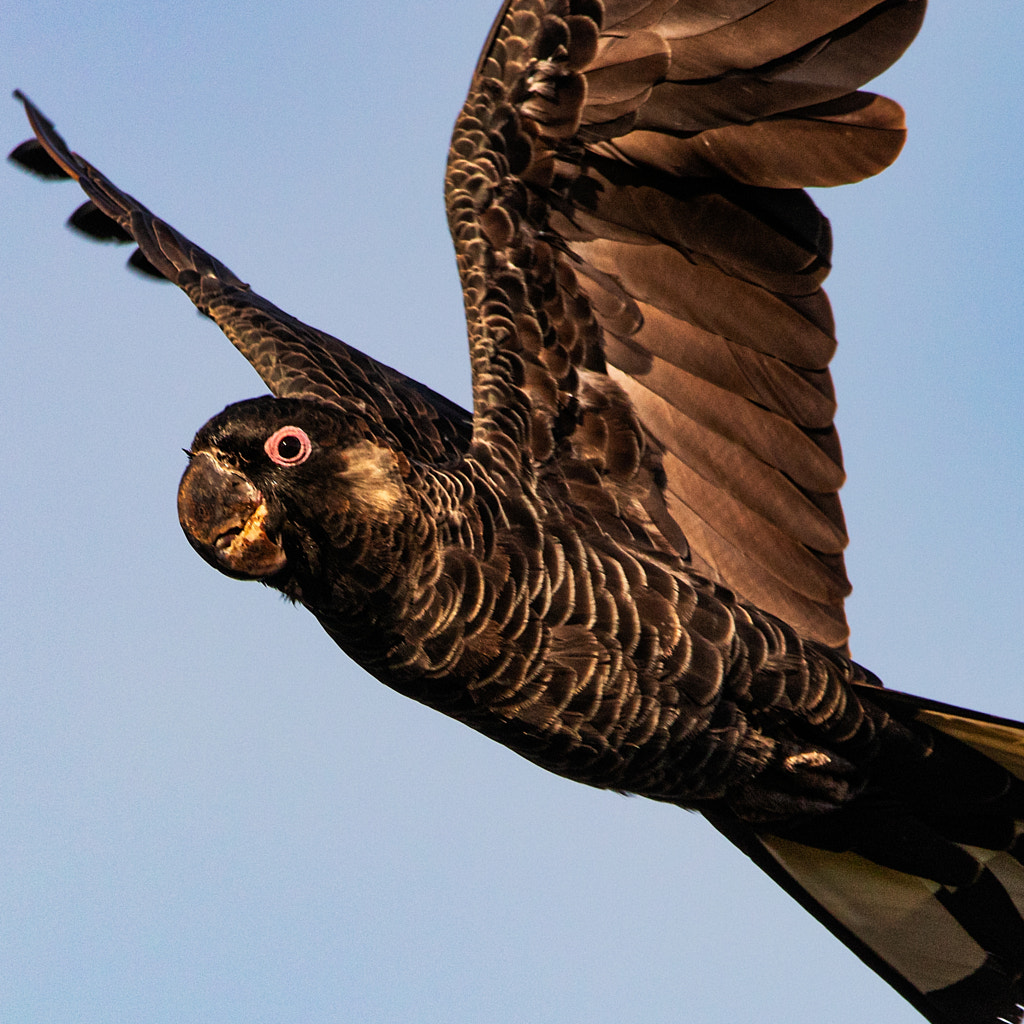
Ngoolyak or Carnaby’s Black-cockatoo (Calyptorhynchus latirostris). Yanchep National Park, Western Australia. Canon 80d with Sigma 150-600mm f5-6.3 OS lens.
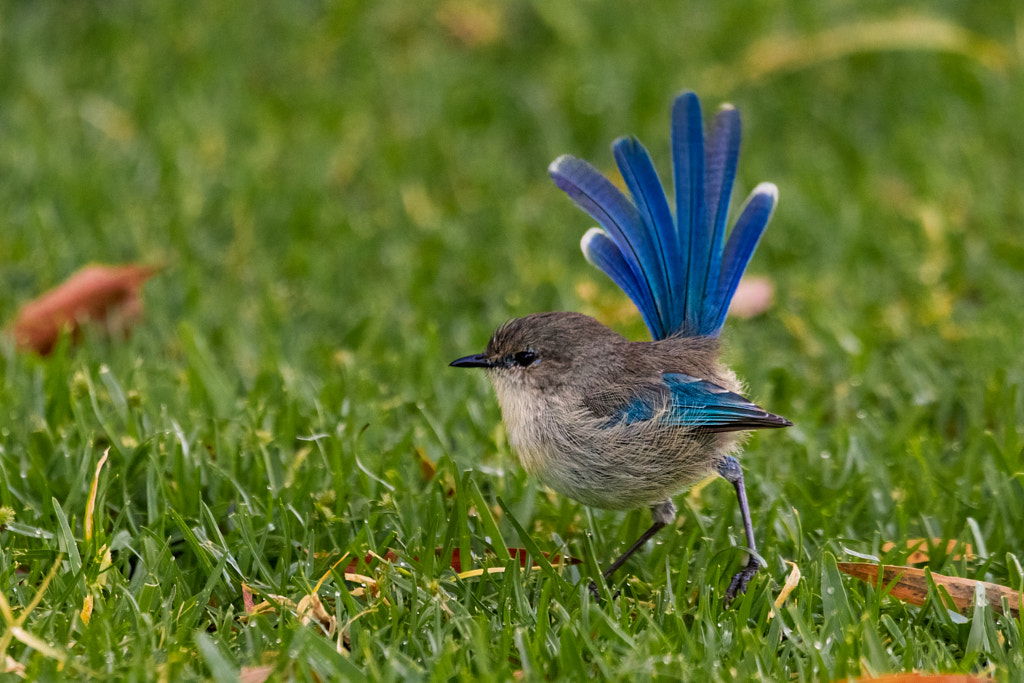
Djer-djer or Splendid Fairy-wren (Malurus splendens). Yanchep National Park, Western Australia. Canon 80d with Sigma 150-600mm f5-6.3 OS lens.
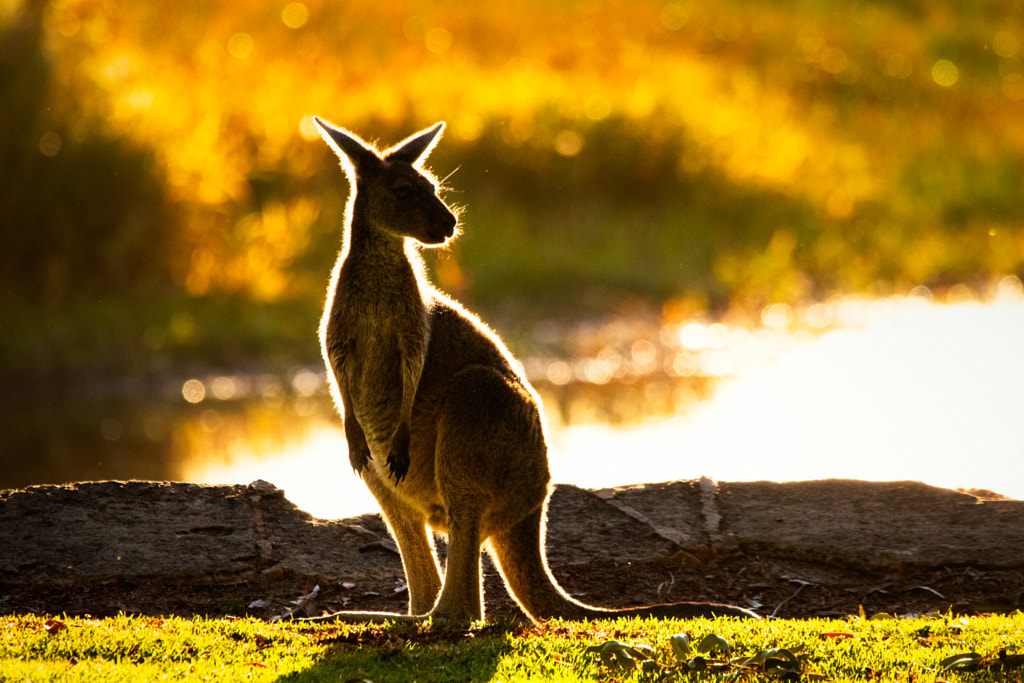
Yongka or Western-grey Kangaroo(Macropus fuliginosus). Yanchep National Park, Western Australia.
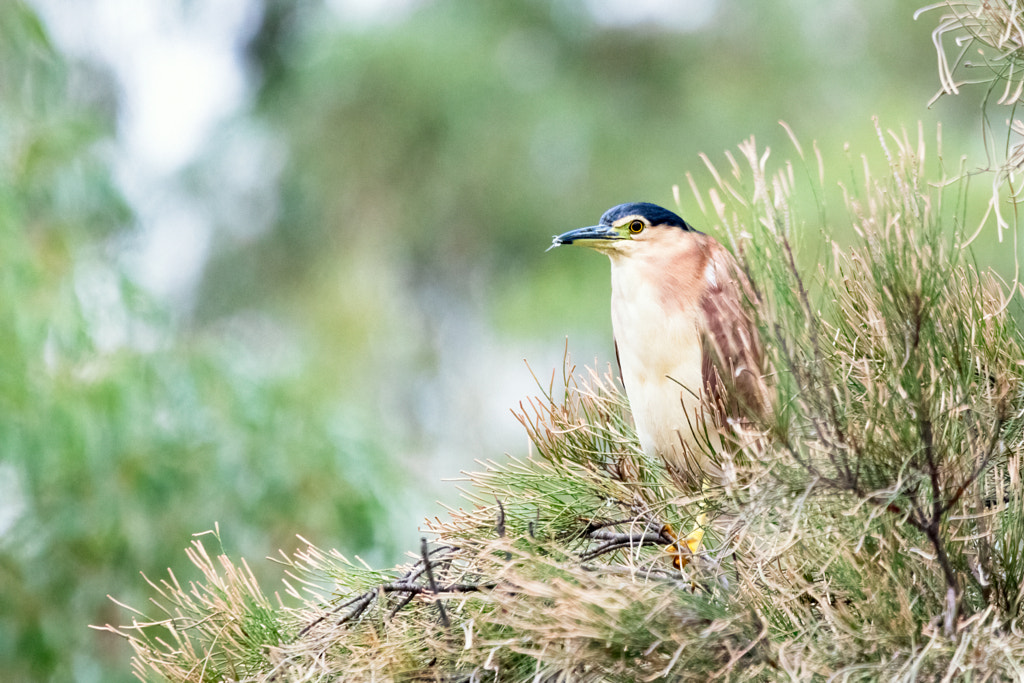
Ngalkaning or Nankeen Night Heron (Nycticorax caledonicus subsp mannillenis). York, Western Australia.
Conclusion
The thing that became very apparent when using both of these cameras is that user experience plays an important part. Canon and Sony have very different design philosophies. Sony is more a technology company and looks to throw as much technology into a product without any consideration of the users experience when using it. Canon take a conservative approach to technology – nothing cutting edge – and look to bundle it in a product that is pleasant to use and reliable. Both cameras are very suitable for nature and wildlife photography, but the user experience is very different. The technology of the A6500 is negated by poor design and handling. I feel I’m fighting the A6500 every inch of the way to get it to work and that is miserable. The 80d overcomes its shortcomings by being a joy to use – it disappears allowing me to concentrate on photography. Unfortunately when it comes to wildlife videography both are wanting. The Canon needs more technology in the form of 4k video, focus peaking and waveforms. The A6500 needs a better touchscreen, a better rear LCD panel and better menus to make it more useful.
So when buying a camera, whether it be new or second hand, while the specification sheet maybe useful as a guide I think more attention should be given to the ergonomics. What does it feel like in the hand? What’s it feel like to use? These are the questions that need to be addressed rather than how many megapixels or how much dynamic range.
The title is really an exercise in alliteration. It really should be “Can You Do Wildlife Photography On A Limited Budget?”, but that’s not as catchy or succinct. I used to think it was impossible. I thought to be a wildlife photographer you needed deep pockets to be able to afford the cameras and lenses. The photo review sites would have you believe that you need to drop unto $10K AUD on a camera body and up to $24K AUD on a lens to be in with a chance of taking a decent photo. Then you had to have the wonga to be able to travel to Africa, Antartica etc to actually find animals worthy of being photographed. About twenty years ago my sister tried to encourage me to enter the BBC Wildlife Photographer Of The Year competition my response was that I didn’t have the money for the equipment let alone alone being able to travel to a suitable location.
Richard and Cherry Kearton photographing a birds nest.
Twenty years later my views have radically changed. What changed them was the confluence of learning about two of the pioneers of wildlife photography and the digital camera revolution. The photographers were Cherry Kearton (1871-1927) and his brother Richard (1862-1928) the naturalist and writer. They were very early pioneers of wildlife photography and they published the first natural history book entirely illustrated with wild photographs in 1895. Their 1898 book “With Nature And A Camera: being the adventures of a field naturalist and an animal photographer” illustrated with 160 photos was a best seller and inspired many people to become wildlife photographers. A very young David Attenborough attended one of their film lectures and in an interview to The Guardian Newspaper said “It captured my imagination and made me dream of travelling to far-off places to film wild animals.” (Vidal, J; The Guardian 4th December 2021).In their book the two brothers list what it takes to be a wildlife photographer:
“The great points about successful natural history photography are: the possession of suitable apparatus to work with, an aptitude for taking care in stalking timid creatures and plenty of patience and determination to wait for and get what is wanted in spite of obstacles.”
p.334 Kearton, R and Kearton, C; With Nature and a Camera, 1898, Cassel, London.
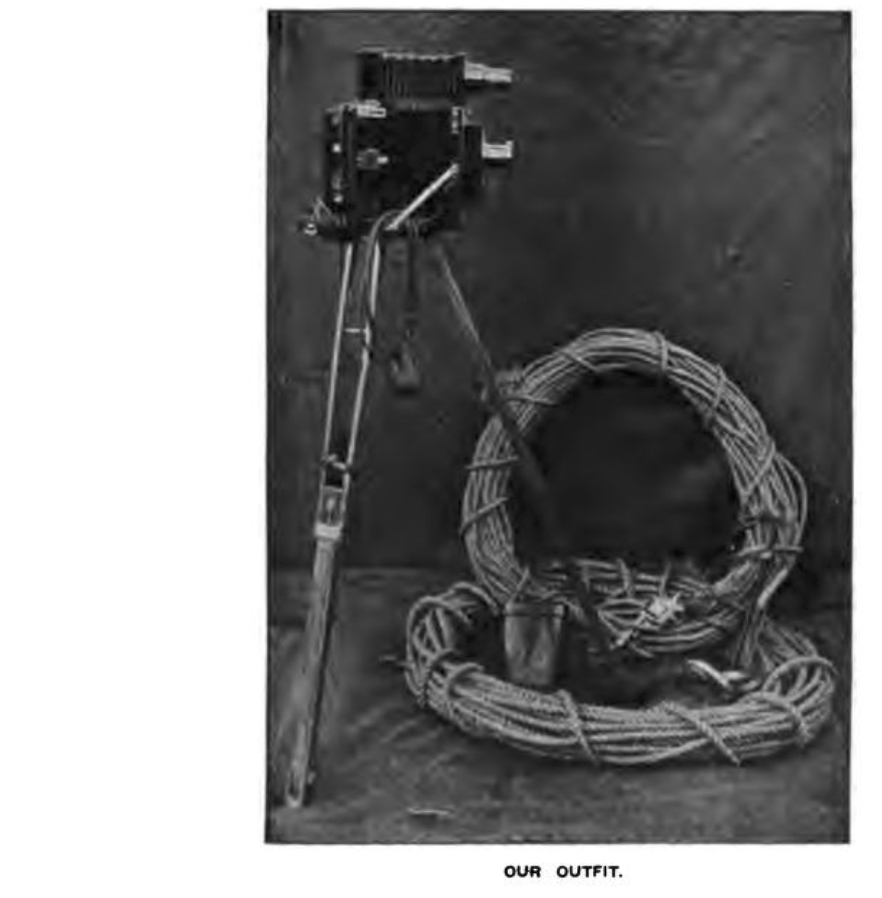
The “suitable apparatus” was a half plate (4¾ × 6½ in or 120mm × 165mm) Dallmeyer camera with a pneumatically controlled silent shutter for still subjects and a large quantity of hemp rope for scaling cliffs.
The “suitable apparatus” was a half plate (4¾ × 6½ in or 120mm × 165mm) Dallmeyer camera with a pneumatically controlled silent shutter for still subjects and miniature plate camera (probably 3 1/4” x 4 1/4” glass plates with a 5 1/4” f8 lens) for birds in flight. There was no autofocus with bird recognition AI. No 40 fps. Nothing under 4Kg in weight and certainly no endless digital images on a memory card. The plates had a sensitivity of 2 to 25 ISO. They’d be lucky to carry a dozen glass plates and take one picture every 2 minutes. They initially started just photographing the fauna of their native Yorkshire in their days off often sleeping in hedges or barns. No luxury safaris with 5 star accommodation and the convenience of modern jet travel.
No memory cards giving unlimited shooting for the Keaton’s. This is a box of Ilford photographic glass plates.
The digital camera revolution has meant for the last twenty years camera and lens manufactures have brought out new products with amazing technological innovations every year. This has meant that the second hand market has been flooded with equipment as photographers unload their “obsolete” stuff so they can buy the new stuff only to do the same 12 months later. This now means that there is a wealth of extremely capable second hand equipment out there to suit every budget.
Advances in in digital photographic technology has meant that there is a plethora of second hand equipment for sale.
TLDR
Needs Versus Wants
This is quite important as it will help us decide on equipment and set a budget. For instance if all you want to do is post some photos on social media then pretty well any interchangeable lens DSLR or mirrorless camera released in the last 20 years will suffice. If you want to print photos up to A3 in size then a 12Mp camera is adequate. If HD video and 4K video are important then that sets another parameter. It’s nice to day dream about having top of the line equipment such as a Sony A1 and a Sony 600mm f4 lens, but that combination will set you back $27000 AUD new and won’t be had for thrift shop prices second hand. But, say you want to print up to A3 it is possible with a bit of careful shopping on EBay or GumTree to get a DSLR with an APSC sized sensor and a 75-300mm lens for less than $500 AUD second hand.
I basically find that deciding on the lens is the most important part of the exercise and you really should aim to put most of your budget to that. So what are we looking for?
Sensor size
Full frame (36x24mm)
APSC (23.6 x 15.7mm or 22.2 x 14.8mm [Canon cameras only])
Micro Four Thirds (17.3 x 13mm)
Minimum Focal length
400mm
300mm
300mm
Best Case Scenario
600mm
600mm
400mm
The focal length will determine how close you need to get to your subject. The shorter the focal length the closer you will have to get. Having said that a shorter focal length is not a handicap because you’ll have to learn bushcraft so you can approach animals and that is a very good skill to have in this game and it’ll also stand you in good stead if you get a longer lens later on down the track.
You can use zoom lenses or primes. A prime lens is a fixed focal length, whereas a zoom lenscovers a range of focal lengths such as 75-300mm, or 100-400, or 150-600mm. In theory a prime lens will give better image quality and have a larger maximum aperture value which will let more light in. The down sides are that primes are usually more expensive and being a fixed focal length means that if your subject gets too close (it does happen more often that you’d think) you won’t be able to take a picture. Zooms offer flexibility in that you’re not stuck at one focal length, but the trade off is that they’re not as optically good as primes at the cheaper end and the maximum aperture value isn’t as great meaning that you may have to stop shooting as the light goes down.
A comparison of the common camera sensor sizes.
Now as soon as you tell another photographer what you’re planning to do they will inevitably tell you that you should get a camera with a full frame sensor as you’ll get a whole heap of benefits over the other smaller sensors. Now if we just content ourselves with reading spec sheets maybe, but out in the real world other things come into play. You want to photograph a bird that is 20cm long and fill the frame with it, so that’ll mean getting 5m away from it. To do that with a full frame camera you’ll need a focal length of 800mm, with an APSC camera 600mm and with a micro four thirds camera 400mm. There is a magnification factor when comparing the focal lengths on the different sensor sizes. It is x1.5 (or 1.6 for Canon) for APSC and x2 for micro four thirds. We’ll look at this comparing three common focal length ranges for the three sensor sizes.
75-300mm
100-400mm
150-600mm
Full Frame (36x24mm)
75-300mm
100-400mm
150-600mm
APSC (23.6 x 15.7mm)
(22.2 x 14.8mm Canon cameras)
112-450mm full frame equivalent
120-480mm full frame equivalent when used on a Canon APSC camera
150-600mm full frame equivalent
160-640mm full frame equivalent when used on a Canon APSC camera
225-900mm full frame equivalent
240-960mm full frame equivalent when used on a Canon APSC camera
Micro Four Thirds (17.3 x 13mm)
150-600mm full frame equivalent
200-800mm full frame equivalent
300-1200mm full frame equivalent
So a smaller sensor will mean you don’t need very long lenses and that is good because they are expensive. Shorter lenses have the advantage of being lighter which is good when carrying stuff in the bush.
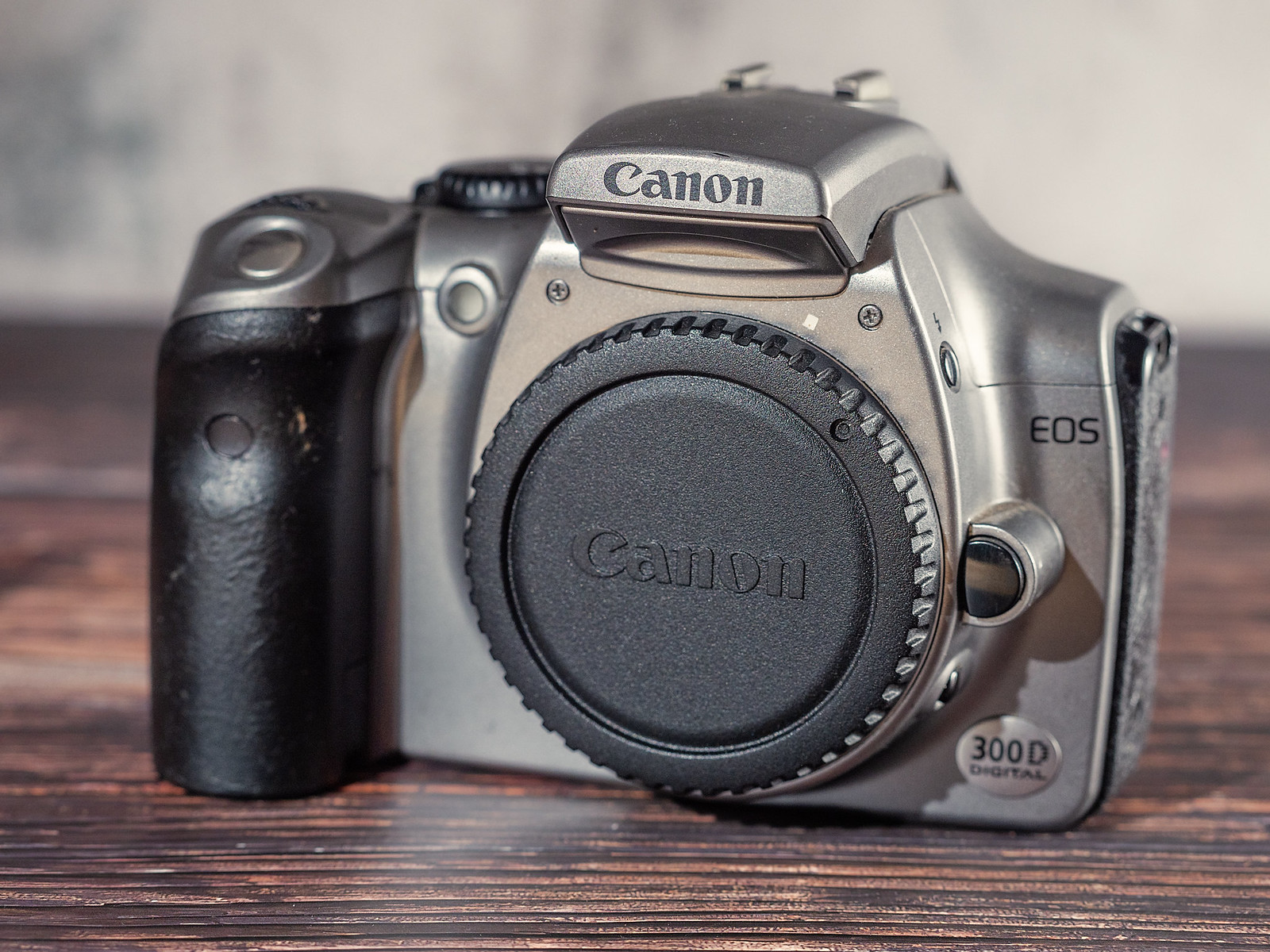
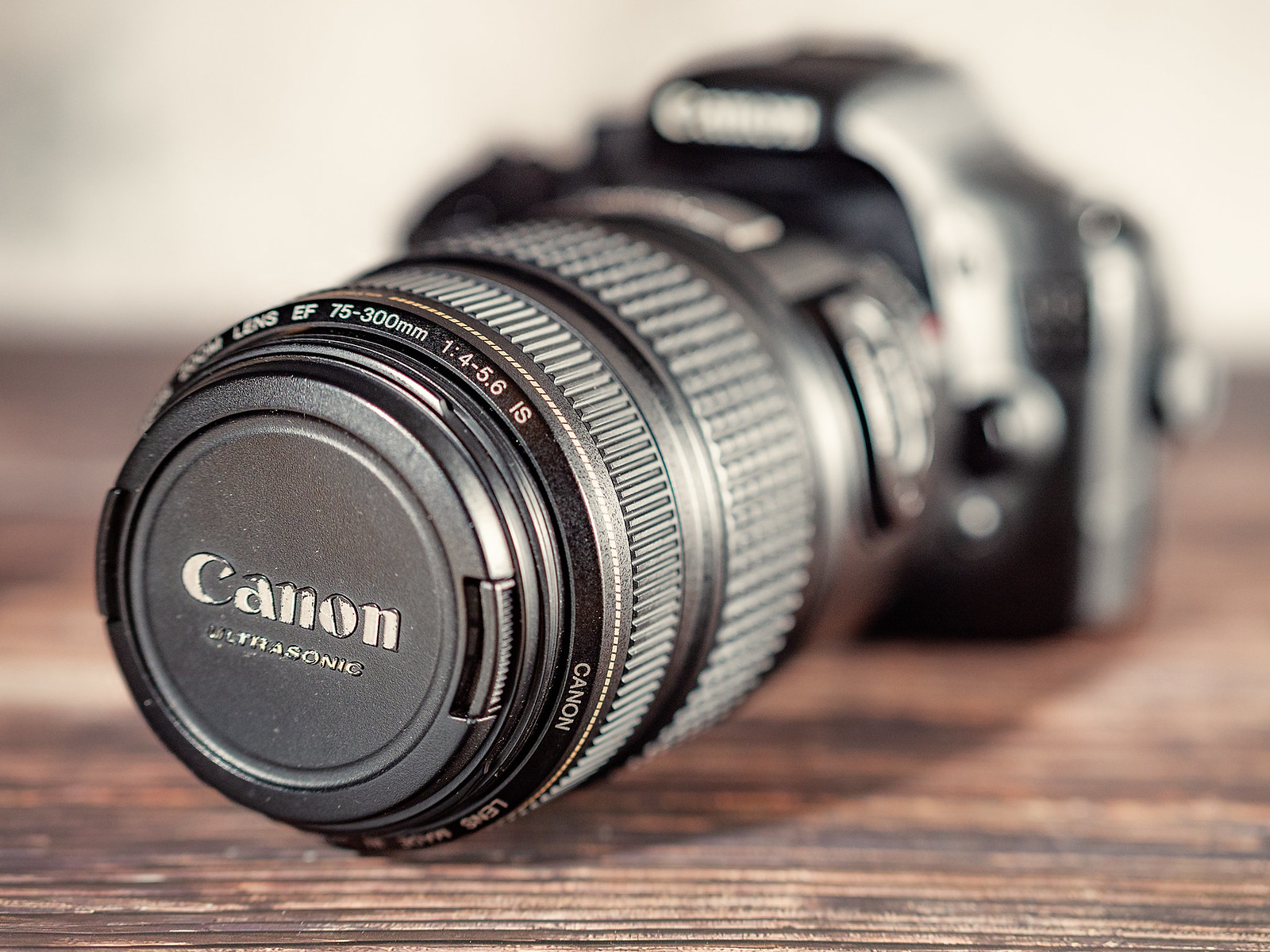
Canon EOS 300d body with Canon EF 75-300mm f4-5.6 IS lens.
I started my nature photography using a Canon EOS 300d with a Canon EF 75-300mm lens. The camera has an APSC sensor so that gave me almost enough reach to fill frame with my 20cm bird at 5m. It did me well until I decided that I wanted to invest more into the hobby. So if your budget is really tight I would recommend getting either a Canon of Nikon APSC camera and a 75-300mm lens as the bare minimum, and we’ll look at what’s available a bit later on.
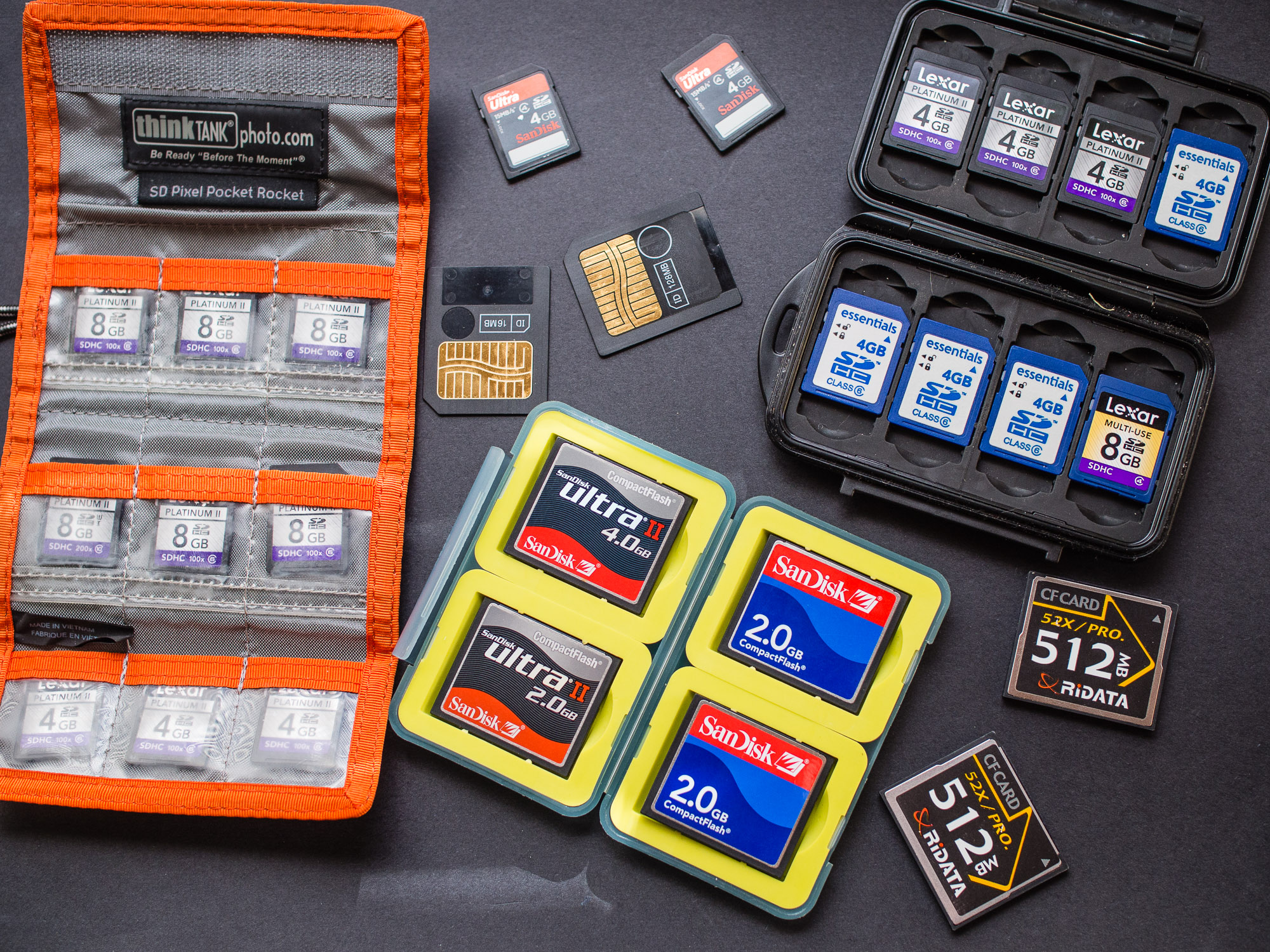
Memory cards are now very cheap. Develop a strategy for keeping them safe while working in the field.
The other thing to consider is that when you buy a camera and lens you also have to budget for batteries and memory cards. First things first; when looking at memory cards over the last 20-25 years there have been roughly ten types of memory card and many of them have gone obsolete so when buying a camera I would suggest that buying one with a commonly available card such as Secure Digital Card or SD Card. Similarly with batteries, make sure batteries are easily obtainable. With both cards and batteries try to buy the best you can afford and I’ll expand on this a bit further later on. Buying second hand also means that there is a chance where you’ll be able to buy the camera with spare batteries, a memory card, strap and possibly some form of bag as a package. Just make sure you’re getting things you actually want and are not paying more than if you to buy each item separately.
All the cameras I’ll be talking about are cameras I’ve owned or used. They’re not recommendations they are to give an idea of what’s about and where possible I’ll suggest equivalent models from other manufacturers.
Bargin Basement
You’ve got next to no money. OK a bit of a draw back, but not insurmountable. Back in the dim dark days of digital photography there existed a class of camera that you don’t hear much about now – the bridge camera. They are a cross between a point and shoot compact and an SLR. You get a wide range zoom lens with a small body. They were popular with enthusiasts in the early noughties as more serious cameras were way way expensive. Every manufacturer offered at least one some several at different price points. Sony and Panasonic still make a few models and they range in price from $500 to $2400 AUD new. But on the second hand market that’s where things get interesting. You can pick up something for less than $50.
What you are looking for is camera models with the terms “UltraZoom“, “superzoom” or “mega zoom” in the model name. Ideally look for something with at least an 8x zoom, better yet 10x or 15x. The more zoom the bigger your subject will be in the final image.
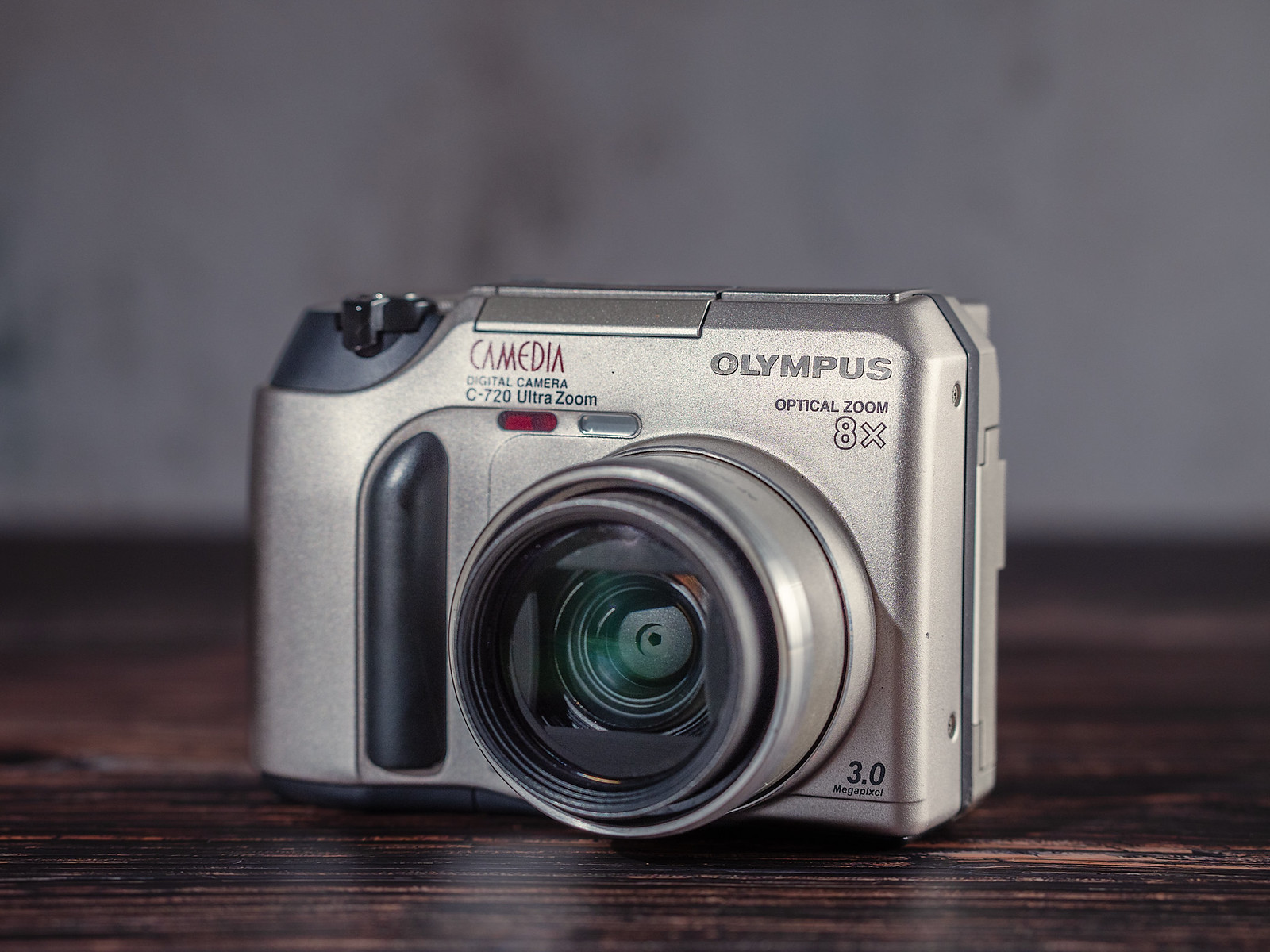
Olympus Camedia C-720 Ultra Zoom
Olympus Camedia C-720 UltraZoom bridge camera.
The Olympus C-720 was introduced in 2002 and is fairly typical of models from that era. It has a whopping 3 Megapixels and an 8x zoom range (24x if digital zoom is switched on but it is crap). It’s small, light, and cheap. Typically expect to pay about $15 to $35 AUD for one. What makes it ideal is that the camera runs off 4x AA batteries which are plentiful and cheap. The downsides are that it takes a SmartMedia memory card which while obsolete can still be bought. The downside is that you will probably spend more on the memory card than the camera. Another problem is that the largest capacity card is 128MB which can hold 14 photos at the best quality TIFF setting, 58 in SHQ jpg, 170 HQ, 196 in SQ1, and 206 in SQ2. The last two come at a smaller resolution. Although 3MP is a bit limiting you can print a postcard sized print comfortably and print an A4 sized print at a stretch.
In use it is not a speed demon, it takes about four seconds to power up. When shooting in sports mode with medium quality jpgs the camera can manage to shoot at 1 fps for a total of 15 frames. The autofocus is slow and very noisy. The top shutter speed is 1/1000 and the maximum ISO, or sensitivity, is 400. At 400 ISO the noise is bad and prevents you from recoding fine details. This is not a camera with which to take pictures of fast moving subjects in low light. But in good light, with a heap of patience and an understanding of the cameras limitations you can get some pictures. Whether you enjoy the process or not will depend upon your outlook.
Little Corellas taken with the Olympus C720UZ camera.
When light levels fall the inadequacies of the C720UZ are quite apparent. The noise patter prevents detailed images.
Canon EOS 300d with a 75-300mm lens
Canon EOS 300d body.
If you can swing to $250-300 AUD there are better alternatives than the very old bridge cameras. The Canon Canon EOS 300D (Canon EOS Digital Rebel in North America and the Canon EOS Kiss Digital in Japan) was the first real consumer budget DSLR when released back in 2003. For $60-100 you should be able to find a body only. I’d look to team this up with a 70-300mm zoom lens. With a bit of careful searching the combo should come in at under $300. Alternatives from that period going for around that are the Canon EOS 10d and the Nikon D100. They’ll be a little bit more money but they have slightly better features. The downside to them is that they were often used professionally and so they might not have much life left in them.
Canon EF 75-300mm f4-5.6 IS lens
So with the 300d what do you get for your money. Well you get a 6MP camera that takes Canon EF mount lenses – one of the biggest ecosystems of lenses in the world which means lots of choice at a variety of prices. Canon themselves have made an assortment of 75-300mm lenses over the last 30 years and you should be able to pick up something for $120 AUD and the one I’m looking at with Image Stabilisation for about $220. Sigma and Tamron are third party lens makers and you can find their versions for around the $100 mark.
The good points of the 300d are that it’s cheap, batteries (Canon BP-511a) and memory card (Compact Flash) are still available. The camera has a 6MP sensor that produces very nice A4 prints and it is very simple to use. The downside is that the camera was built to a budget and it is not possible to shoot in Continuous Autofocus when shooting RAW, the buffer is 2.5 frames per second for 4 frames, and the plastic body looks a bit tacky (but at least it feels solid). On the copy I have the rubber panels have gone a bit soft and sticky. To use Continuous AF you need to shoot in the Sports mode which is jpg only and you cannot adjust the exposure using exposure compensation in this mode. There is no being able to use the rear LCD screen to compose pictures on and there is no video mode. Maximum ISO is 1600 and the quality is ropey, but files can clean up quite well in image processing software.
The 70-300mm lenses at this price point are not going to win any awards for optical performance, but they will suffice to get you started. Irrespective of the manufacturer they all tend to be a little soft at the 300mm end and are not the fastest to find focus especially in low light, but they are capable of giving you a nice image if you don’t shoot wide open and keep the shutter speed up.
If you don’t want to buy Canon then at this price point look at the Nikon D100. Obviously you’ll have to substitute Nikon fit lenses as well.
Australian Pelican at Woodman Point, Western Australia. Canon EOS 300d with Canon EF 75-300mm f4-5.6 IS.
Kadjinak or Grey Fantail (Rhipidura albiscapa). York, Western Australia.
Djidi-djidi or Willie Wagtail (Rhipidura leucophrys). York, Western Australia.
Djida or Yellow-rumped Thornbill (Acanthiza chrysorrhoa). York, Western Australia.
Koolbort or Singing Honeyeater (Gavicalis virescens). York, Western Australia.
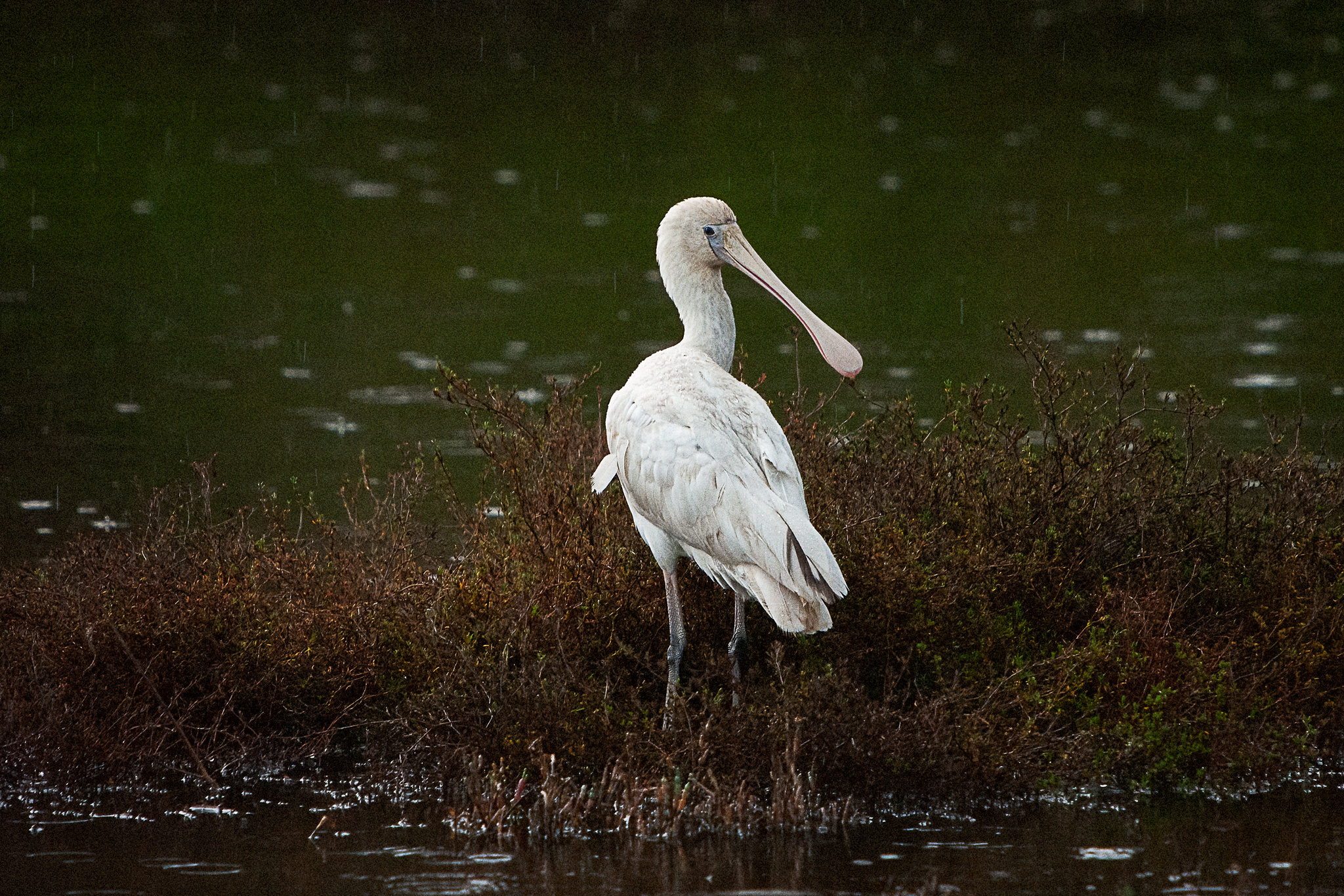
Kaaka-baaka or Yellow-billed Spoonbill (Platalea flavipes) in the rain. York, Western Australia.
Djangkang or Red Wattlebird (Anthochaera carunculata subs woodwardi). York, Western Australia.
Canon Eos 550d with a 75-300mm lens
Canon EOS 550d body.
If you can squeeze another $50-100 then a good option would be to go for something like the Canon EOS 550d. You have a substantial increase in resolution with an 18Mp sensor with better high ISO performance – now up to 6400 natively or 12800 by expansion. Continuous auto focusing in all shooting modes and the frame rate is increased to 3.7 frames per second with a buffer of 34 frames shooting jpg and 6 frames shooting RAW. The AF system has been beefed up a little and while still only having 9 centrally arranged focus points it has a cross type sensor in the centre with extra sensitivity. The camera uses SD cards which are cheap and easily found. The battery, the Canon LP-E8 is a bit of a down grade in terms of performance compared to BP-511a used in the 300d, but it is readily available and affordable. While being able to shoot 1080 video it is only really suitable for still subjects as the contrast based autofocus is is too slow to lock onto moving subjects. My first videos were shot with this camera and it is capable of producing a good result if you are prepared to manually focus. Other downsides are the limited buffer and the slow frame rate, the lack of a second control dial also makes using exposure compensation a little fiddly. I try and keep my ISO below 3200 as the chroma noise is quite intrusive and difficult to clean up without destroying fine details. But, having said all that this is a camera which is capable of producing very good results. Even though I now have other better cameras I still like to get the 550d out and use it because it is just fun to use.
Canon EOS 550d with Canon EF 75-300mm f4-5.6 IS lens.
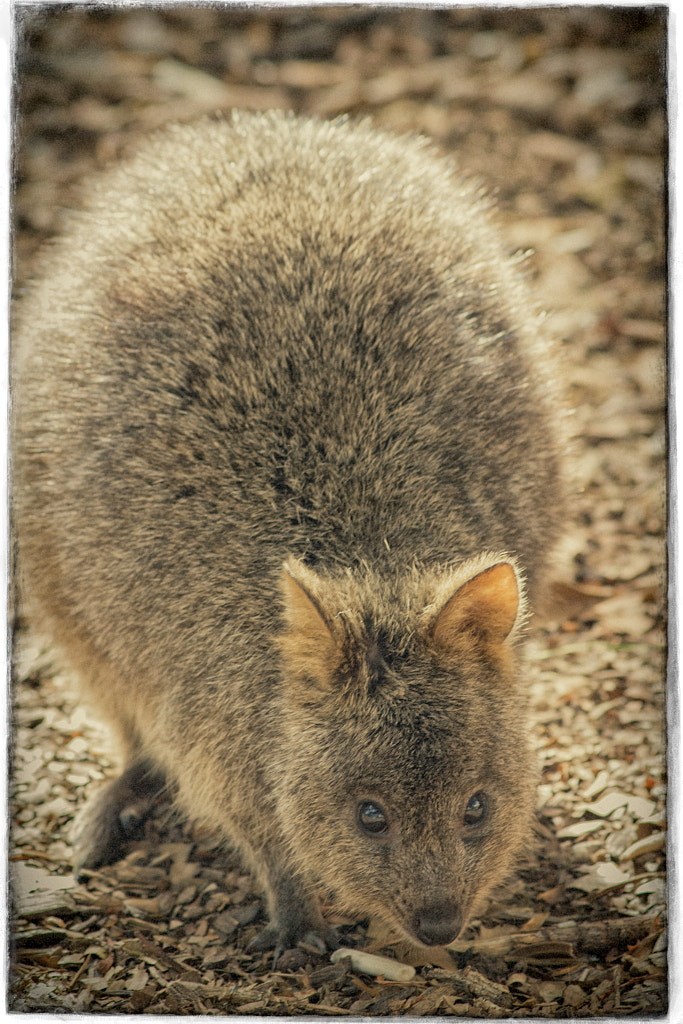
Quokkas are a small marsupial that inhabit Rottnest Island. Canon EOS 550d with Canon 75-300mm f4-5.6 IS lens.
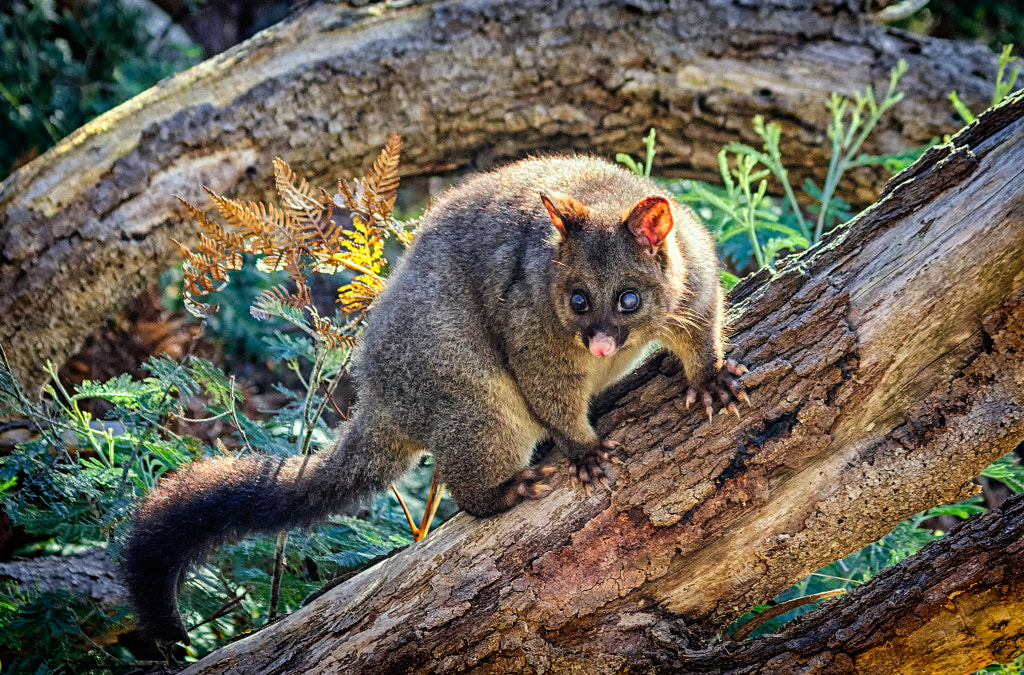
Brushtail Possum (Trichosurus vulpecula) at the Coal Mines Historic in Tasmania. Canon 550d with Canon 75-300mm f4-5.6 IS lens.
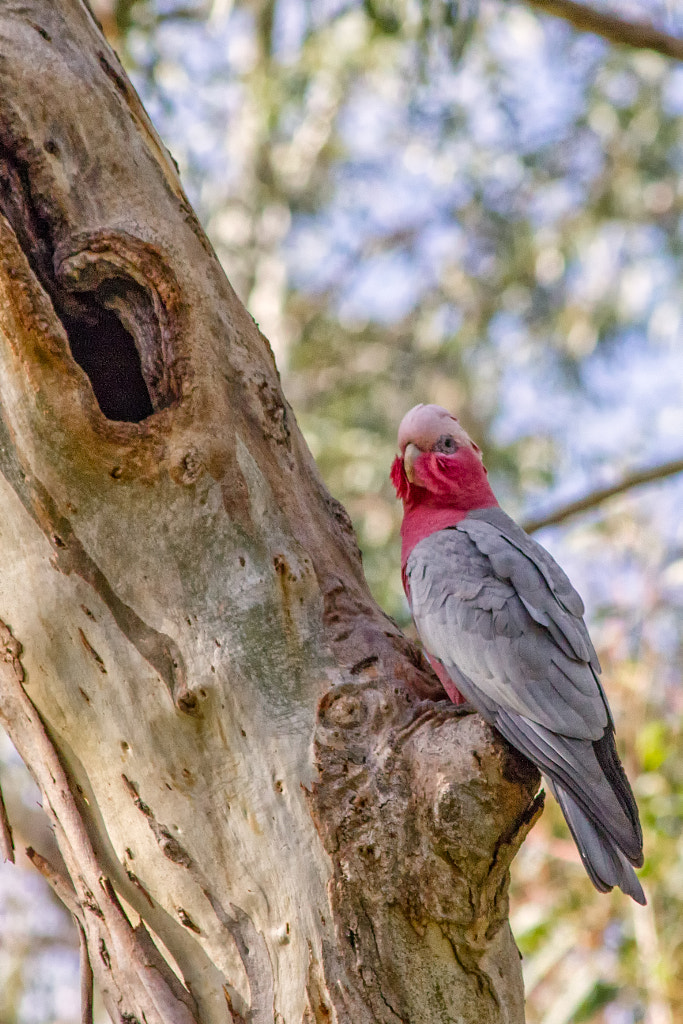
Like many cockatoos Galahs, Eolophus roseicapilla, nest in hollows in eucalypt trees. Woodbridge Riverside Park. Canon EOS 550d with Canon 75-300mm f4-5.6 IS lens
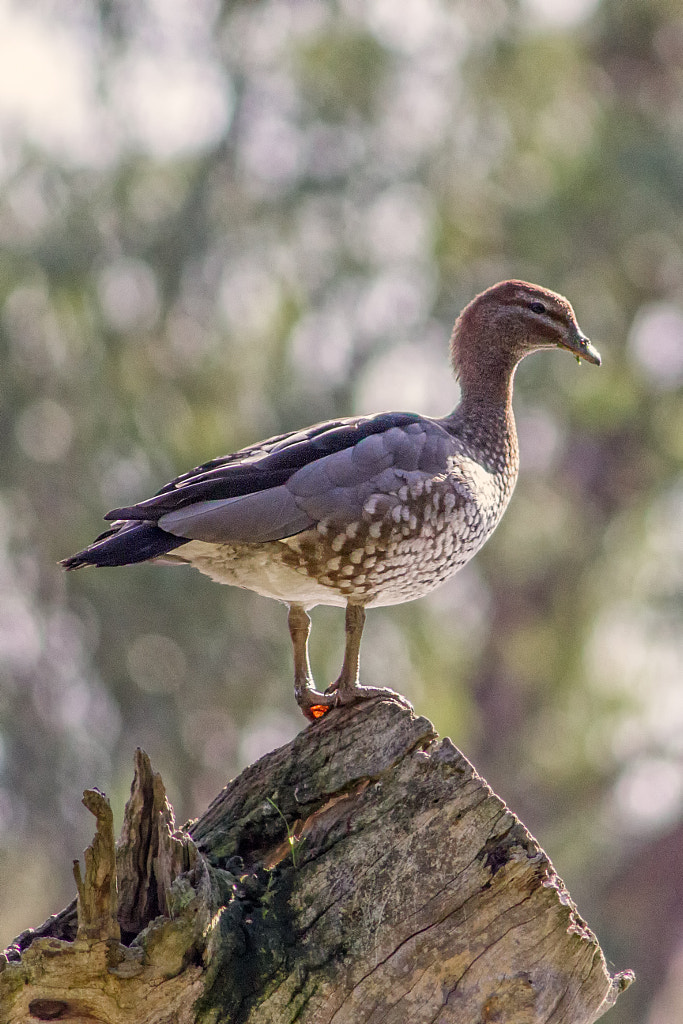
Maned Duck (Chenonetta jubata) also known as the Australian Wood Duck, Swan River, Woodbridge. Canon 550d with Canon EF 75-300mm f4-5.6 IS lens.
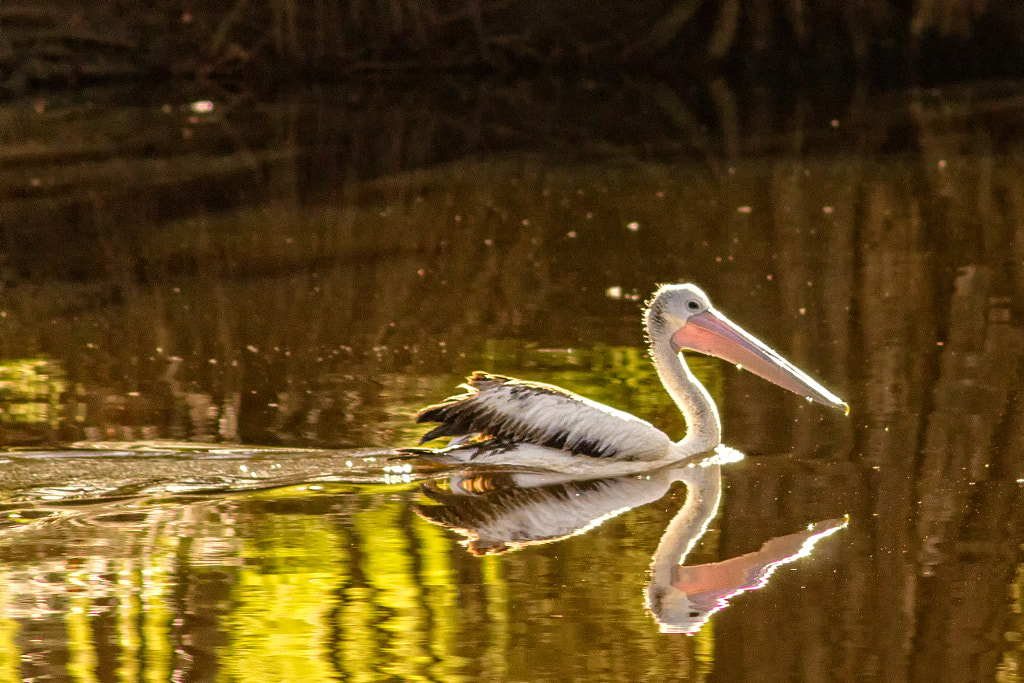
Australian pelican (Pelecanus conspicillatus), Swan River, Woodbridge. Canon EOS 550d with Canon 75-300mm f4-5.6 IS lens.
This would be a camera which would benefit with a better lens if you can afford it. Something like a Canon EF 300mm f4 (approx $500 on EBay) or a 400mm f5.6 (approx $600 on EBay). This would be a nice nimble set up that would give great results.
The Nikon equivalent to this camera would be the Nikon D5000 for about the same amount of money.
Summary
It is quite possible to put together a competent kit to photograph wildlife for less than $500 AUD. It won’t have all the bells and whistles of more modern high end cameras but you will be able to make it work. The limitations mainly are speed of operation and picture quality. Learning how to make up for the short comings will inevitably make you a far better photographer in the long run than having the latest and greatest camera will.
The last few weeks I’ve been concentrating on the Avon River and I wanted a change. So early one morning I got up so I could be in the wandoo woodland of Mount Ronan’s Nature Reserve as the sun comes up. There is nothing like the first rays of the sun hitting the trunks of the wandoo trees. The golden rays illuminate their pale bark and they all but glow in the warm light.
Wardawort or Grey Butcherbird (Cracticus torquatus). Mount Ronan Nature Reserve, Western Australia.
I got off to a promising start – as I pulled up I was greeted by a mob of kangaroos. They weren’t so keen to see me however and took off into the bush. There was an incredibly loud melodious piping and warbling coming from the tops of the trees. At first I thought it was magpies singing a bit strangely, but after closer inspection I found it was about a dozen grey butcher birds calling out to each other. What was amazing about it was they were all singing the same phrases taking turns with no gaps. You would be forgiven for thinking it was one bird as the performance was so seamless. It was like a choir recital.
Djini or Rufous Treecreeper (Climacteris rufa) climbing up the trunk of a tree. Mount Ronan Nature Reserve, Western Australia.
Djini or Rufous Treecreeper (Climacteris rufa) taking some time out in the sun. Mount Ronan Nature Reserve, Western Australia.
Stalking animals in the wandoo forests is hard as the trees shed bark, twigs, branches and leaves in great quantities which means that the ground is covered in a thick crunchy mulch and no matter how hard you try to move quietly you always end up making a racket. The end result is that it is hard to get close enough to take photos. The ideal approach is to sit down and wait for the birds to come to you. After about half an hour I could hear the sound of small birds chasing insects and was rewarded with several rufous tree creepers. A few minutes later and I could see one climbing up the trunks of a tree to foraging for insects and grubs – I’ve never seen one going down they always seem to climb, and when they get as far up as they want the glide down to the ground or the next tree.
Djida or Yellow-rumped Thornbill (Acanthiza chrysorrhoa). Mount Ronan Nature Reserve, Western Australia.
As I continued to walk around the forest I must confess that I lost focus as I spotted a couple of orchids. It was annoying that I only had my bird photography rig with me and nothing really suited to photographing very small flowers. From that point on I was trying to watch for birds while looking on the ground for orchids. It is an impossible task.
Hare Orchid or Fringed Hare Orchid (Leporella fimbriata). Mount Ronan Nature Reserve, Western Australia.
Common Bunny Orchid, Eriochilus dilatatus subsp. multifloris. Mount Ronan Nature Reserve, Western Australia.
By 9:30 the best light had gone so I decided to call it a day and walk back to the car. Waiting for me was a female red-capped robin sitting on the fence. She was quite obliging and sat for a while allowing me to take her photo.
Female Dermokalitj or Scarlet Robin (Petroica boodang aka Petroica multicolour subsp campbelli). Mount Ronan Nature Reserve, Western Australia.
Moonset over Mount Ronan Nature Reserve, Western Australia.
Big Bob is the resident Yoorn or Bobtailed Lizard. He lives under the house and can occasionally be seen exploring the garden. Normally he is a very feisty lizard with a lot of attitude, but on Monday we found him in the shade house looking very sorry for himself. At first we thought he’d gone down with Bobtailed flu, but on closer inspection he was shedding his skin. We often find the old skins in the garden but I’ve never seen this happen. So we thought we’d just leave him be and get on with it. On Tuesday he’d moved out onto the grass and we were worried about him as we often get kestrels, goshawks or sparrow hawks use our TV aerial as an observation post and they’d have no qualms about making a meal of him. He started wriggling and writhing in the grass in an attempt to get his old skin off. By lunch time apart from a few scraps between his toes he’d got the job done. By Wednesday he was back to scaring our Bull Terrier, Frida, and walking round the garden like he owns it. Another couple of weeks and he’ll be tucking himself up for the winter.
Big Bob our resident Bobtailed Lizard found in the shadehouse looking very sorry for himself.
He’d started to shed his skin and was looking very tatty.
Not dead, wriggling in the wet grass trying to remove the old skin.
As the sun warmed everything up he was content to lie like this for about half an hour.
Right side up again.
Still looking a bit manky.
After another hour mission accomplished – looking all new and neat again.
Wayan or White-faced Heron (Ardea novaehollandiae) shrouded in the mist on the banks of the Avon River. York, Western Australia.
Early mornings along the River Avon have taken on a decidedly misty appearance. Going down to Monger’s Crossing at first light and I’ve been hard pushed to see across the river. The upside of this is that by carefully walking and crawling I can get quite close to the herons and spoonbills there. The spoonbills seem a bit more stoic than the herons. They just get on with the normal morning routine of foraging in the shallows for food. In contrast the heron looked decidedly unimpressed with the weather just standing in the long grass with its shoulder hunched up and looking forlornly at the water coming down from the weir.
Kaaka-baaka or Yellow-billed Spoonbill (Platalea flavipes) foraging on a misty morning.
Ngalkaning or Nankeen Night Heron (Nycticorax caledonicus subsp mannillenis) in the early morning mist.
Looking up the Avon River with Mount Bakewell shrouded in the early morning mist. York, Western Australia.
After an hour or so the sun gradually started burn off the mist and the golden light gave a radiance to everything. The sun’s warmth began to take effect and the birds became a lot more active and I was able to get some photos of birds flying, which is always a thrill. The still and quietness of the mist was gone and replaced by the raucous noise of the corellas and the honking of the herons as they flew overhead. By 9 o’cock it was all over. The birds had settled and no activity could be seen.
Golden Orb-weaving Spider’s web lit by the golden dawn light.
Wayan or White-faced Heron (Ardea novaehollandiae) flying in the warm light of dawn.
Manatj or Western Corellas (Cacatua pastinator) flying over the Avon River in York Western Australia.
Wayan or White-faced Heron (Ardea novaehollandiae) taking in the suns rays. York, Western Australia.
As we approach winter it is now easier to get up before first light as it gets light so much later. On Thursday, which just happened to be my 60th birthday, I got up and head down to the river just getting there as the sun started to rise above the tree line. I was hoping to see some Nankeen Night Heron’s but couldn’t find them, but I did find a strangely cooperative White-faced Heron who was happy to sit on a branch and allow me to get close enough to photography. The bird was looking into the rising sun and the warm glow was reflected off his feathers. The heron looked very majestic just perched there. A wonderful start to the day.
Geat Egret, Ardea alba. York, Western Australia.
Put to flight.
Feeling safer.
Walking up past Monger’s Weir I didn’t see anything more so I decided to head back and grab a coffee at the local bakery. As I was walking back I spied a Great Egret in one of the billabongs beside the main river. We’ve recently had a lot of rain so it was full and the egret was in the cooler shade of the trees while the golden light played on the foliage. Again another magical moment. Although Great Egrets are fairly common along the river it had been ages since I’d last photographed one. Again it was quite happy to let me sit quietly and take its picture. It knew I was there as occasionally it would stare at me as if to say “You still here?”. Eventually a boisterous dog burst through the undergrowth and put the bird to flight. It didn’t fly far – just 10 metres or so to the top of a dead sheaoak tree. By now the sun was well and truly up and we had the most brilliant blue sky so I quickly grabbed some shots of the egret against it.
Playing silly buggers in the trees. Djakal-ngakal or Galah (Cacatua roseicapilla). York, Western Australia
As I got near to the swing bridge to cross over into town some galas were playing around in the trees so I spent the next half hour photographing their antics. After a coffee I walked back to the car and saw four Nankeen Night Herons – three adults and a juvenile – so I grabbed a few shotsof them. A perfect end to a great photo session and a perfect start to a great day.
A juvenile Nankeen Night Heron, (Nycticorax caledonicus subsp mannillenis). York, Western Australia.
Ngalkaning or Nankeen Night Heron (Nycticorax caledonicus subsp mannillenis). York, Western Australia.
Ngalkaning or Nankeen Night Heron (Nycticorax caledonicus subsp mannillenis). York, Western Australia.
After a warm day of setting up the tent and wandering around looking at the wildlife opportunities we repaired to the Yanchep Inn for a cooling beverage and a meal. As we were entering a notice on the door caught my eye. It was a warning about the kookaburras and how they were mugging patrons for their food – they particularly liked to rob children of their burgers and chips. I thought at the time it was amusing and didn’t think anything of it.
One of the Parma Purloiners of Yanchep.
Twenty minutes later I heard a whooshing sound and felt wings just graze my head. Fast reactions meant that the bandit had to retire to a nearby pole with nothing. Ten minutes later there were half a dozen of them. Meanwhile a group of four on the table just opposite had had their meals delivered by the waitress. All of a sudden the birds scramble and then dive for the table like Stukas on a bombing run. Hermann Göring would have been impressed. It was a close run thing and the kookaburras were only just repelled. Realising that discretion was the better part of valour they beat a hasty retreat back inside with cries of “F**king vermin!!!!”
It is obvious that just a sign casually warning about the kookaburras isn’t sufficient. I think there should be air raid sirens, ack ack guns, and Anderson shelters. While helmets might be a requirement I don’t think gas masks need be issued.

















You must be logged in to post a comment.