A Over T

If you are a regular reader you may recall that I recently wrote about having one of those magical days where everything goes right. Well yesterday was the anthesis of that.


Noolarko by Paul Amyes on 500px.com
Noolarko or Black-faced Cuckoo Shrike (Coracina novaehollandiae) waiting for the clouds to break and the first rays of the sun to light up the day.


We had decided to get up early and walk along the River Avon here in York, so come 5am I bounced out of bed (Haha! As if!) and quickly got dressed. As I quickly had a coffee and piece of toast the rain began to fall. It was one of those summer downpours with big fat lazy raindrops that hit the parched dirt and release that wonderful petrichor. These downpours don’t generally last long and this one was no different so we headed out. On arriving at the river it was quiet, very quiet. In fact unnervingly quite. A complete absence of bird sound apart from a rooster making it’s presence known, but, that doesn’t count. It’s very unusual to be out at dawn and not hear birds singing. I thought normal activity would be resumed when the sun broke through the clouds so we carried on walking. A pair of Black-faced Cuckoo Shrikes perched high up in a dead tree gave me something to point my camera at. Not thrilling photos but a start nonetheless. A bit further on and the clouds had now cleared and we were greeted by a brilliant cobalt blue sky and a steady procession of Galahs flying in formation. I managed to get some photos of them. I’d wanted for ages to get a shot of Galahs flying against a back drop of a brilliant blue sky – the contrast of their pink feathers and the blue. Doing something I never normally do I looked at the rear of the camera and when I saw the sequence of photos  I could see that I had achieved that goal. I was at this point feeling rather pleased with myself. The Bible warns us that “Pride comes before a fall” (Proverbs 16:18) and little did I realise that I was about to become literally acquainted with it.


Djakal-ngakal by Paul Amyes on 500px.com
Djakal-ngakal or Galah (Cacatua roseicapilla) fly past.


Turning round we walked back the way we had come and then onto a spot where we could access the river bed. As we broke cover from the bushes we set what seemed like every duck in York flying. Whoops! Then I had this urge to see what if anything was around the corner. When suddenly it happened. You know how people often say that when something catastrophic happens time slows down and everything happens in slow motion? Well that didn’t happen. One minute I’m vertical the next bang and I’m prostrate in the mud with incredible pain shooting up my arm and from my hip. Necessity meant that I just lay still for a bit to see if the pain subsided. I quickly realised at this point that I wasn’t seriously hurt because I was more concerned that my camera had survived the cataclysm than about any injuries I’d sustained. I also became aware of the beloved significant other calling out. She had tried to get over to me but hadn’t got very far as she didn’t want to befall the same fate. Gingerly I got onto all fours and crawled to a firmer spot and got up. I was covered from head to toe in evil smelling river mud – my camera wasn’t much better.


After a dramatic fall while out birding this morning the Olympus EM1x and OM System 100-400mm look a little worse for wear.


Sitting here writing this my camera and I have scrubbed up well. It works perfectly – a testament to ruggedness of Olympus cameras. Me – I’m a bit sore, but there is no major damage.

Note to self: don’t go walking along the river bed just after it has rained – it is very slippy.

Settled For The Night by Paul Amyes on 500px.com
Settling in for the night with the television


Our neighbours TV aerial pays host to a gang of Pink and Grey Galahs.

Golden Morning Light

Wayan by Paul Amyes on 500px.com
Wayan or White-faced Heron (Ardea novaehollandiae) taking in the suns rays. York, Western Australia.


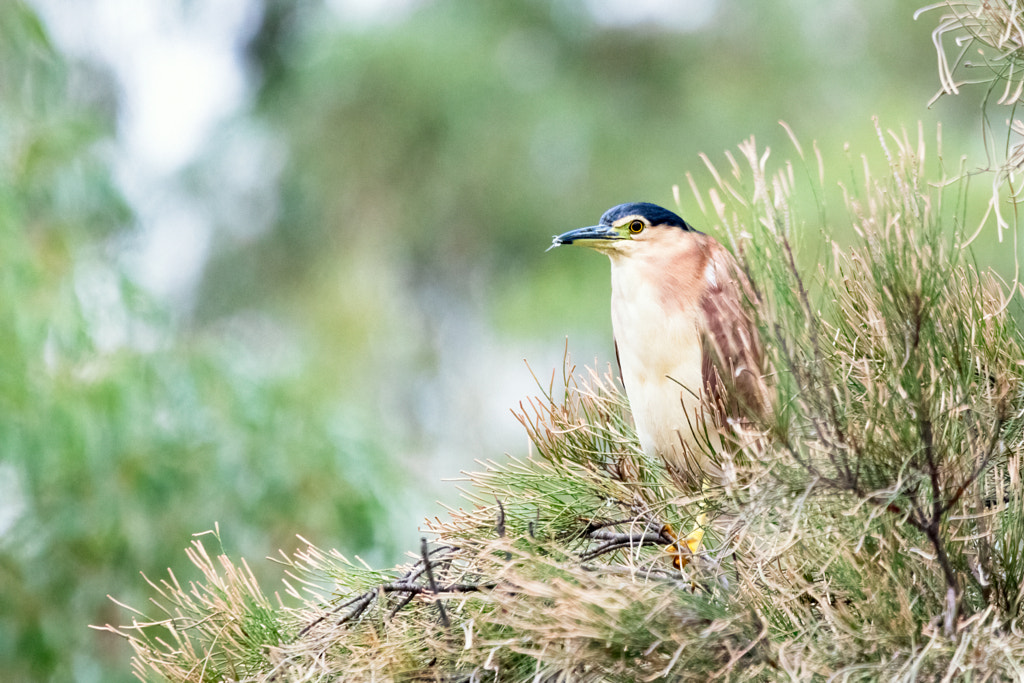
As we approach winter it is now easier to get up before first light as it gets light so much later. On Thursday, which just happened to be my 60th birthday, I got up and head down to the river just getting there as the sun started to rise above the tree line. I was hoping to see some Nankeen Night Heron’s but couldn’t find them, but I did find a strangely cooperative White-faced Heron who was happy to sit on a branch and allow me to get close enough to photography. The bird was looking into the rising sun and the warm glow was reflected off his feathers. The heron looked very majestic just perched there. A wonderful start to the day.


Geat Egret by Paul Amyes on 500px.com
Geat Egret, Ardea alba. York, Western Australia.


Geat Egret by Paul Amyes on 500px.com
Put to flight.


Geat Egret by Paul Amyes on 500px.com
Feeling safer.


Walking up past Monger’s Weir I didn’t see anything more so I decided to head back and grab a coffee at the local bakery. As I was walking back I spied a Great Egret in one of the billabongs beside the main river. We’ve recently had a lot of rain so it was full and the egret was in the cooler shade of the trees while the golden light played on the foliage. Again another magical moment. Although Great Egrets are fairly common along the river it had been ages since I’d last photographed one. Again it was quite happy to let me sit quietly and take its picture. It knew I was there as occasionally it would stare at me as if to say “You still here?”. Eventually a boisterous dog burst through the undergrowth and put the bird to flight. It didn’t fly far – just 10 metres or so to the top of a dead sheaoak tree. By now the sun was well and truly up and we had the most brilliant blue sky so I quickly grabbed some shots of the egret against it.


Djakal-ngakal by Paul Amyes on 500px.com
Playing silly buggers in the trees. Djakal-ngakal or Galah (Cacatua roseicapilla). York, Western Australia


As I got near to the swing bridge to cross over into town some galas were playing around in the trees so I spent the next half hour photographing their antics. After a coffee I walked back to the car and saw four Nankeen Night Herons – three adults and a juvenile – so I grabbed a few shots  of them. A perfect end to a great photo session and a perfect start to a great day.


Ngalkaning by Paul Amyes on 500px.com

A juvenile Nankeen Night Heron, (Nycticorax caledonicus subsp mannillenis). York, Western Australia.


Ngalkaning by Paul Amyes on 500px.com

Ngalkaning or Nankeen Night Heron (Nycticorax caledonicus subsp mannillenis). York, Western Australia.


Ngalkaning by Paul Amyes on 500px.com

Ngalkaning or Nankeen Night Heron (Nycticorax caledonicus subsp mannillenis). York, Western Australia.

Off Course

Helen watching birds and basking in the winter sun at the York Golf Club.


This autumn and winter we’ve been spending quite a bit of time at the local golf course – not playing golf at all but walking in the woods at the back of the course. It is a fantastic piece of Wandoo forest with rocky out crops and steep gullies cut by water erosion.  In fact that’s probably why it still exists as the land wouldn’t be fit for any commercial purpose. For us it is a wonderful place where we can walk the dog and view native flora and fauna. The other great thing is other than seeing the occasional golfer on the fairways as we drive in there is nobody around.


Frida looking in holes at the York Golf Course.


Frida our wayward and reluctant Bull Terrier loves it. There are rocky outcrops to stand on and strike a heroic pose, holes to look down and lots and lots of interesting things to smell. It is the one place where she enthusiastically jumps out of the car rather than having to be enticed out with bribes.


Me I go there to photograph flowers and animals and just generally get away from everything. I find it so peaceful and relaxing. Here are a selection of photos I’ve taken this winter.


Djakal-ngakal by Paul Amyes on 500px.com
Djakal-ngakal or pink and grey galah enjoying the last warmth of the winter’s sun as it goes down.


Golden Orb Weaving Spider by Paul Amyes on 500px.com

The early morning sun highlights the golden web of the Golden Orb Weaving Spider.


Green-veined Shell Orchid by Paul Amyes on 500px.com

Green-veined Shell Orchid, Pterostylis scabra, growing just off the fairway in the rough.


Yongka by Paul Amyes on 500px.com

You never know who you’ll meet in the rough. Female western grey kangaroo aka sooty kangaroo (Macropus fuliginosus).


Fringed Mantis Orchid by Paul Amyes on 500px.com

Fringed Mantis Orchid, or Green Spider Orchid, (Caladenia falcata).


Cowslip Orchid by Paul Amyes on 500px.com

Cowslip Orchid, Caladenia flava subs. flava.


Sugar Orchid by Paul Amyes on 500px.com

Hundreds of Sugar Orchids, Ericksonella saccharata, can be seen growing in the bark and leaf litter beneath the wandoo trees.


Winter Donkey Orchid by Paul Amyes on 500px.com

Winter donkey orchid, Diuris brumalis.


Chapman's Spider Orchid by Paul Amyes on 500px.com

Chapman’s Spider Orchid, Caladenia chapmanii.


Yongka by Paul Amyes on 500px.com

A quick bite to eat.


Fridas enjoying a morning run in the bush at the York Golf Club.

Noisy Neighbours

I got a few enquiries about corellas after my post Tales From The Riverbank part 2. Yes the Shire has previously culled the birds in the run up to Australia Day, but this year they didn’t. The reasons given are that they are noisy – I mean really noisy. To show how noisy I made a short film about them.

Tales From The River Bank – part 2

Summer in Pioneer Park by Paul Amyes on 500px.com
Western Corellas (Cacatua pastinator). Pioneer Avon Park, York, Western Australia. Olympus OMD EM1 with OLYMPUS M.75-300mm F4.8-6.7 II lens. Exposure: 1/1250 sec f8 ISO 800.


Well we’re well and truly in summer now here in York. The mercury has hit 42℃ (107℉), the wheat crop is in and the water level in the River Avon is steadily dropping. This time of year brings the western corellas (Cacatua pastinator) in huge numbers. They migrate here to fatten up on the spilled wheat around the CBH grain handling facility and because of the water in the river. Being seed eaters they need quite large quantities of water to help digest their food. The corellas take up residence in the large gum trees that line

Summer in Pioneer Park by Paul Amyes on 500px.com
Summer in Pioneer Park. Western Corellas (Cacatua pastinator). Pioneer Avon Park, York, Western Australia. Olympus OMD EM-1 with OLYMPUS M.75-300mm F4.8-6.7 II lens. Exposure: 1/500 f7.1 ISO 200.


the banks of the river and that means lots of them can be found in the Pioneer Avon Park. Unfortunately for the corellas this all roughly coincides with Australia Day and this is a problem at the park because the town chooses to celebrate Australia Day there, lots of awards are handed out  and of course lots of speeches are made. Corellas are noisy – very noisy especially in their hundreds and they can easily drown out a PA system. One year our shire CEO had his wonderful speech (well he thought it was wonderful we the citizens of York thought otherwise) drowned out by raucous squawking and it made him more than a little cross to say the least. To prevent such a thing happening the next year he arranged for the birds to be culled just a few days before Australia Day. This is why York wakes up to the sound of gunfire in the days leading up to Australia Day.


Summer in Pioneer Park by Paul Amyes on 500px.com
Little black cormorants (Phalacrocorax sulcirostris) none too impressed with the antics of the corellas. Pioneer Avon Park, York, Western Australia. Exposure


Summer in Pioneer Park by Paul Amyes on 500px.com
Pink and Grey Galahs (Eolophus roseicapilla) wishing the noisy visitors would bugger off and leave them in peace and quiet. Avon Pioneer Park, York, Western Australia. Olympus OMD EM-1 with OLYMPUS M.75-300mm F4.8-6.7 II lens. Exposure: 1/800 sec, f6.7 ISO 800.


The Long And The Short Of It

The Olympus M.ZUIKO DIGITAL ED 75-300mm f/4.8-6.7 II mounted on an OMD EM-10.


The Olympus m.Zuiko 75-300mm f4.8-6.7 mk ii (which shall now on referred to as the 75-300) is an updated version of their original super telephoto zoom for the micro four thirds format.Yes I said super telephoto zoom because that is what it is as it is equivalent to a 150-600mm lens in 35mm sensor terms.

The Olympus M.ZUIKO DIGITAL ED 75-300mm f/4.8-6.7 II mounted on an OMD EM-10.


The Olympus M.ZUIKO DIGITAL ED 75-300mm f/4.8-6.7 II compared with Canon EF 75-300 f4.5-5.6 IS for comparison. The Olympus gives an equivalent focal length of 150-600mm.

Keeping up with the m4/3s promise of smaller cameras and lenses this lens does not disappoint. It fits comfortably in the hand is quite a bit smaller than my Canon 75-300mm f3.5-5.6 IS which only covers half the focal range when mounted on my EOS5d. There are rumours on the various forums that the lens is designed and built by Sigma, but there is no evidence of that fact when looking at it. The 75-300 is largely constructed from engineering plastic and has a metal mount. There is no weather sealing. The lens extends while zoom, roughly doubling its length, there is no lens creep which is nice. While not heavy it feels reassuringly dense in the hand and not at all cheap and wobbly like some budget zoom lenses.The filter diameter is 58mm which it shares with the 40-150mm f4-5.6 and means that filters won’t be too pricey. Optically the lens has 18 elements in 13 groups, two of which are ED glass and one is Super ED (extra low dispersion). These exotic elements are there to minimise chromatic aberration throughout the zoom range. They certainly do the job for when I open up images shot with the 75-300 in Lightroom they are remarkably free of CA. The lenses elements are coated with Olympus propriety ZERO (Zuiko Extra-low Reflection Optical) coatings and I’ve found the lens to be quite resistant to backlit flare, however flare can be induced by bright light sources just outside of the frame so I would heartily recommend the use of a lens hood. Unfortunately Olympus does not include one in the box.


Cracticus tibicen hypoleuca is a subspecies of white backed magpie found on Tasmania, King and Flinders Islands.


A pink and grey galah at our bird table.


Performance wise the 75-300 is remarkably good for a lens of this price and zoom range. The AF is quick and precise when shooting stills on both my EM-10 and EP-5, and quite a lot slower when shooting video. Optically the lens is very sharp up until the 200mm mark and then it does soften slightly, but this is not at all unusual with zoom lenses, which is unfortunate because this lens will be bought more for its uses at 300mm than 75mm. There is not a lot of love for this lens on the internet forums where it is harshly criticised for it performance at the long end, but from my experience with it it’s not as bad as people make out. I wonder whether camera shake is a contributing factor here. While Olympus bodies have In Body Image Stabilisation (IBIS) there is a limit to what it can achieve and we have to remember that this is the equivalent of a super telephoto 600mm lens in full frame terms and not many people would expect to handhold one of those and get tack sharp results. When using the lens on a tripod and monopod it certainly delivers the goods. When handholding I would certainly recommend not using a shutter speed of lower than 1/300th sec even when using IBIS.


Kite surfing off Park Beach in Tasmania.


Kite surfing off Park Beach in Tasmania.

Downsides of the 75-300. Well the slow maximum aperture will be a drawback for many, and I’ve read many threads where people have stated they would have preferred a constant f4. This all very well but lens design is a compromise and such a lens would be very large and heavy and cost considerably more. Personally I don’t mind using higher ISOs to keep the shutter speeds up as I’m happy to clean up my images with Niksoft’s Denoise. Another downside is when shooting video – this is not really a lens for run and gun style shooting, it is much to long to effectively control shooting handheld. Even on a tripod the lens showed up the failings of my fluid head for when panning there was quite a pronounced shudder when using it at its longest end.

Overall I feel that the few drawbacks are outweighed by the positives and I like this lens a lot. It is a very good lens when one considers the price. In Oz a full frame equivalent will cost at least double. I would recommend the 75-300 to anyone who was prepared to accept the trade offs involved i.e compact size and affordability versus the slow maximum aperture and the slight softening of the image at the long end. At the time of writing this there is only one other alternative, the Panasonic Lumix G.Vario 100-300mm f4-5.6 OS, which is at the same price point and has a similar performance. I would only consider the Panasonic over the Olympus if I was shooting on a Panasonic camera which has no IBIS. Both Olympus and Panasonic are introducing higher performance lenses at the 300mm focal length at some time in the near future, but I think we’ll find they are considerably bigger and more expensive.


Two black faced cormorants, a little black cormorant, and a little pied cormorant hang out while a silver gull watches on. Lewisham, Tasmania.


Frida giving me a cheeky grin while waiting for me to catch up.

So if you fancy doing a bit of sport or wildlife photography then I would thoroughly recommend this lens to all Olympus users.

Garden Life

Deep in the heart of a garden in suburban Tasmania lies an abundance of wildlife living unnoticed.

Gardens For Wildlife Tasmania

For the inquisitive camera nerds the clip was filmed with the following:

  • Sony ActionCam HDR-AS20
  • Olympus OMD EM-10
  • Olympus M.Zuiko 60mm f2.8 macro lens
  • Olympus M.Zuiko 40-150mm f4-5.6
  • Sigma 70-210mm f4-5.6 UC zoom in OM mount adapted to m4/3 with a cheap EBay adapter.
  • Zoom H2n Handy Recorder
  • RØDE VideoMic Pro

The Future Is Now

Over the last few months I have been sharing about some of the features that I have found interesting with the Olympus m4/3s system. To me personally the remote control of flash and the wireless control of the camera are exciting, not necessarily in the form that they’re in now but in what they herald for the future. I know I talk a lot about the old days but I think its important to know where we have come from in order to understand the potential of modern equipment. I am as I keep saying a very promiscuous photographer – I rarely stick to any genre for long and photograph what gives me pleasure and interest.  At the moment I’m taking photos of the wildlife we find in our garden to document it because my wife has joined gardens for wildlife and because I’m lazy and like taking photos close to home, The following are just some photos of birds that can be found in the garden.

Pink and Grey Galah
Pink and Grey Galah or Eolophus roseicapilla, the most common Australian cockatoo.


Noisy Miner Bird
The appropriately named the noisy miner bird, Manorina melanocephala leachi, is a vocal species with a large range of songs, calls, scoldings and alarms, and almost constant vocalizations particularly from young birds.

With the modern technology we have at our disposal taking these pics was straight forward. When we look at the work of pioneer ornithological photographer Eric Hosking and see the amount of kit he had to set up to take similar types of photos it is quite staggering. Examples of Hosking’s work can be seen here.

Eric Hoskins pioneer ornithological photographer and possibly the worlds first professional wildlife photographer.

Now an EM-10, a telephoto zoom, a couple of flash lights and an iPad takes the place of a van load of stuff. I decided to put the kit to the test and then Mother Nature sank my plans. Here in the island paradise of Tasmania we are in the middle of what is laughingly called summer. The last few days it has been sheeting down and blowing a gale. In fact the weather has been so bad that 120mm rain fell overnight and this morning on my daily perambulation I had to wear a fleece and a soft shell water proof. As you can imagine the local wildlife isn’t too keen at putting in an appearance and I doubt that any equipment setup outside would last long. So in place of the local wildlife you’ve got me showing you how to do a hi-tech selfie. My wife would probably say that there is no difference as I’m pretty feral!

OK having done this what have I learnt? Well first of all using WiFi and the RC function uses power like a trust fund baby spends money. Setting up is easy but the amount of control offered by the Olympus Image Share App is very basic. You can control the exposure but you can’t get access to the Olympus Super Control Panel and that means that you still have to access the camera itself if you want to change your lighting ratios or switch from TTL to manual or vice versa. Although the camera is connected to the iPad via WiFi you still have to physically touch the screen to trigger the camera. So in future what would I like to see, well to start I’d like to have access to the SCP via the app so I’ve got more control over the camera and lights. Secondly I’d like to have more options to trigger the camera. At the moment I can’t use the ioShutter™ as my Olympus cameras have a proprietary connection to allow the use of a remote cable, so I’d certainly welcome either Olympus or the makers of ioShutter to make a remote that allows me to trigger the camera via sound or with a light trigger. I really think that we’re just at the very start of connectivity when it comes to cameras. Back in August 2012 I wrote about shooting using my Canon EOS5d tethered via a USB cable to a laptop and using Lightroom. Now I can do the same and more but wirelessly using a mobile phone or tablet. I hoping that in 2 or 3 years time we’ll see the functions I’ve talked about here.