Trying to get interesting Bird In Flight (BIF) shots is tricky down by the river. The river is fringed by trees and this causes the auto focus system on my camera to get confused, which means it locks onto the trees rather than the bird. The end result is lots of photos of out of focus birds. But this week I had the bright idea of standing on the South Street bridge. Usually the birds fly up and down the river and so they’d be coming straight at me with no confusing background. I say usually as I stood on that bridge for over an hour and there were no birds flying or otherwise. Very frustrating to say the least. So I decided to cut my losses and take a walk up the river to see if I could find anything higher up. Zip! Zilch! De nada! So where do all the birds go? Had they gone on a day trip somewhere? Do they just hide? It was quickly turning out to be a complete washout. Feeling a little crest fallen as I was making my way back to the car I came across a couple of Bambon or Rufous Whistlers in the trees at Monger’s Crossing. They’re one of my favourite birds and I can listen to them sing for ages. They were obliging enough to hang around long enough for me to take a couple of photos. This lifted the spirits somewhat.
Bambon or Rufous Whistler (Pachycephala rufiventris). Avon Walk Trail, York, Western Australia.
Getting ready to sing.
Just before the Swing Bridge there are a couple of dead trees on the river bank and they are a popular perch for kingfishers, but this time they being used by some Kakara or Crested Pigeon (Ocyphaps lophotes). The first one looked a bit startled when it saw me, but the other was very chilled. They have the most amazing red eyes. The brilliant blue of the sky made for a nice background.
This crested pigeon got a bit of a fright when it saw me.
Those red eyes are worthy of Hammer House of Horror film. “Revenge Of The Evil Undead Pigeon”.
Silvereye, Zosterops lateralis. York, Western Australia.
We’re still getting visitors to the garden. Lately we’ve been getting half a dozen or so Silvereyes visit at around 4-5pm. They’re tricky things to photograph because they are so small (about 10cm beak to tail) and they move so erratically- think manic clockwork toy on speed and you’ll be in the ball park. Just before sundown we get a female rufous whistler pick over the mulch in the garden beds. I can hear the male in the peppercorn tree but I’ve not seen him.
A female rufous whistler visits the garden.
The Nankeen Kestrels have been spending a lot of time on out TV aerial and the power pole on the street. They largely just sit and watch the paddock opposite. Occasionally they are digesting a recent meal. Every now and again we are treated to display of aerial acrobatics where the kestrel will hover over a spot and watch it carefully before diving at great speed to take its prey.
Nankeen kestrel (Falco cenchroides cenchroides), York, Western Australia.
Prey sighted now dive! Nankeen kestrel (Falco cenchroides cenchroides), York, Western Australia.
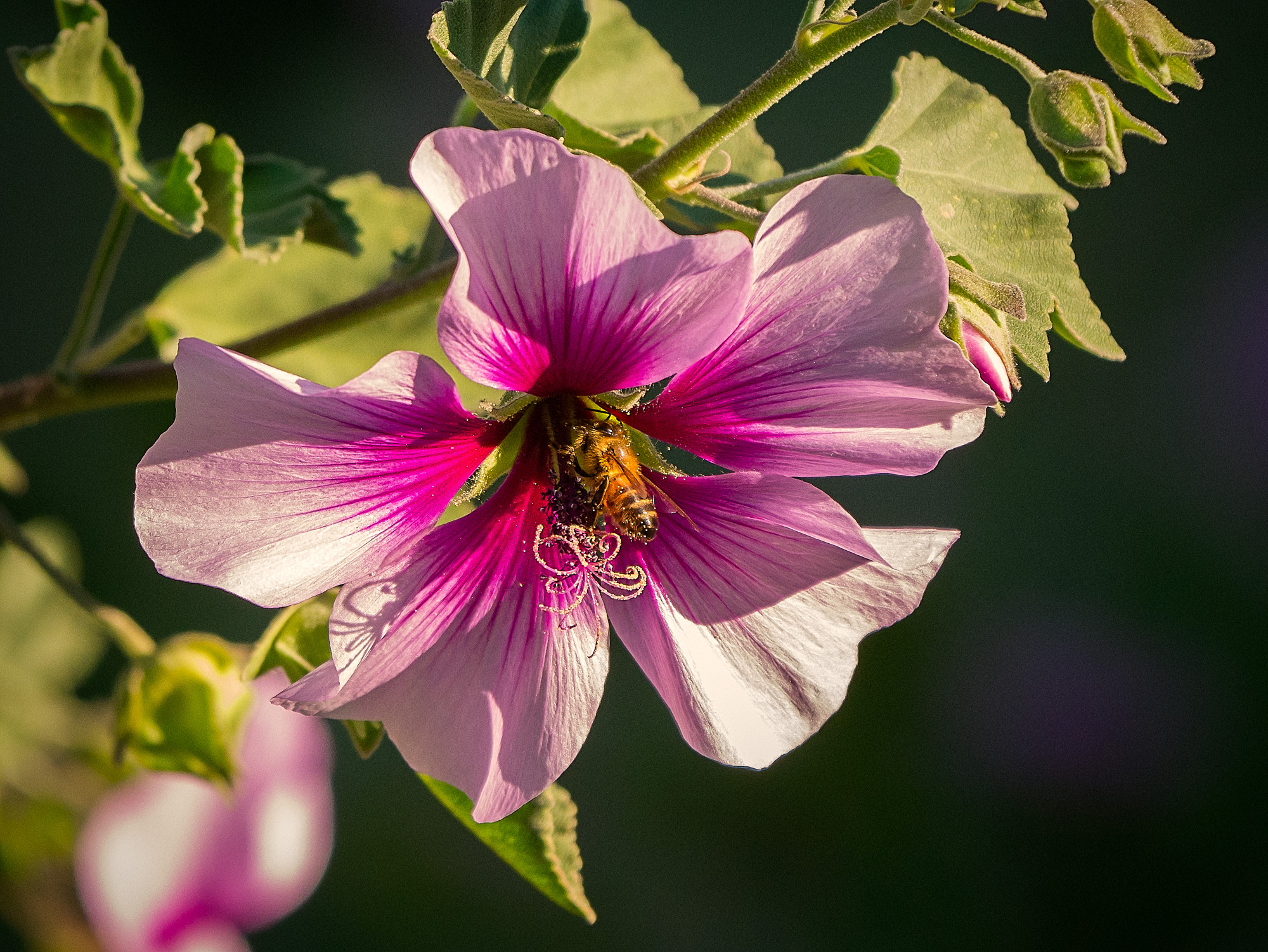
Well the garden has sprung into action like a very springy thing. The bees are busy with all the flowers, butterflies are flitting from bloom to bloom. The birds are getting really active. The usual inhabitants, the White Browed Babblers and the New Holland Honeyeaters are in a frenzy of nest building/repairs and generally chasing each other round the garden. We’ve got a new family moved in. A pair of Rufous Whistlers have built a nest in our peppercorn tree and can be regularly seen foraging for insects in the garden beds. The other day there was a commotion – all the small birds were squawking loudly. At first I thought it was the neighbours cat, but when I went outside to have a look I saw this blur descend out of the skies, level off just before hitting the ground and dash back up onto the TV aerial. It was a Nankeen Kestrel feeding off of small skinks and geckos that were foolish enough to sun themselves. The kestrel spent about 30 minutes repeating the behaviour until it flew off. Who needs to go on a wildlife safari with all this happening.
Although considered a pest the cabbage white butterfly (Pieris rapae) is the most conspicuous butterfly in Western Australia and is a sure sign that spring has arrived.
The eponymous New Holland Honeyeaters can be seen feeding off the Geraldton Wax and grevilleas. They are quite territorial and aggressive and they chase each other around incessantly.
One of ever increasing number of White Browed Babblers eating grubs.
The rufous whistlers have made a nest in our peppercorn tree and can be regularly seen foraging in the garden for insects.
A Nankeen Kestrel (Falco cenchroides cenchroides) perching on our TV aerial watching for prey. York, Western Australia.
A Buchanan’s Snake-eyed Skink (Cryptoblepharus buchananii) sunning itself on the trellis of our patio.
* today’s blog title is a quote from the 1975 film Royal Flash which I went and saw on release at the Chichester fleapit I mean Granada Cinema. It was a spectacularly bad film and its only redeeming feature was that it gave work to some actors who would have otherwise been unemployed. The Observer’s review of it said “leaves one breathless not so much with enchantment as with boredom”. It shows how bad it is in that it has never been resurrected as a cult classic that only connoisseurs could enjoy. That I can quote lines from the film is testimony to the fact that I grew up in a town where there was very little in the way of entertainment for young people.
Like many people at this time I’ve had my movements curtailed. Where I live we are allowed out locally for exercise so I’ve been going out for walks along the river to photograph and video the birds that can be found there. This is the third time I’ve tried to video wildlife and it is very hard.I don’t work from a hide so I have to set up quickly and quietly and often the birds will move on before I can get filming. Shooting mainly just after dawn or just before sunset has meant using high ISOs and made focusing difficult. But, the more you do it the better you get. The purpose of the video was to make something, learn something new and help keep me thinking positive thoughts during this time.
Just out of interest I’ll put the stills up below. They were shot on either a Canon EOS6d with the Sigma 150-600mm f4.5-6.3 Contemporary lens or the Olympus OMD EM1 mk ii with the Panasonic Leica 100-400mm f4-6.3 lens. I wonder if you can tell the difference at web size without enlarging to 100% or checking the EXIF data?
A male Rufous Whistler (Pachycephala rufiventris). York, Western Australia.
Laughing kookaburra, dacelo novaeguineae. York, Western Australia
Yellow Rumped Thornbill, Acanthiza chrysorrhoa, York, Western Australia.
Yellow-billed Spoonbill (Platalea flavipes), Avon River, York, Western Australia.
Great egret, Ardea alba, feeding on the Avon River. York Western Australia
Tatty robin. Red-capped Robin (Petroica goodenovii), York, Western Australia.
Brown Honeyeater, Lichmera indistincta, York, Western Australia.
A pair of Yellow-billed Spoonbill (Platalea flavipes) feeding on the Avon River in York, Western Australia.
A great egret (Ardea alba) and a white faced heron (Egretta novaeholladiae) hunting in the early morning light on the bank of the Avon River in York, Western Australia.
A great egret (Ardea alba) hunting in the early morning light on the bank of the Avon River in York, Western Australia.
Red-capped Robin (Petroica goodenovii), York, Western Australia.
This last few months have been particularly difficult in the light of climate change induced bushfires here in Australia and now the spread of the Coronavirus (COVID 19). It would in the light of compulsory lockdowns, quarantines and restrictions on social gatherings and travel easy to be filled with dread and let feelings of hopelessness pervade our lives. I myself have had further restrictions imposed as I’m in the process of recovering from spinal surgery and am fighting off the temptation of feeling sorry for myself and collapsing in a heap.
There is an antidote to this. Firstly instead of just being passive and feeding our psyches with all the negative news we can find in the media endeavour to do something creative. Creativity is important, it feeds the soul, gives a sense of achievement and allows you to express yourself. All of this has a positive effect on your psychological well being. It doesn’t matter what it is – paint, draw, knit, cook, write, photograph, sing. Although singing could be problematic depending upon your living arrangements and how well you can sing. My partner has issued me with an ultimatum; if I sing Bohemian Rhapsody at full volume in my usual tone deaf manner then lockdown or not I will be looking for alternative accommodation which I think is a little harsh. Secondly reconnect with nature. This one could be a bit hard depending on what the local authorities are imposing, but it can be done. If confined to the house take time out in the garden, encourage wildlife to come into the garden and watch them. Plant things and watch them grow. If possible go a walk in the park or woods (maintaining correct social distancing of course), go bird watching, fungi spotting it doesn’t really matter. Bonus points if you can combine this with doing some creative as this will allow you to enter a flow state. Sounds poncey but “it is the mental state in which a person performing an activity is fully immersed in a feeling of energized focus, full involvement, and enjoyment in the process of the activity. In essence, flow is characterized by the complete absorption in what one does, and a resulting transformation in one’s sense of time” (Mihály Csíkszentmihályi, 1975). The benefits of this are that intense and focused concentration on the present moment that you become so totally engrossed in the experience to the extent that other needs or concerns become negligible and this makes you feel in control over a situation. Do this a few times a week and your mood will lift.
I’ve taken my own advice this week. As I said I’ve been laid up at home and not doing much so I hauled my carcass down to the Avon River a couple of times to photograph some birds in the dawn light. It was well worth it. Stalking birds and photographing them required too much concentration and I was able to forget about my own circumstances and the worries of the world and just enjoy being in the moment. It was so enjoyable that I’m going to get out and do some more over the next week.
Red-capped Robin (Petroica goodenovii) in the dawn light. York, Western Australia. Olympus OM-D E-M1 with Panasonic Leica DG 100-400/F4.0-6.3 lens. Exposure: 1/500 sec, f6.3 at ISO 1600.
A great egret (Ardea alba) hunting in the early morning light on the bank of the Avon River in York, Western Australia. Canon EOS 6d with Sigma 150-600mm f5-6.3 lens. Exposure: 1/1000 sec, f7.1 at ISO 800.
A male Rufous Whistler (Pachycephala rufiventris). York, Western Australia. Canon EOS 6d with Sigma 150-600mm lens. Exposure: 1/1000 sec, f6.3 at ISO 2000.
Right that’s me done I’m off to try and bake a lumberjack cake.





You must be logged in to post a comment.