Gone Fishing


One of the two bird hides at Samphire Cove Nature Reserve in Westerm Australia.


It’s no secret – summers in the Wheatbelt of Western Australia can be brutal. Most sensible people try to get at least a few days down on the coast as respite. We’re no different and we headed off to the Peel Inlet. Unfortunately the hot weather followed us there so on our first evening desperate to get some evening cool breeze I went looking for Eastern Ospreys at a known nesting site. With no Ospreys to be seen I carried on walking until I got to Samphire Cove Nature Reserve. Just as you go in there is a bird hide – now I’m not a great user of bird hides as I find them very uncomfortable. The observation windows are generally very low down and they have a fixed bench in front of them a bit to far away. This means I end up looking like a pretzel while trying to use them. As I walked closer to the hide to see if there was anything worth photographing I saw a Great Egret (Ardea alba) fishing just a couple of metres in front of the hide. This was going to be tricky – getting into the hide without frightening the bird away as the Great Egret is a very flighty bird. As the bird was quite engrossed in fishing I decided to move while it tried to catch a fish and remain still when it was looking around. It took ten minutes to cover the 25m to the hide. 


Great Egret by Paul Amyes on 500px.com
Missed! Great Egret, Ardea alba. Samphire Cove Nature Reserve, Westerm Australia.


Great Egret by Paul Amyes on 500px.com
Success!


This was the closest I’ve ever been to a Great Egret and it was presenting a problem because my lens was too long. It is very rare that this happens, normally you can’t have too long a lens. The fish were jumping a little further out so the Egret slowly walked out further into the water. I was quite surprised at how many fish the bird was eating. Slowly the sun began to set and just as the last rays of light were hitting the water the Great Egret took off in search of a roost. I’d been there an hour and I’d forgotten the heat and was totally oblivious to the discomfort of using the hide.  A magical experience.


Great Egret by Paul Amyes on 500px.com
Time to go home.


Great Egret by Paul Amyes on 500px.com
Up, up and away.


Mass Migration


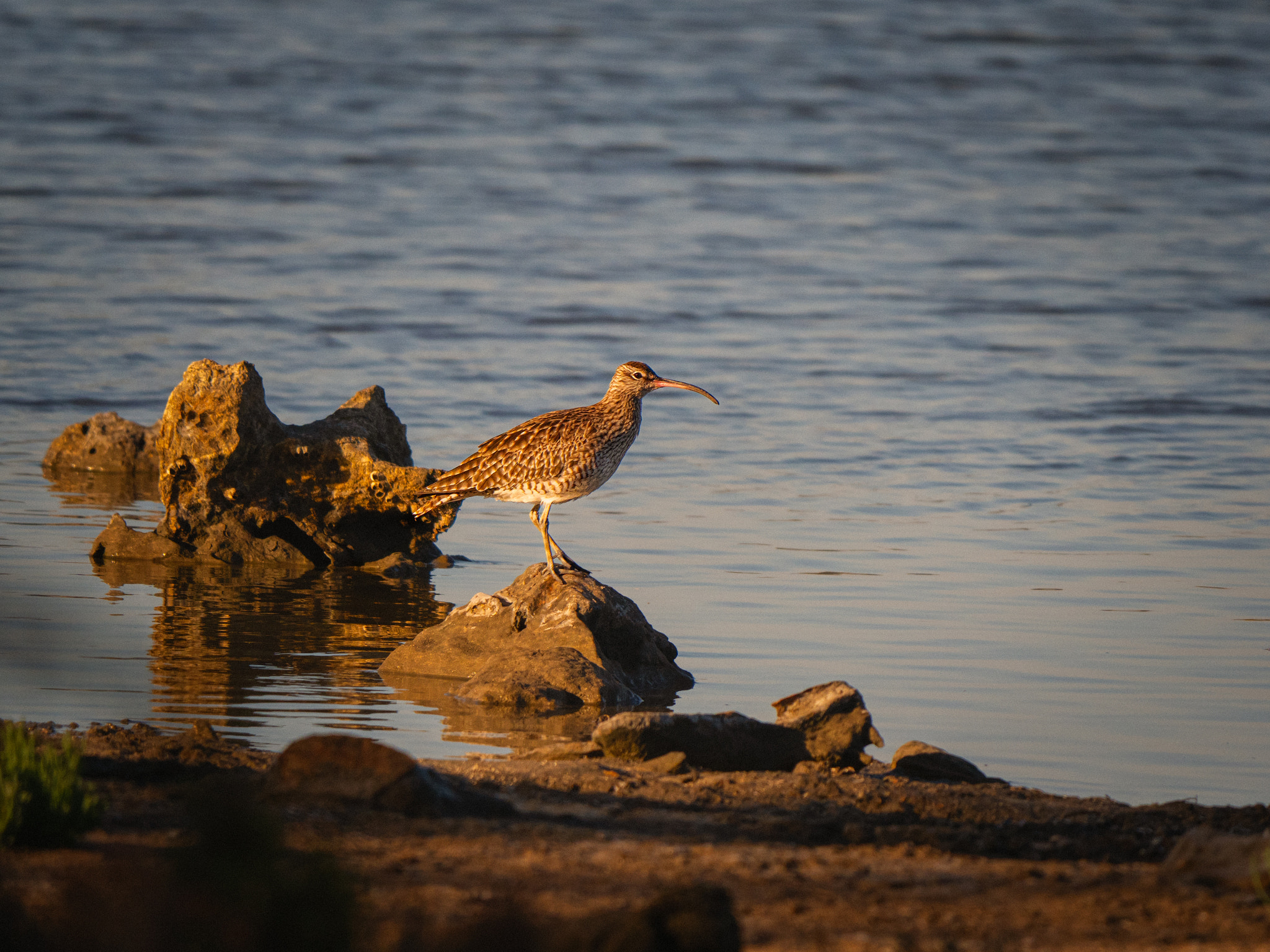
Whimbrel by Paul Amyes on 500px.com
Whimbrel, Numenius phaceopus. Samphire Cove Nature Reserve, Westerm Australia. Olympus EM 1 mk ii with Panasonic Leica 100-400mm f4-6.3 lens. Exposure: 1/1250s, ƒ/7.1, ISO 500.


Every year it is reckoned that 50 million migratory water birds migrate from artic Russia and north eastern Asia southwards looking to winter in warmer countries such as Australia and New Zealand. This is the East Asian–Australasian Flyway and the West Pacific Flyway. About 35 or 36 species of waterbirds migrate to Australia on an annual basis involving approximately over 2 million birds and flights of up to 26,000 kilometres, it is a staggering number. Now I’m sure that if the leader of opposition Peter Dutton, Australia’s very own Lord Voldemort, found out there is 2 million migrants coming into Australia every year he would have a conniption fit and demand that they all be taken off to Nauru for mandatory indefinite detention. Cheap cracks at Peter Dutton aside the phenomenon of these bird migrations is absolutely amazing.


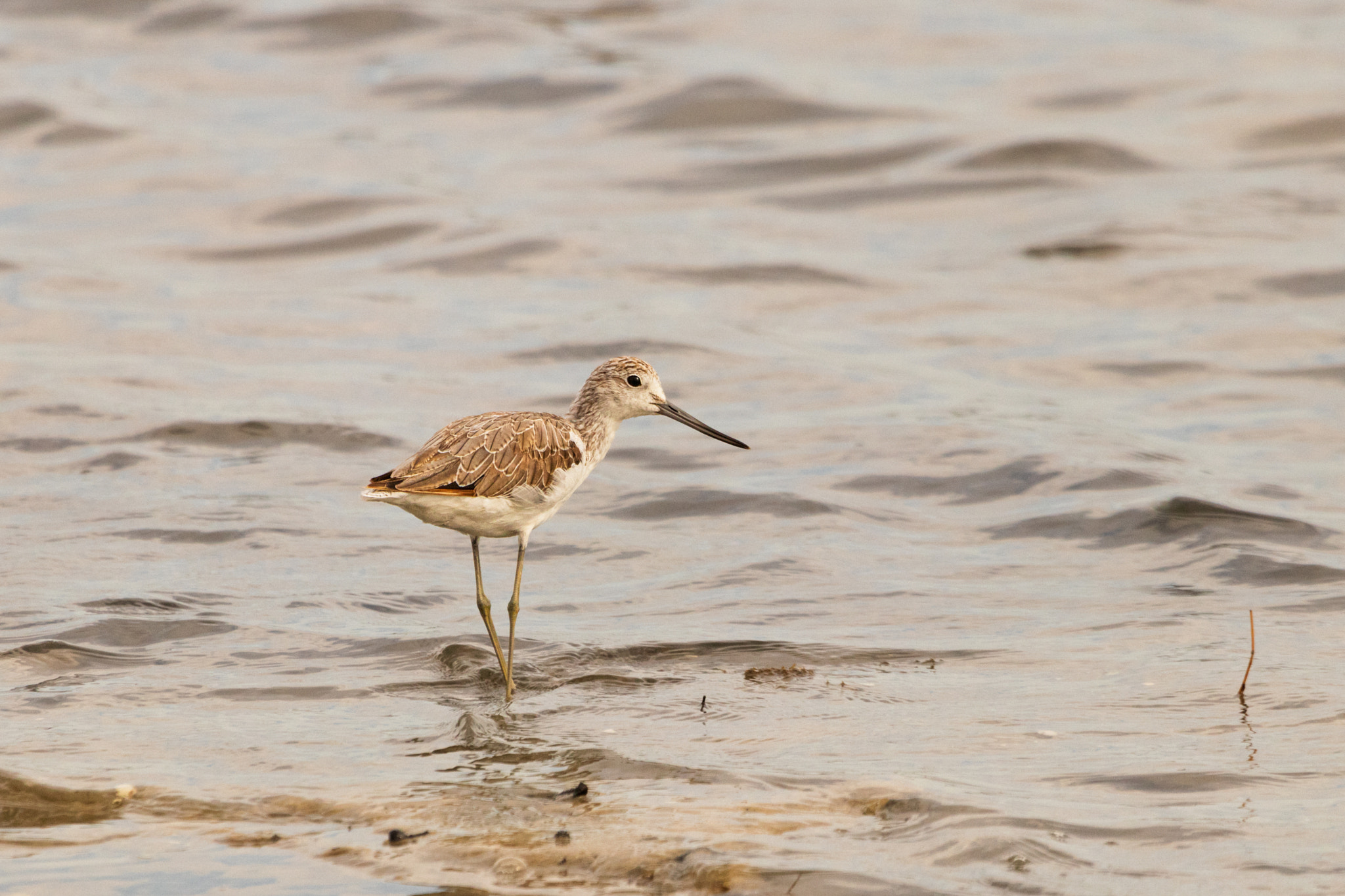
Some of the birds are small, really small. A MacDonalds Chicken McNugget has more meat on it than some of these birds, and yet every year they can fly from the Artic Circle to Australia and back. It makes me feel tired just thinking about it. I must say I hadn’t really given this very much consideration until recently. I mean I knew birds migrate – the Rainbow Bee-eaters I regularly photograph migrate from Papua New Guinea and Northern Australia, a relatively short jaunt in comparison – but I hadn’t really thought about the waterbirds who come in their hundreds of thousands to Western Australia. I think that’s because I don’t see them – they don’t come to winter on the idyllic waters of the Avon River. A recent trip to the Peel Inlet and Alfred Cove changed this. As usual I was looking for something else when I came across Whimbrels (Numenius phaceopus) and the Common Greenshank (Tringa nebularia) and because I wasn’t prepared for the encounter I just blundered in and they spooked resulting in only a couple of pictures of each. Despite returning on subsequent occasions I still only managed a grab shot of the Whimbrel and none of the Common Greenshank. Interestingly both birds don’t have Nyoongar  (the original inhabitants of the south west of Western Australia) names. 


Common Greenshank by Paul Amyes on 500px.com
Common Greenshank, Tringa nebularia. Alfred Cove, Western Australia. canon 80d with Sigma 150-600mm f5-6.3 lens. Exposure: 1/2000 sec, f6.3, ISO 400.


The timing of migration seems to be controlled primarily by changes in day length and the birds navigate using celestial cues from the Sun and stars, the Earth’s magnetic field, and mental maps.  In some birds the route is genetically programmed  – these tend to be the shorter lived species – whilst the longer lived species are socially programmed ie they learn the route of of the older birds. All I know is that their ability to find their way from one end of the globe to the other is amazing. I have enough trouble navigating round my neighbourhood without Google maps.


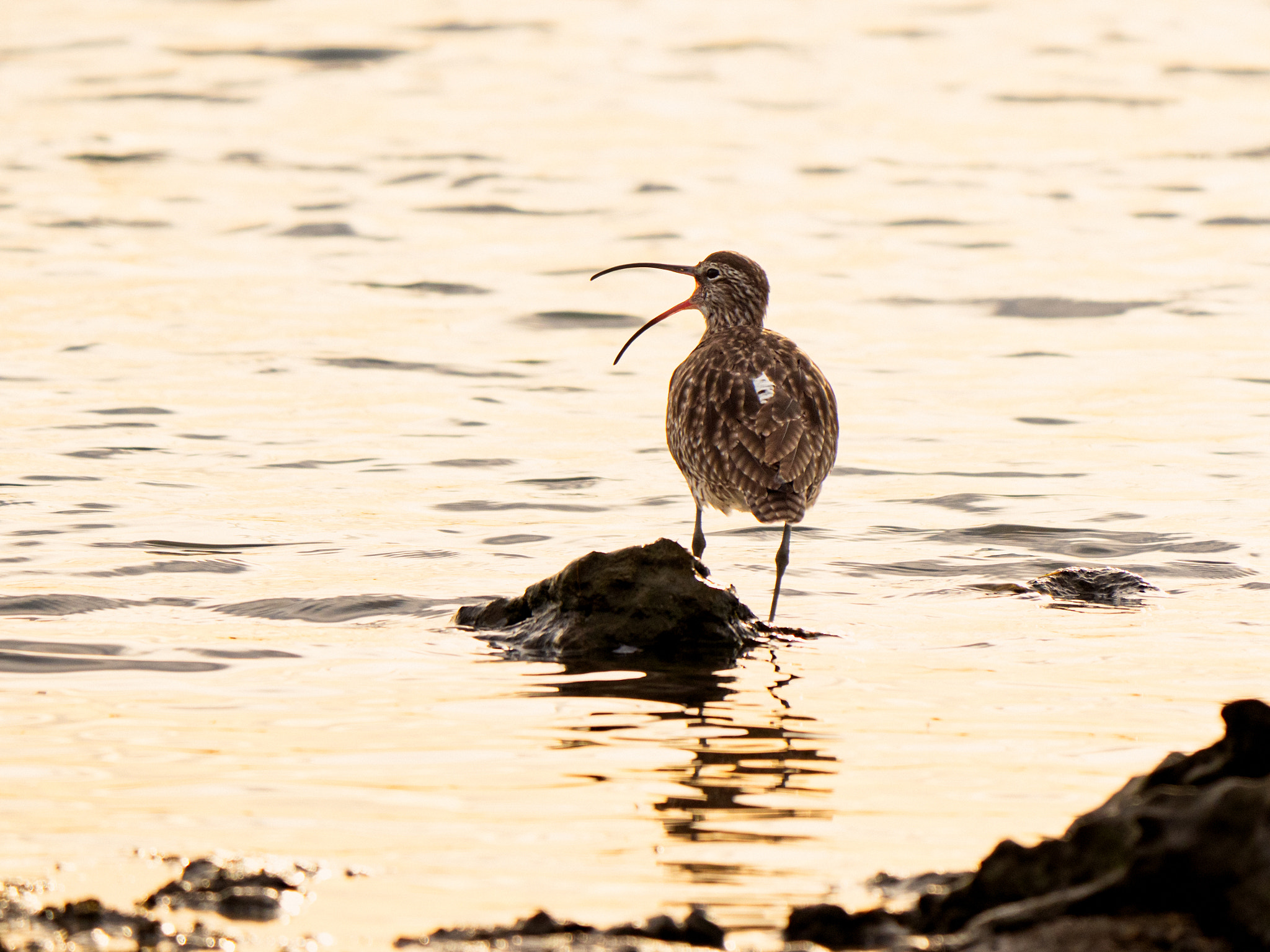
Whimbrel by Paul Amyes on 500px.com
Whimbrel, Numenius phaceopus. Samphire Cove Nature Reserve, Westerm Australia. Olympus EM 1 mk ii with Panasonic Leica 100-400mm f4-6.3 lens. Exposure: 1/500 sec, f6.3, ISO 250.

Watch The Birdie

Delyip by Paul Amyes on 500px.com


This is Delyip or the Red-capped Parrot (Purpureicephalus spurius). It’s Latin name literally means “bastard red-head” which seems a bit harsh – perhaps the European biologist who first saw it had hang ups about red heads. This particular bird was in the Samphire Cove Nature Reserve and was a curious bird quite happy to watch me take photos of it and the other birds around us. I happen to think that Australia is fortunate to have so many wonderful looking parrots, but, unfortunately I’m in the minority and this is another bird that is classed as vermin and shot in great numbers. It seems that there is nothing that Aussie farmers won’t kill.

On a lighter note have you ever wondered why photographers used to say “watch the birdie”? Well back in the dim distant early days of photography in the mid to late Nineteenth Century camera exposures were very long and photographers would struggle to get adults to hold still for the several seconds that an exposure would take (one of the reasons why early portraits look so forced). Some photographers resorted to literally clamping a person’s head in place to hold them still. Back in 1879 a chap by the name of CW Davies trained a pet canary to sit on his camera and  sing on command. He’d then say “Watch the birdie” with the hope that the sitter would be transfixed enough to sit still while the exposure was being made. After an article about Davies in the Photographic News numerous manufacturers began producing small brass birds that would make a sound when a pneumatic bulb was squeezed. Now we’re in the 21st Century you’d have thought gadgets such as this would be consigned to the history books. Well you’d be wrong. The video below is by Gordon Laing at the CP+ 24 an international camera and photo imaging trade show which this year was held in Japan. These gadgets are obviously alive and well.