… favours the prepared mind.” Louis Pasteur, December 7, 1854, and in 161BC the Roman playwright Terrance said that “fortune favours the brave” in his play Phormio.
All of which basically means that if you have the necessary mind set be bold enough to seize the opportunities that present themselves. That is what happened the other evening. We had found a new possible nesting site for Rainbow Bee-eaters here in York and the beloved significant other suggested we go and have a closer look the other evening. So I picked up my Sony A7r2 with Sigma 150-600mm lens and we drove down to the location. On getting there there was not a Rainbow Bee-eater to be seen. In fact there weren’t many birds about at all. Scanning the tree tops we soon found out why. In the top of a dead tree were a pair of Australian Hobbys. These beautiful birds of prey will take small flying birds so everything had taken cover. The Hobbys looked magnificent against the bright blue sky. I only managed a short burst before they resumed flying up and down the river bank looking for something to eat.
Wowoo or Australian Hobby (Falco longipennis) are often seen in pairs whilst out hunting.
The adapted Sigma 150-600mm doesn’t focus very fast on the Sony A7r2 and the 5 frames per second burst rate isn’t exactly the best, but, it was all good enough for the task in hand.
At this stage in summer most of the birds are busy feeding their young, with the majority about to fledge soon. The constant foraging for food and hunting must be exhausting for the parents especially in the 40ºC + days we’ve been having lately. Over the last couple of weeks I’ve stumbled across a few nests with demanding offspring and I’ve observed a range of different behaviours designed to get food from a parent.
Hungry Kanamit or Welcome Swallow (Hirundo neoxxena) chicks demanding to be fed. Avon Terrace, York, Western Australia.
The food arrives.
The two larger chicks get fed while the little one at the end misses out.
On Avon Terrace, the main drag in York, a lot of the shop fronts have Welcome Swallow nests tucked away in the shade of the verandas. Most people walk along the street under them not even aware of what is happening above them. I spent an hour watching this particular nest. The adults returned every five minutes or so with food for the three chicks. Two chicks got the bulk of the food as is often the case in birds. I don’t know if the little runt of the brood managed to survive until fledging or not.
Kaaka-baaka or Yellow-billed Spoonbill (Platalea flavipes) adolescent demanding food from its parent.
Click to play the video clip.
In Northam, on the banks of the River Avon, I witnessed something I’d never seen before. There were two Yellow-billed Spoonbills in a tree, one a mature adult and the other an adolescent. The adolescent was trying hard to get the parent to regurgitate some food and it did this by first bobbing its head vigorously while flapping its wings. After a while of this it would then start rubbing the parent on the side of its head. The photos don’t do it justice, the video is better.
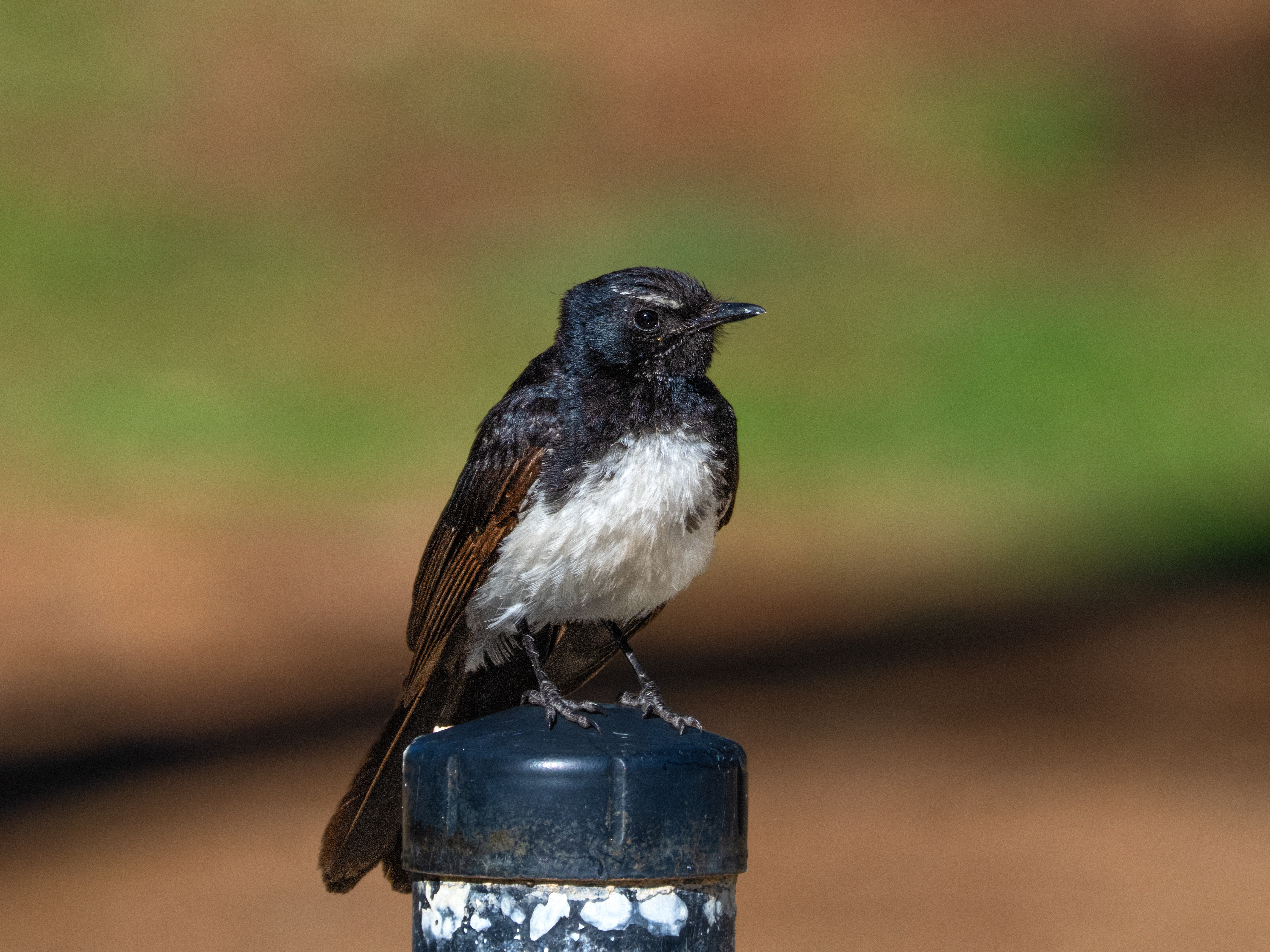
Djidi-djidi or Willie Wagtail (Rhipidura leucophrys) chicks that have out grown their nest.
The unusually placid Djidi-djidi or Willie Wagtail (Rhipidura leucophrys) parent.
Willie Wagtails make incredibly tiny nests – smaller than a tea cup. The typical clutch of eggs is 2-4 which is fine until they hatch and then overcrowding sets in. I spotted this nest while walking back to the car. It looked quite a comical situation – 2 adolescent Willie Wagtails just about ready to fledge crowding round this tiny nest with one in it. All three looked incredible grumpy – it’s the eyebrow and the down turned mouth that gives that impression. One of the parents was sat on a fence post just 5m away closely watching. I was very surprised it didn’t try to chase me off as Willie Wagtails are incredibly aggressive and territorial. Perhaps it was too knocked form taking care of the chicks.
It’s Christmas Eve and I’m looking back photographically on the last 12 months. I started the year with all these ideas and intentions, and to be honest they quickly evaporated. It’s been a year where I have had a great deal of difficulty being motivated to take photos. Nevertheless I plodded on regardless and although I didn’t make any great photos I made some that I enjoyed. They’re not technically perfect, but the actual process was enjoyable and I think that is important. If it is not enjoyable then why do it?
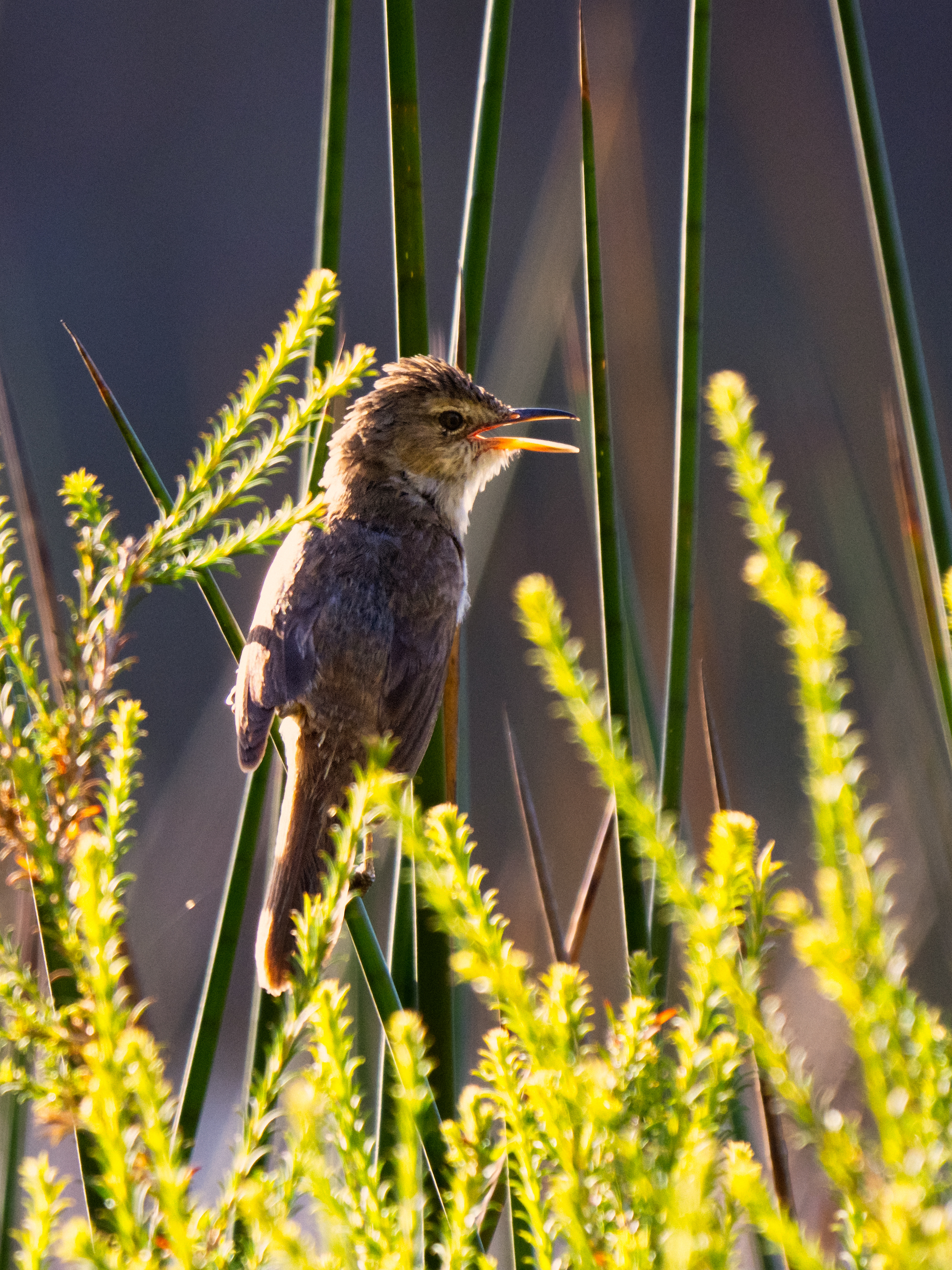
Koordji-koordji or Australian Reed Warbler (Acrocephalus australis subspecies gouldi). Lake Leschenaultia, Western Australia.
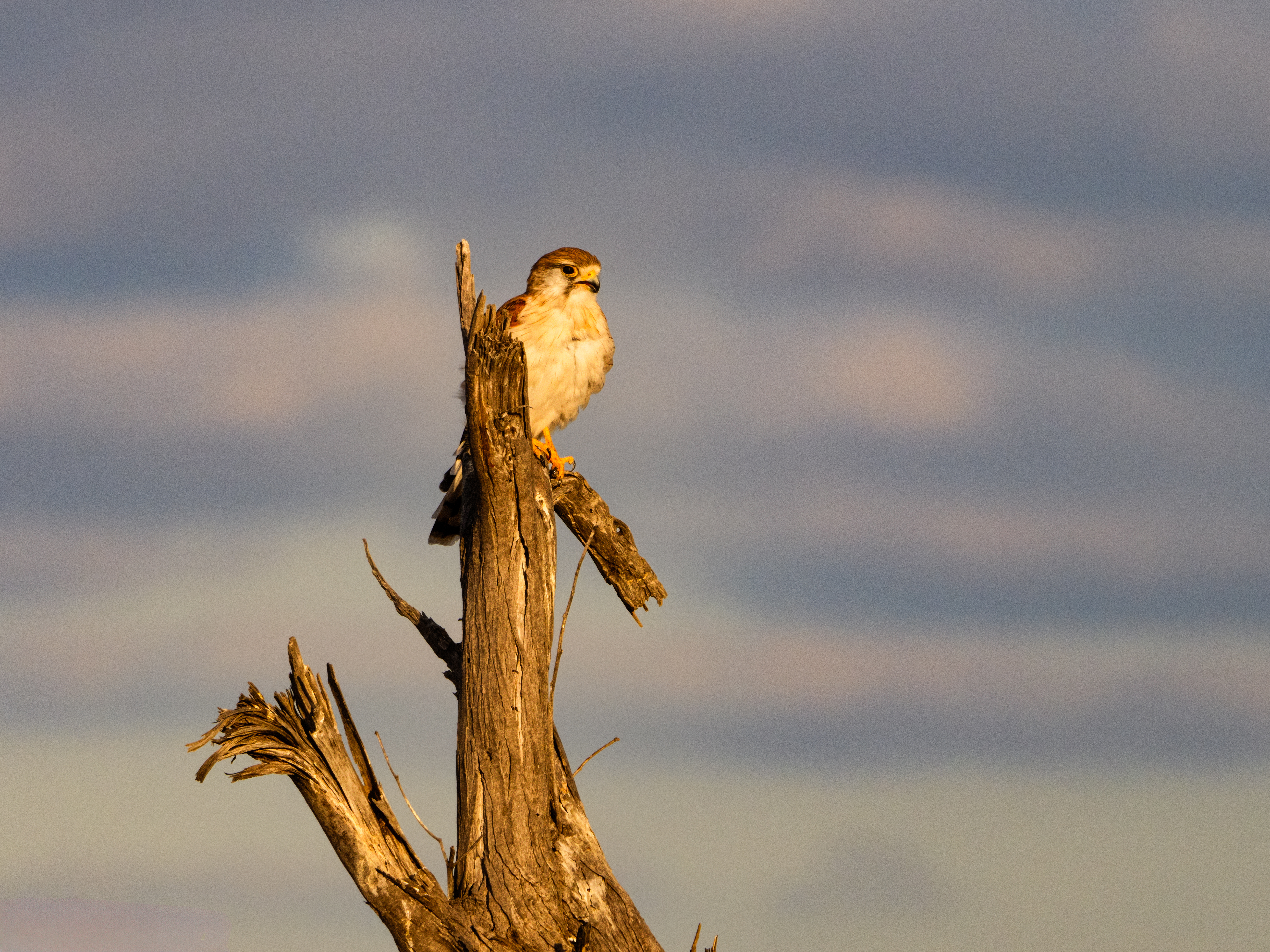
Mardiyet or Nankeen Kestrel (Falco cenchroides). Woodman Point, Western Australia.
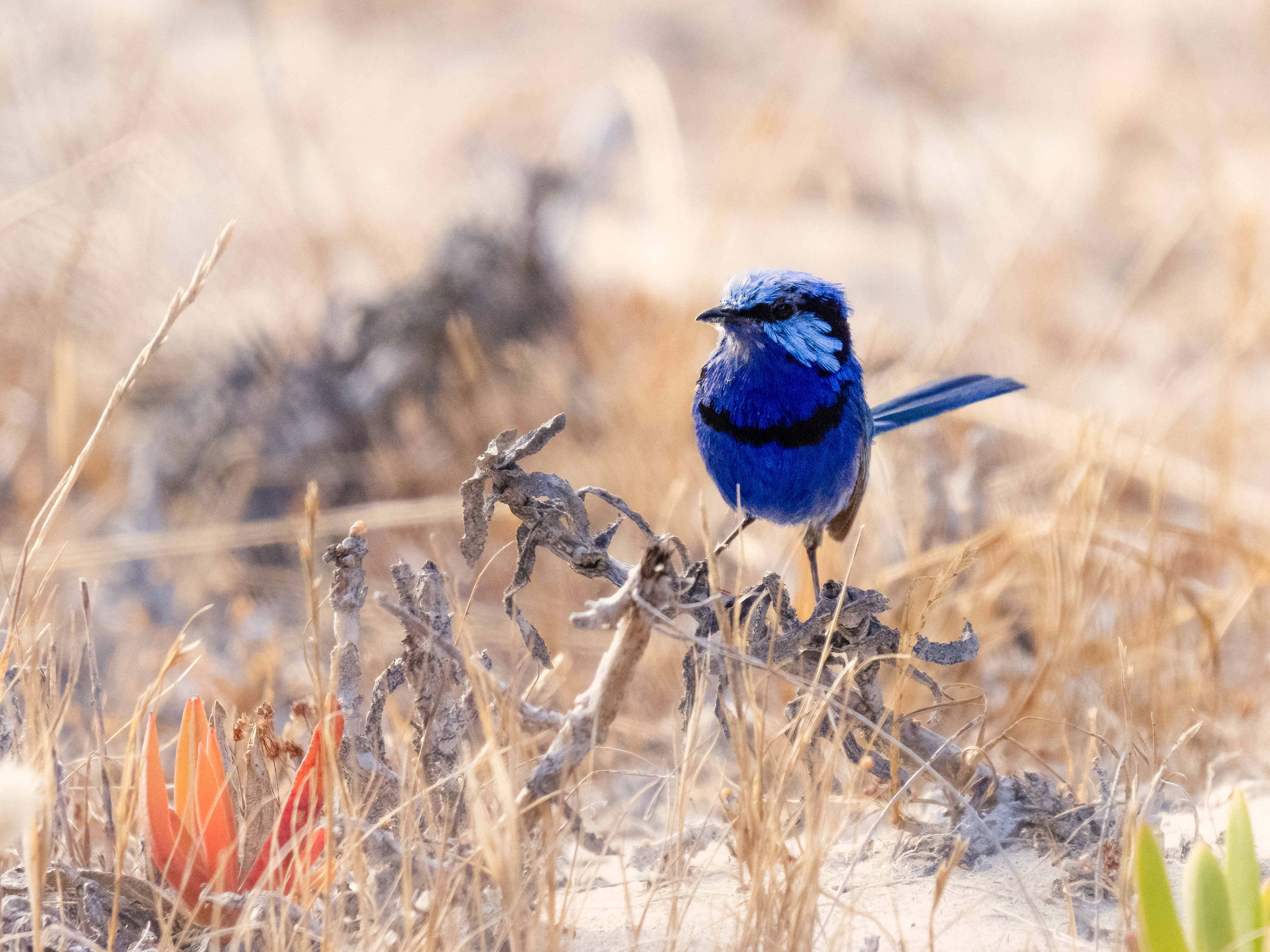
Djer-djer or Splendid Fairy-wren (Malarus splendens subs splendens). Woodman Point, Western Australia.
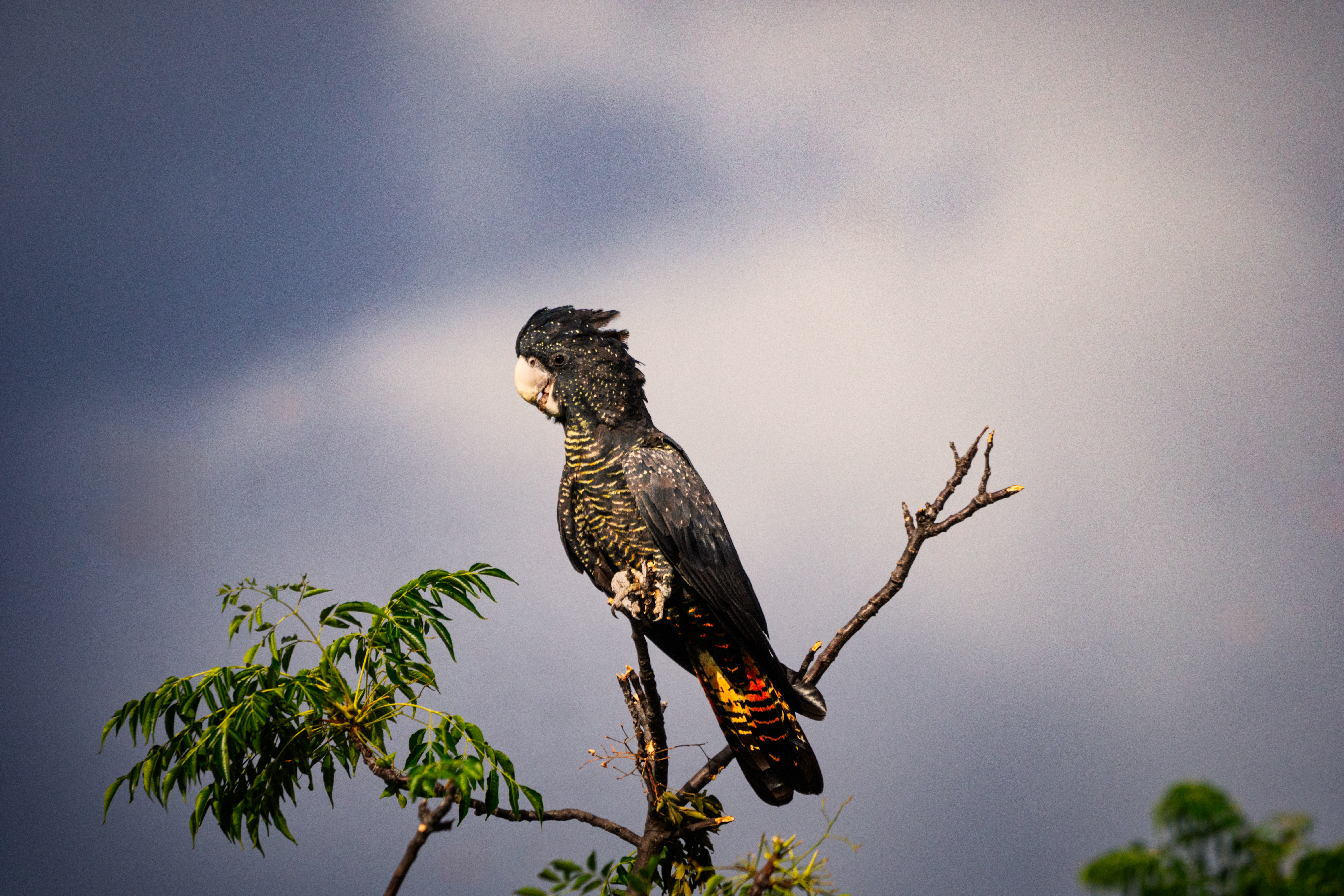
Karak or Red-tailed Black Cockatoo (Calyptorhynchus banksii subs samueli) feeding on Cape Lilac AKA White Cedar (Melia azedarch). York, Western Australia.
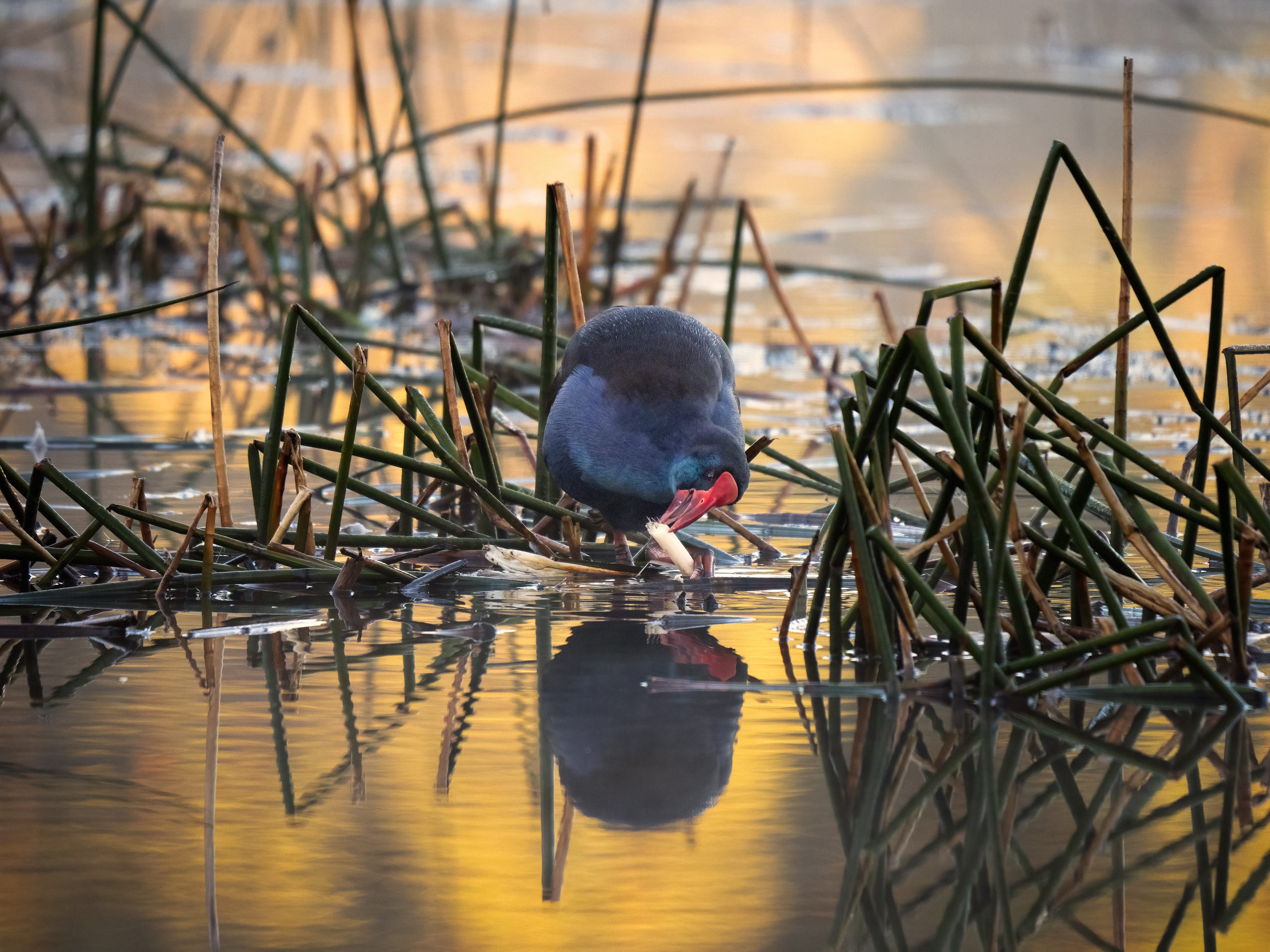
Kwirlam or Purple Swamp Hen (Porphyrio porphyrio). Lake Leschenaultia, Western Australia.
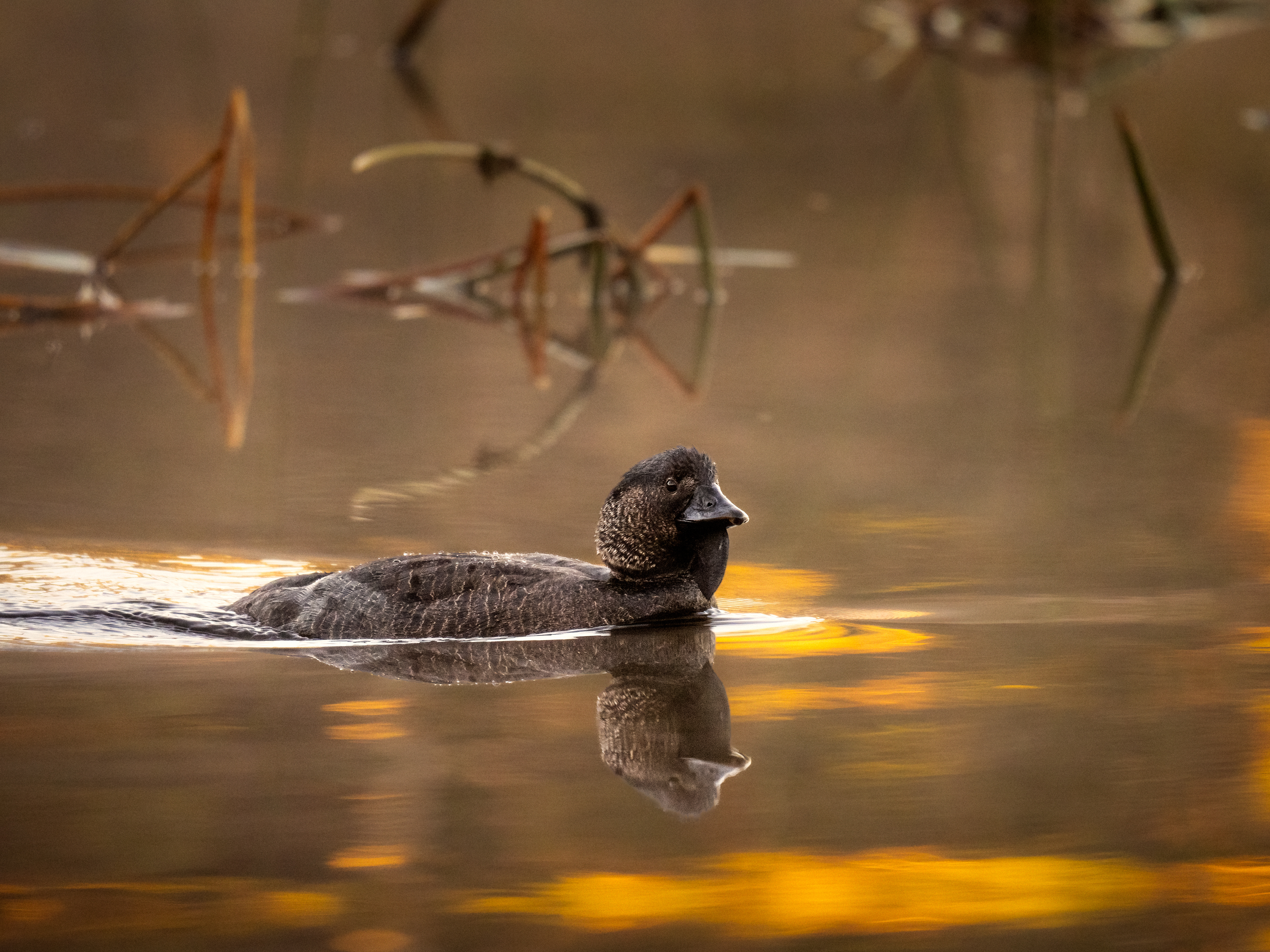
Kadar, Musk Duck (Biziura lobata). Lake Leschenaultia, Western Australia.
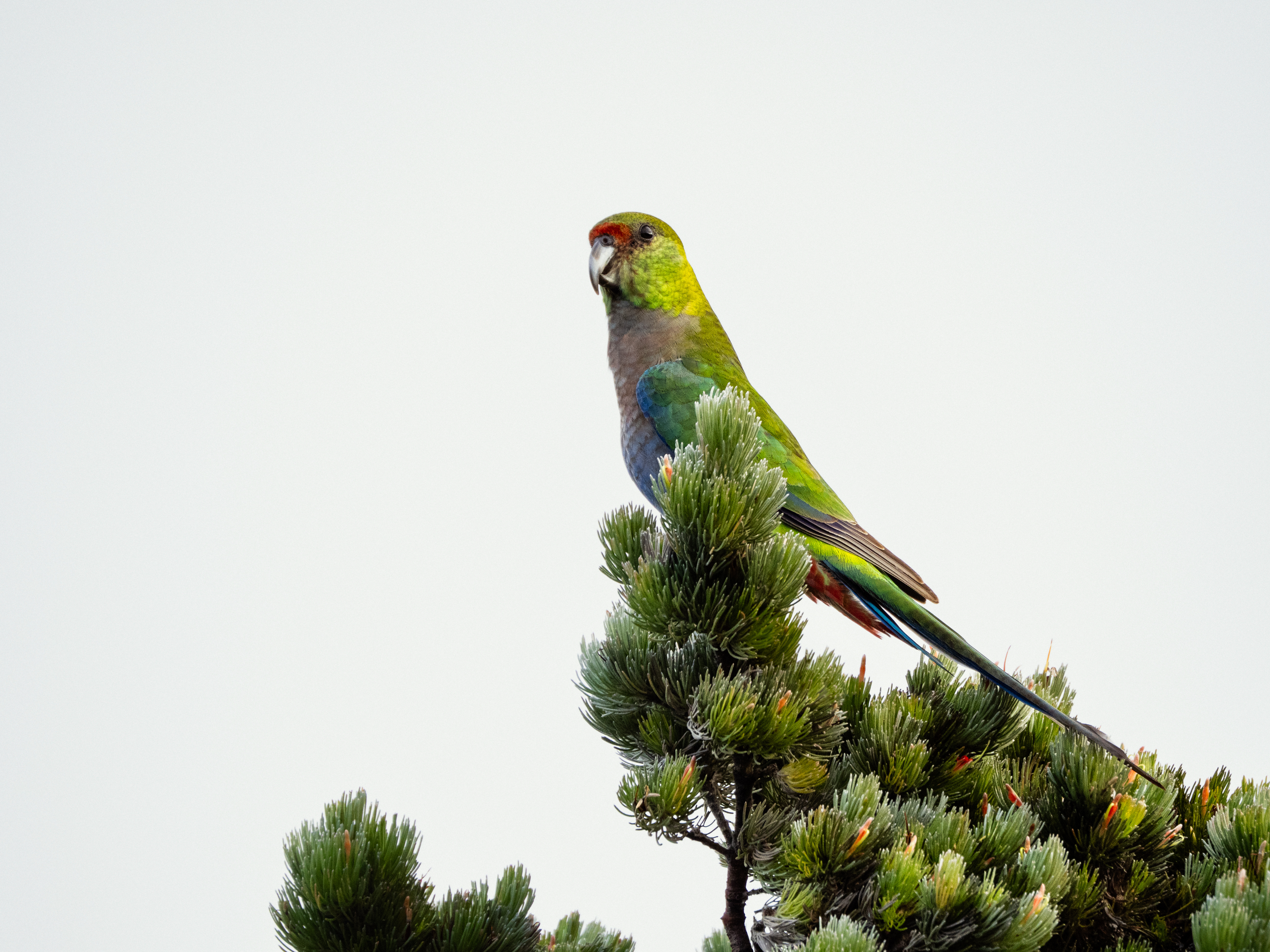
Juvenile Delyip or Red-capped Parrot (Platycercus spurius). Albany Windfarm.
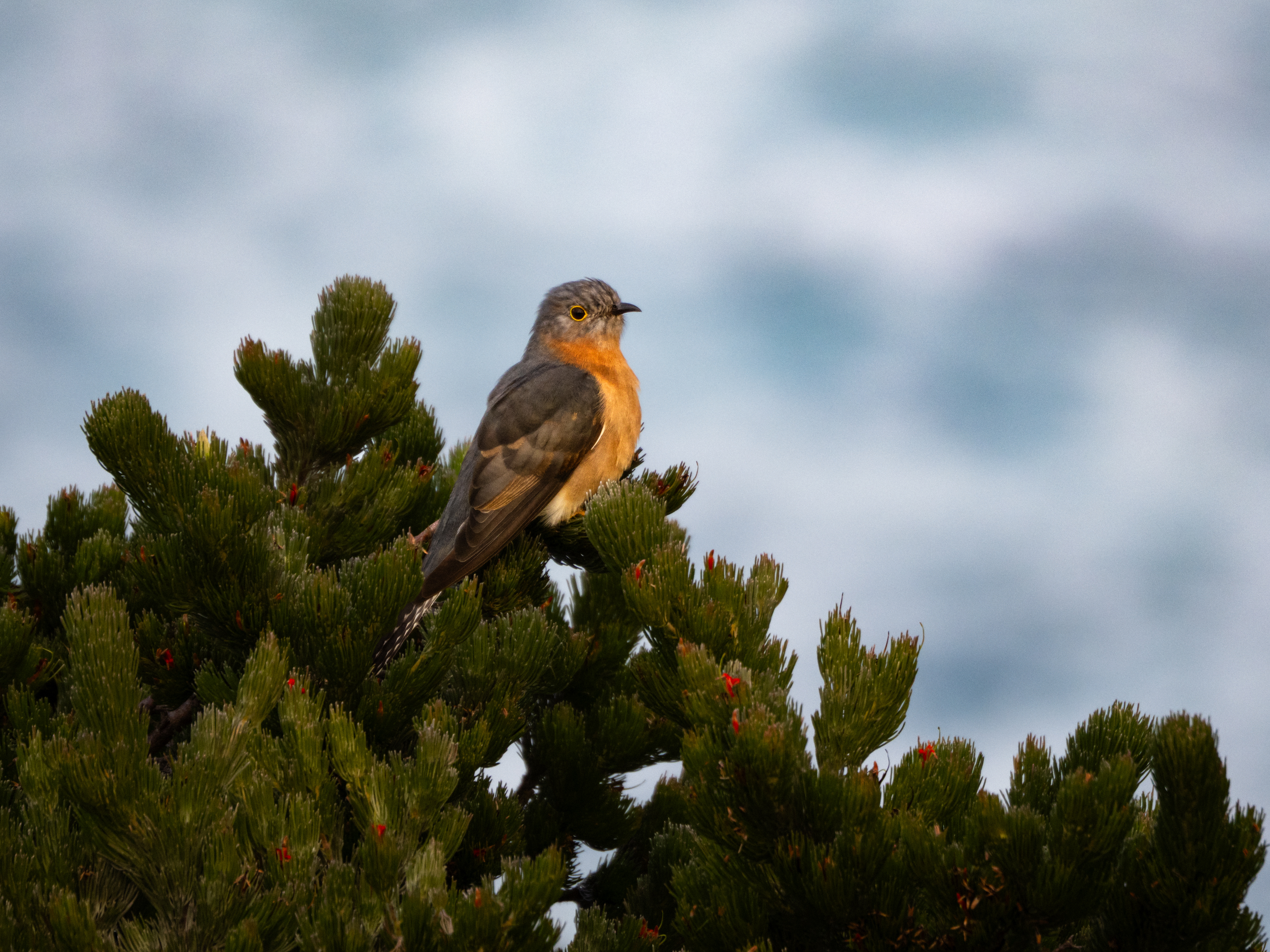
Djoolar or Fan-tailed Cuckoo (Cacomantis flabelliformis). Albany Windfarm.
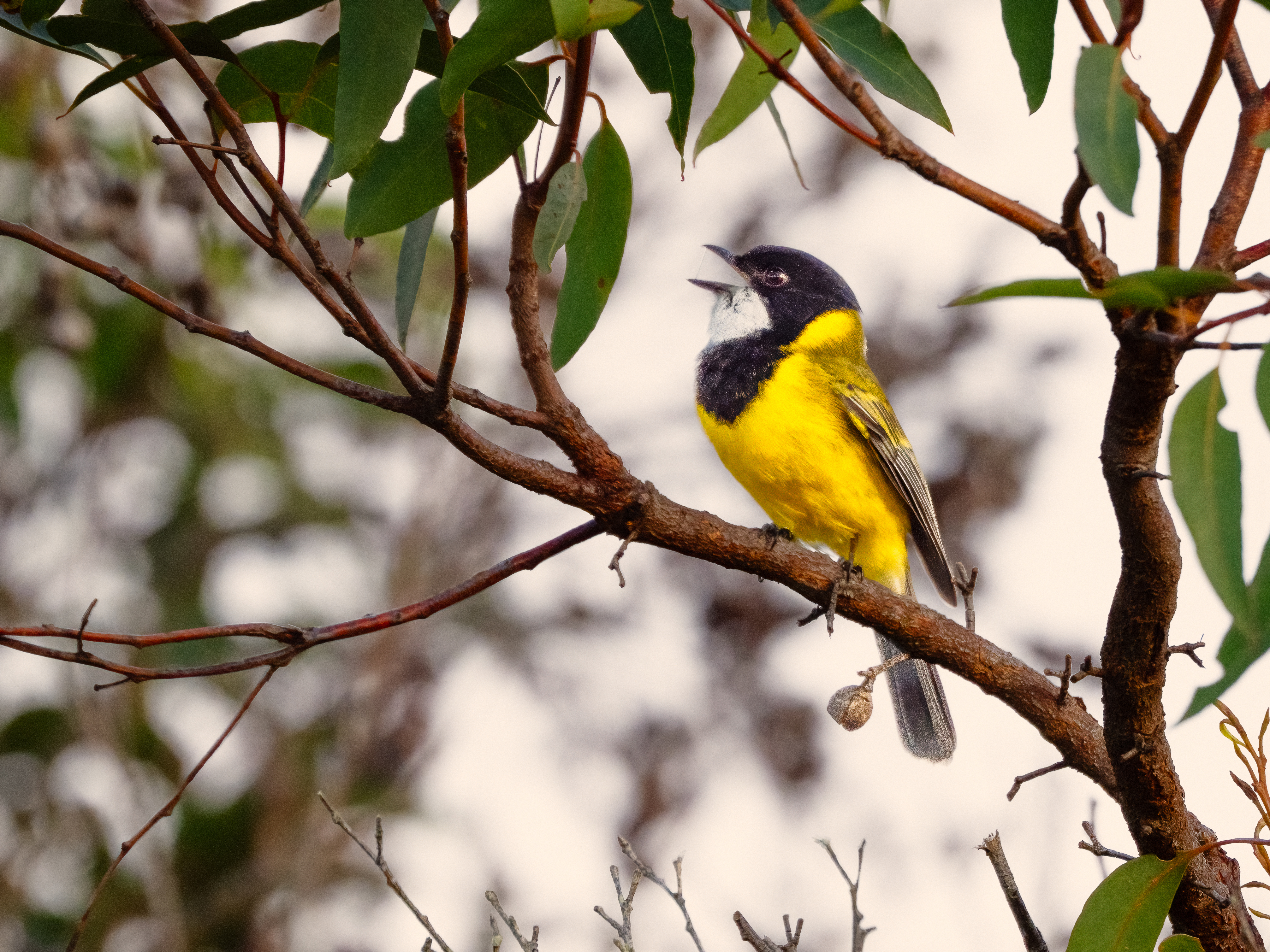
Bidilmidang or Golden Whistler (Pachycephala pectoralis). Torbay.
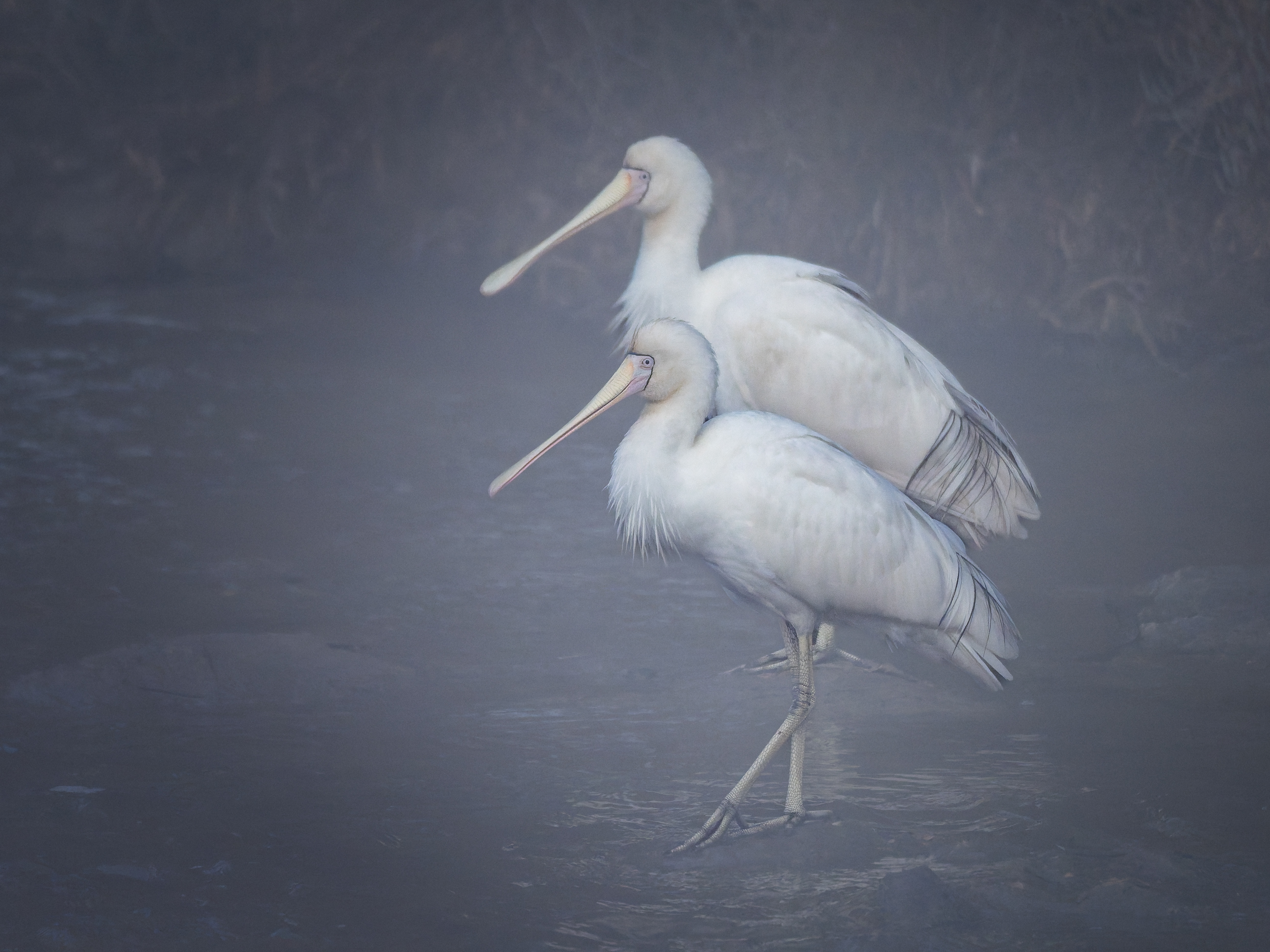
Kaaka-baaka or Yellow-billed Spoonbill (Platalea flavipes).
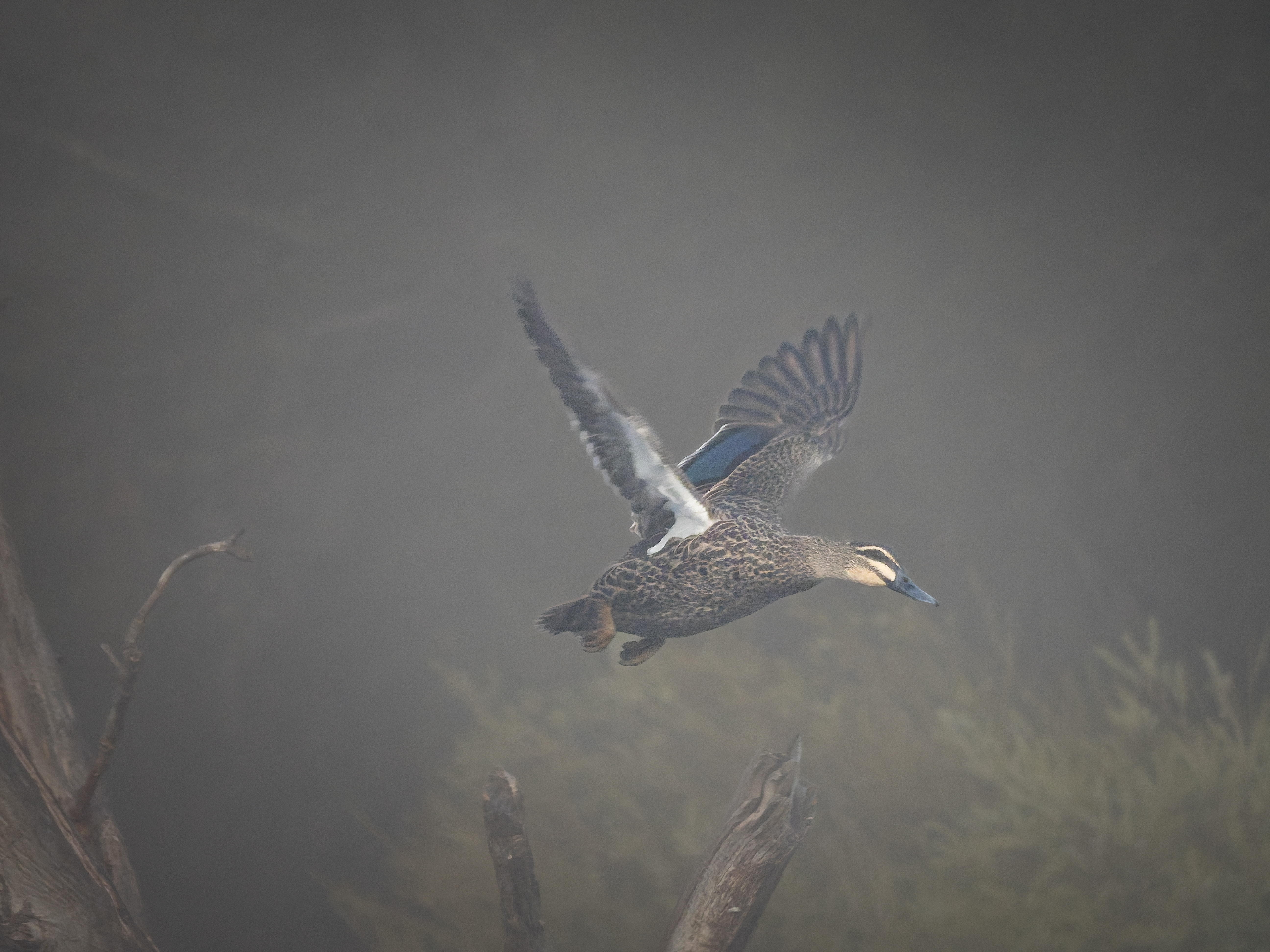
Ngowonan or Pacific Black Duck (Anas superciliosa).
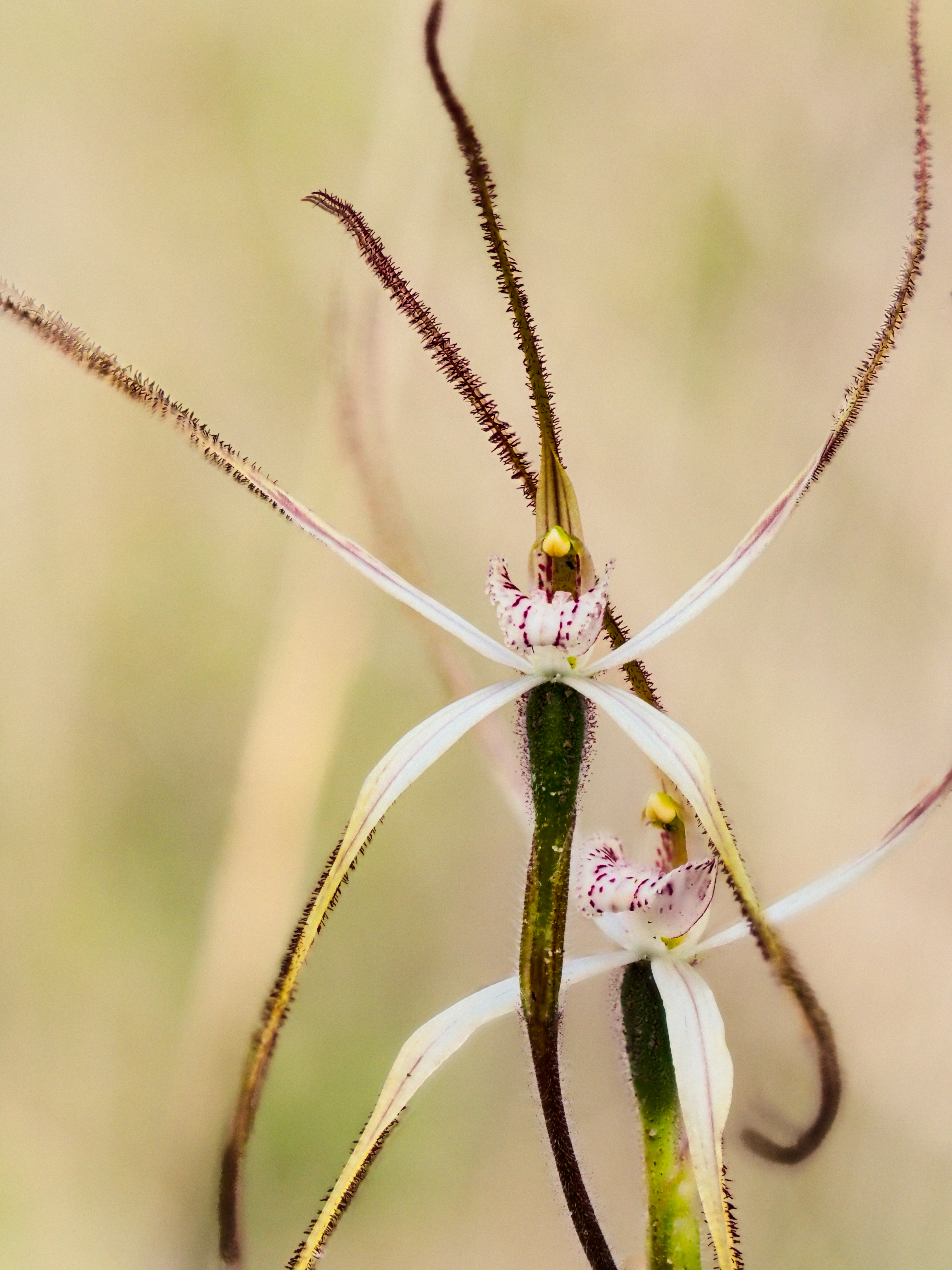
Talbot’s Spider Orchid, Caladenia pendens subsp talbotii. Kweda, Western Australia.
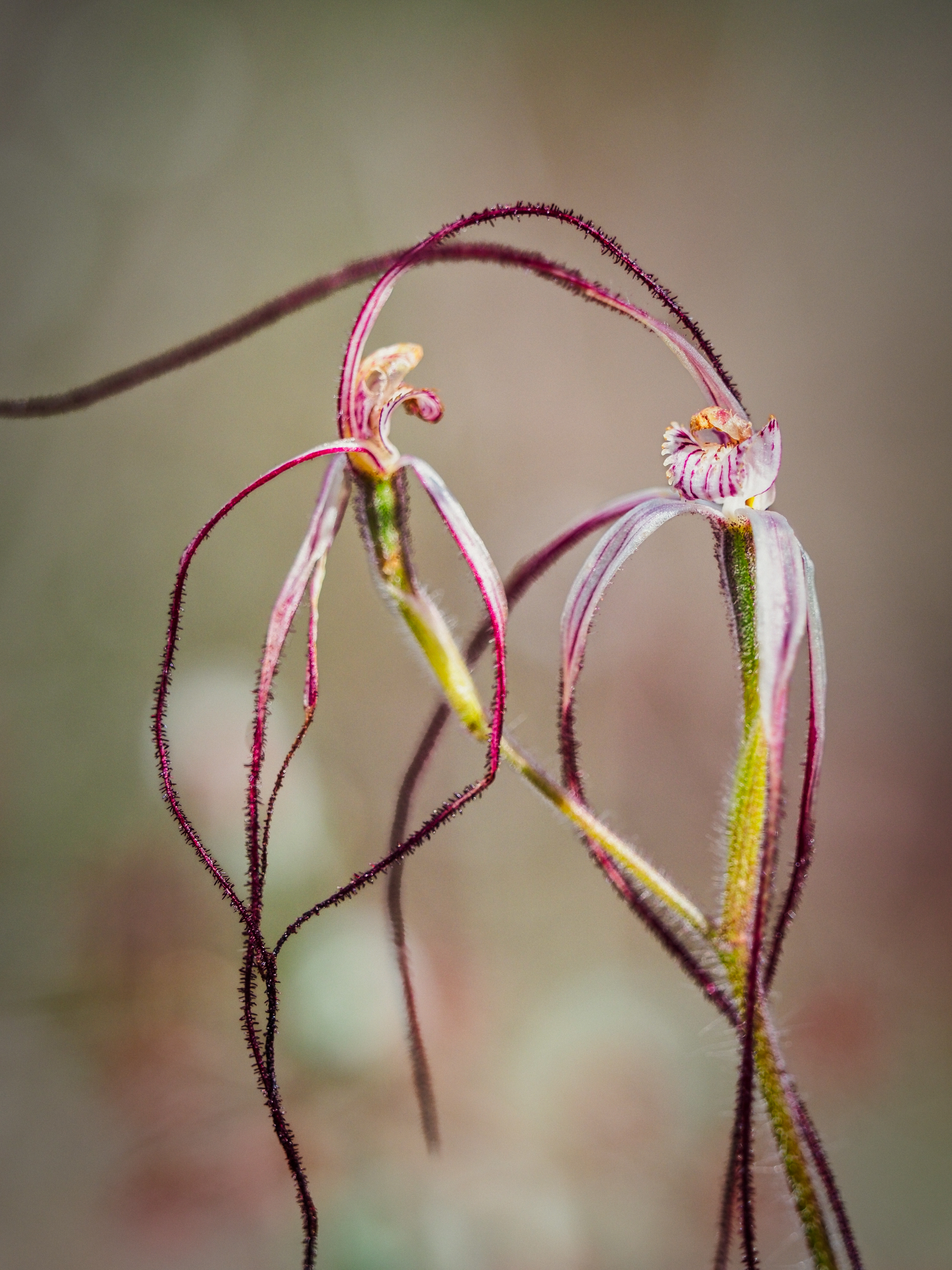
Early Wheatbelt Spider Orchid, Caladenia sp. ‘early wheatbelt’. Kweda, Western Australia.
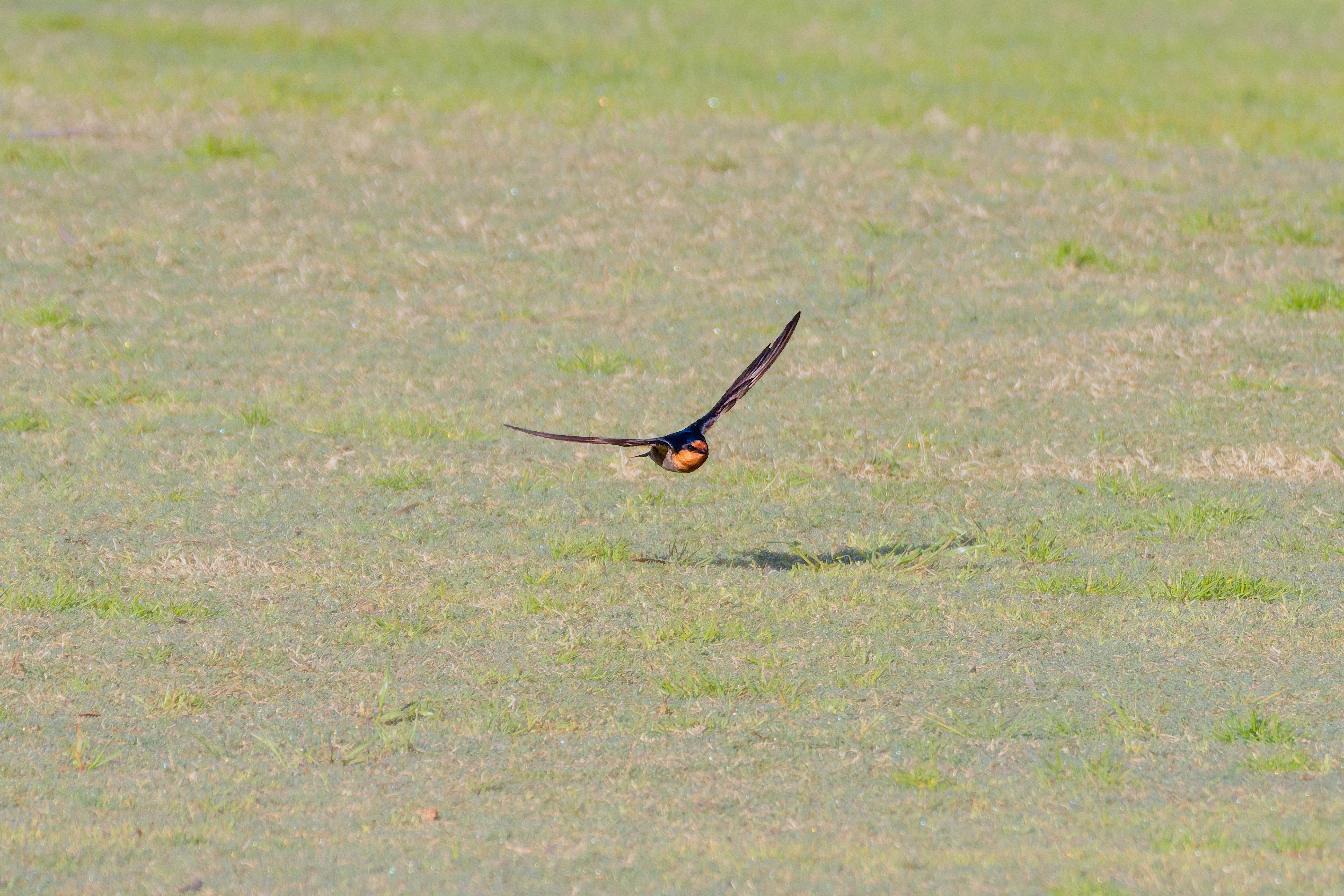
Kanamit or Welcome Swallow (Hirundo neoxxena). York, Western Australia.
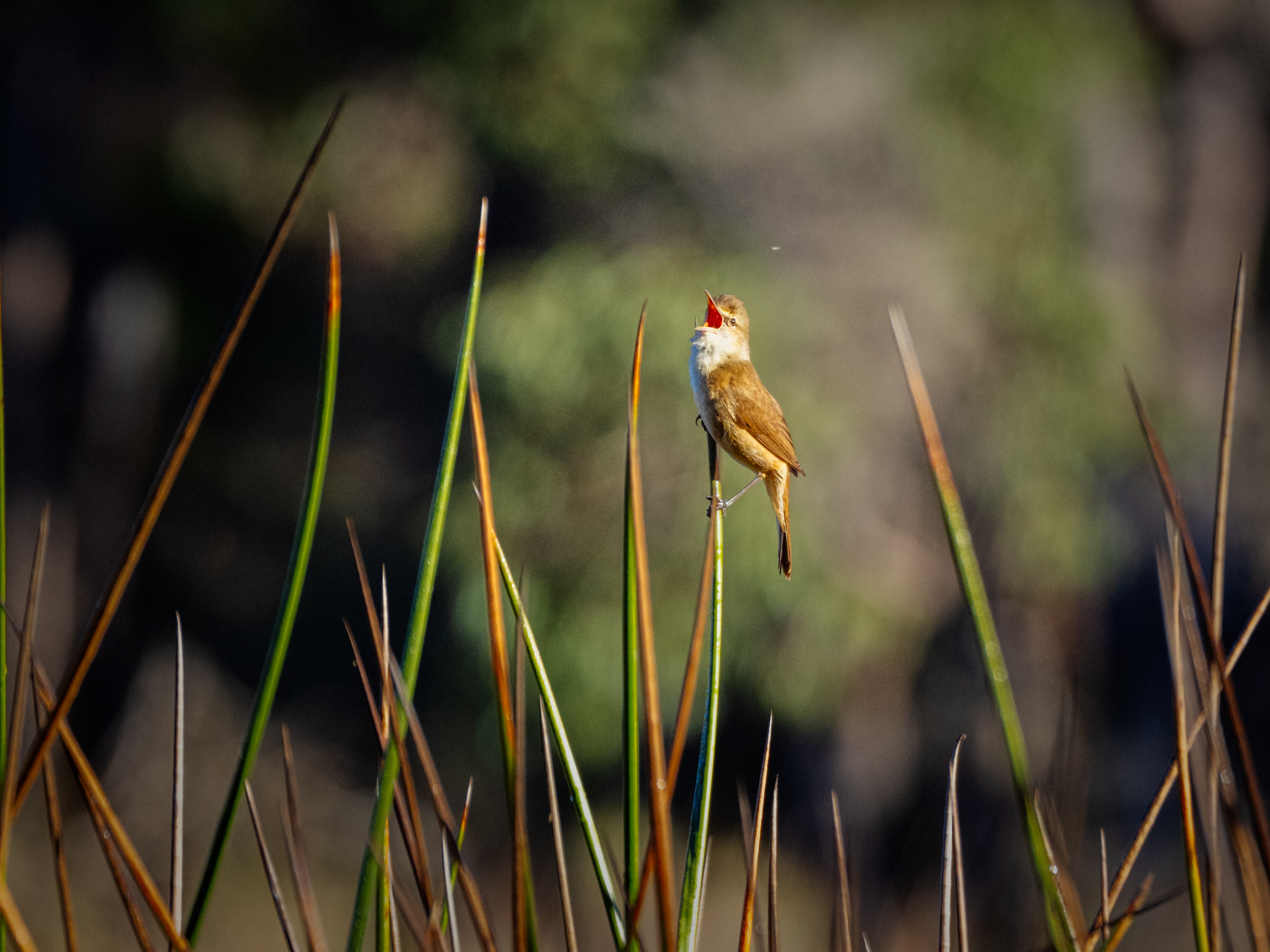
Koordji-koordji or Australian Reed Warbler (Acrocephalus australis subspecies gouldi). Lake Leschenaultia, Western Australia.
Juvenile Djindjokoor or Brown Honeyeater (Lichmera indistincta). York, Western Australia.
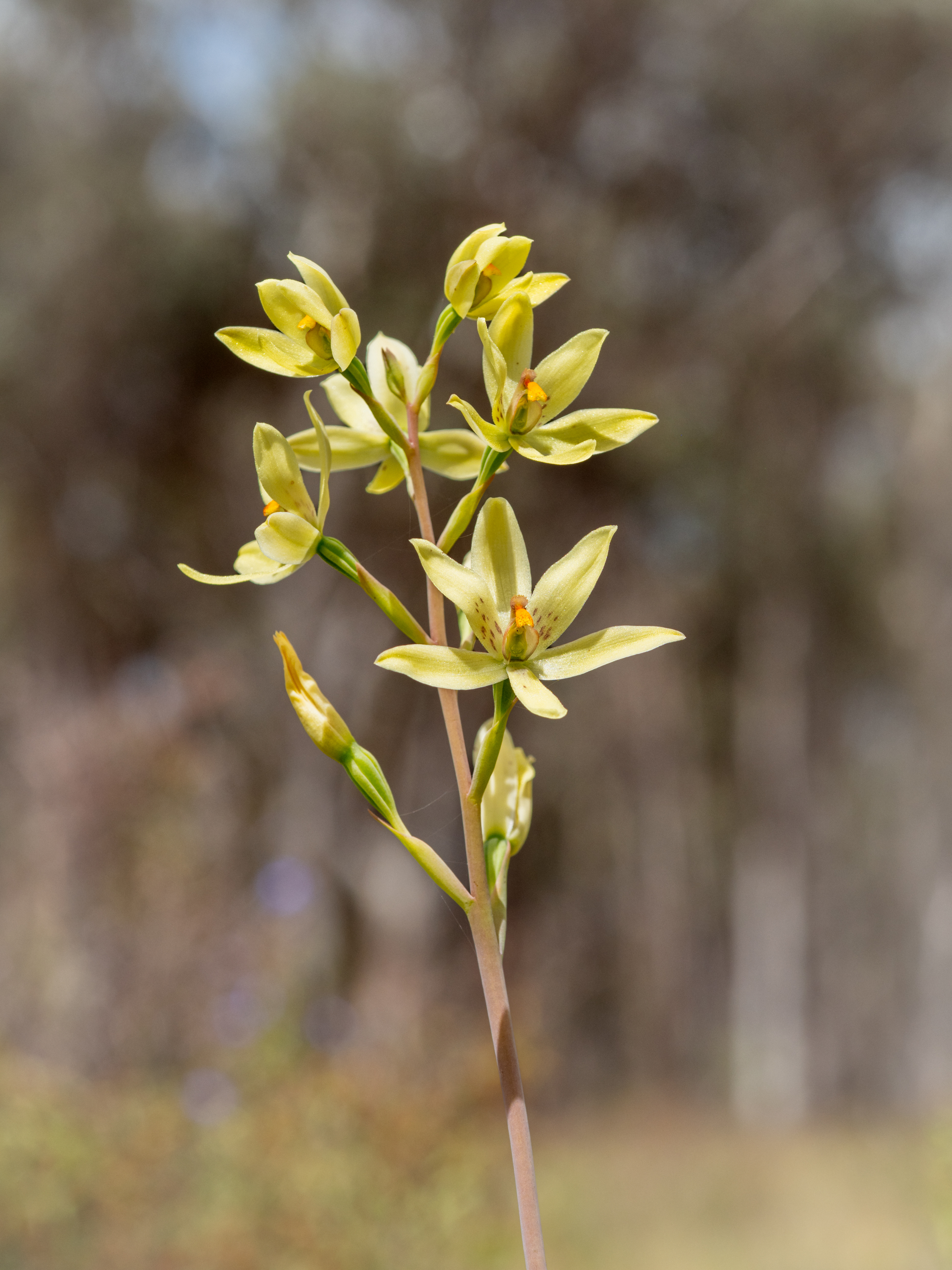
Custard Orchid, Thelymitra villosa. Wandoo National Park, Western Australia.
Kanyinak or Azure Kingfisher (Todiramphus sanctus). Northam, Western Australia.
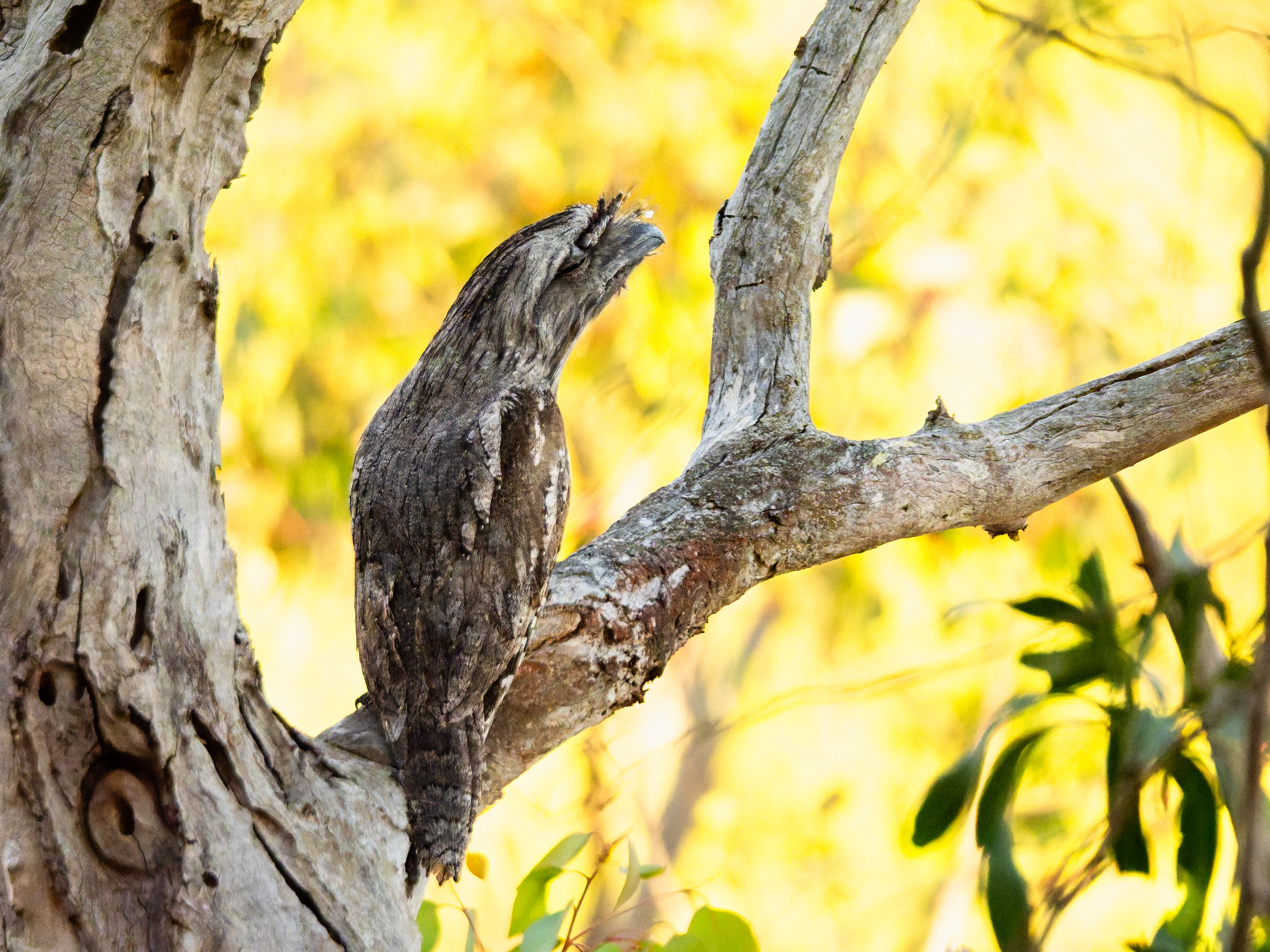
Djoowi or Tawny Frogmouth (Podargus strigoides). Narrogin Railway Dam, Western Australia.
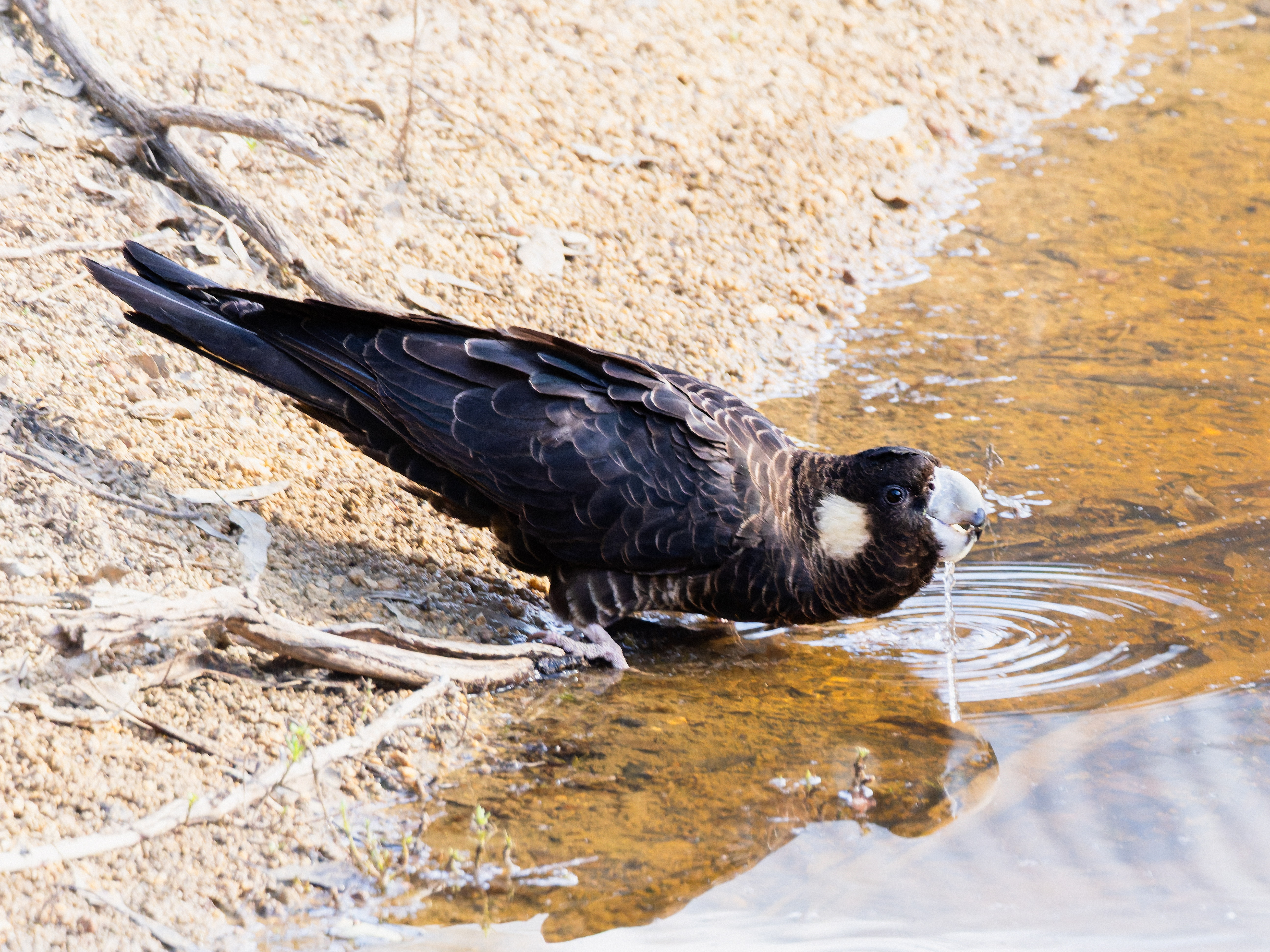
Ngoolyak or Carnaby’s Black-cockatoo (Calyptorhynchus latirostris). Old Mill Dam, Dryandra.
Camera nerdy bit. The most used camera was the Olympus EM1x. Only two of the photos were taken with a sensor bigger than Micro Four Thirds.
I hope all of you had a good 2025 and that 2026 brings happiness and health to you all. Happy New Year.
One of the great developments in camera design over the last few years has been in the area of image stabilisation.
For me personally Synch IS (what Olympus/OM Systems call their combination of IS technologies) has meant that I seldom us a tripod anymore and that has been truly liberating. For video it is a different story. For short focal lengths I can just about handhold without inducing motion sickness in my viewers, but for long telephoto work just forget it, which is unfortunate as I do like filming wildlife. So I have taken to using a video tripod – a Sirui CT-3204 with Sirui VH-10X fluid head. The biggest problem is that it is heavy (3.56Kg) which is fine if I don’t want to walk far, but a real burden if I do. The other strike against it is that is awkward to use in the bush. So what has been happening is I make a decision – stills or video as a priority and more often than not it is stills and the tripod gets left behind in the car.
Too Heavy!! My Sirui CT-3204 with Sirui VH-10X fluid head. While a great video tripod it is heavy (3.56Kg).
A little while ago I started thinking about monopods for video. I am no stranger to monopods I used to use them a lot for sports and events photography and I can’t remember a time when I’ve not had one. The one I have had for the last 25 years or so is the Manfrotto 679B with the stock Manfrotto 234RC head. A fantastic bit of kit but totally unsuited to video work. So as video was becoming more important (it was part of a unit I was teaching) I bought a Manfrotto 560b-1 monopod which featured a set of 3 feet at the bottom attached to the body of the monopod via ball joint with fluid cartridge. This means that horizontal pans are nice and smooth. The stock 234RC head meant that smooth vertical pans were impossible. Shortly after Manfrotto started making sets up with a better version of the monopod with a 500HLV video head so being a thrifty kind of person (my father would say I had deep pockets and short arms) I decided to get a second hand fluid head and found a cheap Manfrotto 700RC. For lighter set ups with short focal lengths it worked very well, but with the heavier longer focal lengths required for wildlife it just wasn’t up to snuff. So it was back to the tripod – or so I thought.
Exactly what I’m after. Shame about the price.
Looks like a direct copy of the Wimberley above. The price is more wallet friendly, but still a little on the steep side for me.
Fast forward a few months and I watched a video review on monopod heads and the reviewer talked very favourably about gimbal heads for monopods. In particular he raved about the Wimberley MH-100 Mono Gimbal Head. Now I’d never heard of it before and I quickly jumped online to find out more. It seemed to offer what I wanted in every way except price. $455 AUD, which was a bit much to take a punt on. So on looking around I found that Leofoto have their catchily named MPG-01 Mini Monopod Gimbal which was cheaper at $231 AUD but still too much to pay for an experiment. Further research turned up the Neewer GM39 Side Saddle Monopod Tilt Ball Head and that was a more reasonable $70 AUD. Now Neewer are one of the many Chinese photo accessory manufacturers that have sprung up in the last decade or so. Their products are generally what I would call cheap and cheerful. There are plenty of reviews out there that say the products are crap, but there also just as many that say they are good. I have used quite a few of their products and my experience has been largely positive. I like their LED video lights and replacement camera batteries. I’ve tried some of their filters and found them be not that great. So I decided to keep an open mind and try the monopod head.
Neewer GM39 Side Saddle Monopod Tilt Ball Head
I ordered the GM39 head off of the Neewer website and it arrived very promptly. The head was supplied in an eco friendly cardboard package with an Allen key, an Arca Swiss plate and a set of instructions in umpteen languages.
The Neewer GM39 in all its glory.
First impressions were very good. The head appears on the surface as nicely finished in black anodised aluminium with the knurled knobs finished in grey. Quite smart. In the hand everything feels nice, solid and well put together. It has a compact low profile and weighs in at svelte 259g (without plate) and has a maximum load capacity of 4Kg. There are three knobs; one for tightening or loosening the Arca Swiss compatible clamp, one for adjusting the ball head, and one for the panning control. The base has a diameterof 40mm with a 3/8” thread to allow mounting to a monopod or tripod. An interesting touch is that the base is cut so it will slide into an Arca Swiss quick release clamp. You can use the head with the clamp vertical as a traditional ball head, or you can rotate the clamp through 90º and use it as gimbal head.
The base has a diameter of 40mm with a 3/8” thread and it is also milled to be compatible with Arca Swiss type clamps.
The standard of finish appears very good.
In Use
The Neewer GM39’s Arca Swiss Type clamp.
On their website Neewer says that clamp on the GM39 is compatible with “most Arca Type QR plates” . That is my first bugbear. I’ve got numerous Arca plates knocking around and beside the one it came with it wasn’t compatible with those from Sirui, Smallrig or Sunwayfoto. Also the safety notches cut into the clamp to engage with the screw heads on the base to the quick release plate don’t stop the plates from sliding out if clamp isn’t done up tight enough.
I decided to test the GM39 with the following four combinations:-
Canon EOS 6d with battery grip and Sigma 150-600mm Contemporary weighing in at 3.88Kg
Sony A6500 with Sigma 150-600mm Contemporary weighing in at 2.99Kg
Olympus EM1x with OM System 100-400mm weighing 2.47Kg
Panasonic G85 with battery grip and Panasonic Leica 100-400mm weighing 1.88Kg
Canon EOS 6d with battery grip and Sigma 150-600mm
Panasonic G85 with battery grip and Panasonic Leica 100-400mm
All of the combinations came in at under the 4Kg maximum load and yet it was impossible to cinch down the ball head to prevent movement, but more importantly there is no friction control. What I mean by friction control is that there is no way to control how the head moves – whether slowly or quickly which means that the camera and lens can flop about in an uncontrolled manner. Now I’m no engineer but looking at the ball it has a diameter of 20mm which is pretty small and that makes it hard to resist the torsional forces exerted by the heavy lenses. For example my Sunwayfoto FB-44II ball head has a 44mm diameter ball and that is hard pushed to lock down my Canon 6d and 150-600. With the included quick release plate it is possible to balance the G85 and EM1x combinations, with larger lenses you’ll need to buy a longer plate taking into consideration it is not compatible with all brands of Arca Swiss compatible QR plates.
The diameter of the base of the head is 40mm. This is something to be aware of. My Manfrotto 560B-1 has a head diameter of 34mm and everything is fine. My Manfrotto 679B has a head diameter 60mm and you have be careful when using the head in the gimbal mode that the release knob for the clamp is upper most or it will foul on the monopod and restrict your movement.
I tried using the GM39 on a tripod where I used its already installed ball head as a levelling base and and attaching it using the Arca Swiss rails that milled into it. It’s quite an interesting function and for the most part it does very well the only down side is that my head, a Sunwayfoto FB-44II is quite tall and having the GM39 on top of that makes it quite top heavy and unbalanced when using a long lens. This would be more suited to an inverted or low profile ball head.
The Neewer GM39 clamped onto a ball head on a tripod. This lets the ball head become a levelling head.
The problem being that it becomes a little top heavy and the weight of the camera and lens is not over the tripod’s axis so it all feels a little unbalanced.
Out in the field I used the GM39 primarily on my Manfrotto 560B-1 which has a fluid base that allows for smooth horizontal pans. So I had the gimbal set upjust to do the vertical pans. Despite some of the short comings mentioned above I found that it worked quite well. I particularly like the combined weight of 890g. This means I’m more inclined to take it with me. For photography I didn’t really use it much, but where I did use it a lot was with video. No it’s not a match for a proper video tripod and head but it is 2.6 Kg lighter than my Sirui CT-3204 with Sirui VH-10X fluid head. When using a combination of the GM39 on my monopod, Synch IS image stabilisation and correcting for camera movement in my video editing software I can get good results and that is all I wanted.
That’s Better!! The Manfrotto 560b-1 monopod with Neewer GM39 is 0.89 Kg which is much easier to carry while walking through the bush.
Conclusion
On line I’ve read and watched reviews from people who have either really liked the Neewer GM39 Side Saddle Monopod Tilt Ball Head or hated it with a passion. It seems to be quite polarising. What do I feel about it? Well I think it’s important to understand it’s strengths and weaknesses.
You can’t expect Wimberley MH-100 Mono Gimbal Head performance from a product that costs a sixth of the price. Both Wimberley and the Leofoto use a different mechanism that involves bearings mounted round a spindle and there is only up or down movement which would mean that it is easier to lock down the head when needed. This mechanism is then contained within the structure and not subjected to the ingress of dirt or water meaning better longevity.The GM39 has a freely rotating ball head that give 360º motion in any plane. The locking mechanism is cruder and the mechanism is open to the elements which means grit could enter it and cause malfunction.
Below I’ve listed the pros and cons as I see them:
Pros:
Cheap
Lightweight
Arca Swiss compatible
Cons:
It’s not possible to lock the head out or control the movement in the head
The camera and lens aren’t mounted over the axis of the monopod so can feel unbalanced in certain circumstances
The ball head could become easily fouled by ingress of dirt and water
The clamp is not completely Arca Swiss compatible which could make finding replacement plates or longer plates difficult.
Not the best choice for heavy camera and lens combinations
On using the GM 39 for a while I realised that there is nothing to stop you using an existing ball in this manner and so you don’t need to buy anything.
As long as the ball head has a notch to one side to allow 90º positioning any ball head could be used as monopod gimbal.
From the above it would seem that I didn’t like the Neewer GM39 Side Saddle Monopod Tilt Ball Head and that is not correct. What I appreciate about itis that it is cheap, light and does the job well enough. It works very well with my M4/3s setup. Whether it is right for you that I can’t answer, but what I can say is that the Neewer GM39 is cheap enough to take a punt on.
I had an appointment in Glen Forest, about an hours drive away, late in the morning and to make the most of the petrol I decided to stop en route at Lake Leschenaultia at dawn. The weather was quite bleak when I got there – cold and damp with thick fog and virtually zero visibility. Knowing I wasn’t going to get anything to blog I decided to experiment and shoot some video.
A few hours later while walking back to the car a young woman walked past me at speed and commented on the seriousness of my camera. A few steps on she stopped and asked whether I’d seen and photographed the little duck. Always seeking local knowledge I asked which little duck in particular as there are quite a few species that call the lake home. She tried to explain that it was a very unusual little duck, completely different from anything she’d seen before. Oooh I thought – something new and unusual. She went onto say that she’d taken a photo with her phone and Googled it and found out that it was the Madagascan Duck. Now I was a bit sceptical as although ducks do migrate with the change of seasons it does tend to transcontinental as opposed to crossing large expanses of open sea. They also do it in large flocks, so if there is one there are probably hundreds. It would seem very unlikely that a single duck would have wandered so far off course as their navigation is pretty impressive. While trying to be helpful and say it was probably one of last summers fledglings she saw I was answered with I still have the photo on my phone. With that she quickly locates it and shows me the photo. It wasn’t a duck. It was an Australasian Grebe (Tachybaptus novaehollandiae). She seemed absolutely delighted with this information said goodbye and walked off.
Definitely not a Madagascan Duck but rather Ngoonan or Australasian grebes (Tachybaptus novaehollandiae). Lake Leschenaultia, Western Australia.
On getting home I was a little bemused by the event and decided to Google the Madagascan Duck myself. It threw up the Madagascan pochard (Aythya innotata) which is an incredibly rare species of diving duck which was thought to have gone extinct in the late 1990’s. Some breeding pairs were later discovered and as a result of a captive breeding program there now is a small population of 25 individuals located on two small volcanic lakes in the far north of Madagascar. Whenever I see an Australasian Grebe I shall always think of the Madagascan Duck.
I’m feeling really deficient in the focal length department. After my trip to the Baigup Wetlands I’ve realised that if I want a picture of a Crake I’m going to need a longer lens. At the moment I’m capped at 600mm on full frame, 800mm full frame equivalent on Micro Four Thirds, and 960mm full frame equivalent on APSC sized sensors. Unfortunately I’m handicapped by the fact that I don’t have a spare $35,000 AUD lying around or camera to put the lens on or I’d get the Canon RF 1200mm f/8L IS USM. More affordable at $4000 is the OM System M.Zuiko Digital ED 150-600mm f5.0-6.3, but even that is currently beyond my budget.
The mighty Sigma 150-600mm Contemporary lens.
The Canon Extender EF 2x ii is a matched teleconverter and is designed to only fit certain Canon L lenses. Note how the lens elements stand proud of the lens mount.
So my solution was to use my Sigma 150-600mm lens with a Canon x2 teleconverter on my Canon 80d which would give me the full frame equivalent of 1920mm. That is serious reach in anybodies book, but will it work? The first thing to consider is whether the Canon teleconverter will actually fit on the Sigma lens. If you look at the photo you can see that the lenses of the teleconverter protrude beyond the lens mount and into the lens. Would there be enough room in the Sigma 150-600 to accommodate this. The answer was a resounding “YES!”. The next question was would it autofocus. The problem is that on DSLRs the autofocus mechanismuses a sensor in the bottom of the mirror box that requires a sub mirror behind the main mirror to reflect some light onto it. If light levels are too low then the system just doesn’t work and the camera can’t autofocus. So that means a lens with a minimum aperture of f8 won’t autofocus. Having said that if we use ‘live view’ the mirror is moved out of the way and on Canon cameras Canon uses ‘dual pixel autofocus’ where every pixel on the sensor can function as an AF point. So in theory it should autofocus. That is good because the minimum aperture of the Sigma 150-600mm at 600mm is f6.3, slap a 2x teleconverter on and that becomes f12.6. So I set up a target in the back garden to try it out. Lo and behold the camera failed to autofocus when using the viewfinder, so OK I knew that was going to happen, but using live view it did.
The next thing to consider was image quality. When using a teleconverter image, and especially 2x teleconverters, image quality takes a serious hit – the image becomes notably softer. The answer to this is to stop down. After a bit of experimentation stopping down to f16 improved sharpness slightly, but it means using incredibly high ISOs which has impact upon the image quality. I figured that I’d run the images through Topaz DeNoise AI and hope that I’d get something decent.
A suitable test target. After experimentation an aperture of f16 was found to produce the best results.
Now I just needed to test this out on a live subject. Luckily our back garden is frequented by lots of birds, so I set the camera on a sturdy tripod and just waited. The results were that using live view and dual pixel autofocus the camera would definitely focus, it’s just it does it very, VERY slowly. I managed to get some photos, but the bird had to sit in one place for quite a while and this was with good light levels in the middle of the day. It wouldn’t be practical for a subject in the shade at dawn. I tried to manually focus but I couldn’t move the focus ring in small enough increments to achieve fine focus. The best results were achieved with birds that were about 5m away. I tried on Ring-necked Parrots that were further away and there was huge hit to image quality, the picture were just not critically sharp.
This Willy Wagtail was obliging enough to sit around for a few seconds. It is mandatory that every Australian garden should have at least one Willy Wagtail.
A leucistic zebra finch happily riding the rotary washing line.
This distant shot of Ring-necked Parrots shows a pronounced hit on image quality. Viewing the image at 100% shows the feather detail has gone to mush.
The Exposure Triange. All values have a reciprocal relationship.
Reciprocity in photography is where if you make one change to the exposure triangle – shutter speed, ISO, aperture – then you have to change one of the others by a corresponding amount to compensate for it. So if I have an exposure value of 1/125 sec, f4, ISO 400 and I want a shutter speed of 1/1000 then I’d either have to open the aperture to f1 or increase the ISO to 6400 or a combination of the two. The problem with wildlife photography is that it is often done in low light and has a need to use fast shutter speeds as the critters won’t sit still for very long. It is surprising to see how much a bird moves while sitting on a stick. This was my problem the other day when I returned to Northam to have another go at getting a photos of an Australian Spotted Crake (Porzana fluminea) .
Common Sandpiper, Actitis hypoleucos. Northam, Western Australia. Exposure: 1/200 sec, f6.3 ISO 10000. Topaz DeNoise AI saved the day!
As regular readers may remember in a previous post I said that I didn’t have a long enough lens for my usual Micro Four Thirds camera – the Olympus EM1x. My lens is a 100-400mm which gives me a reach of 800mm in 35mmm full frame terms. The lens won’t take a teleconverter and even if it did that would entail a further loss of light and image quality. So after some thought I decided to use my Canon 80d and Sigma 150-600mm lens which would give a reach equivalent to 960mm. Not a lot more but sometimes you’ve got to take all you can get. So with that we headed off to Northam and I sat on the river bank waiting for that elusive little spotty bird to make an appearance. My big problem was light – well to be more precise the lack of it. I warmed up with shots of a Common Sandpiper with an exposure value of 1/200, f6.3, ISO 10,000. I was lucky as the Sandpiper was content to sit still. When I did finally get a glimpse of the Australian Spotted Crake it was in deep shade so I had to drop the shutter speed to 1/60. I couldn’t open the lens up any more as I was wide open and I couldn’t use a higher ISO as I’d reached the limit. I shot several bursts in the hope I’d get at least one sharp image. A quick look at the rear LCD panel gave me a bit of hope for a result. By now the bird had taken itself back into the undergrowth not to emerge again. After waiting for a while we continued walking down the river to see if anything else was about.
Wayan or White-faced Heron (Ardea novaehollandiae). Northam, Western Australia. Even in the open 1/250 sec, f6.3, ISO 5000.
Djandjarak or Black-winged Stilt (Himantopus himantopus). Northam, Western Australia. Exposure: 1/160 sec, f6.3, ISO 3200.
Nidoolyorong or Black-fronted Dotterel (Elseyornis melanops). Northam, Western Australia. Now we’re talking, light levels are starting to improve. Exposure: 1/500 sec, f7.1, ISO 2000.
Bambon or Rufous Whistler (Pachycephala rufiventris). Northam, Western Australia. Exposure: 1/500 sec, f6.3, ISO 200.
Ngalkaning or Nankeen Night Heron AKA Rufous Night Heron (Nycticorax caledonicus subsp mannillenis). Northam, Western Australia. A bit on the dark side under the bridge so 1/250, f6.3, ISO 8000.
Getting home and looking at the photos none of the images of the Spotted Crake were sharp, there was motion blur and grain the size of golfballs. I tried every trick I know to try and rescue the images. But, as my dad used to say “No matter how hard you polish a turd it will always be a turd”. That flipping bird has become my nemesis. On the positive side I did get the nicest images of a Sacred Kingfisher that I’ve ever taken.
Kanyinak or Sacred Kingfisher (Todiramphus sanctus). Northam, Western Australia. Exposure: 1/1000 sec, f6.3, ISO 1250.
… than a Vindaloo Curry with extra chilli and a side serving of chilli. Man has it been hot. I mean it’s been so hot that your eye balls sweat. Try and take a cold shower to cool down and the water coming out of the cold tap is hot. The dog refuses to go for a walk because the pavement is blisteringly hot. We did get a little respite for a day, the temperature dropped by 10º to 34ºC and everyone said it was chilly enough to look for a sweater. The third round of the seventh circle of Dante’s Inferno is a great Plain of Burning Sand scorched by great flakes of flame falling slowly down from the sky and it is an apt description of this summer here in the Wheatbelt of Western Australia. Cyclone Sean has a lot to answer for.
A very happy looking Kaa-kaa or Laughing Kookaburra (Dacelo novaeguineae).Avon Trail, York, Western Australia.
Yet I’m amazed how the natural world carries on. The Rainbow Bee-Eaters chicks have successfully fledged and are busy building themselves up for the long flight north at the end of March. Splendid Fairy Wrens, Thornbills and Silvereyes still look for insects in the undergrowth. Kookaburras, crows and magpies can be seen looking for the unwary to feed upon. The farmers paddocks are now just bleached stubble. The mice and other small animals that live in them have nowhere to hide and are easy pickings for the Black Shouldered Kites and Nankeen Kestrels.
Female Djer-djer or Splendid Fairy-wren (Malarus splendens subs splendens). Avon Trail, York, Western Australia.
Birin-birin or Rainbow Bee-eaters (Merops ornatus) in the last light of the day. Avon Trail, York, Western Australia.
Walking along the river in the early morning or late evening it’s possible to see the birds, but they quickly retreat to places of deep shade as the temperatures rise. Come about 10 o’clock in the morning until about five in the afternoon they are almost totally silent. Despite the heat there is still quite a volume of water in the river. It is the water that enables the wildlife to survive.
Kaa-kaa or Laughing Kookaburra (Dacelo novaeguineae).Avon Trail, York, Western Australia.
Things were just winding down for the evening when the Beloved Significant Other announced that there was a raptor eating a bird in our drive. I ran and grabbed the the first camera to hand with a long lens attached – my Canon 80d with Sigma 150-600mm lens. Using the dustbins as cover I managed to get quite close. I wasn’t sure what I was looking at in terms of species – at first I thought it was a Peregrine Falcon (Falco peregrinus) but I wasn’t entirely convinced. I did know what it was eating – a Laughing Dove (Streptopelia senegalensis) as there are plenty of them in the neighbourhood. It was quite a nervous bird constantly scanning the environment between mouthfuls. Like most raptors it had merely stunned its prey and it was a bit hard to watch as the dove squirmed about while being eaten. It died when the contents of the chest cavity were removed. But that’s nature for you – incredibly beautiful but undoubtedly cruel.
Djili-djili or Collared Sparrowhawk (Accipiter cirrhocehalus) eating a laughing dove (Streptopelia senegalensis) in our driveway.
All the best bits have been eaten.
I didn’t look at the photos until the morning. First off I marvelled at how well the 80d coped. It was the last stages of dusk and quite dark which meant using ISO 12800. The files were incredibly noisy but they cleaned up very well in Topaz DeNoise AI. The autofocus system on the 80d is very primitive compared to modern mirrorless cameras that now have bird detect autofocus, but it did a great job with only a couple of frames out of the 200 I shot being out of focus.
The Canon 80d – it maybe getting on a bit, but it is a very capable camera.
The Sigma 150-600mm f5-6.3 DG Contemporary lens. It offers a real bang for the buck.
What was the bird? Well it wasn’t a Peregrine Falcon, but aCollared Sparrowhawk (Accipiter cirrhocephalus).







You must be logged in to post a comment.