Baby, You So Nice…

…I’d like to do the same thing twice, yeah!

Baby, you so nice

I’d like to do the same thing twice

I love you so much, so-o-o

Bob & Rita Marley 1978


A review of the Sigma 16mm f/1.4 DC DN lens for Sony E mount


Sigma 16mm 1.4 for Sony E
The Sigma 16mm f1.4 DC DN lens mounted on a Sony A6500.


Have you ever bought something so wonderful that you’d wished you done it twice? Back in March 2020 I wrote about my experiences with the excellent Sigma 16mm f/1.4 DC DN lens for m4/3. It’s become the mainstay of my video work and is more or less permanently attached to my Panasonic G85. At the beginning of this year I got a Sony A6500 second hand for wildlife photography, but I couldn’t really gel with it using it like that, but I have come to like the 4K video out of it so I thought I’d look for a secondhand Sigma 16mm f1.4 to put on it. Now the astute among you may see a flaw with my thinking here, which is that on a m4/3 camera the Sigma 16mm lens has a 68.1º angle of view which equates to focal length of 32mm on 35mm full frame. Put the lens on the APSC A6500 and the angle of view becomes 83.2° or the equivalent of a 24mm lens on a full frame camera which is considerably wider. I knew that when I purchased it and I quite like the 24mm focal length for general photography and it’s a good focal length for “talking head” videos.

When I wrote about the micro four thirds version I wrote:

“So how come this lens is so lardy I hear you all ask. Well this lens wasn’t designed for micro four thirds, it was initially designed for the Sony 6000 series cameras with an APS sized sensor where it equates to being a 24mm in full frame terms. To get a wide angle lens that’s fast and a good optical performance means lots of glass and glass is heavy, and this lens is large and heavy for APS format cameras.”

Well having got the lens on my A6500 it’s still a big heavy lens, but, (spoiler alert) it’s bloody brilliant at what it does and worth the size and weight penalty.


Sigma 16mm 1.4 for Sony E
The Sigma 16mm f1.4 compared to the Sony 50mm f1.8 and the Sony 28mm f2.


Vital Statistics

Diagonal angle of view 83.2º
Optical construction 16 elements in 13 groups
Diaphragm 9 rounded blades
Minimum aperture F1.4
Maximum aperture F16
Minimum focusing distance 25cm
maximum magnification ratio 0.07X
Filter diameter 67mm
Dimensions ⌀ 72.2mm x 92.3mm (H)
Weight 405g
Internal focusing Yes


Sigma 16mm 1.4 for Sony E
The lens mount is made of chrome plated brass and there is an ‘O’ ring to provide sealing when mounted on the camera


In the hand the Sigma 16mm feels very dense and substantial. The lens body is made out of what Sigma calls a Thermally Stable Composite (TSC) which is substantially stronger than conventional polycarbonates while having similar thermal expansion properties to aluminium. The lens mount is made of chromium plated brass which should ensure a long life. The Sigma 16mm is advertised as being dust and splash proof but on closer reading of Sigma’s spec sheet there is only one seal and that is at the lens mount. The lens comes with a bayonet mount petal lens hood which has a ribbed grip to make attaching and detaching easier. There is a ribbed rubber focus ring of the fly by wire type – while it feels smooth and easy to use there no hard stops at the minimum and maximum focusing distances. There are no other controls or switches which means if you want to switch between AF and manual focus you will have to use the camera controls for that.


20200106-Sigma16mm-0224


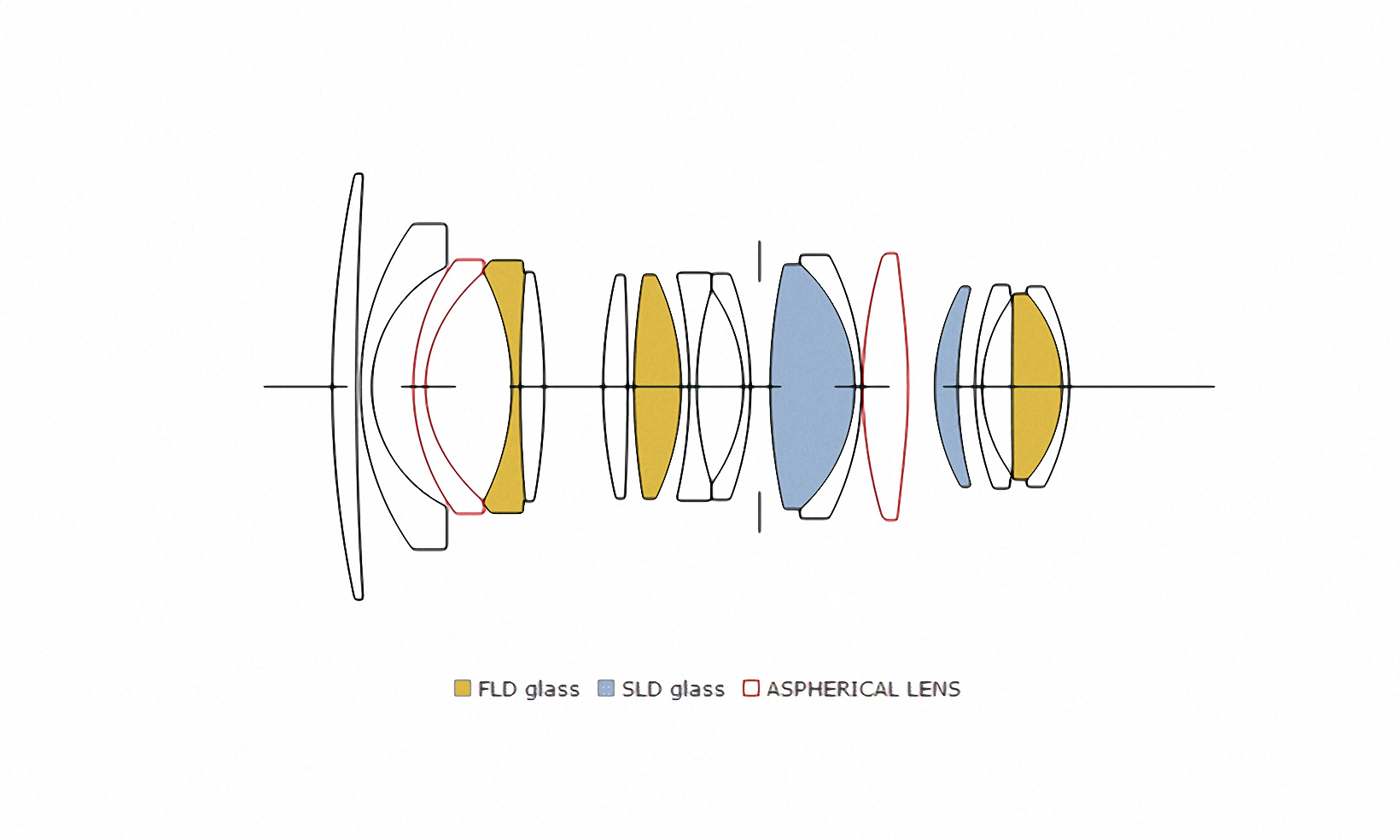
The Sigma 16mm has an optical construction of 16 elements in 13 groups with 3 FLD (“F” Low Dispersion) glass elements, which offers performance equivalent to fluorite which exhibits less chromatic aberration than those utilising a traditional flint glass. There are 2 SLD (Special Low Dispersion) glass elements which also help to minimise chromatic aberration and 2 ASPH moulded glass aspherical elements which work to reduce optical aberrations. According to Sigma’s website the ASPH elements are polished with a tolerance of under 10 nanometers or 0.000001 millimetres which according to Sigma reduces onion ring bokeh. 


Optical Performance 


Sigma 16mm 1.4 for Sony E
Diffraction spikes, veiling flare and ghosting.


The optical performance of the Sony lens is a little different to that of the M4/3 version and the simple reason is that the M4/3 sensor crops the image circle that the lens produces more than the APSC sensor so it can avoid the dodgy areas. But the reality is that those “dodgy” areas are still pretty good. In the centre of the frame wide open at f1.4 the images lacks contrast and appears a little soft. Stop down to f2 and the contrast and sharpness improve and at f4 you get the best results. In the corners at f1.4 the image is rendered a little softer than the centre but by f4 the corners match the centre of the frame. Diffraction starts to set in at f11 and is really noticeable at f16.


Sigma 16mm 1.4 for Sony E
With lens corrections turned off there is quite prominent barrel distortion and some vignetting.


Without lens profiles applied there is severe barrel distortion and vignetting. Once the profile is applied all is good at the expense of a little corner sharpness. There is some axial or longitudinal chromatic aberration when the lens is wide open at f1.4. The fringing clears up when you stop the lens down. When it comes to transverse or lateral chromatic aberration you  have to look really hard to find it and what little there is is easily corrected in post. Lens flare is well controlled with only a hint of veiling flare and some mild ghosting. A lens hood is included to help prevent this. Diffraction spikes or “sunstars” are not good, not bad, just OK.


Sigma 16mm 1.4 for Sony E


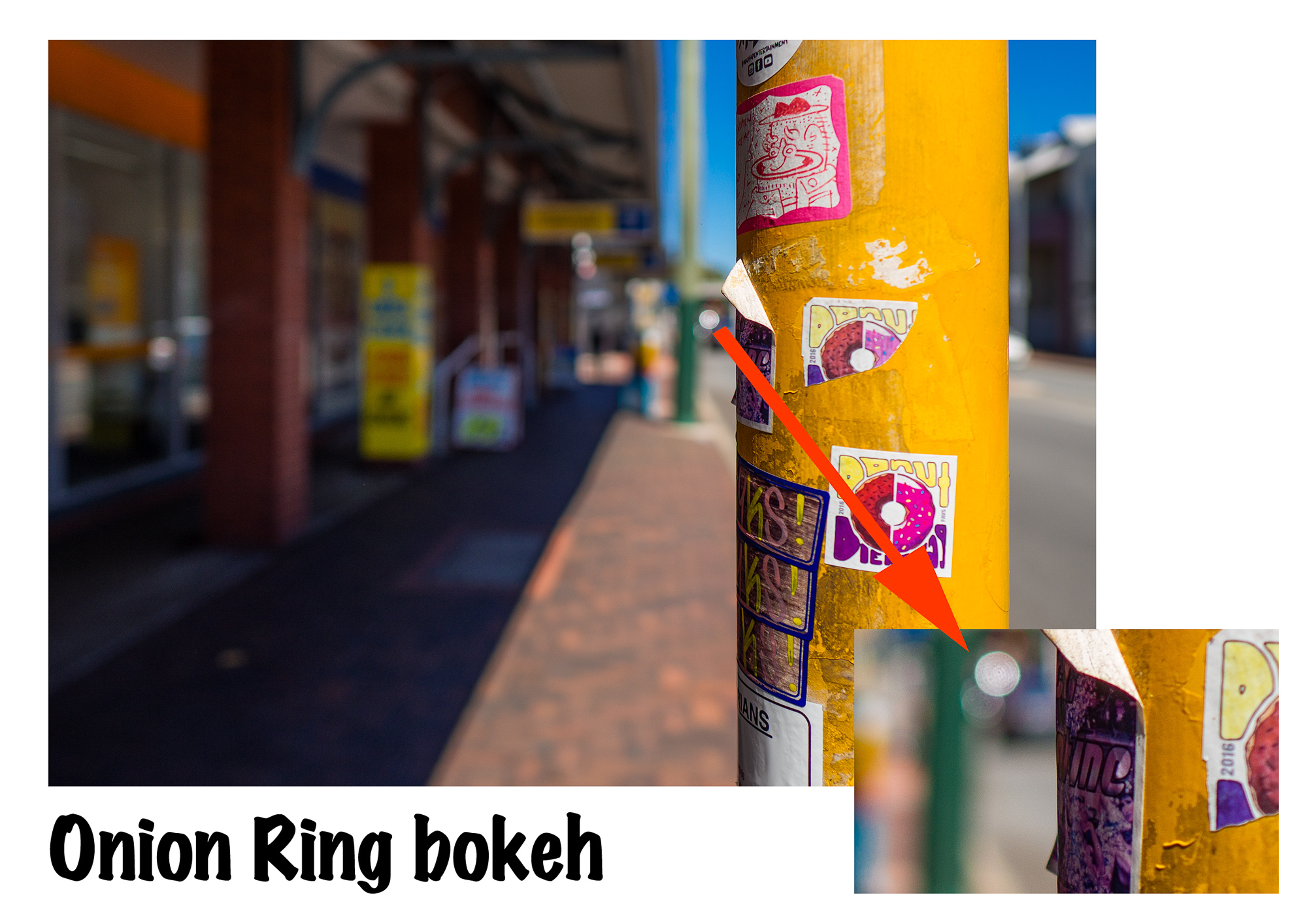
In terms of bokeh the 9 aperture blades create nice round balls in the centre of the frame, they become slightly elliptical towards the edges. Onion rings are present within the balls and there is a soap bubble effect at the edges of the balls. Looking at the focus transitions they are nice and smooth.


20231224-York-0224-2


Autofocus Performance

For stills shooting wide open at f1.4 at 11 fps with continuous autofocus with lock on focus and balanced priory shutter release the best result out of a sequence of 40 frames was only 9 were critically in focus. Switching to 3 fps with lock on focus set to AF priority a sequence of 20 frames had all of them in perfectly in focus. The inference is that the Sigma 16mm is quick to focus providing you have the right menu settings.


20231221-Sigma16sony-0243-2-Edit
3 fps with lock on focus set to AF priority a sequence of 20 frames had all of them in perfectly in focus


Sigma 16mm 1.4 for Sony E
Dancing Jesus on a slider. 10fps for 5 seconds with continuous AF with lock on tracking with lens at f1.4. There was a 98% hit rate.


For video the auto focus worked really well – it was responsive, smooth and accurate. Really tracking a person walking around presented no difficulties. To make things harder I tried mounting a stuffed toy to a slider at the minimum focusing distance having it move fairly rapidly and it managed this very well. I tried a smaller subject, this time Dancing Jesus, which also wobbled as it moved and again the autofocus did a good job of tracking the subject.

Talking of video I tested for focus breathing and there is only a slight amount which should make the video crowd very happy.


Verdict


Sigma 16mm 1.4 for Sony E


I absolutely love the micro four thirds version and use it constantly. I approached this review with a little trepidation because I thought that putting it in front of a larger APSC sensor would reveal  the Sigma 16mm’s flaws. I needn’t have worried. This is an excellent lens and I would have been happy paying the full retail price for it, but having bought it second hand for just over half the full retail price and I’m over the moon. If you’re on a budget and want a wide angle lens for Sony E mount, Canon M, Fujifilm X, Nikon Z and the L Mount Alliance then you should definitely consider this lens especially if you can find one secondhand.

 

Happy Christmas

Ho Ho Ho!


Well I’d like to say that Christmas crept up on me unawares, but the reality was that mince pies Christmas pud were in the shops back in September. I still find it hard to celebrate what is essentially a Northern Hemisphere winter festival in the middle of a baking Southern Hemisphere summer. But I like to wish everyone a Merry Christmas and a happy, safe and prosperous New Year.


Christmas decorations in the Wheatbelt Metropolis of Northam.

Optical Antithesis


A review of the Sigma 16mm f/1.4 DC DN lens for m4/3


The Sigma 16mm f1.4 shown mounted to an Oympus OMD EM1 mk 1 which is one of the larger m4/3 cameras.


I’ve said many times on this blog that my favourite focal length is 35mm (35mm equivalent) which give a diagonal angle of view of 63.4º To me it is a relaxing normal view, I find 50mm a bit too tight and 28mm a bit too “loose”. So when I migrated from so-called full frame to micro four thirds in 2010 one of the first lenses I bought was the Olympus m.Zuiko 17mm f2.8 pancake lens. Actually at the time there were only three lenses in the system the 17mm, a 14-42mm kit lens and the 40-150 telephoto kit zoom and I ended up getting them all.


Olympus m.Zuiko 17mm f2.8 shown on an EP5. The lens was the first prime introduced for the Olympus’ m4/3 system.


The 17mm was equivalent to 34mm in in full frame terms and has a diagonal angle of view of 65º, so close enough as not to make any real difference. It wasn’t a well received lens despite being what initial advocates of the micro four thirds said they wanted – pancake lenses. It’s slow maximum aperture of f2.8, slow and noisey auto focus combined with less than stellar optical performance put many people off and they went for the much more expensive Panasonic 20mm f1.7 which had the virtues of being optically better, and having a faster maximum aperture. It still wasn’t great in the AF department though. But hey these were the early days of mirrorless technology and AF systems were not very quick and accurate then. But anyways I got the Olympus in a kit with my Olympus EP2 and I actually loved it. I could slip it mounted to the EP2 in my pocket which made it a great stealth camera combination and I used it to shoot my TransPerth-Transhumance project. I still use the lens today, mainly on my EP5. The area where I felt it was absolutely hopeless was video. The AF was too slow, too noisy (think angry wasp stuck in a jar) and I wanted a bit more subject isolation than the f2.8 aperture could give.


The Sigma 16mm f1.4 compared to the Olympus 17mm f2.8, 25mm f.1.8 and the 45mm f1.9.


The Sigma 16mm f1.4 is a physically large lens. Here it is shown with the Olympus 12-40mm f2.8 and 75-300 f4-6.3 zoom lenses.


So fast forward a few years and I’m shooting more and more video and I decide to get myself a better 17mm lens. In the intervening years Olympus had produced the very favourably received 17mm f1.8 and the eye-wateringly expensive f1.2 version. Panasonic had also come to the party with their Panasonic Leica Summilux 15mm f/1.7 lens. In fact I went to my local (if you can call 110Km away local) camera dealer to buy this lens and it was always out of stock which made me want it even more. But in the end I went for an outlier in the form of the Sigma 16mm f/1.4 DC DN lens. The reasons being that f1.4 is faster than f1.9, it was cheaper than the f1.2 and the difference between f1.2 and f1.4 is slight, and my dealer had it in stock. So what makes it and outlier? Well to put it bluntly it’s bloody huge. It has a 67mm ⌀ filter thread which compares to 37mm for the Olympus 17mm f2.8. It is bigger than the Olympus 12-40mm f2.8 and the Panasonic Leica 8-18mm f2.8-4 while being only a little shorter than the Olympus 75-300mm f4.8-6.7. The 16mm focal length equates to 32mm on full frame with a diagonal angle of view 68.1º so is a bit wider, but when used with the Panasonic G85 for 4K video this isn’t much of a problem as the camera crops in slightly. So how come this lens is so lardy I hear you all ask. Well this lens wasn’t designed for micro four thirds, it was initially designed for the Sony 6000 series cameras with an APS sized sensor where it equates to being a 24mm in full frame terms. To get a wide angle lens that’s fast and a good optical performance means lots of glass and glass is heavy, and this lens is large and heavy for APS format cameras. To get some additional return on their investment Sigma decided to offer the lens in micro four thirds mount hence it seeming a funny focal length and being bigger than necessary.


Vital Statistics

Olympus 17mm f2.8

Sigma 16mm f1.4

Diagonal angle of view 65º 68.1º
Optical construction 6 elements in 4 groups 16 elements in 13 groups
Diaphragm 5 rounded blades 9 rounded blades
Minimum aperture f2.8 F1.4
Maximum aperture F22 F16
Minimum focusing distance 20cm 25cm
maximum magnification ratio 0.11x 0.07X
Filter diameter 37mm 67mm
Dimensions ⌀ 57mm x 22mm (H) ⌀ 72.2mm x 92.3mm (H)
Weight 71g 405g
Internal focusing No Yes


In the hand the Sigma 16mm feels very dense and substantial. The lens body is made out of what Sigma calls a Thermally Stable Composite (TSC) which is substantially stronger than conventional polycarbonates while having similar thermal expansion properties to aluminium. The lens mount is made of chromium plated brass which should ensure a long life. The Sigma 16mm is advertised as being dust and splash proof but on closer reading of Sigma’s spec sheet there is only one seal and that is at the lens mount. The lens comes with a bayonet mount petal lens hood which has a ribbed grip to make attaching and detaching easier. While it is good that the lens comes with a hood it’s not the best implementation and feels quite insubstantial and can be fiddly to attach as it can foul and not lock home. There is a ribbed rubber focus ring of the fly by wire type – it feels smooth and easy to use. There are no other controls or switches which means if you want to switch between AF and manual focus you will have to use the camera controls for that.


The Sigma 16mm has an optical construction of 16 elements in 13 groups with 3 FLD (“F” Low Dispersion) glass elements, which offers performance equivalent to fluorite which exhibits less chromatic aberration than those utilising a traditional flint glass. There are 2 SLD (Special Low Dispersion) glass elements which also help to minimise chromatic aberration and 2 ASPH moulded glass aspherical elements which work to reduce optical aberrations. According to Sigma’s website the ASPH elements are polished with a tolerance of under 10 nanometers or 0.000001 millimetres which according to Sigma reduces onion ring bokeh.


Performance

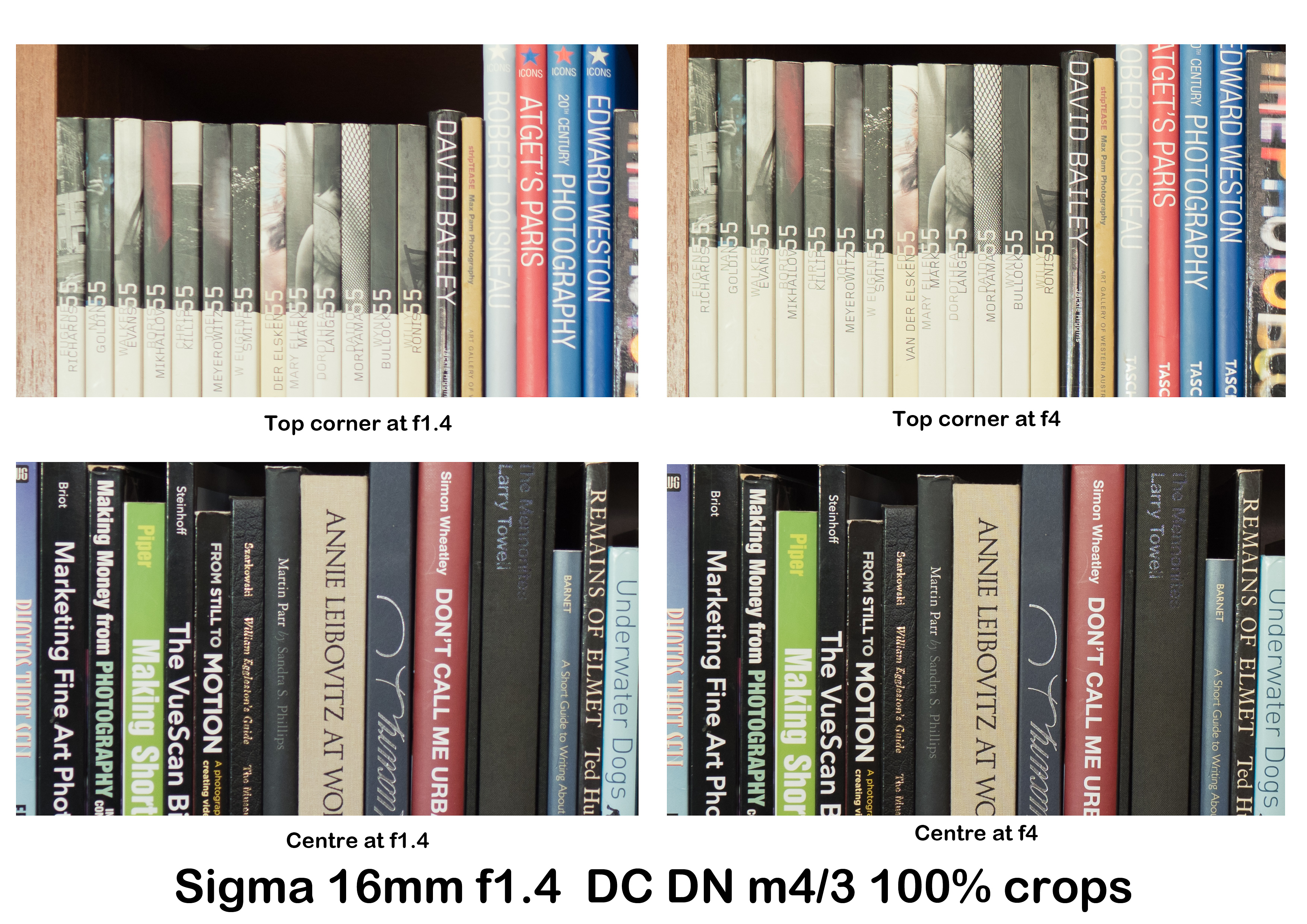
100 % crops showing lens performance wide open and then at the best performing aperture.


In terms of autofocus the stepping motor is fast and accurate and very smooth when shooting video. I tested the lens on the OMD EM1 mk ii which has on sensor phase detect AF and on the Panasonic G85 which uses DFD technology – a variant of contrast detect auto focus that requires the lens to provide a profile to the camera to ensure fast and accurate AF. The Sigma does not have such a profile as these are limited at present to only Panasonic’s own lenses. Despite that there were no problems and I could detect no discernible difference between the Olympus and the Panasonic. The only downside in the AF department is that I can’t use the Pro Capture Low setting which gives up to 18 fps with auto exposure and AF tracking. This is no fault of Sigma’s as the option is only available with Olympus lenses.


Optically – well straight from the get go the Sigma is impressively sharp wide open corner to corner. The performance improves slightly (and it is only visible on my 4K screen at 300%) as you stop down. Diffraction sets in at f16 and this does soften the image. In terms of chromatic aberration, well wide open in high contrast situations it is apparent albeit slight and it is easy to correct in post. The lens is reasonably resistant to flare – but if you have a specular light source in the frame you will experience some veiled flare and ghosting. If you turn off the built in lens profile you can observe a slight barrel distortion, but switch on the profile and it is not visible. The bokeh balls this lens produces are more or less round when shooting wide open even at the edges of the frame and the transitions are nice and smooth. There is some onion ring bokeh which is the result of using moulded aspherical lens.Vignetting is not a problem and is very slight in the region of 1/2 stop.


Chromatic aberration is quite apparent on this lens. It is also quite prone to flare even when using the included lens hood.


Verdict

This slideshow requires JavaScript.


Being designed to have an image circle much larger than micro four thirds requires means that you are using the best performing part of the lens and this really shows. Just for giggles I compared the Sigma with my old Olympus. The Olympus is noticeably soft in the corners at all apertures and just average in the centre. It suffers badly from chromatic aberration. Vignetting is very apparent, in excess of 1 stop in the corners with the lens profile switched on and getting on for 2 stops when switched off. Physically, optically and figuratively the Sigma stands head and shoulders above the little Olympus. The only area where the Olympus wins out is its small size and that is why I’ll continue to use it when I want something small and compact. For every other occasion I’m reaching for the Sigma. The knock on effect is that I’m seriously wondering about replacing my Olympus 45mm f1.8 with the Sigma 56mm f1.4.