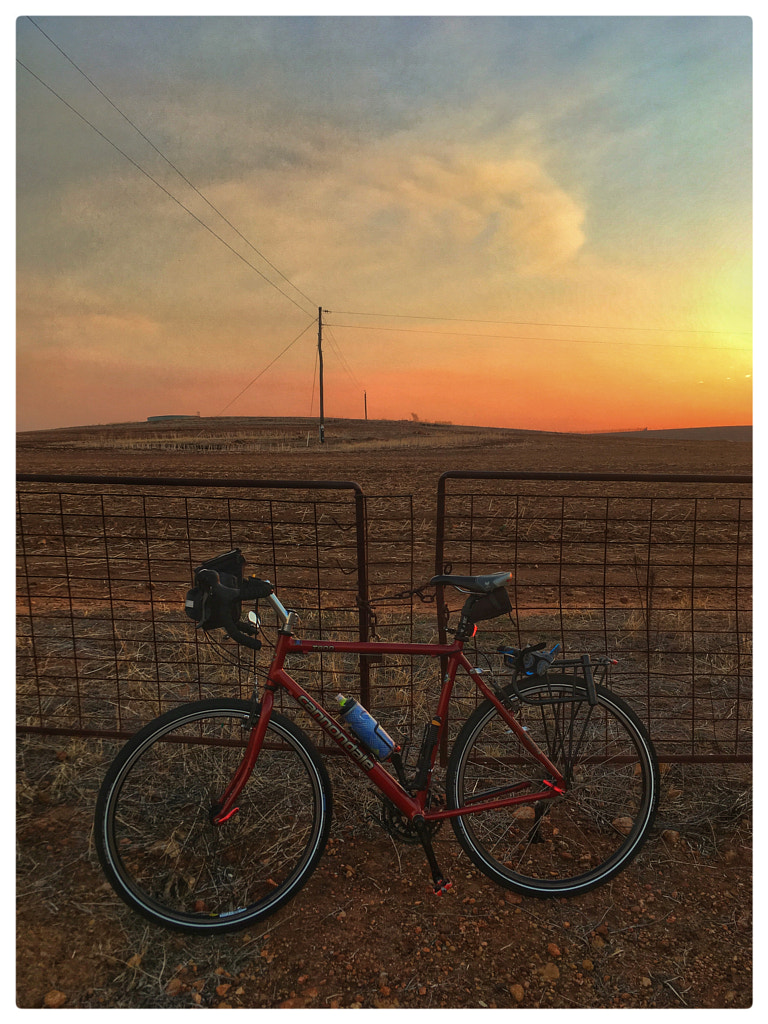
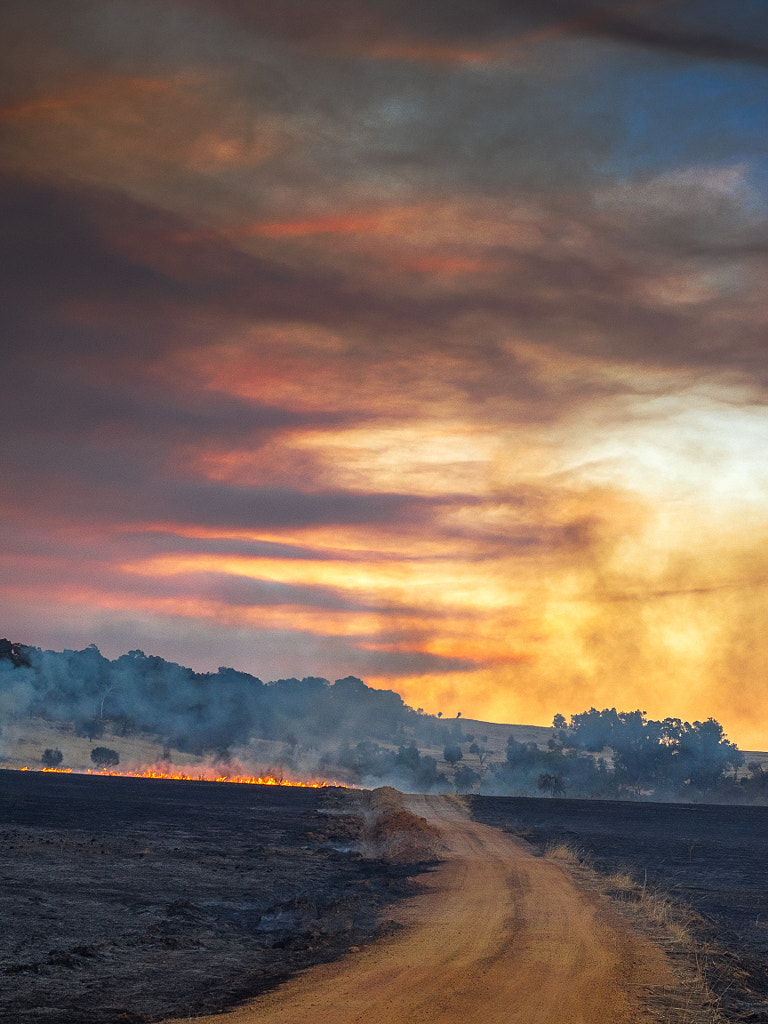
The smoke from the farmer’s burn off makes for some amazing sunsets in the Wheatbelt of Western Australia.
It’s that time of year again. The farmers of the Wheatbelt are burning their fields in preparation for sowing. The smoke hangs thick over the Avon Valley and makes for a quite unpleasant experience for anyone who suffers from respiratory ailments. The upside is that the smoke particles in the air make for rather splendid sunsets. I snapped this one on my phone while cycling home. The next few were all shot while going out to get some beer on my Olympus OMD EM1 with 12-40mm f2.8 lens.
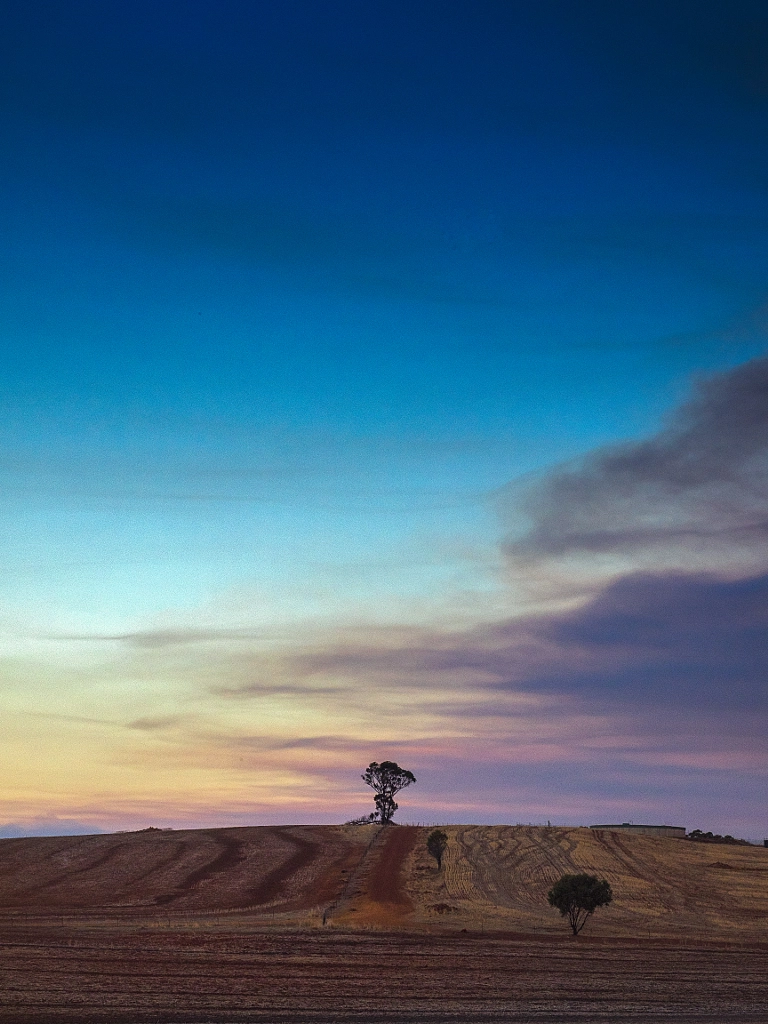
The smoke from the farmer’s burn off makes for some amazing sunsets in the Wheatbelt of Western Australia.
Fields being burnt off prior to sowing seed. York, Western Australia.
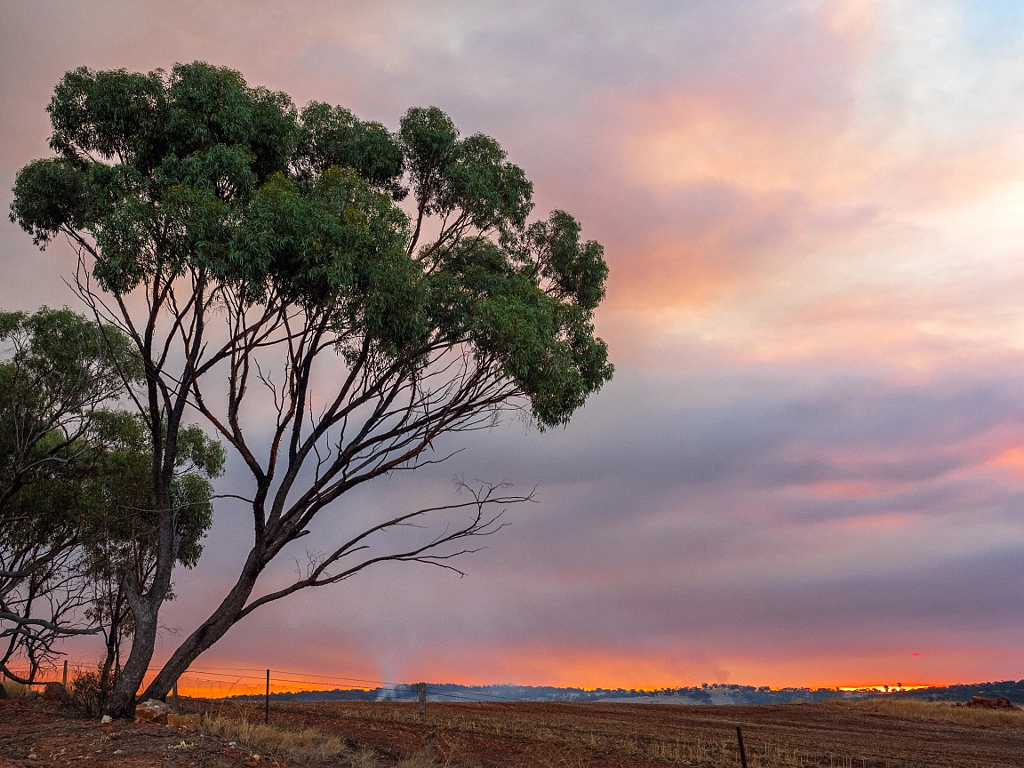
The smoke and haze creates an apocalyptic atmosphere.
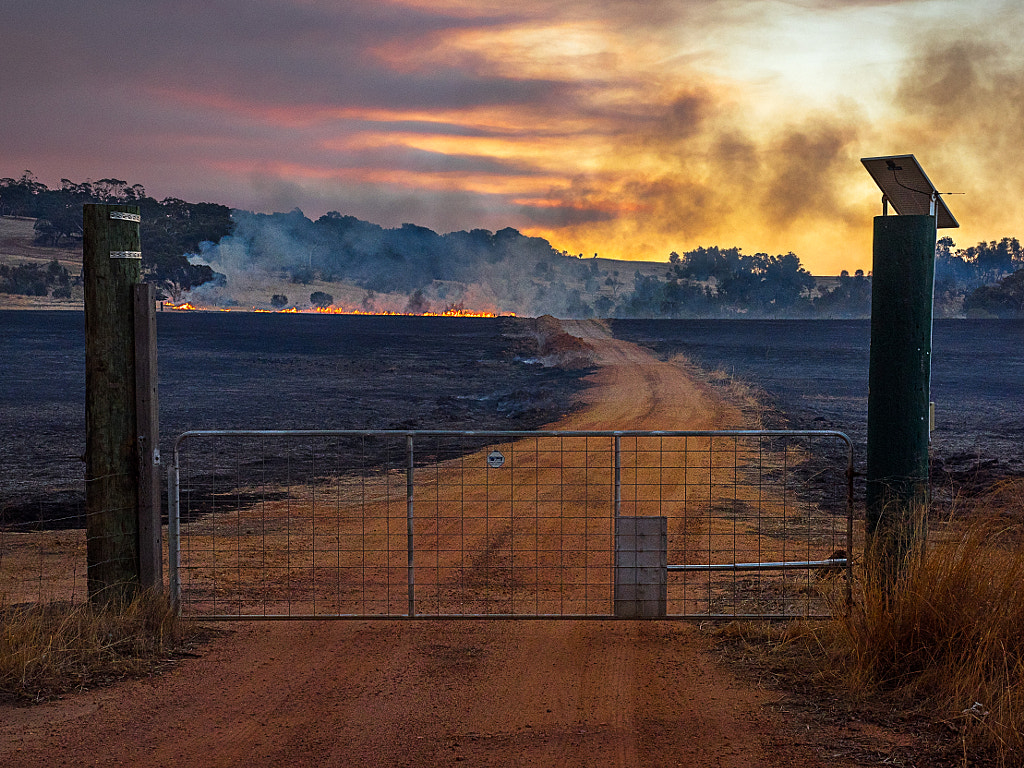
The road to Armageddon.
While making for some tremendous photos the practice puts a lot of carbon up into the atmosphere. Unfortunately Australian farmers will not stop the practice as this a far cheaper way of clearing fields than tilling. Profit always wins out.
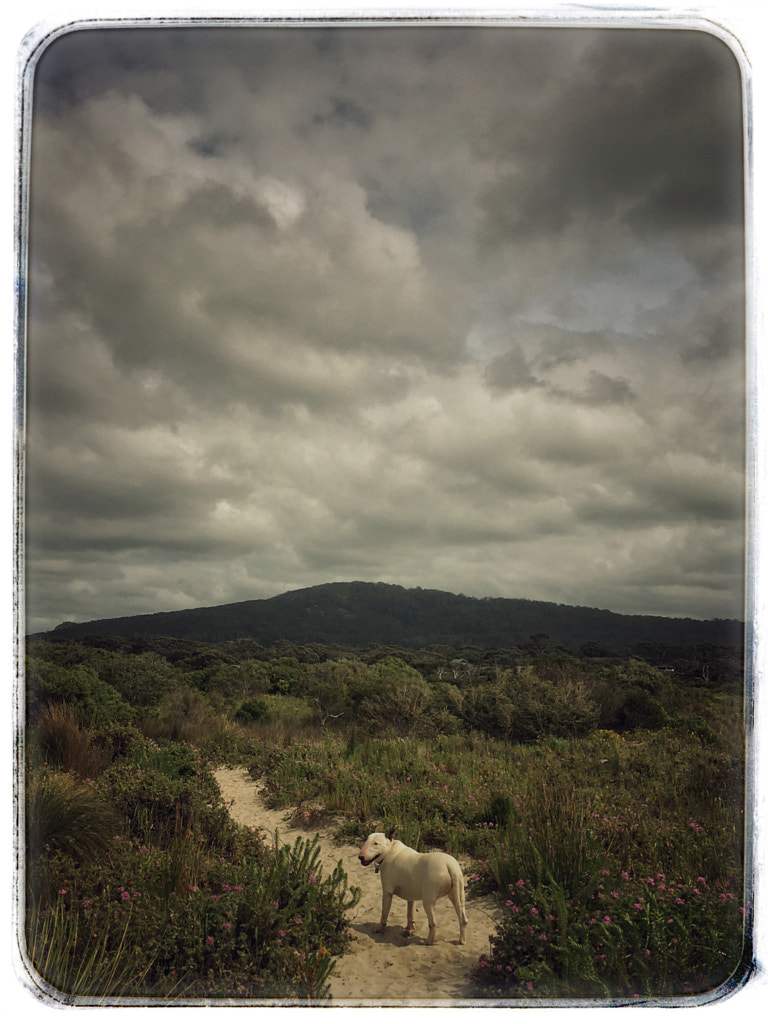
Frida, the faithful canine companion, out and about exploring in Denmark, Western Australia. Apple iPhone SE. Exposure: 1/3000, f2.2 ISO 25. Edited on the phone using Snapseed.
* dog and bone is cockney rhyming slang for telephone.
The island of Santorini is literally the remains of a volcano that blew up. Much of the settlement lies on the edge of the caldera looking into what would have been the heart of the volcano.
We went to the Greek Island of Santorini in 1987. It was one of the most beautiful places I’ve ever visited with the white buildings contrasting with the incredibly blue sea and sky.
Church Bell Tower, Thira, Santorini.
Going before the start of the tourist season also helped – it meant that most of the island was deserted. Many of the locals would not winter on the island preferring to move to the mainland.
Paradise Video-Music Pub, Thira, Santorini.
It was as though we almost had the island to ourselves and we walked around taking in the scenery and photographing with gay abandon. By the standards of the digital age we didn’t shoot very much, but then shooting twenty rolls of film while on a weeks holiday was a big deal.
Island of Churches
My entry for the Nepal Earthquake made me look closely at my slide and negative archive, and what I found was not pretty. Most of the images from the 1980’s are in pretty bad shape. I’ve been meticulous about storing my images but the dyes used in the E6 and C41 films were not stable and they have faded. The Kodachrome images have fared significantly better. So I’ve embarked on a scanning frenzy. I’m using an old Canon flatbed scanner which allows me to batch scan and gives sufficient quality to make an A3 print. At present I’m only restoring a few of the pictures, the important thing at the moment is to digitize them, and get them into Lightroom with captions and key words. These pictures went through Lightroom and Photoshop, but I still wasn’t able to completely restore them so I thought I’d embrace the “distressed” look so I ran them through the desktop version of Snapseed.
It’s been raining – a lot! Most unusual for the Wheatbelt.
Well here I am back with another look at the EM-10 now I’ve had it in my possession for a month. First I’d like to thank reader Mike Hendren who set me straight about the bracketing feature. Thanks to him I’ve found that if you go into the HDR function then you can find lots of bracketing features. The camera is capable of in camera HDR and it processes the images as a jpg. The camera shoots a burst of four shots each with a different exposure and you have a choice of two settings for the output – one is more “dramatic” than the other.
Marwick’s Barn, a large stone and timber structure with a high-pitched iron roof was built in the 1870s. Single exposure with just a little sharpening in Lightroom.
In camera HDR from Olympus EM-10 using the “dramatic” setting.
Not a lot of difference really, just a flatter image. Scrolling past the in camera processing you can choose to bracket your exposures and then process the images on your computer. You have a choice of 3, 5 or 7 frames at -/+ 2 stops, 3 and 5 frames at -/+ 3 stops. The picture below was 3 5 frames at -/+ stops and processed in Lightroom and HDR Efex Pro 2.
Using the HDR bracketing function of the EM-10 to make 5 exposures -/+2 stops and then process in Google’s HDR Efex Pro.
If HDR is your bag then I think you have a definite idea of how you want your photos to look and will choose to blend the images in software on your computer. However, the function could be just the ticket if you’re a confirmed jpg shooter. Speaking of bracketing and jpgs, then the Art Filter bracketing may prove to be a boon if you ever feel a little indecisive about how you want an image to look. You can choose as many of the filters as you like, but bear in mind that you will need a bit of patience while you wait for the buffer to be cleared.
This slideshow requires JavaScript.
I must say that I’m pretty impressed with the robustness of the files the EM-10 produces, they hold up to post processing very well.
Detail of a vintage car radiator grill. Avon Tce, York, Western Australia. ORF processed in Lightroom and then in the desktop version of Snapseed.Curly wire on a fence post. Focusing the Color-Heliar 75mm f2.5 wide open using focus peaking.Raw file processed using Lightroom and Snapseed.Two horses kept on a property on the banks of the Avon River in York, Western Australia. Shooting with a 35mm Color-Skopar lens wide at f4 with focus peaking. Raw file processed using Lightroom and Snapseed.
Sheep garden ornaments. Color-Heliar 75mm f2.5 wide open focused with focus peaking on the new Olympus EM-10. Raw file processed using Lightroom and Viveza 2.
Noise, both colour and luminance, seem very well controlled as this shot Diego my cockatiel shows.
High ISO noise test. Diego my cockatiel at ISO 6400. No noise reduction applied.High ISO noise test. Diego my cockatiel at ISO 6400. Close up of Diego’s beak to show noise.
Olympus has always had a good track record when it came to metering systems. The OM 3 and 4 introduced multi-spot reading with shadow and highlight priority, which made them very popular with adherents of the Zone System pioneered by Ansel Adams. The Om 40 saw the introduction of ESP metering which meters from several areas of the image and it is a more sophisticated version of this using 324 areas is present in the EM-10. Spot metering, high light and shadow spot metering are also present, but multi-spot metering is not present. The metering is very accurate and backlit subjects don’t fool it into under exposing.
The ESP multizone metering handled this well with good detail being maintained in both the shadows and the highlights. Straight out of camera jpg.
A few readers asked questions about the capabilities of the camera. Several wanted to know whether the EM-10 was suited to BIF. Sorry the only biff I know about is jujitsu and aikido. Seriously I don’t have a lens long enough to attempt birds in flight, and when I try with my 40-150 they certainly take flight but can only be seen as tiny specks. I do have a sequence of Frida, my English Bull Terrier, doing a “bully run” .
Twelve frame sequence on low continuous shooting of my dog running towards me using the 40-150mm zoom. On some of the frames the focus tracking lost focus but then quickly reacquired.
I mentioned in the previous part of the review that I had used the EM-10’s pop up flash to act as a controller for off camera flash and several people asked how I did this. Well the video below should answer that question.
Another reader asked about using the inbuilt WiFi function. This is the first camera I have used with this function and I have to say I think it is really great. I used my iPad and it was brilliant to use it as a gigantic screen to aid with composition and focusing. The only downsides are that it uses up the camera battery real quick and you can’t use to in movie mode.
So, as I’ve got to know the camera have my feelings changed? Well I have to say when I first picked it up I felt that the camera felt unnecessarily complicated and frustrating to use. Four weeks on I have to say that we’re starting to establish a relationship, I’ve largely set the camera up so I don’t have to do much menu diving which means I can just get on and shoot. The metering is reliable and the files are great, so for still photography I think the EM-10 has the makings of good camera. As for video, well I’m still out to lunch on that one. As I said at the beginning of this entry it has been very wet here and so I’ve not had enough time to get out and shoot anything. I’m hoping to get out in the next week or two and shoot a small project with it, so when that is ready I’ll post my thoughts about it. Stay tuned for the next thrilling instalment.



You must be logged in to post a comment.