Willian Shakespeare. A Midsummer Night’s Dream (Act 2, Scene 2)
“Run Harry! Run!”
I must say at the outset that I don’t like spiders very much. The bloody great hairy jobs in the Hobbit, Lord of The Rings and Harry Potter movies didn’t help much either. Coming to Australia has meant that the chances of coming into contact with some horrible large spider with a venomous bite have increased. However, of late that maybe changing. That could be because I’ve seen some rather cute jumping spiders and the rather spectacular looking Jewel Spiders. It maybe that I’ve just become desensitised by seeing so many, referred to as “flooding” in psychotherapy. Nah! Got to be honest the large hairy ones still give me the heebie-jeebies.
Shaggy Red-headed House Hopper (Hypoblemum villosum) sitting on the flex of our iron in the laundry. They grow between 4-8mm long.
A different view of the Shaggy Red-headed House Hopper (Hypoblemum villosum). They grow between 4-8mm long.
A male jumping spider (Sandalodes superbus), another species of Jumping Spider, found in the garden. I like the way they look up at you.
I think it was the jumping spiders that made me more comfortable about spiders as they are sort of cute with that turret head and the way that they look at you. I was particularly enamoured with the Shaggy Red-headed House Hopper (Hypoblemum villosum) I found in the laundry. He was tiny, no bigger than 5mm. Since then I’ve seen other varieties around the garden – they’re a bit bigger but I can tolerate them.
Jewel spiders (Austracantha minax) are often called Christmas spiders as they are commonly found during December and January. Oyster Bay, Western Australia.
Christmas spiders or jewel spiders (Austracantha minax) can be readily found in the usndergrowth surrounding Thomsons lake in Western Australia.
The Christmas Spider or jewel spider (Austracantha minax) is associated with the comming of Christmas in Western Australia.
The jewel spiders are also quite attractive to look at. They come out around Christmas time, hence their more common name of Christmas Spider. What they and the jumping spider have in common is that they are not large nor are they poisonous.
The Golden orb weaving spider, Nephila edulis., is so called because of its web that takes on a golden sheen. York Western Australia.
A female Golden Orb-weaving Spider (Nephila edulis) in our front garden. That messy tangled bit hanging down is the larder.
Male Nephila edulis or Golden Orb Web Spider. He’s only 6mm in length while his mate can be up to 4cm. Let’s hope he doesn’t end up in the larder after the deed is done. Oswaild Sargent Reserve, York, Western Australia.
The next spider I’ve become reasonably tolerant to is the Golden Orb Weaver (Nephila edulis). Now these are big – well the females are at 4cm in body length, the males don’t get much bigger than 6mm. Thankfully they are very reluctant to bite and when they do according to the Australian Museum “Symptoms are usually negligible or mild local pain, numbness and swelling. Occasionally nausea and dizziness can occur after a bite. Seek medical attention if symptoms persist.”. Re-reading that I now don’t feel reassured. The webs are what attracts me to them. They are magnificent creations at over 1 metre in diameter and the golden silk that they are made from shimmers spectacularly in the early morning light. I can’t walk past one without stopping to take a photo. So it’s very convenient that I’ve got one just outside the front door.
The huntsman spider (Delena cancerides) can grow to the size of the palm of your hand and is often found in peoples homes. You don’t need a macro lens to photograph these. As far as I’m concerned a long telephoto helps keep the distance between me and it.
So far it sounds like I’m fairly tolerant to spiders. Well let me tell you there is one species that can induce a full on panic reaction that is the Huntsman Spider. It’s not that they are big – they are flippin’ big and have a leg span of 15cm and a large hairy body to boot. It’s the way they move and the speed of them as they run across the walls and disappear behind the sofa. They are the stuff of scary movies. If you should try and swat one with a rolled up newspaper or magazine they’re just as likely to snatch it off you and give you a good walloping. I don’t care how beneficial they are to have in the garden or that they are relatively harmless. “Relatively harmless” – who decides these things? That’s like saying Donald Trump is relatively harmless unless you live in the Middle East. Sorry I’ve gone off piste. Huntsman Spiders – well I don’t like having them in the house. They make me do the spider dance – it’s where you manically hop from leg to leg while swating the imaginary spiders on your body and screaming like an adolescent girl in a slasher B movie. Thankfully we have our resident house geckos and spider wasps to keep them away.
My saviour! Bibdjool or Marbled Gecko, aka house gecko (Christinus marmoratus) on our back window at a previous house. York, Western Australia.
… favours the prepared mind.” Louis Pasteur, December 7, 1854, and in 161BC the Roman playwright Terrance said that “fortune favours the brave” in his play Phormio.
All of which basically means that if you have the necessary mind set be bold enough to seize the opportunities that present themselves. That is what happened the other evening. We had found a new possible nesting site for Rainbow Bee-eaters here in York and the beloved significant other suggested we go and have a closer look the other evening. So I picked up my Sony A7r2 with Sigma 150-600mm lens and we drove down to the location. On getting there there was not a Rainbow Bee-eater to be seen. In fact there weren’t many birds about at all. Scanning the tree tops we soon found out why. In the top of a dead tree were a pair of Australian Hobbys. These beautiful birds of prey will take small flying birds so everything had taken cover. The Hobbys looked magnificent against the bright blue sky. I only managed a short burst before they resumed flying up and down the river bank looking for something to eat.
Wowoo or Australian Hobby (Falco longipennis) are often seen in pairs whilst out hunting.
The adapted Sigma 150-600mm doesn’t focus very fast on the Sony A7r2 and the 5 frames per second burst rate isn’t exactly the best, but, it was all good enough for the task in hand.
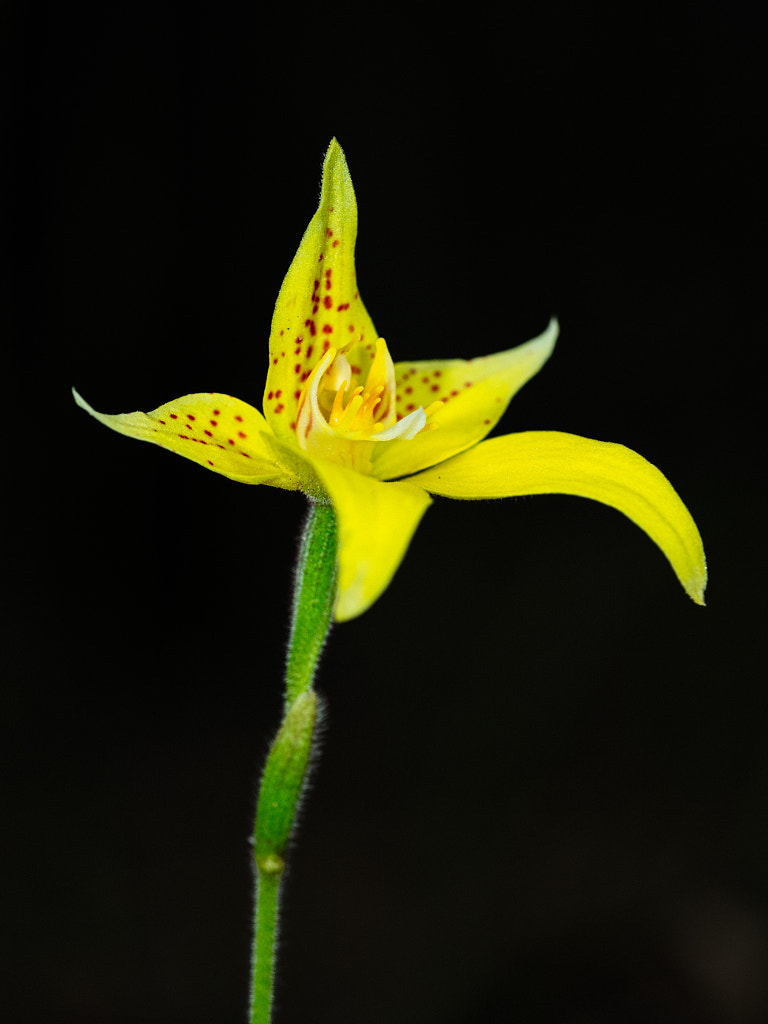
Cowslip Orchid, Caladenia flava subs. flava. Williams, Western Australia
I’ve been a bit miffed lately with Olympus/OM Systems. A lens that I bought recently was not functioning properly and has spent more time at the service department than with me. Then there’s my Olympus STF-8 a supposedly rugged, weatherproof and very expensive macro flash whose buttons have fallen off and is now inoperable and unrepairable (as in it’s not designed to be repairable but be disposable). I’ve been so miffed that of late I’ve stopped using my Olympus kit and relegated it to the cupboard while having thoughts of getting rid of it all and changing systems. In fact I’d already decided which ship I was going to jump on – Sony – and which items I’d buy after watching a lot of YouTube videos.
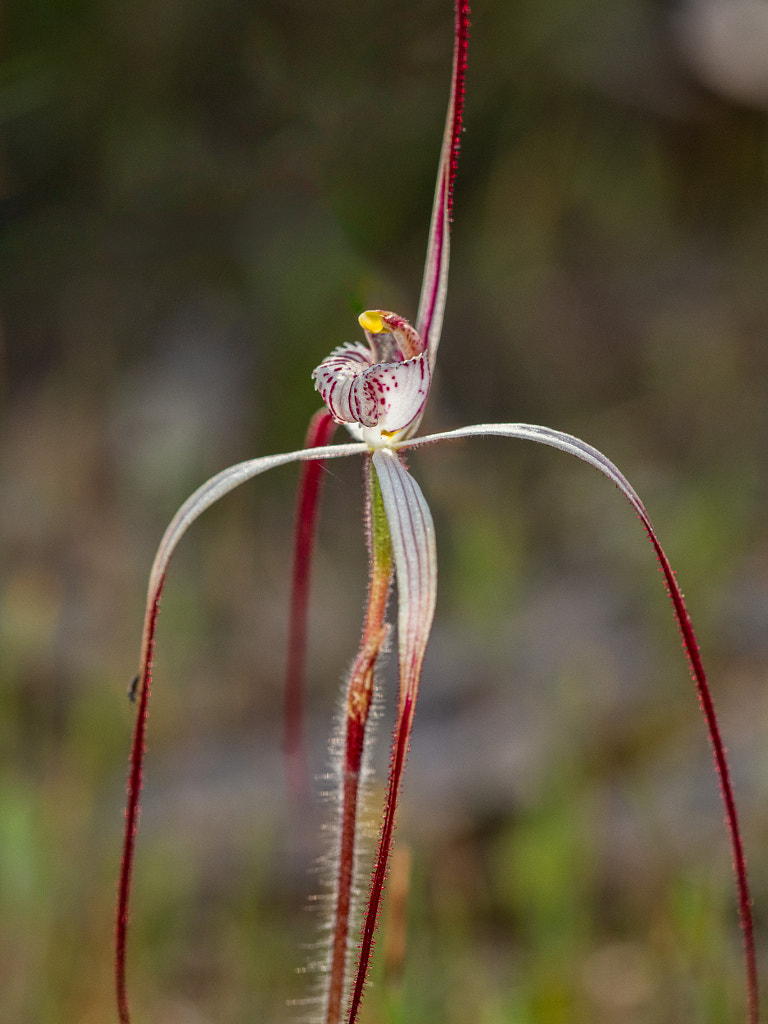
Clubbed Spider Orchid, Caladenia longiclavata. Williams, Western Australia.
To that end for last weeks road trip to Williams in search of the Common Dragon Orchid I dug out my much neglected Sony A7r2 and some lenses to reinforce this new plan and familiarise my self with the Sony ecosystem again.
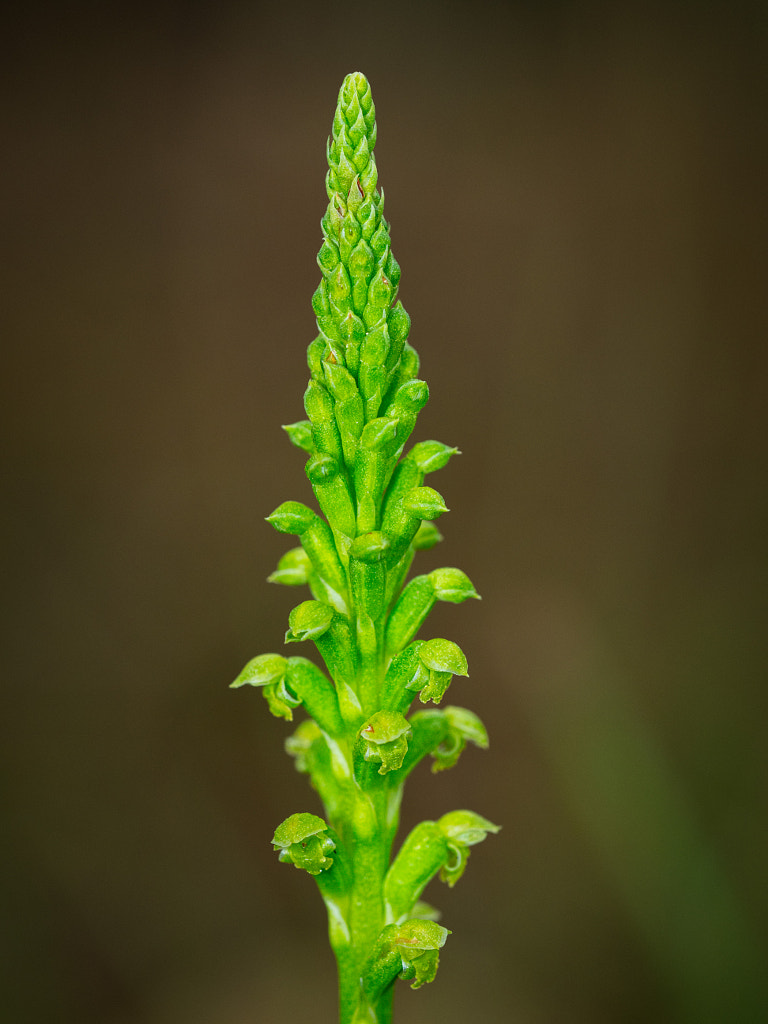
Banded Greenhood, Pterostylis vittata. Williams, Western Australia.
The trip to Williams was great – it was a beautiful day and there were plenty of orchids to photograph. The only fly in the ointment was the photographic experience. It should be easy – I’ve done it so many times before. Find an orchid. Set up the camera on a tripod and point it at the orchid. Take the picture. What could go wrong? Well for this type of photography I rely heavily on the rear LCD screen and I’d forgotten that the screen on the Sony A7r2 is unusable in bright sunlight. Secondly I’ve become very reliant on having touch control on the rear LCD so I can easily select the focus point and trip the shutter. There’s no such function on the Sony and there is a very convoluted system of setting the AF point. Then there is the woeful battery life of the Sony A7r2. I went through 4 batteries in two hours where as with the Olympus I wouldn’t even get through 1/2 a battery. I could continue with more points of frustration and irritation, Lord knows there were loads of them, but I’ll refrain. By the end of the morning I was wishing I’d taken my Olympus EM1 mk ii with me. Were there any positive points? Well yes I love the files from that 42Mp Sony sensor. I really like the Sigma 105mm macro lens. But, unfortunately the negatives outweighed the positives and it made me realise why I’ve stopped using the Sony A7r2.
Banded Greenhood, Pterostylis vittata. Williams, Western Australia
I’ve already started to get things together for this week’s trip and my Olympus kit, minus the flash, has gone back in the bag. As to whether I will change will depend upon whether OM Systems Australia returns my lens in a functioning state.
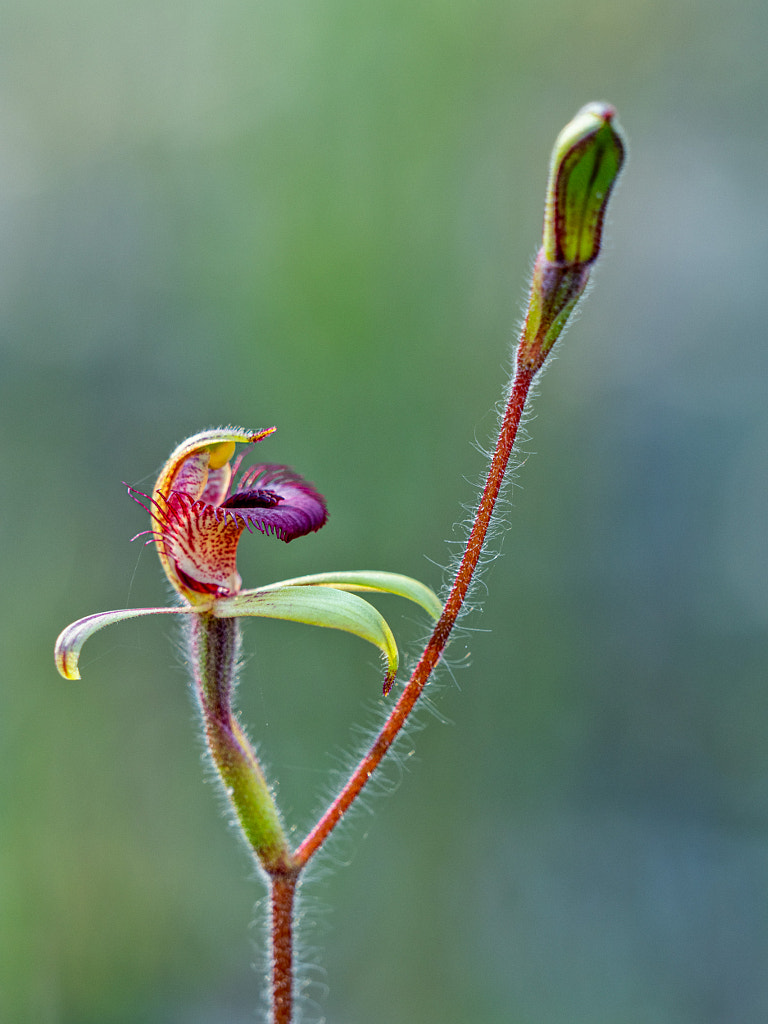
Common Dragon Orchid, Caladenia barbarossa.Williams, Western Australia
Clubbed Spider Orchid, Caladenia longiclavata. Williams, Western Australia
This last twelve months I have started using 35mm film again. Initially I had the lab where I got my film developed scan the negatives. The results were absolutely diabolical – and this was from one of what is considered the better labs in Western Australia. So I needed a scanner. The market had changed considerably since I bought my last one in 2005. Canon and Nikon have exited the market and Epson has only the V850 flatbed (only $1600 AUD “cough”!) available in Australia. What is available at more reasonable prices are the Plustek range, which seem to be largely differentiated by the software bundled with them. While the price is attractive they are somewhat under specified. The advertised maximum resolution of 7200 dpi is somewhat optimistic as it really doesn’t resolve more that 3200 dpi in real terms. The density measurement of 3.6 D is pretty mediocre and they are incredibly slow in in use. I then figured the second hand market was the place to look. Back in the day the undisputed market leader for consumer dedicated 35mm film scanners was Nikon. Now Nikon stopped production in 2009 so I thought a late model with USB connection would be the way to go and the Nikon Coolscan 5000 seemed to fit the bill with a true resolution of 4000 dpi, autofocus lens, adapters available for scanning whole rolls of film, and a density measurement of 4.8 D (anything over 4 is the mutts nuts). Unfortunately the current film resurgence has meant that these are selling for $1800-2100 AUD for a working model.
I had an ask around and was quickly informed that camera scanning was very popular. I watched a load of YouTube videos on the subject and saw everything from DIY Frankenscanners to very swish $6500 setups. I dipped my toe into the pool by making a negative holder from a scrap of matt board, an LED light diffused by tracing paper as the light source and set up a camera with a macro lens on a tripod. With a lot of trial and error (mostly error) I got some reasonable results – better than those I got from the lab. This was encouraging and it gave some idea of what I was looking for. I didn’t want to have to set up a camera on a tripod and then align the negative so it was parallel to the camera sensor plane and centred on the axis of the lens. It had to be compact and quick to set up and breakdown. Most importantly it had to work with one of the camera and lens combinations I already owned. Perusing the inter webs I found two set ups that fit the bill:
The Valoi Easy 35 at $380 AUD for a complete scanning solution
In crudest terms both are just a tube that attaches to your lens and at the other end is a film holder and an LED light source. Both offer a wide range of compatibility with different cameras and lenses. The Valoi looked very slick and well designed, the JJC looked a little more rudimentary. I plumped for the JJC as I wasn’t sure at that stage how much use it would get.
JJC Film Digitising Adapter And LED Light Set
The kit comprises of several short threaded tubes and step down rings.
In the box you get a series of short threaded tubes, several step down rings, a negative holder, a holder for mounted slides, a holder for the negative and slide holders, an LED light, a diffusion panel and a USB power cable with switch. There is a comprehensive instruction sheet and a sheet detailing the necessary combination of parts needed for each camera and lens combination. It was all very straightforward and I was up and running in a couple of minutes.
The LED light is powered via USB. It has no battery.
The build quality is OK. It’s made out of plastic, but it fits together quite well. The negative holder does a good job of holding the film flat. The only thing I don’t particularly like is that the step down rings bind very tightly to the filter threads of my lenses and it can be a bit of a struggle to remove them.
All assembled and mounted on a camera.
Before we get to results we must deal with the elephant in the room – lens compatibility. JJC list a total of 15 compatible macro lenses from Canon, Nikon, Sony, Olympus and Laowa covering micro four thirds, APSC, and full frame. Initially I used the lenses from the list – my Canon EF 100mm f2.8 IS L on my Canon 6d, and my Olympus 60mm f2.8 and EM1 mk ii. Both camera have a 20 Mp sensor and both worked very well. What I really wanted to use was my Sony A7r2 and Sigma 105mm f2.8, but the lens is not officially supported. I tried various combinations of the tubes until I found one that worked – a combination of large tubes listed for the Canon EF 100mm f2.8 L macro with the step down ring for the Nikkor Z MC 105mm macro. It delivered excellent results. So if your lens is not listed then it could be worth playing around with the tubes. Do you have to use a macro lens? For best results I’d say yes. It’s not just close focusing capability that’s important. Field curvature is as well. In simple terms an ordinary lens when photographing a flat object ie a film negative cannot bring the whole subject into focus. The centre is sharp and then that sharpness falls off towards the edges of the camera sensor. Macro lenses have inbuilt correction to achieve a flat film plane ie where the image is sharp across the whole frame. Some would say stop down and the problem goes away, and to an extent that could work depending on how acute the field curvature is because if you stop down too far then the diffraction kicks in and the image softens. Having said that if you don’t have access to a macro lens then there is nothing to stop you using a 50mm lens with 2 x 25mm extension tubes to see how you get on. Personally if you’ve got a mirrorless camera I’d look on EBay for a second hand manual focus macro lens and get an adapter so you can mount it on your camera. You don’t need autofocus to scan film.
Mounted on a Sigma 105mm f2.8 DG DN macro lens for Sony E mount. The lens is not on the JJC list of supported lenses, but playing around with the tubes and step down rings I was able to find a combination that worked.
Results. Well I compared the results from my three camera and lens combinations with some images I’d scanned using my oldCanoscan 9900f. On comparing them all the camera scans were better than the flatbed scanner. There was more detail in the highlights, there was finer detail in the whole image, subtle tonal roll off, and the images weren’t over sharpened.
This is an image I shot on slide film in 1986 and scanned using a Canoscan 9950f flatbed scanner.
Now viewed at 200%
Sony A7r2 with Sigma 105mm macro lens. 42Mp. Viewed at 200%.
Canon EOS6d with Canon 100mm macro lens. 20Mp Viewed at 200%.
Olympus EM1 mk ii with 60mm f2.8 macro lens. High Res mode. Equivalent to 80 Mp. Viewed at 200%.
Olympus EM1 mk ii with 60mm f2.8 macro lens. 20 Mp. Viewed at 200%.
A section of an Ilford SFX negative scanned with the Canoscan 9950f viewed at 200%
The same negative scanned with the Sony A7rii and Sigma 105mm macro. There is more fine detail and a much gentler roll off of tones with greater dynamic range.
This is a section of an Ilford FP4 negative scanned by the Canoscan 9950f and viewed at 200%.
The same negative at 200% shot with the Sony A7rii and Sigma 105. Again note the finer detail and tonal range of the image. The camera is able to extract more information out of a negative.
Now you’ve got a memory card full of digitised film what happens next. Well I’m using Adobe Lightroom so I ingest the images into the Lightroom catalogue. What happens next depends upon the film stock. With black and white or slide film no special software is required and you can process entirely in Lightroom. It’s really not difficult. With black and white just invert the tonal curve and with colour slide it’s just a case of making small scale adjustments to the colour balance, unless the slide is old and experienced a colour shift then the adjustments are bigger and you may have to do contrast masking. With colour negative things are harder due to the orange colour masking. Now it is possible to do this manually yourself, but you’ll save yourself a lot of time and frustration if you get a Lightroom plugin to do it for you. I tried once doing it myself because I once considered myself a fairly competent colour darkroom worker. I mean with with red areas appearing cyan, greens appearing magenta, and blues appearing yellow, and vice versa just how hard could it be? After an hour of chasing my tail on one negative I happily plonked down the money for Negative Lab Pro. It’s easy to use and the money is well spent as it preserves sanity.
Conclusion
Ilford XP1 scanned with the Olympus EM1 mk ii and 60mm macro at the native 20Mp of the camera.
Six months and a couple of dozen films in how do I feel about camera scanning? Well to be honest if I could get a modern version of the Nikon Coolscan 5000 with up to date software, drivers and a USB C interface I’d buy it in a heartbeat (Nikon are you listening?). The reality is that there isn’t and it is unlikely to happen. So I guess I’m a camera scanner with reservations. With a good macro lens and good post processing skills it is a viable alternative to the dedicated film scanner and is streets ahead of what flatbed scanners can achieve.
Ilford XP2 scanned with the Olympus EM1 mk ii and 60mm lens at 20Mp.
As to JJC Film Digitising Adapter And LED Light Set I think it is good as a low cost entry to camera scanning.
Pros
Cheap – $130 AUD from Amazon
Quick to set up and quick to scan
Easy to use
Adapts well to a range of lenses and cameras
Better results than a flatbed scanner when using a camera with around 24Mp
Good documentation making it easy to get started
Cons
It can only scan 35mm film
On paper it is only compatible with a limited number of lenses
Black and white negatives and slide film can be processed with no special software, but colour negative will require a plugin such as Negative Lab Pro
Expensive if you don’t own a digital camera and macro lens
The negative and slide holders are sloppy as is the holder insertion slot on the LED. They wobble and rotate as you feed the film through. Also the locating notches on the holders are not accurate so it is not a quick or smooth process when you put the film through and it requires fiddling with to ensure accurate framing
For the time being I’ll continue using it and work around some of the quirks as the price was right. Let’s put it another way. My lab charges $11 to scan a roll of film. Scan 12 rolls of film and the scanner has paid for itself.
Ilford Delta 400 scanned with a Canon 6d and Canon EF 100mm macro lens.
One of the delights of walking through any natural environment at this time of year is seeing male Splendid Fairy Wrens in their breeding plumage. I regularly walk along the Avon River photographing the birds I see, and I hadn’t seen one for a couple of years. Usually they can be seen in the dense low level foliage or on the ground feeding on insects, but over the last few years the wonderful folk at the York River Conservation Society have been clearing out the feral plants and replanting natives. This unfortunately meant that there wasn’t a lot of undergrowth to provide suitable habitat. But joy of joys now that the bush is growing nicely and maturing the Splendid Fairy Wrens are back! It is terrific to see them again.
They’re back! Djer-djer or Splendid Fairy-wren (Malurus splendens). Avon Walk Trail, York, Western Australia.
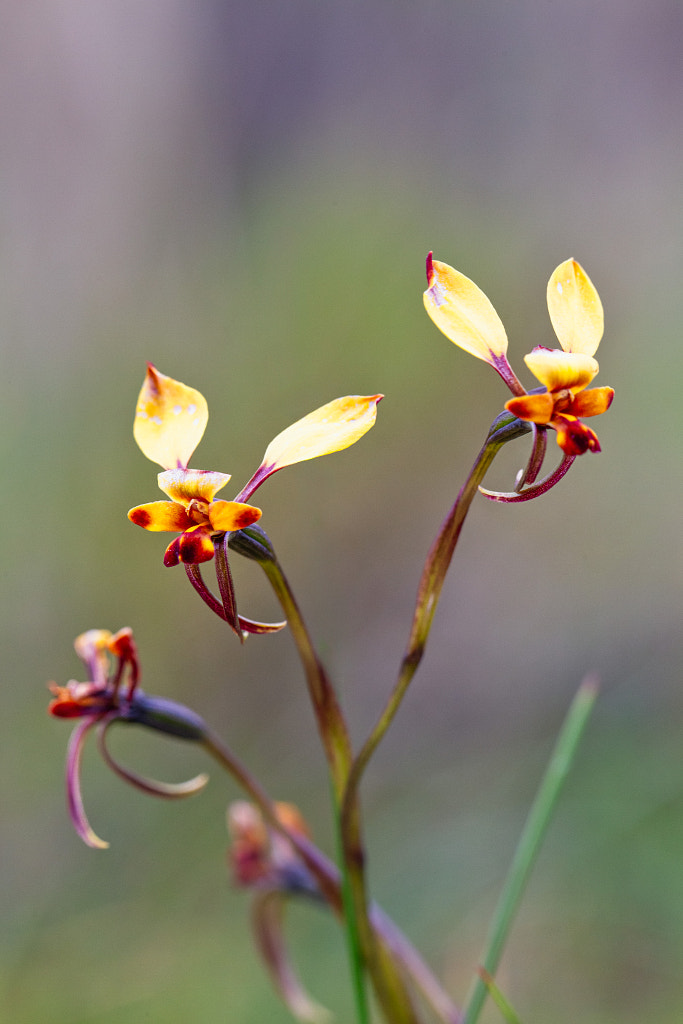
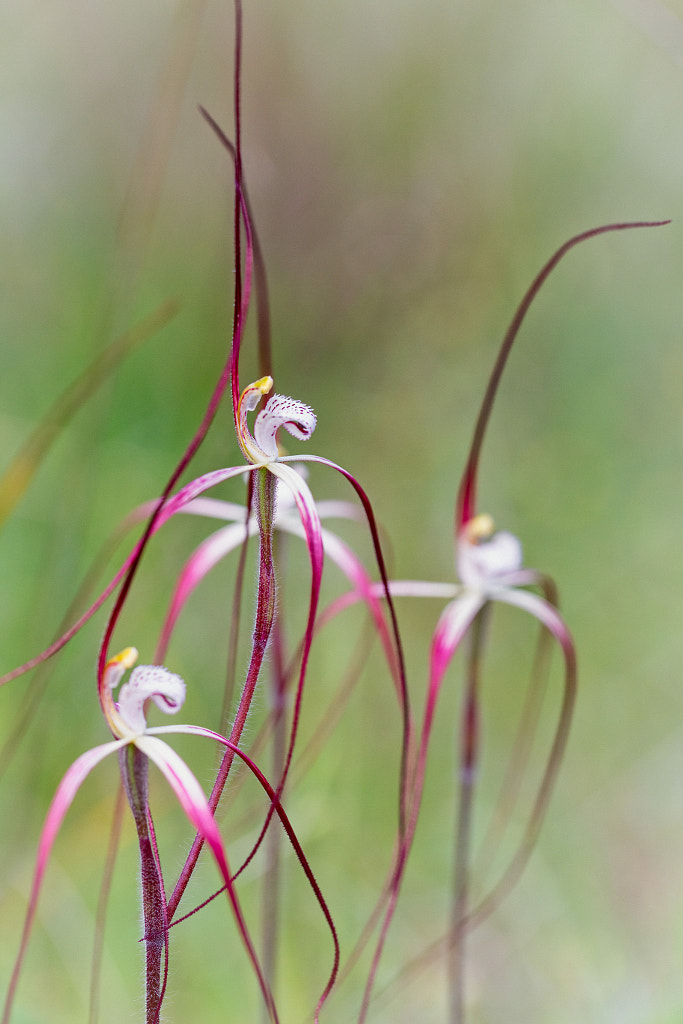
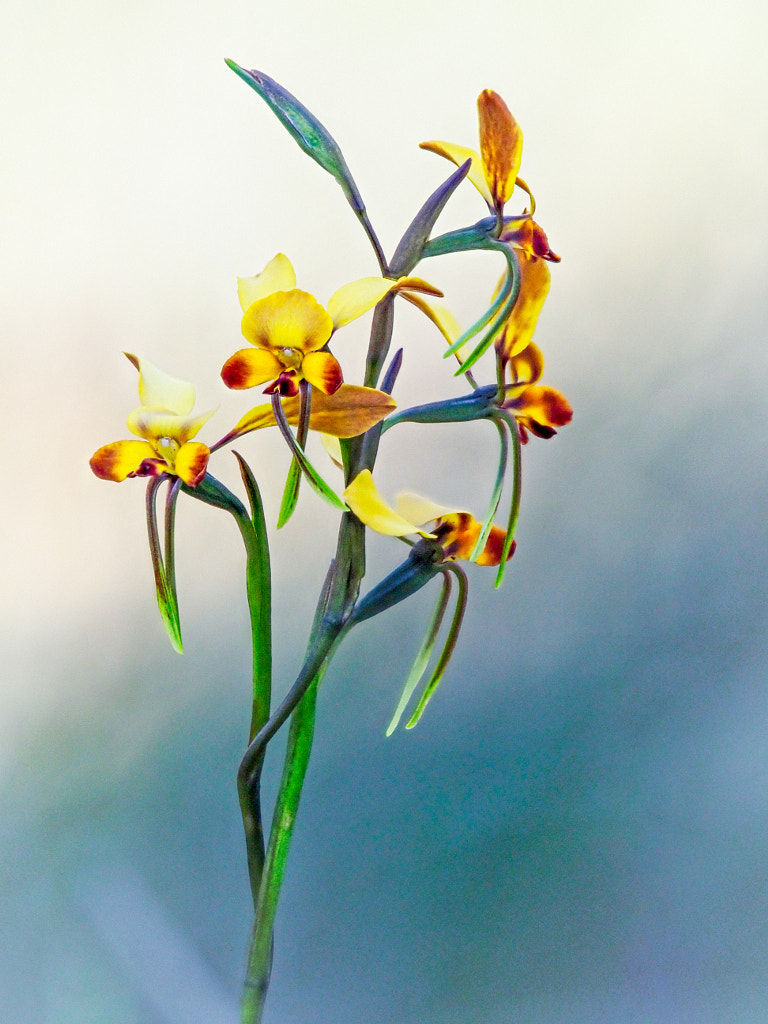
Well the winter we had to have has arrived with rainfall and low temperatures. That’ll be a great relief to the local farmers, although I don’t think they’ll be dancing in the street. This has meant that I’ve not been out and about much so I’ve been working on my passion project – doing a book that documents all of the terrestrial orchids that can be found in the York area. This has been a long undertaking, nearly twenty years. Why so long? Well a lot don’t flower every year as the require a bushfire the previous summer to stimulate them. The list of orchids has grown quite considerably longer from when I started. I naively thought it would be about twenty as initially I kept seeing the same few species over and over again. Now it sits at 80 and I’m pretty sure I still find more if I devote another 20 years to the project, but I’ve decided to draw a line and crack on with selecting the photos and writing the accompanying text.
The last couple of weeks has seen me proof printing and this has been quite informative. Firstly I use a colour profiled system. I shoot in the Adobe RGB colour space and the screen is profiled as is the printer. So in theory what I see in the camera should be what appears coming out of the printer. Except it hasn’t. There’s no weird colour casts or shifts the problem is the exposure. Because I’ve not printed anything since my last exhibition my pictures have become progressively darker as I’m just producing photos to be viewed on a back illuminated screen rather than an opaque surface. Consequently most of photos are underexposed and don’t print well. So what I’ve been doing is shooting a 10x15cm test print for every proof print. I’ve worked out that I’ve under exposed by 1 stop, but it isn’t as simple as increasing the exposure by that amount as that affects colour saturation and contrast. So it’s been a slow process of individually adjusting each photo. I will have made the shareholders of the ink and paper companies very happy. I’m nearly finished – at the time of writing I’ve got just ten more to do. During this I realised how much I’ve missed printing. A good print is a beautiful thing and I really should get on and make more. I’m also getting the itch to have a darkroom again and make black and white prints. But, first things first lets finish this project.
By now you will have noticed that the photos accompanying this entry bear no relation to it. I thought pictures of prints emerging from a printer would be boring as would shots of the ink cartridge mountain. So I did have to go into Perth for a meeting and when that had finished I decided to have a walk around the back streets of Northbridge. I must say Perth is in danger of becoming interesting – I know that the citizens of Melbourne and Sydney will be derisively laughing at this – but Perth is looking a lot more colourful and brighter than it did when I first arrived here. It’s good and I hope it continues.
I’ve included the photo of the poster adverting Ecoland Kangaroo Essence as the thought of it just cracks me up. I looked up what the manufacturers say about their product and it made me laugh all the more.
I’ve visions of lots of elderly oriental men bouncing around chasing their wives.
It’s been a strange August. From my blog entries you’d think that it has been a very wet winter, but the reality is that it has been very little rain and the bush is very dry – almost crispy. It has has a tremendous impact on the wildflowers – there aren’t as many as the previous few years. This is causing problems for the tourist industry with some interstate and overseas tourists getting upset.
Dark banded greenhood, Pterostylis sanguinea.
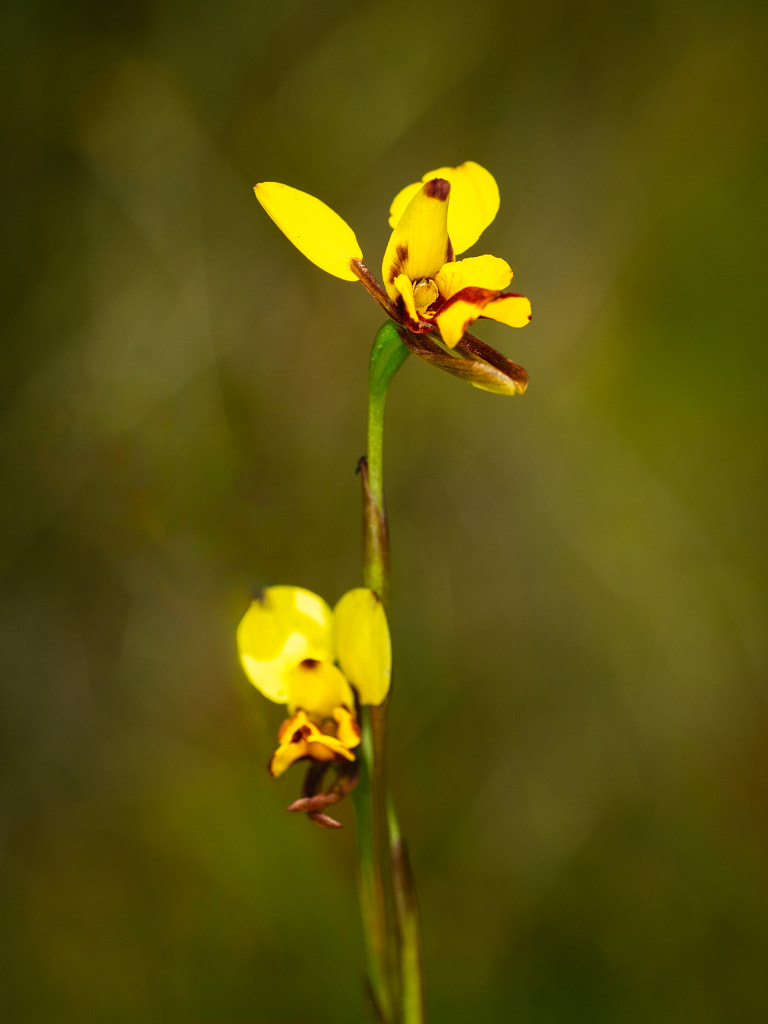
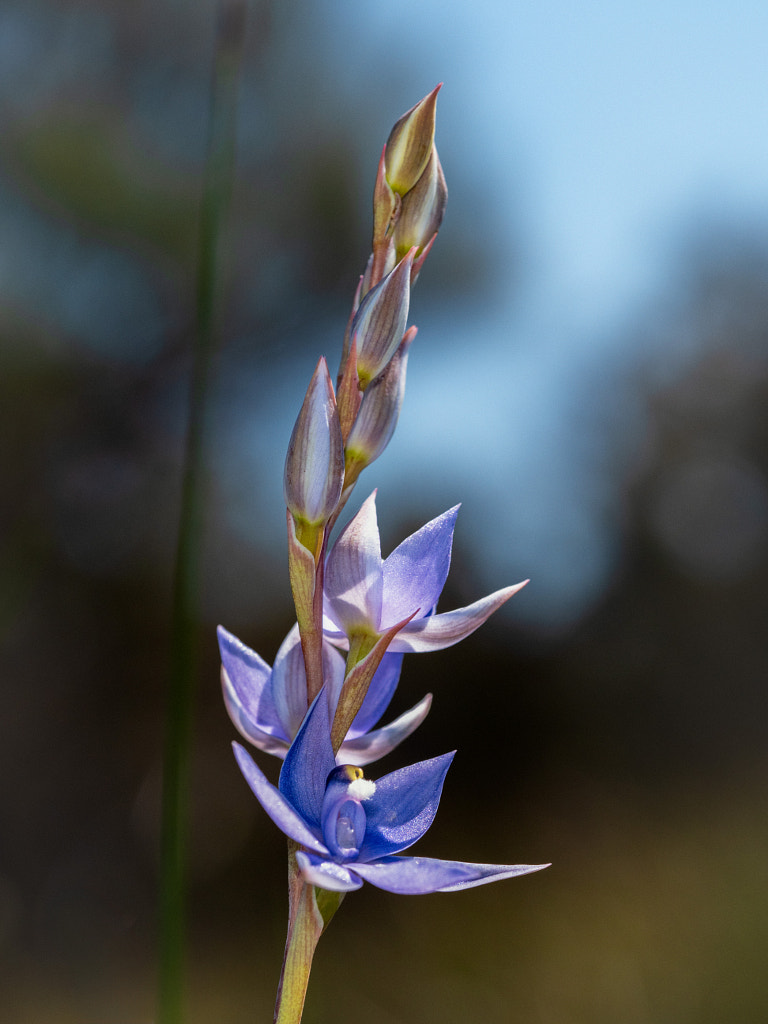
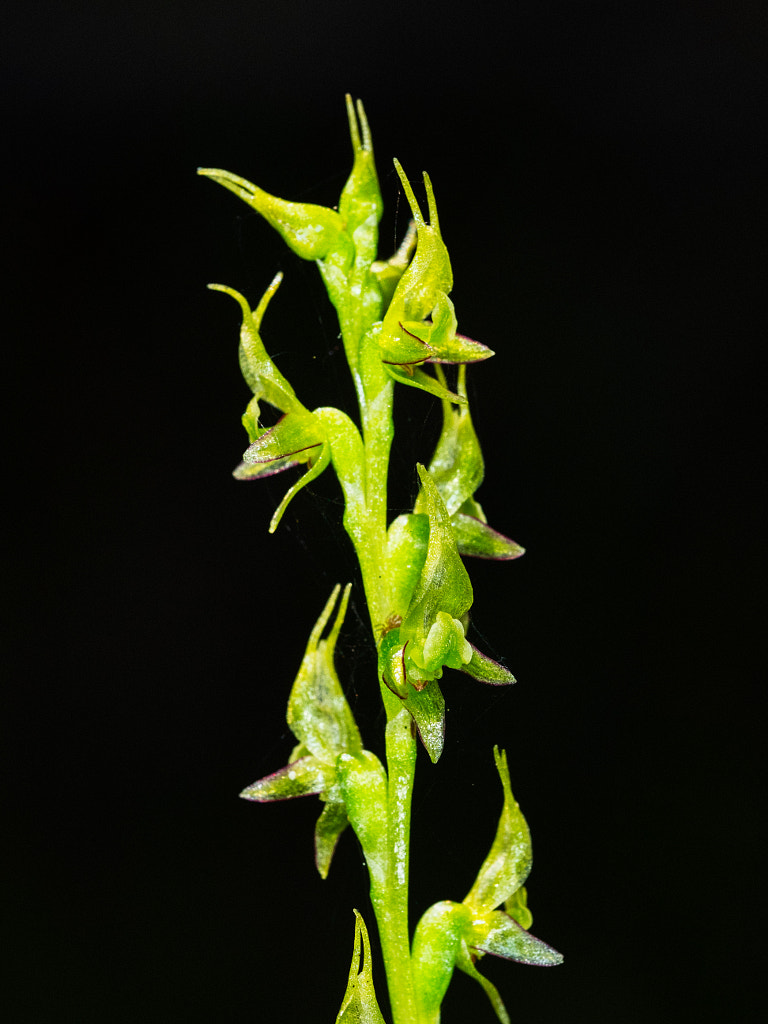
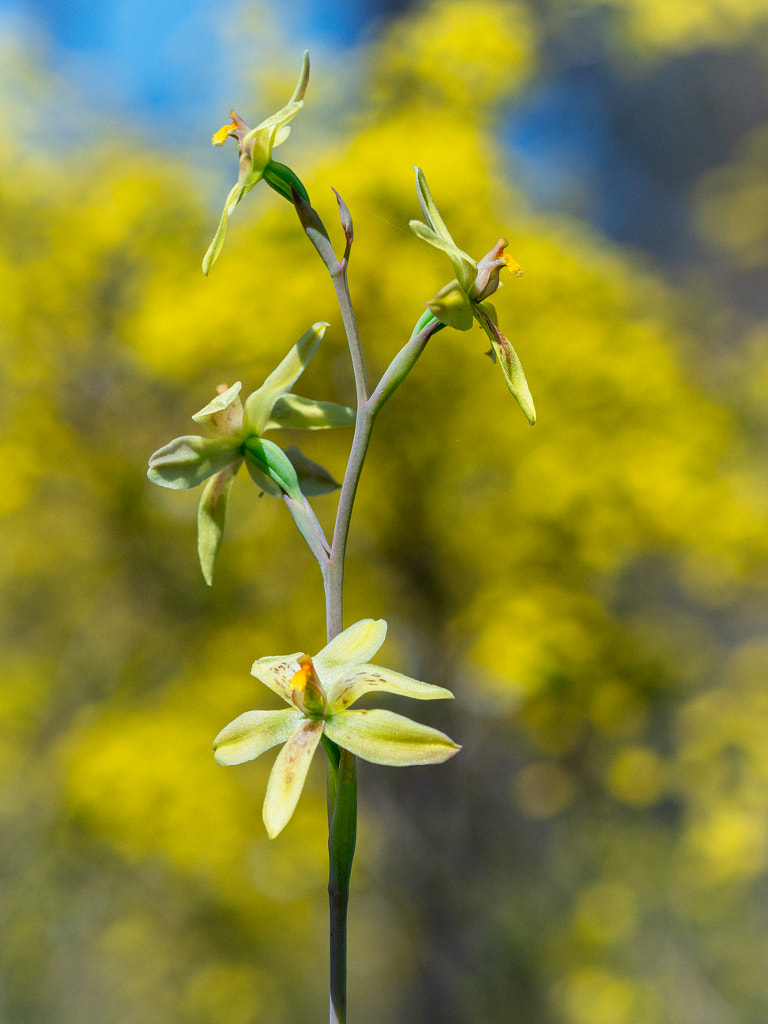
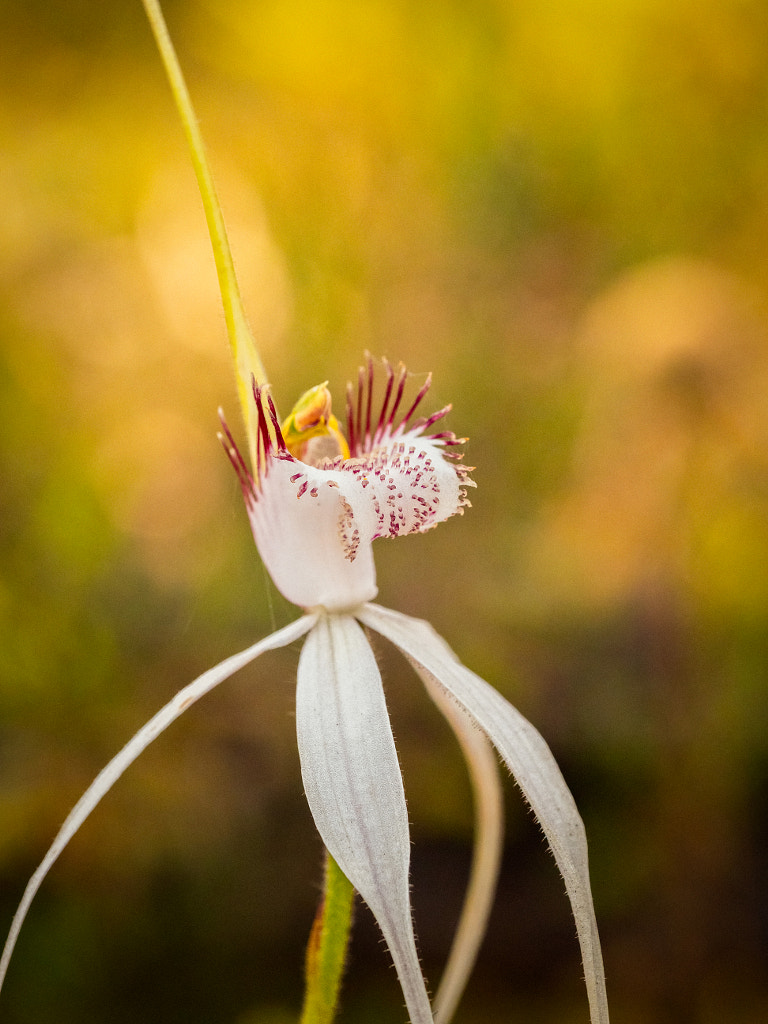
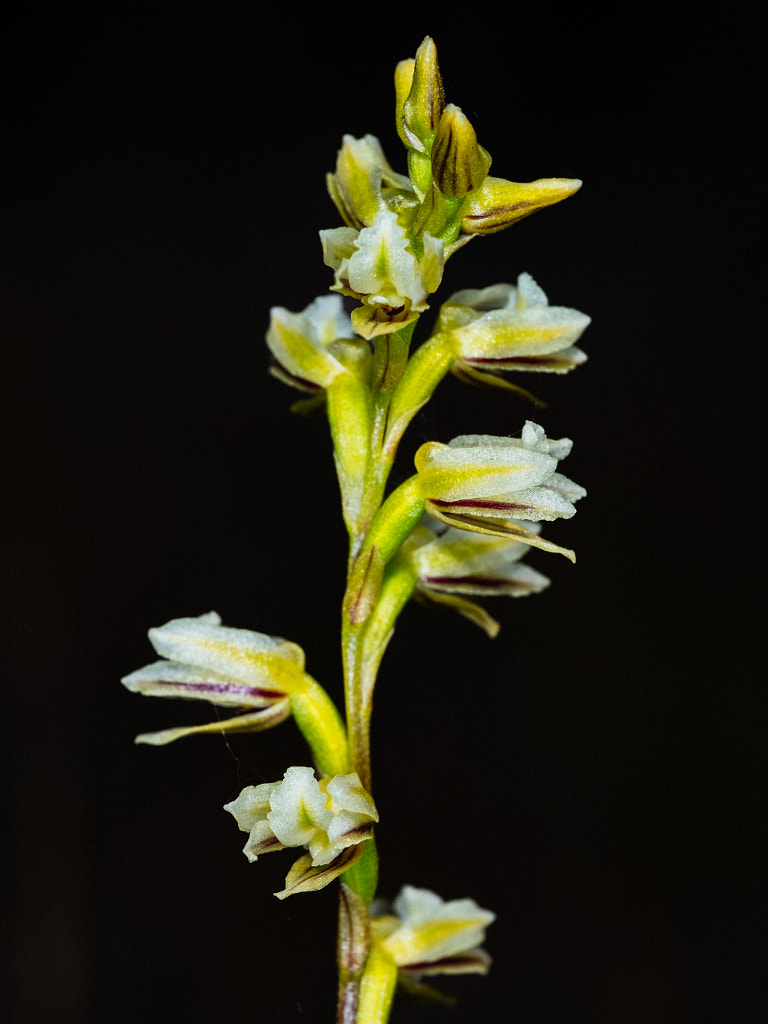
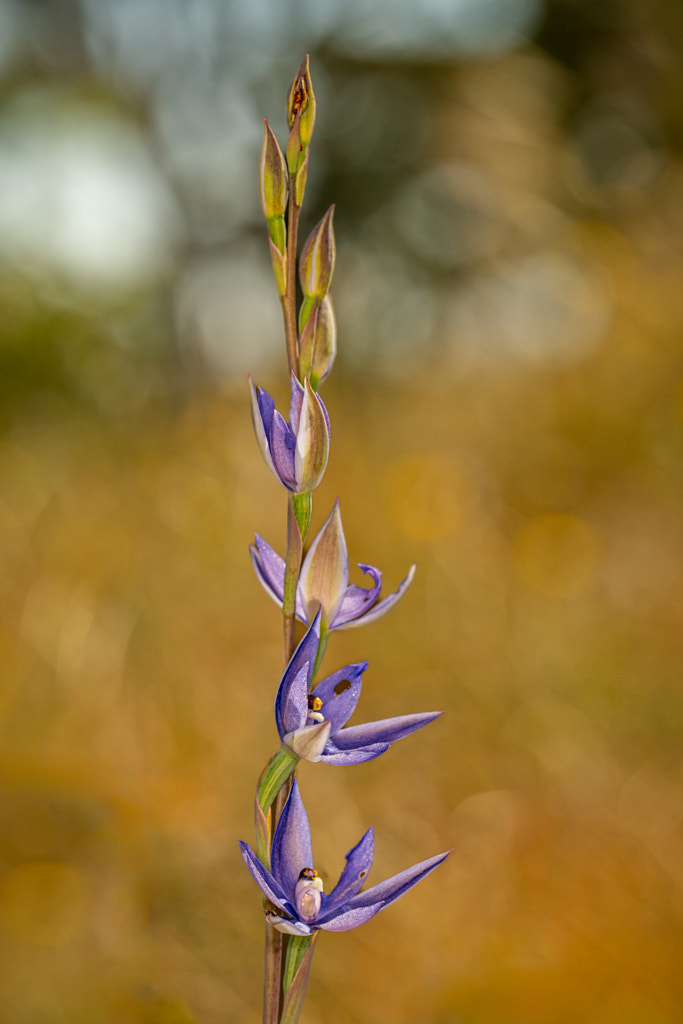
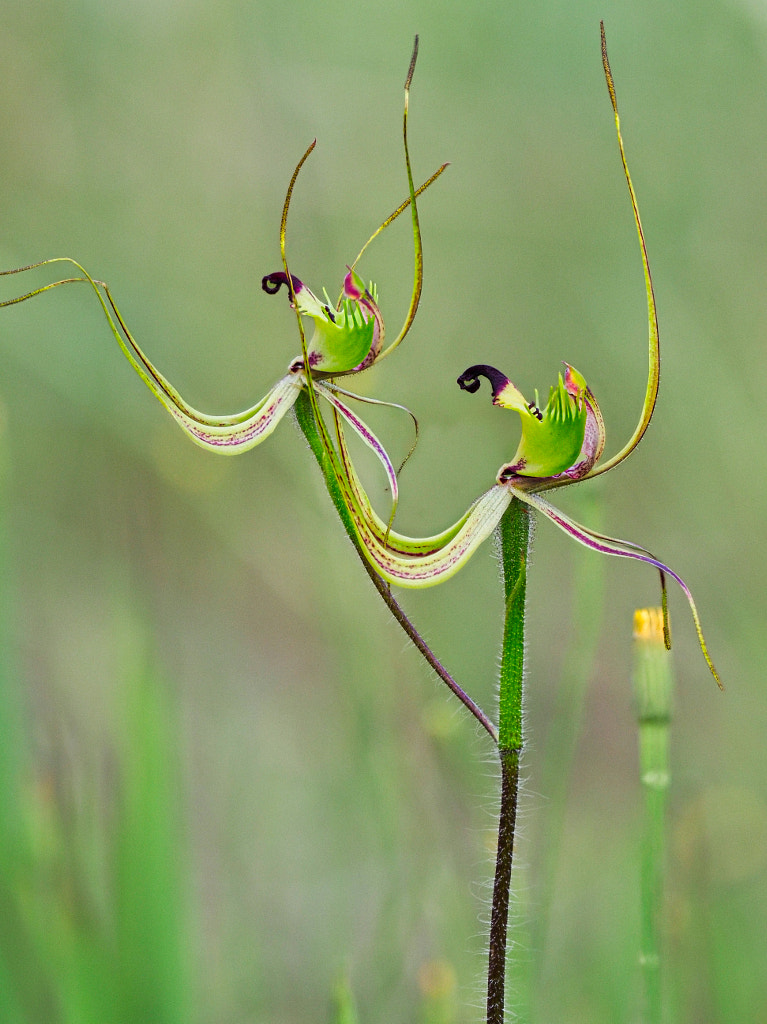
Locally it has been very strange. Some species of orchid didn’t flower at all while some flowered 6-8 weeks earlier than normal as the winter as well as being dry has been warmer than normal. This last month I’ve been concentrating on the bush reserves around York and particularly those I’ve never been to. It’s quite boggling to think that after almost 20 years of living in the area I still haven’t visited all the reserves. The pictures accompanying this piece are some of the ones I’ve taken in August.
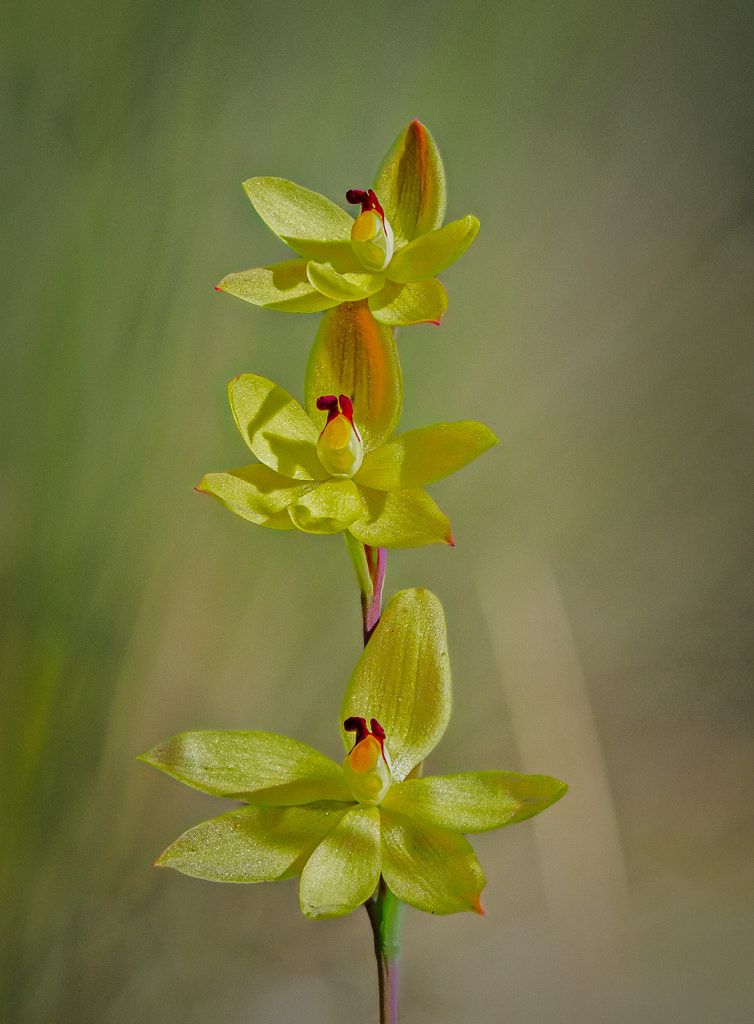
Lemon Scented Sun Orchid or vanilla orchid (Thelymitra antennifera).
One of the most disturbing things this year is the impact of orchid tourism. Usually the reserves around York receive a fraction of the visitors that other orchid hotspots do, but with high petrol prices more and more people are now restricting their days out to those areas an hours drive from Perth. Having more visitors isn’t bad in and of itself. What is bad is the deterioration in people’s behaviour. The amount of litter left in some spots is huge. Another thing is that people aren’t prepared to walk to sites and so drive off the tracks to look for flowers causing a lot of damage. The worst thing is that people are now digging up the orchids. On Friday 25th August I went out to photograph Curly Locks orchids in the Wandoo National Park. I found six in three separate clumps. The flowers hadn’t fully opened so I decided to go back in a couple of days time. The following Tuesday I went back and all three clumps had been dug up. I tried to report it but was told it was a kangaroo that did it, but in my experience kangaroos don’t dig perfectly square holes with spades, and nor do they smoke cigarettes while they do it and leave behind their water bottle.
Jug Orchid or Recurved Shell Orchid (Pterostylis recurva).
Orchid poaching is a big problem. Earlier this year Kings Park in Perth had nine hundred rare species of Western Australian orchids stolen. It seems that there people afflicted by orchidelirium a kind of flower-driven madness where people just have to own the rarest of the orchid species. It is a growing problem and only the other day I was approached by a man in his early 70’s claiming to be a friend of a noted Western Australian expert and that he was prepared to sell me orchid tubers for $40 a tuber. I told him in no uncertain terms where to go. The frustrating thing about this is that a lot of the orchid species are very specialised requiring certain other plants and pollinating insects to survive. Without these they die. In the case of the Curly Locks I know of only three sites where they can be found round York and at best there are only half a dozen flowering plants at each site per year. Wiping out one locations population like that means that is one less place where they can be found, which means extinction is even closer.
Bird Orchid, Pterostylis barbata
I’m sorry for the rant but the whole thing was a little upsetting and I’m not sure what was worse, the theft, the indifference of the authorities, or the brazenness of people trying to sell the orchids.
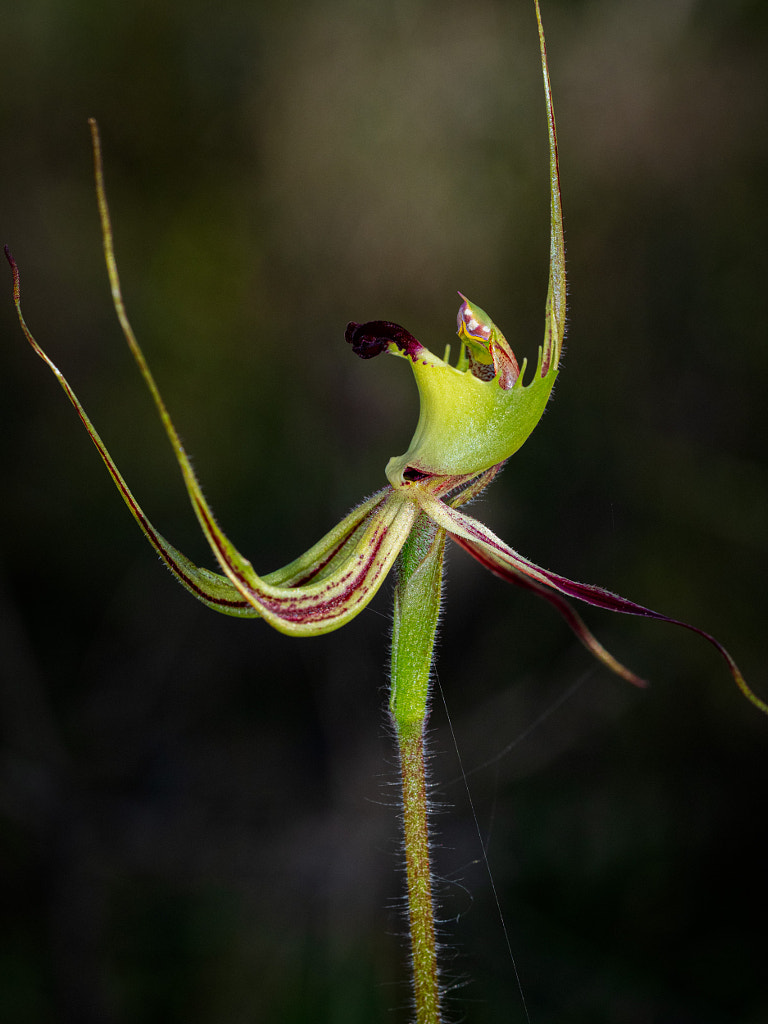
Clubbed Spider Orchid, Caladenia longiclavata.
Fringed Mantis Orchid or Green Spider Orchid (Caladenia falcata).
A couple of weeks ago I posted about all the Ibis nesting at Tomato Lake and how it heralded the start of the breeding season for them. Well this week the Black Swans at lake Claremont were building nests and pairing off and spring is just round the corner. It was an uninspiring morning, the rain was bucketing down and the usually frenetic Welcome Swallows looked unimpressed.
Kanamit or Welcome Swallow (Hirundo neoxxena) looking unhappy in the rain. Lake Claremont, Western Australia.
A bit further on amongst the reeds the swans were busy in spite of the inclement weather.
This swan was very obliging and allowed me to take its photo.
A female black swan sits on the nest while the male gathers more nesting material.
Elsewhere on the lake things were much more advanced with the Shelducks as there were several mothers escorting very young ducklings out on the water.
No water wings in sight. A Shelduck takes her young brood out for a swim on Lake Claremont.
I was a bit apprehensive about walking in the rain. My usual camera – an Olympus OMD EM1 mk ii and its Panasonic Leica 100-400mm f4-6.3 – are incredibly resistant to rain fall, but this time I was out with my Sony A7r2 and the Sigma 150-600mm whose weather sealing leaves a bit to be desired. Thankfully the combination worked flawlessly and lived to tell the tale. It was, however, its last outing. I’ve developed quite bad arthritis in my right hand, elbow, and shoulder and find the larger full frame cameras too much to handle so I’m going to put it all up for sale. Getting older really sucks sometimes.









You must be logged in to post a comment.