

Before we get going I’m going to be a little bit pedantic. The Nissan MF18 Macro flash is not and I repeat NOT a ring flash. A ring flash such as the Profoto ProRing2 Plus UV has a continuous light tube that forms a circle. The MF18 has two separate flash heads (A + B) in two semicircular diffusers.

What I’m looking at in this review is the Nissan MF18 for Sony cameras. This is important because the features and the included accessories vary somewhat depending on whether you have the Sony, Canon or Nikon models. Also while this unit is capable of wireless control I didn’t have the where withal to test that as I don’t own a suitable controller.
TLDR
Specifications
The MF18 is compatible with the following flash protocols:-
Canon ETTL and ETTL ii
Nikon i-TTL
Sony ADI/P-TTL
Having said that some cameras from Sony, Canon and Nikon aren’t compatible.
Canon:-
1dx mk ii, 5d mk iv, 6d mk ii, 80d, 900d, 1d, 1ds, and all the EOS M series of cameras.
Nikon:-
D2Hs, D2H, D100, D1H, D1. Firmware updates are required to ensure compatibility with the Z series cameras, the D6 and the Zfc.
Sony:-
RX100 mk ii
For Sony cameras the wireless strobe will not fire unless the flash mode is set to [WL(wireless)] in the camera menu or the wireless flash function is set to [ON].
| Guide Number (GN) | 16/53 (ISO 100 m/ft) |
| Flash output | 83 Ws at full power |
| Power Source | Internal – 4 x AA alkaline/Ni-MH batteries
External Nisin PS300 battery pack Nikon SD-8a or SD-9 battery pack Canon CP-E4 battery pack |
| Battery Life (approx.) | AA batteries 120-800 flashes
Nisin PS300 500 flashes Nikon Sd-8a or SD-9 200 flashes Canon CP-E4 260 flashes |
| Recycling time | 0.1-5.5 seconds with AA batteries
0.7 sec with the Nisin PS300 1.5 sec with the Nikon SD-8a/SD-9 1.5 sec with the Canon CP-E4 |
| Colour Temperature | 5600 K at full power |
| Flash duration | 1/700 sec at full power when using both flash heads and 1/300 sec when using one. |
| Wireless flash | Optical system relying of line of sight only |
| Sync | Hot shoe or PC sync |
| Modes of operation | Auto, TTL, full manual (power ranges from full to 1/64 in 1/6th increments) and fine macro (1/128 to 1/1024 in 1/6th increments).
1st curtain sync 2nd curtain sync High speed flash sync (dependent on whether the camera allows this). |
| Dimensions | Body 115 x 65 x 85mm
Head 120 x 134 x 41mm |
| Weight | 446g without batteries |
| Included accessories | Adapter rings to mount the flash head to the lens.
For Canon and Nikon 52, 58, 62, 67, 72, and 77mm. For Sony 49, 55, 62, 67, 72, and 77mm. It is possible to buy adapter rings individually in all sizes from 49mm to 82mm. |
First Impressions
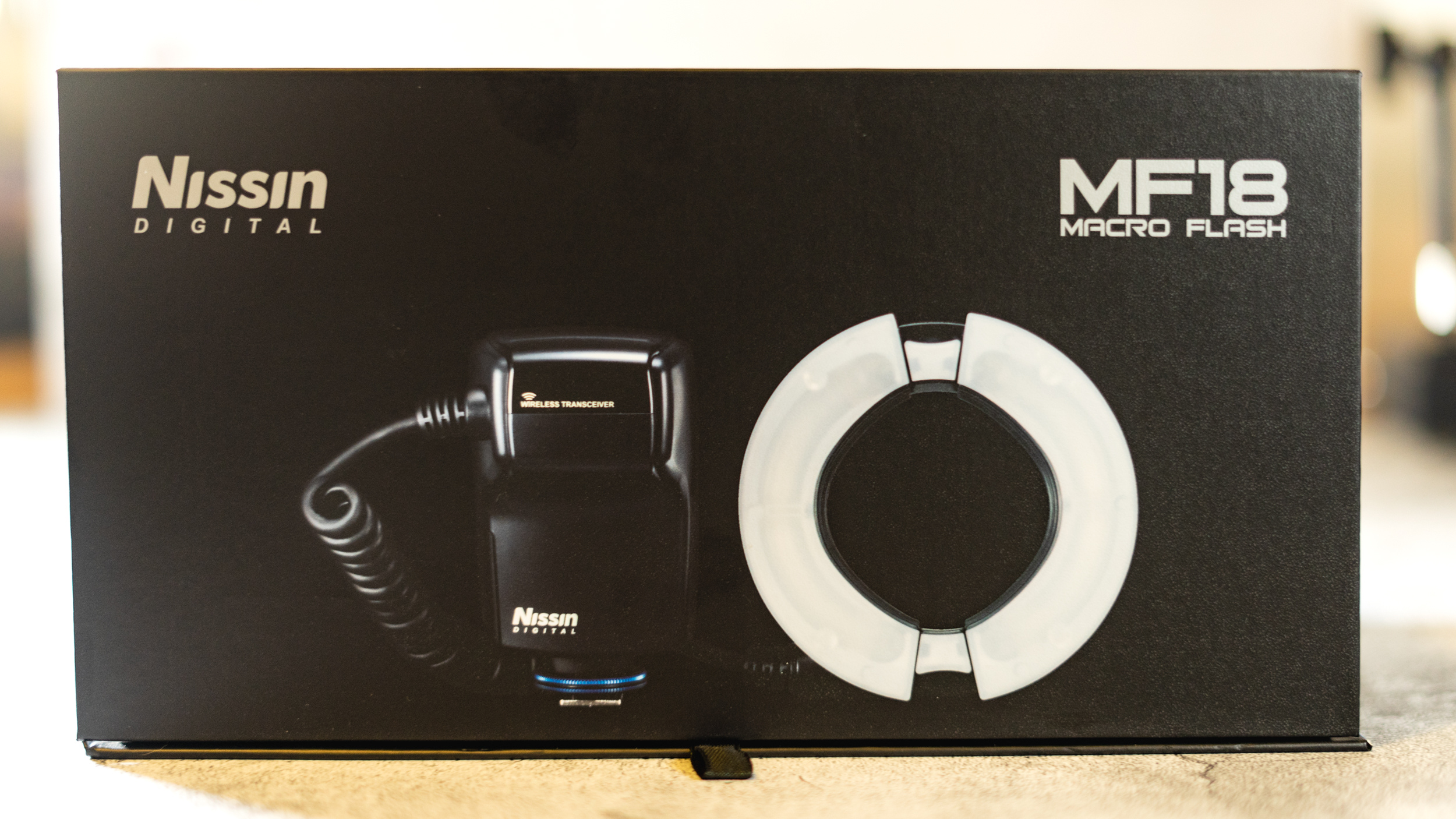


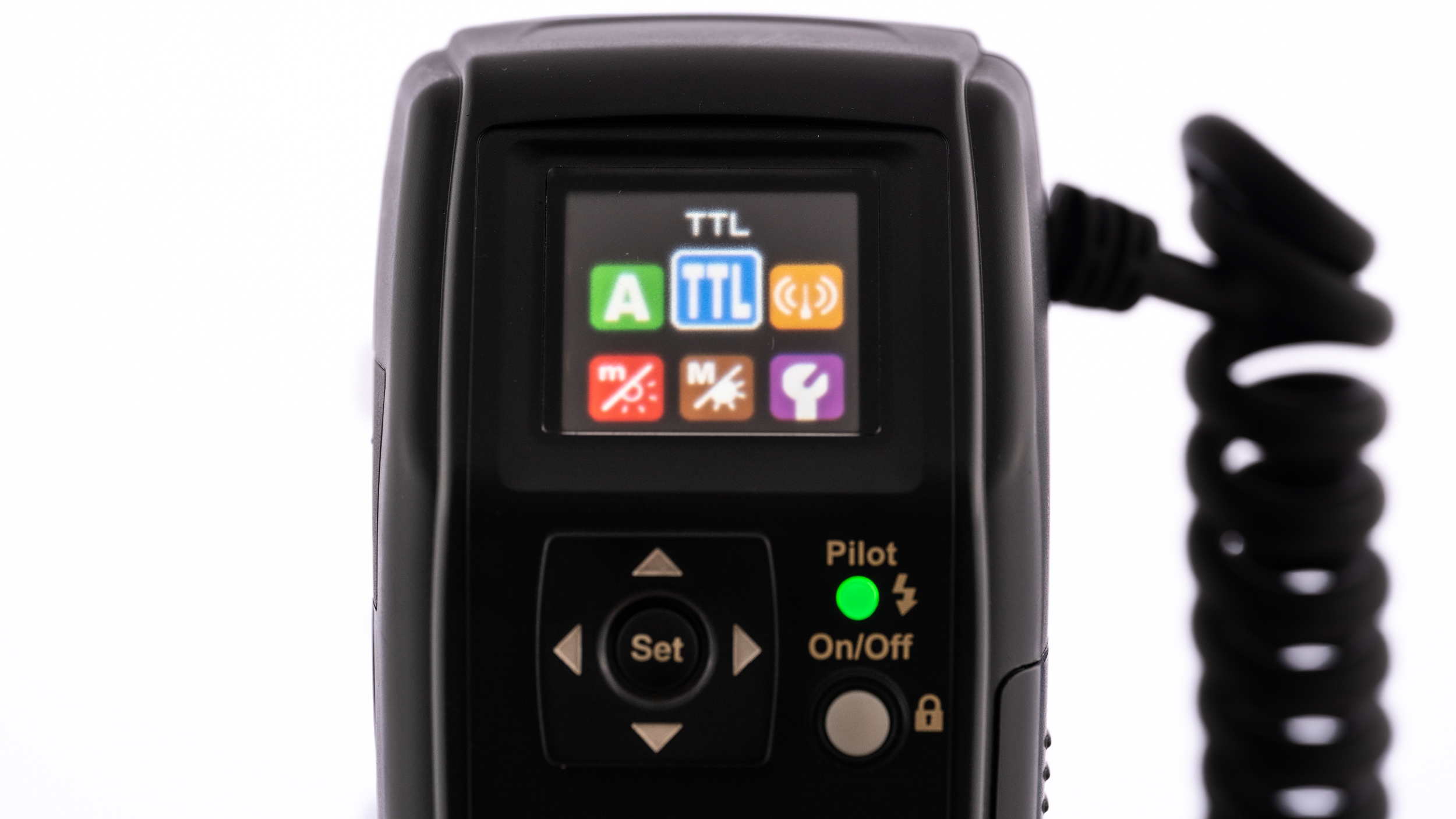
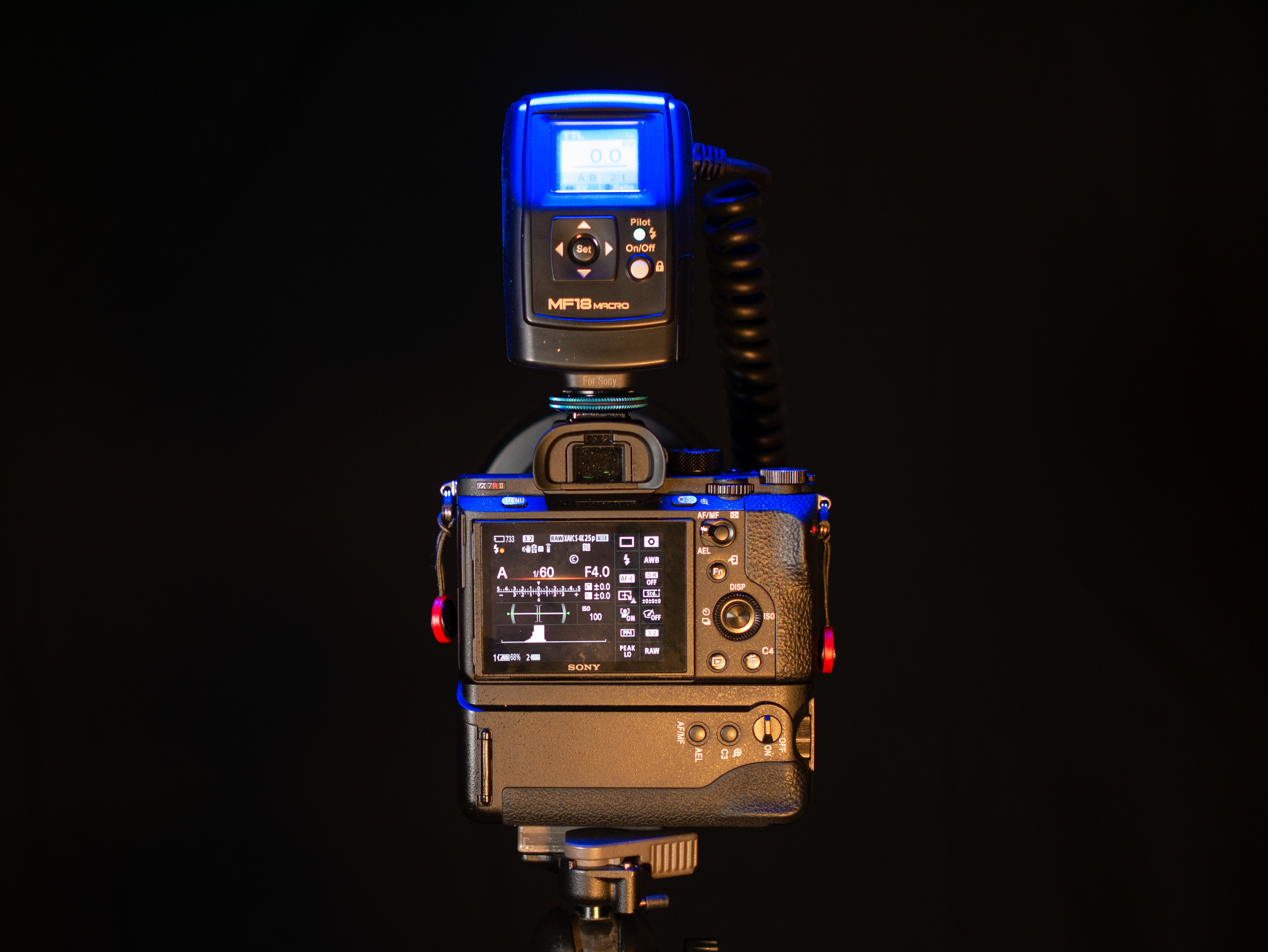
I don’t normally talk about packaging but in this case I’ll make an acceptation. The box and its overall presentation were very nice – almost “Applesque” – and showed nice attention to detail which I thought boded well for the flash itself. Overall the MF18 feels very well made. Like all flashguns/speedlights it is of a plastic construction. There is no mention of any weather sealing on the Nisin website so I’ll assume there is none. The body is connected to the head via a chunky coiled cable that feels nice and secure at both ends. In the case of problems with the cord it doesn’t look user replaceable but this is not unusual. The batteries are held in a magazine that slides out of the side. It is a very neat arrangement and spares are available (Nisin BM-01) for those who want a fast reload capability. The flash body is held in the camera hot shoe via blue anodised knurled ring. Not as fast as a lever that is sometimes found on other brands but perfectly satisfactory. On the rear of the body you’ll find a 3cm square colour LCD panel which is sadly not touch compatible. I really like the touch capabilities on my Metz flashes and it is a shame Nisin didn’t include it. Underneath the screen you’ll find an on/off/lock switch, a four way ‘D’ pad with central button, and a combined pilot and status indicator light/button. On the flash head are four buttons – the two vertical ones release the head from the adapter runs, and the two horizontal allow the flash tubes to positioned further out. This prevents vignetting and also allows more even lighting over some larger subjects.
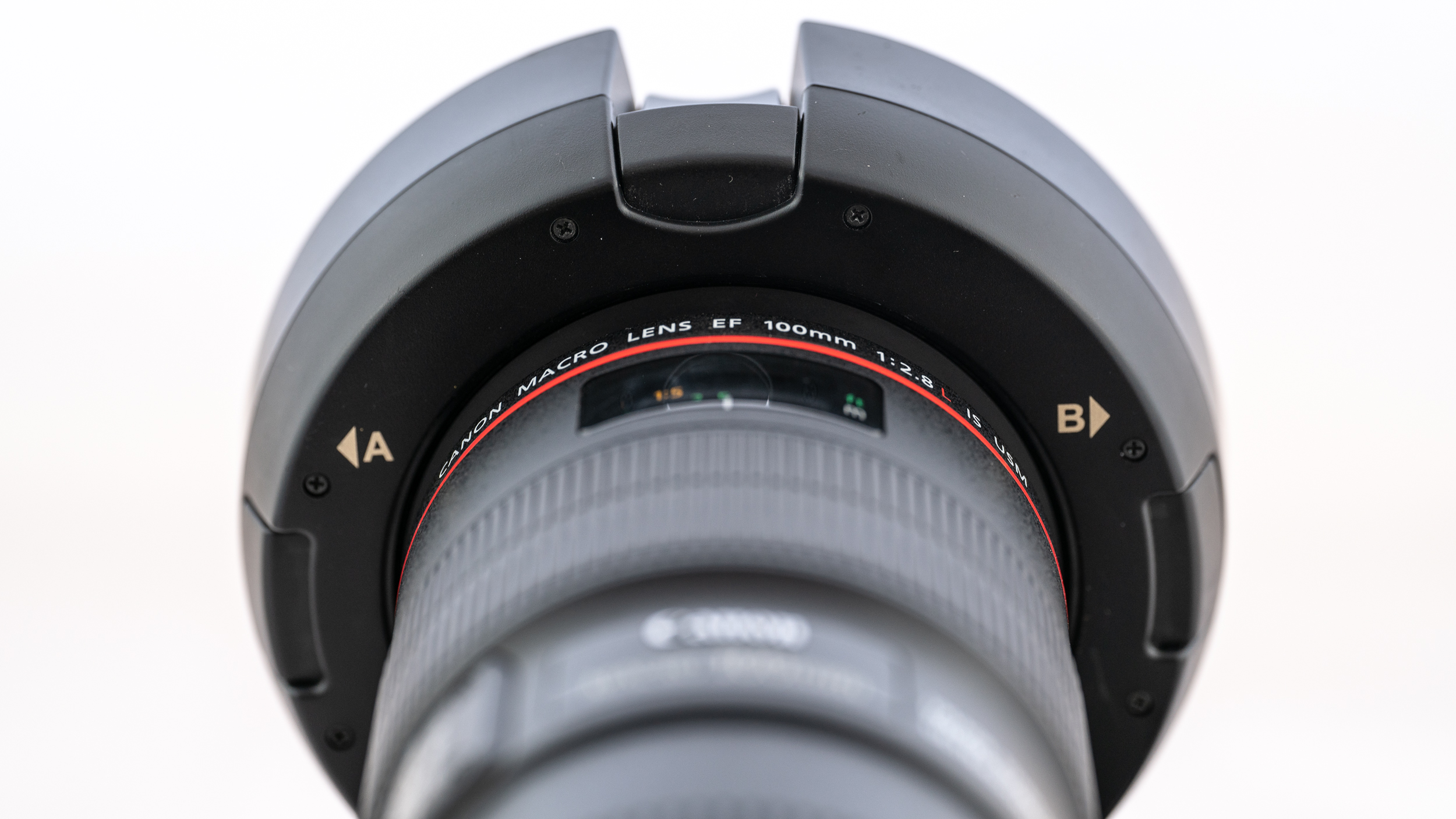
Overall everything is very confidence inspiring.
Performance
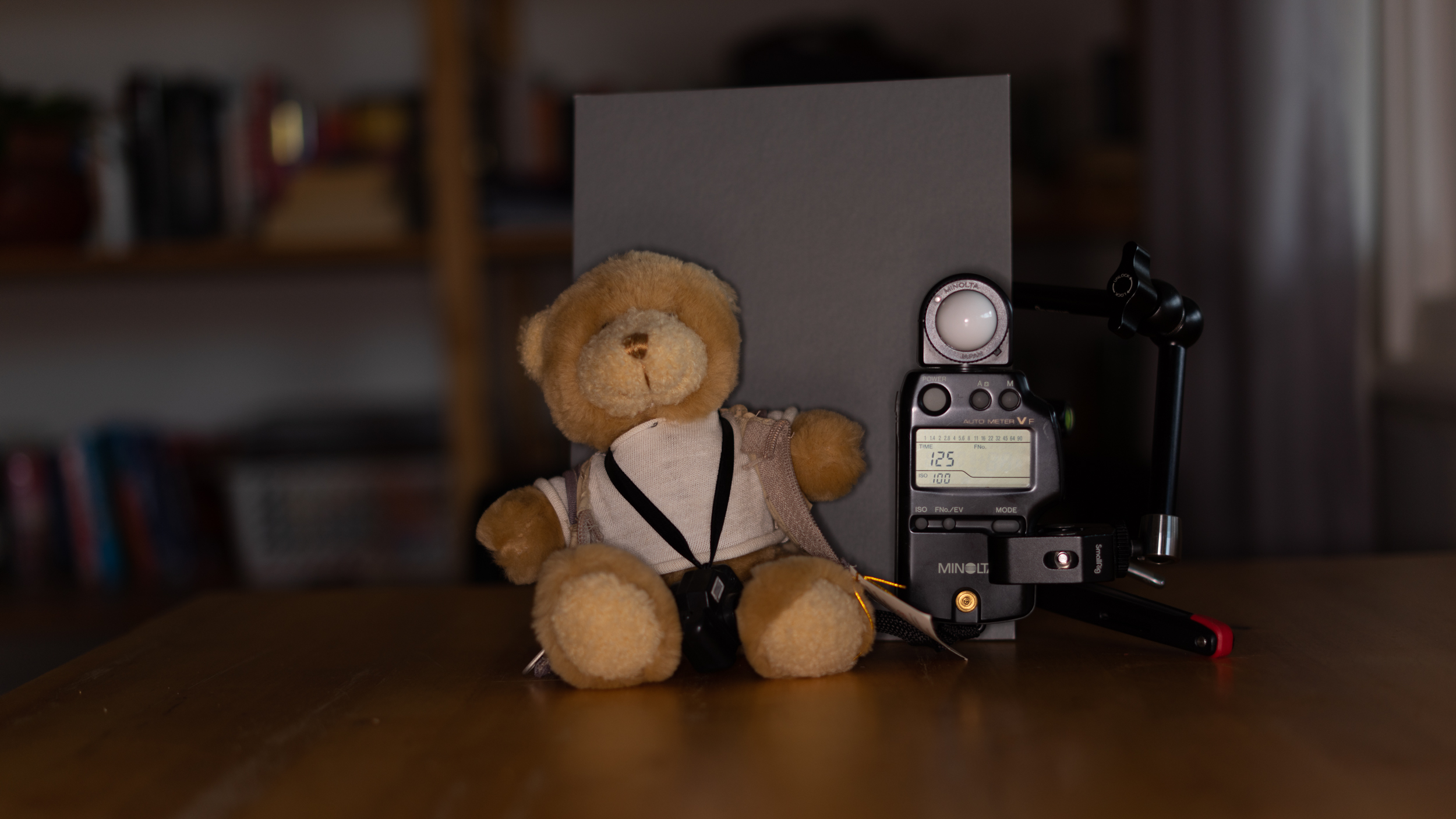
Nisin quote a Guide Number (GN) 16 (ISO100 m) but my testing has found this to rather fanciful as you can see from the table below:
| Power setting | GN per Nisin | Measured |
| full | 16 | 6.9 |
| 1/2 | 11.3 | 4.9 |
| 1/4 | 8 | 3.6 |
| 1/8 | 5.6 | 2.7 |
| 1/16 | 4 | 1.9 |
| 1/32 | 2.8 | 1.5 |
| 1/64 | 2 | 1.4 |
| 1/128 | 1.4 | N/A |
The measured guide numbers are between 2 and 21/3 of a stop lower than Nisin’s figures which is quite disappointing. The only positive I can say about it is that running the test 3 times the measured results were very consistent.
I measured the colour temperature using a grey card and setting the camera’s white balance to 5600K and found that the actual colour temperature was 4750K.
Checking recycling times using a fresh set of AA Ni-MH batteries saw recycle times average out at 8.9 sec when shooting at full power and 4.55 sec at 1/2 power. This falls short of Nisin’s claimed figures.
In Use
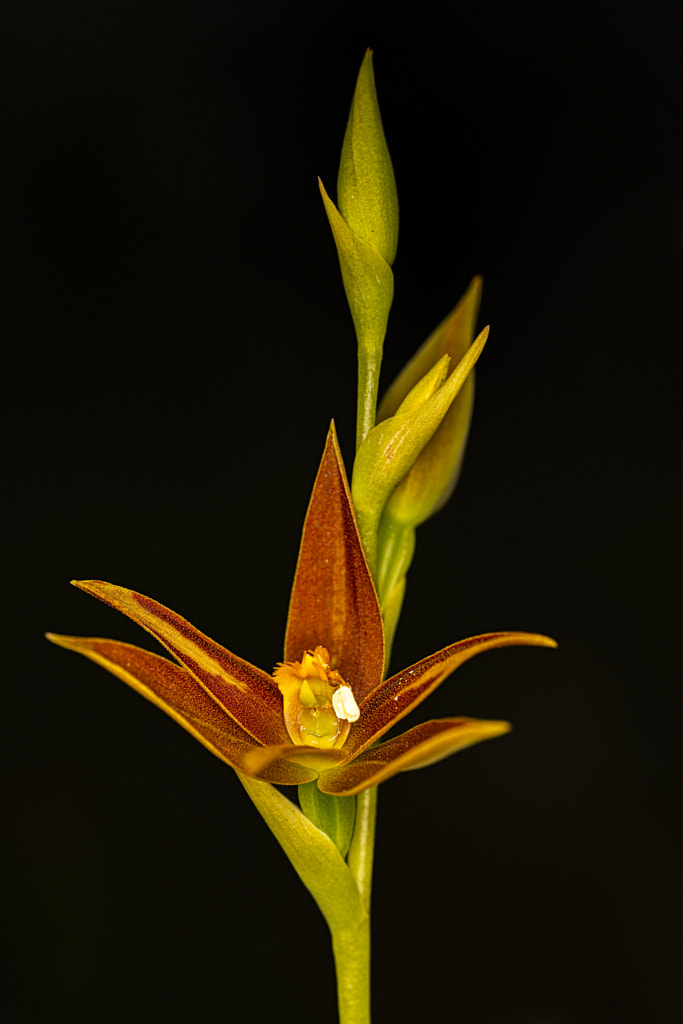
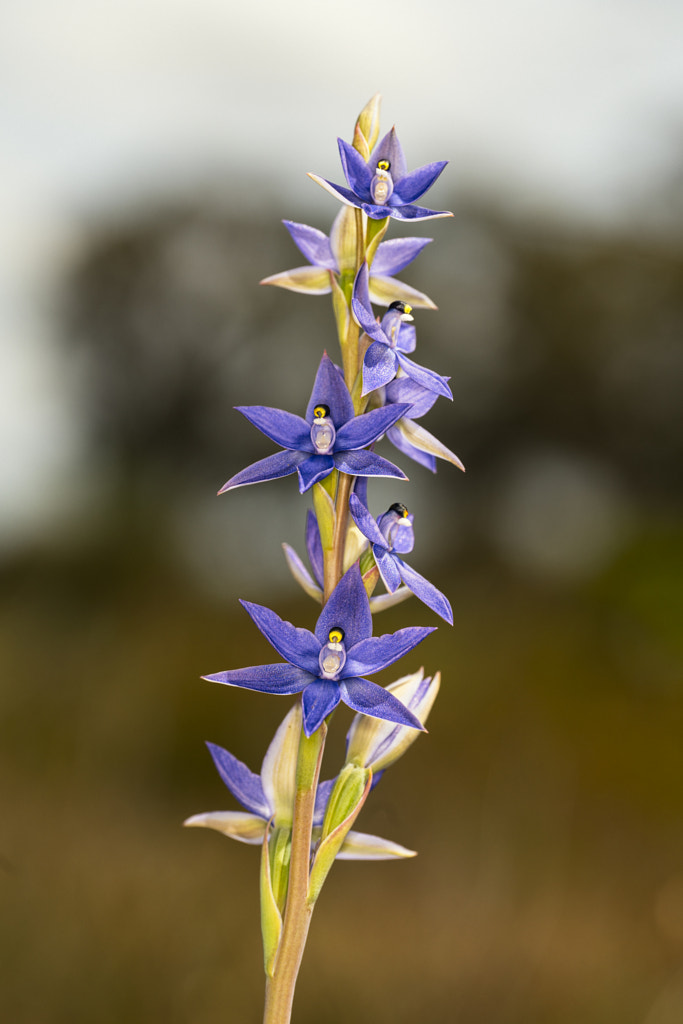
OK testing is one thing how does real world performance stack up. I’ve been using the MF18 since August 2021 on a Sony A7r2. The only manual shooting I’ve done with it is just testing it for this review. The rest of the time I use it in TTL mode for photographing flowers. More often than not I use it in high speed sync mode as well so I can have the flash as my key light and the ambient light as my fill. For this it has worked extremely well.
Operating the MF18 is simplicity itself. The basic functions are controlled by the camera. The only time I have to go into the menu is select high speed sync. You can also select 1st or 2nd curtain flash there as well. It is so easy to use that I really don’t have to think about it

Conclusion
| Pros | Cons |
|
|

I bought the Nisin MF18 with my own money. At the time it was the only macro speedlight compatible with Sony that had high speed flash synchronisation. While some of the performance issues such as the GN, recycling times and colour temperature are a bit disappointing they have had no impact on how I use the flash.
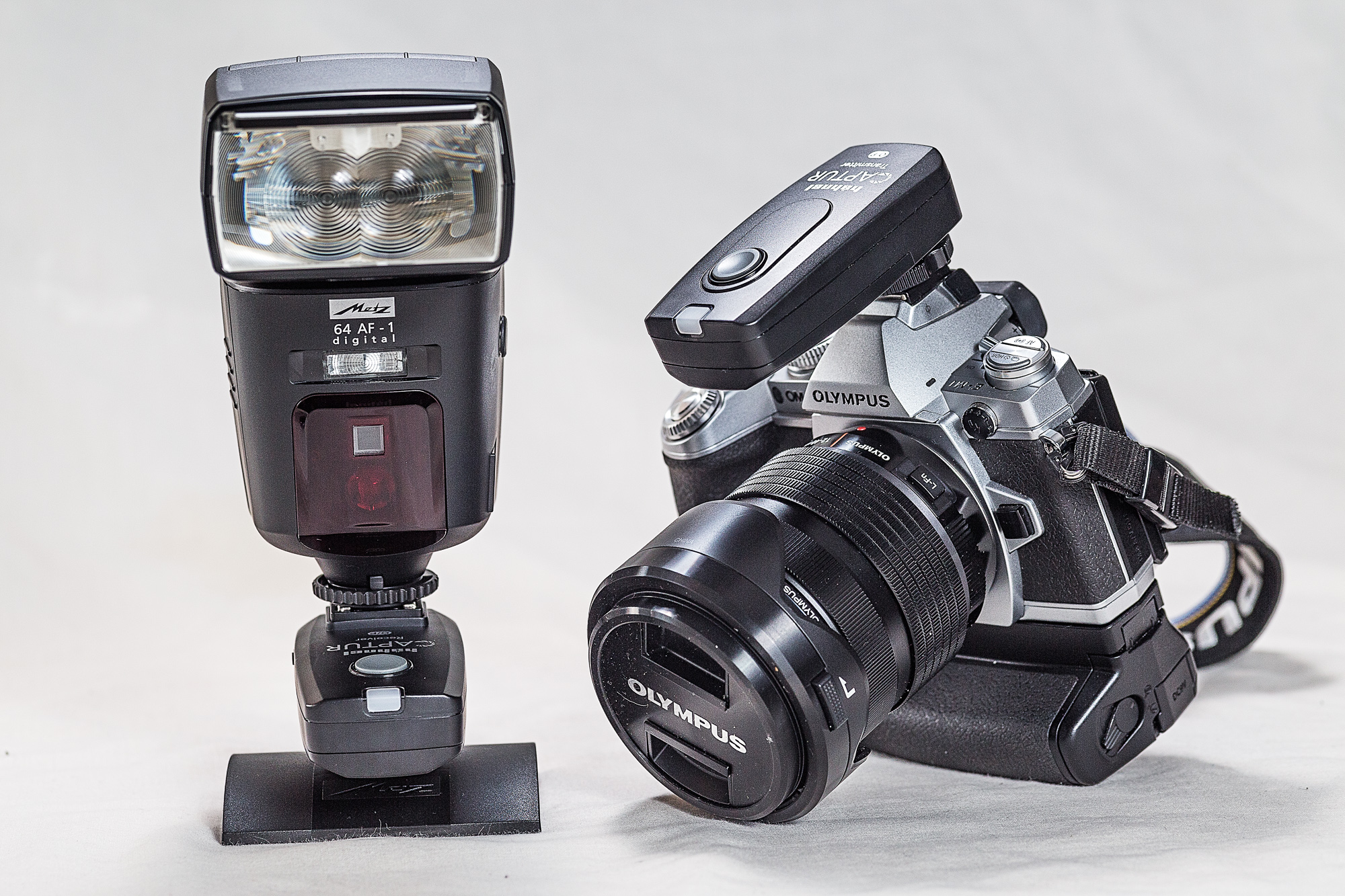
In terms of value for money, compared to the Olympus and Metz equivalents it seems quite keenly priced. It is better specified than the Metz unit but doesn’t have the overall flexibility and the weather sealing of the Olympus.

Would I recommend it? Well if you are just going to use it as I do and are happy with the compatibility issues then yes I would. But if you are still using cameras such as the Canon 5d vi or the 6d ii then I would look elsewhere.


You must be logged in to post a comment.