Spring is now almost over and most of the wildlife has now settled down to domestic duties – having and raising young.
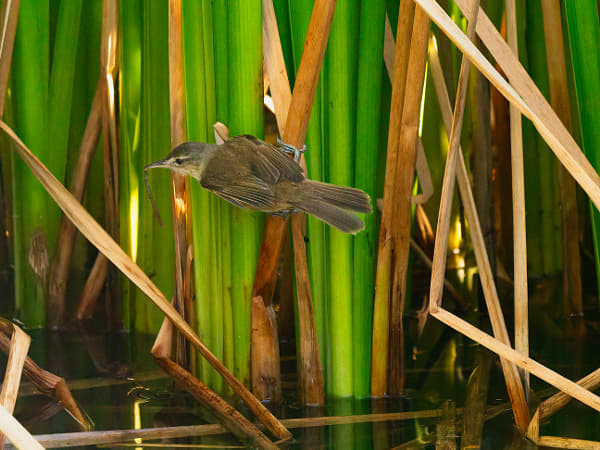
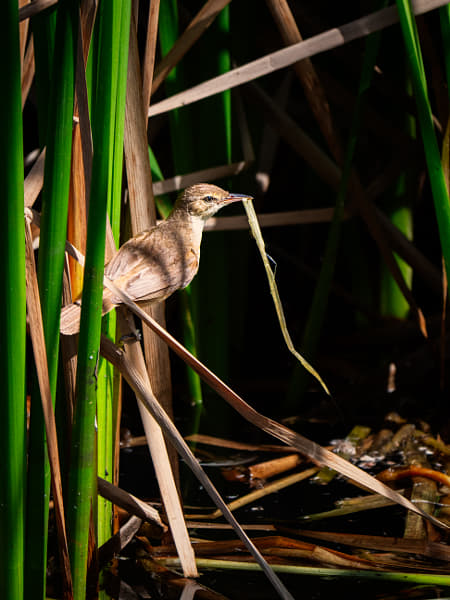
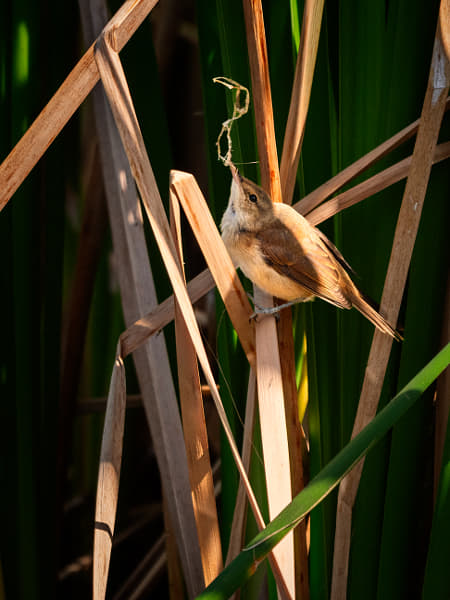
A recent visit to Bernard Park in the Wheatbelt metropolis of Northam showed this to be true. The Australian Reed Warblers were still building nests and it won’t be long before the serious business of egg laying starts.
Koordji-koordji or Australian Reed Warbler (Acrocephalus australis subspecies gouldi) gathering nesting material. Northam, Western Australia.
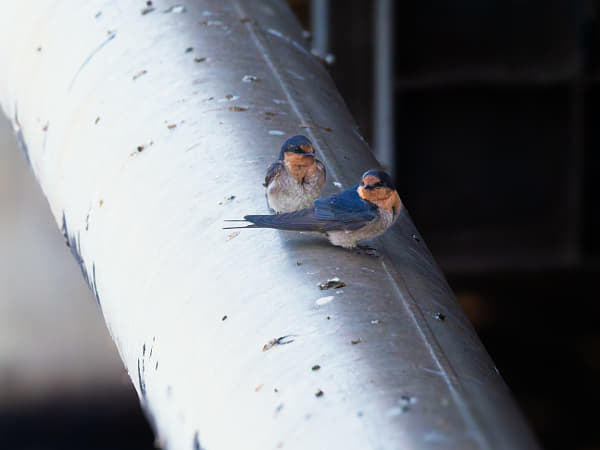
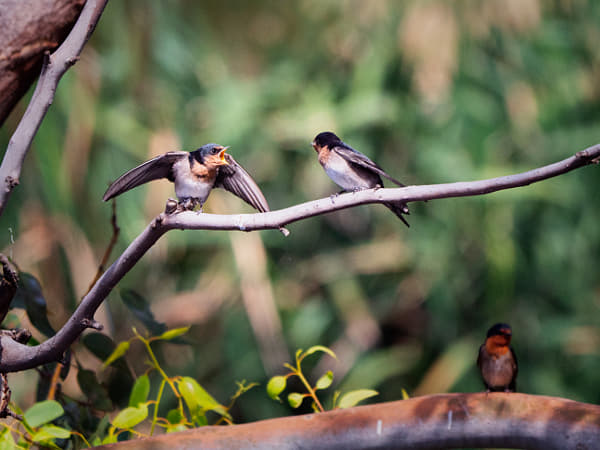
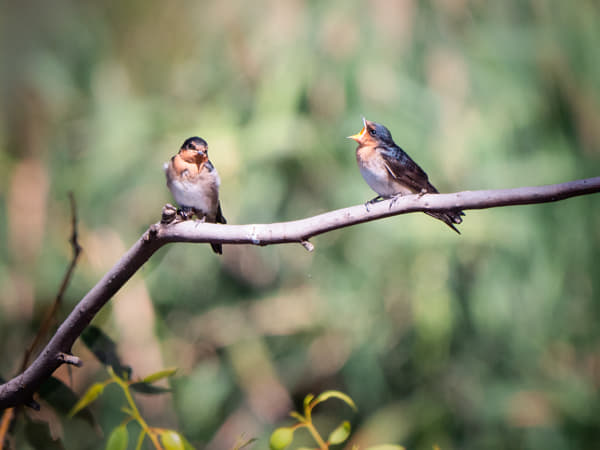
The Welcome Swallows were mostly content to hang out together between hunting forays, but we did see a couple which did seem to be in the middle of a domestic alternately screeching at each other. Do birds separate and divorce? No idea. Perhaps I anthropomorphising them too much, but it is hard not to project human feelings into animal interactions.
A contented pair of Kanamit or Welcome Swallows (Hirundo neoxxena) taking a breather under the Peel Terrace Bridge. Northam, Western Australia
These two seemed to be in some sort of domestic dispute.
It wasn’t one sided either. Both were carrying on like pork chops in a frying pan. Perhaps a referral to Relationships Australia is in order?
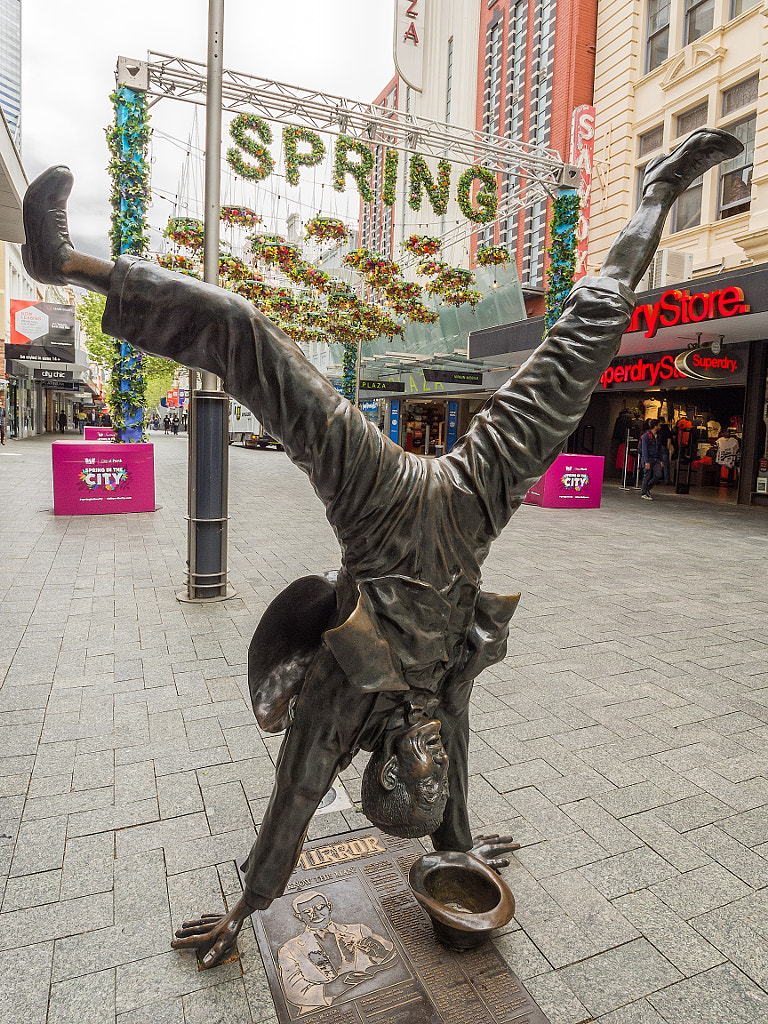
Hand Spring in the city. Hay Street Mall, Perth, Western Australia. Olympus OMD EM10 with Panasonic Leica 8-16mm f2.8-4 lens. Exposure: 1/160, f5.6, ISO 200.
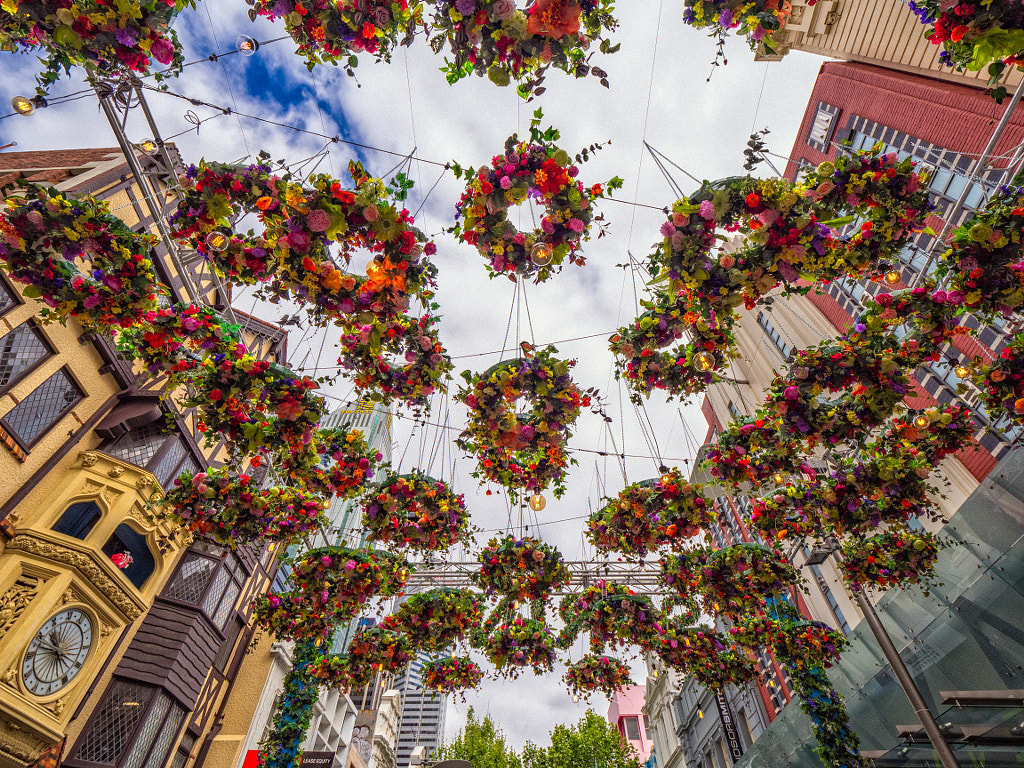
Floating floral wreaths. Spring in the city. Hay Street Mall, Perth, Western Australia. Olympus OMD EM10 with Panasonic Leica 8-16mm f2.8-4 lens. Exposure: 1/1000, f5.6 at ISO 200.
A pink robin (Petroica rodinogaster) at Silver Falls, Mount Wellington in Tasmania.
Whether the weather be fine
Or whether the weather be not,
Whether the weather be cold
Or whether the weather be hot,
We’ll weather the weather
Whatever the weather,
Whether we like it or not.
There’s no doubt about it we get a lot of weather in Tasmania – it is said that you can experience all four seasons in one day, and that if you don’t like the weather then just wait ten minutes and it will completely different. Thankfully after what seems a very long and cold winter, spring is starting to show. Flowers are starting to bloom, the days are warmer and people are out and about looking happier. The space of time between the first photo and the last is just five weeks and I have gone from wearing thermals, fleece and Gore-tex to shirt sleeves.Here’s looking forward to summer.
Looking out across the water from Dodges Ferry to the snow-covered Mount Wellington.
Spring is here and the bees are hard at work pollinating the almond trees in my garden.
It only seems like the other day I was blogging about winter coming and getting my wood supply in. Now after a very mild winter spring is breaking out all over. The fruit trees in my garden have been keeping the local bees very busy. And further afield the native terrestrial orchids are starting to bloom. I’ve never known them start quite so early, and I thought that last year was a prolific year, but this spring is looking to be even more bountiful.
A cowslip orchid being pollinated. Mokine, Western Australia.
Rosy-cheeked Donkey Orchid, Diuris aff. corymbosa, larger than the common donkey orchid and has reddish-brown labellum lobes hence the name.
A lemon scented sun orchid (Thelymitra antennifera) also known as vanilla orchid. Mokine, Western Australia.
Clicking on the photos takes you through to my gallery if you wish to make a purchase.
The Olympus XA4 – a classic capsule 35mm film camera with macro capability. My constant companion for many years.
…is the one you have got with you. It’s an old saying but it is a truism. I’ve always been a proponent of having a high quality pocket camera for those times when you don’t want to carry a camera. In the days of film it was my Olympus XA or XA4 (see the picture in the heading of the blog), but now it is Panasonic LX-5. The make or model is immaterial, really the main criteria is that it has to fit in my pocket and be able to produce a good quality A4 sized print. The irony is that most of my best-selling pictures have been taken with such cameras.
The Leica D-Lux compared with the Panasonic Lunix LX5. Looking from the front there is not a lot of difference in the size despite the D_Lux have a sensor much larger than the LX5.
Yesterday was one of those beautiful winter days that makes living in the south-west of Western Australia so worthwhile. It had been a cold clear night and we woke to a crisp morning with temperature expected to rise to 23℃ – better than some country’s summer. So my partner and I decided to walking in the Darling Range just above Perth and we walked along Piesse Brook to a place called Rocky Pool which is a picturesque little spot. Once we got there my partner decided to sit and cool off her feet in the water and I decided to take a couple of shots for the relatives such as this one:
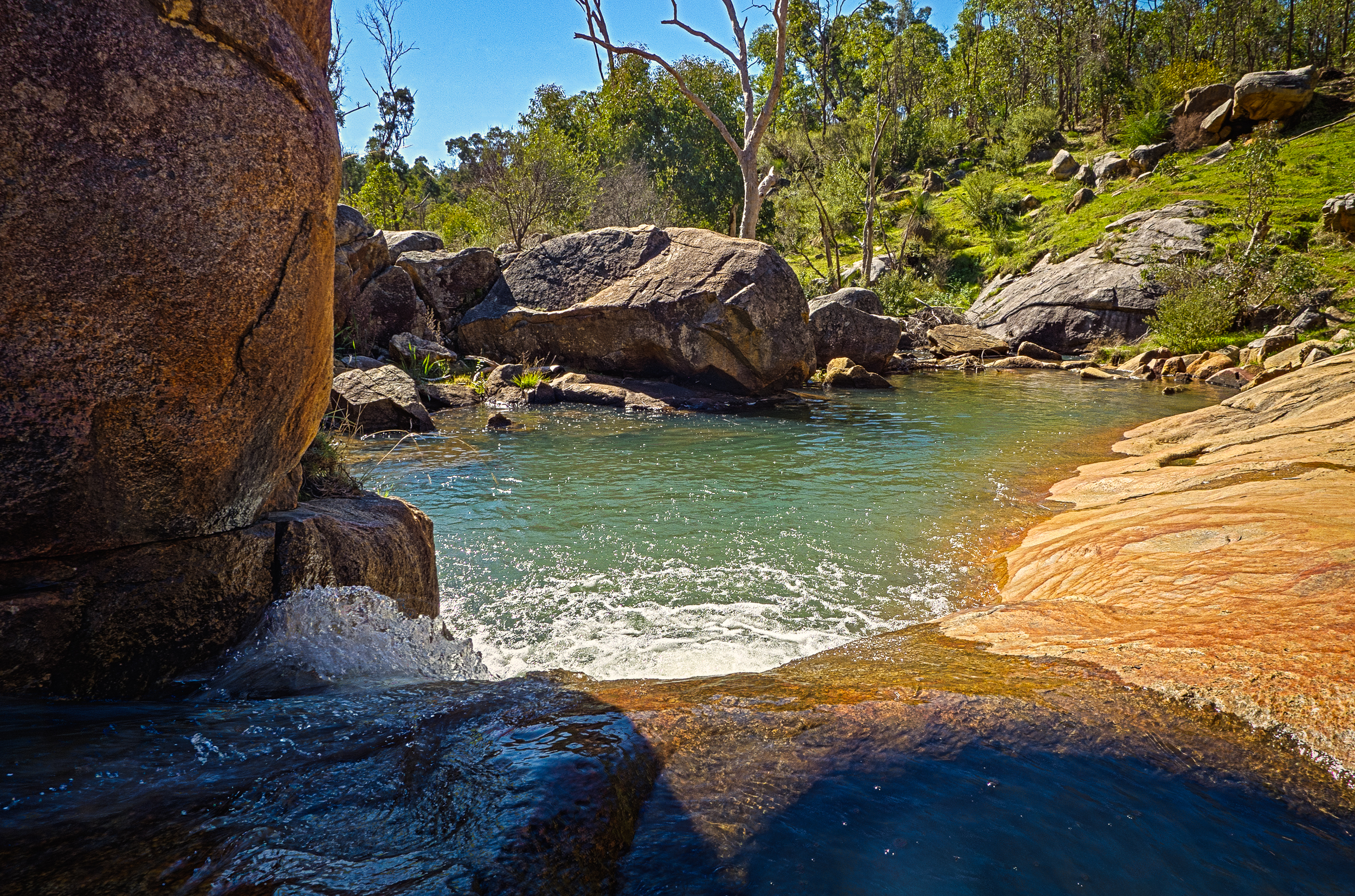
It’s fine as a family snap shot and it records a nice moment in our lives that we can share with family members living in the UK, but pocket cameras are so good these days they are capable of so much more. I turned 180º and looked at the pool at the bottom of the small water fall. It was a pretty vista and I wanted to record it but knew that the dynamic range of the camera’s sensor was not up to recording the huge subject brightness range of the scene. Hmm! What to do? I had no graduated filters, no tripod, no cable release, just my pocket camera. So I set exposure bracketing dialling in +/- 2 stops and handholding the camera just above the water took a series of shots while crossing my fingers. When I got home I fired up the computer and imported the pictures into Lightroom and then chose to merge them into a HDR using PhotoShop. After a bit of jiggery pokery playing around with curves and a couple of plugins I got this:
Not a great work of art but it is a pleasing shot that sums what a great time we had.
It really is a great time to be a photographer.
Just as a gentle plug a while ago I wrote and illustrated a book on walking in Perth, this walk was included. The book can be bought from tourist offices and good bookshops in Western Australia or it cane be ordered online here:







You must be logged in to post a comment.