The Near East

At a bit of a loose end we decided to go out on the Goldfields Road to Tammin. The town’s sole raison d’être is the transportation of the surrounding areas grain crops. The grain bins and railway siding around which the town is built are the key features of the town. With the increasing industrialisation of modern agriculture farms have got bigger and bigger and employ less and less people so like many rural areas although generating a lot of wealth the town is in decline.
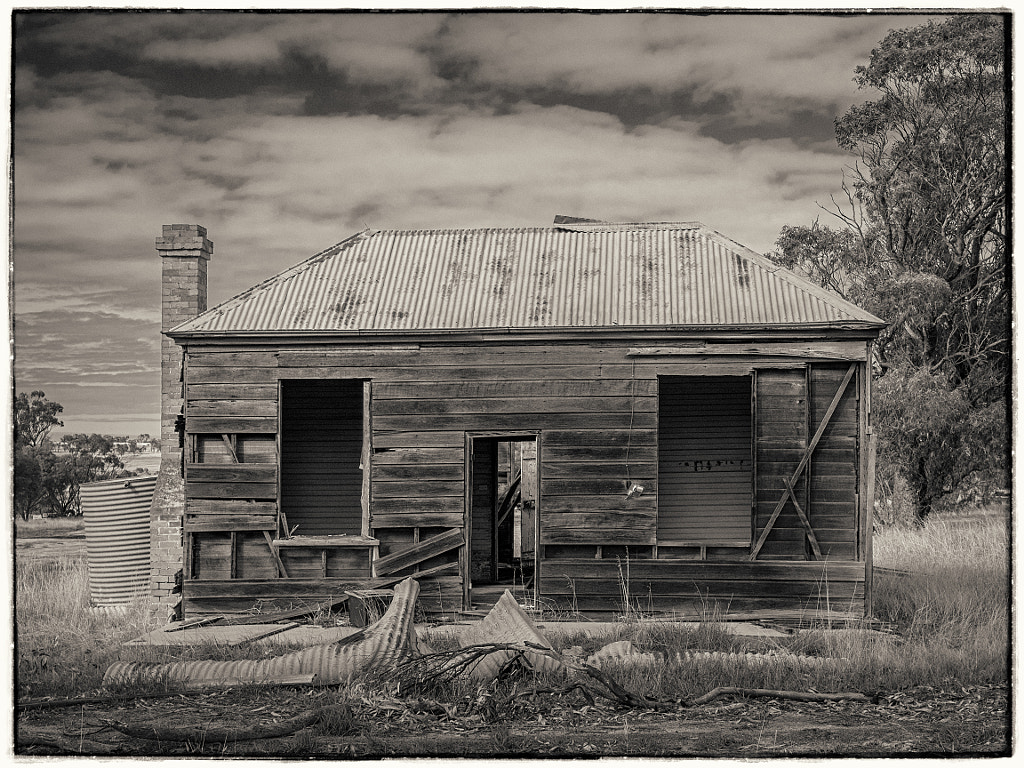
 

Derelict by Paul Amyes on 500px.com
Abandoned farmhouse on the Goldfields Road in Western Australia. Olympus Pen EP-5 with Olympus 12-50mm f3.5-6.3 lens. Exposure: 1/640 sec, f5.6 at ISO 200. Converted to monochrome in AlienSkin Exposure 4.

When I first got interested in photography I was living in the South East of England which is a very verdant and prosperous region. Naturally the first photographers who caught my eye were British ones like David Bailey, Snowdon, Patrick Litchfield and Terrance Donovan.As I went on I discovered more socially aware photographers such as Chris Killip, Graham Smith and Don McCullin. I  remember going to see Killip and Smith’s exhibition “Another Country” in 1985 and being absolutely blown away by the subject matter and the quality of the work – it was one of transcendent experiences and it altered my perception of what photography could be dramatically. It was quite a while before I turned my attention to non British photographers. When I first saw the work of Walker Evans, Robert Frank, Joel Sternfeld, Stephen Shore, and Robert Adams I couldn’t really relate to the subject matter. Their vision and representation of the USA was one that was completely foreign to me and outside that which the mainstream media presented. It wasn’t until I migrated to Australia and started to explore the rural areas seldom visited by tourists that the penny finally dropped. I started to see similar scenes and over time I have attempted to capture them. I’m never quite sure whether it should be in black and white or colour so I find myself fluctuating between the two mediums and never quite happy with the results.
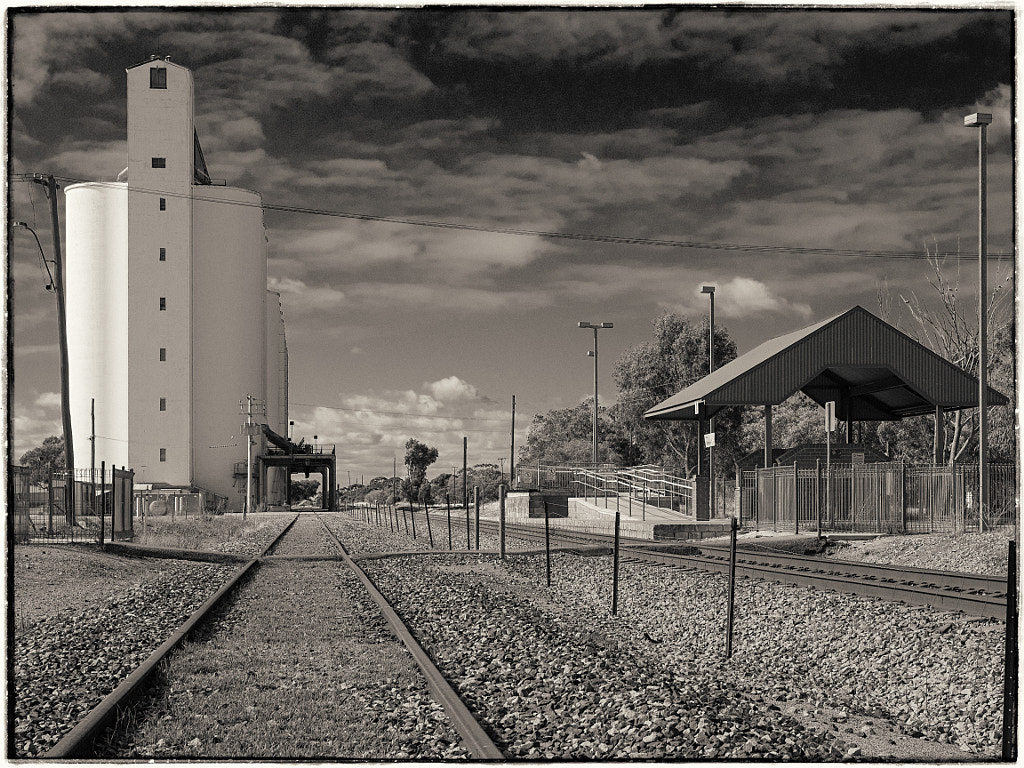
 

Tamin by Paul Amyes on 500px.com
Tammin grain bins and railway station. Olympus Pen EP-5 with Olympus 12-50mm f3.5-6.3 lens. Exposure: 1/800 sec, f5.6 at ISO 200. Converted to monochrome in AlienSkin Exposure 4.

Which brings us to the photos in this post. They are just a small sample of the photos that I took on our road trip to Tammin. At first I processed them as colour and felt that the colour detracted from the starkness that I saw and felt. I then tried monochrome. When I worked in the darkroom I liked to use Ilford Multigrade  FB warm tone glossy paper and that is a look I try to replicate with my digital images albeit without much success. When Ilford’s digital media arm Harman Technology introduced their warm tone gloss baryta inkjet paper I thought that my prayers had been answered and I used it for a couple of exhibitions I did. It was a sad day when it was discontinued – I still have 5 sheets of A3+, not enough to do any proper work. So now I try to replicate the look in AlienSkin Exposure 4 which is what I have done with these photos. The problem is that while it looks OK on screen when you translate it to printed media it does work as it is not subtle enough. Perhaps the photos should have stayed in colour after all.
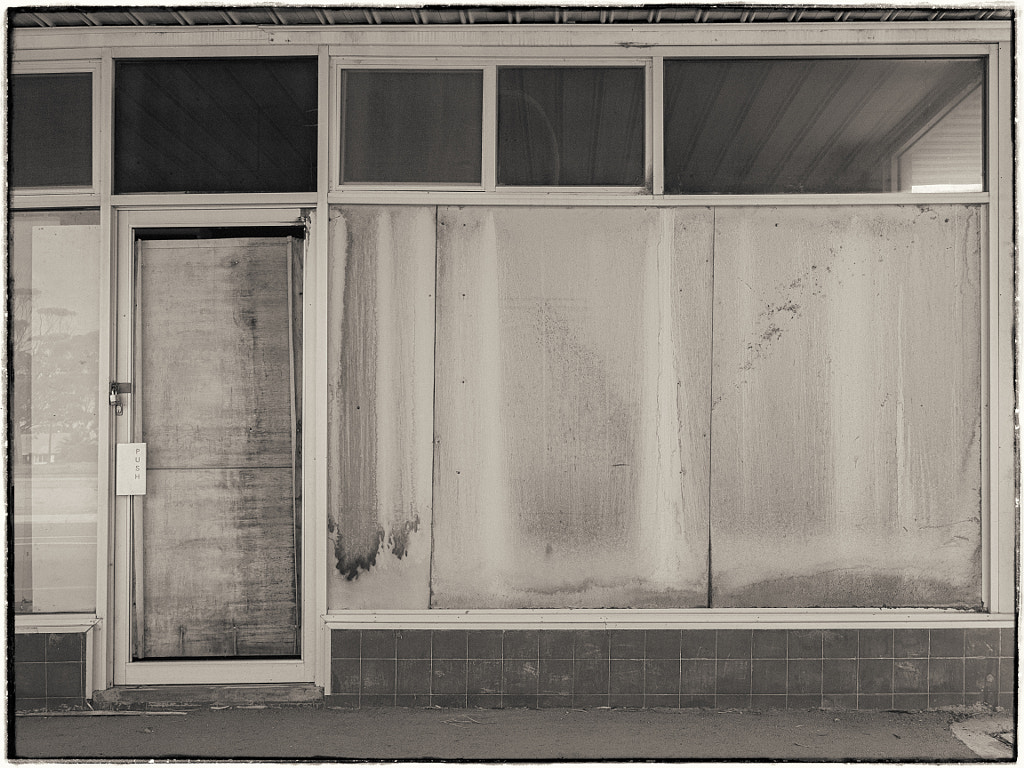
 

Closed by Paul Amyes on 500px.com
Empty shop front in Tammin, Western Australia. Olympus Pen EP-5 with Olympus 12-50mm f3.5-6.3 lens. Exposure: 1/100 sec, f5.6 at ISO 200. Converted to monochrome in AlienSkin Exposure 4.


The Grass Is Greener

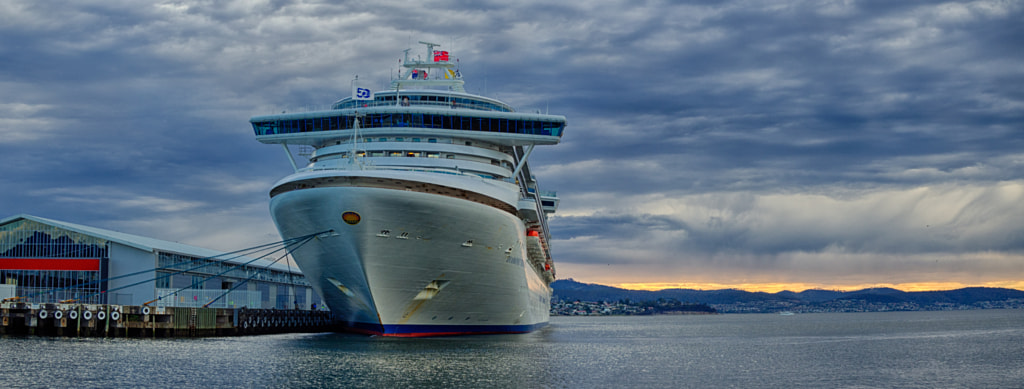
Diamond Princess by Paul Amyes on 500px.com
The Diamond Princes at dawn in Hobart Harbour.


“Few things are as exciting as the idea of travelling somewhere else. But the reality of travel seldom matches our daydreams.”

Alain de Botton


I’ve never been a fan of mass tourism, but over the last few weeks I’ve been reading a lot about the negative aspects of it and in particular with what is happening to Venice. Apparently as many as 44,000 cruise ship passengers pour into Venice a day during the high season. That’s roughly 5 cruise liners worth. When we lived in Tasmania we’d get the boats pull into Hobart Harbour, thankfully just one at a time, and the passengers would be like a tsunami as they headed for Salamanca. I hate to think what 5 times that number would be like.  Along with the negative impact that has on the local population and the environment there is also the fact would you really want to visit somewhere with another 44,000 people? It’s hardly getting away from it all is it? Then there is the whole thing of “Right you’ve got six hours in port and then we’re off to the next location”. Six hours following several other thousand people all traipsing round the same location, looking at the same few things only to herded up at the end of the day and taken somewhere else to do exactly the same thing the next day. It’s a gross version of the 1969 film “If It’s Tuesday, This Must Be Belgium”. It’s worthy of Dante’s vision of hell. So why do people do it and pay a fortune for the privilege? Essentially people do it because they are bored with the ordinariness of their life and want something out of the ordinary with a touch of luxury.

When I lectured in photography one of the most common complaints from students was that there was nothing to photograph in Perth or Western Australia. They wanted something new, something exciting something that they’d never seen before. The problem was photography’s history encourages that kind of thinking – we only have to look at the photographic tradition of the road trip established by the likes of Robert Frank and his eponymous book The Americans with its hip introduction by Jack Kerouac. Stephen Shore and Alec Soth amongst  others have popularised it to the extent that it has almost become a photographic rite of passage. Indeed at a portfolio review at FotoFreo my reviewer actually said I should go on a road trip as a means of finding myself. But the thing is booking a package holiday to Bali or Vietnam is not going to work as  all you will see are the usual tourist attractions and maybe you’ll take some photos of poor third world people. Invariably you return home and the photos get ignored and languish in a dark recess on your computer hard drive as they look the same as everyone else’s. They are not out of the ordinary. The British philosopher and writer Alain de Botton in his book The Art of Travel said  “Then I realised that the problem with going away is that you take yourself with you.”

I would suggest that if you want to produce interesting work look to the ordinary and easily accessible. Many photographers have taken this path.  Robert Adams documents the changing American landscape and in particular the spread of suburbia. Chris Killip, Sally Mann, and Larry Towell  are all photographers who have done projects about ordinary things on their door steps and have produced extraordinary images. The American photographer Minor White once said “…all photographs are self-portraits.” so there is no need to travel to find your self just keep exploring with your camera. The frequent retort from my students was that everything around them had been photographed before well White also had an answer for that “Everything has been photographed. Accept this. Photograph things better.”.

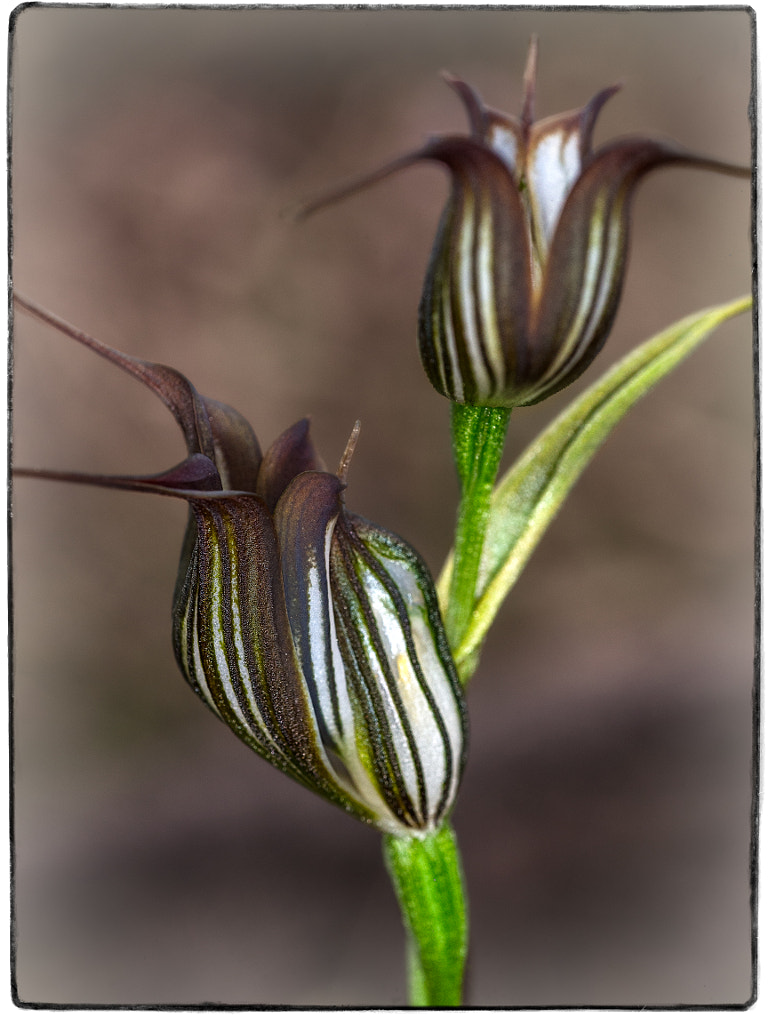
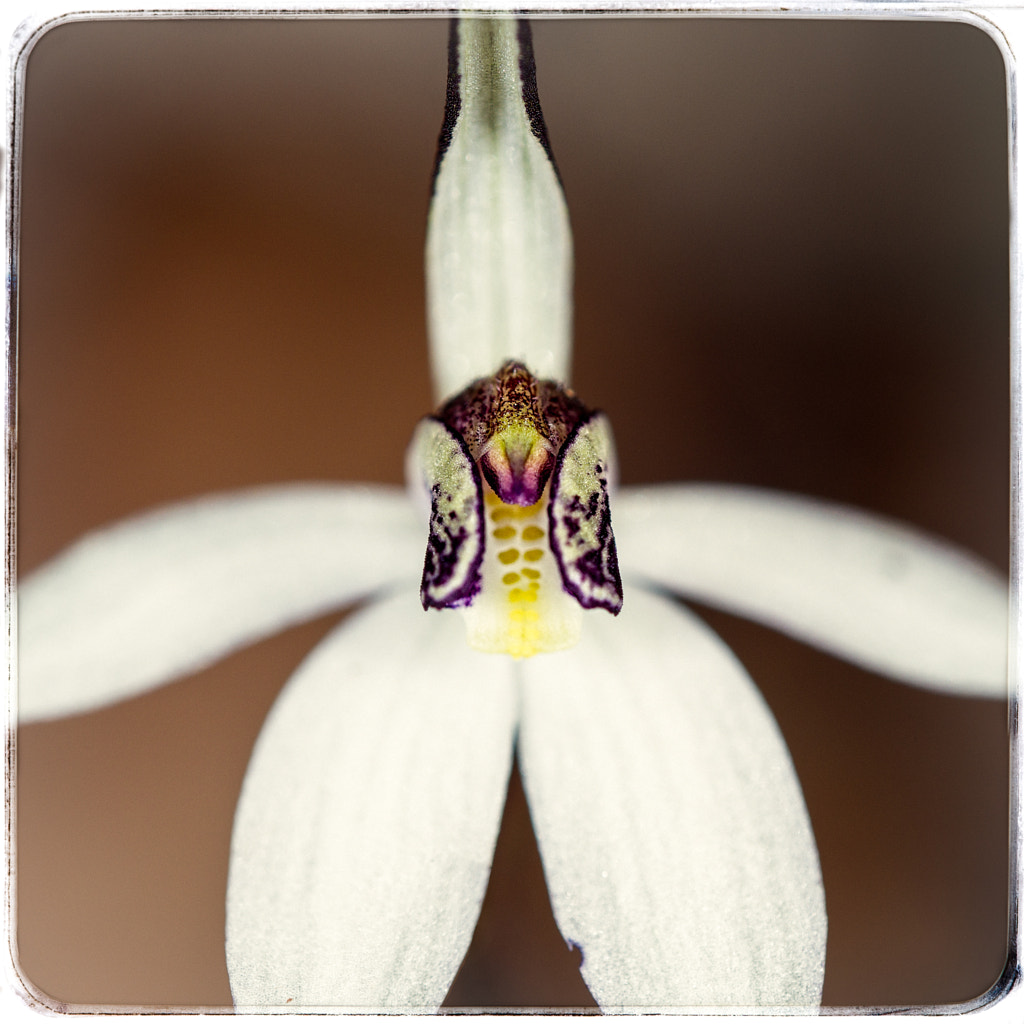
So what have I been doing photographically for the last week? Well I’ve been out to some local nature reserves, I’ve visited them many times over the last 14 years and it never ceases to amaze me that I always find something new. So I was delighted to find these two flowers.


Jug Orchid by Paul Amyes on 500px.com
Jug orchid aka recurved shell orchid (Pterostylis recurva). Olympus OMD EM10 with Olympus m.Zuiko 60mm f2.8 macro lens and Metz ring flash. Exposure: 1/160th sec, f5.6, ISO 200 aperture priority with -1.3 stops exposure compensation.


Sugar Orchid by Paul Amyes on 500px.com
Sugar orchid (Ericksonella saccharata). Olympus OMD EM10 with Olympus m.Zuiko 60mm f2.8 macro lens and Metz ring flash. Exposure: aperture priority 1/125th sec, f4, ISO 100 with -1 stop exposure compensation.


Fun

“Fun? Ah yes, the employment of time in a profitless and non-practical way.”
– Arnold J Rimmer, The Last Day, Red Dwarf, Series 3

I absolutely adore photographing Tasmania. It is not just the gob smacking beauty of the natural environment, although that is a huge plus, it is also the quirky sense of fun that is often displayed in the everyday mundane things.Take traffic light control boxes for instance. In most places they are boring grey metal boxes about 1.5m tall, a metre wide and 0.5 metre deep that sit on pavements by intersections controlled by traffic lights. You’ve probably not noticed them, they just sit there being dull, boring, and virtually invisible. In the state capital of Tasmania, Hobart, they are individual works of art. Some are satirical political commentary, some just abstract designs, but the thing is someone made a decision to allow these boring items to be made into something fun. Does it make them more efficient? No. What it does do is allow the community to express its humanity on a bit of space that otherwise wouldn’t be doing anything other than being a grey metal box. Our present day prime minister ever on the drive to improve the efficiency and profitability of the nation would see them as a frivolous waste of time. Time that could have spent making multi-millionaires even richer. But then he sees people as mere economic units rather than as human beings, and economic units don’t express themselves creatively nor have fun.

Safe With Us Now. A control box for traffic lights painted with Tasmanian Tigers the extinct emblem of the state.


Dreamtime Fish Traffic light control box, Hobart, Tasmania.


Movies Traffic light control box, Hobart, Tasmania.

On our last trip to Tassie just a few weeks ago we encountered another example of this expression of fun or “joie de vivre” as the French would say. We drove from Coles Bay on the north-east coast up to St Mary’s via Elephants Pass. It was a hair-raising drive with steep drops at the roads edge, warnings signs about rock falls and logging trucks, the switch back corners and narrowness of the road. Often our speed drop down to 25 Km per hour which on one particular corner seemed excessively fast. Our camper van certainly felt ponderously elephantine as it awkwardly worked its way to the top and to St Mary’s. St Mary’s is an attractive little town of just over 500 people and it sits beneath St Patrick’s Head, an impressive rocky outcrop standing at 694 metres or 2277 feet in the old money. We had the obligatory coffee stop at the Purple Possum and then took a stroll up and down the two main streets. It was in many ways nothing remarkable, just a small Australian country town. Then I noticed that one of the businesses had a small windmill attached to the facade that depicted what it did, and as I continued to walk my eye was now in so to speak and I noticed that virtually all the shop fronts had a small custom-built windmill. Apparently talking to one of the shop owners a local artist had been making them. They serve no function, they are just a small piece of gratuitous fun.

Australia Post. The Windmills Of St Mary’s


The Windmills Of St Mary’s


Laundromat. The Windmills Of St Mary’s.


The Windmills Of St Mary’s


The Pharmacy. The Windmills Of St Mary’s.


The Windmills Of St Mary’s

As an aside I like doing this type of dead pan photography, because it allows me to become a collector without actually buying or physically owning something. It allows me to group things together and organise them. In the field of archaeology this known as a typography which is where you group things according to their physical characteristics. Photography embraced the term in the early Twentieth Century when the German Photographer August Sander shot a series of portraits of people called “People of the 20th Century” a monumental work that looked to document every profession, trade and social start of the German people living in the Weimar Republic. Sander’s photographs however were shot in such a way as to express the individuality of each subject. Bernd and Hilla Becher’s typography of the industrial landscape looked to capture each subject in the same dead pan manner and the photos were often displayed in grids like scientific specimens. I’m not that anally retentive, but I do enjoy the process and have applied to things that take my fancy as I travel about – sign posts, mail boxes, shop fronts. I’d been doing this sort of stuff long before I’d heard of the term typography. I also like the work of Stephen Shore who combined this methodology with colour and road trips. Shore endlessly catalogues the things he sees. Both the Bechers and Shore were grouped together in an exhibition with some other photographers called “New Topographics: Photographs of a Man-Altered Landscape” in 1975. Although no longer ‘new’, after all 1975 was a long time ago, the exhibition has had a far-reaching impact upon photography and as late as 2011 it was still being shown in venues. The resulting book from the exhibition was recently republished by Steidl and is definitely worth looking at if you are interested in landscape photography that falls outside the typical tree and rock photos most people think of when they hear the word landscape.