The wildflowers in their beauty, the mountain ranges tall, the billabongs and rivers, and friendly birds that call…
by
Brian Black
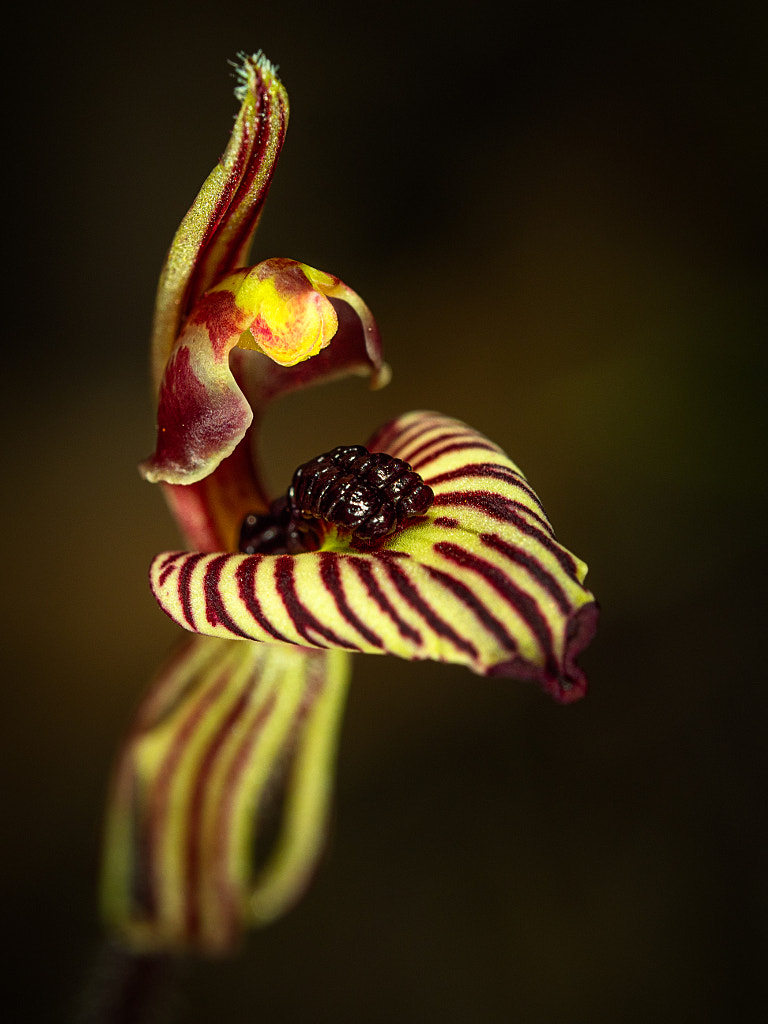
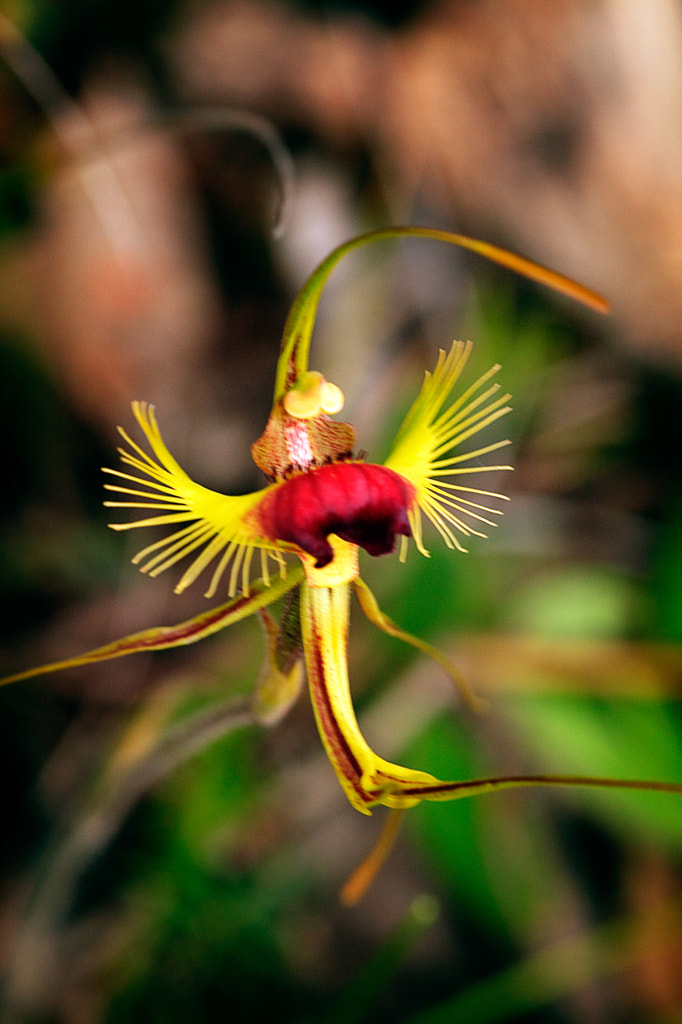
Zebra Orchid, Caladenia cairnsiana. Stirling Range National Park, Western Australia. Olympus OMD EM1 mk ii with Olympus 60mm f2.8 macro lens. Exposure: 1/250 sec, f8 at ISO 200.
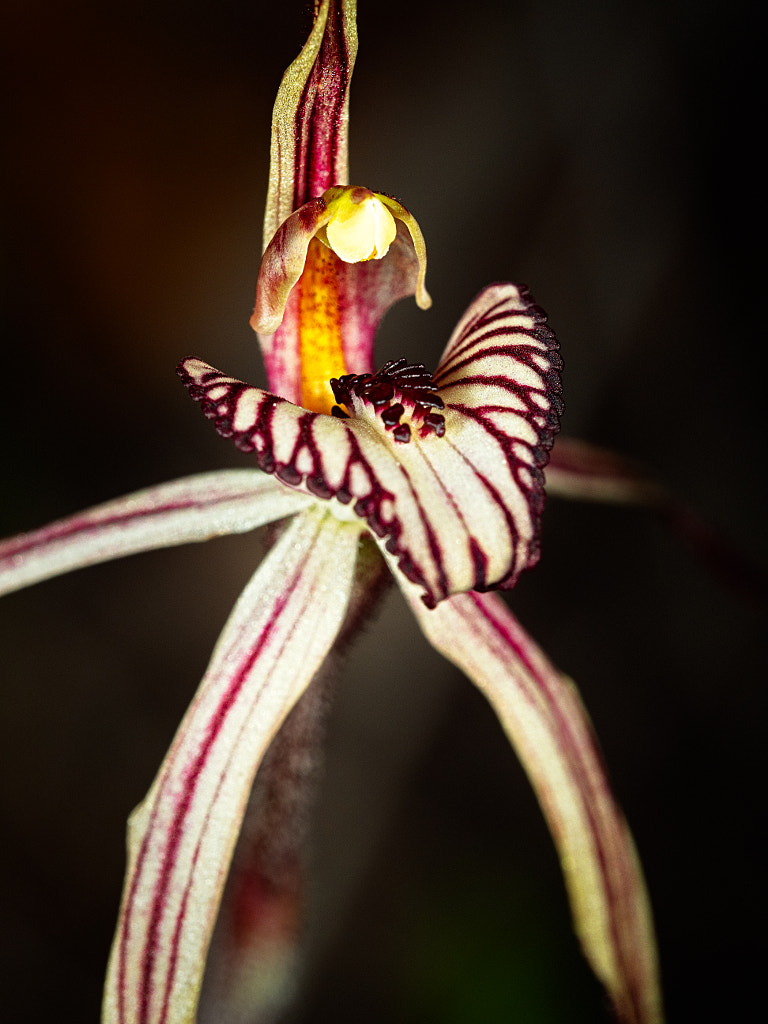
Prisoner Orchid – a hybrid between Josephs Spider Orchid (Caladenia polychroma )and the Zebra Orchid (Caladenia carnsiana). Hybridisation occurs due to cross pollination of parent plants by a feral pollinator the European honeybee (Apis mellifera).Olympus OMD EM 1 mk ii with Olympus 60mm f2.8 macro lens. Exposure: 1/250 sec, f8 at ISO 200.
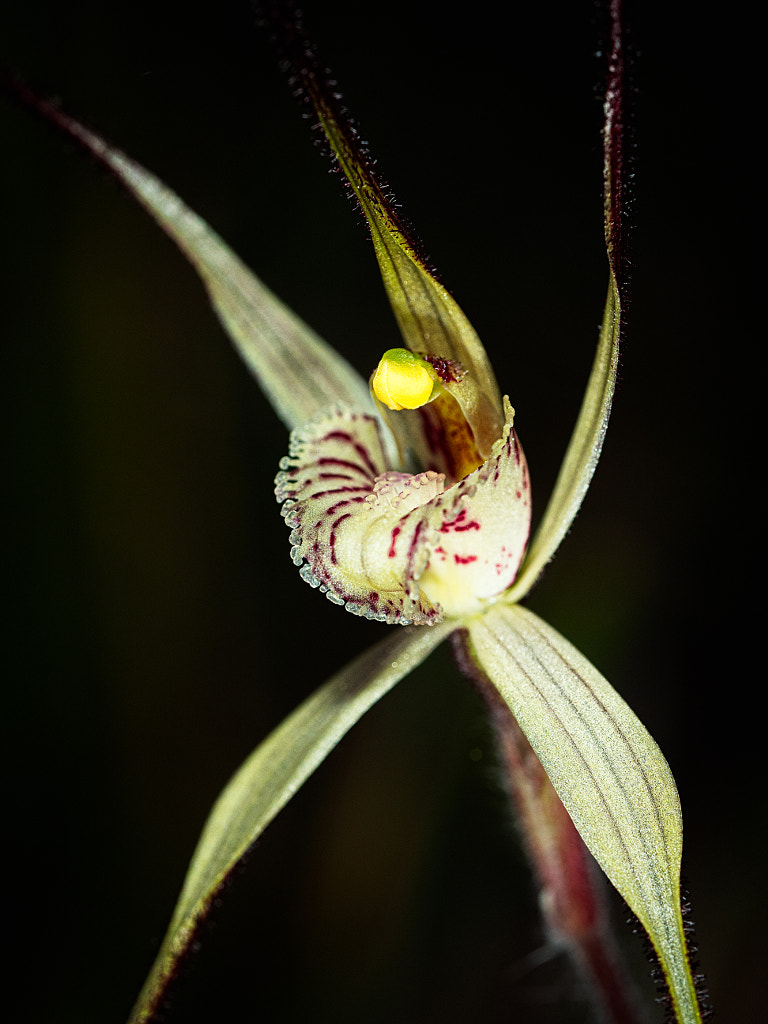
Joseph’s Spider Orchid, Caladenia polychroma. Stirling Range National Park, Western Australia. Olympus OMD EM1 mk ii with Olympus 60mm f2.8 macro lens. Exposure: 1/250 sec, f5.6 at ISO 200.
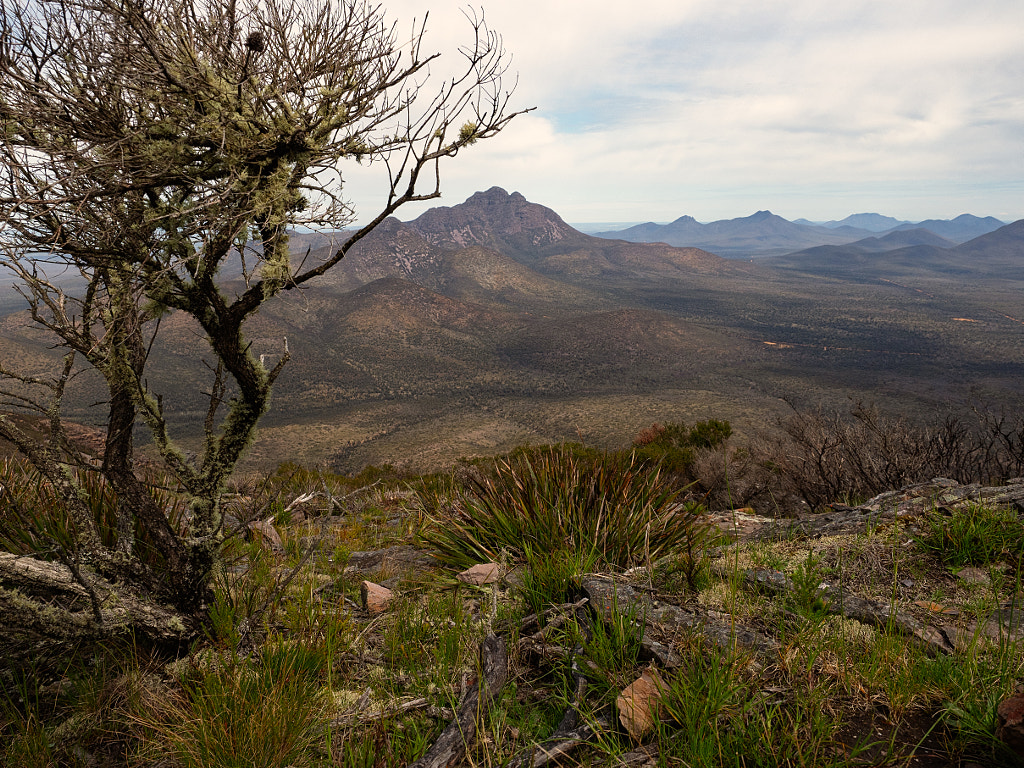
Looking out at Mt Toolbrunup from the summit of Mount Trio. Olympus OMD EM 1 mk ii with Olympus 12-40mm f2.8 lens. Exposure: 1/400 sec, f8 at ISO 200.
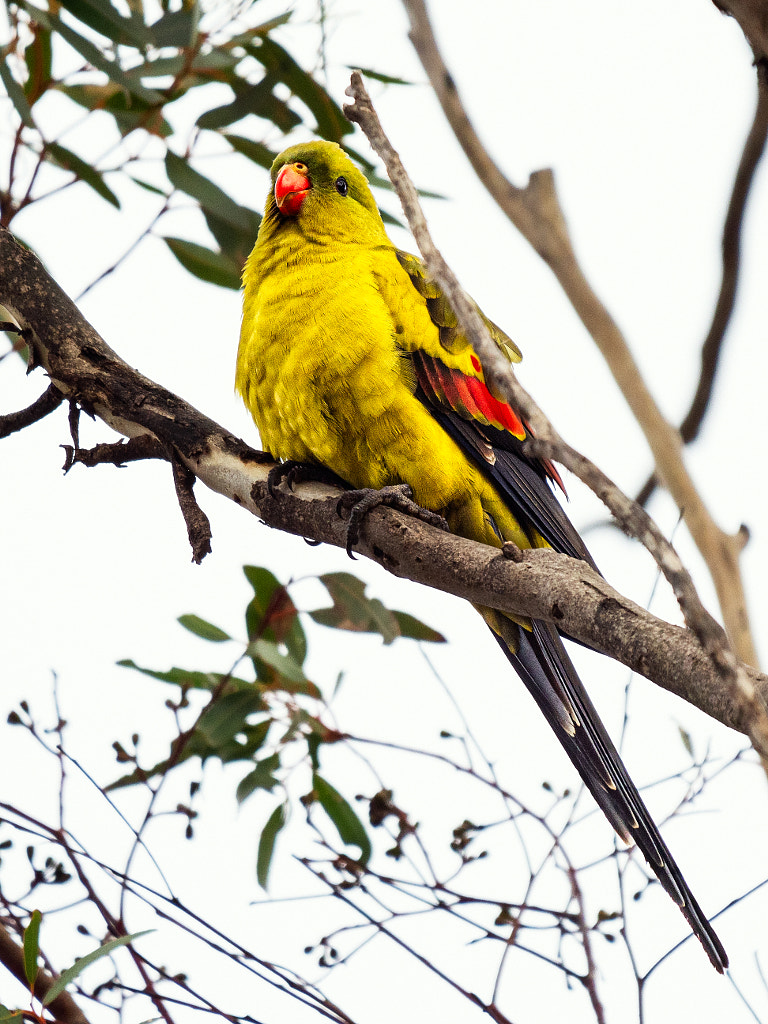
Wookonga or Regent Parrot (Polytelis anthopeplus). Stirling Range Retreat, Western Australia. OlympusOMD EM1 mk ii with Panasonic Leica 100-400mm f4-6.3 lens. Exposure: 1/500 sec, f6.3 at ISO 250.
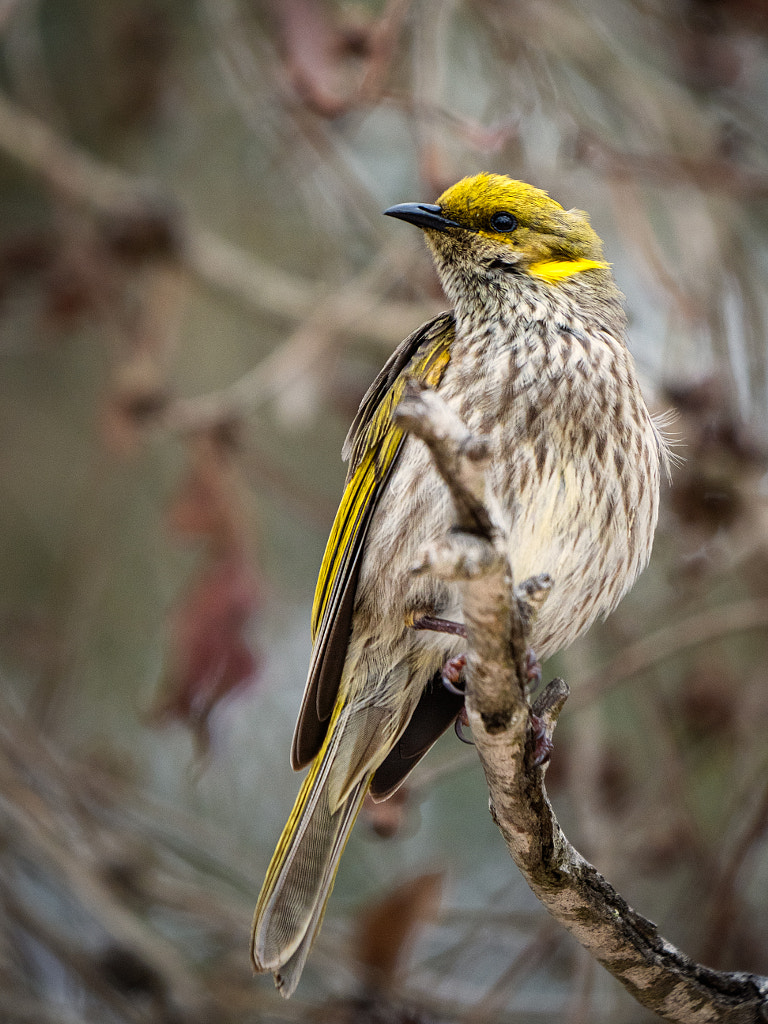
Yellow-plumed Honeyeater (Lichenostomus ornatus) called Miamit by the Nyoongar of Southwest Western Australia. Stirling Range Retreat, Western Australia. Olympus OMD EM 1 mk ii with Panasonic Leica 100-400 f4-6.3 lens. Exposure: 1/500 sec, f6.3 at ISO 800.
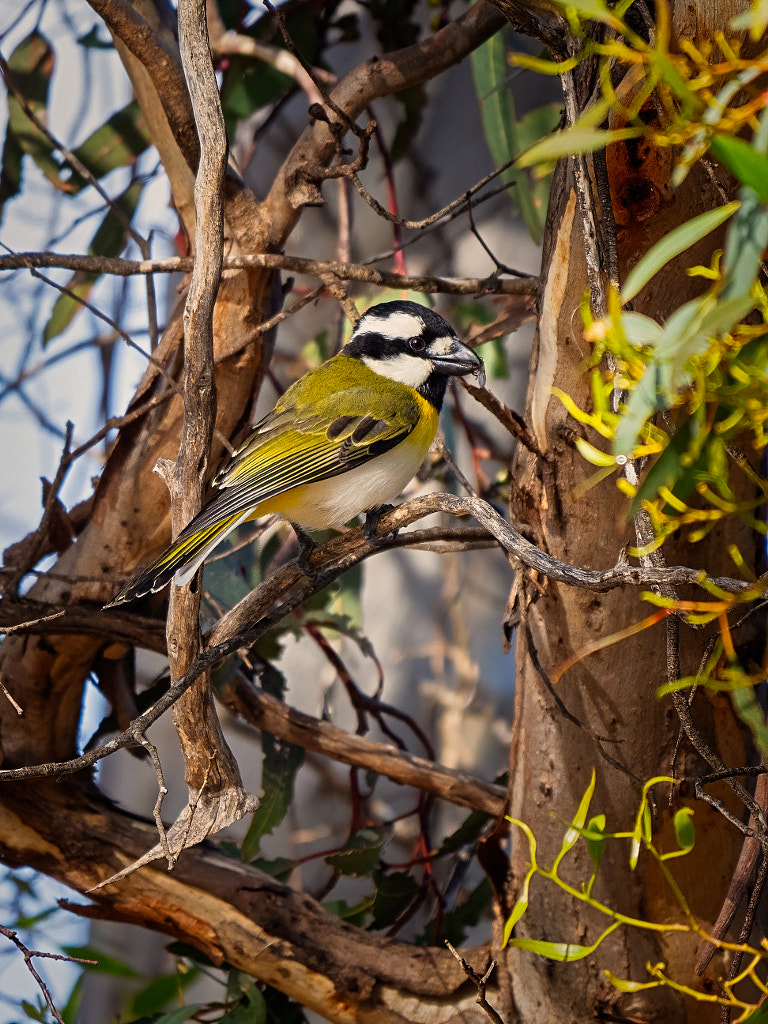
Djoondalkoron or Crested Shrike-tit (Falcunculus frontatus). Stirling Range Retreat, Western Australia. Olympus OMD EM 1 mk ii with Panasonic Leica 100-400mm f4-6.3 lens. Exposure: 1/500 sec, f6.3 at ISO 800.
Some places get all the attention and others are seldom mentioned. In the Sterling Range National Park everyone concentrates on climbing Bluff Knoll, but there is as I’ve said on previous occasions a lot more than Bluff Knoll. Believe it or not Bluff Knoll is one of the easier climbs in the park. Another one is Mount Trio. Climbing up Bluff Knoll is not a wilderness experience as there are far too many people. With Mount Trio if you see more than two other people its a very busy day.
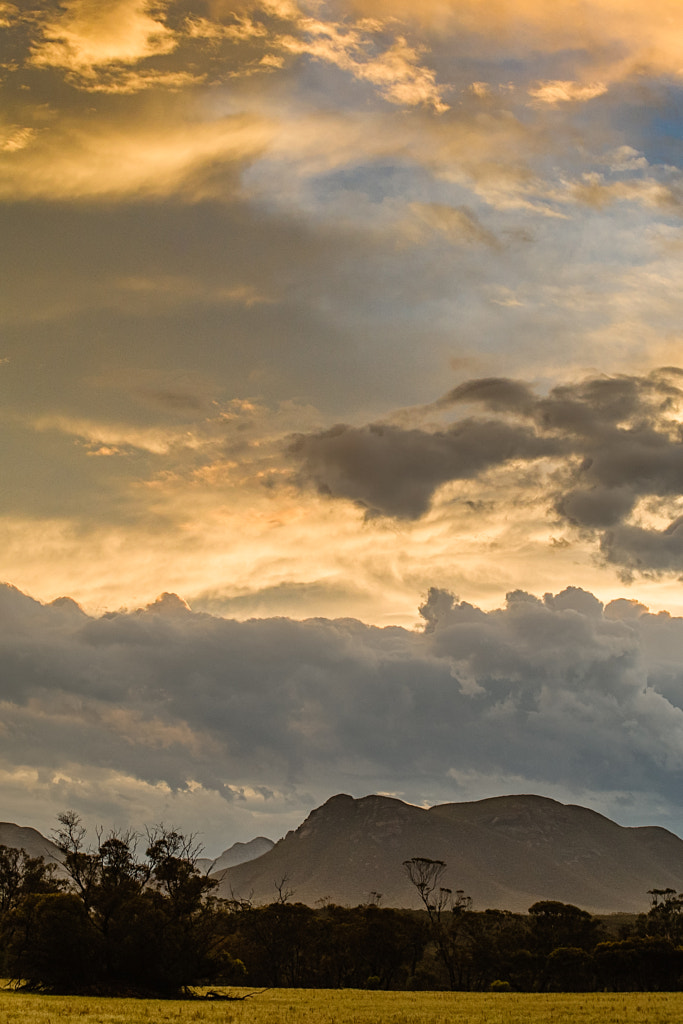
The sun sets behind Mount Trio in the Stirling Ranges of Western Australia.
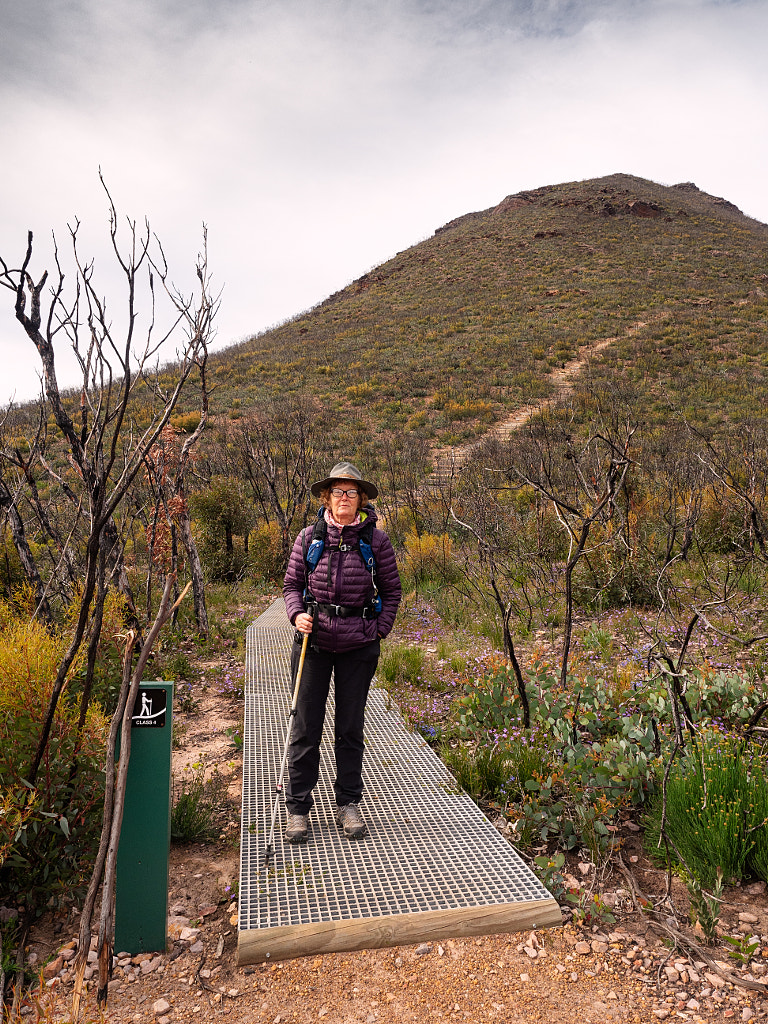
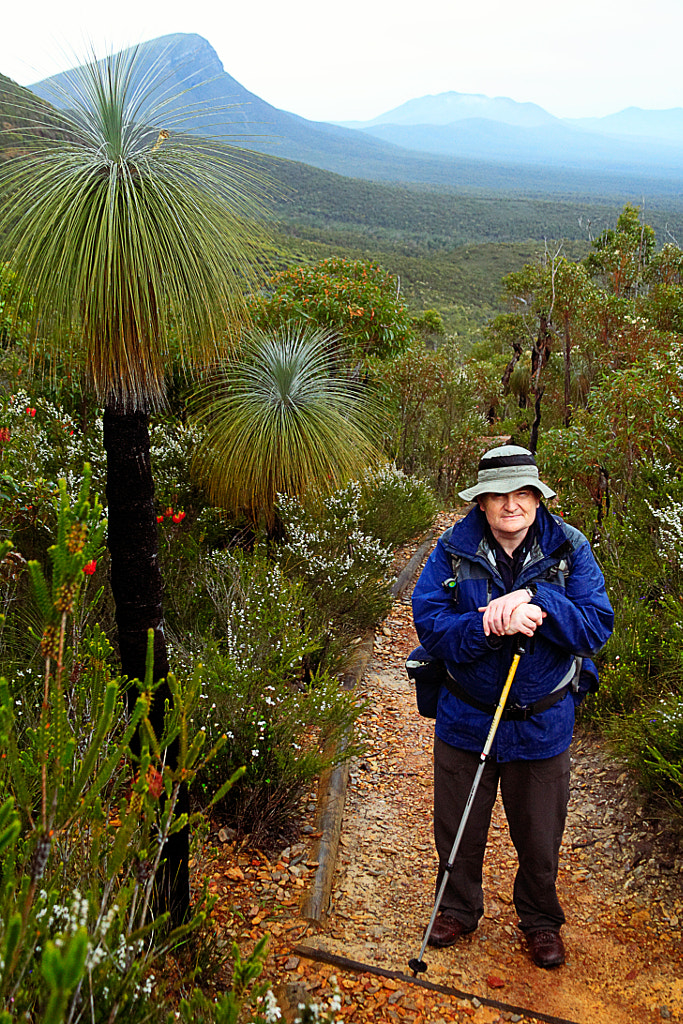
Helen at the start of the Mount Trio walking trail in Sterling Range National Park.
Mt Trio comprises three peaks and was once known by its Aboriginal name Warrungup, meaning “three become”. It is 3.7Km to the top and back with an ascent of 418m. The first third of the walk is very steep with irregularly spaced steps. Wildflowers, including the endemic mountain bells (Darwinia leiostyla), are a feature of this walk. Montane thicket on the upper levels of the peaks puts on a colourful display of wildflowers in spring and early summer although we didn’t see this as the area was still recovering from a devastating bushfire and was like walking through a landscape of charcoal sticks.
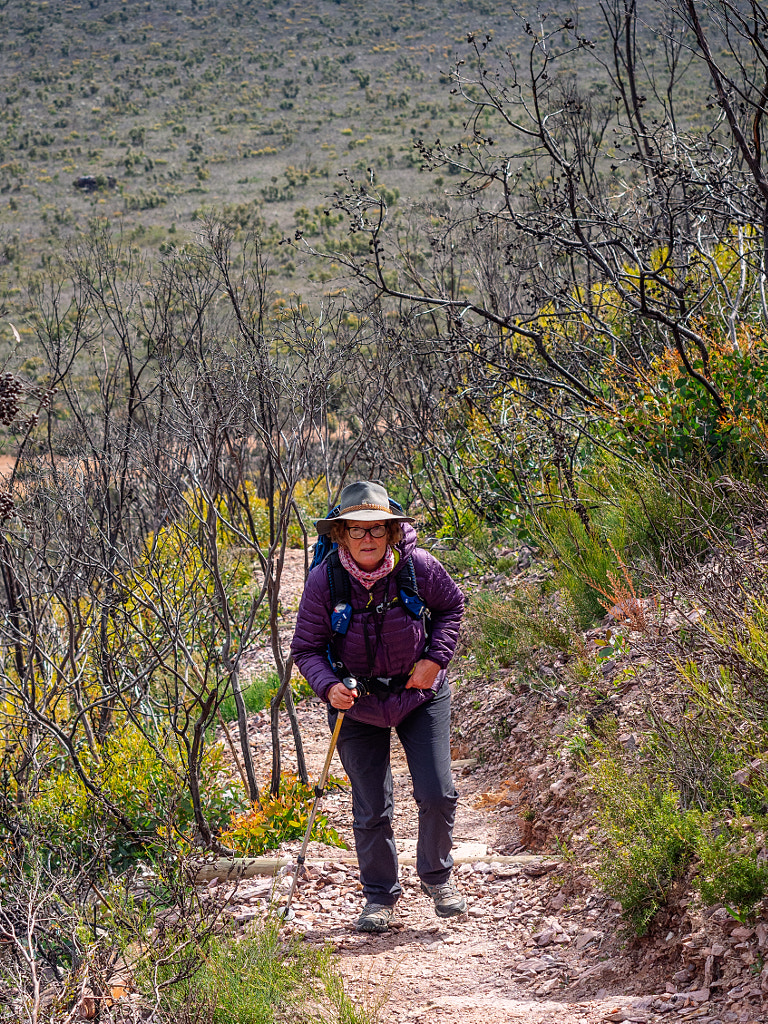
The first third of the walk trail is up a steep section with irregularly spaced steps which makes the going quite hard.
The Common Mountain Bell (Darwinia lejostyla) grows in the eastern and central Stirling Range, and can be readily seen on Bluff Knoll and Mount Trio.
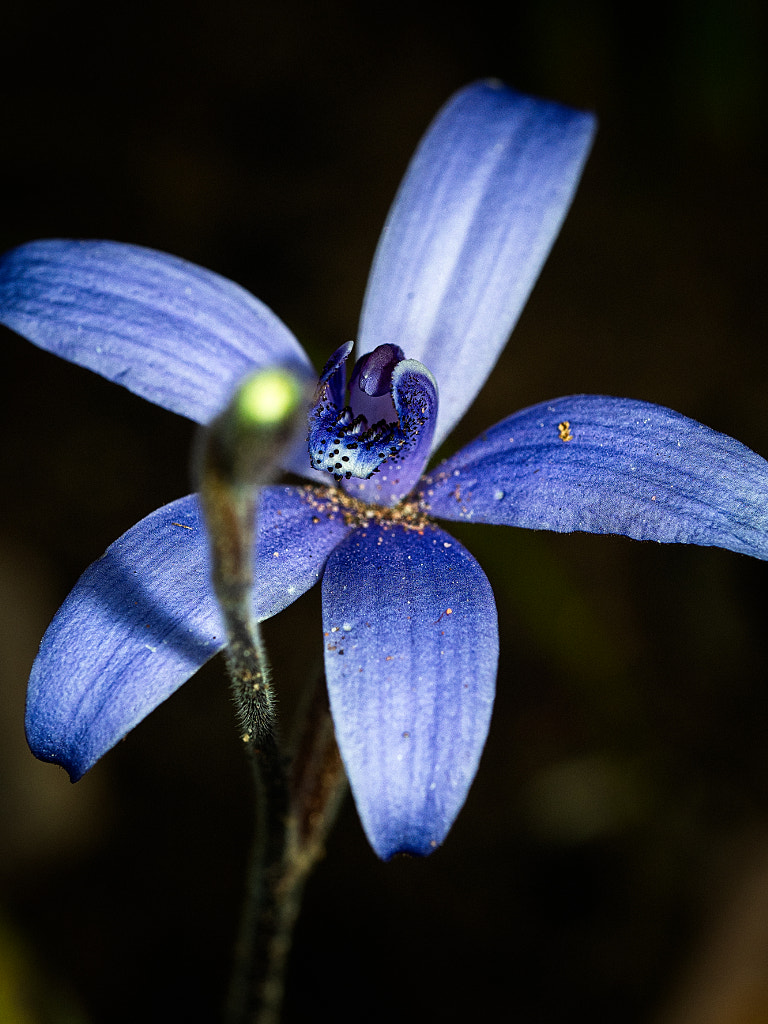
Silky Blue Orchid, Cyanicula sericea. Mount Trio, Western Australia.
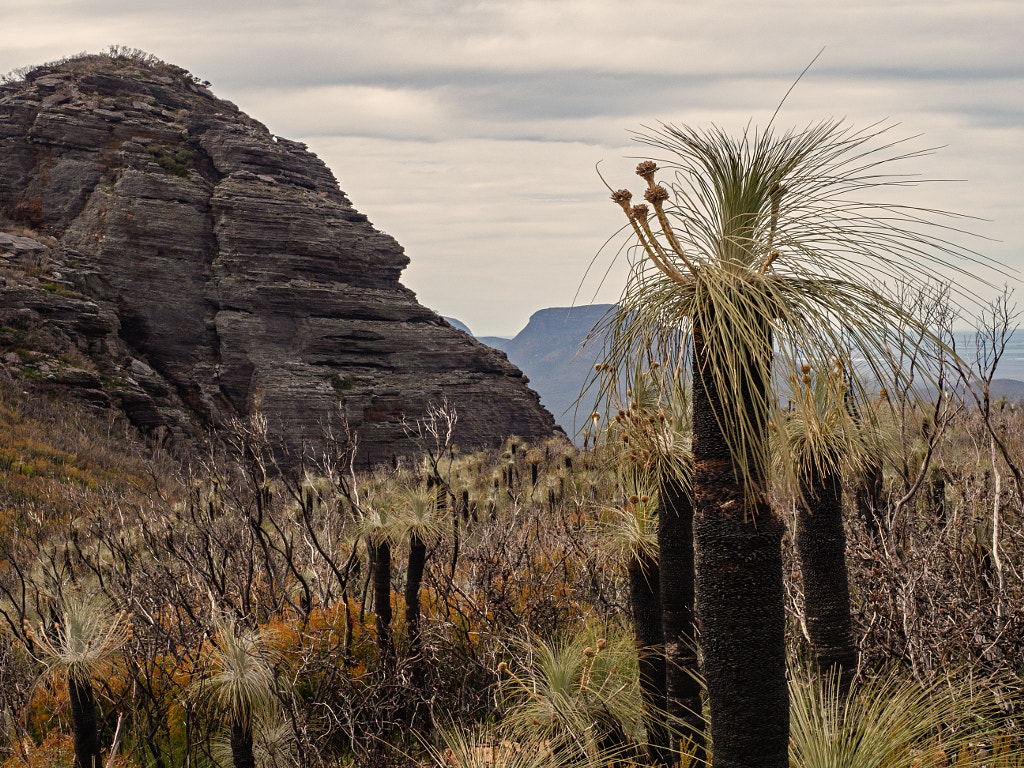
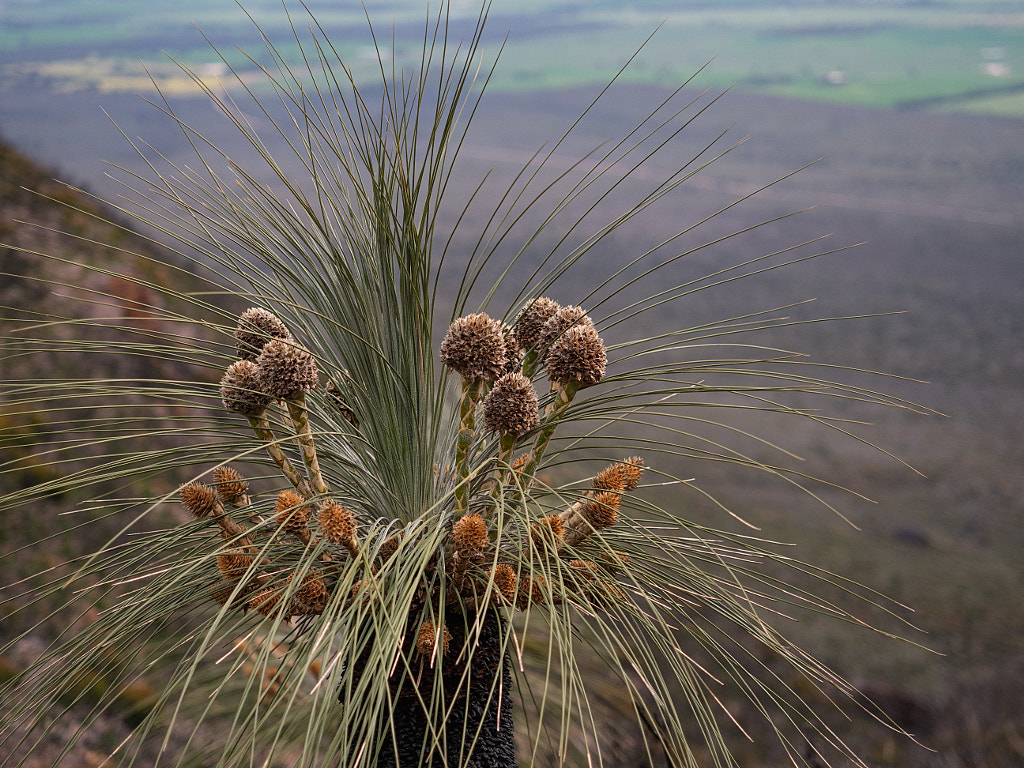
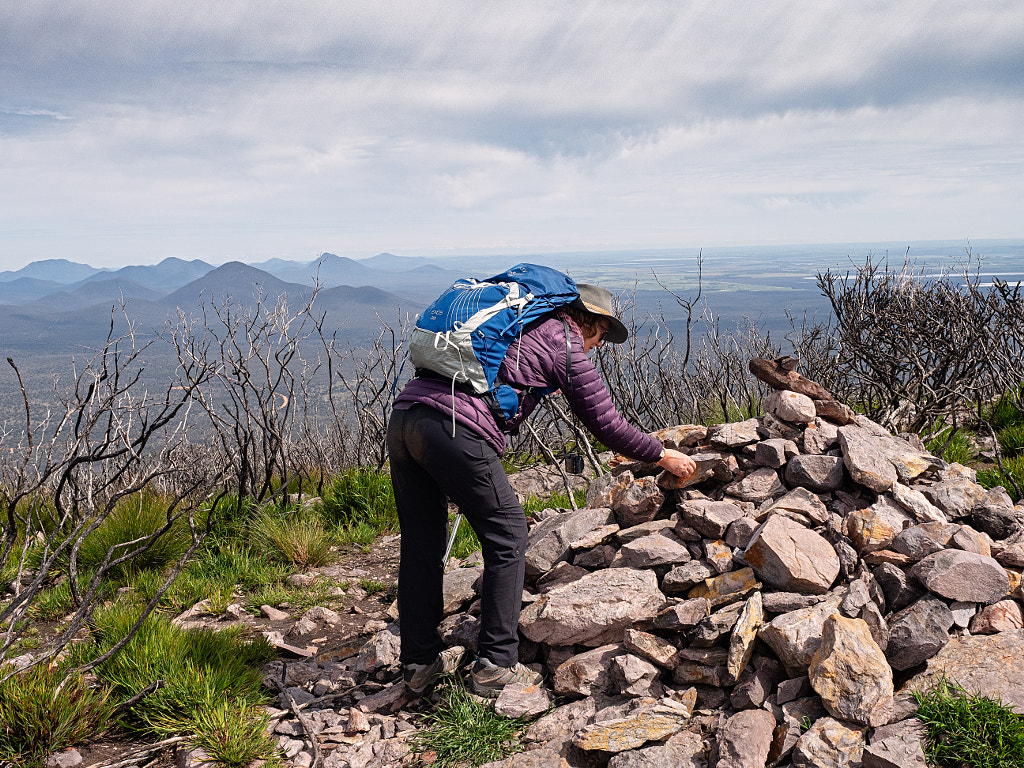
The going gets easier once you hit the saddle between the east peak and the north peak. The saddle between the cols is covered in Drumsticks (Kingia australis). These grass trees were often called Black Gin trees, a derogatory racist term now not used. The Nyoongar name for them is Pulonok. The track then follows a more gentle slope to the highest (northern) point at 856 metres. At the summit there is a small cairn of stones which people add to on getting there. From the summit on a clear day you get views of Mt Toolbrunup the second highest peak in the range at 1052m. Then all it is a matter of retracing your footsteps back to the start.
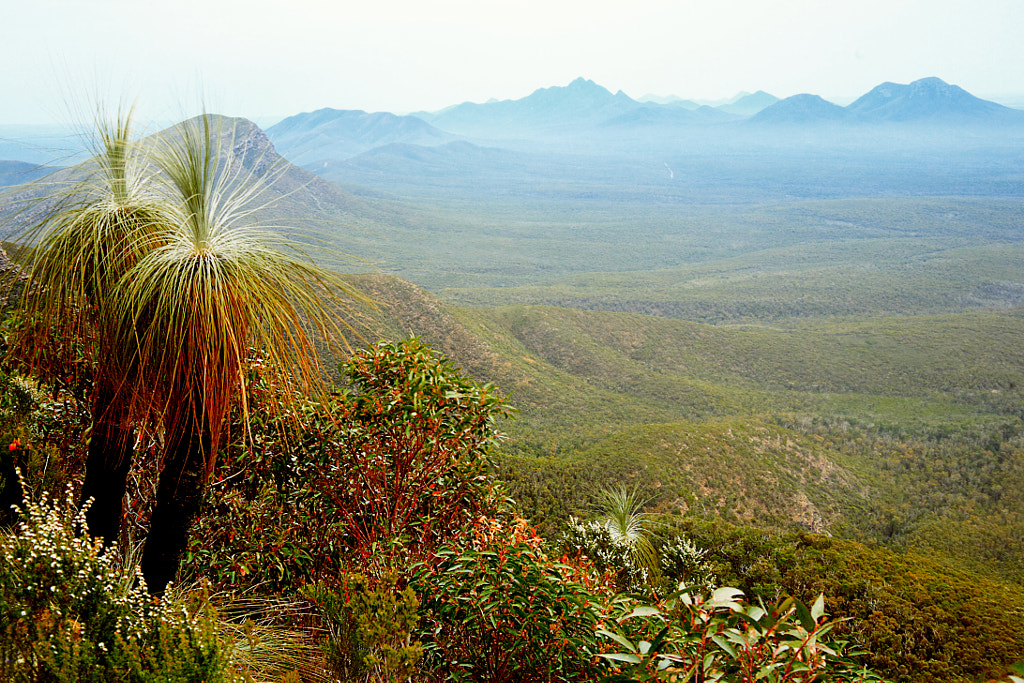
The saddle between the cols is covered in Drumsticks (Kingia australis). The Nyoongar name is Pulonok.
A closer look at some Drumsticks (Kingia australis).
Helen placing another stone on the cairn at the summit of Mount Trio.
Looking out at Mt Toolbrunup from the summit of Mount Trio.
Climbing up was pretty taxing on the legs muscles – all those steps were like a sadistic form of step aerobics. Those steps were even more murderous on the way down. It was the muscles that were complaining this time it was my knee joints. At about 500m from the end my knees announced that they were going to divorce me on the basis of cruelty. Thankfully from this point we could clearly see the car in the car park below us and it spurred us on to one last final effort.
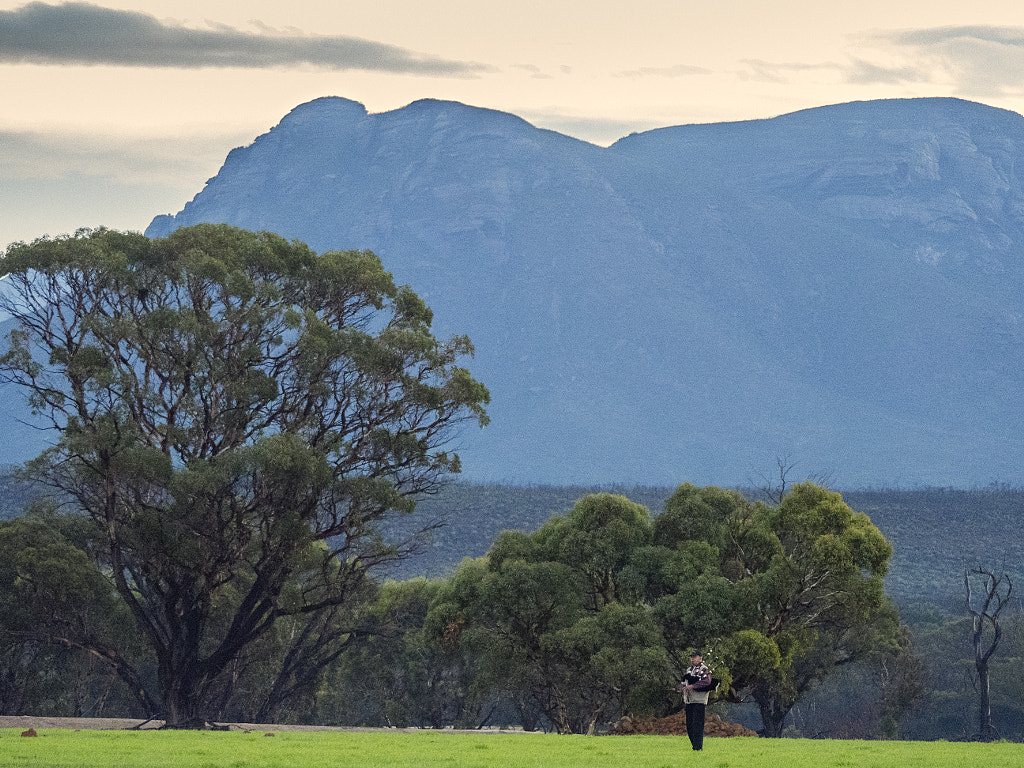
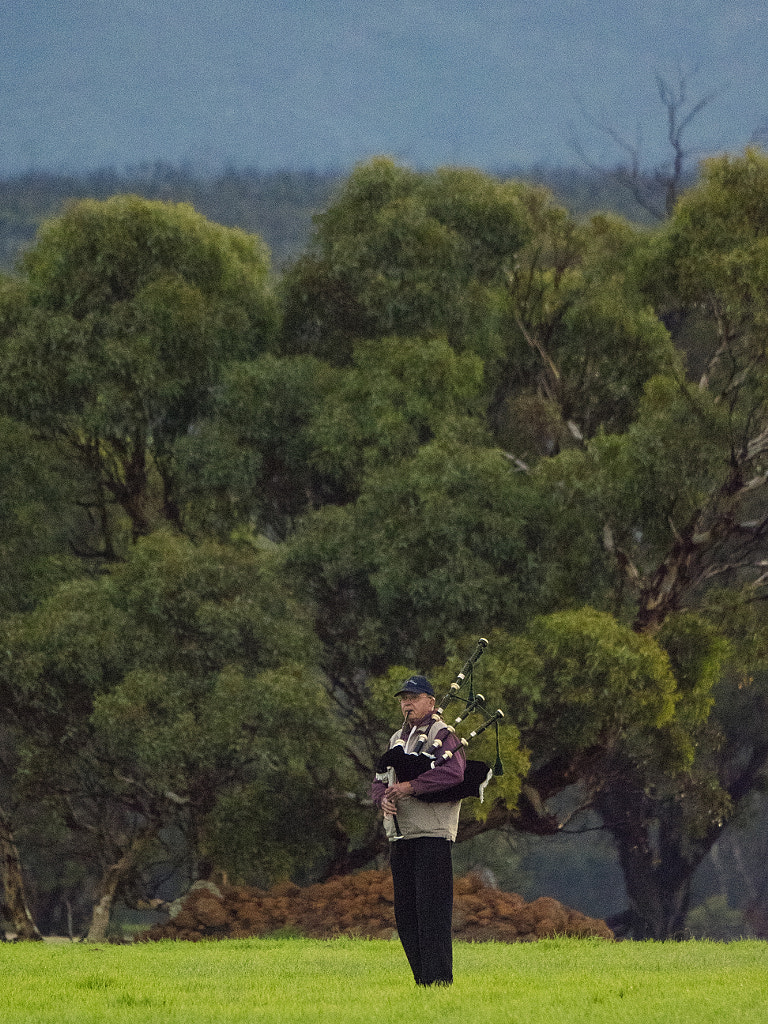
Just before sunset a lone piper can be heard at the Stirling Range Retreat.
We’ve just come back from the Stirling Range. While we were there every evening just before the sunset we could hear the skirl of the pipes. At first we thought it was the bloke a few doors down playing Scottish music in his chalet, but on further inspection we found that it was indeed the bloke a few doors down but he was standing in the middle of the field next door playing the bagpipes. He did this every day we were there come rain or shine.
While the British were in India they were responsible for some awful things but to my mind the worst crime against humanity they perpetrated was the introduction of bagpipes. Anyone who has been in India during wedding season will have witnessed or heard wedding processions through the streets which were accompanied by marching bands containing at least one bagpiper. If you were exceptionally lucky the piper was half way competent but the usual pattern was to have several pipers who were barely able to play. What they lacked in skill they made up for in enthusiasm. The thing was they’d play with great gusto but none of them in time and seldom in tune. It was absolute torture as it would go on all night. We thought we’d escaped the pipers clutches when we went to Nepal. Oh no dear reader. Despite having never been part of the British Empire Nepal has firmly embraced the bagpipes during wedding season. Since then the sound of bagpipes has always made me grit my teeth.
Now it may surprise you to know that the Scots don’t have a monopoly on the pipes and indeed didn’t even invent them. The earliest reference to bagpipes is a sculpture that has been found on a Hittite slab at Euyuk in Anatolia, dated to 1000 BC. The Roman emperor Nero who enjoyed burning Christians so as to provide garden lighting at his parties, who also murdered his mother, and who early commentators described as having been dressed in fancy costume playing the fiddle while singing the “Sack of Ilium” as Rome burnt down around him. But his biggest crime, according to the Roman historian Suetonius is that he played the tibia an ancient form of pipes that he played by tucking a bladder beneath his armpit – in other words bagpipes. The first reference to Scottish bagpipes was their use at the Battle of Pinkie in 1547. My last fun packed bagpipe fact is that Pakistan is the world’s biggest producer of the instrument where the industry was worth $6.8 million in 2010. So not only did Pakistan shelter Osama Bin Laden but it is responsible for exporting terror in the form of Bagpipes.
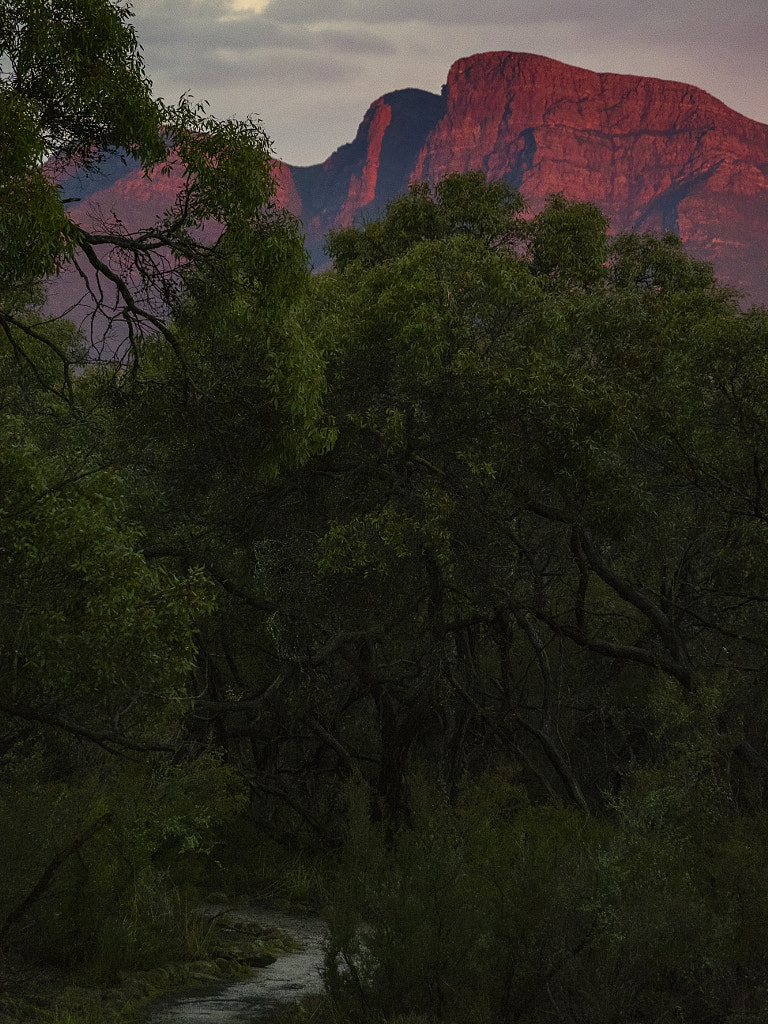
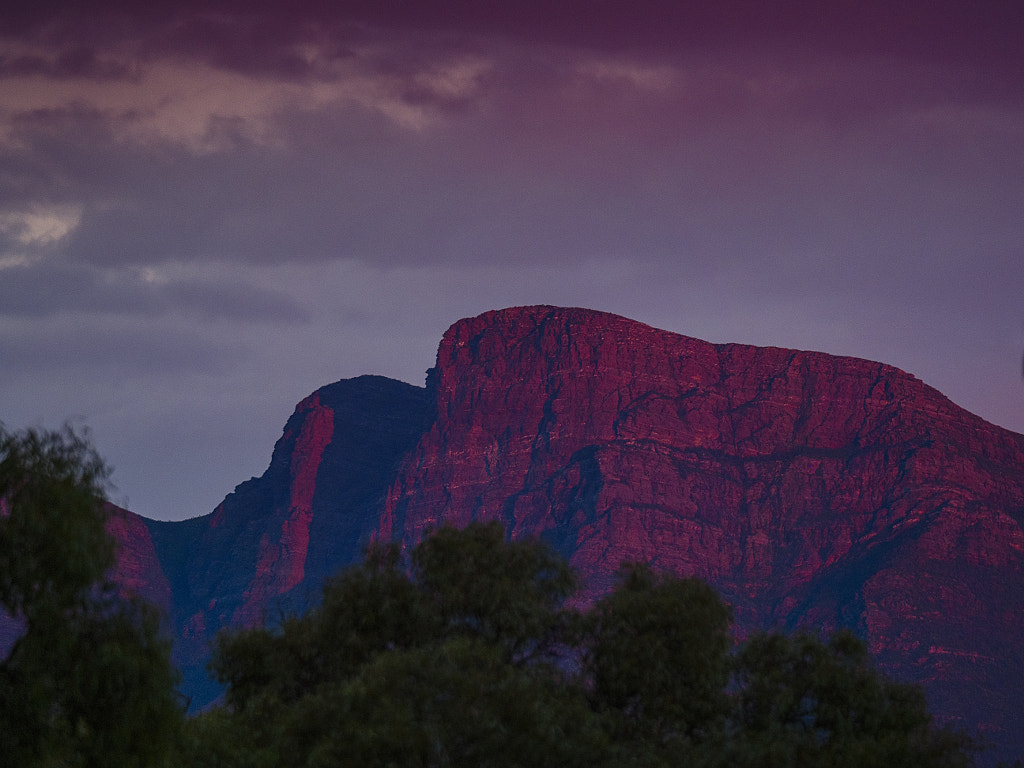
Enough of the rant lets get back to the Lone Piper of the Stirling Range. What was he doing? Well, it has become a tradition in Scottish regiments that a lone piper takes the place of a bugler to signal the day’s end to the troops. While he was marking the end of the day he was facing Bluff Knoll the highest mount in the Stirling Range. The colours of the sunset are reflected on Bluff Knoll and are truly wonderful and if anything deserves an accompaniment it is that.
Bluff Knoll, in the Stirling Range, reflecting the sunset.
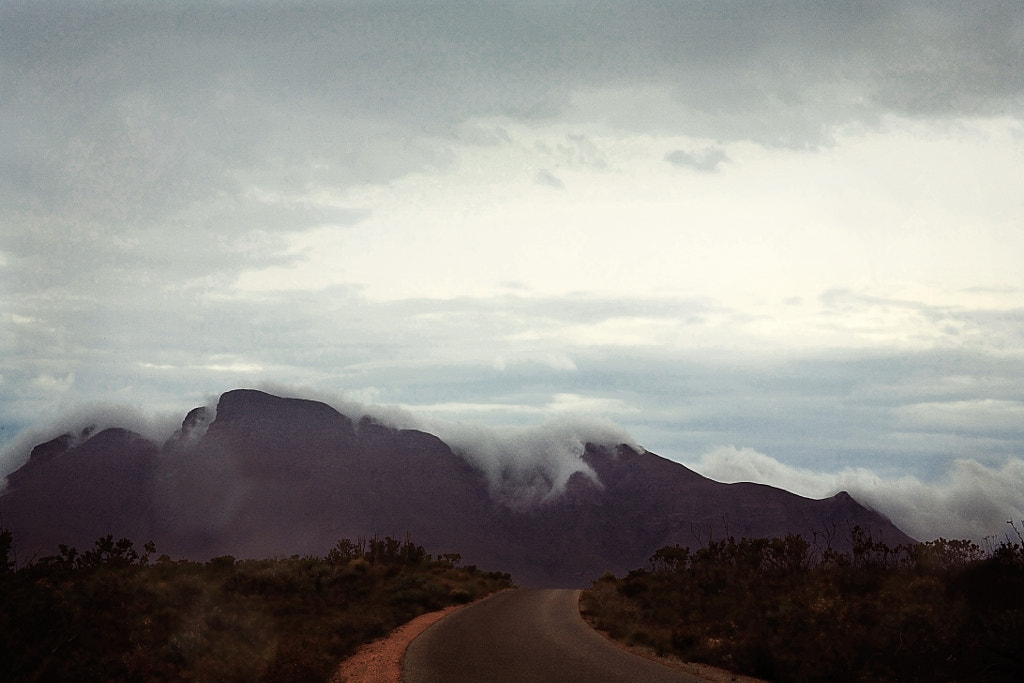
Low level cloud brings white out conditions to Bluff Knoll. Even in late spring the weather can be incredibly unpredictable. The Stirling Range is one of only a few places in Western Australia where snow falls.
Stirling Range National Park lies approximately one hours drive north of Albany in Western Australia’s Great Southern region. The reason most people visit the park is to climb Bluff Knoll which they believe to be the highest peak in Western Australia. Bluff Knoll is an imposing structure – it rises dramatically above the pan flat agricultural land surrounding the park – but the highest point in Western Australia it is not. That honour goes to Mount Meharry in Karijini National Park which is 1245m compared to Bluff Knoll’s 1093m. The other reason people visit Bluff Knoll is that it is the most easily accessible walk in the park being serviced by a road, having parking and a cafe. The trail is well signposted and is comparatively well surfaced and above all despite being steep in places anyone of reasonable fitness can do it. That cannot be said of some of the other walking routes within the park. There is good reason why Australia’s Special Air Service Regiment (SASR) train there.
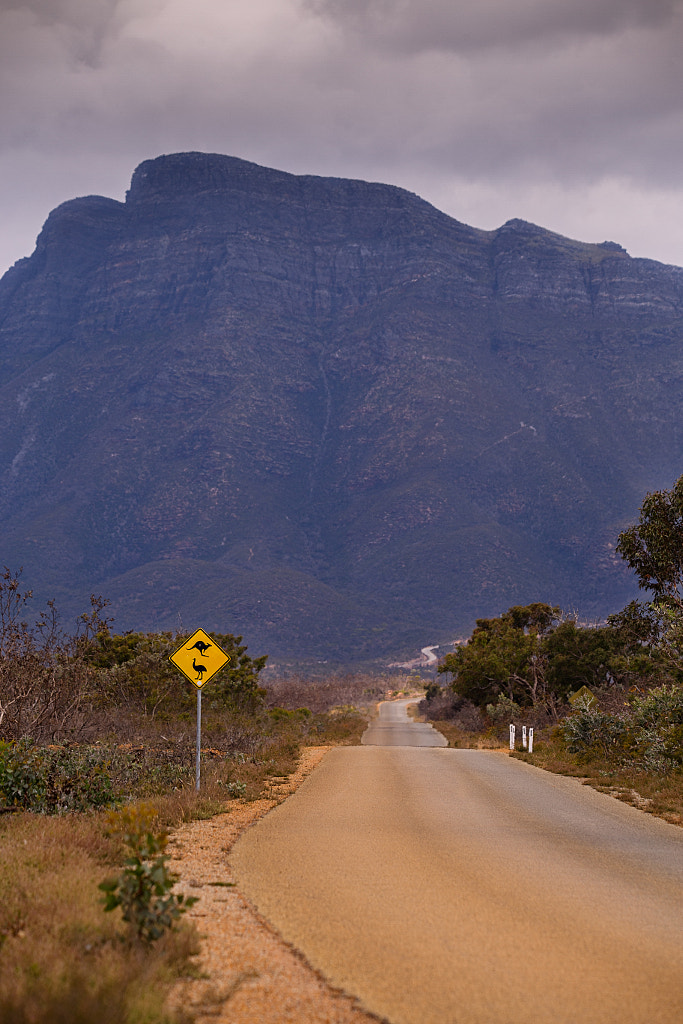
The road to Bluff Knoll in the Stirling Range National Park. At 1099m it is the highest peak in the Stirling Range. It is often surrounded by mist and low lying cloud.
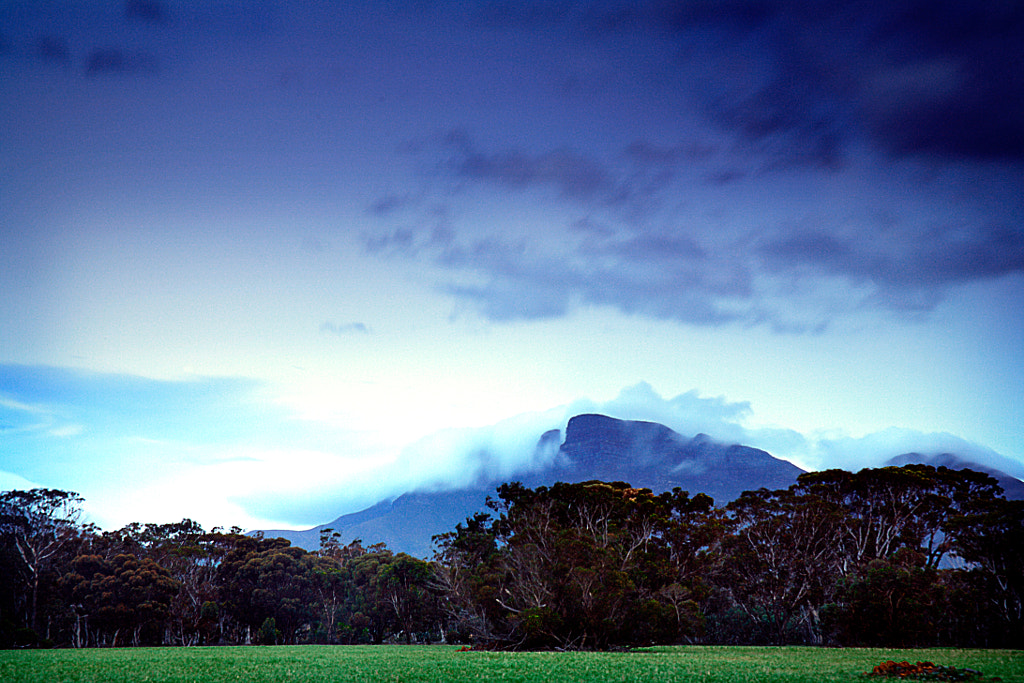
Twilight in the Stirling Range and the peak of Bluff Knoll is being buffetted by a storm.
Highland areas such as the Stirling Range always have very variable weather and often in the extremes. The Qaaniyan and Koreng groups of the Nyoongar called Stirling Range Koikyennuruff or place of the swirling mist. Low lying cloud and mist often shroud the peaks even on bright sunny days. The Nyoongar believe Noatch, the spirit of the dead, lived in the mist and that evil witches lived on the high ridges and so tended to avoid going up onto the peaks. All I know is that it can be shorts and tee shirt weather at the base of Bluff Knoll but when you get to the top it can be very cold and wet. The fact that it is the only place where it snows with any regularity in Western Australia (any time between April and November) shows how difficult the weather can be. The weather is one of the main reasons why people get into strife when climbing Bluff Knoll, most are simply under equipped and under prepared. A Swedish acquaintance once told me there was no such thing as bad weather just poor choices of clothing and that is certainly borne out here. Things aren’t much better in summer as the park is very prone to bush fires so if you wish to visit make sure you are aware of what is happening in the park and whether the trails are open by checking with the Department of Biodiversity, Conservation and Attractions Parks Alerts System and then plan accordingly. The other reason why people get into trouble is that they leave the trail looking to find a short cut and then get disorientated and lost in the scrub.
Pausing for a quick breather by a grass tree (xanthorrhoeaceae drumondii) while trudging up Bluff Knoll on a rainy morning.
I first intended to climb Bluff Knoll with my partner back in September of 2000 to celebrate her fortieth birthday but we never did it as I was run over by car. It wasn’t until October 2008 that we finally got round to doing it. Better late than never I suppose. It was a bit of a slog in cold wet weather but it was well worth the effort. We were staying at the Stirling Range Retreat which was then run by Ayleen Sands and her husband Tony. Ayleen ran orchid spotting trips and we did one and that opened my eyes to the biodiversity of the region and more specifically the amazing orchids that are found in Western Australia and I’ve been photographing orchids ever since. It was from Ayleen that we learnt that Stirling Range is an incredible biodiversity hotspot. In spring and early summer the 1500+ species of plants that can be found within the Park’s boundaries come into bloom. To put that into perspective the 1,159 km2 of the Stirling Range National Park contains more species of wildflowers that the 315,159 km2 of the British Isles.Some of these plants, such as the mountain bell (Darwinia leiostyla), are found no where else in the world. A staggering 123 species of orchid have been found in the Stirling Range National Park which works out to be about one third of the total number of orchid species that can be found inWestern Australia. There are more than 140 bird species, approximately 20 species of native animal – the most likely to be seen are western grey kangaroos. Rottnest Island isn’t the only place with quokkas they have been seen on the slopes of Bluff Knoll. The are more than 30 species of reptile and of course it would not be Australia without poisonous snakes. I initially went to climb Bluff Knoll but found so much more and have been back since and intend to go back again and again.
Looking west towards Yungermere Peak, Mount Success, and Coyanarup Peak while walking the traverse of Bluff Knoll. In the distance some of the early morning low lying cloud can still be seen fringing the mountain tops.
The Common Mountain Bell (Darwinia leiostyla) grows in the eastern and central Stirling Range, and can be readily seen on Bluff Knoll and Mount Trio.
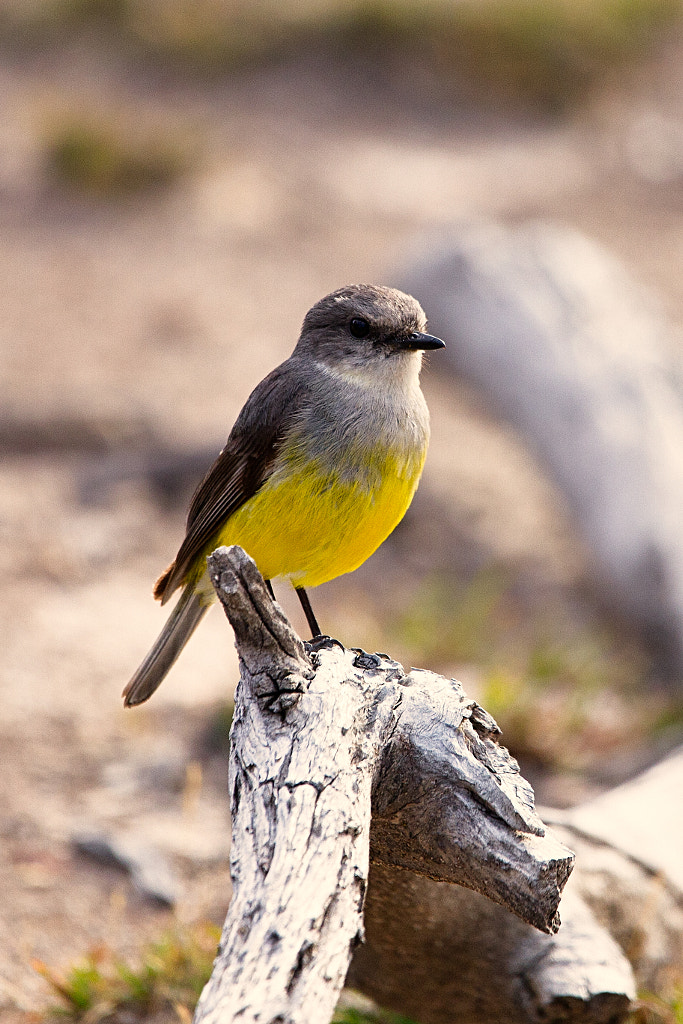
Western Yellow Robin, Eopsaltria griseogularis. Stirling Range National Park, Western Australia.
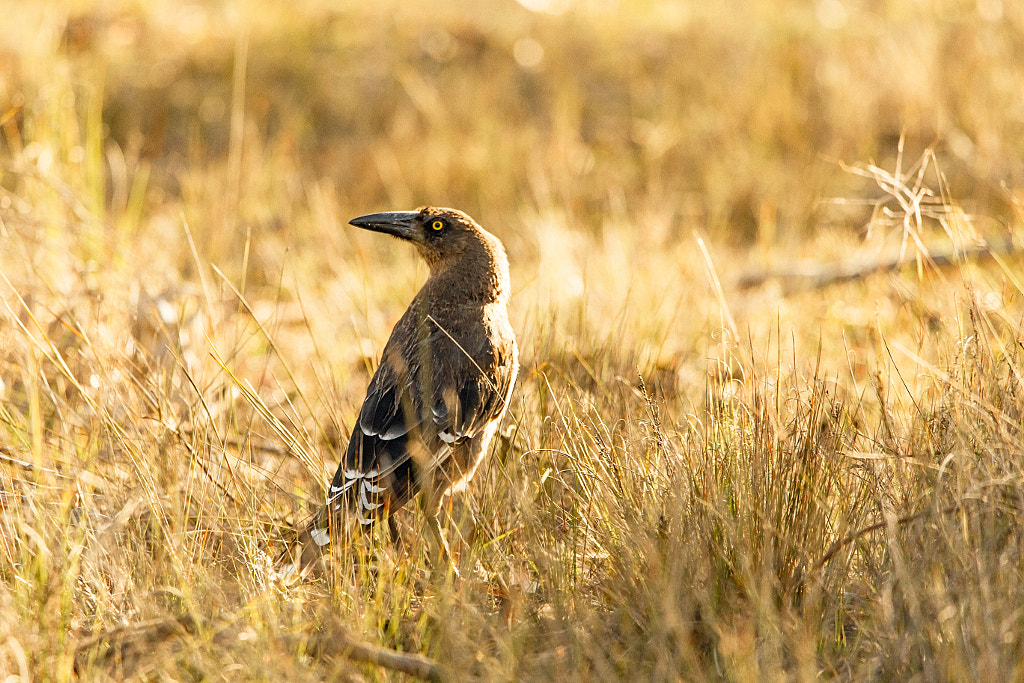
Grey Currawong, Strepera versicolor. Stirling Range National Park, Western Australia.
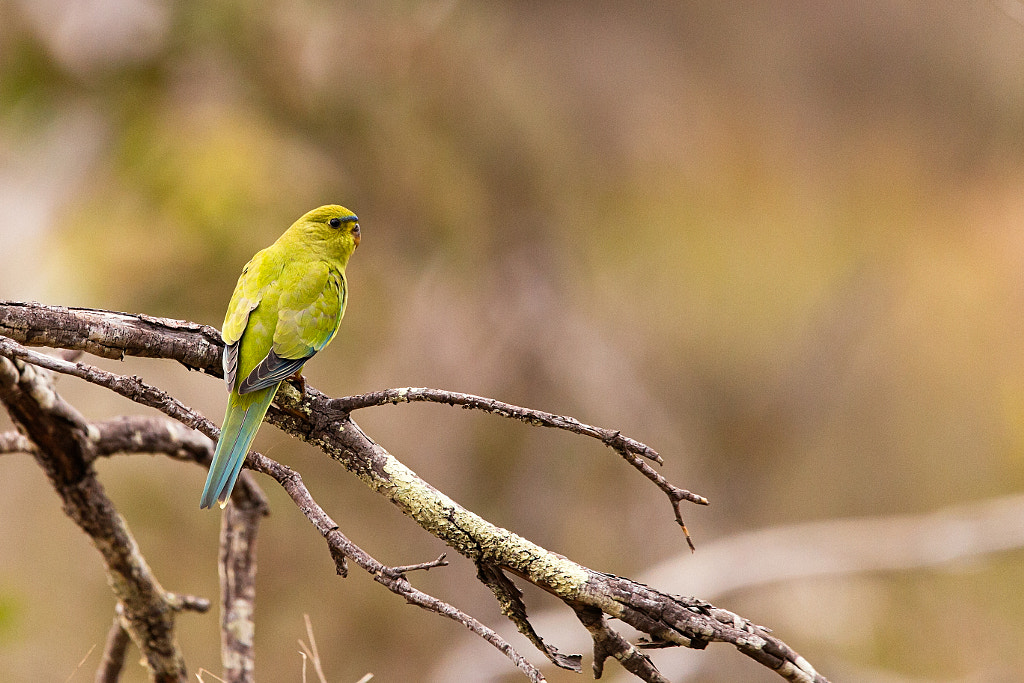
Elegant parrot, Neophema elegans subsp. carteri. Stirling Range National Park, Western Australia.
The Butterfly Orchid ((calendenia lobata)) is uncommon and rarely seen, it was first observed on Mt Toolbrunup in the Stirling Range National Park in 1991.
The sun sets behind Mount Trio in the Stirling Ranges of Western Australia. The everchanging weather in the Stirling Ranges can produce some dramatic skyscapes at sunset with spectacular cloud formations over the mountains.


You must be logged in to post a comment.