I came across a wonderful little piece in the Guardian the other about a photographer whom I’d never heard of before, but on looking at his work I was completely enthralled. The photographer is Raúl Cañibano from Cuba. His work falls into the categories of humanism and surrealism and follows in the traditions of Henri Cartier-Bresson, Elliot Erwitt, Walker Evans, Josef Koudelka and Sebastião Salgado. It is wonderful stuff and I would urge you to have a look at his work and maybe buy his books.
This genre of photography is one that for a number years I really wanted to practice without much success. There is this assumption that it is very easy – all you have to do is walk around and point your camera at everything you see and you’ll end up with “art”. It takes a great deal of dedication, patience and an eye that can spot “a significant moment in the continuous flux of life and captures it in a fraction of a second”. (p 104 Badger, G. 2007 “The Genius of Photography – how photography has changed our lives” Quadrille Publishing Ltd, London). Or to put it another way that nanosecond when all the individual elements of a photograph come together to create meaning. For years I have wanted to take a certain photograph that for me epitomises this ethos. I can see the image in my minds eye, but, I can never manage to make it happen. It is a simple concept but it has eluded me.
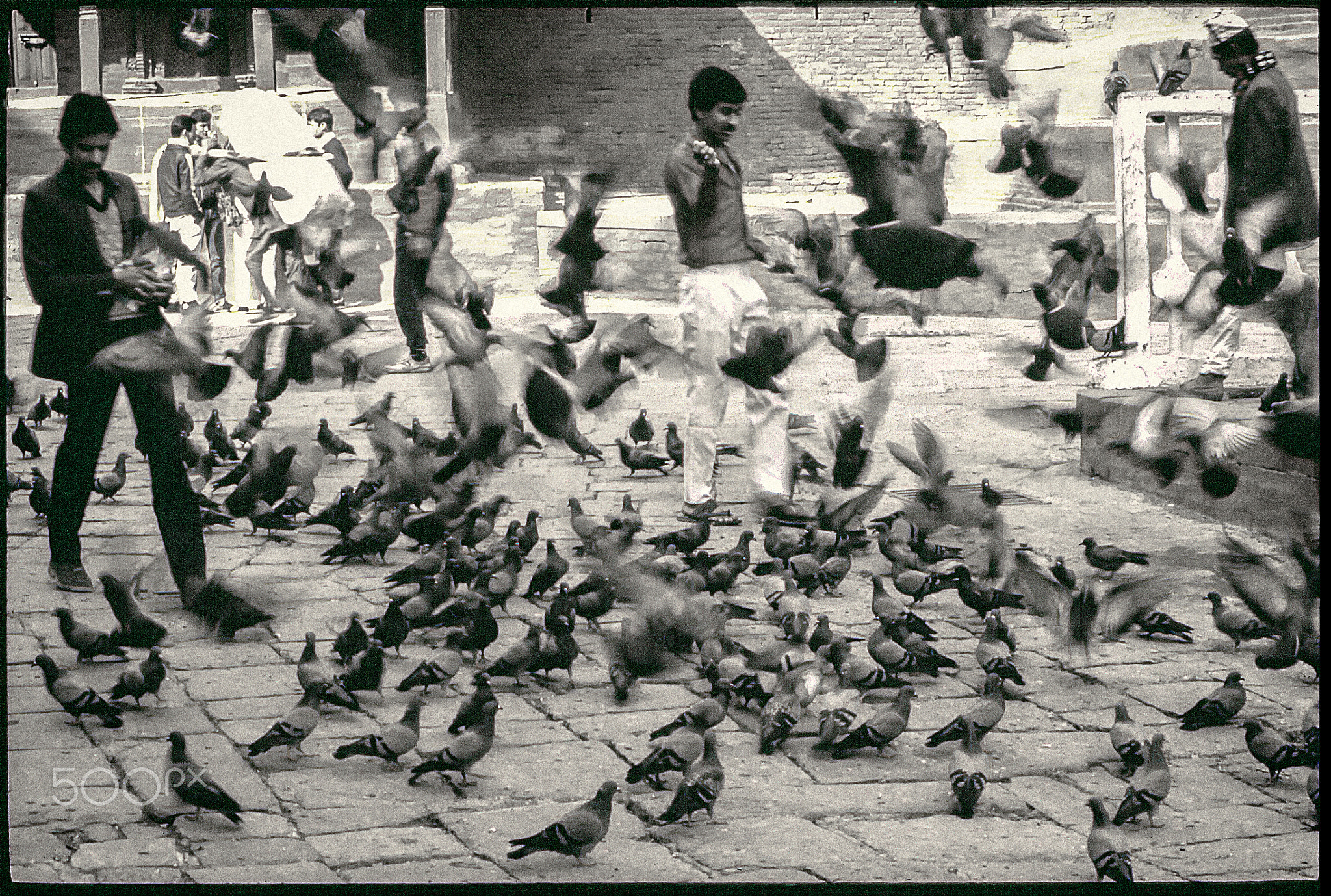
Walking through the feeding pidgeons in Durbar Square Kathmandu. Olympus OM4 with Sigma 75-210 lens, Kodak Ektachrome 100.
The idea is that a person walks into a large flock of pigeons that are feeding on the ground and as they do the birds take flight and we have a photo of a person surrounded by a swirling mass of birds.As I said it is a very simple concept and not original in any shape or form. The occurrence happens frequently yet I just can’t nail it. The best attempt so far is one that I took in Nepal in 1987 (yes it’s been going on that long!). It’s an OK shot on one level, but it is really too cluttered to work. Fast forward to Monday and I was in Perth walking through Forest Place where there was a flock of pigeons feeding on the ground. Suddenly alert to the possibilities I caught out of the corner of my eye a small boy running around in that state of hyper excitement that only small boys can have. I immediately thought that at last it is finally going to happen. So as the little lad approached the birds I quickly framed up and set an appropriate aperture and shutter speed and waited for the decisive moment of the child scattering the flock and them taking flight around him. I could just see the finished photograph. So what happened? Well the little lad did indeed run among the pigeons and they just didn’t react. The whole episode was a tremendous anticlimax. Maybe one day it will happen.
The Kid Among The Pigeons. Forest Place, Perth, Western Australia. Canon 5d with Canon EF 50mm f1.8 ii.
I have a long and complicated relationship with street photography and I want to try and articulate that here. Wikipedia defines street photography as “photography conducted for art or enquiry that features unmediated chance encounters and random incidents within public spaces”. It does not have tohave people as the subject matter, but most of it does. The history of street photography is really tied to the technology of photography – once cameras and film became portable and quick to use then people started taking photos of the things that were happening around them. The genre really started in the inter war period, but it was the end of the Second World War that really kick started it. World War Two had seen death and destruction carried out on an enormous industrial scale – the methods of modern mass production lines had been used to exterminate millions of people. The American-Luxenbourgish photographer Edward Steichen, who at the time was the director of photography at the Museum of Modern Art (MOMA) in New York, decided to curate an exhibition based upon the universality of the human experience as a counter to the war. Dorothea Lange, a leading light in photographic reportage, assisted Steichen in his project and on January 16, 1953 she sent out a recruitment letter to photographers asking them to “show Man to Man across the world. Here we hope to reveal by visual images Man’s dreams and aspirations, his strength, his despair under evil. If photography can bring these things to life, this exhibition will be created in a spirit of passionate and devoted faith in Man.”. In all 273 photographers from 68 countries contributed 503 photos. The exhibition opened at MOMA on January 24 1955 and then went on to tour the world for eight years making stops in thirty-seven countries on six continents. More than 9 million people viewed the exhibit, which is still in excess of the largest audience for any photographic exhibition since. The book from the exhibition has never been out of print and has sold more than 4 million copies. The impact was colossal – it exposed people to the idea of looking at photos of people doing the things that make us human and encouraged them to make their own photos.
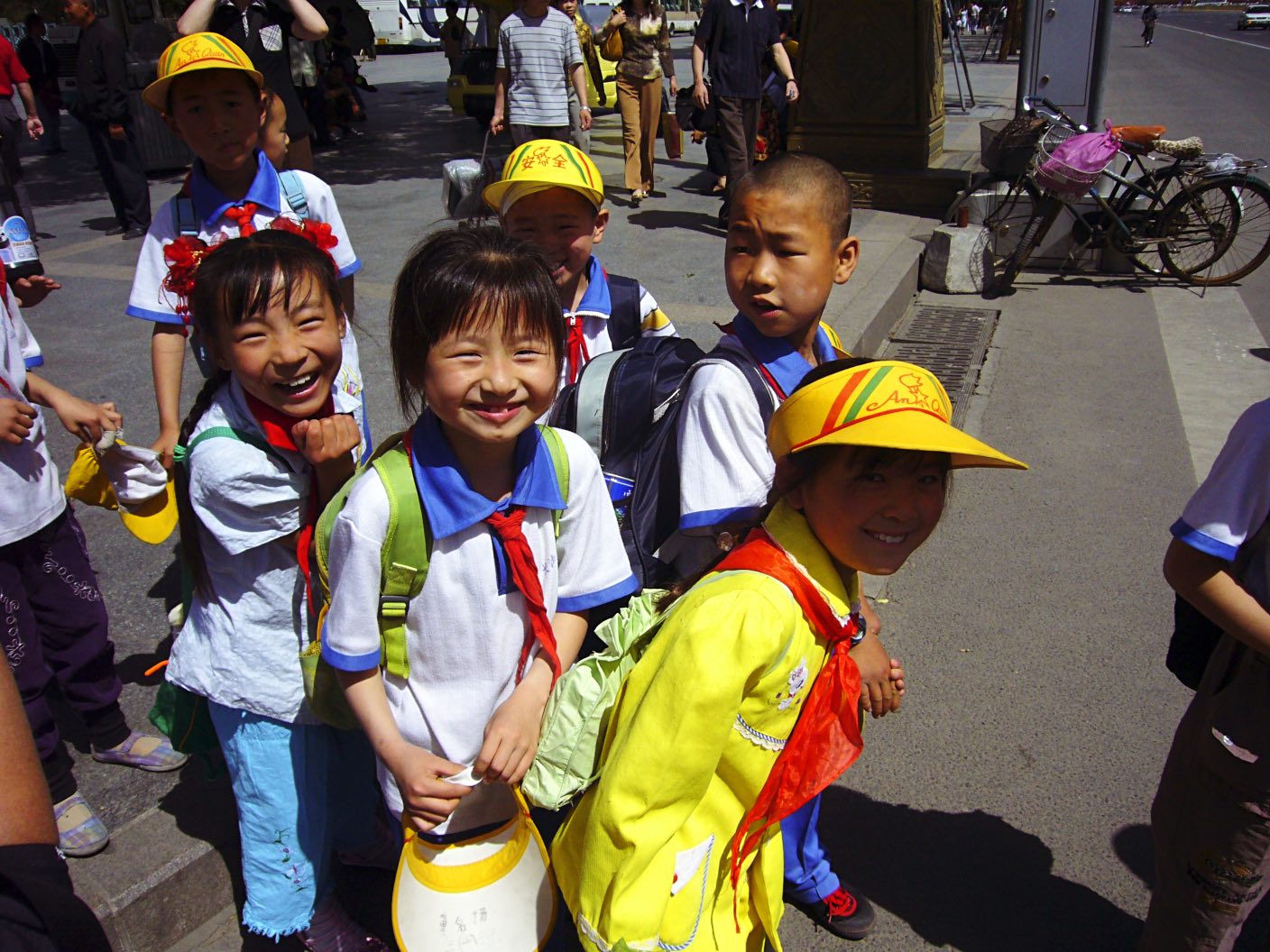
Studio 798 East meets west. Coke and tagging in Beijing.
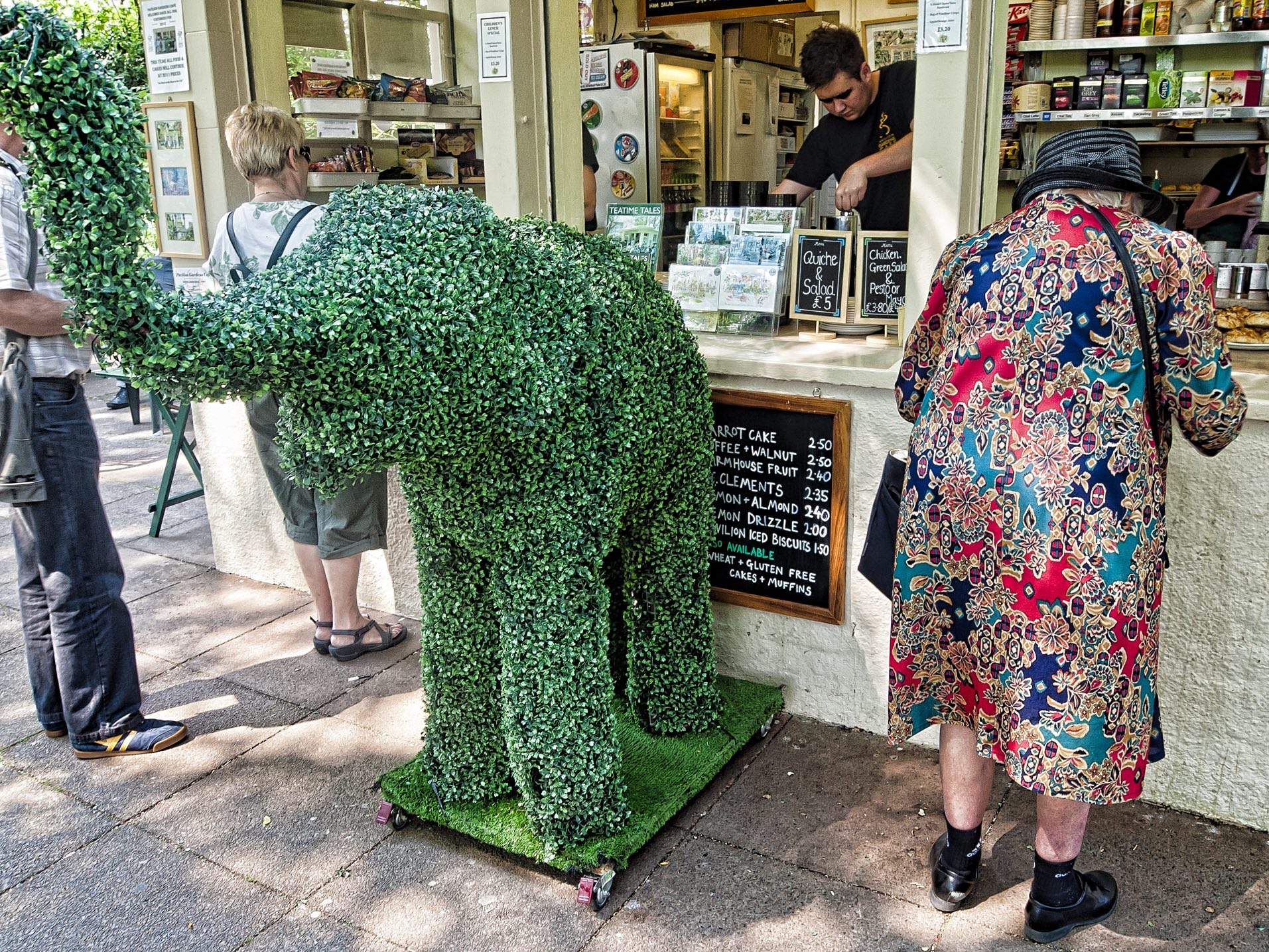
Topiary at the Pavillion Gardens Cafe, Brighton.
When I look at my bookshelves the bulk of them are of street photography. Ever since I saw the exhibition Another Country by Chris Killip and Graham Smith in 1985 I wanted to try and produce work that showed that ordinary people and things are important. So I started buying books by people such as Henri Cartier-Bresson, Robert Doisneau, Elliott Erwitt, and Robert Frank. At the same time I started loitering on streets with a camera trying to summon up the courage to take pictures of strangers. I’ve referred to this previously as having delusions of Bresson. In the 1980’s photography was expensive – every shot cost money – and this meant that I had to ration my picture taking to 2 or 3 rolls of film a month which meant that progression was a very slow process. Digital changed that and you could go out for the day and take hundreds of photos and get instant feedback on how they looked. It was a fantastic time to be a street photographer and the result is that there was another explosion of interest in the genre as millions of people world wide embraced it as a life style.
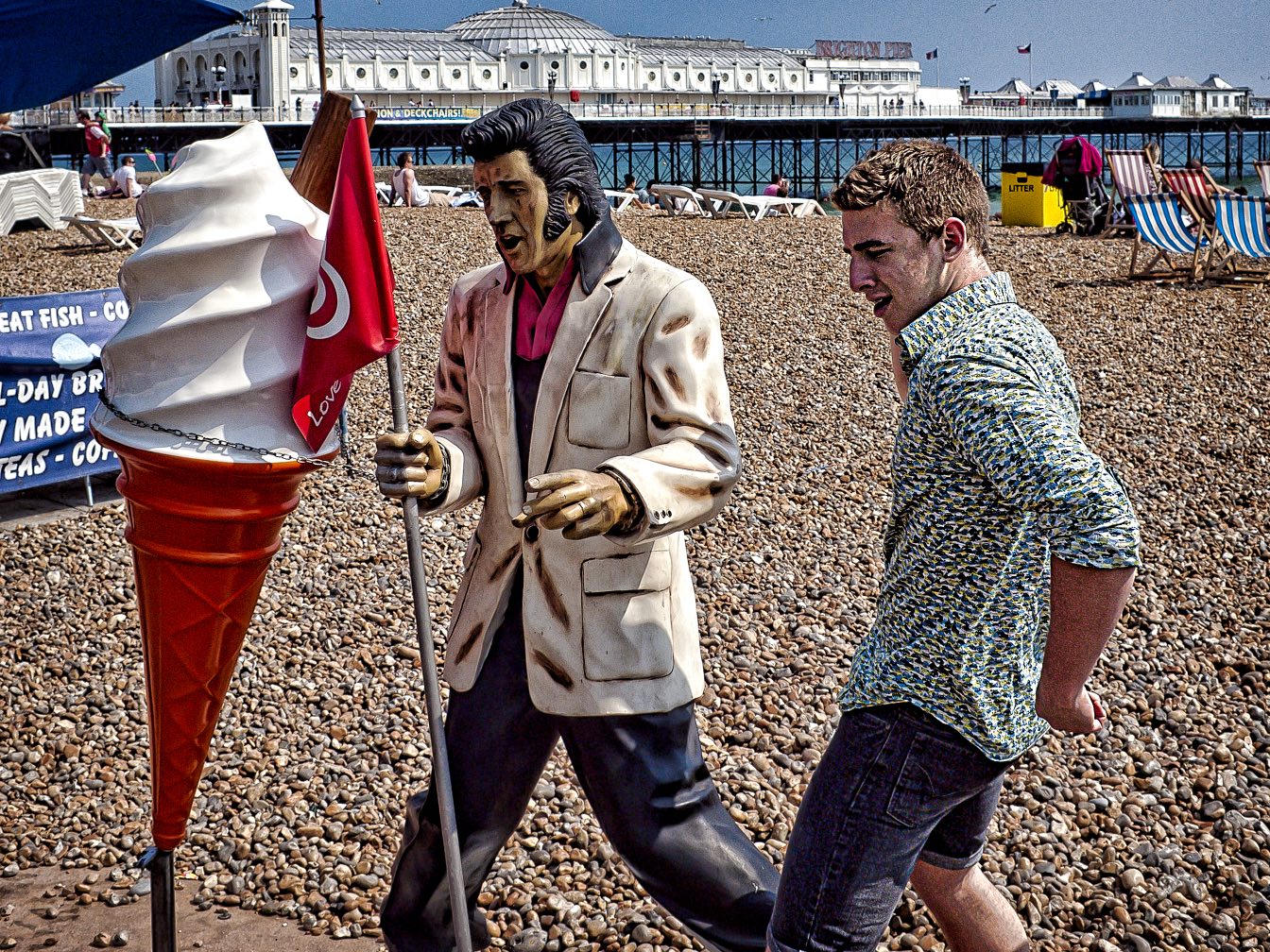
Getting in touch with his inner Elvis on Brighton Beach.
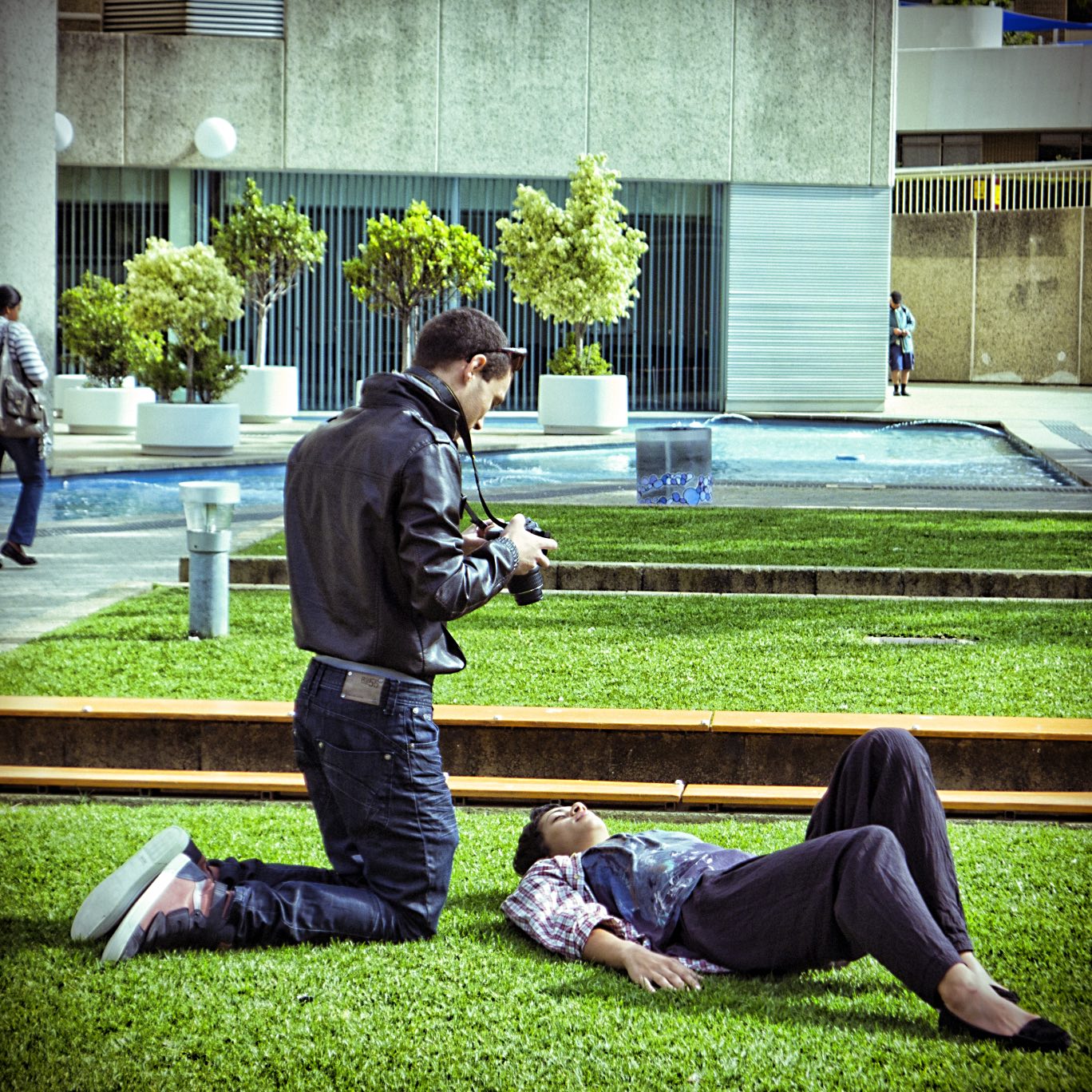
Goofing around with the camera in the Perth Cultural Precinct.
Things began to sour for me in 2007. After 9/11 the world was gripped with paranoia and virtually every country in the western world started bringing in counter terrorism legislation which meant every police officer and every security guard saw anyone carrying a camera as a potential terrorist. Some were OK and were polite and friendly. Some just over reached themselves and saw themselves as judge jury and executioner. In 2007 I went back to England as my father was dying. A few days after he died I wanted to go out and do something creative. Now the town we’re from attracts tourists from all over the world and so you’d think it would be safe to wander around taking photos. Well no and I had an extremely unpleasant encounter with a police officer who was convinced I was Osama Bin Laden scoping out the local shops for a potential suicide bombing. After threats of violence against my person he dragged me off to the police station and proceeded to threaten me some more for another couple of hours. It was only when I started asking the desk sergeant to see the Australian consul that things started to improve and I was eventually released and told to get on the next available plane. So that started to make me wary of taking photos out in public. The next year, 2008, Australia was gripped by the Bill Henson scandal and suddenly every photographer was not just a potential terrorist but also a paedophile. I attended the Earth From Above exhibition by Yann Arthus-Bertrand some of which was held outside in Perth’s Cultural Precinct. I took some photos of people interacting with the exhibits outside and while doing so I was accosted by a women who accused me of being a paedophile which led to an unpleasant encounter with the police. So with that I decided to hang up my rangefinder and 35mm lens and concentrate on subjects that weren’t people. But it wasn’t just the problems with the police it was also the fact that at this time I also felt that the world’s culture was beginning to change – it was becoming more homogeneous and it was difficult to see any difference in photos. The final straw was the ubiquity of the mobile phone. Everyone seems to walk around staring at this thing they carry. The little spontaneous connections and reactions have now disappeared as everyone just stares at the screen on their mobile phone. I’m not the only person who feels this way. Joel Meyerowitz the doyen of New York street photography said in an interview with the Guardian newspaper “In the 60s and 70s you could look at my street photographs and trace lines from the eyes of people connecting with other people’s eyes, setting up these force fields.” Of now he says “Nobody’s looking at each other. Everybody’s glued to their phones…The street has lost its savour.” Meyerowitz has now largely given up on it and concentrates on still life.
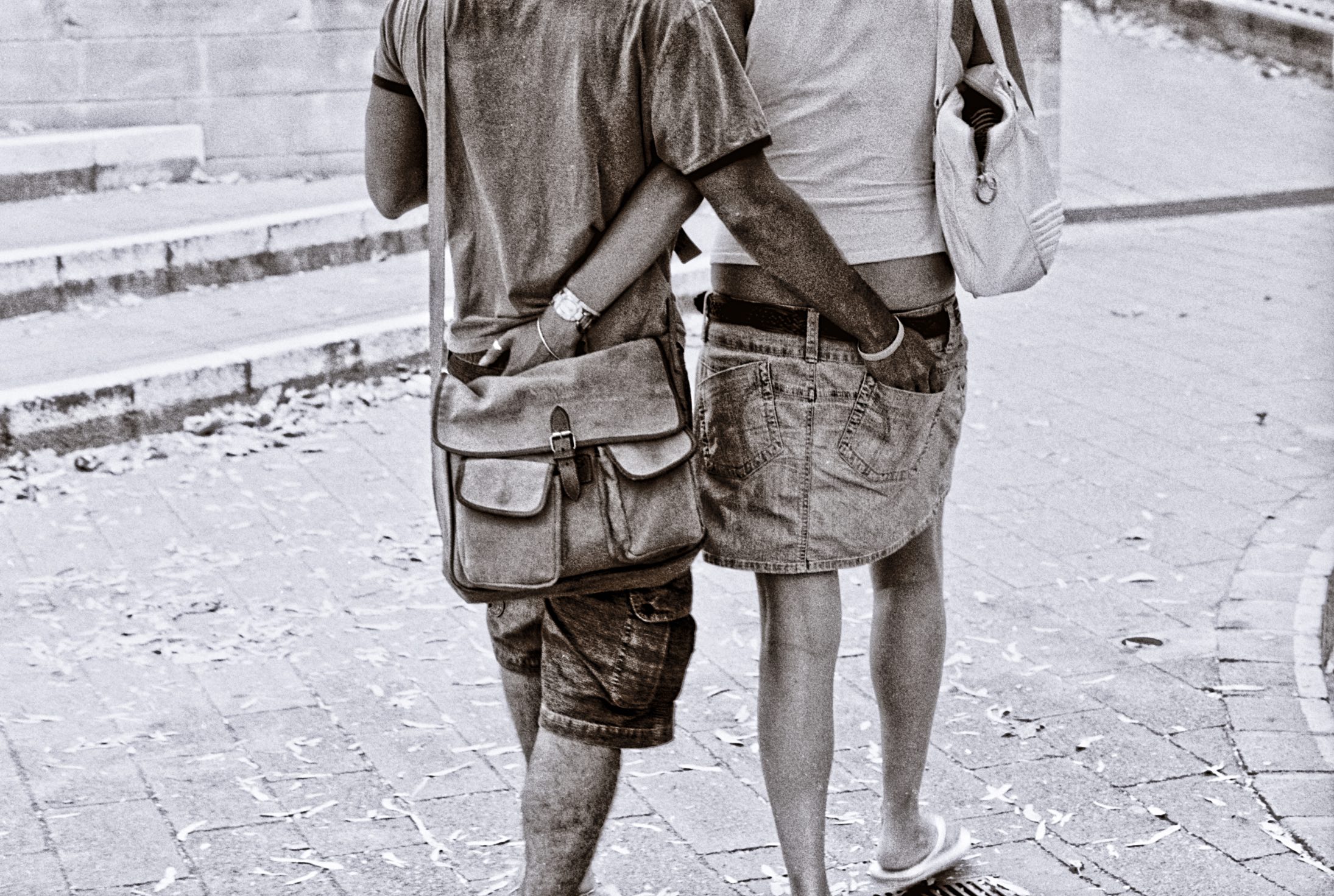
Young lovers walk arm in arm through Northbridge in Perth, Western Australia.
Palm Sunday walk for justice for refugees. Perth, Western Australia.
So what is my relationship with street photography now? Well I’m not buying the books or looking at other peoples work, but I am starting to re-engage. By any stretch of the imagination it is not my oeuvre anymore, but it is something I quite like to do when I’m in Perth and got a couple of hours to fill. I stay well clear of the police and make sure that no children are in the shot and I make sure I wander around looking like a tourist.
Busking in Elizabeth Street Mall, Hobart.
Water playground in Forest Place, Perth, Western Australia.
First Contact , Elizabeth Quay in Perth, is a five metre tall artwork by Nyoongar artist Laurel Nannup. The work depicts the arrival of European settlers to Perth. As the European boats arrived, the local Nyoongar people believed that these ships, were their past ancestors returning from the sea.
Sometimes you need help with taking your selfie.
Fortress England – smile you’re on CCTV. Chichester West Sussex.
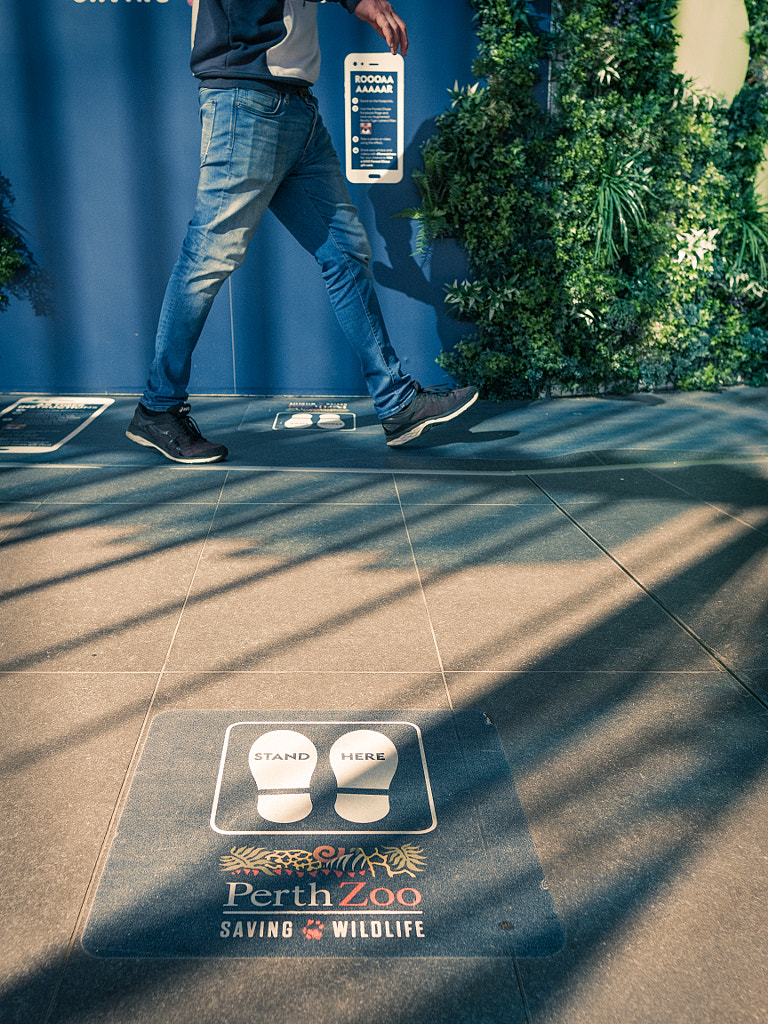
Stand Here. Forest Place, Perth, Western Australia. Panasonic G85 with Sigma 16mm f1.4 lens. Exposure: 1/2000 sec, f2.8 at ISO 200.
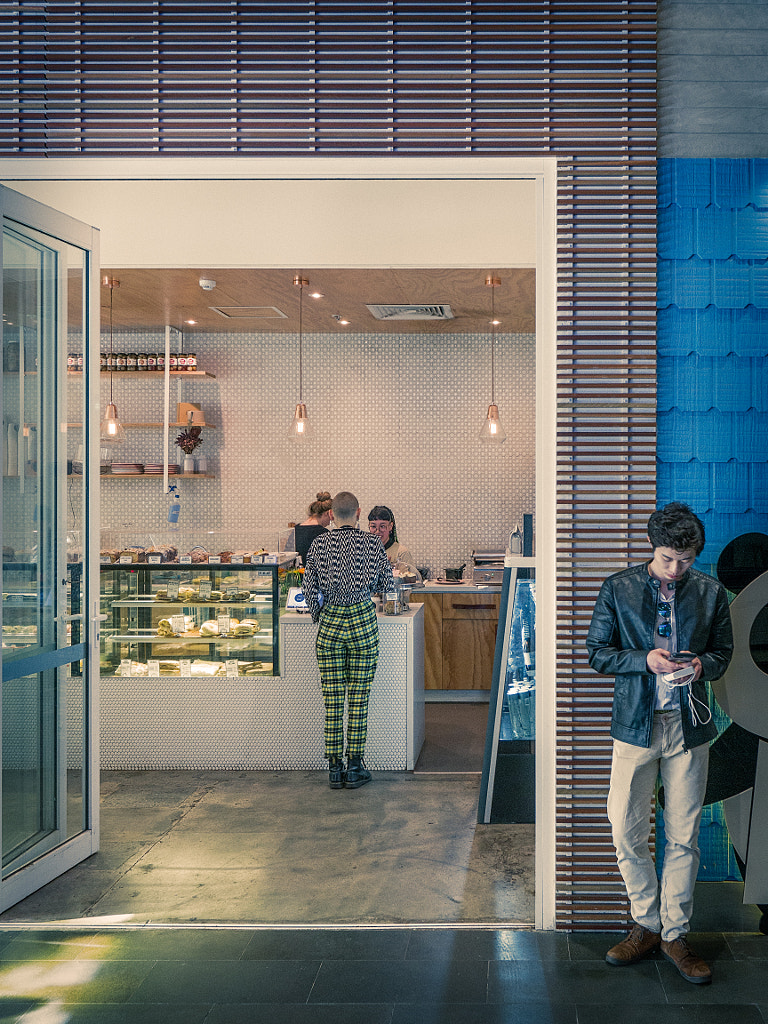
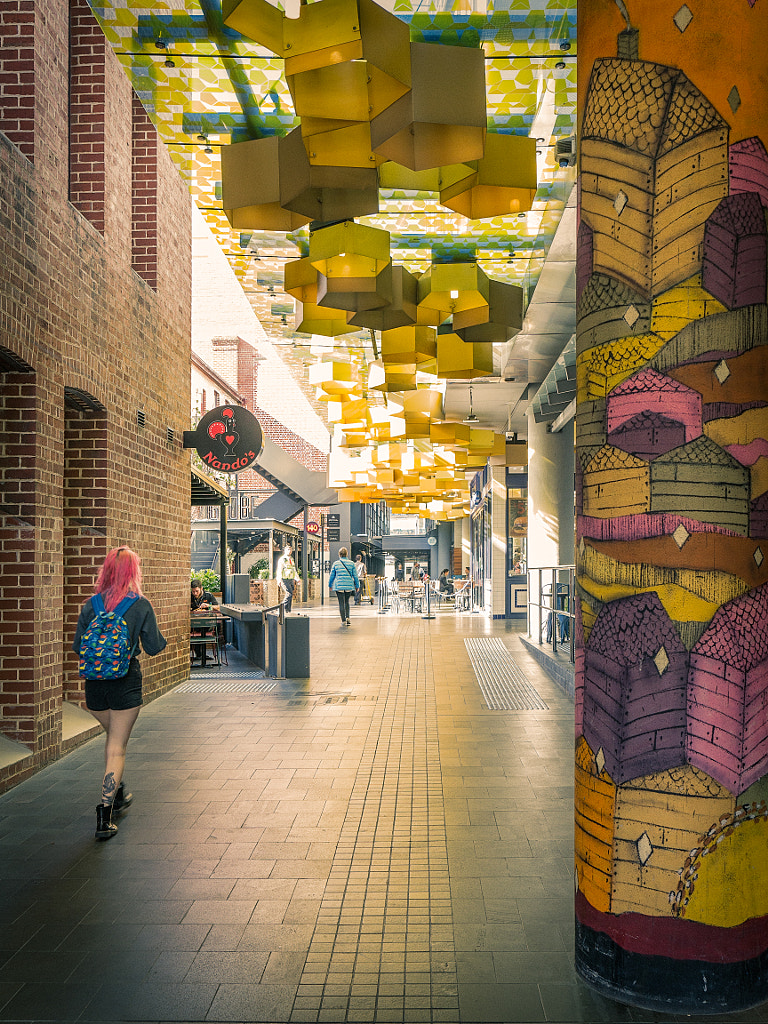
Yup – you’ve guessed it. Spent another day loitering in the alleyways of Perth. Saw it as a good excuse to give the Sigma 16mm f1.4 DC DN lens in micro four thirds mount a good workout.
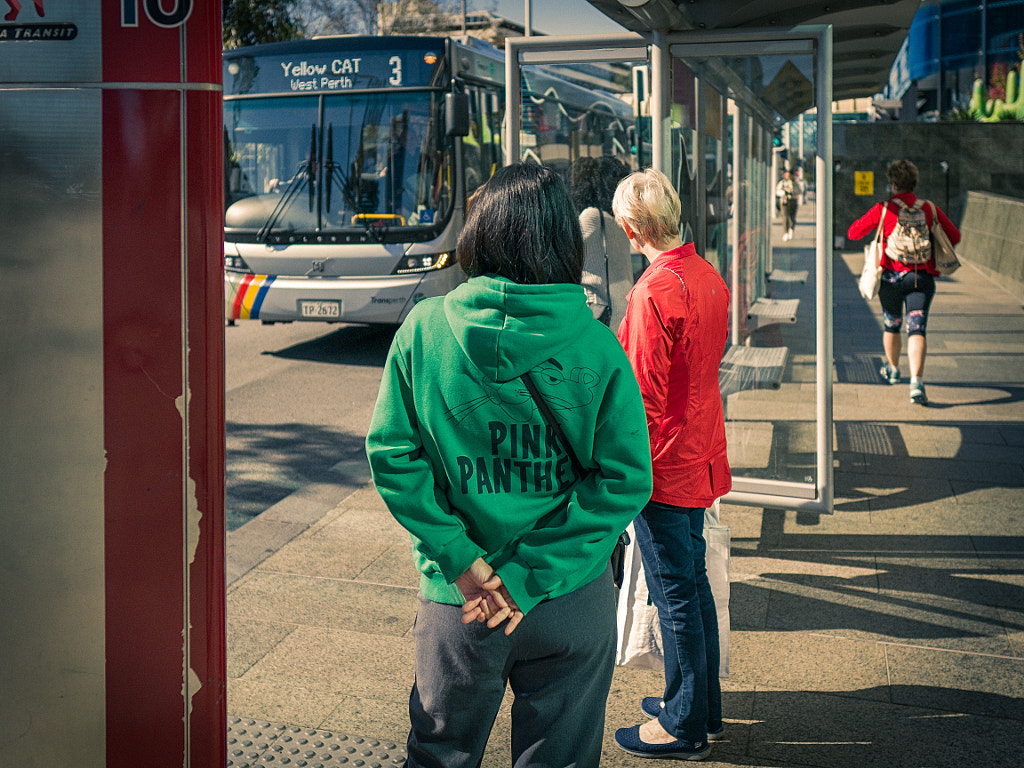
Coloured Cats. Waiting for the CAT Bus on Wellington Street in Perth. Panasonic G85 with Sigma 16mm f1.4 lens. Exposure: 1/6400 sec, f2.8 at ISO 200.
Patterns. Globe Lane, Perth, Western Australia. Panasonic G85 with Sigma 16mm f1.4 lens. Exposure: 1/60 sec, f4 at ISO 800.
Pink Accents. Globe Lane, Perth, Western Australia. Panasonic G85 with Sigma 16mm f1.4 lens. Exposure: 1/60 sec, f4 at ISO 200.
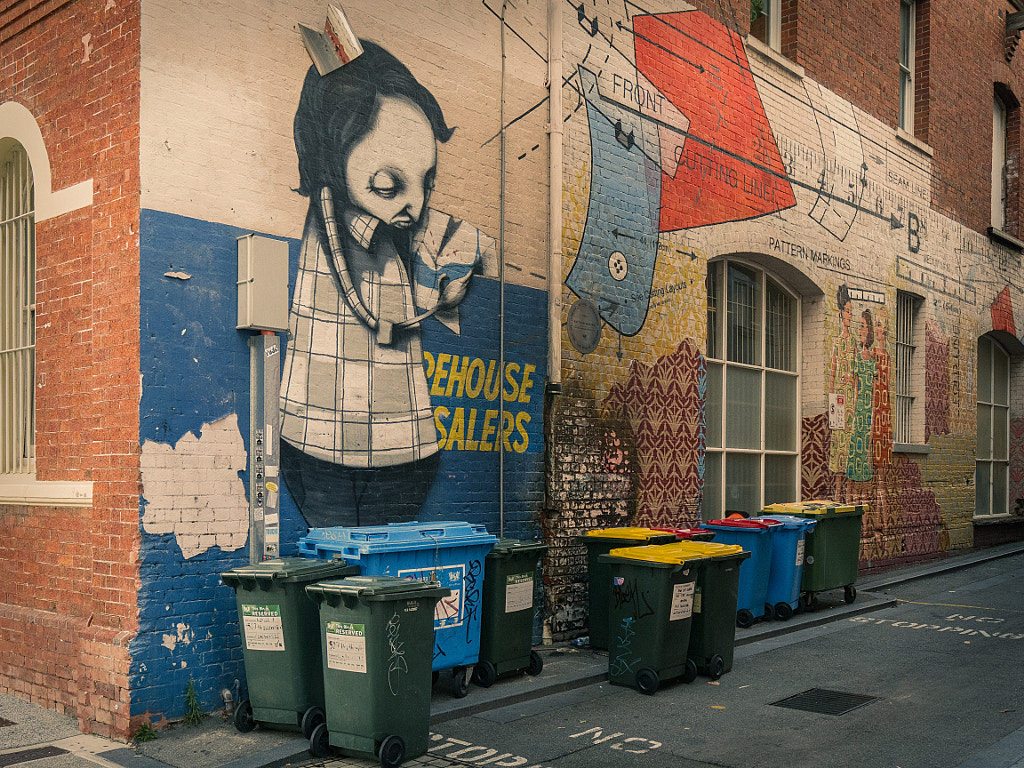
Graffiti in Prince Lane, Perth, Western Australia. Panasonic G85 with Sigma 16mm f1.4 lens. Exposure: 1/60 sec, f8, at ISO 320.
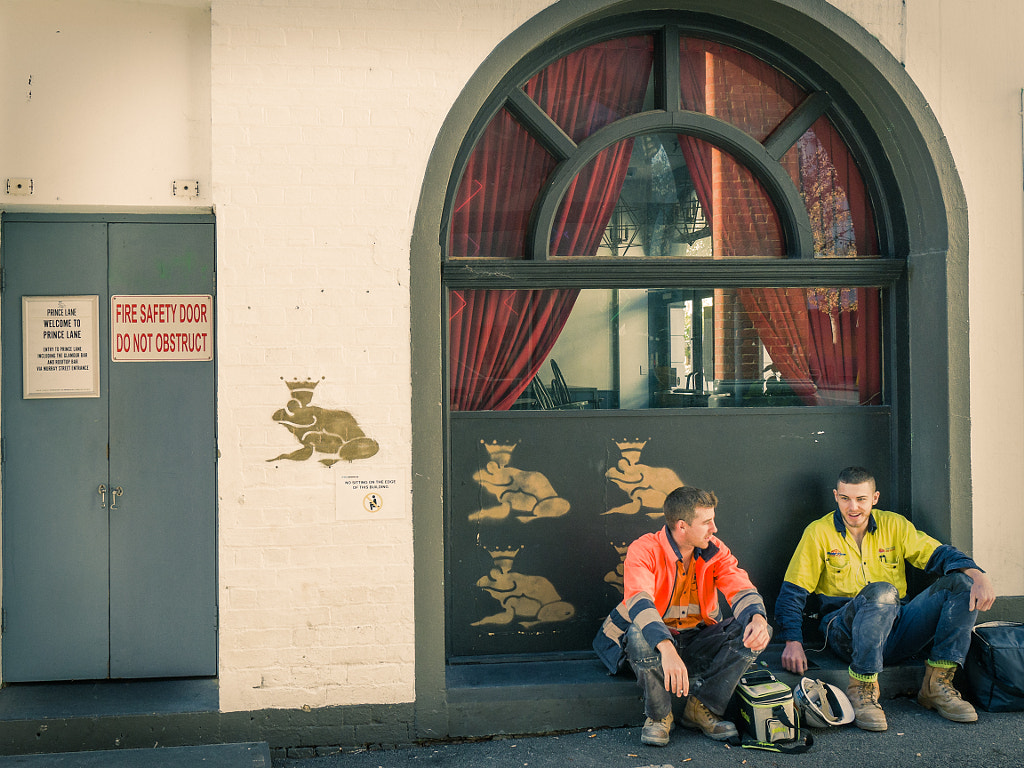
No sitting on the edge of this building. Prince Lane Bar on the corner of Murray Street and Prince Lane in Perth. Panasonic G85 with Sigma 16mm f1.4 lens. Exposure: 1/250 sec, f4, ISO 200.
* Today’s musical reference is a bit obscure. It is the theme tune for the 1972-3 British TV series “The Protectors” and was sung by Yorkshire lad Tony Christie. It was produced by Gerry Anderson of Thunderbirds fame and was only his second production using real people as opposed to the puppets he was famous for, and his only production that wasn’t scifi. It was sponsored by Brut the aftershave people which explains a lot looking back at it.
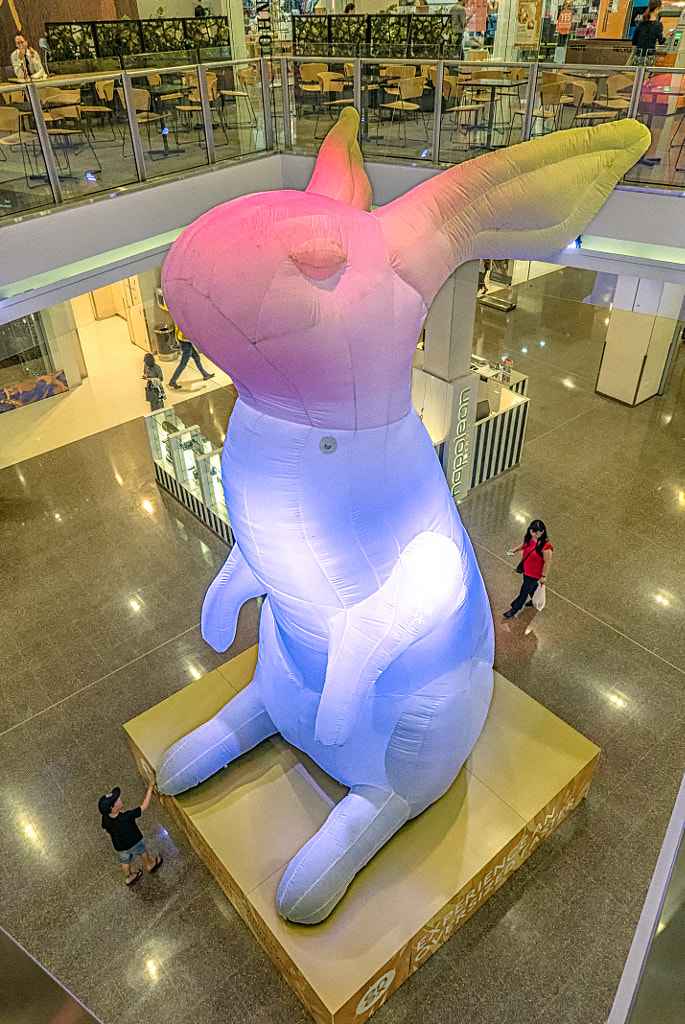
Experience An Oversized Easter” width=”1070″ height=”1600″ /> Big bunny in the ENEX100 Mall in Perth. Leica D-Lux (Type 109). Exposure: 1/60th sec, f5.6 at ISO 640.
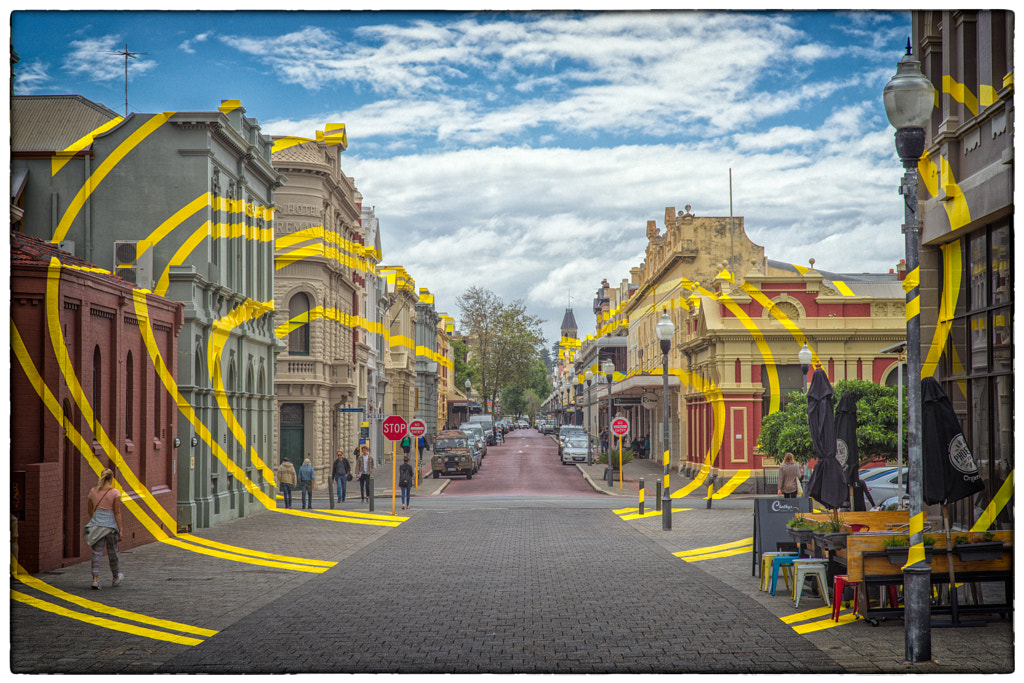
No Parking! Fremantle council has gone a bit overboard with the double yellow lines. In reality is a geometric painting on a massive scale by Swiss artist Felice Varini called Arcs D’Ellipses. Sony A7r with Voigtlander 75mm f2.5 Color Heliar lens. Exposure: 1/640th sec, f8, ISO 100.
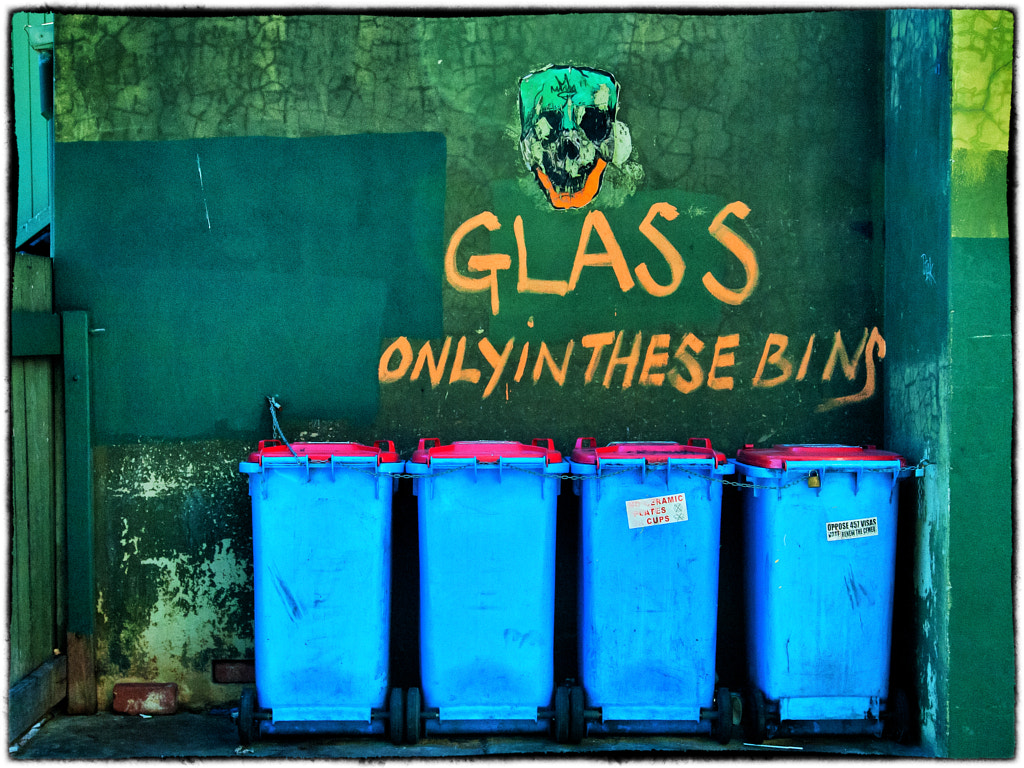
Wandering around with some time to kill is always a good excuse to do some photography. Photography gives me the perfect pretext for being nosey and I love roaming down alleys and back streets just in the hope of finding something interesting. I was attracted to this scene because of the big slabs of intense colour. The greens of the wall really made the blue of the rubbish bins vibrate and pulse, and the red accents of the bin lids really set the whole scene off.
We have become so familiar with colour photography that we don’t realise how powerful colour can be so visceral that it’s like being punched in the guts. I first became fully aware of this when I saw some photos of a bull-fight by Ernst Haas and now whenever I think of bull fighting those images are so indelibly etched on brain they come to mind immediately and bring up the raw emotions I felt when I first saw them. At this time I was shooting black and white film because that is what serious photographers did and I really didn’t make the connection between what I was doing photographically and what Haas was doing. Shortly after I started subscribing to the English magazine Creative Camera and that introduced me to the work of American photographer Pete Turner. That had the profound effect of making me buy bucket loads of Kodachrome and Fujichrome 50 RD – the precursor to Fujichrome Velvia.
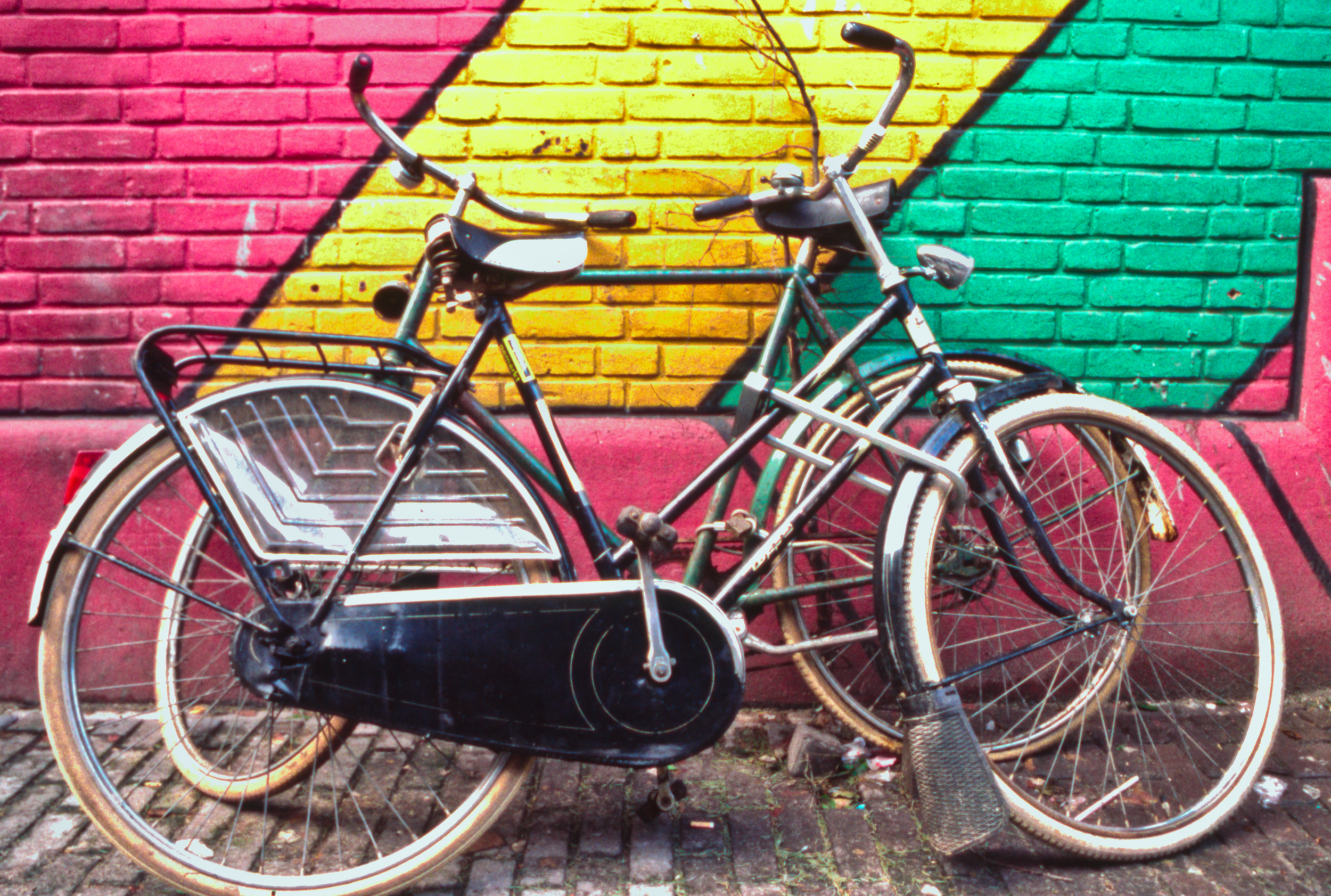
Nederlandse Fiets – typical Dutch bicycles chained up against a wall in Amsterdam.
My earliest successful purely colour photograph was taken while on honeymoon in Amsterdam in January 1986. I can still remember taking it as if it were yesterday. Shortly after a trip to Santorini in Greece and the discovery of polarizing filters and I was completely hooked. When we moved to Australia I found the intensity of the light could make your eyes hurt while looking at certain colours and that’s when I coined the phrase “retina ripper”.








You must be logged in to post a comment.