From my last visit to Harrismith in 20212. It all looks a bit apocolyptic.
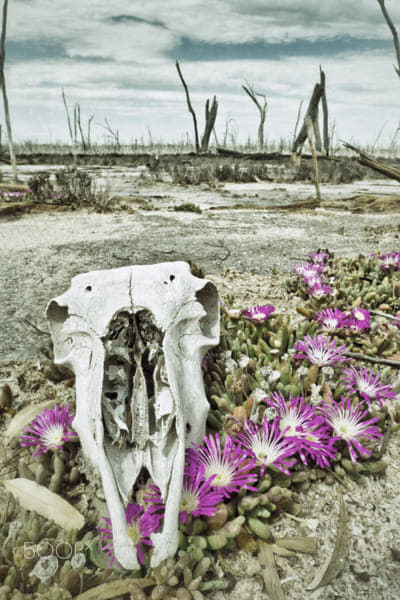
Harrismith is a very small town (population 52)260km east of Perth in the Wheatbelt. Now we went there some thirteen years ago looking for orchids and we didn’t find any as it was too late. I did get the photo of the animal skull on pig face on a dried lake. So this year I’ve been looking for the Western Wispy Spider Orchid (Caladenia microchila) and the Yellow Granite Donkey Orchid and that search took me Harrismith as my last chance.
When I got there it was very apparent I wasn’t going to find much – the bush was very, very dry. Walking through it sounded like walking over Cornflakes – it was so crisp. What I did find was really on it’s last legs. There had been a substantial wildflower display, but it was basically all over. I’d have been better off going at least two weeks earlier. Still it was an enjoyable walk, there was plenty of bird activity and I left feeling I’d of got better photos if I’d taken my bird kit.
Sugar Orchid, Ericksonella saccharata. Harrismith, Western Australia.
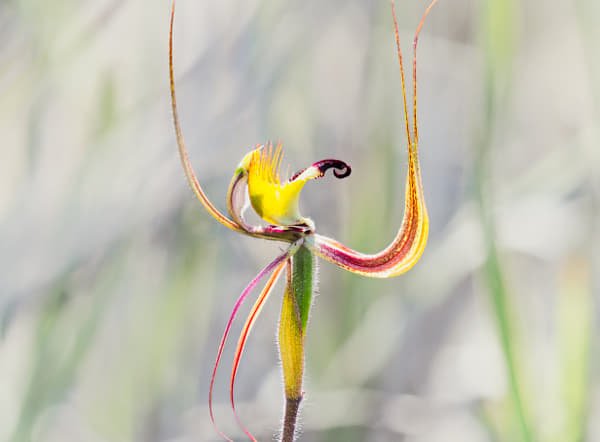
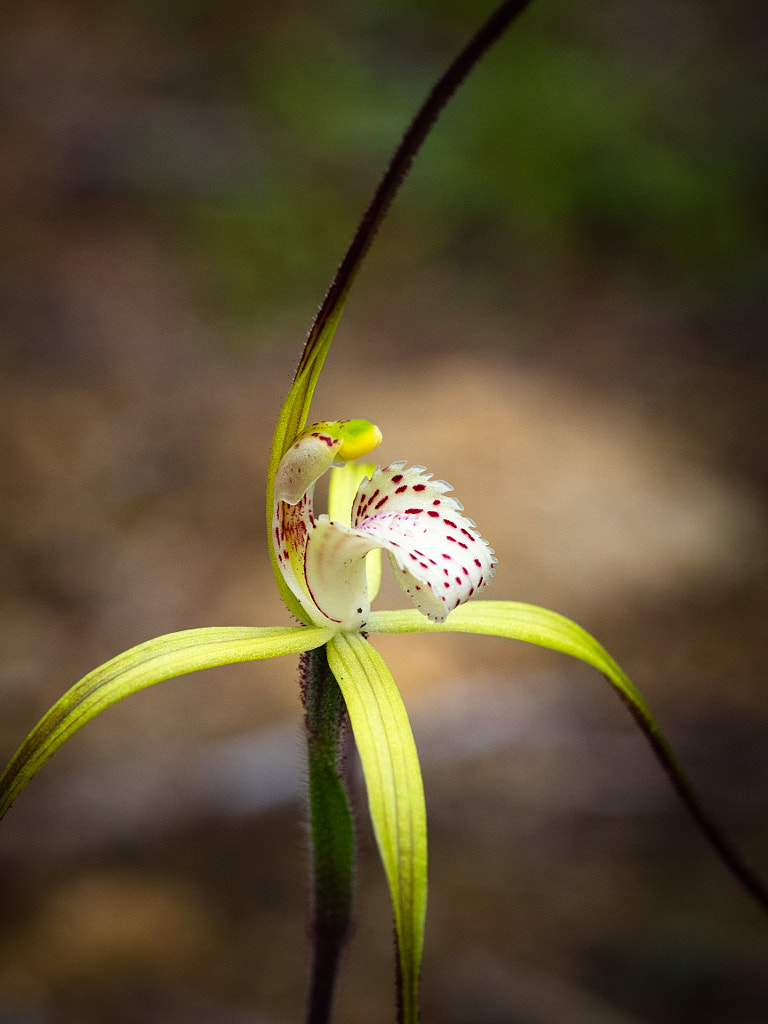
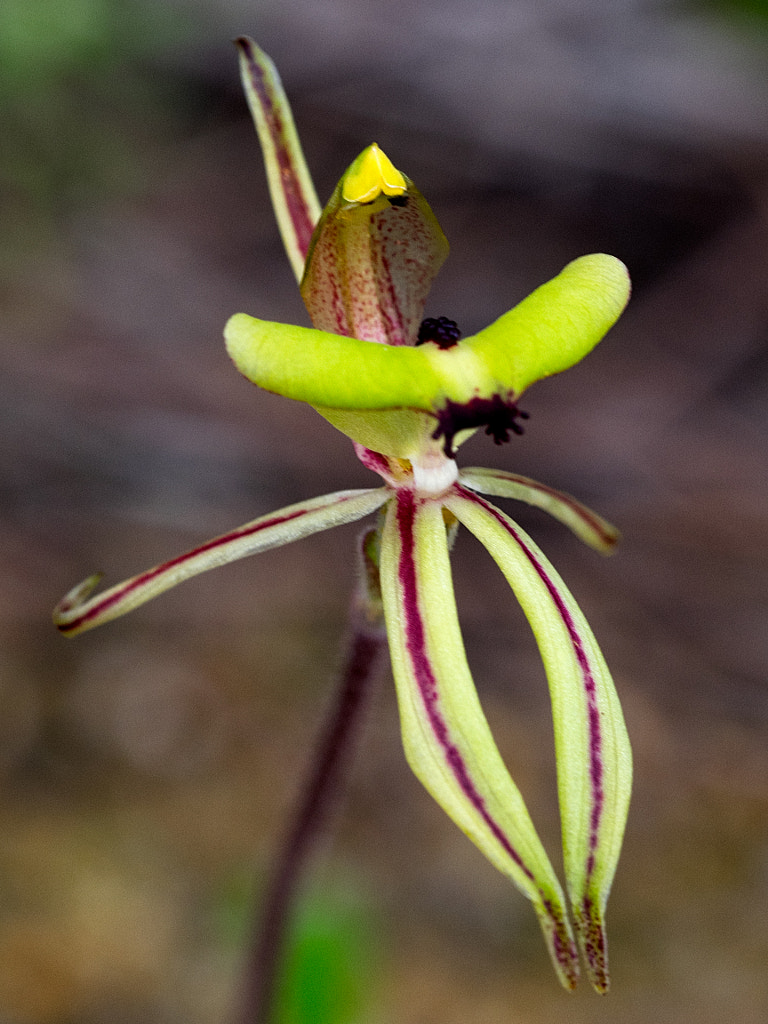
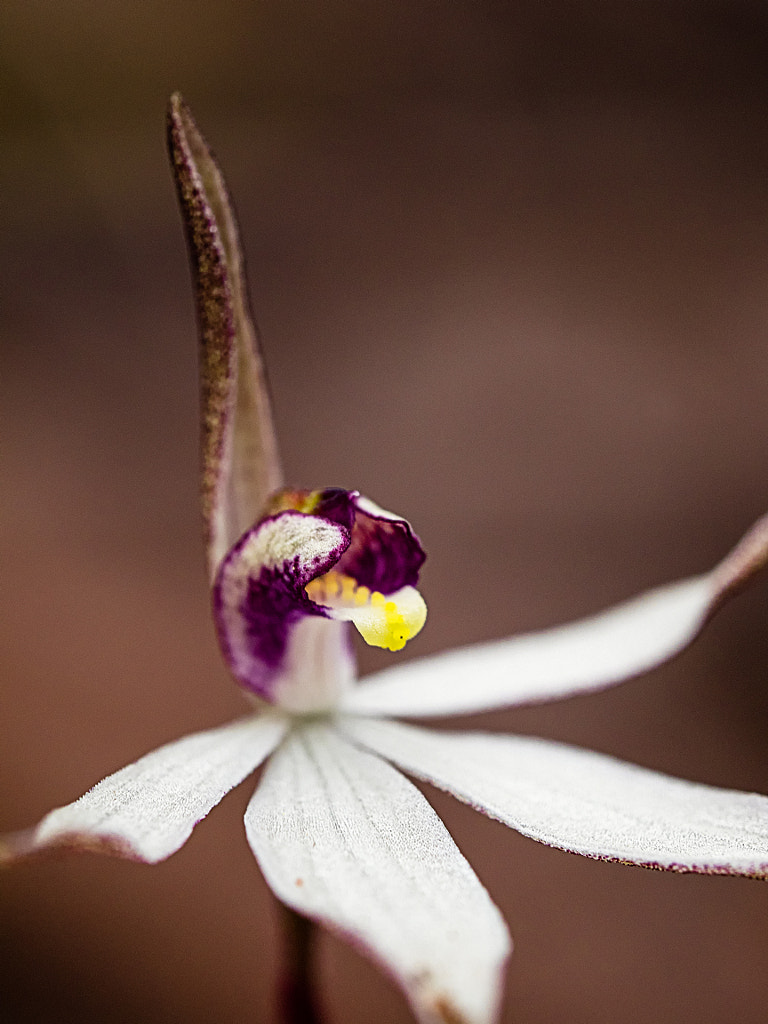
There’s always a Green Spider Orchid (Caladenia falcata).
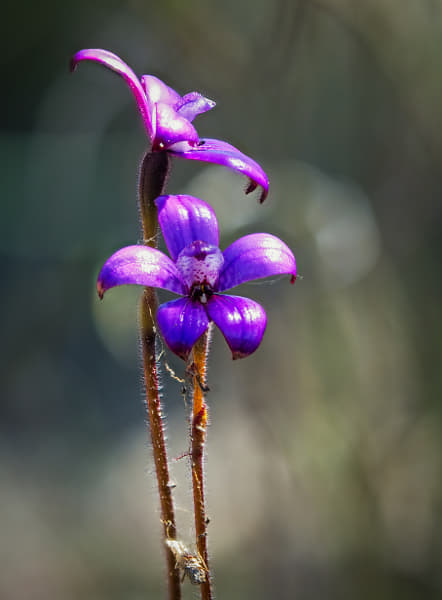
Purple Enamel Orchid, Elythranthera brunonis.
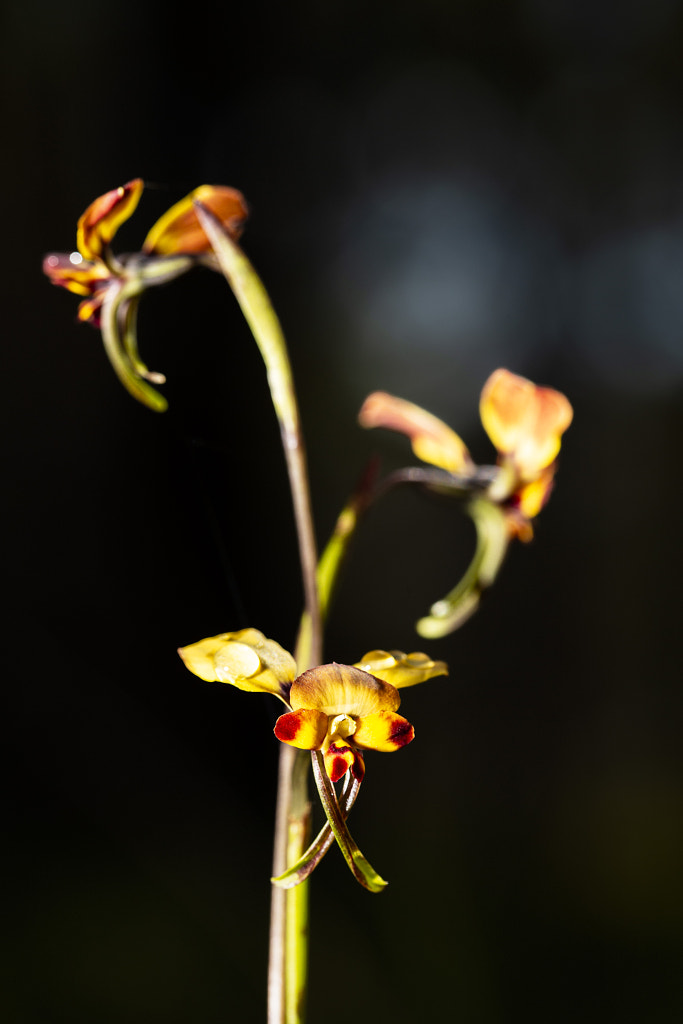
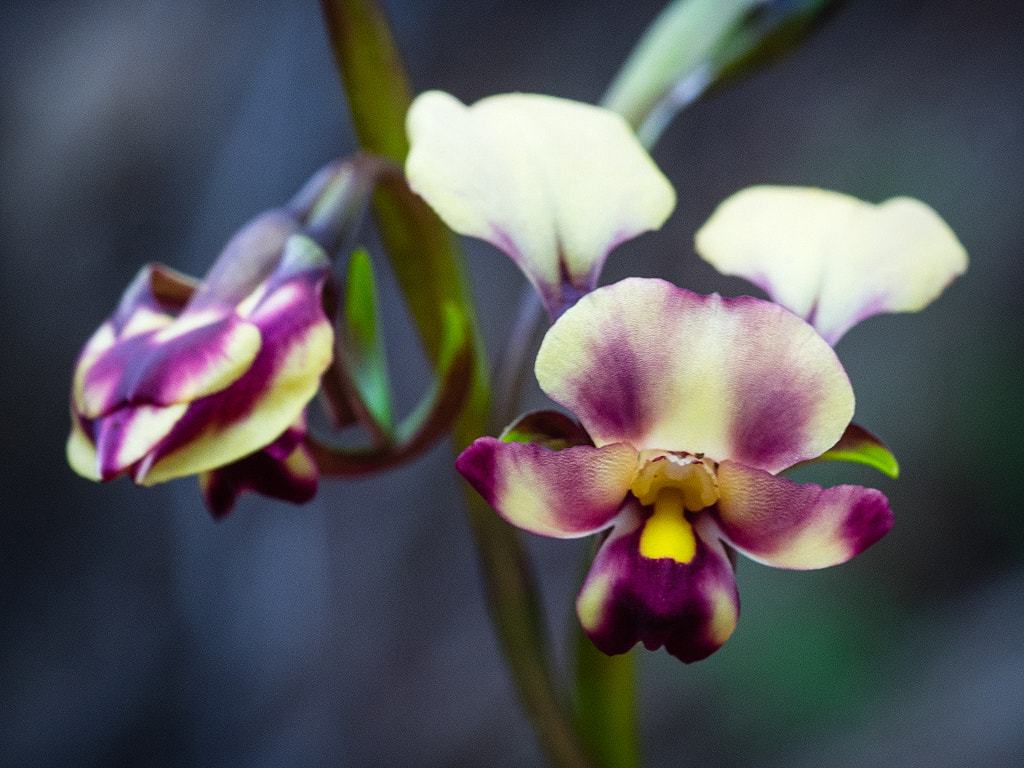
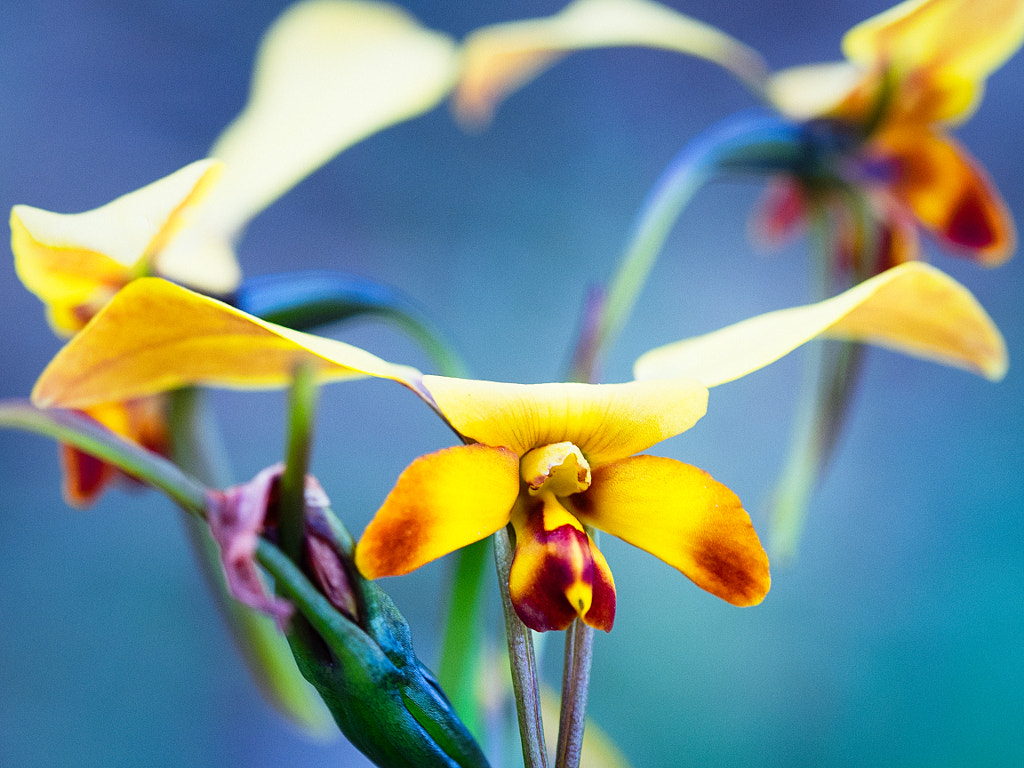
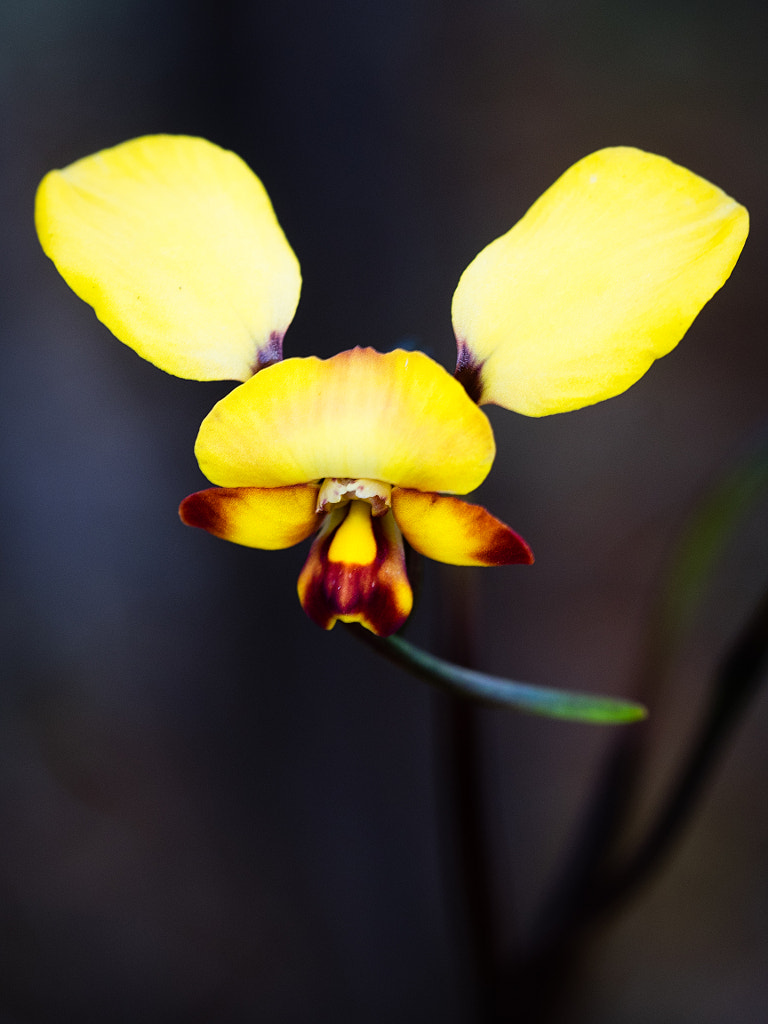
Yellow Granite Donkey Orchid, Diuris hazeliae.
The Western Wispy continues to evade me. I’ll have to wait to early next spring to resume the search.
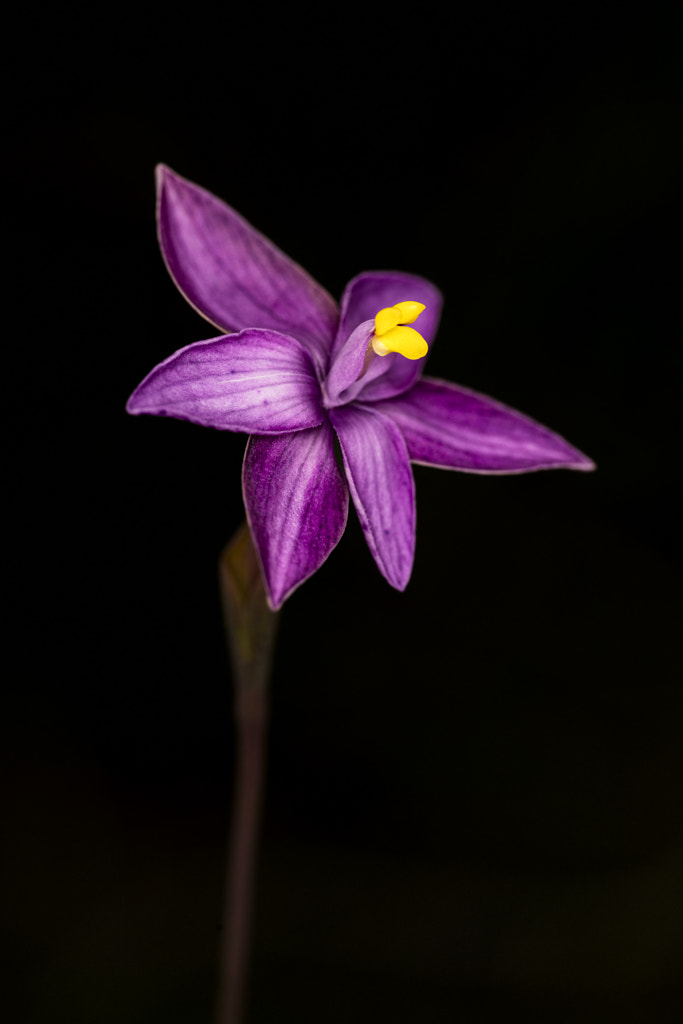
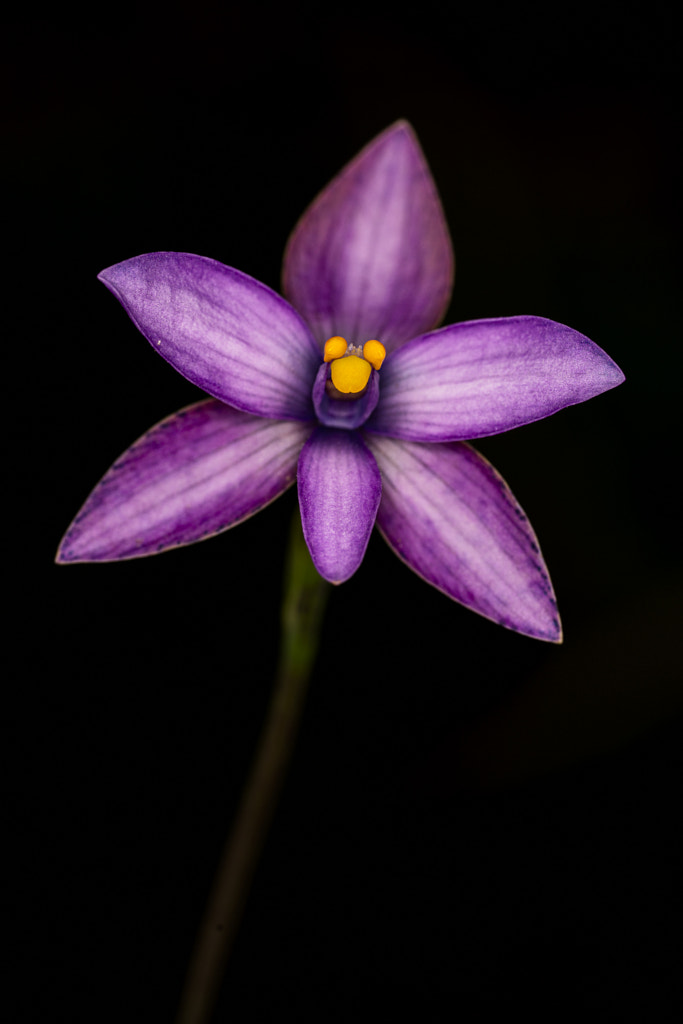
Yep you read that right. You know how you can stand at a bus stop for ages and not see a single one and then suddenly three come along together? Well orchids are like that. I’ve been walking the same patch of woodland looking for the Curly Locks Orchid for years without seeing a single one and then the other day low and behold there were three of them just standing there.
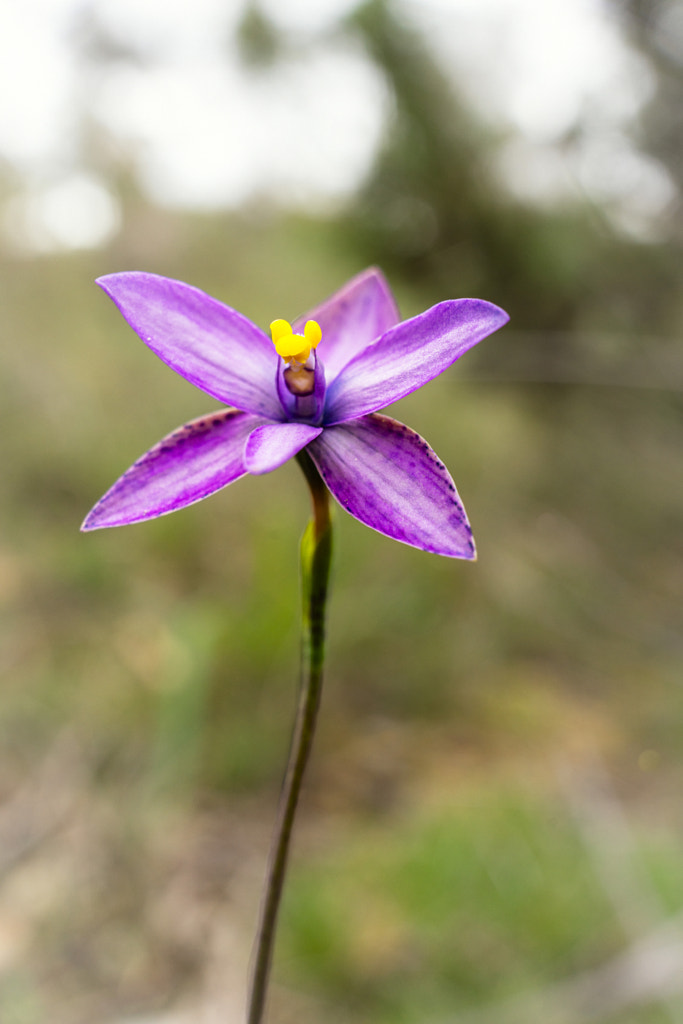
Curly Locks, Thelymitra spiralis. Wandoo National Park, Western Australia.
Curly Locks, Thelymitra spiralis. Wandoo National Park, Western Australia.
Curly Locks, Thelymitra spiralis. Wandoo National Park, Western Australia.
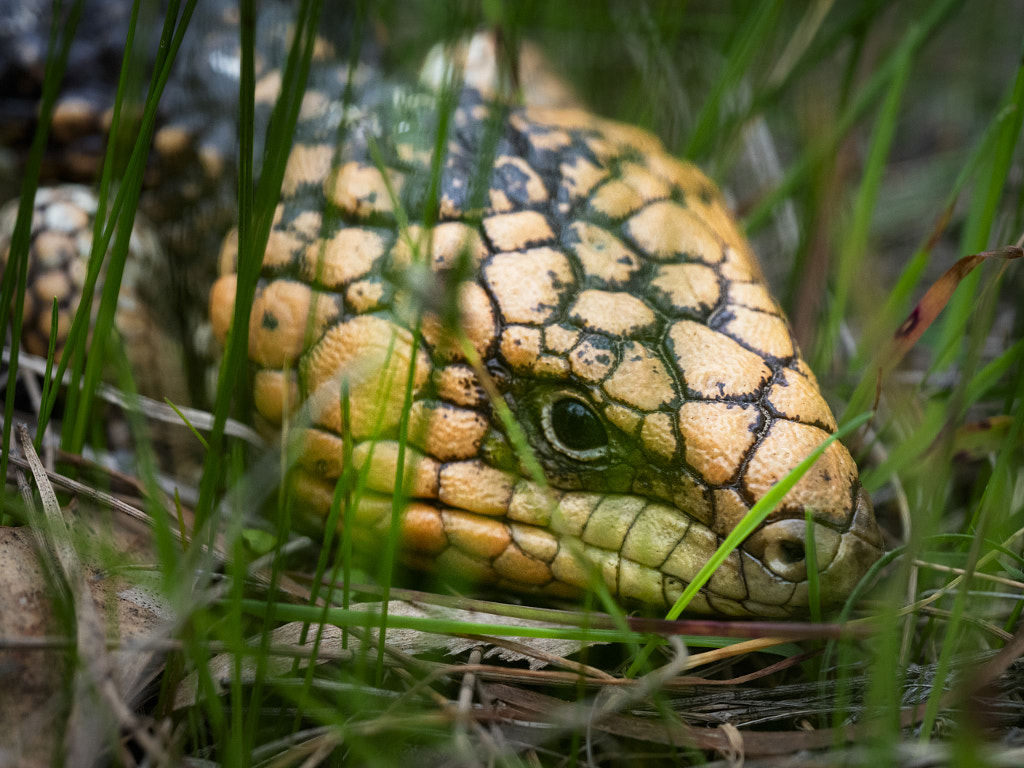
I’ve spent the last couple of weeks walking the Wandoo forest looking for various orchids. I’ve bumped into a male emus and his brood (too quick to photograph), met bob tailed lizards and countless Western Grey Kangaroos (again too quick to photograph). So even if I’ve not found the particular flower I’m looking for it has still been quite an experience.
The slower bob tailed lizards are easier to photograph than fleeing emus and kangaroos.
Speaking of finding orchids well I’ve seen plenty. On Thursdays outing to Wambyn Reserve I saw eleven different species and was amazed by how early some of them were.
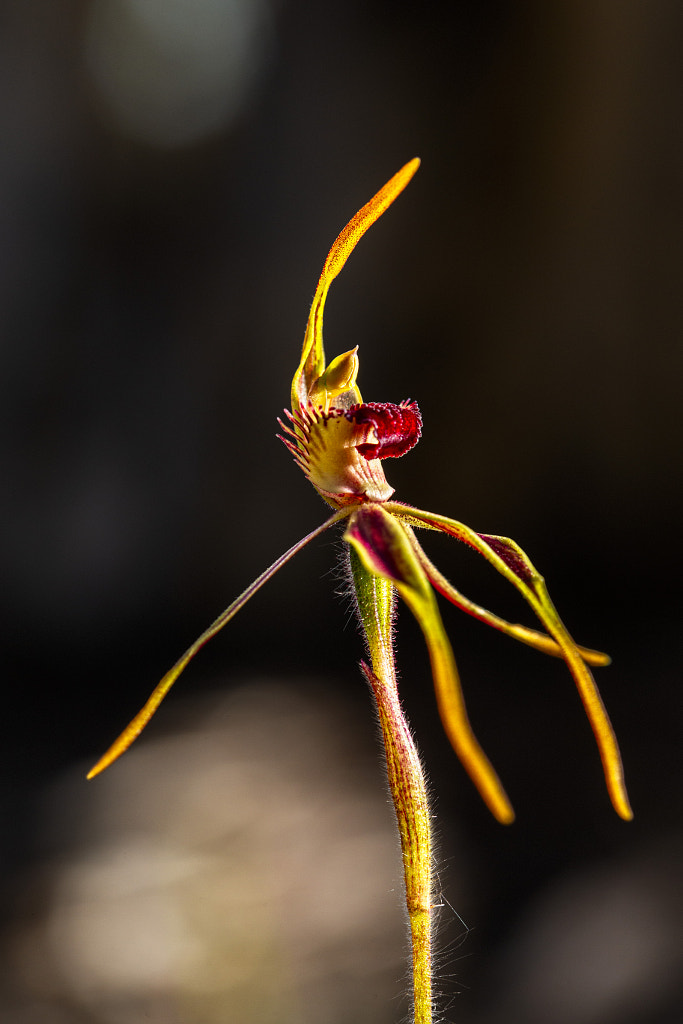
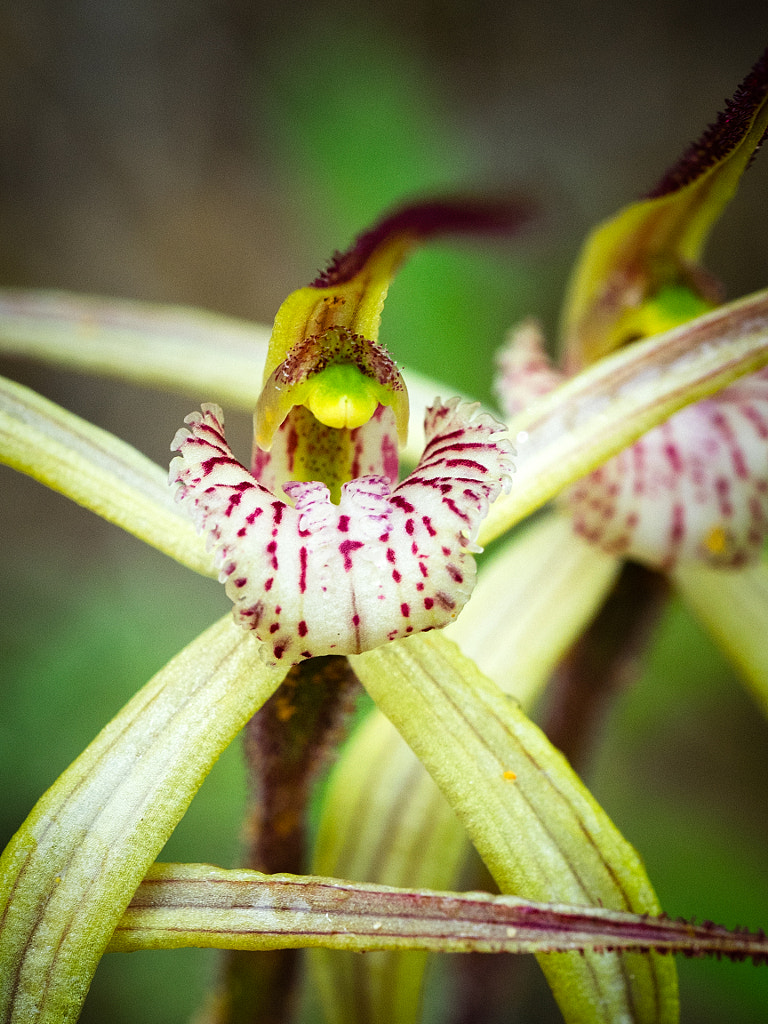
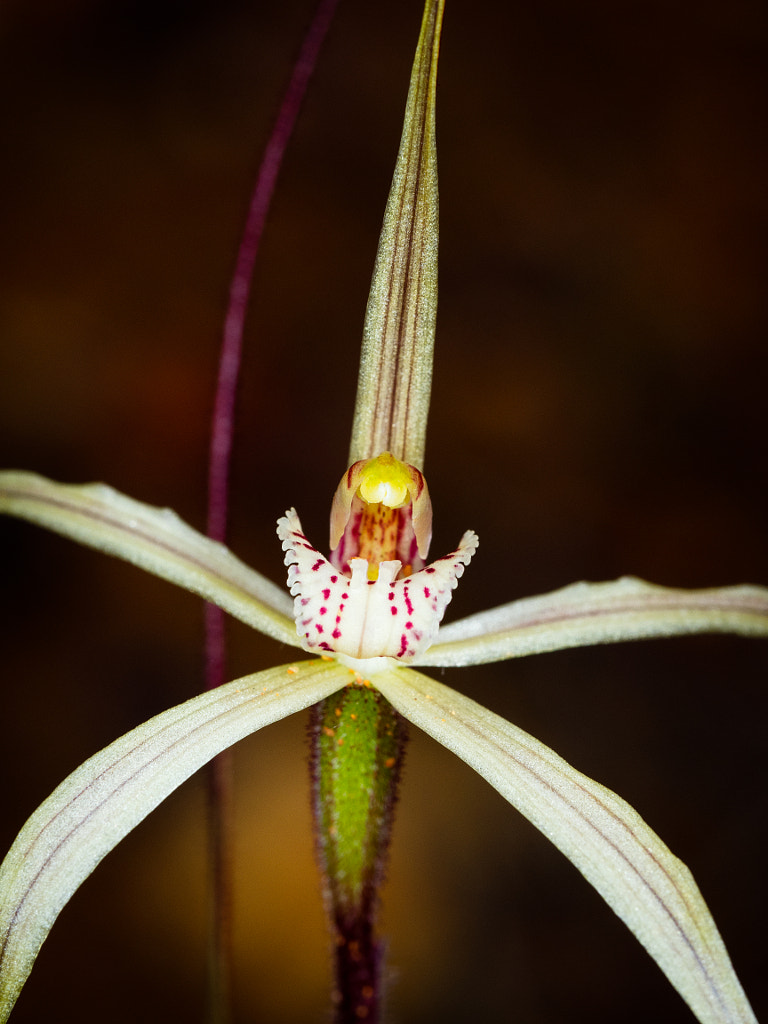
A very early flowering Clubbed Spider Orchid, Caladenia longiclavata. Wambyn Reserve, Western Australia.
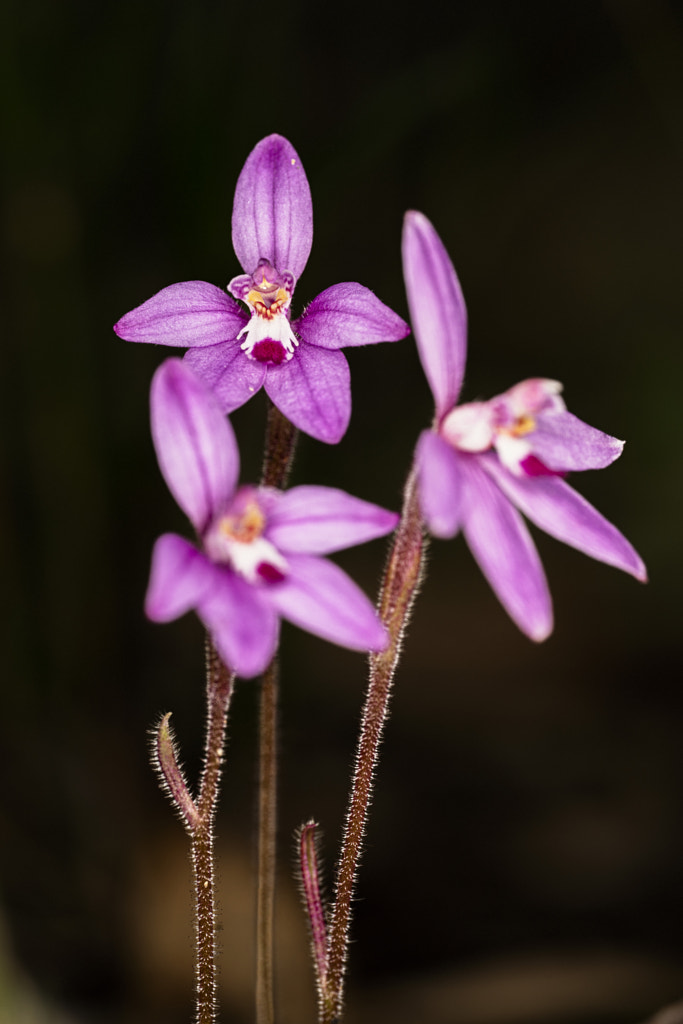
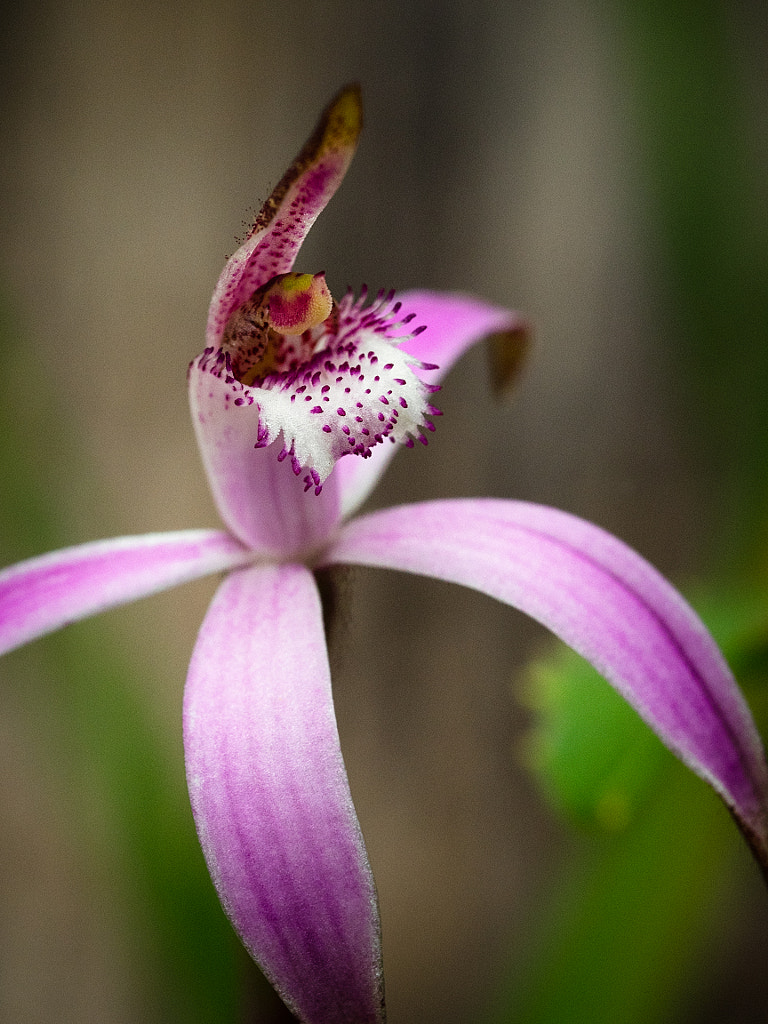
Little Pink Fairy Orchid or dwarf pink fairy orchid, Caladenia reptans subspecies reptans. Wandoo National Park, Western Australia.
Sugar Orchid, Ericksonella saccharata. Wambyn Reserve, Western Australia.
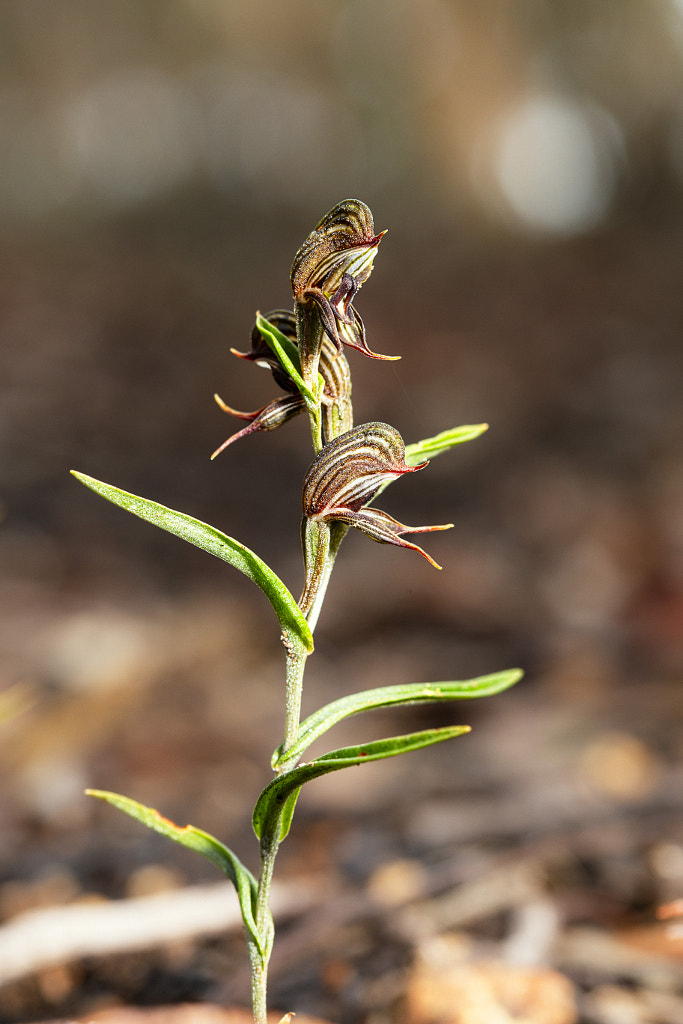
Frog Greenhood, Pterostylis sargentii. Wambyn Reserve, Western Australia.
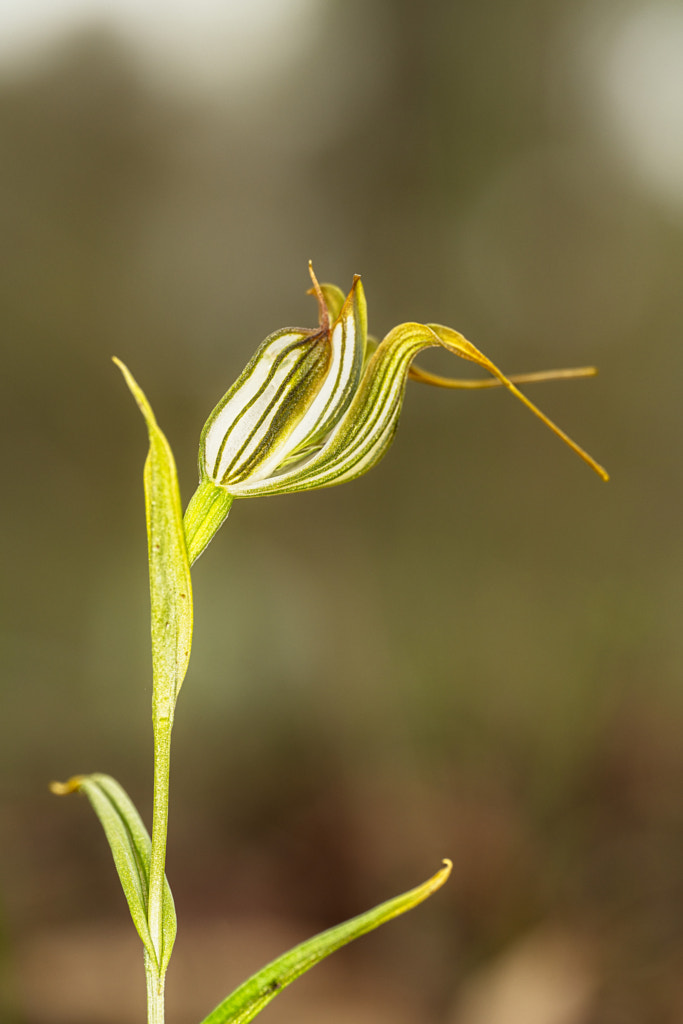
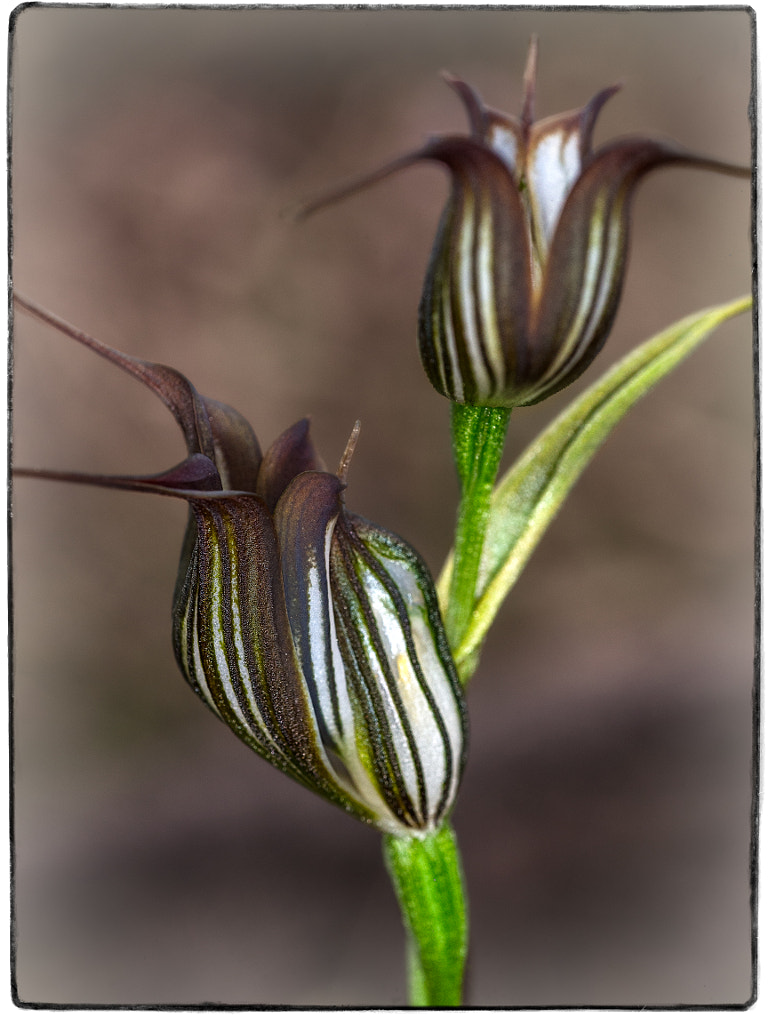
Jug orchid or recurved shell orchid, Pterostylis recurva. Wandoo National Park, Western Australia.
Common Donkey Orchid or wallflower orchid, Diuris corymbosa. Wambyn Reserve, Western Australia.
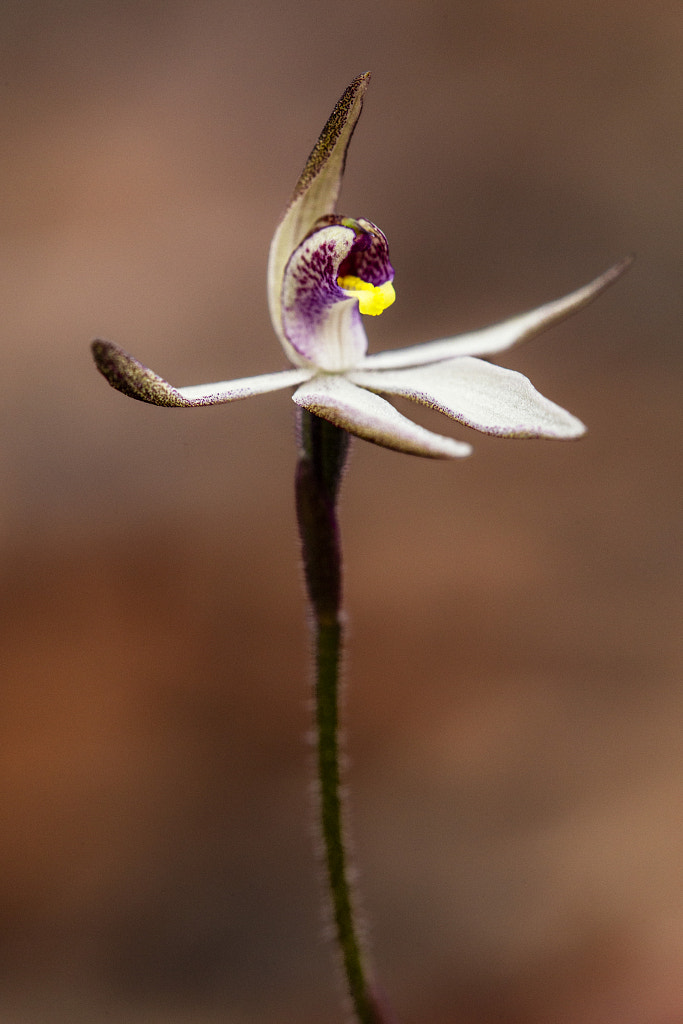
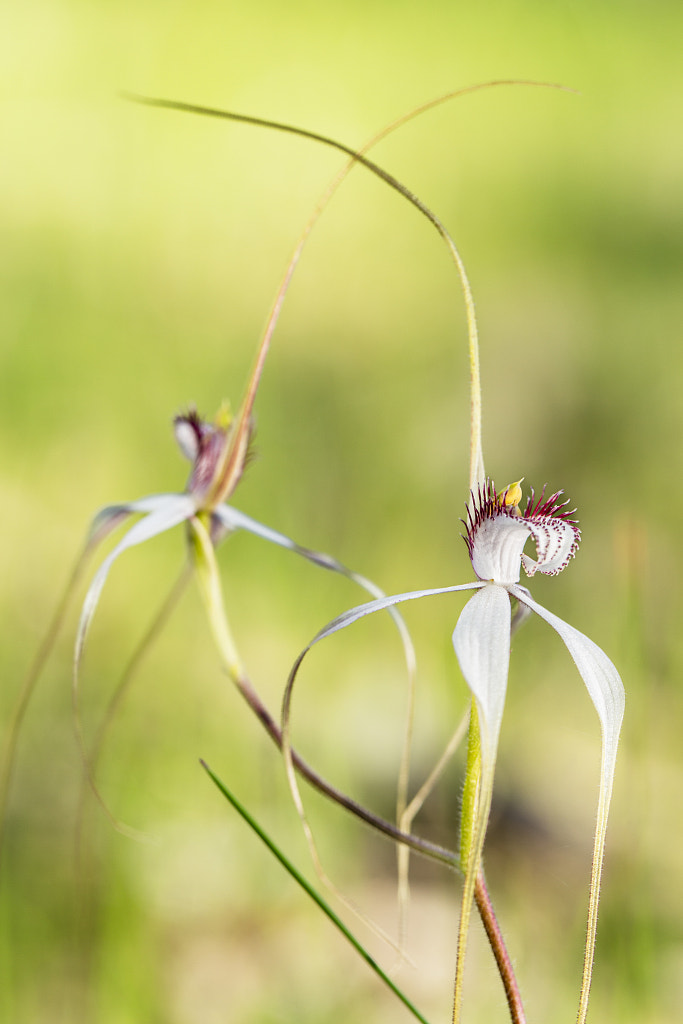
Stark White Spider Orchid, Caladenia longicauda subsp eminens. Wambyn Reserve, Western Australia.
Photographically I’ve been on a bit of a full frame kick preferring to either use the Sony A7r ii and sigma 105mm macro lens or the Canon EOS6d with Canon 100mm macro lens. All the shots are lit with a flash being used as the key light and natural light as the fill. I’ve enjoyed the change but my back doesn’t. There’s a huge weight difference between the full frame cameras, lenses and flash equipment compared to the usual Olympus micro four thirds system I usually use. But to be honest shooting at base ISO using artificial lighting and only printing at A3+ I can’t see any real advantage to shooting full frame so this next week I’ll go back to using the Olympus kit.
… with flowers. Definitely not Julie Andrews and the ghastly singing Von Trapps.
When people think about Australian biodiversity and nature hot spots they automatically think of the rainforests of North Queensland, Kakadu National Park in the Northern Territory or Cradle Mountain-Lake St. Clair National Park in Tasmania. If prodded a little bit Western Australians might mention the Stirling Ranges National Park. But what if I were to tell you that there is a very significant region of biodiversity, a landscape that is still in its pristine state (i.e. has never been cleared) that is less than two hours drive from Perth? That it contains more than 1400 species of flowering plant, 24 of which are unique and not found anywhere else, there are 78 different species of bird, and there are ancient Aboriginal artefacts. So where is this place? Wongan Hills.
The name Wongan Hills comes from the Nyoongar Wongan Katta which means talking or whispering hills. The range of hills, which are about 10 north-west of the townsite are the largest single area of natural vegetation remaining in the northern wheatbelt. It is spring when everything happens – there is a truly spectacular display of wildflowers. I focus on native orchids and it is absolutely gobsmacking the number of different species and the sheer quantity of them. In the space of a morning’s walk around we found ten different species and they were totally new to me. Below are the fruits of that trip.
Pink Candy Orchid, Caladenia hirta subsp. rosea. Christmas Rock, Wongan Hills, Western Australia.Exposure: manual 1/125 s at f/8.0, Iso 200. Olympus OMD EM1 with OLYMPUS M.60mm F2.8 Macro lens, TTL fill flash provided by Metz 15 MS-1 ring flash.
Chameleon Spider Orchid, Caladenia dimidia. Christmas Rock, Wongan Hills, Western Australia. Olympus OMD EM1 with Olympus 60mm f2.8 macro lens, with Metz 15 MS-1 ring flash. Exposure: aperture priority 1/80 s at f/8.0 with -1 stop exposure compensation and TTL flash.
Yellow Spider Orchid, Caladenia denticulata subsp. denticulata. Christmas Rock, Wongan Hills, Western Australia. Exposure: manual 1/160th sec, f8, ISO 200 with TTL flash. Olympus OMD EM1, OLYMPUS M.60mm F2.8 Macro lens, Metz mecablitz 15 MS-1 ringflash.
Salt lake spider orchid ( Caladenia exilis subsp. exilis). Roger’s Reserve, Wongan Hills, Western Australia. Olympus OMD EM1 with OLYMPUS M.60mm F2.8 Macro lens and Metz 15 MS-1 ring flash. Exposure: Manual mode, 1/250 s at f/8.0 ISO 200.
Clown orchid (Caladenia roei) also known as ant orchid, man orchid and jack-in-the-box orchid. Christmas Rock, Wongan Hills, Western Australia. Olympus OMD EM1 with OLYMPUS M.60mm F2.8 Macro lens and Metz 15 MS-1 ring flash. Exposure: aperture priority 1/50 s at f/8.0 at ISO 200 with -1 stop exposure compensation.
Mottled donkey orchid, Diursis sp. ‘Wyalkatchem’. Christmas Rock, Wongan Hills, Western Australia. Olympus EM1 with OLYMPUS M.60mm F2.8 Macro lens. Exposure: aperture priority mode 1/80 s at f/8.0 ISO 200 with -1 stop exposure compensation and flash from Metz 15MS-1 ring flash.
Yellow Granite Donkey Orchid, Diursis hazelii. Mount Matilda, Wongan Hills, Western Australia. Olympus OMD EM1 with OLYMPUS M.60mm F2.8 Macro lens and Metz 15 MS-1 ring flash. Exposure: Manual mode 1/100 s at f/4.0 ISO 200.
Sugar Orchid, Ericksonella saccharata. Mount Matilda, Wongan Hills, Western Australia. Olympus OMD EM1 with OLYMPUS M.60mm F2.8 Macro lens and Metz 15 MS-1 ring flash. Exposure: Manual mode, 1/80 s at f/5.6 ISO 200.
Dainty donkey orchid, Diuris sp. ‘north-western wheatbelt’. Rogers Reserve, Wongan Hills, Western Australia. Olympus OMD EM1 with OLYMPUS M.60mm F2.8 Macro lens and Metz 15 MS-1 ring flash. Exposure: aperture priority with -2 stops exposure compensation 1/125 s at f/5.6 ISO 200.
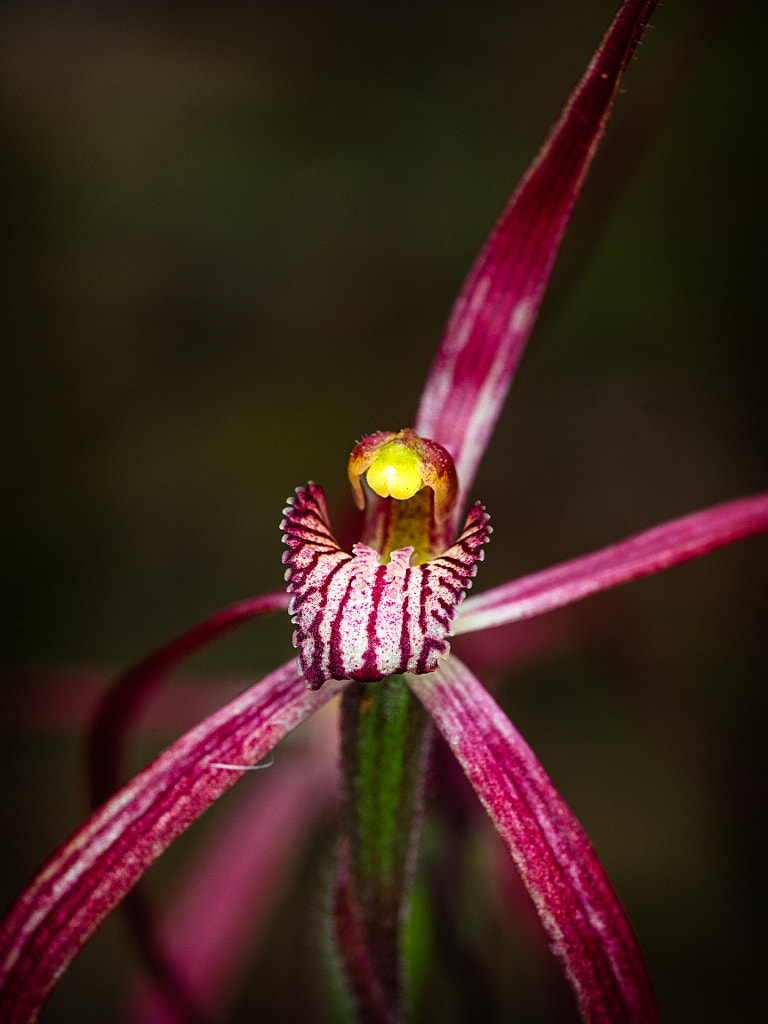
Crimson spider orchid, Caladenia footeana. Rogers Reserve, Wongan Hills, Western Australia. Olympus OMD EM1 with OLYMPUS M.60mm F2.8 Macro lens and Metz 15 MS-1 ring flash. Exposure: Manual mode, 1/200 s at f/8.0 ISO 200.
“Few things are as exciting as the idea of travelling somewhere else. But the reality of travel seldom matches our daydreams.”
Alain de Botton
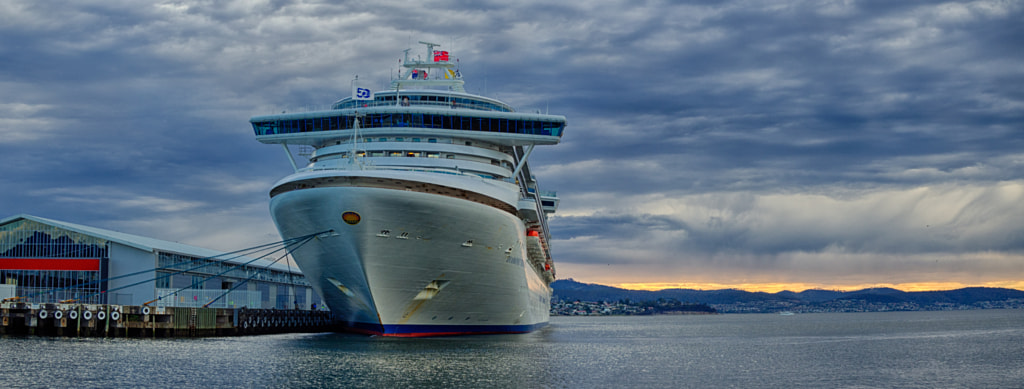
I’ve never been a fan of mass tourism, but over the last few weeks I’ve been reading a lot about the negative aspects of it and in particular with what is happening to Venice. Apparently as many as 44,000 cruise ship passengers pour into Venice a day during the high season. That’s roughly 5 cruise liners worth. When we lived in Tasmania we’d get the boats pull into Hobart Harbour, thankfully just one at a time, and the passengers would be like a tsunami as they headed for Salamanca. I hate to think what 5 times that number would be like. Along with the negative impact that has on the local population and the environment there is also the fact would you really want to visit somewhere with another 44,000 people? It’s hardly getting away from it all is it? Then there is the whole thing of “Right you’ve got six hours in port and then we’re off to the next location”. Six hours following several other thousand people all traipsing round the same location, looking at the same few things only to herded up at the end of the day and taken somewhere else to do exactly the same thing the next day. It’s a gross version of the 1969 film “If It’s Tuesday, This Must Be Belgium”. It’s worthy of Dante’s vision of hell. So why do people do it and pay a fortune for the privilege? Essentially people do it because they are bored with the ordinariness of their life and want something out of the ordinary with a touch of luxury.
When I lectured in photography one of the most common complaints from students was that there was nothing to photograph in Perth or Western Australia. They wanted something new, something exciting something that they’d never seen before. The problem was photography’s history encourages that kind of thinking – we only have to look at the photographic tradition of the road trip established by the likes of Robert Frank and his eponymous book The Americans with its hip introduction by Jack Kerouac. Stephen Shore and Alec Soth amongst others have popularised it to the extent that it has almost become a photographic rite of passage. Indeed at a portfolio review at FotoFreo my reviewer actually said I should go on a road trip as a means of finding myself. But the thing is booking a package holiday to Bali or Vietnam is not going to work as all you will see are the usual tourist attractions and maybe you’ll take some photos of poor third world people. Invariably you return home and the photos get ignored and languish in a dark recess on your computer hard drive as they look the same as everyone else’s. They are not out of the ordinary. The British philosopher and writer Alain de Botton in his book The Art of Travel said “Then I realised that the problem with going away is that you take yourself with you.”
I would suggest that if you want to produce interesting work look to the ordinary and easily accessible. Many photographers have taken this path. Robert Adams documents the changing American landscape and in particular the spread of suburbia. Chris Killip,Sally Mann, and Larry Towell are all photographers who have done projects about ordinary things on their door steps and have produced extraordinary images. The American photographer Minor White once said “…all photographs are self-portraits.” so thereis no need to travel to find your self just keep exploring with your camera. The frequent retort from my students was that everything around them had been photographed before well White also had an answer for that “Everything has been photographed. Accept this. Photograph things better.”.
So what have I been doing photographically for the last week? Well I’ve been out to some local nature reserves, I’ve visited them many times over the last 14 years and it never ceases to amaze me that I always find something new. So I was delighted to find these two flowers.
Jug orchid aka recurved shell orchid (Pterostylis recurva). Olympus OMD EM10 with Olympus m.Zuiko 60mm f2.8 macro lens and Metz ring flash. Exposure: 1/160th sec, f5.6, ISO 200 aperture priority with -1.3 stops exposure compensation.
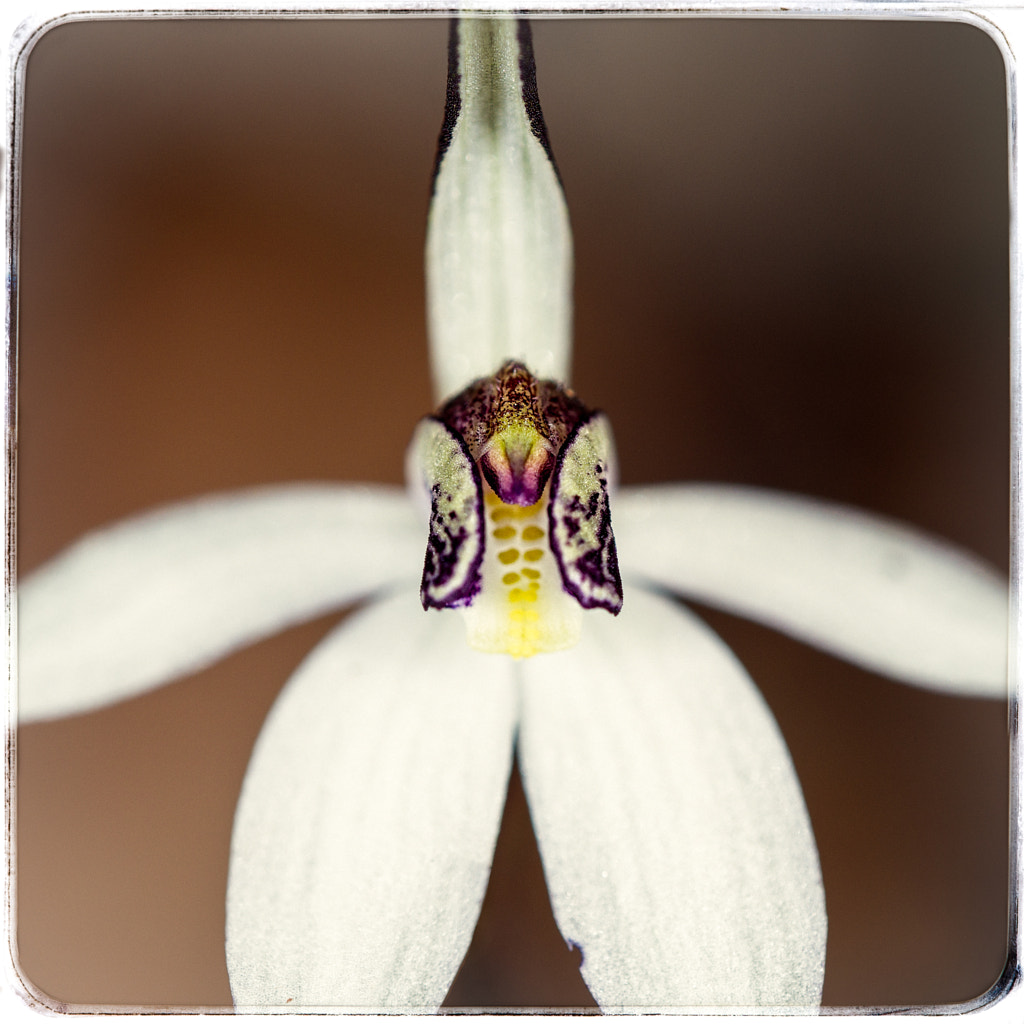
Sugar orchid (Ericksonella saccharata). Olympus OMD EM10 with Olympus m.Zuiko 60mm f2.8 macro lens and Metz ring flash. Exposure: aperture priority 1/125th sec, f4, ISO 100 with -1 stop exposure compensation.



You must be logged in to post a comment.