Mid August. Get the orchid books out. Find the maps. Load the coordinates into the GPS. Dust off the macro lens. Kweda here I come!!!
It was a hair raising journey. After our heavy winter rains the dirt roads resembled cold lumpy gritty porridge and for the last 10km the car fish tailed along the road the tyres struggling to get a grip at times. It was a relief to stop and park up by the mobile phone tower which was the only bit of hard ground. Considering the conditions I was amazed that there were any orchids out as most species don’t like getting their feet wet at all.
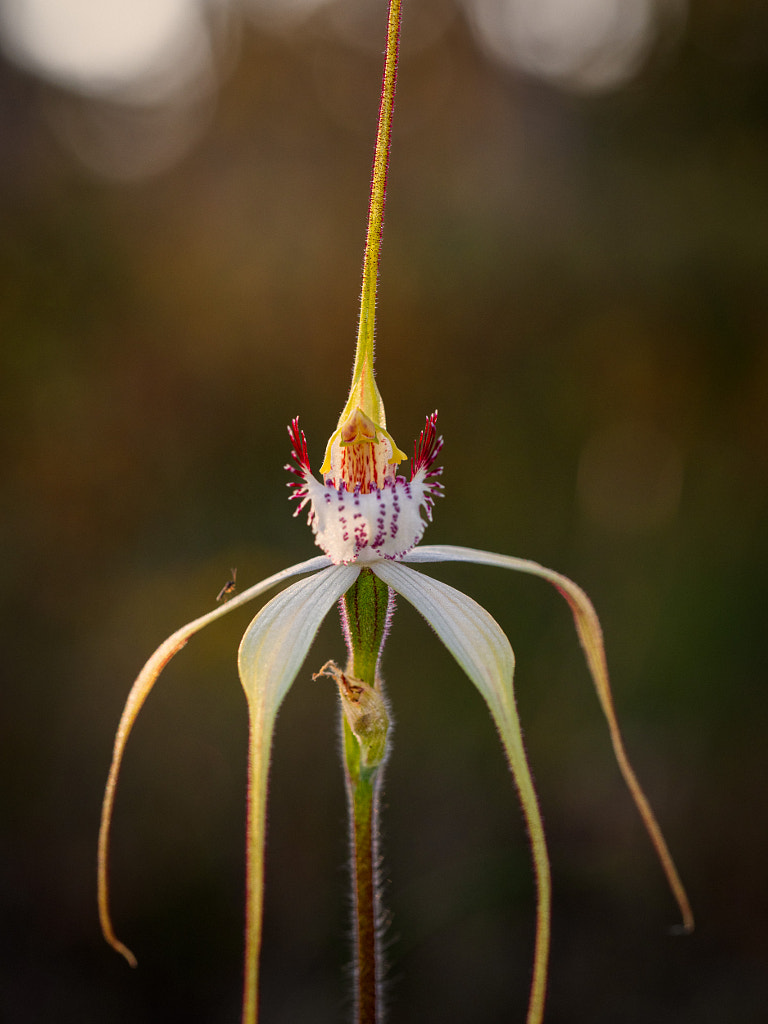
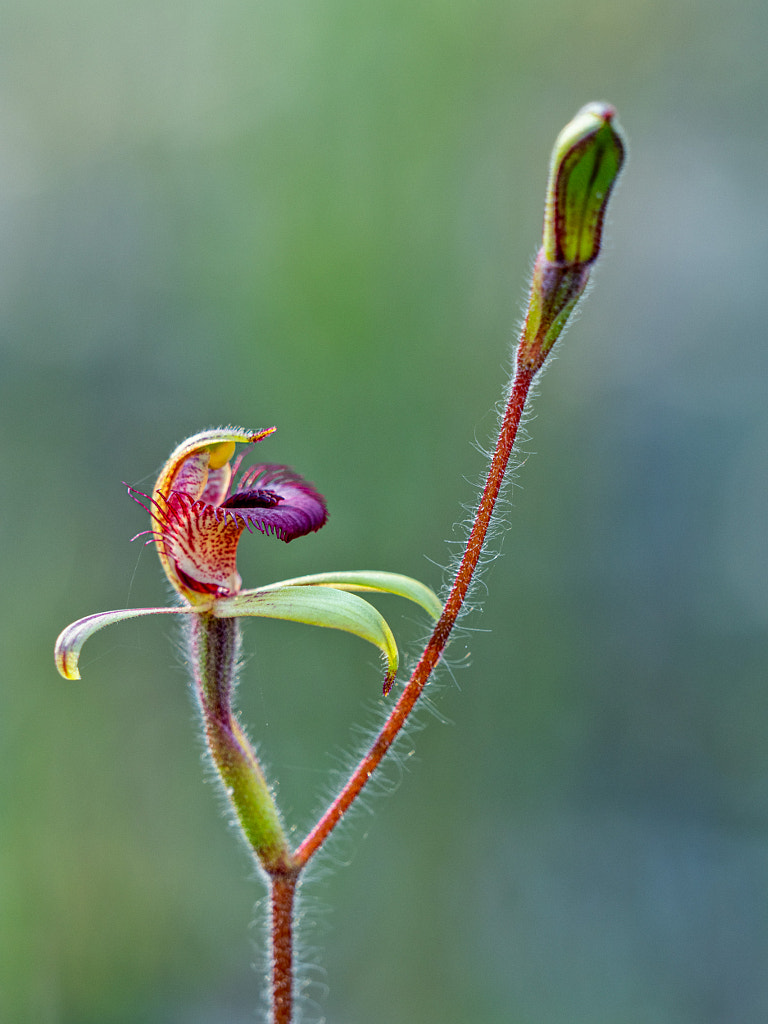
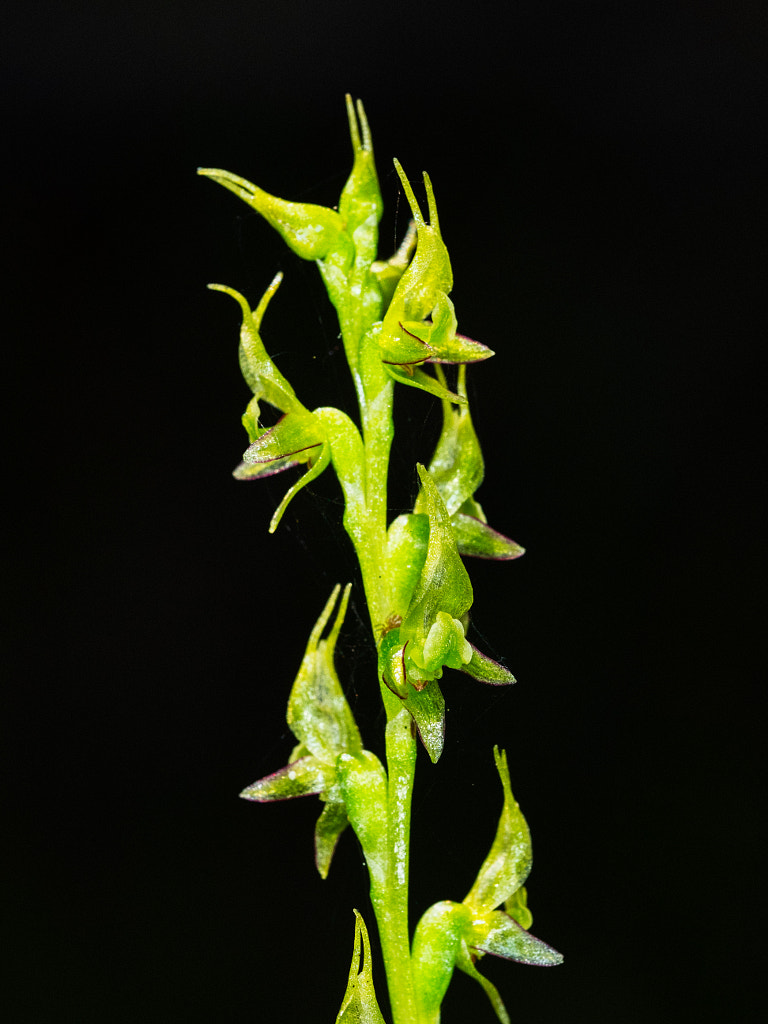
Fringed Mantis Orchid or Green Spider Orchid (Caladenia falcata). Kweda, Western Australia.
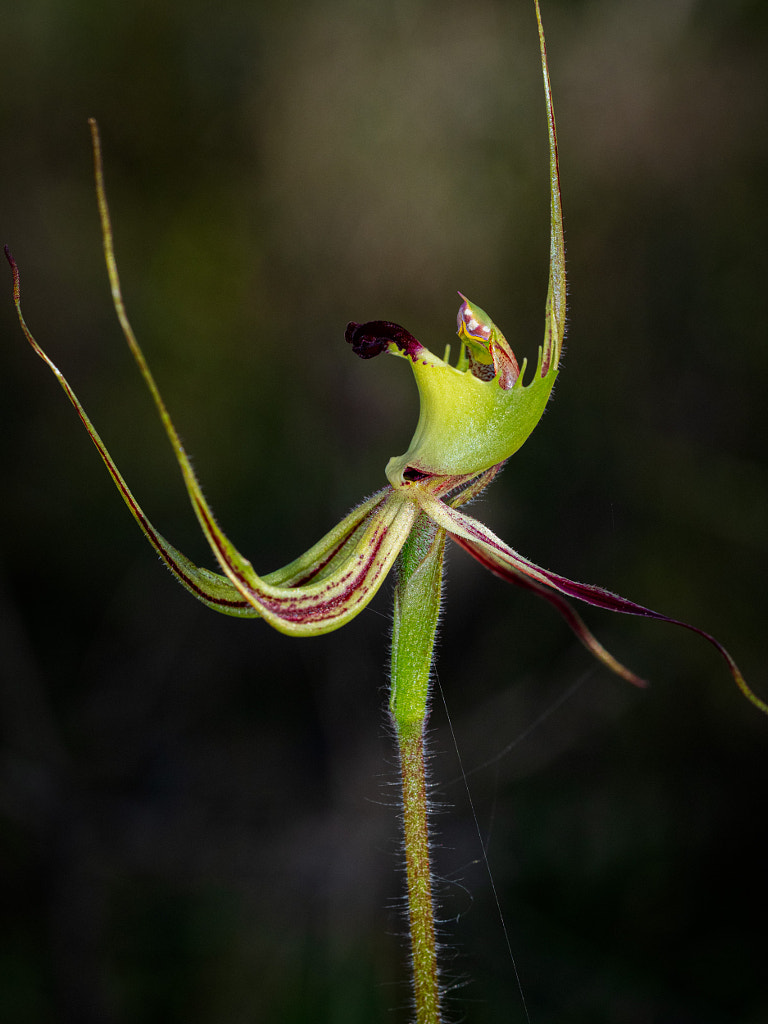
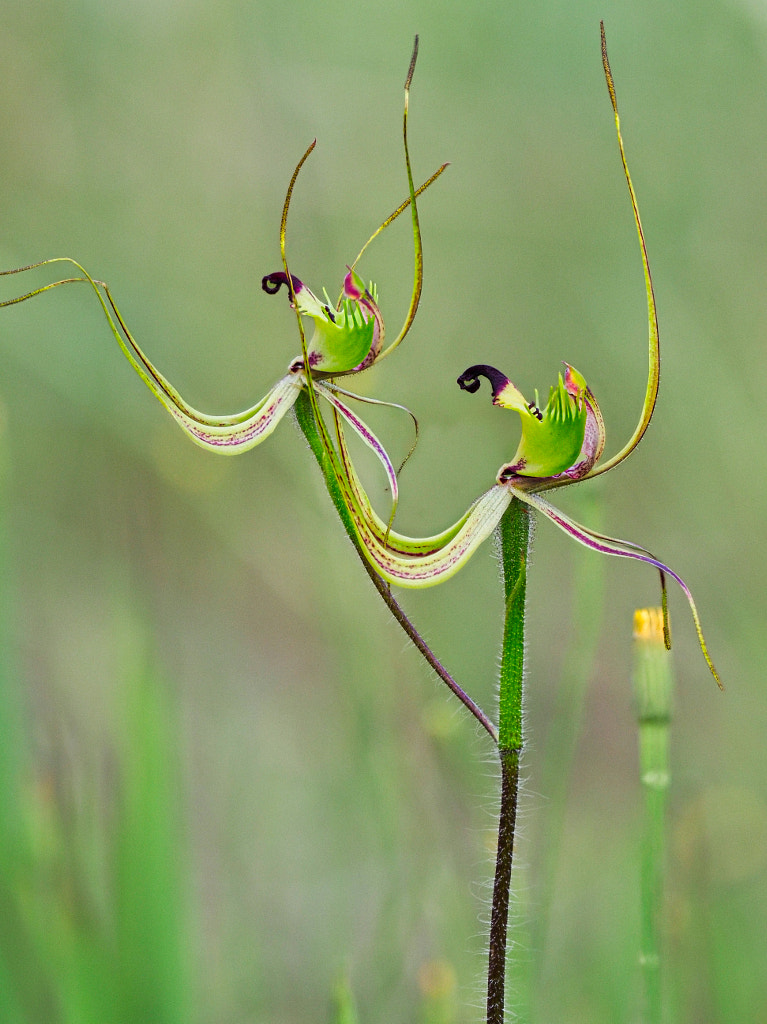
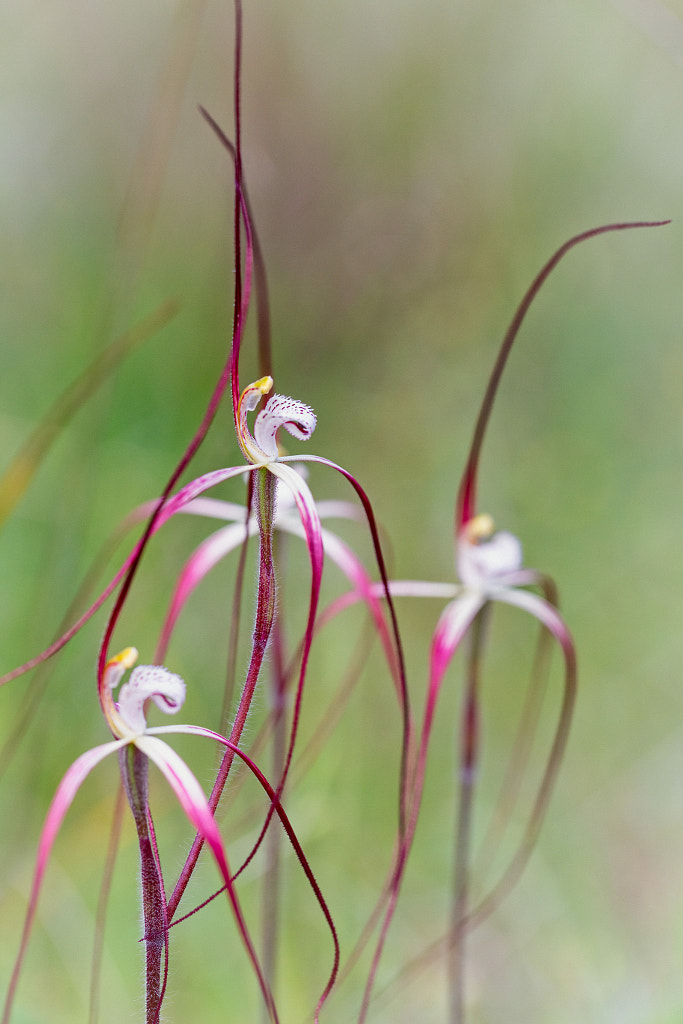
Talbot's Spider Orchid, Caladenia pendens subsp talbotii. Kweda, Western Australia.
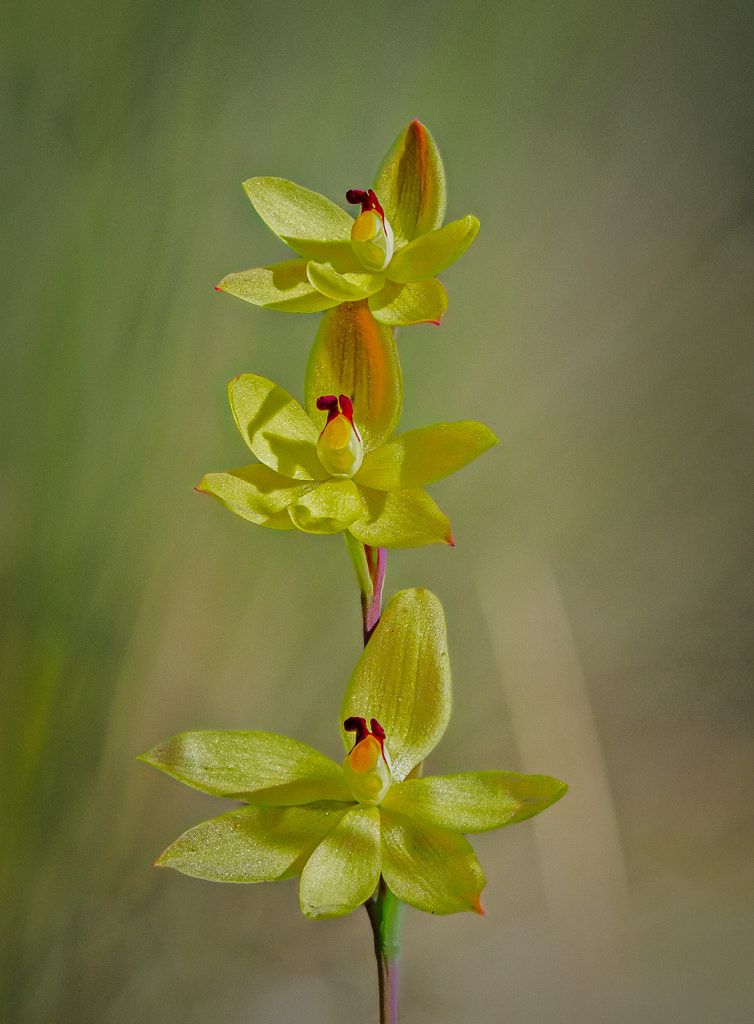
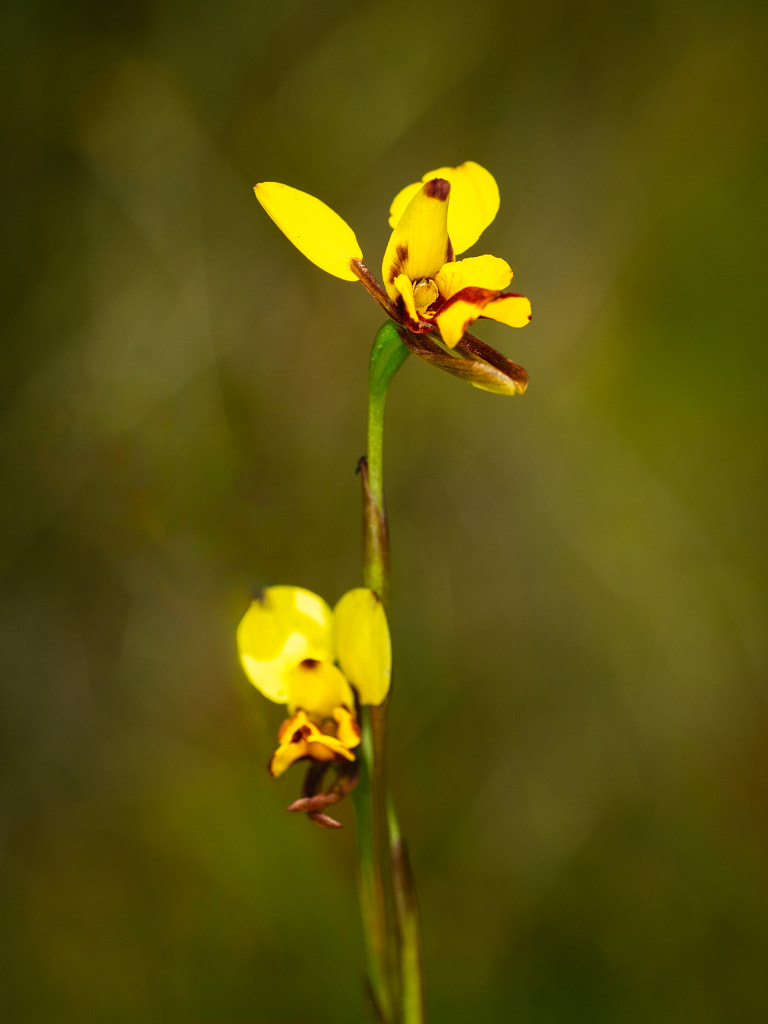
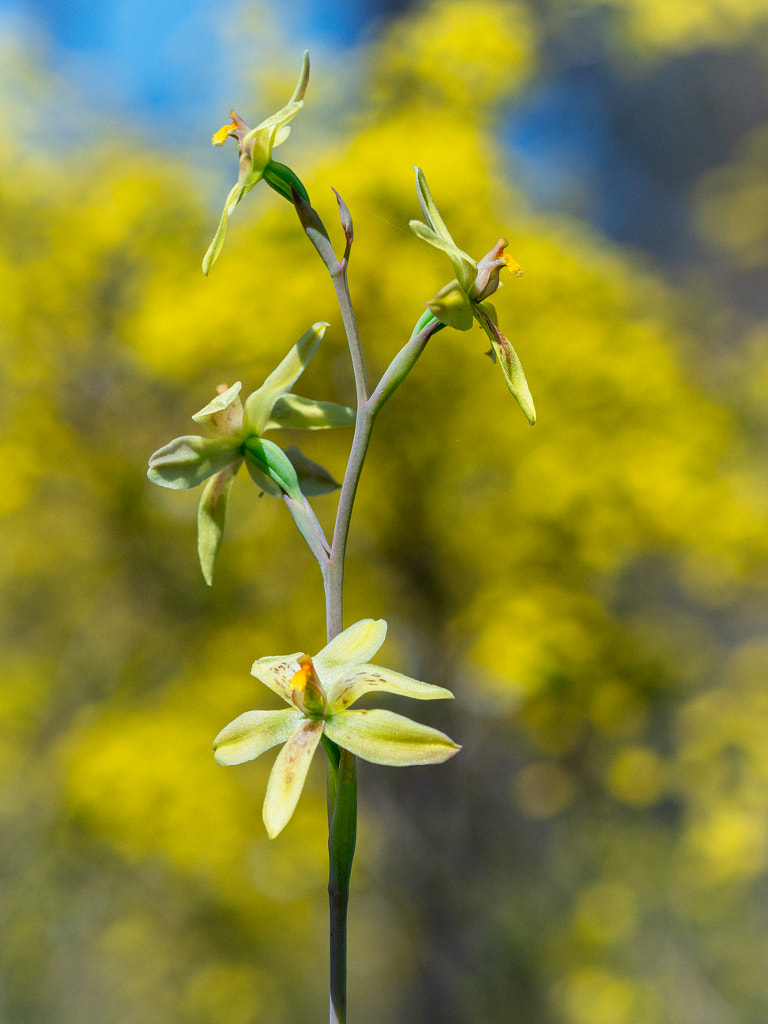
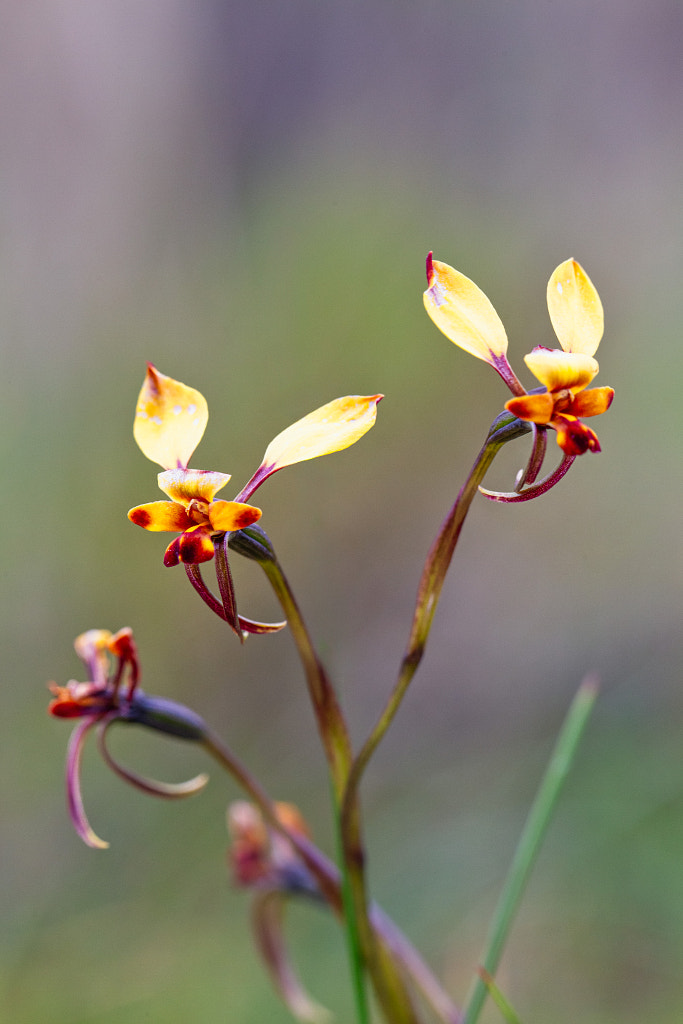
Winter Donkey Orchid, Diuris brumalis. Kweda, Western Australia.
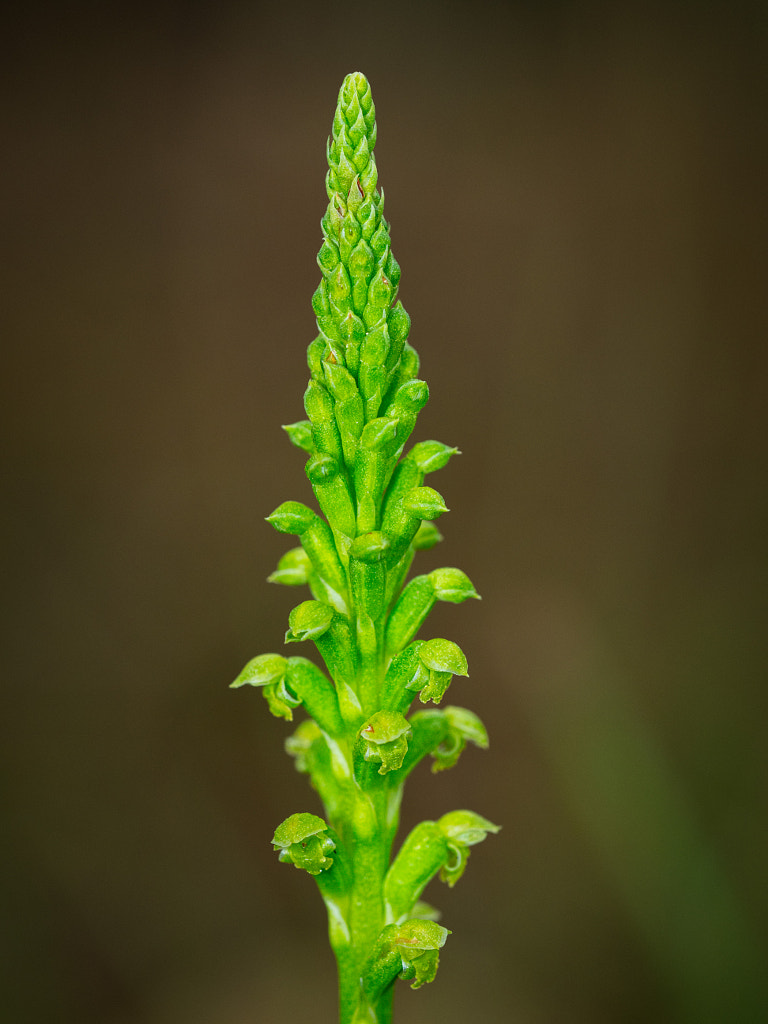
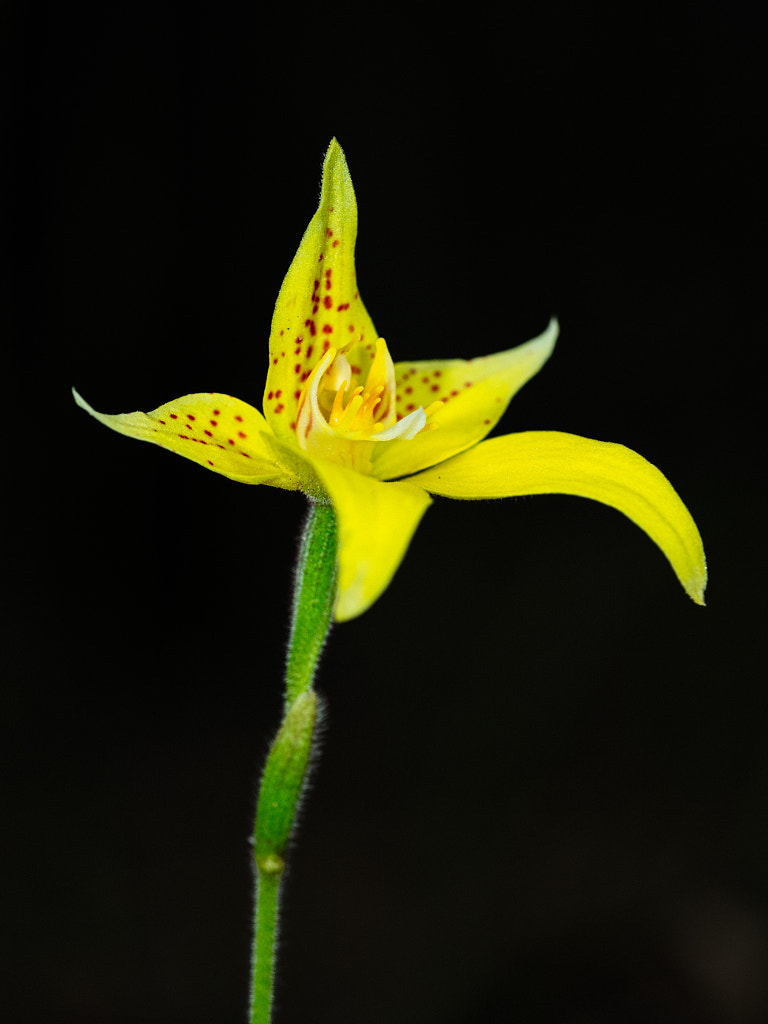
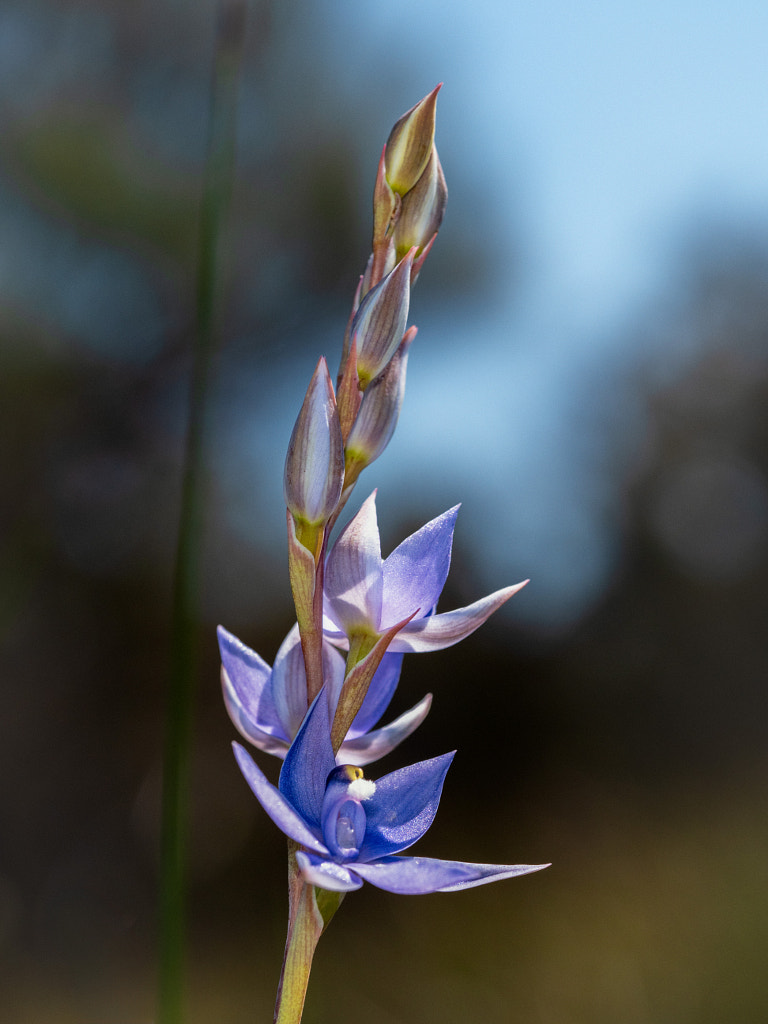
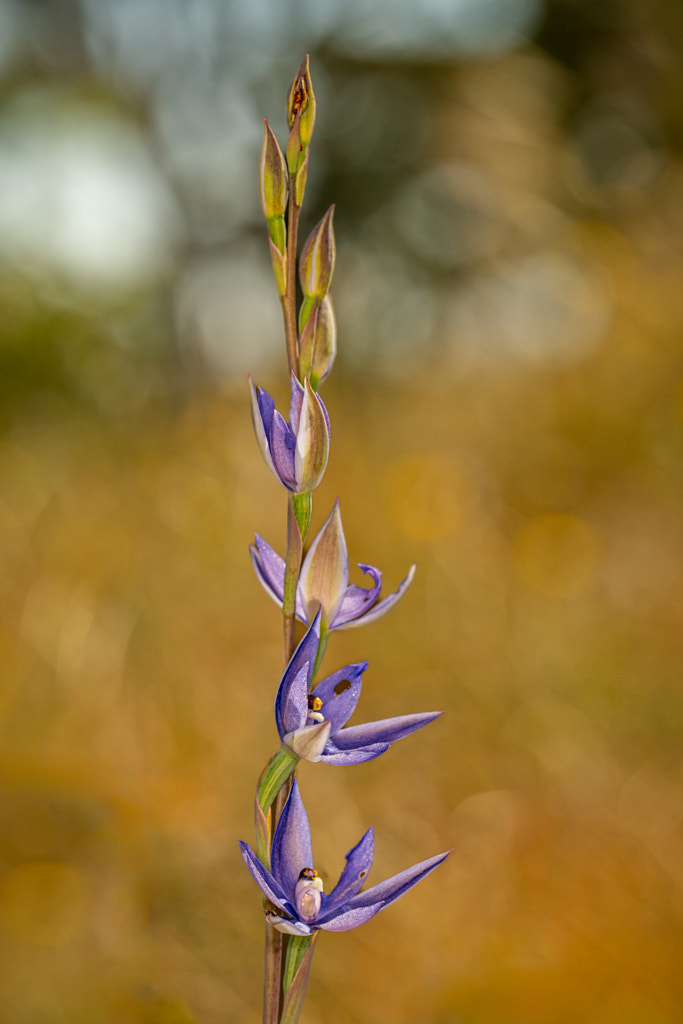
Blue Fairy Orchid or Blue Beard (Pheladenia deformis). Kweda, Western Australia.
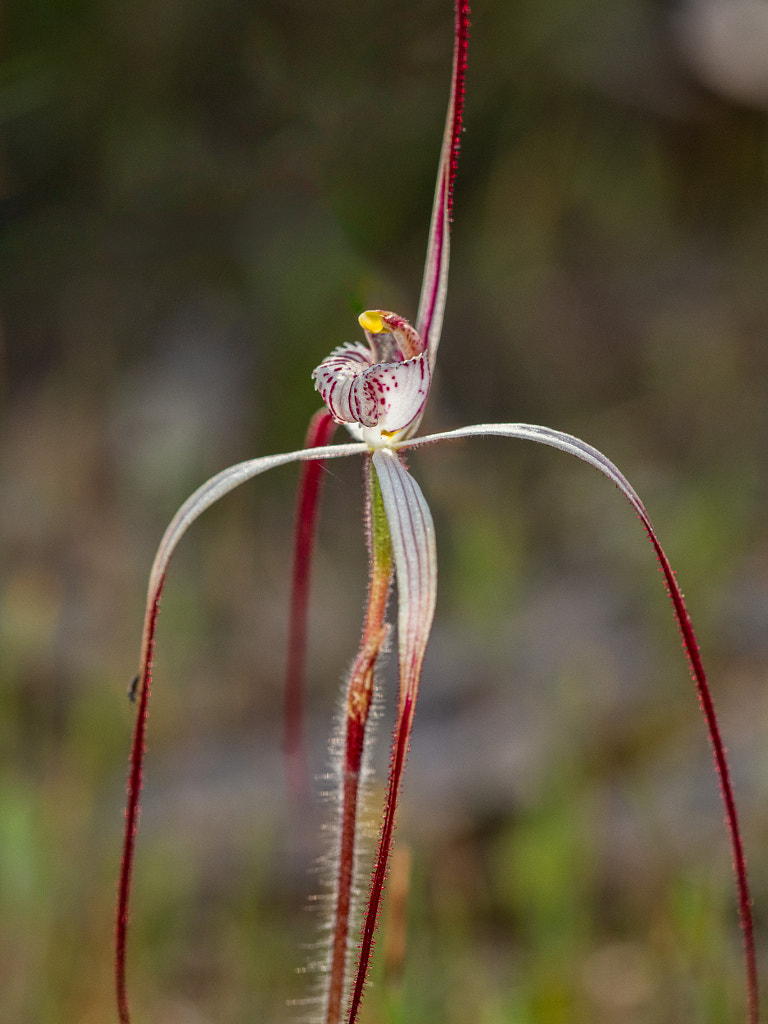
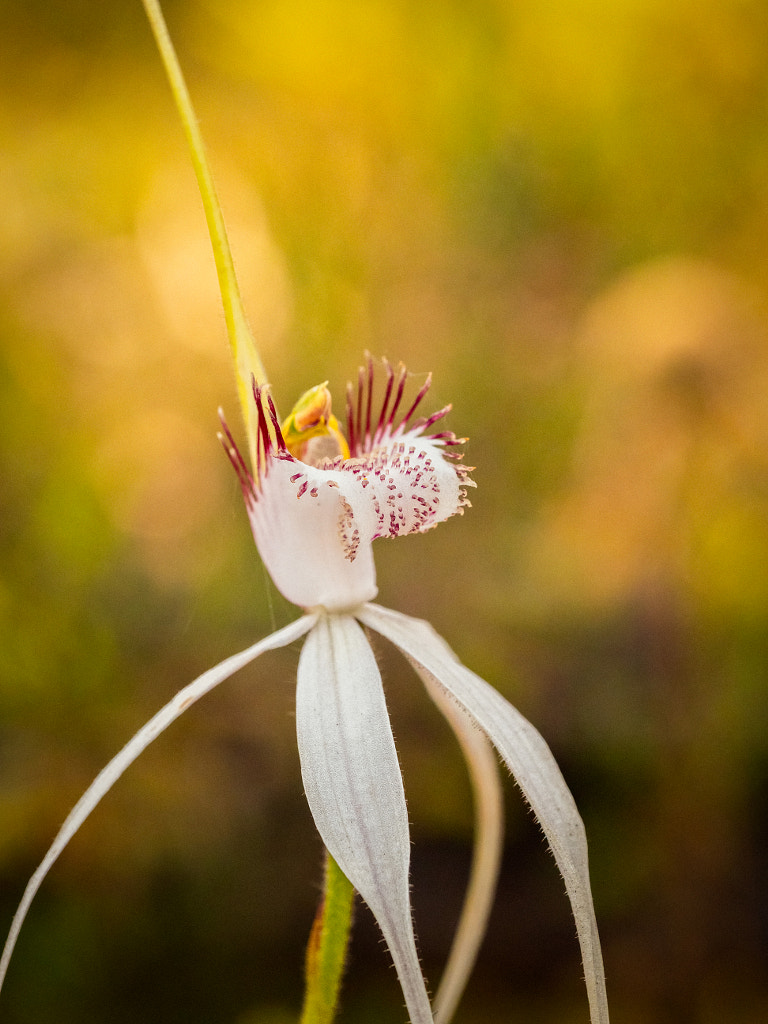
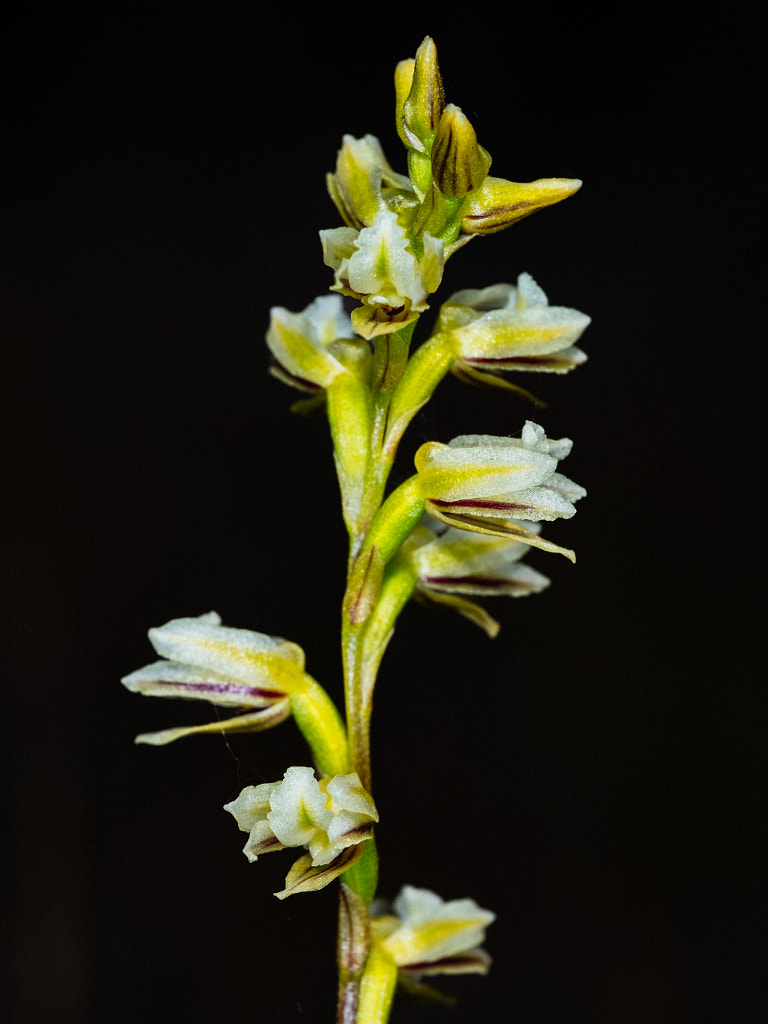
Early Wheatbelt Spider Orchid, Caladenia sp.’early wheatbelt’. Kweda, Western Australia.
I must say I’m really, really liking using the Olympus m.Zuiko 40-150mm f2.8 with the Olympus 1.4 Teleconverter MC-14 for focus stacking. It is a beautiful lens, probably the best one I’ve got.
For me now the orchid season here in the Wheatbelt of Western Australia is effectively over until next May. This year instead of going here there and everywhere I decided to concentrate on what was just around York, with the exception of a trip to Augusta. Despite that limitation I still managed to photograph over 90 different species and the video below is made up of just a small selection of those photos.
Like it or not bush fires are part of the cycle of life here in Australia. So much so that some species like the Red Beaks Orchid actually rely on them. For years I’ve noticed these large thick leathery leaves on the ground in the local forests. They never seem to produce any flowers or even any kind of stem, but the late winter to early spring after a bush fire and there can be a huge profusion of these plants flowering. They really are something to behold growing amongst the charred detritus.
A few days ago I made the 260Km round trip out to Corrigin to try and find the Pygmy Orchid, Corunastylis tepperi. I’d never seen it before and it is an early start to the orchid season. I also wanted to try out some new ideas for photographing orchids before the season proper starts. I knew roughly where to look, but once there it was like looking for a needle in a haystack. The plant lives up to its name – it is very small. The flowers are about 3mm and they can be found on a stalk 2-3 cm tall. As the the orchid prefers leaf litter found in mallee woodlands this makes them even harder to find.
Pygmy Orchid, Corunastylis tepperi. Corrigin, Western Australia.
When I drove up to the spot my heart sank a little as I had hoped that having just come up a fresh green plant would be fairly easy to spot, but as luck would have thanks to some rains we had a few weeks ago some grasses had begun to sprout as well. The area was covered in litter – not recent, it was old, very old. There were rusty steel ring pull cans all over the place. Now I’ve been in Australia thirty three years and drinks cans were aluminium back then, so I would say they were forty years old at least. The beer bottles looked even older. Take your litter home folks and then you can collect the 10c deposit on each item. As luck had it I found a whole patch of the pygmy orchids about 700m from where I’d parked the car.Having finished so quickly I decided to head off to experience the delights of downtown Corrigin.
Pygmy Orchid, Corunastylis tepperi.
Now besides orchids Corrigin’s other claim to fame is its association with dogs. The town holds the world record for the most dogs in a ute. Non Australians probably will be a bit perplexed by this but for a few years it seemed like very country town wanted to cram as many dogs as physically possible into a ute. The town also has a dog cemetery which has become quite a big tourist attraction so I made a quick stop there. It’s not the first time I’ve visited but I wanted to see if there was anything new as the owners of the dogs erect memorials and I’m fascinated with how their love for their dogs expresses itself.
The entrance to Corrigin Dog Cemetery, Western Australia.
One of the good things with photographing orchids as opposed to photographing wildlife and in particular birds is that you don’t have to get up at stupid o’clock. In fact some species of orchids will only be at their best in the middle of a bright sunny day. So by the time I hit down town Corrigin it was well past lunch time so I went into one of the two cafes and ordered a BLT sandwich. Two minutes later the waitress informs me that there is no sliced bread would I mind it being in a roll. Another two minutes and I’m informed there’s no lettuce. A further two minutes passes and I’m told there’s no tomato. At this point I’m starting to think that I’ll be told there’s no bacon when the waitress brings this enormous baguette with half a pig in it. It is literally the biggest bacon roll I’ve ever seen.
Hooch’s grave in Corrigin Dog Cemetery.
The night before we’d watched the movie “The Dry” staring Eric Bana. Although we’ve not had a drought the drive out to Corrigin reminded me very much of the movie. I love driving through the Wheatbelt – you get the feeling that the roads could go on forever and the movie very much captured that feeling. If you’ve never seen the movie give it a watch as I thought it was very good.
OK that maybe a little bit melodramatic, but there was no doubt that getting out and about after a few weeks of lockdown was a bit of a rush! So where did I go? What did I do with this new found liberty? Well I went to Wongamine Reserve near Toodyay to look for two types of orchid and do the walk trail. Pretty sad eh?
The main entrance to Wongamine Nature Reserve, Toodyay, Western Australia.
The reserve isn’t really visited any more the gates are locked and many of the signs broken or over grown. In fact speaking of overgrown the walk trail is so overgrown in places that I suggest that if you do want to visit and walk there that you take a GPS and download the walk track from Trails WA and follow that.
The reserve was closed a while ago and many of the trails and signs have fallen into a state of disrepair. Wongamine Nature Reserve, Toodyay, Western Australia.
Some of the vehicle tracks have not been used for a long time allowing termites to build mounds on them. Wongamine Nature Reserve, Toodyay, Western Australia.
This was one of only two trail markesr on the walk trail. Wongamine Nature Reserve, Toodyay, Western Australia.
Was there anything positive about the visit? Well yes there was actually. The woodland is home to quite a variety of bird life – I didn’t photograph any as I was not carrying a suitable lens as I had gone to photograph orchids. I would expect from walking through the bush that would be quite a display of wildflowers in spring which would make the journey well worth while. There were quite a few species of dragonflies as well which at the time surprised me for some reason.
Australian Emperor Dragonfly (Anax papuensis) Wongamine Nature Reserve, Toodyay, Western Australia.
Did I find the orchids? Well the Winter Spider Orchid is only 6cm tall with a 2cm flower and the Crinkle-leafed Bunny Orchid is 10cm tall with a 9mm flower and considering that the reserve is 330 ha of bushland I think I did well to find anything at all. I didn’t find any Winter Spider Orchids, I have photographed them before at Babakin, but I found lots of the Bunny Orchids. In fact I never seen so many Crinkle-leafed Bunny Orchids before. So all in all it was a great day out.
Red Capped Robin, Petroica goodenovi, Avon Walk Trail, York, Western Australia. Panasonic G85 with Panasonic Leica 100-400mm f4-6.3 lens. Exposure: 1/500 sec, f6.3 at ISO 1000 with -2/3 stop exposure compensation.
Tomorrow here in Western Australia is the first day of spring. I don’t think Mother Nature got the memo as the bush around York sprung into life a couple of weeks ago. Flowers are bursting into bloom and the birds are in a frenzy of nest building and dancing around trying to attract mates. This means that I have also sprung into action trying to document as much of thais activity as possible. The cameras are working over time.
The unusual lutea or “yellow” form of the common donkey orchid (Diuris corymbosa). Talbot Hall, Western Australia. Canon EOS 6d with Canon EF 100mm f2.8 IS L macro lens. Exposure: 1/800 sec, f8 at ISO 400.
Green Spider Orchid, also known as the Fringed Mantis Orchid (Caladenia falcata). Talbot Hall, Western Australia. Canon EOS 6d with Canon EF100mm f/2.8L Macro IS USM lens. Exposure: 1/160 sec, f5.6 at ISO 400.
White Spider Orchids, Caladenia longicauda, Wambyn Reserve, Western Australia. Canon EOS 6D with Canon EF100mm f/2.8L Macro IS USM lens. Exposure: aperture priority with off camera flash 1/50 sec, f11 at ISO 100 with -1 stop exposure compensation.
Winter Donkey Orchid, Diuris brumalis, Wambyn Reserve, Western Australia. Canon EOS 6d with Canon EF100mm f/2.8L Macro IS USM lens. Exposure: 1/25 sec, f8 at ISO 100.
Brown Honeyeater, Lichmera indistincta, Avon Walk Trail, York, Western Australia. Panasonic G85 with Panasonic LEICA DG 100-400/F4.0-6.3 lens. Exposure: 1/500 sec, f13 at ISO 200 with -2/3 stop exposure compensation.
Female Western Whistler, Pachycephala occidentalis,, Avon Walk Trail, York, Western Australia. Panasonic G85 with Panasonic LEICA DG 100-400/F4.0-6.3 lens. Exposure: 1/500 sec, f11 at ISO 200.
Spring is here and the bees are hard at work pollinating the almond trees in my garden.
It only seems like the other day I was blogging about winter coming and getting my wood supply in. Now after a very mild winter spring is breaking out all over. The fruit trees in my garden have been keeping the local bees very busy. And further afield the native terrestrial orchids are starting to bloom. I’ve never known them start quite so early, and I thought that last year was a prolific year, but this spring is looking to be even more bountiful.
A cowslip orchid being pollinated. Mokine, Western Australia.
Rosy-cheeked Donkey Orchid, Diuris aff. corymbosa, larger than the common donkey orchid and has reddish-brown labellum lobes hence the name.
A lemon scented sun orchid (Thelymitra antennifera) also known as vanilla orchid. Mokine, Western Australia.
Clicking on the photos takes you through to my gallery if you wish to make a purchase.







You must be logged in to post a comment.