

Time – it is a difficult concept to get to grips with. When I was a kid time used to go so slowly. When I grew up and started working time at work went so slowly and my days off went so quickly. Now as a I edge towards sixty time just seems to keep on accelerating. Time isn’t a constant. Then we have the phenomena of how people interpret time within societal and cultural associations. This was brought home to me the other day when talking with someone about what they considered an old building and they were stating that Holy Trinity York was a very old, historical building that needs preserving.
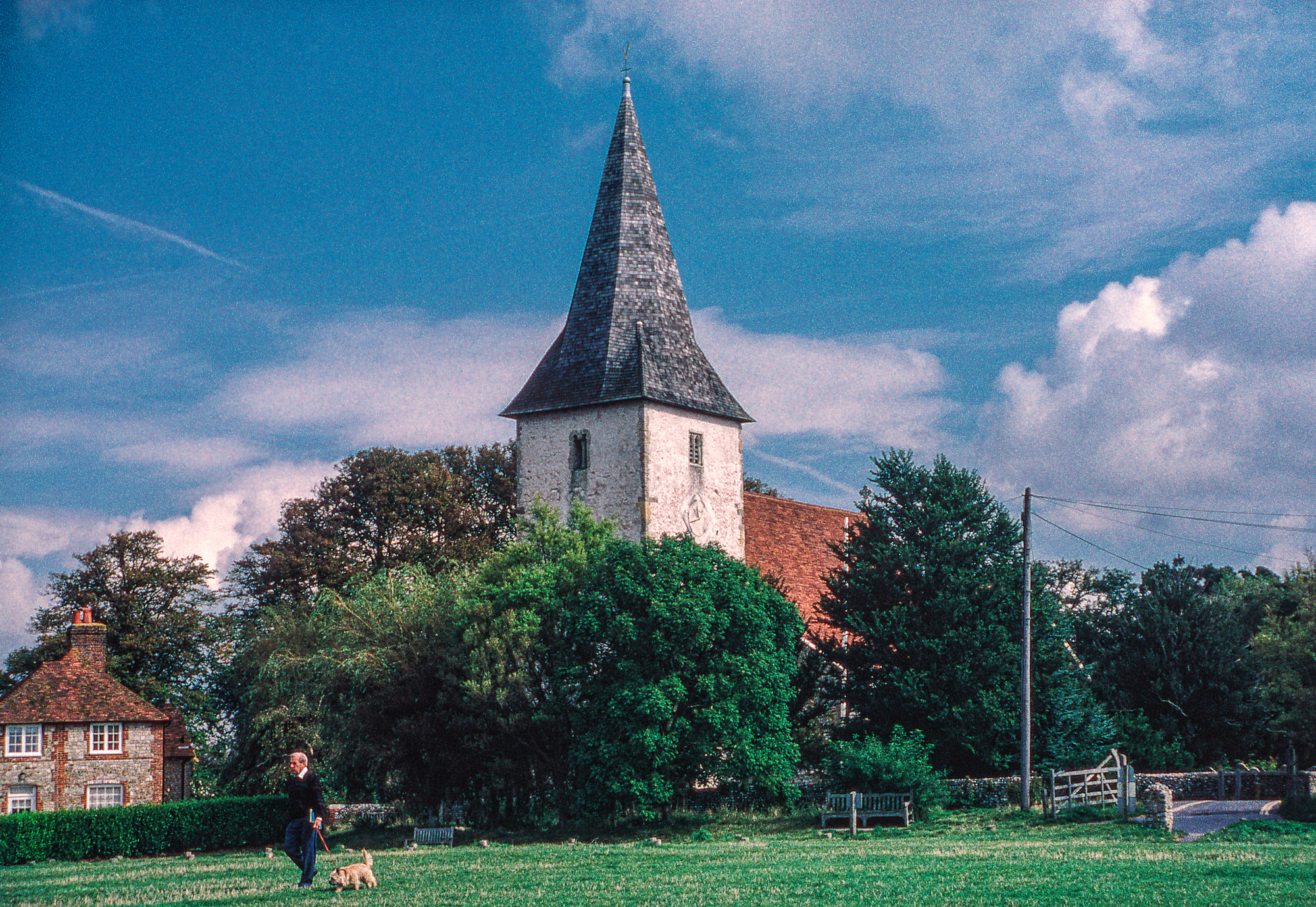
Here in Western Australia Holy Trinity Church in York is considered an old historic building. The Anglican Church was was established in York in 1831, and the building work on the current building began in the 1850’s. So I guess if were being generous then that’s 189 years. In terms of white colonial Australia that is old but in the big scheme of things it’s just a drop in a bucket. I spent my formative years in Chichester, West Sussex. Down the road is the little town of Bosham and it has a Holy Trinity Church as well. The differentiation is the first church in Bosham was mentioned in an account written by the Venerable Bede about Bishop Wilfrid’s visit in 681 AD – that’s 1339 years ago. The earliest parts of the current building were built in the 11th Century under the patronage of Godwin, Earl of Wessex who was one of England’s richest and most powerful of men. You may have heard of his son Harold Godwinson, better known as the King Harold who was poked in the eye by William the Conqueror at the Battle of Hastings in 1066 (apparently his last words were “Oi William! Be careful with that thing or you’ll have somebody’s eye out.”). Indeed there is an illustration of the church in the opening scenes of the Bayeux Tapestry with the accompanying text ‘Ubi Harold dux Anglorum et sui milites equitant ad Bosham. Ecclesia.’ Translated, this reads ‘Where Harold, Earl of the English, and his retinue ride to Bosham. The church.’ The church has historical associations with another king – King Cnut. Yep he’s the one that tried to turn back the sea as a demonstration to his courtiers of how insignificant his power was. Well it is believed that one of his daughters is buried in the church – local tradition has it she drowned in the nearby millstream aged 8. That’s a lot of history and it was all recorded. The big thing was that when I first saw these buildings they new and fresh to me. It was only as I became more familiar with them did I start to have any inkling of their historical significance.

Does something that has been around longer become more valuable than something newer? Does the cultural and societal significance of something increase as it ages? Well I suppose the fact that the church in Bosham has parts of it that have physically been there for a thousand years makes it kind of special. Then add the fact that it is associated with key figures and events in history that makes it somewhat unique. Then stir into the mix the fact that it is still a central part of the community and then you have something really important. It is not just a dead building, a mausoleum to a bygone age, it is something that has come to help define a community over a long period of time and will continue to do so well into the future.
Photography and film/video are art forms that deal in part in capturing and expressing time in a way that other art forms have trouble articulating. You can speed it up, slow it down. You can show the effect of change. You can preserve things and memories. Over the last 150-200 years humans have come to see photos as an adjunct to their memories. I have photos and videos of some of my dogs playing, they’ve been dead a long time yet I find them very comforting and my memories of them somehow seem more real, more valid. Photos can, of course, also evoke sad/negative emotions and memories. A photograph can also be just proof of existence – either the subject or the photographer actually existed. For instance without these photos many of you wouldn’t be aware of these two churches having being built.

This is all getting a bit too metaphysical so lets change tack. If we stop and consider the two photos of the churches they were taken 29 years apart. Things have changed enormously photographically speaking between those photos. The photo of the church in Bosham was taken at the height of the film era using what was then already rather dated equipment – an Olympus OM4 with an Olympus OM Zuiko 35-105mm lens shooting Kodak Kodachrome 200 ASA reversal film. The photo of the church in York was taken well into the digital era on a Canon 6d with Canon 24-70mm lens. So not only are the photos snap shots in time of two churches, but they are all snapshots in terms of photographic equipment and trends. But I know that all said and done how they were captured will matter to very few people in the future. What will matter is that they were captured at all. I have a photo of a relative taken back in the 1880’s. I have no way of knowing what was used to make the photo nor whether it was considered cutting edge at the time. I just know that this woman and her dog existed at some point in time and she is one of my family and that is what makes it so important. I don’t know who she is other than my great great grand mother as there is no one left in my family who remembers who she was. But the important thing is that she existed and we can see that she liked dogs – a trait that still runs in our family. The important thing is that someone decided that wanted a photo of her and her dog as a keepsake and consecutive generations have kept it.
Time. It is a difficult concept to consider or explain but maybe we shouldn’t try. Maybe we should just mark its passing with photos and videos and leave them as gifts for those in the future to make sense of.

You must be logged in to post a comment.