As you drive into York on the Great Southern Highway standing tall on your left is the historic York Flour Mill built in 1892, home to The York Mill.
I like wide-angle lenses, I use them a lot, but funnily enough mostly in the 24-35mm range (35mm full frame sensor speak that is). Occasionally I’d pull oy a 20mm, but as I said only very occasionally. The above shot was taken with a 24mm lens, it’s OK but a little cramped. I couldn’t back up any more as I was against the fence so I threw caution to the wind and chucked a 15mm lens on the front of the camera – and we’re talking full frame sensor here.
York Mill again this time Voigtlander 15mm Super Wide-Heliar lens.
It’s amazing how much difference 9mm can make. Same viewpoint but this time with the camera in the landscape orientation. It sets the building in its context and thus makes it more appealing. I also like how the whole building is acting as a giant reflector for the setting sun. This will be the picture that is used for the end product, however, the one I like the most takes advantage of the enormous depth of field that such a short focal length provides.
What a lot of depth of field – from 30cm to infinity at f16.
* Today’s title comes from a couple of lines from the lyrics of “Is It A Crime” by Sade the über cool and totally smooth chanteuse of the 1980’s.
Portrait of me in Majorca taken in March 1986 by my father in law, Brooke Spencer. Probably taken with a Leica R4 with a Leica 135/2.8 Elmarit-R on Kodak colour negative film. I’m holding my trusty Olympus OM1n with the Olympus Zuiko 35-105mm f3.5-4.5 lens. Those were the days.
Since the trans-continental relocation of the global behemoth that is Paul Amyes Photography (PAP) I have been hunkered down in the research lab deep in thought. To continue with my quest for photographic world domination I have been contemplating a new fine art project with a commercial bent that trades heavily on nostalgia for a bygone age.
While studying photography at art school I took two units in fine art photography and I was particularly taken with alternative processes, namely gum bichromate and cyanotypes. I experimented with taking digital images and then turning them into an A4 sized negative and using that to contact print onto papers that I had coated. To tap into that nostalgia thing and enjoy a retro photographic process I initially thought about capturing the new images on large format and using the resulting negative to make the contact print. There is something very beautiful about a large format contact but this is countered by the very damaging effect a large format camera has on your bank account. So this made me think about using digital capture and then making a negative from the file. It is not particularly difficult and at art school I experimented with paper negatives and ones made using overhead projector sheets. The paper negatives were best oiled with WD40 and they produced an image which was softened by the natural fibres of the paper. OHP transparencies gave a sharper image but the out put still looked like a modern image. Then I had a brain wave. What if I took older lenses and adapted them to a modern high-resolution digital body. The Sony A7r is now appearing on the second had market at very reasonable prices, and these will continue to fall as Sony introduces a new updated model every other week (a slight exaggeration perhaps). But before I splashed out some serious cash I thought I better find out whether the motley collection of old lenses I’ve got tucked in a shoe box in my equipment cupboard would be suitable. I decided to put them on an m4/3 camera and see how they perform.
Four of my favourite lenses; an Olympus Zuiko 35-105 zoom, an Olympus Zuiko 50mm f1.4, a Voigtlander 75mm shot telephoto and a Voigtlander 35mm lens.
The test was relatively straight forward. I’d use my Olympus EM1 as the camera body and mount the lenses using the relative adapters. The camera would be hand-held with the image stabilisation set manually to the focal length. The camera would be in aperture priority at base ISO (which for the EM1 is 200) and I would shoot wide open and then stop down full aperture stops until f8 – any smaller aperture and the results would be clouded by diffraction. I’d use focus peaking to focus accurately and I would refocus after every aperture change to avoid focus shift.
Voigtlander 35mm f2.5 Color-Skopar mounted on an Olympus OMD EM-1 mirrorless camera.
The lenses were:
Olympus Zuiko 50mm f1.4 MC. This was the third version of the lens and was introduced in 1984. I had fond memories of the lens and it produced some cracking images for me. Olympus Zuiko 35-105mm f3.5-4.5. This lens was introduced in 1983, which is when I bought it. It cost me a small fortune, if I recall correctly £189, which at that time was two weeks wages. At the time I thought it was worth it and I used it as my every day do anything lens right up until 2003 when I switch to Canon because I could no longer get my OMs serviced. This was a lens that figured prominently in my plan. Voigtländer 35mm f2.5 Color-Skopar. Introduced in 2004 this was another favourite lens, it was tiny, and very sharp. I loved using this with Ilford Delta 400 on my Bessa R2. Again a lens I had very high expectations for. Voigtländer 75mm f2.5 Color-Heliar Introduced in 1999 this was a lens I feel I should have liked. It is wickedly sharp and with its ten aperture blades produced wonderful bokeh. But for some reason I just did not click with it – I think it was the minimum focusing distance which made it possible to only get a head and shoulders portrait rather than a full headshot.
The images were shot with the camera in RAW and then opened up in Lightroom and examined at full screen size and then at 100%. There was no post processing done. The results weren’t really a surprise, but they were somewhat disappointing as they revealed some uncomfortable truths and some pleasant surprises. Here are the results:
Olympus 50mm f1.4 – wide open there was significant colour fringing, low contrast, and overall the image was soft getting worse at the edges. Stopping the lens down brought about significant improvements – the chromatic aberration all but disappeared by f8 and the corner sharpness really started to improve from f4. The bokeh was nice and smooth. A good start.
Olympus 35-105mm – at 35mm and wide open the colour fringing very apparent even before pixel peeping at 100% and it didn’t improve any by f8. At 105mm and wide open the CA was significant but it does improve by f8, but is still visible. Edge sharpness was nothing to write home about wide open but by the time it was stopped down to f8 it did improve. Surprisingly the bokeh was better than expected at both extremes of the focal range.
35mm Color-Skopar – chromatic aberration was quite well controlled wide open and just improved as it was stopped down. The edge sharpness was slightly soft wide open but improved dramatically once stopped down to f4 and kept improving past that. Bokeh was a bit iffy, something that Voigtländers are often criticised for on the inter web.
Voigtlander 75mm f2.5 Color-Heliar. Aperture 2.5
75mm Color-Heliar – straight off the bat this was a very strong performer and for me was a real surprise. Wide open CA was virtually non-existent and disappeared by f4. Edge sharpness was very good from f4 onwards. The bokeh was just gorgeous. The 10 aperture blades produce very smooth tonal transitions and lovely perfectly round bokeh balls.
Frida. Olympus OMD EM1 with Olympus Zuiko 35-105mm lens.
Of the 4 lenses the poorest performer is the 35-105 zoom. In reality this should be expected in a thirty year old zoom lens design, but it is disappointing to me as I had such a high regard for this lens based upon my extensive use of it. Countless rolls of Fuji Velvia and Kodachrome 64 over a twenty year period had convinced me that it was a good performer. However slap it on a digital camera and the results are quite frankly so-so at best and absolutely pants at worst.
The 50mm has a lovely creamy dreamy quality to it that would make it very suited to fashion and beauty portraiture. The 50mm has a very nice smooth tonal fall off which now makes me question whether sensor size is as significant factor for this and that perhaps lens design also plays a considerable part.
The 35mm Color-Skopar was OK – meaning it wasn’t good or bad. I’d be interested to see what it does on a full frame sensor.
Frida on Mount Brown taken on an Olympus EM10 with Voigtlander 75mm f2.5 Color-Heliar.
Pig melons on Mount Brown. Olympus EM-10 with Voigtlander 75mm f2.5 lens.
The 75mm Color-Heliar was a revelation, and it is certainly the standout lens here. It was when introduced an underrated lens when introduced with the Bessa rangefinder film cameras and was quickly replaced with an f1.8 version. But since then this lens has developed quite a following with people adapting it for use on digital cameras. Voigtländer took a classic lens design, gave it modern glass and coatings, boosted the lens aperture blades to 10 and produced something rather special. For shooting studio portraiture it would make anyone look good. Definitely a keeper lens and quite possibly the kind of lens you’d buy a camera body for just so you can use it. If only the 35mm was that good – I’d go out and hit the camera shops and dent the credit card straight away.
Modern lenses are technically very good, most of the problems with vignetting, corner and edge sharpness and colour fringing are now corrected in camera by software. They are sharp and contrasty which appeals to a great many photographers who have only known digital imaging. The legacy lenses are sharp in the centre of the frame, but they have lower contrast and this doesn’t give the edge acuity that many digital photographers want. But this also makes them more attractive because they have character and render images in a more 3D way with smoother tonality. The test has shown that the Olympus Zuiko 35-105mm is really not up to the demands of a high-resolution digital sensor. Nostalgia destroyed by the brutal reality of modern digital imaging. The other three lenses could stand some further experimentation.
The “blood moon” or the red lunar eclipse brought out the apocalyptic in me.
According to Wikipedia…”A lunar eclipse occurs when the Moon passes directly behind the Earth into its umbra (shadow). This can occur only when the Sun, Earth, and Moon are aligned exactly, or very closely so, with the Earth in the middle. Hence, a lunar eclipse can only occur the night of a full moon… the red colouring arises because sunlight reaching the Moon must pass through a long and dense layer of the Earth’s atmosphere, where it is scattered…Several cultures allude to the lunar eclipse as being a good or bad omen. For example, in some Chinese cultures, people would ring bells to remove wild animals that bit the moon. During the Zhou Dynasty in the Book of Songs, the sight of a red moon engulfed in darkness led them to believe the sign as a foreshadowing of famine or disease.” SPOOKY!
Thankfully we all woke up happy and well the next morning.
The weather conspired against me. I had planned my shoot using The Photographer’s Ephemeris, got my angles and location sorted out and then just half an hour before heading out I stuck my head outside and we have thick cloud cover. Bugger! What to do? I didn’t want to drive out to my location, walk to the point and stand in cold wind coming straight off of the Antarctic for nearly 3 hours with the chance of getting nothing. So I decided to set up my cameras on my deck and only start filming when there was a break in the cloud cover. So out of 3 hours and 20 minutes of potential eclipse action I got in total about 30 minutes. Ah well I shall wait until the next one on the 04/04/2015.
Filmed using the time-lapse movie function on the Olympus OMd EM-10 with a 75mm f2.5 Color-Heliar and a Zuiko 40-150mm f4-5.6 lens. Additional footage filmed on a Canon 550d with 70-200mm f2.8 L IS lens
It’s been raining – a lot! Most unusual for the Wheatbelt.
Well here I am back with another look at the EM-10 now I’ve had it in my possession for a month. First I’d like to thank reader Mike Hendren who set me straight about the bracketing feature. Thanks to him I’ve found that if you go into the HDR function then you can find lots of bracketing features. The camera is capable of in camera HDR and it processes the images as a jpg. The camera shoots a burst of four shots each with a different exposure and you have a choice of two settings for the output – one is more “dramatic” than the other.
Marwick’s Barn, a large stone and timber structure with a high-pitched iron roof was built in the 1870s. Single exposure with just a little sharpening in Lightroom.
In camera HDR from Olympus EM-10 using the “dramatic” setting.
Not a lot of difference really, just a flatter image. Scrolling past the in camera processing you can choose to bracket your exposures and then process the images on your computer. You have a choice of 3, 5 or 7 frames at -/+ 2 stops, 3 and 5 frames at -/+ 3 stops. The picture below was 3 5 frames at -/+ stops and processed in Lightroom and HDR Efex Pro 2.
Using the HDR bracketing function of the EM-10 to make 5 exposures -/+2 stops and then process in Google’s HDR Efex Pro.
If HDR is your bag then I think you have a definite idea of how you want your photos to look and will choose to blend the images in software on your computer. However, the function could be just the ticket if you’re a confirmed jpg shooter. Speaking of bracketing and jpgs, then the Art Filter bracketing may prove to be a boon if you ever feel a little indecisive about how you want an image to look. You can choose as many of the filters as you like, but bear in mind that you will need a bit of patience while you wait for the buffer to be cleared.
This slideshow requires JavaScript.
I must say that I’m pretty impressed with the robustness of the files the EM-10 produces, they hold up to post processing very well.
Detail of a vintage car radiator grill. Avon Tce, York, Western Australia. ORF processed in Lightroom and then in the desktop version of Snapseed.Curly wire on a fence post. Focusing the Color-Heliar 75mm f2.5 wide open using focus peaking.Raw file processed using Lightroom and Snapseed.Two horses kept on a property on the banks of the Avon River in York, Western Australia. Shooting with a 35mm Color-Skopar lens wide at f4 with focus peaking. Raw file processed using Lightroom and Snapseed.
Sheep garden ornaments. Color-Heliar 75mm f2.5 wide open focused with focus peaking on the new Olympus EM-10. Raw file processed using Lightroom and Viveza 2.
Noise, both colour and luminance, seem very well controlled as this shot Diego my cockatiel shows.
High ISO noise test. Diego my cockatiel at ISO 6400. No noise reduction applied.High ISO noise test. Diego my cockatiel at ISO 6400. Close up of Diego’s beak to show noise.
Olympus has always had a good track record when it came to metering systems. The OM 3 and 4 introduced multi-spot reading with shadow and highlight priority, which made them very popular with adherents of the Zone System pioneered by Ansel Adams. The Om 40 saw the introduction of ESP metering which meters from several areas of the image and it is a more sophisticated version of this using 324 areas is present in the EM-10. Spot metering, high light and shadow spot metering are also present, but multi-spot metering is not present. The metering is very accurate and backlit subjects don’t fool it into under exposing.
The ESP multizone metering handled this well with good detail being maintained in both the shadows and the highlights. Straight out of camera jpg.
A few readers asked questions about the capabilities of the camera. Several wanted to know whether the EM-10 was suited to BIF. Sorry the only biff I know about is jujitsu and aikido. Seriously I don’t have a lens long enough to attempt birds in flight, and when I try with my 40-150 they certainly take flight but can only be seen as tiny specks. I do have a sequence of Frida, my English Bull Terrier, doing a “bully run” .
Twelve frame sequence on low continuous shooting of my dog running towards me using the 40-150mm zoom. On some of the frames the focus tracking lost focus but then quickly reacquired.
I mentioned in the previous part of the review that I had used the EM-10’s pop up flash to act as a controller for off camera flash and several people asked how I did this. Well the video below should answer that question.
Another reader asked about using the inbuilt WiFi function. This is the first camera I have used with this function and I have to say I think it is really great. I used my iPad and it was brilliant to use it as a gigantic screen to aid with composition and focusing. The only downsides are that it uses up the camera battery real quick and you can’t use to in movie mode.
So, as I’ve got to know the camera have my feelings changed? Well I have to say when I first picked it up I felt that the camera felt unnecessarily complicated and frustrating to use. Four weeks on I have to say that we’re starting to establish a relationship, I’ve largely set the camera up so I don’t have to do much menu diving which means I can just get on and shoot. The metering is reliable and the files are great, so for still photography I think the EM-10 has the makings of good camera. As for video, well I’m still out to lunch on that one. As I said at the beginning of this entry it has been very wet here and so I’ve not had enough time to get out and shoot anything. I’m hoping to get out in the next week or two and shoot a small project with it, so when that is ready I’ll post my thoughts about it. Stay tuned for the next thrilling instalment.
God Loves Everyone – Even Christians. South Beach, Fremantle, Western Australia. Voigtlander Bessa R2 & Voigtlander 35mm f2.5 Colour Skopar . Ilford Delta 400 developed in D76.
Now it has been nearly 4 weeks since my last post, but far from sitting around and just doing nothing myself and the myriad of staff here at the head quarters of the global juggernaut that is Paul Amyes Photography have been remodelling the commodious facility. Endeavouring to maintain our cutting edge style we undertook the massive task. At times I must confess that it seemed like a Sisyphean task, but now basking in freshly designed and decorated centre of operations , I can say that it was all worth it.
Sisyphys (1548–49) by Titian, Prado Museum, Madrid, Spain
Having just posted after a long absence I must confess that the blog will be taking another break of 3 weeks while I go and intrepidly explore the Tasmanian wilderness. Now observant regular readers will note that it was not even 12 months ago that we visited that far off land. Well the pull of the wonderful scenery, excellent food and the outstanding beverages is too great to resist. The trip will not be all beer and skittles though, no my shutter finger will be getting a very strenuous workout as I endeavour to capture the beauty that is ubiquitous in Tassie.
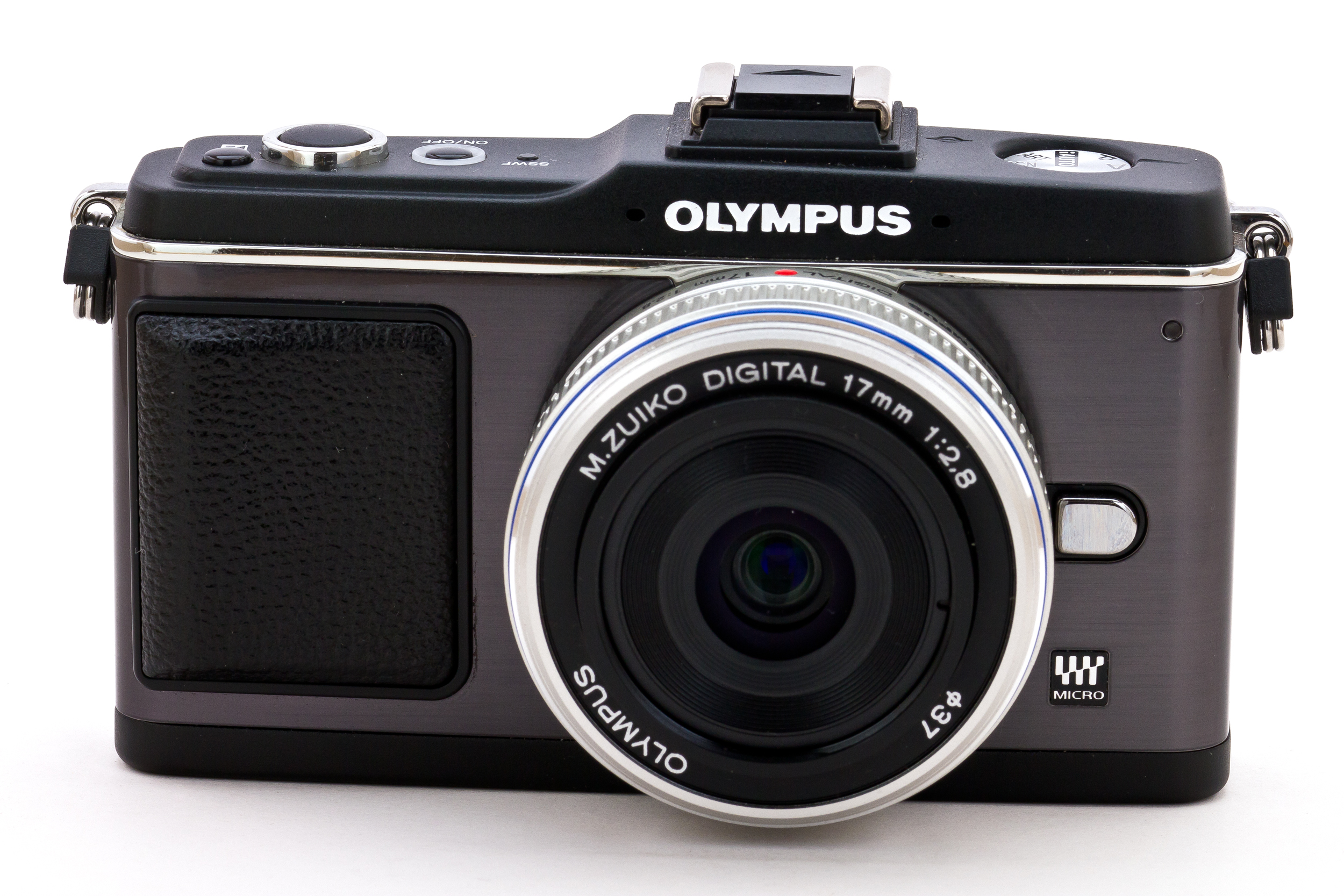
Olympus Pen EP-2 with a 17mm lens. This gives a 35mm equivalent. For wide angle lenses it is cheaper and easier to use native m4/3 lenses.
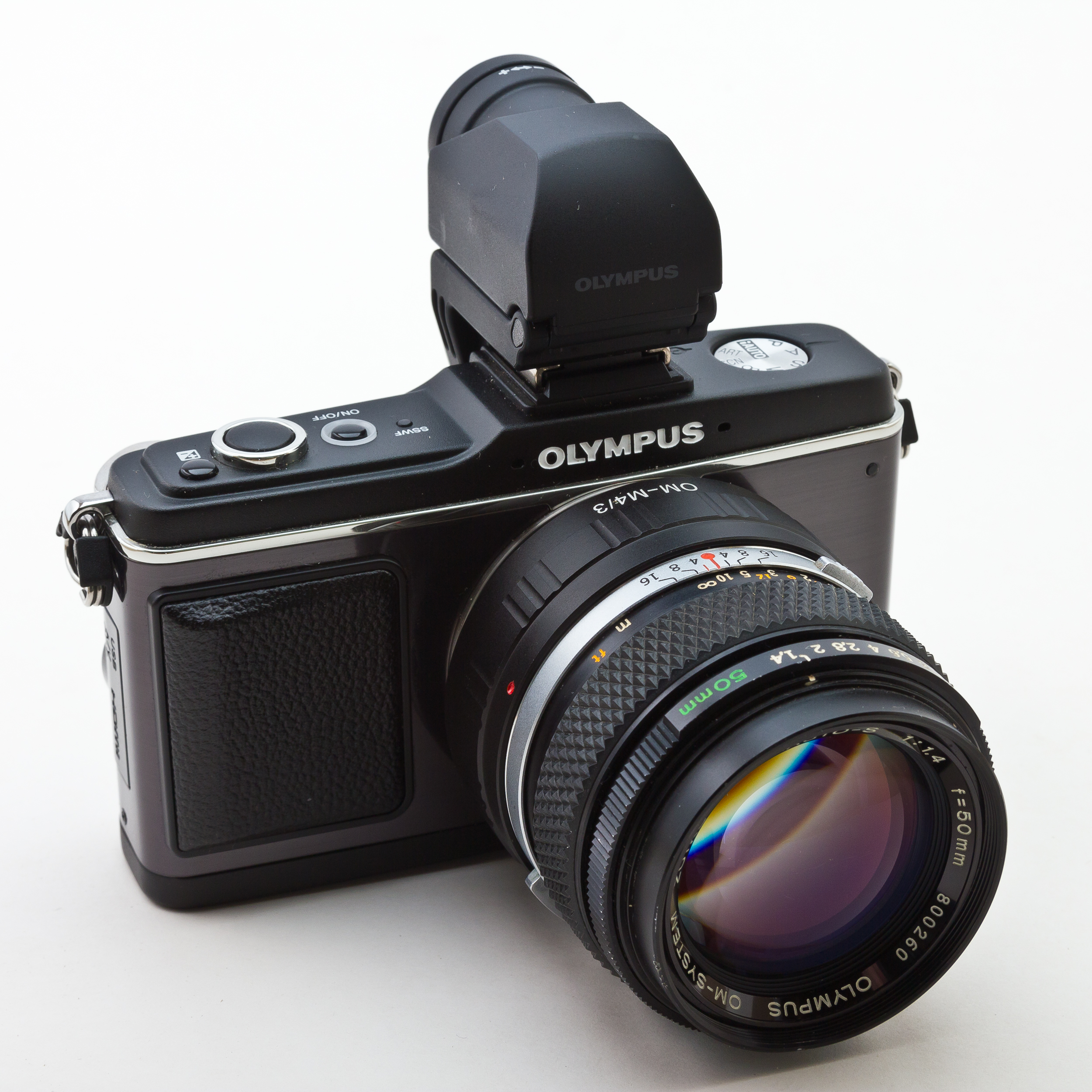
Not so long ago I was lucky enough to be given an Olympus Pen EP-2, it was an old superseded model, but still a very fine camera. My eyes were quickly opened up to the advantages of having a small light high quality camera with interchangeable lenses and it became, and still is, my most used camera. A little while later I was having a clear out of stuff and I “found” six “orphaned” lenses from film cameras that I no longer had. They were to me so good that I could never bring myself to part with them so I had kept them with the vague notion that one day if I ever got some surplus cash I would get a film body for them. However despite my nostalgia for film the reality is that I live a long way from any lab and I no longer wish to run a darkroom so any new found enthusiasm for film would quickly evaporate because of the inconvenience. One day while perusing a forum dedicated to M4/3 I discovered the whole subculture of using adapted lenses. My interest was piqued. There are a couple of reasons to use adapted lenses. The first and most sensible is that you do so because an equivalent focal length is not yet manufactured for your camera. The second reason is that it is just good fun to use old lenses that you already own or can get very cheaply.
From left to right is a 75mm Color-Heliar, a Sigma 70-210, an Olympus Zuiko 50mm, on the camer is a 35mm Color-Skopar, Olympus Zuiko 35-105, and a Tamron 28mm.
Olympus made adaptors for OM and 4/3, Panasonic for Leica R and M, and Novoflex and Voigtländer make adapters for older manual focus legacy lenses, but they are in the $200 bracket. If you look on E-Bay there are a myriad of adaptors all hailing from China and Hong Kong with prices starting at $12 AUD. So here is what to look for. For manual focus lenses the basic requirement is a rigid body and a well-built lens mount that allows infinity focus. I would recommend either a chrome plated brass or stainless steel mount as they are more resistant to wear. Cheaper adaptors are often built deliberately to focus beyond infinity as it means tolerances do not have to be so tight. Initially this is a little disconcerting in use but you get used to it. Some of the cheaper makes can be a bit sloppy and this makes focusing accurately difficult. Forums such as Micro Four Thirds User have discussions on how to fix this quite easily, but this can be avoided by buying better quality ones such as those made by Metabones. If you believe the sales pitch by Voigtländer and Novoflex you are risking your camera to cheap Chinese adaptors as swarf and dirt can fall onto your sensor and ruin it. The easiest thing to do is give them a wipe with a cloth and then a blast of compressed air to dislodge anything prior to mounting. In the end only you can decide on how much you want to spend, personally I took the view that this would be an experiment and I bought two $12 jobs in OM and M mount with the thought that if they were duff I could replace them and they had not cost a lot. With more modern auto focus lenses with stabilization and electronic aperture control things are a little more complicated. Firstly you will have to accept the loss of AF and IS. The cheaper adaptors also offer no control over the aperture, so the lens defaults to its widest aperture.
The Olympus Pen EP-2 with optional viewfinder and an Olympus Zuiko Om 50 mm f1.4 lens mounted via an adapter.
In day-to-day use is all this worth the hassle? Well there is no easy answer, it all depends upon whether you are prepared to accept work arounds and sometimes less than perfection. Digital capture does impose a lot of demands upon a lens as the sensor behaves very differently from film. The sensor is actually a very reflective surface and this means that modern lenses made for the digital era are multi-coated on the rear lens elements as well as the front to prevent glare. Some lenses, especially single coated ones, are also very susceptible to glare so I would definitely use a lens hood and be prepared for less than stellar images when shooting into the light. Older lenses designed for film are sharp in the centre but the edges and corners can let them down. Thankfully as of this time all the CSCs use a sensor that is smaller than 35mm film, and this means that the sensor is only using the best part of the lens. Talking of sensor size it is the crop factor of the various digital formats that causes the biggest problem for many users of adapted lenses as your wide angles cease to be wide angles. A moderate wide-angle of 28mm becomes a short standard on APS having the same field of view as a 42 mm lens on full frame, or a long standard on M4/3 with a field of view similar to a 56mm. My favourite 35mm Color-Skopar is now a short telephoto on my EP-2, and my old Olympus Zuiko OM 35-105 ceases to be standard zoom but becomes a telephoto zoom. Voigtländer made a 12mm and 15mm lenses in either Leica screw (L39) or Leica M, but their performance on smaller formats leaves lots to be desired with most users complaining of excessive smearing in the corners. So the loss of wide angles is a problem for many, but on the other hand the multiplying effect of the smaller formats also brings many benefits. My 75mm f2.5 Color-Heliar becomes a very nice compact 150mm equivalent, and my Sigma 70-210mm becomes a very small 140-400mm equivalent. So if you are a frequent long lens user you will be very happy. Older manual lenses are also very suited to video usage because the focusing action has a long throw and is damped making it easy to get very precise manual focus. Throw in wide aperture lenses and your mirrorless camera becomes a very capable tool for giving beautiful “filmic’ footage. The biggest hurdle to using adapted lenses is manual focusing. I am at that age where my arms are not long enough to use the rear LCD screen for focusing so an electronic viewfinder that allows me to magnify the subject is a must. Thankfully the EP-2 and all the later variants can all take one. An alternative to an LCD viewer is a loupe designed to go over the rear LCD screen. The brand named one is by Hoodman and sells in Australia for about $110, if that is a bit steep for you there are plenty of cheap Chinese knock offs for the $20 mark on E-Bay.
Olympus EP-2 in video mode showing the Zuiko 50 mm f1.4 mounted via an adapter, a Hoodman Loupe and the Olympus SEMA external microphone.
All in all my own personal conclusion is that it has been great fun to re-visit some old lenses I’d already got and use them in different ways. Plus there is the added fun of trawling through websites such as E-Bay and Gumtree looking for cheap interesting lenses. The other thing in its favour is that if you are a little financially embarrassed and you want to explore digital photography as a hobby then using old lenses maybe just the ticket.
Frida, my Bull Terrier co-operating nicely. Olympus EP-2 with OM Zuiko 50mm f1.4 lens. Exposure 1/60 sec, f1.4 at ISO 3200 processed in Lightroom and Silver Efx Pro 2 by Google.
I was driving home the other night and saw that the local farmers were burning off their fields in preparation for planting their next crop. The smoke and dust combined to give a spectacular sunset. I didn’t have my normal landscape kit with me, all I had was my EP-2 with a Voigtlander Color-Heliar 75mm f2.5. No filters, no tripod.







You must be logged in to post a comment.