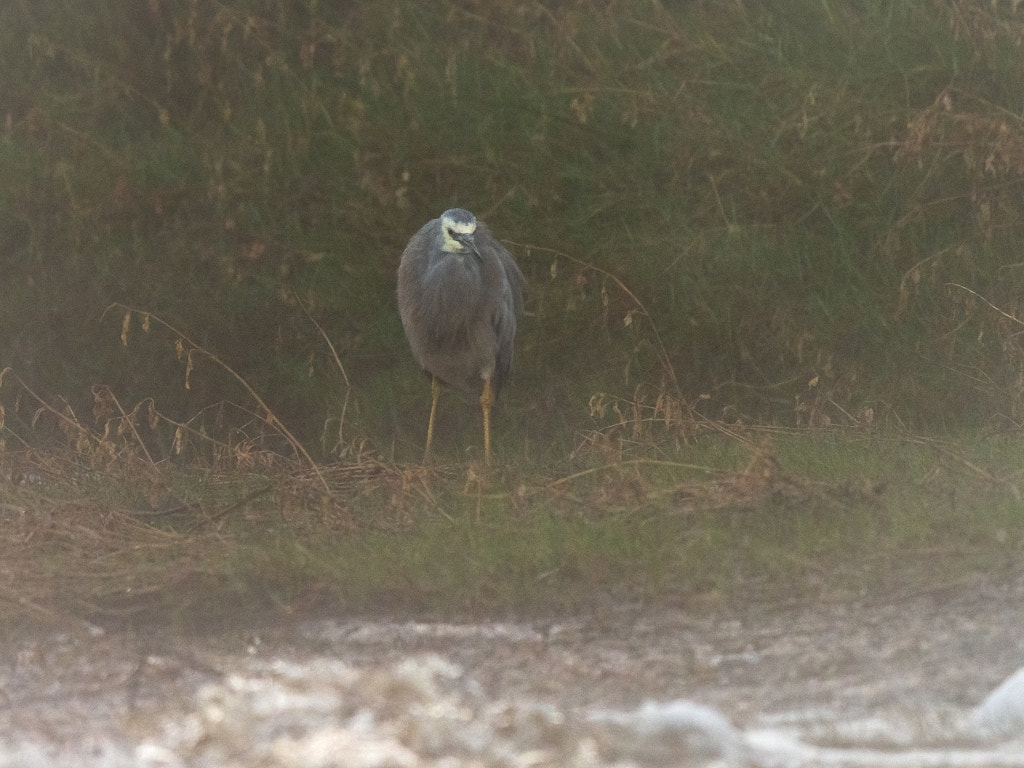
Wayan or White-faced Heron (Ardea novaehollandiae) shrouded in the mist on the banks of the Avon River. York, Western Australia.
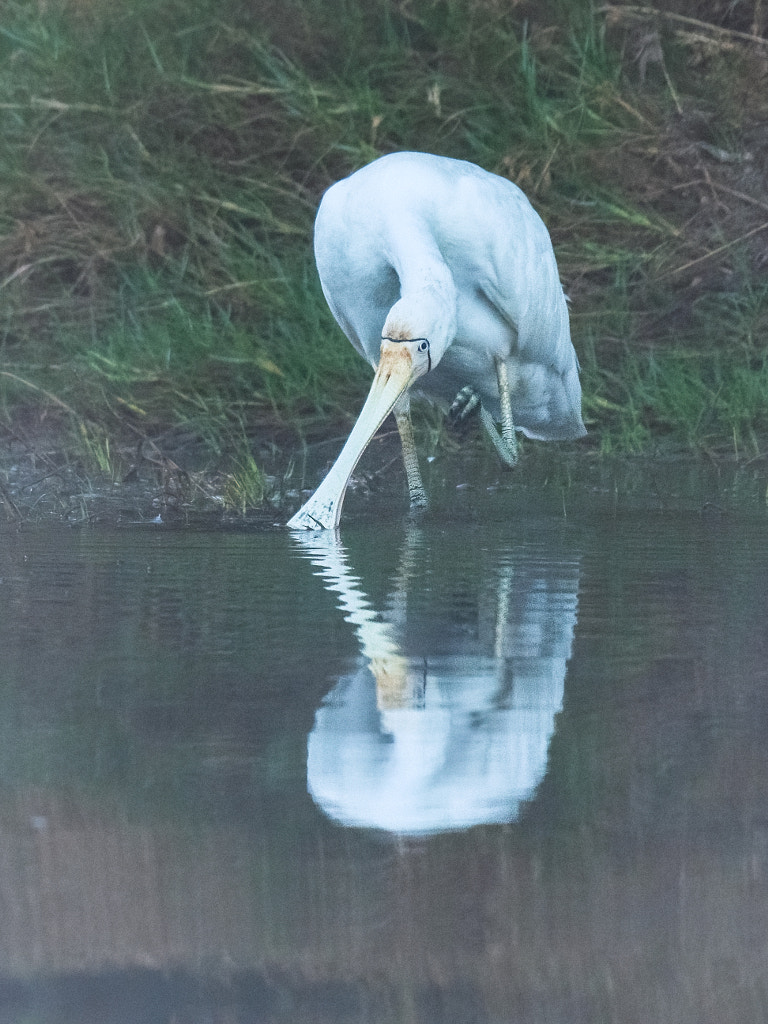
Early mornings along the River Avon have taken on a decidedly misty appearance. Going down to Monger’s Crossing at first light and I’ve been hard pushed to see across the river. The upside of this is that by carefully walking and crawling I can get quite close to the herons and spoonbills there. The spoonbills seem a bit more stoic than the herons. They just get on with the normal morning routine of foraging in the shallows for food. In contrast the heron looked decidedly unimpressed with the weather just standing in the long grass with its shoulder hunched up and looking forlornly at the water coming down from the weir.
Kaaka-baaka or Yellow-billed Spoonbill (Platalea flavipes) foraging on a misty morning.
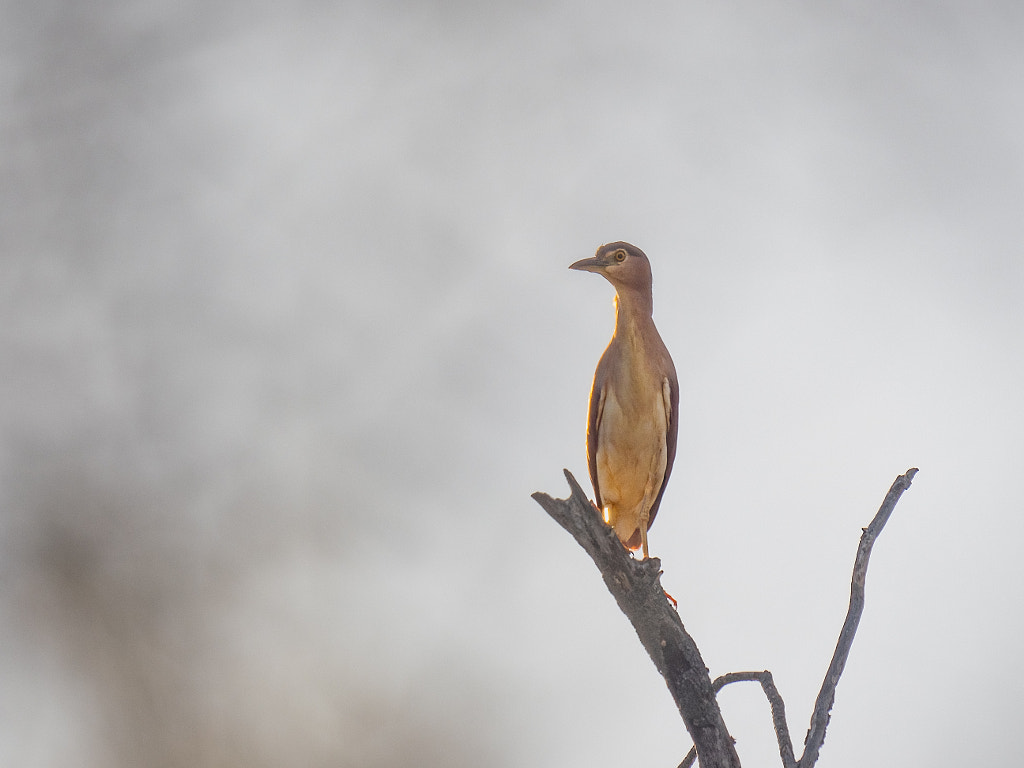
Ngalkaning or Nankeen Night Heron (Nycticorax caledonicus subsp mannillenis) in the early morning mist.
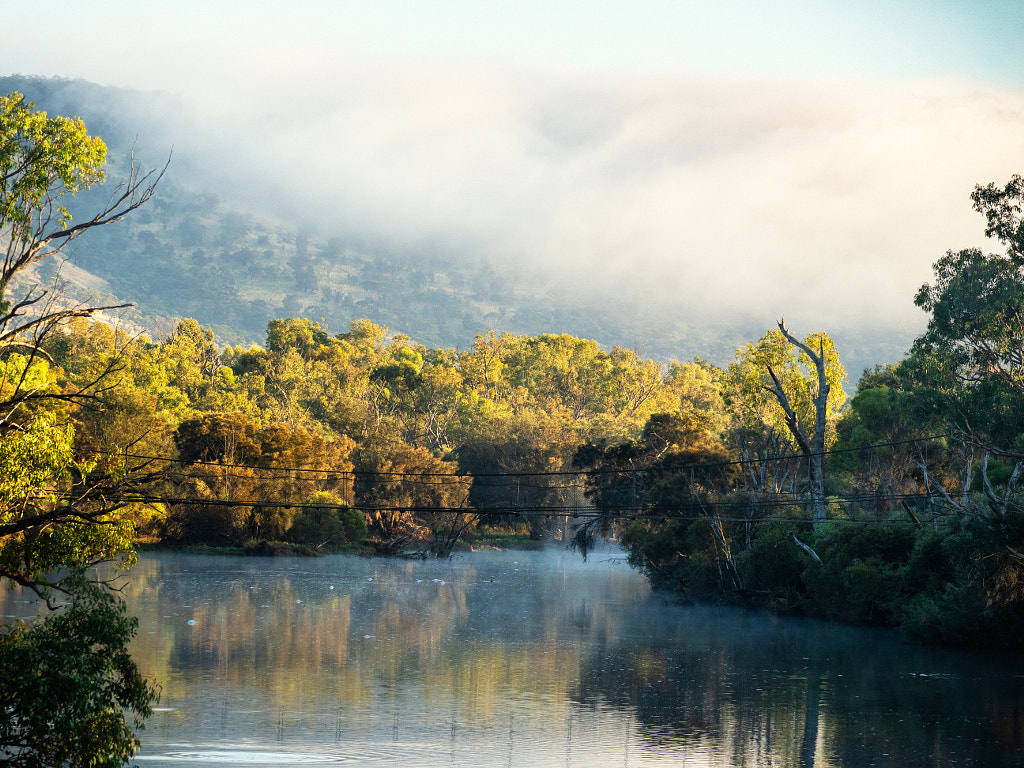
Looking up the Avon River with Mount Bakewell shrouded in the early morning mist. York, Western Australia.
After an hour or so the sun gradually started burn off the mist and the golden light gave a radiance to everything. The sun’s warmth began to take effect and the birds became a lot more active and I was able to get some photos of birds flying, which is always a thrill. The still and quietness of the mist was gone and replaced by the raucous noise of the corellas and the honking of the herons as they flew overhead. By 9 o’cock it was all over. The birds had settled and no activity could be seen.
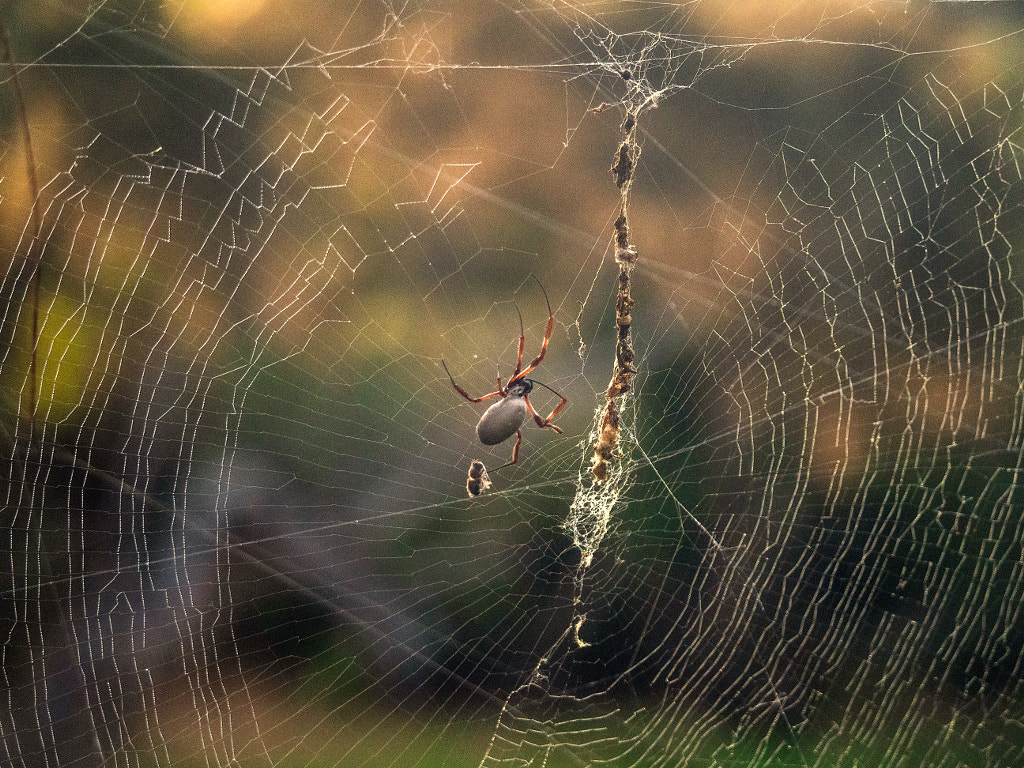
Golden Orb-weaving Spider’s web lit by the golden dawn light.
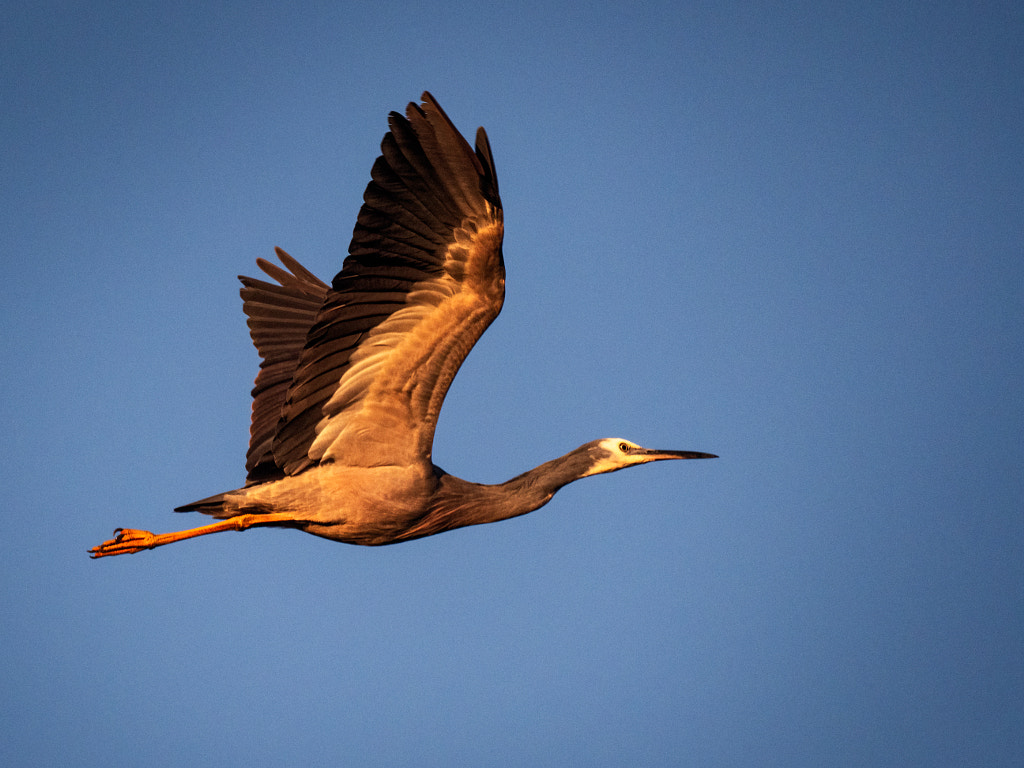
Wayan or White-faced Heron (Ardea novaehollandiae) flying in the warm light of dawn.
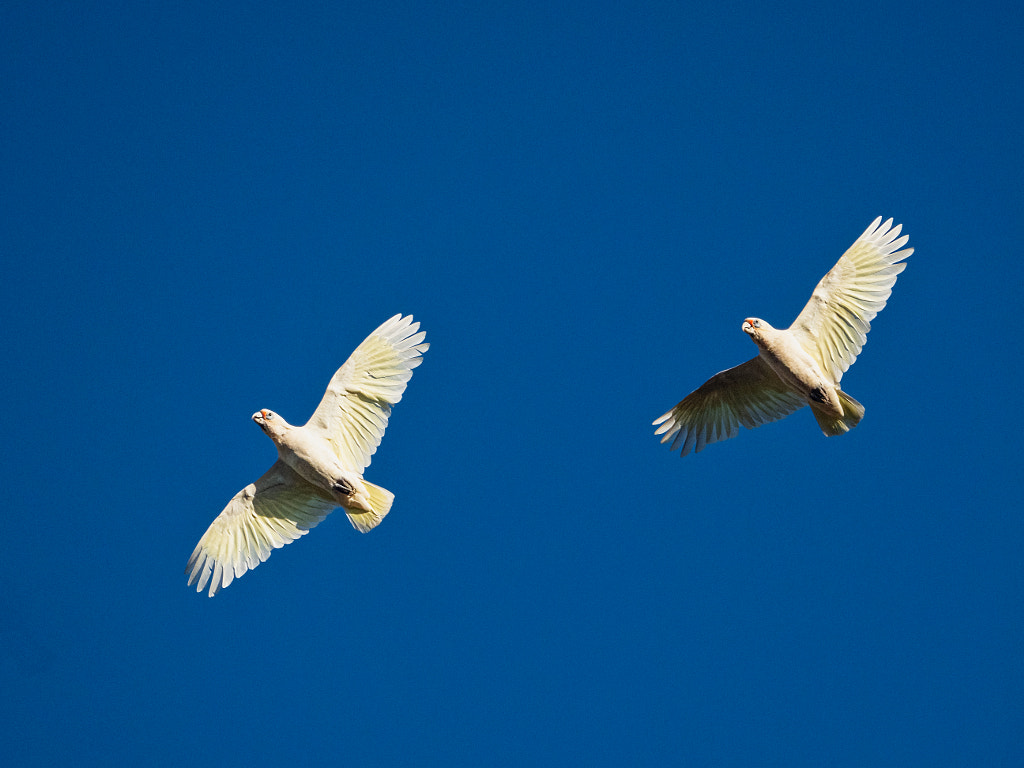
Manatj or Western Corellas (Cacatua pastinator) flying over the Avon River in York Western Australia.
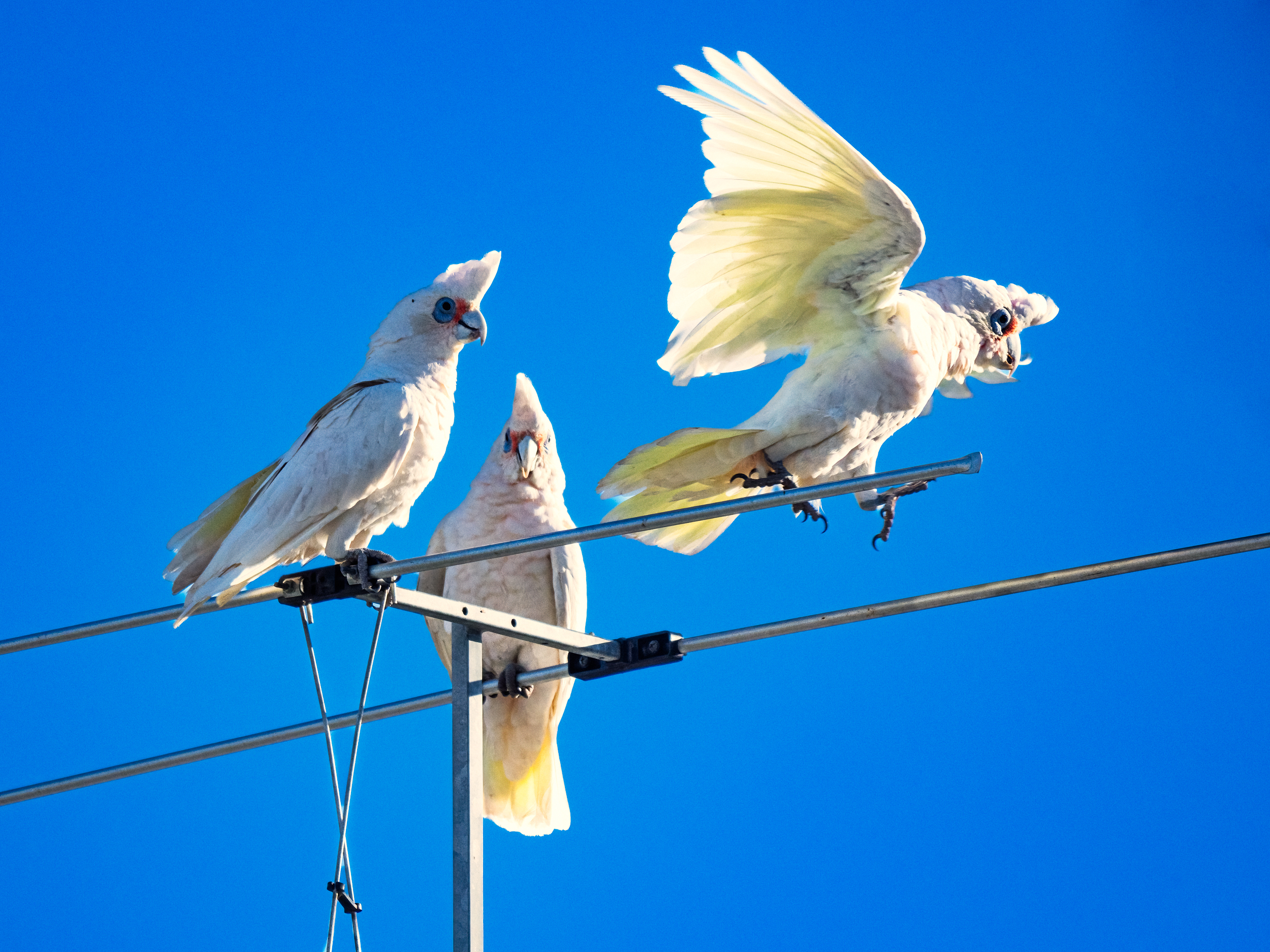
Manatj or Little Corella (Cacatua sanguinea). York Western Australia.
It’s got nothing to do with the Ukrainian situation. Nothing to do with Taiwan, China or submarines. No this is a crisis which threatens the very fabric of the Australian way of life. It is Western Australia’s corella problem. Huge flocks of corellas are causing havoc. They dig up lawns, dance around on TV aerials causing havoc with the reception, they make a noise early in the morning meaning the great Sunday lie in is disturbed. Locals are so incensed that they have taken to calling them flying cane toads and want to blast them out of the skies with shotguns. The Western Australian government sensing a potential vote winning platform for the next election has set up a new task force headed up by a former police commissioner to deal with the corella plague. This probably means they’ll spend a fortune on cars, helicopters, four wheel drives, a snazzy para military looking uniform, and lots of media releases. It will probably go massively over budget long before it gets round to tackling the feathered little blighters.
Flocks of vociferous Little Corellas are disturbing the peace.
It’s not the fault of the corellas. They’re just doing what they have to do to survive. Originally found in great numbers further inland, but climate change and lessening rainfall means they are moving to more populous areas where people have provided an environment that they thrive in. We get them here in York because there is water in the Avon River and there is plenty to eat in the form of grain spilt while being transported to the grain bins. People water their gardens which means there are succulent roots to be dug up and there are a lot of tall eucalypts for roosting.
The corellas cause all sorts of mischief – digging up lawns, stripping the insulation off electrical cables, and chewing TV aerials are just a few of their crimes against humanity.
Having said all that I actually like the flocks of corellas. To me the sound of summer isn’t the thwack of a leather ball on a willow bat, it’s not the sound of surf breaking on a beach. It is the sound of the corellas. When me moved to Tasmania we really missed it.
You can’t watch the cricket when you’ve got a corella dance party on your TV aerial.
Just as a final note – the last time a war was declared against an avian foe was in 1932 with the “Great Emu War”. The Royal Australian Artillery was sent into bat against the wily emus armed with machine guns. It wasn’t pretty. After a month and only 50 emus killed the army withdrew conceding that the emus guerrilla tactics and high speed manoeuvrability meant that it wasn’t a fair fight.
I got a few enquiries about corellas after my post Tales From The Riverbank part 2. Yes the Shire has previously culled the birds in the run up to Australia Day, but this year they didn’t. The reasons given are that they are noisy – I mean really noisy. To show how noisy I made a short film about them.
Western Corellas (Cacatua pastinator). Pioneer Avon Park, York, Western Australia. Olympus OMD EM1 with OLYMPUS M.75-300mm F4.8-6.7 II lens. Exposure: 1/1250 sec f8 ISO 800.
Well we’re well and truly in summer now here in York. The mercury has hit 42℃ (107℉), the wheat crop is in and the water level in the River Avon is steadily dropping. This time of year brings the western corellas (Cacatua pastinator) in huge numbers. They migrate here to fatten up on the spilled wheat around the CBH grain handling facility and because of the water in the river. Being seed eaters they need quite large quantities of water to help digest their food. The corellas take up residence in the large gum trees that line
Summer in Pioneer Park. Western Corellas (Cacatua pastinator). Pioneer Avon Park, York, Western Australia. Olympus OMD EM-1 with OLYMPUS M.75-300mm F4.8-6.7 II lens. Exposure: 1/500 f7.1 ISO 200.
the banks of the river and that means lots of them can be found in the Pioneer Avon Park. Unfortunately for the corellas this all roughly coincides with Australia Day and this is a problem at the park because the town chooses to celebrate Australia Day there, lots of awards are handed out and of course lots of speeches are made. Corellas are noisy – very noisy especially in their hundreds and they can easily drown out a PA system. One year our shire CEO had his wonderful speech (well he thought it was wonderful we the citizens of York thought otherwise) drowned out by raucous squawking and it made him more than a little cross to say the least. To prevent such a thing happening the next year he arranged for the birds to be culled just a few days before Australia Day. This is why York wakes up to the sound of gunfire in the days leading up to Australia Day.
Little black cormorants (Phalacrocorax sulcirostris) none too impressed with the antics of the corellas. Pioneer Avon Park, York, Western Australia. Exposure
Pink and Grey Galahs (Eolophus roseicapilla) wishing the noisy visitors would bugger off and leave them in peace and quiet. Avon Pioneer Park, York, Western Australia. Olympus OMD EM-1 with OLYMPUS M.75-300mm F4.8-6.7 II lens. Exposure: 1/800 sec, f6.7 ISO 800.





You must be logged in to post a comment.