Gathercole Reserve


This year our annual visit to the amazing nature hotspot of Wongan Hills took us to the Gathercole Reserve which is a 141 hectare granite out crop 10Km east of the Wongan Hills townsite. At the centre of the reserve is a large granite outcrop, but what makes this one so interesting is that it is unlike most others in Western Australia. Usually granite outcrops are devoid of vegetation but Gathercole has a rich variety of vegetation that forms a fringe around the rock – Rock Sheoak, Silver Princess, Sea-urchin Hakea, Scarlet Honey  Myrtle are just a few of the species – and other plants such as  Granite Kunzea that have adapted to actually live on the rock outcrop drawing their water and nutrients from the very shallow pockets of soil found in cracks and depressions. It all sounded wonderful, but with this years very dry winter the local flora wasn’t putting on much of a show. We then decided to concentrate on doing the walk trail which is an easy 2 hour walk around the rock. There are 12 interpretive panels on the trail to tell you what you are looking at. These explain how the rock outcrop was formed, how it was shaped by wind and rain, and details of the fauna and flora found there.
 

Gathercole Reserve Walk Trail by Paul Amyes on 500px.com
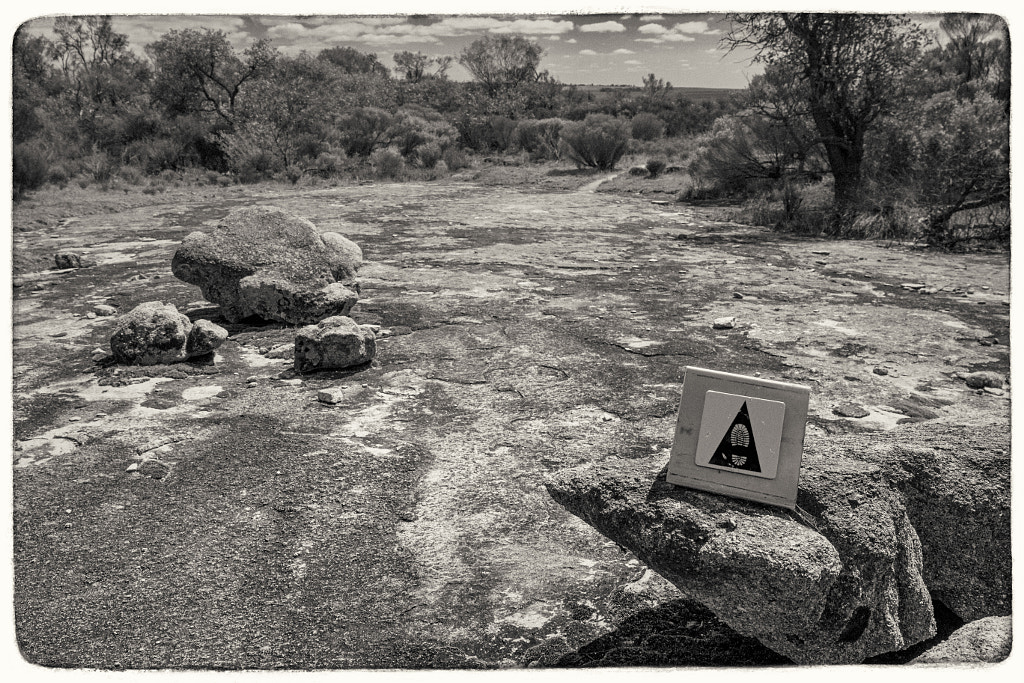
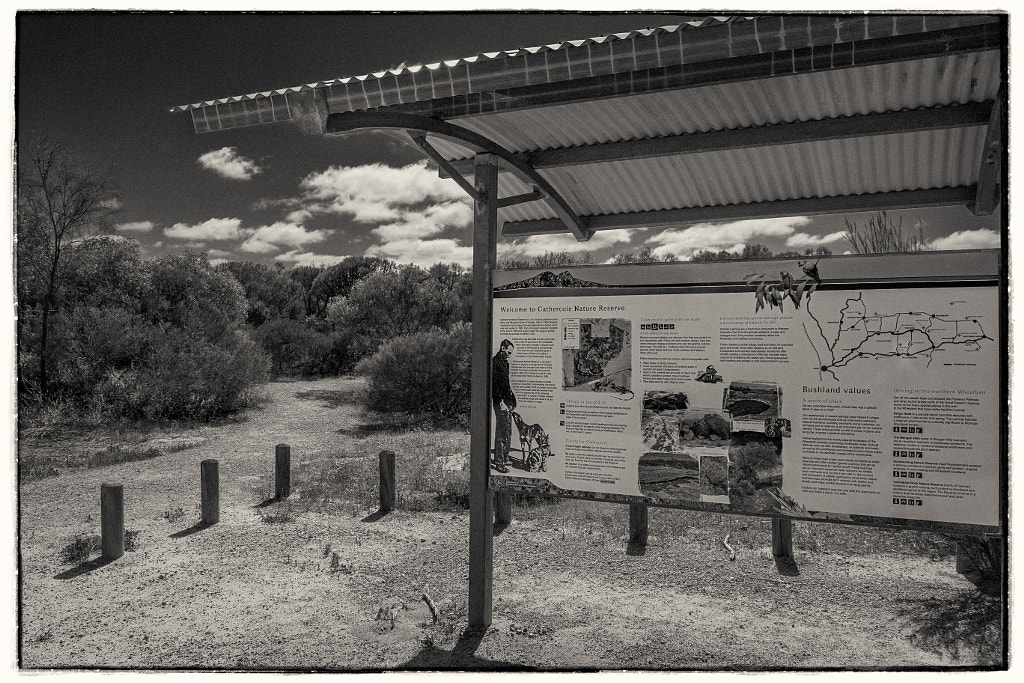
The information board at the start of the Gathercole Reserve Walk Trail in Western Australia.


Gathercole Reserve Walk Trail by Paul Amyes on 500px.com
The Gathercole Reserve Walk Trail is a 3.1 km walk throgh the Gathercole Reserve and explores the granite outcrop.


Gathercole Reserve Walk Trail by Paul Amyes on 500px.com
The walk trail is clearly sign posted and it is easy to follow.


Gathercole Reserve Walk Trail by Paul Amyes on 500px.com
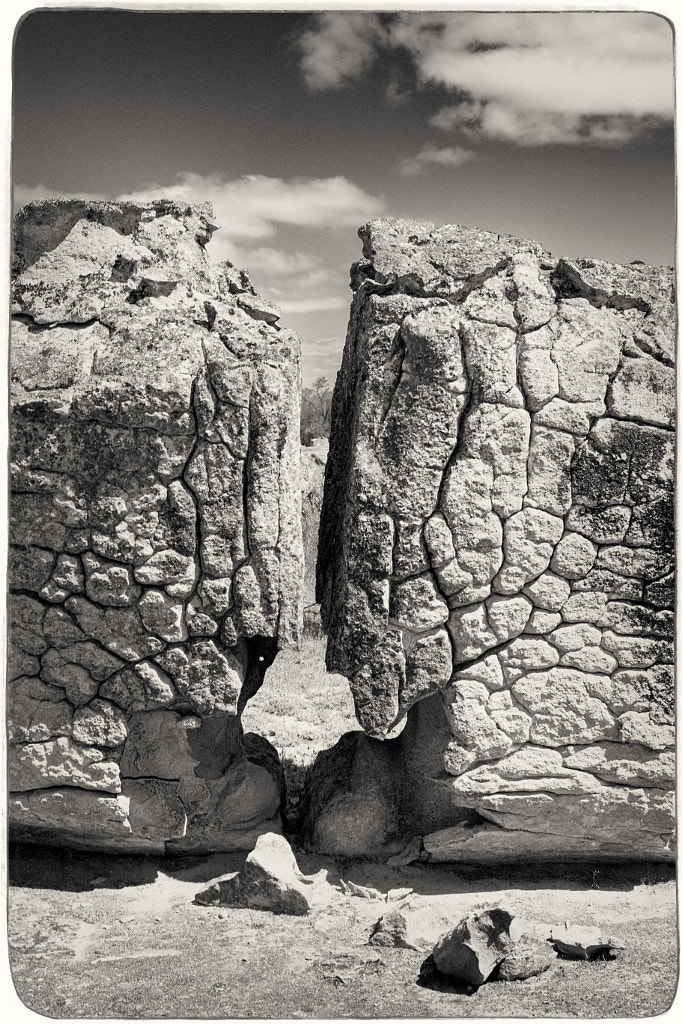
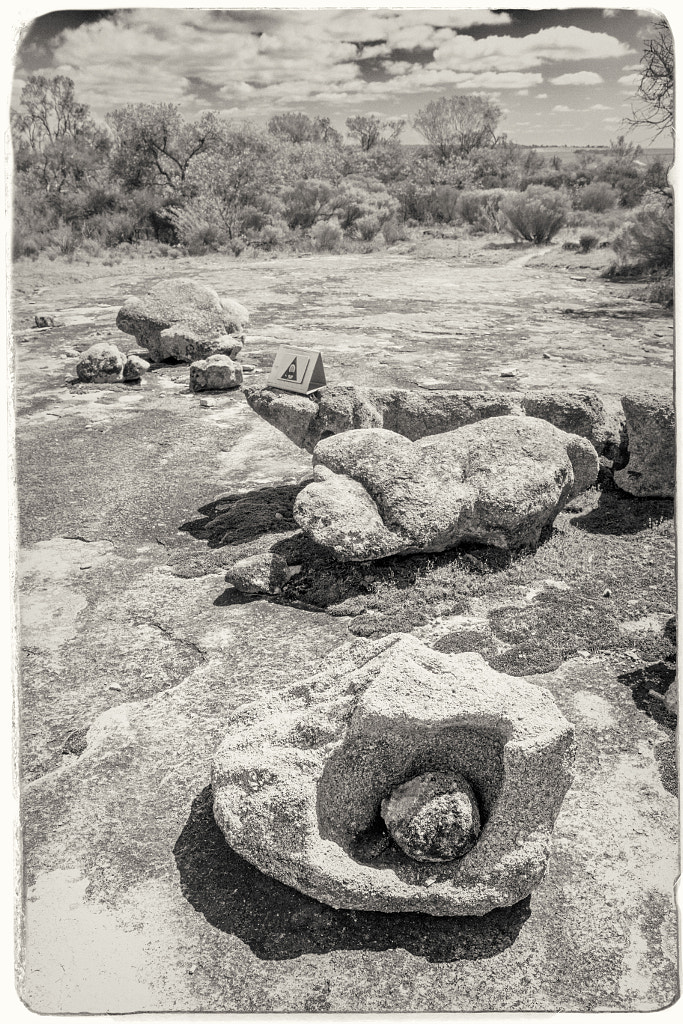
As you walk over the granite outcrop you can see different rock formations. This was caused by rapidly cooling molten rock and millenia of exposure to the elements.


Gathercole Reserve Walk Trail by Paul Amyes on 500px.com
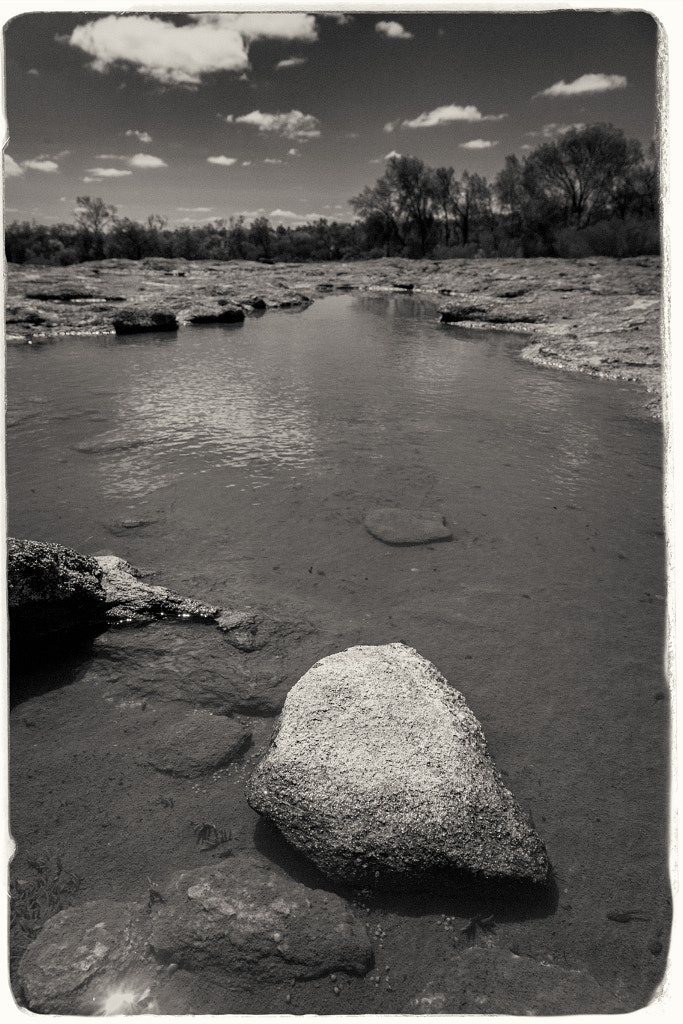
On the top of the granite outcrop water collects in the hollows during winter. These pools form the habitat for tadpoles and freshwater shrimp.


Gathercole Reserve Walk Trail by Paul Amyes on 500px.com

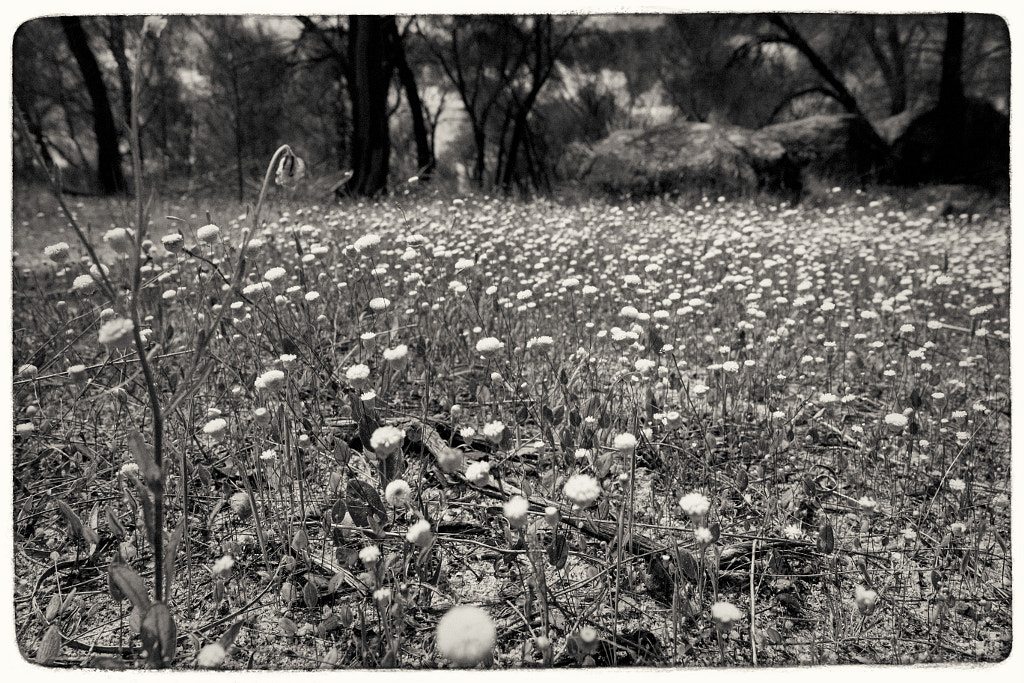
In spring the reserve puts on a spectacular show of wildflowers as evidenced by the everlasting shown here.


Photographically I felt in a bit of a rut so I decided to ditch the normal approach and just take a DSLR and one lens and shoot everything in black and white. Back in the film days I was particularly enamoured by Ilford SFX. It’s a bit of an odd ball film in that due to its extended sensitivity into the red spectrum of light it gave a mild “infrared” look without all the hassles of using infrared film which makes it ideal for day to day use. When I printed it I used glossy  Ilford Multigrade FB Warmtone paper which produced a luxuriously rich image.  I’ve not shot any film in over a decade and I’ve not had access to a darkroom for nearly twenty years so I decided to shoot digitally and emulate the look in Exposure 7. It doesn’t look quite right but it has made me think about shooting some film again. I’ve still got a couple of film cameras all I’ll need to do is find a way of scanning the negatives as I don’t want to get an enlarger and start printing again at this stage.

Waltzing Mount Matilda


The plan was simple walk the 7.9km Mt Matilda Walk Trail is located in the Wongan Hills Nature Reserve which is 12 km from Wongan Hill’s townsite. Beloved Significant Other (BSO) had a long cherished dream of doing the walk and with nothing on the agenda we set out to fulfil it. Now at this stage I’ll be completely honest and say my intentions were not only of the walking kind. I was hoping to slope off and get some orchid photography in at another nearby reserve. The BSO doesn’t like hanging about while I take photos – she would sooner watch paint dry.


Helen at the Lake Hinds Lookout on Mount Matilda.

How things turned out was another matter. As Rabbie Burns the Scottish poet wrote in his 1785 poem To a Mouse “The best-laid schemes o’ mice an’ men Gang aft agley”  or for those non Scots language speakers “The best-laid schemes of mice and men Go oft awry”.


Looking down from the Lake Hinds Lookout at the patterns in the neighbouring farmland.


Paul celebrates reaching the summit of Mount Matilda.


The summit of Mount Matilda. The sign marking the summit has seen better days. Lake Hinds can be seen in the distance.

Well we did climb to the summit of Mount Matilda, which at only at 411m isn’t really saying much, but a combination of a dodgy back, grumbling knees and a long drive meant that we didn’t do the full walk. We decided to walk out to the summit and then back track to the turn off for the 4.8 km Wildflower Loop and I’m glad we did because we saw something really special – something we’d only waited 36 years to see. There on the side of the track was a Thorny Devil. We could scarcely believe it. Now Australia is full of weird animals – egg laying mammals, strange birds, bizarre looking insects, but the Thorny Devil is one of the strangest looking I’ve ever seen. Its defence seems to based on the idea that you’ll not want to harm it because it’s covered on big thorns as it made no attempt to move away from us. 

Thorny Devil, Moloch horridus. Mount Matilda, Western Australia.


Weird eh? Thorny Devil, Moloch horridus. Mount Matilda, Western Australia.

On completion of the walk we had a nice picnic lunch at the shelter at the start of the walk trail while watching a bunch of blokes head to run the trail. I didn’t slope off to do any orchid photography as I couldn’t be fagged. The walk had been enough.

Helen standing next to a Spreading Coneflower.


Spreading Coneflower(Isopogon divergens) is found in Wongan Hills.


Helen walking through a stretch of trail called “A Country Garden” on Mt Matilda.


Pink Pokers (Grevillea petrophiloides) found all over Mount Matilda.

As I sit and write this SBO has announced we’ll have to go back and do the whole walk.

It’s Christmas


Christmas Rock Walk Trail that is. Christmas Rock is in Wongan Hills and I’ve written about going there before. This time I’m writing about the Christmas Rock walk trail which is located in a 2000 hectare reserve. It is an easy 2.7Km walk along relatively flat well marked paths not far from the centre of the town site. Along the trail are interpretive panels which give insights into the reserve. What makes it worthwhile is that at wildflower time the walk passes through country that is a riot of colourful flowers. It is a gobsmackingly beautiful sight this year as the weather conditions have been ideal. The bird life in the reserve is also pretty impressive and their song provides a fitting score for a very pleasant walk.


Christmas Rock Walk Trail by Paul Amyes on 500px.com
Cristmas Rock Walk trail is an enjoyable easy 2.7Km walk trail in the Wheatbelt Town of Wongan Hills. Sony A7r with Tamron 35mm f2.8 lens. Exposure: 1/160 sec, f8 at ISO 100.
Yellow Everlastings by Paul Amyes on 500px.com

Yellow everlastings at Christmas Rock, Wongan Hills. Sony A7r with Tamron 35mm f2.8 lens. Exposure: 1/125 sec, f8 at ISO 100.


Everlastings by Paul Amyes on 500px.com
Pink Everlastings, Christmas Rock, Western Australia. Sony A7r with a Tamron 20mm f2.8 lens. Exposure: 1/160 sec, f8 at ISO 100.


The rock gets its name from the Western Australian Christmas Trees (Nuytsia floribunda) which used to be found there and flowered at Christmas time. On the top of the rock is an elaborate series of channels that were designed to harvest rain water run off for the “Railway Water Supply” which was built in 1916. But the rock is also home to a wide variety of plants such as lichens and mosses. On a warm sunny day if you’re quick enough you might see the lizards who live in the various cracks and crevices.


Christmas Rock Walk Trail by Paul Amyes on 500px.com
The walk takes you up on the top of the rock which was part of the “Railway Water Supply” built in 1916. Rainwater runoff was harvested through a series of channels and creeks. Sony A7r with Tamron 20mm f2.8 lens. Exposure: 1/800 sec, f8 at ISO 100.


Christmas Rock by Paul Amyes on 500px.com
A suprising number of plants grow on Christmas Rock. Sony A7r with Tamron 20mm f2.8 lens. Exposure: 1/320 sec, f8 at ISO 100.


Christmas Rock Walk Trail by Paul Amyes on 500px.com

Rainwater captured on Christmas Rock in natural forming crack, depressions and gullies. Sony A7r with Tamron 20mm f2.8 lens. Exposure: 1/400 sec, f8 at ISO 100.


But for me it is the display of orchids which brings me to Wongan Hills. There are so many different types in large quantities. It made me feel like a kid on Christmas Day. The funny thing is that it could have been very, very different. Prospectors actually dug pits looking for asbestos. Luckily they didn’t find it in large enough quantities to make it a viable commercial operation and went looking elsewhere. So in September give Wongan Hills a visit. This isn’t the only walk as there’s Mount O’Brien Lookout, Gathecole Nature Reserve, and the Mt Matilda walk trail. Then there are the lakes which host lots of water birds. So instead of a day trip why not make a long weekend of it.


Pendant Spider Orchid by Paul Amyes on 500px.com
Pendant Spider Orchid (Caladenia pendens, subsp pendens). Christmas Rock, Western Australia. Sony A7r2 with a Canon EF 100mm f2.8 IS L macro lens. Exposure: 1/40 sec, f5.6 at ISO 125.


Lemon Scented Sun Orchid by Paul Amyes on 500px.com

Lemon Scented Sun Orchid aka the vanilla orchid (Thelymitra antennifera). Christmas Rock, Western Australia. Sony A7r2 with a Canon EF 100mm f2.8 IS L macro lens. Exposure: 1/200 sec, f5.6 at ISO 125.


Lemon Scented Sun Orchid by Paul Amyes on 500px.com

Lemon Scented Sun Orchid aka the vanilla orchid (Thelymitra antennifera). Christmas Rock, Western Australia. Sony A7r with Tamron 20mm f2.8 lens. Exposure: 1/250 sec, f8 at ISO 100.


White Spider Orchid by Paul Amyes on 500px.com

A White Spider Orchid (Caladenia longicauda subsp longicauda) among the everlastings on Christmas Rock in Western Australia. Sony A7r2 with a Canon EF 100mm f2.8 IS L macro lens. Exposure: 1/125 sec, f5.6 at ISO 125.


Chameleon Spider Orchid by Paul Amyes on 500px.com

Chameleon Spider Orchid (Caladenia dimidia). Christmas Rock, Western Australia. Sony A7r2 with a Canon EF 100mm f2.8 IS L macro lens. Exposure: 1/800 sec, f5.6 at ISO 200.


Sugar Candy Orchid by Paul Amyes on 500px.com

Sugar Candy Orchid, Caladenia hirta subsp. hirta. Christmas Rock, Western Australia. Sony A7r2 with a Canon EF 100mm f2.8 IS L macro lens. Exposure: 1/250 sec, f5.6 at ISO 125.


Pink Candy Orchid by Paul Amyes on 500px.com

Pink Candy Orchid, Caladenia hirta subsp. rosea. Christmas Rock, Western Australia. Sony A7r2 with a Canon 100mm f2.8 IS L macro lens. Exposure: 1/80 sec, f5.6 at ISO 125.


Cowslip Orchid by Paul Amyes on 500px.com

Cowslip Orchid, Caladenia flava subs. flava. Christmas Rock, Western Australia. Sony A7r with a Tamron 20mm f2.8 lens. Exposure: 1/160 sec, f8 at ISO 100.

The Hills Are Alive…

…  with flowers. Definitely not Julie Andrews and the ghastly singing Von Trapps.

When people think about Australian biodiversity and nature hot spots they automatically think of the rainforests of North Queensland, Kakadu National Park in the Northern Territory or Cradle Mountain-Lake St. Clair National Park in Tasmania. If prodded a little bit Western Australians might mention the Stirling Ranges National Park. But what if I were to tell you that there is a very significant region of biodiversity, a landscape that is still in its pristine state (i.e. has never been cleared) that is less than two hours drive from Perth? That it contains more than 1400 species of flowering plant, 24 of which are unique and not found anywhere else, there are 78 different species of bird, and there are ancient Aboriginal artefacts. So where is this place? Wongan Hills.

The name Wongan Hills comes from the Nyoongar Wongan Katta which means talking or whispering hills. The range of hills, which are about 10 north-west of the townsite are the largest single area of natural vegetation remaining in the northern wheatbelt. It is spring when everything happens – there is a truly spectacular display of wildflowers. I focus on native orchids and it is absolutely gobsmacking the number of different species and the sheer quantity of them. In the space of a morning’s walk around we found ten different species and they were totally new to me. Below are the fruits of that trip.


Pink Candy Orchid by Paul Amyes on 500px.com
Pink Candy Orchid, Caladenia hirta subsp. rosea. Christmas Rock, Wongan Hills, Western Australia.Exposure: manual 1/125 s at f/8.0, Iso 200. Olympus OMD EM1 with OLYMPUS M.60mm F2.8 Macro lens, TTL fill flash provided by Metz 15 MS-1 ring flash.


Chameleon Spider Orchid by Paul Amyes on 500px.com
Chameleon Spider Orchid, Caladenia dimidia. Christmas Rock, Wongan Hills, Western Australia. Olympus OMD EM1 with Olympus 60mm f2.8 macro lens, with Metz 15 MS-1 ring flash. Exposure: aperture priority 1/80 s at f/8.0 with -1 stop exposure compensation and TTL flash.


Yellow Spider Orchid by Paul Amyes on 500px.com
Yellow Spider Orchid, Caladenia denticulata subsp. denticulata. Christmas Rock, Wongan Hills, Western Australia. Exposure: manual 1/160th sec, f8, ISO 200 with TTL flash. Olympus OMD EM1, OLYMPUS M.60mm F2.8 Macro lens, Metz mecablitz 15 MS-1 ringflash.


Salt Lake Spider Orchid by Paul Amyes on 500px.com
Salt lake spider orchid ( Caladenia exilis subsp. exilis). Roger’s Reserve, Wongan Hills, Western Australia. Olympus OMD EM1 with OLYMPUS M.60mm F2.8 Macro lens and Metz 15 MS-1 ring flash. Exposure: Manual mode, 1/250 s at f/8.0 ISO 200.


Clown Orchid by Paul Amyes on 500px.com
Clown orchid (Caladenia roei) also known as ant orchid, man orchid and jack-in-the-box orchid. Christmas Rock, Wongan Hills, Western Australia. Olympus OMD EM1 with OLYMPUS M.60mm F2.8 Macro lens and Metz 15 MS-1 ring flash. Exposure: aperture priority 1/50 s at f/8.0 at ISO 200 with -1 stop exposure compensation.


Mottled Donkey Orchid by Paul Amyes on 500px.com
Mottled donkey orchid, Diursis sp. ‘Wyalkatchem’. Christmas Rock, Wongan Hills, Western Australia. Olympus EM1 with OLYMPUS M.60mm F2.8 Macro lens. Exposure: aperture priority mode 1/80 s at f/8.0 ISO 200 with -1 stop exposure compensation and flash from Metz 15MS-1 ring flash.


Yellow Granite Donkey Orchid by Paul Amyes on 500px.com
Yellow Granite Donkey Orchid, Diursis hazelii. Mount Matilda, Wongan Hills, Western Australia. Olympus OMD EM1 with OLYMPUS M.60mm F2.8 Macro lens and Metz 15 MS-1 ring flash. Exposure: Manual mode 1/100 s at f/4.0 ISO 200.


Sugar Orchid by Paul Amyes on 500px.com
Sugar Orchid, Ericksonella saccharata. Mount Matilda, Wongan Hills, Western Australia. Olympus OMD EM1 with OLYMPUS M.60mm F2.8 Macro lens and Metz 15 MS-1 ring flash. Exposure: Manual mode, 1/80 s at f/5.6 ISO 200.


Dainty Donkey Orchid by Paul Amyes on 500px.com
Dainty donkey orchid, Diuris sp. ‘north-western wheatbelt’. Rogers Reserve, Wongan Hills, Western Australia. Olympus OMD EM1 with OLYMPUS M.60mm F2.8 Macro lens and Metz 15 MS-1 ring flash. Exposure: aperture priority with -2 stops exposure compensation 1/125 s at f/5.6 ISO 200.


Crimson Spider Orchid by Paul Amyes on 500px.com
Crimson spider orchid, Caladenia footeana. Rogers Reserve, Wongan Hills, Western Australia. Olympus OMD EM1 with OLYMPUS M.60mm F2.8 Macro lens and Metz 15 MS-1 ring flash. Exposure: Manual mode, 1/200 s at f/8.0 ISO 200.