Our recent trip to Woodman Point wasn’t all walks along the shoreline. The coastal heathland behind the beach is also home to lots of great wildlife.
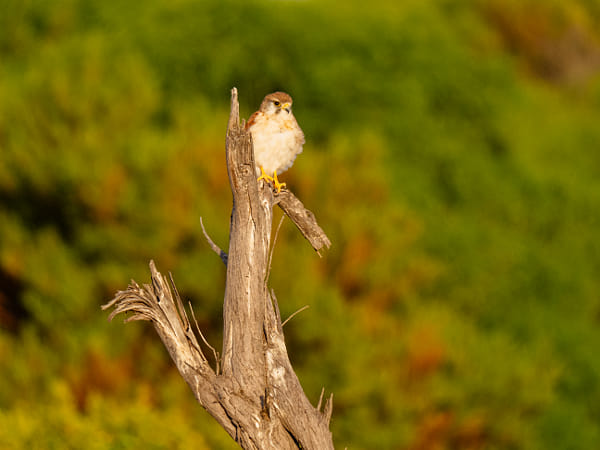
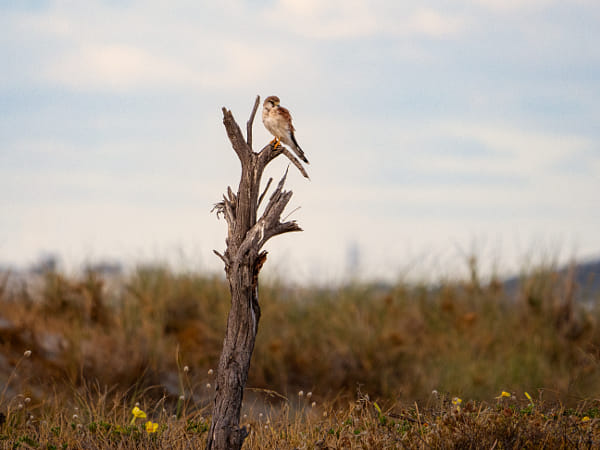
Mardiyet or Nankeen Kestrel (Falco cenchroides). Woodman Point, Western Australia.
This Nankeen Kestrel was very chilled, it let me approach and take loads of photos and it was still sat there when I walked away.
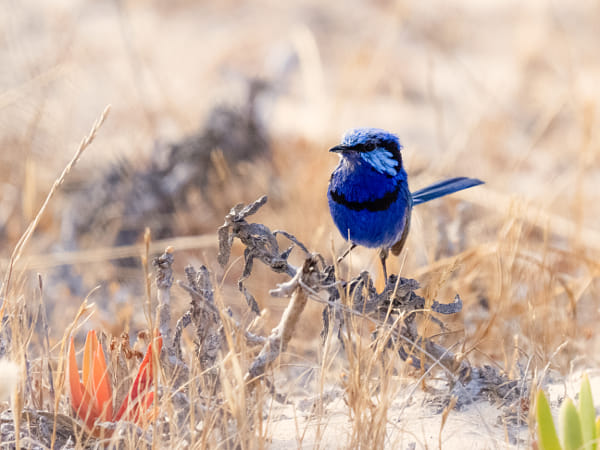
This was a very busy little Djer-djer or Splendid Fairy-wren (Malarus splendens subs splendens). I ended up with a lot of empty frames as he bounced around looking for insects.
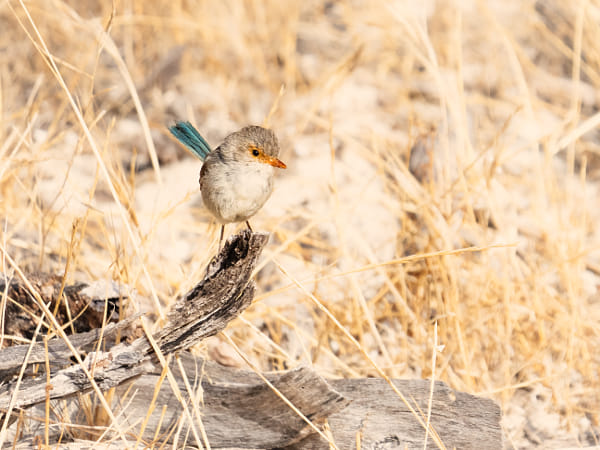
His mate wasn’t nearly so active and was easy to photograph.
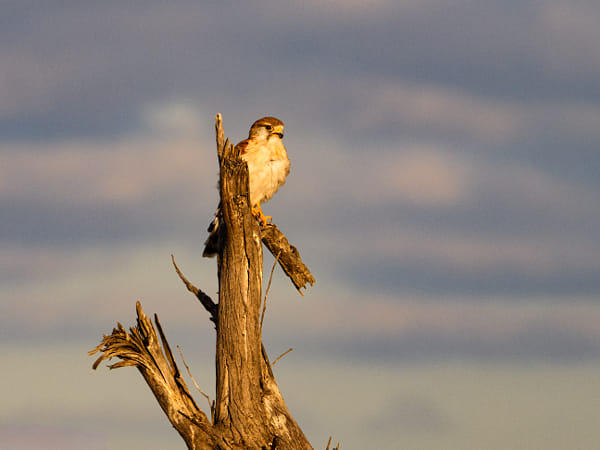
One last look of the Nankeen Kestrel before I walk back to the car.
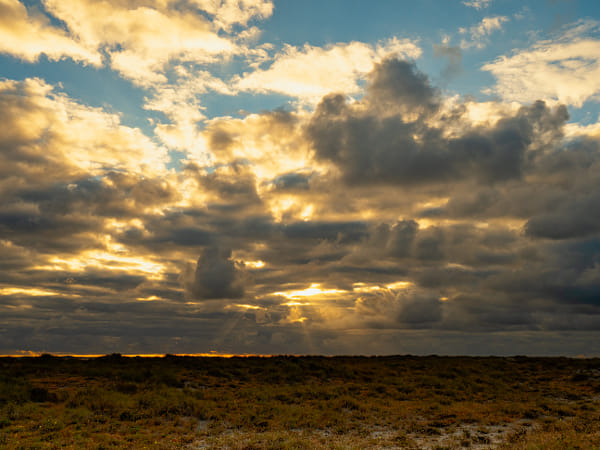
The setting sun at Woodman Point.
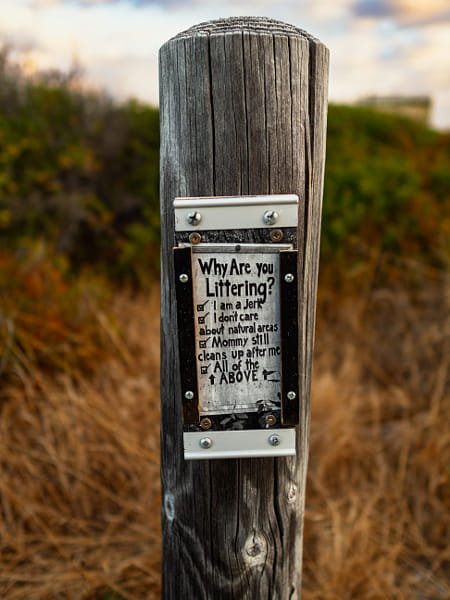
As I walked into the car park I noticed this sign. There were a lot people living rough at the reserve whether in cars or or tents hidden in the dunes and woodland. There was an incredible amount of litter.
I must go down to the seas again, to the lonely sea and the sky, And all I ask is a tall ship and a star to steer her by; And the wheel’s kick and the wind’s song and the white sail’s shaking, And a grey mist on the sea’s face, and a grey dawn breaking.
I must go down to the seas again, for the call of the running tide Is a wild call and a clear call that may not be denied; And all I ask is a windy day with the white clouds flying, And the flung spray and the blown spume, and the sea-gulls crying.
I must go down to the seas again, to the vagrant gypsy life, To the gull’s way and the whale’s way where the wind’s like a whetted knife; And all I ask is a merry yarn from a laughing fellow-rover, And quiet sleep and a sweet dream when the long trick’s over.
John Masefield
1878 – 1967
I have no inclination to sail a tall ship, but the lure of the coast, its wildlife and a cool sea breeze was irresistible and so we found ourselves at Woodman Point.
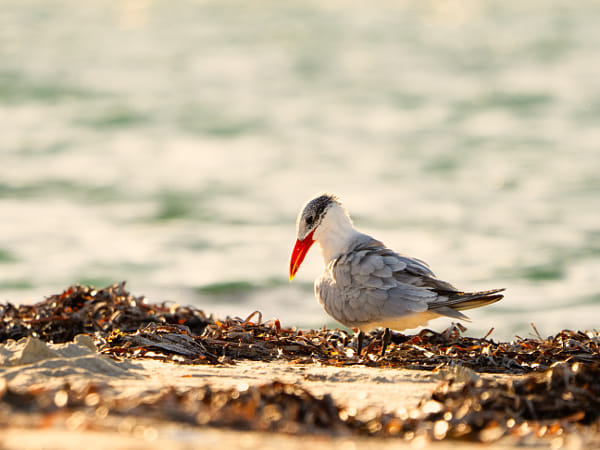
A juvenile Crested Tern hassling its parent for food.
Boodalang or Australian Pelican (Pelecanus conspicillatus). Woodman Point, Western Australia.
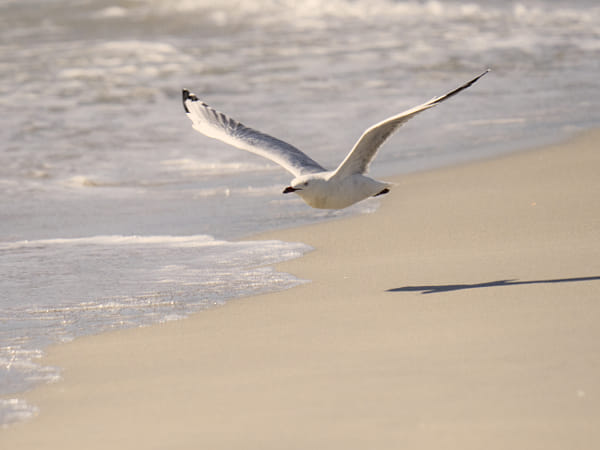
Djeringkara or Silver Gull (Larus pacificus). Woodman Point, Western Australia.
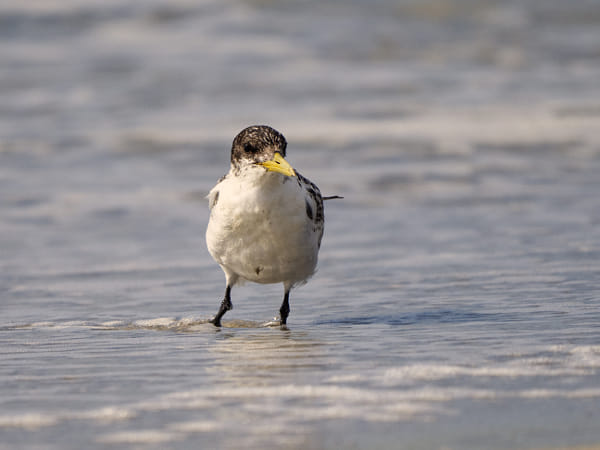
Juvenile Kaldjirkank or Crested Tern (Thalasseus bergii). Woodman Point, Western Australia.
Djeringkara or Silver Gull (Larus pacificus). Woodman Point, Western Australia.
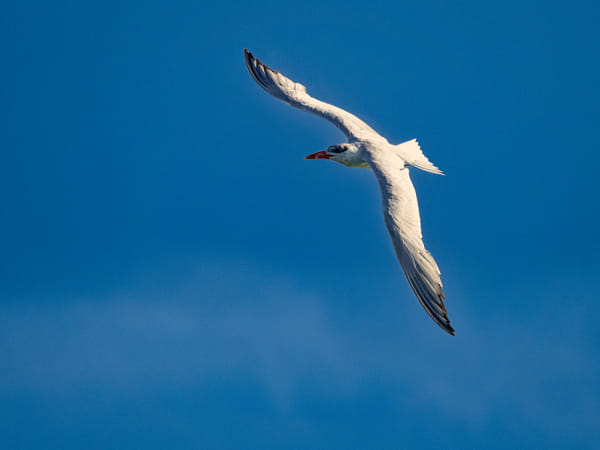
Juvenile Karrynekarryne or Caspian Tern (Hydroprogne caspia). Woodman Point, Western Australia.
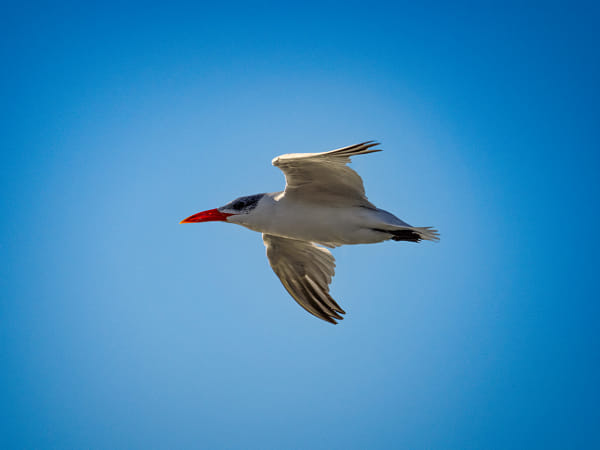
Karrynekarryne or Caspian Tern (Hydroprogne caspia). Woodman Point, Western Australia.
Karrynekarryne or Caspian Tern (Hydroprogne caspia). Woodman Point, Western Australia.
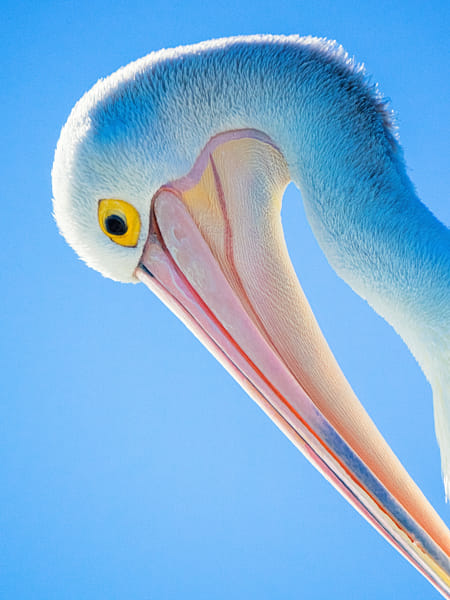
Boodalang is the Nyoongar name for the Australian Pelican (Pelecanus conspicillatus). Woodman Point, Western Australia.
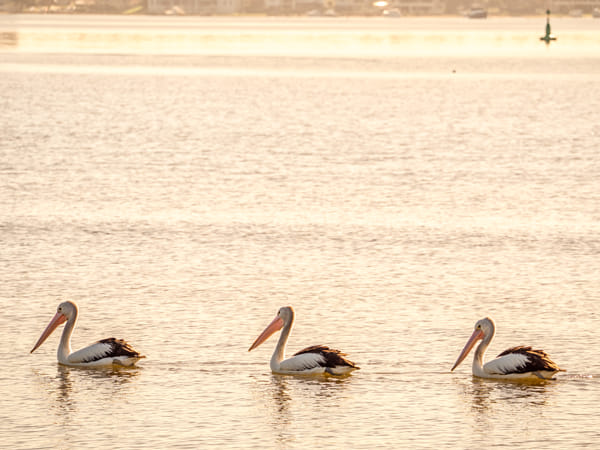
A trio of Australian pelicans swimming in formation off Point Walter on the Swan River.
The Australian Pelican is a familiar sight and can be found in waterways and coastal areas all around Australia. Basically where there are fish there are pelicans. I’m sure that I’m not alone in being slightly amused by the sight of them. That large beak and pouch looks somewhat comical and birds that size shouldn’t really be able to fly – how do they get airborne?
Australian Pelican, Pelecanus conspicillatus, Lake Seppings, Western Australia.
Australian pelicans are the second largest flying bird in Australia, only the brolga is bigger. Although on the small size compared to other pelican species the Aussie comes in 4-13Kg (males are larger than females) and have a wing span of up to 2.5m. That’s a lot of bird. That bill is the largest of any bird measuring up to 50cm in length. They are highly evolved animals that owe their success to a number of strange features.
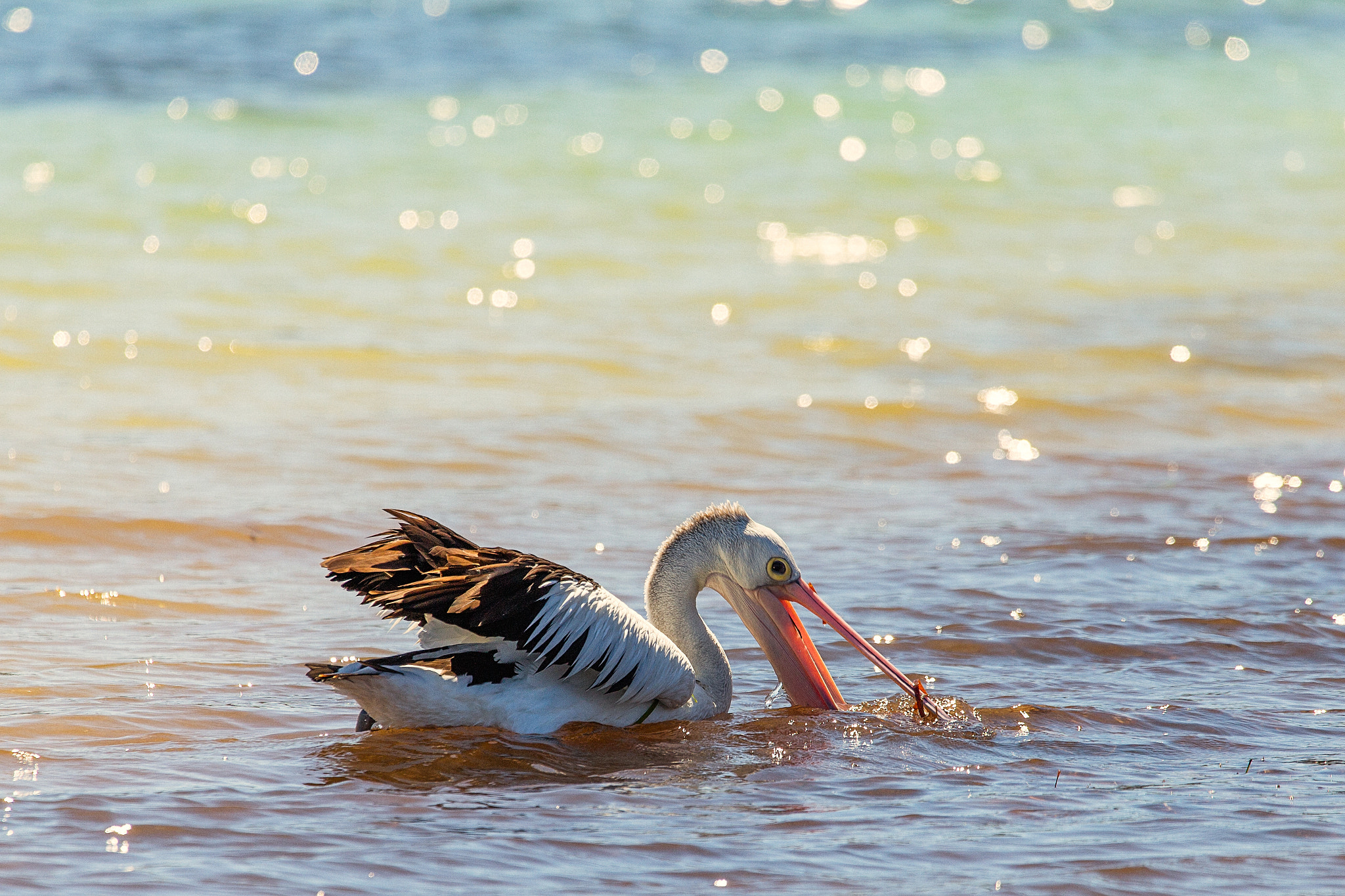
Trawling at Two Peoples Bay, Western Australia.
That distinctive bill and pouch is not for storing fish to eat later, but is rather used as a net to trap fish and other marine life. As the pelican trawls the pouch can hold up to 13 litres of water and food. When it is time to eat the bird lifts its bill out of the water and pushes it against its chest to expel the water and then it flips its prey around so that it can be swallowed head first. They don’t just eat marine life, they will eat small ducks, seagulls and small mammals. They will even steal the fish that other birds, such as ospreys, have caught. In all an adult pelican will eat up to 2Kg of fish a day. On a hot day the pouch is also used as a cooling system – the bird swings it about to cool down.
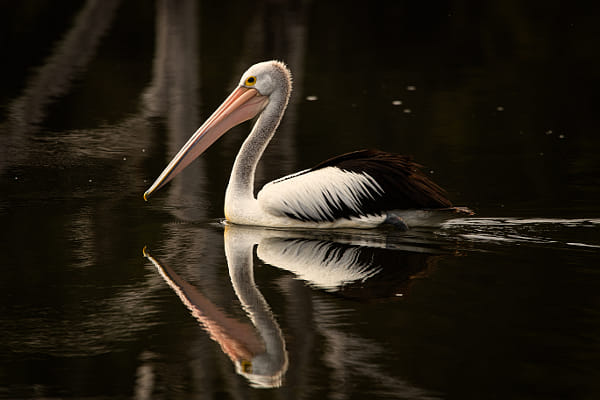
Effortlessly swimming along the Serpentine River in Mandurah, Western Australia.
Despite their size they have a light weight skeleton that has air pockets. This means that it weighs less than 10% of the total body weight which enables them to fly and remain buoyant in water. They also have a number of air cells under their skin which are connected to the respiratory system and act as floats. This gives the pelican the ability to float with very little of its body below the surface of the water which has the effect of minimising energy expenditure when swimming.
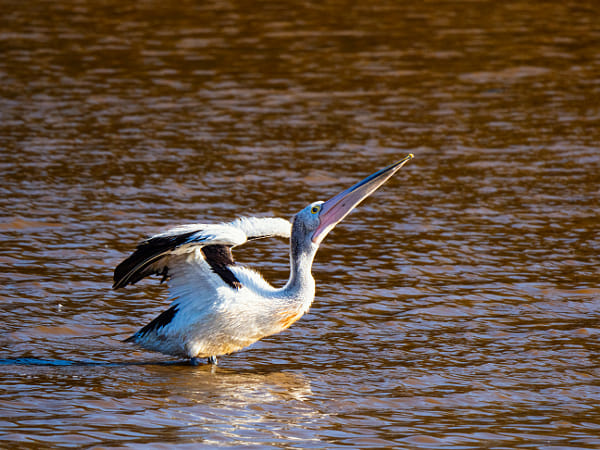
Getting ready. Alcoa Wellard Wetlands, Western Australia.
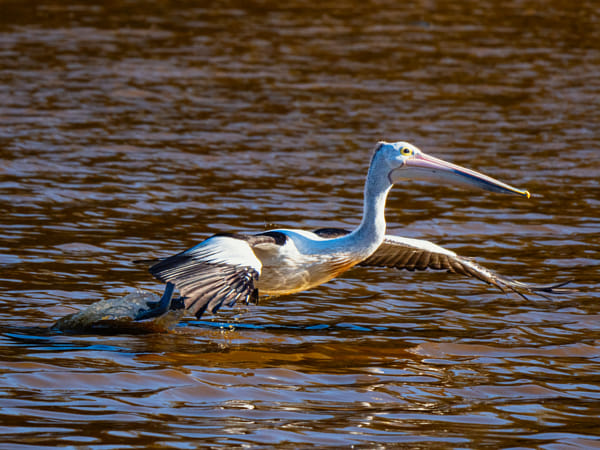
“We’re off!”
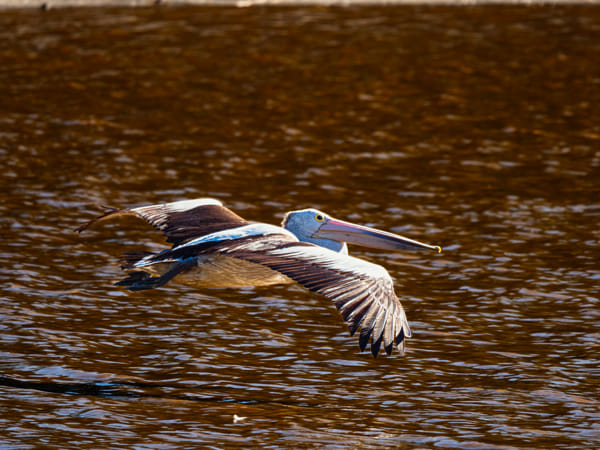
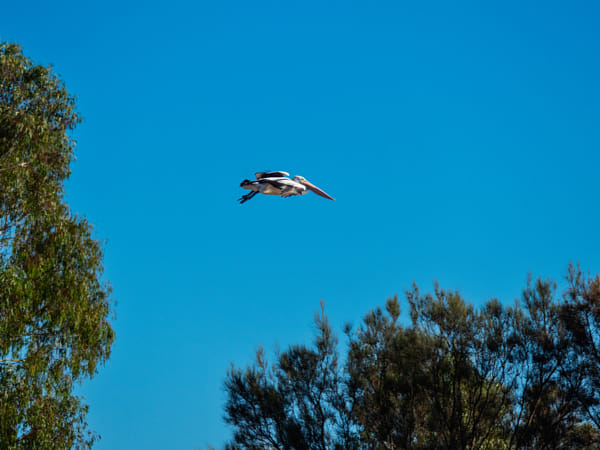
Heading home.
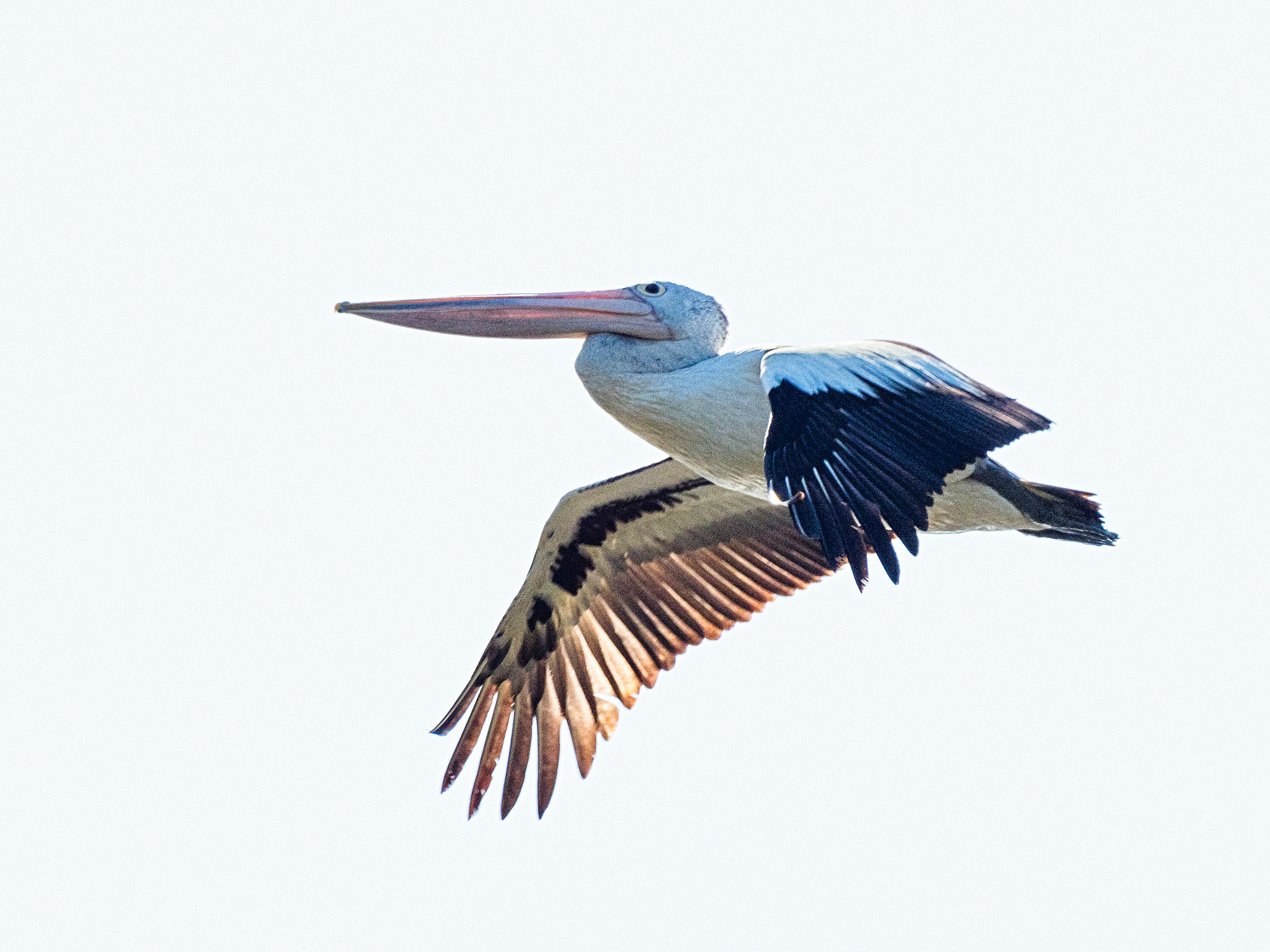
Perhaps the most amazing facts about the Australian pelican are when it comes to flight. Their large wings enable them to soar on thermal currents at altitudes up to 3000m and they can stay airborne like this for up to 24 hours. It makes for an incredibly efficient means of flying. When taking off a pelican will often fly incredibly low over water – they almost skim the surface. By this they take advantage of the “ground effect” which reduces drag and increases lift. The air flows between the wings and the water’s surface where it is compressed and exerts a strong upward force pushing the bird up and this again minimises the amount of energy expended. This energy efficiency is important because an adult pelican will often commute from its nesting site 150Km to find food.
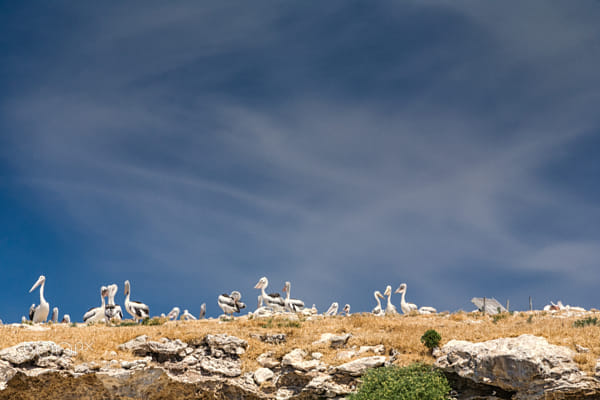
Nearly a thousand Australian pelicans use Penguin Island as a nesting site and breeding colony.
The Australian pelican maybe cut a comical figure, but they look like that for very specific reasons.
My latest pootle took me to Woodman Point south of Fremantle. It’s a very pleasant walk around an area with important Aboriginal, historic and environmental significance. Well worth a visit.
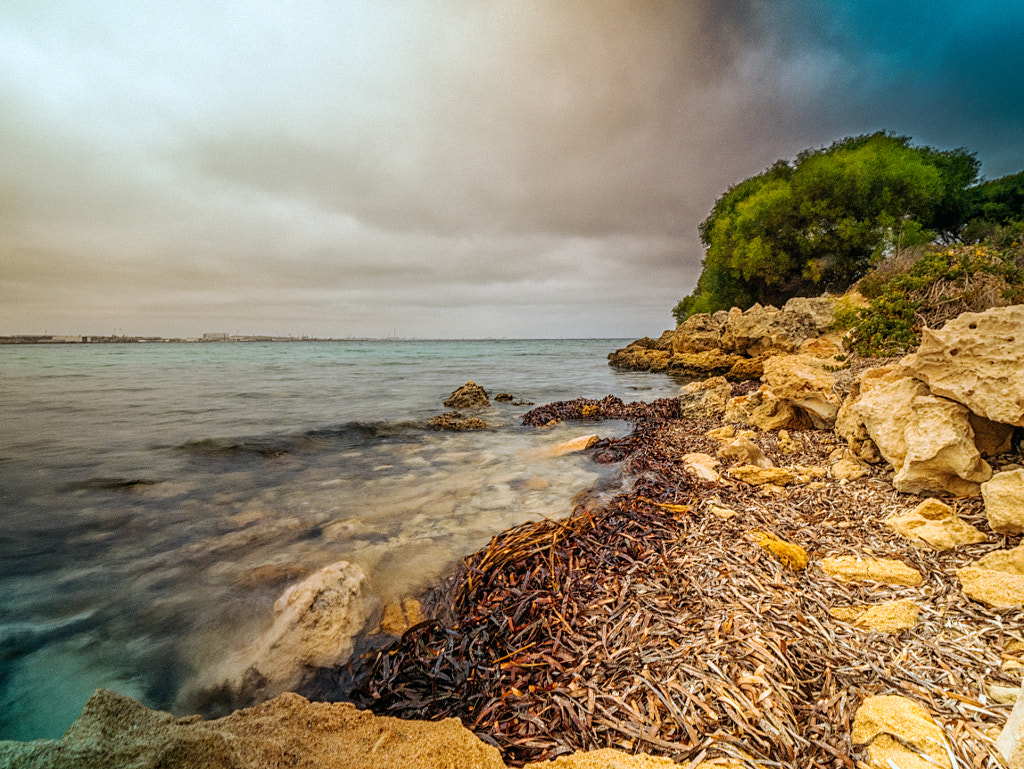
Woodman Point, Western Australia. Panasonic G85 with Panasonic LEICA DG 8-18/F2.8-4.0 lens with a Cokin Harmony variable neutral density filter. Exposure:: 1/3 sec, f16 at ISO 200.
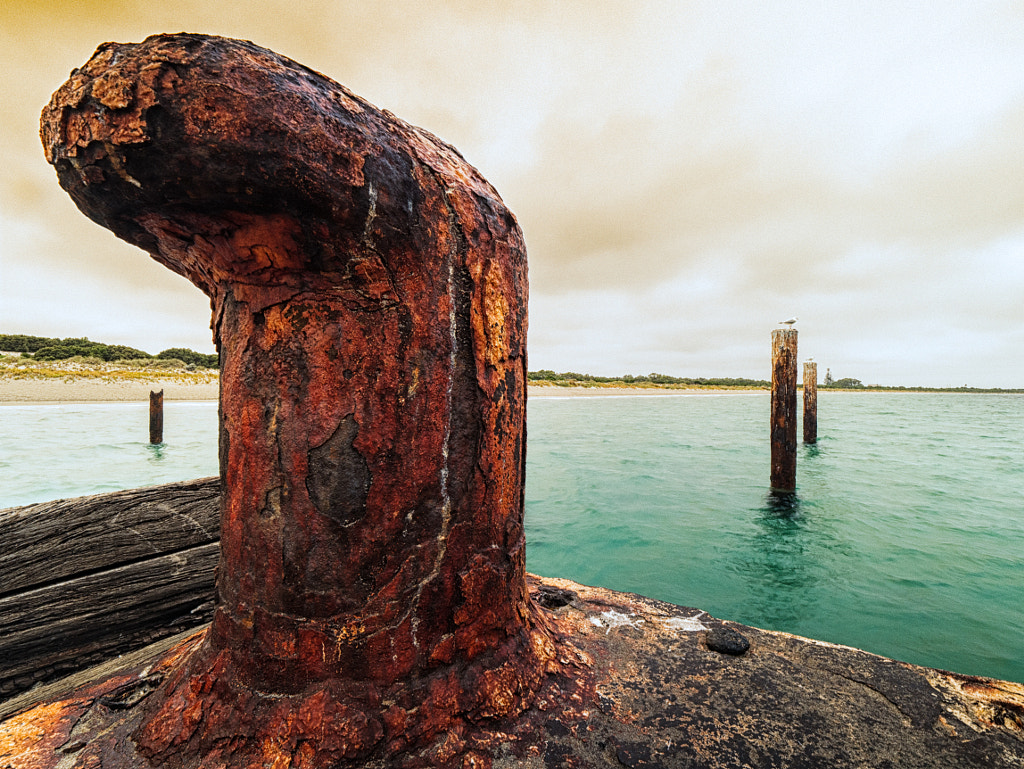
Woodman Point Jetty. Panasonic G85 with Panasonic LEICA DG 8-18/F2.8-4.0 lens with a Cokin Harmony variable neutral density filter. Exposure: 1/3 sec, f16 at ISO 200.
This walk was also from my book Perth’s Best Bush, Coast, and City Walks, published by Woodslane (ISBN 9781921606793 ) in 2010. It’s available from all good bookstores.




You must be logged in to post a comment.