It has been a difficult week. I walked along the local river bed looking for wildlife and struck very lucky with what I saw. My problems came when it came to identifying the species of damselfly I had photographed. Now in this part of Western Australia there are only ten species so you’d think it should be relatively straight forward. But, no it is not. For quite a few of the species counting the number of abdominal segments is a key feature. Now that’s not a huge problem because I can do that at home when looking at the photo. The problem I had was when you have to look at the “anal appendages” according to The Complete Field Guide to Dragonflies of Australia (Theischinger, Hawking and Orr). Now it’s hard enough to get a damselfly to sit still long enough for a photo, but getting one to remain still for a proctological examination – well good luck with that! I wonder if David Attenborough has a whole team of assistants who do this for him?
No problems identifying this wee beastie. Inland Ringtail, Austrolestes aridus. Avon Walk Trail, York, Western Australia.
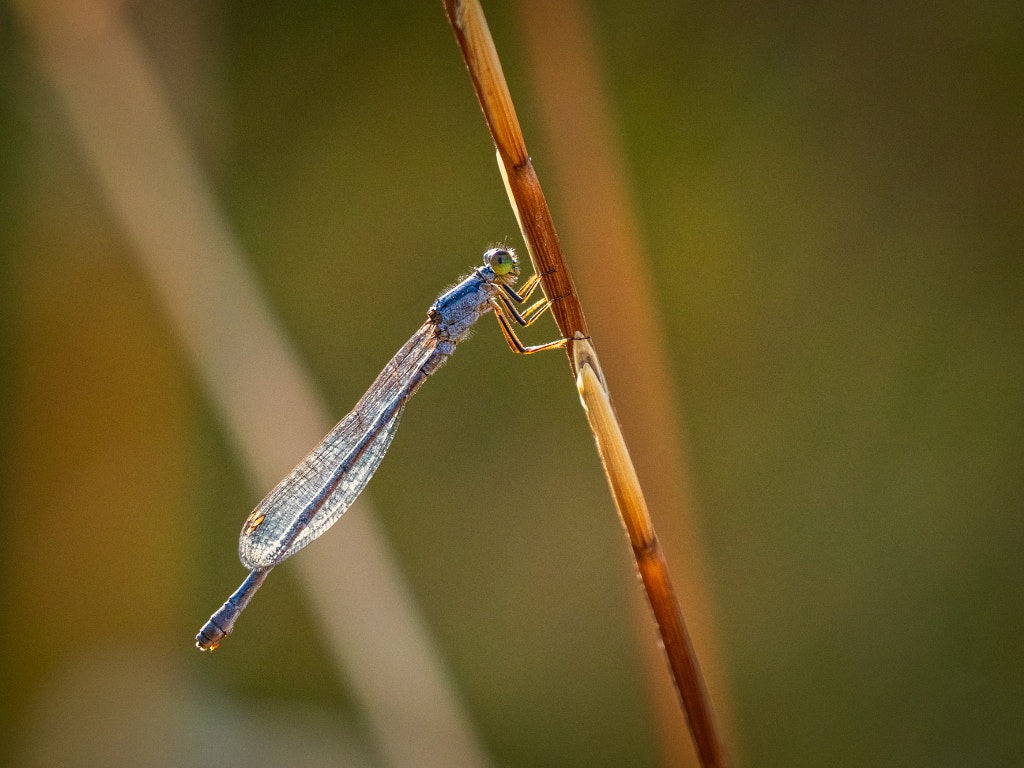
Now this little chap presented nicely on this dried grass but he wouldn’t consent to having a rectal examination. Avon Walk Trail, York, Western Australia.
After a warm day of setting up the tent and wandering around looking at the wildlife opportunities we repaired to the Yanchep Inn for a cooling beverage and a meal. As we were entering a notice on the door caught my eye. It was a warning about the kookaburras and how they were mugging patrons for their food – they particularly liked to rob children of their burgers and chips. I thought at the time it was amusing and didn’t think anything of it.
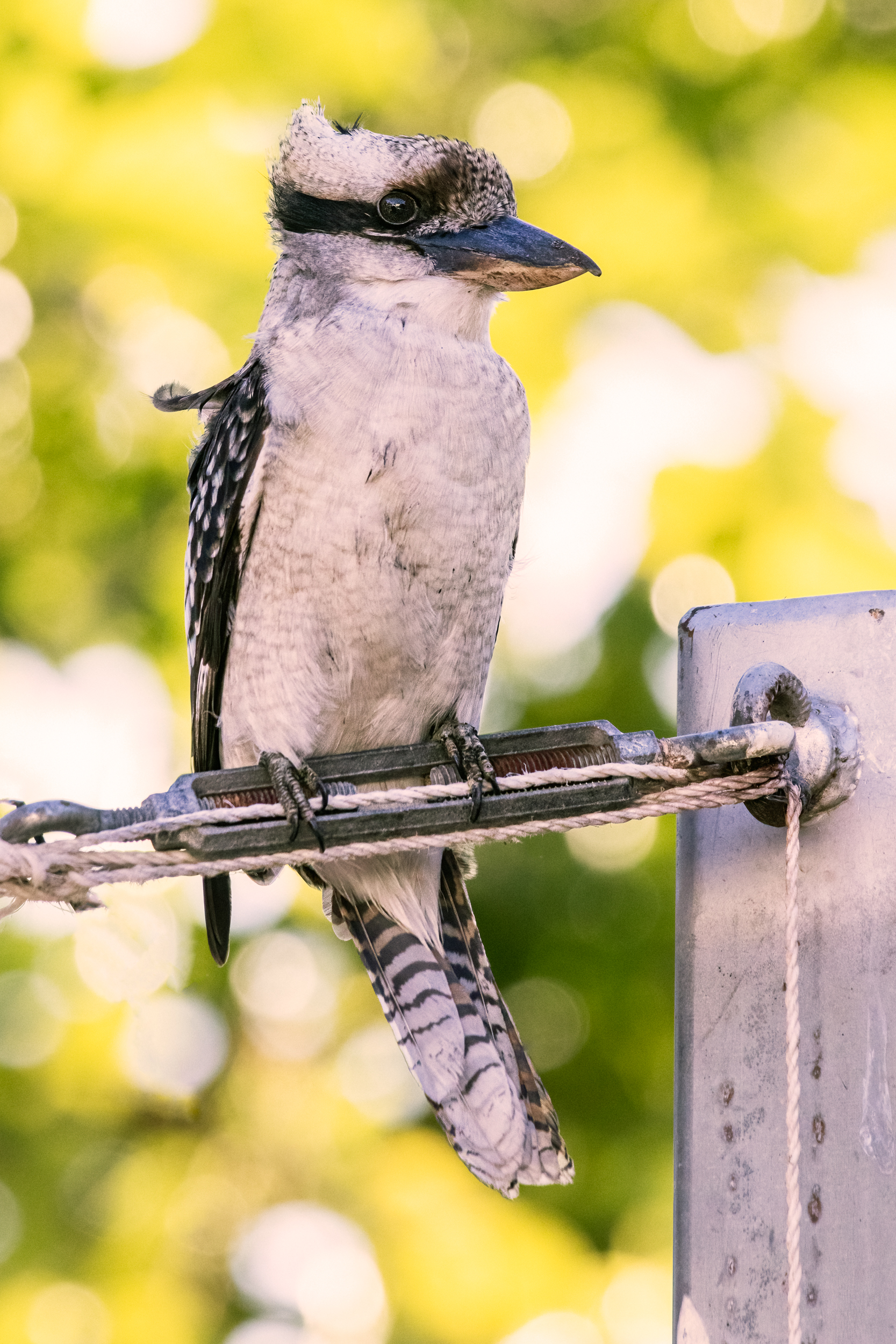
One of the Parma Purloiners of Yanchep.
Twenty minutes later I heard a whooshing sound and felt wings just graze my head. Fast reactions meant that the bandit had to retire to a nearby pole with nothing. Ten minutes later there were half a dozen of them. Meanwhile a group of four on the table just opposite had had their meals delivered by the waitress. All of a sudden the birds scramble and then dive for the table like Stukas on a bombing run. Hermann Göring would have been impressed. It was a close run thing and the kookaburras were only just repelled. Realising that discretion was the better part of valour they beat a hasty retreat back inside with cries of “F**king vermin!!!!”
It is obvious that just a sign casually warning about the kookaburras isn’t sufficient. I think there should be air raid sirens, ack ack guns, and Anderson shelters. While helmets might be a requirement I don’t think gas masks need be issued.
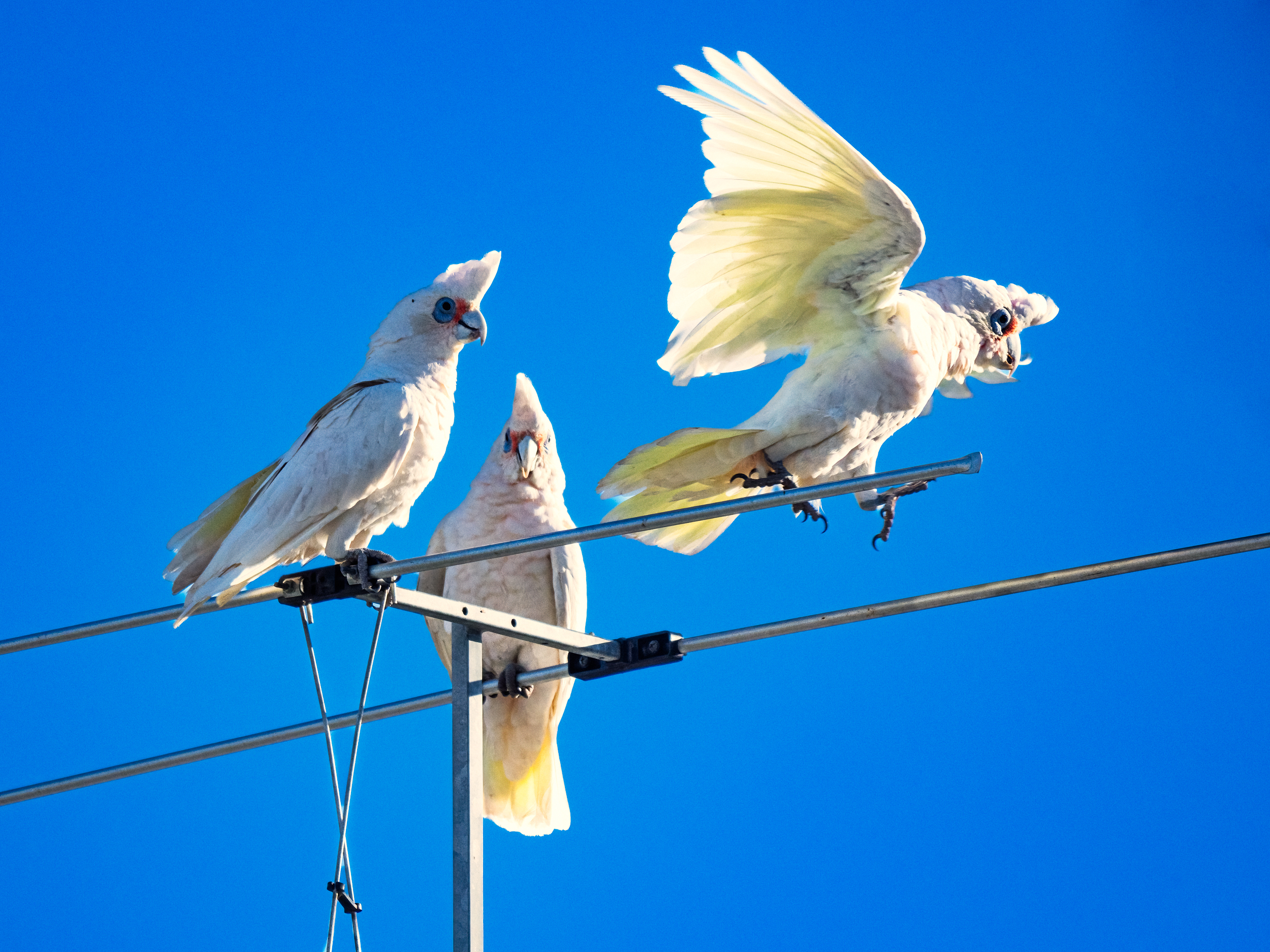
Manatj or Little Corella (Cacatua sanguinea). York Western Australia.
It’s got nothing to do with the Ukrainian situation. Nothing to do with Taiwan, China or submarines. No this is a crisis which threatens the very fabric of the Australian way of life. It is Western Australia’s corella problem. Huge flocks of corellas are causing havoc. They dig up lawns, dance around on TV aerials causing havoc with the reception, they make a noise early in the morning meaning the great Sunday lie in is disturbed. Locals are so incensed that they have taken to calling them flying cane toads and want to blast them out of the skies with shotguns. The Western Australian government sensing a potential vote winning platform for the next election has set up a new task force headed up by a former police commissioner to deal with the corella plague. This probably means they’ll spend a fortune on cars, helicopters, four wheel drives, a snazzy para military looking uniform, and lots of media releases. It will probably go massively over budget long before it gets round to tackling the feathered little blighters.
Flocks of vociferous Little Corellas are disturbing the peace.
It’s not the fault of the corellas. They’re just doing what they have to do to survive. Originally found in great numbers further inland, but climate change and lessening rainfall means they are moving to more populous areas where people have provided an environment that they thrive in. We get them here in York because there is water in the Avon River and there is plenty to eat in the form of grain spilt while being transported to the grain bins. People water their gardens which means there are succulent roots to be dug up and there are a lot of tall eucalypts for roosting.
The corellas cause all sorts of mischief – digging up lawns, stripping the insulation off electrical cables, and chewing TV aerials are just a few of their crimes against humanity.
Having said all that I actually like the flocks of corellas. To me the sound of summer isn’t the thwack of a leather ball on a willow bat, it’s not the sound of surf breaking on a beach. It is the sound of the corellas. When me moved to Tasmania we really missed it.
You can’t watch the cricket when you’ve got a corella dance party on your TV aerial.
Just as a final note – the last time a war was declared against an avian foe was in 1932 with the “Great Emu War”. The Royal Australian Artillery was sent into bat against the wily emus armed with machine guns. It wasn’t pretty. After a month and only 50 emus killed the army withdrew conceding that the emus guerrilla tactics and high speed manoeuvrability meant that it wasn’t a fair fight.
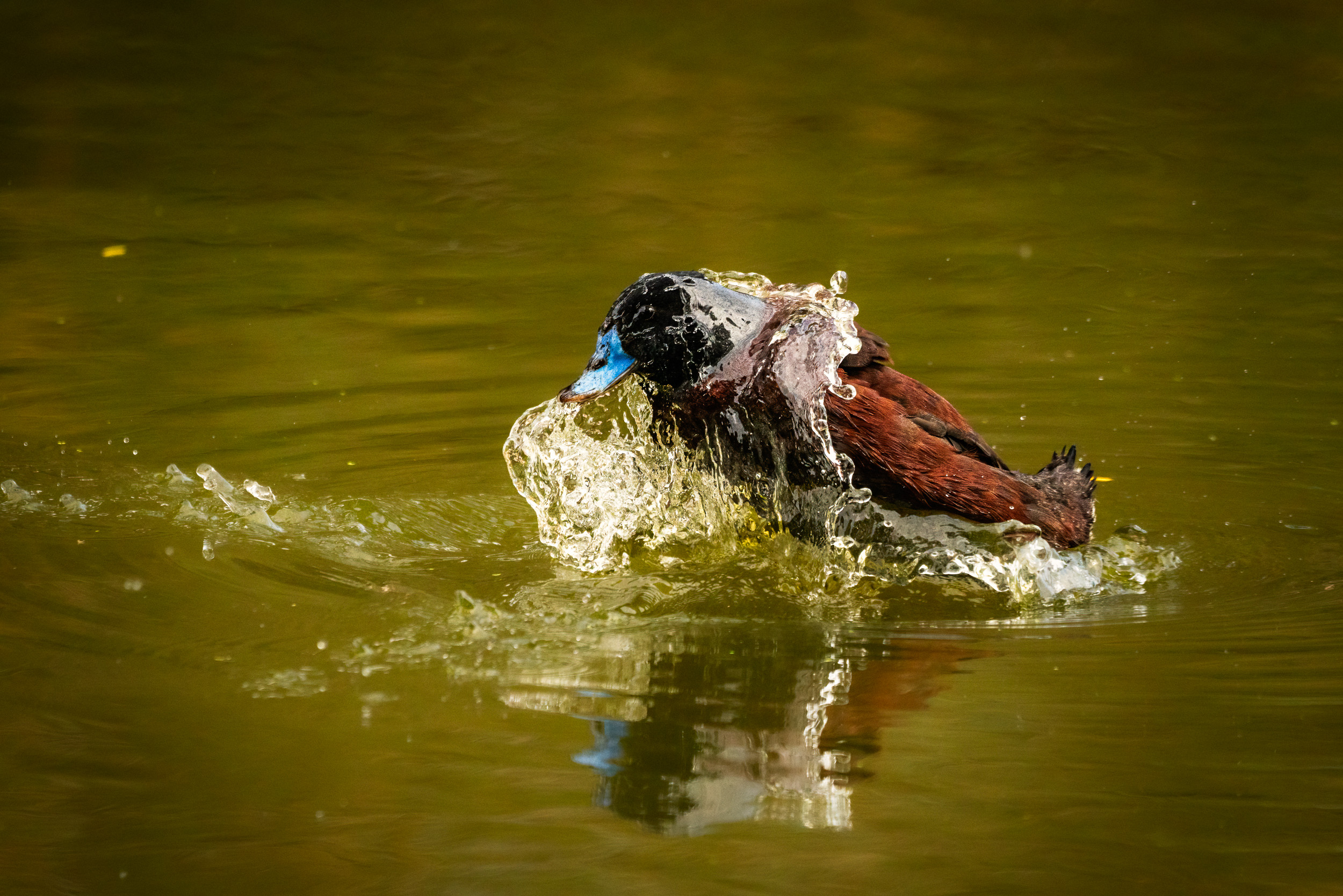
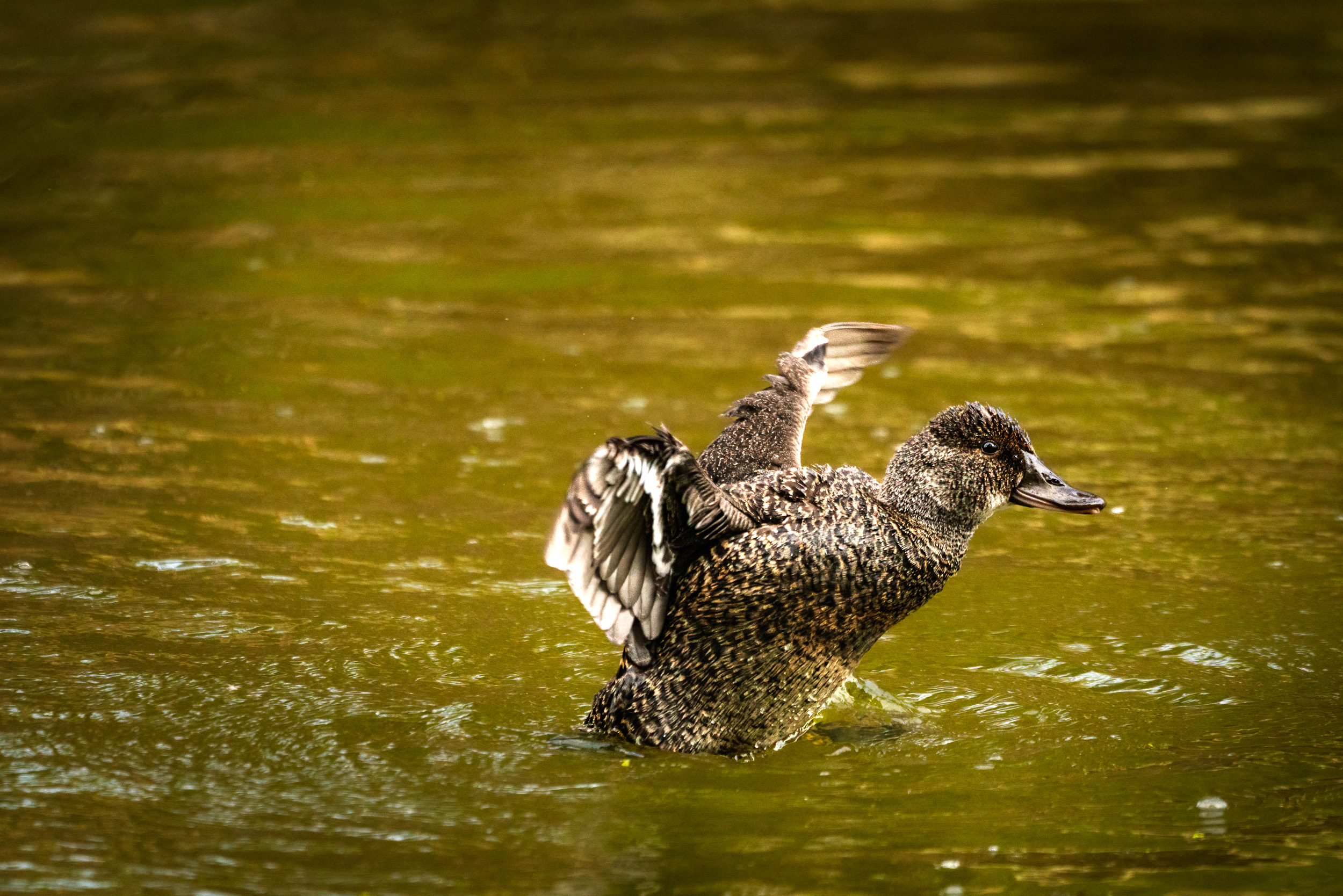
I was at Tomato Lake the other day watching the ducks while the Beloved Significant Other was working at attaining croquet excellence. After a while I came to the conclusion that in many ways people and ducks share similar behaviour. Like men the drake is up for rumpy pumpy at any time which can prove annoying for the females. When a drake gets in the mood for horizontal folk dancing he’ll start flirting. This basically involves getting the attention of a female. Drakes prefer to get amorous on the water and will shake their tail feather and bob their heads up and down. A bit like drunken males on the pull at the disco. If the hen doesn’t move in the general direction of away then the drake assumes that she is up for it and pulls out his really smooth moves. This starts with flicking water at the hen. My partner says adolescent boys do this to try and get attention from girls and it was really annoying. What happens next is a bit dependent on the species of duck, but the blue-billed ducks I was watching the other day have quite elaborate moves.
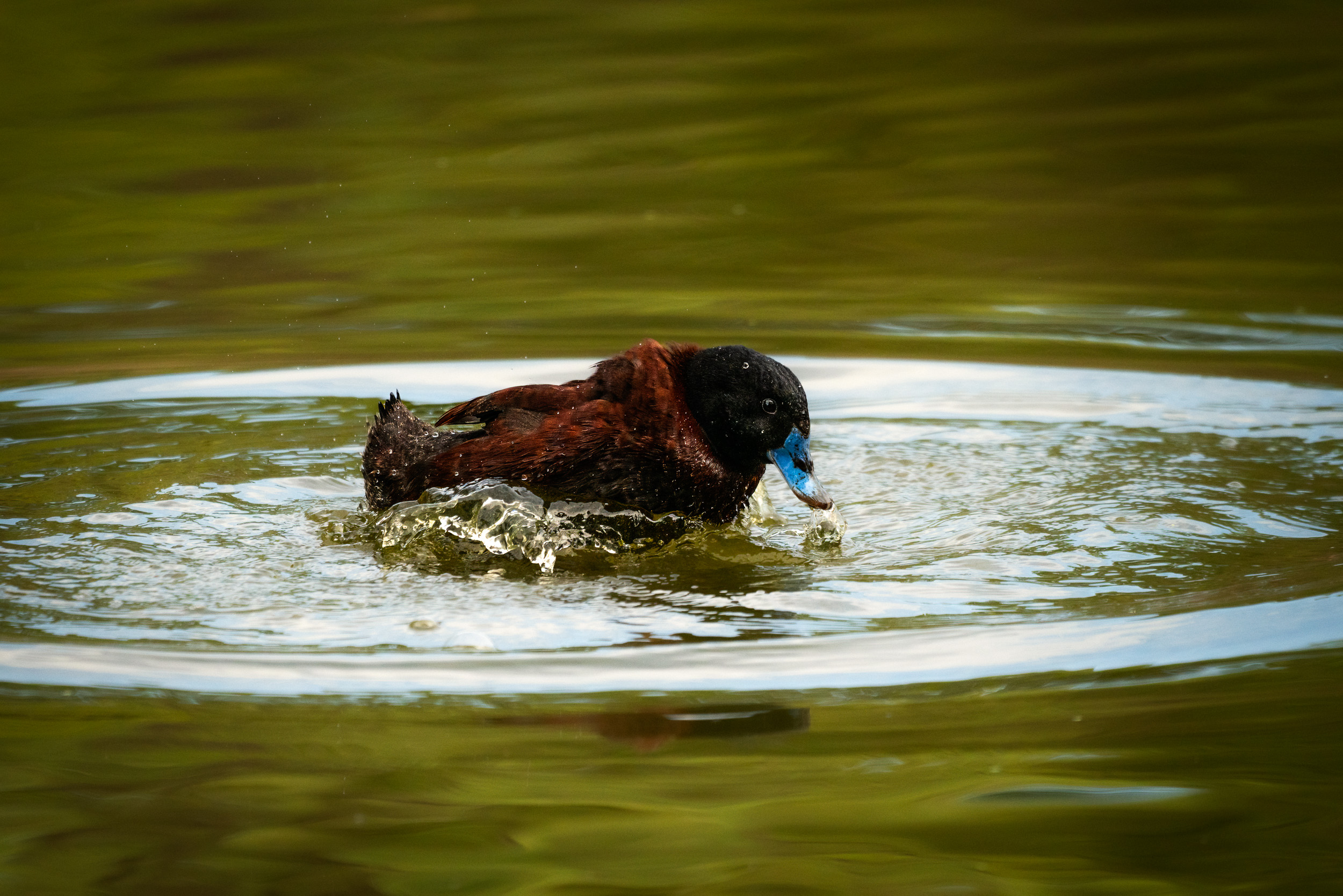
A male blue-billed duck on the cop. Stage one consists of pressing his head into the water and blowing bubbles.
The blue-billed duck has spectacular mating display. He’ll swim up to a hen and then he presses his head into the water and blows bubbles. Having done that the next stage is to flick his head backward throwing water about with his bill.Then he’ll rise up out of the water with his back arched as if in spasm, with possibly his legs kicking water spray above his body. He’ll then have a bit of a shake check to see if his victim is still watching and then repeat the whole thing again. The human equivalent is when the bloke goes full on Travolta – you know he’s seen Saturday Night Fever, Grease, and Pulp Fiction and thinks he’s dead good at dancing. Now if the drake has been successful he’ll chase the hen and then jump her – she often gets completely submerged in the process. It’s a bit like some men think a nudge in the ribs is foreplay. Once over they straighten their feathers the hen heads off to the reeds to build a nest, lay her eggs and raise the young. The drake does a runner and chooses to hang out with his mates until another hen takes his fancy. There’s no child support payments for ducks.
Then he’ll rise up out of the water…
… and arch his back as if in spasm…
… he then starts chucking water all over place.
Was the drake I was watching on a promise? No the hen swam off very quickly. She was obviously out of his league.
Unfortunately the object of his affections wasn’t impressed and legged it.
The carowner virus has made its way around the world to York in Western Australia.
This new virus doesn’t originate in Wuhan but comes from Russia. The symptoms are feeling pain radiate down into your pockets, a feeling of tightness in the wallet, feelings of anxiety and rage every time you pass a petrol station and ultimately leads to the demise of your car. It is a disease that could cause the end of civilisation as we know it.
Maybe it’s time to buy shares in bicycle factories.
I’m not talking about Downton Abbey or the town in England, I’m talking about spiders, bugs, butterflies and all manner of little wriggly things.
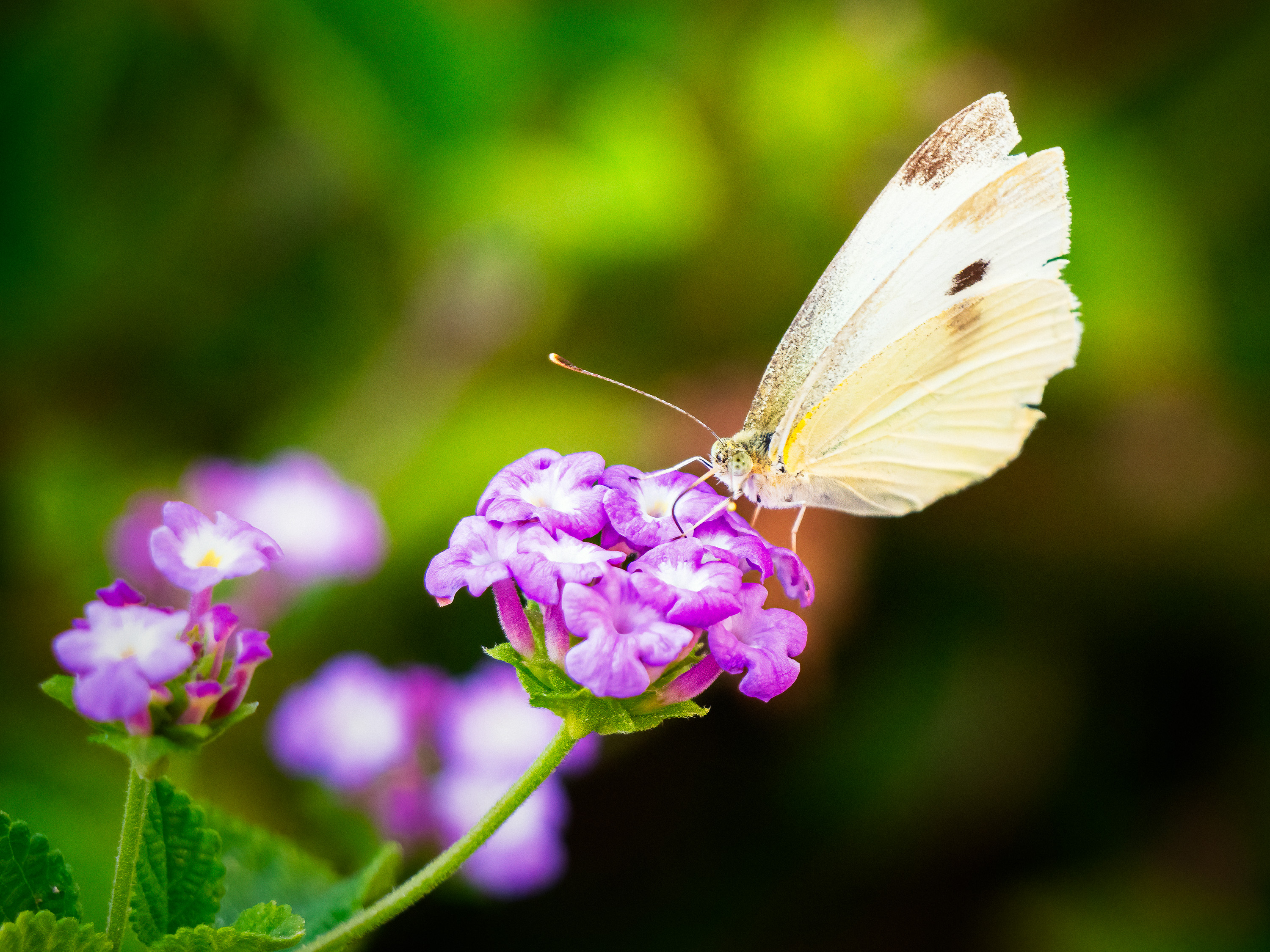
Cabbage White Butterfly (Pieris rapae) – the scourge of gardeners.
A few weeks ago I wrote about documenting the wildlife in our garden and that I was widening the net, as it were, and including all animals including invertebrates. Well after a few weeks of trying this I’ve come up with some observations.
A very small jumping spider on a wandoo leaf. This is the only photo I got as it kept jumping all over the place.
Firstly, as a 58 year old man with a well dodgy back the time time taken between observing the little critter and getting down onto the ground and in a position to photograph it means that it has left the vicinity. Some of these creatures can move incredibly fast when they want to and I can’t. I knew that grasshoppers and their ilk can be very quick, but I wasn’t prepared for the speed of the jumping spiders – a blink of the eye and they are just out of there.
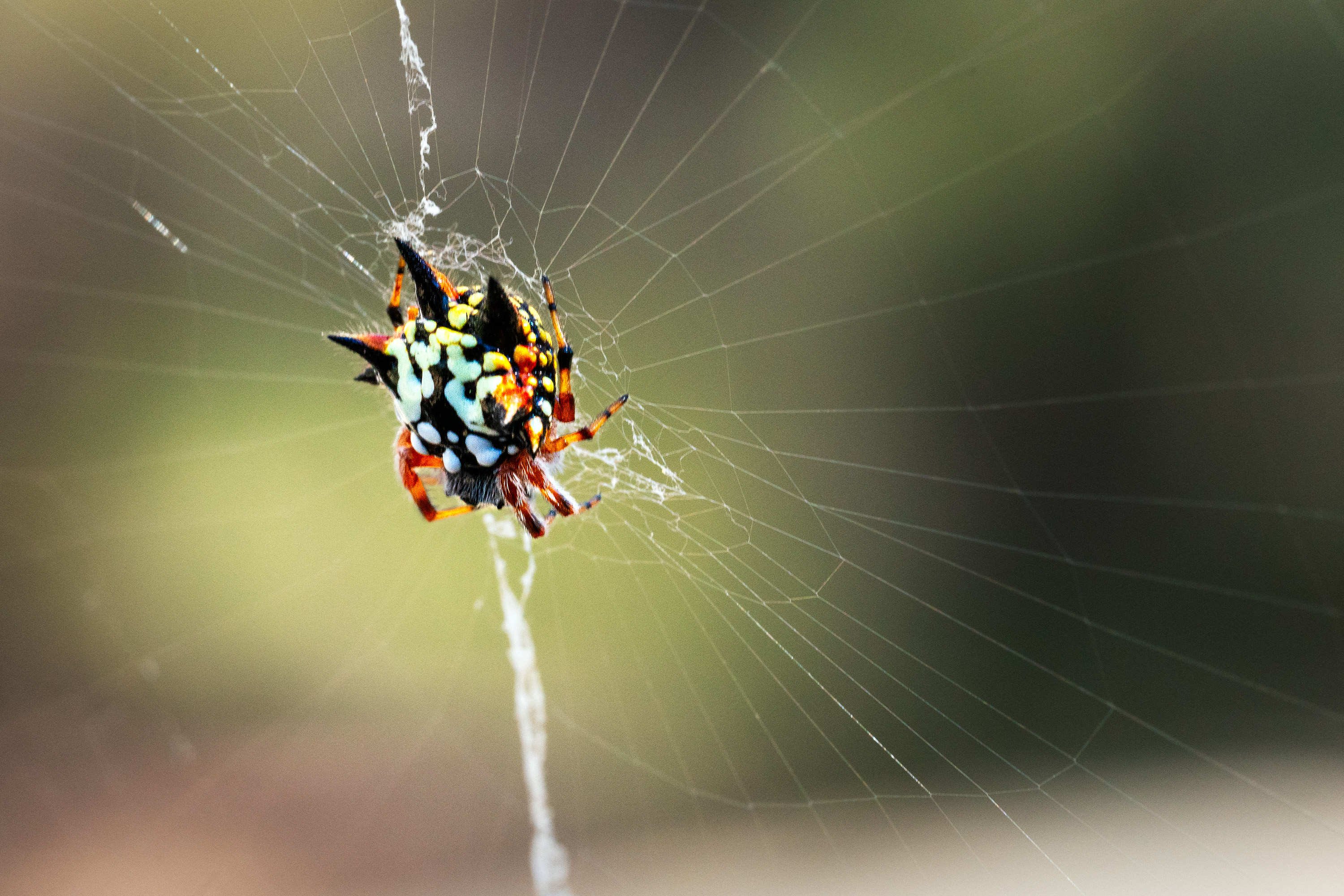
Christmas or jewelled spider. Not known for their speed of movement but the wind catches their webs and so focusing is difficult. Getting in a position to photograph them in a way that shows off their shape and colouring requires a degree of the flexibility that I am lacking.
Secondly, you have to able to contort yourself into some pretty strange positions to get down and photograph them. Now I thought that I’d got this one covered because I do this when photographing orchids, but combine this with being quick (see point one), being stealthy so as not to frighten them and having a spine with flexibility of an RSJ it makes each session like some weird kind of yoga with a camera.
Blue Banded Bee, Amegilla cingulata. York, Western Australia.
Thirdly, a lot of these critters are small. If you look at the photo of the jumping spider resting on a Wandoo leaf, it was less than 5mm in diameter. So you need good eyesight to spot things that small. I’ve just had my eyes tested and they’re fine for distance it’s reading and close up stuff that’s the problem. You can’t rely on autofocus with macro photography and I’m here to say that manually focusing on a small critter that keeps jumping around while having dodgy eyesight is not easy. As my dear old mum used to say “It’s enough to make saint swear!”.
This locust very obligingly sat still long enough for me to take his photo.
Lastly, the benefit of photographing creepy crawlies is that you don’t need a honking great telephoto lens that resembles a small artillery piece. Macro lenses are relatively lightweight and my back is thankful for that.
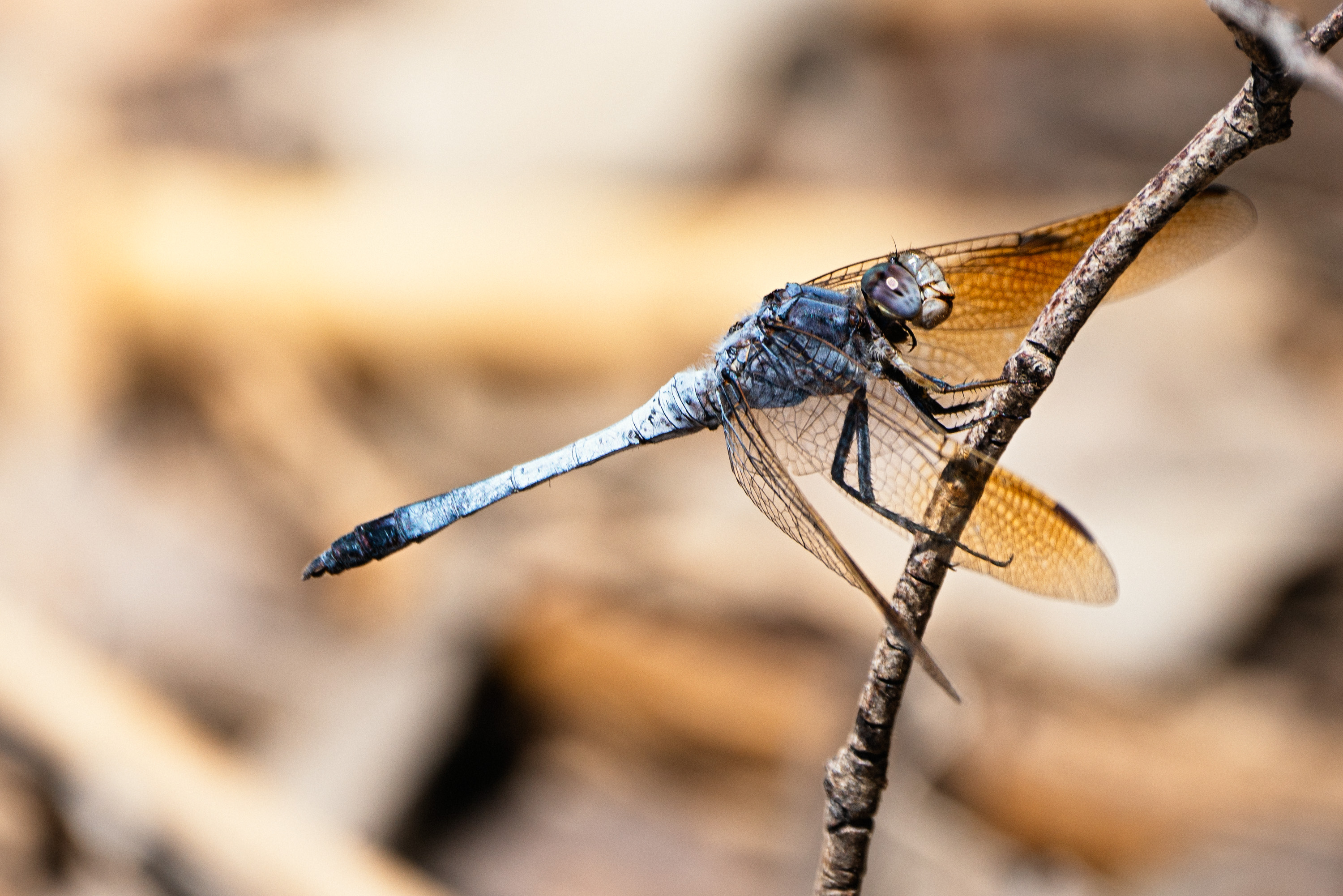
Blue Skimmer dragonfly (Orthetrum caledonicum). Although they move like miniature fighter jets when flying dragon flies will take frequent breathers on a twig or stalk, often preferring to use the same one repeatedly which makes photography a lot easier.
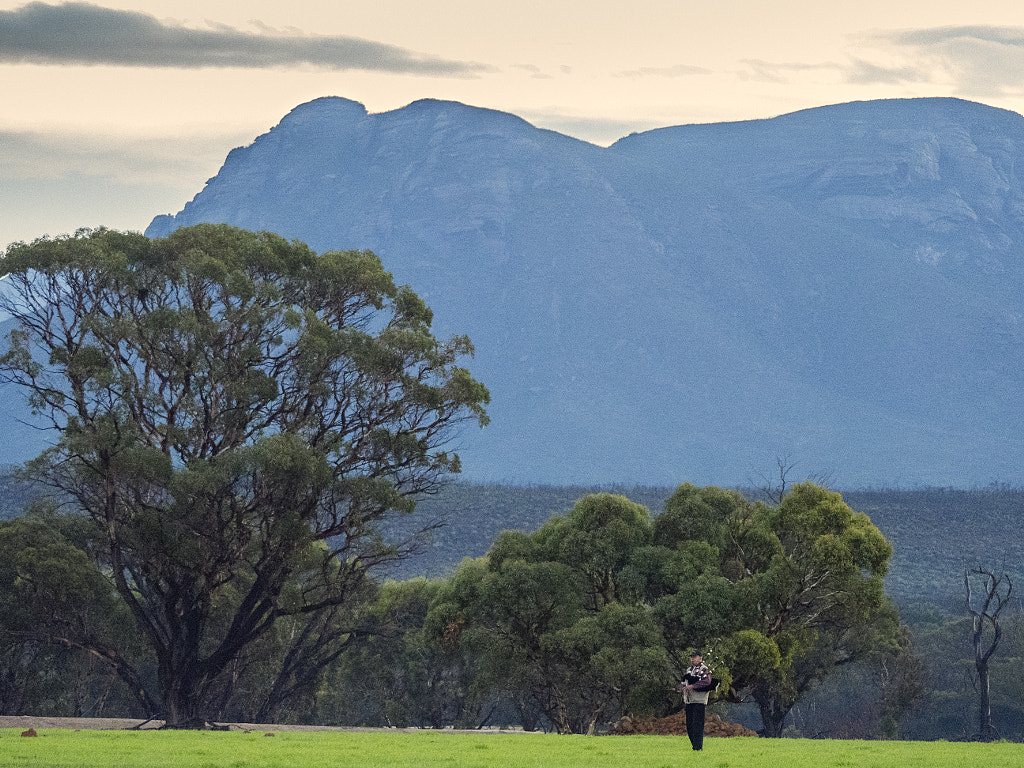
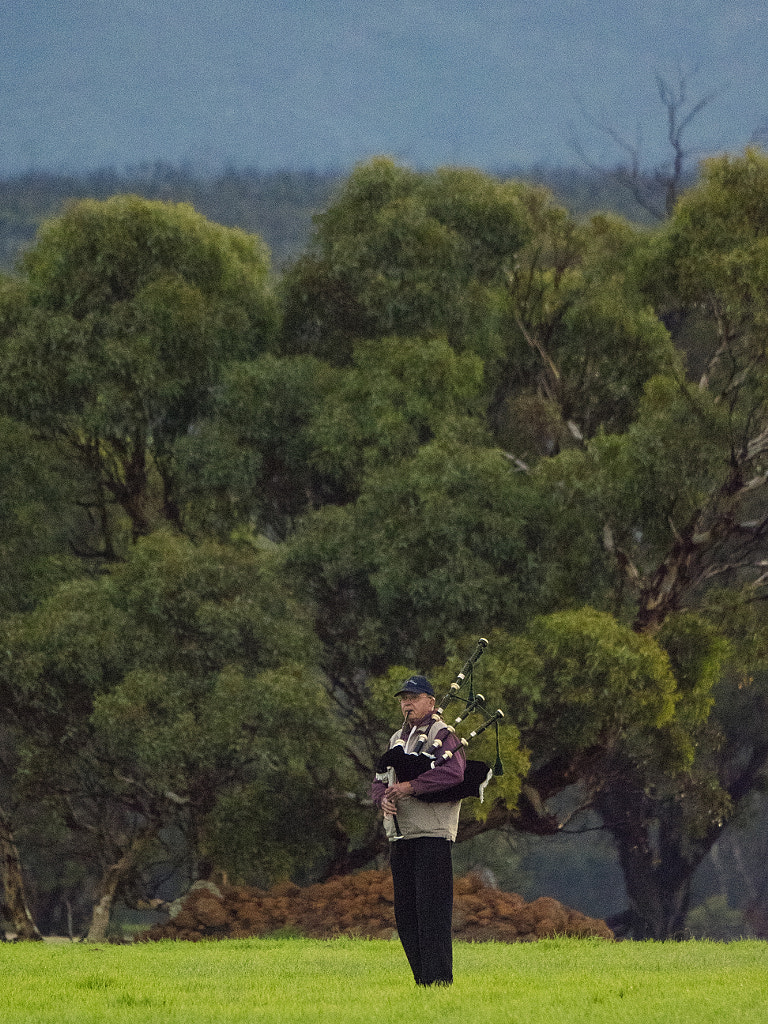
Just before sunset a lone piper can be heard at the Stirling Range Retreat.
We’ve just come back from the Stirling Range. While we were there every evening just before the sunset we could hear the skirl of the pipes. At first we thought it was the bloke a few doors down playing Scottish music in his chalet, but on further inspection we found that it was indeed the bloke a few doors down but he was standing in the middle of the field next door playing the bagpipes. He did this every day we were there come rain or shine.
While the British were in India they were responsible for some awful things but to my mind the worst crime against humanity they perpetrated was the introduction of bagpipes. Anyone who has been in India during wedding season will have witnessed or heard wedding processions through the streets which were accompanied by marching bands containing at least one bagpiper. If you were exceptionally lucky the piper was half way competent but the usual pattern was to have several pipers who were barely able to play. What they lacked in skill they made up for in enthusiasm. The thing was they’d play with great gusto but none of them in time and seldom in tune. It was absolute torture as it would go on all night. We thought we’d escaped the pipers clutches when we went to Nepal. Oh no dear reader. Despite having never been part of the British Empire Nepal has firmly embraced the bagpipes during wedding season. Since then the sound of bagpipes has always made me grit my teeth.
Now it may surprise you to know that the Scots don’t have a monopoly on the pipes and indeed didn’t even invent them. The earliest reference to bagpipes is a sculpture that has been found on a Hittite slab at Euyuk in Anatolia, dated to 1000 BC. The Roman emperor Nero who enjoyed burning Christians so as to provide garden lighting at his parties, who also murdered his mother, and who early commentators described as having been dressed in fancy costume playing the fiddle while singing the “Sack of Ilium” as Rome burnt down around him. But his biggest crime, according to the Roman historian Suetonius is that he played the tibia an ancient form of pipes that he played by tucking a bladder beneath his armpit – in other words bagpipes. The first reference to Scottish bagpipes was their use at the Battle of Pinkie in 1547. My last fun packed bagpipe fact is that Pakistan is the world’s biggest producer of the instrument where the industry was worth $6.8 million in 2010. So not only did Pakistan shelter Osama Bin Laden but it is responsible for exporting terror in the form of Bagpipes.
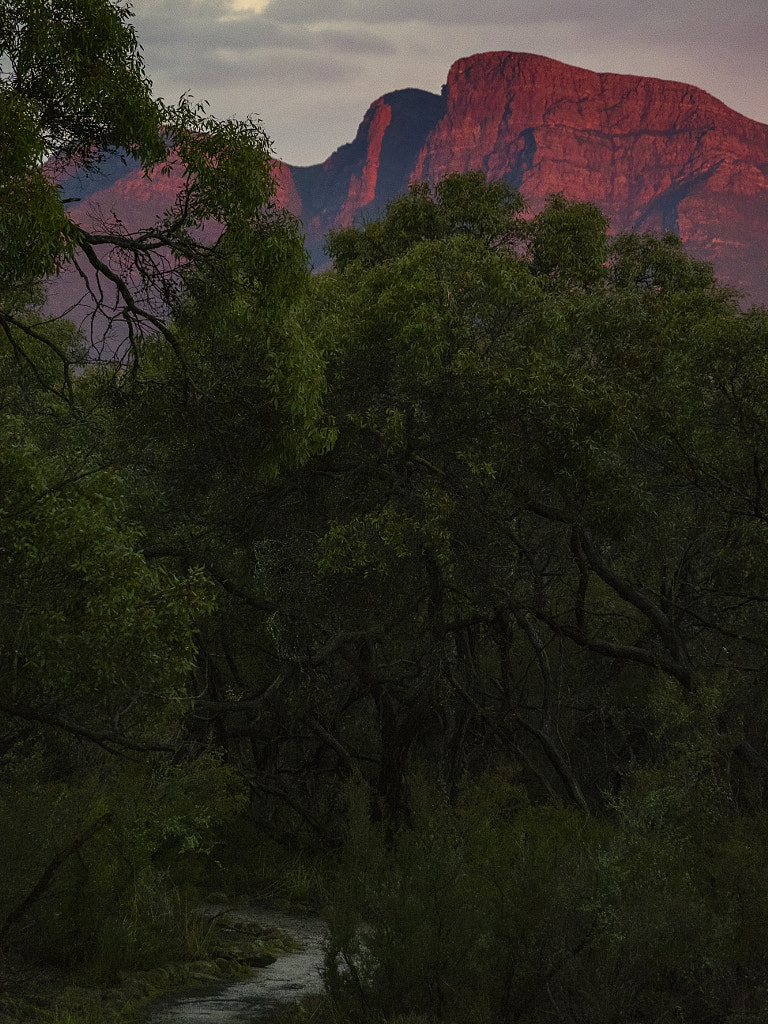
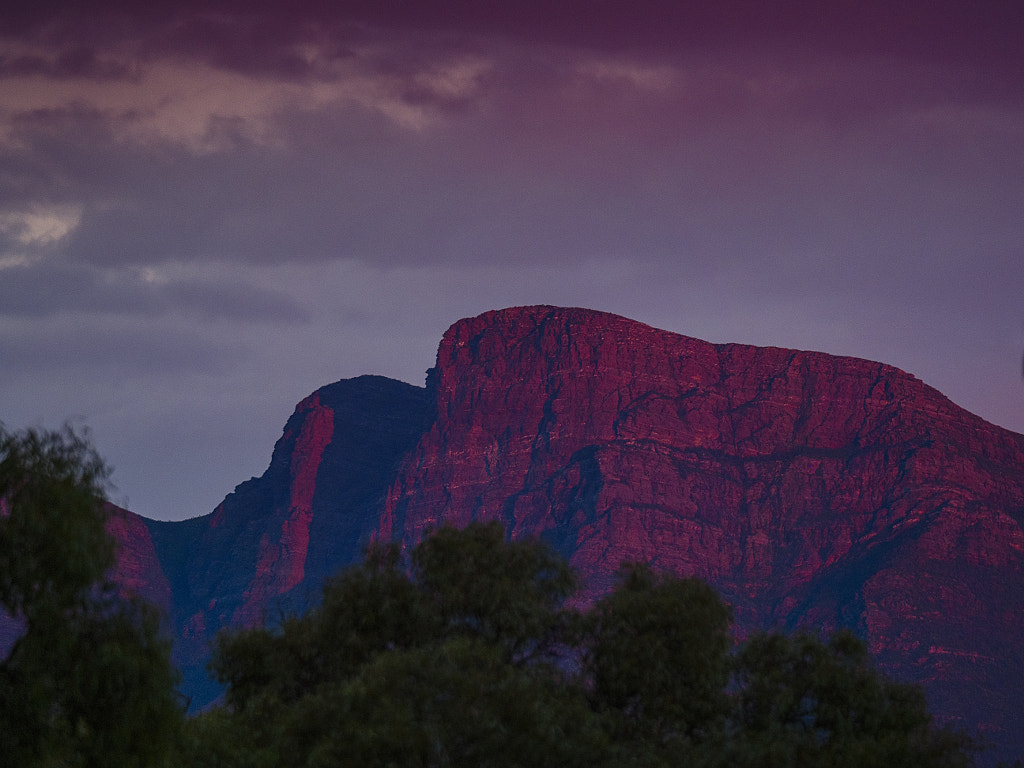
Enough of the rant lets get back to the Lone Piper of the Stirling Range. What was he doing? Well, it has become a tradition in Scottish regiments that a lone piper takes the place of a bugler to signal the day’s end to the troops. While he was marking the end of the day he was facing Bluff Knoll the highest mount in the Stirling Range. The colours of the sunset are reflected on Bluff Knoll and are truly wonderful and if anything deserves an accompaniment it is that.
Bluff Knoll, in the Stirling Range, reflecting the sunset.
This is the natural state of the English Bull Terrier. Most people have this image of them being highly aggressive canine fighting machines, but the reality is that they prefer comfortable beds, cuddling up to blankets or preferably people, and sleeping.
…to this
A rare moment – Frida running along the Avon River bed.
Every now and then something miraculous happens and the Bull Terrier will erupt into a highly excited state where it runs at full tilt round and round. Heaven help anyone who gets in the way as its like being hit by a fury anti-tank missile. This is known as the “bully run“. It usually lasts about 2 minutes then the normal state is resumed.













You must be logged in to post a comment.