Our poor old car started to sound as if it had a terminal condition. It produced an incredible range of noises from the engine and gearbox. With over 200,000 km on the clock it wasn’t surprising in someways. I took it into the mechanics and it came back with even more strange noises. So while we sorted out a replacement I’ve been somewhat grounded and most of the recent photography has taken place within the constrains of the garden. Most of it macro of various bugs that I’ve found, some of it shots of Bertie, our Miniature Bull Terrier puppy, as he plays. It’s been great fun.
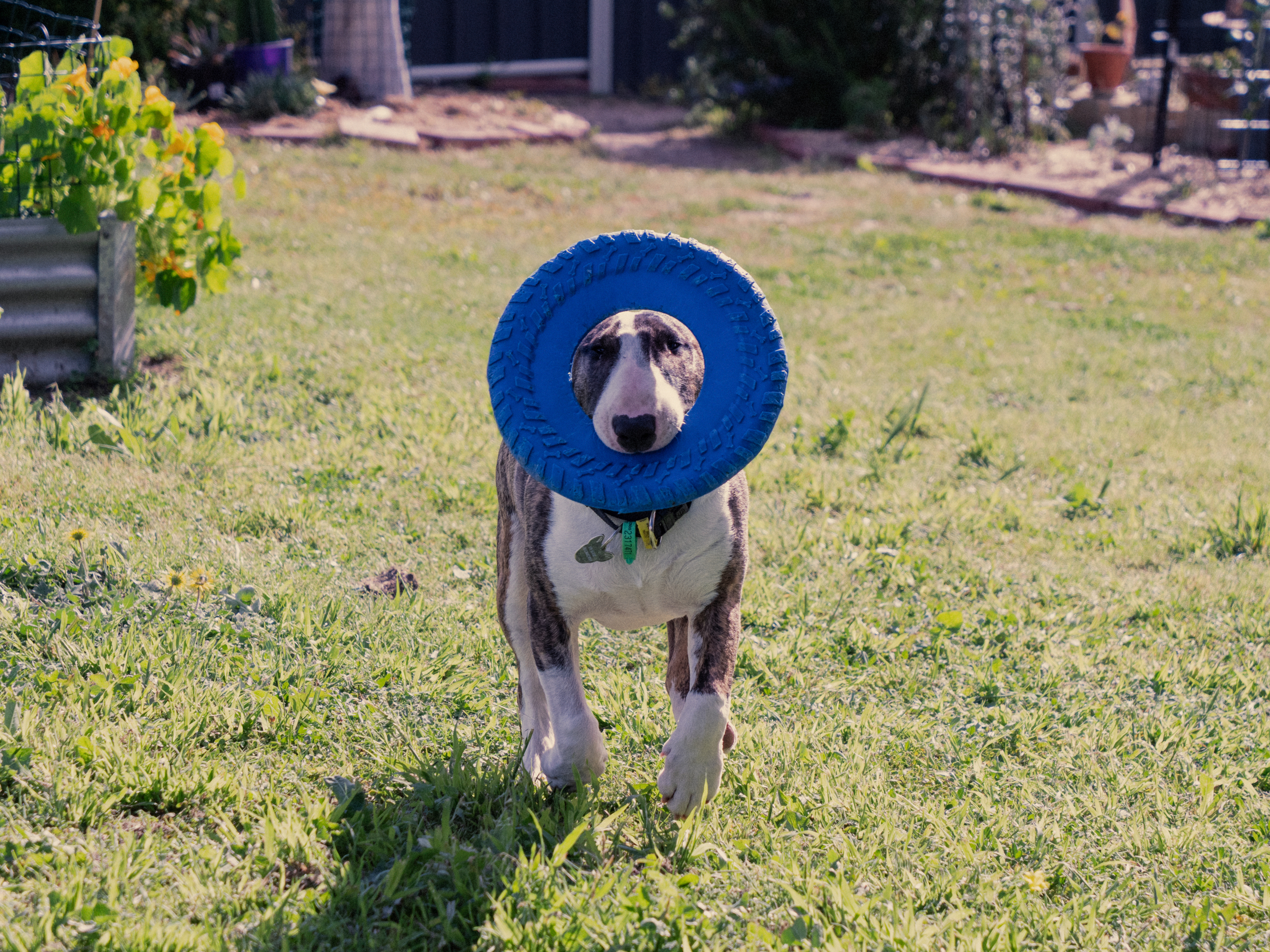
Bertie playing with his ring in the garden.
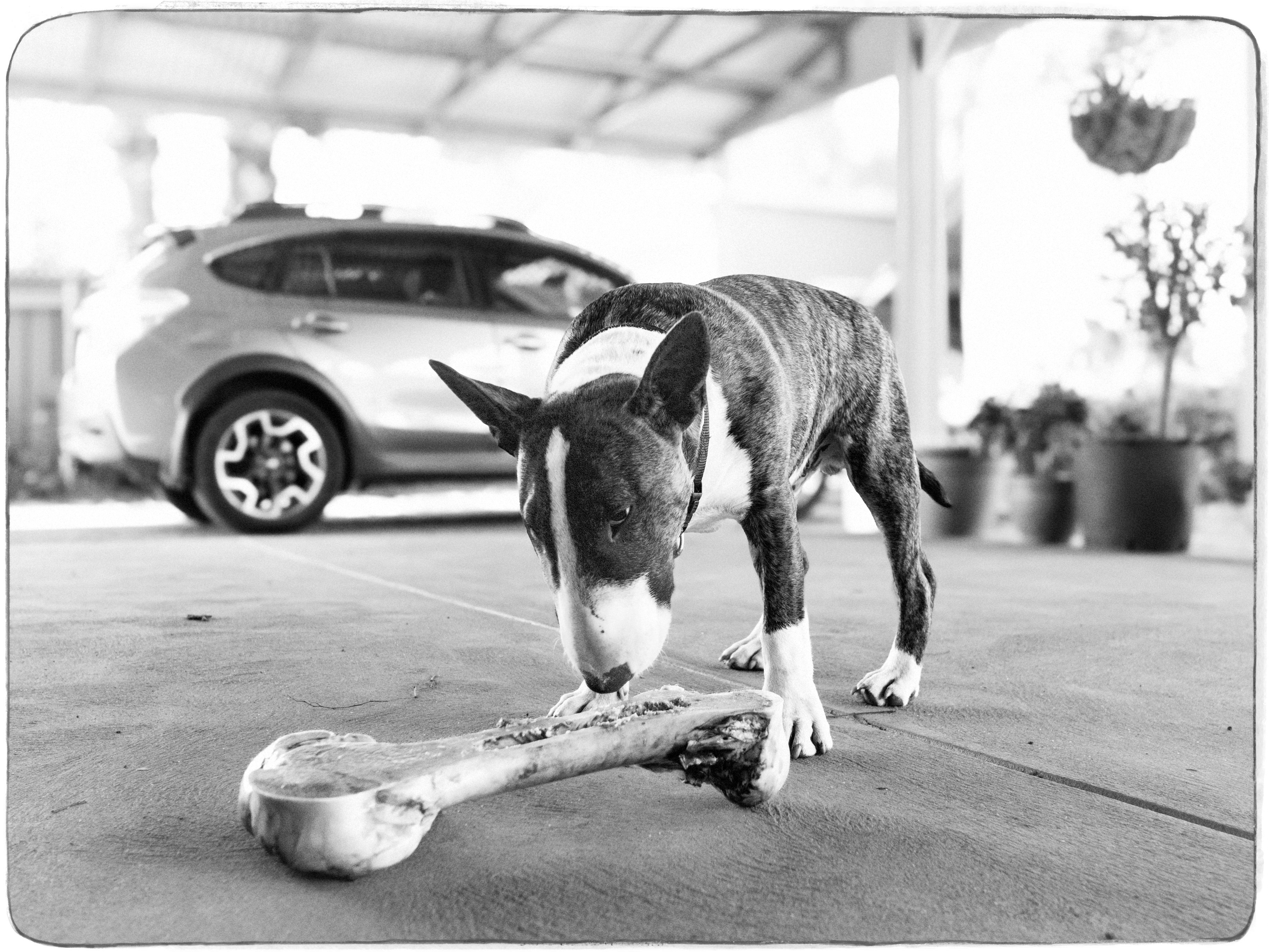
Bertie with his first marrow bone.
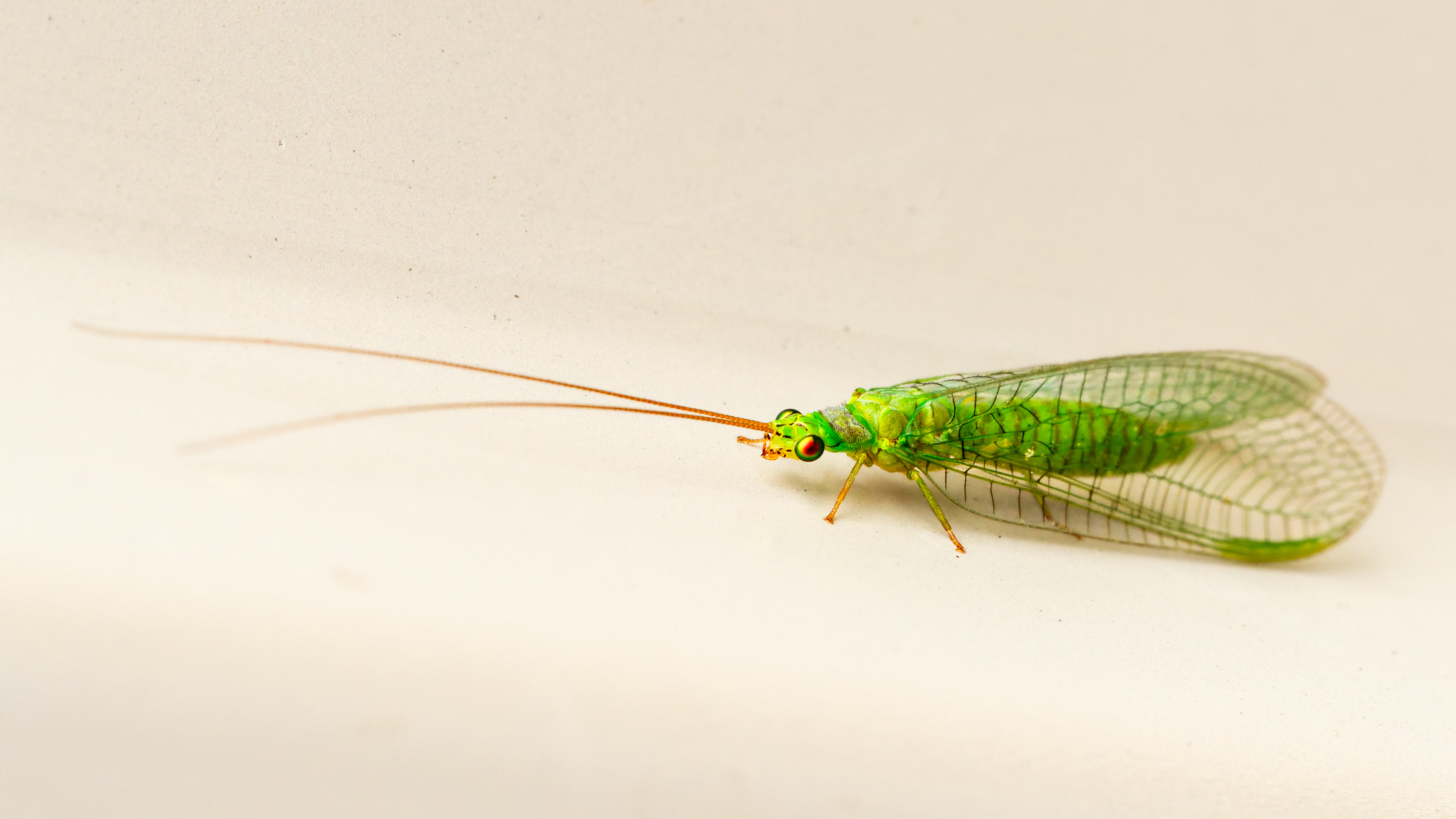
Green Lacewing, Mallada signatus. York, Western Australia.
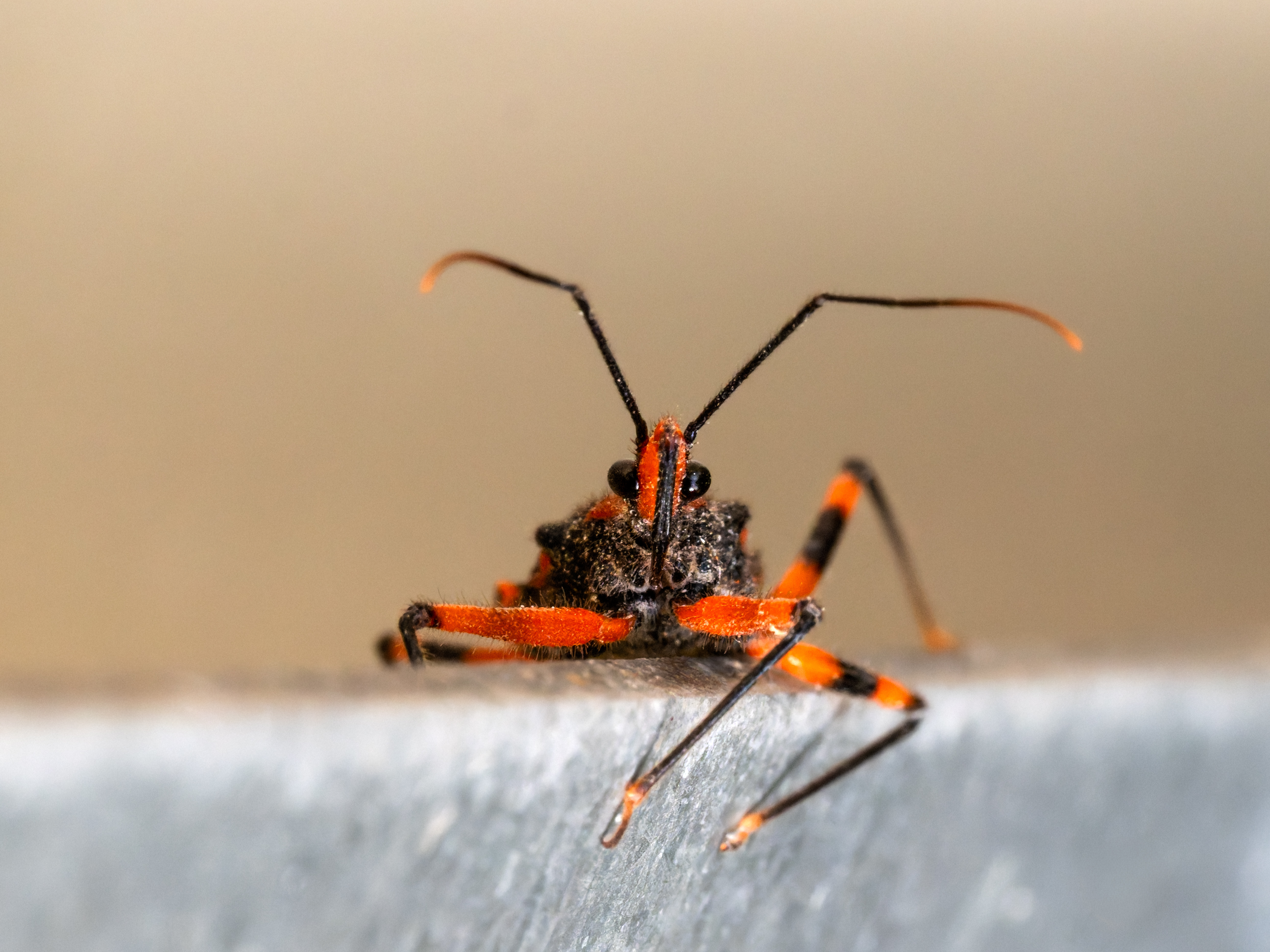
Red Tiger Assassin Bug, Havinthus rufovarius. York, Western Australia.
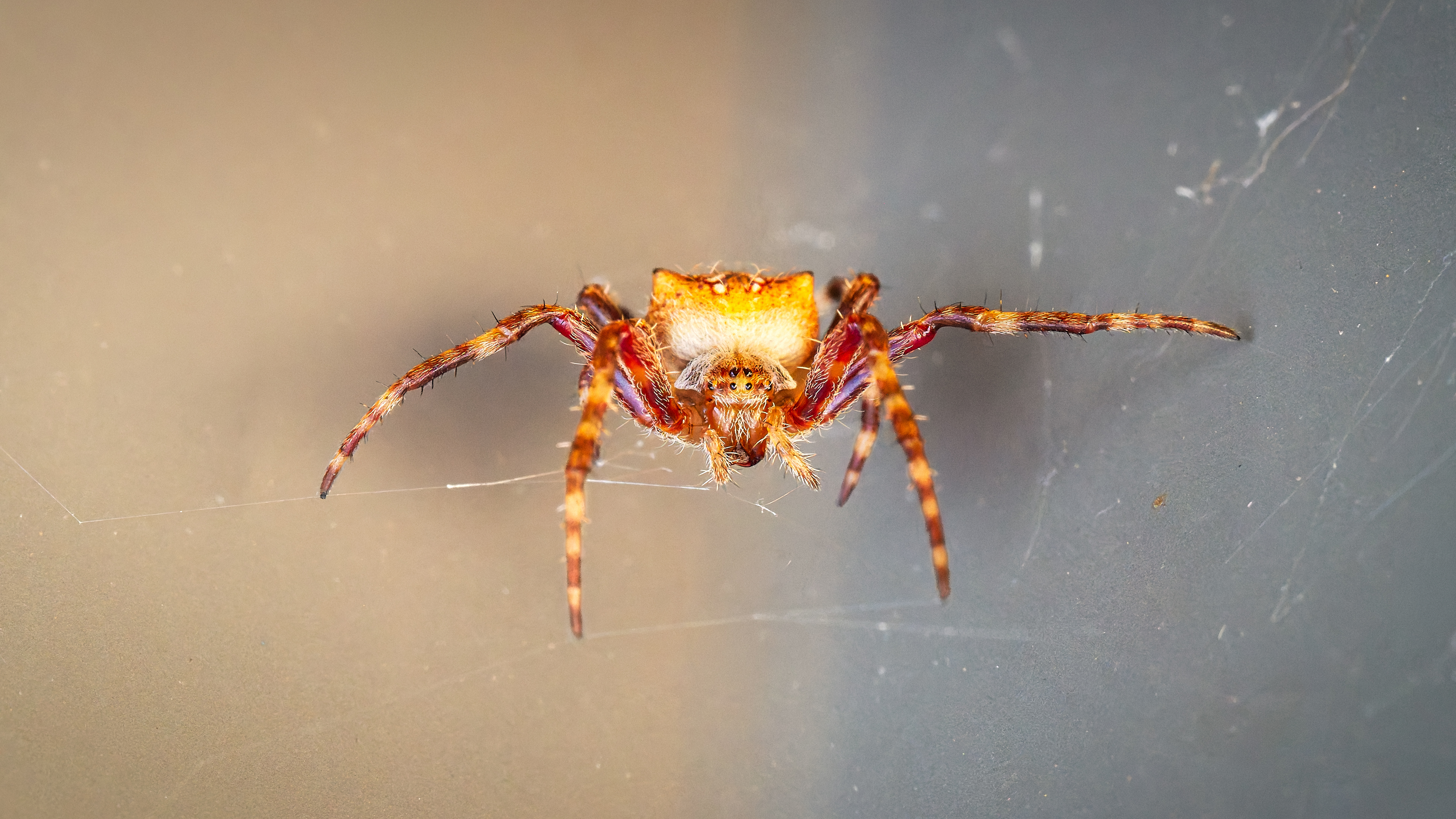
Dunno what sort of spider this is.
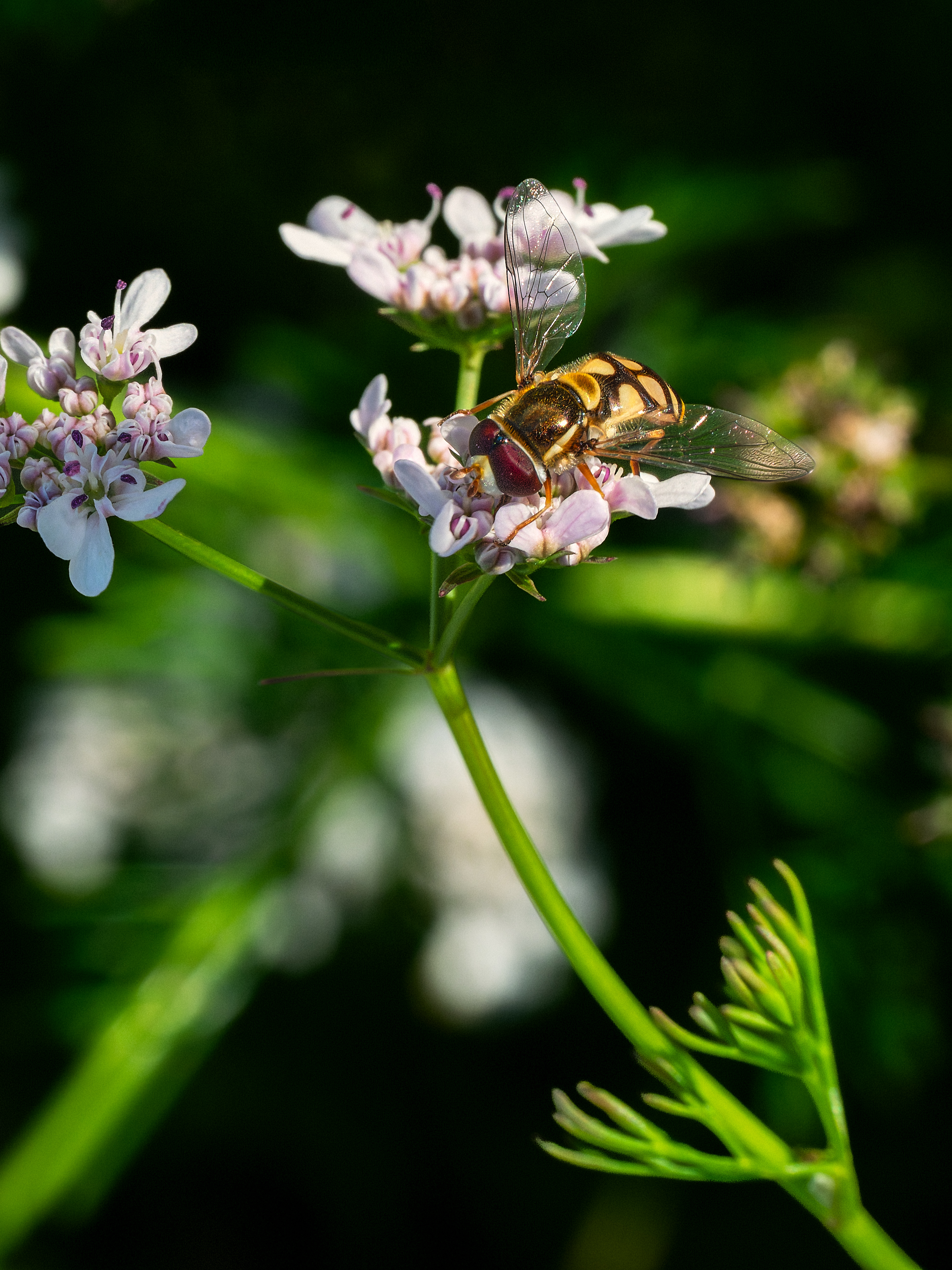
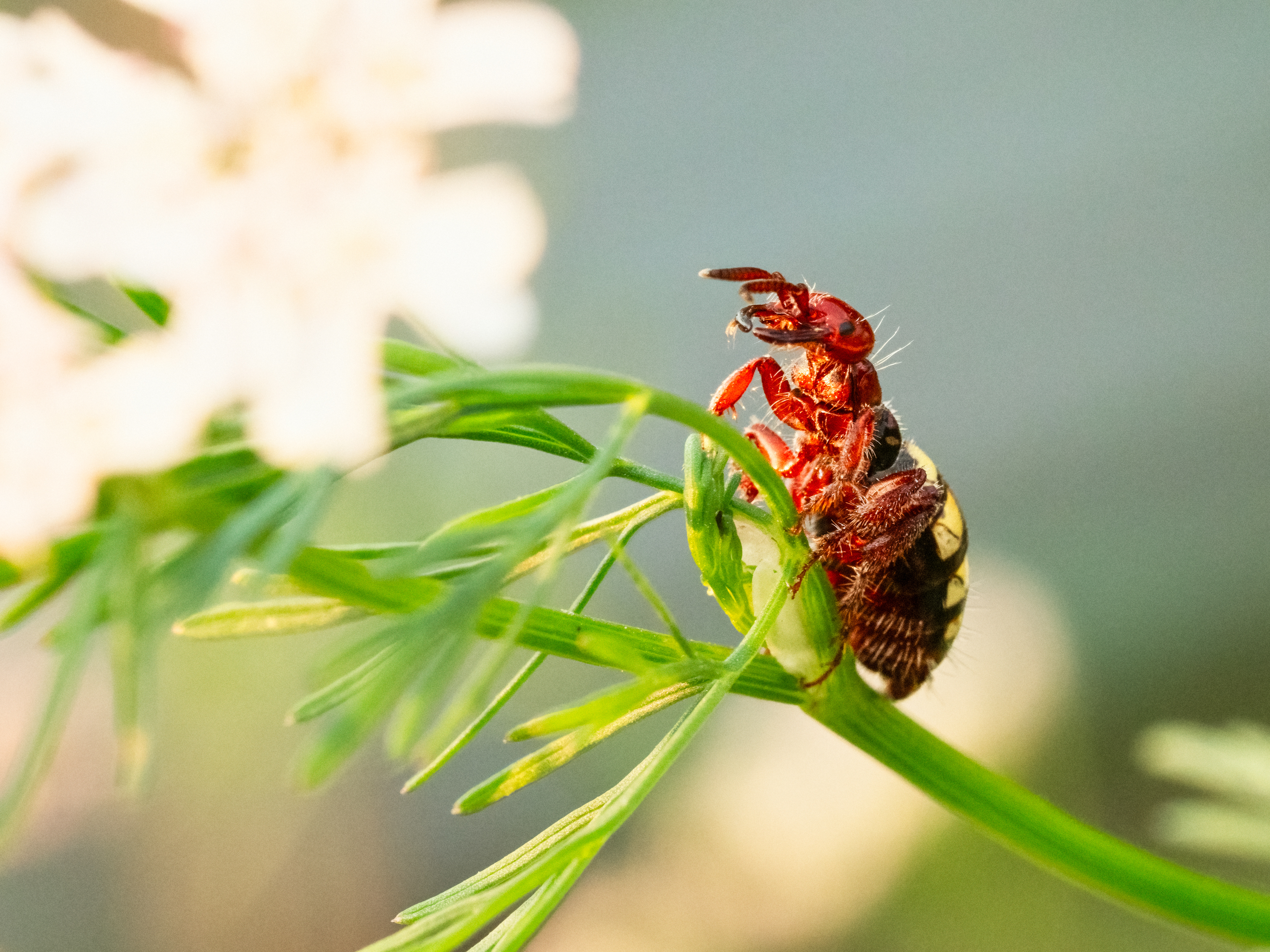
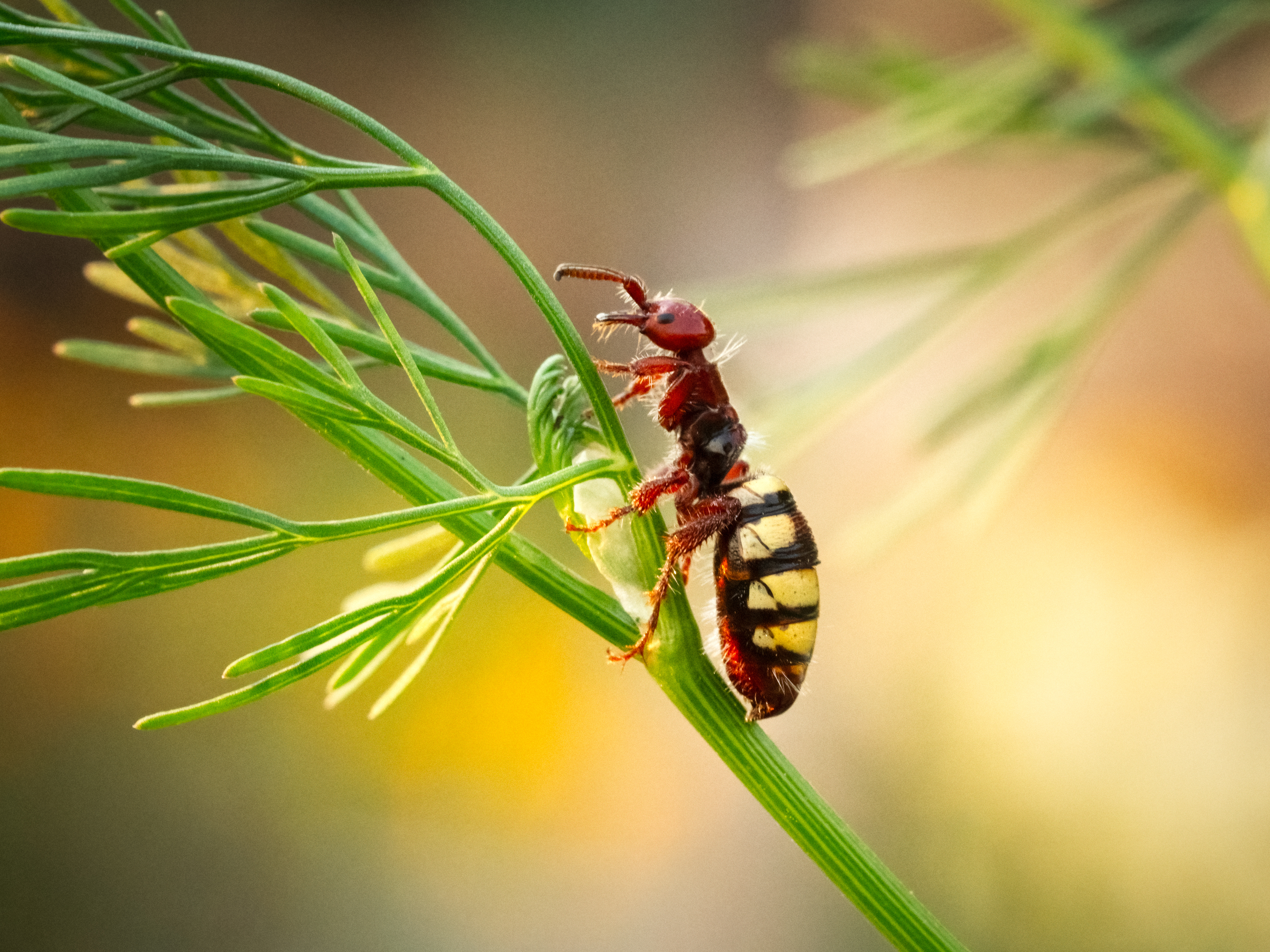
A male Yellow flower wasp feeding on the corriander.
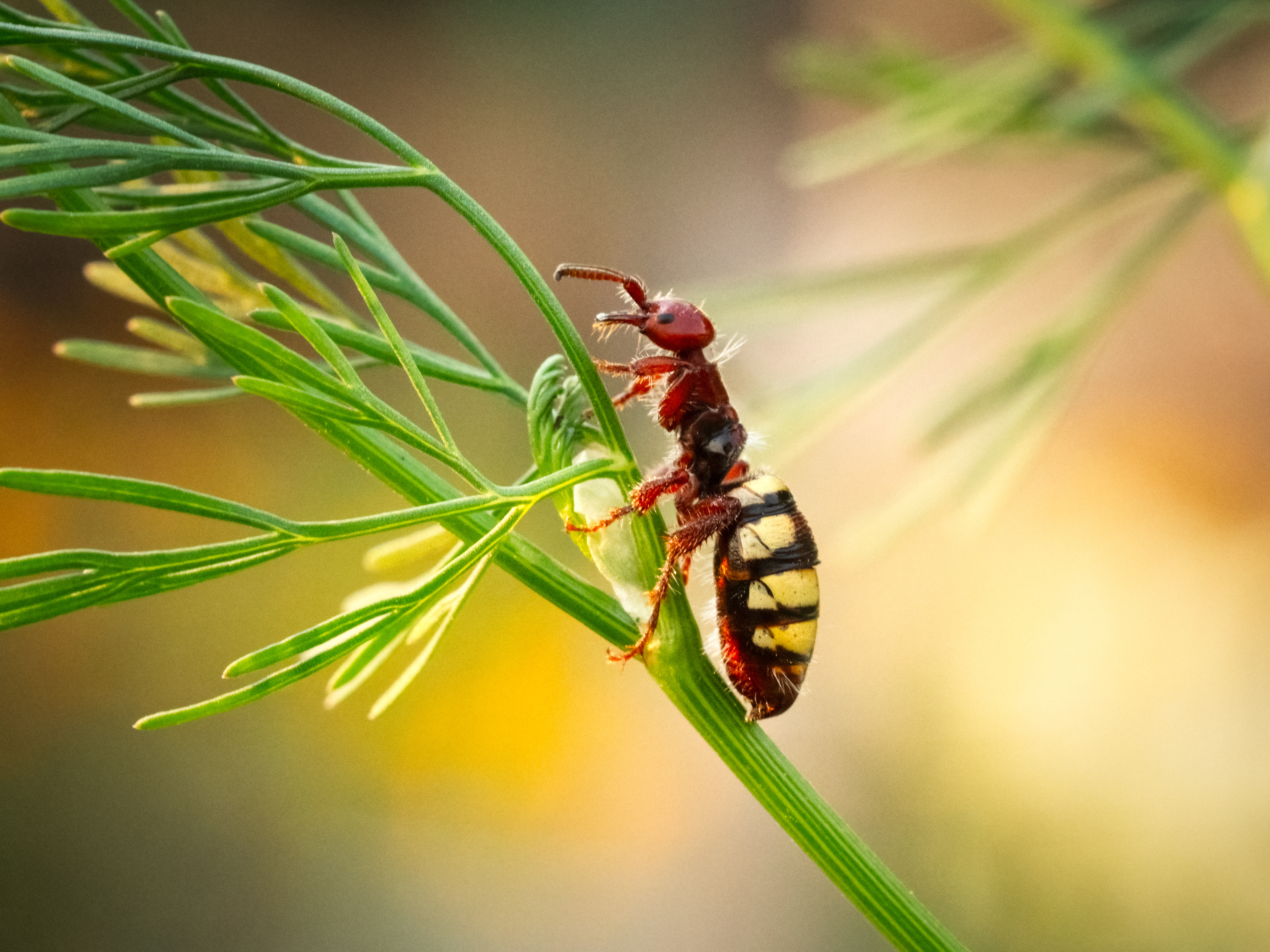
Last week I posted a photo of a mystery insect that I didn’t know what it was. Well it turns out it was a female Yellow Flower Wasp, which are flightless.
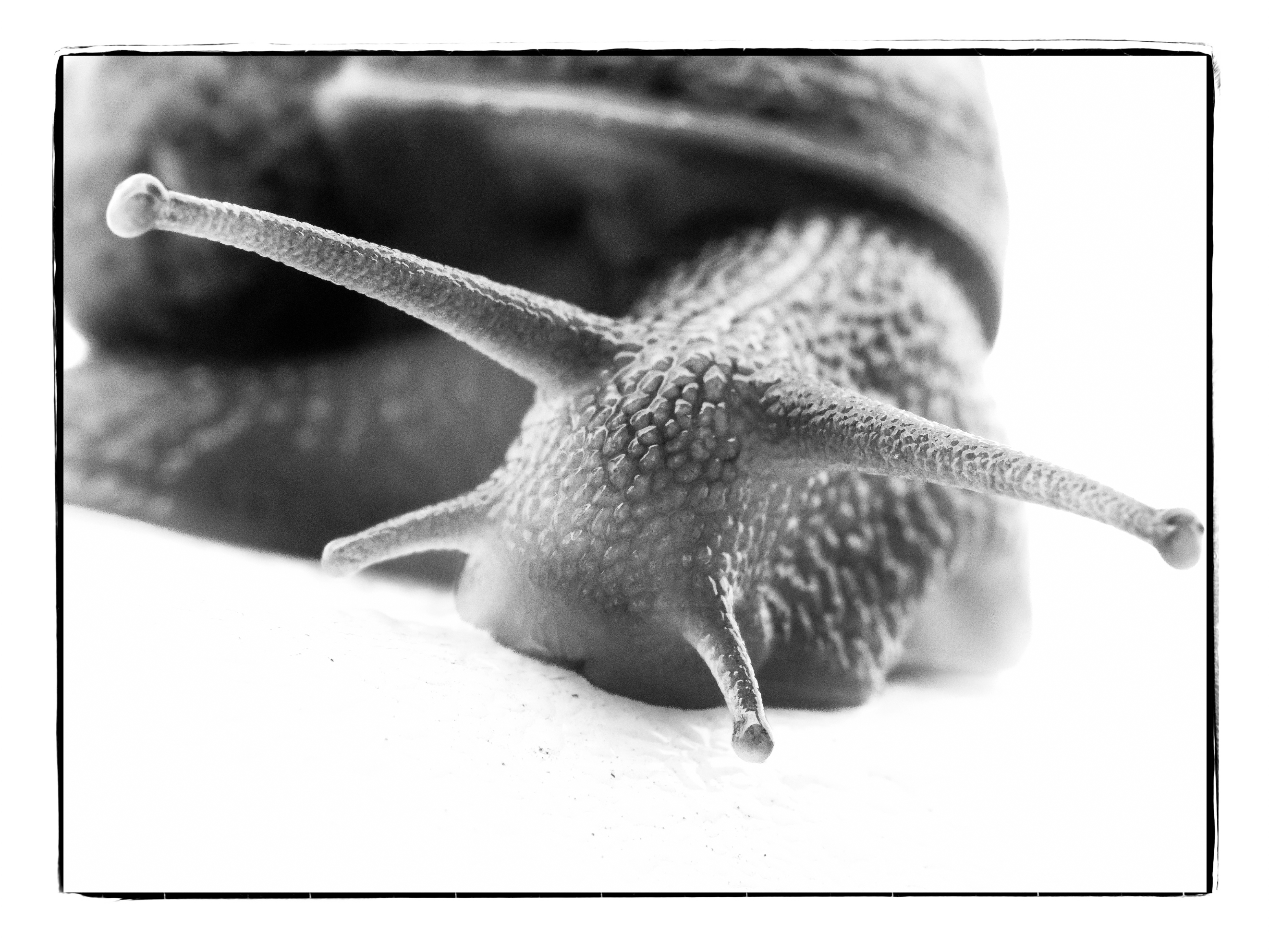
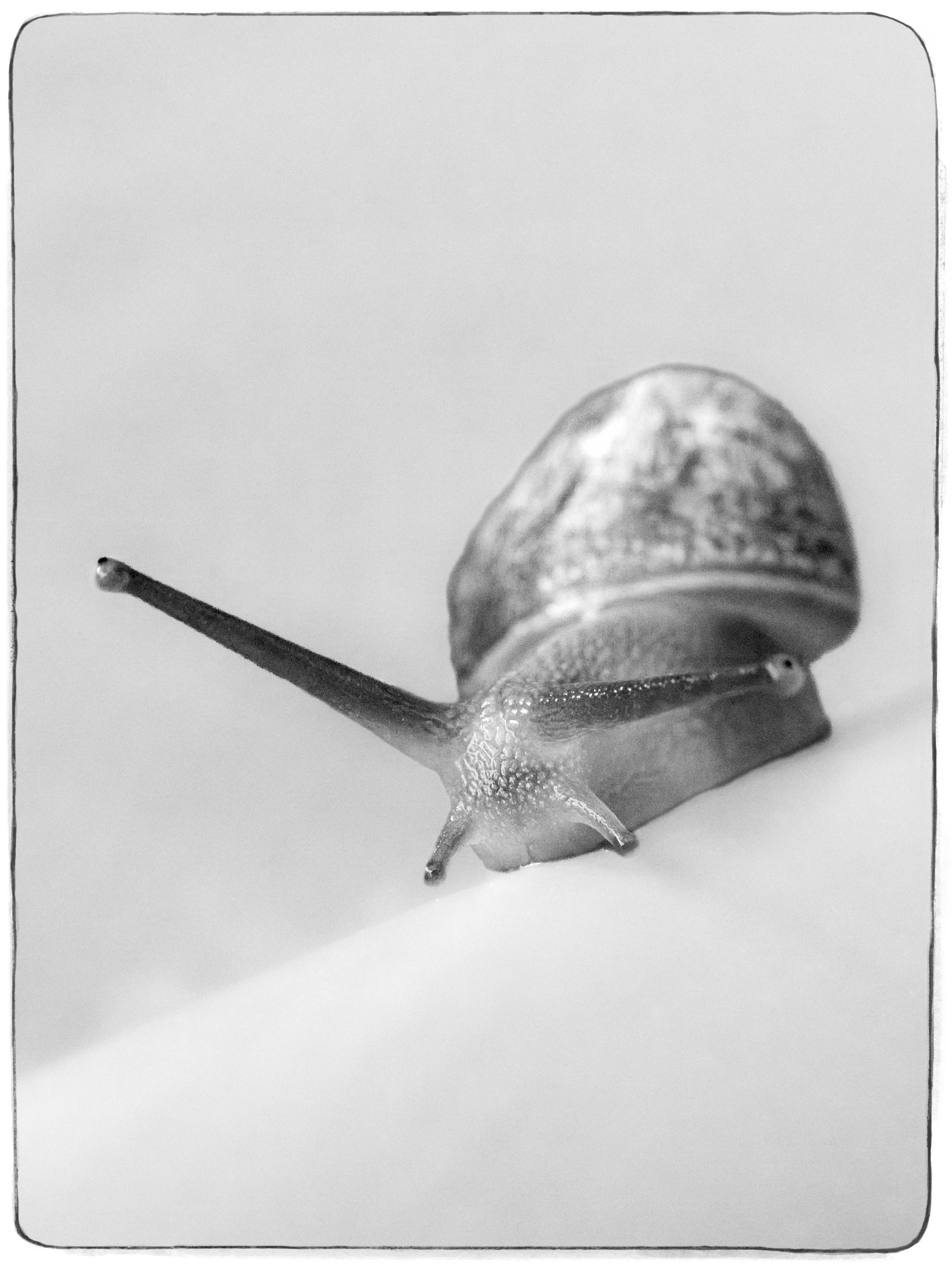
“Stay sill damn it!” Common garden snail, Cornu aspersum.
The recent orchid expeditionmade me get my macro lenses and flash out of the cupboard and consequently I’ve been playing around with it in the garden. I had this brilliant idea to improve my focus stacking technique by taking photos of snails. I mistakenly thought that they’d be a good subject as they don’t move much. I was very much mistaken. The little beggars move around quite a lot. The tentacles that their eyes are mounted on are in a constant state of motion and so my attempts at focus stacking failed. Not to be deterred I just stopped the lens down to f11 or f16 (well into diffraction territory on Micro Four Thirds) and just carried on taking picture of little critters in the garden.
Another fidgety snail.
The focus stack even failed on this. Dunno what I’m doing wrong.
Yikes! Don’t know what this was amongst the coriander.
Looks better in profile.
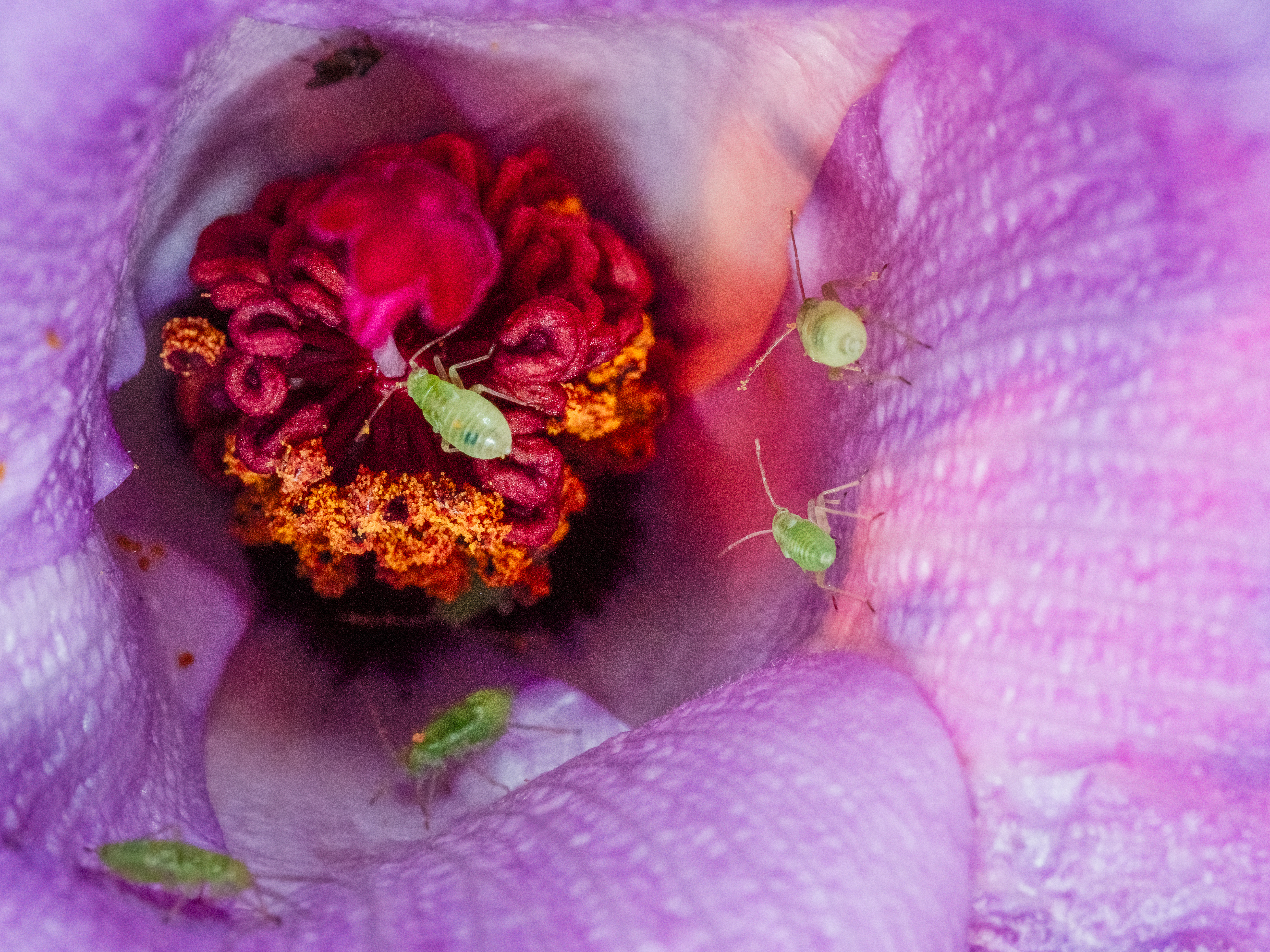
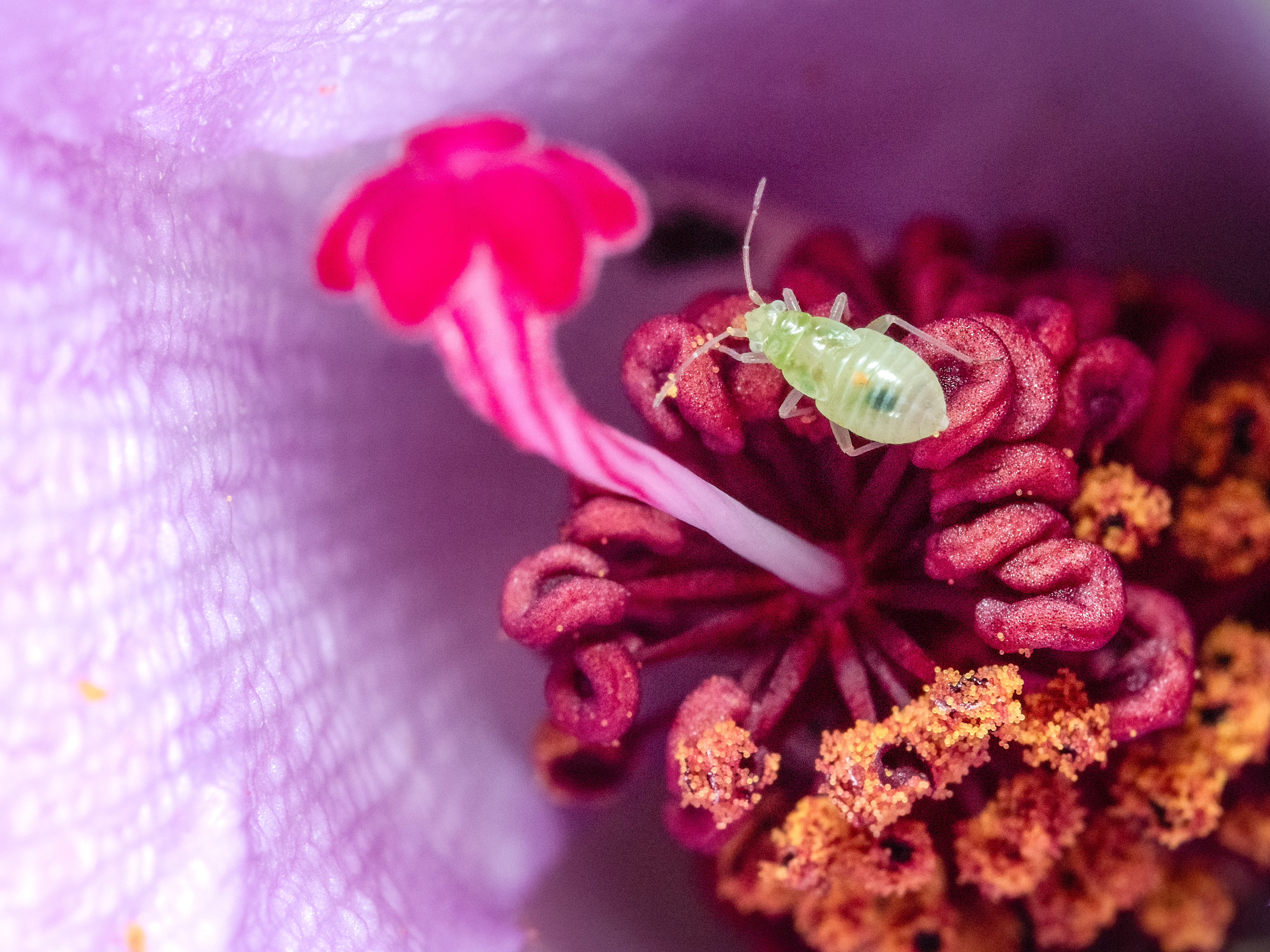
Oh dear! The Beloved Significant Other is not going to be happy with these aphids.
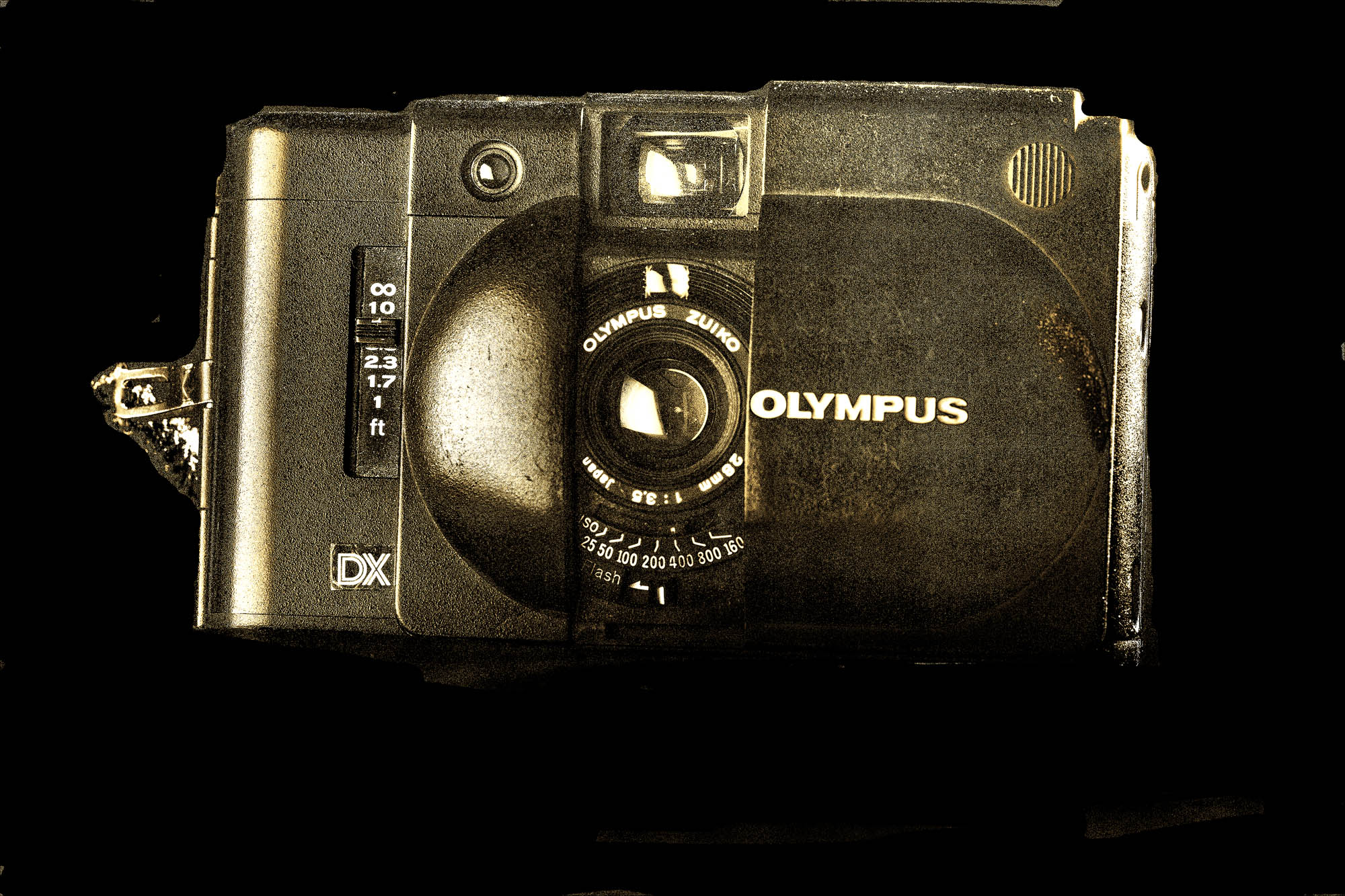
The best Every Day Camera I’ve ever had. If only some one could make a digital version with a full frame sensor. Stuff it just make it with a Micro Four Thirds sensor and I’d buy 2!
If you were to take a browse through photography social media sites you will see the proliferation of the acronym “EDC” which apparently stands for “Every Day Carry”. I particularly dislike the phrase – its origins lie in American military and survivalist culture where it meant a concealed weapon such as a gun or a knife. I particularly dislike how American culture has become part of photographic culture. We hear terms like “shooting”, “pull the pin”, or “pull the trigger”. But, having said that if we change the acronym EDC to mean Every Day Camera then I think it has a lot of merit.
My Leica D-Lux pimped out with its accessory grip, tripod adapter and Peak Designs Anchor Link.
Our recent trip to Cairns made me appreciate a small fully featured camera with a large sensor that could be carried around everywhere unobtrusively. For that trip I took my Leica D-Lux Type 109 and it did a fantastic job. But, it is getting long in the tooth and it has started to develop a few annoying little faults. Initially I just thought about getting it repaired, but when I found out that it would have to be shipped back to Leica’s factory in Germany at considerable cost even though it is a Panasonic Lumix from Japan in Leica fancy dress I decided to look for a replacement.
The Leica D-Lux compared with its predecessor the Panasonic Lunix LX5. Looking from the front there is not a lot of difference in the size despite the D_Lux having a sensor much larger than the LX5. Both are excellent Every Day Cameras.
At one point every camera manufacturer made such a camera, but then with the ubiquity of mobile phones with “reasonably” good cameras (but with lousy ergonomics and controls) they went out of fashion and if you wanted to buy one they were like hens teeth. Oh sure a few manufacturers continued to make them – Ricoh’s GR IV, Fuji’s X100vi, Sony’s RX1R Mark III , Panasonic’s L10, Leica’s Q3 and D-Lux 8 – but have you seen the price? Well in the consumer paradise that is Australia the price range is roughly $2000 – $12600. Definitely not for the financially embarrassed.On looking at the secondhand market I discovered a curious paradox. For cameras that nobody wanted just a few years ago they are now selling for a lot of money. For example a 12 year Leica D-Lux Type 109 camera is going for north of $2000. A lot of money to pay for an older second hand camera which will just as likely develop the same faults as mine just has. Another strategy is clearly needed.
Perhaps I didn’t need a built in zoom lens. Perhaps I could use a small camera body with a small interchangeable prime lens. Ideally I want a flat topped rangefinder styled camera with a viewfinder. If so I have a couple of likely candidates in the camera cupboard. So the other day when I had to go into Perth for the day I took three (yes three!) Small cameras fitted with a 35mm equivalent prime lens. It’s not important at this stage to say what I took, but it was quite interesting to see how much time I spent with each camera and lens combination and how much I enjoyed using them. What I discovered was that the specs aren’t that important. For this type of photography a central single AF point is perfectly adequate. In terms of the sensor, well anything more than 12Mp is overkill for my uses. The pictures either get shared with friends and family or put on social media. If I do want to print well 12Mp is good for a nice A3 print. Burst speed doesn’t have to be great – 4 fps is perfectly adequate if I need continuous shooting. Start up time is fairly important, but usually I wander around with the camera always on and have a spare battery in my pocket.
And whose truth would that be?
A chilly winters morning cycle ride.
A giant blue alien puts the local kangaroos to flight on St. George’s Terrace in Perth.
Perth’s street art is getting more interesting.
Another giant alien walking through Perth.
A pigeon flash mob in Forest Place.
Tweety Pie gangsta.
Everyday Cameras are also great for recording those special spontaneous moments that happen so the user interface needs to be intuitive to allow quick use such as when your new puppy does something really cute. They should also be able to be used single handed. I’m not a great advocate of doing that, but, sometimes situations present and you’ve only got one hand free.
Bertie posing in the garden
Cuteness overload
I’ve yet to make a decision on which one I shall use as the EDC – or I may just keep using all three on a rotation basis and possibly add other combinations to the mix.
The other day the Beloved Significant Other (BSO) came home from the local cemetery saying she’d seen lots of crows there with some even sitting on the grave stones. She suggested we go the next morning and try and get some suitably gothic photos.
Australian crows (Corvus coronoides) are not in fact crows, but are in fact ravens. They are highly intelligent birds using tools to help feed themselves, they’ve also been observed softening dried out hard food in water to make it soft enough to eat. As I said, very clever. For the local Nyoongar people the raven is called Waardong – the watcher – and is seen as crafty, cunning and very unpredictable. That is where our plan failed. There was no way we going to get close enough to get a photo. I approached using cover and while just trying to peek around the corner of a wall they’d immediately see me and all take off. I didn’t manage to get one single photo of a raven.
Try as I might this Wardawort or Grey Butcherbird (Cracticus torquatus) just didn’t look gothic enough. York Cemetrey, Western Australia.
There were other birds at the cemetery and I thought that one of them – Wardawort or the Grey Butcherbird (Cracticus torquatus) – would make a suitable replacement for a raven. The Grey butcherbirds were far more approachable than the ravens and it was possible to get quite close which was great for taking photos. The problem was that they didn’t want to sit on top of the grave stones but rather they perched on the wrought iron work that surrounded some of the graves. I still took some pictures but they didn’t match what I’d envisioned – reality seldom does. Getting home I tried processing the the photos as black and white trying to give a suitably dark menacing tone. It just didn’t work. The Grey Butcherbirds didn’t have that spooky/menacing appearance that the ravens have. I also thought that the colour photos looked better, but they did not convey that gothic vibe I was trying to create.
The colour versions just looked better albeit just not spooky enough.
It was a fun exercise. We did talk about how we might get the ravens to hang around. The most logical way would be to put down food for them on a regular basis and so change their behaviour. The ethics of that are a bit suss – get animals habituated to humans and dependent on hand outs just for a photo. Bit dodgy that one. We feed and water birds in our garden, but this is different. It is not our garden and the ravens are naturally wary of people. The birds in our garden are already habituated to us. We didn’t have to put out any food to encourage that. The only other way is to just keep going back over and over again. Who knows we may chance upon a raven that isn’t too fussed about people who is sitting on top of a grave stone and using it as an anvil so they open up snail shells. Preferably on a misty morning. I rather think that pigs might fly first.
Red-collared Lorikeet, Trichoglossus rubritorquis. Discovery Parks – Broome, Western Australia.
I enjoyed our trip to Broome immensely, it was great to see a region we’d never seen before at a time of year most people avoid. From a bird photography point of view things didn’t turn out how I’d expected them to. I must say that this is probably my fault as I’d been wanting to go for a while and as a result of reading numerous articles and watching countless videos on birding in Broome my expectations were probably too high.
Crested Pigeon, Ocyphaps lophotes. Broome Golf Course, Western Australia.
Little Friarbird, Philemon citreogularis. Broome, Western Australia.
We saw plenty of birds including eight new to me species. Photographing them was another thing all together. The first thing that made this difficulty was the heat and the humidity – lenses would fog up and take ages to clear. There was a lot of heat haze which combined with long focal lengths meant quite a lot of photos were unsharp. We didn’t experience these problems in Darwin, but then again we visited there at the end of the dry season. One of the ways to overcome this was by getting close to the subject and don’t shoot them at ground level. This worked very well with small bush birds and I got some nice photos with plenty of detail. The real problems set in when shooting the shorebirds. Firstly the tidal range in the Kimberley is huge – Town Beach has 10m+ tides and it can be 1 Km or more between the high tide mark and the water. You can of course walk out on the mud, but eventually it gets too soft and you sink into it – I speak from personal experience here. So a lot of the time the birds were a speck on the horizon and the OM System 100-400mm mk ii wasn’t long enough. I did try slapping on the 1.4 x teleconverter, but that magnified the heat haze problem and detail disappeared.
Brown Honeyeater, Lichmera indistincta. Minyirr Park, Broome, Western Australia.
Brown Honeyeater, Lichmera indistincta. Minyirr Park, Broome, Western Australia.
Rainbow Bee-eater, Merops ornatus. Minyirr Park, Broome, Western Australia.
The best locations we visited were Kabbarli Lookout (Entrance Point and Port [Broome]), Minyirr Park and Town Beach. We didn’t go to the Broome Bird Observatory as the dirt road becomes almost impassable during the wet and the hire car companies don’t like you going down it. We’ll leave that one for a dry season visit. So yes I would love to go again.
Black Kite, Milvus migrans. Minyirr Park, Broome, Western Australia.
Common Sandpiper, Actitis hypoleucos. Kabbarli Lookout, Broome, Western Australia.
If you are a regular reader you may recall that I recently wrote about having one of those magical days where everything goes right. Well yesterday was the anthesis of that.
Noolarko or Black-faced Cuckoo Shrike (Coracina novaehollandiae) waiting for the clouds to break and the first rays of the sun to light up the day.
We had decided to get up early and walk along the River Avon here in York, so come 5am I bounced out of bed (Haha! As if!) and quickly got dressed. As I quickly had a coffee and piece of toast the rain began to fall. It was one of those summer downpours with big fat lazy raindrops that hit the parched dirt and release that wonderful petrichor. These downpours don’t generally last long and this one was no different so we headed out. On arriving at the river it was quiet, very quiet. In fact unnervingly quite. A complete absence of bird sound apart from a rooster making it’s presence known, but, that doesn’t count. It’s very unusual to be out at dawn and not hear birds singing. I thought normal activity would be resumed when the sun broke through the clouds so we carried on walking. A pair of Black-faced Cuckoo Shrikes perched high up in a dead tree gave me something to point my camera at. Not thrilling photos but a start nonetheless. A bit further on and the clouds had now cleared and we were greeted by a brilliant cobalt blue sky and a steady procession of Galahs flying in formation. I managed to get some photos of them. I’d wanted for ages to get a shot of Galahs flying against a back drop of a brilliant blue sky – the contrast of their pink feathers and the blue. Doing something I never normally do I looked at the rear of the camera and when I saw the sequence of photos I could see that I had achieved that goal. I was at this point feeling rather pleased with myself. The Bible warns us that “Pride comes before a fall” (Proverbs 16:18) and little did I realise that I was about to become literally acquainted with it.
Djakal-ngakal or Galah (Cacatua roseicapilla) fly past.
Turning round we walked back the way we had come and then onto a spot where we could access the river bed. As we broke cover from the bushes we set what seemed like every duck in York flying. Whoops! Then I had this urge to see what if anything was around the corner. When suddenly it happened. You know how people often say that when something catastrophic happens time slows down and everything happens in slow motion? Well that didn’t happen. One minute I’m vertical the next bang and I’m prostrate in the mud with incredible pain shooting up my arm and from my hip. Necessity meant that I just lay still for a bit to see if the pain subsided. I quickly realised at this point that I wasn’t seriously hurt because I was more concerned that my camera had survived the cataclysm than about any injuries I’d sustained. I also became aware of the beloved significant other calling out. She had tried to get over to me but hadn’t got very far as she didn’t want to befall the same fate. Gingerly I got onto all fours and crawled to a firmer spot and got up. I was covered from head to toe in evil smelling river mud – my camera wasn’t much better.
After a dramatic fall while out birding this morning the Olympus EM1x and OM System 100-400mm look a little worse for wear.
Sitting here writing this my camera and I have scrubbed up well. It works perfectly – a testament to ruggedness of Olympus cameras. Me – I’m a bit sore, but there is no major damage.
Note to self: don’t go walking along the river bed just after it has rained – it is very slippy.
The other day was was one of those days. Not the sort where everything goes mammaries up and you wish you hadn’t got out of bed. No it was one of those days when everything goes stupendously well – like unbelievably well. The other day was just one of those.
Bulland or Little Egret (Egretta garzetta subsp. nigripes)
Bulland or Little Egret (Egretta garzetta subsp. nigripes) are quite rare up in the Avon Valley although they are common elsewhere.
I was walking along the River Avon in Northam and it was proving to be a fruitful morning. Black-fronted Dotterels, Black-winged Stilts, Dusky Moorhens, and even a rare (well rare in these parts) Little Egret. After a couple of hours of sheer bliss I decided to call it a day and walk back to the car. As I was walking I thought to myself “You know what would cap off a perfect day? A Sacred Kingfisher.” And lo and behold within seconds of thinking that thought one appeared on a branch right in front of me. The best part was it could clearly see me and didn’t give a stuff. I was in raptures! It was hunting for large insects in the grass and every few minutes it would swoop down catch one and return to the branch and eat it. This kept going on for twenty minutes or so. In the end I called it quits after taking hundreds of photos and it stayed there. A brilliant finale to a brilliant day.
A gratuitous shot of a Nidoolyorong or Black-fronted Dotterel (Elseyornis melanops).
This Djandjarak or Black-winged Stilt (Himantopus himantopus) was too busy looking for food to bother about me.
The icing on the proverbial cake. Kanyinak or Sacred Kingfisher (Todiramphus sanctus). Isn’t he magnificent?
Having a bug for breakfast.
Having a laugh.
The last few of weeks I’ve been observing some very interesting bird behaviour (well interesting to me) and I’ve found trying to record it just using photographs wasn’t capturing what was happening. So I’ve decided to shoot more video footage. Up until now I’ve found doing both photography and video very difficult. That’s because I was taught in order to shoot video well you had to have your camera on a tripod, limit your shutter speed to twice that of the frames per second which means faffing around with neutral density filters, use manual focus, take an accurate colour temperature reading and set the camera accordingly, and record good sound. All that takes the spontaneity out of it. If an animal pops up suddenly I like to be able to react in an instant and with stills photography you do that. Video requires (or so I thought) so much preparation that the animal has been and gone. So I came to the conclusion that I only do this for my entertainment so it doesn’t matter if I break “the rules”. So I set my camera up to shoot in programme mode, set auto white balance, auto ISO, I use the camera’s built in microphone for sound, and auto focus. I’m not carrying a tripod so I’m shooting handheld. If I see something interesting I snap off a few photos and then press the video record button. This approach has added a new dimension to my photography and I’ve been very happy with the results so far. Below are a few clips from my brilliant day in Northam.
It’s Christmas Eve and I’m looking back photographically on the last 12 months. I started the year with all these ideas and intentions, and to be honest they quickly evaporated. It’s been a year where I have had a great deal of difficulty being motivated to take photos. Nevertheless I plodded on regardless and although I didn’t make any great photos I made some that I enjoyed. They’re not technically perfect, but the actual process was enjoyable and I think that is important. If it is not enjoyable then why do it?
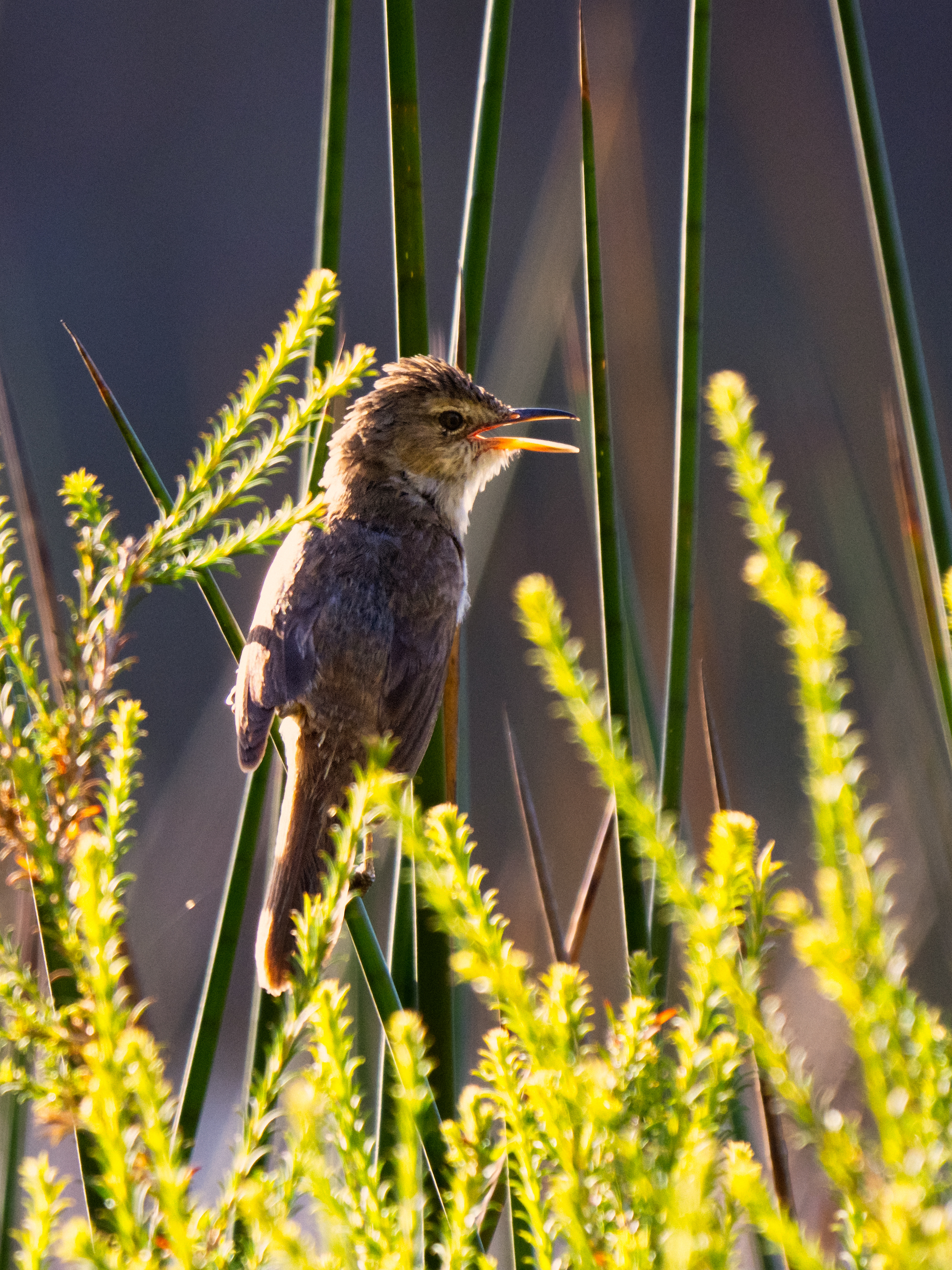
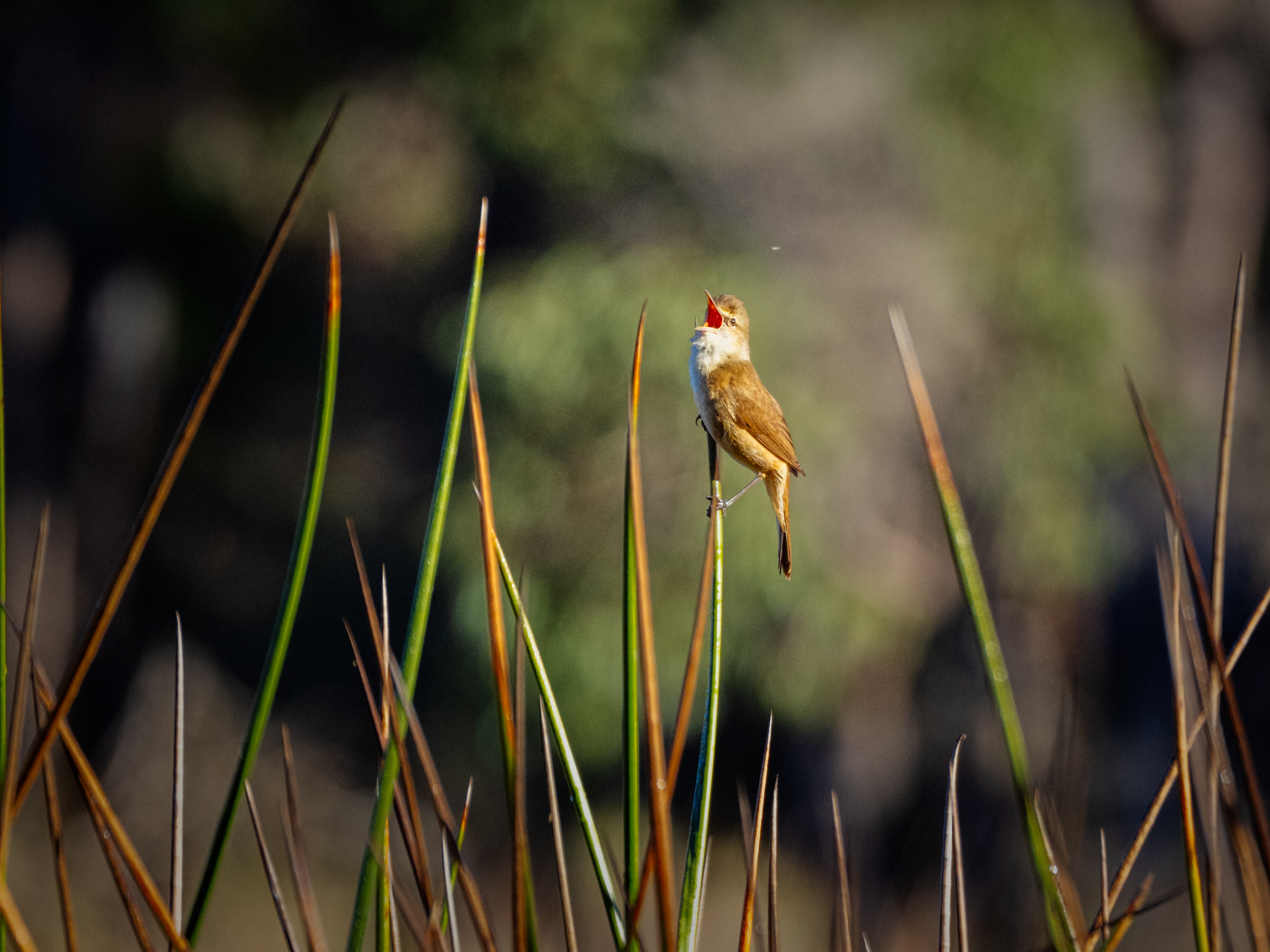
Koordji-koordji or Australian Reed Warbler (Acrocephalus australis subspecies gouldi). Lake Leschenaultia, Western Australia.
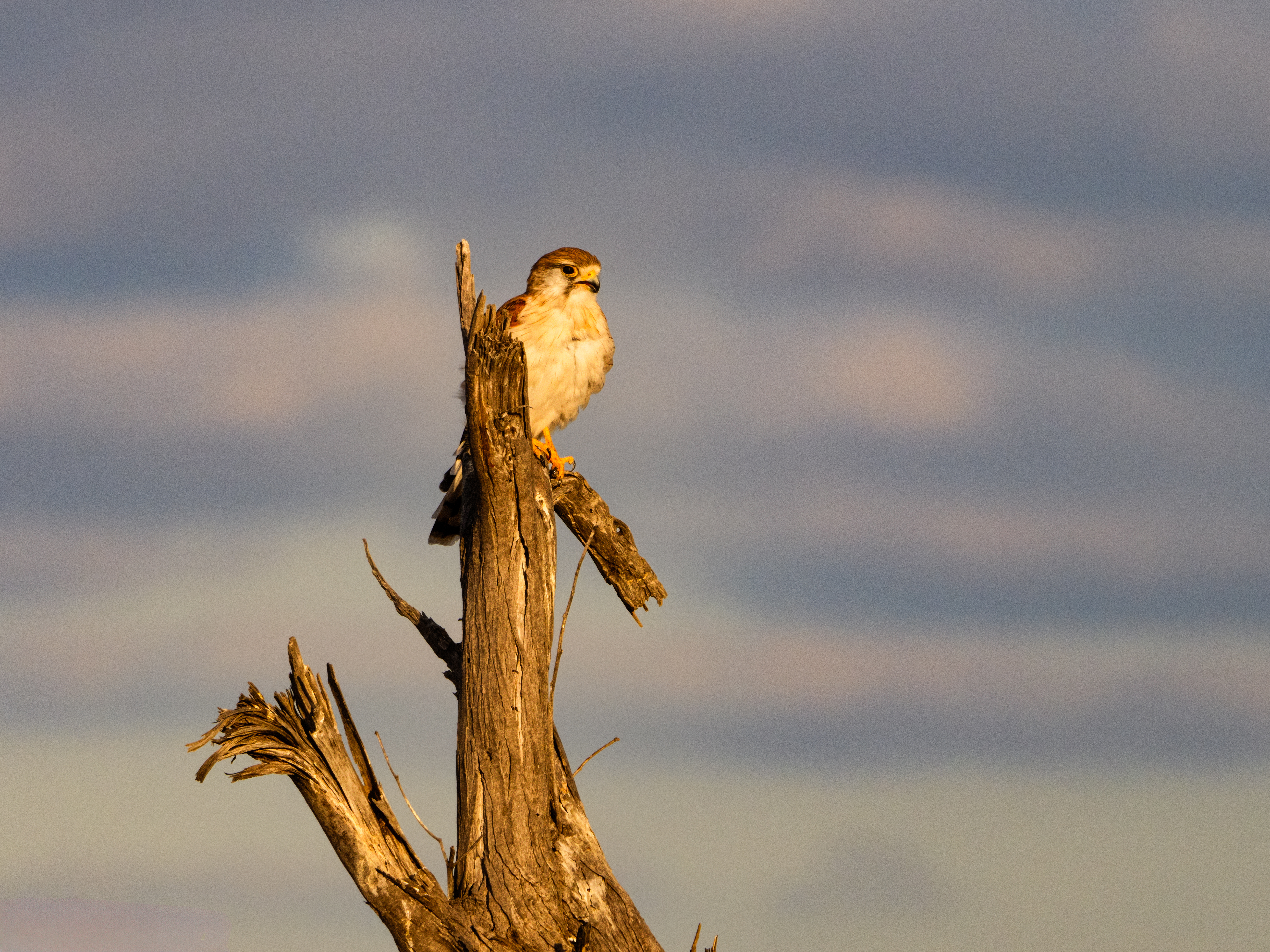
Mardiyet or Nankeen Kestrel (Falco cenchroides). Woodman Point, Western Australia.
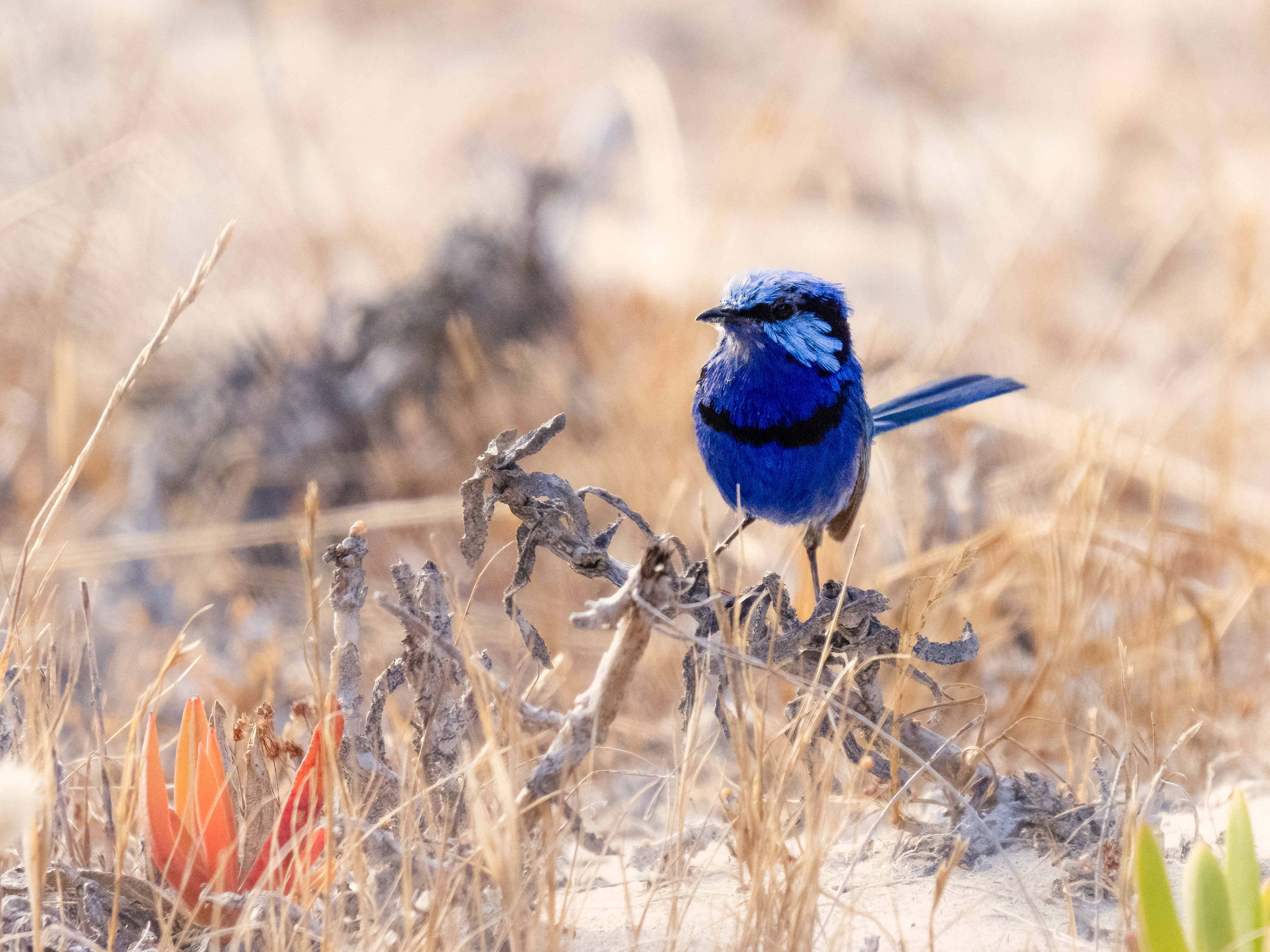
Djer-djer or Splendid Fairy-wren (Malarus splendens subs splendens). Woodman Point, Western Australia.
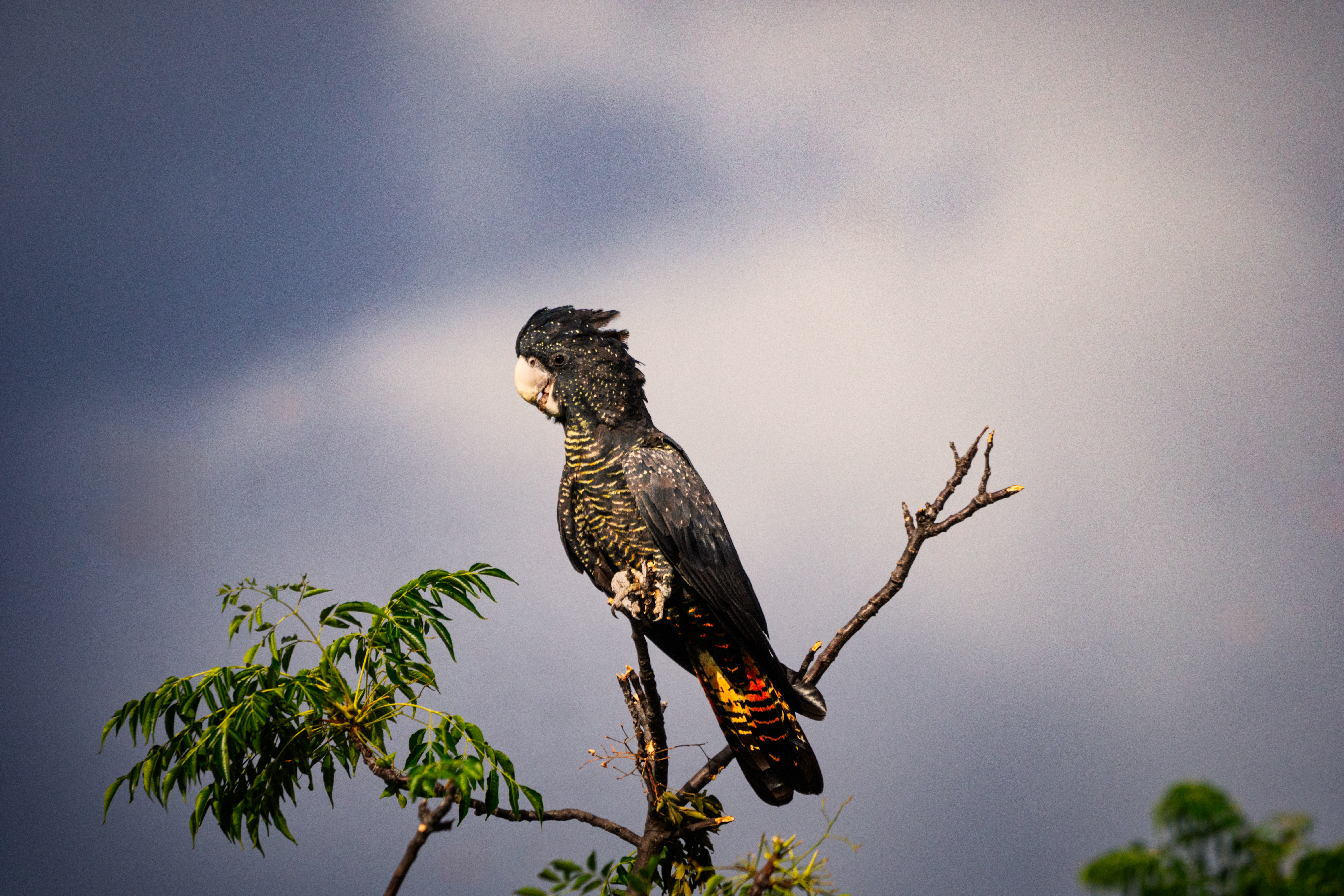
Karak or Red-tailed Black Cockatoo (Calyptorhynchus banksii subs samueli) feeding on Cape Lilac AKA White Cedar (Melia azedarch). York, Western Australia.
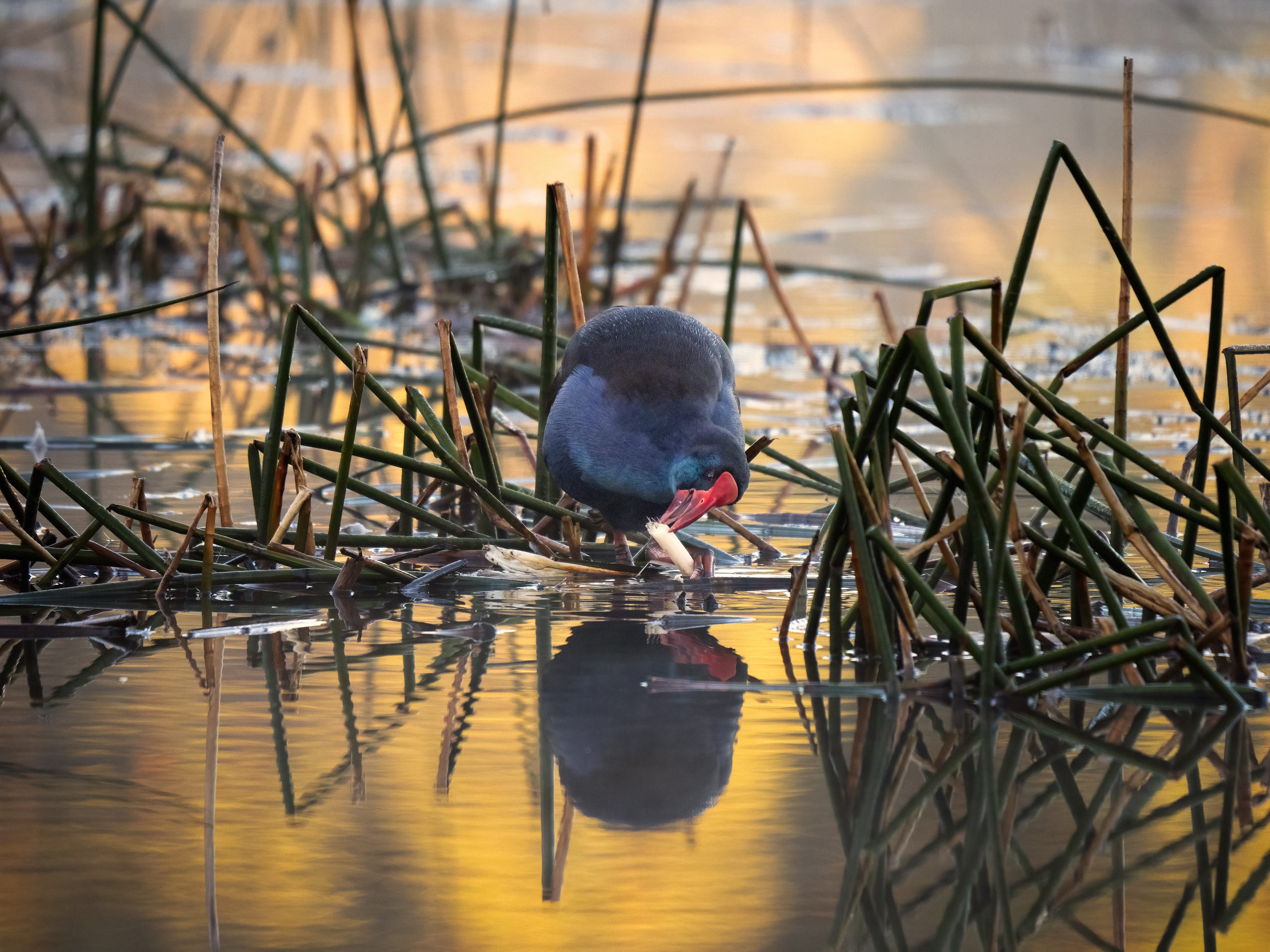
Kwirlam or Purple Swamp Hen (Porphyrio porphyrio). Lake Leschenaultia, Western Australia.
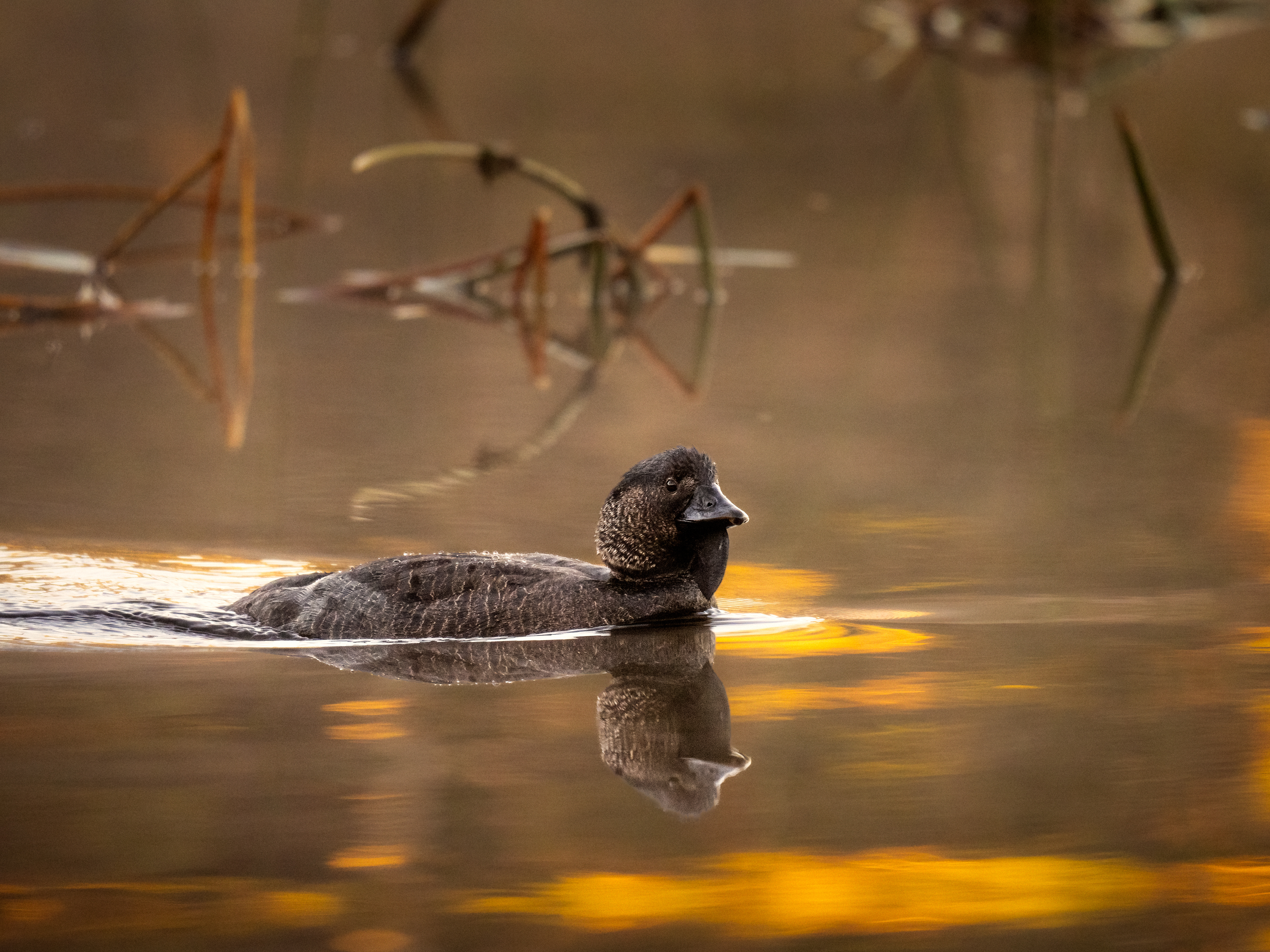
Kadar, Musk Duck (Biziura lobata). Lake Leschenaultia, Western Australia.
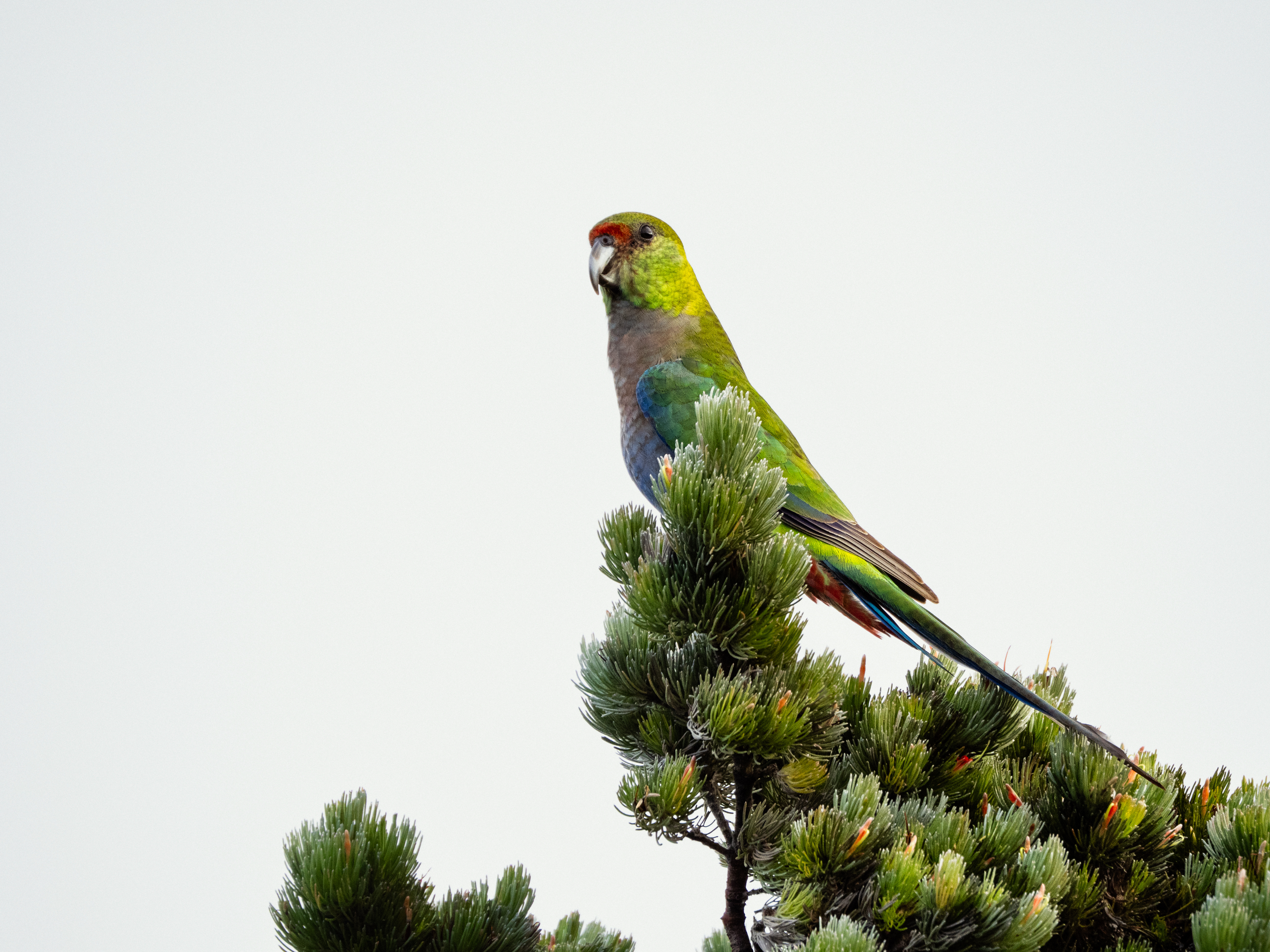
Juvenile Delyip or Red-capped Parrot (Platycercus spurius). Albany Windfarm.
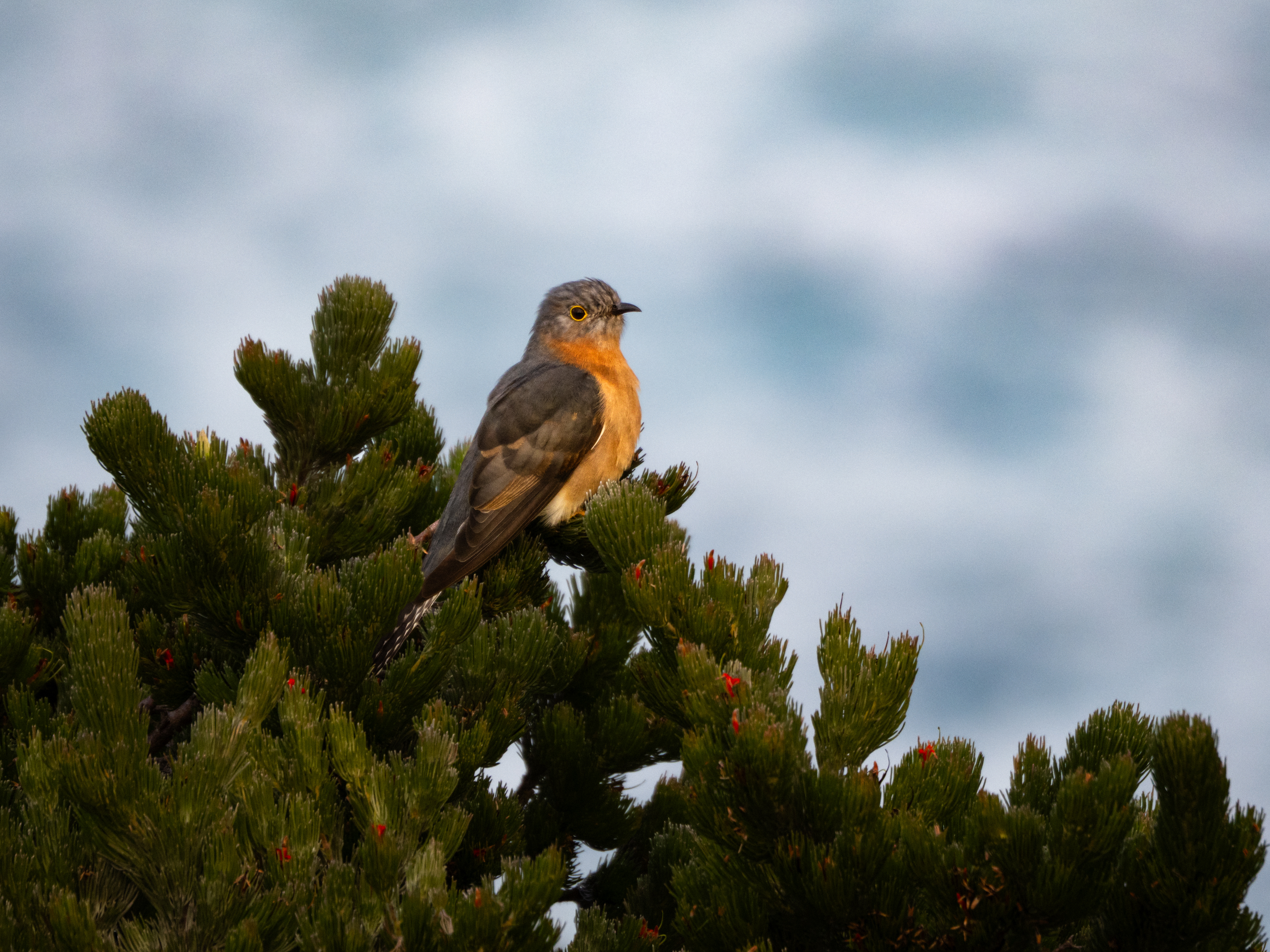
Djoolar or Fan-tailed Cuckoo (Cacomantis flabelliformis). Albany Windfarm.
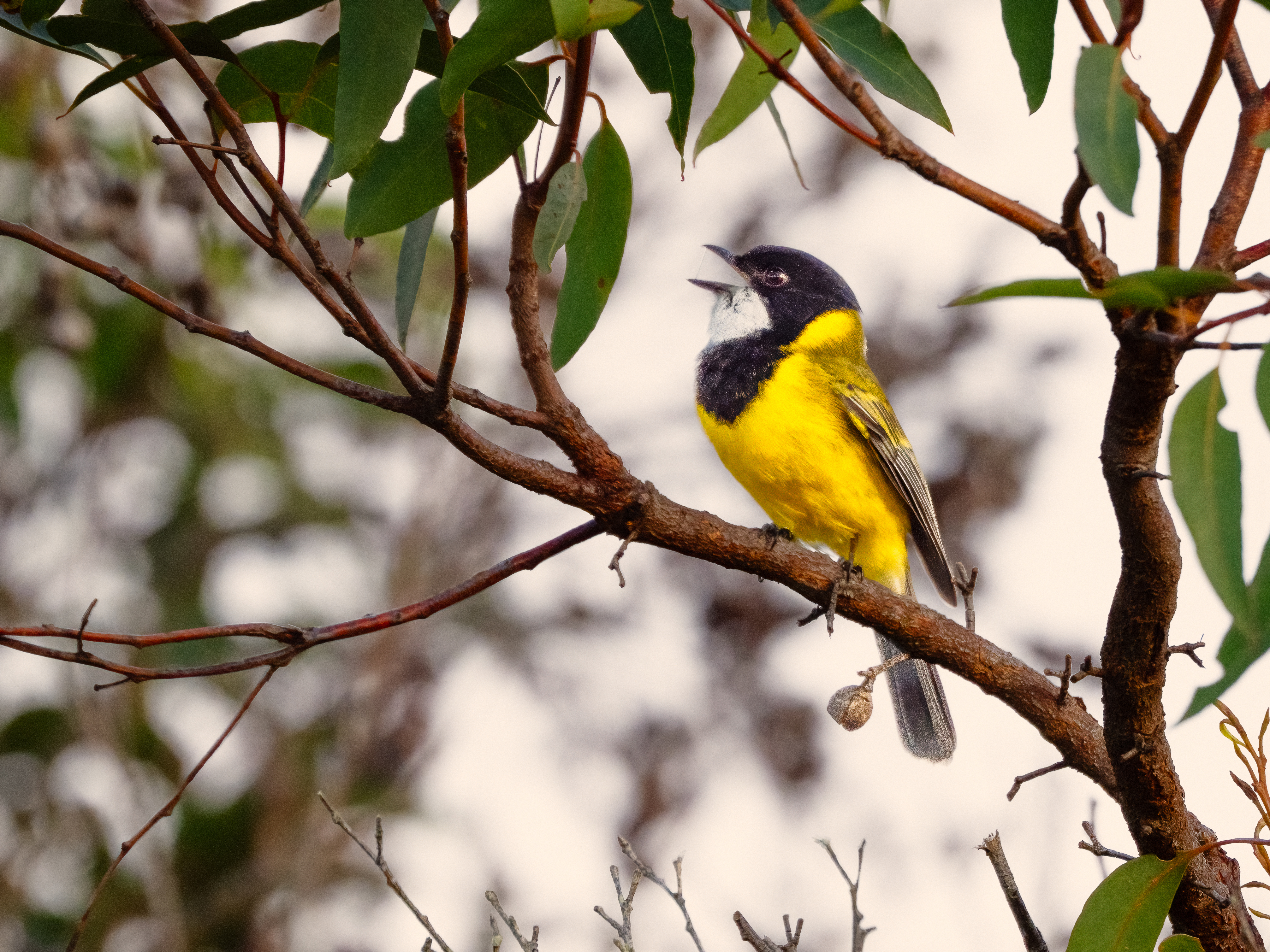
Bidilmidang or Golden Whistler (Pachycephala pectoralis). Torbay.
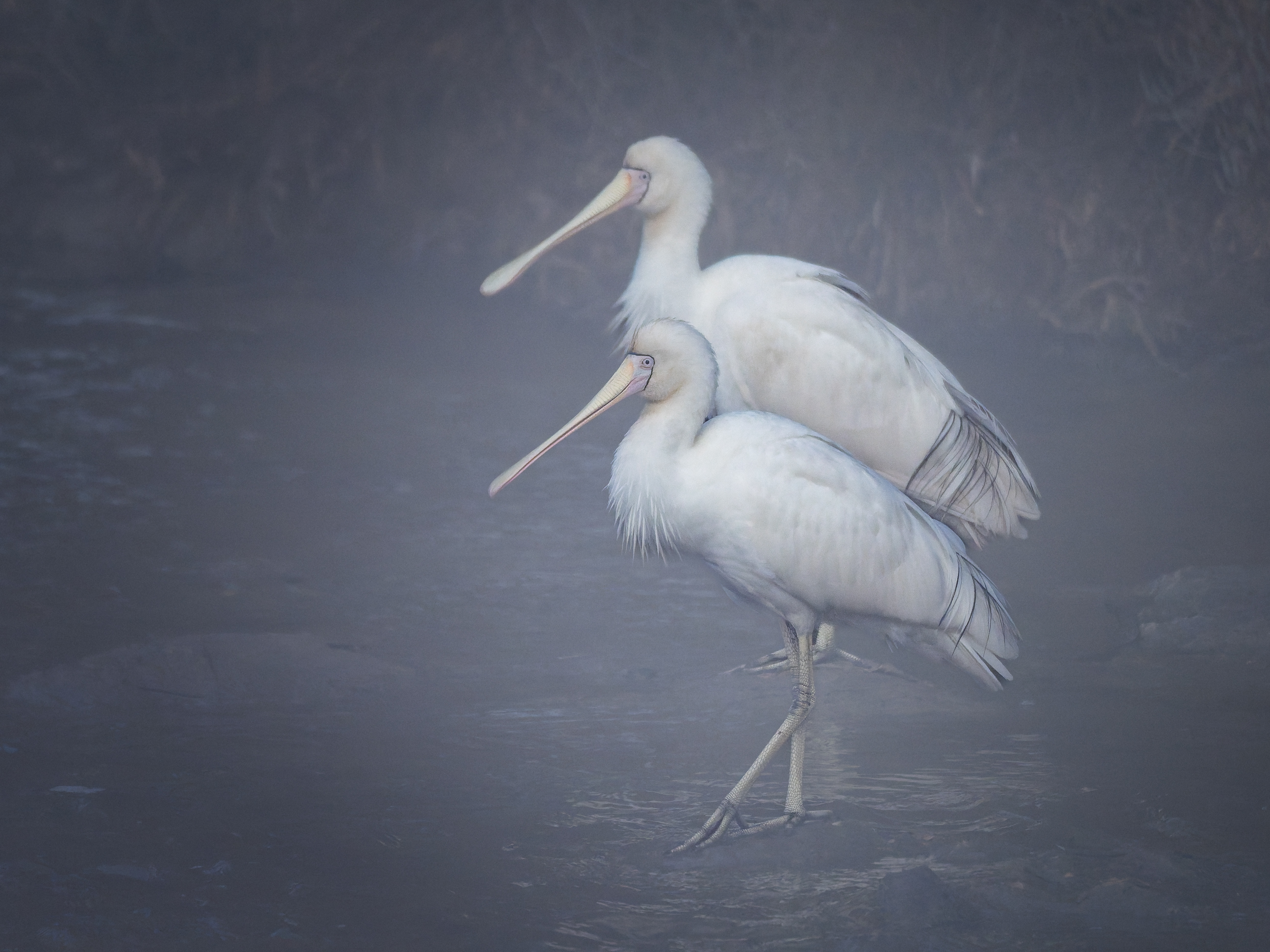
Kaaka-baaka or Yellow-billed Spoonbill (Platalea flavipes).
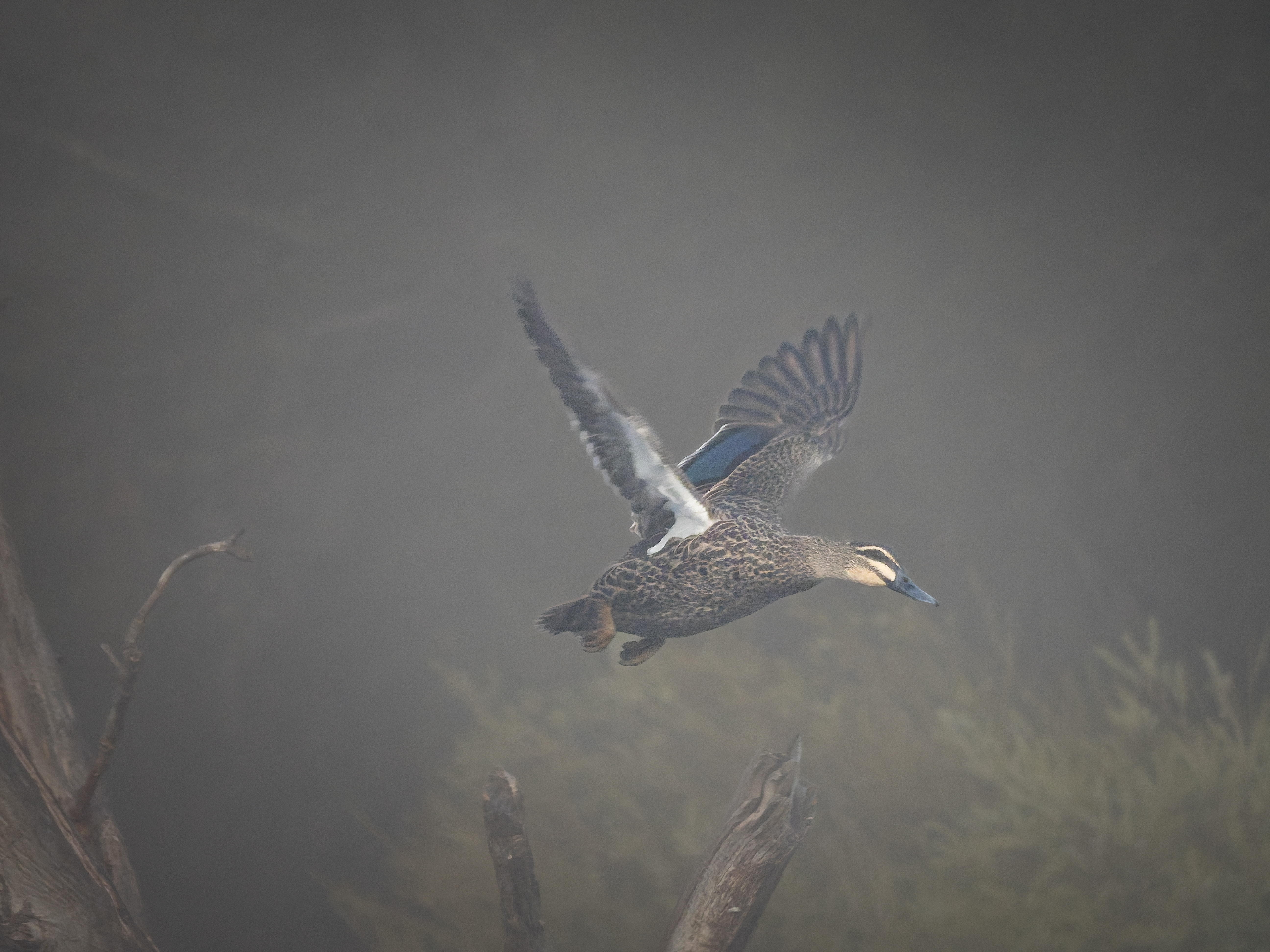
Ngowonan or Pacific Black Duck (Anas superciliosa).
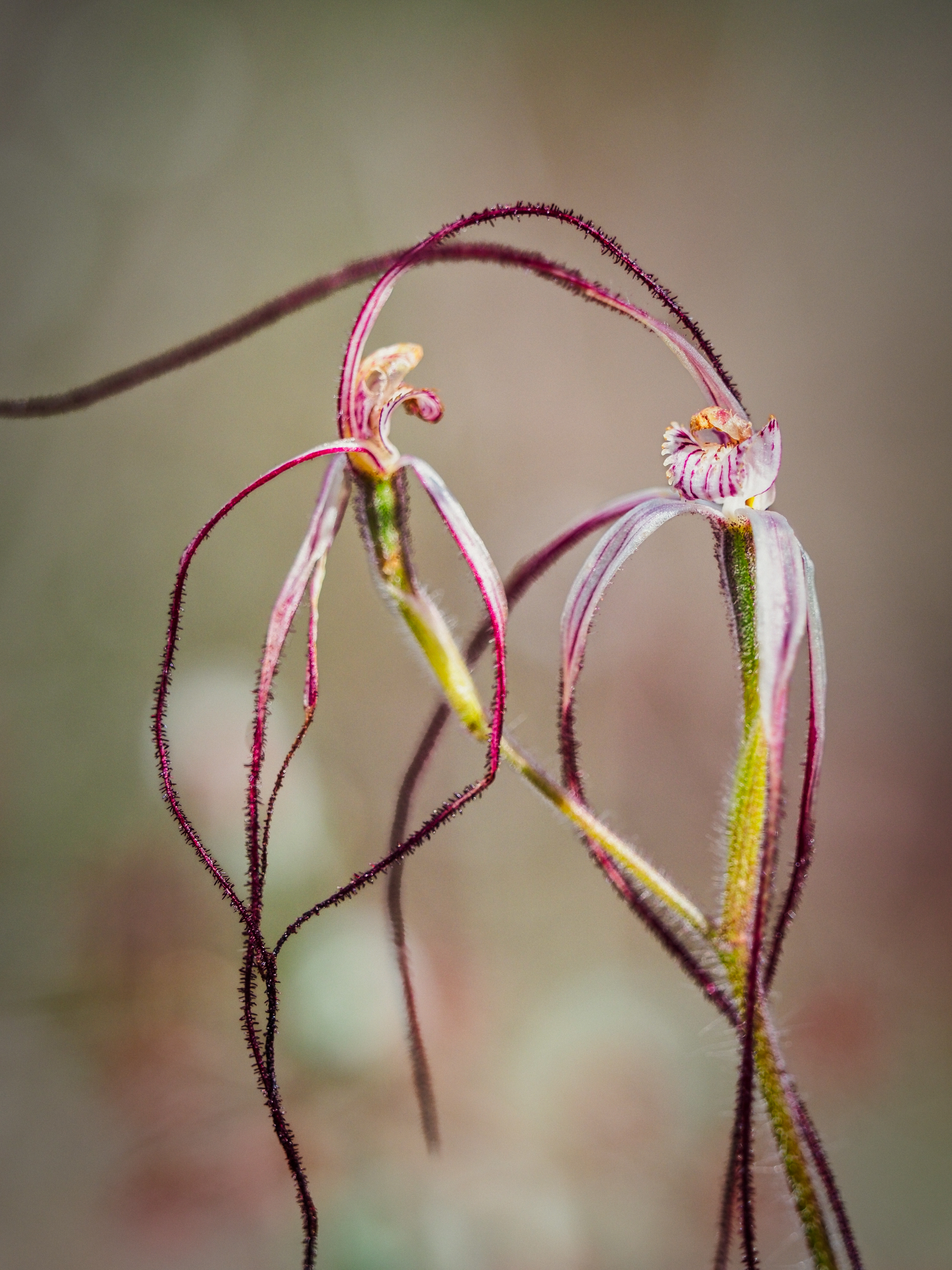
Talbot’s Spider Orchid, Caladenia pendens subsp talbotii. Kweda, Western Australia.
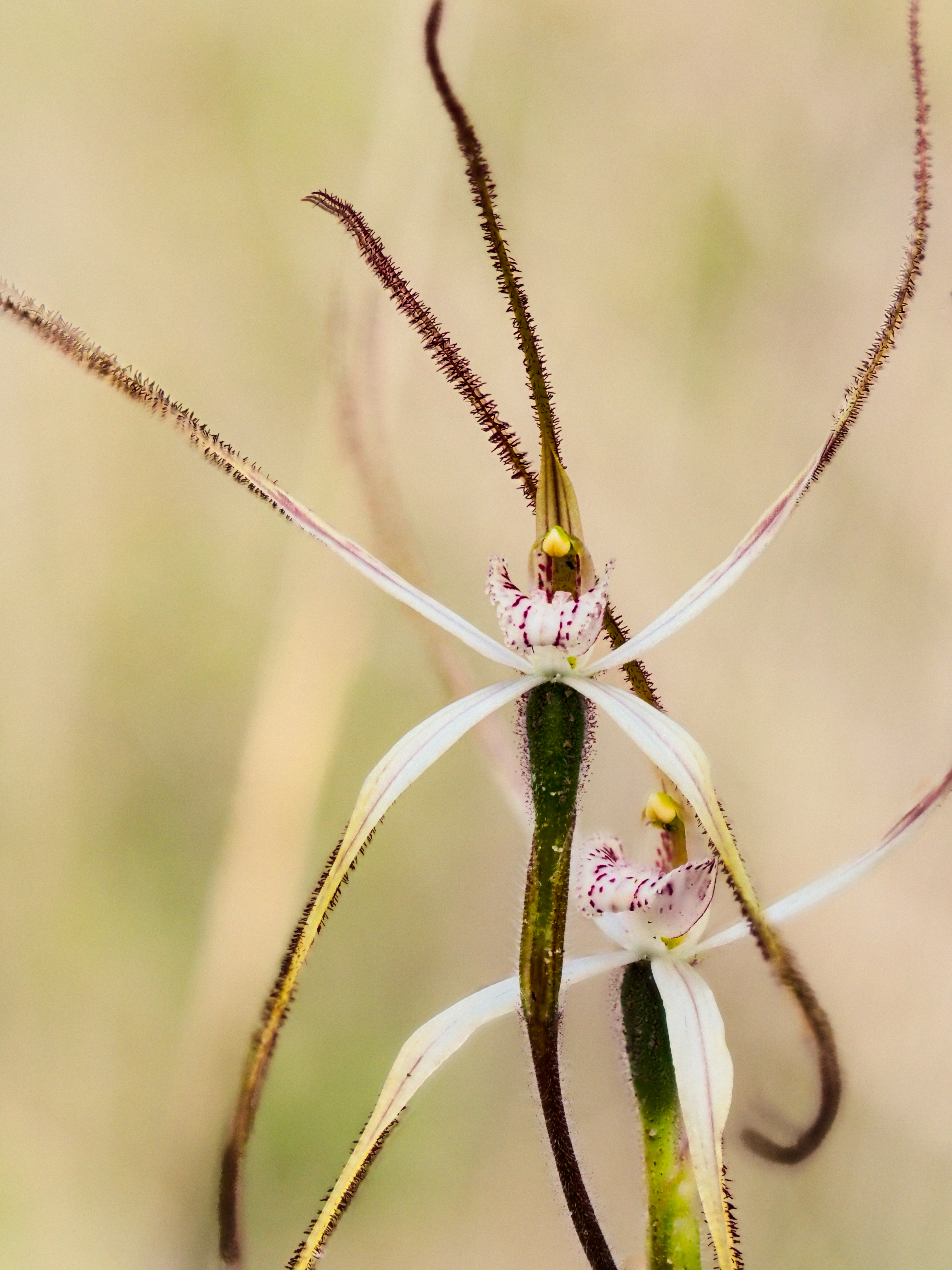
Early Wheatbelt Spider Orchid, Caladenia sp. ‘early wheatbelt’. Kweda, Western Australia.
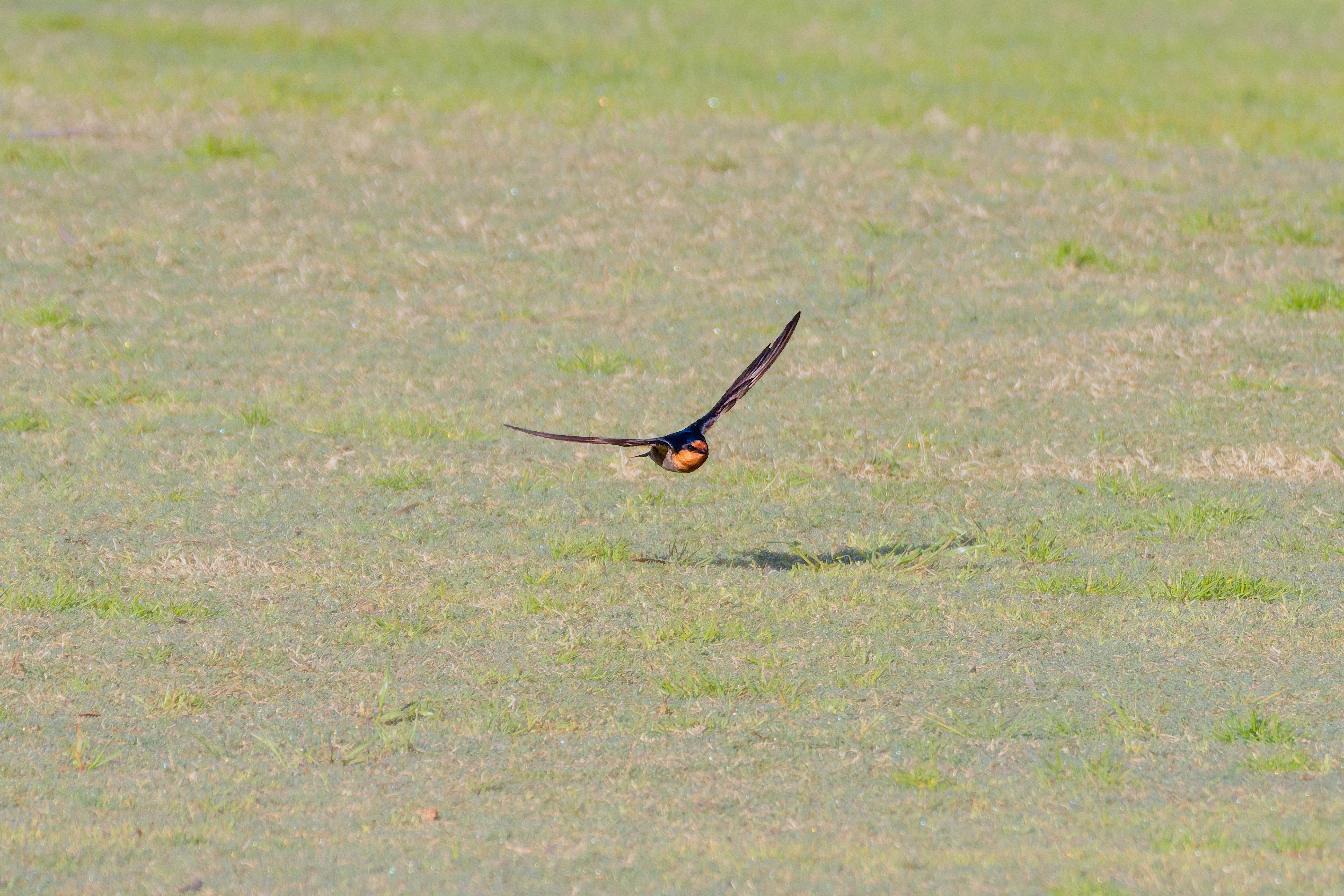
Kanamit or Welcome Swallow (Hirundo neoxxena). York, Western Australia.
Koordji-koordji or Australian Reed Warbler (Acrocephalus australis subspecies gouldi). Lake Leschenaultia, Western Australia.
Juvenile Djindjokoor or Brown Honeyeater (Lichmera indistincta). York, Western Australia.
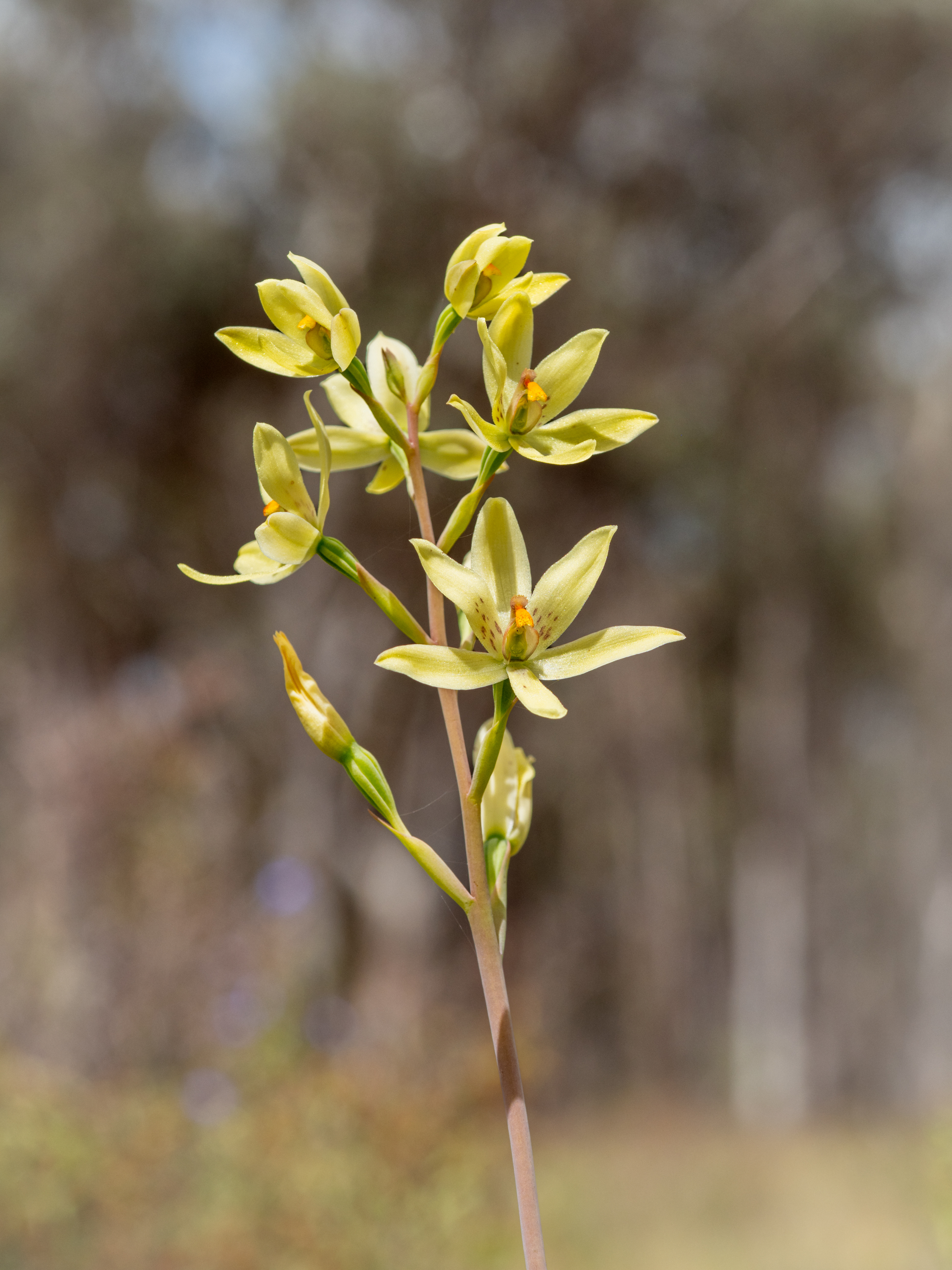
Custard Orchid, Thelymitra villosa. Wandoo National Park, Western Australia.
Kanyinak or Azure Kingfisher (Todiramphus sanctus). Northam, Western Australia.
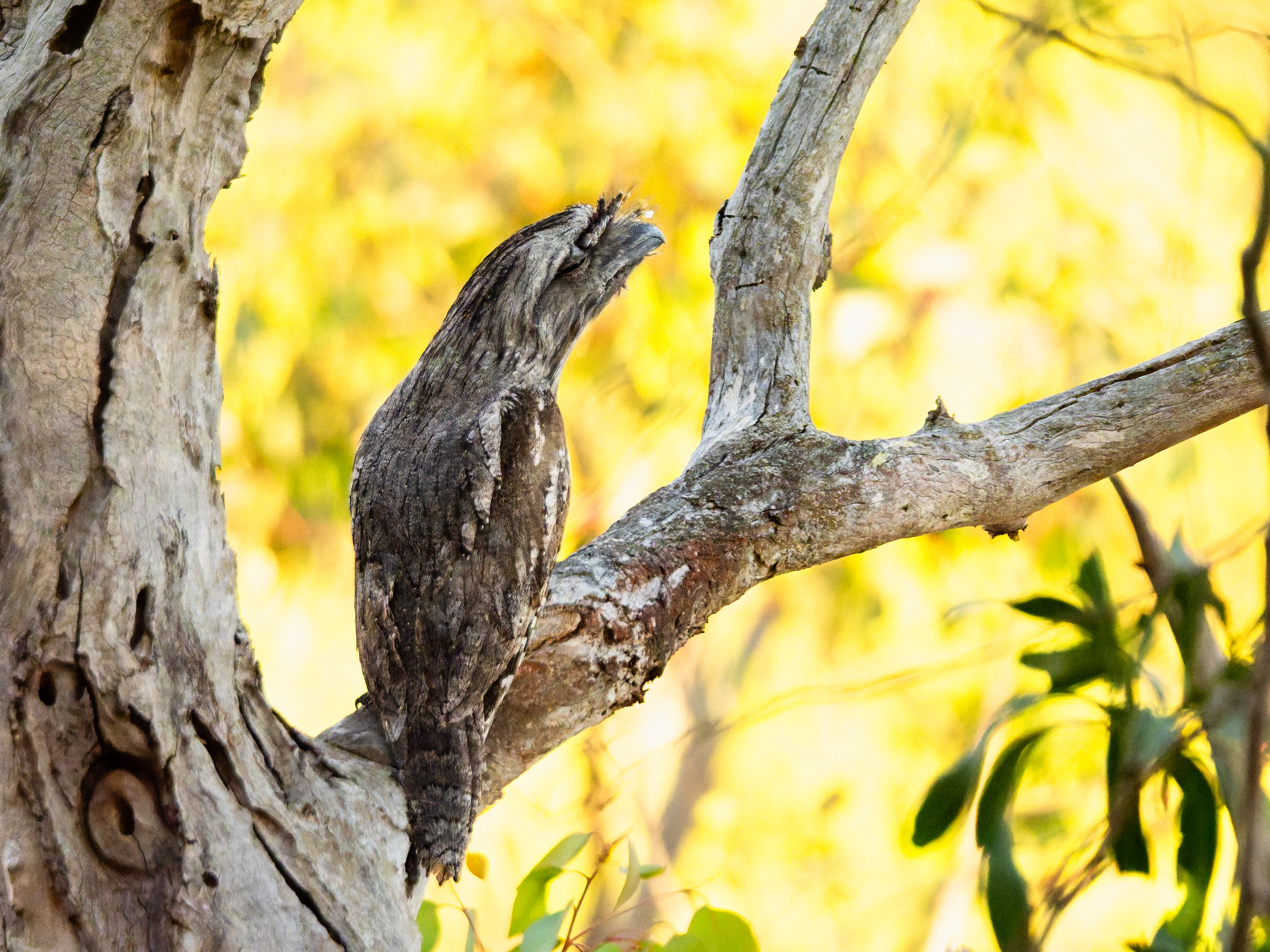
Djoowi or Tawny Frogmouth (Podargus strigoides). Narrogin Railway Dam, Western Australia.
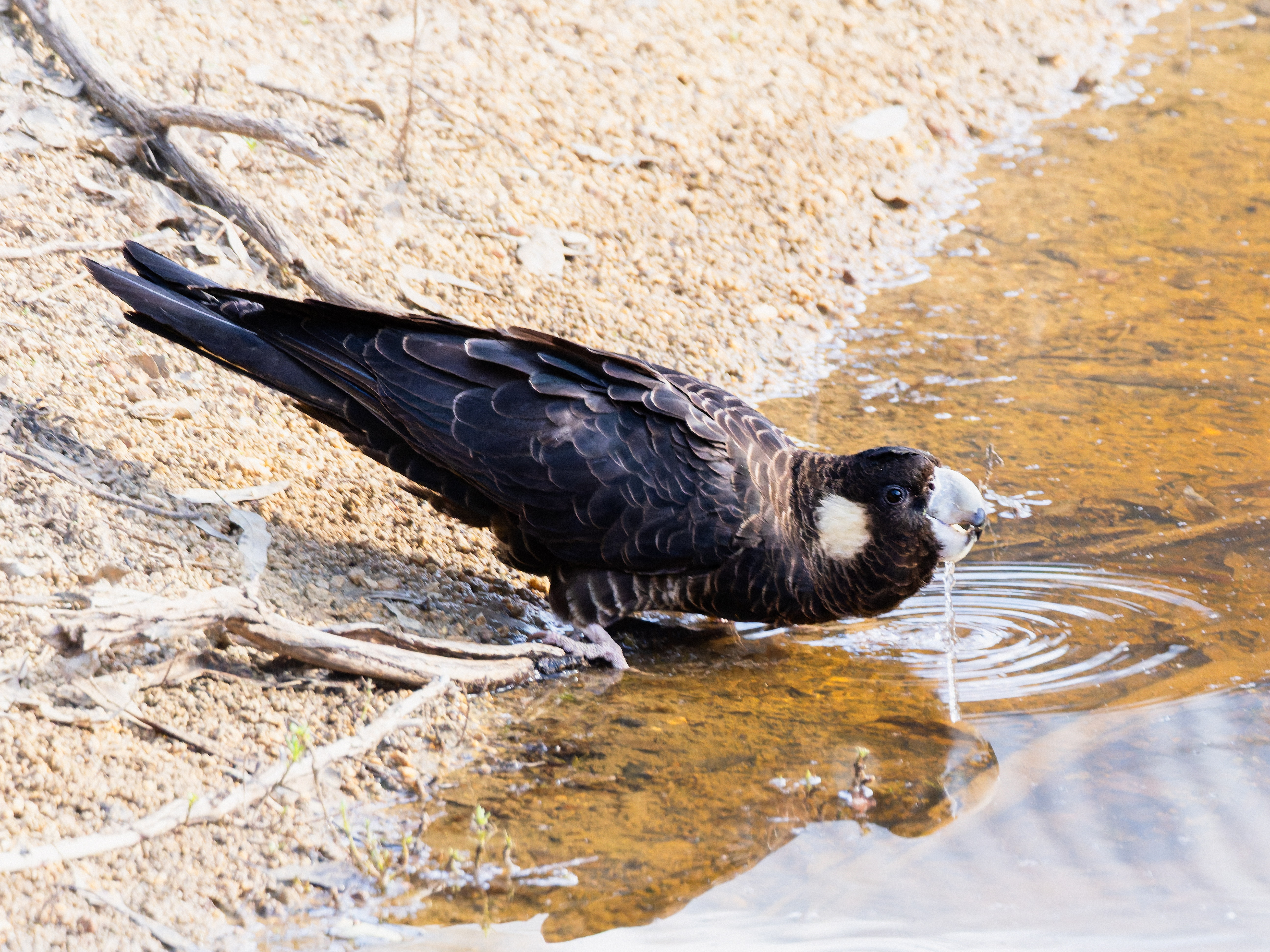
Ngoolyak or Carnaby’s Black-cockatoo (Calyptorhynchus latirostris). Old Mill Dam, Dryandra.
Camera nerdy bit. The most used camera was the Olympus EM1x. Only two of the photos were taken with a sensor bigger than Micro Four Thirds.
I hope all of you had a good 2025 and that 2026 brings happiness and health to you all. Happy New Year.







You must be logged in to post a comment.