Whether The Weather

Whether the weather be fine

Or whether the weather be not,

Whether the weather be cold

Or whether the weather be hot,

We’ll weather the weather

Whatever the weather,

Whether we like it or not.

Anonymous


Winter
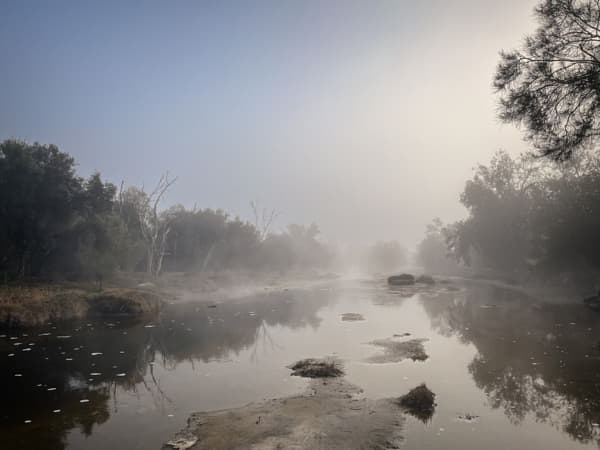
The morning mist on the Avon River. Western Australia. Panasonic G9 with Panasonic Leica 12-60mm f2.8-4 lens.


I like the pass of the seasons. I like how everything changes and provides different experiences. I like going out down the Avon River on a cold winters morning with thick mist. The experience is very different – vision is limited to around 5-10m and sounds are strangely muted. When looking for wildlife you think that nothing is near and then suddenly it looms out of mist. Sometimes I wonder who is more surprised at the encounter, me or the animal.


Family Outing by Paul Amyes on 500px.com
A femaleAustralian Wood Duck (Chenonetta jubata) and her twenty one ducklings swiming in the Avon River. Two weeks later I saw her and had just five remaining ducklings. Panasonic Lumix G9 mk ii with Panasonic Leica 100-400mm f4.5-6.3 lens.


Kakak by Paul Amyes on 500px.com
Kakak or Little Pied Cormorant (Phalacrocorax melanoleucos). Panasonic Lumix G9 mk ii with PanaLeica 100-400mm lens.


Bambon by Paul Amyes on 500px.com
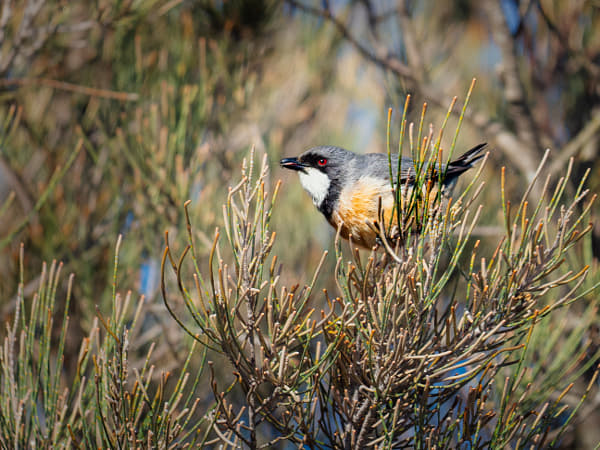
A male Bambon or Rufous Whistler (Pachycephala rufiventris). Panasonic Lumix G9 mk ii with PanaLeica 100-400mm lens.


Bambon by Paul Amyes on 500px.com
A female Bambon or Rufous Whistler (Pachycephala rufiventris). Panasonic Lumix G9 mk ii with PanaLeica 100-400mm lens.


Doornart by Paul Amyes on 500px.com
The sun making an effort to break through the mist creates a warm haze. Doornart or Ring-necked Parrot (Barnardius zonarius subspecies semitorquatus). Panasonic Lumix G9 mk ii with PanaLeica 100-400mm lens.


Doolor by Paul Amyes on 500px.com
Doolor or Silvereye (Zosterops lateralis) waiting for the sun to break through. Panasonic Lumix G9 mk ii with PanaLeica 100-400mm lens.


Living in a farming community the topic of conversation often turns to the weather. Right now people are talking about how little rain there has been, how cold it is, how they’re looking forward to summer, and how they’re worried about the forthcoming mother of all El Niño’s is coming with forecast temperatures for the Wheatbelt being in the mid to high 40sºC. The local farmers I’ve spoken with are all saying that crop yields will be severely impacted. Generally El Niños don’t effect us in Western Australia like they do in the Eastern States so hopefully this summer won’t too much of a feat of endurance.

One Of Those Days

The other day was was one of those days. Not the sort where everything goes mammaries up and you wish you hadn’t got out of bed. No it was one of those days when everything goes stupendously well – like unbelievably well. The other day was just one of those.


Bulland by Paul Amyes on 500px.com
Bulland or Little Egret (Egretta garzetta subsp. nigripes)


Bulland by Paul Amyes on 500px.com
Bulland or Little Egret (Egretta garzetta subsp. nigripes) are quite rare up in the Avon Valley although they are common elsewhere.


I was walking along the River Avon in Northam and it was proving to be a fruitful morning. Black-fronted Dotterels, Black-winged Stilts, Dusky Moorhens, and even a rare (well rare in these parts) Little Egret. After a couple of hours of sheer bliss I decided to call it a day and walk back to the car. As I was walking I thought to myself “You know what would cap off a perfect day? A Sacred Kingfisher.” And lo and behold within seconds of thinking that thought one appeared on a branch right in front of me. The best part was it could clearly see me and didn’t give a stuff. I was in raptures! It was hunting for large insects in the grass and every few minutes it would swoop down catch one and return to the branch and eat it. This kept going on for twenty minutes or so. In the end I called it quits after taking hundreds of photos and it stayed there. A brilliant finale to a brilliant day.


Nidoolyorong by Paul Amyes on 500px.com
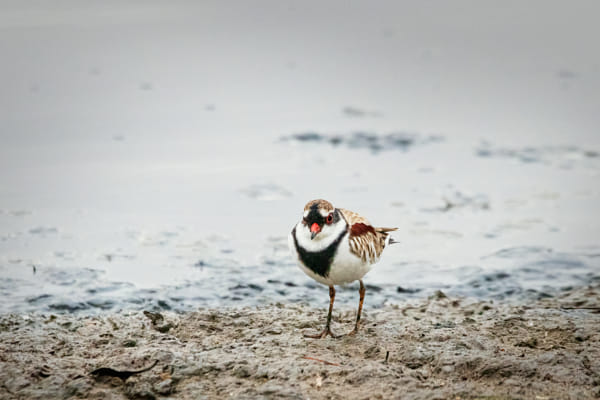
A gratuitous shot of a Nidoolyorong or Black-fronted Dotterel (Elseyornis melanops).


Djandjarak by Paul Amyes on 500px.com
This Djandjarak or Black-winged Stilt (Himantopus himantopus) was too busy looking for food to bother about me.


Kanyinak by Paul Amyes on 500px.com
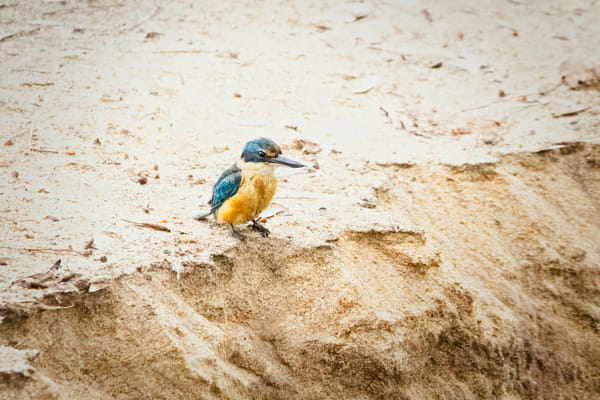
The icing on the proverbial cake. Kanyinak or Sacred Kingfisher (Todiramphus sanctus). Isn’t he magnificent?


Kanyinak by Paul Amyes on 500px.com
Having a bug for breakfast.


Kanyinak by Paul Amyes on 500px.com
Having a laugh.

The last few of weeks I’ve been observing some very interesting bird behaviour (well interesting to me) and I’ve found trying to record it just using photographs wasn’t capturing what was happening. So I’ve decided to shoot more video footage. Up until now I’ve found doing both photography and video very difficult. That’s because I was taught in order to shoot video well you had to have your camera on a tripod, limit your shutter speed to twice that of the frames per second which means faffing around with neutral density filters, use manual focus, take an accurate colour temperature reading and set the camera accordingly, and record good sound. All that takes the spontaneity out of it. If an animal pops up suddenly I like to be able to react in an instant and with stills photography you do that. Video requires (or so I thought) so much preparation that the animal has been and gone. So I came to the conclusion that I only do this for my entertainment so it doesn’t matter if I break “the rules”. So I set my camera up to shoot in programme mode, set auto white balance, auto ISO, I use the camera’s built in microphone for sound, and auto focus. I’m not carrying a tripod so I’m shooting handheld. If I see something interesting I snap off a few photos and then press the video record button. This approach has added a new dimension to my photography and I’ve been very happy with the results so far. Below are a few clips from my brilliant day in Northam. 


Has anyone else added video to their photography?

A Clear And Crisp Morning

At last a morning with no rain or mist. It was definitely on the chilly side, but the most important thing was the sun was out. What a difference the sun makes. Everything looked new and clean.

The morning saw us walking along the river bank in the Wheatbelt Metropolis of Northam. There was definitely a hint of spring being around the corner. Lots of birds gathering material for nests. Birds calling out to each other and pairing up. So much activity. It was just wonderful to see.


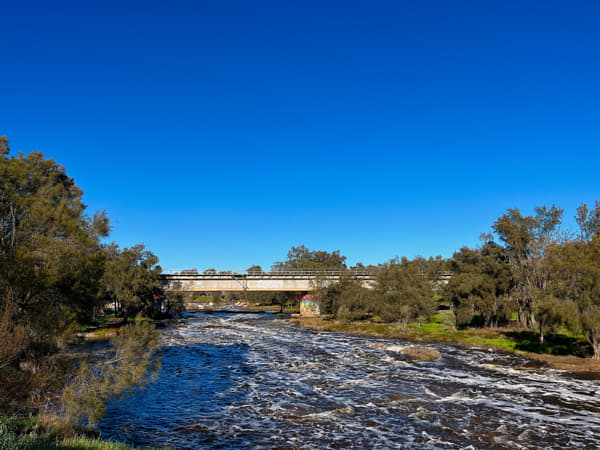
20250807-Northam-0228-Edit by Paul Amyes on 500px.com
The rail bridge over the Avon River in Northam. The water levels bode well for the forth coming Avon Descent White Water Race.


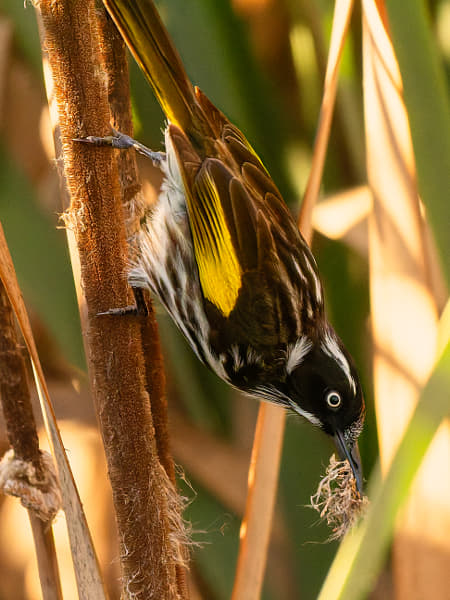
Bandiny by Paul Amyes on 500px.com
Bandiny or New Holland Honeyeater (Phylidonyris novaehollandiae) collecting nesting material from the reeds. Northam, Western Australia.


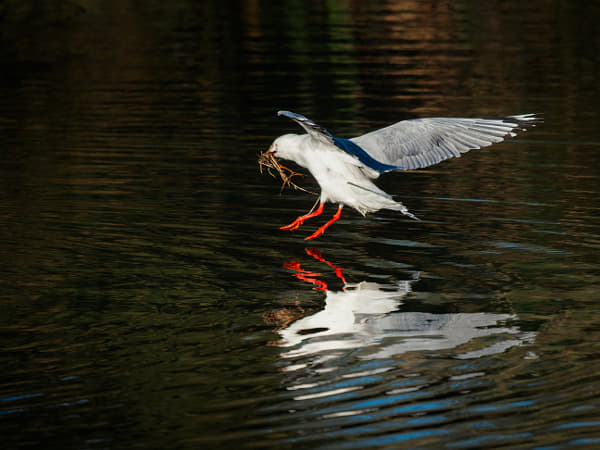
Djeringkara by Paul Amyes on 500px.com
This Djeringkara or Silver Gull (Larus novaehollanddiae) was also collecting nesting material. Northam, Western Australia.


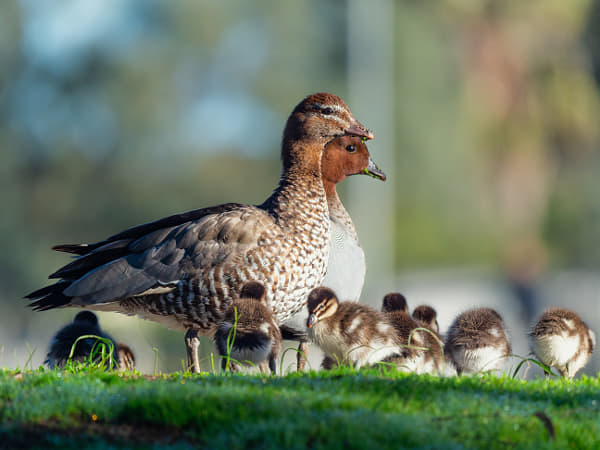
The Proud Parents by Paul Amyes on 500px.com
Forget building nests. This pair of Marangana or Australian Wood Ducks (Chenonetta jubata) were walking around with their newly hatched clutch of 10 ducklings


Bambon by Paul Amyes on 500px.com
Just past the weir the trees were full of Bambon or Rufous Whistlers (Pachycephala rufiventris) noisily calling out to each other trying to attract a mate. Northam, Western Australia.


All Fogged Up

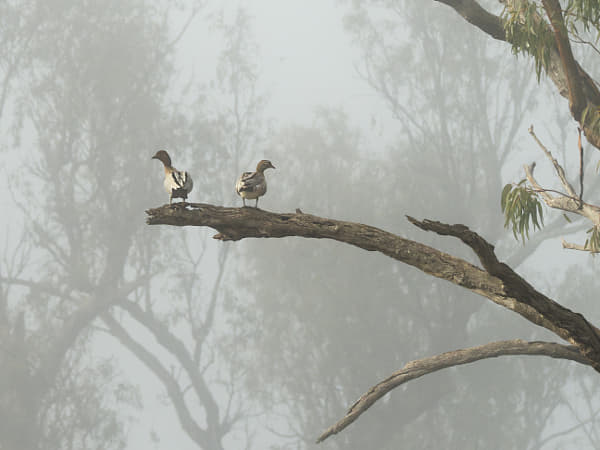
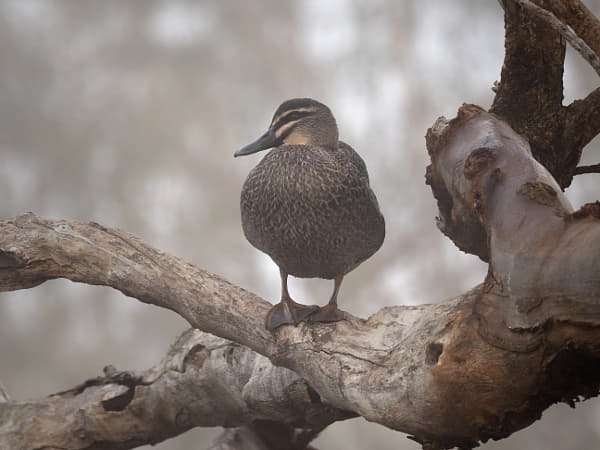
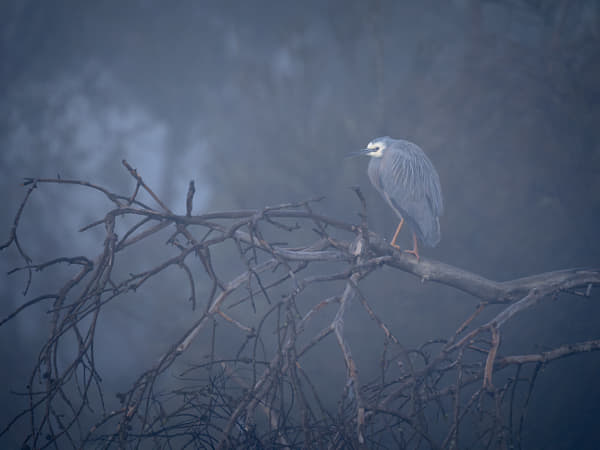
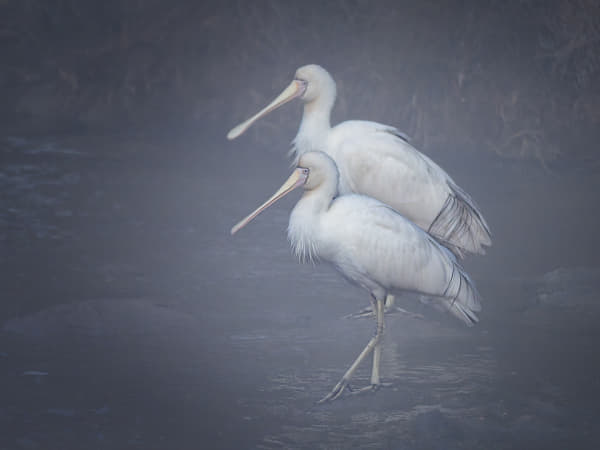
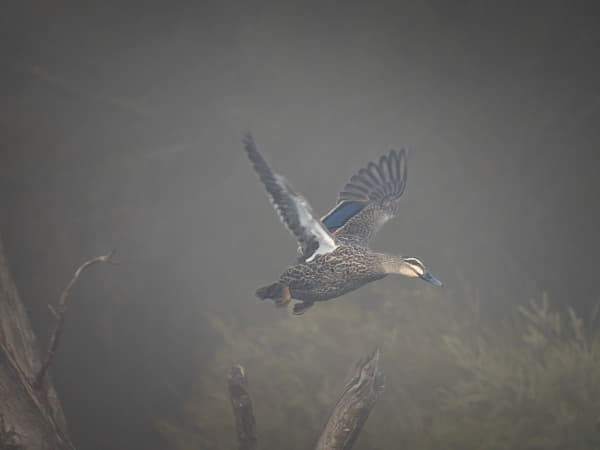
We’ve had a lot of cold, dank, foggy mornings along the Avon River lately. It must be cold as most of the duck population has taken to perching in trees while waiting for the day to warm up.


Morning Mist by Paul Amyes on 500px.com
The weak winter sun tries to burn off the thick winter mist in the Avon Valley.


Dew On A Web by Paul Amyes on 500px.com
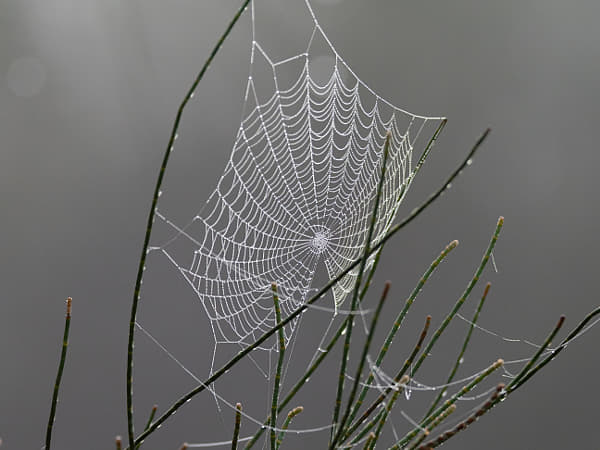
The mornings dew on a spider’s web. Avon Walk Trail, Western Australia.


Marangana by Paul Amyes on 500px.com
Marangana or Australian Wood Duck (Chenonetta jubata).


Ngowonan by Paul Amyes on 500px.com
Ngowonan or Pacific Black Duck (Anas superciliosa).


Wayan by Paul Amyes on 500px.com
Wayan or White Faced Heron (Ardea novaehollandiae) hunkered down against the cold.


Kaaka-baaka by Paul Amyes on 500px.com
This pair of Kaaka-baaka or Yellow-billed Spoonbills (Platalea flavipes) braved the cold and were wading in the river looking for food.


Ngowonan by Paul Amyes on 500px.com
“Time I was off”. Ngowonan or Pacific Black Duck (Anas superciliosa).


Overall I was actually quite impressed that my Olympus EM1x could find focus in these dark low contrast situations.

Reciprocity

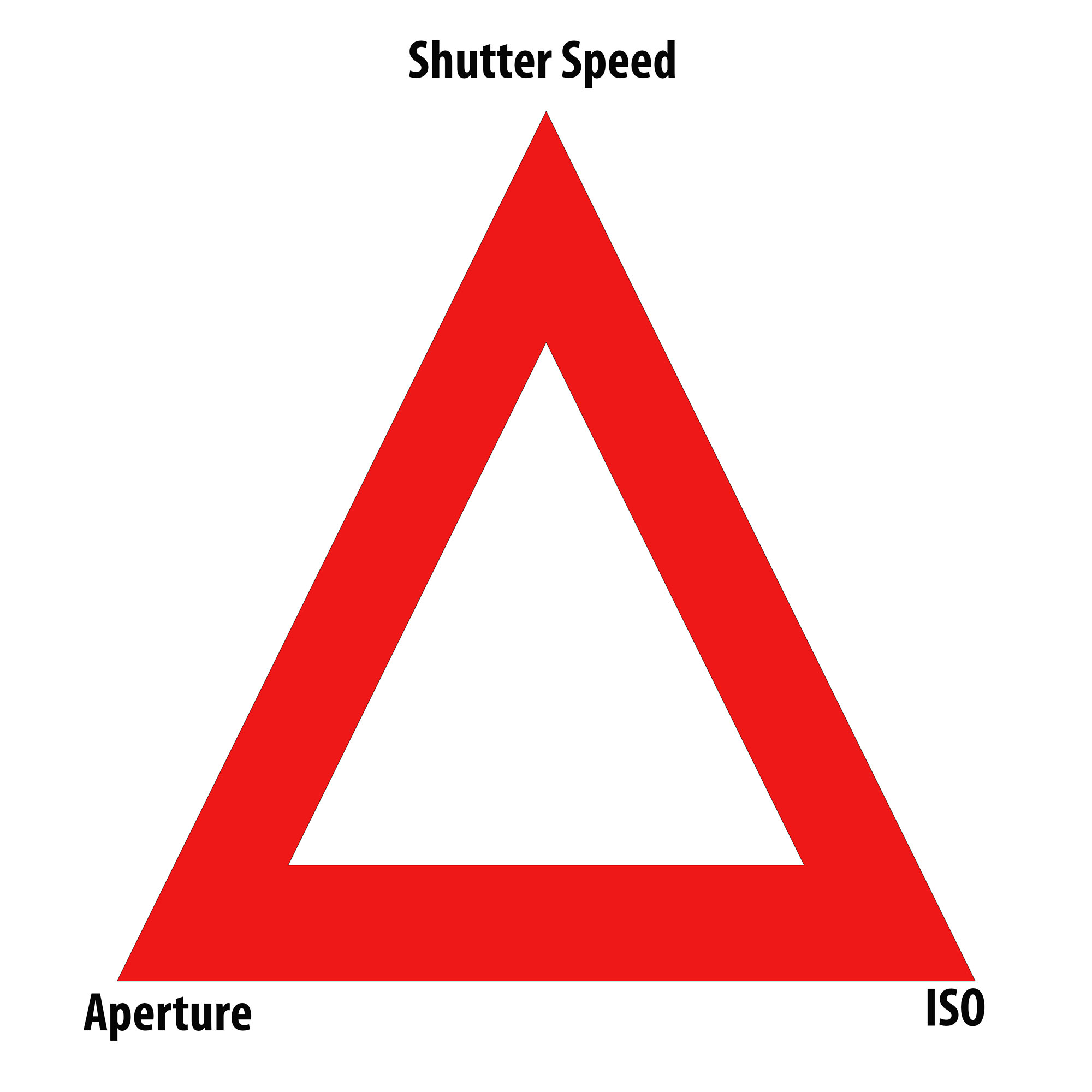
The Exposure Triange. All values have a reciprocal relationship.


Reciprocity in photography is where if you make one change to the exposure triangle – shutter speed, ISO, aperture – then you have to change one of the others by a corresponding amount to compensate for it. So if I have an exposure value of 1/125 sec, f4, ISO 400 and I want a shutter speed of 1/1000 then I’d either have to open the aperture to f1 or increase the ISO to 6400 or a combination of the two. The problem with wildlife photography is that it is often done in low light and has a need to use fast shutter speeds as the critters won’t sit still for very long. It is surprising to see how much a bird moves while sitting on a stick. This was my problem the other day when I returned to Northam to have another go at getting a photos of an Australian Spotted Crake (Porzana fluminea) . 


Common Sandpiper by Paul Amyes on 500px.com
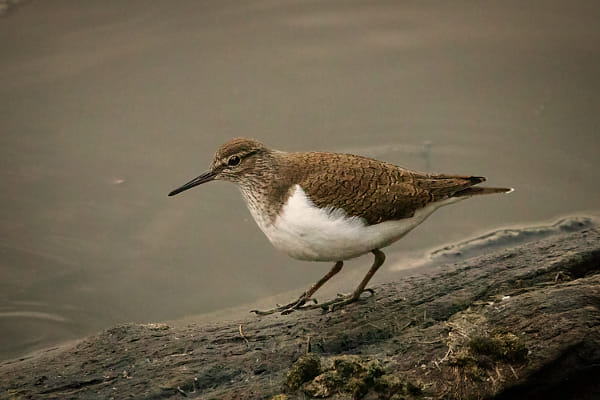
Common Sandpiper, Actitis hypoleucos. Northam, Western Australia. Exposure: 1/200 sec, f6.3 ISO 10000. Topaz DeNoise AI saved the day!


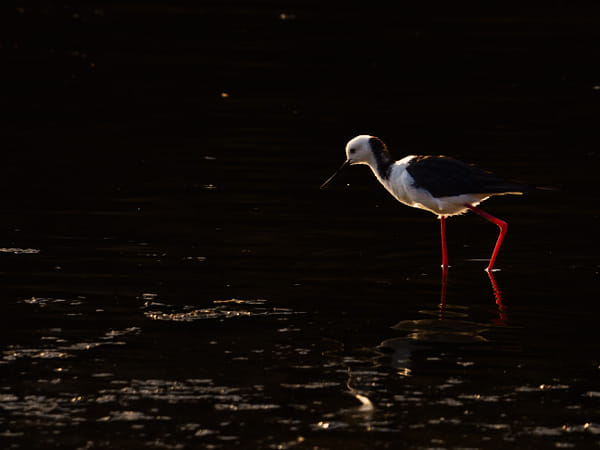
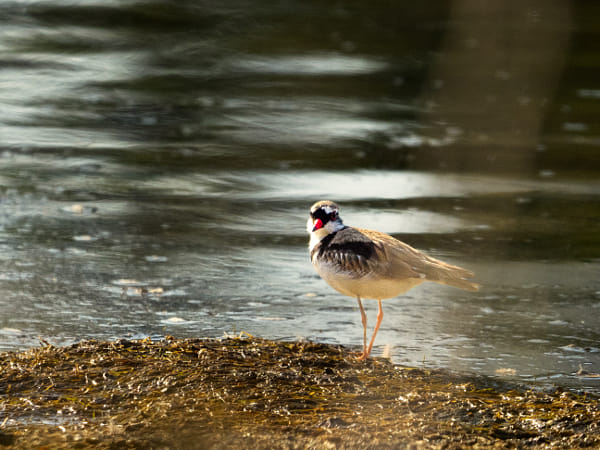
As regular readers may remember in a previous post I said that I didn’t have a long enough lens for my usual Micro Four Thirds camera – the Olympus EM1x. My lens is a 100-400mm which gives me a reach of 800mm in 35mmm full frame terms. The lens won’t take a teleconverter and even if it did that would entail a further loss of light and image quality. So after some thought I decided to use my Canon 80d and Sigma 150-600mm lens which would give a reach equivalent to 960mm. Not a lot more but sometimes you’ve got to take all you can get. So with that we headed off to Northam and I sat on the river bank waiting for that elusive little spotty bird to make an appearance. My big problem was light – well to be more precise the lack of it. I warmed up with shots of a Common Sandpiper with an exposure value of 1/200, f6.3, ISO 10,000. I was lucky as the Sandpiper was content to sit still. When I did finally get a glimpse of the Australian Spotted Crake it was in deep shade so I had to drop the shutter speed to 1/60. I couldn’t open the lens up any more as I was wide open and I couldn’t use a higher ISO as I’d reached the limit. I shot several bursts in the hope I’d get at least one sharp image. A quick look at the rear LCD panel gave me a bit of hope for a result. By now the bird had taken itself back into the undergrowth not to emerge again. After waiting for a while we continued walking down the river to see if anything else was about.
 

Wayan by Paul Amyes on 500px.com
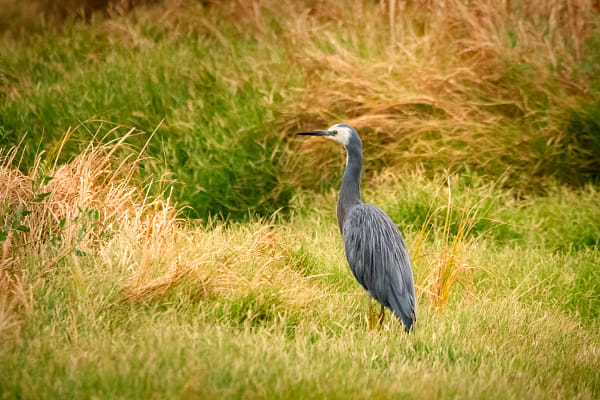
Wayan or White-faced Heron (Ardea novaehollandiae). Northam, Western Australia. Even in the open 1/250 sec, f6.3, ISO 5000.


Djandjarak by Paul Amyes on 500px.com
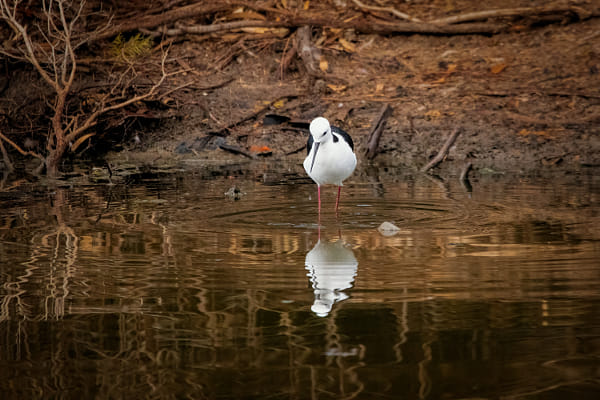
Djandjarak or Black-winged Stilt (Himantopus himantopus). Northam, Western Australia. Exposure: 1/160 sec, f6.3, ISO 3200.


Nidoolyorong by Paul Amyes on 500px.com
Nidoolyorong or Black-fronted Dotterel (Elseyornis melanops). Northam, Western Australia. Now we’re talking, light levels are starting to improve. Exposure: 1/500 sec, f7.1, ISO 2000.


Bambon by Paul Amyes on 500px.com
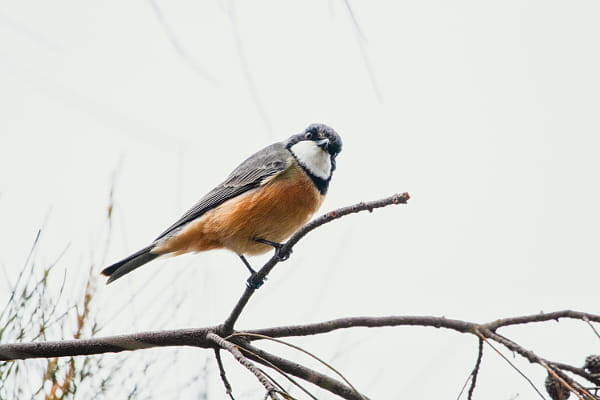
Bambon or Rufous Whistler (Pachycephala rufiventris). Northam, Western Australia. Exposure: 1/500 sec, f6.3, ISO 200.


Ngalkaning by Paul Amyes on 500px.com
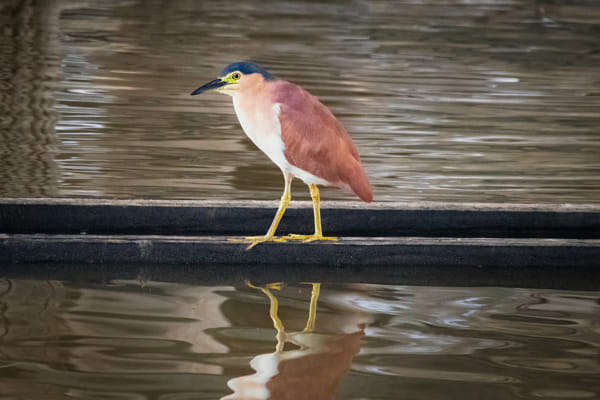
Ngalkaning or Nankeen Night Heron AKA Rufous Night Heron (Nycticorax caledonicus subsp mannillenis). Northam, Western Australia. A bit on the dark side under the bridge so 1/250, f6.3, ISO 8000.


Getting home and looking at the photos none of the images of the Spotted Crake were sharp, there was motion blur and grain the size of golfballs. I tried every trick I know to try and rescue the images. But, as my dad used to say “No matter how hard you polish a turd it will always be a turd”. That flipping bird has become my nemesis. On the positive side I did get the nicest images of a Sacred Kingfisher that I’ve ever taken.


 Kanyinak by Paul Amyes on 500px.com
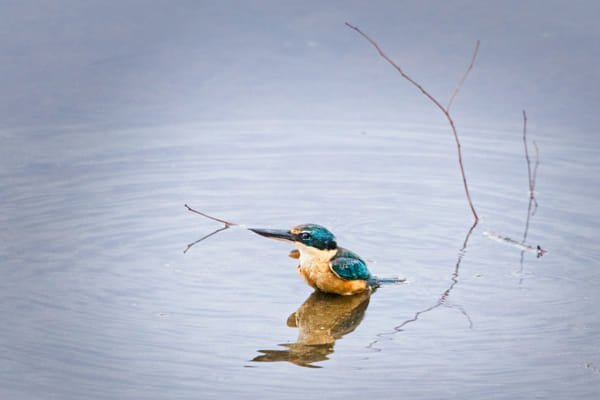
Kanyinak or Sacred Kingfisher (Todiramphus sanctus). Northam, Western Australia. Exposure: 1/1000 sec, f6.3, ISO 1250.


 Kanyinak by Paul Amyes on 500px.com
Exposure: 1/1000 sec, f6.3, ISO 3200.


Bilya (Noongar – River) Walk Track

The Bilya (Noongar – River) Walk Track was created by the Toodyay Friends of the River and follows the Avon River for 6.5Km on its western bank. For me one of the highlights of the walk is walk from from Millard’s Pool (which is the largest pool on the river and was the site of Toodyay’s first swimming pool) to John Masters Bird Hide by Red Banks Pool a Nyoongar heritage site. If the wildlife and the wonderful walk aren’t enough of a draw card then know this – no visit to Toodyay is complete without a stop off at the amazing Toodyay Bakery. 


Kakara by Paul Amyes on 500px.com

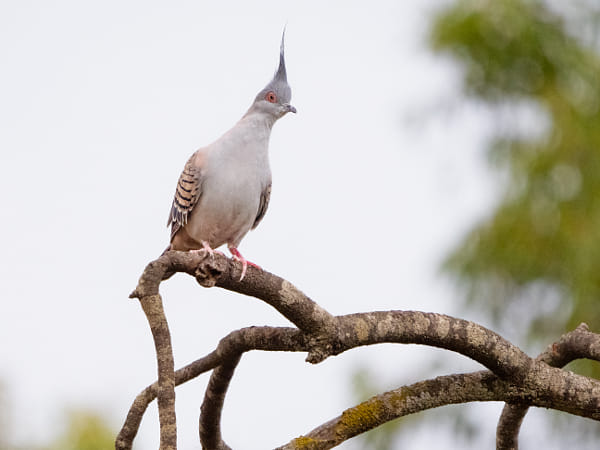
Kakara or Crested Pigeon (Ocyphaps lophotes). Bilya Walk Track, Toodyay, Western Australia.


Wayooda by Paul Amyes on 500px.com
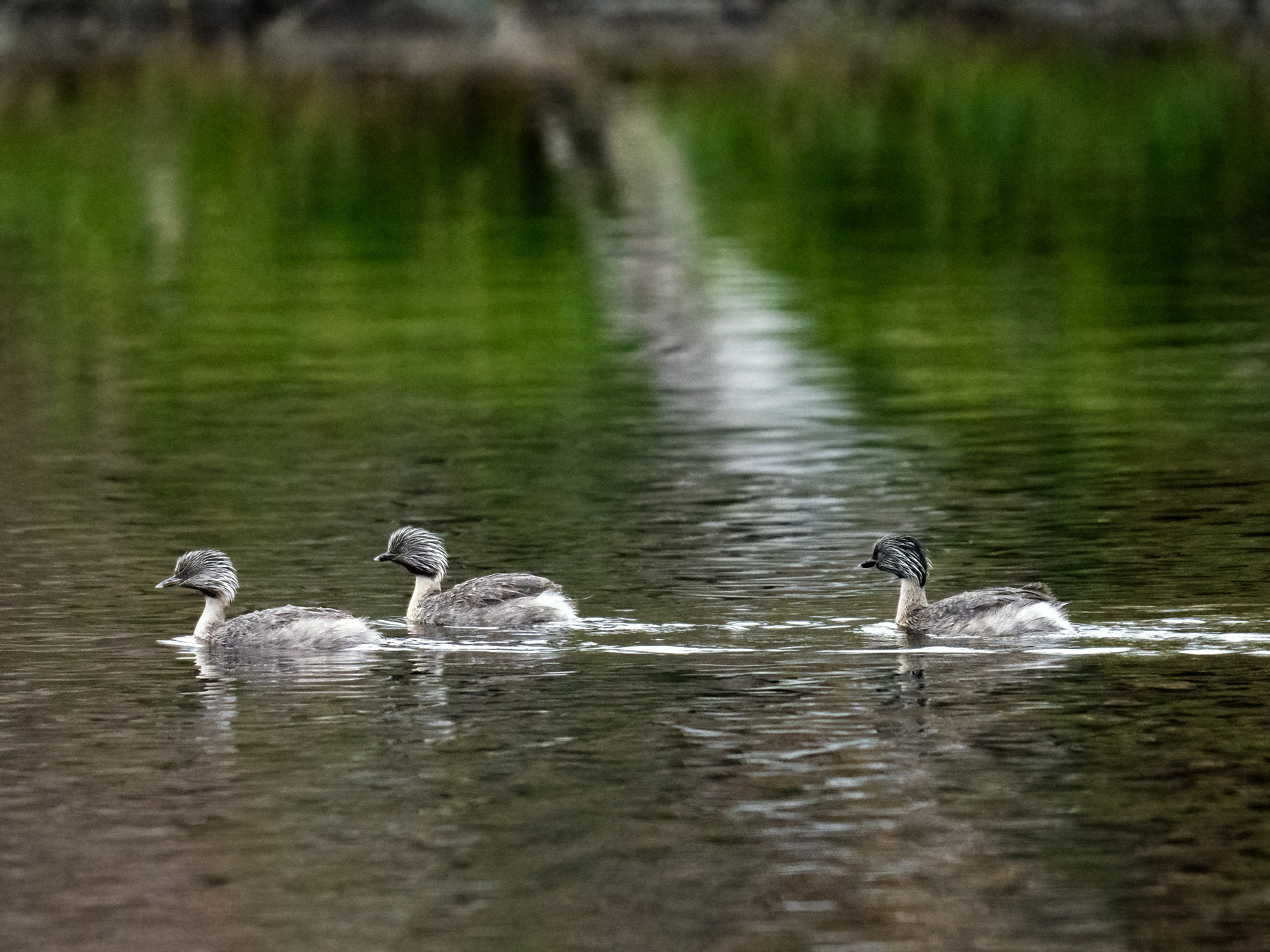
Wayooda or Hoary-headed Grebe (Podiceps poliacephalus). Bilya Walk Track, Toodyay, Western Australia.


Kakak and Ngalkaning by Paul Amyes on 500px.com
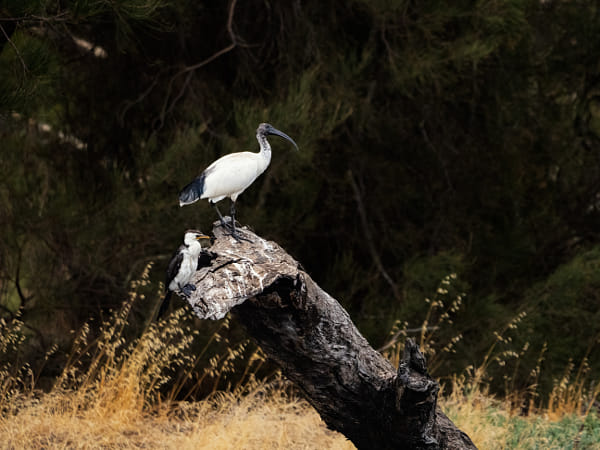
Kakak or Little Pied Cormorant (Phalacrocorax melanoleucos) and Ngalkaning or Australian White Ibis (Threskioris molucca) Bilya Walk Track, Toodyay, Western Australia.


Boodalang by Paul Amyes on 500px.com
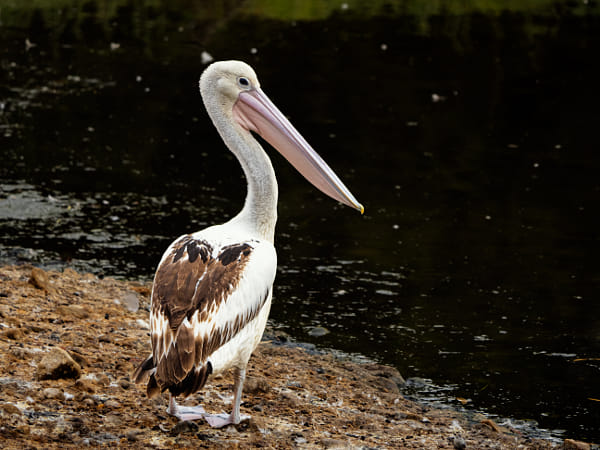
Boodalang or Australian Pelican (Pelecanus conspicillatus). Bilya Walk Track, Toodyay, Western Australia.


Hotter Than…

… than a Vindaloo Curry with extra chilli and a side serving of chilli. Man has it been hot. I mean it’s been so hot that your eye balls sweat. Try and take a cold shower to cool down and the water coming out of the cold tap is hot. The dog refuses to go for a walk because the pavement is blisteringly hot. We did get a little respite for a day, the temperature dropped by 10º to 34ºC and everyone said it was chilly enough to look for a sweater. The third round of the seventh circle of Dante’s Inferno is a great Plain of Burning Sand scorched by great flakes of flame falling slowly down from the sky and it is an apt description of this summer here in the Wheatbelt of Western Australia. Cyclone Sean has a lot to answer for.

Kaa-kaa or Laughing Kookaburra by Paul Amyes on 500px.com
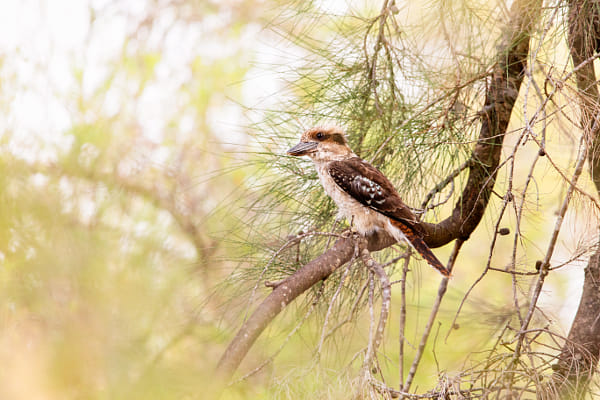
A very happy looking Kaa-kaa or Laughing Kookaburra (Dacelo novaeguineae).Avon Trail, York, Western Australia.


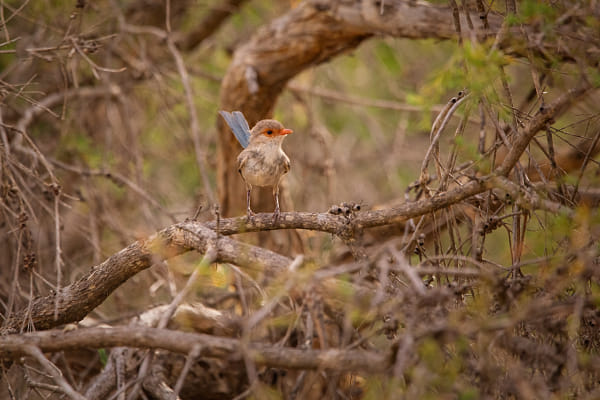
Yet I’m amazed how the natural world carries on. The Rainbow Bee-Eaters chicks have successfully fledged and are busy building themselves up for the long flight north at the end of March. Splendid Fairy Wrens, Thornbills and Silvereyes still look for insects in the undergrowth. Kookaburras, crows and magpies can be seen looking for the unwary to feed upon. The farmers paddocks are now just bleached stubble. The mice and other small animals that live in them have nowhere to hide and are easy pickings for the Black Shouldered Kites and Nankeen Kestrels.


Djer-djer by Paul Amyes on 500px.com
Female Djer-djer or Splendid Fairy-wren (Malarus splendens subs splendens). Avon Trail, York, Western Australia.


Birin-birin by Paul Amyes on 500px.com
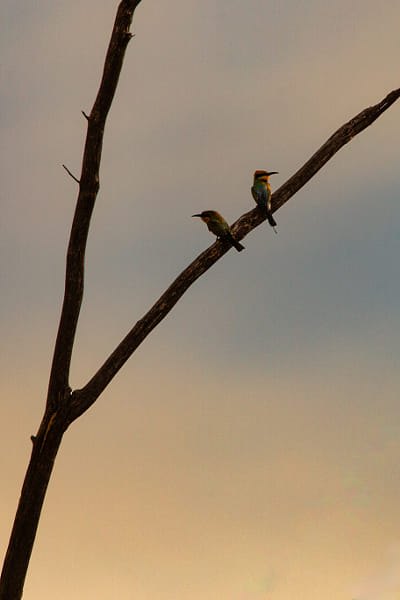
Birin-birin or Rainbow Bee-eaters (Merops ornatus) in the last light of the day. Avon Trail, York, Western Australia.


Walking along the river in the early morning or late evening it’s possible to see the birds, but they quickly retreat to places of deep shade as the temperatures rise. Come about 10 o’clock in the morning until about five in the afternoon they are almost totally silent. Despite the heat there is still quite a volume of water in the river. It is the water that enables the wildlife to survive.


Kaa-kaa or Laughing Kookaburra by Paul Amyes on 500px.com

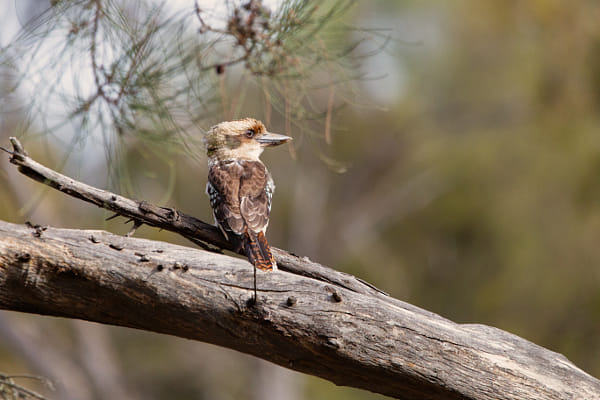
Kaa-kaa or Laughing Kookaburra (Dacelo novaeguineae).Avon Trail, York, Western Australia.

Dawn Breaks

Sitting on the banks of the River Avon in Northam waiting for the first light of the sun to seep into the shadows and herald the start of a new day. The birds on the sandbanks and in the trees are just beginning to stir. I was there to photograph Black-fronted Dotterels.


Kaaka-baaka by Paul Amyes on 500px.com
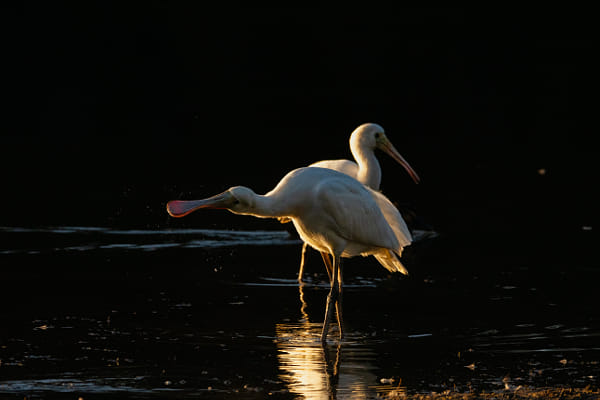
Kaaka-baaka or Yellow-billed Spoonbill (Platalea flavipes). Northam, Western Australia.


As the sun’s light filtered through the trees it created a beautiful chiaroscuro that Renaissance artists could only dream about. The Black-winged Stilts and the Yellow-billed Spoonbills were literally glowing against the dark background. Light like this is magical and you can see why it was used in so many religious paintings. The oft given advice about photographing birds and other animals is to always have the sun at your back. If you do this then you miss the opportunity to create something dramatic. You have to act fast as the light doesn’t hang around and no sooner than you are aware of it it is gone. That’s what happened on this morning. From just a faint hint  and then it floods in and the shadows disappear.


Djandjarak by Paul Amyes on 500px.com
Djandjarak or Black-winged Stilt (Himantopus himantopus subsp. leucocephalus). Northam, Western Australia.


The Black-fronted Dotterels didn’t put in an appearance until I started walking back to the car. They obviously like a lie in. Although the light was past its best I still photographed them picking insects and small crustaceans from the mud and sand. It was after all what I gone to Northam for. 


Nidoolyorong by Paul Amyes on 500px.com

Nidoolyorong or Black-fronted Dotterel (Elseyornis melanops). Northam, Western Australia.

Just Splendid

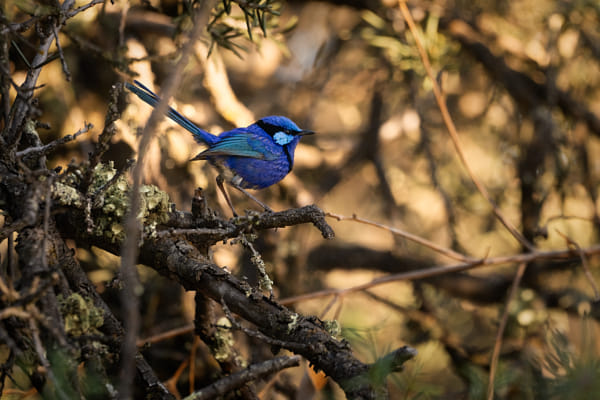
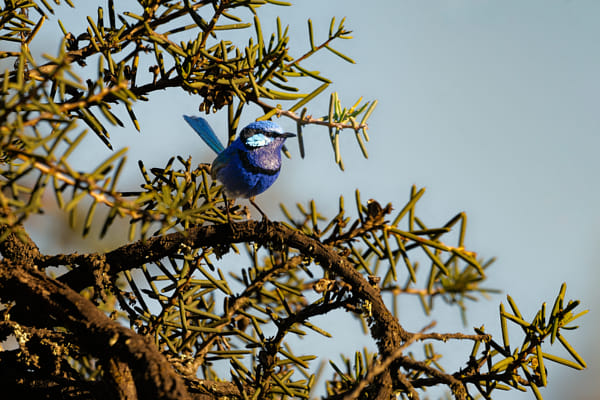
One of the delights of walking through any natural environment at this time of year is seeing male Splendid Fairy Wrens in their breeding plumage. I regularly walk along the Avon River photographing the birds I see, and I hadn’t seen one for a couple of years. Usually they can be seen in the dense low level foliage or on the ground feeding on insects, but over the last few years the wonderful folk at the York River Conservation Society have been clearing out the feral plants and replanting natives. This unfortunately meant that there wasn’t a lot of undergrowth to provide suitable habitat. But joy of joys now that the bush is growing nicely and maturing the Splendid Fairy Wrens are back! It is terrific to see them again.

Djer-djer by Paul Amyes on 500px.com
They’re back! Djer-djer or Splendid Fairy-wren (Malurus splendens). Avon Walk Trail, York, Western Australia.


Djer-djer by Paul Amyes on 500px.com
Oh baby are they back!