Trying to get interesting Bird In Flight (BIF) shots is tricky down by the river. The river is fringed by trees and this causes the auto focus system on my camera to get confused, which means it locks onto the trees rather than the bird. The end result is lots of photos of out of focus birds. But this week I had the bright idea of standing on the South Street bridge. Usually the birds fly up and down the river and so they’d be coming straight at me with no confusing background. I say usually as I stood on that bridge for over an hour and there were no birds flying or otherwise. Very frustrating to say the least. So I decided to cut my losses and take a walk up the river to see if I could find anything higher up. Zip! Zilch! De nada! So where do all the birds go? Had they gone on a day trip somewhere? Do they just hide? It was quickly turning out to be a complete washout. Feeling a little crest fallen as I was making my way back to the car I came across a couple of Bambon or Rufous Whistlers in the trees at Monger’s Crossing. They’re one of my favourite birds and I can listen to them sing for ages. They were obliging enough to hang around long enough for me to take a couple of photos. This lifted the spirits somewhat.
Bambon or Rufous Whistler (Pachycephala rufiventris). Avon Walk Trail, York, Western Australia.
Getting ready to sing.
Just before the Swing Bridge there are a couple of dead trees on the river bank and they are a popular perch for kingfishers, but this time they being used by some Kakara or Crested Pigeon (Ocyphaps lophotes). The first one looked a bit startled when it saw me, but the other was very chilled. They have the most amazing red eyes. The brilliant blue of the sky made for a nice background.
This crested pigeon got a bit of a fright when it saw me.
Those red eyes are worthy of Hammer House of Horror film. “Revenge Of The Evil Undead Pigeon”.
Wayan or White-faced Heron (Ardea novaehollandiae) shrouded in the mist on the banks of the Avon River. York, Western Australia.
Early mornings along the River Avon have taken on a decidedly misty appearance. Going down to Monger’s Crossing at first light and I’ve been hard pushed to see across the river. The upside of this is that by carefully walking and crawling I can get quite close to the herons and spoonbills there. The spoonbills seem a bit more stoic than the herons. They just get on with the normal morning routine of foraging in the shallows for food. In contrast the heron looked decidedly unimpressed with the weather just standing in the long grass with its shoulder hunched up and looking forlornly at the water coming down from the weir.
Kaaka-baaka or Yellow-billed Spoonbill (Platalea flavipes) foraging on a misty morning.
Ngalkaning or Nankeen Night Heron (Nycticorax caledonicus subsp mannillenis) in the early morning mist.
Looking up the Avon River with Mount Bakewell shrouded in the early morning mist. York, Western Australia.
After an hour or so the sun gradually started burn off the mist and the golden light gave a radiance to everything. The sun’s warmth began to take effect and the birds became a lot more active and I was able to get some photos of birds flying, which is always a thrill. The still and quietness of the mist was gone and replaced by the raucous noise of the corellas and the honking of the herons as they flew overhead. By 9 o’cock it was all over. The birds had settled and no activity could be seen.
Golden Orb-weaving Spider’s web lit by the golden dawn light.
Wayan or White-faced Heron (Ardea novaehollandiae) flying in the warm light of dawn.
Manatj or Western Corellas (Cacatua pastinator) flying over the Avon River in York Western Australia.
99% of nature photography is performing the process persistently and repetitively – almost an obsessive compulsive behaviour if you will. After last weeks lack of success in photographing dragonflies in flight I was determined to have another crack at it. After a bit of reading I’d found out that dragonflies and damselflies are ectothermic – which means that they are not able to regulate their internal body temperature and are to a certain extent dependent on sunlight and ambient air temperature. They don’t actually sleep as we understand it, but, rather go into a torpor and they roost in the undergrowth overnight and wait for the warmth of the next day. Which means at sunrise they don’t move around so quickly. This time I went down to some of larger pools of water in what remains of the Avon River at first light.
Waiting for the daylight to revive it after the nocturnal torpor. Aurora Bluetail, Ischnura aurora. York, Western Australia.
The warmth of the rising sun finally reaches this Aurora Bluetail (Ischnura aurora) and it wasn’t long after this that it flew off.
As I walked along the dried out river bed I spotted some damselflies waiting for the sun to come properly. Much easier to photograph as they were staying still! After a brief interlude I carried on up the river. In quite a few places there were large holes where the water had evaporated leaving a thick salt crust. In other places the river bed was quite rutted and potholed which meant the unwary could easily turn an ankle or worse.
Salt on the dried out River Avon.
Eventually I made my way to Mile Pool which is a large permanent pool fed by an underground spring. This means that a lot of wildlife can be found there. At the near end the pool is quite narrow, about 1m and shallow with over hanging tree branches and tree roots which would provide lots of perching spots. In my reading I’d also discovered that male dragonflies are quite territorial and will fly a set pattern around a territory often stopping at the same few perches while looking for females to mate with and chasing off other males who’ve dared to trespass. Sitting down on the ground I’d found my subject – a large Tau Emerald dragonfly. He had a regular flight pattern and every time he went round he’d pause and hover for a second or two. I realised that this would provide me my best opportunity to get a photo of it in flight. Sounds simple doesn’t it? The reality was that it took an hour with repeated tries. Eventually I got a sequence of ten photos and the best one is below.
Tau emerald, Hemicordulia tau. York, Western Australia.
As I got up and stowed my kit I noticed I’d had an audience and they didn’t look that impressed that I was intruding on their secluded pool. I grabbed a quick photo and head off home happy that I’d succeeded in getting my DIF photo. DIF is the abbreviation of Dragonfly In Flight. I’m determined to get better shots than this, but it is a good start.
The audience. Three little pied cormorants and one little black cormorant.
Last week I focused on the water birds this last week I’ve been walking the Avon Walk Trail looking at arboreal birds. There are more Laughing Kookaburras along the river than I can ever recall. They are not native to Western Australia and were introduced in 1912 in the hope that they’d significantly reduce the snake population. The scheme was a failure and the impact on the native bird species was huge. They have the ability to sit motionless in trees for very long periods of time watching for prey. They watch for smaller passerine birds repeatedly returning to nests and then take the chicks. They also ambush unsuspecting picnickers and will often steal sausages from a BBQ hot plate or sandwiches out of the hand of unwary. We had relatives from the UK over and were having a picnic with them when a large kookaburra relieved one of them of a piece of fruit cake. Although they are now considered a pest they are one of the iconic birds of the Australian bush and I do derive a lot of pleasure from seeing them.
Kaa-kaa or laughing kookaburra (dacelo novaeguineae). Avon Walk Trail, York, Western Australia.
For me one of the highlights of summer is the return of the Rainbow Bee Eaters. Their numbers in York were severely depleted a few years ago when the council obliterated their nesting area with a bull dozer. They nest underground in burrows and while they are here they breed. The work was done while they were raising their young so killed off two generations of birds. Last year we had a solitary female return and she looked a very sorry sight on her own crying out for a mate. This year we’ve had two breeding pairs who’ve hatched out chicks who have fledged – so hopefully we’ll have them back in larger numbers next summer. This morning I went down to where they nest and their burrows were empty and there were no birds flying around so they must have set off on their long journey north.
Birin-birin or Rainbow Bee Eater (Merops ornatus). Avon Walk Trail, York, Western Australia.
Another bird I have a soft spot for is the Black-faced Cuckoo Shrike. We have quite a few nesting at then of our street so they’re no particularly uncommon, but I prefer to photograph them sitting in trees as opposed to sitting on a power line. I think they are a rather handsome looking bird with their black face and grey body. It’s just as well they’re good looking as it makes up for their terrible call which sounds like cat that smokes 60 a day.
Noolarko or Black-faced cuckoo shrike (Coracina novaehollandiae) .Avon Walk Trail, York, Western Australia.
The last couple of shots are of the small boring birds people don’t take any notice of. In fact they are known as SBB or small brown birds by most bird watchers. I like watching them flit about in the tree canopy. The Western Thornbills follow clouds of insects and feed off of them. They can be seen in small groups or as part of a flock with other small birds. They’ll suddenly descend upon an area feeding in the low shrubs and then as quickly as they arrived they’ll leave.
Djobool-djobool or Western Thornbill (Acanthiza inornata). Avon Walk Trail, York, Western Australia.
The last bird is the Brown Honeyeater. Despite its plain looks and small size it is easily one of the best singers in the Western Australian bush. The volume produced is amazing considering it size.
Djindjokoor or Brown Honeyeater (Lichmera indistincta) . Avon Walk Trail, York, Western Australia.
Now we’re into the later part of January we’re having the summer we had to had – hot days with temperatures hovering in the late thirties. The Avon River is now rapidly drying out with the only water left in a series of deep pools. These pools become oasis’s for a lot of wildlife from damsel and dragon flies, turtles, water fowl and even the occasional fox. If you don’t like getting up at stupid o’clock in the morning then the best time to see all the activity is in the evening. Sometimes the temperatures don’t drop before the sun goes down and then you’re hard pushed to see any animal activity. Thankfully we’ve had some quite cool nights over the last couple of weeks and so the opportunity to photograph down at Monger’s Crossing presented itself.
Wayan, aka White-faced Heron (Ardea novaehollandiae). Monger’s Crossing, York, Western Australia.
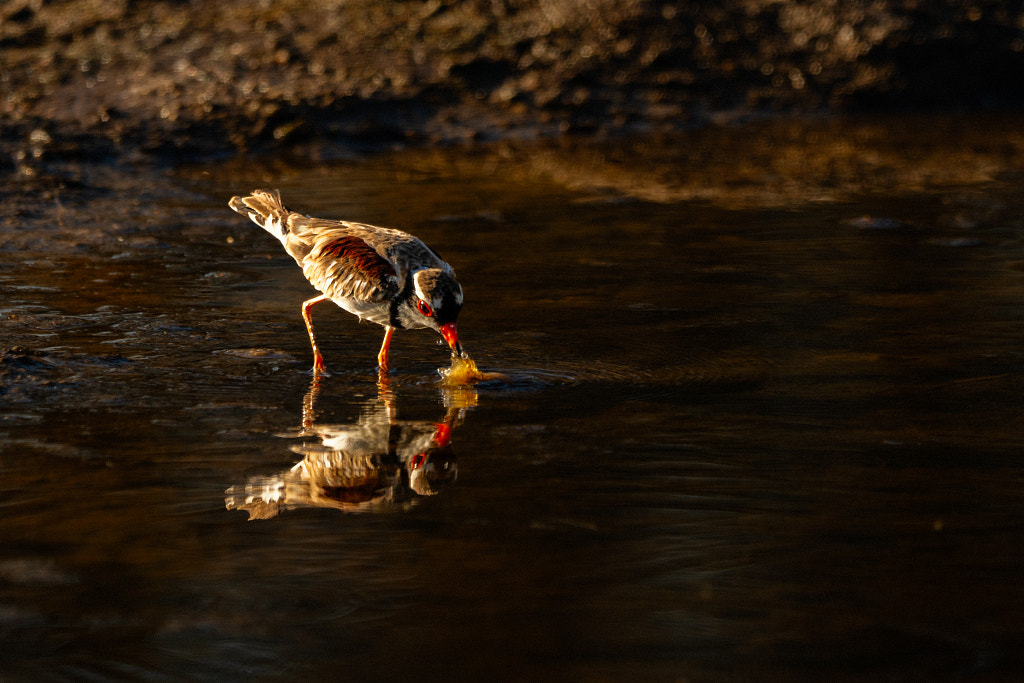
Nidoolyorong or Black-fronted Dotterel (Elseyornis melanops). Monger’s Crossing, York, Western Australia.
Koordjokit aka Little Black Cormorants (Phalacrocorax sulcirostris). Monger’s Crossing, Western Australia.
Pacific Black Duck (Anas superciliosa) ducklings swiming under the watchful eye of their mother. Monger’s Crossing, York, Western Australia.
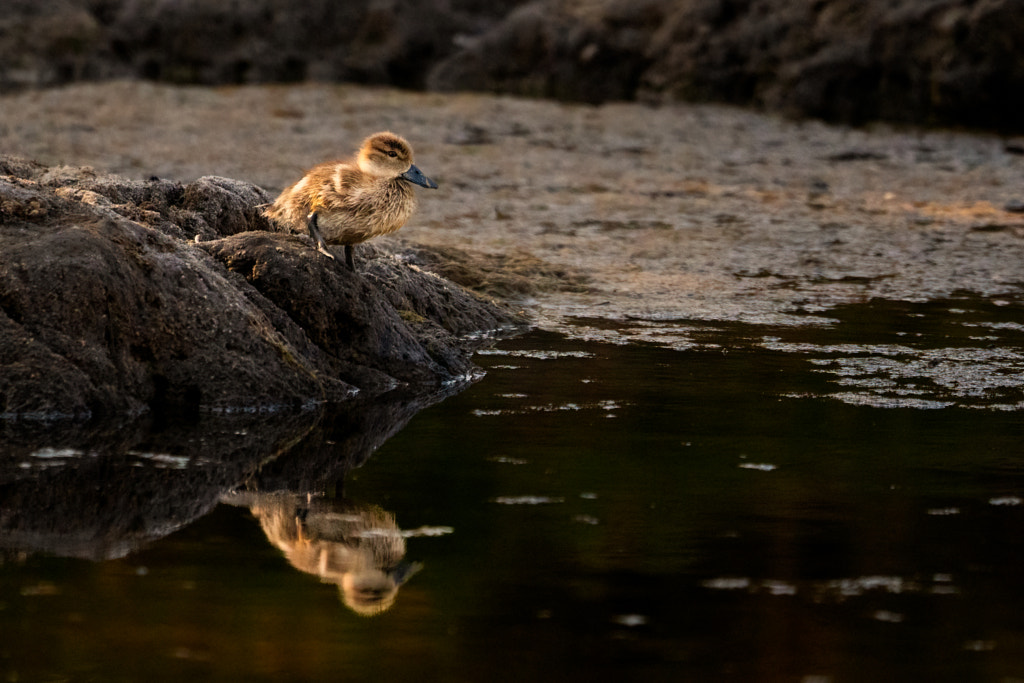
Pacific Black Duck (Anas superciliosa) duckling. Avon River, York, Western Australia.
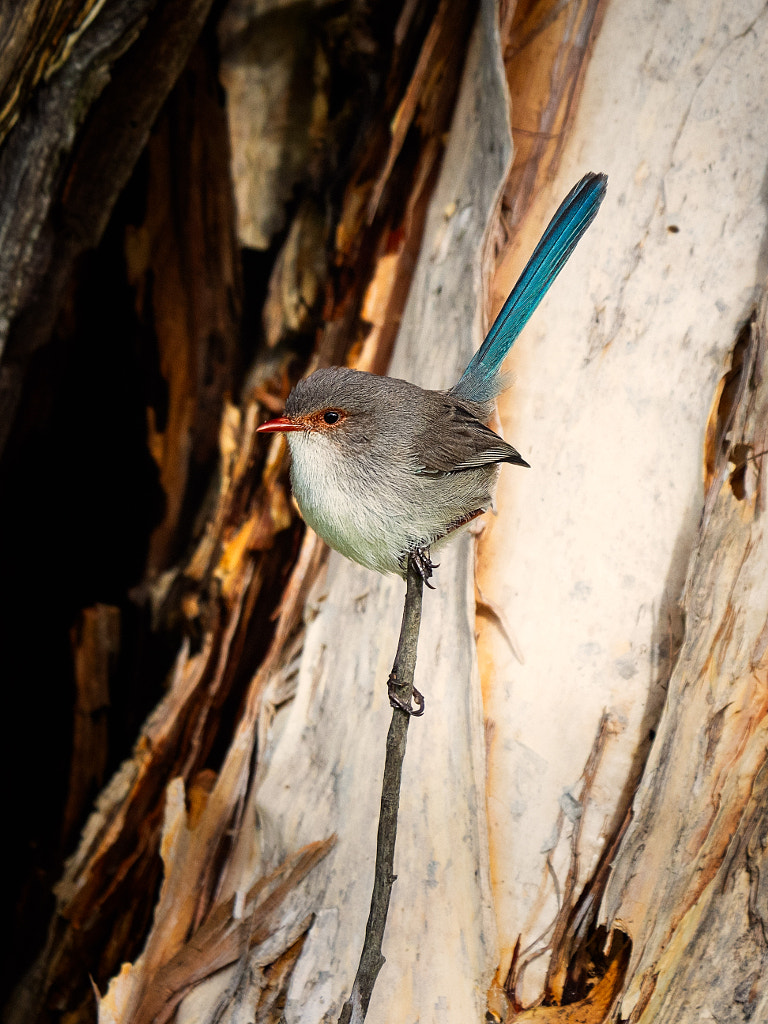
A gratuitous wren shot as wrens make everything better.
A bird on a stick – more specifically a female Splendid Fairy-wren, Malurus splendens subsp splendens. Whiteman Park, Western Australia. Olympus OMD EM1 mk ii with Panasonic Leica 100-400mm f4-6.3 lens. Exposure: 1/500 sec, f6.3 at ISO 320.
It has rained and rained here. I know not as much as in Germany, China or India, but it has rained a lot for here.It feels like I should be starting a DIY project – Ark building for dummies. Nah! I’ll skip that as I flunked woodwork at school. The Avon River burst its banks which drew lots of people in wanting to take photos of it. I even took a few myself.
The Avon River burst its banks in the recent rains. This park bench is normally a good 10m from the water. Sony A7 r ii with Canon EF 24-70mm f4 lens. Exposure: 1/80 sec, f8, at ISO 100.
The dog exercise area is now an aquatic park. Sony A7 r ii with Canon EF 24-70mm f4 lens. Exposure: 1/40 sec, f8 at ISO 125.
Despite all the wetness I’ve managed to grab a few sunny moments and head off to the local reserves. They are saying that all this rainfall is going to produce an amazing abundance of wildflowers this year. From what I’ve seen it looks to be true for our local reserves. Hopefully we’ll see some varieties come up that haven’t been seen for a few years – I’m looking at you Eastern Curlylocks.
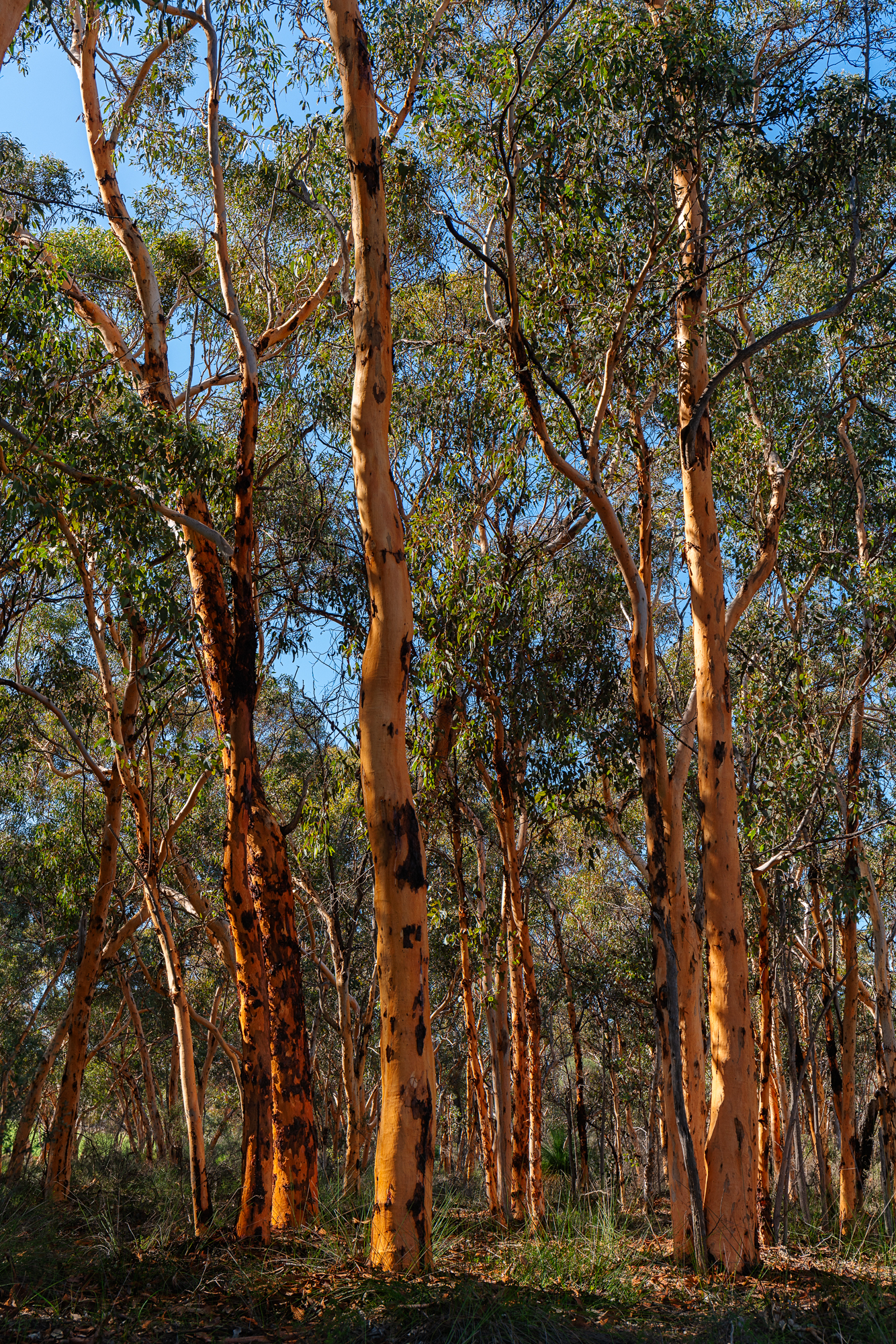
The wandoo woodland that makes up St Ronan’s Nature Reserve.
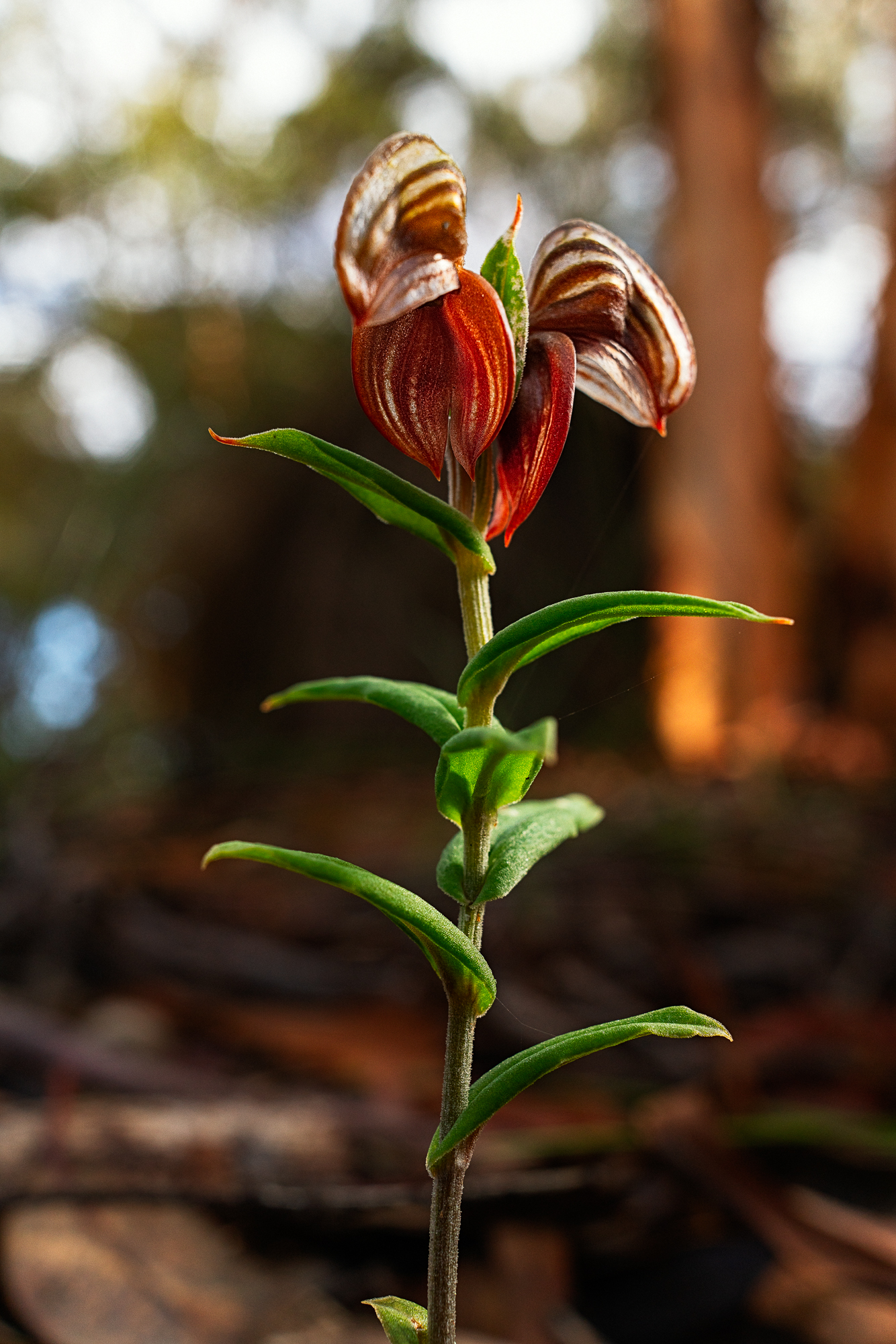
This dark banded greenhood is one of the many orchid species that can be found in the understory.
The last couple of days have been fine and tomorrow we head off to the Stirling Ranges where the weather forecast is rain for the whole time we’ll be there. I suppose I should be used to it now. Thank goodness for Goretex and the weather proofing on my Olympus camera.
Nidoolyorong. Black-fronted Dotterel, Elseyornis melanops. Mongers Crossing, Western Australia.
We’ve lived in York since 2004 and this is the first time I’ve seen these birds. They are classified as being nomadic when it comes to habitat which obviously means they move around as conditions dictate. Both require aquatic invertebrates to feed off which means that the river is in a healthy state. As I’ve said before in previous posts the Avon largely dries up over summer leaving a series of deep pools and In the past at this time of year they tend to be stagnant, have algal blooms and stink. This year they have largely been free of algae, don’t smell and the larger ones are full of small fish, dragonfly and damsel fly nymphs which are all indicators of a healthy river. The arrival of the Black-fronted Dotterels and Black-winged Stilts confirms this.
Dit. Black-winged Stilt, Himantopus himantopus, Mongers Crossing, York, Western Australia.
A female Brown Goshawk, Accipiter fasciatus. York, Western Australia. Olympus OMD EM1 mk ii with Panasonic Leica 100-400mm f4-6.3 lens. Exposure: 1/1000 sec, f6.3 at ISO 3200.
While day time temperatures have ranged from hot to bloody hot (46ºC) here in the Wheatbelt metropolis of York we have had some very cool mornings around the 14ºC mark. I was out the other day on one of those mornings, it was almost too cold and I was tempted to go back to the car. A few days prior while walking the dog along the Avon River I’d noticed piles of feathers underneath a couple of tall trees. At first I thought that the birds had been killed by a fox or a cat but a closer look convinced me that the birds hadn’t been killed there and there were no wings, legs or head. Just a pile of feathers. So I decided to to go out and see if I could find the culprits. As I got close to where I’d previously found the bird remains I could hear a couple of goshawks calling out to each other – they can be quite vociferous – but I was quite confused as to where they were. I was scanning the the branches above me without seeing anything and as I kept walking the noise got louder. Then I realised that the calls weren’t coming from above me, but rather to the left and slightly below the river bank. So I got down on the ground and slowly crept towards the source of the noise and there on a paperbark tree were a male and female Brown Goshawk. The smaller male took off almost immediately but the female was all puffed up against the cool air just sat there watching me and continuously calling out to her mate. I stayed for about half an hour and then headed back to the car and home.









You must be logged in to post a comment.