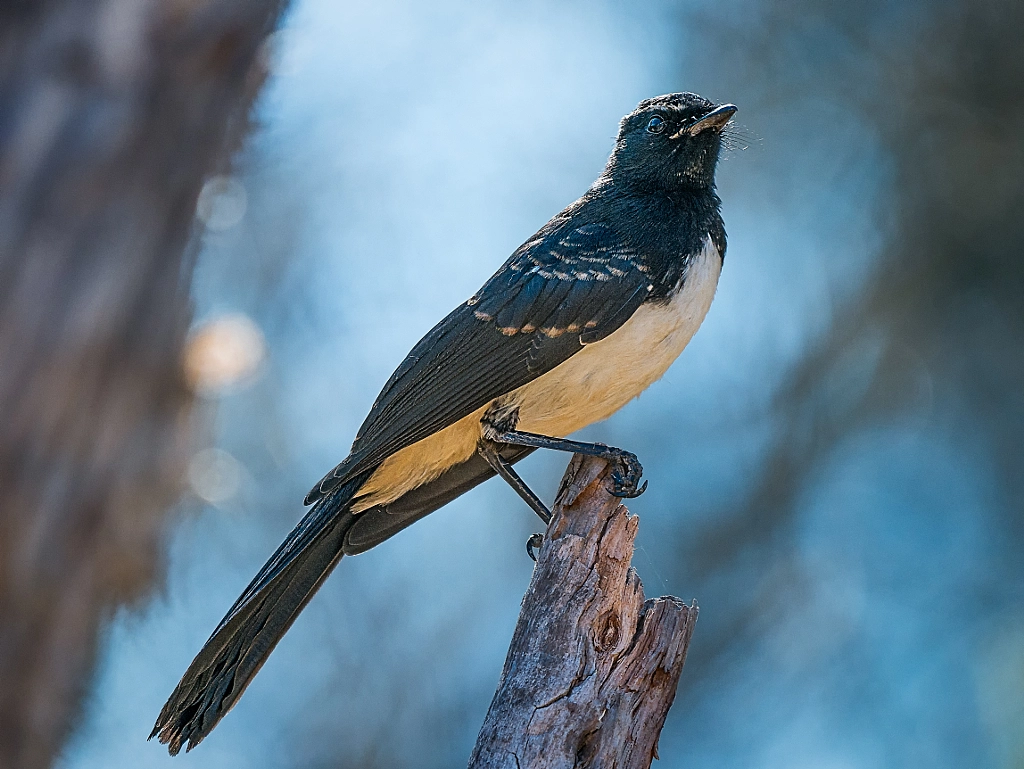
The djidi djidi or Willy Wagtail (Rhipidura leucophrys leucophrys). York, Western Australia. Panasonic Lumix G85 with Panasonic LEICA DG 100-400/F4.0-6.3 lens. Exposure: 1/800 sec, f6.3 at ISO 640.
Willy Wagtails or Djidi Djidi as the Nyoongar call them can be found throughout the Australian bush. They are perhaps the most common bird in Western Australia. White fellas think of them as comical bossy little birds that will swoop larger animals and people in an effort to shoo them out of their territory. This is the Nyoongar story of how they came into being.
A long time ago there was a lazy old man called Wardong. Wardong was given the job of looking after the children while everyone went hunting. Wardong would lie in the shade under a tree and shout at the children to get them to bring him food and drink. Now the children got pretty fed up with being bossed around by Wardong, and being mischievous they decided to get their own back. So while the old man was sleeping the djidi djidi (mischievous ones) they took his food away and then began to run round and round him tormenting him. This made Wardong really mad, and the madder he got the more the djidi djidi tormented him. Suddenly he couldn’t take any more and he did some magic and turned all the little children into little birds. With that Wardong went back to his tree, lay down and went to sleep with a big smile on his face. When everybody returned from hunting that evening they asked Wardong where all the children were. The children seeing their parents and grand parents started flying around and crying asking to be turned back, but there was nothing that could be done. The elders were furious and called Wardong a lazy good for nothing scavenger. One of them went even further and said “Wardong you will be a scavenger for the rest of your life!” And with that he turned Old Wardong into a crow. Wardong is the Nyoongar name for crows. Now if you go into the bush you will see that the djidi djidi can’t stand to have wardong anywhere near them and when they see him they fly round and round his head tormenting him until he goes away.
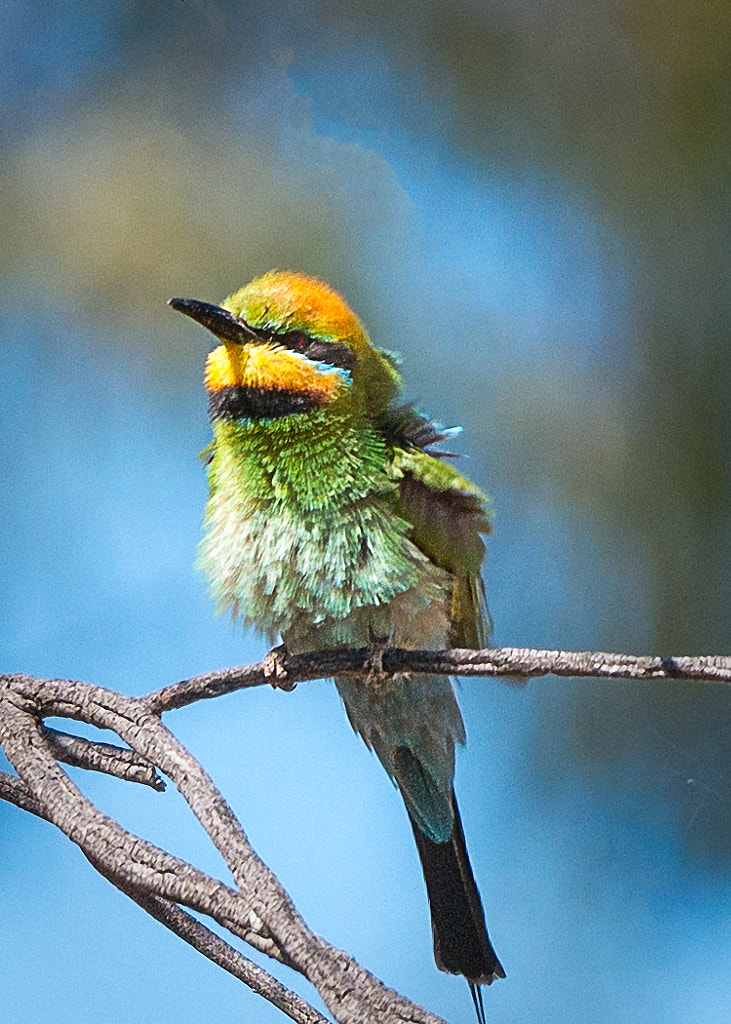
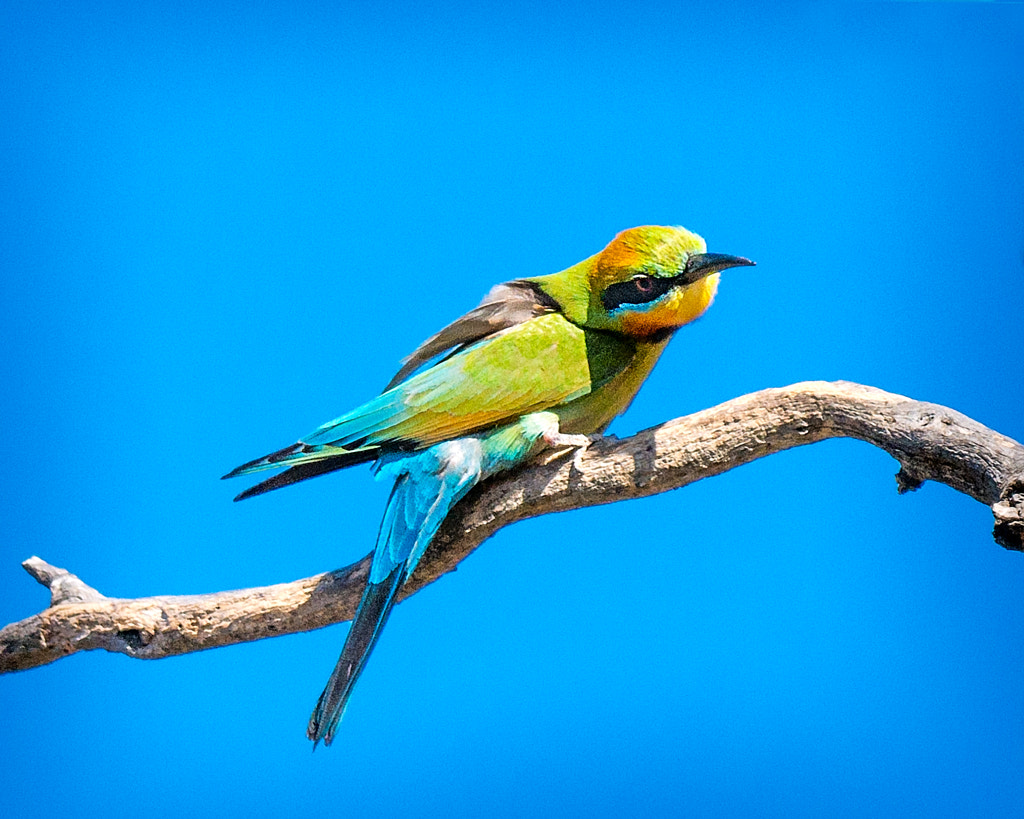
Rainbow Bee Eater, Merops ornatus. Avon Walk Trail, York, Western Australia. Panasonic Lumix G85 with Panasonic Leica 100-400mm f4-6.3. Exposure: 1/1000, f6.3 at ISO 250.
There are quite a number of them along the Avon River here in York. They migrate from Indonesia, New Guinea and northern Australia to avoid the cyclone season and come to breed during our summer. They nest in burrows which they dig and I discovered them quite by chance. While walking the dog I noticed these brightly coloured birds literally nose diving into the ground. At first I thought that the bird must have been hurt and went over to look for it, but I found nothing. Over the next few weeks I watched several others repeat the behaviour so looking carefully at the embankment I found several holes which turned out to be their burrows. So ever since I’ve been trying to photograph them.
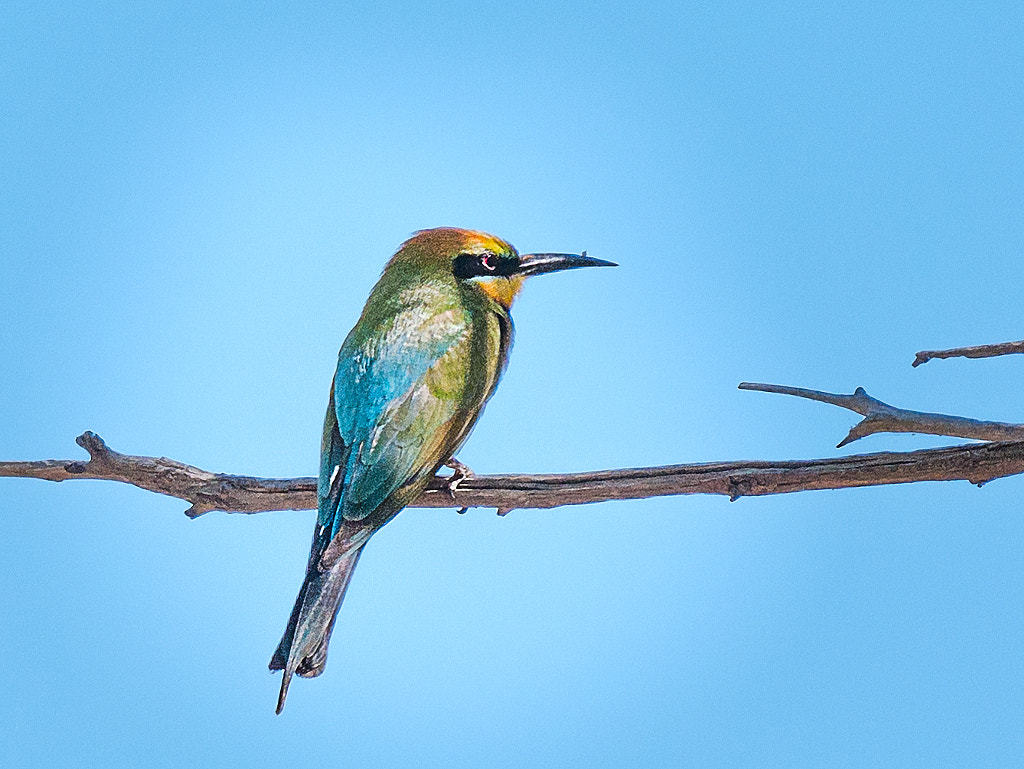
Rainbow Bee Eater, Merops ornatus. Avon Walk Trail, York, Western Australia. Panasonic Lumix G85 with Panasonic Leica 100-400mm f4-6.3. Exposure: 1/1000, f6.3 at ISO 320.
So far I’ve only managed to photograph them when they perch. They feed on flying insects and their acrobatic manoeuvring while chasing their prey are beyond my photographic abilities. Luckily I’ve noticed that they tend to favour a particular tree de jour as a lookout and they repeatedly return between sorties so it has just been a case of walking along the river finding that day’s favoured tree and waiting.
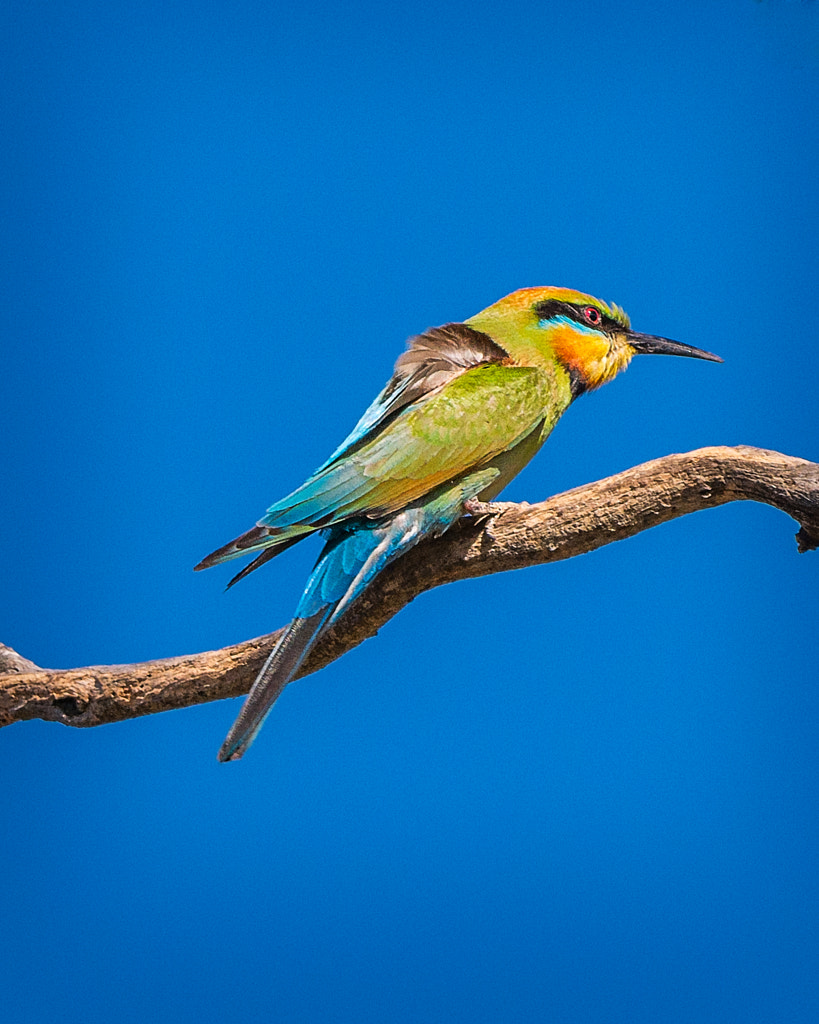
Rainbow Bee Eater, Merops ornatus. Avon Walk Trail, York, Western Australia. Panasonic Lumix G85 with Panasonic Leica 100-400mm f4-6.3. Exposure: 1/1000, f6.3 at ISO 250.
Just before Christmas my wife and I decided to mount a mission early one morning to observe them bringing food to the chicks that have hatched. We must have been a strange sight for any passers-by – my wife in her camp chair with binoculars aimed at an earth bank and me loitering in the foliage under a tree with a camera and very long lens. We spent a couple of delightful hours watching and photographing before heading off for morning tea.
Rainbow Bee Eater, Merops ornatus. Avon Walk Trail, York, Western Australia. Panasonic Lumix G85 with Panasonic Leica 100-400mm f4-6.3. Exposure: 1/1000, f6.3 at ISO 250.
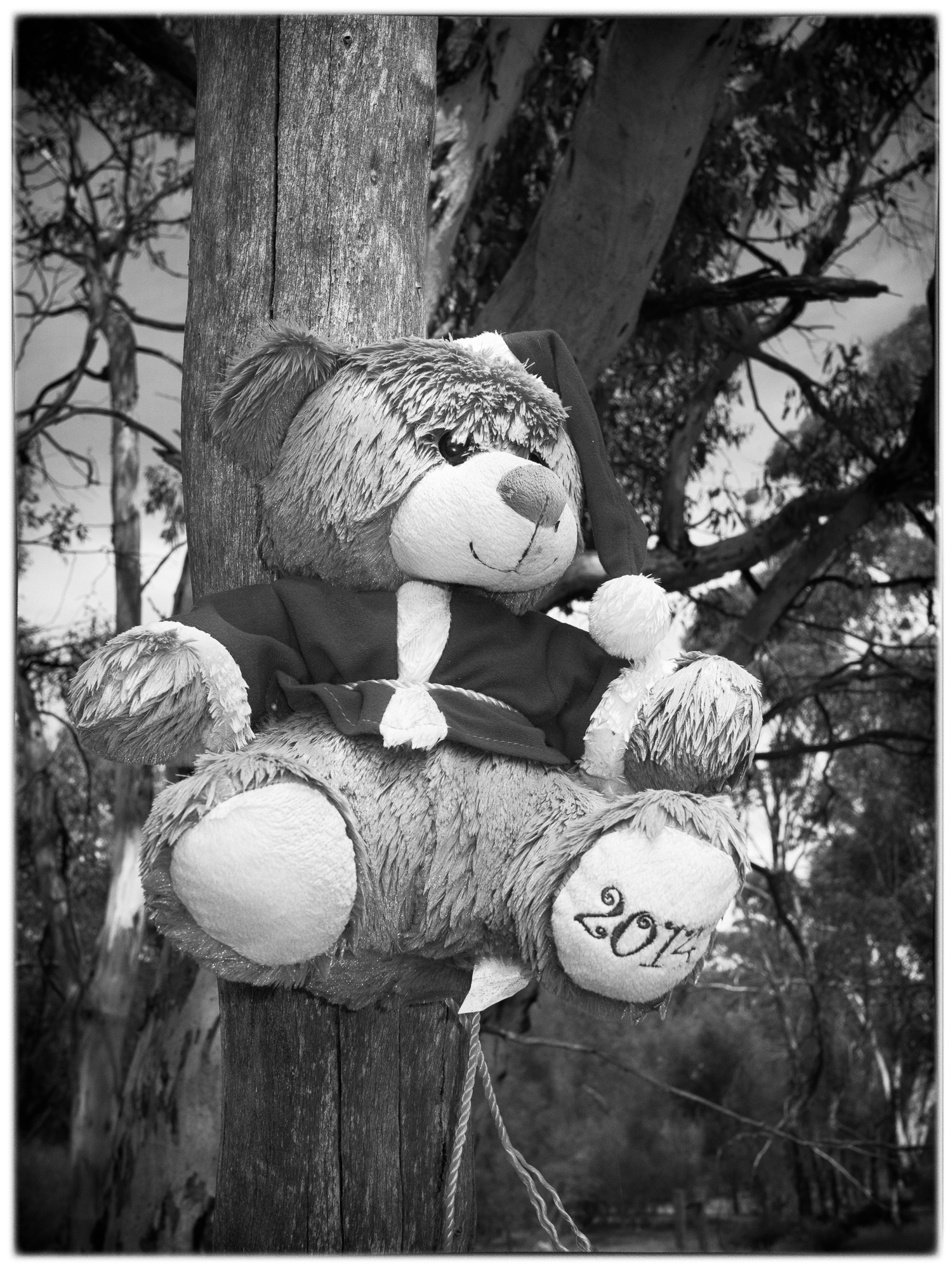
Memorial bears for the victims of Drop Bears. York, Western Australia
As I have been tramping around the local woods this spring photographing orchids and birds I noticed something that I’d never seen before. That something was teddy bears tied to trees in odd remote locations. At first I thought it was strange game being played by the local kids, but after I saw my tenth one I decided to ask about and find out what was going on. It took ages to find someone who would answer my questions. Eventually an acquaintance told me to go and see Cliffy.
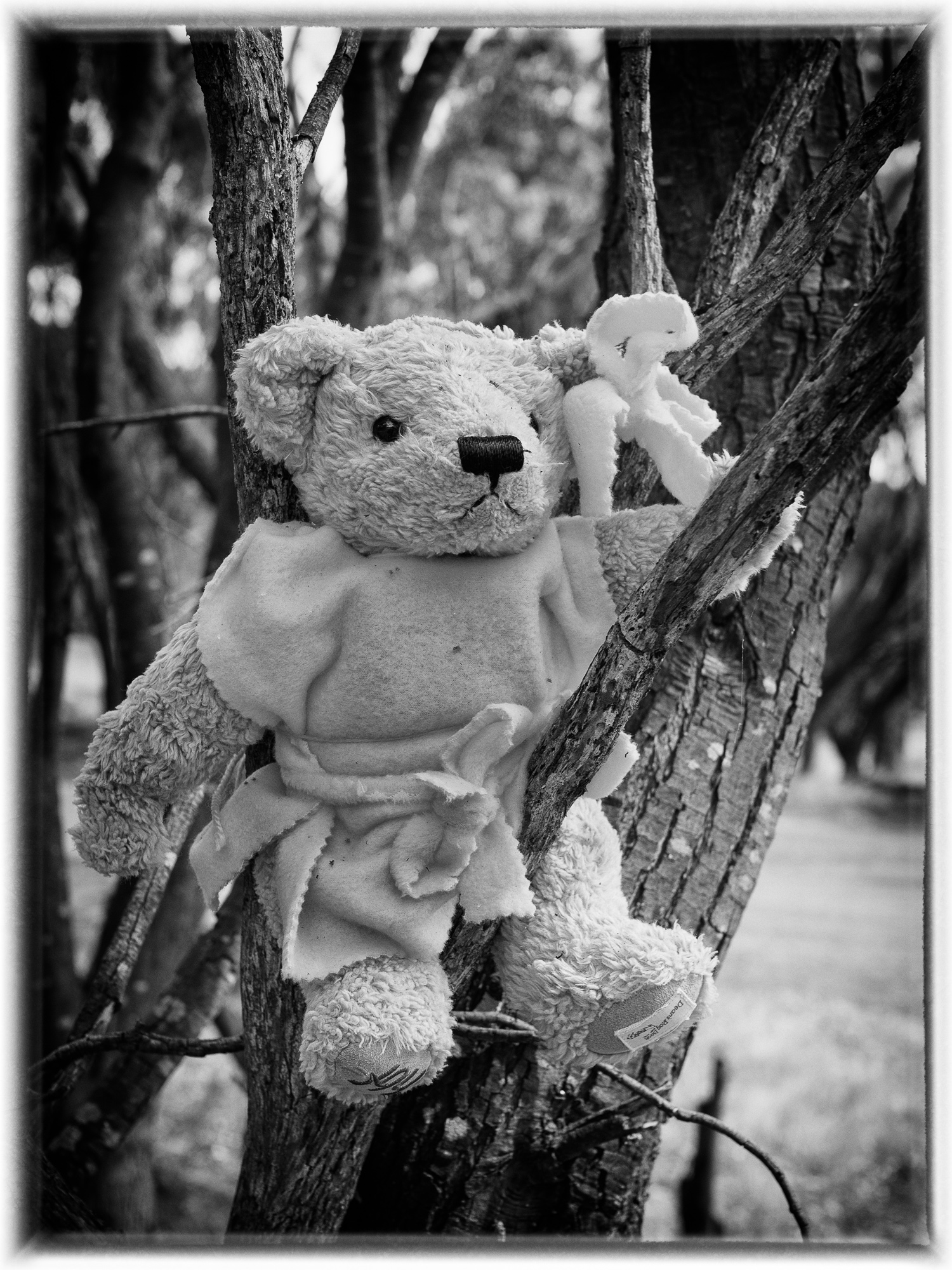
Memorial bears for the victims of Drop Bears. York, Western Australia
Cliffy wasn’t that easy to find. The directions up to his shack in the wandoo forest were very vague – turn off the Great Southern Highway onto Talbot Road, drive for 10 Km and then take the third track on the left. Turn right at the dead tree that looks like an “excited” Tony Abbot in Speedos and then right at the big rock. I found the shack. When I say shack that really sounds better than it is. A few sheets of corrugated tin and some bush poles was all it was. When I saw Cliffy it was plain to see that he’d had a hard life. He is a compact sinewy man with skin the colour of tanned leather and hair like iron filings. His hands were a testament to hard physical labour – even the callouses had callouses. As to his age, well if you told me he was 100 I’d believe it and if you said he was 50 it wouldn’t surprise me either. So after the usual “Howz yer doin’?” Followed by a quick discussion about rainfall and rain gauges* I asked him about the bears. Cliffy sucked his single tooth and rolled a couple of strands of tobacco in some paper that looked like it had been torn from a pocket Bible. Slowly and quietly he says in a voice that sounded like he’d been gargling on razor blades “They’re memorials to victims of Drop Bear attacks”. He lit up and took a long drag and then told me the strangest tale. I scurried home to do some research.
Memorial bears for the victims of Drop Bears. York, Western Australia
Most people throughout the world know about the Koala Bear or to give them their proper scientific name “Phascolarctos cinereus”. Well firstly they are not a bear but a tree-dwelling marsupial that feeds on eucalyptus leaves. Secondly they are relatively harmless because all they do is eat and sleep. Occasionally you come across a grumpy one but all you’ll suffer is a few scratches. Well apparently the koala has an evolutionary cousin, the Thylarctos plummetu. Mostanimals in Australia are known by their Aboriginal name, but this one hasn’t got one as the Aboriginal Peoples are so scared of it they refuse to talk about it. Colonial settlers came to refer to them as Drop Bears for reasons that will become apparent later. Few people have seen the animal, and of those that have only a couple have lived to tell the tale. I’ll quote the Australian Museum’s description:
Identification
“Around the size of a leopard or very large dog with coarse orange fur with some darker mottled patterning (as seen in most Koalas). It is a heavily built animal with powerful forearms for climbing and holding on to prey. It lacks canines, using broad powerful premolars as biting tools instead.”
Size range
“120kg, 130cm long, 90 cm at the shoulder.”
Habitat type
“Vegetation Habitat: closed forest, tall closed forest, tall open forest, tall open shrubland”
Feeding and Diet
“Examination of kill sites and scats suggest mainly medium to large species of mammal make a substantial proportion of the animal’s diet. Often, prey such as macropods are larger than the Drop Bear itself. Drop Bears hunt by ambushing ground dwelling animals from above, waiting up to as much as four hours to make a surprise kill. Once prey is within view, the Drop Bear will drop as much as eight metres to pounce on top of the unsuspecting victim. The initial impact often stuns the prey, allowing it to be bitten on the neck and quickly subdued. If the prey is small enough Drop Bears will haul it back up the tree to feed without harassment from other predators.”
The Australian Geographic magazine did an article in 2013 about a University of Tasmania (UTAS) research project looking at who were more susceptible to attacks. In 2012 there was a research project looking to track Drop Bears in bush and see how many there actually are. An excerpt from that paper can be read here. I even managed to find online an old public announcement film for new migrants dating from the 1950’s warning of the dangers posed by Drop Bears.
When Cliffy had finished his tale of horror I had to lift my jaw up from the floor. “But why oh way don’t the government send in the police or the army to do something about it?” I say incredulously. This sent the old man into a fit of hysterical laughter. After ten minutes he managed to regain his composure. “Yer dopey pommy bastard, don’t yer know nothin’? The last time the Australian Army was called in to deal with an animal problem was in 1932 when Emus invaded Western Australia and that was a complete fu*king fiasco and made them look like complete idiots. It would be too dangerous to let that mob loose in the bush. The bloody pollies are all too busy guzzling at the trough to care about a few bushies goin’ missing.”
So if you venture into the Australian bush and see teddy bears tied to the trees be aware that Drop Bear attacks have happened in the area and you’d be best advised to leave.
* All conversations in this part of the world follow this pattern. It’s considered very rude not to ask about someone’s rain gauge.
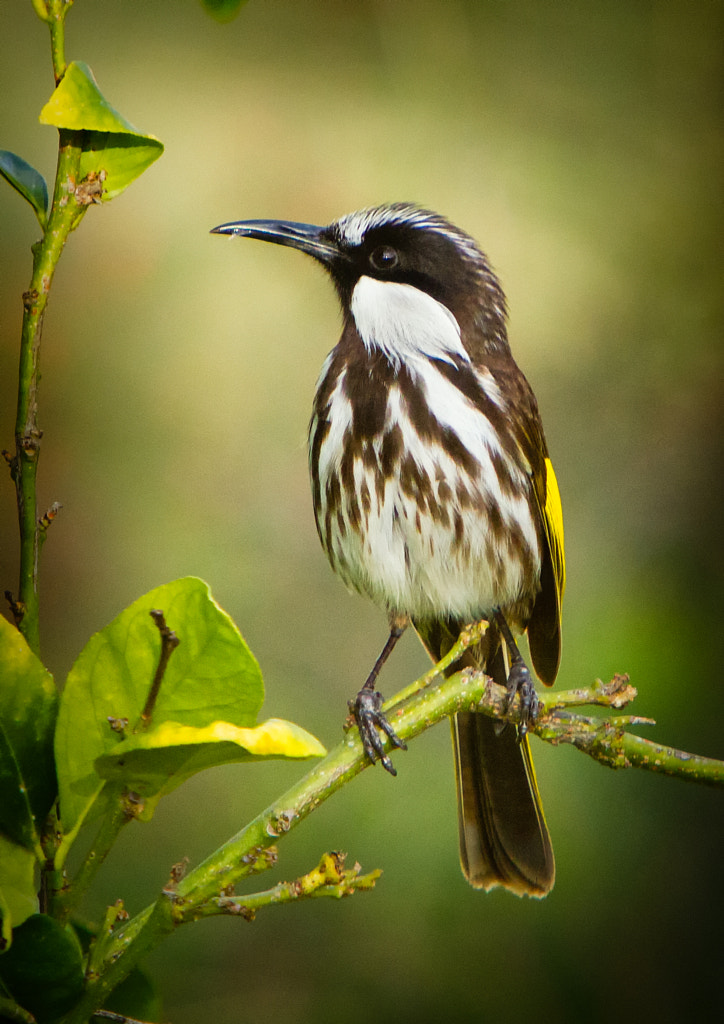
At present with the first days of spring upon us we have several birds nesting in the garden. Amongst the Bougainvillea on the back fence several white cheeked honey eaters (Phylidonyris nigra) have made nests. I’m not entirely sure how many there are in there as the thorns prevent me from having a closer look.
One of the white-cheeked honeyeaters, Phylidonyris nigra, on our lemon tree at the back of the garden.
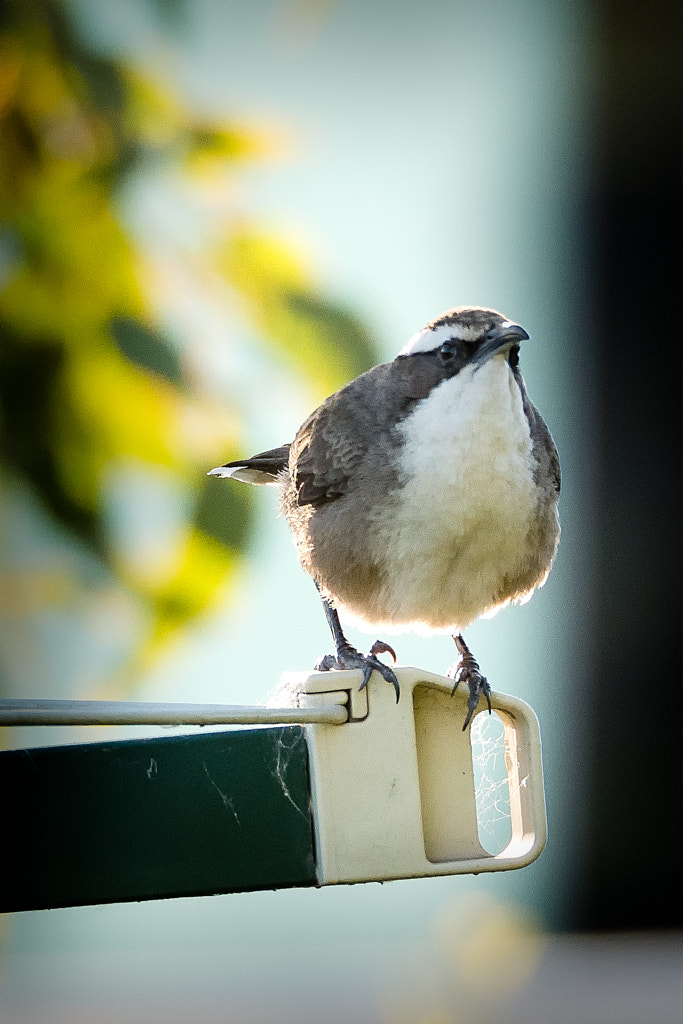
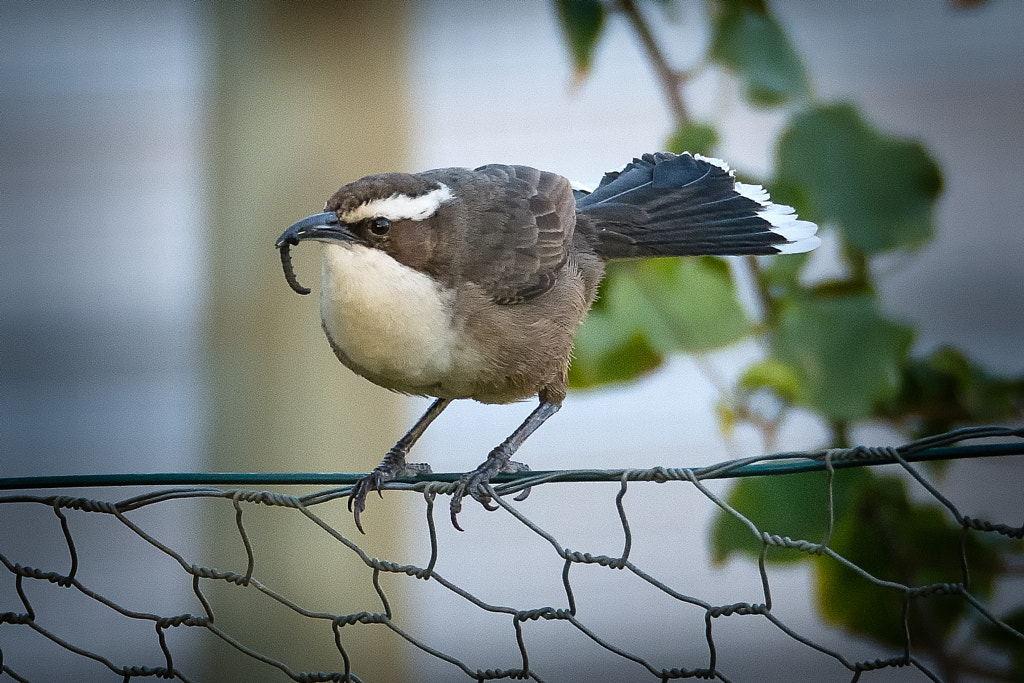
The other avian residents of the garden are the bossy and busy white browed babblers (Pomatostomus superciliosus). They are quite raucous as they pick amongst the mulch looking for insects, spiders , small amphibians, reptiles and will also and seeds. There are three nests that I know about in the peppercorn trees and it is difficult to know exactly how many birds there are as they have quite complicated living arrangements.
“The White-browed Babbler builds a domed stick nest, with a hooded side entrance. It builds both brood (for breeding) and roost (for resting) nests. Breeding pairs are monogamous, but they form co-operative breeding groups comprising two to four breeding pairs and two to eight non-breeding helpers. Only the breeding female incubates the eggs, though other birds in the group feed her and the young birds. Cooperatively breeding groups occupy a home-range, but there are complex interactions within and between groups.”
Hills Hoist washing lines supporting birds for generations. White-browed babbler (Pomatostomus superciliosus), York, Western Australia.
All have lain eggs and the females are sitting tight on the clutches of eggs while the attentive males flit around the garden finding food for them.
About to head home with tonight’s tea. White-browed babbler (Pomatostomus superciliosus), York, Western Australia.
I observe all these antics as I hang out washing, cut the grass and other domestic human duties. It all sounds like paradise. Unfortunately just as happened in the original Garden of Eden so a pair are about to upset the apple cart so to speak. This pair aren’t snakes (they’re still asleep in the woodpile) and it definitely isn’t the resident Adam and Eve (er that’s me and the missus). No it is the two miscreants below who are to blame.
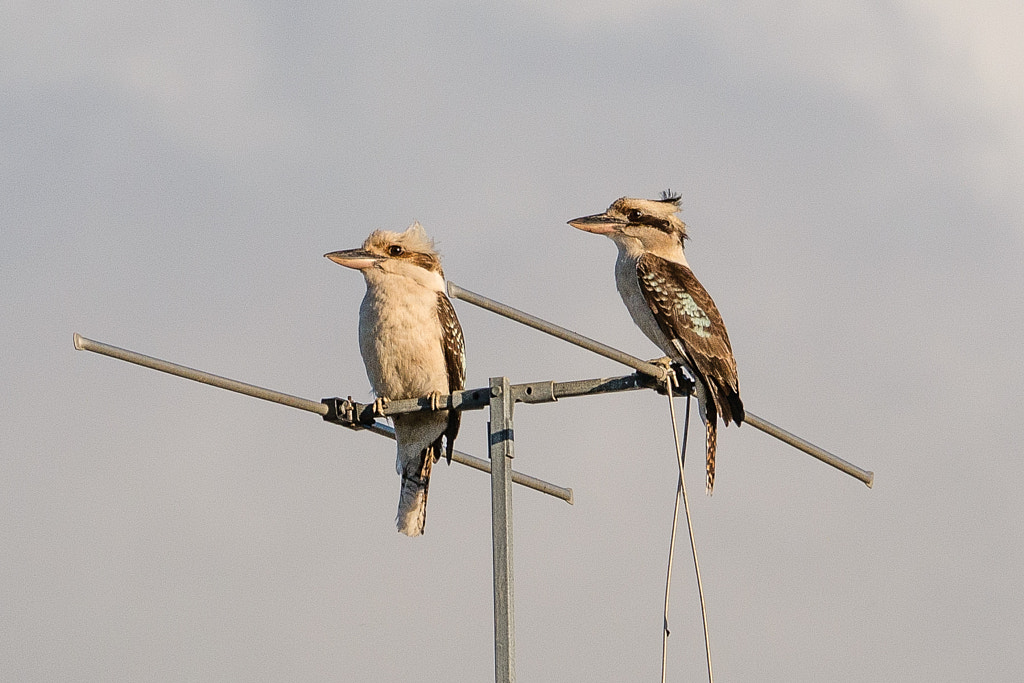
Laughing Kookaburras perched on our TV aerial looking for small animals to prey upon.
Kookaburras (Daceelo novaeguineae) normally eat small lizards, large insects and other invertebrates but they are not averse to raiding nests and taking small chicks. The babblers and honeyeaters all take cover when the Kookaburras take their observation post on the TV aerial. I think this is going to end in tears.
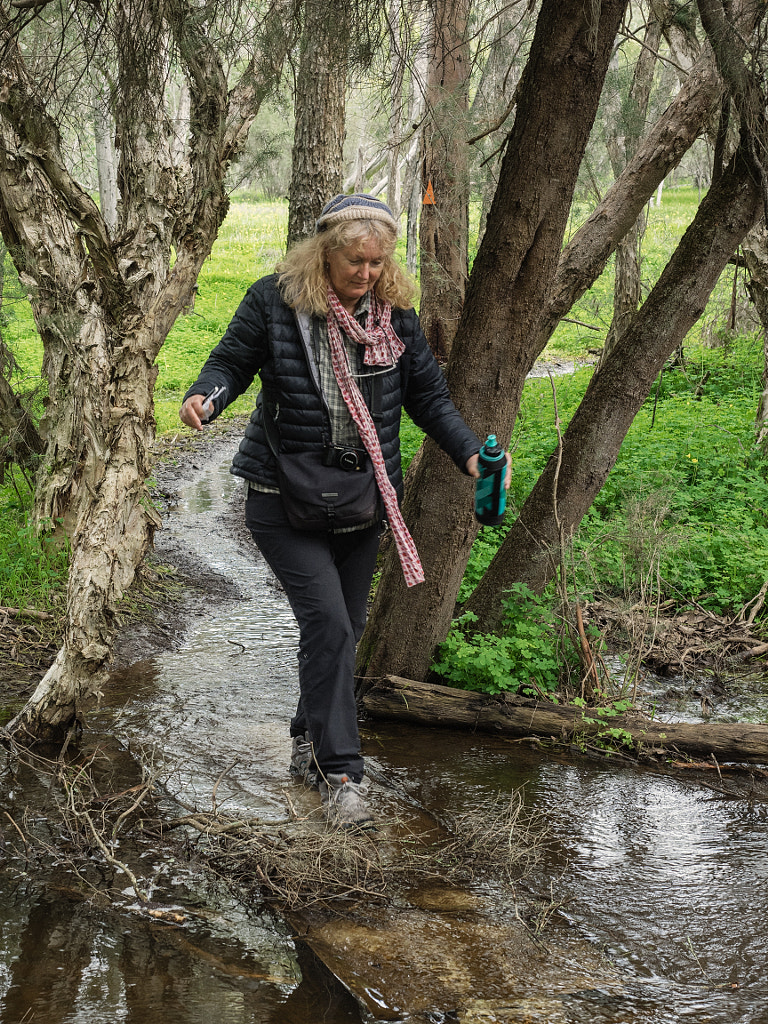
We decided to walk along the Bilya Walk Track on the banks of the Avon River in Toodyay ostensibly looking for birds. Although it was a fine winter’s day the ground was yes wet, flooded in places, and the river very high from the winter rains.
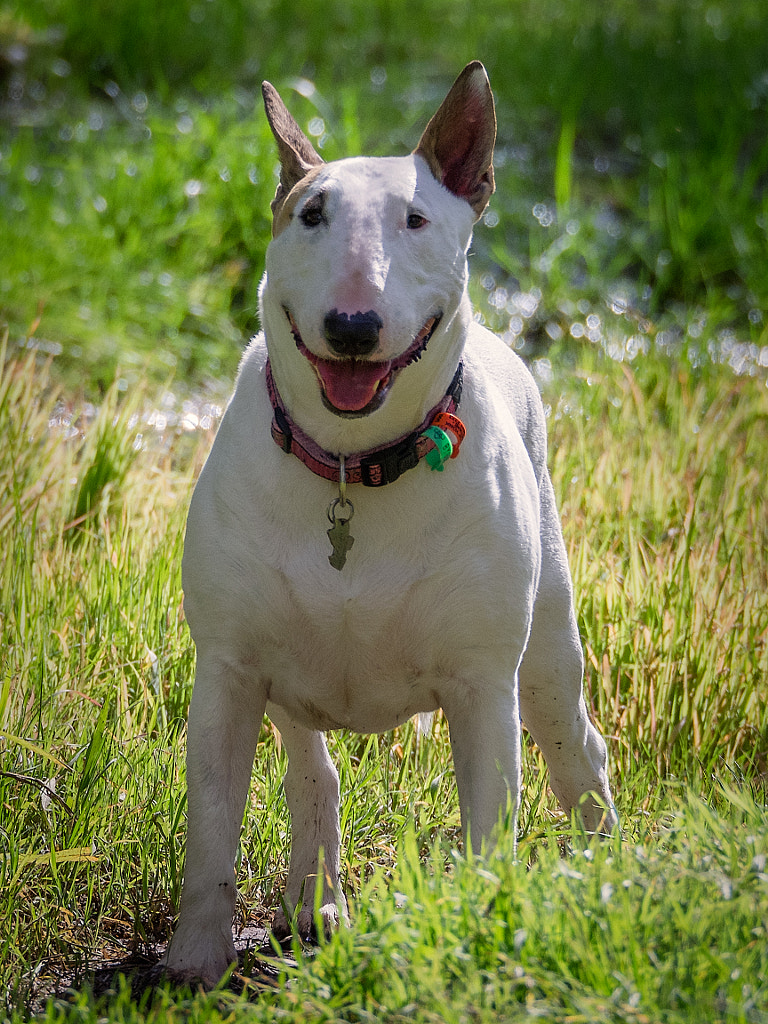
Helen and Frida out looking for birds along the Avon River.
Gratuitous shot of Frida
The track was flooded in places necessitating some paddling.
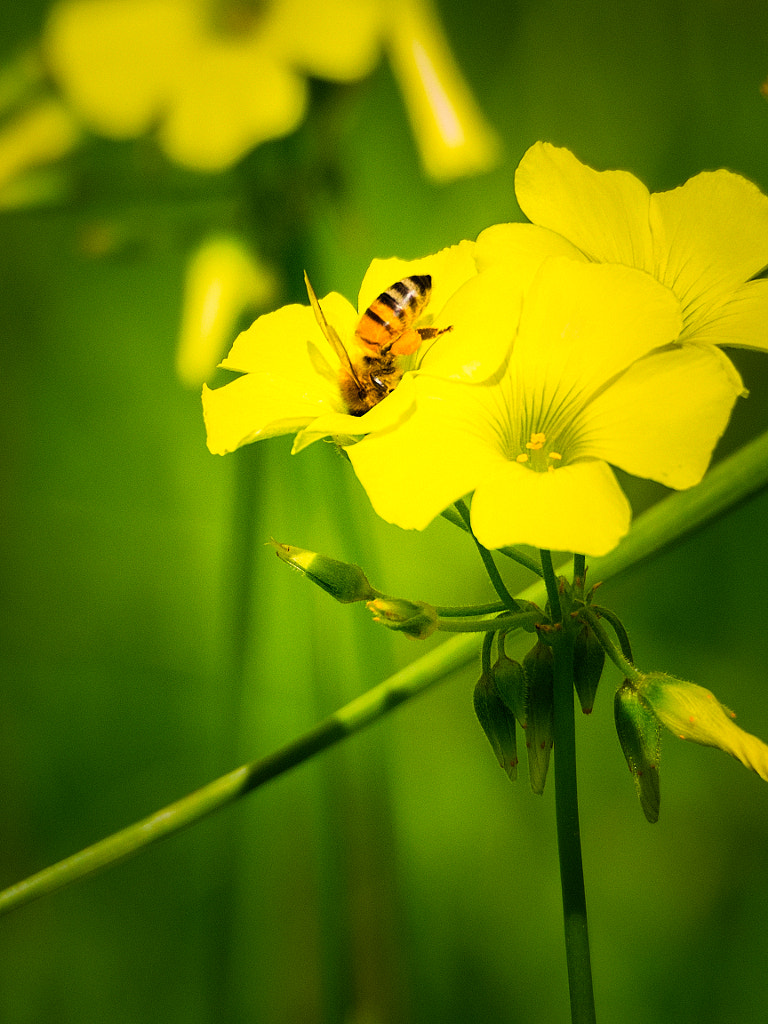
A bee pollinating Oxalis pes-caprae. Also known as Bermuda buttercup, African wood-sorrel, Bermuda sorrel, buttercup oxalis, Cape sorrel, English weed, goat’s-foot, sourgrass, soursob and soursop. It is a noxious weed introduced from South Africa to Australia. Toodyay, Western Australia.
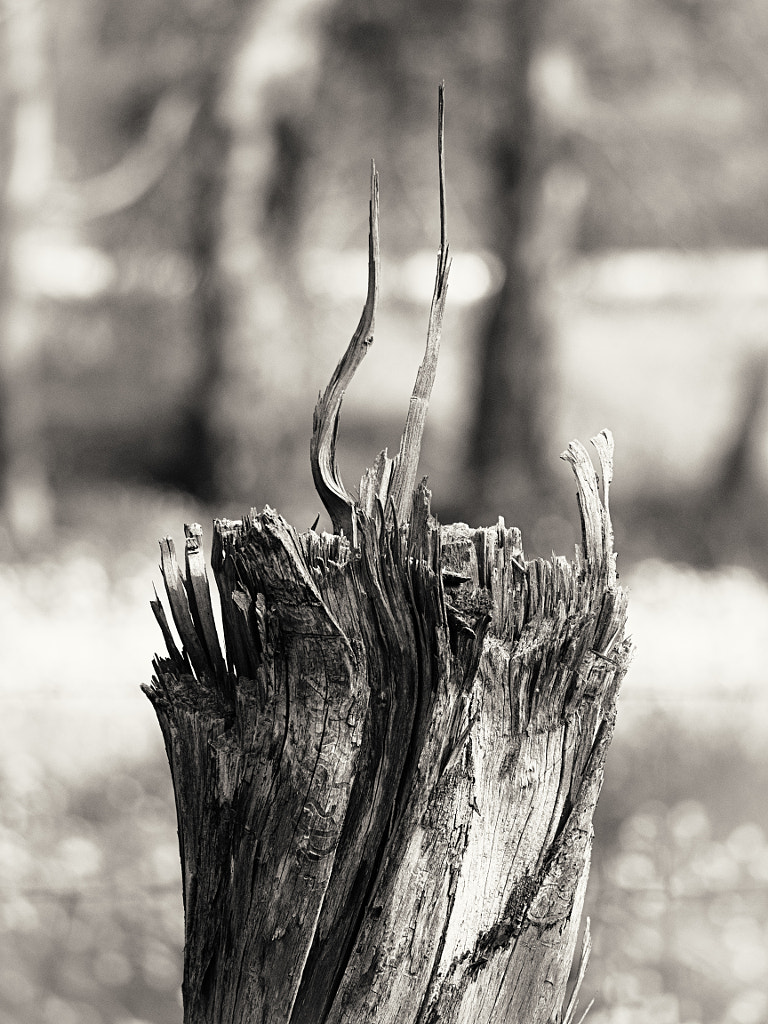
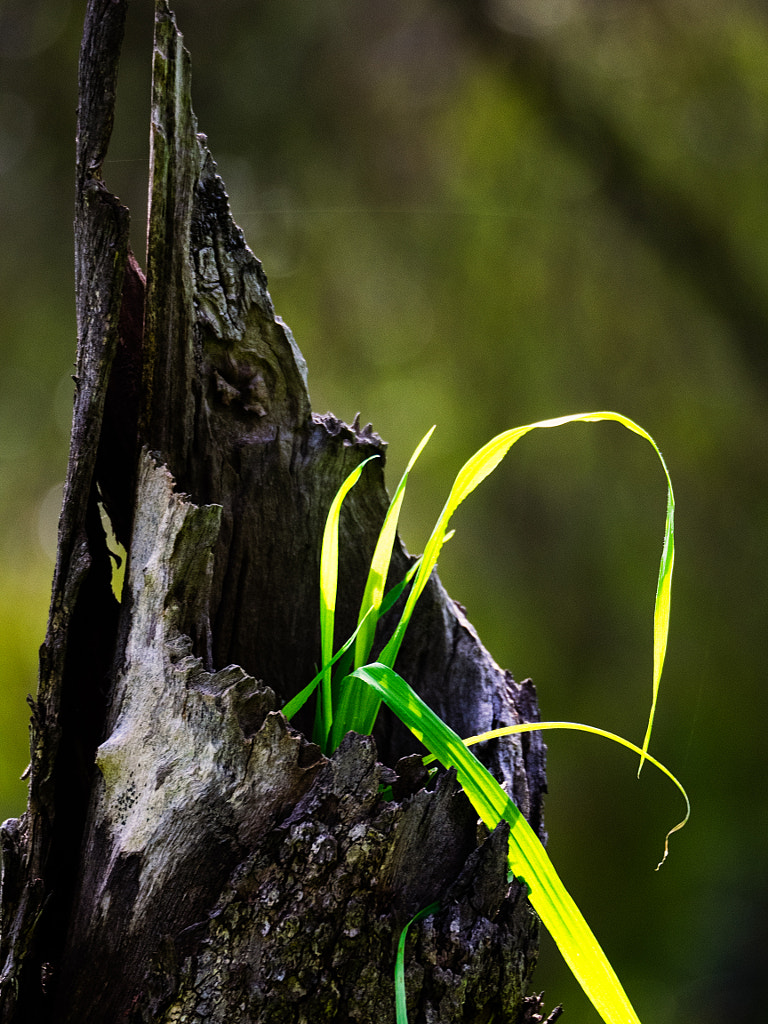
Toodyay Stump #1 Tree stump, Toodyay, Western Australia.
Toodyay Stump #2
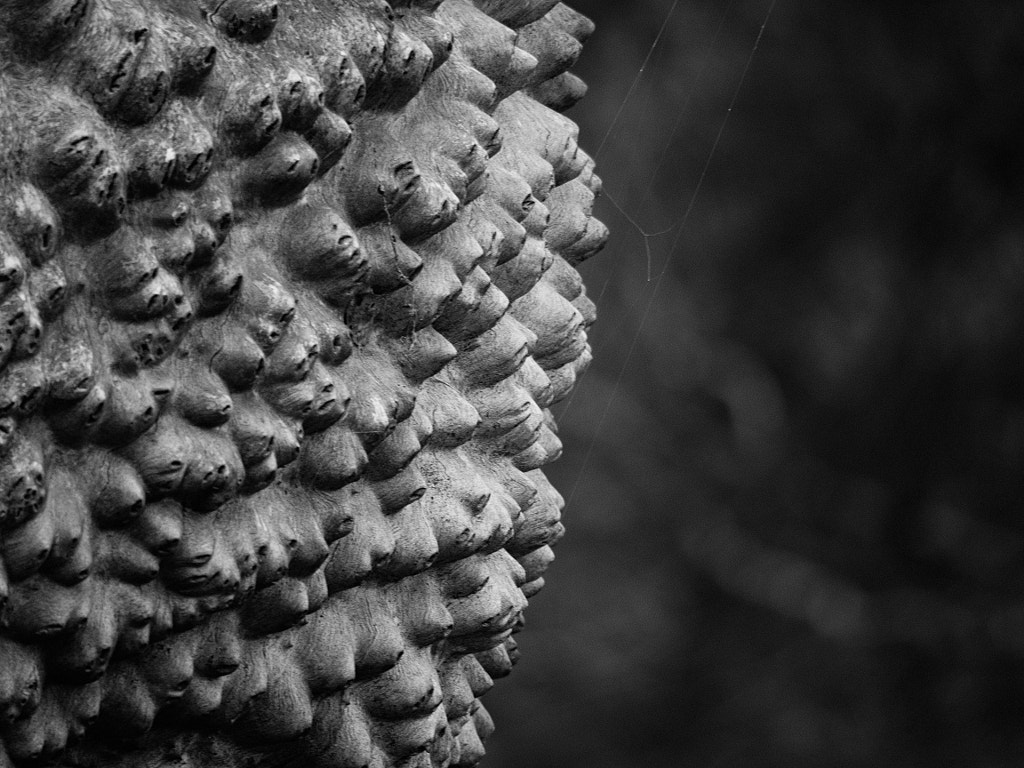
Knobbly Close up of a tree trunk. Toodyay, Western Australia.
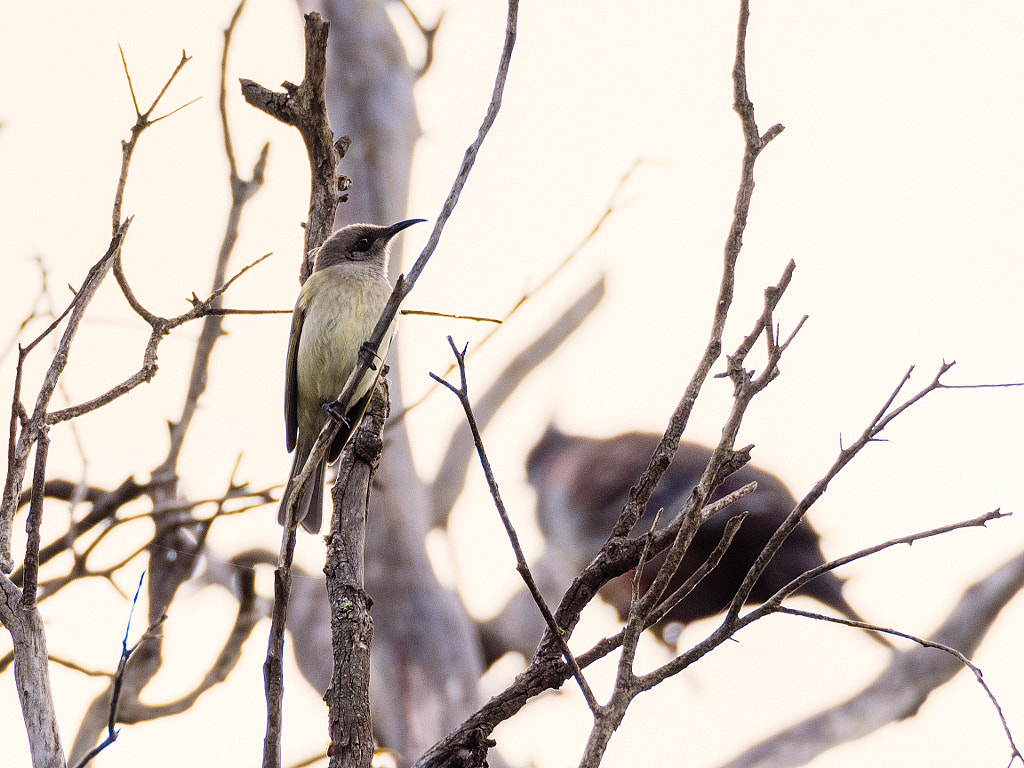
Brown honeyeater, Lichmera indistincta, Toodyay, Western Australia.
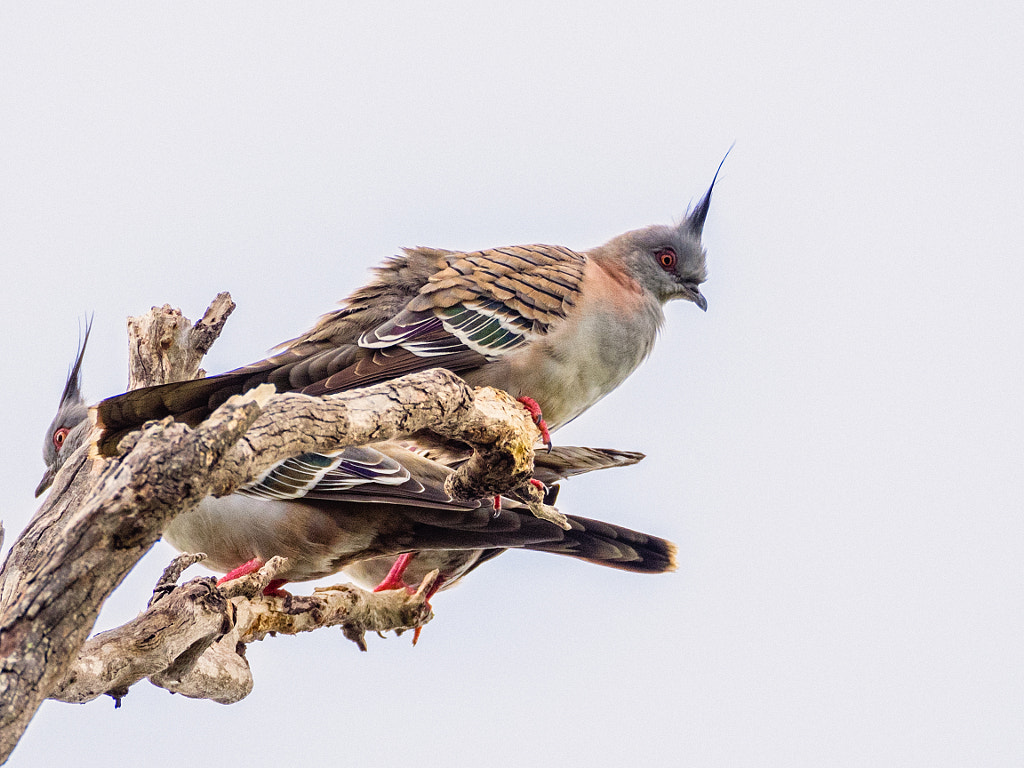
Crested pigeon (Ocyphaps lophotes), Toodyay, Western Australia.
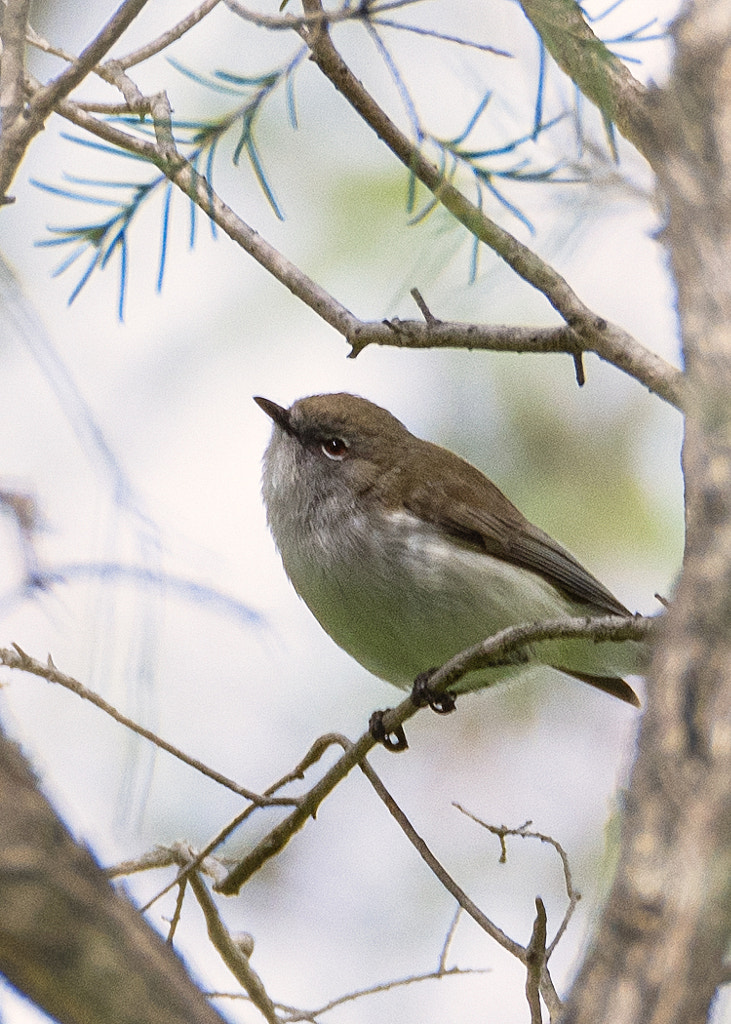
Weebill, , Australia’s smallest bird. Toodyay, Western Australia.
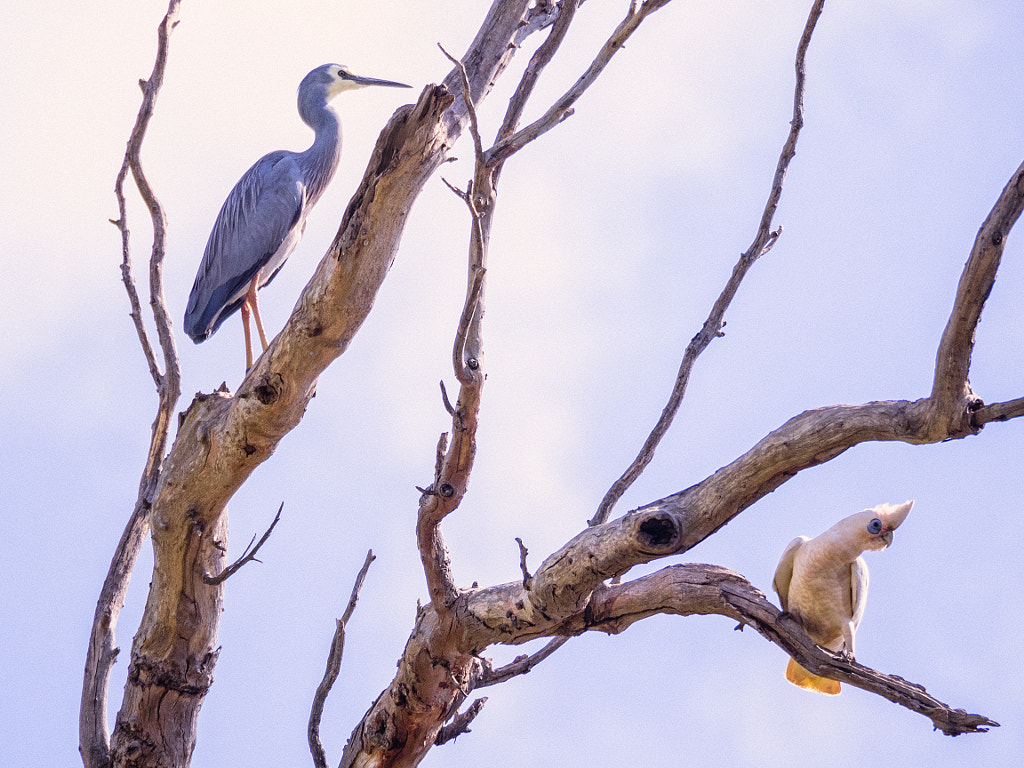
White-faced heron (Egretta novaehollandiae) and a western corella (Cacatua pastinator subsp. derbyi), Toodyay, Western Australia.
As me Uncle Ted would have said it’s been “reeet parky” hereabouts. Or to translate it to English it’s been freezing. It has been very hard to leave a nice warm bed in the mornings. Anyways yesterday I made the effort to go up to Mount Ronan Nature Reserve and take a look to see what’s out. Wasn’t a bad haul.
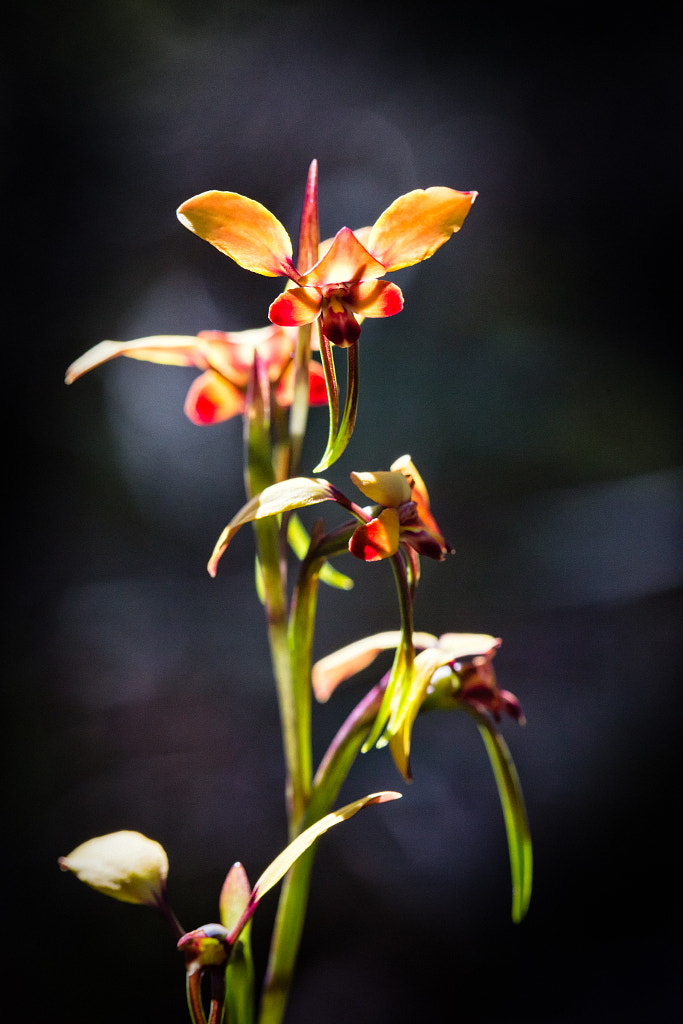
Winter donkey orchid (Diuris brumalis), Mount Ronan, Western Australia.
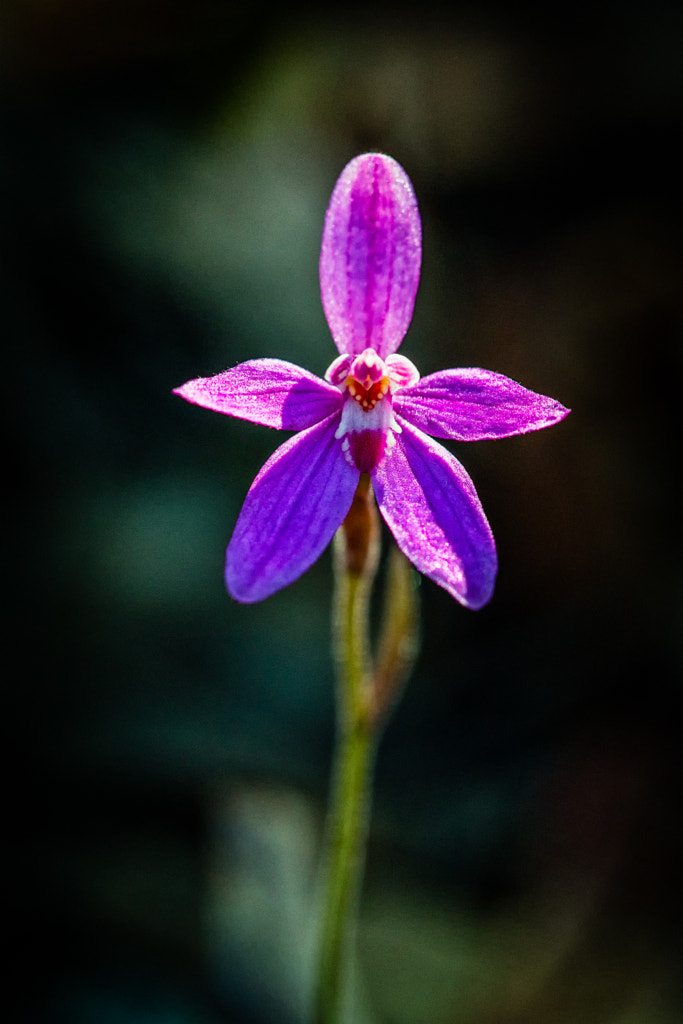
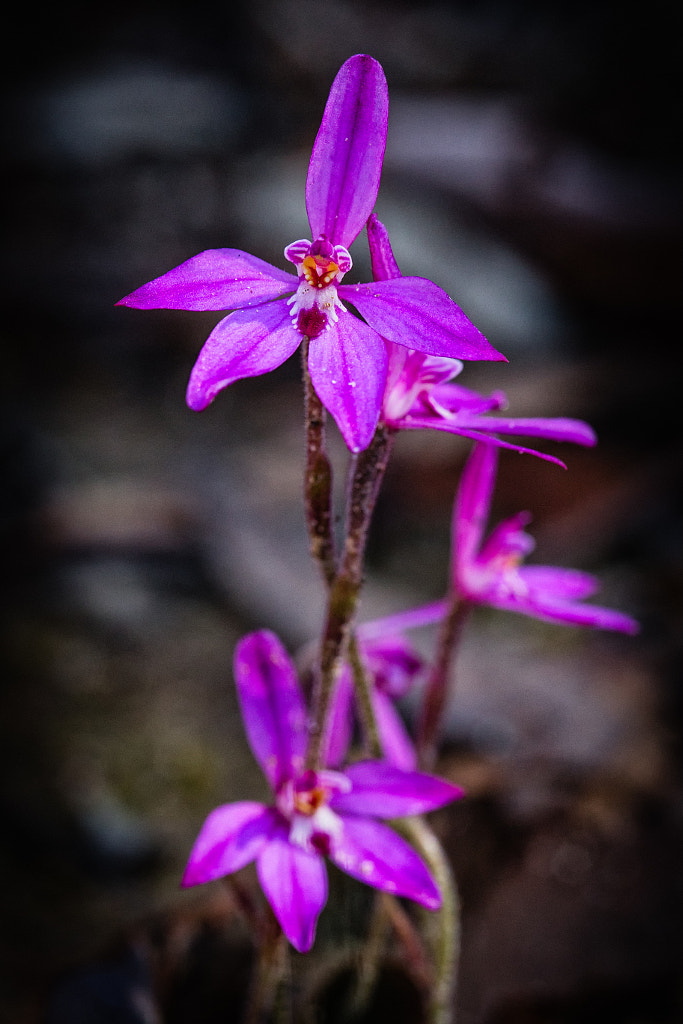
Dwarf Pink Fairy orchid or Little Pink Fairy Orchid (caladenia reptans subspecies reptans), Mount Ronan, Western Australia.
Dwarf Pink Fairy orchid or little pink fairy orchid (caladenia reptans subspecies reptans), Mount Ronan, Western Australia.
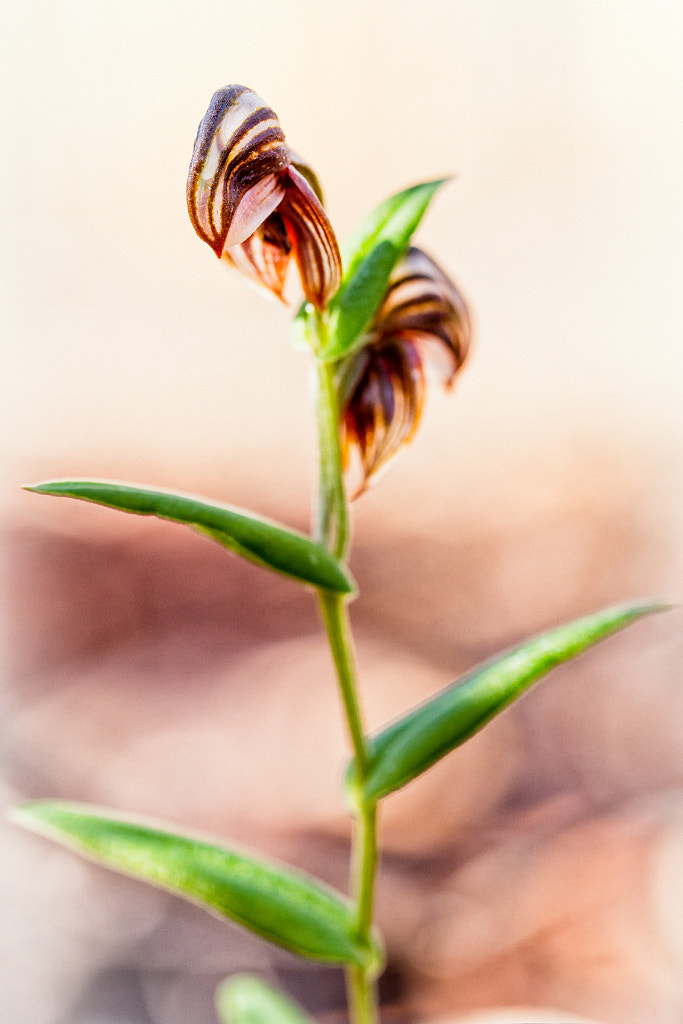
Dark banded greenhood orchid (Pterostylis sanguinea), Mount Ronan, Western Australia.
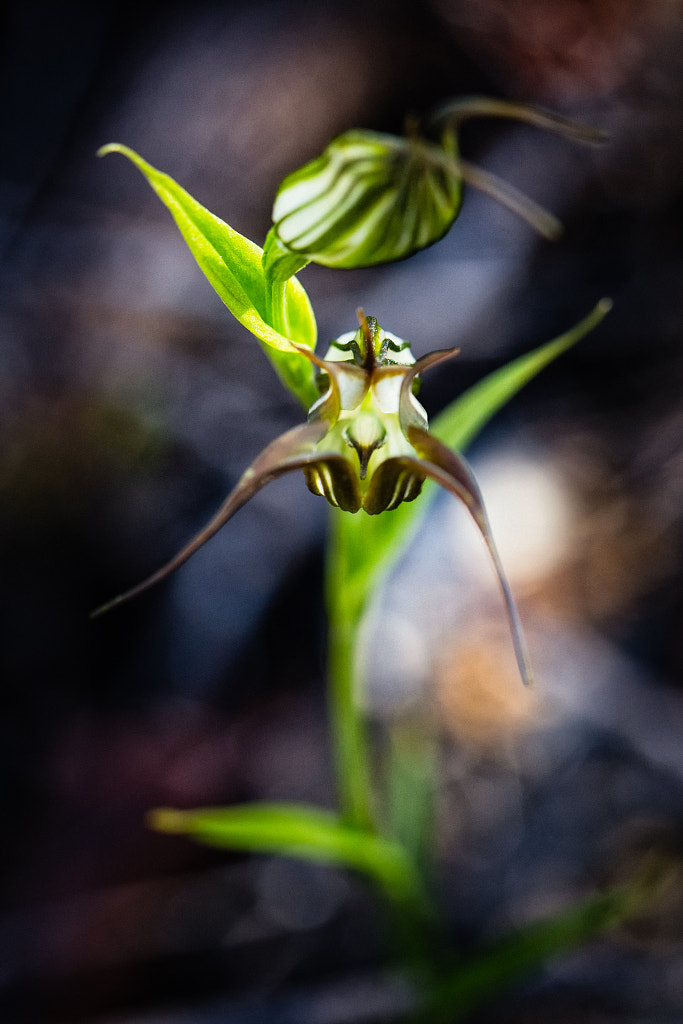
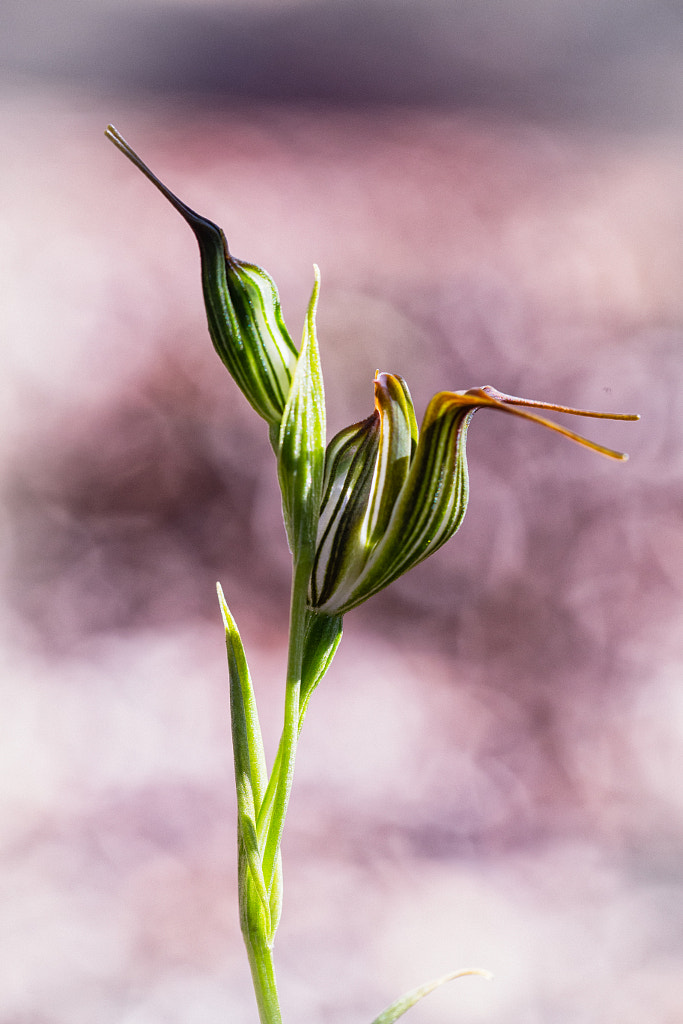
Jug orchid or recurved shell orchid (Pterostylis recurva), Mount Ronan, Western australia.
Jug orchid or recurved shell orchid (Pterostylis recurva), Mount Ronan, Western australia.
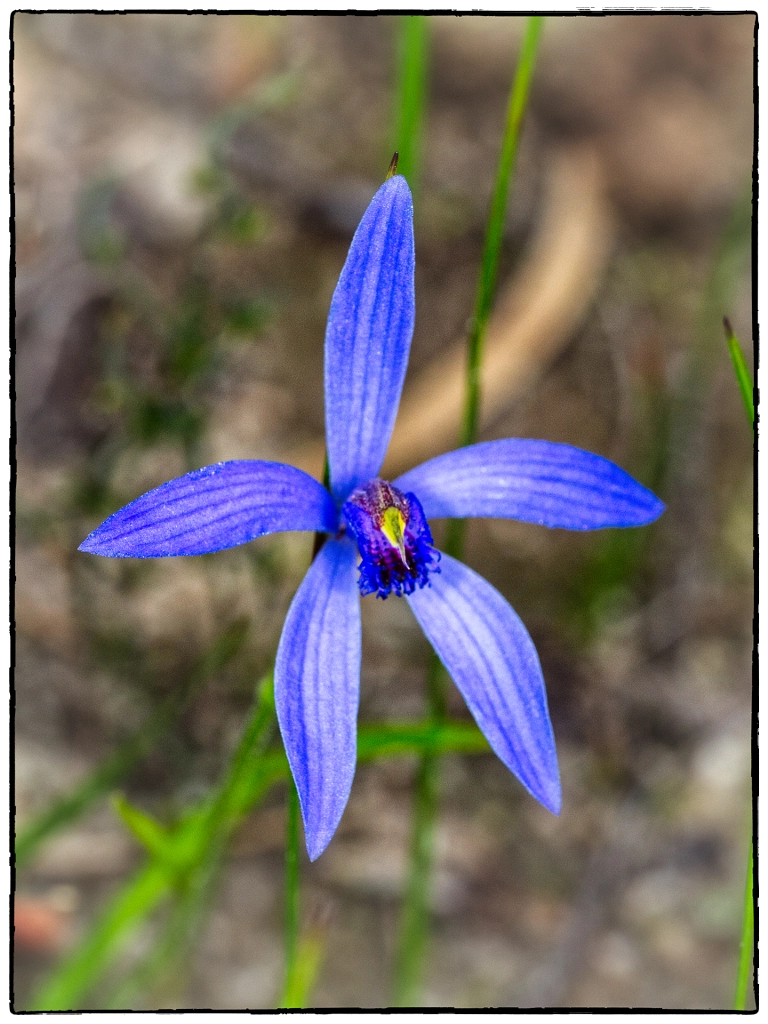
Blue Beard orchid or blue fairy orchid (Pheladenia deformis), Wambyn Nature Reserve.
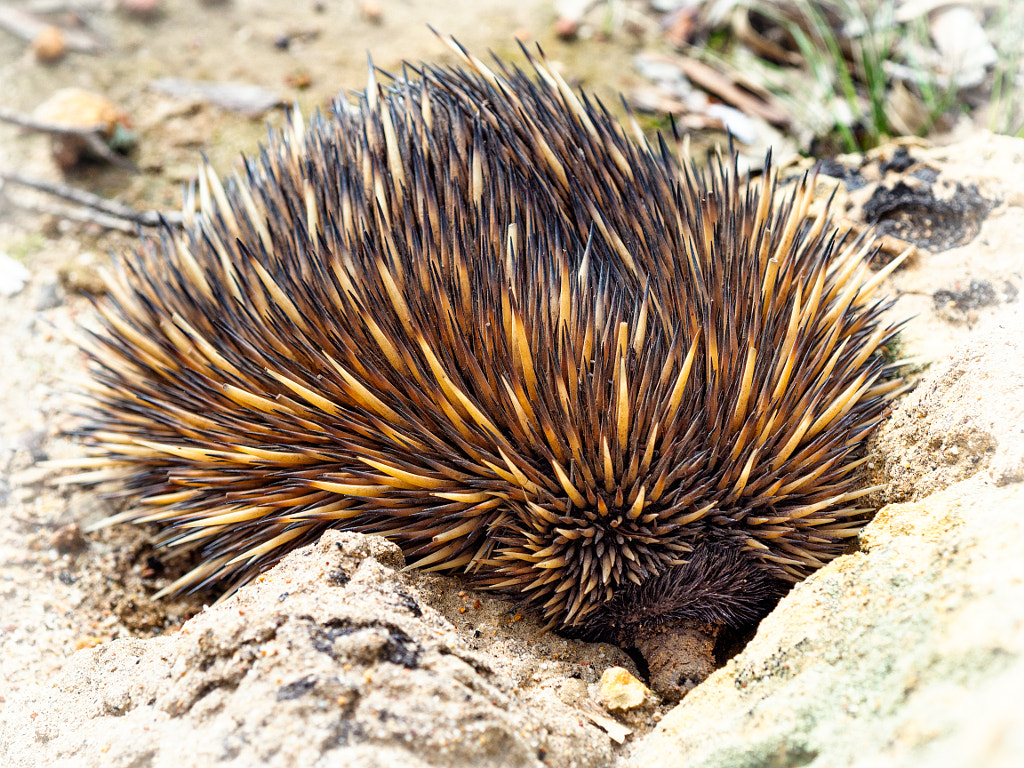
…and found one of these.
Nyingarn is the Nyoongar name for the echidna or spiny anteater. This one can be seen digging into a termite mound. Wambyn Nature Reserve, Western Australia.
Short Beaked Echidnas or Nyingarn in Nyoongar are also sometimes called spiny anteaters and belong to the Tachyglossidae in the monotreme order of egg-laying mammals and are not related to anteaters found in the Americas or hedgehogs. Together with the platypus, echidnas are the only surviving members of the order Monotremata and are the only living mammals that lay eggs. Now if you think a mama that lays eggs and raises its young in a pouch is weird then one of the other characteristics is even stranger. Their hind feet point rearwards! Yup that’s right, their feet are on backwards. How do echidnas have sex?
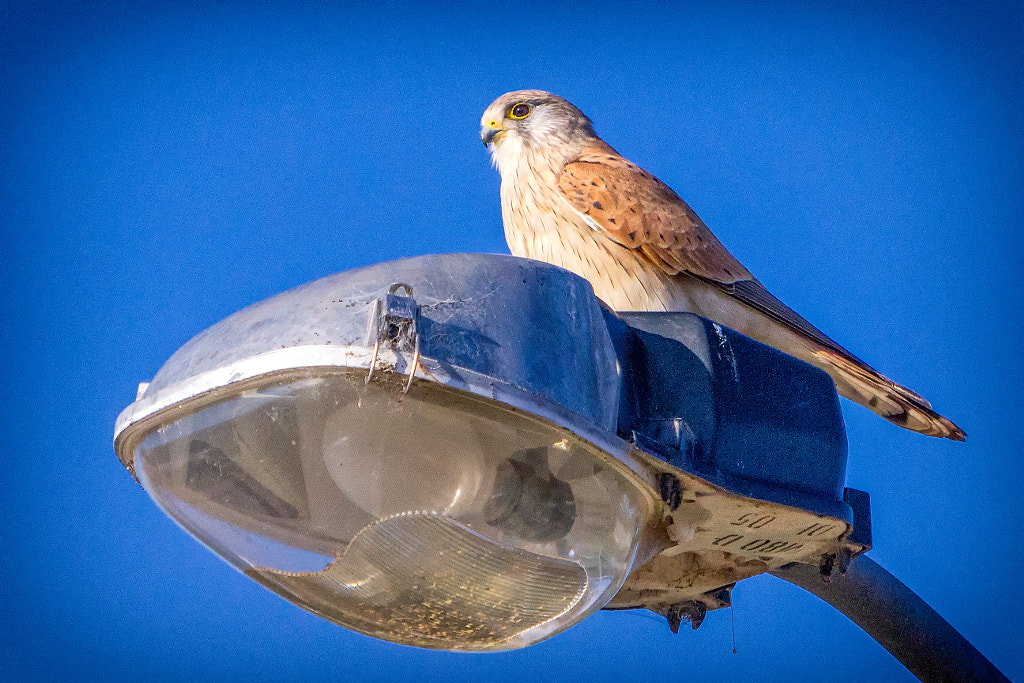
Nankeen Kestrel (Falco cenchroides cenchroides) sitting on the street lamp outside our house. Canon EOS550d with 70-200mm f2.8 IS L + x2 extender. Exposure: 1/4000, f8, ISO 1600.
We were sitting out on the back patio on a particularly hot day – 39ºC or 102.2ºF for the imperially minded, don’t you think it’s funny that the USA a country that is supposedly a republic favours imperial measurements? Sorry I digress. Back to the patio on a hot day. We were having one of those rambling conversations that goes with just basically hanging out and enjoying each others company when I felt that we were being watched. It is quite a distinct feeling, the hairs go up on the back of the neck and you have a prickly feeling in the centre of your back. I looked around and couldn’t see anything. But the sensation wouldn’t go away. I scanned our surroundings carefully – this time I noticed. There he was. Sitting up 2 metres from the ground (6.561 feet) in the trellis there he was. Impassively watching. Maintaining his vigil in the hot sun.
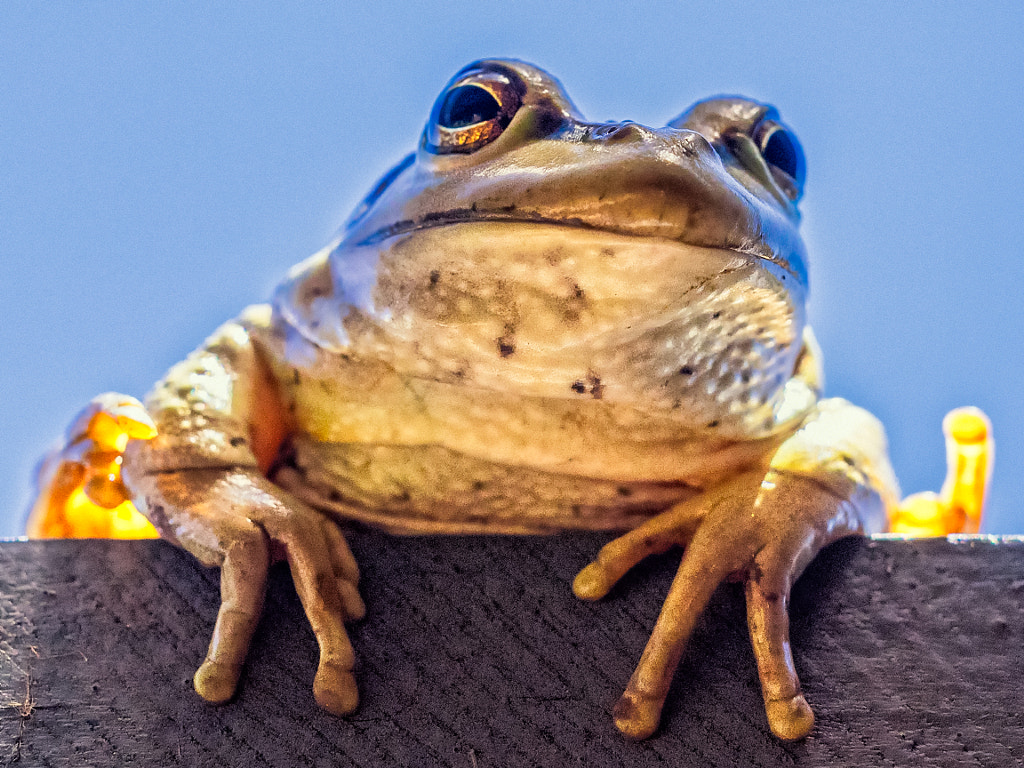
The most commonly found frog in Western Australia’s south-west is the motor bike frog (Litoria moorei). They are not a “tree frog” but they do climb very well and this one was at the top of our garden lattice nearly 2 metres above the ground. Olympus OMD EM1 with Olympus M.Zuiko Digital ED 40-150mm f/2.8 PRO lens. Exposure: 1/1000, f5.5 at ISO 800 with + 2 stops exposure compensation.


You must be logged in to post a comment.