Last weekend you could be forgiven in thinking that the War of The Roses had broken out afresh in the Western Australian town of York. There were lots of grim looking men glad in chain mail and armour brandishing an assortment of fearsome looking weapons while women wafted around wearing hose, kirtles, gowns, surcoats, girdles, and bonnets while listening to bards strum away on lutes.
A grim looking man in chain mail with a fearsome looking axe.
The images were shot with an Olympus OMD EM-1, an OMD EM-10 with Olympus m.Zuiko 12-40mm f2.8 and 40-150mm f2.8 lenses. The files were processed in Adobe Lightroom and Alienskin Exposure X.
Everlastings on Mount Brown in York, WA. Sony A7r with Olympus OM Zuiko 21mm f3.5 lens and Cokin “P” 2 stop graduated neutral density filter. Exposure: 1/30th sec, f16, ISO 100.
Everlastings on Mount Brown in York, WA. Sony A7r with Olympus OM Zuiko 135 f2.8 lens. Exposure: 1/1000th sec, f2.8, ISO 100.
The entrance to Beverley Station Arts in the Western Australian town of Beverley.
Those who regularly follow my blog will know that I’m currently the artist in residence at Beverley Station Arts in Western Australia. So for this entry I’ll talk a little about the place. The town of Beverley is located some 130Km (or 80 miles for those still using imperial measurements) east of Perth in the Avon Valley in the Wheatbelt of Western Australia. The Beverley Arts Gallery Committee was inaugurated in 1967 with the aim of establishing a venue for the fine arts in the town. Sir Claude Hotchin a noted arts benefactor donated work from his collection with the aim of starting the fledgling gallery off. The collection is now housed in what was the old railway station in Beverley.
Inside the exhibition space at Beverley Station Arts. Sony A7r, Fotodiox OM to Nex adapter, Olympus OM Zuiko 21mm f3.5 lens. Exposure: 1/400th sec, f5.6 at ISO 6400.
The old station master’s quarters is now where the visiting artists in residence are accommodated. Beverley Station Arts, Western Australia. Sony A7r, Fotodiox OM adapter, Olympus OM Zuiko 21mm f3.5 lens. Exposure: 1/400th sec, f8 ISO 400.
Beverley Station Arts also utilizes the former station masters living accommodation for the artist in residence program. This allows an artist to base themselves at the gallery and produce work, put on an exhibition, run workshops and generally interact with the community. Recently an open air stage was built which is suitable for all the performing arts. It has a seating capacity of 500 and local audiences enjoy music, theatre, movies and dance under the stars during the summer months. On Saturday 10th September 2016 the venue hosted the Voice Moves Country Choir Bash. This year there were eight participating choirs:
The Platform Theatre performing space at Beverley Station Arts, Western Australia. Sony A7r, Fotodiox OM to Nex adapter, Olympus OM Zuiko 21mm f3.5 lens. Exposure: 1/200th sec, f8 at ISO 400.
As is usual in country Western Australia a sumptuous afternoon tea was provided in the intermission. The event was great fun and enjoyed by both the audience and the participants alike. Below is a short video featuring the Beverley Station Singers.
The garden bench even has a railway theme. Beverley Station Arts, Western Australia. Sony A7r, Fotodiox OM to Nex adapter and Olympus OM Zuiko 21mm f3.5 lens. Exposure: 1/80th sec, f16, at ISO 400
It seems like absolutely ages since I last made a post. The break came about because I moved house (yes again!) and as usual Telstra and iiNet cocked the whole re-location up resulting in me being without phone and internet for 6 weeks. Now I have signed up with Optus and I’m the proud owner of a fantastic broadband connection.
So in the last six weeks what have I been up to? Well I’ve definitely not been slacking off I can tell you! I’m pleased to announce that for the whole of September I will be artist in residence at Beverley Station Arts and I’ll also be showing a body of work entitled “Sex, Lies, and Flowers”. Sex, Lies and Flowers is a project on the terrestrial orchids of the Wheatbelt of Western Australia. The word orchid comes from the Greek “orchis”, which literally means ‘testicle’ (with reference to the shape of its tuber). Orchids are distinguished from other flowers by their uniquely shaped column which is composed of the fused stamens and pistils. Often the petals are modified to mimic the shapes of insects to attract male insects to mate with the faux female and pollinate the flowers. Some of the forms they take also resembles human genitalia Hence the title “Sex, Lies and Flowers”. Over the last eight years I have travelled within the region photographing the plants on location. Instead of taking the standard approach of photographing the plant in its environment showing its full structure I’ve chosen to photograph them in a style more used in portraiture so as to bring out the distinguishing features and characteristics of the plants. The aim is not to produce an exhaustive catalogue of the plants but to produce a series of images that show case the beauty of the plants and raise awareness of them and how fragile they are. Hopefully some of you can pop in and see me and the work, if you are unable then the images from the exhibition and many more can be seen here.
Below is a video clip I made a while ago about photographing orchids in the Avon Valley of Western Australia.
Thanks for your patience everyone and regular programming should now resume.
Canola growing on Daliak Estate in York, Western Australia. Olympus OMD EM-10 with Olympus M.75-300mm F4.8-6.7 II lens, Cokin circular polarizing filter and 3 stop graduated neutral density filter. Exposure 1/160 sec, f8 at ISO 200.
Well we have finally moved into our own home and this is the view from the front door. It’s nice to be a home owner again, and it’s nice to have such a brilliant view.
* This weeks musical reference is obvious – it is of course the 1967 hit song Mellow Yellow by Scottish singer song writer Donovan. Back in the day the song was rumoured to be about smoking dried banana peel for its hallucinogenic effect. For the children at home you can’t get munted off smoking bananas it was all a hoax. I wonder how many people spent hours drying bananas and then smoking them over the years. It would have to be millions. Oh the gullibility of youth!!! So what was Donovan’s song about then? Well the clue is in the phrase “electrical banana“.
Some years ago I was going through a phase I called “delusions of Bresson“. It involved hanging around on the street corners of Perth with a range finder camera fitted with a 35mm lens. It enabled me get close enough to my subjects but not ground them. In modern terms 35mm is not considered a wide-angle lens – in fact quite a few photographers brought up in the digital age think that wide angles start at 20mm (35mm full frame equivalent) – 35mm is seen more as a widish standard lens. Either way it is how I have come to see the world and I consider a 35mm prime (or its equivalent angle of view depending on format size) to be an essential item in my camera bag and this brings me to the Olympus Zuiko 35mm f2 lens.
Olympus OM Zuiko MC 35mm f2 lens.
Olympus OM Zuiko MC 35mm f2 lens.
There are again multiple versions of this lens. The first silver nosed single coated version was 42mm in length, 230g in weight and had a filter thread of 49mm. This MC version is 43mm in length, 240g in weight and has a filter thread of 55mm. It has an optical construction of eight lens elements in 7 groups and a minimum focusing distance of 0.3m.
Olympus OM Zuiko MC 35mm f2 lens
There is slight barrel distortion evident in the test image. CA is present when wide open and clears up on stopping down Wide open the lens is quite soft and lacking in contrast both in the centre and at the edges. Both sharpness and contrast improve in the centre when stopped down to f8. The edges show some signs of improvement but not as much as the centre. Wide open there is some vignetting but that quickly disappears as you stop down. The lens is quite prone to flare, especially ghosting flare, when there is a point light source in the frame. The solution is to use a lens hood or you can do as I sometimes do and use my cap as a French flag. The alternative approach is to embrace the flare and use it creatively in your photos and videos.
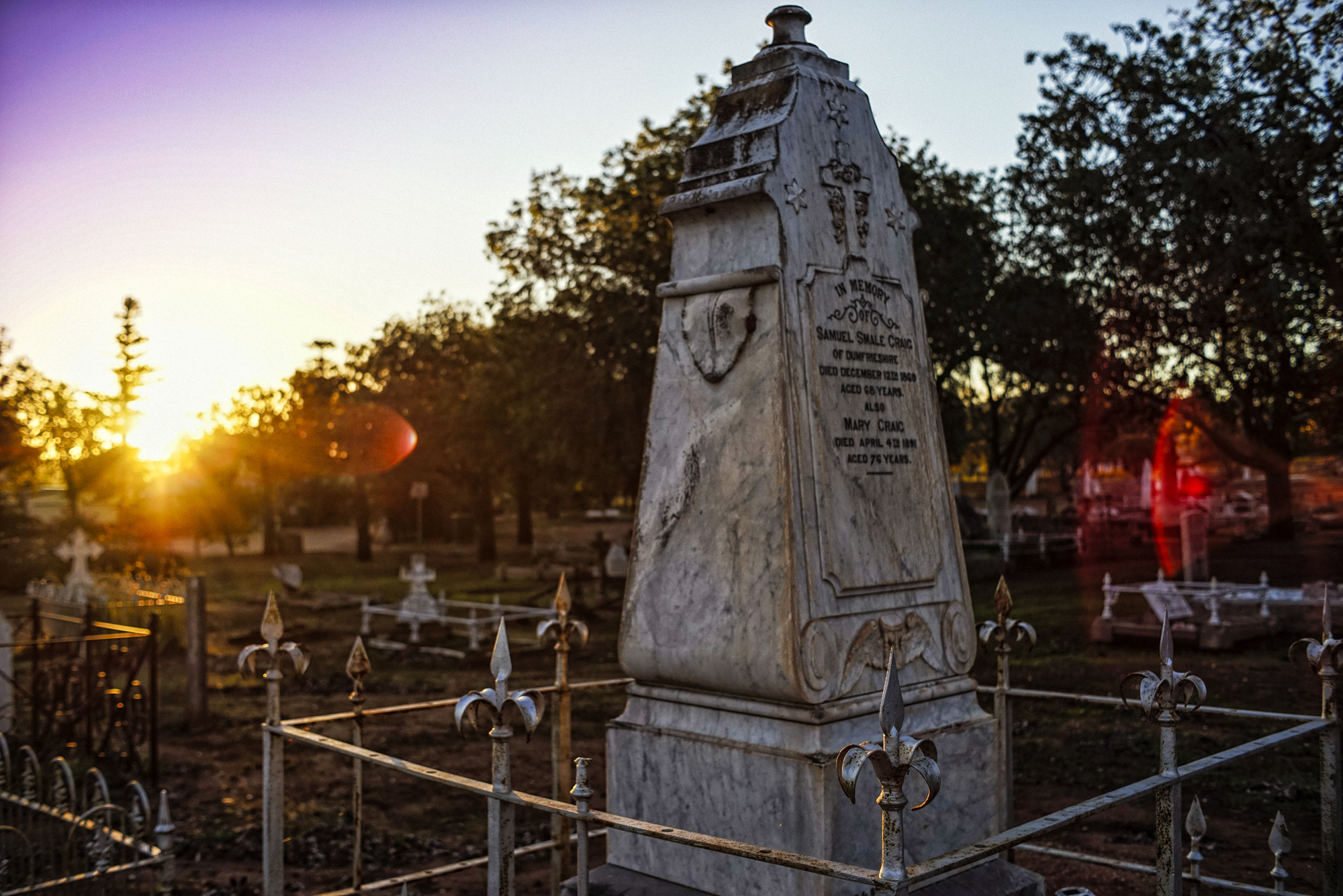
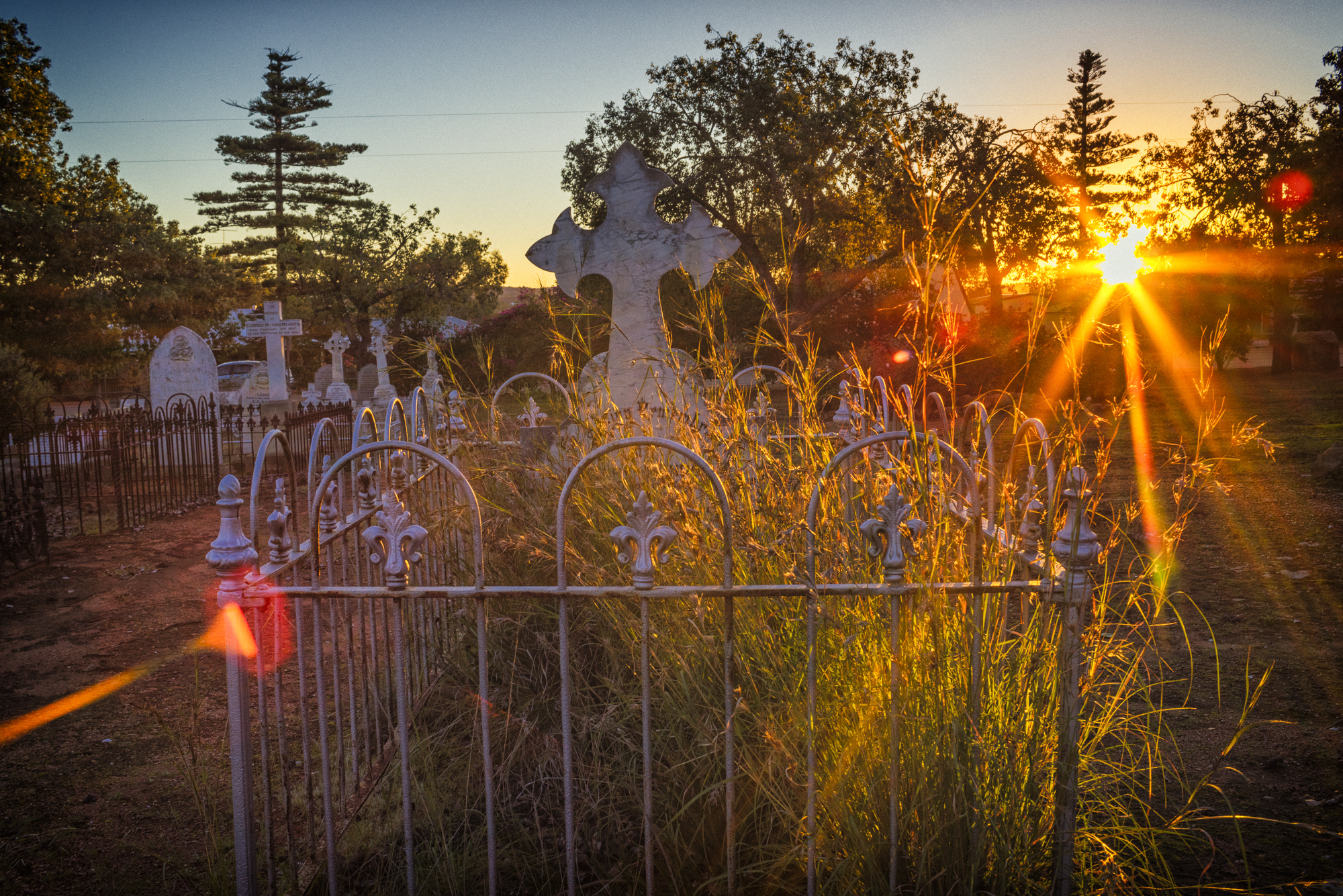
York Cemetry, Mount Brown, Western Australia. Olympus OM Zuiko 35mm f2
York Cemetry, Mount Brown, Western Australia. Olympus OM Zuiko 35mm f2
York Cemetry, Mount Brown, Western Australia. Olympus OM Zuiko 35mm f2.
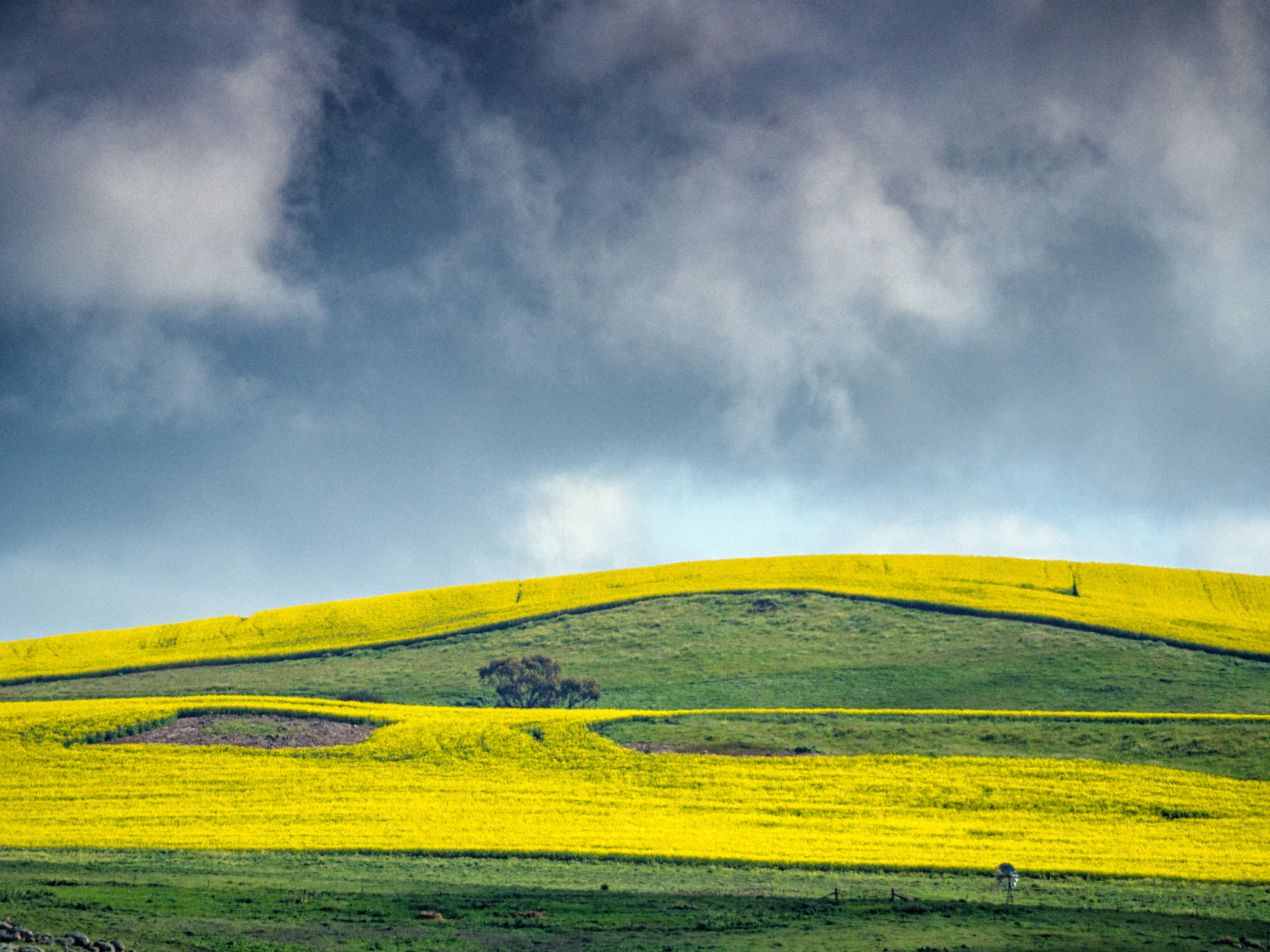
Canola and Patterson’s Curse at sunset. Mount Brown, York, Western Australia. Olympus OM Zuiko 35mm f2
If you can find a good clean copy of the multi-coated version of this lens at a good price then I recommend you pounce on it. It is a wonderful characterful lens that makes its modern counterparts look sterile and boring.
The Olympus OM Zuiko 35mm f2 lens mounted onto a Sony A7r via a Fotodiox adapter.
Hillside Farmhouse was designed by Sir Talbot Hobbs, a leading architect and built in 1911 for Morris Edwards in the historic Wheatbelt town of York in Western Australia. Sony A7r with Olympus OM Zuiko 35-105mm f3.5-4.5 lens mounted via a Fotodiox adapter, Cokin circular polarizing filter and +3 stop graduated neutral density filter. Exposure 4 seconds, f16, ISO 50.
Willys Knight York Motor Show. Avon Terrace, York, Western Australia.
Last weekend was the York Motor Show, it has been held every year since 2004 and usually draws a big turn out of cars and visitors. This means that a walk down Avon Terrace can be a hazardous matter as the pedestrian is blinded by the sun glistening off of the duco and the gleaming chrome trim. Unfortunately this years event was marred by the weather – it was a cloudy grey day with occasional drizzle. Drizzle is a weather form I don’t really associate with Western Australia, it’s more a dank dour dreary weather form for the UK, or Tasmania. Western Australia is all about big blue skies with occasional heavy rain storms in winter. Anyway I digress – 18 months in Tasmania has meant that I think and talk about meteorological conditions far more than I should. So despite the fickleness of the weather those who did turn up were very enthusiastic and had a good time.
Sunbeam Rapier
Although my late father worked for many years in the car industry selling luxury cars such as Jensen, BMW and Mercedes , I must confess that I have virtually zero interest in them. What I do enjoy is the spectacle of events such as these and the photo opportunities they present. I enjoyed a fun couple of hours walking up and down taking photos and talking to people. At events like this people are only too happy to talk about their pride and joy and photographing it is a form of showing how you appreciate their efforts. It’s almost rude not to take a photo. Photographically speaking shooting events like these is akin to shooting fish in a barrel. I used one body, a 15mm ultra wide-angle, a 35mm moderate wide-angle and a 75mm short telephoto. The two wide-angles seeing the most action. A couple of spare batteries (not needed despite over 300 shots taken) and a large empty memory card completed the kit. Travelling light means that walking up and down is an enjoyable experience.
The members of Dunrooten Racing study the form of the competition. York Motor Show 2016. Avon Terrace, York, Western Australia.Bugatti On Avon TerraceStutz 8
Todays musical reference was a single by British group Madness. The band burst on to music scene in 1976 as part of the ska revival channeling such influences as Prince Buster and their first hit in 1979 directly referenced him and their later track Al Capone was another reference. By the time “I Like Driving In My Car” came out in 1982 the band had abandoned their Jamaican inspired groove and had become more mainstream pop occasionally breaking out into quirky songs such as this one.
As you drive into York on the Great Southern Highway standing tall on your left is the historic York Flour Mill built in 1892, home to The York Mill.
I like wide-angle lenses, I use them a lot, but funnily enough mostly in the 24-35mm range (35mm full frame sensor speak that is). Occasionally I’d pull oy a 20mm, but as I said only very occasionally. The above shot was taken with a 24mm lens, it’s OK but a little cramped. I couldn’t back up any more as I was against the fence so I threw caution to the wind and chucked a 15mm lens on the front of the camera – and we’re talking full frame sensor here.
York Mill again this time Voigtlander 15mm Super Wide-Heliar lens.
It’s amazing how much difference 9mm can make. Same viewpoint but this time with the camera in the landscape orientation. It sets the building in its context and thus makes it more appealing. I also like how the whole building is acting as a giant reflector for the setting sun. This will be the picture that is used for the end product, however, the one I like the most takes advantage of the enormous depth of field that such a short focal length provides.
What a lot of depth of field – from 30cm to infinity at f16.
* Today’s title comes from a couple of lines from the lyrics of “Is It A Crime” by Sade the über cool and totally smooth chanteuse of the 1980’s.







You must be logged in to post a comment.