This Means War!!!

Manatj or Little Corella (Cacatua sanguinea). York Western Australia.


It’s got nothing to do with the Ukrainian situation. Nothing to do with Taiwan, China or submarines. No this is a crisis which threatens the very fabric of the Australian way of life. It is Western Australia’s corella problem. Huge flocks of corellas are causing havoc. They dig up lawns, dance around on TV aerials causing havoc with the reception, they make a noise early in the morning meaning the great Sunday lie in is disturbed. Locals are so incensed that they have taken to calling them flying cane toads and want to blast them out of the skies with shotguns. The Western Australian government sensing a potential vote winning platform for the next election has set up a new task force headed up by a former police commissioner to deal with the corella plague. This probably means they’ll spend a fortune on cars, helicopters, four wheel drives, a snazzy para military looking uniform, and lots of media releases. It will probably go massively over budget long before it gets round to tackling the feathered little blighters. 


Flocks of vociferous Little Corellas are disturbing the peace.


It’s not the fault of the corellas. They’re just doing what they have to do to survive. Originally found in great numbers further inland, but climate change and lessening rainfall means they are moving to more populous areas where people have provided an environment that they thrive in. We get them here in York because there is water in the Avon River and there is plenty to eat in the form of grain spilt while being transported to the grain bins.  People water their gardens which means there are succulent roots to be dug up and there are a lot of tall eucalypts for roosting.


The corellas cause all sorts of mischief – digging up lawns, stripping the insulation off electrical cables, and chewing TV aerials are just a few of their crimes against humanity.


Having said all that I actually like the flocks of corellas. To me the sound of summer isn’t the thwack of a leather ball on a willow bat, it’s not the sound of surf breaking on a beach. It is the sound of the corellas. When me moved to Tasmania we really missed it.


You can’t watch the cricket when you’ve got a corella dance party on your TV aerial.


Just as a final note –  the last time a war was declared against an avian foe was in 1932 with the “Great Emu War”. The Royal Australian Artillery was sent into bat against the wily emus armed with machine guns. It wasn’t pretty. After a month and only 50 emus killed the army withdrew conceding that the emus guerrilla tactics and high speed manoeuvrability meant that it wasn’t a fair fight.

Small Things

Just a few snaps from the garden this week. First up is the biggest grasshopper I’ve ever seen. An absolute whopper. Appropriately called the Giant Grasshopper. It was sitting quietly on our front veranda and obligingly let me take it’s photo.


Giant grasshopper or hedge grasshopper (Valanga irregularis).


The second photo is of a praying mantis that also was very cooperative with my photo taking.


“Let us prey.” Blackbarred Mantis (Mantis octospilota).


The last shot is of a white cedar moth that came from our next door neighbour’s white cedar tree.


White Cedar Moth (Leptocneria reducta).

Worth The Effort

One of the hardest birds to photograph on the Avon River is the white-faced heron. On the face of it that sounds absurd seeing as they are quite a large bird that can be found in significant numbers. Size isn’t really a factor. Some of the small ‘bush’ birds such as the red capped robin or the rufous whistler are quite easy to photograph as the males let you get as close as a couple of metres and will sit and look at you. The white-faced heron on the other hand is incredibly skittish and will take off at the slightest sound or movement. For that reason I get a great feeling of satisfaction in being able to get close enough to photograph them. The other evening I tried a new spot that allowed me to make a good approach with out been seen and this gave me the opportunity to photograph an adult and a juvenile.


Wayan by Paul Amyes on 500px.com
Wayan or White-faced Heron (Ardea novaehollandiae) hunting in the Avon River.


Wayan by Paul Amyes on 500px.com
Wading in the last of the evening light.


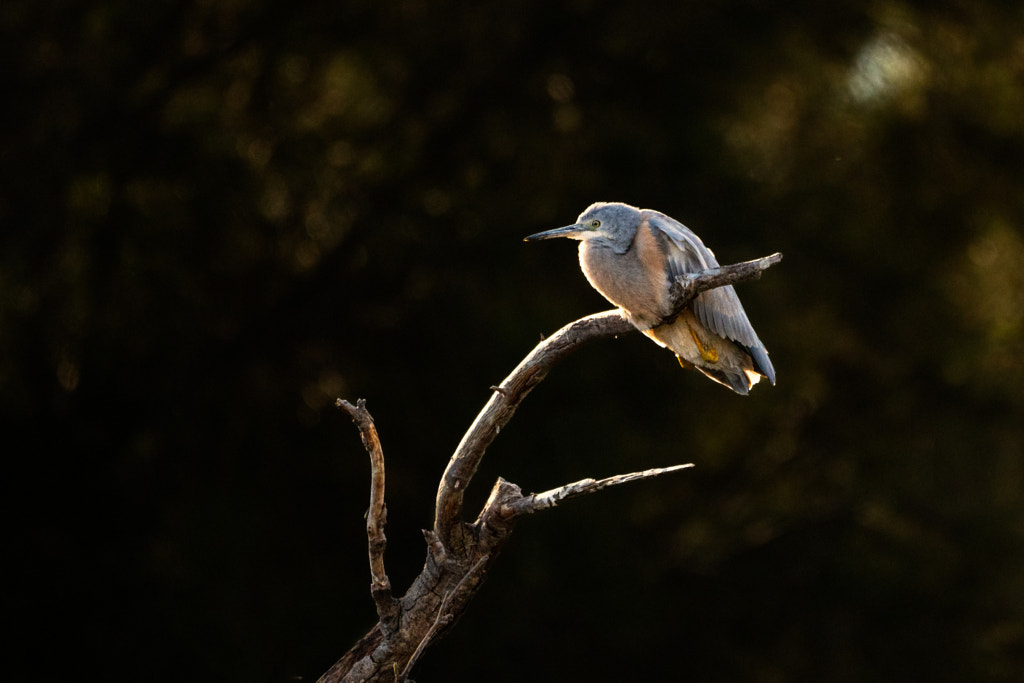
As the light was going I started to he’d back to the car when I noticed three yellow-billed spoonbills roosting in a dead sheaoak tree. On the branch above was another bird which at first glances I didn’t recognise. As I got closer I saw that it was a juvenile white-faced heron roosting with its leg folded up. I’ve never seen one do that before.


Roosting by Paul Amyes on 500px.com
A juvenille White-faced Heron (Ardea novaehollandiae) sharing a dead sheaoak tree with three yellow-spoonbills (Platalea flavipes). Monger’s Crossing,


Time For Bed by Paul Amyes on 500px.com
Time For Bed

Lord Of The Flies Part Two

99% of nature photography is performing the process persistently and repetitively – almost an obsessive compulsive behaviour if you will. After last weeks lack of success in photographing dragonflies in flight I was determined to have another crack at it.  After a bit of reading I’d found out that dragonflies and damselflies are ectothermic – which means that they are not able to regulate their internal body temperature and are to a certain extent dependent on sunlight and ambient air temperature. They don’t actually sleep as we understand it, but, rather go into a torpor and they roost in the undergrowth overnight and wait for the warmth of the next day. Which means at sunrise they don’t move around so quickly. This time I went down to some of larger pools of water in what remains of the Avon River at first light.


Aurora Bluetail by Paul Amyes on 500px.com
Waiting for the daylight to revive it after the nocturnal torpor. Aurora Bluetail, Ischnura aurora. York, Western Australia.


Aurora Bluetail by Paul Amyes on 500px.com
The warmth of the rising sun finally reaches this Aurora Bluetail (Ischnura aurora) and it wasn’t long after this that it flew off.


As I walked along the dried out river bed I spotted some damselflies waiting for the sun to come properly. Much easier to photograph as they were staying still! After a brief interlude I carried on up the river. In quite a few places there were large holes where the water had evaporated leaving a thick salt crust. In other places the river bed was quite rutted and potholed which meant the unwary could easily turn an ankle or worse.


Salt on the dried out River Avon.


Eventually I made my way to Mile Pool which is a large permanent pool fed by an underground spring. This means that a lot of wildlife can be found there. At the near end the pool is quite narrow, about 1m and shallow with over hanging tree branches and tree roots which would provide lots of perching spots. In my reading I’d also discovered that male dragonflies are quite territorial and will fly a set pattern around a territory often stopping at the same few perches while looking for females to mate with and chasing off other males who’ve dared to trespass. Sitting down on the ground I’d found my subject –  a large Tau Emerald dragonfly. He had a regular flight pattern and every time he went round he’d pause and hover  for a second or two. I realised that this would provide me my best opportunity to get a photo of it in flight. Sounds simple doesn’t it? The reality was that it took an hour with repeated tries. Eventually I got a sequence of ten photos and the best one is below.


DIF - Tau Emerald by Paul Amyes on 500px.com
Tau emerald, Hemicordulia tau. York, Western Australia.


As I got up and stowed my kit I noticed I’d had an audience and they didn’t look that impressed that I was intruding on their secluded pool. I grabbed a quick photo and head off home happy that I’d succeeded in getting my DIF photo. DIF is the abbreviation of Dragonfly In Flight. I’m determined to get better shots than this, but it is a good start.


The audience. Three little pied cormorants and one little black cormorant.

Garden Tails

Our household is in mourning. Last week we buried Little Bob. It was a very sad day.


Little Bob looking a bit grumpy having just woken up after his long winter sleep.


I’ve written about Little Bob the bobtail lizard before. He was one of three bobtail lizards that call our garden home.  He was the smallest at only 20cm long nose to tail, hence his name, and he was the one we’d see the most often on our patio in summer or in the pile of old wood behind the shed in winter. Last Autumn I accidentally clipped him with the whipper snipper. He recovered nicely but lost the use of one his back legs which meant he wasn’t as mobile as he once was.  I felt really guilty about that and decided to take a bit more care of him. So I’d hand feed him snails and bits of fruit and he became quite tame. Every now and again he’d get stuck in one of the cavernous holes the dog digs and I’d give him a helping hand at getting out and back under cover. The Nan Keen Kestrels who  sit on our TV aerial would have made short work of him if they’d seen him stuck in a hole.


Take Cover! Incoming! Nankeen kestra (Falco cenchroides cenchroides), York, Western Australia.


So it was with great sadness that I found him dead in our drive. From the look of him – flat and crispy – I realised I’d run him over. So I buried him under the peppercorn tree with full honours, well it was just me and a shovel.


Big Bob doing his best snake impression on the back patio.


Yesterday Big Bob – so called because he’s nearly 40cm long and that is big for a bobtail lizard – came out from under the house to sun himself and have a strawberry. It was nice to see him, but he’s not the same. He’s got a lot of attitude and even the dog gives him a wide berth. The limit of his sociality is taking a bit of fruit. You definitely don’t want to pick him up if you value your fingers.

More Walks Along The River

Last week I focused on the water birds this last week I’ve been walking the Avon Walk Trail looking at arboreal birds. There are more Laughing Kookaburras along the river than I can ever recall. They are not native to Western Australia and were introduced in 1912 in the hope that they’d significantly reduce the snake population. The scheme was a failure and the impact on the native bird species was huge. They have the ability to sit motionless in trees for very long periods of time watching for prey. They watch for smaller passerine birds repeatedly returning to nests and then take the chicks. They also ambush unsuspecting picnickers and will often steal sausages from a BBQ hot plate or sandwiches out of the hand of unwary. We had relatives from the UK over and were having a picnic with them when a large kookaburra relieved one of them of a piece of fruit cake. Although they are now considered a pest they are one of the iconic birds of the Australian bush and I do derive a lot of pleasure from seeing them.


Kaa-kaa by Paul Amyes on 500px.com

Kaa-kaa or laughing kookaburra (dacelo novaeguineae). Avon Walk Trail, York, Western Australia.


For me one of the highlights of summer is the return of the Rainbow Bee Eaters. Their numbers in York were severely depleted a few years ago when the council obliterated their nesting area with a bull dozer. They nest underground in burrows and while they are here they breed. The work was done while they were raising their young so killed off two generations of birds.  Last year we had a solitary female return and she looked a very sorry sight on her own crying out for a mate. This year we’ve had two breeding pairs who’ve hatched out chicks who have fledged – so hopefully we’ll have them back in larger numbers next summer. This morning I went down to where they nest and their burrows were empty and there were no birds flying around so they must have set off on their long journey north.


Birin-birin by Paul Amyes on 500px.com

Birin-birin or Rainbow Bee Eater (Merops ornatus). Avon Walk Trail, York, Western Australia.


Another bird I have a soft spot for is the Black-faced Cuckoo Shrike. We have quite a few nesting at then of our street so they’re no particularly uncommon, but I prefer to photograph them sitting in trees as opposed to sitting on a power line. I think they are a rather handsome looking bird with their black face and grey body. It’s just as well they’re good looking as it makes up for their terrible call which sounds like cat that smokes 60 a day.


Noolarko by Paul Amyes on 500px.com

Noolarko or Black-faced cuckoo shrike (Coracina novaehollandiae) .Avon Walk Trail, York, Western Australia.


The last couple of shots are of the small boring birds people don’t take any notice of. In fact they are known as SBB or small brown birds by most bird watchers. I like watching them flit about in the tree canopy. The Western Thornbills follow clouds of insects and feed off of them. They can be seen in small groups or as part of a flock with other small birds. They’ll suddenly descend upon an area feeding in the low shrubs and then as quickly as they arrived they’ll leave.


Djobool-djobool by Paul Amyes on 500px.com

Djobool-djobool or Western Thornbill (Acanthiza inornata). Avon Walk Trail, York, Western Australia.


The last bird is the Brown Honeyeater. Despite its plain looks and small size it is easily one of the best singers in the Western Australian bush. The volume produced is amazing considering it size.


Djindjokoor by Paul Amyes on 500px.com

Djindjokoor or Brown Honeyeater (Lichmera indistincta) . Avon Walk Trail, York, Western Australia.

Riverside Evening Walks

Now we’re into the later part of January we’re having the summer we had to had – hot days with temperatures hovering in the late thirties. The Avon River is now rapidly drying out with the only water left in a series of deep pools. These pools become oasis’s for a lot of wildlife from damsel and dragon flies, turtles, water fowl and even the occasional fox. If you don’t like getting up at stupid o’clock in the morning then the best time to see all the activity is in the evening. Sometimes the temperatures don’t drop before the sun goes down and then you’re hard pushed to see any animal activity. Thankfully we’ve had some quite cool nights over the last couple of weeks and so the opportunity to photograph down at Monger’s Crossing presented itself.


Wayan by Paul Amyes on 500px.com

Wayan, aka White-faced Heron (Ardea novaehollandiae). Monger’s Crossing, York, Western Australia.


Nidoolyorong by Paul Amyes on 500px.com

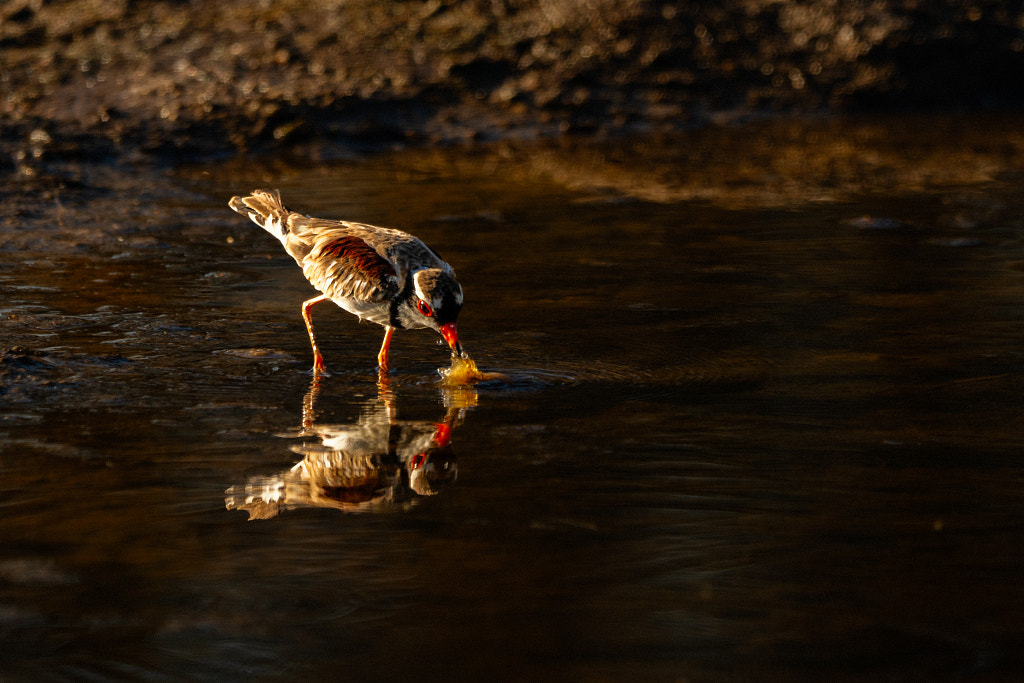
Nidoolyorong or Black-fronted Dotterel (Elseyornis melanops). Monger’s Crossing, York, Western Australia.


Koordjokit by Paul Amyes on 500px.com

Koordjokit aka Little Black Cormorants (Phalacrocorax sulcirostris). Monger’s Crossing, Western Australia.


Someone To Watch Over Me by Paul Amyes on 500px.com

Pacific Black Duck (Anas superciliosa) ducklings swiming under the watchful eye of their mother. Monger’s Crossing, York, Western Australia.


Ngowonan by Paul Amyes on 500px.com

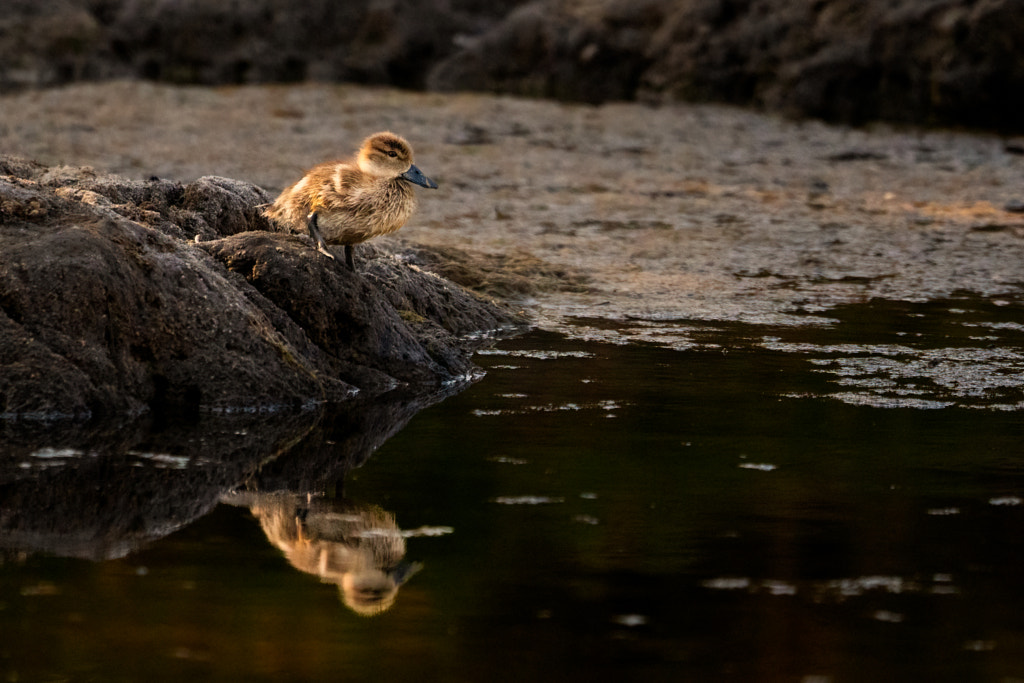
Pacific Black Duck (Anas superciliosa) duckling. Avon River, York, Western Australia.

Fields Of Gold

Fields Of Gold by Paul Amyes on 500px.com

Golden hour light illuminates the canola. York, Western Australia.


It’s the time of year again when I post a gratuitous canola photograph. But the yellow of the canola and the blue of the sky are hard to resist. It’s really strange – York is a wildflower hot spot with an incredible number of spectacular species, yet I see more tourists pull up to photograph canola than the wildflowers.

Orchids Are Like Buses

Yep you read that right. You know how you can stand at a bus stop for ages and not see a single one and then suddenly three come along together? Well orchids are like that. I’ve been walking the same patch of woodland looking for the Curly Locks Orchid for years without seeing a single one and then the other day low and behold there were three of them just standing there.


Curly Locks by Paul Amyes on 500px.com

Curly Locks, Thelymitra spiralis. Wandoo National Park, Western Australia.


Curly Locks by Paul Amyes on 500px.com

Curly Locks, Thelymitra spiralis. Wandoo National Park, Western Australia.


Curly Locks by Paul Amyes on 500px.com

Curly Locks, Thelymitra spiralis. Wandoo National Park, Western Australia.


I’ve spent the last couple of weeks walking the Wandoo forest looking for various orchids. I’ve bumped into a male emus and his brood (too quick to photograph), met bob tailed lizards and countless Western Grey Kangaroos (again too quick to photograph). So even if I’ve not found the particular flower I’m looking for it has still been quite an experience.

Bobtailed Lizard by Paul Amyes on 500px.com
The slower bob tailed lizards are easier to photograph than fleeing emus and kangaroos.


Speaking of finding orchids well I’ve seen plenty. On Thursdays outing to Wambyn Reserve I saw eleven different species and was amazed by how early some of them were.


Clubbed Spider Orchid by Paul Amyes on 500px.com

A very early flowering Clubbed Spider Orchid, Caladenia longiclavata. Wambyn Reserve, Western Australia.


Little Pink Fairy Orchid by Paul Amyes on 500px.com

Little Pink Fairy Orchid or dwarf pink fairy orchid, Caladenia reptans subspecies reptans. Wandoo National Park, Western Australia.


Sugar Orchid by Paul Amyes on 500px.com

Sugar Orchid, Ericksonella saccharata. Wambyn Reserve, Western Australia.


Frog Greenhood by Paul Amyes on 500px.com

Frog Greenhood, Pterostylis sargentii. Wambyn Reserve, Western Australia.


Jug Orchid by Paul Amyes on 500px.com

Jug orchid or recurved shell orchid, Pterostylis recurva. Wandoo National Park, Western Australia.


Common Donkey Orchid by Paul Amyes on 500px.com

Common Donkey Orchid or wallflower orchid, Diuris corymbosa. Wambyn Reserve, Western Australia.


Stark White Spider Orchid by Paul Amyes on 500px.com

Stark White Spider Orchid, Caladenia longicauda subsp eminens. Wambyn Reserve, Western Australia.


Photographically I’ve been on a bit of a full frame kick preferring to either use the Sony A7r ii and sigma 105mm macro lens or the Canon EOS6d with Canon 100mm macro lens. All the shots are lit with a flash being used as the key light and natural light as the fill. I’ve enjoyed the change but my back doesn’t. There’s a huge weight difference between the full frame cameras, lenses and flash equipment compared to the usual  Olympus micro four thirds system I usually use. But to be honest shooting at base ISO using artificial lighting and only printing at A3+ I can’t see any real advantage to shooting full frame so this next week I’ll go back to using the Olympus kit.