New Neighbours

We’ve had a new family move in and they have been delighting us with their behaviour. The family in question are Mistletoebirds. There is a male, a female both mature adults and at least one juvenile male. They are a very striking looking bird. When you first see the male you could be mistaken for thinking it is a Robbin, but they are a distinct species that have evolved a symbiotic relationship with mistletoe – hence the name. The birds only eat the fruit of the mistletoe and they spread the seeds to other trees. We don’t have any mistletoe in our garden but we do put out water and that is what attracts them.


Minnijit by Paul Amyes on 500px.com

Minnijit or Mistletoebird, Dicaeum hirundinaceum. This is an adult male. York, Western Australia.


Minnijit by Paul Amyes on 500px.com

Female adult Mistletoebird, Dicaeum hirundinaceum. York, Western Australia.


Minnijit by Paul Amyes on 500px.com

Juvenile male Mistletoebird, Dicaeum hirundinaceum. York, Western Australia.


Now most people associate mistletoe being a northern hemisphere thing where you end up kissing people under bunches of it at Christmas, but, Australia is the land of mistletoe  and has over 90 species. There is a belief that mistletoe kills the host tree, but that is a bit like saying fleas kill dogs. The tree only suffers harm if there is something else wrong with it – usually isolated in a paddock and suffering from heat stress. These beliefs persist among farmers who see the only solution as hunting mistletoebirds and so they are frequently shot. One farmer in Australia in the 1930s claimed to have killed over 1200 mistletoebirds in a 6-year period. Unfortunately this has the exact opposite effect for which it is intended as the presence of the bird and the plant in the eucalyptus forest encourages a rich biodiversity and in a recent study in southern Australia, 217 species of Australian arboreal birds were reported nesting in mistletoe, including the mistletoebird.

We’re happy that the birds come to our garden and hope that they remain a feature.

Another Garden Visitor

We were sitting on the front veranda the other evening when we heard this amazing bird song. Looking up was a bird we’d not seen in the garden before – a Spiny-cheeked Honeyeater. Of course this warranted getting a camera and taking a few shots.

A Spiny-cheeked Honeyeater, Acanthagenys rufogularis, singing his heart out. Olympus OMD EM 1 mk ii with Panasonic Leica 100-400mm lens.


Spiny-cheeked Honeyeater, Acanthagenys rufogularis. York, Western Australia.


Spiny-cheeked Honeyeater called Kwordilyang by the Nyoongar of Western Australia.

Surprise Visitors

Carnaby’s Black Cockatoo (Zanda [Calyptorhynchus] latirostris] called Ngolak by the Nyoongar of Western Australia.

The other I was sat in my office pouring over the incomprehensible bumf sent out from an insurance company when I heard a commotion outside. There was a load of raucous squawking coming from the back garden. I picked up a camera and ran out to see what was going on. To my delight it was a flock of Carnaby’s Black Cockatoos. They are classified as an endangered species but are commonly seen in the Wheatbelt. I get quite a thrill seeing flocks of them flying but it was taken to another level to see them in the garden.


Sitting in the peppercorn tree.


No sooner had they all settled than they were off again heading towards bigger gum trees on neighbouring properties.


… and then they were gone.

Garden Visitors

Silvereye by Paul Amyes on 500px.com

Silvereye, Zosterops lateralis. York, Western Australia.


We’re still getting visitors to the garden. Lately we’ve been getting half a dozen or so Silvereyes visit at around 4-5pm. They’re tricky things to photograph because they are so small (about 10cm beak to tail) and they move so erratically- think manic clockwork toy on speed and you’ll be in the ball park. Just before sundown we get a female rufous whistler pick over the mulch in the garden beds. I can hear the male in the peppercorn tree but I’ve not seen him.


Rufous Whistler by Paul Amyes on 500px.com
A female rufous whistler visits the garden.


The Nankeen Kestrels have been spending a lot of time on out TV aerial and the power pole on the street. They largely just sit and watch the paddock opposite. Occasionally they are digesting a recent meal. Every now and again we are treated to display of aerial acrobatics where the kestrel will hover over a spot and watch it carefully before diving at great speed to take its prey.


Martiet by Paul Amyes on 500px.com
Nankeen kestrel (Falco cenchroides cenchroides), York, Western Australia.


Prey sighted now dive! Nankeen kestrel (Falco cenchroides cenchroides), York, Western Australia.

Storm and Stripes

Storm and Stripes by Paul Amyes on 500px.com
The Autumn burn off in the fields of the Western Australian Wheatbelt has left its distinctive stripes on the landscape.


Thought I’d put up a couple more pictures of the stripes fields we’ve got round our way. They won’t be around for much longer as we have had the first real rains and there will soon be a green flush that will change the colour of the landscape.

I must say it’s been quite nice to do some landscape photography again. I decided to go all retro and pull out the Cokin filters and a couple of older cameras. The top photo was taken with a Canon 6d and the Canon EF 70-200mm f2.8 IS L Mk I which completed the old school experience. The photo below was shot on the Olympus EM1 Mk i. They may not be the latest and greatest cameras and lenses but they still deliver

Storm and Stripes by Paul Amyes on 500px.com

Storm and Stripes

All Change

I like the changes in the seasons and particularly look forward to the arrival of autumn. In fact spring and autumn are what living here are all about – fantastic weather with near perfect temperatures.

Autumn Burn Off by Paul Amyes on 500px.com
The Autumn burn off in the fields of the Western Australian Wheatbelt has left its distinctive stripes on the landscape.


The farmers have launched into a frenzy of activity – the fields are being burnt in preparation for the next crop. They are hoping that the war in the Ukraine and the sanctions against Russia will bring about record wheat prices. That optimism is being tempered by rising costs of fuel, fertiliser and pesticides.  As usual for this time of year the valley fills with palls of smoke leading to some spectacular sunsets.

In the garden the bob tailed lizards are nowhere to be seen. While they don’t exactly hibernate they go into torpid state where they hide up and live off the fat reserves in their tails. The white browed babblers have upped sticks and moved to another garden and the only real activity is coming from the white-cheeked honeyeaters. They had a bit of a population explosion over summer so there are lots of adolescents  chasing one another around the garden.  This has led to some spectacular demonstrations of flying with some very close calls with windows and near misses while dodging around the rear veranda.  Just as dawn breaks lots of them sit on the fence outside my bedroom window and make a tuneless racket. What they lack in musical ability they make up for with enthusiasm.


White-cheeked Honeyeater by Paul Amyes on 500px.com
White-cheeked Honeyeater (Phylidonyris niger).

Yes I like autumn it marks the start of more activity out in nature.

A New Virus

The carowner virus has made its way around the world to York in Western Australia.


This new virus doesn’t originate in Wuhan but comes from Russia. The symptoms are feeling pain radiate down into your pockets, a feeling of tightness in the wallet, feelings of anxiety and rage every time you pass a petrol station and ultimately leads to the demise of your car. It is a disease that could cause the end of civilisation as we know it.

Maybe it’s time to buy shares in bicycle factories.

It’s Hot! Dam Hot!


It’s safe to say this summer has been hotter than a very hot thing that is feeling hot. The knock on effect of all that heat is that motivation evaporates – literally. It is very hard to get out and about when temperatures are above 40ºC (104ºF). The UV index is so high that if you’ve been outside for longer than 5 minutes you need to see a dermatologist to have skin cancers removed.


Frida trying to trying to escape the summer heat in what’s left of the Avon River


So summer days are spent dreaming up ways to keep cool. You can go for the psychological approach like my Beloved Significant Other (BSO) – she is reading Scandi noir books set in  chilly sub Arctic nordic climes hoping that she can convince her body that it is cold. I’ve tried watching a few films along those lines but my body is not easily fooled. Next is the physical approach. The BSO has also taken to spending as much time as possible at the swimming pool. I don’t go as when I get into the pool the water gets out. More seriously the pool isn’t heated in any way and the cold water has me shrieking like a teenage girl at a Beatles concert. So I’ve given up on that idea. I’ve taken to hanging around the freezer cabinet in the local super market along with the rest of the town. The competition for the best spots can be brutal. The little old ladies are the worst – they’ve got sharp pointy elbows that they use to great effect to secure prime position and maximum coolness. The best place to go is the bottle shop’s (liquor store or off-licence for non Aussies) coolroom. Absolutely blissful. Unfortunately I was banned after I tried to smuggle in a chair and a TV. The best strategy is to get up early and try and do everything before it gets too hot. Then you retreat back to the sanctity of home and crank up the air con. This is why I’ve been printing photos lately.


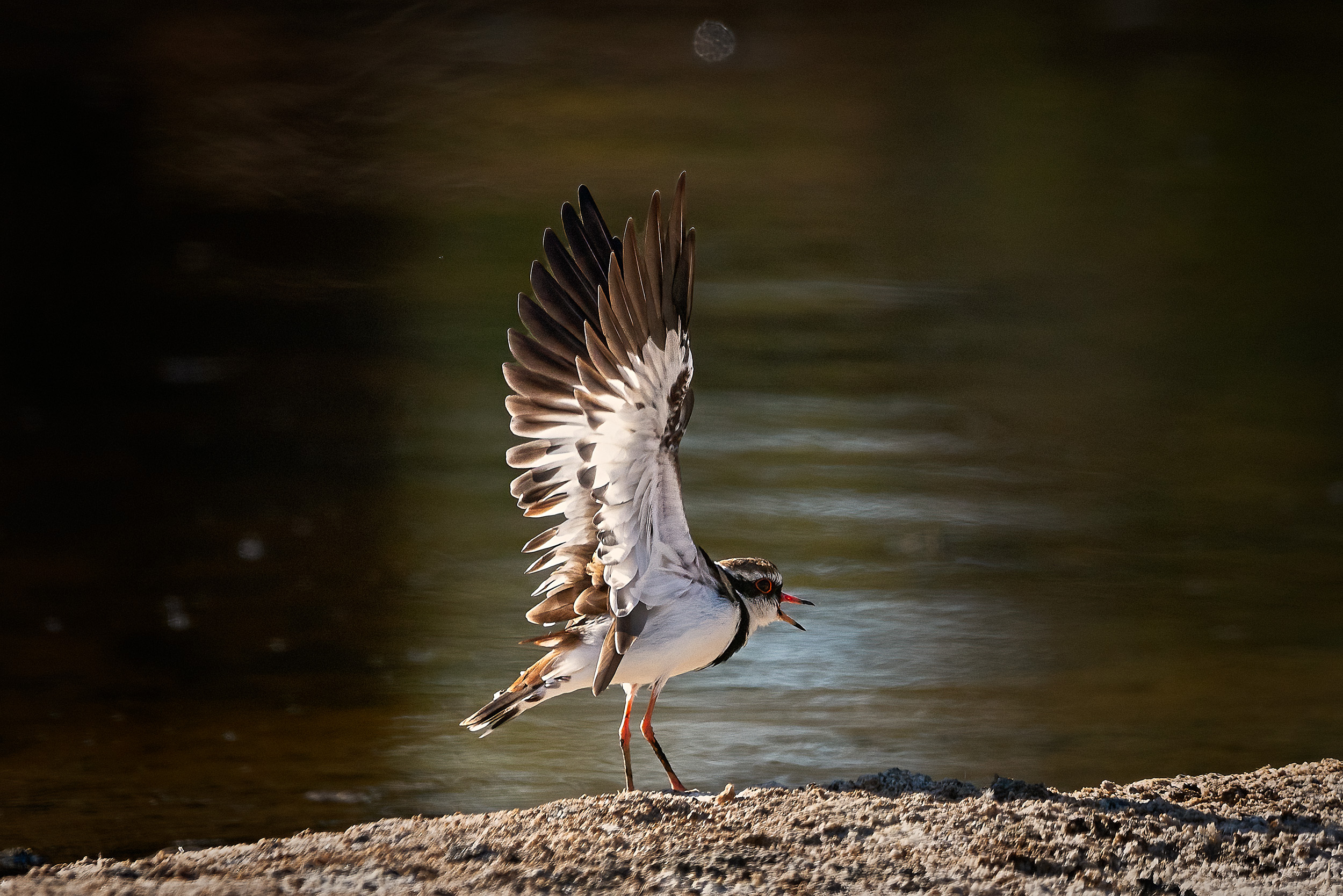
Nidoolyorong or Black-fronted Dotterel (Elseyornis melanops). York, Western Australia.


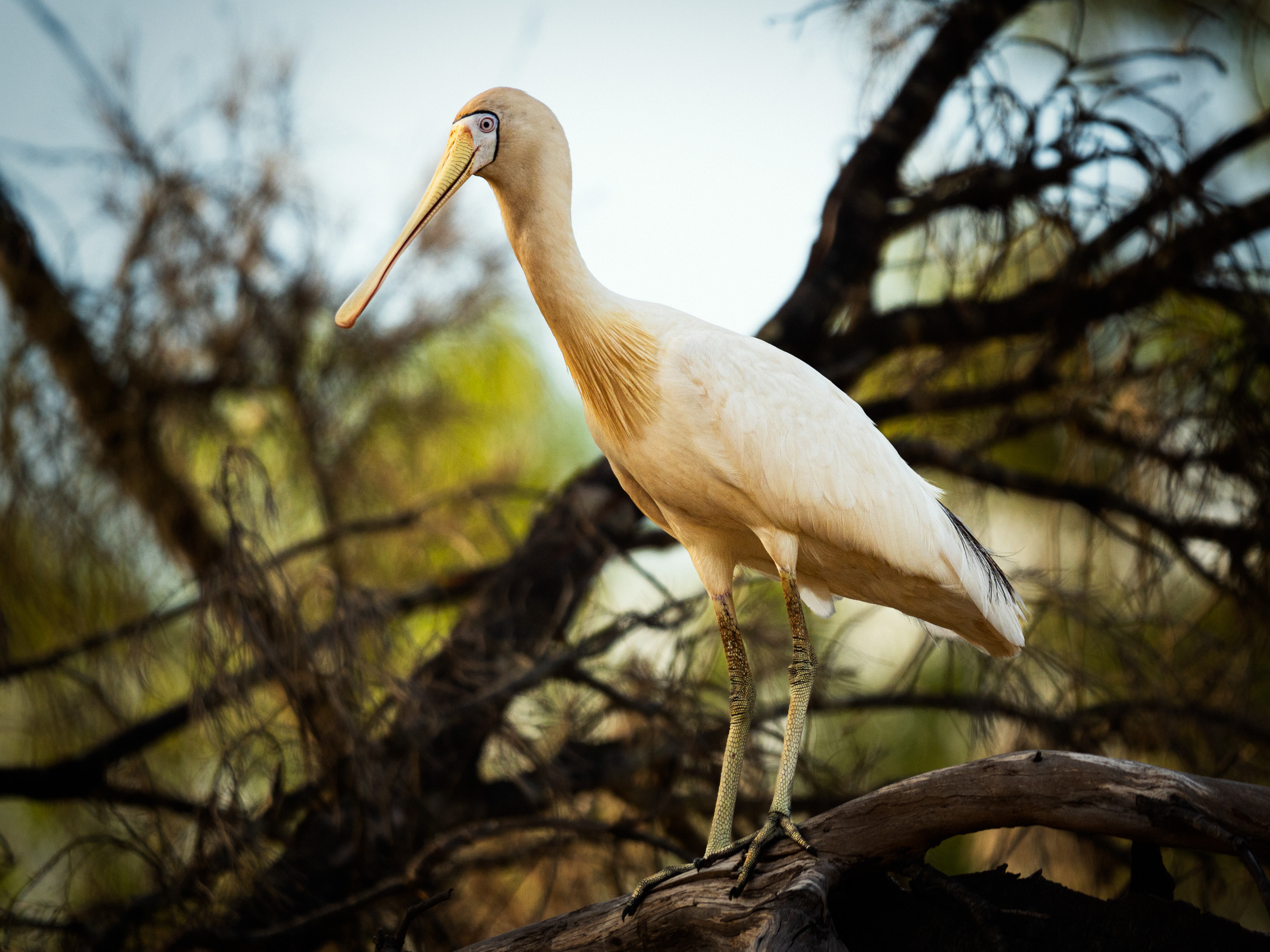
Yellow billed Spoonbill, Platalea flavipes. York, Western Australia.


A Willie Wagtail wondering if the Rainbow Bee Eater is going to share its dragon fly.

The impact of all this hot weather on the local wildlife has been considerable. The numbers of birds around is quite low. Lack of food and water. Even along the river, which now no longer resembles a river but a series of small fetid murky pools, there seems to be less activity. It has been a bumper year for dragon flies. I guess they must like it a little on the warm side. Once a week I’ve been going out to a large freshwater lake about 50Km from here to work on a new project. There’s been a bit more activity there but not much. Early in the mornings there is no vehicular access so you have to walk in through the bush and a couple of times I’ve come across a mob of kangaroos sparked out in the shade under the trees. They’re so hot and lethargic they can’t summon up the energy to move and they just lazily watch as I walk past. The only real activity at the lake has come in the form of a randy male musk duck desperately swimming up and down looking for a victim – err I mean prospective breeding partner. That duck can certainly move fast. Funnily enough I’ve not yet spotted a female musk duck – I guess they must be too hot and bothered and are avoiding him by hiding in the reed beds.

Musk Duck by Paul Amyes on 500px.com
A male musk duck – not the randy one mentioned above.

Thankfully it is the end of February. That means we’ve only got to survive March and the the weather will start to cool in April. Can’t wait!!


Creepy Crawley

I’m not talking about Downton Abbey or the town in England, I’m talking about spiders, bugs, butterflies and all manner of little wriggly things.


Cabbage White Butterfly (Pieris rapae) – the scourge of gardeners.


A few weeks ago I wrote about documenting the wildlife in our garden and that I was widening the net, as it were, and including all animals including invertebrates. Well after a few weeks of trying this I’ve come up with some observations.


A very small jumping spider on a wandoo leaf. This is the only photo I got as it kept jumping all over the place.


Firstly, as a 58 year old man with a well dodgy back the time time taken between observing the little critter and getting down onto the ground and in a position to photograph it means that it has left the vicinity. Some of these creatures can move incredibly fast when they want to and I can’t. I knew that grasshoppers and their ilk can be very quick, but I wasn’t prepared for the speed of the jumping spiders – a blink of the eye and they are just out of there.


Christmas or jewelled spider. Not known for their speed of movement but the wind catches their webs and so focusing is difficult. Getting in a position to photograph them in a way that shows off their shape and colouring requires a degree of the flexibility that I am lacking.


Secondly, you have to able to contort yourself into some pretty strange positions to get down and photograph them. Now I thought that I’d got this one covered because I do this when photographing orchids, but combine this with being quick (see point one), being stealthy so as not to frighten them and having a spine with flexibility of an RSJ it makes each session like some weird kind of yoga with a camera.


Blue Banded Bee, Amegilla cingulata. York, Western Australia.


Thirdly, a lot of these critters are small. If you look at the photo of the jumping spider resting on a Wandoo leaf, it was less than 5mm in diameter. So you need good eyesight to spot things that small.  I’ve just had my eyes tested and they’re fine for distance it’s reading and close up stuff that’s the problem. You can’t rely on autofocus with macro photography and  I’m here to say that manually focusing on a small critter that keeps jumping around while having dodgy eyesight is not easy. As my dear old mum used to say “It’s enough to make saint swear!”.


This locust very obligingly sat still long enough for me to take his photo.


Lastly, the benefit of photographing creepy crawlies is that you don’t need a honking great telephoto lens that resembles a small artillery piece. Macro lenses are relatively lightweight and my back is thankful for that.


Blue Skimmer dragonfly (Orthetrum caledonicum). Although they move like miniature fighter jets when flying dragon flies will take frequent breathers on a twig or stalk, often preferring to use the same one repeatedly which makes photography a lot easier.