Hanging Around

Ringneck Parrot by Paul Amyes on 500px.com
An Australian Ringneck parrot also called a twenty-eight parrot(Barnardius zonarius subspecies semitorquatus) feeding on white cedar berries. York, Western Australia. Canon EOS 550d with Sigma 150-600mm f4-6.6 OS lens. Exposure: 1/1000, f8 at ISO 5000.

On holiday – more to come later.

 

Totally Confused

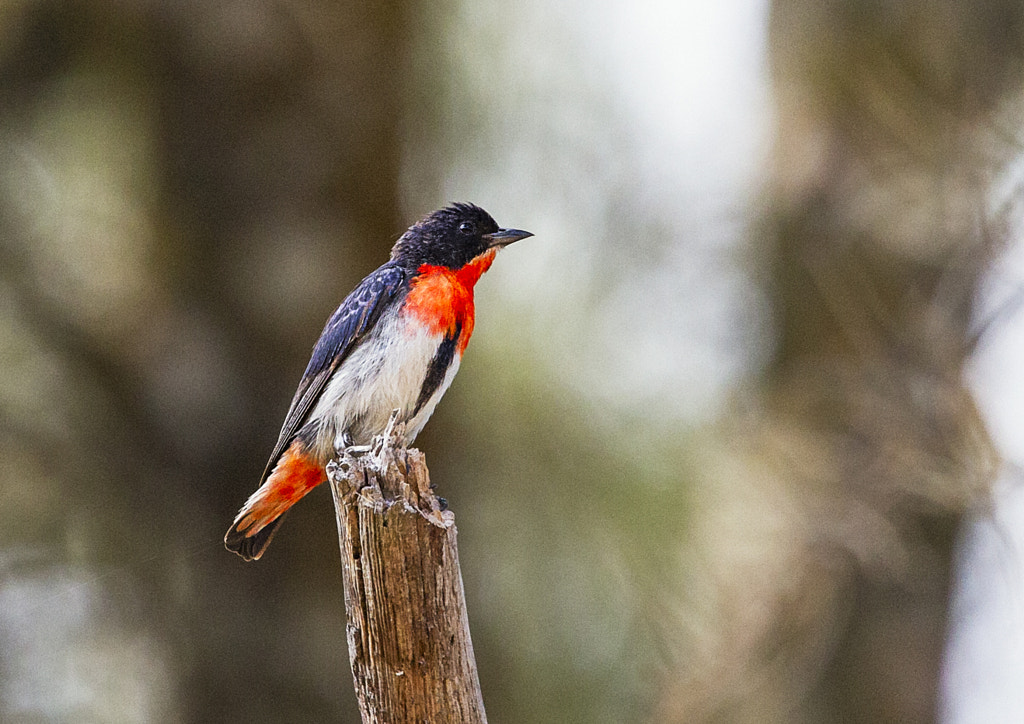
Birds were so much easier back in England. I wrote earlier about how Australian Robins come in an assortment of colours and not just the red breasted ones I grew up with. Well walking down the river bed the other day I see this.
Mistletoebird, by Paul Amyes on 500px.com
Mistletoebird, Dicaeum hirundinaceum. The Nyoongar name is Minnijit. York, Western Australia. Canon EOS 6d with Sigma 150-600mm f/5-6.3 DG OS HSM Contemporary lens. Exposure: 1/1000 sec, f8 at ISO 1600.


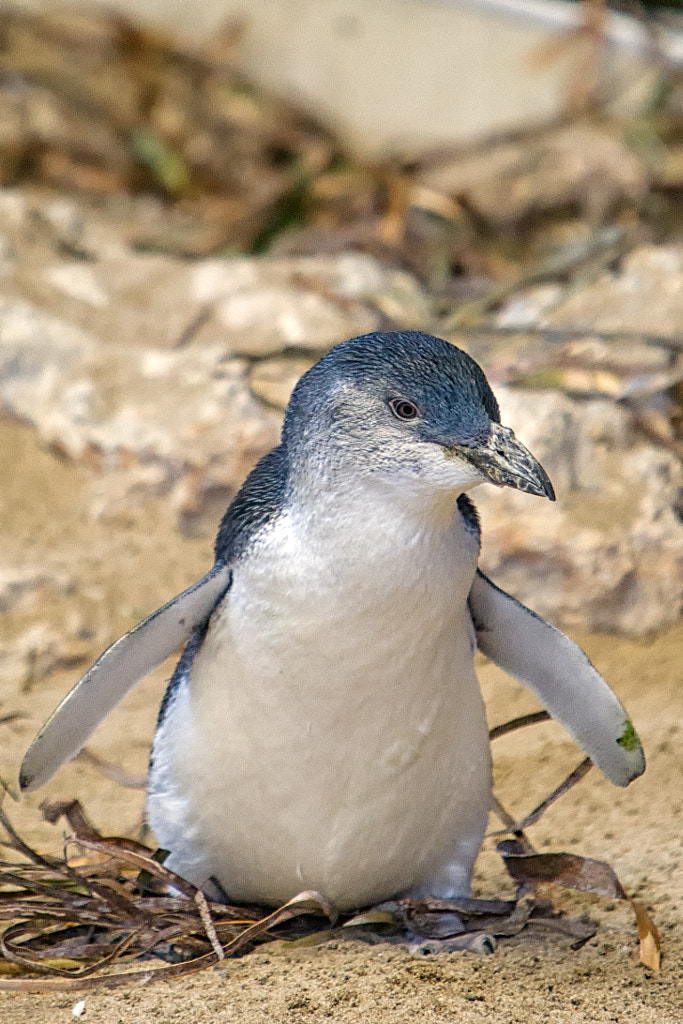
It’s obviously some sort of robin thinks I as I walk along pondering this new bird. WRONG!!!! It’s a mistletoe bird. First robins come in multiple colours and now birds with red breasts aren’t robins. I think I’m going to stick with penguins – they’re black and white and easy to identify.
 

Penguin Island by Paul Amyes on 500px.com
Little penguin or fairy penguin (Eudyptula minor). Penguin Island, Western Australia. Canon EOS 5d with a Canon EF 70-200mm f/2.8L IS USM lens and Canon x2 extender. Exposure: 1/250, f5.6 ISO 1600.


Paradise Regained

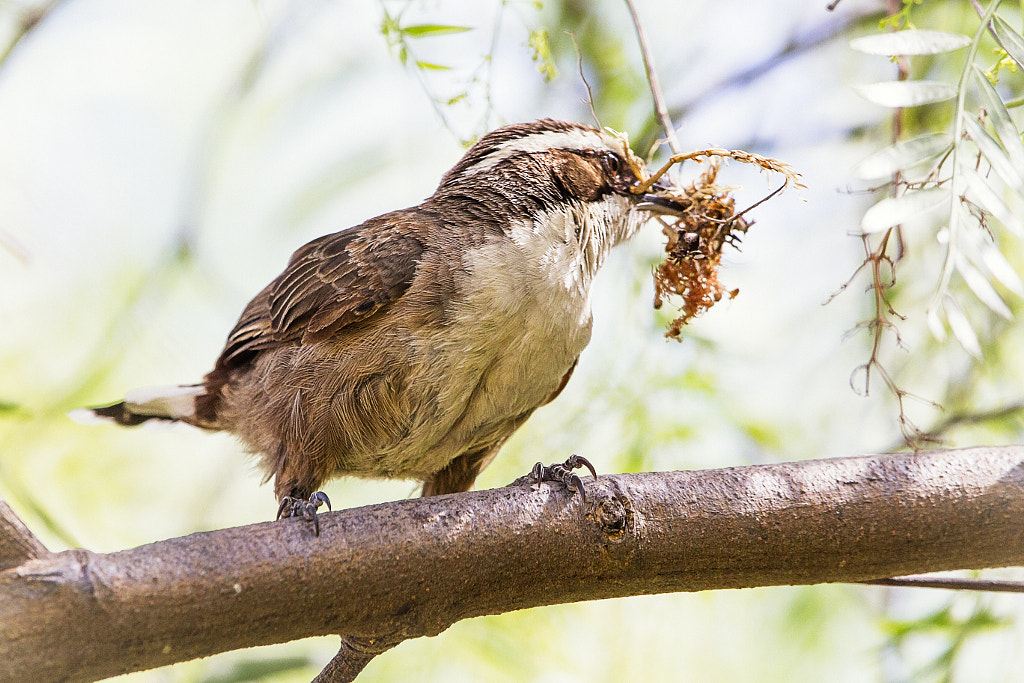
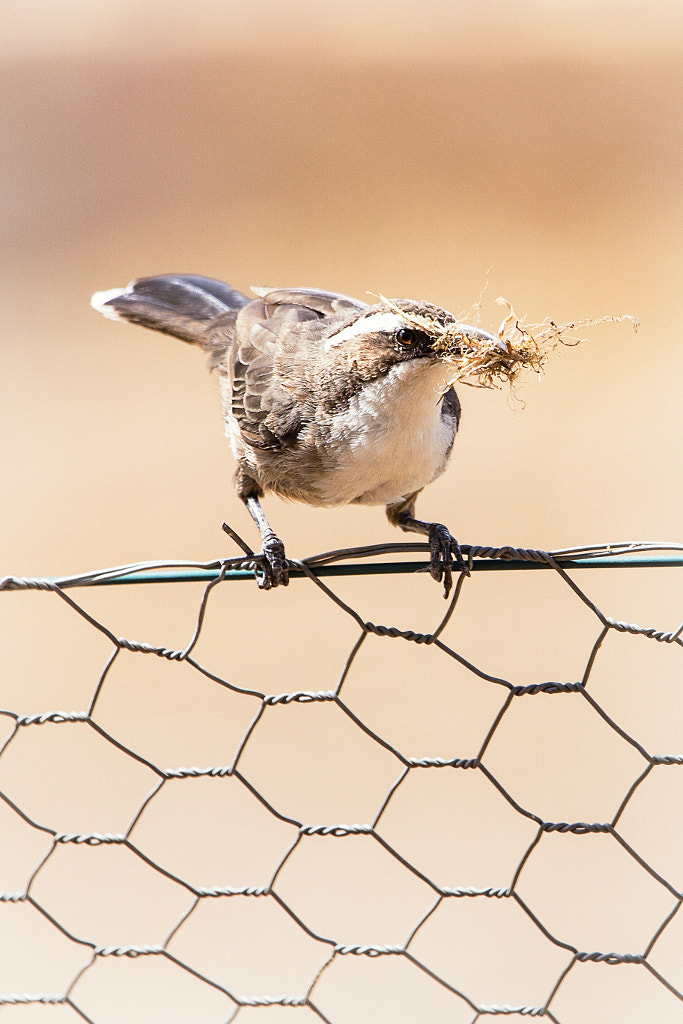
Back in September I wrote about the various birds nesting in the garden. Well autumn is now here and I thought I’d write an update. The white browed babblers have successfully hatched all their eggs which means there has been a population explosion. They are quite curious birds as they live in communal nests and have separate nursery nests as well which they all take turns in raising the chicks. Well now they are embarking on a building program to make a new communal sleeping nest for all the new adults. As a result these funny little grumpy birds are flying in building materials at a great rate of knots.
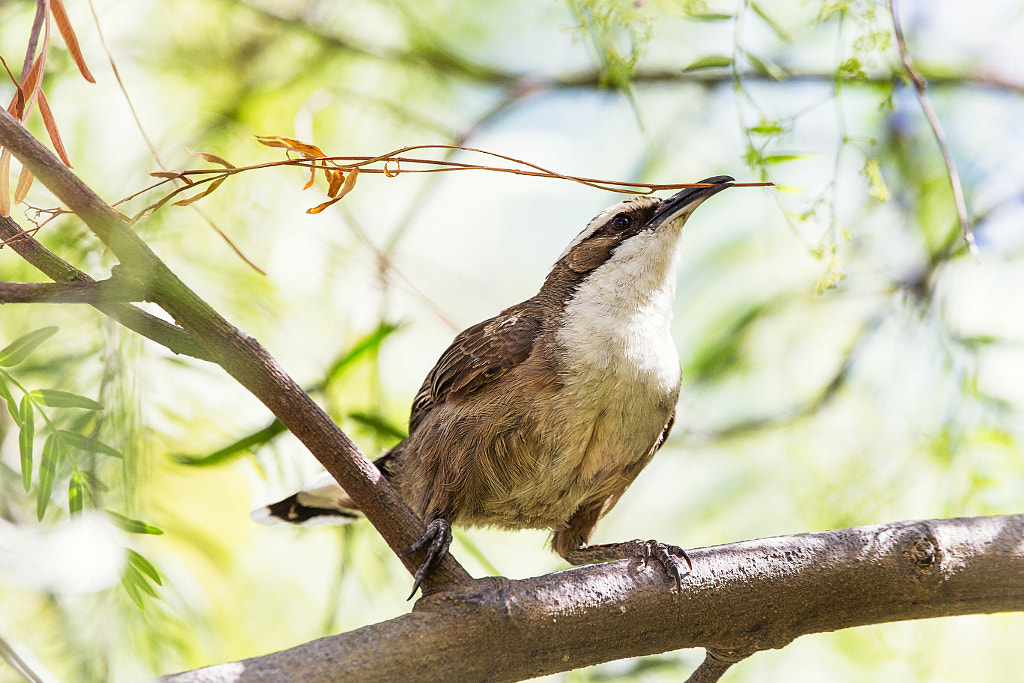
 

White Browed Babbler by Paul Amyes on 500px.com
A delivery of nest material from next door. White browed babbler, Pomatostomus superciliosus. York, Western Australia. Canon 6d with Sigma 150-600mm f/5-6.3 DG OS HSM Contemporary lens. Exposure: 1/640 sec, f6.5 at ISO 500.


White Browed Babbler by Paul Amyes on 500px.com
Queuing on the landing branch waiting to unload. White browed babbler, Pomatostomus superciliosus. York, Western Australia. Canon EOS6d with Sigma 150-600mm f/5-6.3 DG OS HSM Contemporary lens. Exposure: 1/640 sec, f6.3 ISO 320.


White Browed Babbler by Paul Amyes on 500px.com
Waiting to enter the building site. White browed babbler, Pomatostomus superciliosus. York, Western Australia. Canon EOS6d with Sigma 150-600mm f/5-6.3 DG OS HSM Contemporary lens. Exposure: 1/640 sec, f6.3 at ISO 640.


We were also quite delighted to have a visitor. While we were talking one afternoon I spotted a Nankeen Kestrel hunting in the field opposite. It didn’t catch anything and left empty-handed. I thought that was that when I heard a bump from the TV aerial so we both ran outside to look, me with my camera and Helen with her binoculars. Sure enough the kestrel had decided our aerial would make a very good observation perch. It remained there quite unfazed for quite a while. It was only when I tried to get closer for a better photo that it decided to leave.
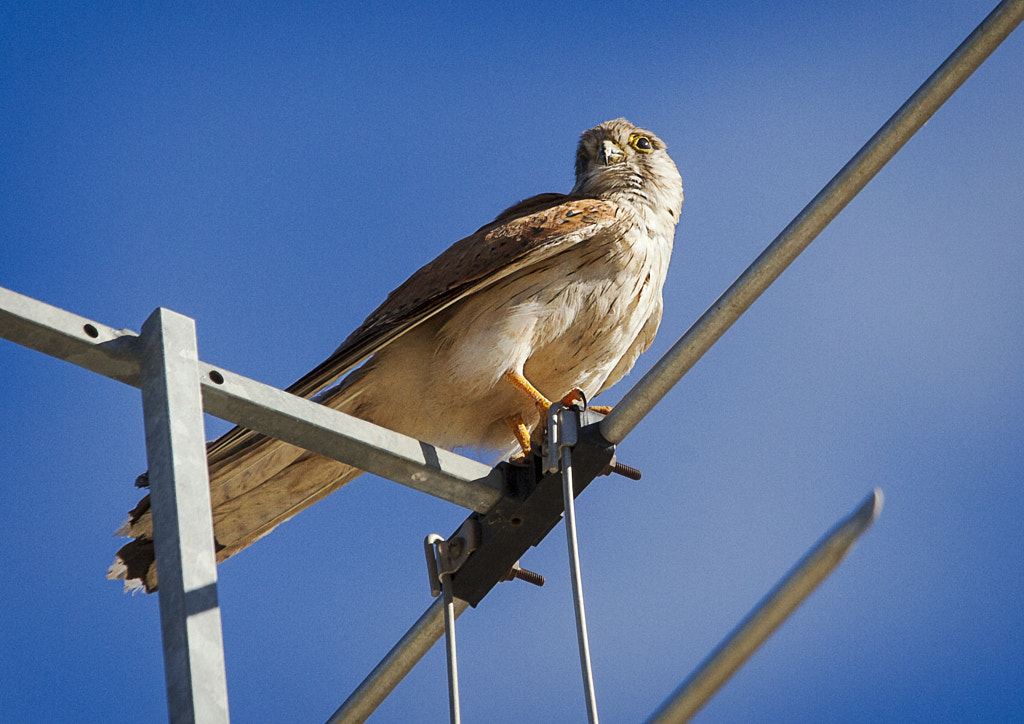
 

Nankeen Kestral by Paul Amyes on 500px.com
Nankeen kestrel, Falco cenchroides cenchroides. York, Western Australia. Canon EOS 6d with Sigma 150-600mm f/5-6.3 DG OS HSM Contemporary lens. Exposure: 1/1000 sec, f8 at ISO 320.


Dry River Bed

Australian summers are hot and dry, and while we are not in a drought cycle like the Eastern States, it does get very warm here in York. 45º C is not unheard of. The hot weather and the lack of rain means that the Avon River largely dries up with the exception of a few deep pools, and so I often go walking along the dry river bed with Frida my faithful canine companion as it allows me to view quite a variety of wildlife that congregates around the pools.

Western Whistler by Paul Amyes on 500px.com
Female Western Whistler, sometimes called the Western Golden Whistler, (Pachycephala occidentalis). York, Western Australia. Olympus OMD EM10 with Olympus M.Zuiko Digital ED 75-300mm f/4.8-6.7 II lens. Exposure: 1/1000sec, f7.1 at ISO 500.


Southern Scrub Robin by Paul Amyes on 500px.com
A Southern Scrub Robin, Drymodes brunneopygia, achives vertical take off. The Nyoongar name is Djibot. York, Western Australia. Olympus OMD EM10 with Olympus M.Zuiko Digital ED 75-300mm f/4.8-6.7 II lens. Exposure: 1/1000 sec, f7.1 at ISO 500.


White-faced Heron by Paul Amyes on 500px.com
White-faced Heron (Egretta novaehollandiae). York, Western Australia. Panasonic Lumix G85 with LEICA DG 100-400/F4.0-6.3 lens. Exposure: 1/1000 sec, f6.3 at ISO 250.


Brown Honeyeater by Paul Amyes on 500px.com
Brown Honeyeater, Lichmera indistincta.The Nyoongar name is Djindjoko. York, Western Australia. Panasonic Lumix G85 with Panasonic LEICA DG 100-400/F4.0-6.3 lens. Exposure: 1/1000 sec, f6.3 at ISO 3200.


Sacred Kingfisher by Paul Amyes on 500px.com
Sacred Kingfisher, Todiramphus sanctus. Known by the Nyoongar as Koonyenok. Avon River, York, Western Australia. Canon EOS 550d with a Sigma 150-600mm f/5-6.3 DG OS HSM Contemporary lens. Exposure: 1/1000 sec, f6.3 at ISO 250.

It’s not just birds we see, there are small fish in the ponds (difficult to photograph) and masses of different insects like this damselfly below.

Blue Ringtail Damselfly by Paul Amyes on 500px.com
Blue ringtail damselfly (Austrolestes annulosus,) at rest on the Avon River, York, Western Australia. Canon EOS 550d with a Sigma 150-600mm f/5-6.3 DG OS HSM Contemporary lens. Exposure: 1/1000 sec, f6.3 at ISO 1250.


Frida usually takes my photographic hijacking of her morning walks with good grace. She usually waits for me either in some convenient shade or as shown below standing in some water. She’s not as daft as she looks!

Keeping Cool by Paul Amyes on 500px.com
Frida waiting patiently in the cool of a water pool.

The other morning we were quite surprised to have a fox pop out of the long grass on the river bank and on to river bed. Initially it took off, but when it saw that Frida wasn’t in hot pursuit slowed down and turned back. The fox and Frida then played a mad game of chase up and down taking it in turns to be the chaser and the the chasee. Quite delightful to watch. It was like the canine equivalent of Kevin Costner’s film Dances With Wolves. Unfortunately by this time the battery in the camera had run flat so I was unable to take any photos of this rather special occurrence. Although this being a predominantly farming community most round here would not regard it as such as they belong to the “only good fox is a dead fox” brigade. A couple of days later we went back to see if the event could be repeated and I had a pocket full of batteries to ensure that I got some photos. We did find the fox in the same location but this time both it and Frida were indifferent to each other and the fox disappeared into the undergrowth on the opposite bank. Again I stuffed up the photography and all I got was the slightly blurred image below. Perhaps we’ll try again.


Red fox (Vulpes vulpes) on the Avon River river bed. York, Western Australia.

The soundtrack for summer in the Western Australian bush is provided by Broome based band the Pigram Brothers and their track Dry River Bed provided the title and inspiration for this blog entry.


When your drifting on the ocean
and the sea is a perfect blue
But those storm clouds on the horizon
are keeping you true to who are you
So take me away ‘cross the spinifex plains
where the true mirage never ends
And the smell of the rain is a long way away
lay me down on my dry river bed
Don’t have no white picket fence,
don’t have no green english lawn
Just got heat waves dancing for me,
on the red dirt where I was born
Feel the heart of my country,
beating to them lonely blues
Gotta get back there, gotta get back there,
I’ll be back there real soon
Pigram Brothers – Dry River Bed
Music and Words: ( S Pigram/A, D, G, P, S Pigram, P Mamid)

Chasing Rainbows

That is Rainbow Bee Eaters


Rainbow Bee-eaters by Paul Amyes on 500px.com
Rainbow Bee Eater, Merops ornatus. Avon Walk Trail, York, Western Australia. Panasonic Lumix G85 with Panasonic Leica 100-400mm f4-6.3. Exposure: 1/1000, f6.3 at ISO 250.


There are quite a number of them along the Avon River here in York. They migrate from Indonesia, New Guinea and northern Australia to avoid the cyclone season and come to breed during our summer. They nest in burrows which they dig and I discovered them quite by chance. While walking the dog I noticed these brightly coloured birds literally nose diving into the ground. At first I thought that the bird must have been hurt and went over to look for it, but I found nothing. Over the next few weeks I watched several others repeat the behaviour so looking carefully at the embankment I found several holes which turned out to be their burrows. So ever since I’ve been trying to photograph them.


Rainbow Bee-eaters by Paul Amyes on 500px.com
Rainbow Bee Eater, Merops ornatus. Avon Walk Trail, York, Western Australia. Panasonic Lumix G85 with Panasonic Leica 100-400mm f4-6.3. Exposure: 1/1000, f6.3 at ISO 320.


So far I’ve only managed to photograph them when they perch. They feed on flying insects and their acrobatic manoeuvring while chasing their prey are beyond my photographic abilities. Luckily I’ve noticed that they tend to favour a particular tree de jour as a lookout and they repeatedly return between sorties so it has just been a case of walking along the river finding that day’s favoured tree and waiting.


Rainbow Bee-eaters by Paul Amyes on 500px.com
Rainbow Bee Eater, Merops ornatus. Avon Walk Trail, York, Western Australia. Panasonic Lumix G85 with Panasonic Leica 100-400mm f4-6.3. Exposure: 1/1000, f6.3 at ISO 250.


Just before Christmas my wife and I decided to mount a mission early one morning to observe them bringing food to the chicks that have hatched. We must have been a strange sight for any passers-by – my wife in her camp chair with binoculars aimed at an earth bank and me loitering in the foliage under a tree with a camera and very long lens. We spent a couple of delightful hours watching and photographing before heading off for morning tea.


Rainbow Bee-eaters by Paul Amyes on 500px.com
Rainbow Bee Eater, Merops ornatus. Avon Walk Trail, York, Western Australia. Panasonic Lumix G85 with Panasonic Leica 100-400mm f4-6.3. Exposure: 1/1000, f6.3 at ISO 250.


Now we are waiting for the chicks to fledge.

“I Like To Watch”

"I Like To Watch" by Paul Amyes on 500px.com
Nankeen Kestrel (Falco cenchroides cenchroides) sitting on the street lamp outside our house. Canon EOS550d with 70-200mm f2.8 IS L + x2 extender. Exposure: 1/4000, f8, ISO 1600.


To Twitch…

…  or not to twitch. That is the question. I fear I could be on the brink of another obsessive hobby – photographing birds. It is a worry. Oh well at least it’s not train spotting! Now where did I put my parka and thermos?

Striated Pardalote by Paul Amyes on 500px.com
A striated pardalote (Pardalotus substriatus) found on the Avon Walk Trail in York, Western Australia. Olympus OMD EM-1 with OLYMPUS M.75-300mm F4.8-6.7 II lens. Exposure: 1/2000th sec, f7.1 at ISO 800.


White-faced Heron by Paul Amyes on 500px.com
White-faced heron ( Egretta novaehollandiae) on the banks of the Avon in York, Western Australia. Olympus OMD EM-1 with OLYMPUS M.75-300mm F4.8-6.7 II lens. Exposure: 1/1600th sec, f8, ISO 800 and +1.7 stops exposure compensation.


Red-capped Robin by Paul Amyes on 500px.com
Red-capped robins (Petroica goodenovi) can be found in the sheoak trees on the banks of the Avon River. York, Western Australia). Olympus OMD EM-1 with OLYMPUS M.75-300mm F4.8-6.7 II lens. Exposure: 1/1250th sec, f7.1, ISO 800 with +0.7 stop exposure compensation.


Willie Wagtail by Paul Amyes on 500px.com
Willie wagtails (Rhipidura leucophrys leucophrys) can be seen bobbing around catching insects along the banks of the Avon River, York, Western Australia. Olympus OMD EM-1 with OLYMPUS M.75-300mm F4.8-6.7 II lens. Exposure: 1/160th sec, f8, ISO 800 with +1.3 stops exposure compensation.


Zebra Finch by Paul Amyes on 500px.com
A female zebra finch (Taeniopygia guttata) perched near the Avon River in York. They are not native to the mid Wheatbelt, but can be found further north. They are common in York and are most likely the offspring of escaped cage birds. Canon EOS 6D with EF70-200mm f/2.8L IS USM +2x converter. Exposure: 1/2000th sec, f7.1 Iso 800.